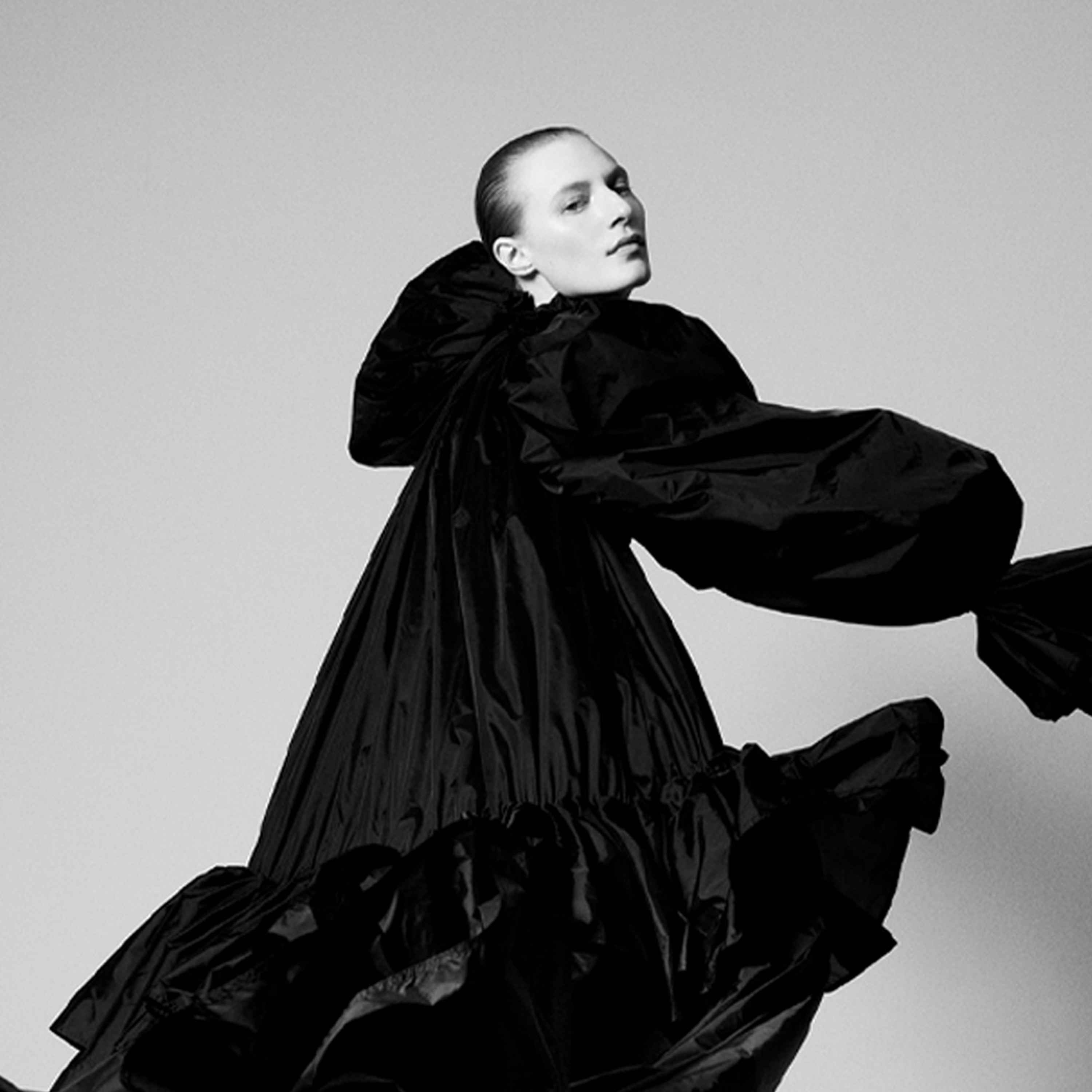
The transcription features a conversation between Imran Ahmed, Jonathan Wingfield, and Luca Salka on the state of the luxury industry, highlighting challenges like conflicting signals in the sector, cost discipline, and shaky consumer confidence. The discussion delves into market reactions to Q3 results of luxury players, emphasizing the importance of managing expectations. Furthermore, the text analyzes consumer confidence, pricing challenges, and the impact of stock markets and real estate on Western and Chinese markets. The dialogue touches on the need for restructuring pricing strategies to address consumer concerns about exorbitant prices and the importance of aligning brand DNA with market demands to drive value and authenticity.
Transcription
9947 Words, 55225 Characters
[MUSIC PLAYING] Hi, this is Imran Ahmed, founder and CEO of the Business of Fashion. Welcome to the BOF podcast. It's Friday, December 5. This week, I'm stepping out of the host's chair and into the hot seat. Back in late October, I sat down with System Magazines, Editor-in-Chief, Jonathan Wingfield, and Bernstein's global luxury analyst, Lucas Solca, for another wide-ranging conversation on the state of the luxury industry. A lot has happened in fashion since then, so consider this a snapshot of where the industry stood just over a month ago. A sector caught between conflicting signals, tentative signs of recovery, aggressive cost discipline, and a wave of headline creative resets, all playing out against a backdrop of shaky consumer confidence. In particular, Jonathan asked Luca and I what we thought brands needed to do about their exorbitant prices. I mean, after years of these relentless price hikes of the bags, do you think we're finally near the ceiling on bag prices? I don't think we've hit the ceiling. I think we like broke through that ceiling, smashed it to bits. I just think some of the executives in the industry are just completely out of touch with how the average customer feels. And by the way, that's not just aspirational middle-class customers. That's also the ultra-wealthy customers. Even rich consumers, as Imran was saying, are finding it peculiar at the very least that they now have to pay two times or three times as much for the same product that they were paying before COVID. That is very difficult to justify. So let's dive in and examine where the luxury sector goes next from rebuilding pricing architecture to aligning brand DNA with the zeitgeist and restoring clear value for customers. Here's my conversation with Luca Salka and Jonathan Wingfield on the B.O.F. podcast. So good morning, Imran. Good morning, Luca. Thanks, as always, for your precious time. Good to see you again. Let's jump straight in with the recording. So just before we get on to discussing all the new creative directored debuts and the impact that that's having on the wider market for the spring summer, 2026 shows, I just wanted to have a quick chat with you about the broader market and the state of affairs as we went into the season and where we currently stand. Things tentatively, there are some tentatively positive signs, LVMH have posted Q3 results slightly up, but nonetheless, the market has contracted over recent times. And the question I wanted to ask you just to start with without sounding too doom and gloom, how is the industry reacting to all this? To what extent are companies continuing to close stores or were still lay people off as we're hearing at McQueen? Going into the season, how were things looking? Or was there in fact a sort of a sense of buoyancy thanks to this all this sort of newness that was upon us? It's a really good question, Jonathan. I think a lot of the reaction in the industry to this season was much about expectations. And I take that on both the side of the creative director debuts, but also the reactions to some of the early results that have started rolling in for Q3 at the time of this recording, which we should let everyone know is happening on the 29th of October. So by the time this comes out, things may have moved on somewhat because we're living in fast pace times. But really, I think the market reaction to LVMH is Q3 results and the subsequent results that came out for some of the other players. For example, ARMAs, the reaction was quite different. The fashion and leather goods part of LVMH actually continued to contract, but the stock price jumped up because I think people were expecting something a lot worse than what LVMH delivered. Meanwhile, ARMAs continued to deliver year-on-year growth of around 9%, but ARMAs a stock price dropped after that. And so much of the way the market reacts is based on expectations. I'd say the same is true for the creative director debuts. Some of the ones, and I know we'll get into this later, some of the ones that had the most positive reactions were also because they had the lowest expectations. And in a way, the least pressure upon them as they were making their debuts. In terms of the industry's actions with regards to cost cutting, I would say we're still very much in a time of cost conservation and very conservative mindset around where the business continues to invest. I mean, people clearly and brands clearly want to get behind some of these big creative director debuts. And we've seen lots of marketing around Dior and Chanel and some of the other big debuts. But where there's not a lot of change, I think it's also true that people are just kind of holding back until the market returns. So yeah, in a nutshell, I think it's all about expectations management. Look, from your perspective, tell me a little bit about what you've seen in terms of specific examples of companies closing more stores or laying people off. Or do you sense that there is actually a greater buoyancy now? And that's sort of slowing down a little bit. Or do you think it will continue as we go into this period of what Imran obviously says is about expectation? I think that what has been driving the market, these two things first, on the one hand, Western consumers have been sobering up from the post-COVID boom. People were celebrating surviving in the pandemic and spent a lot more in 21, in 22, in the first half of 23. There's been a normalization and a sobering up from that attitude that has impacted primarily, I would say, the middle-class consumers in the West. The good news is that if we draw a trend line before COVID, we see now that despite the consumption excesses of the post-COVID boom, Western consumer demand is back to trend, so it should sustain assuming we have no major adjustments in the stock market, which could negatively impact consumer confidence. And the other factor that has brought the sector on the back in the past two years, is the Chinese consumer confidence being heavily impacted by the real estate market crash that China has been going through. We just started to see this summer a few early signs that things may be improving, but my impression is that investors have not yet decided that we're out of the woods. So if we look at what has been the reaction in the stock market to the updates, we see that self-absorbing, so companies that are seen as having something that they can change and improve have been doing well, think about Barbary, think about caring, think about LVMH, which had, for example, the door revival on its menu. Well, plain vanilla quality stories that had been doing well, and have been doing well for a while, take a mess, or a cuccinelli, given the uncertainty on how demand could potentially play out in 26, have been trailing. And as long as we don't have good visibility on a potential continuing recovery of demand, I think that that is most likely going to be order of the day. In the meantime, clearly, companies that have been on the back foot take LVMH with fashion under the goods declining by 9%, and continuing to decline by 2%. So a lot better, but still negative in the third quarter, are focused on becoming more efficient and protecting at the bottom line, equally, companies that have been in reverse for a while, take caring, are also doing the same. So this is a good time for companies to go back to trying to be more efficient with their costs as stop-line growth is proving a lot more difficult to achieve. In a market that has contracted, with brands competing for this market share, do you think we're entering a period now where survival will depend increasingly on distinction, on brand uniqueness, and subsequently, we'll see more daring design, more imaginative imagery, smarter ways to market the brands. Even something as seemingly benign as less generic logo design. There's been a lot of talk about what we're seeing on the runway, but do you think that will actually take hold now? Or conversely, do you think playing it safe will have adverse effects in round? What do you think about that? Yeah, I think certainly what the brands are hoping is that all of the effort that's been put into these creative resets over the past few months will bring customers back to the stores, particularly in those two key markets that Luca mentioned, China and the US. But I think there's a lot of factors that are still at play here that go beyond just to creative revival. For me, the first of those is consumer confidence, as Luca mentioned. We are hearing early signs from the Chinese market that the real estate market and its resulting impact on consumer confidence may be starting to alleviate somewhat. But in the US, so much of the confidence that's coming from the market is for people who are invested in the stock market. And I read a really interesting stat over the weekend, which is something like 80% of the stock market growth that we've seen in the last 12 months or so has come from six companies, all of which are investing heavily in artificial intelligence. And people's portfolios, their investment portfolios, are at all time highs in large part because of all of these investments in AI. And because everyone is in a way, hoping that this investment will deliver a good return. But there's a lot of questions about whether we are in an AI bubble and how similar this bubble might be to the bubble that we all experienced back in the late 1990s, early 2000s around the dot-com boom, which, of course, turned into a bubble that burst and which, over time, delivered return on that technology, but not quite as quickly as I think the market had priced in. And so we're in a similar situation here, which is if that AI bubble does burst and if there is a corresponding correction in the overall stock market, I think that's going to do a lot of damage to consumer confidence in that critical US market. On top of that, the other challenge we have is that while the brands have invested a lot in the creative reset, I don't think there are anywhere close to addressing one of the other critical problems in terms of accessing more aspirational customers, the middle-class customer that Luca was talking about, which is the pricing issue. And when you see all of the prices come out of some of the collections that were shown on the runway in September and October and Milan in Paris, those prices still seem very much out of reach for a lot of those middle-class customers. And so a lot of the focus of the luxury industry is now on that very, very high-end customer. And that high-end customer, both in China and in the US, their confidence depends what's happening in the real estate market and ultimately with AI in the US stock market. So those are some risks I see coming down the pipeline that we really need to be keeping an eye out for. I'm not sure Luca what you think of that, but that's what's really been weighing on my mind. - I totally agree, very well said. I think that indeed, consumer confidence in America is very much dependent on a very buoyant stock market and financial markets in general. Look at crypto, for example. And if those were to correct, then the impact on confidence would be very significant. I sometimes hear people saying, "Oh, but you know, the rich will always be spending." Well, yes, the rich will always be spending as long as the stock market continues to be as strong as it is now. If it wasn't as strong as it is now, I think even the rich would pose. And the value for money issue that has been darkening the participation of the middle-class consumers to the industry is definitely a big, big issue. I am, to some extent, a relief to see that brands have been addressing this by introducing new enterprise products by moving into lower-priced categories like beauty, for example. But I feel that there's a lot more to do. And I think that one of the reasons why jury has been so buoyant recently is that many people thinking that they have to spend between $5,000 and $10,000 for a bag conclude that it's maybe why they're for them to buy a piece of jury instead. - Very interesting. Let's get into the spring summer season itself and this array of many different debuts at different houses, different creative directors and how this is impacting other parts of the industry. Firstly, a big question. And of course, it's very, very early days. But which designer debut stood out to you as the most convincing reset? Again, it's such an early time. It's such a speculative thing. But it's a question I'd be remiss not to ask you. From both a creative and a commercial perspective, is somebody you saw real potential? - Well, I would just first caveat anything I say with the view that actually I think it's a bit too early to see the full impact of a creative reset. You know, a 10 minute runway show is not enough data information material for me to convincingly argue that one debut or the other was the most convincing. That being said, I think for me that the kind of standout moment of the season was Matub Lazy's Chanel show. There was something about experiencing that show at the end of all of the fashion shows that certainly played a part in it. But it was a very cohesive, convincing, you know, wide-ranging new vision for Chanel. And I think about Chanel as a brand that for a long time had been almost constrained by the codes of the house. Like we often think about how Carl Lagerfeld took those very established codes that Coco Chanel had put into place early on in the life of that brand. And how he turned, in a way, Carl was the first to even think about how you could create this notion of codes in a house and then really use those codes, those key items, the quilted flat bag, the bicolor patent shoe, the chameleon, the tweed suit. I mean, Chanel is rich with these codes, but those codes and the way they were interpreted for a long time, it didn't really change. And what I really appreciated about Matub's show is if you saw any of those codes or accessories on the street, you'd instantly know they were Chanel. So it was very true to the house of Chanel on those codes, but he was freed from some of the constraints about how those codes were interpreted. So it looked like a Chanel for today. It felt like a very modern contemporary interpretation of the brand while remaining very, very true to the house and its codes. And that's a very fine balance to strike. So that's the one that really resonated with me most. - What about you, Chris, are you nodding? But I mean, do you have a particular opinion either way? And as I think, as Imran said, the caveat of it being so early to kind of call it, but what instinctively did you feel this season? - Well, I definitely agree that Chanel was 10 out of 10 if we look at the feedback we received from within the industry buyers and influencers alike, we're all in unanimous agreement that Matub lies years being the hero of this fashion week season. Behind Blesi, maybe I would single out a couple of brands that had been shining, I would say, but take a minute with Trotter was also very well received. And I think that Jonathan Anderson with dual was maybe not a 10 out of 10, but definitely an eight out of 10 or something like that, considering how commercial and desirable footwear and accessories appear to be. So I would say this would be the three that stood out at least in terms of cut walk show then we'll have to see how this cut walk show is going to be translated into what we find in store and how the spring summer product as a whole is going to impact the market. But those three I would say are the ones that has stood out the most in our assessment of how the fashion week's developed. What has to happen now sort of operationally and in product wise as well, for a brand like Chanel to translate that acclaim into genuine sell through? But I think that as we were starting to discuss before, structuring the collection and having the right price points is going to be important. More and more, I think the merchandising function has become a key counterpart, a key partner of the creative function within fashion houses and luxury goods companies in general. When it comes to Chanel, I don't know that the enterprise is going to be very relevant as this area is played with different product categories with beauty primarily. But I think that a certain sense of newness, for example, in leather goods would also be very important. To some extent, my impression was that Chanel painted itself in a corner during the post-COVID boom with very punchy price increases for handbags that had gone maybe beyond where most consumers would be comfortable spending. They recently introduced a lot of smaller variations of those bags, but while fashion was very convincing and wonder how they could potentially be approaching that issue. And if handbags could be, again, the front foot for Chanel going forward, that I think is going to be the most important element for us to assess. I mean, after years of these relentless price hikes of the bags, do you think we're finally near the ceiling on bag prices, hitting 10,000 euro handbags and so forth? And how can brands rebuild authenticity and value without undermining a sense of exclusivity around these products or what are your thoughts on that? If something that we've talked about in the past. Yeah, I don't think we've hit the ceiling. And I think if Chanel painted itself into a corner as Lucas said, it also broke down the ceiling of its house. And so now they have to figure out how to put it all back together. And that's why I raised the pricing point as an issue at the very beginning, because I had a brand somewhat currently send me an email after I commented on the pricing of their products. And they said, oh, well, we think our pricing is fine, because it's 30% below this brand and 30% below that brand. And I just think some of the executives in the industry are just completely out of touch with how the average customer feels. And by the way, that's not just aspirational middle class customers. That's also the ultra wealthy customers. Nobody out there really thinks any of these prices are justified. So for me, one of the big conundrums facing the industry is how do they restructure that pricing pyramid? They can't really just reduce prices on the existing products that are in their core collection, because it's almost like an admission of having broken that ceiling down. But at the same time, they can't continue to charge these prices, and expect that customers are going to be willing to pay for them. So I think it's a really, really big issue. What are your thoughts on that, Luke? I mean, we've talked in the past about price hiking and obviously the repercussions of that. Do you sense that with this new era, perhaps that we're entering, that things will change, or is that sort of naive to imagine? I think to some extent that they must change, because the industry cannot do without the middle class cannot do without aspirational consumers. And even rich consumers, as Imran was saying, are finding it peculiar at the very least that they now have to pay two times or three times as much for the same product that they were paying before COVID. And I think that looks egregious in the eyes of consumers. So most likely this is going to be addressed through new product introductions. The good thing is that this problem is very prominent in the soft luxury portion of the market where product introductions are more frequent. If this problem was on the hard luxury side, where product introductions are a lot less frequent, this would be a huge problem. But I think that there's no alternative, other than to look at the pricing architecture and to beef up the lower end of that architecture. And for a while, I think, mix, which had been such an important growth driver in the post COVID boom, is probably going to play against the industry. Even if at the very top end of the market, we have a very buoyant demand. And that is maybe something that is also contributed to getting brands out of kilter with the market. Everyone seems to be fascinated with the ultra-wealthy spending exorbitant amounts of money. But as important as these consumers are and as important as it is to be successful with them for brands, they are not the majority of the market. They're a portion at the most, you could say, they're a side of the market. But two thirds of the market is elsewhere. And the cultural and social relevance of fashion and luxury brands must be maintained by keeping a lot of people under the tent. There's a lot of people that have been buying luxury goods, but there's even more people who have been desiring maybe one day to buy a piece of those brands. And if you give people the impression, oh my goodness, that is not for me, I will never be able to afford it. It's like if we were talking about super yards. Of course, super yards have a market and there's people who care about them, but they're not relevant socially, because we all know that super yards are maybe the real one of the 0.001% to people. So I think about this attract that the broader luxury goods industry has to absolutely avoid. And what that's done, by the way, is it's opened up a really interesting opportunity for smaller brands that are highly creative. I think of a brand like Lamar, that's beautifully designed, but also well-priced brand, that customers are saying, oh, I'm not just restricted in my choice to Deor Chanel and Vuitton, I can look at this whole group of really creative smaller brands. And by the way, not everyone has that bag or piece of ready to wear. It feels more unique. And so there was a time during COVID when I think people in the market were saying, oh, the middle of the market is dead. It's just been completely compressed by luxury and high street. And I think that whole dynamic has really changed. There's a really vibrant and buoyant opportunity in that middle market. And that's something we're really looking at very carefully here at BOF. Which other brands, besides Lamar, would you have in mind that you think there's a real opportunity for them to actually take way more marketplace? Well, I think of brands like Totem, I think of brands like Kate. There's all these brands that are pricing themselves. We used to call this part of the market like contemporary or advanced contemporary. But there is this positioning just below luxury and just above US contemporary brands that I think is really interesting. Give me a sense, Luca, just those brands that Imran just referred to, what is the percentage difference between a product that one would get from Deor Chanel or somewhere, and something from Kate or from Totem? Is there that significant reduction in price? Yes, I think that if we talk about handbags, for example, we see that the most reputed brands have been moving north of 5,000 and have been positioning their products between 5,000 and 10,000 dollars or euros. And one of the areas, oh, and they have their entry price, maybe between 3,000 and 5,000. One of the most fertile segments and areas for these brands to focus on is the 1,000, 1,500 to 2,000, 2,500. And that is a market that the high-end European brands have almost completely relinquished and even below that, of course, if you wanted to explore around the brands. But I think that even just staying at the 1,500 to 2,000, would open up quite a significant amount of opportunity. We see many brands coming into that space. Lamy, Polan. We see also brands that had been struggling for a long time with handbags, all of a sudden finding good consumer reception. I'm thinking about thoughts. I'm thinking about Margiella. And I believe that that is the consequence of middle-class consumers not really having the means to follow the high-end brands in their price elevation. We see in America that the middle class has definitely been trading down, which is unprecedented in terms of magnitude. We've seen brands that had been on the back foot for a long time, they grow foreign or coach revive. And I think that this is all part of this broader dynamic and consumer reaction to all excessive price inflation. I think the coach phenomenon is really interesting to note because the kind of momentum that that brand has, along with some really smart marketing towards younger consumers, has been really, really interesting. I actually walked into a coach store for the first time in a very long time, just to have a look at some of the bags and they were great. And the pricing, it's almost like everything feels like a relative bargain. The same with Todd's, Todd's is made in Italy with high levels of quality and craftsmanship. And the pricing is just, it almost makes it seem like it's permanently on sale because those other brands are so out of kilter. The other one that I would just really note here is back to Lamar, like they have that bag, the croissant bag. You know, I was just checking, like that bag starts at 990 euros. You know, and goes up, you know, to like 1200 or 1300 euros. So just exactly in that sweet spot that Luke has been talking about, that is a huge opportunity now for the industry. So the question is, is it's like, have the big luxury house is just completely lost that customer? Like will they ever be able to access that customer again because they raised their prices so much. There was a time when those customers would have saved up for a Dior bag or a Chanel bag. Maybe those days are over because they've just completely been priced out. They've priced themselves out, yeah. Now Imran, I have another question for you. Luke mentioned when we were talking about shows or designer debuts that stood up. Luke mentioned Jonathan Anderson's Women's Word debut at Dior. He also made reference to the appeal of the accessories, the shoes and the bags. My question for you is that collection and Jonathan Anderson's presence at Dior, it represents a departure, obviously, from what has happened before in recent times. There's always a sense of there being a kind of a progressive and a very expressive, almost radical nature to Jonathan's creativity. How does Dior bridge this sort of new sense of the newness than the hype, you know, new customer acquisition that could come with Jonathan Anderson's presence there? And what he's creating there? With what is clearly a huge existing customer base that it cannot rock? It, you know, we've talked about, obviously, with the pricing and how certain brands, I'm not talking only about pricing here, but just in terms of taste and creativity and expression. There's a real kind of reconcile between these two things. What are your thoughts on that? Well, I think if Dior is smart about the way it merchandises things, it doesn't have to choose. They will keep some of those classic Lady Dior bags that the bar jacket, you know, the really highly creative Lady Dior bags that he did with Sheila Hicks, with all the tassels on it. I mean, I saw someone wearing that bag at the show and it was amazing. And so not everything on the runway that he showed will be commercialized successfully, but there were certainly some very, very strong, I thought in particular the accessories and the shoes were very, very strong. And so I agree with Luca on that. Luca, let's talk about Gucci and the caring group. Obviously in the absence of what was deemed in an entire new collection by Demna, he and Gucci opted for a short film, which was populated by very much a kind of a Hollywood activism and so forth. But firstly, before we talk about that, I'm just curious to know, do you think that Demna's presence at Gucci has immediately instilled a kind of a broader sense of confidence within the caring group? Do you think that the presence of someone like him is enough to bring investor confidence? I think that what has brought confidence to the market is the appointment of Luca de Mayo as CEO of caring. And the fact that he has been hitting the ground running, fixing many of the balance sheet issues that were darking caring. Caring was very exposed with quite a significant leverage after acquisitions and capital expenditure and real estate purchases. And with the postponement of the Valentino deal and with the U-turn on in-housing beauty and the subsequent $4 billion payment by L'Oreal for a creed and the 50-year licenses that they have agreed with them, the balance sheet is no longer a problem. I think, but simplifying the organization has also created more clarity on who is responsible. I wasn't very clear that this sort of brand coordinate a deputy CEO role was necessarily justified. I think that Bellitini being directly responsible for Gucci is a clearer and cleaner setup. Having said that, I think that whether Demna is going to work at Gucci or not is yet to be decided because as you say, there wasn't a catwalk show. There was a few designs that were brought to hunt for stores worldwide. The trend at Gucci continues to be difficult and especially in China, where consumers had been very, very excited about the Gucci of 10 years ago, the one invented by Alessandro Michele and Jacob Venturini. I think that those consumers have been leaving Gucci behind for a long while. We'll have to see. I think the market at the moment is very excited because the mayor has been acting very quickly, but on the other hand, as we've seen and as Imran was reminding when it came to the different speeds at which the stock market works, which is very, very fast and businesses work. This was referred to the internet and the.com bubble. I'm not saying that we are a caring bubble, but what I'm saying is that we'll have to see how Demna manages to reinvent Gucci and also how Demna manages to reinvent himself because to a large extent, the success that Demna produced at Palinciaga was primarily anchored on street to air and sneakers. And my impression is that the street to air is yesterday's story and as a consequence, there's going to be a need to come up with a new idea to make Gucci relevant again. And that, I think, is largely yet to be seen. Imran, you know, Luca mentions his nameset. Look at the mayor's very, very quick turnaround and the shift with what's going on with Fantino and obviously the sale to L'Oreal of the Beauty Business. Now, this is obviously relieved to the short-term pressure. But do you think it's, that will change then the longer-term ambitions? And do you think this sharpens the focus on fixing Gucci quickly? Or do you think it suggests a kind of just a wider rethink of all of Carring's model under, you know, under Luca Domeo? Well, I think most importantly, I think Luca Domeo has understood that in order for Carring to be turned around, Gucci needs to be turned around. Like, nothing works at Carring unless Gucci is working. And when you're a CEO coming to a new business and a new industry, I think he's understood not just the points that Luca raised around clarity of accountability and responsibility, but also the importance of focus. And if you look at Carring's aspirations and beauty, I mean, they had set, you know, quite an ambitious goal around what they were going to build. One could argue that their acquisition of Creed at more than three and a half billion euros, you know, depending on how you cut the data, was widely seen as A, having overpaid, and B, despite the very high margins of that Creed business, I don't think a lot of the people in the beauty industry thought that that was like a super hot fragrance brand to buy. I mean, the ones that had been on the market like Byredo and others, you know, those were the ones that with real momentum in the market. And Creed was kind of seen as a slightly outdated, not tired, but just not like a brand in the current conversation in the beauty sector. And so I'm not sure who Luca Dimaio spoke to, but he seems to have concluded pretty quickly that that beauty strategy wasn't one that was likely to be successful and was probably going to be a distraction. So by just taking that off his plate, getting some cash on the balance sheet to address some of the issues that Luca was talking about, and then having an excellent partner, like Laurie Al, take that strategy forward. I mean, I felt like a really smart move to me. And so, you know, I thought that was a win-win, both for Laurie Al and for caring. On the Demna point, I would just say one thing, which is it's true that we didn't see a full runway collection. But I visited the Gucci store on Via Montan de Polione just a few days after the debut, and then heard from some Gucci customers who sometimes keep in touch with me about what they think was happening at Gucci, some of their like VIC customers. And they were going into those very selected, I think maybe there's like 12 stores around the world where they made the collection available. And I believe that collection performed very, very well. When I spoke to a sales associate in Via Montan de Polione, there was a couple of looks, the La Bomba look, for example, that Alex Consani was wearing. And there was another look, which I forget what it was called, but this like, big, black, almost like. I don't even know what you'd call it, and I'm not going to try to find the right word. But it was a black dress. And I've seen two women wearing that dress to gala events in the last three weeks. So there's something that clicked with that show with like long-time VIC customers of Gucci, or far too early to tell whether that's going to translate into commercial success later when Demna does his debut in February, but my spidey sense says the signs are promising. - I mean, any designer needs time, right? It's so difficult to come fully formed at a house, certainly those of the scale of Chanel and Dior and Gucci that we've been referring to. Luca, in a market that is so dependent on the. It's quarterly results, you know, and the confidence that that brings. Now, these businesses willing to show patience, do you think, at this particular time, or do you think impatience will kind of kill off a sense of innovation before it pays off? - No, I don't think so. I think that you continue to have controlling your orders at the core of most of these companies, these people are in the game for the long run, and they're prepared to do the right things, and I think that the blog was pulled on Sabato Desano just because there was no prospect of that working at Gucci. So I don't think, on the other hand, that when, sort of, you are on the right path, that that's going to be impatient, so that's going to be too much pressure on executives, or creative directors alike, to perform. We have companies that are still family, and the hands of the families behind them think, or know for a healthy image, think Rupert, for Richmont, think Hermes, and I believe that this is still very much how things work in the industry. We'll be right back with more on the BOF podcast. - Imran, we've spoken about caring. I want to turn our attentions now a little bit to LVMH. In a recent BOF article, which I found was fascinating, you had LVMH's CFO, Cecil Cabanique, quoted as saying that the group will keep investing through this cycle, right? So there was definitely a sort of a sense of doubling down. My question is to you, where should that investment go right now? What should a group as big and as kind of domineering is LVMH? What should they be doing to signal their own kind of turn around the not start, which in itself will hopefully have a broad confidence across the industry? - It's a good question, and it's not a straightforward one to answer in a short conversation. It's almost like a full McKinsey consulting project, but I'll offer some free advice. As I mentioned earlier, I think one thing is like, where you believe that really strong connection between the new creative offering and the brand is clicking, like you need to invest to get behind it. And I think that's what LVMH's CFO was kind of referring to, which is, if you do a big debut, like Jonathan Anderson, at Dior, and you don't invest in all of the other elements, and I'd include advertising, digital marketing, and store experience, particularly, into those investment buckets, then you're not really giving at the greatest chance of success. And so I think, where you really believe there's an opportunity, these executives, they're also paying attention to all the data and information that Luca and I have been referencing about market reactions and industry reactions and social media reactions, like I would be advising them to really get behind the opportunities where they see something is clicking and something is working, because when you double down on the things that seem to be having an initially positive reaction, that's when you really get to see the results that you're looking for. The other thing that I would say is I think, there are probably some cost efficiencies and rationalization opportunities available across the LVMH portfolio. I mean, last time we had this conversation, we talked a little bit about the wines and spirits category, and whether that belongs within the group anymore, and it's a fundamentally different business model. We've heard recently that LVMH seems to be thinking of divesting itself of the Fenty Beauty brand. Apparently, Mark Jacobs is about to be sold to an American group. So there is a further rationalization of the portfolio, and I think someone once told me that Mr. Arno used to have this philosophy that LVMH only acquires brands and doesn't sell them. And it seems to me that based on what we're, the signals we're hearing from LVMH, that that kind of philosophy is beginning to change, because the portfolio is huge, and as we were discussing previously with caring, focus is really, really important. And so being able to keep your strategic and executional focus on really, really big, meaningful opportunities is likewise a thing I would advise. - Look, from your perspective, what are your thoughts on that? And to Imran's point about this kind of focus of a group that is as big as LVMH, do you sense there'll be other parts of that group that perhaps they will diversel, they will certainly try and change or evolve and put more focus increasingly on the show Wednesdays as well? - Well, indeed. I think that a difficult market is a great opportunity to look at your costs, but it's also a great opportunity to review your portfolio and to identify candidates for Davassica, Mark Jacobs, for sure, as Imran was saying. I think the FS as well could potentially be on the block by contrast, I think, that as the recent launch of we turn in beauty, exemplifies beauty, is likely going to stay a core element of the LVMH business. Unlike Wednesdays periods and we had the spoken last time, how we see the opportunity for a spin-off of Wednesdays periods, not necessarily a Davassica, but a spin-off, I think that the synergies with the rest of the business are non-existent. And if BBR can invent a new name for it, caring, I wonder if the fact that the main disease part of the VMH name is really such a huge hurdle that you would not be able to clear at some point. - I wanted to ask you a question about Trump's sort of renewed tariff threats. You know, they continue to inject anxiety across the luxury sector understandably. If those tariffs do hit, or indeed if they're kind of wider geopolitical shocks that hit, can luxury maintain this sort of pricing power? Will European houses, will they absorb cost, will they pass them on, or will they use this as a moment to rethink the global model altogether? We've talked about price hiking and these kind of things, but do you think all of this could reshape where and how luxury is produced and even encourage a sort of a more regionalized design and manufacturing? - It's a very big question, but I'm just curious to get your thoughts in round. Tell me about that. - Well, of course the most unknown, most known unknown rather about the current state of global affairs in any industry is what Trump will do next. You know, and by the time this episode comes out and this interview comes out in system sometime in December, you know, who knows what will have happened? It's really unpredictable. I think, you know, right now Trump has, I think just left China and there are signs that a trade agreement has been reached and if that indeed is true and that trade agreement holds then I think that will bring a lot of confidence to the global market because I think, you know, those two critical markets and the trade relationship between them is so fundamental to just global economic stability. It's been the real unknown factor in all economists trying to predict what's going to happen. So yeah, Trump is a wild card, but as someone from the US was pointing out to me, you know, the midterm elections aren't that far away and Trump's approval rating is down at record lows and as those elections in November 2026 get closer and closer, I think he's going to be a lot more conscious of like, you know, the sentiment around his presidency because a lot of the things that he's been able to do have been as a result of controlling both the House and the Senate and the White House and if he loses some of that control and there's a bit more checks and balance that he has to deal with, then, you know, he's not going to be nearly as able to do some of the kind of quite unexpected things that he's been doing. Also, we have the Supreme Court that's about to weigh in on whether, you know, those tariffs were in quotation marks legal or not. So yeah, I think, you know, let's see what happens. I mean, I think it's very dangerous to predict anything in this environment if that's the one thing I've learned. Like, we just really don't know what's going to transpire. - Do you think Luca, the brands and groups are nonetheless, even though there's so much unexpectedness around Trump's next move and really what will happen in the short-term term concerning tariffs? Do you think the House and the groups have been genuinely considering? - Not really. No, I don't think so. First, I think that the weakness of the US dollar is a much bigger problem for European luxury than tariffs, really. Because if you take the European Union, for example, and you can see that tariffs have been agreed at 15%, and then you take into account that that 15% includes the previous tariffs, which were between 18% or so. At the end of the day, we're talking about a few cents. We're not talking about big things. So that is definitely not going to justify the effort of moving, manufacturing somewhere else. And to the US, I think we don't have done that, but from what we understand, it's not just that you move a factory and that's it. There needs to be an ecosystem around the manufacturing activity that must be skills, that you can source locally, there must be components that you can source locally, and you just don't invent those out of Sainéa. So I think that that is really not very much on the menu. And we need to take into account, by the way, that the tariffs are applied on a first cost basis test. This US customs convention that most luxury goods brands have signed a long time ago, which means that any tariffs that we look at is applied on maybe 15% or so of the retail price. So we're talking about 2, 3% increase on average on the European Union exports to America of 15% of the retail price. So we're talking about the 1% change at the very most, would be enough to equalize the position on the tariff front. If it wasn't for the significantly weaker dollar, practice wouldn't really need to move in America at all. And when we talked before, I'm in liquor as well, about the importance of AI in terms of global investors and so forth. And I wanted to just turn to AI and the role that it will play increasingly in the fashion industry, the luxury industry. Obviously, we're entering what we feel, certainly from a creative perspective, maybe the beginning of a new era of fashion and time will tell quite how much shift there is. But a little bit about, Imran, you know, your understanding of the role that AI is playing and will play in the short to midterm in the industry. You know, it's difficult to understand, well, certainly from my perspective, exactly what is happening in terms of AI, which parts of the industry, it is already having a fundamental impact on and where that will be going. What's your experience of that? What can you share? - I mean, I think there's, it is a complex and also early stage in the development and understanding of how AI technology is going to impact everything. But I kind of divide it into two buckets. One is what's happening inside the companies. And one is what's happening with consumers and the way they engage with fashion brands. So if you look inside the companies, not just in fashion, but, you know, across a wide sway of industries, like this technology is just fundamentally reshaping how people work. I can see from my own organization and understanding that, you know, even without a lot of direction from the top, as it were, different people in our team are using AI technology to help them with some very repetitive, mundane tasks that AI is very well positioned to address. And in the fashion world, you could think about that as maybe like copywriting or, you know, customer service or, you know, other things that are just very repetitive. Even in the HR function or in the finance function, there are elements of what happens, which is just a rinse and repeat of the same thing over and over again. And so I think we're at a stage now where like, you know, AI has gone from this, like, experimental technology to one that's just fundamentally rewiring workforces in the way people work. And I think what needs to happen is fashion companies need to upskill their teams to understand how and where to use this technology responsibly. 'Cause without kind of a more strategic effort at kind of harnessing the technology in the organization, you're still just gonna have a little bit about like what we have at BOF, which is people are using it in different ways. And I personally feel the need to kind of create a more like strategic intent behind it and start really thinking through like now that we're all kind of personally becoming more familiar with the technology, like really understanding, okay, where can it help us do things more efficiently? The other place where I would just, you know, note some interesting developments as the way customers discover brands. And so more and more people are using tools like chat GPT and perplexity and Claude and Gemini, all of these AI tools, they're using them to get fashion advice. They're using them to compare prices. I recently met a couple of entrepreneurs who'll be speaking at BOF Voices who have created an app called FIA. And like if you open this app, it will compare the price of products across a whole bunch of different platforms. Like instantly you just load the app on your phone and you embed it in your browser and you just like slide it up and it just, it gets everything for you in one place. So like customers are also using AI to like efficiently gather information about fashion. Now what neither the internal part of the industry change that's happening or the consumer part of the interaction with fashion, what I don't see happening there with AI is like the kind of anything that requires real taste or creativity or judgment or expertise or analysis. Like there are certain things that only human beings with real expertise and taste and judgment can do. And so I think in the ideal world, what happens is some of these mundane repetitive tasks are left to AI, leaving employees to focus on more higher value added work, which should hopefully help companies be more productive. - It's very interesting, as we turn to the end now, I have one last question for the two of you. What does success look like for a fashion brand today? Not necessarily just a luxury fashion brand, but what does success look like for a brand today in terms of the structure of a company, the projection of a country of a company, its brand equity and so forth and where it's leading. We've seen so much the start of so much shifting and changing and so forth and creative directors, but what does that success look like? Look, let's start with you. - I think that as we've seen in the past, especially when we look at fashion success, I think depends very much on the ability of bridging the brand DNA with the current side guys and with what is relevant in today's society and in consumer minds. That is very much the key of success. And the fact that the two half to go together, the brand DNA and the current side guys is what people care about, what people talk about, what people look at. This is what I mean as the spirit of the time. It makes itself that if you're attempt to sort of move to the mainstream and jump on the bandwagon looks preposterous because it denies what the brand stands for, then it's not gonna work and that is not going to bring success. If you try to be something that you're not recognized for, just because that something is trendy today, then that doesn't work. As we've seen, for example, when Gucci was trying to become quiet, Gucci is not quiet. Gucci, when it was interesting to consumers, was spiky in one way or the other. It was spiky and the Tom Ford. It was spiky and the Les Andromically. So Gucci trying to look quiet, it's like a zebra camouflaging as a lion. It's not going to scare anyone. So I think that is the way it would describe success in fashion. - What about you and Ron, do you have thoughts on that? And again, especially against the backdrop of what we are seeing as potentially an evolution into a new era of fashion. - I think for me, it's all about value. And it's this relationship between what a customer pays and the perceived value of what they get in return. And some of that perceived value could come from what Lucas talking about, which is cultural relevance, like something that feels meaningful now because of what's happening now. Some of that value could come from a sense of timelessness and like long-term quality. Some of that value could come from elements of design or creativity. What customers in fashion are looking for now is that value. That's why I keep bringing this issue up about pricing is like if people don't feel like they're getting value in return for the price label on a particular product, they just won't buy it anymore. They have so many other options. They can go to resale. They can spend that money on something that has nothing to do with fashion, like a health and wellness retreat or a special night out at a restaurant. I mean, there's so many different places where people get that kind of fulfillment now. And by the way, all of those things can be shared on Instagram, you know? And everything that you do, everything that you experience, everything that you buy is something that you can project on these social channels, which are representation holistically of who you are. And it's that mix of things that each customer has their own mix of what they are choosing to spend their money on. But what's certain for me is that if fashion brands don't offer value, there'll be less and less a part of that overall mix of what customers spend their money on. - Very interesting. Just before we go and when I want to ask you one last question, you've just come off the back of fashion month. You've been to various different cities. You are inherently surrounded by lots and lots of people. You have lots and lots of conversations. Tell me about a memorable conversation you've had that's really stuck in your mind over the past month and being with so many people from the inner circle of the fashion industry. That's stuck in your mind and yeah. - The most amazing conversation I had in the last eight weeks was actually nothing to do with any of the fashion weeks I attended. But I went to Seoul in South Korea in the first week of September and it happened to be Fashion Week and Freeze Week and Design Week and there was a lot going on. And I had an opportunity to sit down with the founder of Gentle Monster, whose name is Han Cook Kim. And this, it's interesting that you asked me that question because I think what Han Cook Kim and his team are doing at Gentle Monster. It's so filled with all of those things that I was just referring to about value. There's so much creativity in it. There's so much a sense of purpose and intention behind it. It's super immersive. Their retail spaces are just incredible. It's all eminently shareable on social media and people just want to be a real part of it. And so I knew all of that from the outside but to sit down with Mr. Kim and exchange ideas with him and learn a little bit about what he's doing and why he's doing it and how he's doing it was absolutely fascinating. And he is just a super inspiring person. - That's excellent. Luca, from your perspective, tell me about a memorable conversation that you've had over the past few weeks. It's stuck in your mind. - I don't know. I think that one of the interesting conversations I had with an investor was to talk about optionality and how optionality drives a specific value in the stock market. There's a huge excitement today around smart classes. We've seen it before. Today, the excitement concentrates on acetyloxotic as a potential leader and a protagonist of the smart class is revolution. A few years ago, it was concentrating on far-fetched and the possibility that far-fetched could potentially dominate multi-brand luxury distribution. There's a very interesting element that at one point you see in the market when you have the idea that that company could indeed be benefiting from a huge amount of value. And you are not yet in a position to quantify it properly, but the market follows that instinct in a way. And the instinct sometimes is right and sometimes is wrong. And in most cases, it can be possibly overplayed. We were recollecting the dot com era at the end of the '90s. There was that instinct that there would be a huge amount of option value in those companies, except there was a huge need to separate the wheat from the chaff and there was also a need to sort of project that value creation over a much longer amount of time. Then the stock market was trying to look at at that point. So this was an interesting conversation, an interesting reminder of how market dynamics sometimes work and what we need to be focused on as long-term investors. Wonderful. Thank you, Luke. Thank you, everyone, as always. Thank you for your time. Well, wait to see if in six months' time, if we reconvene, Luke, you'll be wearing a pair of Meta Rayband sunglasses for our next conversation. Thanks again. Absolutely. Thanks again for your time. Thank you, Jonathan. Thank you, Ram. Take care. Bye-bye. Bye. The BOF podcast is edited and produced by Olivia Davies and Eric Breer.
Podcast Summary
Key Points:
Discussion on the state of the luxury industry, including conflicting signals, cost discipline, and consumer confidence.
Market reactions to Q3 results of LVMH and other players, emphasizing expectations management.
Analysis of consumer confidence and pricing challenges in the luxury sector, focusing on the impact of stock markets and real estate on Western and Chinese markets.
Summary:
The transcription features a conversation between Imran Ahmed, Jonathan Wingfield, and Luca Salka on the state of the luxury industry, highlighting challenges like conflicting signals in the sector, cost discipline, and shaky consumer confidence. The discussion delves into market reactions to Q3 results of luxury players, emphasizing the importance of managing expectations. Furthermore, the text analyzes consumer confidence, pricing challenges, and the impact of stock markets and real estate on Western and Chinese markets.
The dialogue touches on the need for restructuring pricing strategies to address consumer concerns about exorbitant prices and the importance of aligning brand DNA with market demands to drive value and authenticity.
FAQs
No, they have broken through the ceiling and need to address pricing issues.
Most are focusing on cost conservation and managing expectations.
Matub Lazy's Chanel show was particularly convincing.
They need to restructure pricing and introduce new products to appeal to a wider range of customers.
Consumer confidence, especially in markets like China and the US, is crucial for the industry's performance.
Chat with AI
Loading...
Pro features
Go deeper with this episode
Unlock creator-grade tools that turn any transcript into show notes and subtitle files.
 PodcastTranscript AI