"Discution keeps the world turning." "This is Round Table." [music] You're listening to Round Table. I'm Steve Hathorly today with Feifei and Yushan. Coming up, we are in the thick of summer where cranking the AC and reaching for anything that's cold. But for thousands of years, people survived blazing heat without a single modern convenience. China's traditional playbook was filled with clever, low-tech fixes that kept things bearable. As the mercury keeps rising outside, we're wondering if these ancient hacks actually are smarter than our energy guzzling gadgets. After that, the half-empty bottle of sunscreen in your beach bag. Don't need to check. You know it's there. Anyways, that's still protecting you, or is it just some fancy lotion? You'll find out what happens when sunscreen goes bad, how to spot the warning signs, and why most people are using way less than they actually need. Our podcast listeners can find us @RoundTableChina on Apple Podcasts, and please do send us your voice notes to
[email protected] one more time,
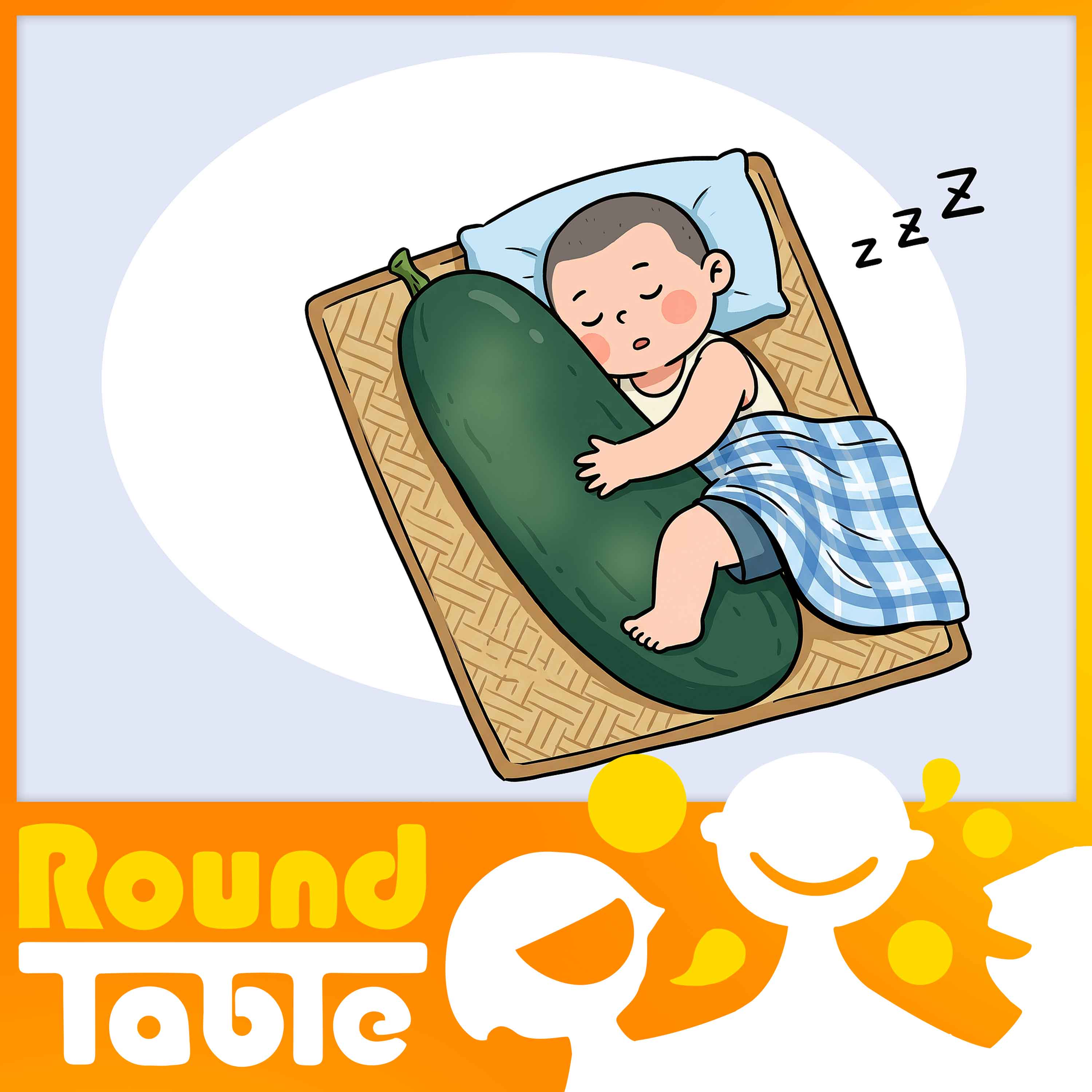
[email protected]. Summer is here, and I'm here for it. Many people around the world are enjoying the warmer temperatures, and this year and every year there's a struggle to stay cool. Air conditioners help iced drinks help cooling gadgets, a little portable fan if you happen to have one of those, those can help too. But people for a long time have been figuring out how to stay cool in the summertime, and some of those people were around centuries ago. They had some great ideas that we're going to learn about today. We're going to take a journey through China's traditional understanding of summer, because as temperatures continue to rise around the world, maybe there is something we can learn from the ancient wisdom. The 24 solar terms will start a little sciencey, I guess, on this topic today. It's more cultural than science, to be honest, because in China, the traditional Chinese solar calendar devised a year into 24 solar terms. That's what you mentioned, Steve. They were created thousands of years ago to guide agricultural production, but we kind of need to mention it today, particularly today, because today marks one of the 24 solar terms, social minor heat. That's what we are kind of going through. We're experiencing today. So the minor heat name, that name, stems from an ancient Chinese saying about hot days in the solar term itself, before the south shu is the summer solstice, which is followed by three consecutive periods during the hot season. So ancient Chinese believe that during the hottest season of the year, there are three different periods. There is the first fool, the second fool, and the third fool. So a fool in Chinese literally means lying down. In a kidding, that you are getting so hot, you're facing the heat so much that you kind of want to lie down. So fool in that term refers to the really hot days. And at the first fool period, it's relatively cooler than the second and the third period. So the solar term during this period is called minor heat. And the next one is called major heat, the hot, but not the hottest yet. I got it. So that's how the ancient Chinese philosophy kind of got through, guide you through the hottest time of the year. So what do they do, Fei Fei, to keep cool a long, long, long, long, long time ago? Well, not very surprisingly, actually, you know, back in, I don't know, one, two, one thousand years ago, for instance, they still use ice, a lot of ice. We actually have histories, books and relics telling us that in shan, in shan, see province, currently, but that was under a different name, I think thousands of years ago. People would still drop ice in the deep water and stash it away in underground sellers so that during summer, these ice can be reused to chill wine to keep food fresh. And even I've seen this gadget, I'm not saying it's a gadget, but this setup in royal families that they place a big bowl of ice in front of a fan. So the fan, the wind is cooler. You can still do that today too. Yeah, I've seen European people doing similar things. So ice, you take it from the frozen waters, frozen rivers in the wintertime, bury it deep underground kind of in the sellers, and then it would stay frozen and you'd use it in the, in the, in the summertime. So you said royal families was ice only for rich people? It's sort of, especially for summers, it's only something that the rich could afford. At first. It took three times as much stored ice to make up for what melted. So, but yeah, but by the town dynasty, which is about around a thousand years ago, smarter storage methods made ice cheaper and some merchants start to sell it. So it was still pricey, but it's something people at least more people kind of could afford during that period of time. This sounds like a great episode for Made in Ancient China. What do you mean by that? I promote the other show. Yeah. Check that out on Apple Podcasts. All right. So one of the things that they did was clothing related. The fabrics that they wore, those were made of hemp and other materials. We've seen that from culture to culture, though where people would dress in the lightest materials they could find to help stay cool. But sometimes it was all about heading outside and not staying inside, which is kind of counterintuitive. It's count as a very elegant way of spending times during the summer to, for example, gather a few friends for in Ancient China to, for example, taking a boat on the lake or going to the mountains. That's traditionally believed to be where it's the cooler parts of the, and just in comparison to markets or city centers. So that's one way. That's also deeply believed by many royal families, too. They're building a lot of the cooling palace nearby in the cities that they do all the in. Ever since, I think it back in Hondana, they've been having this practice. And then in Qingda, we see the royal emperor's building, cooling palace nearby in Beijing. In Hubei. Yeah. It's also become very famous for its size these days during summer times. Was a cooling palace. It's more of a, there are summer house. Yeah, in the, in the far locations where up in the mountain. You know why summer palace is called summer palace? I don't. It's because the forbidden city is getting so hot and during summers, some of the royal families would have to. They have to summer palace. Oh. And they have another one. Summer palace is not that far from for Bidden City though. But it really be that much cooler. The next time is a bit distant, but they have another location further north part in Chengdu. I'm so stupid. I was like, you can just take the subway for like a half an hour. They didn't have that back then. Yeah. So they have these kind of cool houses built. I think the summer house concept still is still tacked now. A lot of people still have their summer houses that they travel either around the lake, or in the rainwater around their housing, around their location. I want to talk about, okay, so that's how people stayed cool in the past. There's a way that people are staying cool these days that I think is absolutely amazing. You sleep with some food. Yeah. It's something that sound like very fake online. That will only exist in online. It looks like AI generated photos, but it's not. It's true. The best is called hugging the winter gourd, or some would call it the wax gourd, or Donggua in Chinese. And it's a very simple three-step method. First of all, you go to your local market and pick out a massive wax gourd. So this is a melon. It's a sort of a melon. Yeah. And when you say a massive wax gourd, this is human-sized. Almost a child. Yeah. As tall as five-year-old. Yeah. Yeah. And the shape of a pillow. Yes. Like a giant, giant eggplant kind of. But you need to buy that. In most of the supermarkets, currently they are sold in slice because no one can finish that within some go-mills. Yeah, you don't do that. Yeah. But if you want to cool down, you need to buy the whole one. Correct. And then. And that's a step two. You give it a scrub and place it on your bed. Because when it comes to this wax gourd, they call it wax gourd for a reason. They have a thin layer of white wax outside of that gourd and you want to scrub it away. And then, for the final step, you hug it tightly and drift off to your sleep. What's the science behind it? It cools you down. It cools you down because that gourd has about 95% of it is water. So it is one of the highest water content of any gourd. So with that amount of water, it can sort of cool you down. It absorbs the heat very slow and stays cool for a really, really long time. And science says, in the water content, it's able to keep the melon skin about 3 to 5 degrees Celsius cooler than the room temperature.
- It's that amazing. So it literally works. - Yeah. - But it doesn't work for, now if you're thinking, all right, after round table today, I'm going to the supermarket, and if they don't have a giant wax gourd, a human sized one, I'm just gonna get a watermelon, 'cause that'll probably work, right? - Not quite, yeah. - Because yeah, sure, watermelon also has as high as 90% of water containing, but their skin is really easy to crack. So you don't want to hug it and expect it to, like what, the crack down and explode in the middle of the night? - Oh yeah, so you'd be covered in watermelon juice? - Right, but for winter gourd, or we also call it winter melons, they, the other hand, they are kind of dense and sturdy on the cover, protected by that very waxy layer, so that it's not really so easy and crackable for them. - Yeah, so it's not gonna break, right? - Right. - A long time ago in China, people use those bamboo, or they're called wicker, I guess, is the word that we use to describe the build, if you will. It's like a hollowed out. - Yeah, yeah, yeah. - I think it's bamboo, and it's like hollow on the inside and you just kind of hug it. - It's kind of weaved into a long kind of eggplant-shaped thing. - Yes, yes, yes, yes. - We call it a Truforen as in bamboo, a lady bamboo, right? - A lady bamboo. - Madame bamboo or something. - You can get yourself a lady wax gourd. (laughing) - It looks weird, but it works. - It will, it definitely works, but a reminder is that infants and toddlers are not advised to hug a gourd during their sleep because it can rot. So it can pose a pain hazard. - Sure. - But still it works. I think some people even complain that they woke up in the middle of night because sometimes getting too cool to stay during the night. - Or if you wake up hungry. (laughing) - She keeps us. - She keeps us moving. - It's also very delicious. - Well, yeah, why not? Two birds, one stone, right? All right, there you go. We'll take a break and when we come back, is it okay more with our summer talk today? Is it okay to wear last year's sunscreen? (upbeat music) - Looking for passion? How about fiery debate? Wanna hear about current events in China from different perspectives? Then tune in to Round Table. Where these meets west and understand it is the goal. (upbeat music) - The perfect beach weather that we've been waiting for for months has finally arrived. You are ready to get out there and get a bit of a tan. So you go to your bathroom, you open up your cabinet and you find last year's sunscreen. And you think, hmm, is this okay to use or not? Will it still work or not? We're gonna solve that question for you today. - Well, speaking of sunscreen, I want everybody that's listening to remember a timeframe. That's three years. Because most cosmetics last about three years, unopened and sunscreen is definitely no exception on that. - Three years unopened. - Unopened or just as a reference date for whether the open ones have expired or not. So yes, sunscreen does expire and three years, kind of the maximum that you can preserve it. - And but I think most of people's concern would be about, what if I opened that and I didn't finish that last summer? Should I throw it away? I mean, it's kind of be pricey. It means sunscreen can cost a lot of money for some brands. But I think there are also indicators on the bottle of the tube of that sunscreen is that they have this small bottle and sometimes it has a number on that jar that indicates how long this product can last once it's opened. Some say 12 months, then you will see 12 M. Some say 12, 24 months, then that's 24 M. That's indicating how long. - Another logo. - The US Food and Drug Administration requires that sunscreen remain at its original strength for at least three years. That means that you can use leftover sunscreen from one year to the next and it's still gonna work. But you have to do the proper storage in order for it to work. So if you don't, then it might not be as effective. But that's kind of good to know is that you don't have to throw away. If you have a little bit left, maybe a third of a bottle left, you can still use it this year as well. - And also if your sunscreen goes bad, it's kind of apparent that you can actually tell because expired ones, they will have changes in color, for example, and also consistency and sometimes even smell. So these are very obvious signals of whether your sunscreen has gone bad and for some particular products. It requires you to make, kind of shake it up a little bit before using. But once it's shaked up, it should be like a unified piece of liquid for you to apply. But if after shaking, it still refused to mix up the oil and the liquid is separated, then that's also a very big red flag. - If it doesn't come out in the way that you expected to come out - Exactly. Just buy a new one. - Test it before you use it. Try the texture, smell it a little bit. And also how to store it. I think that would be on the list of a lot of people's minds. - I'm guessing cool dry place. - Yeah, of course. For any cosmetics products, just don't leave it in a very hot environment and also not leave it in direct sunlight. And also you put your cap tightly in. So don't let more air into that tube or can or jar and put your bottles in shade in cool dry places. And also sometimes you can wrap them in a towel to keep it clean or place it in a cooler place. Most of the time I think people would store it in their drawer would be considered a safer place than placing it somewhere. - In your car. - Yeah, yeah, that's a good idea. - Where the sun can get to it. Yeah, when you go out in the daytime, do you just, on a never mind going to the beach, just going out anywhere? Do you put sunscreen on every day? - Yeah, I do now after faith, they warned me about it. - Oh really? - Just last week. (laughing) I mean, you know, you're half open. - Half open and didn't finish sunscreen is not really my problem because I apply them every day, winter, summer, cloudy weather or sunny weather. I just apply under different SPF and different thickness on my different layers on my skin, but I will apply sunscreen no matter what. - I just dug out a deep of sunscreen that I bought two years ago. You know, and I said, - It's still, hey, now you know, it's still good. - Well, it smells okay, it looks okay. I'm only applying it on my arms and legs anyway. So yeah, so far it's been good. And yeah, after faith, it warned me about how sunlight that UV lights in sun rays can age your skin pretty obvious and quick. Yeah, that's what I'm doing right now. Just pull on those old ones on the external part of your skin, that's rougher. Unless the sensitive, and yeah, it still works. - Yeah, yeah, I need to do more of that. I only use it when I'm on vacation. And I used to go for the lower numbers, like 15 or something. - It doesn't work. - That not on beaches. - Well, yeah, see, I do tan, but I need to go, here are my colors, white red brown in that order. It's not white brown red. - I'm thinking of a poor, - I'm thinking of a poor, - I'm actually works, that actually works. - I would put on that layer in my home. - I would put it not work. - I would put it not work.
 PodcastTranscript AI