Go back

Building Strong Foundations: Junior School Academic Development at MLC School

19m 0s

Building Strong Foundations: Junior School Academic Development at MLC School

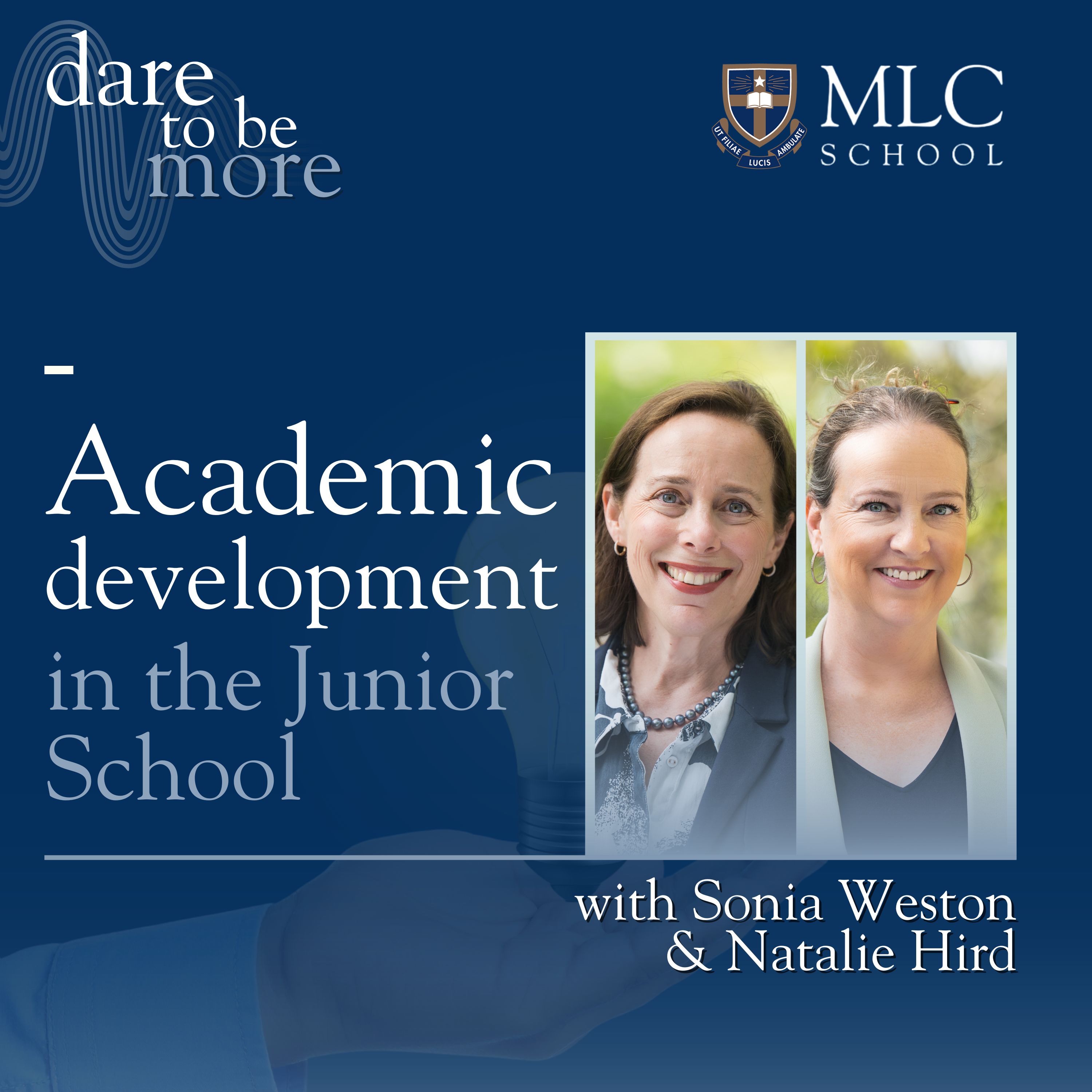
This podcast episode features a discussion with MLC School's Junior School deputies, Sonja Weston and Natalie Hurd, on academic development. They emphasize an educational philosophy that fully engages students in their current developmental stage rather than merely preparing them for the next. The curriculum, while following NSW syllabi, is enriched with unique programs like early language learning, universal instrumental music, and integrated STEM activities, exemplified by a kindergarten lesson on the Three Little Pigs. Technology is incorporated thoughtfully to enhance, not distract from, learning. The school maintains strong communication with parents through various events and digital tools. Personalized learning is supported by experienced teachers, regular assessments, and screening to identify and support each student's needs. The "Dare to Be More" ethos reflects the school's commitment to courage, growth, and challenging students and staff alike. The Year 6 program integrates with the senior school campus, ensuring a smooth transition to high school.

Transcription

3494 Words, 19149 Characters

English
Academic Development in the Junior School Welcome to Dare to Be More, the podcast from MLC School in Burwood Sydney. Today we're exploring the foundations of exceptional early education with Sonja Weston, the deputy head of Junior School for Curriculum and Natalie Hurd, the deputy head of the Junior School for Operations. Discover how MLC School honors each developmental stage from pre-kindergarten to year six, ensuring students aren't just being prepared for the next level but are fully engaged in rich learning experiences right now. Learn about innovative approaches including the language carousel, universal instrumental music and how a kindergarten lesson about the three little pigs becomes a masterclass in STEM education. I'm your co-host Anthony Purl, let's get into today's conversation. Hello everyone and welcome to another episode of the Dare to Be More podcast and today we're going to be talking all things about the academic development side of things in the curriculum in the Junior School and I'm delighted to have Sonja and Natalie with me here today. Welcome both. Thank you. Thanks. Nice to be here. Well I think we have to kick things off by asking each of you to introduce yourselves so Natalie why don't you start things off for us. Sure thank you very much. Well yes I'm Natalie Hurd. I've been a deputy here in the Junior School for six years or so and currently I am the deputy operations. And what about you Sonja? I'm Sonja. I've been at MLC just for this year and I'm the deputy head of Junior School for Curriculum. You've got the very young to getting into that point where they're getting into high school so it's quite a huge amount of development and mapping that out and being strategic about where they need to be at each point in time is in and of itself quite a task. Yeah and I think the important thing that we need to do is we need to understand that every student is not just getting ready for the next stage they are existing and fully learning and being in the stage that they're in and we need to prepare programs and units of work that work for that stage so pre-K for example is not just a readiness for kindergarten program it's a program in and of itself where we honor and work with the girls at the stage of learning that they are currently at. So we're working with the tiny little ones when they come into school and they're just learning about what it means to sit on the floor and follow an instruction and independently look after themselves right up to our year six students who are getting ready for the challenges of high school. It's quite a big spread of what we need to look after here. Natalie how much is dictated externally and how much interpretation can you have in the school environment? Yeah look we are obviously bound by the syllabus that we have in New South Wales but within that there is quite a lot of scope for interpretation and for making what we do really contextual for our school for our girls and for where they're at and where they need to get to. So that's a lot of what Sonja does when she works with those great teams is how can we use you know those documents and make them really purposeful for our environment and again we've got you know as I said the you know the curricular program for example we have learning immersion experiences for the girls so that they do have those opportunities to apply their knowledge and understandings to real world contexts and to make it purposeful for them. So there is quite a lot of scope to do that we teach obviously on the mandatory subjects as well. So there are six key learning areas that we do but at MRC school we have lots of additional things within our school time table as well. So we teach languages right from kindergarten so our girls in the junior school up until year five all learn Italian and then in year six we have a wonderful program we have a language we call a language carousel program where they get a little taste of an additional three languages, Mandarin, Japanese and French so by the time they're making subject selections they've you know had a real go at four different languages and language learning is really important at MRC school of course where an IB school and it'll be further down the track from where we are but in order to complete the IB you do need to do a language. Music is a really important part of life at MRC school too so on top of your mandatory hour a week that you sort of need to do all of our girls from kindergarten actually have two periods of music and from year one every single girl in the junior school learns an instrument so that's something extra that not a lot of schools do the way you know have drama as it's own subject. Demi is really important I think as a girls school it's it's vital that you know we put a lot of time and energy into those subjects that have traditionally girls haven't been drawn to and haven't felt confident in so you're maths and you're science and you're engineering they're a really important subjects for us. We have STEM right from pre-kindergarten girls that they have you know a appropriate lesson but it is right from pre-kindergarten that we that we offer that and expect them to participate in those sorts of things so yeah lots of scope to be able to add all the extras even that we have at MRC school. One of the great things sorry is recently a STEM lesson our kindergarten girls have been studying the three little peaks through a fairy tiles and storytelling unit and they had to build houses out of a whole bunch of different materials and then they had great fun blowing the houses down and seeing which ones survived the best so it was kind of gamifying some of their learning but it was a really high quality stemless and at the same time where they were looking at the qualities of materials and how things which different glues held things together better and then they did comparative data and some really rich conversations that linked the literacy and the vocabulary along with the STEM and science elements and even the engineering and maths elements of what they were doing so they're the kind of really rich learning experiences that our little ones have every day. I love definitely the hands-on approach because I suppose that leads to the next side of the equation which is around technology because technology becomes such a big thing in schools these days so how much of a role does that play in the curriculum and in the way they're going about things on a day-to-day basis? I might hand that one to you, Nat because that's probably more something you're more familiar with. Yeah, sure. Well, again always coming back to that syllabus there are certainly things in there that we are required to teach the girls, they're even a very different world to the parents and to all of us here today and we need to equip them to be able to operate effectively in that world. So we do, technology is obviously incorporated into what we do, our girls have access to devices from kindergarten having said that there is a real progression in the way that they use those. So initially they're not using them on a one-to-one basis then using them I would say the way I think about it is they do use them regularly but not even necessarily daily. We're really conscious of not falling into the trap and I might not be distracted I guess by the bills and whistles on using it unless it's enhancing the learning. So it's a real balancing act and up until year five and as they move through they do become, they do use them on a one-to-one basis so that they're able to learn about filing structures and saving documents and all of those sorts of things but they're not necessarily taking them home until stage three. As I say we want to use them if they're truly enhancing what we're learning about but to be really cautious because there are a lot of a lot of bills and whistles out there so yeah that's a constant discussion I guess amongst the exact kind amongst the teaching staff more generally. Yes become such a big idea these days isn't it as far as technology is concerned. Well I also wanted to ask you about how much the parents need to know about progression through the curriculum and through the academic structure versus how much you're teaching this you know letting the students know about what's going on. How do you strike that balance and information you need to give them on a regular basis? We hold information night at the start of every year so our parents know what's coming this year and we try to frame that around what's interesting and what's different about this year of learning compared to previous years. We've lots of opportunities for parents to come into the classrooms and see what snapshots of learning throughout the year so they're we have celebrations of learning in every grade we have assemblies in every grade we have lots and lots of opportunities for parents to come in in the little ones have a book picnic every second week where their parents come in and share a just a lovely little reading experience with them. We run parents seminars on literacy and numeracy in the early years so they understand our approach to teaching reading and mathematics because there has been a significant shift in educational thinking over the last five or six years and what we found is that a lot of parents who have had an older child understand how that child progressed in reading and we're kind of changing the dynamics a little bit now so we're running lots and lots of opportunities for parents to find that out exactly what we're doing and we've seen newsletters home and the girls are on CISOR a lot of their work is on CISOR as a digital portfolio for parents to be able to access the learning throughout the year as well. Is there anything else I've missed then? No I think you've hit the main things I think it's really important to keep our parents informed you know I did mention before learning happens beyond those four walls not that we have four walls either we have not a traditional physical environment in the junior school but learning certainly happens beyond school and parents are really keen to support and we are really keen to support that so Sunni says yeah lots of education sessions with our parents we share lots of information about what we're doing and we really welcome their input you know in lots in some cases they they have expertise around subject specific matter that we don't have so certainly in some of those older years you know when we're looking at science-based units and things like that we really actually welcome their input into some of the learning that goes on too and that partnership with home is just so critical for the girls to succeed in their learning and of course we have the standard formal reporting periods twice a year and parent teacher learning conversations happen twice a year as well so tell me just in summary you know I'm interested in your perspectives I mean you know where you expect the kids to to be in their progress as they go along the way how personalized isn't versus how standardised it needs to be because you know every child is different and has different different things going on at home and in some cases they may have you know English may be a second language even so how do you actually cope with that differentiation all the way through that system I think we're very fortunate here we've got really highly experienced teachers and a wealth of knowledge and we're also very fortunate that we have the junior school executive team has a significant amount of time to work with the teachers designing programs alongside the learning enhancement team and the high potential people as well so we manage to have great conversations every week not just what a cooler conversations but really highly scheduled purposeful conversations about the teaching I'm learning that needs to happen in each grade so we're aware of the development of children because we've been teaching most of us have been teaching for quite a while and we've seen a lot of progression over the years and we know what to expect we know what milestones the children should be hitting every you know at every at every point in their learning and so that helps us to sort of start figuring out where we need to make changes to our programs and the differentiation that has to happen we've got some great highly evidence-based screening tools that we use for all of the students when they come in and also at set points throughout their learning each at each stage each year that we have a really good generalized screening program that helps to flag the children that might need a little bit of extra intervention to help keep them on track and then along the way of course we've got some great assessment tools that we're using so the learning is designed around the progression of the girl at every point with really rich conversations amongst the teaching staff and the even the support staff to help us know exactly where we need to target those supports and which children we need to differentiate our programs move for and I might just add to everything you just said there Sunni took and just to point out that we do use some of our assessment tools are designed to measure not only you know achievement but also to look at ability of the girls so we do have a means to to identify those girls who potentially are underachieving for whatever reason and that's another way as well that we can step in and tailor what we're doing I guess to really challenge each girl to achieve their full potential and I think the challenge and high expectations is a really important part of us as well I think that's really important for the girls that they know that we do have high expectations of them and we will do everything we can to support them to get there but yeah I just wanted to make that point about having some assessments we do use that that will catch those underachievers because it measures ability as well yeah it's such an important thing for both the children and obviously the parents as well to know that wherever their child is at in that curve that they're being pushed to where they can be that's reasonable and I think that's the key isn't it it's going to be reasonable as well because you want them to be enjoying this. Of course such a huge part of all schooling but I think particularly primary school that that's part of our job right that we we want to nurture a lot of learning and a natural curiosity and they're going to be learners their whole life but so you're going to be in school for a lot longer than just primary school and we want them to love it yeah. Just a couple of quick things to wrap things up how prepared are the girls by the time they're at the end of that process to be ready for what awaits them in high school. I think we have a unique model here in that our year six cohort is part of our senior school campus so I I think they're extremely well prepared they've had all of the foundations of how the senior school campus works they're taught by senior school specialist teachers where they need to be so in subjects like visual arts and languages it's senior school teachers working with them so they've got all of the soft start that happens in year seven they're going in fully understanding how high school works now all they have to do is grapple with the content that comes with the year seven the increased content and the slightly challenging more challenging workload but in every other way they're fully prepared for year seven it's a really wonderful model that we operate here. Fantastic we'll just one last question for both of you that we're asking all of the people coming on the program is dare to be more is the theme for not just the program but for the school as well what does dare to be more mean to you in the context of your roles and what you're seeing so I'm interested firstly Sonja because you're new so what's it what does that theme mean to you? I love seeing it on our buses around Sydney it's a really great thing it's a really good challenging for our school I suppose because it kind of captures our mission which is really about making sure that the girls know that learning and moving forward and progressing is about being a little bit uncomfortable so about taking a little bit of challenge and pushing themselves outside of their comfort and I hope that as teachers and leaders we model that for them that they see us all the time doing things that are a little bit challenging a little bit more difficult so that might be something as Hilly has taken part in the colour run which is probably not in our most comfortable wheelhouse and just engaging with all of the opportunities that we can see as well as all of the opportunities that they can see so I think it's just about making sure that as learners and students and teachers and leaders we know what it means to stretch ourselves and to take on challenge and to have a bit of courage in the things that we're doing and what about for you Natalie? Yeah I think that the dare to be more tagline really speaks to the history of MLC school you know when we were founded some 140 years ago now the purpose of that was to prepare women to be able to study at university you know something that they hadn't been able to do prior to that so I always I always think of that when I hear the dare to be more today I guess it it aligns really closely to two of our school values to courage and to growth and to justice Sonia said you know inherent to growing and changing is an element of discomfort of vulnerability a preparedness to risk take and I think that it is really important that we do model that for the girls so that it's not something that they say is we're just expecting them to do but that they really see that improvement that is a part of growing and changing to be a little bit uncomfortable sometimes fantastic I really appreciate the insight into everything that's going on in the junior school at the moment and what is being planned at all I think you know makes it much easier for parents to understand that they're not only in very capable hands which I'm sure they know already but understand that there is a really thorough communication process and an ongoing process that is making sure that kids are getting the best out of every single day at the school environment so thank you both for being a part of the program pleasure thank you thank you thank you for joining us on dare to be more if you enjoyed this episode please subscribe wherever you get your podcasts so you never miss an episode your likes and comments also help more families discover these valuable conversations for more information about mlc school and their approach to girls education visit their website at mlcc.nsw.edu.au check out the show notes for more information the dare to be more podcast is produced by podcast done for you I'm your host Anthony Purl and we invite you to join us next time as we continue to explore what it means to dare to be more (gentle music)

Podcast Summary

Key Points:

  1. MLC School's Junior School focuses on developmentally appropriate education, honoring each stage from pre-kindergarten to Year 6 rather than just preparing for the next level.
  2. The curriculum integrates innovative programs like a language carousel (Italian, Mandarin, Japanese, French), universal instrumental music from Year 1, dedicated drama, and STEM from pre-kindergarten.
  3. Technology is used purposefully to enhance learning, with a progressive, balanced approach to device use that avoids over-reliance.
  4. Strong parent partnership is maintained through information nights, classroom visits, seminars, digital portfolios, and formal reporting.
  5. Differentiation and personalization are achieved through experienced teachers, evidence-based screening, assessments, and targeted support to challenge each student.
  6. The "Dare to Be More" philosophy encourages courage, growth, and stepping outside comfort zones, modeled by staff and aligned with the school's history and values.

Summary:

This podcast episode features a discussion with MLC School's Junior School deputies, Sonja Weston and Natalie Hurd, on academic development. They emphasize an educational philosophy that fully engages students in their current developmental stage rather than merely preparing them for the next. The curriculum, while following NSW syllabi, is enriched with unique programs like early language learning, universal instrumental music, and integrated STEM activities, exemplified by a kindergarten lesson on the Three Little Pigs.

Technology is incorporated thoughtfully to enhance, not distract from, learning. The school maintains strong communication with parents through various events and digital tools. Personalized learning is supported by experienced teachers, regular assessments, and screening to identify and support each student's needs.

The "Dare to Be More" ethos reflects the school's commitment to courage, growth, and challenging students and staff alike. The Year 6 program integrates with the senior school campus, ensuring a smooth transition to high school.

FAQs

MLC School focuses on honoring each developmental stage from pre-kindergarten to year six, ensuring students are fully engaged in rich learning experiences appropriate for their current stage, not just preparing for the next level.

Students learn Italian from kindergarten to year five. In year six, they participate in a language carousel program, sampling Mandarin, Japanese, and French to explore multiple languages before making subject selections.

Music is integral; all students have two periods of music weekly from kindergarten. Starting in year one, every girl learns an instrument, which is an additional offering beyond standard requirements.

STEM is taught from pre-kindergarten with hands-on, engaging activities. For example, kindergarten students explore concepts like material properties and engineering by building and testing houses inspired by 'The Three Little Pigs'.

Technology is incorporated progressively, with access to devices from kindergarten. Usage is balanced to enhance learning without over-reliance, moving to one-to-one device use by year five, but devices are not taken home until stage three.

The school holds annual information nights, classroom visits, celebrations of learning, assemblies, and parent seminars. Digital portfolios on Seesaw and formal reporting twice a year keep parents informed and engaged.

Chat with AI

Loading...

Pro features

Go deeper with this episode

Unlock creator-grade tools that turn any transcript into show notes and subtitle files.