The number one reason that people don't ask for help,
44% of people say that it's because
they don't want to be a burden on others.
And the amazing thing about AI
is you're not burdening anybody.
Most of us, especially women,
are not trained or rewarded
for asking for help from other people.
And so for a lot of us, it's a muscle we need to build.
It's something we need to get comfortable doing.
Women are not only adopting AI at lower rates
than men and others,
but when they use it,
they are not being rewarded
in the same way that men are.
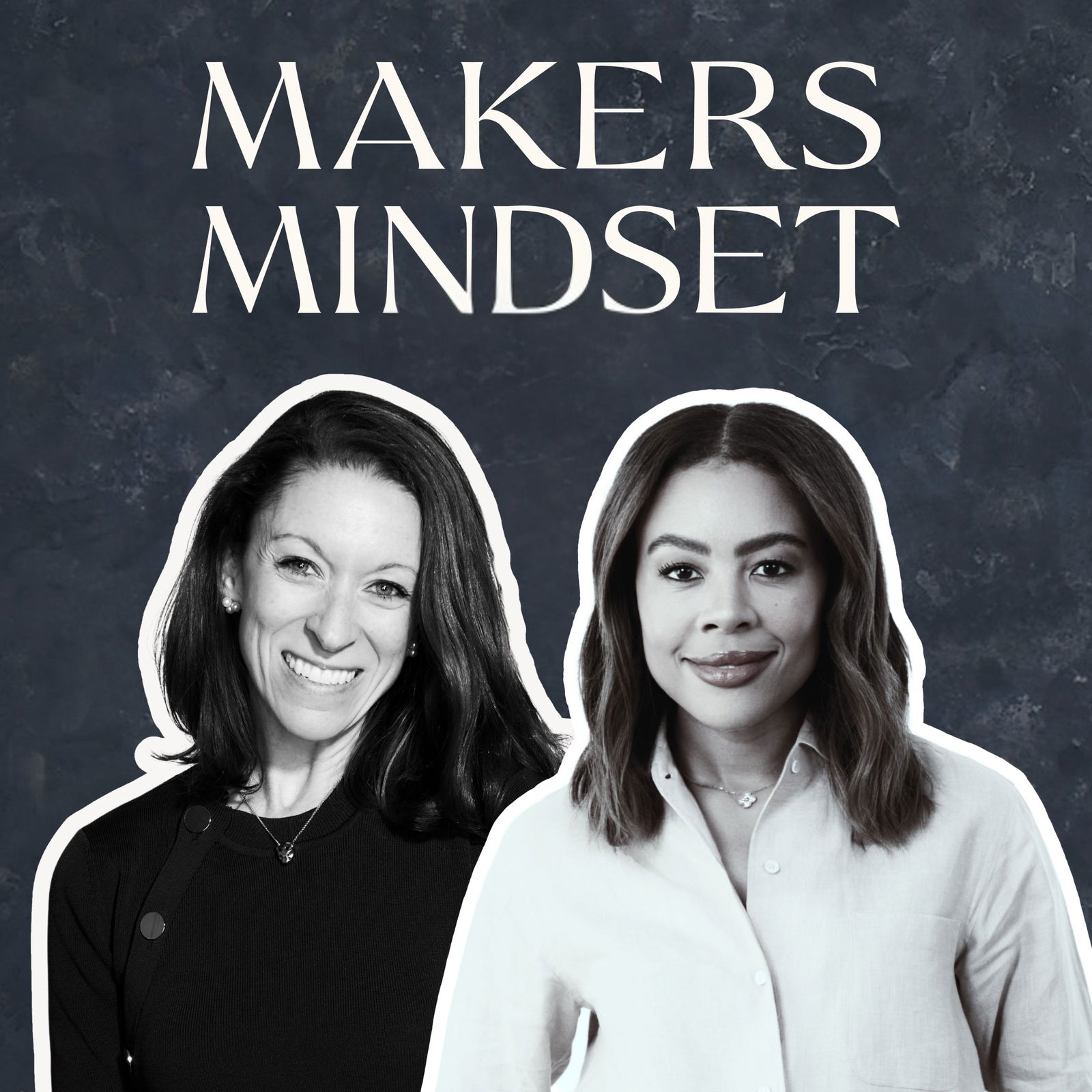
Welcome to Makers Mindset.
I'm your host, Nancy Twine.
The Makers Mindset podcast goes beyond the surface
to explore the personal journeys
of female founders and change makers.
And in this episode,
I'm in conversation with Megan Joyce,
co-founder and CEO of Duckville,
a personal assistant solution
that combines the speed and intelligence of AI
with the persistence and creativity of humans
who know how to navigate the real world.
And before launching Duckville,
Megan held executive roles at Uber and Oscar Health
where she led operations, product and platform strategy
through major phases of growth.
And she's also served as senior policy advisor
in the US Department of Treasury.
Let's go ahead and jump in.
Well, welcome, Megan.
I am so happy that you're here.
It's such an honor to be here.
Thank you so much for having me.
Yeah, and it's so funny
because I actually remember this precisely.
I was at the US Open last September
and I was sitting with a friend
who I hadn't seen in a while.
And she was on her phone a bit,
like typing in some app.
And I was like, what do you do,
and girl, like we're at the US Open.
And she was like, oh, yeah, she was like,
I'm just like assigning this task
so that I don't have to worry about it.
And I was like, what do you mean?
And she showed me the app for the first time.
And I was like, and she scrolled through it
and she had all these tasks that had been completed.
And I was like, how did I not know about this?
That makes me so happy.
It was so cool.
And so she gives me her referral code.
And I signed up and I've been using it now for a year,
actually, at 1 p.m. today, my duck bull agent
is going to call me because we're filing a claim
with my insurance provider and they just need me to authorize it.
But like, it's so incredible.
And I'm a user and I'm just so excited
to kind of learn more about this journey.
Oh, well, that makes my day.
We honestly built the product for people like you
and all anybody listening who has better things to do
with their time than wait on hold with insurance or the like.
And it is such an honor to be able to talk about it.
It's truly what gets us out of bed
and keeps us building every day.
I love that.
So let's start from the beginning
because you launched duck bull in 2022
with a very clear mission, which was to give people
back control over their time and mental space.
And the idea stem from your own experience, juggling,
leadership roles, parenting, and that invisible work
that just never makes it onto the calendar, right?
So can you take us back to that moment
when this idea first clicked for you
and how you knew it was time to turn that personal pain point
into an actual company?
Absolutely.
So, you know, rewind more than a decade
when I was an executive at Uber.
I had a job that I loved.
And I had a life that was so blessed and wonderful.
And yet I found I was spending all of my spare time
and energy on life admin.
In fact, I have this distinct memory
of sitting in my kitchen and, you know,
wanting to be spending time with my partner
who also had a big job or maybe getting some sleep
at some point and saying, we each have it to do list
a mile long of things that we need to do
before we can actually spend time together
or get some rest or engage in any number of other things
that I would love to be doing other than
waiting on hold with customer support
or finally getting that doctor's appointment booked
that I've been procrastinating.
And I thought, I'm spending my days using technology
to democratize access to rides in the case of Uber.
And surely somebody must be doing this
in the space of personal help.
And I tried every product out there
and there were some wonderful ones.
But what I discovered was a tale of two cities.
There were either very expensive
and hard to scale human centric solutions
where there was an incredibly thoughtful human
who was doing a lot of legwork,
but it was not super affordable.
And they couldn't serve many people.
And on the other end of the spectrum,
there were tech-based solutions that were in service
of delivering more affordable help at a higher scale,
but really struggled to deliver high quality help.
And in this category, in the space of personal help,
every single thing we have on our to-do list
needs to be done well and handing it off to anybody else
to get it done comes with some amount of risk and fear
that it won't be done to your standards.
And so in order for a product to work,
it actually has to deliver in a high quality way reliably
and consistently.
And what I found was the technology just didn't exist
to do that until I started using Gen AI at Oscar Health
and thinking this is the technology
that we've all been waiting for
to deliver high quality help and real leverage
to everyday people in an affordable, reliable way
that enables us all to have the help we deserve
at a price point we can afford.
- Completely.
And we mentioned some of your previous leadership roles
both at Uber and Oscar Health.
As you were getting this company going,
obviously the operations behind it
were probably like a heavy lift to making this thing
come to life.
So are there any lessons that you took
from either of those environments that you were able
to sort of apply to your day to day
as you were building this platform?
- So many.
I wouldn't be where I am today
without all of these formative experiences shaping me
into the person who had the courage
and the passion to go do this.
But I think a few things in particular.
One, both Uber and Oscar are products
that exist at the intersection of technology,
cutting edge, world class tech, and excellent humans.
And building at that intersection
is a really challenging thing.
Figuring out how to not only create workflows
and technology and human management systems
that allow those two highly complex things
to come together in the same space,
but also the culture where both can be celebrated.
It is not easy to juggle those two different
kind of ends of the human capital
or working spectrum in one space.
And I think I learned a lot from Uber and Oscar
in some ways about how to do that well
and on other days how I'm not to do it well
and ways that I do it differently.
But our team is full of people from Uber and Oscar
and other companies that have existed at that intersection
and that's where we're really passionate,
particularly in an age of AI,
where so many organizations are taking a pure AI approach
which has its merits and its opportunities.
But we like to say we're the AI company that is human first
and that's a really exciting and rewarding place to be.
- Yeah, completely and just as a user of the platform too,
for me it would be hard to imagine having everything
just be AI because there are little twists and turns
that come up when you're navigating
some of these different tasks that really do require
the human touch and I think that that's really what
differentiates your platform and actually quite frankly
like makes it work, right?
- Yes, that's exactly it.
That was the whole thesis behind bringing these two together
and frankly what has allowed us to provide
that effective reliable help today,
even in a world in which AI isn't capable of extending
into every last mile edge case.
The reality is our to-do lists are almost exclusively
last mile edge cases and AI can be really helpful
in scaling efficiently and in an highly personalized way
but it's not good at last mile, particularly on edge cases.
Coming from Uber, this reminds me a lot of autonomous vehicles
and autonomous driving.
Autonomy can be very, very helpful.
Think of the most basic autonomous driving, autopilot.
When you're on a highway and you're going 60 miles an hour,
that's something that can serve all of us really well.
But when you're navigating back roads or you're in a busy place
with a lot of pedestrians and bikers,
you need human hands on the wheel.
And that's how we think about our product.
We allow AI and encourage AI and celebrate the fact
that AI can help take tasks pretty far and pretty effectively
and pretty quickly and pretty affordably.
And then where the baton needs to be handed to a human
or a set of humans in order to get that last mile edge case done,
it can be, and then it can be handed back to AI again.
And navigating that workflow across your personal to-do list
is our bread and butter.
- Amazing.
Well, you know, with Makers mindset, our audience is,
you know, pretty wide and diverse,
but a lot of people who listen to this podcast
or either entrepreneurs themselves,
or they were once in your seat,
where they were working for a big company
and started thinking about going out
and doing something on their own.
And as I'm sure, you know, from personal experience,
you know, making that leap is a pretty big life shift
for a lot of different reasons.
And I just love to know, from your perspective,
was there a criteria or something that you used to know
that it was the right time to make the leap into entrepreneurship?
And how would you recommend that other people evaluate
when it's their time?
- First and foremost, I just want to say up front.
The world is a better place for having people like you,
Nancy, having founded a company
and for the listeners of this podcast
to even have the inkling that they may want to found something.
We need more founders who have this kind of mindset
and background, you know, so much of science
and technology and innovation reflects the people
who are leading it.
And the world would be better off for different kinds
of people with different perspectives and backgrounds,
founding companies that are important to them.
And I think the products that we would see on the market
would serve people better for the fact that more people
would be willing to take the plunge into entrepreneurship.
And I think my number one piece of advice was actually given
to me by a dear colleague and mentor of mine,
Jean-Michel Vallette, who himself was a multi-time executive
and had worked very, very closely with founders and said to me,
you have to love it.
Do you love it?
Do you love this, not just the product,
but maybe even more importantly, the mission behind it?
Can you not sleep at night?
Because you can't think of doing anything else
other than serving this mission
and you're willing to do whatever it takes, run through walls
and do the really hard thing
and get punched in the face over and over again
by rejection in pursuit of serving this mission.
And if you can answer yes to that question,
it's a big scary question, but if the answer is yes,
I don't think you can do anything other than
considering going and starting this thing.
And it is a hard question and I put it as bluntly as that
because I think founding something is incredibly difficult.
And Nancy, you can speak to this more than anyone,
going something out of nothing,
bringing something that didn't exist into existence
and pushing that uphill every single day
is one of the most intellectually
and emotionally difficult things that I've ever done.
Frankly, the only parallel I can think of is parenthood.
And thank God I love my kids because it makes
all those ups and downs worth it
and thank God I love my mission
because it makes all the ups and downs worth it.
And if you love it, it will be the tale
when you need to get through those ups and downs.
And I think we'll actually make them incredibly rewarding,
especially when you get past a little bit
of the emotional rawness of the moment.
Yeah, I mean, I can't stress enough what you said
about the fact that you have to love it wholeheartedly
in your soul, in your mind, your body.
You have to embody it because it is so hard.
And if you kind of like something or think you love it,
but don't really love it,
when you get those curve balls and those setbacks
and those disappointments,
it's just so much easier to say, you know what?
I don't think that this is the right thing for me.
I'm going to pivot to something else.
It really does take a certain level of love
and passion and mindset to keep going
despite all of those things.
So I think that that is just so, so, so incredibly important.
And I want to pivot also just into the topic of people
because as you know, success is not driven
by one individual, it really does take a team.
And it's always great when you can find people
who are just as passionate about the mission
and put them in the right seats to help lead growth forward.
And I'm sure that in your previous experiences too,
working at fast growing companies,
you've learned a lot about how to build, you know,
lean and resilient teams.
And I always tell people that leadership,
you never fully learn it like you're constantly learning it
and developing.
But I would just kind of love to know,
what was the first hire at Duck Bill?
Like what did you prioritize?
And do you feel like that was the right move?
Would you have changed things?
And I'd also just love to hear too.
Now that the company is much larger,
how do you think about your leadership
and, you know, making sure that you have
the right motivated team to drive things forward?
- Oh my gosh.
- This could be a multi-hour conversation
unto itself and to your point, it never ends.
And by the same token, I don't know if you agree with this,
but like there are very rarely right answers.
You're doing the best with the information you have
and the circumstances you have.
And I think knowing when to change
and take a different tack is almost half the battle
because some things you try are gonna work out of the gate
and many won't and that's okay too.
You know, candidly, the first people we hired at Duck Bill
were contractors, people who worked for,
you know, these kind of freelancing, engineering firms,
folks who lived abroad and we hired them
because we could hire them fast.
And frankly, I could afford them.
I was bootstrapping in those early days.
We needed to start putting together an MVP,
getting something off the ground.
And it was also kind of the tail end of COVID.
Everything was still happening remotely.
And that was what worked at the time.
And in so many ways, if you had given me a magic wand
or a crystal ball and said, you know, do it over.
Do it in your dream world.
I would say, I might have said, oh, you know what?
It would be really nice having all those people
sitting in an office with me at least five days a week.
It would be really nice having those folks, you know,
a different profile or a different approach.
At the same time, if I had waited for that,
if I had insisted on that, I don't know if Duckwell
would be where it is today.
You know, the counterfactual is so hard to construct
because we can always imagine this dream world
if things haven't gone perfectly.
And I think the reality of life and definitely a founding
is you can almost bet things are not going to go perfectly.
(laughing)
There is going to be trade-offs and hardness,
no matter which path you take.
And so we made the right decision at the time
for the funding we had and the time we had
and the objectives we had.
And we still have a lot of those people with us today,
but we've also evolved the team.
And we have brought people into, you know,
more centralized locations.
And we have higher different profiles of people.
And I think the most valuable lesson
that I still think about today,
even people who I hired late in the game,
is that I need to have the courage to confront
where things are really working,
even if they're unorthodox.
And I need to have the courage to confront
where things are not working,
even if that person were that set up,
got us to where we are today.
Just because it got us to where we are today
doesn't mean it's what's going to bring us forward.
And just by the same token,
just because conventional wisdom is,
we need all be in one place
and we need to have this profile or this background,
doesn't mean that that's a must have.
And I think the most important thing
is the willingness to evolve.
The willingness to change,
especially in a early stage high-growth organization
where, frankly, the needs of your human capital and team
evolve almost by the day, completely.
And I, one of the things too
that I think for me as a first-time founder
that perhaps, not coming from some of the scaling startups
that you came from like Uber and Oscar Hell,
was realizing how important it is
to really establish your company's values
and making sure that when you're even onboarding people
and hosting all hands meetings
that you're constantly revisiting them,
it's something that people come into the company learning
and then there's that constant revisiting.
And I'd love to hear about how you went about
defining Duckville's core values in those early days
and maybe even to what advice you would give to a founder
that's trying to create values
that actually guide decisions
and that don't just sit on a slide deck, right?
Which can sometimes happen.
- Yes, oh, Nancy, this president so much.
And I've seen, I've been in companies
where the values guide day-to-day decisions
for better or for worse.
And to your point, you know, revisiting those
to make sure we're still interpreting them
and we're still acting on them
in the way that they were intended
and that are serving our company
and our customers and our team and our ecosystem.
And I've also worked in organizations
where there's some really beautiful values
hanging on the wall and well-designed corporate value posters.
And yet I don't see them in the behavior of the company.
And writing down our values
was actually one of the first things
the early team and I did together.
And they are almost entirely intact today,
but we have absolutely evolved them
based on new folks who have come in and said,
oh, this language really doesn't resonate with me
and here's why and here's how I might evolve this
to better reflect what I think we're going for here.
And there have been some really good changes
to how we talk about our values
and ensure that they are resonating with people
in a way that we get the behavior
we are looking for out of them.
There are other than other things that we've said,
I need to add this, I'm realizing
that this is actually a core value of ours
that I need to write down explicitly.
Our values at Jack Bill are high standards, high support.
That maybe is our most important one
that we hold each other to excellence at the same time
that we're putting each other's arm around our shoulders
and saying, I'm holding you to this type of arcs,
I believe in you and I want to build this with you
and I think you're capable of it
and I know we can do this together.
Inclusivity, empowerment, and integrity
and running through walls.
Those are our five and I'll tell you
I've been thinking recently that
I'd like to write down growth mindset.
I think it's something that's embedded
within running through walls
but it's so important that I want to call it out explicitly
and that's one way that I have thought
about evolving our values over time.
One way that we've shifted the,
taken something out of our values.
Running through walls, we originally called, we hustle.
And I have a very positive connotation
with the thought of hustling.
I am a former Uber employee who hustled my butt off
for years and I saw that as a very positive thing
and we got feedback from people like,
I don't love that word and I don't think you mean
all the connotations that it comes with it in my mind
and we said, I actually think run through walls,
captures all the good without some of the negative connotations
great, call it running through walls
if that's really what we're talking about.
But I think my number one piece of advice for a founder
who is approaching, codifying those values
is honestly to start with their own value system
and to unapologetically write those down on paper
or have the courage to say them out loud
because there is almost always a constructive,
positive, important way to talk about
your personal values no matter what they are.
And I think I often see people saying,
well my real value is hustling or my real value is like,
I wanna generate a big massive, highly valued company
that'll make a lot of people rich.
And you know what, like there are some pieces of hustling
or a commercial building that could be misinterpreted
but if they are truly your values,
I think hiding them is only going to cause confusion
within the company.
And I think if you can say like, no actually
these are part of what got me where I am today
and there's a really dignified noble aspect of them
where you know for me personally hustling was about
running through walls and doing the impossible
and being fearless in doing things that a lot of people
think can't be done or you know commercial building
like creating fulfilling meaningful dignified work
for people who need it.
Like there is so much good in that.
And I think being willing to unapologetically articulate
what your personal values are as the founder
is so important because in a founder led company,
the company values are gonna flow pretty directly
from the founder and if the founder is for whatever reason
in denial or not willing to say out loud what those values are,
I think it's going to become quite confusing
and inauthentic or you know not get the full value out of them
and that's where I've seen the risk of like
we put something on the wall but we all know
the real values are something different.
And in the optimal scenario you want to be able
to shout those values from the rooftops
and for them to be this wildly inspiring
aligning feature of the organization.
- Yeah, I love that so much and I think for me too
it's where I've found values to be a really important tool
just even in the hiring process.
And I think it's important too to realize that like
not everyone may align with your values.
And that's okay too and that's why I think that authenticity
and transparency when you're actually hiring people
is like another great way to vet like hey,
is this someone who's gonna really thrive at our company
or maybe they're more well-suited for a different kind of atmosphere.
And so I think it's just a really great tool too
to make sure that you're bringing in people who are aligned
that can really thrive in the environment
and that's just good for everyone.
- Amen, amen.
And I think once you're talking about values
especially in a non-judgmental way
you can have that conversation or add
this is gonna be a great fit for the people
who share those values and also no harm, no foul
if it's not yours.
And really being candid about whether or not
that there is alignment there is so important
because in the same way that the founder has to love it
it's really helpful for the team to love it too.
And it's really helpful for the team to share those values
because the team feels the ups and downs as well.
And they have to feel like they're serving a mission
in a set of values that are aligned with their own personal
sentiments and kind of purpose on the planet as well.
- Absolutely.
And I wanna pivot for a moment because if you were to ask me
sort of what is the top topic of interest that we get
within the maker's mindset community.
I mean so many people are navigating and figuring out
how to find funding for their businesses.
And you've done exactly that.
You've raised funding from product bill,
from top tier investors like forerunner ventures.
While also staying true to your core mission
of building a trusted human centered platform
for life management.
I would love to know how you went about crafting a pitch
that felt strategic but also again true to the mission
and values, you didn't feel like you had to sort of sell
something that was different just so that you could bring
on the funding.
Can you talk a little bit about that?
- Nancy, I think the last conversation we were having
is such a perfect dovetail into this
because I would say the same thing about seeking investors
and board members as I would employees.
It is so important to be clear about your values
and to find investors and board members
who share those values too.
And if someone doesn't, that's okay.
We are living in a moment in time
where there's a record amount of capital
and dry powder out there.
And not only will seeking out investors
who have your same shared values help you be a more compelling
investment for them.
But I think you can find them.
They are out there.
And the strategic upside, the benefit that comes
when you have that alignment, not just from founder CEO
through the organization, but up into your cap table
and your board is so wildly important.
In some cases, even more important.
And, you know, I've seen it all.
At this point, having spent the last 20 years
in different roles of the high growth founder
led organizations and also on the investing side
and the capital side.
And I think when you can find that kind of values
alignment with an investor, it's so powerful.
And with regard to pitching, if you again,
if you can have the courage to say out loud
what your authentic mission is, what your values are.
And why you feel so passionately about this thing
that you are truly in love with.
I think that is, that's it.
That is the core of that pitch.
You know, especially as you move later stage,
I think having strong business fundamentals matters.
I think we're in a moment in time where
you can probably fund me as a fair amount of money on vibes,
but nothing beats excellent business fundamentals.
But I really even think getting to strong business
fundamentals starts from a place of internal alignment
and passion.
And oftentimes, especially in early stage fundraising,
seed, pre-seed seed series A, it's that alignment and passion
that gets investors excited and shows them
that you have what it takes to go through all those ups and downs.
You have what it takes to recruit a team.
And you have what it takes to fight for a place
that you have really strong business fundamentals.
And I just think, again, having the courage and the clarity
to be unapologetic about what that passion and those values
are just pays dividends in all aspects of building,
including, and maybe especially on the fundraising side.
Yeah, I agree with that.
And I want to just take that a step further, too,
because this is actually based on recent experience.
I think when you talk about passion,
I think a lot of people think that, OK, passion starts
and ends with giving just a really provoking and thoughtful,
sort of verbal pitch about their story and why in the audience.
And that is very important.
But sometimes I've seen a very passionate pitch
paired with materials that just visually look lackluster.
And that was like the one thing that was amiss for me,
because they did such a great job presenting.
But then when I saw sort of like the brand and the deck,
it was like they kind of threw it together
so that that was like the missing link.
And so I think my big piece of advice
is when you talk about passion, passion,
you know, that should fuel excellence in everything.
How you present your numbers.
How you present your deck, you know,
even if it's baby steps that you've taken with branding,
give someone a sense of like where it could go.
Like you have to be holistic about the passion
piece and the excellence.
I love that.
And I think especially in consumer businesses,
which you and I both build in the consumer space, impressions
matter.
And when you're delivering something like Duck Bill,
which is help in your personal life,
how you show up is a signal to people
about the level of excellence and detail orientation
and taste and you know, quality
that they are going to be able to expect from you.
And so we can't forget that very normal natural part
of human psychology and the fact that like,
despite our best intentions,
it may reflect some of that.
And so I think knowing that and reflecting that in your approach
is such good advice.
Yes.
Well, I couldn't agree more.
And I want to take a minute to Megan to talk a little bit
about you because I'm sure that you are, you know,
the ultimate user of your own product.
And I would love to know who someone, you know,
like you who's an expert in helping people manage their time
better, what sort of frameworks do you personally use
to decide where your time needs to go and what can wait?
What can we learn from you, Megan?
Oh, well, that's very flattering.
And I will tell you my team jokes.
Like, are we building this product for you?
And I say, absolutely, I am absolutely the ICP.
I understand this problem deeply.
If all I talk about, and it's all I hear from so many friends
and loved ones and colleagues.
And so you are right.
I am a very passionate duck bill user.
And, you know, I think in so many ways has been born out
of what I've found has worked in allowing me
to shape the life I want to lead.
Now, everybody is different.
Everybody does have different values
and their definition of the ideal life.
But for me, that's a life where I have a career that I love.
I love building something with people
that I love working with.
That is so fulfilling and rewarding and intellectually stimulating.
And I want to be able to do that.
And I want to be able to do it unapologetically,
which means, then when I have spare time,
I'm able to use it to have quality time
with the people I love, whether it's my kids or my parents
or my friends, or frankly, even myself, like to recharge
and reflect and have the energy to carry on.
And I would not be able to have that life never mind, you know,
I sit on a couple of public company boards.
I involve with a couple of nonprofits.
I sleep every now and then, you know, I wouldn't be able to lead
that life if I weren't willing and able to offload a whole bunch
off my plate.
And in so many ways, that is something of extreme privilege
that I have been able to do so.
But I don't think it should take such access
and such investment to do that.
I truly believe that time and energy
and having that kind of control and agency
in how your one life looks and feels and unfolds is a right.
It is something that every single person deserves access to,
whether or not you can afford traditional human
centric health or not.
And that is one of the reasons why I think building
this kind of product that does democratize access
to the high quality, unapologetic, shame, and guilt-free
help that we all deserve is so important and so noble.
And Duckbill and I are non-judgmental,
whether you want to use that spare time and energy
that you free up to build that career you love
or have time to stay at home with your kids
or cultivate your rare cactus collection.
You do you, whatever that is that turns you on.
The world needs all types and life is short.
And I really truly believe that that every single one of us
deserves to live that life unburdened by not just
the complexities of day-to-day modern living
but also, frankly, the things that often disproportionately
fall to women.
And I try to live and model every day for myself,
for my kids, for my team, for the people who work for me
that asking for help is actually a sign of real strength
and strategic use of your time and energy
and that if we can help imbue this product with that mentality,
then we may be able to help a few more people as well.
- I love that so much, Megan.
What a powerful mission.
That's really awesome, very real.
And we do love it.
It gets us out of bed every morning excited
and inspired to do this.
- Awesome.
Well, you know, it's an interesting time for entrepreneurs
who are launching businesses because they're launching
in the midst of this just incredible shift
that's happening through AI and how quickly it's changing.
I feel like, what are we on chat GPT version five now?
And it's just going and going and it's evolving so fast.
But I do think it's, you know, easy for early stage founders
to feel, you know, overwhelmed or left behind
if they're not, you know, thinking about how to leverage,
you know, AI to sort of get ahead.
And so from your perspective, where do you see the real practical
value of AI showing up for founders today?
- Yeah, I think just to reiterate what you just said,
things are changing at warp speed.
And so we're sitting here on August 15th
and I could tell you the specific ways I use models
and it might change by the time people are listening
to this podcast because that's how fast
and rapidly and dramatically things are changing.
And there's a lot of opportunity in that.
And there's also a lot of anxiety and uncertainty in that,
whether you're a founder, building,
and you don't know whether this product is going to be relevant
in the not so distant future.
Or do you, even just as a human?
I think, you know, any amount of uncertainty,
never mind one of this level of change is,
it's of course, it has its scary aspects
and anxious, you know, implications.
And so I just want to affirm that, but I feel it too.
I got it.
You know, I think of AI as feeling very similar
to a highly capable human for better or for worse.
And when I say that, I mean, having a very capable human
by your side can be enormously valuable
as any of us know who have had the privilege
of working with incredible teams.
But it also requires a willingness to ask for help.
It also requires some trial and error.
It also requires some trust but verify.
'Cause no human and no AI model are perfect.
And I say that because I think it provides
a little bit of a template for people
as to how to interact with some of these models.
Okay, this is like I have a human sitting next to me,
a world class analyst sitting next to me.
And I think the amazing part about that
is that the best help is guilt-free help.
The number one reason that people don't ask for help
according to a recent study we just did with the Harris poll.
44% of people say that it's because
they don't want to be a burden on others.
And the amazing thing about AI is you're not burdening anybody.
You are truly using this product
as it was meant to be used, whether that's Duckbill
or one of the large language models out there.
So if you're not, take that invitation
that asking for help, if you have any inhibition
about asking a human for help,
here's something that is truly guilt and burden-free.
At the same time, the flip side, the other side of that coin,
is that most of us, especially women,
are not trained or rewarded for asking for help
from other people.
And so for a lot of us, it's a muscle we need to build.
It's something we need to get comfortable doing.
In fact, very recent hot off the press studies
have shown that women are not only adopting AI
at lower rates than men and others,
but when they use it, they are not being rewarded
in the same way that men are.
That if a man and a woman walk into the same meeting
and a man says, I built this deck using chat GPT,
he is more likely to be seen as like,
oh, what a resourceful person.
Then if the woman comes in and of course,
not rewarding in the same way, like so many things in life.
And so I think even more reason
that the women of the world should be leaning in here
and saying, we have to get engaged.
We have to be able to figure out how to leverage this thing
in ways that work for us,
in ways that build our confidence in asking for help,
in ways that give us genuine leverage
and doing a little bit of trial and error
to figure out what that is.
And I know no two people use Duckbill the same way, right?
I might outsource planning one of my kids' birthday parties
because to me, that is not something
I get a lot of joy or energy out of.
At the same time, like someone else might love
planning their kids' birthday party
and that's what they want more time and energy to go do.
What they'd rather outsource is, you know,
some of the paperwork or customer support
or travel planning or something like that.
And my number one piece of advice for people
who don't feel comfortable or confident using AI,
but also just delegating in general is,
what is that thing you're dreading,
that you're procrastinating,
that is energy draining for you?
Start there because it's very low risk.
And worst case, you get a few steps down the road
and you're kind of where you started
and you're no worse off.
But chances are that you were actually used that help,
that asked for help to catapult something forward
that's been sitting on your to-do list
or kind of occupying space at the back of your mind
more than you've been able to do alone.
And I think that's one of the virtuous cycles
of asking for help that we have the chance to tap into
with this kind of guilt-free resource that AI affords.
I love that.
I actually haven't put those two things together,
the fact that it is, you know, a guilt-free resource.
You can ask for help without feeling like you're burdening
someone and I'm sure that there's so much,
you know, opportunity that will come from that.
And, you know, pivoting back to you,
you are a mom of three children
and you've shared, you know,
how your own experience of juggling, parenting and leadership
and, you know, that invisible mental load
was part of what inspired Duckville.
And for many founders,
motherhood doesn't just shift logistics.
It really transforms how they lead,
how they set boundaries, how they make decisions.
So what was one mothering moment
that really radically reshaped your personal boundaries
or leadership habits at work?
I love this topic because it has been such a real transformation
for me, not only, as you said,
making me a better leader and manager and more empathetic
and also more fierce in setting boundaries
and demanding excellence.
'Cause I don't have the time for anything else.
Maybe the most formative moment
was when I was preparing to go back to work
after my first parental leave and realizing how sad,
just to put it very truly.
I was so sad not to be spending all day every day
with this little human that I loved more than anything.
And it occurred to me that I better really love
what I'm doing to feel good,
not just feel okay, but feel good about spending
eight to 12 to 16 hours a day away from her.
And I say this with a bit of acknowledgement that it's a privilege
to be able to do what you love,
but also as an aspiration that we will all be better
at what we do when we love it.
And by the way, the number one predictor of success
in any kind of role is actually not prior experience
or skill, it's passion.
And so I would really encourage people to reflect on
what is it that I love doing
or what is it that I love thinking about?
And you might not be able to find the perfect dream job,
especially at the outset.
You said, I'd love to be a rock star
and I'd love to perform like,
you can't snap your fingers and have that overnight,
but what is it about that is the kind of public speaking
and public performance aspect of it?
Is it the music aspect of it?
And you can probably find your way into something
that taps into that kind of nugget of that dream job
that you really are passionate about.
And that to me has allowed me to be excited
when Monday morning rolls around
and it's time to go back to work
and also be excited when Friday evening comes
and it's time to have a weekend with my kids
that I love the time I have with them.
And I also love what I do for work.
And to me, that's what allows me to throw myself into it
because I really do selfishly love it.
And I also, you know, I think I, if this works,
like we're making the world a little bit of a better place
for them, which is part of my value system
and what gets me out of bed and helps me feel better
about being a working parent.
And I think that increased opportunity cost
that comes with having kids is actually quite a healthy thing
that we should all have a high bar
for how we are treated in the workplace,
the mission behind the works that we're doing.
And again, we might not be able to snap our fingers
and change it immediately, but that's what every single one
of us deserves.
And that North Star can be really powerful
and help you finding a place that you do feel good
about working because it is what we deserve.
And sometimes for me, it took having a kid to realize that.
- Yeah, and I think that the boundaries piece one
is a big one, just having a much more discerning
sort of filter into what you say yes to
and how you protect your time, I think is really critical.
I mean, that's something that I've really been learning more
and more over the past couple of years
is really protecting your time.
It's critical.
- It's our most limited resource, right?
And that's what Duck Bill is all about.
And that is what I think getting the most out of life
is all about, that we can't wave a magic wand
and create more of that.
And it's the number one thing so many of us would take
if we could get it.
And so how can we make the most of it?
And that's why Duck Bill exists
and I think it's a lot of what has helped me
make sure I am spending my time
in the most fulfilling ways for me.
- Absolutely.
Well, we talked about the fact that being relentlessly
passionate is pretty much, you know,
table stakes for a successful entrepreneur.
But for anyone who's listening
that maybe is still sitting on their idea,
wondering if it's time,
is there another critical piece of advice
that you would want them to hear before they take that leap?
Definitely.
The number one thing I did when I was trying to decide
whether to take the plunge and leave my job at Oscar Health
that I loved in order to go start this thing
was to run a low stakes experiment.
And frankly, this was taking a page out of the Uber playbook.
When Travis Kalanick, the co-founder of Uber
was looking to start that product,
he hired a private driver
and made that private driver available to a group of friends.
Just to understand how it would work
to have a group of people using shared access to a driver.
When was the high demand period for that driver?
When was that driver bored and lonely, did people use it a lot?
Did they see value in it?
And I took that playbook
and replicated it in my own business.
We brought on an amazing EA, a woman named Sean,
who is still with us, a critical part of our team,
who was an experienced EA.
And we said, we're gonna introduce you to 15 families
that we know, 15 customers.
And all we ask is that if they do work with you,
that we see the high level data of how much, how often,
and on what types of tasks.
And we charged that cost.
Charlens hourly rate, we passed through 100%
took no profit on it, no margin,
but also didn't subsidize it because I wanted to see
when people paid the real cost of Charlens brilliant time.
Did they use it?
And what we found was incredibly helpful
in shaping the product.
And frankly giving not only me confidence
to leave my job and go do this full time,
but also in retrospect, our early investors
gave them confidence to invest,
which was that people loved the product.
They started using it and they used it more and more
and more every day.
They wanted to tell their friends and loved ones
about this product.
To have other people have access to the amazing shawl
and they wanted to use it for a pretty wide range
of different tasks, but a discrete set of tasks
where we really could use large language models
to develop expertise and workflows.
And all of that shaped the early product
and allowed us to get off the ground in our MVP first iteration.
And I think that experiment was very affordable.
We did it nights and weekends and it gave us
the kind of green shoots of signal
that there is something here and also de-risked it
a little bit where we said, oh, yeah, okay.
I do feel confident about taking the plunge.
And I think having that experimental mindset
is something that has served us now three years into building.
And honestly, really just instilled that approach
into how we operate from day zero.
Awesome, really helpful perspective.
So Megan, before we wrap up,
we're going to pivot into five fire facts.
It's a rapid fire interview that just gives our audience
a candid glimpse into some of your personal life hacks,
perspectives and experiences.
Are you ready?
I'm ready.
Okay.
Favorite task to give to Duckville?
Oh, I, anything customer support related,
I had an Amtrak train canceled the other day
and I had to get off the train
and come back to my original destination.
And I had not only gotten that fair refunded,
my return fair refunded and a credit from Amtrak,
but it happened before I got back to my original destination.
Anything customer support related handed off to Duckville?
Amazing.
A book or author you recommend over and over.
Oh, Catherine Graham,
her autobiography personal history is so inspiring to me.
She was a really publisher of the Washington Post
in an era where there weren't a lot of women leading,
especially in those kinds of roles
and seeing up close impersonal,
the ups and downs that she went through
and how she handled them and the vulnerability
and grace and authenticity with which she led.
I just find so inspiring.
Awesome.
Favorite way to unplug without guilt, oh man.
Honestly reading.
Reading for me is so all-consuming
that I can't possibly think about what I'm missing,
what I should be doing or even the guilt that I am reading.
And so I always try to have at least a couple books
on my bedside table that I'm actually excited
to pick up and read.
Also happens to be a good alternative
to scrolling social media, which I am very guilty of.
I think we all are sadly.
One life admin task you secretly love doing.
Oh, I love folding laundry and unloading the dishwasher.
Putting dirty laundry in, putting dirty dishes
in the dishwasher, like you could not, oh my gosh,
I would outsource those so fast.
But dealing with the clean stuff on the other side,
putting things away brings me this immense amount of control.
Don't stop being calm and controlled.
I get it.
Favorite way to spend a day with your kids.
Oh, honestly, like taking a walk on the beach,
hanging out, it's those quiet moments
that we don't have to be doing anything fancy.
It's creating enough space and time
and frankly a little bit of boredom
that the real conversations start to happen.
And if you can have the joy of doing it in a place
where you have some natural beauty, it's a plus.
Love that.
And lastly, where can people learn more about DuckBill?
Go to duckbill.ai or download our app and sign up.
We would be so honored to help.
And truly, we started this company
to help people live more fulfilling joyful lives.
And so not only would we love to be a small part of that
for you, but we also love your feedback.
So you can find me at
[email protected]
for any feedback or special requests
or anything that you'd like to share
so that we can continue making this the product
that these listeners deserve.
- Amazing.
Thank you so much, Megan.
This was amazing.
Thank you, Nancy.
This makes my day.
It is such an honor to be here with you.
- Thank you.
Well, to stay connected with Megan,
the Makers Mindsack community and me,
check out all of the details and the description below
and don't forget to subscribe, leave a review
and share with your community.
Thanks so much for tuning in.
(upbeat music)
 PodcastTranscript AI