Go back

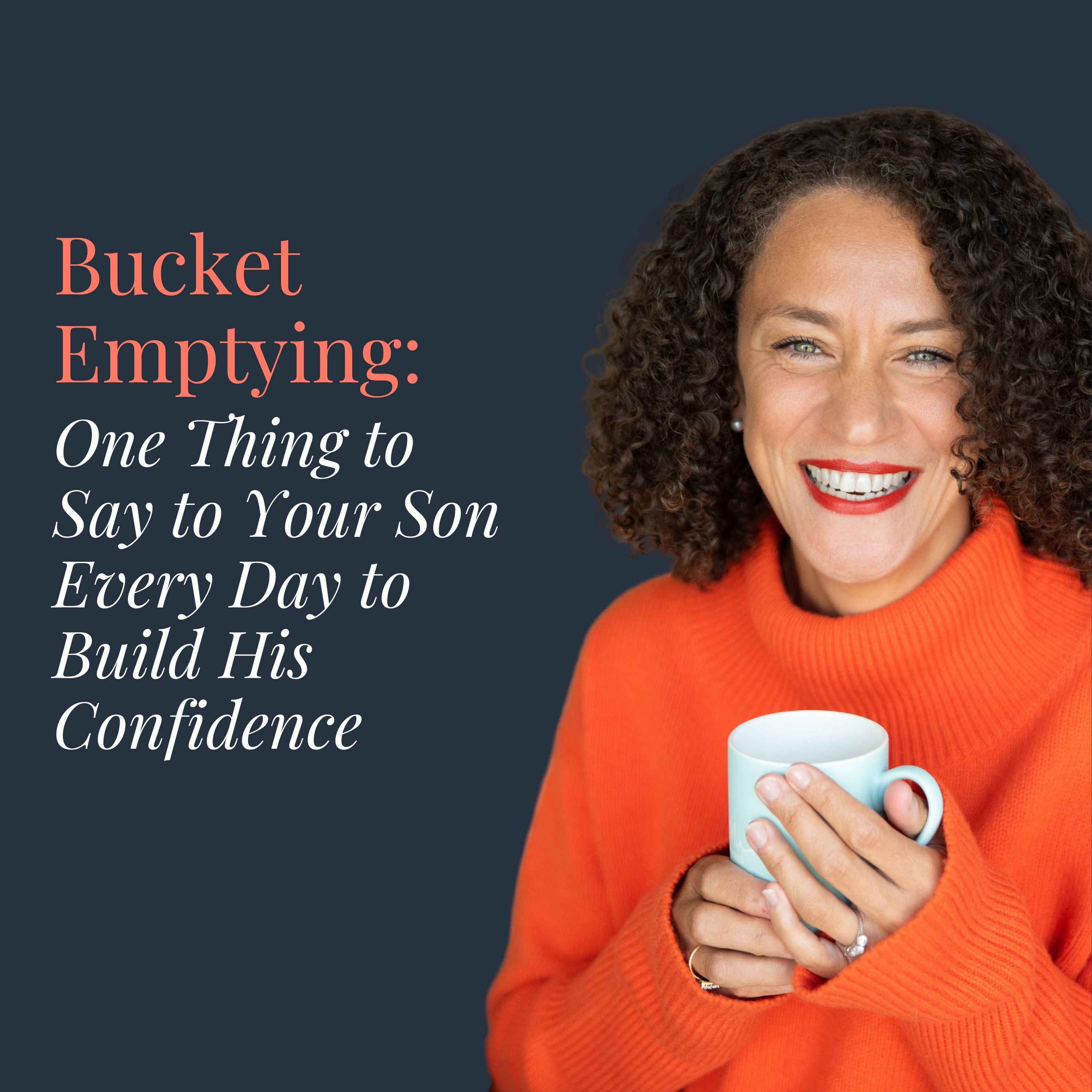
Bucket Empyting: One Thing to Say to Your Son Every Day to Build His Confidence

14m 12s

Bucket Empyting: One Thing to Say to Your Son Every Day to Build His Confidence

In this podcast episode, psychologist and parenting expert Dr. Mary Hann presents a simple daily habit to help parents build genuine confidence in their sons. She uses the "bucket" analogy to describe how everyday experiences either add or drain a child's sense of self-worth. For many boys, positive moments are rare or go unnoticed because socialization discourages them from acknowledging pride or accepting compliments. Hann's solution is one question: "What made you proud today?" Asked daily with genuine curiosity, this question teaches boys to look inward for validation, normalizes feeling proud, and opens communication about what they value and find difficult. She explains how to adapt the approach for different developmental stages, from ages 3 to 17, emphasizing that younger children may need simplified language and modeling, while teenagers may resist at first but will eventually absorb the message. She warns against two common pitfalls: jumping in to fix or reassure, and inconsistent practice. The power lies in regular, brief, warm exchanges, not lengthy formal conversations. By consistently asking and receiving answers without judgment, parents help their sons learn to empty their own bucket and build lasting internal confidence.

Transcription

2225 Words, 11963 Characters

English
Speaker 1you are literally teaching him every day to be his own source of self-worth for a lot of boys boys who have been absorbed even in a little bit of that old message that says don't be too much don't big yourself up don't show off the act of saying i'm proud of myself for that can feel genuinely uncomfortable every day ask your son this is this you you want to build your son's confidence but you genuinely don't know what to say you tell he's brilliant and he shrugs it off you encourage him before something big and he brushes it away you try to have the meaningful conversation and he's suddenly very interested in his phone you can see the gap between how much you believe in him and how much he believes himself and you just can't seem to close it or maybe you've tried the bigger approaches the sit down conversations about confidence and self-belief and they've gone precisely nowhere because with boys that's often how it goes all you really want is something simple something you can actually do for yourself something small enough to stick in today's bucket emptying episode i'm going to give you exactly that one question one daily habit i'll explain why it works show you exactly how to use it at every age from 3 to 17 and tell you what to do when it doesn't seem to be landing by the time you finish this episode you'll have one concrete evidence-based thing to say to your son every single day that will over time shift how he sees himself from the inside out that's the promise so let's get into it i'm dr mary hann psychologist and parenting expert this is the how not to screw up your kids podcast pour yourself a cuppa find a comfy seat and let's go first let's talk about the bucket so i want to start where i always start with confidence the bucket because if you've been listening for a while you'll know this analogy i'm going to start with the bucket because if you've been listening for a while you'll know this analogy well and there's a reason i keep coming back to it every one of us and our children too has a metaphorical bucket throughout any given day things happen that add water to that bucket a criticism a falling out with a friend a moment of embarrassment feeling like we don't quite measure up and things also happen that take water out that empty the bucket a kind word a moment of connection something that goes well someone who really sees us as well as the active things that we do to empty the bucket whether that's the decompression whether that's physical activities that we enjoy now here's the thing when it comes to our sons and their confidence for so many boys the things which drain and empty their bucket like the kind words the compliment the being seen are few and far between not because good things don't work but because good things don't work and good things don't happen in their day they do but because boys are often not taught to notice them not taught to name them not taught to let them land and sit there and actually empty the bucket because so much of the socialization that surrounds our boys the man up the relentless comparisons to whose fastest strongest most popular all of that fills and adds water to their bucket and they're not taught to notice them not taught to name them not taught to let them land and sit constantly and we can't control all the things which fill the bucket that's the reality of parenting but we can every single day drain a little of that water away and today i want to give you one question that does exactly that so what's the one thing every day ask your son this what made you proud today that is the one thing now i know it sounds deceptively simple and it is simple but as i always say simple and easy are not the same thing because making this a daily habit asking it with genuine curiosity knowing what to do with the answer that's intention so let me explain why this question is so powerful so why does it work when you ask your son what made you proud today you are doing three things at once that are deeply connected to building real lasting confidence now the first thing you're doing is teaching him to look inward you're not asking what happened you're not asking what his teacher said or whether he won the match you're asking him to locate something in his own experience of that day that generated a feeling pride and that feeling is entirely his own assessment his recognition his story that's how we build internal confidence rather than confidence that depends on external validation you are literally teaching him every day to be his own source of self-worth now the second thing you're doing is you're normalizing pride and i want to say something about this because i think it's important for a lot of boys boys who have been absorbed even in a little bit of that pride they're not going to be able to do it again they're not going to be able to do it again that old message that says don't be too much don't big yourself up don't show off the act of saying i'm proud of myself for that can feel genuinely uncomfortable so by asking this question every day in the safety of your relationship with him and in your home you're creating a space where feeling proud of himself is not only acceptable it's expected it's not acceptable it's not acceptable it's part of how your family operates and the third thing you're doing is opening communication because when your son starts to answer this question even with something small even with a bit of reluctance you get a window into his world you find out what he values what he found hard what he's quietly working on and that gives you so much more to work with than you'll ever get from how's your day now let's talk about how to use this question at different ages because the approach will vary now with the little ones let's say three to seven you know remember that what i'm talking about here when i start talking about chronological age is think about your child's stage of development so i'm talking about three to seven you might have a nine-year-old that you choose to adopt this approach because developmentally in terms of communication this is where they sit so remember the these are not hard fast if your child is this age this is what you must do but just think about it from a stage of development so for our little ones let's say he were at age between three to seven we want to keep it light and playful you may also need to simplify the language so instead of what made you proud it's like what's something you did today that felt good or is there something from today that made you feel happy about yourself and with very young children you might need to help them find the answer yeah i know notice that you kept trying even when that puzzle was really tricky did that feel good you're modeling what pride looks like you're helping him find the language for it and then crucially you step back and you let him own it so with our primary school age boys so we're talking roughly sort of seven to eleven there's often more willingness to engage than you might expect but they sometimes need a run-up so we don't want to ask the question the moment they get in the car the moment we meet them when we pick them up from school or when we get through the door give them some time 15 minutes or so let them decompress let them have a snack let them do what they need to do and then naturally as part of the conversation it's not a big formal sit down you would then drop it in so what made you proud today and when he answers even with something small i got all my spellings right for example receive it don't jump to the next thing don't immediately ask what else happened just sit with it oh tell me about that well the word's tricky because when you receive the small things with genuine interest you tell him that his small wins matter and when the big things happen he'll know he can tell you so now let's move on to our tweens and teenagers so this is where the question does its most important work and also where it can feel the most awkward because at this stage your son might look at you as if you've got three heads he might give you a one-word answer he might shrug and walk away and here's what i want you to do what i would encourage you to do is don't stop asking because even if he's not answering even if he's rolling his eyes he's hearing the question he knows you're asking and over time not this week probably not next month, but over time, this becomes part of your family rhythm. And one day he will come and tell you something he's proud of without you even having to ask. And that moment when it comes is going to be extraordinary. So it's just persisting with this, even if it literally feels like it's falling on deaf ears. Now for your teenage son, you might also try sharing your own answer first. So I'm actually really proud of myself today. I had a really difficult conversation and I felt I handled it well. What about you? You're modeling, you're normalizing, and you're taking the spotlight off him just enough that he doesn't feel put on the spot. Now there's a couple of things that I want to flag up. There are two things that I want to flag these up really quickly that can undermine this practice if you're not careful. The first, and as you know, I'm a reforming control enthusiast. The first is jumping in to fix or reassure. So if your son says, I'm proud that I spoke up in class today, even though I was really nervous, the temptation might be to immediately say, oh, you should always speak up. You're so brilliant at it. Which, however well meant, actually takes something away from what he just said. He wasn't looking for reassurance or comparison. He was sharing something real. And so what we want to do is just receive it. That's real courage. I'm so glad you did that. Full stop. Now the second is inconsistency. And this is probably the one that we're most likely to fall into, particularly if we find that we're not getting anywhere with it. Maybe the response doesn't land. Maybe we get the eye rolls. Maybe we just simply, they won't engage. The power of this question is entirely in its regularity. It doesn't need to be a long conversation. It doesn't need to last more than two minutes, but it does need to happen most days. Think of it like the bucket, a dripping tap, not an occasional flood. You're emptying it gradually day by day, and you're teaching him to find the tap himself. So that's your one thing for this week. And honestly, I'd love it to become your one thing for this year. What made you proud today? Every day. However he answers, grunt, shrug, one word, or an unexpected burst of sharing. Receive it warmly, without judgment, without jumping to fix or improve or compare. And then when you feel ready, share your answer too. You'll be helping him empty his forever filling bucket every single day. And more importantly, you'll be teaching him how to empty it himself. And that is one of the most powerful things that we can do. And that is one of the most powerful things That is one of the most powerful things we can do for our son. So my give this week for this episode is a little cheat sheet. Five variations of this question for the different ages and also for the different moods. So that you've always got something in your back pocket, even on the days when what made you proud today just isn't quite landing. To grab that, head over to my free resource library at www.drmaryhand.com. forward slash library. Pop in your email address and you'll get instant access not only to this week's podcast resource, but all the other free resources across all my podcast episodes. And if you found today's episode useful, please do share it with another parent who is raising a son. Because this one question, simple as it sounds, could genuinely change how your son sees himself. And that's absolutely worth sharing. So until next time. Thank you so much for watching. I'll see you in the next one.

Podcast Summary

Key Points:

  1. The host, Dr. Mary Hann, introduces the "bucket" analogy to explain how daily experiences either fill or drain a child's confidence reservoir.
  2. Boys often fail to notice or internalize positive moments because socialization teaches them to dismiss compliments and avoid pride.
  3. The single daily question "What made you proud today?" is presented as a simple, evidence-based tool to build internal self-worth.
  4. The question works by teaching boys to look inward, normalizing pride, and opening communication about their values and struggles.
  5. Age-appropriate approaches are recommended
  6. Parents should avoid jumping in to fix, reassure, or compare, as this undermines the child's ownership of his proud moment.
  7. Consistency is essential; the practice works like a dripping tap, gradually emptying the bucket over time rather than through occasional grand conversations.
  8. A free cheat sheet with five question variations for different ages and moods is available at the host's resource library.

Summary:

In this podcast episode, psychologist and parenting expert Dr. Mary Hann presents a simple daily habit to help parents build genuine confidence in their sons. She uses the "bucket" analogy to describe how everyday experiences either add or drain a child's sense of self-worth.

For many boys, positive moments are rare or go unnoticed because socialization discourages them from acknowledging pride or accepting compliments. " Asked daily with genuine curiosity, this question teaches boys to look inward for validation, normalizes feeling proud, and opens communication about what they value and find difficult. She explains how to adapt the approach for different developmental stages, from ages 3 to 17, emphasizing that younger children may need simplified language and modeling, while teenagers may resist at first but will eventually absorb the message.

She warns against two common pitfalls: jumping in to fix or reassure, and inconsistent practice. The power lies in regular, brief, warm exchanges, not lengthy formal conversations. By consistently asking and receiving answers without judgment, parents help their sons learn to empty their own bucket and build lasting internal confidence.

FAQs

Ask him, "What made you proud today?" This simple question helps build internal confidence by encouraging him to notice and name his own moments of pride.

It teaches him to look inward for self-worth, normalizes feeling proud, and opens communication about what he values and finds hard.

Keep it light and playful, and simplify the language. For example, ask, "What's something you did today that felt good?" and help him find the words if needed.

Give them 15 minutes to decompress after school, then drop the question naturally into conversation. When they answer, receive it with genuine interest and don't jump to the next thing.

Don't stop asking. Even if he rolls his eyes, he hears the question, and over time it becomes part of your family rhythm. You can also share your own answer first to model the behavior.

Avoid jumping in to fix or reassure, and be consistent. The power is in regular, brief conversations—like a dripping tap, not an occasional flood.

Chat with AI

Loading...

Pro features

Go deeper with this episode

Unlock creator-grade tools that turn any transcript into show notes and subtitle files.