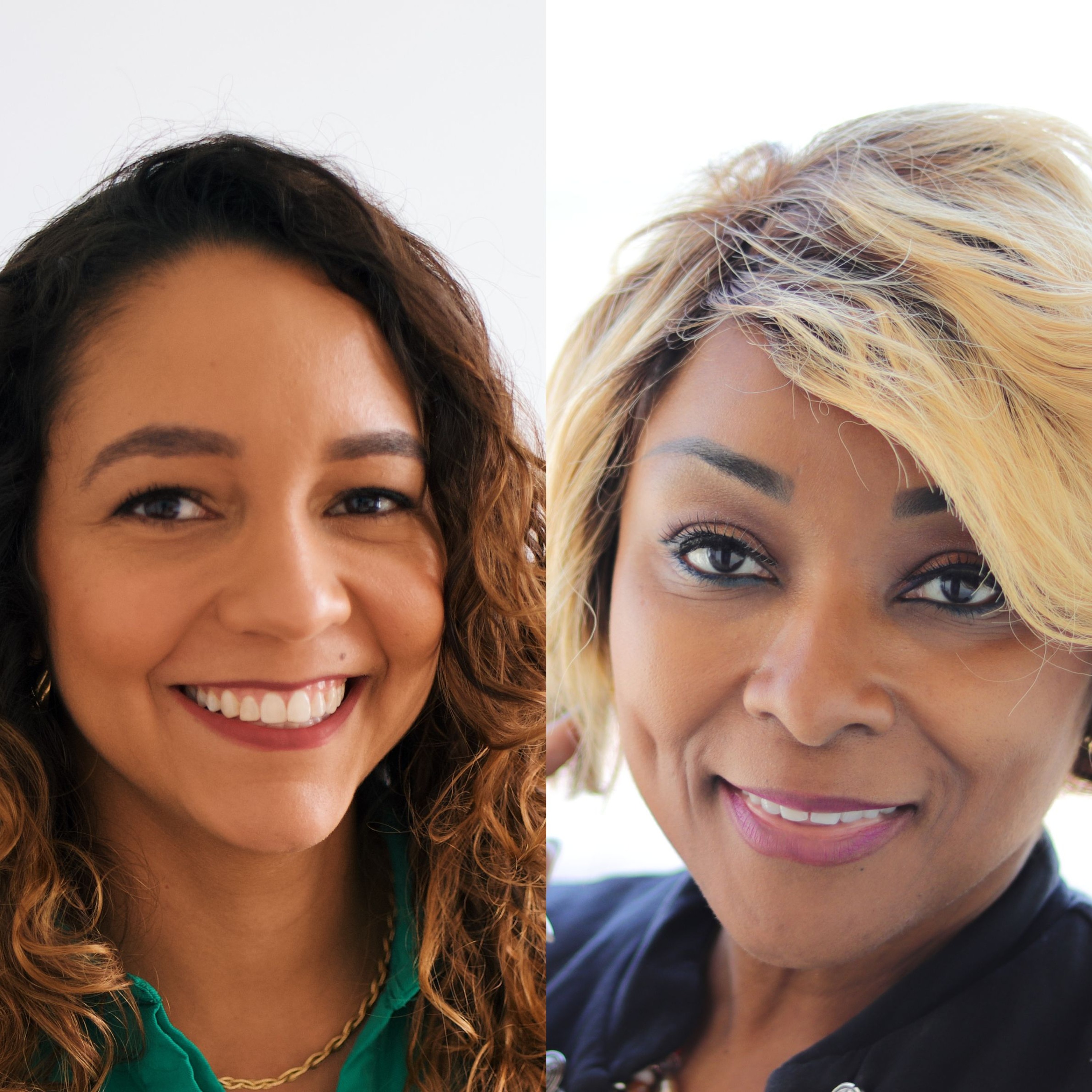
87. Breaking the Myth: Your Guide to Working at INTERPOL
45m 49s
This podcast features Interpol representatives Daniel Garcia and Magda Vigorue discussing career opportunities at the organization. They clarify that Interpol, with staff from 138 nationalities, is not only for law enforcement but also relies on corporate functions like HR, IT, and procurement, which support its operational work. They address misconceptions, noting that French is not a requirement and that the organization facilitates relocation for international hires. The recruitment process values tailored applications, practical experience, and a genuine understanding of Interpol's mission. Career paths can be vertical or horizontal, with examples of staff moving between corporate and operational roles. Duty stations like Lyon and Singapore offer a high quality of life, and the organization is committed to diversity, aiming for representation from all 196 member countries. Advice for applicants includes researching Interpol thoroughly and aligning their skills with specific job descriptions to stand out in a competitive process.
[Music] Hello everyone and welcome to a new Impact Pool podcast. And today we're here with a very special organisation, Interpol. When you think of international crime fighting, you might picture Hollywood action movies. But actually, the reality is far more fascinating and accessible. So today we're exploring career opportunities at Interpol, the world's largest international police organisation. By over a thousand professionals from 138 different nationalities work together to make the world a safer place. And with me are Daniel Garcia and Magda Vigorue. Welcome both. Thank you so much. Thank you very much. Right. Great to have you both here and your willingness to talk about Interpol and the important work that you do and to maybe demystify a little bit what the organisation is like. Maybe just a brief introduction who you are and what you do. Daniel, can I start with you? Of course. So my name is Daniel Garcia, I'm from Colombia and I have been with Interpol for over six years. My role at Interpol is head of recruitment or head of talent acquisition as you want to call it. So I will be very happy to share with you today everything I know and everything I am passionate about Interpol and my work as well. Great. Thank you. Thank you so much. I'm Magda Vigorue, everyone. Thank you for having me. I am from the United States. I'm from Miami, Florida. I've been at Interpol for three years now. I am the assistant director of Incorporate Services for contracts, procurement, travel events and everything related. It is a pleasure to be here with you. Great. Thanks Magna for sharing that. Okay. Let's dive into some questions that we have for both of you. So we'll see who answers what. Can you paint a picture of what it's really like to work for an organization that fights international crime? As I mentioned, you have lots of people employed, many different nationalities. It's more diverse than some of the UN agencies or maybe most of UN agencies. So how does this incredible diversity enhance both the work environment at Interpol's operational effectiveness? Yes, but I guess also what draws people to choose Interpol as their career destination? Yes, so that's a great question. So as you said, we are currently from 138 nationalities. Interpol has 196 member countries. So even though we picture this movie type of organization, Interpol also does have corporate functions that support the, let's say, the police work that is done from Interpol. So as a recruiter, I can tell you that the top three reasons that people choose to apply for a job at Interpol can be resumed in three. So the first one is being the biggest police organization. The second one is our multicultural environment, as I just mentioned, and the third one is the fact of having a common purpose or a common mission to work for us. Okay, yeah. My guys, is something you'd like to add to that work? I wanted to work with Interpol really for three reasons. Number one, I like a challenge. I do, I like places with opportunity and number three, I wanted to have an impact. And the organization offers that possibility for those three factors to come together. Yeah, seemed like a very fascinating organization. The only thing I can say about it, I drove past it once in Lino. That's why that ends. And of course, the movies. I can think of many, but okay, we're not going to go there. Speaking of which, maybe it's good to break the career myth and accessibility. A little bit. So many people assume, and I think this is actually true for many specialized agencies, such as the IAA, for instance, also the atomic agency. But in your case, people assume you need law enforcement experience to work at Interpol. But that's actually not true. So could you break down the different types of professionals you are actively seeking? I understand that about three quarter of the staff or international civil servants hired directly by the organization. So what backgrounds and skill sets are most valuable? And maybe also how do you help law enforcement professionals understand their potential contribution to international policing? That's a long question. Sorry. Yeah, but a very important question. In fact, the majority of Interpol staff are civil servants. But to accomplish its mission, Interpol requires super functions that go from administrative functions to IT, project management, finance, HR. So there are exciting career paths in the corporate functions that do not require a police background, but still they support these operations that Interpol leads with its member countries. And well, we have Magda here, who of course is coming from one of these corporate functions, and she can tell us more about that. Yeah, sure. Thank you very much. Thank you. Sorry, maybe I've got a quick question for you. Okay, Marley. Anna, that's okay. Now what was I thinking? Yeah. Yeah, so maybe speaking of demystifying stuff, right? So if people want to work with you, I mean, what is the most common thing or hurdle that maybe people put in their heads when they want to apply? Maybe setting aside the fact that it's only a police organization because if they look at your website, they might figure out, well, okay, there's other jobs. But is there something you find that people think that makes it less accessible? Yeah, sometimes people think that because the headquarters are based in Leon, you require to have French language skills to come and work with us. The truth is that we have four official working languages, English, French, Spanish and Arabic, and English being the common language of the organization. And this means that a French is not necessarily a requirement to come to work with us. So this is one of the aspects that maybe can refrain people from applying. Yeah. Okay, that's a good one. Thank you. Sorry, Megda, I stole the floor. You didn't, because I think that's a great question, and I'll add to it. Interpol is an international police cooperation and training agency. It fights crime through law enforcement agencies at the national level. So we really want to extend the level of transparency about the organization because one of the other difficulties is that it's difficult to find information about the core business of interpol. Not because we want it to be secret, but because in the long history of the organization, maybe that focus just wasn't there on sharing more information with the public. And that's why this forum is so important in terms of recruitment opportunities. Thank you to Impact Bowl. Yeah, no, no, our pleasure. Hey, yeah, well, I think this flows nicely. I mean, I was thinking, so maybe you can outline the breadth of corporate functions from communications to HR where you work. Daniel, IT, Finance, and explain what career progression looks like within the support services. Daniel, I'll leave that one to you, and then I can add if you'd like. That's that's good. So yes, let's say that career development at Interpol can be horizontal and can be vertical as well. I will share it with real examples. I have, for example, the case of one staff member who has been working in the organization across several duty stations, so Buenos Aires, Singapore, then Lyon, and could work, for example, in capacity building, then working in HR, then moved to our operational unit. So there you have someone who moved from corporate functions to the more operational site. But then I have another example of another staff member, close friend, and former intern from Mexico, who also grew as an intern in an operational unit, and then moved to work with the cabinet of the secretary general. So you see from the operational side to the administrative part, very closely direct in relation with the secretary general. And also in the corporate functions, as you mentioned, we have communications, we have IT, we have procurement, we have finance, and within each of these departments, the vertical and horizontal career opportunities are possible as well. So maybe Macda can also share with us anything and insights from her side. So there's value added for a positive experience for all the institution. And in essence, that can mean roles in procurement and contracts management, they can mean roles in events and travel. And throughout all of those functions, you have dedicated professionals who develop a varied set of skills and acquire a global vision for our international mission. And the function about corporate is to say that anybody who joins the organization doesn't just have to fight crime. Clearly that's part of the mission. But if you want to play a strategic role in shaping the organization, that's where the corporate function is useful. You can play a strategic role in shaping our operating model and driving our business development. Are there any particular areas or regions that typically let's say attract more or which regions attract less people and trying to maybe improve your geographical balance or don't know how it works at the end of the pool, at least as my experience, it's always a search for how do we get, you know, equitable geographical distribution within the year. Yeah, staff, is there anything you want to say about that? I think our commitment is to diversity and our objective is to have our 196 member conscious represented. You're getting close. So we are getting close. So in terms of region, I would say all the regions are important for us. Sure, sure, sure. It's all our member countries. So maybe sometimes for Europe, for our headquarters, we might lack applicants from the Asian Pacific region, for example, or from the mean region or from the America region. So this could be a region that we would be interested in having more applicants, particularly for the headquarters, but we also have six regional bureaus distributed around the world. And for which also we would like to have people local, applying to those regional bureaus, but also from all the regions going there. Yeah, because you've got, I mean, you've got the headquarters in Leon, right? And then there's a global complex for innovation, I think, in Singapore, the regional bureaus. So two in the Americas, four in Africa. Yes. Yeah. And then six percent of the Asian offices around the world. So maybe interesting to know, can you walk us through what daily life and worker at these duty stations, and maybe also what surprised you most about living Leon or Singapore? Yes. So, Magda, would you like to start or should I go? On duty stations, I'd hand to you, but I can't answer the question about what surprised me most about living in Leon. I've lived in six countries and worked at four international organizations. And Leon is a very special place, but not a place I would have expected to find. It's a very interesting place, but it's a very interesting place, but it's a very interesting place, but it's a very interesting place. And I think that Leon is a very well connected, well connected, well connected, both in Tra-Lion and in Tra-France, but also to international hubs. train two hours away from Geneva by high speed train and an hour and a half away from Moxay. So it's very easy, of course, with the international airport and all of those rail connections. Very easy to kind of get around but also easy to get around the city. It was recently voted one of the top 10 pedestrian cities in the world. Really? And the office, absolutely offers a quality of life that is above board. And I think for those reasons is a very attractive place for persons looking for those kinds of factors in factoring in their quality of life as well. Wonderful place for families to have young people grow up in, etc. And so offers a lot that perhaps it's northern neighbor is better known for but in fact, Leon offers better quality. Yeah. Well, learn something new. Always. Daniel, the duty stations perhaps. Yes. And for example, I could quote what a team member told me about living in Singapore. And she said, what surprised me most about living in Singapore is how efficient and safe it is and how comfortable it feels. So in Singapore we have also our innovation center and the environment is more familiar, more convivial but it's more fast-paced city as well as compared to Leon of course. And then we also have the regional bureaus where we have less staff and then of course, even more convivial environment with smaller teams. And what I can also tell you about Leon is that where we are located is a strategic position in terms of the view that we have of the city. We have the view to the most beautiful park of the city. We have view to the main church of the city, the river. And it's really a place where our staff feels comfortable and you feel it in the environment. A staff member can maybe have a walk through the park before coming to work in the morning. Some of them have lunch in the park and then inside we have all the multiculturality that we have. It is very dynamic. It is interesting so I say never a boring day. Very good. Have you support international staff when they come to work for Interpol and they need to relocate? How does that work? Yes, so that's a very good question because actually some people think, "Oh, but if I don't have a French passport or a visa, I cannot come to work to Interpol." The reality is that we hire international staff and we take care of all the visa process when people are relocating from outside of the duty station. So that's something that we facilitate and we are proud to do it because it really eases the installation of people coming from abroad. Yeah, good. Can I add to that please? Yeah. So Danielle's absolutely right. Interpol facilitates the logistics for moves from visas to the relocation office. But one of the things that I found most helpful having myself relocated from the US to France is that we have a dedicated human resources officer. So the person who you engage with from the moment you have been informed that you will be interviewed for a role is the same person who walks you through the entire process all the way to joining of the organization. So you're not alone and I think that is a very critical part that makes this recruitment aspect special. Not only you're not alone, you're not passed around from one person to next. You are accompanied from A to Z in your installation and that is particularly helpful. So that makes Interpol as well a very special place for those who may be interested in exploring working here. It is important to note however that having a very good educational base is important for moving forward with the application process here at Interpol. So where you may not necessarily in almost all the job descriptions say this, where you may not necessarily have higher level degrees if you have a combination of appropriate experience, then your candidacy would be one that could be of interest to the organization. Yeah, good to know. Yeah, because that's sometimes another thing that can hold people back. Yeah, maybe a little bit more sort of demystifying stuff. So moving away from mission impossible. For someone listening who is seriously considering to apply, what is the realistic pathway? I mean, I understand like many organizations you've got internships with an allowance and of course full time positions. So can you say something about the timeline, the process and I think what's always very helpful for our listeners and any specific advice that you have to stand out in your competitive process. Yes, as you said, it will depend on where is our listener in their career. I think for people who are starting their career, maybe the internships would be a good opportunity. Then we have the contracted positions, incorporate functions, but also in police functions. And then we have the second or secondment opportunities which are dedicated for police officers or governmental officials who have support from their member countries. So basically we have these three paths and it will depend on the profile and the moment of the career of the applicants. How to apply? Basically we have our career page. So it's simple to send an application. We receive a spontaneous applications but also candidates can apply to the specific vacancies that we have in our website. And the process looks like applying, then we have a short list in face, then we will have a technical test, an interview with a panel of interpolice staff members and then some references, checks, security, vetting as well in medical careers and then we will go to the onboarding face. Those are the main steps. And maybe something you could say about if people writing their cover letter or their application or their typical things that you're looking for. Yes, we are looking for people who are really motivated to work for interpol and who are motivated for our mission. So we like to see for example cover letters that are tailored to interpol. And not the same cover letter that is used to apply to every international organization. So we really value this and also we value that the person takes the time to complete the application with the good quality that those are things that will help not only for interpol but for any other job. So that's what I would say. And then of course in the interview, well it's important to hear all the examples that they can bring about what has been successful in their career in their previous experiences and how they could contribute to our mission. Yeah. Magnus, something you'd like to add to that? Yes. As a hiring manager. As a hiring manager, I'm looking for even more than what Danielle just outlined. Number one, I'm looking for the cover letter to be tailored to the job description. Please don't write. I'd love to work for a crime fighting organization. That's great, but that's not a value add for the specific role unless it is a law enforcement role specifically. So if you're looking for a role that's non law enforcement, then you need to tailor your application beyond your desire to work for the organization globally and align with its mission. That's great in principle, but practical. So as a hiring manager, I like to see practical examples of how your skill set and experience matches the job description. And that's critical, therefore, that your cover letter indicate that. Individuals who submit applications without cover letters indicate to me that you have not properly looked at the job description and you're more interested in entering the organization, but not necessarily doing that job. And I'm looking for people who are interested and are able to articulate why they are a good candidate for the role advertised. That's number one. Number two, do not underestimate the power of data. And where do you get that data? Look on the website. We have a website, not just for our external marketing, but also to give information about what we do, who we are, and what impact we hope to achieve in the world. So if you're interested in working for the organization, show us that you went to the website that you read about our mission statement, that you looked at the strategy document, and give a couple of quotes from that, mention some of that data on your cover letter. That's how you impress, because the third thing that you need to keep in mind is every single job attracts top rated candidates from all over the world. In other words, the competition is tough. So if you want to stand out, you better start looking at that website and reading the job description and seeing how what Magda and Danielle have said to you today, you can use to make your application of value to the organization. If you combine those three things, I think you have a really good chance of getting your foot in the door and making an impact. I would say lastly, and this is something I particularly, I find attractive in candidates. I want authenticity. Don't tell me you speak French, but then when the interview comes, and I ask you questions in French, you can go to the point. Don't tell me you speak Spanish. I have to speak Spanish, and I ask you a question, and you can't go there. We have a problem. So I want to have authenticity. Authenticity is important. The values of the organization include respect, include innovation, include being truthful, integrity. So let's apply those values when we apply for the job. That's important because believe it or not, we will see through you if you're not honest. Yeah. Good point. But that also, if you can answer, I'm always very curious, professional, have it, I guess. So do you still encounter that a lot? So for instance, you mentioned the cover letter. Okay. So people not very being very specific. Is that still a, you know, because that brings me to something else. I wonder what your take on it is because what I also noticed, you know, in the coaching that we also have with Impact Pool, there is this struggle that people might have. Now you've got AI, you know, it helps you with your application, but it actually takes away a lot of the authenticity if you don't, you know, my advice is always, okay, you can use it maybe to get some ideas, but then you really have to make sure you, you know, you say stuff in your own words because otherwise it looks absolutely, you know, you'll see, yeah. Yeah, because the cover letter won't match who you are in the interview. Yes. And we'll see that. And that's why I said what I said a moment ago and Danielle can attest because she sits through the interviews too, even though she has a high high level job in HR. She's not a recruitment officer, but she's, she's, she's sat through those interviews and she's seen. When you have, we are not opposed to AI. I think it shows if you're able to do sophisticated prompts, it shows a level of intellectual maturity because you know what to ask the tool in order to get the output that you, that you want. However, if the person sitting in front of us in the interview is not able to speak in the same way that the cover letter is written, we know that there's a mismatch and we are after all interpull. So we're used to, to seeing people who are trying to not be authentic and dare I say even fraudulent. So your initial question was, what do you still see that? Do you still see kind of people, you know, maybe not using a cover letter or doing things that aren't necessarily fully authentic? Yes, we do. The only problem is that people seem to think that if they make it to the interview, that's it. But in fact, you haven't because the interview will show in 99.9% of the cases who you really are. If the questions are appropriate and if the people interviewing you know what they're doing and I guarantee you they do. I'm sure they do. So completely off topic, on topic, which is a little anecdote that once speaking of applications and then doing interviews, I had this gentleman from a non, I won't name the country and we came to the interview and he had the same answer to every question. So that was really interesting. So his application was actually really good, you know, went to the written test, it was also good, but then we finally met the person and it didn't really matter what the question was. The answer was the same. So can you imagine I had nothing to do with the, okay, that's an extreme example. Extreme things do happen. That's true. You know, if you apply for Interpol, you might think, okay, well, you know, again, it's a crime fighting organization. They understand it. So yeah, yeah, for all to within and yeah, in itself is not good, but that's even the worst place to go. Yeah. Yeah. You're right. You're right about that. And that's why I mentioned, you know, I don't think that we see it as fraud if you use AI or just saying that if you're using it, then it needs to really match who you really are. And so, you know, double check and triple check to ensure that you're showing up as you're as yourself because, you know, it comes across and we can see it as professionals doing interviews of candidates from all over the world. Yeah. Hey, I want to focus a little bit on career impact if I can. So what does it mean for an employee's career and personal fulfillment? I spoke about your own film at the beginning to be part of an organization that serves at this 196 member countries. So can you share examples of how individual employees see their work translate into real world impact on combating international crime? Because in the end, you also spoke about motivation. I would think, yeah, that's actually the objective, even though if you work within HR or procurement or what have you, you want to contribute to the mission. So curious to hear about that. Yes. And thank you for that question because as HR professionals, we know that people are more and more focused in looking for a career with impact to do a job that matters to do a job that changes the world somehow. So that's a very good question. And I will give you an example. When you see news about how Interpol helped to rescue a group of children from a criminal network or how Interpol helped identify victims after years of disappearance, for example, in Project Co-identify Me, a lot of people are involved behind that result. And Interpol's role there is to support the law enforcement across a world member countries. But to do that, it requires the support of different units. For example, it requires HR to recruit the people who make these things possible, communications to share the stories. IT to ensure the information exchange, procurement and project management to equip the member contracts with the products and services to make that possible. So behind all of those functions, you have people which sometimes are unsung heroes of those stories that we see in the news. Yeah, Danielle hit it on the nose. I'll just say, and she started to go down this route so I'll pick it up. Behind every major global initiative is an ecosystem of talented professionals whom you do not see because they're not the ones in the news necessarily, but who make it happen. And I think that's the part that the recruitment team does a great job trying to bring in the highest quality candidates so that that whole ecosystem can function properly. Because even though you may only see the end result, to get to the end, there was a whole process. And that process involved a lot of people. And those people are the ones that are talented professionals out in the world listening to this podcast today and whom one day in the future will be contributing to the work that Interpol does. We hope. We're all doing it together. Yeah, maybe towards the end for podcast, the vision for the future, where do you see Interpol's workforce needs heading in the next five to 10 years? Danielle, you're over to you and then I'll add my bits. So what excites me the most about the future of Interpol as an employer? The best of all, I think, is the digitalization that is not touching only our organization, but the world itself. And Interpol is embracing digital tools, agile methods, hybrid work environments that help us stay ahead of the global challenges. So that's the first aspect. The second aspect that really excites me about us and as an employer is that we are evolving to meet the complex challenges of a fast-changing world and we are doing it with a multidisciplinary workforce. Then more and more is integrating law enforcement, but also other professionals as we have discussed before. For example, HR professionals, IT professionals, cyber security, data scientist, project managers, et cetera, et cetera. So we are joining the efforts towards a common goal. And I would say the third thing is the increasing focus on employee well-being. So we are strengthening our commitment to our employees and ensuring that we give the opportunities and the arrangements to have a good work life balance. And for example, me as a mum, as a working mum, this is one of the things that I appreciate the most about Interpol as an employer, and that I think we are evolving positively in that direction as well. Yeah. Great. Magda. I think Danielle said it best. I think that there's kind of three things that we see not just at Interpol, but in the future of work. Number one, the integration as Danielle said of digitalization in what we do. So in the future, we will be, and when I say the future, I'm not talking about 10 years, I'm talking about the near future. I will be working more with AI agents to make our work more efficient. So I think that's something that we need to look at and consider if I were starting off my career today, what would I be looking at, or even as a mid-career professional, how do I envision the future? So certainly, Danielle's right, the more intense diversity, because the greater the perspectives are from other parts of the world, the more probable solutions are that maybe having just one regional perspective may not be sufficient. So I definitely think that kind of that global integration is more and more important than perhaps it might have been in the past. And then thirdly, I think that you're going to see more cross-generational work than we have in the past. And in the traditional structures, you would see kind of younger persons having kind of lower level roles and then persons who are more senior due to their years of experience, having more senior roles. But I think the workforce of the future is much more intergenerational in terms of senior and junior. Maybe that kind of split doesn't exist in the same way. I think the split in the future is going to be a skills-based split. And not necessarily a hierarchical senior versus junior-based split. So I think we're looking at that kind of future. And I think the skill set, Danielle already talked about, but certainly diversity being an important one and the digitalization aspects also being extremely important. Well, I think it's important actually, because when I would think into Paul, you think, "Okay, police, okay, hierarchy." What you're mentioning is, "Okay, I see it will be more like skills-based, less hierarchy-based, but maybe that's how I read into it, so I'm just curious how's that working?" Do you mean if it's like that today? Yeah, exactly. Yeah. I think that today, the present structure looks a little different than what we anticipate the future structure will look like. The organization is 100 years old, 101, in fact. It turned 100 years old. Oh, yes. We just celebrated our centenary. The organization's 100 years old. And so as you yourself mentioned, when you are a traditional organization with 100-year-old roots, things move at a different pace. But there is no question things are moving in the direction that I and Danielle just quoted. So Danielle, do you want to add to that? I hope that I said it right, but you might have a better way of putting it. Yeah. In terms of the structure, hierarchy is there. Definitely, it's part of our structure. That's not a secret. However, the center of Interpol is cooperation, is teamwork. So beyond this hierarchy, we collaborate a lot between each other across units. Between different levels. So levels are great that say are not enough to collaborate, to cooperate, to discuss among us. So that's what I like about Interpol, actually. Oh, that's such an important point. Can I just jump on that because I just love what Danielle just said? Because we have so many smart people who apply for roles here, sometimes those smart people think they are the center of the universe. And unfortunately, or fortunately, no one person can make the success of any place. Everyone needs to come together to make a success. So although, yes, you want to have bright, talented, ambitious, present, intelligent contributors, the word is contribution. You are here to contribute as part of a team. You are here to cooperate, to fight a crime globally. And you are here to advance the organization as a team, as a whole. So I think keeping the fact that the organization's interest must go beyond your personal or professional interest is critical. So working as a cooperator, as a contributor, as a team member is a critical part of being a valuable member of Interpol. And I would like to encourage those listening who consider applying, yes, certainly highlight what you bring to the table and the value add that having you be a part of Interpol will bring. But also remember, you are a branch in a tree. And we need all the leaves and the branch so that the tree stays solid. Yeah. Wow. Thank you for that. I think that's super clear. Good. Hey, but then to close off, I'm really curious if you could just both of you share something about what really excites you personally about working in Interpol. I mean, we know the mission. That could be one thing. But also for people listening, like in terms of day-to-day life, you spoke about working together as a team, maybe all sorts of things. But from your personal interactions, just painting that canvas a little bit more. I would say what I am most excited personally about working here is the team I work with in the good environment that we have, how to say we help each other to progress. And that's what I enjoy the most about my work here personally. Then on a scale in terms of an impact, I am excited to be that one, that part of that service that helps people get in into at Interpol and helps people also find the right job here and contribute to the mission. So it is really exciting to attract and select talent from all around the world that makes my work very exciting, professionally speaking. Yeah. Thank you. Well, I think Danielle said it right, but she used a word that I'll bounce off of and that word is exciting. I like this job because it's exciting. I have always been a problem-solver. Who you are in your job is not just who you are in relation to the job description. It's who you've always been. It's just that the job helps you put the skills towards achieving whatever the role is. But it's who you've always been. So I've always been someone who's looked for excitement. I've never looked for the status quo. And so this job is exciting. Why? You're working on global scope with local impact. And when I say local impact, it's because you're working across borders. Interpol's role is to support member countries. It's not just to make this kind of beautiful headquarters turn or our global innovation complex, you know, be filled with staff. No, it's about working with member countries. And for me, that's very exciting because the problems and challenges that we have today are no longer local problems. Every country, everywhere in the world to some extent is dealing with even microcosms of kind of larger issues that we see in the world, cybercrime, major issue. But even on the corporate services side, you know, what were in the past considered kind of like support services. No, they are now the glue that enable the organization's mission. And that is huge. So that motivates me every day to come to work. I'm solving problems on a global scale and I'm having local impact by doing so. Yeah, beautiful. Well, thank you, Daniela Magdda for shedding some more light on what Interpol does. It's surely demystified it a little bit more for me getting to know what you're really doing. And I think for the listeners, that's really valuable. So thank you so much for your time and your willingness to be here. Merlin, thank you. It's been a pleasure. Yeah. Merlin, I just want to share some few last words for everyone who is listening. Just remember that there is room for all those that want to contribute to our mission, that we need everyone to make our mission possible and not mission impossible. But to make our mission possible and to serve our member country. So we will be looking forward to see the applications of those that are interested in coming to work with us. Yeah, absolutely. And for those job applicants out there who are eager to apply to Interpol, I would say that remember your title doesn't make you who you are, your impact does. So if you're coming here, know that you're coming here to add impact. Yes. Thank you, Daniel. Thank you, Magna. Thank you, everyone, for listening to another Impact Pool podcast and until the next time. Bye-bye. Bye-bye. Thank you. Bye-bye. Thank you. [BLANK_AUDIO]
Podcast Summary
Key Points:
Interpol is the world's largest international police organization, employing over a thousand professionals from 138 nationalities, with a mission to make the world safer through police cooperation.
While known for crime-fighting, Interpol has diverse corporate functions (like HR, IT, finance, procurement, and communications) that do not require a law enforcement background, offering both vertical and horizontal career progression.
Common misconceptions about working at Interpol include the need for police experience or French language skills; in reality, English is the common working language, and the organization supports relocation, including visa processes.
The organization seeks motivated candidates who tailor their applications to specific roles, demonstrate an understanding of Interpol's mission, and provide practical examples of how their skills match the job description.
Interpol has a global presence with headquarters in Lyon, a Global Complex for Innovation in Singapore, and regional bureaus worldwide, offering a multicultural work environment and a high quality of life in its duty stations.
Summary:
This podcast features Interpol representatives Daniel Garcia and Magda Vigorue discussing career opportunities at the organization. They clarify that Interpol, with staff from 138 nationalities, is not only for law enforcement but also relies on corporate functions like HR, IT, and procurement, which support its operational work. They address misconceptions, noting that French is not a requirement and that the organization facilitates relocation for international hires.
The recruitment process values tailored applications, practical experience, and a genuine understanding of Interpol's mission. Career paths can be vertical or horizontal, with examples of staff moving between corporate and operational roles. Duty stations like Lyon and Singapore offer a high quality of life, and the organization is committed to diversity, aiming for representation from all 196 member countries.
Advice for applicants includes researching Interpol thoroughly and aligning their skills with specific job descriptions to stand out in a competitive process.
FAQs
No, many roles at Interpol are in corporate functions like HR, IT, finance, procurement, and communications, which do not require a police background.
No, French is not a requirement. Interpol has four official working languages: English, French, Spanish, and Arabic, with English being the common organizational language.
The top reasons are being part of the world's largest international police organization, the multicultural environment with staff from 138 nationalities, and having a common mission to make the world safer.
Career development can be vertical or horizontal, allowing moves between corporate and operational roles, across different duty stations, and within departments like communications, IT, procurement, and finance.
Interpol facilitates visa processes and provides dedicated HR support from application through onboarding, ensuring a smooth transition for staff relocating from abroad.
It typically involves submitting an application online, shortlisting, a technical test, an interview panel, reference checks, security vetting, and medical clearance before onboarding.
Chat with AI
Loading...
Pro features
Go deeper with this episode
Unlock creator-grade tools that turn any transcript into show notes and subtitle files.
 PodcastTranscript AI