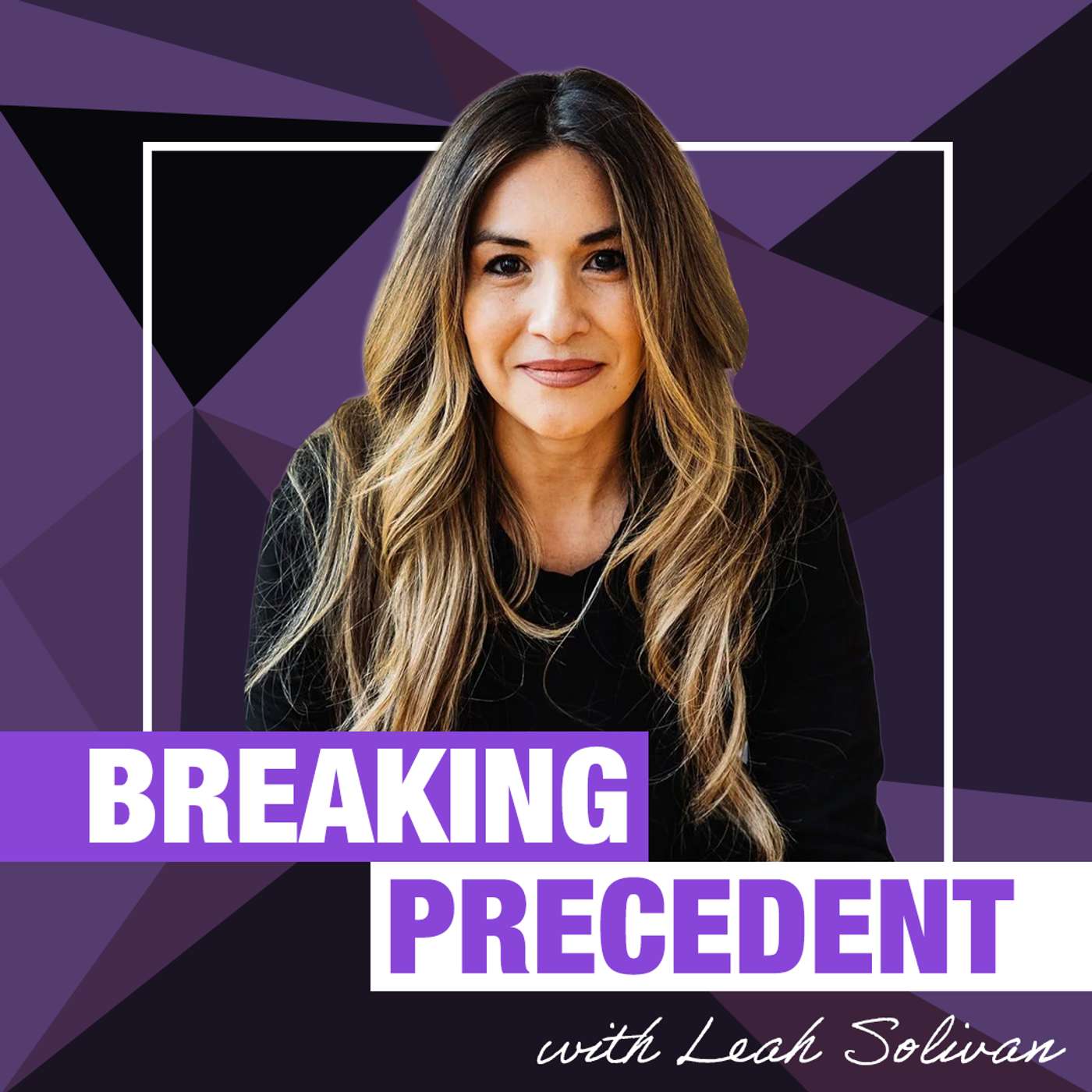
Breaking the Bias: Samara Hernandez of Chingona Ventures on Capital, Culture, and the Future of Funding
66m 22s
In this podcast episode, host Leah Sullivan interviews Samara Hernandez, founding partner of Chingona Ventures. Samara shares her journey from immigrating to the U.S. from Mexico as a child to establishing a venture capital firm with over $60 million under management. Her firm targets overlooked founders in non-traditional markets, emphasizing that such investments are smart business, not charity. Samara discusses how her upbringing in a resource-limited environment taught her resilience, a trait she values in the founders she backs. A pivotal moment came when a teacher identified her math talent, setting her on a path to study engineering at the University of Michigan and later enter finance. The name "Chingona" reflects her Mexican heritage and mission to redefine venture capital by expanding opportunities beyond typical Silicon Valley networks. Throughout, Samara highlights the importance of community, mentorship, and representation in breaking precedents and driving innovation.
(upbeat music) - Hi everyone, I'm Leah Sullivan and this is Breaking precedent. Not only did I found TaskRabbit, one of the pioneers of the gay economy, I am now a venture capitalist back in the next generation of rebels. In this podcast, we dive deep into the stories of innovators who are pushing societal boundaries, challenging precedents and setting new ones in their fields. Today, my guest is Samara Mahia Hernandez. She's the founding partner of Chingolna Ventures, a trailblazing, Platina led venture capital firm with over $60 million under management. Samara's journey is extraordinary. She immigrated from Mexico to Chicago at age six, grew up in a working class, immigrant family, and followed a path all the way to start her own venture capital firm. In 2019, she launched Chingolna Ventures, bonus points if you know what that word means. She has an audacious mission to fund overlooked founders in untapped markets. She started with just $6 million debut fund and has since grown at 10 fold, proving her thesis that investing in diverse founders, non-traditional geographies, and new majority markets isn't charity, it's smart business. Samara has already backed 40 plus companies across Fintech, Future of Work, Health, Food, and Education Technology, with a portfolio that's over 60% women CEOs and 70% racially diverse founders. She's not just rewriting who gets funded. She's rewriting what adventure capitalist looks like. And the through line of her story is grit. She's breaking precedent by showing that when you expand the aperture of venture, beyond Silicon Valley, beyond Ivy League pedigrees, you don't just change who gets the seat at the table, you change the table, et cetera. Let's dive in. Samara, thank you so much for joining me here on breaking precedent. - Thank you for having me. - I'm so excited to have you here. So much in common, so many stories to swap and all kinds of mom, VC, drama. (laughing) Well, let's dive in. So I love kicking off breaking precedent with an icebreaker that I thought both you and I could answer. And the icebreaker is growing up. Was there something about you or your family that made you feel different? Maybe you felt like you stood out and how did you turn that into a superpower? I think for me, I mean, it was so many things, but on the sort of venture capital theme, I remember pitching one of my first investors only over the phone. This was like long before Zoom meetings and all the things, right? They invested and showed up for my first board meeting. And he said to me, "Oh my God, you were so tiny." Because he had never seen me. And I guess over the phone, I sounded bigger than I am. I don't know. - Yeah. - But I think growing up, I've always been petite, I've always been tiny. And I think that has always been something. Maybe people underestimate me for. And then I just love it when I have this like sneak attack on people. (laughing) And they've realized that even though I am tiny and petite, I can kind of pack a punch, you know? So it's kind of fun. What about you? - Yeah, no, I think that's we sure that. I think we're both short and petite. - Yes. - But now I talk to one Zoom and when they meet me, they're like, "Wow, you have a tall Zoom personality." (laughing) - You get that too, that's so funny. - I get that too. It's good. You definitely punch a bobbyway class for sure, but I think that's something we share. - Definitely. - So yeah, for me, as I was thinking about this question, one thing that was unique or different growing up is, well, first of all, I remember my dad, he grew up without a lot of money. He grew up as an orphan and so he had literally three outfits his whole life, three outfits. - Wow. - Three shirts, three pants, one pair of shoes. And we also grew up with not a lot. And during the beginning of the school year, I would choose three outfits for the entire school year and three outfits for the summer. And that's all we got. That story basically is kind of how my whole life early on was limited resources, limited clothes, limited money, limited everything. And even my first chalkboard was from a garage sale. My mom bought for me and it only half of it worked. But what I used it for was for math. My sister would teach me math skills that she learned as she was three years older than me. And we would use half of the chalkboard and do math problems. And we were home a lot by ourselves because my parents were always working. We didn't have a babysitter. So that's where I got my early start in excitement for math. That's where I got, I guess the homework, I didn't have a tutor, I didn't have, you know, somebody telling me to do extra workbooks. I just did it because we had it available to us. And so whether it's clothes or whether it's chalkboard having this limited resources, but doing the best with what you have. And now it's just tied into whether it was my a setting engineering at an undergrad or in finance having to do a lot with very little, even now, right? Or even the founders that I back. Many of the founders have had to, you know, bootstrap their way to getting their product market fit or initial product out. They haven't had the easiest time with fundraising and so they've had to do a lot with a little. So I would say that early on, I'm just like, oh, I just want these new parachutes or, you know, I just want to get this actual full chalkboard or I want to, you know, be out doing stuff that normal six year olds have in your old stew. But now I value it and appreciate it. I think that's what has given me the superpower. - I love that. I'm sure founders love the empathy that you're able to bring to the table and, you know, building their businesses and their companies. It's amazing. - Yeah, it's something you can relate to and, you know, you can come from different backgrounds, different geographies, different education, but you understand the grit, you understand someone's fight, a different kind of fight. Because being a founder, no matter who you are, is hard. But having that extra layer of income inequality and not coming from certain networks, I think adds to the layer. And so, yeah, I think we can emphasize with founders in a different way. - Definitely. Well, let's start at the beginning because, Smarrer, I love your story. It doesn't fit that, you know, typical Silicon Valley mold that starts in Mexico, not Menlo Park. Can you start from the beginning and kind of share how you grew up and where your family's from? - Yeah, so we're from just an hour south of Mexico City. It's called Gordina Vaca. And I was born there. I had my early part of my life there. And we moved to the US when I was young. We moved to Chicago and actually, fast forward, my name of my fund, it ties back to my early beginnings in Mexico. So, I love the name of your fund. It is literally the best name for a venture fund in the history of venture funds. Please share it. - Is she in Gona ventures? - She in Gona, we fed as women in Mexico. You know, it's tied to my Mexican heritage. It's tied to what we've been working on and what we're trying to do in venture capital. It's tied to what the founders that we're investing in are doing. And we invest in men and women, right? But it's the Gingona vibe. It's the Gingona energy. - It is a vibe, it's definitely a vibe. - Yeah. - In the Gingona logo comes from the 1968 Olympics that were held in Mexico City. It was the first time that an Olympics was held in a Latin American country. And there was a lot going on in the US in the '60s and early, you know, in the '70s. A lot of, you know, the topics that are even now happening in the world. And so, it's also kind of a tie to that time and the issues, not the issue, but the things that came up and the opportunities that came out of it. So, everything from the name to my logo is tied to my early part of my life in Mexico. I want to just double down on that too, 'cause I don't think I often get to. But this month, this is Bani Heritage Month. And we're doing an event today and I was putting together a playlist for this event. And I was listening to the music this morning while I was doing my little workout. 'Cause I was checking to see if there's any songs that were inappropriate 'cause I brought together one back. - Yeah, right. - And we have a big dawn. We have a big dinner. We have a lot of chat though. We have Carol G, we have bad money. And I was listening to all of it. And I'm like, oh my goodness. And even the songs what they talk about, they talk about rebellion, they talk about having fun, they talk about fighting. And I just got really into it and remind me of my culture. It reminded me of my childhood and remind me of this fight. This fight that we've had, this resilience of our community will bring us together, this connection. And I just, I got a little bit emotional. And also inspired as well. And it's not just about the music. It's about what it represents. It's about our culture and our community. So anyways, I wanted to just spend a little bit of time there and just highlight and just pause for a second because of that upbringing, because of my community that's helped me and inspires me every day. That is why I've been able to get ahead of my career and my professional career, my education, and also being the place where I am today. So yeah, my life started in Mexico. It brought me to Chicago, led me to Michigan, a study engineering. It led me to starting here, my career here in Chicago. And then it's led me to all over the world. - So why Chicago from Mexico to Chicago? Was there something that drew your parents there or what was the backstory? - My grandfather was a migrant farm worker. So he came here in the 40s and he was going back and forth. So he would pick strawberries and cucumbers. And I remember, I told my grandfather that I was going to Michigan, University of Michigan. Okay, and he goes, oh, I know Michigan in Spanish. He was like, I used to pick strawberries there and I used to pick cucumbers. And just interesting how two generations down, his granddaughter is going to the University of Michigan study engineering, not too far away from the fields where he picked the crops. - It's incredible. - So my grandfather came back and forth a lot and my aunt had come here for work and she married someone here in Chicago and it's okay. - Okay. - And it happens that one person comes to one place in a town and then they bring in the cousins. - And then everybody comes. - And then everyone comes and then everyone comes. - Yeah, that's great. - But I will say, you know, that I think the power of this community is that we came to the US and we had people give us my first jacket, donate my first jacket, donate our first furniture. People that helped us kind of get accustomed to just being here. So I would say there was a lot of power in that. So Chicago was the first place where my extended family came. It's where we found opportunity and then it's where we built our community. - So you mentioned you came to Chicago, not knowing English. English was the second language for you, right? - Yes. - Okay. And so you fell in love with math. Do you consider math sort of your first language? You were able to kind of communicate with. I was a math major too. So I mean, I love math. I get it. So tell me a little bit more about that. How you got into math. - So math is universal language. And I had been a part of a Montessori School in Mexico. My son went to Montessori and I was an adult learned the Montessori structure in ways. - Yeah, is it similar in Mexico? - Yes. - As it is here too. - Yeah. - My kids did Montessori too. - Yeah. - Exactly. And I would even argue that in some ways it was a little bit more advanced in terms of what we learned. My sister was a little bit older than me and she was well ahead of whatever math we were learning in school. And so I think early on, it teaches you not just like what OnePlus 1 is too, but why certain things are coming together, why critical thinking, memorization in a different way. So my son was doing fractions and multiplication tables at age three and four, right? And so here in the US, I think there's a lot of that was the early foundation that I had before I came to the US. But also my sister, she was three years older than me. She always wanted to be a teacher and as an adult she's now a teacher. - I don't really, that's amazing. - Yeah. And so we were home by ourselves a lot. And so she would learn her math skills. And I don't know why she didn't teach me English things, but I don't know math was easier and more interesting. - Maybe you were drawn to math. - Yeah. - I think so. I remember her teaching me negative numbers in kindergarten. I was like fascinated by, I was like, oh my gosh. This is crazy. There's numbers past zero. But I remember I was in ESL until fifth grade. I would always get pulled out of class to learn basic English. But I remember in fifth grade, we were doing our multiplication tables and there was the smartest kid in this class in English Jason. And I remember doing my multiplication tables and doing a lot quicker and I was like paused. And I think I did something wrong. And I would do assignments quicker in class. And then my teacher started giving me more homework and my mom, she would send it home in my backpack and my mom didn't really read in English. And so I just thought I was getting punished because I was like something's wrong. Eventually I learned that it was because she wanted me to be challenged and she felt like I wasn't being challenged in what I was doing in class. - Wow. - She sent me to go take a test on a Saturday and I went to go to this, my dad dropped me off and it was at a high school, it was all high school students. I was the youngest one and I was like, what am I doing here? - Yeah. - And it was the ACT test. She had me take the ACT test and sixth grade. - Just a test. - That's where I was. So I'd love to say that it was something that came out of my own inspiration or my parents, but my parents just didn't know. And it was a teacher that saw this in me and put me in these situations where I was able to skip a grade and get advanced in math. And it's really interesting because now as an adult, I've been on some of the boards of these nonprofits and usually little girls at age nine around fourth and fifth grade proactively up themselves out of math programs, anything with STEM. And that might have changed over the years. - Probably not the much, yeah. Historically the way it's marketed, unless you have a parent that or somebody that knows little girls are marketed as teachers, as caregivers, whatever it is. And there's nothing wrong with that at all, but there's also this other opportunity that if somebody doesn't help you work through it or tell you can do it, then you're not going to. And so for me as an adult, I've been very intentional about any boards I'm on where there's, you know, they're targeting younger kids, which I've been on, I always make sure that at least it's 50% women or little girls. And if they've been saved me, well, we couldn't find them. I'm like, I don't care. I'm marketed differently, say it's a leadership workshop. I don't care what it is. I want to get these tools in front of these little girls and see if they're genuinely interested in it. We can help them get exposure to it. So yeah, that was a really critical time and a teacher at this critical moment was able to identify that and was able to work with me on that. And I'm far more grateful for that because that's what led me to get advanced in math and eventually get interested in engineering. So I credit this teacher with doing that. - That's incredible. It is interesting. And I've heard these stories so many times that a teacher, a mentor, someone else that has the perspective sees that superpower, sees that special skill in you and is able to draw it out. It's pretty amazing. - Now that's right. And it's interesting because I was doing this nonprofit communities in Chicago schools. And it creates programs for these students in the most vulnerable areas in Chicago. And there was one little boy who was, I think around fourth or fifth grade, Latino boy, his parents were immigrants and kind of similar situation. And I was sitting there listening to all of them and we as a board were able to chat with them. And he asked us, "This little boy goes, do you think I could be an engineer for NASA one day?" And I'm like, "Oh my goodness, yes, yes, you absolutely can." And it's hard because you don't see somebody like you. Your first thing is like, "I needed to take care of my family. I need to get a job right away. I need to make sure that they're okay." And it's someone telling you that you can do something that you've never thought in your wildest dreams you can do. So yeah, it's always one of those people that will do that for you. And I hope to do that for others, particularly my children, but yeah. - Yeah, I'm sure that you have that representation matters so much. It also sounds like maybe Jason was not the smartest kid in your class and you were the smartest kid in your class. - Maybe. - Sorry Jason. - Sorry Jason. - Yeah, sorry. So you go on to study engineering at the University of Michigan. What was that experience like? And how did you make that choice? Did you want to stay kind of close to home? How did you think through that? - So I did apply to a lot of different schools. I didn't apply to a lot of the schools far away, not for any reason, just because I just didn't know honestly. And if I'm fully transparent, I was not intending to go to college. I wanted to be a hair cellist because I worked at a hair salon and I just thought that that was my path and I loved doing hair, actually one best hair in high school. - I believe it. You do have great hair. You, to this day, continued to have great hair. - Thank you. You can't always tell, but yeah, that was my path. I remember my sister, she had a chemistry teacher that told them about engineering and that's a great path. And she was like, hey, I know you want to be a hair stylist, but have you thought about engineering? Have you thought about? - She's like, it's very similar. - Right. - Yeah. - Yeah. Actually, she said, you can study engineering. And then when you graduate, you can own your own business. And that's the way she convinced me. And I said, okay, like a legally blonde moment, what like it's hard, you know, sure, why not? - Sure. And then I think there's a lot of night even as I had in the early part of my life where I didn't know how hard something was. And so I just said, okay, well, I'll try how hard can engineering be. So I applied for a bunch of engineering programs mostly around Chicago. And I was actually really into football. I was into sports, actually. I mentioned my dad worked a lot. And when he would come home, he would watch either basketball, football, soccer, or boxing. And the way we would connect with him is we would sit next to him and just say, hey, dad, you know, explain to me the rules or what's happening or who are you going for. So we would just sit next to him and that was our bonding moment. And so I was really into sports. The way I chose the school was I visited the schools that I applied to. But I went to University of Michigan. I stepped into the big house, the stadium. And I was just like, oh my goodness, this is my home. This is it. This is where I want to be. Yeah, not realizing that it was a number two program in the country for what I was studying and-- It's amazing. All the things. But yeah, so I fell at home there. And that's how I chose University of Michigan as a great school. As a great school. Yeah. And early on, it was certainly challenging. It's actually like a shock to the system. Because I was in this huge new school. I had done well in high school. But now you're competing with everybody all over the country, people that I had went to-- private schools, boarding schools, tutors, all the things. And I was grateful for Michigan. Yeah, they had a summer engineering program for engineering students from my background. Because they saw how many of us dropped out from freshman year to senior year. And it's not just how hard it is, right? Not only that, but you're trying to figure out financially. Yeah. That is your check. That is what you have. You can't ask your parents. You're trying to figure out the cultural nuances of just being there. And so it was a shock to my system. I frankly, I wanted to quit every semester. I called my parents, and I'd be like, I'm coming home. What did they say when you called? Just one more semester, just one more. I mean, they must have been so proud to see you there studying. They were incredibly proud. The fact that they listened, and they said just one more, just one more, just one more. Yeah. Wow. I mean, I struggled. There was one point where I remember I had $5 left to my name. And I had like two weeks left, and it was like going to free events so that I can get my free pizza. And of course, I didn't want to tell my parents because I knew they didn't have a lot. However, I was a part of this first Latinas sorority in the country where we all related to a lot of our cultural nuances and read them more engineers. And so we would study together. I was part of the society of Hispanic professional engineers where we would have that cultural connection. But also, people would help me navigate. If I didn't have my financial aid right now, where are there options I can have? And I went to two office hours a day. I remember like I would go to learn the material, and then I would stay to teach others so that I knew I learned it. So these communities are what helped me stay connected and helped me realize, OK, I'm not alone. And that's what ultimately let me to graduate it. And frankly, I still have nightmares that I didn't graduate. 20 years later. Really? I mean, it sounds like it was incredibly intense. It probably built a lot of resilience. But you were able to find that community of people that were there and were your family when you were studying. Yeah. I didn't go into pure engineering when I graduated. However, there's an engineering mindset that it teaches you. Well, one, it gives you street cred, right? Because everyone knows how difficult it is. And a recruiter, he was like, you can't fake an engineering degree. And he was right. But two, it teaches you how to solve a problem that you've never seen before. So I don't know if it's just the craziness of engineering or of Michigan or what, but we would do all these homework assignments. We would learn all the things in class, as you probably know this. You get to the exam, you're like, what the heck? You've never seen this type of problem. You've never, like, where do you even start? So it teaches you how to solve a problem, break it apart, put it back together in different ways, take one theorem and another theorem and put it together. And so it really teaches you how to think about some, how to solve things in a very different way. And I still use that now in working in finance. And so it was such a great thing for me to do. I really appreciated my time there. I still have nightmares and I'm glad it's done. But I learned a lot. Sounds like it was a lot of life skills. So you did graduate. What did you go on to do? Did you go straight to Goldman after that? What was next? Yeah, I was on Wall Street. So I just told the story recently, the group of friends of mine, we went around the room, they were asking us how you got into finance. And it was literally-- so Goldman's, I did not know what Goldman's X was. I was an engineer. I had done internships at engineering firms. The Society of Hispanic Professional Engineers throws a conference and I have a bunch of people there and Goldman's X was there. My friend was at the booth. And I was talking to my friend and he walked away to go do something and there was a recruiter at Goldman. And they're like, are you interested in applying? There's this huge line. And I was just like, what do you do? I had no idea what Goldman's X did. And they're like, you know what, we need more engineers. So one of you applies like short. So I applied and had a super day and I got a job. And I remember the people in my class that were really intentional. They're like, you had a job at Goldman's X? I'm like, yeah. And my friend, what is Goldman's X? And I'm like, it's like the Gucci of investment banking. Yeah, there's so many people that apply it. Right. I just come into position. Yeah. And I mean, I obviously worked hard, but I had no idea who they were or that I could fit on Wall Street. And I was so grateful for the people early on that were just like, hey, is this something, you know, you would potentially be open to or interested in. And early on, I was just really curious. I was like, sure, why not? You know, I've done engineering internships and I didn't love them, but they were great for me to learn. And so why not? And I go, I remember the first day of my internship, I saw everybody was going to the Starbucks, getting their latte and then going to the office. I was like, maybe that's what I need to do. So I would like go into the Starbucks, get my latte, and I'm walking and there's that bull, right? I'm Wall Street. And I was just like, yeah, I've made it. I'm just like, oh my gosh, this is crazy. Everyone's like rushing to get to the office. Just like the energy on Wall Street was so crazy. And Goldman was great. They had a bunch of people from different backgrounds. They had large students, they had sports, they loved athletes. They had all different backgrounds. And so we got this intense training program for three months. They teach you everything about finance. And I just remember thinking, oh my goodness. Like my whole life, I didn't know anything about investing. It was just like safe, safe, safe. That was what I know. Yeah. Then I was exposed to billions of dollars of trades and all these different asset management and investment banking, trading, and I was like, oh my gosh, this is how rich people get richer. This is how you make money work for you. And anyways, I fell in love with it. I fell in love with my managers, my team. I had incredible managers at Goldman that pushed me early on. There was a manager that I had. Her name is Michou Kumatsuda. And she was my first manager there. And remember, she would take me to meetings with banks with one of her customers. And I would just sit in the back taking notes. And then she would afterward ask me, what do you think? And I'd ask her a bunch of questions. She's like, why didn't you ask? And the meeting was like, I can't. She's like, yeah, of course you can. She would empower me to speak up even at 19, 20 years old. But then also, she would invite me to these very important meetings so that it wasn't me just doing the Excel spreadsheet or whatever she needed me to do. It was then taking that and saying, this is how it translates into the customer and the questions that they ask and what you're doing. And she encouraged me to hit a new cup of coffee with somebody new from a different group. And she taught me the power of networking, which you know is super important in anything you do. But I continue that now. And so I had great mentors. It provided great groundwork for me to learn. And that's what it got me exposed to finance. It's incredible. And so then, how did you make the decision to go back to school and get your MBA? Did you feel like there were other skills you wanted to develop or other gaps you wanted to fill? And by the way, I was done with studying. I graduated from engineering. I was like, I am done. I'm done a lot. I've done my time. Yeah, I wouldn't say I'm the best student. I'm just like, I got it done. And I was never anticipating going back to school. I was at Goldman in the beginning of the last financial crisis. A lot was happening, as you know, in the world. And I remember seeing everybody getting laid off and us being in the news every day. And I'm now in sales. And I'm selling products that nothing's performing. The markets aren't performing. We're in the news every day. And so it's just a very challenging time. So there's a lot of learnings there and actually being sales. So going from a very technical degree, where you have to be right about everything, exact numbers, because people's lives depend on it to then telling a story and building relationships. And that was a very different skill set. Well, not everyone can do those two things together either. Right? To do those two things both together and well, I think is a very rare skill. 100%. You've done it with what you've built in your former companies. And that you're absolutely right. It is a tough skill to do that. And I didn't realize the power of learning that until much later in my life. And to your point, I realized that not a lot of people know how to do that. And so for me, a lot of it early was in sales, was also learning how to do it in my own authentic way. Because I'm not very loud. I'm not someone that brags about my every trade that I do, every sale that I make. And I remember being in the sales desk with mostly my guy friends and my manager told me later that she put me next to the loudest people. So I could be louder. So I could just amplify. And it's not just like the tone of your voice, but more of like, highlight what you did, right? And so I built a lot of great relationships there. I had a lot of fun on the sales desk. But I had to find my own unique way of selling. And that was through authentic relationships. I couldn't just sell a product that I didn't believe or that I thought was not better than the competitor. And I realized that through that, although I lost the sale that day, I learned the trust of my customers. And then when there was something that I did propose and I did offer, they listened to me. And some of the customers I still speak to today. So I realized these authentic relationships that I built that ultimately helped me be successful in sales. But sales was not the thing that I particularly enjoy. I can't be a pure salesperson. Although in our job, we have to sell all the time. But getting ranked every single day, shouldn't seem where you are in the stack literally every single morning. I was just really intense. And I'm glad I did it. But I don't formally do it. Although everybody should go through some sales because you always have to sell investors, employees, customers. I think everyone should do that. There's nothing like getting told no 100 times a day and having to get back up and smile and sell again. But I was at the point where I said, OK, I've been here long enough. And actually, I was there a lot longer than my friends. Most people do it for two years and then leave. OK. I was there a lot longer than most. And I had great mentors at Goldman that I got the opportunity to go back to business school. And I started taking my GMAT and talking to people. And I knew I wanted to say in finance, I just didn't know what I wanted to do. And my mentor said, you know, you've been here your whole life. There's a whole world out there. You have the opportunity to go to business school. A lot of people in finance go to business school and test out, try other roles, intern at other companies. And if you still think that this is the right fit, you can always come back. So I did. I went to Northwestern for my MBA and a lot of great learnings there. I was able to test out a lot of different things I wanted to do. I didn't know exactly what I wanted to do. I had a great group of-- it was four or five of us-- female friends that were all applying for finance. And so we would all help each other with a hedge fund interview or the banking interview. Yeah. It was really sweet, just a great community. I realized that throughout my life, I've just found these pockets of community that have helped support me, which I'm grateful for. There was a class called VC Lab. And it gave me the first internship in early stage investing. Well, one of those done was by accident. I don't mean to mention that my whole early part of my career is by accident. But my friend was applying for VC Lab. I was like, what is that? And she's like, oh, you should apply. I'm like, OK. So I filled out the application, but I didn't actually submit it. And I guess it was a deadline. So it automatically submitted it for you. You just save it, but it just submitted it for me. OK. I don't know if that's still the case, but I'm grateful that have. Wow. OK. Because the next day I got a call to interview with this local firm here. And I was her second intern. And whoa, it was like a whole different world for me. I was able to look at companies that maybe had a product, had barely a team, maybe some revenue, and had to decide whether or not to invest. And I was like, what is this world? And these products were crazy. Like some of them were actually in a market. Some of them had no market. Some of them brand new ideas that were out of this world. And I got to assess them and help the team decide whether or not we were going to be a small part in their journey. And I was fascinated by this because as an engineer, you have all the numbers, all the traction, all the things. You know, when you're selling publicly traded stocks or bonds, you have all the data, you have history. And here you have nothing. You have a team and a dream, basically, and you have to figure out to invest. And that's how I got really interested in early stage and investing. It is so much gut instinct. It's so much falling in love with these founders and their missions and their visions. What were the things that you saw as opportunities or gaps when you first came into venture or that kind of inspired you to launch Qing-Gon. Yeah, so I finished that internship. And I started my first role in venture capital with a local fund here in Chicago. I graduated without a job. And this is where my sales skills came in. I started just trying to find startups to work with for free. I don't advise anybody to do free work, but I was like, this is-- you know, they're not going to hire me. So I did customer discovery calls. I did financial models. I put pitch decks together in hopes that someone would notice. And then I found a local VC fund that gave me my first paid project to work with them, did that. And then I found the two partners of my former firm that had just launched. They really had a website. And they were looking to hire someone. So I was a third person on this team. And there was nothing. Like when I joined, there was no process, no str-- it was just kind of like, let's go. And that was great. What I realized through that was that I actually like starting things from the ground up. And I had done that in my roles at Goldman in different capacities, right? I was like an entrepreneur where I liked building things from the ground up, taking new processes, bringing it to a new city. And this was working with a fund that had just started. I built a lot of the process on how do you do diligence, how to source, how to track portfolio companies. The partners were great. They let me have a lot of flexibility in autonomy. And it says they would start building a brand and start talking to founders and bringing them in and start leading deals. And so I got exposed to all aspects of a venture firm, which led me to launch my own firm. I didn't realize it at the time. But the gaps I saw was threefold. So one was that I had talked to enough founders, where I was like, OK, these are founders building unique products in markets that they fully understand. And the ones that are getting funded and not getting funded it's not always because they have a better technology, better product, better team. Right. Actually, the opposite. It's actually usually the ones that have more traction, more experience, but they just don't have a network are the ones that get the least amount of funding. And I had enough of a track record where I said, OK, I've seen enough of these businesses. Where I'm like, if we would have just given them their first check, right? If we would have invested in them when we saw them, how many of them would have gone on to raise other rounds of money? How many of them would have been able to launch their product, get some revenue, get their first customers? And I realized that a lot of them, too, were from markets that were ones that I uniquely understood. And whether it's from my background, my upbringing, what I was a part of. And I saw an opportunity to go in earlier, especially in ecosystems that didn't have mature angel network, Chicago being one of them, but many outside of the valley, where we're still growing, to go in industries that we're growing. But VC was slow to fund. And three, go with founders that didn't fit the traditional mold in terms of founder background, experience, and geography. I actually went out to create an angel group. I never thought I could raise a VC fund. This was back in 2017. So it wasn't like the influx of capital and VC funds that were coming to the market the last two, three years. I was just-- I had this deal flow. I had this opportunity. And so I went out to create an angel group. And in that process, I found the Chief Investment Officer of my largest LP. And he said, well, we're looking to invest in something like this. Initially, they wanted to give an allocation to a student and put them in a VC firm. OK. And I was like, well, you can do that. Or you can give it to me. I have a picture together. I've done this before. I have a deal flow already. And so they gave me my first check. And it was an initial first fund. I was able to get it off the ground, start proving out my thesis. And how big was that first fund? Was that the $6 million fund? $6 million first fund, proof of concept fund. We made 27 investments across Ventant, Future of Work, Future of Learning, and Health Tech. And I'm a big fan of small funds. I know some people raise big funds early on, first fund, $300 million, whatever. If that works for you, great. For me, I loved the fact that it was a smaller fund. I could uniquely prove out my thesis. Smaller funds also, you can slot in to the end of a round. You can't really have any equity ownership constraints. And so it was very friendly. And back to my upbringing, when I had three outfits for the whole year, or where I had like half a chalkboard, you learn to do a lot with very little. So I had process a decent place to be able to capture all the deals I was looking at. I had interns and being interns that helped me out and put my memos together with me. And so there's more money, more problems, the bigger you are. Right. More money you have, whether just start up or a fund. There's all these added complexity. So it allowed me to prove out what I wanted to prove out to then raise a larger fund and be able to then prove out the other things, portfolio construction, and all these things. So I really valued that first fund. Yeah, I mean, something you said that really resonates with me is when I was starting my company taskrabbit, I would meet with angel investors. I would meet with venture funds. And they'd always say something like, oh, you know, for your first round, why don't you just go to friends and family? I'm like, whose friends and family have millions of dollars? Like I did not understand what they're saying. And I think the gap that you saw with Chingana and coming in super early, that pre-seed, like be the friends and family for these founders that don't have a network, that don't have high net worth individuals, right? They can just call. It's so smart, right? It's so smart and so needed. Yeah, I learned what friends and family was when I did this. I was like, yeah, what's friends and family round? And it's interesting because whether it's a fund manager or founders, there are people that have that network. And that's great, right? You can go to literally friends and family and friends of your parents or whatever it is and get your first few checks. That's awesome. But you know, some people don't have it. And that's okay. And for us to be their first check, the first friends and family round. There's still a path. Yeah. So you went from that $6 million first fund to second and now third funds that you're operating. So talk to me about sort of scale now and what Chingana is like today. Yeah, we took that initial concept and the hypothesis and learned a lot. And now we have been scaled it to be a much bigger presence while staying small for today. So we are a high conviction first check. And so what we had to do the first fund, for instance, was we couldn't necessarily lead because we had a such a small check, but we were able to participate in a lot of rounds. However, we started to see kind of towards the end that there were some investments that we wanted to invest, but there was no lead or people needed to lead. They had to set the terms. This was before like a lot of the safes were being implemented. And so I remember saying like, well, okay, you have the round completed. You just need an VC firm to lead it. Well, if you don't mind, I'll put in 250K check and I could lead. I mean, I let all these deals at my last fund. Yeah. So I can do that as long as another investors don't mind. I mean, we'll do the due diligence, we'll do the paperwork, all the things. And so I realized that that helped catalyze the round. I realized that helped even set the right infrastructure early on for a lot of founders. And I helped validate that there was somebody there that knew what they were doing that was going to do all the due diligence, all the legal paperwork and make sure that it was done correctly. And so we decided to do that and then double down on it. So in our next fund, this current fund we're leading a third of the deals. And we're going to get to about half of the deals where we lead set the valuation. We have increased ownership. Now our check size is much bigger. Now we have money for follow on. So we can not only do that, but continue to support the founder pre-Series A and Biobacry pre-Series A. And we also love being the first check. We love being the first yes. As you know, VCs are herd mentality, but it's only amplified in environments like the ones that were in today in many cases because people want to know that a round is over subscribed. They don't want to take the risk of them being the first yes. And so VC just feeds on FOMO. It's just like FOMO FOMO FOMO. Right. Exactly. And some can get that. And look, some of our founders have gotten six term sheets. And they're over subscribed all the things. But there's many that are not. And what we've started to prove already is that one more the first yes and write the term sheet. Someone who has to. The round becomes very quickly over subscribed. And we do a lot more due diligence than some pre-Series firms. I would say we're fast for the Midwest. We're slow for San Francisco. So it's somewhere in between. Right? Yeah. And we always looked for good, unique economics. We always look for capital efficiency. That's one thing that there's pros and cons about being the Midwest. But one of the pros is that we've always no matter what market like to look at real sustainable businesses that have path to revenue, have decent valuations. And what's great about being here is look for businesses that are being built for the 99% of the population. Can it work in purer Illinois? Is the thing that you say right for consumer companies? And so being here and being with the rest of the United States, there's problems that we see here that are very different. So there's a lot of pros. And the con would be that there's not as much capital that the mindset of Silicon Valley is also very different. And like grow it all costs, raise it around, very quickly raise it next round, do quick markups. And there's a lot of greatness to that. And that like it allows you to grow very quickly. It allows you to think big. But those two concepts are a little bit conflicting. And so to be able to be that bridge for me, because I spend a lot of time with my LPs, co-investors, portfolio companies on the coast. And we have about 25% in the Midwest, right? And so to be able to bring those learnings and connect that I think is really important. So that's where we're at today. We are a team full of chingones here in Chicago. And we're going to build that out as well. It's so inspiring. When you named your fun, chingone ventures, did you feel like you were naming it for yourself? Or did you see this vision of naming it for all these little girls who don't see themselves in venture? Like when you heard the name where you're like, ah, this is perfect. - So what's interesting is that when I thought about this original angel group, and then eventually venture fund, I had not even thought of the name. I just thought, okay, this is the thesis, the check size, the portfolio construction. I mean, that's what I was focused on. And then I'm like, oh, yeah, I got to think of a name because somebody asked what's the name. I don't know. Also, like a marketing person. Actually, people think that I was like intentional about it. They're like, how did you grow your brand? How did you think of the name? And I was like, I actually was not intentional, but it was authentic. And so I was calling it all these things. And then I was talking to my younger sister, who's not an venture. She is an artist. She is in a very different industry. And she was the one that was like, why don't you call it chingona? Chingona ventures. Chingona is brilliant. Yeah, what, who you are, what you're trying to build. And I was like, huh, that is very different. And I needed a name too to try to also overcome the imposter syndrome of, can I do this? Can I raise a fund? Can I do it as a solo GP Latina in the Midwest? And you know what, I'm gonna try. You're a chinkona. Yes, you can. Right? You gotta have that chingona mindset. And so, yeah. And we talked about it earlier. It was, is a tie also to my heritage, to my culture and all the people in my life and my community that helped me be where I am today. It's just so funny because if you're not Latina initially, you don't know what it means. And so I remember I put the pitch deck together and I had the name chingona and I get printed out the presentation and then I was pitching to my LP. And we were at lunch and I remember passing out my presentation and the CIO who let you know he started cracking up and I'll go, is this the only one laughing? Yeah, the only one laughing. Yeah. And before I continue, is this okay? Right? And he was just laughing. He's like, of course, of course. And it's so funny seeing it early on in legal documents, right? It was like the artwork for very serious talking about chingona LLC, right? And it was just so funny because I'm like, oh my God, this is hilarious, right? It is. We'll say an unexpected thing that has happened is, of course, we have the branding and we have our website now and we built out our brand over time unintentionally, but we've built out something. And it's just so crazy how the people that have come up to me and the comments that they've made in how it's inspired them, how wow, they didn't know that what do I do? And how did you get to be in this place? And I'll give you one example. I was at my first annual LP meeting at our AGM. And I remember we had the chingona presentation. We had our, we were trying to figure all the logistics and I was in front of the restaurant, like practicing my slides. And there was the workers that were back there and they were setting up the lights and they just kept staring at what I was presenting and just kept staring. And one of them came up to me and he's like, are you the boss? And I said, yes. And he's like in Spanish and he goes, what do you do? Oh, you know, it's a venture firm and reinvesting businesses. And it's like, you know, well, I'm going for night school right now. Now I would love to start my business. And he started telling me about his business and his dream and he said, oh, that's great. He was just like shocked that someone Latina from basically his background, right? What's up there presenting. And it was just like this full circle moment because my parents, they worked at the country club. The reason why we moved to an area in Chicago was because we lived across a country club. And my parents worked there as bus boys. As my mom was a waitress. They were in a very similar room that I was in, right? And I was now presenting and I have everybody. And it was just this crazy moment that I find myself in. And there's so many other moments like that where I'm in these rooms. And I'm just so busy trying to get like my numbers right, ARR, whatever companies I have, my metrics. And these wonderful people just stop me and just ask me these questions. And I've had so many young people, men and women come up to me and just say, how did you start this? And what did you do? And how do I get to start my business? And it's hard for me because I've never meant to be this person that I inspire others or intentionally. I was just trying to like, I don't know, just make it through the day. And I fell in love with this job that I'm in. And I'm so grateful that I can build out the firm in a way that I want to, the culture that I want to build, the people that I want to hire that are from non-traditional backgrounds and help them get into venture capital and help them flourish and thrive in venture capital. But also these other people that are just sitting in the back of my presentation while I'm practicing it and just listening and saying, oh, wow, that's a path. Or, oh, I can get some of that funding. Or I didn't know that those-- Like the ins and the-- The impact you're having is so far beyond. Yeah. It's kind of crazy. I think now more than ever, it's really important to highlight that and to be that person and to bring others because I've had so many chingonas in my life that have helped me get to where I am. And so I'm involved in a lot of organizations in venture capital, venture forward, part of NVCA that helps bring diversity into venture capital and part of so much VC Latinx organization that helps bring Latinos into venture capital, helps them thrive. I'm a part of some others organizations that help emerging managers come in and do office hours. So I think venture capital is such a wonderful industry that allows a lot of new technologies, new innovation. And I believe that great can come from anywhere. And it can happen outside of the traditional networks. Yeah. Well, Latinos are certainly inevitably the new majority. I mean, that's not just a demographic shift. It's actually an economic one. And I read somewhere that Latino's start businesses six times faster but are the least funded group. So let's talk about investing in the new majority as a strategy, as the alpha. And I think so many people will put it in the bucket of social charity work, not actually something that a venture firm can be built around. So let's talk about that in that focus. Yeah. So in many calls, an impact fund. We've never actually called ourselves an impact fund. Because we'll invest in a lot of different types of businesses and we don't have a checkbox for a particular demographic or gender or anything like that, even though the name is Qing-Guan Adventures. But the way we talked about this superpower, being able to come from one of the fastest growing populations in the United States, being able to come from the demographic that builds new businesses more than any other group. And to be able to uniquely understand them, I think is my superpower. Growing up, I actually didn't think that that was my superpower until today. So one of the underlining themes that we have are focus areas. But one of them is the Latino population. And it's just crazy to me how much of it is not being captured by traditional venture capital or traditional industries. And it's not like you can just take a website, let's say you have a business and it's in English and it's not like you just translate in Spanish and then boom, you're going to cater to this population. Right. This population is very unique in how they interact with brands, how loyal they are, how not trusting they are, how they use the mobile phones, how they use technology in a unique way. And you have to understand the nuances of this population. And there's a lot of power with it if you can get it done right. And so for us, being able to fully understand that one in businesses that are starting to do that from the beginning or two in businesses that haven't even explored that and there's a huge opportunity. I was just in a board meeting right before this of a company that they're not targeting the Latino population. I mean, they had some interest in early growth in Latin, but they were launching in the US. And we were in the board meeting and they're like, oh, we haven't grown like we wanted to in the US. But then I said, OK, well, how did you do in Latin? I'm like, oh, we're killing in Latin. We're doing great. I said, OK, well, why not double down what you have? And I said, well, no, that's a good point. But then also in the US, our product is actually pretty interesting because there's a lot of AI tools that they're using that they're in. And then it's very competitive. But they're uniquely able to target Latino owned businesses in the United States because they're able to not only target these businesses and speak their language, but it's culturally relevant, but also help them target their own customers in a unique way. Oh, interesting. Why not double down on that? I mean, literally one out of every three kids being born today is Latino and the United States. Right? They have one of the highest purchasing powers in the United States. All the numbers show this. So why not focus on it? And it's crazy how people still think that we're a niche community. And that's a great opportunity for me, right? Because it's my alpha. It's what we're driving. And look, there's a lot of other hardships that happen with that. I mean, Latino gets-- I think there were about 20% of the population. We get less than 2% of all venture funding. Latina's in particular, it's not even a rounding error. And so we get paid the least as well. So for me, I think it provides a unique opportunity. And look, it's not just to this population-- women represent over half of the population and we come from these environments. And so we're able to look at businesses in a unique way. There's a company out in SF called Teal Health. You know them? But they are helping bring pap smears to the home. No one likes to do it. Women don't like to go to the doctors and do them. Doctors-- it's a low margin business for them. And so no one likes to do them. And so why not bring it at home where women can do in the comfort of their own home. They can own their own data. They can send it more frequently to their doctors and be able to get a better assessment. And so for us, it was like, yes, we've done it. We hate it. We see the opportunity, right? We don't have to ask our spouse. Right. Like this is the thing. And that's not just that. But multiple businesses that are like this. And so to be able to have a unique lens, to be able to have a unique level of empathy, to be able to come from these communities. But not only that, look, and I mentioned, we don't just invest in women and minorities. We invest in anybody and from anywhere. And to be able to bring differentiate perspectives at the board level. Sometimes we're the only ones from our background to be able to bring differentiated perspectives to the cap table and to be able to bring our networks to the cap table. I think it's really powerful because we provide a different insight into it. To give you one example, there's a company that we made an investment in. We were the only from our background on the cap table. And they unintentionally had end customers that were mostly African-American and Latino. And they were just like, this was unintended. We weren't focusing on it. That was just using our product. Like, would you have anybody in your cap table? That is like, no, do you have any? Well, great. We can provide that insight. We can help with that. Right. Right. And I'm sure with TaskRabbit, right, there was a lot of things that was unintended and certain populations that you can uniquely target. So I believe that being Latina is my superpower and being able not just because of what I am, but more of the experience, the life experiences and the empathy that you can have, the alternative perspectives that you can bring to the table, which helps ultimately the bottom line. Absolutely. I mean, I think most VCs talk about finding the next unicorn, but you also bring this lens and this perspective. So if you were to completely rewrite the definition of success and venture beyond unicorns, beyond IPOs or fund multiples, what would your definition be? So when businesses start and ultimately have a great outcome, you build wealth for many people outside of just the CEO, right? You build wealth for the employees, you build wealth for the investors, and you bring a product that has maybe never been used before into communities in many communities that have never used a product before. So there's this exponential effect that you have. And ultimately why we're in this is to build wealth, right? Build wealth for the fund, build wealth for the founders, build wealth for our investors. And also for me, definition of success is course, making a lot of money for a lot of our stakeholders. But also if I can do it with people that I would have never gone a chance to raise venture money, to be able to do it with my team would not have not gone a chance to be in venture capital because I don't have the traditional background. Even our investors, our limited partners, are ones where I was intentional about bringing in people that certainly were accredited investors, but had never invested in venture capital and worked from our communities, right? We're also investors that we have some are foundations, they're nonprofits, right? We have one that I can't mention the name yet, but they gave me a scholarship when I was an undergrad. There was one of the scholarships I got, and they just committed to invest in the fund and is this full circle moment because we're not just making money for ourselves. We're making money for these organizations that help the next generation of engineers, entrepreneurs, venture capitalists. And for me, it's just going beyond that and thinking through even the problems that they're solving. If they're able to cater to the middle part of America, if they're able to cater to small business owners in Lincoln, Nebraska, right? If they're able to be able to bring technologies that are solving some of the world's largest problems, there's a lot of income inequality, there's climate, there's all these different things, women's health, there's a lot of things that are happening. And founders, I'm just fascinated by being able to partner with these founders that have these crazy ideas that are solving the most challenging problems and they're taking a different perspective. You just get to be a small little part in their journey. They're the risk stickers, right? They're the ones that are the true chingones in our ecosystem. And so for me, it just goes way beyond a dollar, a dollar that we invest is going to impact so many different people. It's going to change the way we think about problems and how we solve them. And so for me, that's success. In generation over generation as well, I mean, if we're, let's wave a magic wand and fast forward another 25 years. We're sitting here in 2050. Let's imagine that Latina's hold a proportional share of venture capital wealth. What do you think America looks like at that moment in time? Well, first of all, that's going to happen, right? There's the new majority and it's going to happen. I think about that a lot. And not just Latina's women, right? Well, what would it look like for women to hold 50% of the wealth? And to give you an example, there's some investors in the fund, which I can't name, but they had spouses that started businesses and they did it in their own way and made a lot of money. And their spouses, women, have invested in us. There are some of our largest investors because they believe what we're doing. They believe that it's not just making investment and making money, but we're making money for a whole different group of people that have never been able to experience that level of wealth. We're helping them build solutions for populations that desperately needed. So for me, it would be a really great world. Yes. But, too, I think being able to bring this unique perspective, my initial thought was a maternal perspective. But not every woman is going to have kids. But I say that because becoming a mom, both of us are moms and we've talked about all that, trying to build a business and have kids and navigate all that, has just opened my eyes so many things around how to be efficient, productivity, the patience, the kind of the bring me back to my creativity and having fun, right? All the different things. Right. And my son, he was about four years old, so he was two years ago and he was just really excited about bosses. And so he goes to me, "Mommy, are you the boss of Chingona Adventures?" Because he called it Adventures. It is an Adventure. It is not an Adventure. Right. And I said, "Yes, I'm the boss." And he said, "Can boys be bosses, too?" And I was like, "Oh my goodness, if you only knew." Right. Right. And that's his perspective, right? It's like, "Wow, that's what he sees. He sees mommy's the boss and can boys be bosses?" For me, it's just, we talked about earlier, just being that role model, just being that person that somebody else can say, "I can do it." And for me, even if today I stopped my work, which I would not want to do, but let's say I was forced at this moment, stopped my work. If I was able to inspire the next Let The Ender Start or Own Fun, I was able to inspire the next person to start their business or take a risk or be able to look at Adventure Capital in a very different way. I mean, for me, just trying to disrupt Adventure Capital on how it's been done and be able to take a risk and take a chance on these founders that may have been overlooked. But can have just as much of an opportunity to build the next unicorn. I think for me is success. And also, we would have a lot more of those, if more women were in Adventure Capital, Latinas, differentiate and perspective. So I'm looking forward to that world. I think it's coming. Yeah. - Well, Samara, from Mexico to Michigan, from Goldman to Jinguana, you've shown us what it means to bet on yourself and how that can really ripple into an entirely new playbook for who gets funded and who gets to build. For founders who are listening right now, what is one piece of advice you'd leave them with about turning differences into strengths? - For founders, you have all these different things that make you uniquely you, all the great and all the not so great. You got to embrace both. And especially the things that during hard times are not the things that are particularly always appreciated by the majority, I guess. And that's the time when you really need to embrace it and double down because you as a leader have to know that there's always someone watching looking to see what you're doing and what you're not doing. And as a founder, even though you may just be running a company that's two people to employees, people are looking at you for your leadership and your inspiration and you're doing something freaking incredible. Anybody that starts a company is a superching one, right? - Yes. - You're going against all odds. Everyone's down, you're crazy. - Right. - There's an issue of an employee, a product, something's always breaking and you just have to figure out how to get it done. And I am so inspired by so many of the founders that I work with, but to be able to go back to what made you, what got you here and be able to embrace that, only to embrace that, but to double down on it and highlight it, I think that's one of the most powerful things. And I just barely got to do that and we'll continue to do that. - So good. Well, Samara, thank you so much for joining us. You are a total inspiration. And I know that you're having such a tremendous impact with everyone and everything that you touch. So thank you for that. - Thank you. - You are someone that inspires me. I'm so grateful to have you in my network and thank you for doing this and highlighting our voices and inspiring others as well. - That was Samara Mahia Hernandez, an investor who didn't just launch a fund, she redefined who gets funded and what markets matter. From Goldman Sachs to founding Jingolna Ventures, she's proven that overlooked founders and underestimated markets aren't risks to avoid. There are opportunities to unlock. And that's the lesson. Breaking precedent and venture isn't about following the old playbook. It's about writing a new one. Embedding on people and ideas, others dismiss too quickly. If you're building in a space where you've been told you don't belong, where you see value where others only see risk, this episode is your reminder that's exactly where precedent breakers thrive. And if you know someone who is trailblazing a unique path, I wanna hear their story. You can send me a note on my website breakingpresentant.com. Until next time, I'm Leah Sullivan.
Podcast Summary
Key Points:
Samara Hernandez, founder of Chingona Ventures, immigrated from Mexico to Chicago at age six and grew up in a working-class immigrant family.
Her firm focuses on funding overlooked founders in untapped markets, with a portfolio that is over 60% women CEOs and 70% racially diverse founders.
Samara's early life of limited resources fostered resilience and grit, which she now applies to investing and empathizing with bootstrapping entrepreneurs.
A teacher recognized her math talent in childhood, leading to advanced opportunities and ultimately a path in engineering and finance.
The name "Chingona Ventures" ties to her Mexican heritage and represents a rebellious, pioneering spirit in venture capital.
Summary:
In this podcast episode, host Leah Sullivan interviews Samara Hernandez, founding partner of Chingona Ventures. S. from Mexico as a child to establishing a venture capital firm with over $60 million under management.
Her firm targets overlooked founders in non-traditional markets, emphasizing that such investments are smart business, not charity. Samara discusses how her upbringing in a resource-limited environment taught her resilience, a trait she values in the founders she backs. A pivotal moment came when a teacher identified her math talent, setting her on a path to study engineering at the University of Michigan and later enter finance.
The name "Chingona" reflects her Mexican heritage and mission to redefine venture capital by expanding opportunities beyond typical Silicon Valley networks. Throughout, Samara highlights the importance of community, mentorship, and representation in breaking precedents and driving innovation.
FAQs
Chingona Ventures aims to fund overlooked founders in untapped markets, focusing on diverse founders, non-traditional geographies, and new majority markets, viewing it as smart business rather than charity.
Growing up with limited resources taught her to do a lot with a little, which helps her empathize with founders who bootstrap and face fundraising challenges, valuing grit and resilience.
The name ties to Samara's Mexican heritage and means 'badass women' in Mexico, reflecting the firm's mission and energy, with its logo inspired by the 1968 Olympics in Mexico City.
A teacher recognized her math talent in fifth grade, leading her to take the ACT in sixth grade and skip a grade, which eventually sparked her interest in engineering and critical thinking.
She immigrated from Mexico to Chicago at age six, grew up in a working-class immigrant family, and was inspired by her grandfather who was a migrant farm worker, shaping her community-focused values.
She was initially interested in becoming a hairstylist but was encouraged by her sister to consider engineering, and she chose the University of Michigan after being captivated by its football stadium and campus atmosphere.
Chat with AI
Loading...
Pro features
Go deeper with this episode
Unlock creator-grade tools that turn any transcript into show notes and subtitle files.
 PodcastTranscript AI