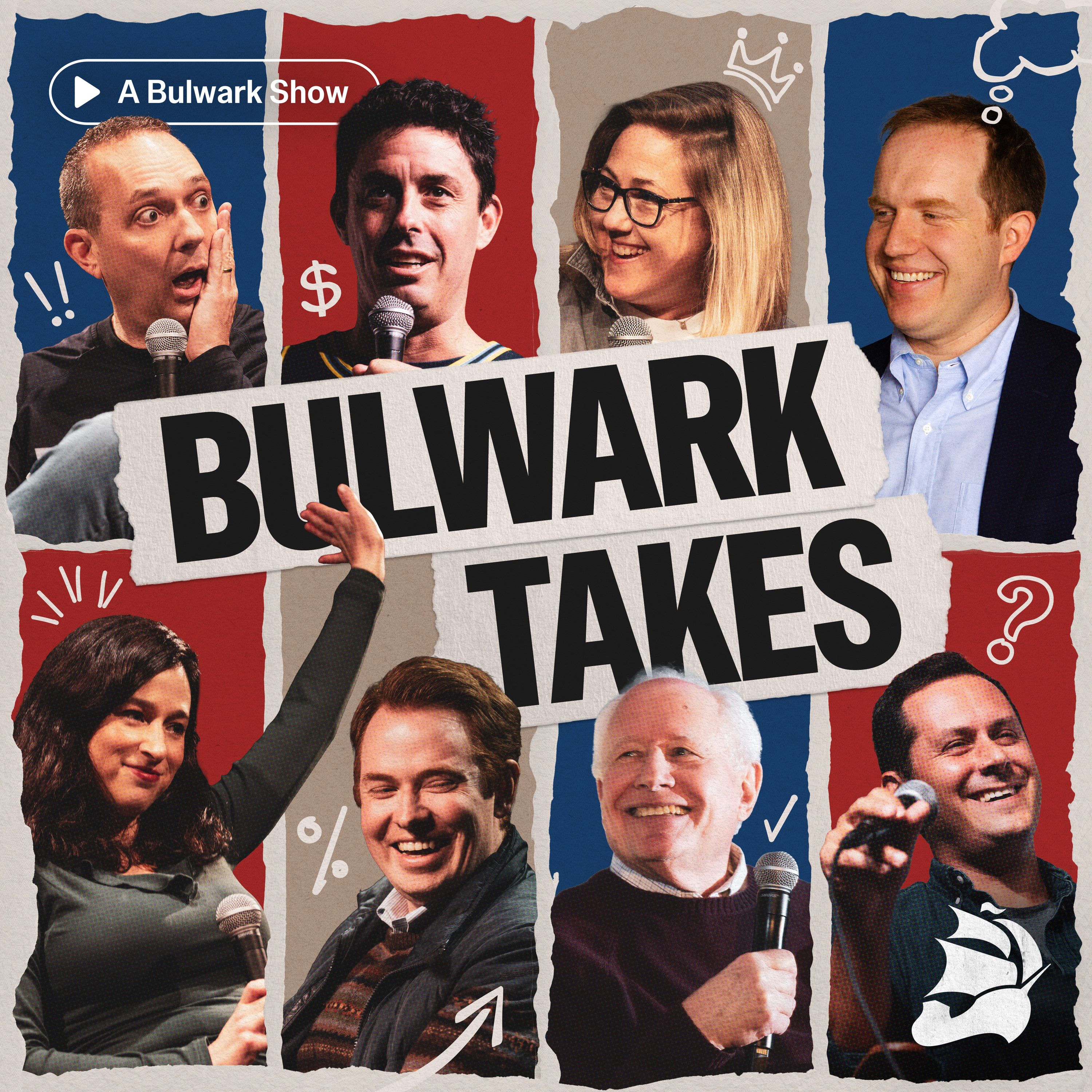
BREAKING: JD Vance Makes Jaw-Dropping Defense of Putin
33m 28s
The transcript critiques the Trump administration’s diplomatic approach toward Russia, highlighting a series of flawed and self-contradictory statements that undermine U.S. credibility. Trump claims that Russia released American hostage Stephen Hubbard out of humanitarian generosity, without any trade or sanctions relief, which contradicts past U.S. negotiations involving the exchange of spies and criminals. The appointment of non-diplomatic figures like Steve Whitcoff as special envoys is seen as a strategic failure, as they lack experience and competence, and their deferential language—such as calling Putin a "humanitarian"—is perceived as weak and foolish by Russian officials. This approach not only validates Russian aggression but also encourages further hostage-taking and demands. The analysis notes that Russia has actively supported Iran’s military capabilities and targeted U.S. interests, yet Trump downplays these actions, revealing a dangerous lack of geopolitical awareness. Despite Ukraine’s military progress and growing European defense spending, the U.S. continues to engage in appeasement, risking humiliation and strategic loss. The episode concludes that Trump’s diplomacy is driven by spectacle and personal loyalty, not realpolitik, and that such policies fail to address the core issues of Russian aggression while appearing foolish both domestically and internationally. The deeper implication is that U.S. leadership under Trump is not only ineffective but actively undermines its alliance with Ukraine and the broader Western order.
Hi, I'm Ben Parker from the bulwark. Welcome to another bulwark take on the bulwark takes feed. I am joined by Michael Weiss co-host of the reporter and the spy also on bulwark takes. And we are here to talk Russia, Russia, Russia because apparently we're Russia's biggest ally now and our leaders can't stop praising Vladimir Putin. Michael, we got to start with these latest Trump social media posts. He's very proud. It is to say the president is very proud that Russia has released an American hostage, which is a good thing. Stephen Hubbard is a 74 year old man who has been in Russian detention for four years, I believe. The president says just released an out of the request of President Donald Trump made directly to president Vladimir Putin. He's on his way back home will be as soon as his family. The United States, he says out of respect for President Trump was not required to give anything in return, an unprecedented situation for Russia. There was no swap necessary for this release. blah blah blah Biden should have done it. blah blah blah. He's quoting himself in his own tweet, totally normal. And then he says, mad if we can stick on to the next week, numerous people who requested the sanctions be immediately imposed on Russia have called to apologize to President Trump in that they didn't know he was negotiating the release of Stephen Hubbard, a truly big and important deal for the US. If sanctions would have been placed, certainly those negotiations would have come to a complete and total halt. Michael, does this make sense to you? He's saying that Putin did this out of the kindness of his heart and didn't ask for anything in return, but then he's saying, oh wait, we had to lift sanctions or wave sanctions in order for him to do it. So we have here a case of a president to apart from being incredibly venal is also, I think, incredibly stupid and doesn't even know what he's saying from breath to breath or from truth social to truth social. And let's pick that apart. We have, we had to wave sanctions. First of all, I'd like to know the names of the people who called him to thank him name one right then he says we had to do this. We had to wave sanctions on Russia and start kickstart a process of economic normalization with the Kremlin in order to get one American who as you rightly point out was taken hostage released by Russia. In 2025, Russia released another American who had been taken hostage named Mark Vogel, we didn't have to wave or lift any sanctions. A year prior to that, the Biden administration since he's invoking sleepy Joe in concert with Germany and a bunch of other countries traded and this was a very difficult trade fraught with all kinds of moral hazard. Vadim Krasikov, this is Putin's personal contract killer or hitman who had murdered Zelenheim, Kangashvili, a Georgian, actually a Chechen dissident who had gone to work for the Georgian government as an informant helping to do counter terrorism stuff and also to do counter intelligence stuff in Georgia against the FSB and ISIS guys. He murdered him in cold blood in a park in broad daylight in Berlin and he had been said that it's the life of prison in Germany. So Putin wanted him back, we traded not only Krasikov but a host of Russian criminals cyber criminals and et cetera, et cetera. For Paul Wheeland, Evan from the Wall Street Journal and a collection of Russian dissidents, including Vladimir Kutemurza, who's a Washington DC resident and had won the Pulitzer Prize for his op-ed writing The Washington Post. We did not wave or lift any sanctions to do that. So the long and short of this is Russia takes Americans hostage exactly for this to either trade them back for people who are. I doubt that very much to the 74 year old man who was taken hostage at the start of the full scale invasion was engaged in espionage or whatever they're claiming he was, but we trade back actual spies and killers and convicted criminals for civilians, right? That's been the standard operating procedure. Now we are giving money, we are paying money. And by the way, I don't even think that's the legitimate reason for waving sanctions, but taking Trump at his own estimation here. We're paying the Kremlin to hand our people back to us. So I don't know what to call this other than object humiliation on the part of the United States. This is not diplomacy. This is not state craft. This is a shake down that we are happy, winning accomplices to our own subjugation. And he's advertising this on a minute by minute or hour by hour basis on social media. And I know you're going to want to ask me about the next thing, which is what his special envoy to Moscow. Oh, we're going to get to that. We're going to get to the first. I don't want to scoop you on your own question here. No, thank you. First, I think you use the exact right phrase, which is moral hazard. And that part of this that is mind blowing to me is that Trump says, you know, this is a, this is a really great show of respect that Putin released this hostage. But Putin has took the hostage in the first place. If you agree with someone, you wouldn't take the hostage. The moral hazard is that we are now incentivizing Russia to take more hostages, right? Right. And you know, this is this is the standard playbook for the Russian government. They they dangle something. And I'm not discounting the good news of getting the 74 year old man back home, right? I mean, he deserved to be released. And I'm glad he's he's now in route to America. But they they use one individual to try and barter for things orders of magnitude greater. So, I mean, if we're going to do this, you know, person for person, one individual in exchange for a country of 40 plus million and occupied territory that they want at least as a preliminary part of the negotiation to be seated at the negotiating table, which is home to upwards of 100,000 people in Don Vos, the parts that Ukraine still controls. You know, it's it's it's textbook Kremlin. And this is why you need professional diplomats. This is why you travel with, you know, with people who had been briefed by their intelligence services. I mean, I I re up to an old Wall Street Journal piece, which explain very helpfully, I think that Putin personally selected Steve Whitkoff as his interlocutor, because he knew that Whitkoff saw the world in terms of transaction real estate deals, right? He had no geopolitical background. He had no experience as a diplomat. And he told him, don't don't we don't want you talking to the CIA just come and we'll sort this out like like two CEOs in the border, which is essentially where we find ourselves now, you know, frustrated real estate developers from the Tri-State area sitting across from a guy who was a mediocre KGB Lieutenant Colonel case officer, but a KGB case officer nonetheless backed by a failance to people. Who have ample experience in the Russian special services and who have been around, you know, since time immemorial because the Russian, you know, diplomatic staff doesn't go anywhere, Sergey Lavrov has been there since the beginning, right? Telling Whitkoff, and I guess Kushner wasn't at this meeting, but telling him basically what he wants to hear, if you give us economic incentives, if you relax, trade, if you lift sanctions, if we reintegrate the Russian economy into the West, you could have everything that you want, except that they can't, because what Russia wants is something that not even Donald Trump and the United States can deliver. And it's not just Ukraine, right? I mean, there was a David Ignatius piece in the Washington Post, the last week. And I think I know who the sources for this piece are. They start with J and with K and start with S and end with LB, right? And the idea was the US wants to expand the problem. So in other words, let's try to talk to the Russians, not on the basis of ending the war in Ukraine, but let's do what Putin has said he wanted to do in 2022, which is relitigate the entire course. The entire end of the Cold War, right? They want security architecture, exactly. And so the irony, the kind of paradox of all of this is that one of the things, the central length of the Trump administration is what? Europe is a bunch of free-loading waste drills, right? NATO, most of the allies, without the United States and the money we put into the kitty, there would be no NATO. They don't meet their threshold originally. It was 2% of GDP on defense now, it's 5%. Okay, all of these countries are beginning to meet that threshold or have committed to meeting that threshold. I think the one outlier is Spain, but they're the Spanish will give them a pass or maybe not, but whatever. Most European countries, especially the frontline states, the Baltic states are already at 5% the Scandinavian countries, approaching 5%. Poland, I mean, even Germany is rearming at breakneck speed, right? They're doing the things to protect themselves from home. They're not worried that China is going to invade, at least not with troops and tanks, the European continent. Iran is going to invade European continent. They have one adversary, and it's their historical adversary, which is Russia. So they're doing all of these things, and here comes Putin saying, well, wait a minute, I don't want them doing that. In fact, I want you to pull US troops out of NATO territory, which we are doing. I want NATO expansion to stop, and in fact, if we could even unwind NATO membership, let us do that. Trump is basically a seeding to these demands, because he's so desperate for a deal, any deal. I mean, I saw reporting today that said, he wants an end to the war to be agreed trilaterally, the US, Ukraine, and Russia, in Florida at the G20, which is December, I think. Yeah.
going to happen. It's not going to happen. This is pure utter fantasy. I mean, he's chasing these sort of, you know, phantasmagoric dragons, but at the expense of America standing in the world, because we look absolute idiots. We look completely humiliated. And this is coming at a time when, I mean, I mentioned on the show yesterday, you know, Ukraine is beginning to do okay on the battlefield. I mean, tactically, they've had some impressive counter-offensive over the last few months. Russia's advances have stalled up until the throttling of Starlink, which we can talk about too if you want. The middle-stripe campaign to disrupt Russian supply lines, lines of communication in the South, connecting Russia to occupy Crimea. They were being chivvy and, you know, wiped out. And so suddenly, Ukraine starts to make gains on the battlefield. And we say, well, we mustn't have that. We're going to deny you the ability to do that by cutting off your internet satellite. And I mean, I know that Zelensky government is saying that intelligence sharing was severed. I have seen no evidence to suggest that is true, but I understand why they're saying it, because it certainly looks suspicious that ballistic missiles are coming in without early months. So all of these things, we don't need to be doing this. We have far more leverage with respect to Russian now than we did even a year or two years ago. And yet we're just, we're, it's like a fire sale of all of our credibility. And it reminds me of, it reminds me of the Iranians saying that they were only negotiating with JD Vance and the administration saying, okay, and we got the memorandum of understanding. Maybe if your enemy says, here's who I want to sit across the negotiating table, your default reaction should be no, not that guy. And you mentioned this clip. We'll go to next, this clip of Whitcoff. I believe this is in the Kremlin. He's, he's addressing him after the release of the sausage. And just, we have to listen to what he says about Vladimir Putin. It is just, I mean, prepare yourselves people. He's a 75 year old land. And you talk so much about my president, president Trump being humanitarian. You are a humanitarian also, sir. Well, I commend you when I thank you again. Vladimir Putin, humanitarian. I mean, what, whatever has this guy done in his political career that has been humanitarian or not based on some way on murder, honestly. I would love to know what kind of like batshit, bizarro world, Dale Carnegie, handbook for, you know, winning friends influencing people or, you know, closing deals Steve Whitcoff studied from. I mean, even if you want to sweeten the pot or incentivize the Russians to do something, the first thing you don't do is behave like a courtier, behave deferentially, call Putin of all people a humanitarian. Because why? Because Putin sees that as, as utterly pathetic. He thinks that you're, you're a monk. He thinks that you're a mark and you're weak and you're desperate. And therefore he's just going to take more. And he's not wrong. He's not wrong. I mean, I, I call Steve Whitcoff, Dim Philby, for a reason. He behaves like he's a Russian intelligence asset. And maybe he doesn't intend to. And maybe I'm not suggesting he actually is. But he's got it all wrong. And it's because he has no formal training in diplomacy or statecraft. And he thinks, okay, you know, if I just, you know, if I bring my knee pads to Moscow, you know, and get on my knees and, and you know what, I'll get whatever I need out of this guy. Wrong. It's not how the Russians work. So this is just, this is, this is actually encouraging Russia to do the opposite thing, which is take more hostages, make more demands at the negotiating table. And, you know, by the way, there was a readout of this whole little fendango. You're to use shock off who is Whitcoff's confidant and interlocutor, as we know, because Bloomberg published the transcripts of their phone calls several months ago, a year ago. He said, you know, we were in all that press with what Steve was selling. So we'll try again next time. Putin agrees in principle to have another meeting. So this was a meeting about meetings, to have another meeting after the midterm elections, which if you're a guy like Whitcoff and Kushner, that makes you a little bit nervous. Why? Because if the Democrats take one or both houses, suddenly you're going to get subpoenaed. Your finances are going to be turned inside out. And it's going to hobble your ability to, as I say, negotiate what is ultimately what Trump wants is strategic realignment of the United States with Russia. And that's something that a competent, capable, young, ambitious president in his prime would have difficulty doing. But an octogenarian guy with brain plaque who tweets, you know, one thing that is contradicted only minutes later by the next thing he tweets, this is a very, very difficult lift for him. And it's going to become more difficult because, you know, as discussed with Mark, you're going to have domestic, I mean, his approval rating is at the lowest point it's ever been. Most Americans do not want a deal with Russia. I mean, Putin, the humanitarian, Russian Shahed drones, one of them killed a one-year-old baby in an interstroller in a park in Harkiv. And then the mother was wounded in that attack and succumbed to her injuries in hospital. So he's murdering women and children on a daily basis. Trump's own wife, the first lady, is trying to negotiate the release of Ukrainian children who have been taken hostage by Russia. Correct. Correct. Correct. This is not, I mean, it's, you don't even know where to begin with this. And look, we know Donald Trump is desperate for a Nobel Peace Prize. He's desperate for some kind of diplomatic victory because Lord knows the IRGCA in handing him one for the midterms. But this is not, you know, to sacrifice this country, which not only fights for its survival, but has been a reliable ally and partner of the United States. I mean, Ukrainians helped airlift people out of Afghanistan. They fought with us in Iraq. I said yesterday on the show with Mark, you know, the history of that, this intelligence relationship between Ukrainian military intelligence in particular, and the CIA. That's a manuscript to be written someday. Maybe I'll write it. But I mean, the Ukrainians have given back to us in ways that I think the average American even pro-Ukrainian Americans don't quite appreciate. And for Donald Trump to get up and say, this country's done nothing for us. And we've given them billions and billions of dollars. I mean, there is absolute truth to the fact that Ukraine is fighting for its own survival and its own national independence. But it is also fighting to keep the Russians at bay from basically becoming within striking distance of the rest of Europe. I mean, what if they had taken all of Ukraine in two weeks? I mean, they have Kaliningrad, but they would be sharing, you know, an enormous border with Poland, with Hungary, with Romania. I mean, this is not something that you want, if you believe in, I mean, essentially, not just the post-Cold War security architecture of Europe, but the post-World War II security architecture of Europe. Someone wrote this, I think, during the full-scale invasion of 2022. Someone can correct me if I'm wrong. But I believe there are parts of Ukraine that are closer to Rome than they are to Moscow. That gives you an idea of the geography we're talking about and why Ukraine is so important. We also have to get to JD Vans, who will defend anything, honestly, except for what's right. So we have a clip of JD Vans. Someone asked him about Steve Woodcoff's statements that we just played, and here's what Vans said. Special envoy Steve Woodcoff called Russian President Vladimir Putin a humanitarian for agreeing to release Steve and Hubbard. Do you agree with that? I agree with Steve Woodcoff saying something nice to a person who just released an American hostage. Whether you agree with the underlying sentiment or not, Steve Woodcoff is a diplomat. His job is to go over there and get a job done. I care much less about what Steve said and about the fact that he is bringing an American hostage home to his family. We should all be celebrating that, not be complaining about what Steve Woodcoff said in order to get it done. That is, I think, a little bit revealing in that. I think JD Vans just defended saying whatever is necessary to accomplish what you want, which is a little bit revealing about him. But the whole thing, I'll congratulate JD Vans if he releases Usha Vans from the hostage situation. She looks like she's in. I mean, look, the thing about Vans that is absolutely standing to me, he's trying so very hard to be this successor to Naga, to be the anointed Trump. And by the way, Trump said yesterday, I haven't decided. He just throws it under the bus every day. The one thing you can say about Trump is there is a kind of lured spectacle to him. He plays the indifferent buffoonish Mussolini quite well. And I knew this in 2015 when he was running, and the primer is because my died in the wool Chicago Democratic wife was laughing hysterically at everything he was saying. This is dangerous about Trump, right? There is a populist appeal. JD Vans tries mildly to inhabit this role. And he just comes across time and time again, like the kid who deserved to be shoved in the locker in high school, deserved to get his head dunked in the toilet. He's so fucking awkward and just cringe. I mean, see what cuff is not a diplomat, right? Like the, you could, you know, you could dance around that question more effectively than Vans, you know? I mean, you could say, oh, well, you know, look, Whitcuff is trying to do and say the things he needs to do to get a deal and to bring an end to this. I mean, we don't agree with that. And I'm just giving you the reasons why it's, it's a fool's errand. But, you know, I agree that someone who's released a hostage is a humanitarian. What is this? This is nonsense. It does, does anybody think that even
Republican voters, I mean, apart from people who are solidly in the cult of personality, who, I mean, Donald Trump could set off a nuclear bomb in the streets of a major American city, and they'd still line up to support him. I'm talking about the people who are like, "Well, I wanted to lower my taxes. The guy's good on the economy. I don't like woke 1.0, a DEI, this and all that. I need a secure boy." People who are not blithering embecils, watching the spectacle play out. Do you think that they're being sold on this? Did anybody in the electorate know the name of Hubbard up until at this point? Is this really the thing that is going to put the Republicans over the line in the midterm? No. So that they're not even getting the thing that they want out of it. They're not getting votes from this. It's not going to, the diesel deal with Russia is not going to lower the price of gas at the pump. You know, I mean, we're talking about hours, maybe a few days worth of diesel that the Russians are giving us. All it is doing is rewarding these criminal and murderous kleptocrats in a country that we have been in fitful states of both cold and now increasingly hot war. I mean, remember, the humanitarian Putin, as we speak, is dispatching operatives in the field or keeping operatives in Moscow who are recruiting organized crime figures, riffraff, teenagers. In some cases, Ukrainian refugees desperate for money to do what? To go around, try to assassinate people in Europe, blowing up both hard and soft targets, military installations, warehouses, keeping weapons that are destined for Ukraine, but also, I mean, in, in, in, life, sick Germany, a drone attack, which could have resulted in civilian casualties. I mean, basically committing acts of state terrorism. That's humanitarian plot against airplanes that were bound for the United States, but they're not, I mean, they're pretty direct. Yeah, that's right. We're thinking this country about attacking commercial airliners bound for our aerospace. I couldn't say exactly why, but that's sort of a neurologic point for us. Yeah, you're absolutely right. And, you know, again, the Trump administration always has one percent truth, some of the things they say. And there is one percent truth that sometimes the diplomatic process sort of gets spun around its own axle and it doesn't get, it isn't responsive to, you know, what the political leadership says it should be. But the idea that instead of having a professional diplomat who maybe speaks Russian and knows a little bit of history or knows anything about international politics or has read a book for Christ's sake, in fact, instead of having someone like that, you know, send Steve Whitkoff. I mean, what are we doing? We deserve to get laughed at. You know, if you wanted to go in a direction that's a little bit show many, a rock and roll. I remember Nina Khrushcheva, the granddaughter of Khrushcheva, was a brilliant Russian scholar and historian in her own right. We were in a green room. I think it was MSNBC more than 10 years ago. And this was after the first Russian invasion and occupation of Ukraine, the seizure of Crimea. And specifically the downing of MH17, you want to talk about acts of air piracy or terrorism. The Russians were responsible for that using conventional anti-aircraft missile systems, a book operated by FSB and GRU officers. They were indicted and sentenced in absentia by a court in the Netherlands. Anyway, Nina and I were talking, you know, the one person that the US should maybe appoint to be the ambassador to Moscow, the one guy that a guy like Putin would understand and would actually have a meaningful substantive conversation with, if you want to go in a sort of spotlight sort of area here, it's like a Schwarzenegger. You know, an action star. I mean, he loves, he loves people like Stephen Sengal, who's like, you know, F.S. Schwarzenegger, right? But they can go on and they can do shirts off the two of them. Exactly, exactly. Sagar Smoking, Hulking, you know, takes no shit from anybody and it optically just projects the image of the action here, right? That's and but who's not stupid either, right? And who understands that Russia remains an adversary, but can nonetheless appeal to Putin in his sort of primal reptilian instincts. We don't do that. Instead, we send a strip mold of developer from the Bronx. Yeah, great. We have to fail some, whose fail son is doing crypto deals. Like that's again, we are, these people are clean cheese in the hands of the Russians. We have to toss to an ad real quick and then I've got a surprise when we get back. So we'll do that. Oh boy. Okay. I love surprises. This episode is sponsored by The New York Times. With the midterms just around the corner, there's a fascinating disconnect between what Donald Trump is saying and what Republicans are actually doing. Now Trump wants voters to treat the election as a referendum on, you guessed it, Donald Trump. But a new New York Times analysis found that less than a dollar out of every $100 that Republicans have spent on House and Senate ads have gone to ads that mentioned Donald Trump. That's the kind of reporting that makes political commentary possible. The Times dug into broadcasts and streaming ad data to show how Republicans are trying to navigate Trump's unpopularity while still relying on his support. It's not enough to watch a campaign ad and take it at face value. You need reporters examining the data, talking to the people involved and figuring out what's really happening behind the scenes. That story is just one example of the results of fact-based reporting. And now you get to decide what to think. Without reporting like this, the rest of us are just frankly, we're just guessing. Wherever you seek it out, nationally or locally, support fact-based reporting. In other words, it's a part of fact-based reporting is to go to the bullwork.com and become a bullwork plus member. We'd love to have you in our pro-democracy community. Really do recommend it. Okay. Here's a surprise. I think you've probably already seen this. But it's a tweet from Sayed Abashirovichy, the Iranian Foreign Minister, from two days ago. This is October 19. We'll put it up on the screen if we can, Matt. There he is with Russian Foreign Minister Sergei Lavrov. He says hosted Foreign Minister Lavrov for timely talks in Tehran. We covered everything from Europe to West Asia, including Lebanon, Palestine, Ukraine, and Yemen. Also focused on expansion of economic and nuclear cooperation. Never in our history have Iran and Russia worked as closely as now. Isn't it great? By the way, I didn't realize Ukraine had joined the constituent parts of West Asia, so that's a new one by me. Yeah, look, I mean, Lavrov was said the other day that, you know, Iran is the country worth supporting in the war with with the United States. It's the victim. Russia has shared intelligence with them to target US troops and the Gulf. Russia is helping them rebuild their missile program, including anti-ship missiles, which they're using, guess where, in the state of Hormuz. So everything Russia does with Iran works at the expense of the United States. And yet, Donald Trump gets up and says, "Oh, we don't see what the Russians are doing with Iran. It's negligible. It has no impact on anything." I mean, you just read it. Clearly, it does have an impact. But this is the thing. The more you lean into this humiliation, the more you allow your adversaries. He threatens to erase Iranian civilization, right? When it comes to Iran, he has no problem playing the role of the colossus bestriding the globe and the aggressive US commander-in-chief. But with the Russians, he's just terrified of saying anything untoward or disobliging. And this prompts a lot of questions that, you know, what other Russians have on Donald Trump? You know, why is he so slavishly devoted to impressing Putin? You know, he's afraid of Putin. Fiona Hill has spoken eloquently about it. He's terrified of nuclear holocaust because of his uncle, and MIT, who told him about it. And he was just had this sort of, like, childlike fetishistic obsession with how nuclear bombs work and the aftermath of all of it. But, you know, there are other countries in the world that have nuclear weapons. He doesn't behave like this. Now, you know, and also the Russians don't threaten to use nuclear weapons realistically. They play that card so many times. You know, the difference is like, what's a realistic threat and not? He's just so easy to deter. They say, "Oh, he's a nuclear weapon," and he goes, "Okay, whatever you want, I give up." Well, they don't even have to say that either. I mean, it's just Putin gets on the phone with him and says, "Oh, we're going to send you fertilizer now." Oh, great. You know, we really need that because, you know, we're not full of shit enough in this country leading Russian. It's just consignment of it. It's, again, there is no substance to any of it. And look, the one saving grace to all of this, if there's an optimistic loss, it's this. Donald Trump cannot deliver to Putin what Putin wants. And the important thing to understand is that conspiracy theories, the propaganda that the Russians put out, very often there's an organizing principle to that where they really believe this is how the world works. And specifically, they believe this is how the United States behaves. And always keep in mind, you know, there's an element in the Russian government and certainly Putin, I think, he's very happy to be dealing with a guy like Whitkopf. But there is also an element in the Russian government that says, "Doesn't matter what a guy like Trump says, doesn't matter what a guy like Kushner or Whitkopf tell us, we cannot trust them. They remain the main adversary. They are here to undermine us, to eat away at our national interest, to fuck us over." And the proof of that, I mean, and there's some legitimacy to that. The proof of it, and I keep emphasizing this point. The United States up until now, and even continuing on, because as I mentioned earlier, we haven't severed the intelligence relationship with Ukraine. We have been indirectly responsible for killing tens of thousands of Russian soldiers, both in Ukraine and now, you know, we're taking out oil refineries, helping them take out oil refineries, circumnavigate mobile air defense systems so that they can strike at Yandex data centers.
setting Moscow and St. Petersburg ablaze on an almost nightly basis. So that element in the Russian system feels vindicated. They're not stupid. They know that the Ukrainians have helped here. And it's not just the United States. The French are doing this, the British are doing this. The Europeans have taken full custody for Ukraine's defense and its spending. I mean, we don't pay for anything anymore, right? That was another central conceit of magon, the campaign trail, and then when Trump got to office, we were giving them too much, even though what the money we were spending, quote unquote, on Ukraine. We were spending mostly here in the United States to re-capitalize their own military, exactly. Modernizing our own defense systems and our own arsenal and giving Ukrainians hand me down weapons. In some cases, missiles attack comes that expired in 1994. We would have cost us money to decommission these things. Instead, we gave them to Ukraine and Ukraine use them to destroy state-of-the-art Russian S-400 air defense systems and occupied Crimea and so on. The return on investment is enormous. This is the thing. I mean, I argue this point not because I believe there should be a utilitarian motive to our support for an imbattled European nation. I argue it because to take maga at what they claim, to what they said they wanted. They're getting everything they wanted and more, but they act as if they're being treated like schmucks. So it's like, you know, you do everything that they say and the Ukrainians have. Everything Donald Trump has said you need to refrain from targeting the oil refiners. They did for several days. What did the Russians do? Trump announced he hurled it up. - Yeah. - Right. A truth that existed only in his febrile imagination that the Russians would refrain. They kept doing it. You know, I saw today Anna Pauline Luna, who, I mean, at least Dana Rohrbacher knew how to arm wrestle as a used political Congress. I mean, I don't know where this woman came from, but I mean Jesus Christ, she tweeted a clip of Zelensky talking to Fox News where he Fox asked Zelensky, "Do you accede to a complete ceasefire "in the current line of contact?" Zelensky said, "Absolutely." And she says, "Great." He's capitulating or he's conceiting something. Ukraine came to the United States when Trump re-entered the White House two years ago and said, "We are seeking a unilateral," I'm sorry, an unconditional ceasefire along the current line of contact. Trump said, "Perfect, I'm gonna put that to the Russians." And that became the U.S. position until the Russians said, "Yet." And then he moved the goalposts and made it easier for the Russians to get to whatever he thinks is this kind of imaginary line on, you know, signature line on the contract. Ukraine is an all theater. Right, right, yeah. But the Ukrainians would have no problem pausing the conflict. They're not the obstacle to peace here. They never have been. - We got really close to ending there on a high note and then we missed it, which I think it's just reflective of the era. No, it's just reflective of the reality around us. But, you know, at least in addition to, you know, putting our faces in our hands and shaking our heads, we can also occasionally point at laugh because we're led by fools and clowns. And that's what one does with clowns. So we'll leave it there for now, but Michael White, thank you so much for joining me. And remember to go to the bowlwork.com and subscribe to become a bowlwork plus member we'd love to have you. - Yeah, I need time. Happy to be here.
Podcast Summary
Key Points:
Trump claims Putin released American hostage Stephen Hubbard out of "kindness" without any sanctions or trade, contradicting the established pattern of U.S. negotiating with Russia through prisoner swaps involving spies and criminals.
The U.S. has historically traded detainees and criminals for released hostages, suggesting that Russia’s actions are not humanitarian but part of a calculated, coercive strategy to pressure the West.
The appointment of Steve Whitcoff, a non-diplomatic, inexperienced figure, as a special envoy signals a failure of statecraft and undermines U.S. credibility by promoting a "courtly" and deferential approach that Putin sees as weak and foolish.
Russia’s actions—such as supporting Iran’s missile programs and targeting U.S. infrastructure—demonstrate strategic hostility, yet Trump downplays these threats, revealing a dangerous lack of geopolitical realism.
The Trump administration’s public rhetoric, including praising Putin as a "humanitarian," is seen as humiliating and strategically disastrous, incentivizing further Russian aggression and undermining U.S. standing in global diplomacy.
Despite battlefield gains by Ukraine and stronger European military posture, the U.S. continues to engage in appeasement, risking long-term strategic decline and increased Russian leverage.
There is a deep divide between Trump’s claims of success and reality, with no tangible benefits like lower energy prices, while the U.S. appears to be sacrificing credibility for a diplomatic outcome that lacks substance or legitimacy.
The broader pattern reveals that U.S. policy under Trump is driven by populist spectacle and personal loyalty rather than professional diplomacy, allowing adversaries to exploit the situation for strategic gain.
Summary:
S. credibility. S.
negotiations involving the exchange of spies and criminals. The appointment of non-diplomatic figures like Steve Whitcoff as special envoys is seen as a strategic failure, as they lack experience and competence, and their deferential language—such as calling Putin a "humanitarian"—is perceived as weak and foolish by Russian officials. This approach not only validates Russian aggression but also encourages further hostage-taking and demands.
S. interests, yet Trump downplays these actions, revealing a dangerous lack of geopolitical awareness. S.
continues to engage in appeasement, risking humiliation and strategic loss. The episode concludes that Trump’s diplomacy is driven by spectacle and personal loyalty, not realpolitik, and that such policies fail to address the core issues of Russian aggression while appearing foolish both domestically and internationally. S.
leadership under Trump is not only ineffective but actively undermines its alliance with Ukraine and the broader Western order.
FAQs
The release is controversial because it reportedly occurred without any trade or sanctions relief, suggesting Russia acted out of 'kindness' rather than as part of a negotiated deal. Critics argue this undermines U.S. policy and signals a pattern of using hostages to leverage concessions from Russia.
No, the U.S. did not lift sanctions. The claim that sanctions had to be waived to secure the release is contradicted by historical examples, such as the 2023 release of Mark Vogel, which occurred without any sanctions being lifted.
Whitkoff's appointment is seen as a major diplomatic misstep because he lacks formal training in diplomacy or international relations. His approach is perceived as deferential and transactional, which could signal weakness to Russia and encourage further exploitation.
The U.S. response, particularly under Trump, is viewed as humiliating and ineffective, prioritizing short-term deals over long-term security. It fails to challenge Russian aggression and instead rewards actions that undermine international norms and U.S. credibility.
Calling Putin a humanitarian is seen as naive and misleading, given his history of targeted assassinations and state-sponsored violence. Such language is perceived as a sign of weakness and may be interpreted as reinforcing Russian impunity.
Russia and Iran are deepening their cooperation, including intelligence sharing and missile development. This collaboration directly threatens U.S. interests in the Middle East, yet Trump downplays its significance, indicating a lack of strategic awareness.
Chat with AI
Loading...
Pro features
Go deeper with this episode
Unlock creator-grade tools that turn any transcript into show notes and subtitle files.
 PodcastTranscript AI