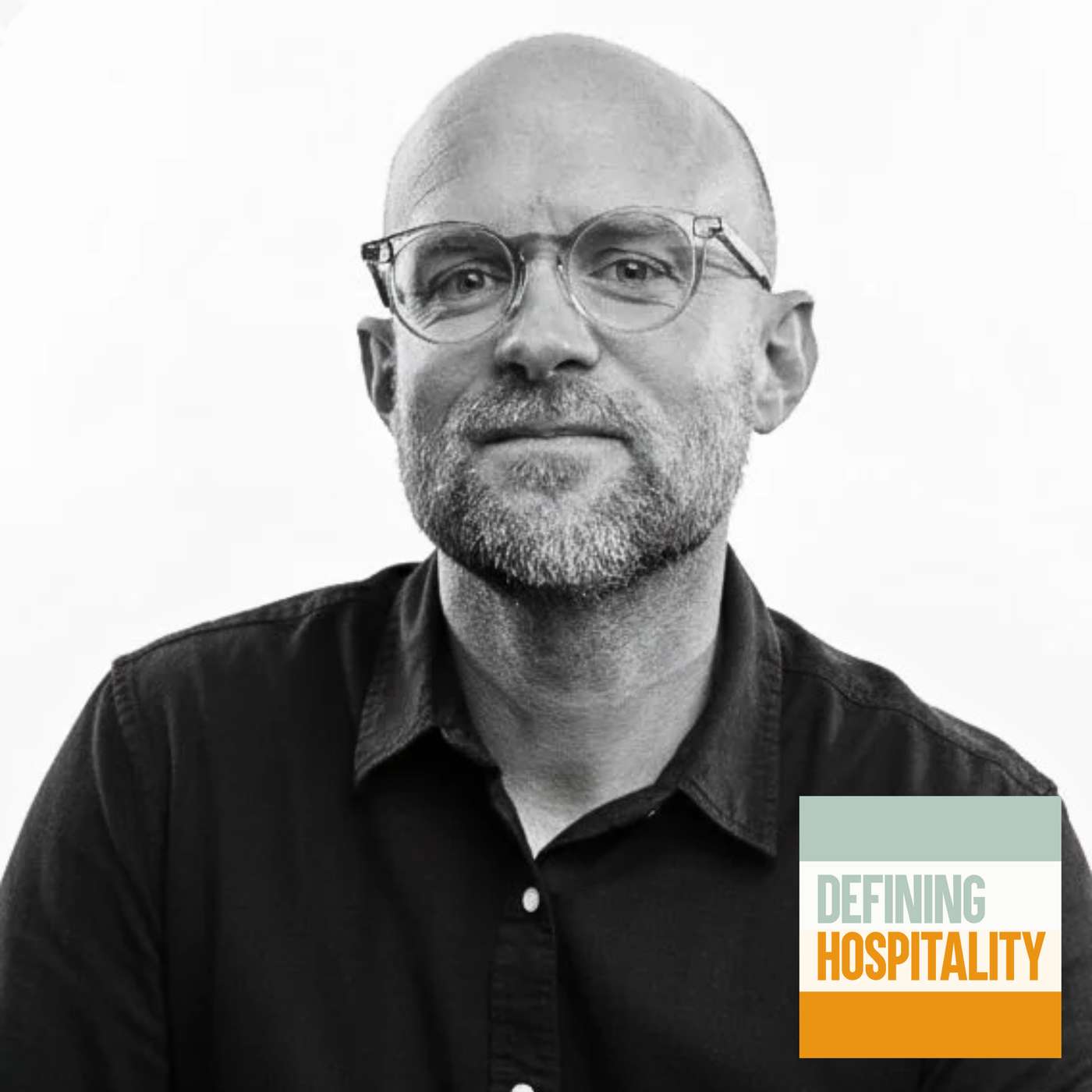
Branding the Human Experience - Matt Ferebee - Defining Hospitality - Episode # 225
from Defining Hospitality
72m 41s
The discussion centers on the essence of hospitality and its application in branding and luxury properties. The speaker emphasizes that brand principles should be broad enough to apply globally but must be localized and operationalized to resonate with local teams and guests. Hospitality is redefined as a human act of caring for others, moving beyond its sterile industry label. This philosophy is exemplified by Blackberry Farm, which prioritizes exceptional guest experiences over profit margins, treating guests as honored friends. The property’s success stems from a culture of attentive service and continuous improvement, encapsulated in the phrase "good, better, best." This mindset is transferable across leadership, as seen when the Bell family passed down their values. Effective branding acts as a decision-making tool, guiding everything from design to service. The conversation highlights that genuine hospitality involves listening to guests, empowering staff, and fostering a culture where every interaction aims to create a memorable experience. Ultimately, the key is to focus on humanity and care, which drives loyalty and success in the hospitality industry.
So a lot of our work is trying to add additional validation to the key principles that are intentionally broad. The risk of the principles have to be broad enough to speak anywhere in the world and be true. Our job is to take those, localize them, but then also operationalize them. So make them real to the local space. Don't change them. Make them relevant to the local space. But then make them memorable to the team members and the guests who will experience them. And that's the translation work that we do. What I do is inconsequential. Why I do what I do is I get to shorten people's journeys every day. What I love about our hospitality industry is that it's our mission to make people feel cared for while on their journeys. Together we'll explore what hospitality means in the built environment, in business, and in our daily lives. I'm Dan Ryan and this is Defining Hospitality. This podcast is sponsored by Burman Fall Hospitality Group, a design-driven furniture manufacturer who specializes in custom cask goods and seating for hotel guest rooms. Today's guest is a pioneer in weaving brand narrative into the DNA of luxury properties. He's a trusted partner who's worked for the Ritz Carlton, pale resorts, relay and chateau, JW Mariette, and has been the agency of record for the stunning Blackberry Farm for over 18 years. He's the co-founder and Chief Creative Officer of Faribi Lane and award-winning brand strategy and creative agency recognized for excellence in hospitality and luxury branding. Ladies and gentlemen, welcome Matt Faribi. Welcome Matt. Thank you Dan. Very kind setup. Well, the setup is all, you're this overnight success after 20 plus years of all this hard work, right? That's right. That's right. That's only County Faribi Lane. My sons will roll their eyes when I say it takes a lot of hard work to be an overnight success. It does take a lot of hard. That's also like luck. Thomas Jefferson or Thomas Edison, one Thomas Edison or Jefferson said, you know, it's funny, the the luck the harder I work, the luckier I become. Right. It's brilliant. No, it's true. You make your own luck and you work hard making your own luck. Yes. So you've been grinding away in the branding luxury branding world. A lot of hospitality work under your belt and this has come up in conversations. I've spoken to a couple other branding companies and principles of branding companies. One of the things that I've noticed in my career timeline, I was trying to think of a creative way to say like, my as I become gray, but I don't have that problem. Yes, that's all gone. For those of you not watching, he's a nice beautiful shiny head branding agencies as like I'm a little far far down the food chain from you. You're at a very beginning part of a project, setting the brand pillars, setting a direction. When done correctly, and this is what I loved and I had never really considered this, but it's almost like what I love about companies that have really clear and defined values that are spoken about all the time. You said that if brand is done well, it becomes this incredible and very precise decision making tool. Right. So oftentimes I'm a couple layers now because you'll do the branding, a design firm or architecture firm will work on like the built environment, but under the umbrella or of what your brand guidelines are or that decision making tool. By the time it gets to me, doing the furniture, the projects that seem to be the easiest are the ones that have brought on a branding company at the beginning. You really think about the brand and establish values and I don't even have the words for it, but just a lexicon. And I love how you've positioned it as if done well, it is a decision making tool because then it just has to be super clear. So I'm going to tee you up that way, but as that pertains to hospitality, what does hospitality mean to you and how have you found this path for branding into hospitality? Okay, so I'll define hospitality first. I think it's looking back on 50 and you said 20 years in this, it's probably been 30 genuinely in the world of advertising and marketing and place making and things of that nature. I look back on how much of that started I was raising the south, sweet mom, an episcopal priest of a dad. And so hospitality meant in a very simple and applied way. Taking care of other people and I knew that growing up that that's what you have to be hospitable. That's that's part of who we are as southerners. That's part of who are called to be like at your best, you take care of other people. As I grew up and and business up in my sort of understanding of that, I began to hear things on like, oh, hospitality is also a name of an industry. Hospitality means hotels. It's shorthand for resorts and hotels at destinations and room nights and ADR. And in that arc, I've only now can look back and say it lost a lot of the humanity that was part of my earliest understanding of that word and that idea. And so only in the last maybe 10, 15 years, and 20 if I go back what Blackberry Farm reintroduced me to was no, no, no, real hospitality is still real hospitality. The things that Will Gdaira talks about now is still he's just peeling back the truth of what hospitality is. It's not that there's a radical newness to going out of your way to take care of somebody. That's that's what hospitality is. If you have a good friend who likes Reese's peanut butter cups, you go to the store before they come to your house and you put them in the fridge for them because they're better than the fridge. And that to me is like the my evolution and it was to say, okay, so that's really the understanding of hospitality was this, oh, it's what good people do to be nice to other people. And what I've realized now is I sort of coach a lot of hospitality executives and hospitality teams and with that word, it's kicked around as if it's the sterile industry category name. What I asked them and have found myself just instinctively saying it is when they say, well, we do this and we do that. We do, we have a welcome drink. It's part of how we demonstrate our hospitable graciousness. We Saber abolish campaign nightly. It's a ritual, people love it. But when they describe it, they often finish the sentence with, you know, we do this. We do a nightly ritual, we'll say bring a thing. And if you just add four after that, you find often the shortcoming because they're just saying, well, we do this welcome drink. Okay, well, for whom? Like the and hospitality requires both sides of that. If I think back to kind of how it was raised, is that no one would have said I'm real hospitable if nobody was coming over or if you weren't hosting anybody. You have to be in a position of action to take care of other people to really demonstrate what hospitality is. And so I'll very long winded, um, set up on that term. But like when I realize that the two are not incompatible, the earliest my earliest understanding of hospitality, taking care of other people, being nice, being gracious. Um, and the industry idea of hospitality, we start to mash those together, what you get, I think is this real awakening lately of people saying, all the essence of hospitality as an industry is taking care of other people. Yeah, everything else is just a functional circumstance of we have rooms, we have keys, we have beds, we have sheets. But our goal here is to take care of people and and our ratings and our loyalty and our rate are all connected to how well we take care of other people, which is functionally the the heart of hospitality. So that that to me is sort of my long journey, um, from understanding hospitality, not in a context of hotels and resorts. Um, now in it's in that space. Yeah, I think that they live together really nicely. And I think that's given us some traction in talking to executives and others in the space is how do you take care of people in the context of world clashes or in the context of a reliance at toe experience. And I think if you just point it back to that humanity, it really doesn't fail you. Thank you for sharing that. And then as you were saying that I, I started, I've really come to think and feel what hospitality is and when it when it when it's done well. And to me, if I have an image, it's this idea of a hearth or a lamp light where I love how you said it's on both sides, right? Because in that hearth or lamp light, there's people on both sides of that, whether having a conversation, just being just getting warm, eating, and I think it's that feeling that is like the center of the Venn diagrams of all those what's as you said, right? It's that little center kernel. I've never been to Blackberry Farm. I'm I've heard incredible things about it. I've had the opportunity to go there a couple times with the schedule. My schedule's just haven't worked. And to me, I feel like within the hospitality industry, that Blackberry Farm is probably in exception rather than the rule of incredible hospitality. And I might be out a little bit over my skis here because I feel just in what I've heard about them, having not experienced, that it was a real passion project where it's on this immense amount of acreage. And it was almost like my favorite one of my favorite movies is Field of Dreams, or if you build it, they will come, right? I don't think and I could be wrong here.
But from the anecdotes that I've heard, they built this thing, and I don't even know specifically who they are, so maybe you could fill us in. But they built this thing with a sense of passion and purpose, not necessarily a PNL, which is really surprising to me from things I've heard in my understanding. But it's turned into this incredible execution of aspirational hospitality. I don't know really anyone who's had a bad experience at Blackberry Farm. And everyone I hear about that stays there, comes out of it a raving fan, which to me means like an excellence in jujuntress vision and passion and purpose, but also execution. Am I right or wrong in there? Totally right. I'll call out a few little things. Let's put a pin in the PNL. And let's put a pin in the PNL for a second, 'cause I think that's their interesting component of that. I also think there's something to be said for the fact that things do go wrong at Blackberry Farm, right? And genuine hospitality is the saving grace and the midst of things going wrong. They fix things that go wrong. They minimize those that can go wrong, but they fix them with grace and with such magnificence that people actually come out of the others out of it, loving them more. So I'll rewind a bit to say about the family. It's the bell family. Remarkable story, like just, I think they are not independent of a PNL logic and of a performance and success logic. What they are is they prioritize guest experience and epic exceptional hospitality over everything. And they firmly believe that that will guide them. That is their compass, that is their focus. And they have no interest in value engineering themselves into a better rate, into an okay version of themselves, knowing that they strive so far above that they can back it down just a little bit and charge a little less or whatever make a little more. They have no interest in that. It is a full tilt commitment to creating an exceptional experience of phenomenal. And I'll say American, and I don't mean this in any sort of exceptional way about what it means to deliver an American luxury experience. But what they set out to do was let's create this country estate of the likes that only some Americans once knew. You look at Built More House, you look at Shelburn Farms, you look at these grand estates created by these captains of industry who hosted their friends, who gave them run of the place. I think Chris and Sandy Bell said something similar. What if we created a space like that? And that was when we first began working with them now 18, 19 years ago was to begin articulating that. This is a great American country estate. And so our work with them early on was to articulate that and what it was clear to us that what they were offering was this magical experience for guests where you could come and you could experience this sort of classic country estate. And you see this in Europe, you know, these estate properties now that are having a wave of enthusiasm for hotel experiences on them. But what Blackberry was doing was sort of similar to that with sweet charming cottages and exceptional service and support, they weren't trying to create a resort or a hotel as much as they use those as the business function, the methodology for hosting people. But the experience on property was more like, "Hey, what if we assumed that we liked everybody "who came and stayed with us? "We liked them like they were our friends and family "and we hosted them in that way." What if that was the assumption? Not that they were paying us to come stay in our hotel, but instead that what if we just have a lot of friends and we wanna host them here and that's the magic. Like when you talk about people who are raving fans of Blackberry, it's because they've gone and they felt that. And when they can't put their finger on it, they're like, is there some generic sequoia kind of thing with Blackberry? It's that when you're there, you feel like the Bell family, they must know you. Like there must be somebody behind the scenes that knows you and has taken care of you because the service is so thoughtful and so generous. What better describes great hospitality, the kind that I mentioned earlier, but it's not like, it's not like, create this like MI6 dossier on every guest coming in, right? Like how can they know so well? Well, I guess it's interesting you say that because I don't think if we think about that from a real hospitality perspective, it doesn't require a whole lot other than training your staff to be attentive. And if that is the first thing, imagine how much you can learn if your effort is not to see how quickly you can execute a pre-arrival customer service call. Right? That how many hotels are like, we got to be in and out in a minute. If instead your ambition is, how can you engage somebody and ask them if they want to engage via email or phone and begin at that point, asking them what matters to them, why are they coming? What are they looking for? What do they like to eat? And if you take that logic forward, all of a sudden, all the decisions, all the interactions with everybody, with the charming folks who are taking your luggage to the cottage, the room, everybody is listening carefully, not because they're MI6 and it's creepy, but because they're goal, every single one of them, is that you have a magnificent stay, that you have an exceptional experience. And I think that's a culture thing that isn't coming from a place of how can we do hoteling best in class. And instead, how can we do hospitality at scale versus how can we do hotel in a familiar family way? They flip it. I love that idea of asking, you know, in doing custom furniture, we have this kickoff call with all the stakeholders and one of the things that we have there is, hey, you know, we sent out a weekly project update. Is there normally we sent it on Friday? Is there a day that works better for you? How do you like to be communicated with? I love that, like phone or email. I'm a phone guy, but most of the people are like, oh, text me. But being able to ask that one question, they're like, oh, well, you know, our bigger project meetings are on this day, so we can get it today, but it just changes the whole tenor. You're like a receiver of the need. And that's part of hospitality too, that's who we're going to tell you what they want. It's about making room for it. Yeah, and intention and focus. And I think the from the very beginning, Chris Bell, as the earliest provider in the story, gets a bittersweet, Zambal, her son stepped up to the role of proprietor, young, and passed away young, doing a tragic ski accident. And so we've been there along that and watched, but what we watched was the transferability of those skills in that mindset. So it was clear that it was not that Chris Bell was this phenomenal host. She is, she was then in that role, but she transferred that effectively to Sam. It's been transferred to the entire team. Mary Celeste, Sam's widow is now at the helm and demonstrates the exact same idea. Okay, so that's really interesting on how it's been transferred, because I know for many of us entrepreneurs or even people who are starting out in our careers or in the middle of our careers who are reporting to someone and have to learn from that person or client who we report to, one of the things, and you said this earlier as far as coaching executives and hospitality. So I'm curious about that. Is that coaching the executives and hospitality as far as trying to deliver your deliverable so that you're clear on what they want? Or is that a separate business of yours where you're coaching people? Number one, number two, oftentimes there's this institutional knowledge that gets stuck between someone's ears. It's hard for the people that are trying to execute to get that out, whether it's a brand essence, a brand pillar, when they want their project updates sent and we've found that just communicating and doing huddles that are values oriented. So adapt and improve. We say what it means, we do it as we say what we mean and we do it, we say we're tenacious, we're organized, like those help because those are the value pillars. But how do you find that in the case of Blackberry Farm, they were able to get that institutional knowledge or feeling out of their heads and into everyone so that that legacy could be continued? That's a good question. I would say a couple of things. One, they are in their mind, I sense, it's an organic foundation of principles because it does evolve and change, depending on who's saying it. I think what does it change is the aim, the goal, is always remarkable hospitality, creating people who, creating fans who rave about the level of service and the intimate nature of how you're taking care of in a place like that. And so I have to credit at least some of the awkward nature of the experience, the property itself. It spans not only acreage, as you mentioned, it's multiple units and structures and you've got a main house, you've got cottages down a hill, you've got golf carts. It's magical, it's awkward, it's to service it as a bear out of the gate. So what it requires is everybody immediately coming out of the wrote mechanics of, well, there's an elevator bay and this is where hospitality goes and our commercial division does this and groups go here and there's no chance of falling into a routine of normal, normal.
same same at Blackberry because you're walking up hills and it might be snowing and there could be a bear. You never know, right? So all of those things require you to as a human with eyes, with hands, with feet to engage each other and say, how are we handling this? How are we dealing with this situation? And they've just been really deliberate in empowering their team and informing their team. This is how we do it. This is why we do it. And I think that that sort of strong, willed commitment to say, make it the best. The phrase that Chris kind of embedded in my brain early on. Again, this is 20 years ago. Good, better, best. Never let it rest till the good gets better and the better gets best. Oh my God. Say that again because I'm writing it now. Good, better, best. Like said in this sweet, thoughtful and absolutely demanding way, right? Like so you've now got the packaging for continuous improvement in the in the in the modern business vernacular. It's continuous improvement, right? And yet it's packaged in this charming, genteel Southern way, but it is 100% committed. If last stay was in 98, this stay must be 100. If that gets left with an a them, they need a plus. You're you're plucking my heartstrings here like that. That is such a deeper dive than adapted improve. And it's said in a way that just conveys so much more. And I can only envision work hearing and seeing them say those words. It's almost like casting a spell. Oh, I mean, and can you imagine the fact that 20 years on I can I can repeat it to you. And I've you know, it's not like they preach it from every mountain. They live it. But I know it because it is so true. I could look to those words and say that that's the secret sauce is that at every juncture, they challenge themselves to improve. And so that that's to me, the the pretty crazy thing is that they limit. They live those state in that statement. Now hearing this. And it ties back into what I said in the kind of the after I read the after I read the introduction for you. And this I shared with the audience this idea of when brand is done correctly. It becomes a decision making lens, right? It's a circuit, if you will, right? I you just know when it's done correctly. So I hear you blackberry farms started 20 years ago. You started 18 years ago. Your company? Well, the library, the library is in its 50th year. So we're, we'll be next year. So yeah, we'll, we came into our relationship with the property started. They were well in their way, but they had maybe 20, 24 accommodations at that point. Now they're triple that more than triple that with private homes. So it's, you know, they were shifting from and it is absolutely unfair to say hobby. It wasn't a hobby. It was an a deep passion, but they, they, you know, evolved that logic. And we've been there for much of that ride. The all of the acclaimed barn, wine, tunnel, Bramblehall, all of that development, well house, et cetera, much of which we contributed and collaborated on with, with the humble spirit of how can we help? And the how can we help that question? So a lot of a lot of my thinking about this notion of coaching or this notion of supporting properties and using brand as a decision model, decision making model comes from being at the table with the bell family, with their architectural partners like Keith summer hour, building a department, you know, building partners and others, being there for that and being the person who gets the chance to help articulate it in a way that will fortify everybody's decision making, right? So I remember that, for example, with both the barn and then later with the well house, which is their spa, magnificent spa. And what we said was it's a, it's a classic country estate, it's a classic American country estate. What sort of structure would make sense for a spa to be housed in? And using the lens of classic country, American the state, what might that allow for? And so that's where this well house came in. Okay, so because I know we've been talking about Blackberry farm a lot. And I think like as an example within our industry, they're definitely in the top 1% as far as like hospitality experience from what I've heard, I've not experienced, but just from the general zeitgeist and that's my impression. I put like a mon up in there for seasons up in there. And of course, in other brands are individual properties that are probably up there, but I think it all comes down to the team that's there. Part of like if I'm hearing what you're saying of sitting at the table and hearing it, and this is kind of where I was going with the coaching and trying to get to this brand decision matrix or lens or circuit. Would you say that you your superpower, your firm superpower would be to beat to get at that table, here what's going on and then put it into some kind of a roadmap or a blueprint. Like I'm trying to under because I don't know very much about brand. I don't know very much about brand agencies. I've spoken to a couple. I when projects I'm working on with them, my thesis on proven is I think that those tend to run smoother because decisions are made. Like how would you describe your superpower in that sense? Am I right or did I just go out on a limb there? No, no, no, no, no, I think what just, I think your hypothesis is accurate by the way. And I will use only my experience to answer the question of superpower, whether it is or not, hopefully others can attest to and talk about. But I do think the fact that we watch people bring us to subsequent projects early if not first, which to me says they are sensing that by having that North Star established with brand that they are then able to use that as a lens as a decision making model for whether the furniture should be 18th century production or should be American shaker or should be modern eclectic because they know that the essence of the brand provides a framework to make that decision. And I think what we've demonstrated is that it's not, it's not a magic power. Perhaps it's a superpower, but it's not magic. We listen carefully. We think about positioning not just as where can you fit in the market, but what does the market want and how can you deliver on that? And I think ultimately by establishing that in a really soft and clear way, what we're providing for people is a touch stone. And they can say, we've got a project in Portland, Maine right now, really fun, complicated, exciting project. And we had worked with some of the principles in that on a different destination. And they brought us into this project early, if not first, one of the first before the architects, anybody else. And what we argue was your opportunity right now is to establish that lens before anybody gets in here and starts drawing and starts thinking about my kind of furniture or chic or built in or this or that none of it before any of that. And so the idea that we surface there was of the water. It is a property that is on the water until we were talking about waterfront and this and that. And we push back and said, we think that there is something essential to this place where the spirit of the water is infused in every decision that we make. And if we can establish that and harness that, then everybody who comes on has something to say, all right, just what does what I'm delivering. I'm not dictating what a wonderful architecture firm like Marvel does. But I am helping set some conceptual frame around what those who are stakeholders in the project have said is important. And then the wise and talented folks can take that at Marvel anywhere else and say, this what this might mean then an architecture is this. And so it's exciting to be at the front end with the brand. I think what I have done over the years is occasionally had to apologize for that or navigate the awkwardness where you've got an interior design group or an architectural group saying, wait a second, why is an advertising guy up in my business about furniture? Two things I was raising Hickory North Carolina and I love furniture. So I do talk about furniture a lot, but I talk about it often because it should align with the spirit and ethos of the place. And the brand is the thing. And so for you, I'm guessing those times where you're like, wow, this is really harmonic. Like I get it. They know what they want. And when I come to ask them about what kind of furniture we could develop together, they have this real through line and what they're asking for. What doesn't require me to have created that through line, they've organically set what will then be the spirit of the brand, right? And it just what we have found is that in those cases where we can help on the front end to tease that out and begin laying that foundation, everybody typically benefits. Now it's hard for some people who want to be able to do that.
want to have free reign over abstract expression. And abstract expression is often in a modern sense lovely for architecture and everything else. But when it comes to everyone being on the same page, the brand we find is super super useful and incredibly valuable at that front. And then the collaborators like at Marvel are by the end of it are like, huh, that that was really valuable. And we get put into prizes with them. And with others, because they see the value typically, that's that's us as journalists, if you will, hearing and listening and reflecting versus con jurors. I live in a world of plenty of con jurors. But our work typically on that front end is is to be, you know, present and listen and match that to desire in the market, relate that to president. I love the conjurer because let's just say, good, better, best never let it rest, right? That I said was a spell, right? And maybe that's been there for 50 years. And that got them to a place when they were smaller to execute really, really well. Maybe is it that bringing in a branding agency is good at hearing that, experiencing that, and then tapping into what the expansion plans are. And I'm trying to shift beyond Black Brewery Farm here, but it's like you have to like distill down the essence of that count of that spell. But then turn it into a playbook or roadmap that like that it becomes a decision making tool for for expansion. It has to be reevaluated. So and that kind of ties back to frustrations that people have potentially with clients, potentially with their bosses, potentially with other stakeholders that how do I get that? How do I turn that spell because they're successful, they know what they're doing into like something that I know I can execute on, right? So if you think about your process of sitting at the table and hearing the spells, talking like how do you question like what's your process on questioning and existing experience or business to distilling it down and then kind of creating this brand framework? It's funny. As you were talking, I heard two things, one about taking the magic and making it practical, making it scalable. I think it's something that we do quite a bit of. And not scalable for the sake of like ultimate scale and growth and behemoth. It's just like repeatable. Right, right. But but 10 people doing it versus one. And next year, 10 new people doing it and not living between the years of one person for sure. Funny enough, my dad, one of the reasons I know that this translation of what would often be referred to as magic as spells as is is watching my dad take these spiritual ideas and recognize that he is not the reason people come to church. In his mind, this is not about his personality, people who would defend him. And he's like, this is not about that. It's about me equipping all of you. And you all holding each other accountable. And I think in that one move, you take the what would be magic ascribed to one person decision making for that one person. We got to find that one person. Because this decision made, I mean, have debilitating and you then spread it to a community of people. I think I watched it in that environment with my dad, but I also watched it now at Blackberry where you see a whole bunch of people on fire to deliver world-class experiences and trained up in how to do that and give them permission and empowered to do that. So our work often is to articulate those things. What does that look like? What kind of rubrics can we create? What kind of breakdowns? So we often will do exercises in brand operationalization where we say it would sound real unsexy and real sterile that we're going to operationalize this brand. We do that in an effort not to strip it of its magic, but to create protocols and to create framework that new people, you know, people being trained temporarily, people coming into the space, they have some way of locking into and connecting with the essence of the place. And it's not like, oh, just if you're here for a couple of years, you'll figure it out. Like we don't have that, especially in this economy and this sort of context, we don't have that time to say, just jump in the boat and you'll figure out a paddle. Like how do we give somebody, you know, a logic for a way to get quick, quick onboarding in that world? I think there's an inverse of everything I just said, taking magic out of the heart and head of one person and spreading it out to a bunch of people. The inverse is taking the big idea of a flag like the Rich Carlton and giving it heart and magic for the people on the ground in some special place, you know, so in that sense, it's not like the Rich Carlton's heartless, but the Rich Carlton is an international global phenomenon. It's a massive brand. So when we work with Bacara out in Santa Barbara, they're charged us, which is a wonderful challenge to be asked to be a part of is, how do you make it to Rich Carlton real for this place? For Bacara, for Santa Barbara, for this coast, how do you make the idea of ladies and gentlemen serving ladies and gentlemen real and exciting and magical for all of these hardworking people here who seasonally may work in vineyards and then work with us in the winter, who seasonally come and go, they need to be able to train up in this and it can't just be, oh, do the Rich Carlton thing. It's got to be make the Rich Carlton thing magic here in this place for these guests. And so I think it's interesting that we play in both scenarios. Hey everybody, we've been doing this podcast for over three years now. And one of the themes that consistently comes up is sustainability. And I'm just really proud to announce that our sponsor, Berman Fall Cospitality Group, is the first within our hospitality industry to switch to sustainable and recyclable packaging, eliminating the use of styrofoam. Please check out their impact page in the show notes for more info. So now I want to dig into that one because every Rich Carlton employee apparently has a credo, like a card, a little fold out card, whatever do you, whatever do you mean? There you go. So to me and my mother and while having worked at a Rich Carlton and she is a lady, serving ladies, ladies and gentlemen, serving ladies and gentlemen, and everyone that I've met whenever I've been there, you do get that feeling. But that credo is pretty awesome. It's got the values, it's got the credo, it's got like this is what Rich Carlton is. So how do you take that? Like you're walking into Bacara, they have that already. How do you add to that? Like is it an add on? Is it another fold in that thing? What we try to do is give it, okay, great. So first and foremost, I guess, hypocritic in the sense first do know damage to that magnificent credo logic, right? Like it's so strong, it makes sense. It has served them well. But what a shame if that sits on a shelf untranslated for a local market and a specific guest experience. It is a very different thing. We will return to Turtle Bay in Hawaii and they are recently reflagged as a Rich Carlton. Beautiful property on a prominent point. And the idea that you would translate the same logic of the Rich Carlton in New York to the Rich Carlton Turtle Bay. So now that credo and logic fundamentally in the heart needs to resonate in the same way, ladies and gentlemen taking care of ladies and gentlemen, but the expression of it, the articulation of it, the experience and engagement all in the ground in the place. So our work really is to take that honor, the core story of the Rich Carlton and make sense of it for a local market. How do we link that to this space, this place, the context, the people, the food, how do the food ways we've ended this? How does travel in relationship to bird watching or people watching or all the different things that may come with an urban expression of that versus an rural expression, an ocean expression. And so that's really the charge that we're given is make this real for our people. And I think that what we've tried to do too is demonstrate our deep respect for the parent brand. We're not coming in looking to disrupt that or in any way displace it. We're looking to actually make it more real in the moment for the place for the people in that place. And we've got a lot of traction with that. And I think what we come to it with a real, I think genuine interest in bringing all the cool things and smart language and principles that are on those little pocket cards. And just like an eager new employee who says, how can I make this real? How can I do something with this in every interaction with a guest? We say the same kind of stuff. We do it with a little more framework and training to say, Hey, when we talk about this, let's make sure we're mindful of the fact that their indigenous peoples here and they are allies to us in creating an unforgettable guest experience. And you wouldn't necessarily say that in the middle of Manhattan, other Manhattan, perhaps you could. But all of those things relate. And so our work is to be students of that. We talk a lot about being students. That's a humility that we bring to it. It's also an excuse to say, I don't know. I don't know the Hawaiian culture enough to know it other than researching. So as you do your research and you're in that, you're at the table, you're listening, you're taking it all in. There's this card that's there. And the card is
way more than just the card because obviously there's a language in lexicon and communication and rhythm amongst the staff that has to be scaled out and rolled out. But how in the case of Turtle Bay or a card you choose, they have the card you're listening because they want to make it more bespoke or I don't know, just more unique to that property. They're still having the card, but what's the, what's your deliverable to them and how, like, how have they raved about you since you've done your work? I'm trying to recall some of the post engagement feedback with Bacar. We had a great experience with them a couple months ago culminating in a packed auditorium three times in one day. I was worn out by the end of it just kind of indoctrinating the team. And it's funny that team was already very fluent in all things Ritz Carlton. Their, the on the ground team is in a great job. But what had not been bridged into was the differentiating and defining principles of Bacara on that cliff overlooking the Pacific Ocean where people knew by extension of the Ritz Carlton principles that our relationship to wine country is such that we can be a base camp and we can coordinate your entry into that space. They're not in the wine country. They're on the ocean. But they know that that's adventurous for people. So our work from a brand perspective was to weave a story that would say in that particular sweep of oceanfront land, it's rich with agriculture and that's part of the history that Bacara celebrates. And so pulling that through as part of the guest experience that can be folded into culture and community that is a key part of the Ritz Carlton experience. Our work is to surface that and create those connections and spell out how team members are expected to host guests. And we use a lot of that language like every one of you hosts every guest. So when you see them, you're supposed to be on alert in order to help them a great experience. That's more of what I learned watching Blackberry where everybody's responsible for everything. And it makes complete sense because if you were hosting somebody at your house and if there was a cigarette, but along the sidewalk, A, your parents, why you pissed off, but B, if there's something that needs to be cleaned up, your recent on you clean it up. It doesn't matter if that's not your job, everything's your job. You're hosting a guest in your home. That's hospitality, right? And so I think reminding everybody of that and then expressing that further into things like well, coordinating a satellite trip out to some vineyards. That's part of the job. Now everybody be aware of that. What is the cheat sheet that says we're this far from these things? These are the varietals that are grown near here. The risk of principles have to be broad enough to speak anywhere in the world and be true. Change them. Make them relevant to the local space, but then make them memorable to the team members and the guests who will experience them. And that's the translation work that we do often. It's not invention as much as its application. We take those and that that's true of the Rich Carlton. It's true of the G2B Marriott who we've worked with on several projects. A lot of the independents we work with who don't have that sort of strong backbone of credo and belief system and things of that nature. We bring a lot of that on the front end to the brand work and then we do the same exercise. We apply it to the local place and to the circumstance to help guests get the best experience possible to train team members to deliver the best experience possible. And then you also mentioned that look, and I it resonated with me like we all love getting brought into projects as early as possible because then we can key in and really add value instead of like trying to change direction of an oil tanker after, right? So what are some challenges that you've been experienced or that you've experienced where you come in later than ideally you want with a new customer. Give us an example of like how you've been at the table, listened and kind of helped nudge the ocean liner back, right? Because once it's cut loose from the dock, it's hard to change direction and I know we all want to get in earlier, but how do you do that? Yeah, and I will say too that it makes us disruptive at times and that's never a wonderful feeling. Like there at least not for me. There are plenty of people who love to come in and be a quote disruptor and I think that's fun. You know, to come in and be a challenger to all norms. I like to challenge things that are not in our client's best interest, not in a guest's best interest. And so I use an example canoe place and Hampton Bay on the way out to the Hamptons. We were brought in to reimagine the the in development web experience and fine tune the brand because there was some lack of love on the team's part. Within the span of a couple months, we ended up getting audience to and being asked to take over. Ultimately, the property was rebranded entirely. The website was reconsidered entirely and we were given a seat at the table with regard to landscape, guest experience, guest flow, all of it. And so that's not to say that's always the case that we always come in and find that room. But it is with the in the right circumstance. And I think the reclures on that project recognized that that's that was what they had been struggling with is there was no North Star. And so once we started saying are you this or that. And if this then you should do this type of furniture, you should acquire this type of art for the walls or whatever. I think they every everyone breathes out of relief with that decision making model. Now in some circumstances is another project out west that we were called in for only one piece of it. And we have to be judicious in that to not overstep and over complicate things because there has to be a level of respect. If there are budgets and timelines and should have what it could have kind of thinking, isn't what's right for the client in that moment. Our effort then is to say while we might have done it differently from this point forward, this is what we think the story wants to speak to the world. This is how we think it could be done. And I think I think we've earned some credibility with some of our colleagues in that moment where we could have been more disruptive. We might have been less respectful of the contributors. But often the evaluation is like, all right, at this stage they have to be live with this project in six months. We've been broadened to years ago. It would have been phenomenal. But we weren't. So, and a lot of that that we then quickly lock into Josh and I talk about GXT and trying to put a face on what everybody describes as UX, CX on the web. It's a user in the world as a consumer or a customer. We really try to remind people it's a guest, it's a guest, it's a human. That guest, you are the host of that guest. So guest experience design gives a lens real fast. So if we come in and it's just way finding as we have with a wonderful project in Arizona, that is our only job. We did not do the architecture, we did not do the interior, we did not impact those things. We don't actually do interiors. But no brand thought from us was applied. We're inheriting ideas from people. At that point what we are able to provide is a clear headed logic that would say, all right, given all of this, what's going to be best for the guest. How do we make sense of that? How do we, and often our work is harder but possible. How do we stitch together the decisions that were made absent that North Star with a narrative? And that's not just BS. That's us trying to create connective tissue where there was none. And story has the power to do that. Some would call it rationalizing it or whatever, but I honestly, I think that's part of the job we get paid to do is help us make sense of this thing. Maybe we got a little gungho and pull a band in and start an order in furniture too early. What we will probably do is say, well, let's study the furniture. And if you liked it and approved it, I bet there's something in it that is germane to a conversation about brand. You pit these things and approve these because you like these sleek lines. Let's lean into that. Let's talk about the neoclassical style. Let's talk about the bowards and what might have led to that design decision because we can then pull that forward as a brand idea. So a lot of what we do if we're not brought in early, we try not to be disruptive. We try to be, you know, a collective in our thinking so that it benefits everybody's effort and create some sort of unifying logic for it. Yeah. And then you can take it's like in the news, right? People have these narratives. So that narrative's already there. The ship's already there. But then you can pull in all these other elements and bring them into the narrative. And I also find that oftentimes some of the coolest hotel experiences are where everyone is educated on the story of the hotel. Like a bellman will say, oh, where this chandelier was made or where this piece of art
whose hand was in that photo of that piece of art. It just kind of connects it and personalizes it to me. As you survey other branding agencies that are out there in the hospitality world or other places, and you've kind of made an imprint for yourself in luxury circles. But what do you think differentiates from the other? I think there are a couple different categories of people. A lot of great folks, a lot of smart thinkers out there. I think there are some practitioners who are fantastic at the, I'll call it, nuts and bolts application of thoroughly considered branding. And so they are incredibly supportive of execution and creating logic and structure and order to both the development and work out of the brand and the ultimate guest experience. There are people on another end of the extreme who are poets, and they create the most magical ideas that are used for people to then bring to life as a guest experience. And in that, often on that far end, you may find that people who are at some points difficult because it's their way or it's not, but it's magic. When it works, it works really, really well. I think we live somewhere between, is that, I think the differentiator for us is that we work to create a fundamentally magical and memorable and remarkable in the truth, since the word remarkable, something people would talk about. We work so hard to do that. And then we are very deliberate in our efforts to make that, to operationalize that, and order that and sequence that in a way, this executable and practical, and lays a foundation that can be leveraged for marketing and advertising, which we do too. Like I've talked a lot about helping people pick the right pillows by way of a brand lens or something, but we do plenty of paid media and marketing advertising stuff. So, and we benefit when we're able to lay that foundation that would say, this is what's true about this place. This is why it matters to these people, these guests. And if we can speak that really thoughtfully, and I look at larger agencies who are doing beautiful things with big, big destinations, I look at that and often admire the work. What I know we are then brought in alongside people like that or behind people like that, is to say, yeah, but what's the there there? And I think we often help people find the there, there. Right? We're going to help pull out. And that, like as you were talking, I'm going back in my mind to, like you mentioned, JW Marriott, a few of those, Ritz Carlton, Blackberry Farm, right? All of these brands already had the there there. There was like a depth to their story, right? And as they were either localizing it or looking to expand, you were able to sit at the table. Here what it was kind of come up with the framework and a lens and a decision making tool to help on that next step. As you look out there. Is there a company and experience who has a depth to their story, but they might not know kind of what they're sitting on that could be a dream client for you? Like if you were to manifest somebody out there that, you know, they're sitting on this depth of a story or the there is there. And you want to get involved in like help create that lens for them. So one that I had had had an eye on, I think St. Regis was woefully under utilizing its depth and character. But just, you know, moments ago, we could go, they announced and showed a beautiful rebrand. And I can't recall who did it. It's lovely. And it really begins to harness the essence of that brand. I think they're doing a great job. I love. I think discovery is the sort of anchor idea at the heart of the rebrand and really they leverage that beautifully. And so I've always kept an eye on them because I think they've got such a richness to them and it didn't feel like it was fully capitalized and leveraged. But I definitely see potential on what they're doing right now. So that's lovely. They're. It's a great question. There are a few. You know, we have a grand Bohemian here. And I think that's a, it's an interesting brand that I watch. And it's flexible when it's got some range to it. So that comes to mind. I also look at the first part of the rebrand. And that comes to mind. I also look at doing more and more work in Europe. And so in and around the UK, some of the state properties that I mentioned earlier, the pig is a fun one. And that it's just that these lovely charming experiences that. I see potential in places like that. I also, of course, you know, the we most of our work is at the property level for the rich Carlton. And so the more we get to know that brand and that team, the more I see. And get excited about what we could do at the brand level, nationally and internationally. That's our world at Fairbillane is not exclusive to hospitality. We do quite a bit of it, but like we've been the agency. Behind much of the work for lookers, they cookware in the United States and abroad. For almost 20 years, so probably 17, 18 of those, those years. And so in that, you know, having watched our work with that brand starting here. And then migrating to their work in Europe and out to the world. It is it's fun to see how how a solid foundational idea can then translate into the places. And so without being over ambitious, that's the notion of the rich Carlton and the friends we've made in that space. That is certainly one that's top of a list with even bigger opportunity to unlock the beauty of that creed. The beauty of ladies and gentlemen serving ladies and gentlemen. We have we have some enthusiasm that we we certainly think could be top down valuable to them. And then I didn't realize you were doing all that work with liquid say shame on me. But what about other like a product that might be out there that. Is sitting on depth. But maybe just need some help getting it out of their head and into a more scalable format or looking at it differently or helping create that lens. These are a dream product. There are so many dream products. There are two that come to mind top of mind because they actually sit on a list. Thermador home appliances. I love the product. I use the product that have it in my house. This is the third time we've done a thermador suite in a house that we've redone. It's a great product for those who love to cook. We just launched a new small kitchen appliance brand called Lotus. Super premium. It's lovely. We're really excited about it. It only. You know, stirred that interest in thermador more. So we watch them and just see what's coming up. You know, around with them. So that's when there's another in the world of golf. Stitch. Is a golf brand that. It's probably terrible to say maybe I. Be careful. I say it. I think they are sitting on great potential. And I watch them. I'm like, huh. Yeah, just the the brain. There are those brands. It's for some reason they've caught your attention. And you want to just. You want to mess with them. Just a little bit. You want to refine them. Just a little bit. And that's one that. Every time I see them. So that that maybe one that we go. So let's. Business from. But yeah. So those are the things that we've got. But yeah. So those are. Those are a handful that. That stay. In and around the list of people to talk to. As you look back over your. Decades of becoming an overnight success. As you look to the future. What's exciting you most about what you see out there. People are taking stories so seriously. And that sounds actually pretty somber. And I don't mean it that way. We are getting audience with people. Who are prioritizing. Their story of place. And man, that's exciting. Like to think that I was an English major. I thought English for a minute. Before we went back to grad school and before launching into this industry. And I would never have guessed that. People would have the same appreciation for the power of story. That I grew up. And I was thinking about. And so to be at the table to be part of the discussion. Proud of development. We've done. We launched a collaboration with. Disney. And look her say and developed a full star wars line. And we did the actual product dev. And all based on. Clear compelling story. And that same principle. We're going to pause to place making. And myth building. All of that to me is like I get really excited about that. My wife and I were just in the cost wall and staying at a beautiful little country end. And the layers of details and narrative attention. To every aspect of the experience that excites me. Because that tells me that in the midst of AI. In the midst of everything. Similarly getting easier with regard to production, execution. You know, it takes less human input to get more technical output. I am heartened by the fact that there are still many, many people who want this.
the tactile who want the visceral, who want the heartfelt. And that's the essence. If I go back to your question earlier about hospitality, that's the essence of the kind of hospitality I was raised on. Be a human, taking care of another human, put something real in their hand, make them a cup of tea, look them in the eye. And at the end of the day, that's not AI. I didn't do that. Computers don't do that. And so without being too cheesy, my kids would say it's corny. You know, I'm heartened by the fact I'm excited about people's interesting story. And in the creative ways that so many towns and people are bringing those stories to life, like with furniture, I've been in furniture for years, and I see something new, and I'm marvel that that made its way through production. And I want to know who designed it. And like that sort of electricity that you feel, that's what tells me we're not done. And I'll always lost over your decades of becoming an overnight success. As you look to the future, what's exciting you most about what you see out there? No, that sounds actually pretty somber. We are getting audience with people who are prioritizing their story of place. Like to think that I was an English major, a town English for a minute before we went back to grad school and before launching into this industry. And I would never have guessed that people would have the same appreciation for the power of story that I grew up thinking about. And so to be at the table to be part of the discussion, proud of development, we've done, we launched a collaboration with Disney and Lucrysey and developed a full Star Wars line. And we did the actual product dev and all based on clear compelling story. And that same principle, we did a plaza to place making and myth building. All of that to me is like, I get really excited about that. And when I, my wife and I were just in the Commonwealth staying at a beautiful little country end. Because that tells me that in the midst of AI, in the midst of everything seemingly getting easier with regard to production, execution, it takes less human input to get more technical output. I am heartened by the fact that there are still many, many people who want the tactile, who want the visceral, who want the heartfelt. Be a human, taking care of another human, put something real in their hand, make him a cup of tea, look him in the eye. And at the end of the day, that's not AI, I didn't do that, computers don't do that. I'm heartened by the fact and excited about people's interesting story. And the creative ways that so many talented people are bringing those stories to life, like with furniture. I've been in furniture for years and I see something new and I'm marvel that that made its way through production. And I wanna know who designed it. And that sort of electricity that you feel, that's what tells me we're not done. And all is lost. - I wanna thank you for reframing something like, I got so many conferences, I listened to a lot of podcasts, I'm always like kind of absorbing, seeing what's going on, with the intention of trying to have collisions with people, 'cause I think people excite me, that's where I get my energy from. That's part of the reason why I do this podcast. It's a huge result. And you're good, you do a great job. So yeah, it's a good energy. I'll thank you. - Thank you, thank you, thank you. - Stop, just kidding. But you hear there's these buzzwords that keep coming out, right? There's like whatever. Like crypto, blockchain, AI enabled. You know, you go to them, you hear, there's always something. But storytelling. Oh, we're storytellers, we're storytellers, we're storytellers. And it's like overused, but what I wanna thank you is, it's not so much the storytelling, okay, fine. It's the power of story. It's getting to that idea of myth, right? And to me, storytelling, okay, that's like the what? The why is to distill down to that power of story. And that's when, I think when the power of story is done well, that's when you have your decision circuit, your decision making, it becomes binary, right? But it's so hard, just like it's hard to define what someone's or an organization's values are. It takes a lot of work, years, and lots of revisions. And it's never really quite right until it is right, right? And then that power of story is just, I think that's what we need to be focusing on, not the storytelling. It's like, it's just a what? It's funny, you say that. Imagine just not that it's a real word, but I'll say it and we'll pretend that it is. Storytelling is a thing. And I think so we've all been now confused by these ways, that generative is such a strange word, but it's also like, I appreciate that it's not created, it's generated. So generative, and there's so much generative stuff around us, I can make things, I can do things seemingly, right? But storytelling is one of those many things that if I'm just telling it, it's monologue, right? It's not, the dialogue is like story-doing. You know, like imagine if I were to invent some way of trying to praise everything I learned, watching Blackberry Farm over the last two decades, it would be that they do the story of a classic American country estate. They do it in everything, in the graciousness that they extend to guests, in the way that they take luggage to the room, in the way that they pull your car around and make sure it's warm before you come and check out all of those things, not to mention the fact that their cuisine and culinary team is praised and acclaimed by everybody, 'cause it's awesome. But they do the story, and I think that's something that people lose sight of the fact, and I think that's gonna be our one advantage. Going forward is that they'll be plenty of storytelling, they'll be plenty of words, lots of, you know, I read the other day, it's slop, lots of work slop, where it smells, and it looks a little bit like the real thing, but it's not the real thing. And what you can't fake is the doing of the story. That's, and I think that's the difference is that telling the story is one thing, if you are a Charlotteson or whatever, you can say it, a computer can probably figure out a say it, but if you go to a place like Blackberry, if you walk, if you stroll through, it's the human element. I mean, like when we talk about things like crypto and blockchain, those things are not only, I would argue, people lose sight of the fact that they're not human centered, okay, maybe not, but it's, and it's not just that they're unhuman, they're inhumane at times. They, they, they humanizes. Correct, but what I will say with blockchain, like, crypto, like with blockchain, what's so amazing about the potential of it, is it, if done well, it could make so many things more frictionless, which would enable us to focus more on the doing of the story, right? If the world is your stage, to bring Shakespeare in there, right? If that, when done well, really in any kind of an experience there's a playwright writing that and you get to live it, you get to do it, right? And, and as much as I love and get energy off of people, it's all that other, even at a dinner, it's, hey, do you want sparkling or still? Have you got your appetizer? Like that's just frictiony stuff that's messing with my experience to the person sitting across from me, right? And it's, I'm not saying I want a blockchain, read my mind and make the food appear on my table, but there's, there's things that disrupt a genuine and present connection. Yeah, the only thing I would say to that, I think, and I think that this is, this is the conundrum of the next decade for professionals in the world of hospitality, in the world of furniture, think about it. In what, in what way does furniture need to be anything more than ergonomic and efficient to produce, right? And so then every other input we add to it is expressive, is meant to do something beyond be furniture, right? Like that, and that's the interest, right? So as humans, as evolved beings, yeah, there's a performance to it. There's a performance or there's a gesture, it's a gift. And so that, I talk about gift a lot with people is that when you think about what you are doing for a guest, you're giving them a gift. It may be a surprise, it may be a thoughtful gesture, but the gift is, if you've earned their attention, and now they feel the side of the chair, and it's right at the back, it's been sanded, and they're like, huh, they finished the bottom rail of this back chair. Huh, that's interesting, that's a gift. That's, somebody did that so that a human sitting there wouldn't encounter splintery wood. So I think, the friction, I think, is an interesting point about crypto and its ability to streamline processes. I think the zealous
pursuit of that to its fullest extent, most logical end. My brother sits in this camp is everything should be frictionless. He would prefer, you might sit down at the table, push the button, and they know if you want stillers sparkling because you push the button. And what I would argue is that there's a dance somewhere between, how do you find those places where friction could be a place of value? What we talked about earlier, where someone's like, I don't want to bother somebody and call them before they're visit. And imagine what chances you've now eliminated to understand what Dan and his wife would like to drink when they arrive at the property or what they would like to do on their first evening or if they expect to be delayed, all of those things. And so I think in our rush to remove the friction of human interaction, at times we have taken away like I can't stand going to a restaurant and there's an iPad on the table or someone more even worse than when walks by and leaves me an iPad. Here's your iPad, sir, order your meal. And I'm like, I mean, I get to just done that from the car. Like, what service did you provide walking over to me and handing me an iPad? Like it's just preposterous. They probably looked at your shoes and then when you plugged in what you wanted, it saw that you had nicer shoes and that they charged you more for the same menu. The person with the beat up shoes down the way had it's surge, surge pricing. Yeah, exactly. Um, Matt, this has been such an awesome conversation. And thank you for your time and like, and helping me learn, but and all of our listeners. But if people wanted to learn more about you or your company, what's a good way for them to get in touch? Fairbelain.com. Easiest way to find us and and all my friends here at could fair be lane. Perfect. Okay, I said, thank you so much for your time and sharing your experience. I truly appreciate it. Yeah, I love it. It was great, great conversation to all of our listeners is that if this changed the way you think about branding or hospitality or being frictionless or, um, the power of story or you think someone else can benefit from this or if you've had a conversation, please forward this to them because we grow by word of mouth mostly and every share helps. So don't forget to like, comment and share and we'll catch you next time. Thank you.
Podcast Summary
Key Points:
Brand principles must be broad enough to be globally true, then localized and operationalized to be relevant and memorable for local teams and guests.
True hospitality is about taking care of others with humanity, not just an industry term for hotels and resorts.
Blackberry Farm excels by prioritizing guest experience over profit, treating guests like friends and family, and empowering staff to be attentive and thoughtful.
Successful hospitality requires transferring a culture of care and continuous improvement (e.g., "good, better, best") across leadership and teams.
Branding, when done well, serves as a precise decision-making tool that guides all aspects of a hospitality project.
Summary:
The discussion centers on the essence of hospitality and its application in branding and luxury properties. The speaker emphasizes that brand principles should be broad enough to apply globally but must be localized and operationalized to resonate with local teams and guests. Hospitality is redefined as a human act of caring for others, moving beyond its sterile industry label.
This philosophy is exemplified by Blackberry Farm, which prioritizes exceptional guest experiences over profit margins, treating guests as honored friends. " This mindset is transferable across leadership, as seen when the Bell family passed down their values. Effective branding acts as a decision-making tool, guiding everything from design to service.
The conversation highlights that genuine hospitality involves listening to guests, empowering staff, and fostering a culture where every interaction aims to create a memorable experience. Ultimately, the key is to focus on humanity and care, which drives loyalty and success in the hospitality industry.
FAQs
The challenge is to localize and operationalize broad principles without changing them, making them relevant, real, and memorable for local team members and guests.
True hospitality is about taking care of other people with humanity and grace, not just as an industry term for hotels, but as a genuine act of hosting and caring for others.
Blackberry Farm prioritizes guest experience over profit, treating guests like friends and family with thoughtful, attentive service, and empowering staff to fix issues with grace.
They transfer a mindset of remarkable hospitality through deliberate training and empowerment, using a culture of continuous improvement summed up as 'good, better, best'.
A well-defined brand provides clear values and guidelines that help teams make consistent, precise decisions, ensuring all actions align with the brand's essence.
Asking guests what they want and need, such as preferred communication methods, demonstrates attentiveness and makes them feel cared for, enhancing the hospitality experience.
Chat with AI
Loading...
Pro features
Go deeper with this episode
Unlock creator-grade tools that turn any transcript into show notes and subtitle files.
 PodcastTranscript AI