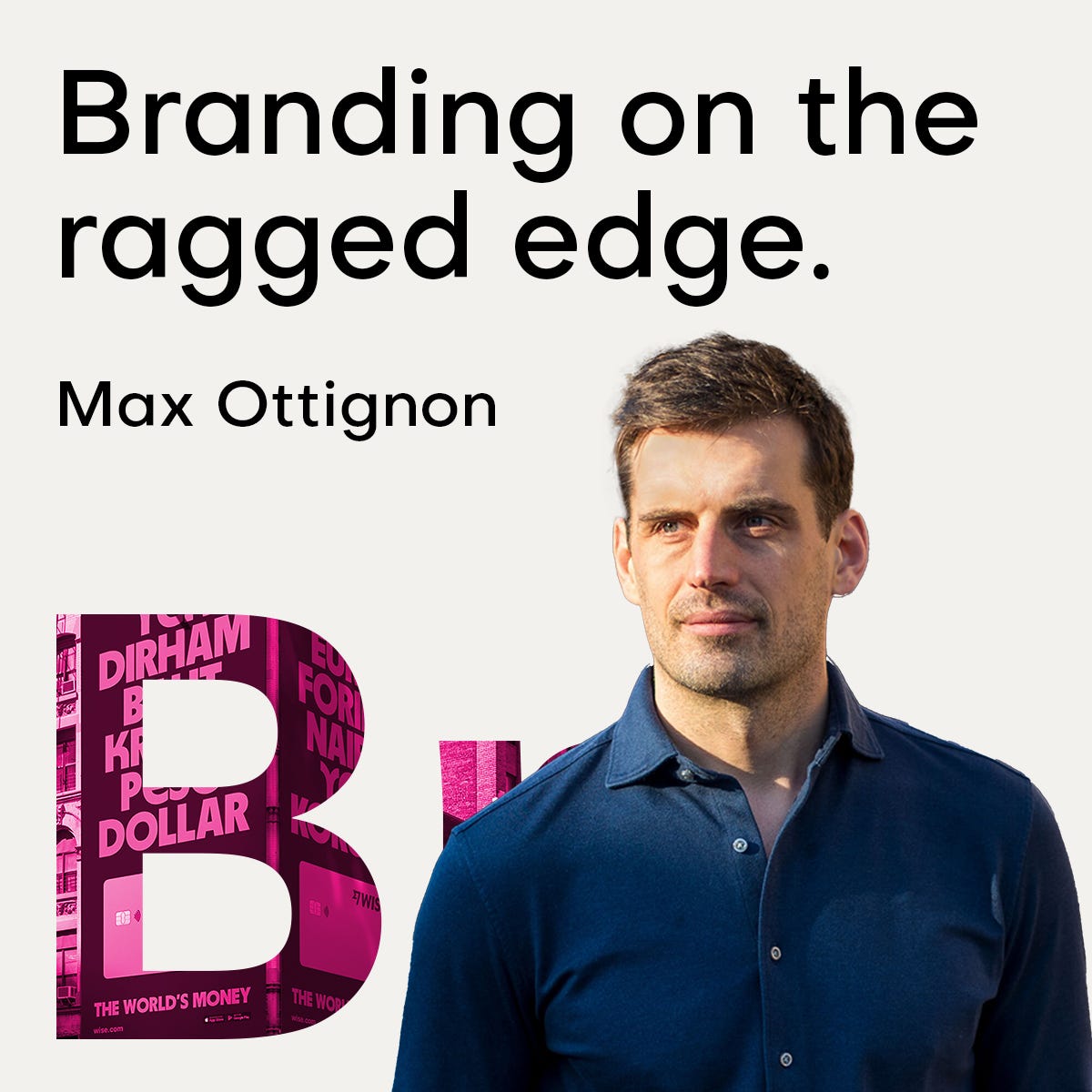
The conversation features Max Otiñol, co-founder of the branding agency Ragged Edge. He explains that the agency was founded on the principle that branding is about creating a foundational "idea" for a company, which is more strategic and comprehensive than just visual identity. This idea must be distinctive and relevant to audiences, and then consistently expressed across all experiences. Otiñol discusses the challenges of building a distinctive brand, noting the natural inclination to follow competitors and the lack of discipline in maintaining consistency. He positions branding as a crucial part of marketing that sets the strategic framework, making tactical marketing more effective. On rebranding, he advises it is most appropriate during major business transformations, but cautions against changing established names or equity, using the example of Wise (formerly TransferWise). He also comments that high-profile rebrands like Twitter's shift to X are unique cases dominated by the owner's personal brand, making standard strategic analysis difficult.
Today, we're talking with Max Otiñol, co-founder of one of the hottest branding agencies out there, Ragged Edge. We talk about the power of branding and the strategy work that goes into it, but also about the X-Ree brand and the impact that AI will have on the branding space. Buckle up and let's talk branding. So my name is Max. I am co-founder of a branding agency called Ragged Edge, which founded back in 2007. I'm one of two co-founders, so the other chap, his name is Matt. He runs more the business side of things, and it's my job to agency the work and the creative art of the agency. Love that. I always thought you were, like, French or something, probably because your back name is Otiñol, I guess. You pronounce it much better than I do, so you know, so I'm impressed. I was glad I left that one to eat something. Yeah, that's French names. Okay. Well, from way, way back. Yeah, okay, from no accent. I'm afraid. Oh, no, no, that's fine. It made you seem a bit more exultic in a way, so. But maybe a bit more, I mean, I already said this in the intro, but Ragged Edge is like one of my favorite branding agencies. So I'm fan-boying a bit here, but like, take us a bit through, like, how did it come to life? And maybe what did you do before that? Just so people have an a little bit more context. Sure. So I began my career in, I guess, like, advertising, but really, like, big, like, direct marketing agency. Didn't really like it. I've heard lots of reasons. Primarily, like, the sort of, it was quite a sort of corporate, anonymous place where you could, you know, you might not know the person that was sat next to you. But also because I always felt like the work that we were doing was quite superficial and throw away and, like, wasn't just stuff I was particularly proud of for any number of different reasons. And when I met my business partner, Matt, who's background, he's a much more technical. So actually, when we met, he was a developer. I'm about front and back in web developer, and I was creating brands. When we met, we kind of, the ambition was to create something that we, branding was the way rather than the marketing stuff, because we realized straight away that without a solid brands behind anything, the marketing in the comms just becomes, yeah, very, very superficial. But also, like, we sat out with this ambition, like, hugely ambitious for the work, but also this sort of mutual understanding that the work was just one part of it. And we wanted to build something that was really true to the values that we both shared and wanted to try and make some way that treated people the way we would want it to have been treated as we were beginning our careers. Love that. And like, what were some of the struggles early on to create a branding agency? And numerous turns out it's quite money doing what we do. So there's always that. And like, the, particularly when you start out and you've got no real clients, you've got no real track record. Obviously, it's a really steep learning curve, hard to win work. You kind of have to take some work that you, you might not choose otherwise. There's a combination of number one, trying to build a reputation, but also trying to sort of create something that's financially stable. It was hard and actually to be honest, remains quite cool. Yeah, interesting. And I guess you also have to build a brand for yourself. Yeah, well, for your company, like, like, maybe before you dive in, I did this category for a while in the podcast, the segment where it was like some definitions and I stopped doing it. But since I'm having you here, I would love your take on like, what is branding for you? I was slightly reluctant to get drawn into this amount. It's because it's like, but for us, branding brands are ideas. And their ideas in the minds of sort of collected minds of the audience that you're talking to. And so we're talking about when we talk about branding is, I think sometimes a bit different to what some branding agencies have historically talked about, which is mainly. Visual identity. And I think what we've always thought about, we've always thought about brands as much bigger than that. And obviously, visual identity is part of that. But really what we're trying to do is trying to help companies create, you know, find ways to kind of frame their offering ways. And recall this distinctive, this relevant to these audiences, you know, range of different audiences in ways that are kind of consistent and coherent over time and could be expressed across every part of the experience. So like, we try and think about brand as a bigger thing than just, you know, logos and typepaces. Love that. What an idea. Yeah, an idea. Love that. Like, how much of it then for a branding agency is part of like the scope of what you do for companies? Because, you know, this idea lives in so many places in like, where does ragged educate involved? And where does it maybe stop also? You know, good question. So, you know, brands are massive at all and come sing aren't they? And so you're actually right that like even something that sells themselves as a brand agency or not. What we're trying to do is we're trying to define that idea or find what we want the idea to be. And then figure out how to express it and give companies the tools to do that. So, you know, brand strategy. We try and do, I think again, brand strategy gets a bit of a bad reputation sometimes because very often it's, it becomes creative writing rather than actually a strategic thinking. And so what we try and do is some real strategic thinking and put real rigor into how to frame the brand in the minds of the different audiences. And then use that to define the idea that we want to try and communicate and then build a system which tends to be like. To begin with like visual and verbal. So, you know, design elements language verbal elements and then start to bring that to life across so define it and then start to either build the tools themselves or build the framework with which to bring to life across all different parts of the experience. So, we do get our hands dirty if that makes sense in terms of like some of the implementation. Yeah, totally. And I mean, like there's been a rise of things like sonic branding and all the more experiential stuff like interior design and all of that. Do you do you get involved in all of that or is the core like visual verbal? So, yes, we do get involved in in all of that to different levels and so are like we've got a team here that can in house that can deliver on all the things I've just described. Something like sonic branding, we would work with specialist in the same we do do some we actually like car teeth doing a lot of kind of experiential stuff early on, so we've got that that muscle. But in terms of like environments and things like that, there'll be some things we do and then I'll see probably partners that we work with too. For us, it's often about like how do we frame that experience, how do we define what it is and then, you know, can we do it or can we work with someone to help someone else bring it to life? Yeah, interesting and like you said earlier that you started actually and I think it direct marketing but how do you see like working with clients, the bigger overlap with marketing like where's the overlap between branding and like how does the handoff happen and how do they play into each other? Yeah, I mean, I guess the tricky one isn't tricky on to answer isn't it? Only tricky questions, yeah, yeah, yeah, I love it. So yeah, obviously branding is part of marketing and I suppose like the traditional idea of marketing isn't like influencing all the four piece. And I think brand can and should impact on those all of them, but it is very specific discipline within marketing and I suppose what we're trying to do is primarily is like set that, you know, help position the brand, define that idea, figure out ways to communicate that idea and frame works and systems. And then the more traditional marketing, so how like campaigns and things like that, we feel very strongly that if you've got a strong underlying brand beneath it and a brand that is robust enough and well thought through enough that that makes the then the sort of execution of campaign execution of your kind of day to day marketing stuff that you have to do. So to build to build a brand and to grow sales and all that stuff, it makes it much easier because you've got this framework within which to work. And then that was very much the sort of why that was that was really why we started ragged edge was like I've been on the other end of that doing the direct marketing and not had that clarity, not had those frameworks and so you then go from campaign to campaign and as soon as you switch off the advertising money, the branches of a 50. Yeah, I really love that and I think it's interesting like lots of people from the branding space I talked to like there's this, you know, there's it's almost become this meme of branding versus marketing and I very much appreciate your perspective of like it's a part of marketing and it's influencing the four piece but it's more of like something fundamental that comes before it. It's like laying the foundation and then marketing can work better if you do it and that's something like I think that we saw recently also in the episode study where we saw that only 15% of brands is like truly distinctive. And I mean that's problematic I guess but a great opportunity for a branding agency like what do you think it's so hard for brands to be recognizable to be memorable both like visually because this study was mostly on like distinctiveness and distinctive assets but also like verbally and you know in all in all layers of it. Yeah, I mean it's it's really hard to make things that are new and different and then it's really hard to have that the discipline to maintain that such that you build an asset that is genuinely distinctive that stuff happens over time, it takes discipline, it takes money, it takes people not changing their minds. So we see our job as trying to you know how do we create something that is fundamentally different and that is really hard because the natural inclination always is to gravitate to what has been done. So this works over here we know this competitor thing over here is working so perhaps we should follow that obviously just you know sounds obvious doesn't that that is the antithesis of distinctiveness. So yeah, first of all you have to create the system you have to create the visual language, the verbal language, the idea that gives you the ability to start building that distinctiveness across a range of assets but then of course you have to have the discipline and that's probably the hard bit. Because we all you know everybody will lots of people working marketing branding, they will create people and they will like change don't they. We do. Yeah, you need to keep things consistent to build this stuff. I've honestly think that's the biggest problem is just like people just keep changing stuff. Interesting, I mean I agree with you, I think that's a huge part of the problem. Although I also think like when I see some of the work that ragged edges is putting out there and some other like great branding agencies is also like from the get go the identities or like the overall everything the tone of voice is usually quite distinct from what is happening in those categories. So I think it's also like it's both what you said earlier about like laying that foundation that is already very distinctive differentiated we can get into that later. But then also applying that consistently and not changing it like I think I don't know if you agree but. Yeah, and and and talking about changing I think that's like well we we've seen the we can swear on this one so the shit storm that was X X I don't know if you agree by you can say something but like maybe first it was a shit storm but like what was your take on it like maybe I don't know if do you have a halt take on it or do you say like that debates over I I would totally appreciate that as well. I think the challenge of that one is it's hard to know what you can learn from it really because like Elon Musk's brand again for better or for worse just supersedes it all say stuff that you know any learnings we can. It may work it may work really really well but that's going to be because Elon Musk is 150 million for this on his platform where we want to call it now it's not because strategically that was the right thing to do and it made sense to throw away all the equity of. You know the bird or the language of a tweets wish none of that makes a whole other sense to me but you know maybe the power of Elon Musk brand can and supersede all that yeah we're going to find out it's messy and as you say like we can't really protect the future like maybe in general more I'm guessing you you guys encounter rebranding briefs a lot as well like. How do you tackle that like do you like how do you look at it in the first place like are you careful with even going for it like what's what's your take on being careful and then also making sure you don't mess up this this whole thing. Yeah so we question we have a very specific so within the world of branding we are very clear about the type of work that we're good at and we want to do and where our process is set up to achieve. You've talked about already that our work feels distinctive and that is very very important so we straight out the back we're not we're just we're not interested in we just think it's the right thing to do and whether a briefs where it's about you know little incremental shift from the category whether it's. A little incremental change from isn't the right work for us what we're looking to do is the work we're looking for the projects where they're trying to make a big business shift and there's lots of different forms that shift might take. It's always a big change and then how do we use brand to help that company deliver on that that ambition to change. I'm sorry go ahead yeah for us that takes a very specific approach which we've kind of spent the last 16 years fine tuning. Like two things I would love to know more about when it comes to rebrands one is like how much are you auditing the existing brand and like trying to understand you know how it works and then the second part is more like. In what scenarios do you think it's a good idea to rebrand like you said business shift like there's some people's like Mark Ritzinger for example saying that there's never actually a good it's never good idea to rebrand only when it's a legal thing like I don't agree entirely with that but I'm curious about your take on like one is a good time to rebrand and then the second part like what are you doing in terms of due diligence to make sure that you understand properly the heritage of the brand. I think I think that it very much depends on the stage of the business so there are some brands that we do quite a lot of work in the kind of space with brands that are growing quite quickly. Whether they're sort of VC backed and they've got some momentum and they want to get to the next stage of the journey that might be you know one of the changes we're talking about and often at that point they haven't really established any meaningful equity and I think you can afford to you don't need to worry too much about what they've already got. You know it's been very product focus and so there's an opportunity to you know create something new that is built for what could be what will be in the future rather than what what is right now. But then on the flip side you've got more established brands which have built up that level of equity and I think. I think my like my recent talks about you talk I think I read the same column and I think he was talking about naming specifically that wasn't here. I actually really do agree with that like changing the name is just really really hard when you've got an established brand and it's hard. Even when it feels like there's a rational case for it I think it's very unlikely that that is genuine. The original case to give you a brief example so we've been working with wise formally transfer wise. And I don't think it would be giving away any anything they wouldn't want us to tell you but like they made that shift from they changed their name from transfer wise to wise. That was done for very good strategic reason which is there was a business shift they were trying to make which is. I don't know if you know what wise does but they they made their name from being able to send money anywhere in the world really quickly and really cheaply. And really conveniently and they've since built their products to be much more of this like basically one account for the world's money and they want the behavior that their audience they use is to be quite different from just thinking about it to send money for me to be. So the first thing they did was they changed their name because they wanted to take transfer out of it. But because it was so well known it's had so much equity in it that alone has been just really hard and like still on some of their cons less so now that they still have to say formally transfer wise. Yeah, yeah long long time. Yeah and I guess like the actual mistake you it's not a pretty mistake but I think the actual thing to solve there is like earlier on like transfer wise to start with was a very descriptive name. And like part of branding is coming up with names that don't fall into the trap of like not being able to grow or evolve with the product like some of like ragged edge like there's nothing in there that that would indicate a certain scope which I think makes it easier over time. So I think that's just a good like branding part to think about a name in a more like non descriptive way. Yeah I think so but I also think that names transcend the original meaning. I always think back to the Netflix example and I think when they were when they were naming it they were there's a bit in one of the I think breed hastings book about then worried that it was a bit basically the brief for the name was something that does internet and something that does films. And so you know portmante netflix and they were worried that it was a bit porny yeah like clicks because because before they had a brand around it that's what it's seen. But now they built this brand and actually when you think about it like is netflix the right name for it's about all about movies which is what they used to do now Netflix is really TV shows isn't it. Like McDonald's I mean it's original it's like it sounds when you disconnect it it's like Scottish I don't know old McDonald went on the farm kind of thing and then like nothing to do with burgers but it works because we like totally not associated with so I agree with you. That's a really good point at a certain point it just transcend that like another help debate on LinkedIn of course you mentioned the word meaningful in terms of equity and there there of course there was some some recent like debate well it comes back I think every I don't know six months or one year I know. But it's like you're on the edge on the rugged edge of this I mean you are creating distinctiveness for brands you're also working on ideas on on differentiation like what's your take on the whole differentiation distinctiveness debate like. So I can't I'm going to leave the the semantics again so that you know the marketing scientist for a living but for us you know distinctiveness and different and differentiation like they are two obviously two different things I don't think they're mutually exclusive and I think the first job is to create something that is distinctive because our first job is a brand is to get something that's noticed. And remembered I think if you can then layer on something that is there's a frame the product or the offer in a way that is genuinely and meaningfully differentiated that's obviously much harder but it's only going to add to it and perhaps that might be you know more about when you're. So in example like we do lots of digital products and like to get noticed distinctiveness is the thing it doesn't probably doesn't matter about differentiation in terms of like getting you to click on an ad and things like that. But then maybe that differentiation comes through as you go through that the user journey and the customer journey and being able to articulate that in a clear way is really important. So yeah sure answered it does not they're not mutually exclusive but the most important thing for us is landing that distinctiveness first and foremost because without that you got nothing. Yeah it's fundamental I totally agree and I think it's like it's not that's the only issue I have with the whole bar and sharp I mean I love the things they're doing and the how brands grow I think it's it's interesting. It's a very good like baseline to work off but I think the meaning less distinctiveness like why would you not enable companies to work around ideas and like it's power I think it's powerful if they can find it and positioning themselves around and if own the only thing that customers take away is distinctiveness. Great but internally we've got like a driver that keeps you consistent so I think that part of what you talked about earlier about ideas. It's very interesting and maybe if you could like tap into a bit more like one of the things I think that a lot of brand strategists are like struggling with is how much of it is it like. Let's say creating that idea or like you know finding that idea versus like just another thing what is there. And I guess of course context matters in turn like if it's mature business versus like a starting business where you have a bit more of that freedom but if you could like talk a bit more about that. ID generation and how that works in collaboration with the client and how much is that part of ragged edge strategy work and how much is the client's vision there. Yeah so when you talk about ID do you mean the sort of underlying idea that informs yeah. So yeah I mean I suppose it does it very much depends doesn't it on where the business is in their life stage and how much of that exists and is clarified how much of it is open to change and so we'll look at all that. And for us it's I think it's really about just clarifying something that already exists very rarely is it that I think you know that that's quite easy to do well I wouldn't understand it but it's easier to do. I think what we're always looking to do is take what already exists frame it in an unusual way that is uniquely. Distinctive memorable relevant all of those things and so we're always taking the client on a journey. It's not and it isn't just simply about like playing back what they've already said in a way that's you know a bit simplifying and clarified and I think that's probably due to the types of. So we work the types of changes we work with where they are looking to affect a change and so we usually need to change how people think about the offer or how people perceive the offer. Don't have that makes sense. Yeah I mean a couple of things that I'd love to get in deeper is like first off like probably this is impossible to answer but it's the podcast of tricky questions so we'll do it. Like when do you know like you're working on the strategy you've done maybe some workshops some research like when do you know if like this is a solid brand idea like when does it click like are there some I don't know benchmarks or things you look at where you feel like okay this idea could work could take off. I think the number of different phases and I think that our industry and what we do is a game of conviction and belief and I think the thing about brands and the idea idea spread when people believe in them. And so we have this journey we need to go on first of all we need to define the idea we need to believe in it. We need to help the client understand and believe in it and then they and we together sometimes but have to help their audiences believe in it. And so all the way all the way along that journey that process that we go through is it's about building that conviction building that belief. And I think when we know we've got it you know when we believe in something when we then figure out okay the client really believes in this too that's the exciting but when we've got something that we really believe in often they might obviously test it with their audience and so that will reinforce that belief as well. But yeah it's the power of an idea with shared belief is really quite compelling and it kind of sometimes it just it doesn't even necessarily have to be the right idea. The singular right idea is just to be certain everyone can get excited about everyone can believe in and then we can all commit to delivering that across every part of the experience. Yeah I mean and one other part I think important like in the let's say the strategic journey like how data driven versus more let's say qualitative is this idea inspired and like if you do look at data like what things are you looking at to inspire those brand ideas. I think we talk a lot about a leap and from and to try and get these brands and again we're talking about a very specific type of challenge here we're trying to affect a change and so we're always looking for a more. And that leap might be informed by the data but it's never going to be proven by the data if that makes sense. And so we you know there's a it's a combination of the two it's it takes some belief it takes some conviction but obviously the more you can demonstrate the robustness of that thinking with the data behind it. And the more that you know insights come from you know genuine truths whether it's from data or whether it's come from something a bit more qualitative. Yeah I think like you talked about it earlier the thing about like a lot of I think branding agencies like I've seen it myself I'm a consultant as well like I've seen a lot of beautiful decks and strategy both but also visual and verbal presentations. And then when you look at the actual brands like it's not nowhere near that like it's even with case studies like they're sometimes different worlds like how do you manage as a branding agency or because there's also people listening on the other side on the inside. I mean in house people like how do you dig that that beautiful idea to like to to live inside of a company and make sure that they apply it like have any pointers ideas on that. So I suppose yeah it is the biggest challenge I think in our industry generally and it's definitely one we face and I think it comes back to that conviction and belief. So we don't move forward with anything until we've got something that we already believe and the client it can't be something that we force on the client it has to be something that we've kind of built and collaborated on together and as a real shared conviction shared belief. We then our job together with the client is to build a system and a way of communicating that idea in a way that's simple that's scalable that's clear. That works across you know every imaginable touch point and speaks to this like real breadth of audiences as well so it's like trying to find a form for that idea then trying to find a framework for that idea. And then helping the client making sure the client really believes it and really understands it. And again that's really hard and it's about trying to you know be ruthlessly simple and more complex to add into this stuff the more likely it is to go wrong. And it does it relies on talent and dedication on the client side as well and you know is it is it is a team sport. Yeah yeah totally and I think that's that that relationship with with the client and being able to check in also from time to time is I think very important so do not make it just like here's the button and see you never again I think that's where some of the problems arise. Like maybe to flip the conversation a bit like we like one of the cases that I really loved and I shared it like with the company I'm working for as well. We also have a mascot so the case for Kili which I think was really interesting. You might or might not know I have a thing for mascots but I think they're like one of these these assets that we don't see that often especially in some categories and I think it's part of it is like our fear of not being taken seriously in a way like it's you know it's too cute or whatever it's too whimsical. And I got to say like I was really pleasantly surprised by the case and I think it's a really cool mascot so for people I do listening I'll put it in the show notes but like what's your take on on brand mascots like do you think they're making a comeback like why do you think they're people are hesitant like. I'm enjoying the book in the background. It's a real it's a really cool book check it out not seeing it after look at it yeah I think we're on the same page. You have probably seen the same studies that we have there is like as a distinctive asset they're really very very powerful and they're also very underused so it's kind of like it's a bit of an open goal. You're right you're absolutely spot on in the case of Killy where the challenge for us was to build that belief and conviction with the client that we weren't sort of infantilizing the product this amazing you know very very technically of our hunts product by doing this and I think we were able to share a few examples. Of b2b SaaS products the main one actually being I think Salesforce who yeah I forgot the name of the astray that's it yeah which has been really powerful for them and just being able to show that we could get that tone right as well and create this this this character Killy who felt human or had humanity and empathy but also didn't. Make the brand feel childish and there was a real balance there. We you know we did tons and tons of exploration and different. Difference expressions of that mascot and some of them were to you childish and you know we're we're we're we're too too far as we always try to always try and take it to the edges. But we found something that we felt as a as a team could create that distinctness that could create that connection between the audience and the brand in the business in a way that just felt like a million miles away from any one of that space was doing. Yeah totally and I think it worked really well maybe it's best to not talk about it too much so that all other branding it's creating mascots so it's a good secret. The other challenge of them is you got me like any asset you've got to maintain it yeah and mascot so. And you know you know it's not not like a logo we're just creating one thing that just execute everywhere or even a typeface where once you've got it you can just use it like the mascot you know has to live and so. Making sure that's scalable is an executable it's hard and perhaps one of the reasons one of the other reasons why companies maybe shy away from them a little bit. Absolutely yeah maybe like I don't know if you have any like that's maybe too tactical or specific but if you do have any ideas on like how to make that manageable like I think people would be really interesting to know. So we're always thinking about that so when we're obviously building a brand we have these ideas but then quite quickly we have to get quite real about these and without how can we. Simplify and create something that really can scale we'll often have lots of conversations with the in-house team and I make sure to figure out what well they're what their expertise what can they do is there a way that we could give them something that they could use their skills to execute. If there's not is there like just a really simple way of it sort of rendering this mascot like I don't mean computer rendering but just drawing this mascot in a way that can be scaled really easy. And so we're always almost before we present it to the client with thinking is there a way this can be scalable because if a brand is not scalable you know you're in trouble from the start. Yeah totally and I think it's it's a smart approach to I mean look at the capacities of the in-house team and base it on that and not just on whether it would be very cool because yeah especially with 3D and in other stuff it's like not always as easy to match. And like that's I think a perfect segue maybe into the last. Also very help topic AI of course. I mean I guess as a creative company I mean you you must talk about it and you must be like exploring it. And like in mascot specifically I think it's interesting to see how like it maybe can help and in character design and stuff like that's what I'm exploring but in more let's zoom out more in general like what's what's your feeling on like how AI will like impact the branding scene both from like a more broader perspective for everyone like owning brands but also for branding agencies. Yeah so I think AI is just obviously a huge topic and I think it will touch every part of our jobs in the in the branding industry probably you know much more than the branding industry and in any number of different ways both noble both under the. And we're thinking about all of that and whilst obviously trying to go about our day-to-day existence and then playing with it as well but I think I suppose in terms of like outputs what I think is quite interesting is we're already seeing like without AI. I think that the sort of digital productization of the branding space and particularly that we work in as kind of led to this commoditization of brand where everything is just because it has to be so scalable because it has to be so executable because it has to work across these tiny devices. So everything size feels same and it's really really hard to break out from those constraints so we're already seeing this and you know there's lots of discussions online about this isn't there but you're already seeing that everybody is kind of fishing in you know from the same sort of ingredients and it's hard to do it's really hard to make stuff that looks and feels new because we're working with quite tight constraints. I think AI is only going to make that harder because it's suddenly going to commoditize the nature of a visual identity. Anyone will be able to have one with literally you know touch or they probably can already can't they were like touch or button it can generate a visual identity that feels professional that feels slick that kind of delivers quite a lot of what people would at least historically have come to branding agencies for. So we're going to see the space where it's so like it's so crowded is so hard to stand out. For me that's a massive opportunity and it because it puts the people who can create something that can stand out in that state of staff like like all that content that's going to be created now now it's so easy to create content that's so easy to create identities. The people that can figure out ways to cut through that to create a brand that can that you can notice and you can remember amongst all that stuff that's going to get even more valuable. And I think those people who can do that are going to be the people that sort of succeed in the next era of branding. We do very much hope and and expect like we would want to be one of those people and we're really going to push for it and you know it frost is an exciting challenge. Yeah and that kind of brings us full circle you know I think it's what you said earlier about having these strong ideas and then building on them with like strong creative distinctive identities is like something that will always matter. Even if AI will commoditize it for a lot of brands I totally agree so. Thank you so much Max for being on the show was really interesting. Yeah well likewise and I knew you're going to ask some tricky questions but. Yeah I enjoyed it. You kept me on my toes. Thank you. I hope I didn't make you sweat too much. Little bit. A little bit. I enjoyed it. So thank you. Thanks very much and fun to chat.
Podcast Summary
Key Points:
Ragged Edge is a branding agency founded in 2007 by Max Otiñol and Matt, focusing on brand as a foundational "idea" rather than just visual identity.
Effective branding requires creating a distinctive and differentiated strategic idea, then consistently expressing it across all touchpoints, which is challenging due to the tendency to imitate competitors or frequently change direction.
Rebranding is justified primarily during significant business shifts, but changing established names or equity is extremely difficult and often not advisable unless the brand is very young with little built equity.
Branding is viewed as a core discipline within marketing that establishes a strategic framework, making subsequent marketing efforts like campaigns more effective and coherent.
The impact of high-profile rebrands, like Twitter to X, is difficult to assess through normal strategic lenses as they are overshadowed by the personal brand of figures like Elon Musk.
Summary:
The conversation features Max Otiñol, co-founder of the branding agency Ragged Edge. He explains that the agency was founded on the principle that branding is about creating a foundational "idea" for a company, which is more strategic and comprehensive than just visual identity. This idea must be distinctive and relevant to audiences, and then consistently expressed across all experiences.
Otiñol discusses the challenges of building a distinctive brand, noting the natural inclination to follow competitors and the lack of discipline in maintaining consistency. He positions branding as a crucial part of marketing that sets the strategic framework, making tactical marketing more effective. On rebranding, he advises it is most appropriate during major business transformations, but cautions against changing established names or equity, using the example of Wise (formerly TransferWise).
He also comments that high-profile rebrands like Twitter's shift to X are unique cases dominated by the owner's personal brand, making standard strategic analysis difficult.
FAQs
Branding is about creating ideas in the minds of the audience, going beyond just visual identity to frame a company's offering in a distinctive, relevant, and coherent way across all experiences.
Ragged Edge focuses on rigorous strategic thinking to define a brand's core idea, then builds visual and verbal systems to express it, ensuring consistency and distinctiveness over time.
Branding is a foundational part of marketing that sets the strategic framework, making traditional marketing efforts like campaigns more effective by providing clarity and consistency.
Creating something new and different is challenging, and maintaining it requires discipline, resources, and consistency over time, as people often gravitate toward familiar or competitor-driven approaches.
Rebranding is appropriate during significant business shifts, such as rapid growth or strategic pivots, especially for brands with little established equity, but should be approached cautiously for well-established names.
They focus on projects involving major business changes, using a tailored process to audit existing equity and create distinctive new identities that support future ambitions.
Chat with AI
Loading...
Pro features
Go deeper with this episode
Unlock creator-grade tools that turn any transcript into show notes and subtitle files.
 PodcastTranscript AI