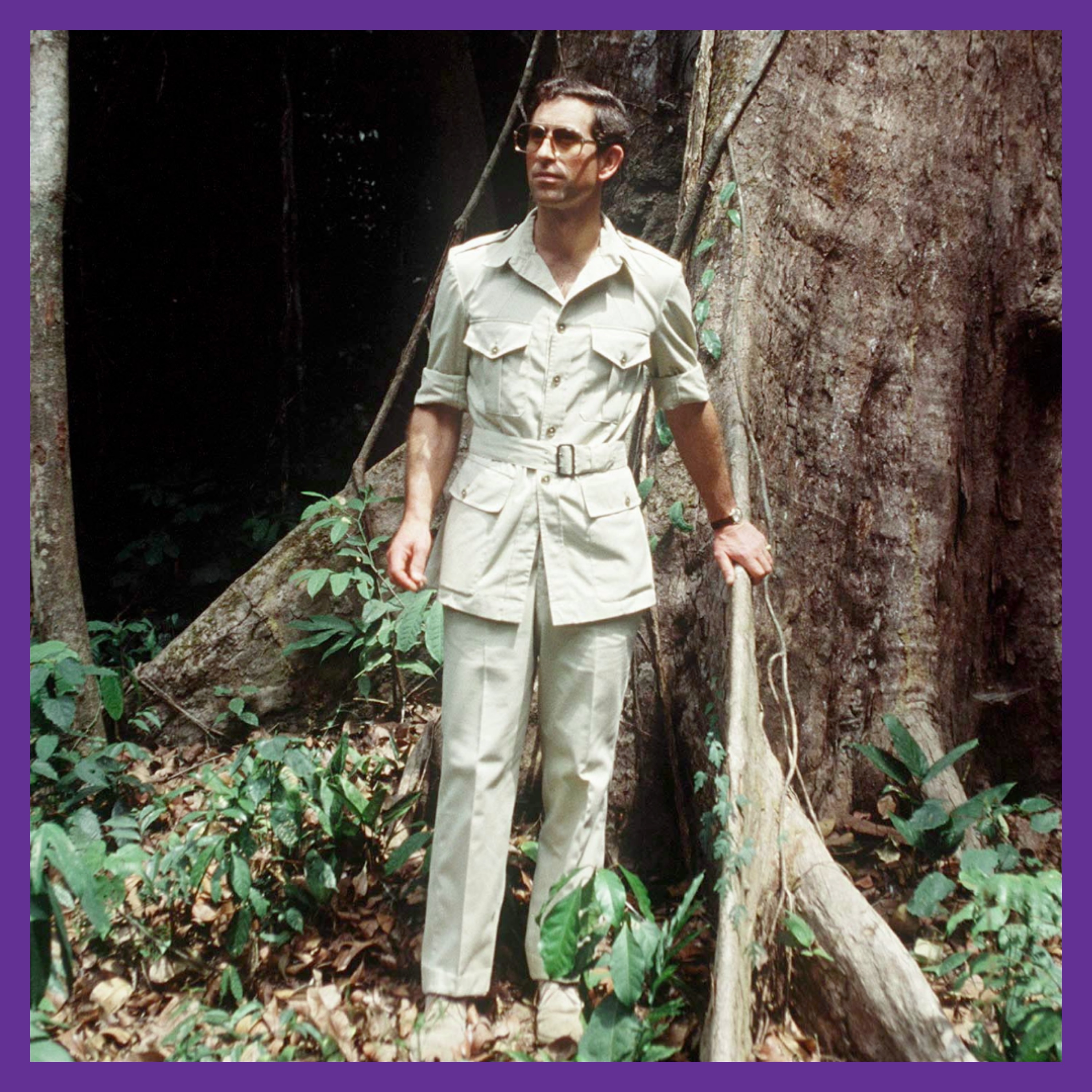
King Charles, through decades of unwavering commitment, has emerged as a pivotal figure in global environmental advocacy, embodying a philosophy of "Harmony" that unites human flourishing with ecological restoration. The new documentary *Finding Harmony: A King’s Vision*, narrated by Kate Winslet and featuring intimate archival footage, chronicles his journey from early 1970s activism to a global environmental leader, despite facing criticism and mockery for decades. Rooted in Greek ideals of balance, the Harmony philosophy emphasizes deep interconnections between climate, agriculture, communities, and nature, rejecting short-term solutions in favor of systemic change. Charles’s work is not only symbolic but practical—seen in initiatives like Dumfries House, which supports local communities and sustainable land use. Though political resistance, such as from climate-denying leaders in the U.S., poses challenges, his neutral, long-term presence offers unique soft power. The film and his 2010 book *Harmony* serve as tools to inspire a new generation, highlighting a legacy that spans generations and reflects a century of royal environmental stewardship. Tony Juniper, a key advisor, lauds Charles as history’s most influential environmentalist due to the scale, consistency, and global reach of his efforts—especially his pivotal role in shaping the 2015 Paris Agreement. This moment marks not a conclusion but a continuation of a transformative vision for a more sustainable future.
Hello and welcome to the Royals, the podcast where we give you insight into what happens
behind the palace walls and why it matters. I'm Kate Mansy and I'm Roy Anika. Kate, we've
seen a new documentary looking at the king's lifelong passion for the environment. It's
really given us an insight into how Charles became Britain's first climate king.
That's right. I mean this is of course these champions since the 1970s, a time when few
others were listening frankly. It was called crazy, it was called dotty. He had a lot of
criticism about his views but has the world caught up with him and is this the legacy that
the king wishes to leave behind. And here to help us, we're delighted to be joined by
the environmentalist Tony Juniper, a long time advisor to the king, co-author of the book
Harmony, and a contributor to the new documentary, Finding Harmony A King's Vision. Tony, great
to have you on. Thanks for your pleasure. Welcome to the Royals. It's great to have you
here. Thank you for joining us. I mean for anyone who doesn't know, can you introduce yourself
to the listeners please? I am a long-serving environmental advocate. I'm an ecologist
by training. So my scientific background is about understanding the ways in which the
natural world works. And my work over many decades now has been to find an accommodation
between the protection and maintenance of our planetary life support system at the same
time as meeting human needs. And I must say in all of the different ideas and thoughts
that I've come across over a very long career, the most powerful idea that I've seen is
the idea of Harmony brought to us by King Charles as the way in which we can organize
things differently to enable human flourishing for 8, 9, 10 billion people at the same time
as we repair the tattered fabric of planets web of life. That's what this is all about.
Well, you were right there from the start and this vision of the kings because you were
co-authored the book Harmony which has inspired this new Amazon Prime film. For people who
don't haven't read that book and it is being republished to go alongside the release
of the film, tell us a little bit more breakdown exactly what the idea of Harmony means. You've
given us an overview just there, but what does it mean in practice? How can people put
it into practice too in their lives? Well, maybe a good place to start is with the word.
It's derived from the word harmonia, which is the name of a Greek goddess and her ability
was to draw together opposing forces and to bring unity out of difference and to put things
together again. And in the modern context, the idea of Harmony from the king is about
putting back together our relationship with nature upon which we all depend. And we
often don't understand that relationship because we go to work in air-conditioned cars,
we go to a gymnasium, we go to a supermarket and buy food in plastic wrappers. And that
is at the heart of the problem that Harmony describes this is ever stronger separation between
the worlds of nature and the worlds of people. And so the idea of Harmony is to bring those
two things back together. Put things back together is the way in which the king describes this
thinking in the film. And in the book, in that 2010 book, he actually describes it as
a kind of call for revolution. It's quite a radical view, really. It is. And that's become
the kind of the launch pad, if you like, for this Amazon prime video. 90-minute documentary,
the palace of called a landmark documentary. Now, according to the documentary makers,
this tells the story of his majesty, the king's lifelong commitment to the philosophy of Harmony
and the environment, urging viewers to protect our planet and create a more sustainable
future for the next generation. And it's quite starry. It's narrated by Kate Winslet.
It's not a conventional royal documentary in that sense, is it?
No, it really isn't. It's bringing a philosophy from someone who's been thinking about this
literally for more than half a century. And by the time we got to writing that book, Ian
Scaly and I, helping the then Prince Charles to put these ideas together in book form, he'd
already been thinking about this for literally 50 years by then. And so the book really
was the end point of a very long process. And actually not the end point, because obviously
the vision and the philosophy evolves and it's now turned into a film form, it's very close
to what the book says. And it is a philosophy that is derived from years of paying very
close attention to a series of what look like quite disparate issues ranging from the state
of inner city communities to the destruction of the rainforests, to the health of our food
system, to the changes taking place in the climate.
And architecture as well. And architecture and the idea of putting
all these things together to see the connections between them. This is very much in line with
that harmony philosophy about putting things back together. And the King says in the original
harmony text about the impression he sometimes feels that people have of him of doing youth
unemployment in the morning, rainforests in the afternoon, sustainable agriculture before
bed. When in fact, all of these things, as the point he sees them as all deeply interconnected.
And if you wish to solve any one of them, you need to look at the unity of the challenges
that lie between all of them. And it is this separation between the world of people and
the world of nature, which has occurred, which he sees as a crisis of perception. We've
become used to the idea of seeing ourselves outside of nature. And if there are any problems
we can correct them with technology, or so is the popular culture, he says, no, that's
not right. We need to address this challenge at a much deeper level. Hence, in the original
book, the first sentence says, this is a call to revolution.
The King obviously is at the heart of this film. And there is, you know, he's in it. He's
talking. We hear from him. We see him. We see him at high grave. We see him all over
the place. Charming footage of him, watching back footage of him, giving that very first
speech as a 21 year old prince in the 1970s. And you have known him for almost as long.
And it does chart the film. It charts his journey from going from someone who was, you know,
just starting out in his public life and his campaigning at a time when no one really
was banging the drum for the environment. And it looks at how that landed and how difficult
that was. And the names that he was called by the media, you've known him for how many
years, Tony.
Well, I've known of him since those first speeches. And this was one of the inspirations
for me embarking on an environmental career, because I remember back in the 1970s as a
youngster thinking, oh, my goodness, these things are really serious. Something must be
done. And I was reading books and learning about the declining state of the natural world.
And he was literally the only person in a position of authority and of the establishment
who spoke about these things in a way which really conveyed a sense of urgency and power
about the issues. And that really inspired me to embark on this work. And it was in 1990
when I went to work at Friends of the Earth, where I first met him and then began to develop
some interactions and found that we were on very similar wavelengths unsurprisingly in
terms of our understanding of these questions and then worked more closely together over
time and then worked on harmony with him from 2008 to 2010.
So from the man on the stage that inspired you as a young man, what have you learned about
that sort of character of Charles? There's some brilliant sort of behind-the-scenes footage
that sort of interspersed with the more serious stuff in this film. You know, we see him
in the garden at High Grove going to collect the eggs from his chicken coop called Clocking
and Palace. You know, there are lighthearted moments where we see him behind the scenes
and we see him wandering around, talking about the beach trees and talking about sanctuary,
a religious sanctuary that he's built in the ground. What do you know about the man behind
the scenes that perhaps the regular viewer wouldn't appreciate?
Well, that charm and that humanity comes through in the film and a big part of the harmony
philosophy is not about the idea that we need to protect nature at the expense of people.
It is very much a human facing project. And if you look at his environmental work over
many years, you find a deep empathy in it for the farmers who soil us, disappeared and
can no longer make a living. The fisherman who can no longer catch fish because the fish
stocks have been depleted to the communities affected by floods linked with climate change
and the indigenous communities whose cultures are being destroyed by deforestation. It is
their plight and their interests, which is at the heart of everything that he does.
So you're saying it's the concern for the people first, and it's the concern for the
planet?
Yes, and the love of nature at the same time. And again, this idea of uniting these two
things, the love of nature and the love of people and putting them together, that's
what this is all about. And so that deep humanity coupled with this incredible drive to make
a difference and to serve and to use his unique position for the betterment of humankind.
And then this other side of him, which is lighthearted, humorous and makes people laugh
and being a charming person you want to spend time with, all of this is blended together.
And I think the film captures it all quite beautifully actually.
We are reminded during the film, and he reminds us, and we see a lot of headlines around
the time of him delivering that speech in the 1970s. And then later in the 1980s, when
he bought home farm, we have headlines saying he's, you know, the loony with his worms.
What was he doing? No one was doing organic, and of course everything has come for circle
and everyone is, is, you know, the people are chasing the organic bandwagon. He looks
at all of that. And as you watch him watching footage, there's a sort of rise, says something
really interesting, which is I just always felt I sat out on this path and I was going
to stick to it and not be deterred, given that he had so much criticism for so many years
until people finally caught up with his ideas in him being ahead of his
time on green issues. What do you think it was that kept him going, kept him on that path he
didn't do because a lot of other senior public figures would have thought gosh maybe this isn't
going to land very well and I should sort of change tack but he didn't. It's a personal commitment
to the issues at hand. This is where it all comes from. He was never told go off and be a green
prince and go and help organic farmers. He was never told that one of the big priorities for him
should be the environment has been now called it. This came from a very deep personal appreciation
that we were on a very wrong path starting in those post-war years where we were destroying
literally the fabric of our life support system in ways that would make no long-term sense and he
understood that as a young man before those first speeches and that has remained within ever since
and I think a lot of people who embark on a lifelong programme of work on these subjects we get it
from usually childhood and I think that's fair to say most of my contemporaries and people I work with
they don't come to this because someone told them some interesting facts or some terrifying stories
about the state of the world. They got it as a sense of personal feeling at a very young age and
I think many organic farmers I don't think they're chasing a money machine. I think they've been
inspired by this philosophy of reuniting people with the life support system that sustains us. That
is what's driving a lot of people to be embarking on these kinds of changes that are in the harmony
philosophy. Well there's two points there is now I think talking about his childhood is really
interesting because there's some lovely archive footage in the documentary and we see a young
prince shot, very young prince Charles with his late grandmother, the queen mother and who obviously
spent a lot of time with he would take him around the garden and introduce and there's one point
where he's giving her a little bouquet of flowers to put in her dress. It's very touching and there's
footage as well of a young Harry, a young William in there which is interesting to see. So his child
is obviously well that's been a big part of forming who he is but I think it's interesting then
he's trying to use this documentary for Amazon Prime Video which will be seen by young people
around the world to try to get that message to people at an early age as well. We also see the
flip side of the passion which is frustration because at one point he says well I've been doing this
for 40 years and I can only do what I can do and it's almost a little bit despairing at times but
he sort of kept going with it hasn't he? He's not alone I think anyone who works on these
kinds of subjects you're inevitably going to feel those kinds of emotions. It's an act of real
leadership that he's shown over this very long period he's not been deterred, he's not been
diverted, he's stuck with it and the world is a better place as a result I would say as a result of
his dogged determination. You would say that and obviously there's a lot of that in the film. There
is a danger that a film like this could be very positive and you know sort of paying homage to the
film. But there are points at which there is a little bit of criticism though they go back over
some points at which he has received like like Roya says like some of the negative headlines
over organic farming. He's described as being a bit of a hippie at one point. Do you think he's
developed a thicker skin over the years? Because people who work with him know him well so that he
is a very sensitive soul. Yes. And yet on he goes despite what we do see some we do see a touch
point don't we in the film where we talk about in 1986 when he made the comment about how he talks
to plants and they talk back. He was widely ridiculed by everybody at the time and in the film you
get a sense that he was quite saddened by that and shaken by that because one of his friends stands
up in the film and says you know we were all very upset by that. Yes well you step into contested
spaces when speaking about these environmental questions especially when you're at a philosophical
level which is where he is and his personal spiritual connection to the natural world leads him
to want to say words to plants. I do it too. I don't myself it's a perfectly natural thing.
Do you take your feedback from the plants Tony? Well I do actually and it makes me feel better
and that connection with nature which is in the film is very carefully explained by a leading
scientist who's devoted her career to looking at the beneficial effects of interacting with nature
at a biochemical level in ways that affect the human brain in ways that make us feel better
and that now is a matter of scientific fact and one way in which you might forge those relationships
with the natural world is to speak to trees and if you go to the indigenous societies in the Amazon
and go and speak to the communities living there the birds are their brothers the monkeys are
their sisters the trees are part of their spiritual fabric not something that you cut down and turn
into wood which you sell in a department store. But this indigenous wisdom is now part of the film
as well isn't coming in and that's been part of his drive over a long period. Then he was you know
the loony the crazy the dotty person but now it's he's been proved right. Can a monarch be an environmentalist
and what are the challenges and controversies that come with it? We'll be back after this.
One of the things I wanted to ask Etoni was about cut through to the public particularly
the younger generations because whenever you hear the king talking about when he makes big sort of
landmark speeches which he does lessen less now that he's more like he doesn't in a different way
he always weaves in something about I want to be able to look my children and grandchildren in the
eye and future generations and say I did my bit and I remember six years ago now actually six years
ago this month going to Davos the world economic forum I sat down with the king I interviewed him
and he was launching a new green initiative for his sustainable markets initiative and one of the
key things he was concerned about was the cut through to the younger generation that's bringing them
with him and now that he is the eight years he was meeting Greta Timber at the time a young
climb activist not without controversy but one of the things I know that he's concerned about always
is how much does it cut through and can you bring the younger generations with you what do you think
about that? Well it's obviously critical because the people who face the gravest peril for
our lack of attention to these issues over so many decades are the youngsters who are going
to be around in the 2060s 70s and 80s who are going to feel the consequences of decisions we're
making now which will be seen in soil depletion in climate change in the extinction of species in
water scarcity in mass migration all of these things are now beginning to happen and they will
affect the youngsters most most most decisively now also at the same time of course it's vital that
the youngsters become very active in being able to avoid all of that and so getting the message to
them to enable them to be effective advocates for change is absolutely critical and them being
able to appreciate and see and understand the harmony philosophy is therefore in his mind
absolutely critical when you take the view that if we don't look at this in a fundamental way
and start to look at how deep the disconnections are we are not going to make progress
and so the film is incredibly important in being able to reach groups of people who probably
wouldn't sit down and read a 300 page book beautiful though it is it is beautiful actually it's a
very good thing can a king in his late 70s be the figure that cuts through yes of course he can
and he will keep going and and I do hope that we will have many more years of him keeping going
because the difference he has made is absolutely enormous not only because of the content of
what he's brought and the subject matter but also the way in which he's a globally recognized figure
who reaches literally the entire world and there is no one else like that and for him to be bringing
this philosophy to the world at this moment could not be more important than the film
therefore is historic in what it's going to do I hope it talks about his sort of inspiring journey
and it talks about him convening people in this respect it's quite interesting isn't it because
he was the longest serving Prince of Wales who's seen so and there was an element of you can't put
the genie back in the bottle after years and years of campaigning was he suddenly going to be king
everyone was asking and in 2022 just stop talking about it and he hasn't much to his credit I think
because he's that's true to himself but it's interesting it's a quite different tack from
his late mother but perhaps that's because he he exceeded the throne later in life after a
lifetime of these speeches he's a very different character he's a very different person and there
is literally no job description there is a constitution and you can borrow into that and say well
actually what should he do and one of the things that scholars of the British constitution would
say well the monarch is the institution that takes the long view we live in a world with
electoral cycles and media kind of cycles and who is it who on behalf of all of us in this beautiful
country who is going to take the view that slightly over the horizon and so there do need to be
people who take responsibility for that and he has very much seen this as his task his job his
duty in fact is to share information and insight with people which is important to their future
I suppose also part of the role of being monarch is to advise isn't it and to warn which is
exactly what he's doing to warn advise and to be heard can I ask you about what you those are in
this film what you think about the sort of depth of that how far it can go but also the limitations
because one of the things that I think is particularly powerful in the film is the moment of
you hear the emotion in the king's voice when he talks about the fact of you know he says there's
only so much I can do you know which is not very much but I hope I've done my bid and that goes
alongside a sequence where you're looking at footage from a lot of cop climate summits over years
a lot of politicians environmentalists worldly there's going to go over here talking a lot talk talk talk
but the action over decades is limited and what I want to ask I want to ask you about that and the
king's view of that because you hear the fascination but also we were just talking last week with
our Washington under the Katie Bulls about the soft power the relationship with America the state
visit that we had in coming last year, we're going to see the King go to America on a state
visit, we believe. We have a president there, probably the most powerful man in the world
at the moment, who is effectively a climate-changed denier. You know his views on it. How far can
soft power go there in terms of the King's message and someone like Trump, who has reversed
a lot of the work that America was doing in the space? And how frustrating is that with
the King?
Well, by definition, he is above politics, he's in a space which transcends those electoral
cycles. And so I think everyone understands that. In terms of his frustrations and it's
actually, it comes out in the film very well. He says future generations won't judge
us on what we said. They will judge us on what we did. And this is why alongside this incredible
power that comes from expressing this philosophical perspective and the convenings and the drawing
attention to good practice, he has done a lot himself to take action and while he's slightly
self-denigrating and I can only do so much through institutions like the King's Foundation
and the work he does through that, that's the organisation that looks after nature and
sustainability on behalf of the King.
They worked with Amazon on the project.
And they worked with Amazon on the project. They helped to produce the film and also they
run Dumfries House alongside many other activities. It's him doing things in the real world
to demonstrate the principles of harmony. And that too comes through in the film very strongly
through some of the things that he's helped to put in train. And so the work at Dumfries
House, it's not just about beautiful nature around an ancient and stately home, it's about
bringing the community and providing jobs, trying to create social cohesion where the decline
of the economy is led to a fragmentation, people getting sick, he's trying to draw all
of these threads together and he's doing that in a very practical way.
Right, it's up there. Yeah, Dumfries House in December and seeing some of the projects
he does for the school children and things like that.
Yes, exactly. It's all connected. The local farmers learning how to carve and learning
how to land and to look after animals and to cook.
When you have, I hear everything you're saying and no one, you know, there's the foundation
does lots of brilliant work and the cause is a noble one. But when you have the King on
the world stage hosting someone like Donald Trump and then going and seeing Donald Trump,
how frustrating is it for him that, you know, America is a big polluter. We've got to
be honest about that. America's decisions on what they do in terms of climate and this
issue is huge because it can actually make a difference or not. Trump sort of mentioned
it didn't he in the state banquet? He said he noted Charles's campaigning. He noted it,
but he's not actually picked up that button and run with it yet.
The really interesting thing from what I've seen is that President Trump really likes King
Charles. Yes, it does. And so not enough to change his environmental policy.
Well, there we are. So there we are. So let's see where this all goes because in being
in that position, which is literally above politics and sharing a view that hopefully
everyone can hear and understand who knows where the influence goes over a long period.
And him interacting with President Trump, I think, is much, much better than not interacting
with President Trump. Of course it is. And he knows very well. The King knows very well
that his responsibility as head of state is to work in a way which promotes British interests
and in doing that and bringing the harmony philosophy into that space, he's doing his job.
There was a little nod to America, wasn't there in the film because we saw our goal,
the form of vice president, President George W. Bush appears in the film, not being
interviewed, but we see. So you're talking about the need for a science-based approach
on climate change and so you know, and it shows the kind of ripple effect around the world
that the form of Prince of Wales now King Charles's view has had. Now I did wonder with
Kierstammer's recent visit to China, King Charles, when he was Prince of Wales, always
made it clear that it wasn't a dialogue he wanted to open with China. I mean, as one
of the world's biggest polluters, is that something he should be looking at extending
his message to China as well, do you think?
Well, I think it's the case that China probably gets this message quite a lot more firmly
and strongly than many other countries and they're deploying more renewable energy capacity
in China than the rest of the world put together at the moment. They've just reached
the point of peak coal. They're now starting to close coal fire power stations. China is
reforesting vast areas of the west of its country that were subject to desertification.
And that country, I think, above many others is appreciated. And this is because that country
takes a long-term view. They've taken the idea of ecological peril to the heart of their
national strategy. And so they are repairing the natural environment, not because someone's
told them they need to be green, but because they can see this is the way of protecting
the long-term security and well-being of their country and their people. And that is very
strongly reflected in what China does. I mean, you know, like every other country, there
are contradictions, there are tensions, there are difficulties in the transition, but they
do not deny that there is a major problem and they do not deny that in taking action,
there are big benefits for their country.
Do you think we will ever see the king host a Chinese state visit here?
Oh, I don't know. That's a good question. I'm not really thought about that, but who
knows what could lie down the track? We live in uncertain times, don't we?
We tend to predict pretty much anything at the moment.
We've been spending a lot of time looking back, haven't we, about the king's life as
Prince of Wales and all his speeches, but I suppose this is also kind of forward-looking.
It's trying to build an idea of what his legacy will be in the future. I mean, how well
do you think that message has come across in the programme? Do you think there's a long
way to go? It feels like a legacy project. It feels like a legacy, and the timing is interesting
as well, you know, we wish him well, but he's 70, 70 years old, and he has been unwell,
the timing of it is very interesting.
And there's another documentary being made at the moment with Netflix about the king's
trust, formally the Princess Trust, so it feels like wanting to get these messages
out.
Yes.
Well, he's been putting messages out for a long time. It has, and I think this is utterly
justified, it has drawn attention, this new film, to this contribution that's been going
on since the beginning of the 1970s, and it has various stages, agriculture, climate
change, looking at inner-city decline, and then the harmony phase, which is continuing.
And I don't expect this will be the last thing we will hear, and I wouldn't see it as
a legacy project, which is a full stop, I think, as a comma in the next bit, which will
go on for some time, because his energy is utterly undermined.
Well, yeah, I mean, there's two messages in this film, isn't there? One, the environmental
message, the message of harmony.
The second message of this is King Chance. It's a double-edged kind of meaning to the
documentary, I don't know, I don't know.
Yes, in many ways, and trying to communicate a big idea as widely as possible, that's
what he's trying to do, and Amazon gives him the platform for doing that, working with
the foundation in being able to put the film together, using the book with some, I have
to say, really talented filmmakers who've captured this extremely well, and not only
if they got a lot of information across, the film's got real power. I was in the reception
after the premiere.
It's quite snazzy, isn't it?
Yes.
It's quite trendy.
It's beautiful, and it's not stuffy.
No, it's not, but I heard one person in the reception, I just overheard a conversation,
they'd been to see Hamlet, the film about Shakespeare's child earlier in the week, and they said
it was a great film, but it never made me cry, they said, "Where is this evening?"
I had tears rolling down my cheeks, such as the power of how the film has been put together,
and capturing very accurately that harmony.
And Hamlet, of course, which had all the critics in tears.
Yes, exactly, exactly.
I thought one of the interesting things about the film towards the end, if we're talking
about legacy and throwing forwards, was there was a lot of footage towards the end of
the Prince of the Current Prince of Wales, Prince William, as a young boy going out into
high grave with his father later on as a teenager at home farm with his father looking at some
of the livestock.
There was also a shot of Prince Harry, but there was a family live shot of William and
Catherine and the children at the coronation.
It was very much like, this is the king now, a big environmentalist, but look at his son
also, green campaigner, he has the air shop prize.
It was making you think about the future.
It was, and if you look at the context of the king's work, it comes in the wake of his
father's activities, the Jacob Edinburgh, a famous conservationist, and pioneering these
ideas long before even the Prince of Wales was becoming a public figure on this, including
being the international president of WWF, for example.
Prince Phillips, we talked about Queen Mother, but actually Prince Philip must have been
huge guiding light.
These were family influences who helped to draw this love of nature into his early awareness.
And then similarly with Prince William, you can see the baton being handed on, and in
my work as the chairman of natural England, I've had the pleasure to work with Prince William
and his team in building ecological recovery into land management across parts of Dartmore,
where the Duchy of Cornwall is working, and working with Prince William there.
You can see the same passion, the same awareness, the same commitment to make a difference.
And this point about these questions being very long-term, not only as the Prince of
Wales pick this up now, but if you trace this back to the work of his grandfather, the
Duke of Edinburgh, maybe you see here more than a century of contribution coming from successive
generations.
You have said, you have described the King Tony as the most influential environmentalist
of all time in history.
Yes, that is right.
It's a very bold statement.
How do you justify it?
If it's the longevity, the breadth and the impact of his contribution, there is literally
nobody who's done that.
I've been quite active in all of this for many years.
I'm a relative newcomer compared to what he's been doing, however.
And it's that reach to all parts of the globe.
Everyone knows him for this work, which is why in 2015, when the Paris Agreement negotiations
were being opened, which was the big breakthrough in recent times on climate change, it was
the Prince of Wales, now King Charles, who was invited to make the opening speech there,
such was his contribution and such was the recognition of true global statesmen on the
most pressing questions facing humankind in the 21st century.
And if you look at the convenings,
the ways in which he's put items on the agenda,
the harmony contribution I think will be historic.
I think this idea will begin to gather momentum
because the world is now hungry for new ideas.
If you look around at what's going on,
conflict, ecological degradation, social cohesion,
the shattering of societies, what are we gonna do about that?
Are we gonna have some more economic growth
and just forget about the environment?
Are we gonna have some new policy
to open up global trade?
I mean, all these things have got their merits
and their disgust, but actually,
they need to come behind a new unified idea
of looking at our place in the world.
And that's what Harmony does.
And I do think this film will touch a lot of people
in ways which will be quite profound.
And over the coming decades, who knows where this might go,
but I do think this is quite an important moment.
- There's so much digest.
And I hope that people like us will watch that film
and take away some important messages from it.
And of course, the book is being republished
to go alongside the release of the film,
but Tony Juniper, thank you.
So much for joining us on the roles.
It's been great talking to you.
- My absolute pleasure, right?
- Thank you so much.
- I hope a lot of people look at this film.
- Thank you, Tony.
Now, if you, listener, have watched "Finding Harmony",
a King's Vision, do please let us know what you think.
And if you've enjoyed today's episode,
give us a like, rating, or leave a review.
As ever, thanks for joining us on the Royals
and see you next week.
Podcast Summary
Key Points:
King Charles has championed a lifelong environmental vision known as "Harmony," which seeks to unite human well-being with planetary health by restoring the connection between people and nature.
The documentary *Finding Harmony
The philosophy of Harmony, rooted in Greek concepts of unity and balance, emphasizes interconnections between climate, agriculture, communities, and biodiversity, rejecting technological fixes in favor of systemic change.
Charles’s work is grounded in empathy, especially for marginalized groups like farmers, fishers, and indigenous peoples, and he has actively promoted sustainable practices through real-world initiatives like Dumfries House.
Despite political resistance, including from climate-denying leaders like Donald Trump, the King’s neutral, long-term leadership and global visibility give his message unique soft-power influence.
The film and his book *Harmony* are central to a broader legacy project, aiming to inspire younger generations and embed environmental stewardship into future policy and cultural values.
His influence extends across generations, with Prince William and other family members continuing his environmental mission, reflecting a century-long tradition of royal environmental advocacy.
Tony Juniper, a long-time advisor, calls Charles the most influential environmentalist in history due to the longevity, breadth, and global impact of his sustained, principled work.
Summary:
King Charles, through decades of unwavering commitment, has emerged as a pivotal figure in global environmental advocacy, embodying a philosophy of "Harmony" that unites human flourishing with ecological restoration. The new documentary *Finding Harmony: A King’s Vision*, narrated by Kate Winslet and featuring intimate archival footage, chronicles his journey from early 1970s activism to a global environmental leader, despite facing criticism and mockery for decades. Rooted in Greek ideals of balance, the Harmony philosophy emphasizes deep interconnections between climate, agriculture, communities, and nature, rejecting short-term solutions in favor of systemic change.
Charles’s work is not only symbolic but practical—seen in initiatives like Dumfries House, which supports local communities and sustainable land use. , poses challenges, his neutral, long-term presence offers unique soft power. The film and his 2010 book *Harmony* serve as tools to inspire a new generation, highlighting a legacy that spans generations and reflects a century of royal environmental stewardship.
Tony Juniper, a key advisor, lauds Charles as history’s most influential environmentalist due to the scale, consistency, and global reach of his efforts—especially his pivotal role in shaping the 2015 Paris Agreement. This moment marks not a conclusion but a continuation of a transformative vision for a more sustainable future.
FAQs
Harmony is a philosophy that seeks to reconnect humanity with nature by recognizing the deep interdependence between people and the natural world. It emphasizes unity over separation, advocating for a sustainable future where human flourishing and planetary health go hand in hand.
King Charles began advocating for environmental issues in the 1970s, a time when few others were addressing climate and ecological concerns. His early activism, including campaigns on organic farming and sustainable agriculture, laid the foundation for his lifelong commitment to environmental stewardship.
Tony Juniper is a long-time environmental advisor to the King and co-author of the book 'Harmony'. He has worked closely with the King for over a decade, helping to develop and communicate the philosophy of Harmony, which is now central to the new documentary and book release.
Yes, the King's message remains highly relevant as the world faces urgent challenges like climate change, biodiversity loss, and social fragmentation. His long-term vision of harmony offers a unifying framework that addresses interconnected issues such as food systems, climate, and community resilience.
The documentary traces the King’s journey from early 1970s activism to his current environmental philosophy, showing how he faced criticism and skepticism but remained steadfast in his beliefs. It includes behind-the-scenes moments, such as him tending to chickens and speaking to trees, highlighting his deep connection to nature.
The King has been recognized globally for his environmental leadership, including being invited to deliver the opening speech at the 2015 Paris Climate Agreement negotiations. His influence has helped bring environmental issues to the forefront of international discussions and policy-making.
Chat with AI
Loading...
Pro features
Go deeper with this episode
Unlock creator-grade tools that turn any transcript into show notes and subtitle files.
 PodcastTranscript AI