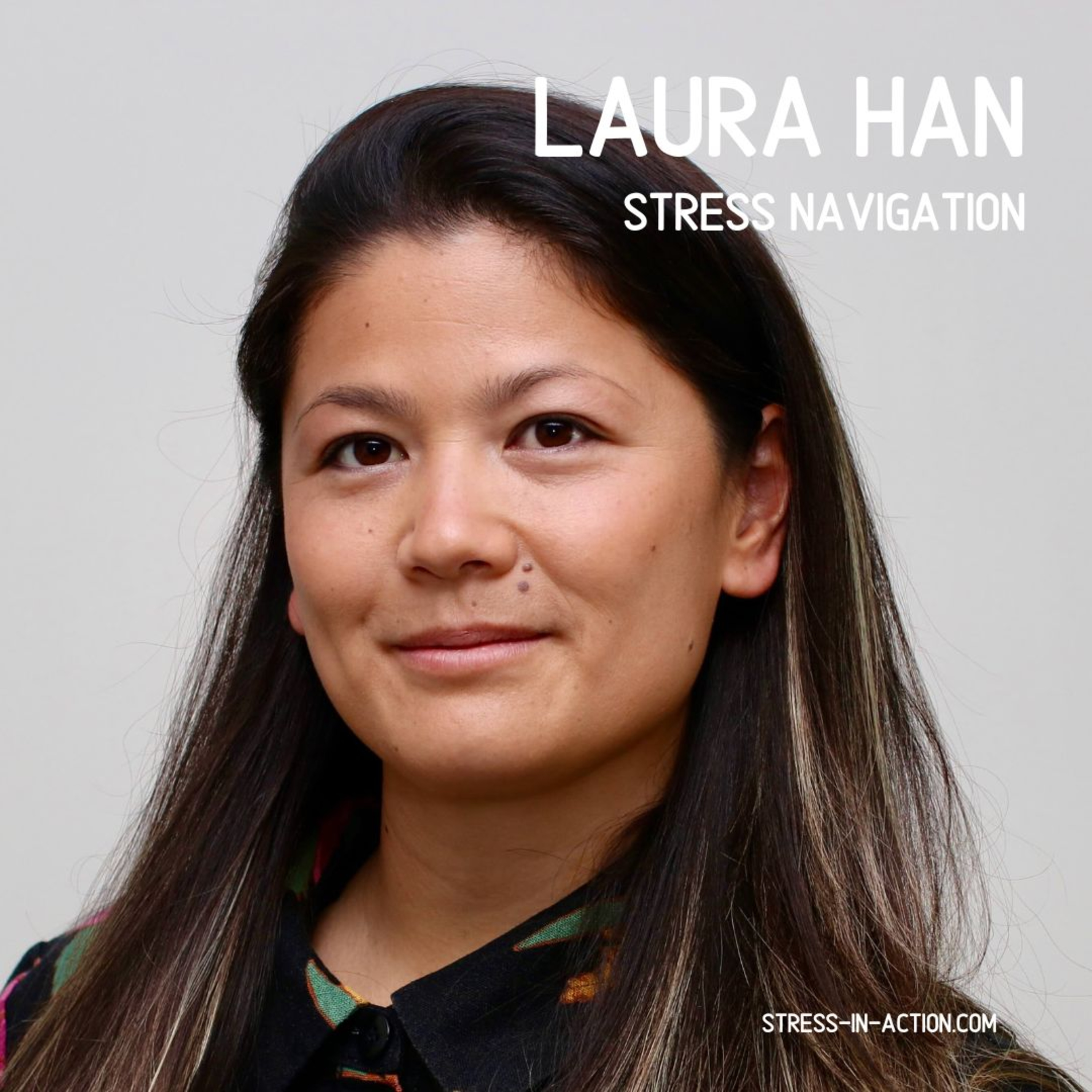
Biological aging—distinct from chronological age—is driven by cumulative cellular and molecular stress, with different organs aging at varying rates. Experts like Dr. Laura Han emphasize that while biological age can predict disease risk and mental health outcomes, such as increased brain aging in depression, it is not yet a diagnostic tool. Current research highlights the influence of lifestyle, stress, and genetics, showing that chronic stress and poor habits accelerate aging, while physical activity and mental well-being slow it. Despite progress, key limitations remain: most training data in predictive models are skewed toward northern European populations, limiting global applicability. Wearables offering biological age estimates, like fitness or metabolic age, are intuitive and engaging for consumers but lack transparency in algorithms and scientific validation. Dr. Han’s vision for the future involves a dynamic, multi-system approach to aging—measuring and targeting specific biological markers to enable personalized, preventive care. This could shift medicine from treating age-related diseases after onset to intervening early based on biological indicators, ultimately improving health outcomes through targeted, evidence-based strategies.
I think a lot of people are very interested in finding the fountains of youth and a lot of the tech billionaires are definitely interested in finding the fountains of youth.
I don't know if we can reverse biological age.
Welcome to the Stress Navigation Podcast. In this podcast, we'll talk about stress, science, and daily life.
We'll interview experts in the fields of psychology, psychiatry, physiology, genetics, sociology, data analysis, and much more.
Hello everybody. Welcome to Stress Navigation. Today's topic is about aging.
And we all get older, that's non-negotiable. And while celebrating birthdays is a special thing, aging itself is the biggest risk factor for the development of disease, like Alzheimer's, Parkinson's, vision loss, cardiovascular conditions,
that lead to stroke and heart attacks, and not surprisingly, the risk of death increases exponentially with age.
Now, while we can't stop the clock, we might be able to slow it down.
To do that, we first need to understand what aging actually is. Normally, we count years by the calendar, that's what we call chronological time, but our bodies don't measure time that way.
Enter the concept of biological aging. The cumulative wear and tear that our molecules, cells, tissues, and organs experience over time as they undergo the effects of stress, of life.
Today's guest, Dr. Laura Han, assistant professor at the psychiatry department of the Amsterdam UMSA University Medical Center, specializes in biological aging and connects it to mental health, identifying age-related markers, evaluating their potential to predict the course of disease, and testing whether treatment can reverse that wear and tear.
Basically, can we intervene on these markers? Considering how central getting older is to health and disease, I find this topic fascinating and incredibly important, so I'm very happy to have Laura on the show.
Hi, Laura, thanks for being here.
Hi, Marcus, very happy to be here.
Well, I'm not sure if this is the best way to start, this is bad manners, but would you mind telling me what your chronological age is and how does that compare to your biological age?
Yeah, it's a very sensitive topic for a woman aging. No, but for me, my chronological age is 36 this year, and how does it compare to my biological age?
So I actually haven't done any of the, let's say, I mostly work with brain age, so looking at your biological age based on your brain, but I don't actually have a brain scan of my own brain myself.
So I haven't actually done any predictions of brain age or my own brain, but my intuition is it's probably younger.
Nice. That's a good feeling. That's a feeling. And otherwise, I think it's more related to things like, I have an out adding, and there is a metabolic age component in there, which says that I'm eight year younger, eight years younger than I actually am.
Nice. So that's good.
Yeah, well, we'll definitely get into what wearables have to say about age because I wear a garment and it says that I'm 26 or you're beating me, I'm 30 and it says I'm only four years younger, so we'll get into that.
But before all of this, then what is exactly biological age? How do you determine what it is?
I think we can estimate someone's biological age in many different ways, so there are lots of different biological processes in our brain and in our body that are correlated to age and that change while we age.
And I think there are different ways of kind of estimating this and with more, let's say modern day techniques and machine learning, we really try to use more advanced technology to kind of look at specific patterns in biology and see which of those are related or correlated to age and whatever we can predict.
Somebody's age based on this biological data. Okay, so what I'm getting is that there are things happening in our body and ourselves that and some of them are correlated with the passing of time, not all of them, is that am I understanding that correctly?
Some of them capture age variance, so indeed some of them actually predicts how old we are based on this biology better than others.
Okay, and also you mentioned brain age, so is this also organ dependent? It doesn't happen all the same time in the body.
I think that's already a very interesting question and already gets into quite some unknowns in this area, I think.
I guess if you want to look at it like that is, I suppose you can also think of a car, right? A car has many different things in there and some parts need replacement sooner than others.
And in a body I don't think that's much different in that analogy, so some things age faster than others and some organs might age in different ways than others.
And it looks as if there's not necessarily one unitary process that controls aging in a unitary way.
I see, so an example that comes to mind for example is gray hair, right? I'm already 30, I'm already getting a lot of gray hairs. My mom on the other hand, she's 66 and looks like she's 50, is hair for example, is that outside aging the same as what's happening on the inside?
In this case, hair would be the organ, right? That's aging quote unquote quicker, but yeah. I mean, of course we can also look at things that are visible on the outside, you can think of gray hair, you can think of how wrinkly our skin is.
And usually that also has something to do with age, you know, people that are older generally have more gray hairs than people that are younger, so gray hairs, yeah, sometimes separate young from old when you look at it like that.
But what's visible, let's say, as the tip of the iceberg is not necessarily always a good reflection of what's happening underneath.
And so under the hood, biologically speaking, maybe you could be biologically not aging as fast as your gray hairs.
I hope so.
Look at, yeah, yeah. So then what is a normal pace of aging biologically? So I think it's important to realize that for a biological age framework in the way that we use it in our research is usually based on taking a very big training data or lots of training data and samples of people across the whole age span.
And kind of mapping what, for example, a brain should look like at what age? And so you take like a normative sample, preferably healthy sample where you kind of create this normative curve for what a brain should look like at what age.
And then we can kind of see whether we trained at algorithm and whether it's accurate and finding a good prediction of using your brain scan to predict age.
And then when we're sufficiently happy with this algorithm, we can test it on data that it's not seen before.
And there we can get an age prediction as well. And for people that usually have poorer health, they are predicts to be older than their actual age.
So I think what is a healthy age from a modeling perspective is really related to what did we put in the training data?
That's actually a question that I was wondering about. Who is this healthy, who sets this standard? You're saying that you have to get a bunch of data, a healthy sample of people, how many people are we talking about to make this very healthy standard?
Yeah, I think, yeah, again, ideally, if you're talking about what does a healthy 20-year-old look like, you get a lot of 20-year-olds and you kind of estimate this is what the biology of a normal, quote-unquote, 20-year-old looks like.
And I think I say normal, because then, yeah, it's really related to, kind of, really depends on the people and the populations that you include in this training data.
And I think, for example, yesterday I had an ultrasound, so I'm currently 29 weeks pregnant with a baby boy.
And to track the growth of a baby, they look at, for example, femur length, so that's the length of your thigh bone.
And these growth curves, you are based on Dutch people.
And so the baby that I'm growing, which my parents were born in Indonesia, they're not born in an ambulance, even though my partner is Dutch, has short femurning.
I think it was in a specific percentile, that's quite, like you would say, that a baby boy was born in Indonesia.
is a delayed growth potentially.
And you could be worried about that, because--
If you're applying to the standard on an Indonesian baby.
Yes, exactly.
And I think this is quite similar to what
you can do with all these other normative curves of aging
using biological age frameworks, depending
on what you put in your training data.
We'll also kind of determine what you get out of it.
So it can be definitely problematic
to not have that proper training data,
that sample of people that is not representative enough.
How do you handle that?
Do you do subgroups?
Do you do people-- yeah, what are these subgroups?
How would you divide to make this normative data?
Yeah, I think so, for example, we developed one
of our own brain age models.
And for this, we really used a lot of different cohorts
around the whole world that were collated
within the Enigma consortium, which is an imaging consortium.
And so we did include a lot of different data sets
across the world.
But for example, one thing that is still lacking
within that training data is lots of different ethnicities
as well.
So it's still generally, mostly, northern European ancestry.
And that might also, in fact, some
of the brain age predictions as well.
Of course.
So then to answer this question of what
is a normal pace of aging, maybe there
isn't anything that is totally normal,
but maybe there's just subgroups you can divide it
by ethnicities.
Does gender, for instance, also determine the pace of aging?
Yeah, definitely.
I think that we also, to bring it back again,
to the brain age example, brains develop differently
in women and men and males and females.
And so we also, for example, built separate models,
four males and females, and trained separate algorithms,
four males and females, because of this reason.
But I think, yeah, these are all kind of topics
that within a machine learning field,
you can actually formally test as well.
So really look at whether the algorithm generalizes
well to different sexes or different ethnicities
or different sub-populations.
So that's definitely also a major topic of research.
Well, good to know.
Good to know that these distinctions are being made
so that when someone comes in and needs
to use this biological data from themselves,
that they are well represented in the science.
It could be improved, of course.
I think generally in research, that
can be improved to have more diversity in our data.
Yeah, of course.
And actually, why is research into biological aging
and gaining traction?
Because I feel it is building up.
And would you mind telling me a little bit about that?
I think it's really a way to understand population health.
So just for us to really understand who ages faster or slower,
I think is very helpful information
and can help us really with public health, for example,
or help target lifestyle or other programs
that we can help improve basically people living health
your lives.
I think that's one of the major drivers
why it's gaining so much traction.
I think there's also definitely some interest
from maybe drug development kind of backgrounds.
Companies are quite keen, I think,
on testing anti-aging therapies or interventions.
And I think biological age can be one of these metrics
that you can track or look at or monitor
as a measurable outcome.
And I think also-- and that's one of my main interest
in research that I'm doing is more of a personalized
medicine approach-- thinking about how we can use biological age
to predict disease risk or treatments, outcomes,
or maybe which treatment works better than others
and maybe help us guide prevention strategies.
It's definitely very intuitive when
I stop to think about it, because I'm 30,
but if my body is 20, then something is going well.
Or if my body says that I'm 40, then something is going wrong.
In that sense, it's intuitive.
But I can imagine that the specific markers,
maybe, are not so intuitive.
So would you mind diving a bit into what these markers are
to then give rise to this one number?
Yeah, it really depends, I think,
on what you put in the algorithm as training input.
So for example, when you think about a brain age,
it's really a combination of all these different brain regions
and different ways of looking at, for example,
cortical thickness, cortical surface area,
or sub-cortical volume, and how they kind of together
may present a pattern that is different at a certain age.
And we can definitely also look into what these patterns
look like or what regions mostly provide more
accurate or contribute to more accurate predictions.
So for example, the cortical thickness of your brain
is more predictive of age than, for example,
some other surface area measures are.
So that gives us a sense of intuition
that thickness of your brain, for example,
was more predictive of your age prediction
than other features of the brain.
Yeah.
And how do you use all of this brain data in your research?
Because we're kind of touching on it a lot.
But then who do you mind telling us a bit more
about what your current research topics are?
Maybe a little bit of how you've gotten where you've been now?
Yeah, I think why a metric-like brain age
is useful is because you can actually take a whole brain
and you can look at all these regions,
and you can basically consolidate the age-related pattern
into one metric, which is your brain age.
And the brain age itself is maybe not as interesting.
It's really more about your brain age gap
or the difference between your predicted brain age
and your chronological age.
And so indeed, that's what we were talking about before.
If that's older, then you have a positive gap.
And that means your brain appears to be older
than your actual age.
And when it's a negative value,
it means that your brain appears younger.
And I think we really use this metric to kind of see
whether we can find different patterns.
So whether people or individuals
that suffer from depression have an older brain age gap,
then people age-matched controls, and also, for example,
what seems to be driving these differences.
So what kind of lifestyle factors
or what kind of modifiable lifestyle factors,
genetics, other types of environmental exposures,
to see what kind of factors influence this.
That sounds pretty logical.
I still have a hard time understanding, for instance,
the connection between biological age and mental health,
because when it comes to hard health,
it just seems logical to me like an older heart, right?
But mental health, yeah, for some reason,
doesn't seem so physically based in your brain,
but it seems it is.
So is age a major risk factor for depression
as it is for Alzheimer's or heart attack?
Yeah, I think when you put it that way,
I think it's fair to say that chronological age
is not as strong as a risk factor for depression
as it is for, let's say cardiovascular disease,
but it doesn't mean that aging biology
is not relevant for depression.
And I think one of the most important reason why it is relevant
is because we actually see that people with depression
have an increased risk of premature mortality.
And they do develop aging-related diseases sooner in life.
And so what we see is that there are processes
that are more present, but people with depression
have an increased risk for, that are linked
to more advanced aging processes.
And that's why it's so interesting to look
at this population as well to study aging
and why it's relevant to look at these populations.
Of course, and what are the factors
that are connected to older brain age
and people with depression?
You mentioned some lifestyle factors.
Yeah, we actually did one big enigma study as well,
where we almost looked at 4,000 participants,
where we kind of looked at, OK, what kind of factors
contribute to a higher brain age gap in depression?
And we found that, for example, also the genetic vulnerability
of depression adds to it.
So if you are more vulnerable, genetically speaking,
more genetically liable for depression,
that is also already a risk factor for a higher brain age gap.
But other factors, like, for example,
smoking or being overweight or obese,
we're also significantly increasing your brain age gap as well.
That makes a lot of sense.
Yeah.
And are you only looking into brain age
or are you also looking into, if you say smoking
and lung age or liver age, if it's--
Yeah, we personally haven't done that type of research.
but definitely other research groups out there are doing dance and are really looking at specific
different organ ages. We mostly look at brain age, but also epigenetic age, which is based
on epigenetics, so DNA methylation and DNA.
That's the interaction between the environment and what that does to your genes.
Yeah, exactly. You can think of it as a little bit like the on and off buttons on your
genes, so your genes are static, right? You're born with it. You cannot change them.
But epigenetics, so in particular DNA methylation or specific modifications that can turn certain
genes on and off and change gene expression.
An ageing or age-related processes add methylation to your genes?
Yeah, so generally speaking, there is something called an epigenetic drift where methylation
and patterns generally increase over time as we age, but there are also specific patterns
of methylation and de-methylation across your epigenome that together really predict chronological
age quite well.
Wow, but that's a bit deeper than, for example, the morphology of the brain, looking at DNA
methylation, do both ends of the morphology, something visible to DNA methylation, something
that you might need a very specific tool to see? Do both these markers enter your algorithms
to predict age or do people use them separately?
Yeah, I think there are definitely multiple ways of looking at this. I think there are
largely separated fields where people usually look at the field of biological age indicators
haven't integrated many different modalities into one study. I think a lot of that work is
happening in the last couple of years and it's continuing to happen, but traditionally it's
more of looking at single biological age indicators and kind of figuring out how those work, but
definitely that's something that is on the research agenda as well. So look at all these
different types of biological data and modalities and how they predict age together.
Hopefully better.
Yeah.
Yeah, but then how is biological age being used? Is it used to diagnose people with a disease?
I'm getting that you're using it maybe to categorize people. People who are aging older
according to their chronological age or slower, but in general, how is it being used out
there?
Yeah, it's not really being, or at least specifically for depression, it's really not a very useful
diagnostic tool. So I think that is something to really realize that also the biological age
indicators that we've looked at, so based on brain data, epigenetics, but also proteomics,
transcriptomics, metabolomics, we do see in cross-sectional data that people with depression
consistently show older appearing biology, but the effects are rather subtle. So the effect
sizes between them are not super large, they're quite modest, and that also means that their
distributions overlap quite a bit. So that means that they're on average older, but if
you see someone's biological age gap, you cannot reliably predict whether that's a patient
or a person with depression or a non-depress peer.
I understand. So it's more a monitoring tool to see over time whether the markers that you're
interested in are changing rapidly or they're slowing down.
Exactly. So it's more, indeed, related to whether we can use it as a prognostic marker
and to predict future outcomes or something that we can track over time, longitudinally,
to see whether it's something that's very dynamic or very stable over time, but it's
not necessarily something that is really distinguishing reliably, cases from controls.
Is that the goal, though, at some point?
I think it will be useful if we could use biological age, for example, to predict things like conversion
to Alzheimer, for example, but I don't see it being useful in the context of predicting
a depressed case from a non-depressed case.
Why is that?
Because the effect sizes are just not there. I think it's not the best way to really
separate these two groups from each other from a data perspective as well.
So, in this case, you're satisfied with using it as to characterize people and leave it
there, or is there a way where you would like to push into clinical practice with biologic
age? Maybe not to diagnose, but in some other way?
I mean, obviously, the goal is to also see whether it can be clinically useful and how
we can use biological age markers within clinical context, and so, indeed, that's why
my research is taking it a little bit more into longitudinal studies and looking at longitudinal
data and how do biological age indicators change over time, and in response to, for example,
depression course over time. And then, of course, the next step is then also to look at.
And we've done some work in this as well to look at different intervention studies and
really see whether, for example, reducing your depressive symptomatology over time by
running therapy or anti-depressants or other types of interventions, also are accompanied
by a beneficial improvement in biological age.
If I were a patient, I would be happy to see that that, oh, my body is also recovering
or not aging as fast as it was when I was really depressed, so that's pretty cool.
What contributes to faster biological ageing? You've mentioned smoking, some lifestyle
factors, but it's stress and action. We, of course, do research on stress. Is that also
contributing to faster biological ageing? Or, yeah, how does the relationship with stress
and biological ageing? Yeah, so I think when we think about stress,
right, it can be either a biological stress or a psychological stress. I think when you
think about depression, we look at these things in things. So it's paired with both biological
stress and psychological stress. So we do see a pattern is there. So, for example, individuals
that have experienced both depression and childhood trauma also have more added, for example,
epigenetic aging. That's also a study that we did. And other kind of mechanisms that seem
to be potentially related to this are, for example, increased inflammation or other immune
responses, so biological stress responses. And also the larger literature also looks at
these things as being related to more metabolic dysregulation and inflammatory responses.
And I can imagine it's more in a chronic way, because in previous episodes, we've talked
to people who say that stress is also necessary for development. And in that case, aging is
a natural thing of life, right? So it's aging is necessary for life. And that's in stress
as well. So, chronic city maybe here is the key aspect that if you're exposed to stress
constantly, that's what ages you quicker.
Yeah, I think that's definitely fair to say. I think the problem is indeed chronic stress.
And so when your biological stress systems are constantly activated or, yeah, overactivated
at least and not getting enough recovery, I think that's also important. It's not only
the overactivation of stress levels, but also the inability to recover properly. I think
that's really when you get started or when it starts to get more problematic and where
your cells and your body and your brain are getting more wear and tear.
And would acute bouts of stress actually build resilience to faster aging or is it not
like that other side of the coin? I mean, I would say that exercise, for example, is also
an acute stressor, right? Like you temporarily increase your heart rate and you temporarily
stress your body as well. And I think those are good examples of stress. And that's also
what we see, for example, with some of the biological age studies, is that physical activity
or, yeah, in general, being more active also is associated to better or lower as a protective
effect for your biological age. But a little bit of emotional trauma that doesn't, or that
does help. I don't know what do you think. I mean, I think there are many different things
that influence our life, right? And thereby our biological age. Resilience, I think it's
not necessarily my topic of expertise. But I think some trauma or stress could potentially
build towards resilience as well. But whether it's a positive thing for your biological age
I'm not sure, actually.
- It would be interesting to know.
Yeah, where there are also psychological stress
that builds a sort of resilience,
also correlates with your biological age,
which leads me into the next question
of actually reversing the biological age.
So maybe physical activity is a way to protect yourself.
Yeah, what does it actually mean
to reverse biological age?
Because it's hard for me to imagine that.
I can't turn back the clock, right?
So what does it mean to reverse your biological age?
- Yeah, I mean, at this point in time,
I'm not 100% convinced that we can reverse
our biological age, right?
I mean, I think a lot of people
are very interested in finding the fountain of youth.
And a lot of the tech billionaires
are definitely interested in finding the fountain of youth.
And I'm not convinced that the evidence
currently is there to back that up.
But I do think that we could potentially slow down
more accelerated or abnormal patterns
of biological ageing.
- Mm-hmm, I see.
There's also interesting cohorts here in the Netherlands
of over 100, and people who are over 100,
have you looked into that and how these people,
what their markers are, and why has their biological age
been so slow?
- So personally, not me, but I think that's definitely
very interesting, of course, to look in the oldest of old
and also super centenarians and people indeed
that have grown to be come old and healthy,
what sets them apart biologically from those who do not.
And that's definitely something
that people are very interested in finding out,
but was not necessarily the topic of my own research so far.
- Yeah, it's making me think, well,
I think of the Blue Zones show on Netflix.
I come from Spain and the Mediterranean diet
has always been associated with slower aging
or at least more longevity.
And the concept of lifestyle keeps coming up,
how important that is for your aging.
With this in mind, you could start to optimize extremely,
and really measure everything you're doing
to hopefully live those extra years
so we don't know what's going to happen.
What's your take on that?
Do you think that from a public health perspective,
that optimization is necessary,
or maybe the other, you know,
just maybe being a bit more chill about it?
I don't know, what's your take?
- I mean, I think that I just want to bring it back
to the context of treating depression, right?
Or looking at mental health or psychiatry.
I think when we try to think of what the first line of help
is for people seeking treatment for depression,
it's usually psychotherapy or antidepressants.
Whether I think, for example, what we've shown
is that there's more neurobiological rationale
to say, well, maybe things like smoking cessation
or weight management are also very important
for treating someone with a depression.
And I think that is something
that could be incorporated or emphasized or highlighted more
when we think about how should we treat
mental health disorders.
So I think of it more in that line,
and also, for example, we have treatments
for depression while looking at running therapy, for example.
And I think those are definitely interesting lifestyle
interventions that are useful for promoting health
and mental health.
And pretty simple, when you just put it like that.
Absolutely.
Yeah.
And intuitive, it's not, yeah.
It's not rocket science.
Yeah, exactly.
Yeah, that makes a lot of sense.
Yeah.
Well, also at the beginning, you mentioned
that you have an aura ring, and it says
that you have your eight years younger than you are.
My Garmin says that I'm 26.
Actually, we usually do what we call stress on the street,
so we go and we ask someone about the topic of the podcast,
and I found Yost, and I asked him about it,
because he also wears a Garmin,
and I asked him out the fitness age,
so I'm going to play you what Yost said.
Yeah.
Maybe in this final section, we can talk a little bit
about what our wearables are saying about age,
and whether that's actually, you know, accurate or not.
So here's Yost on his Garmin health age.
Hi, Yost.
I noticed that you wear a Garmin, I also wear a Garmin,
and it gives me a fitness age,
and I'm curious if you have checked out your fitness age,
what it is.
I did, actually.
Your chronological age is 31 years and 10 months.
OK, wow, that's your chronological.
And what is the fitness age that your Garmin gives you?
Garmin says my fitness age is 22.
Whoa.
So it's almost 10 years younger.
And does that feel accurate?
I don't know.
I feel humbled by it, I think.
But I don't know what it says.
I don't really attach a lot of values to a fitness age.
I think it calculates, it's calculated based
or it's estimated based on, I think, a few two max,
which is already an estimate for Garmin.
And then you'll be in my--
Yeah.
Well, mine says I'm 26, so you're definitely
beating me in fitness age, but yeah.
I don't know if I should believe it or not.
I don't know what it means.
If my fitness is four years, I know what it is.
I don't know what it is.
Yeah.
Do you know?
And that's why I'm interviewing now and now.
So yeah, with that first question, what is--
That first question, what does it mean for your Garmin
or your aura to say this is your-- Garmin says fitness age?
I don't know what aura says.
I think aura has several ones, but it's, I think,
mostly metabolic age.
OK.
So what does it mean?
Well, I think that this also highlights
another difference between academia
and more of a commercial company, right?
So aura is a feature by aura that isn't necessarily documented.
So I don't know what algorithm they
use to predict your metabolic age and what data goes in there.
And I don't think they have a publicly described document
or about this algorithm.
I try to look it up, what's in there.
And it's likely based on something
like basic metabolic rate and some of your activity patterns.
But this is not fairfied by aura at all.
And so that's also, I think--
yeah, the thing about these commercial companies
that pop up that try to sell us ways to predict our own
biological age, but then what is actually in there
or what algorithms they use are often very unclear?
I mean, they clearly don't use brain morphology,
because I don't think that with a ring or a watch,
you can get that measure.
So then do you think it makes sense to introduce this concept?
Because they're not saying biological age,
but I think whoop, use health span age or whatever,
and fitness age metabolic.
And you think it makes sense to introduce these concepts
to the consumer outside of the medical realm?
I think it's intuitive, right?
Because it gives you a sense of understanding
whether that's a positive thing or a negative thing
in relation to your chronological age.
So I think it's an intuitive metric to linearize it
towards age, because it's intuitive to communicate to people.
So I think that's what's the appeal of it, as well,
for all these consumer products and commercial products
to do it that way.
But yeah, what are, whether that's actually a valid thing
and what's in there, I'm uncertain,
because they don't share what they actually put in their algorithms.
From a personal perspective, I definitely know it's inaccurate,
because I weigh 81 kilos.
My BMI is 23.8, I'm like, I'm 185.
And if I need to go to the marker that they say
from my age to go down from 26 to 22,
I need to weigh 70 kilos.
I would look really thin with 10 kilos less.
So then it makes me wonder, what's happening here, right?
And I wonder also, because I would say
that I have health literacy, right?
I work in the health care field.
But I wonder for just the consumer who
doesn't have this knowledge, if that generates more stress
or more problems.
I don't know.
I think we shouldn't necessarily maybe
take this value of a younger age at face value, right?
Like it's potentially when you have an awareable
or you're interested in measuring your own health
by using an awareable.
I guess the way to look at it is to track whether it improves
over time if you are seeking to exercise more
and you feel that also impacts your metabolic age
when you become younger based on your aura ring.
I guess that's something that you could take as progress.
For sure.
But the absolute number of it, I don't think,
should be interpreted as something very important.
So a bit like Yos that he doesn't take,
and it doesn't make much meaning out of it.
Exactly.
That's good.
That's good.
Also, actually, it's stress and action.
We want to create this toolkit to measure stress
in daily life.
And we both work in stress and action.
So I was wondering how the biological age
to fit into this talk.
How biological age framework fits in a stress toolkit?
Yeah, because we're also going to use wearables to track stress from many different perspectives
in a daily life and of course, you know, biological age might be there as well.
Yeah, you can obviously also predict age from wearable data or from other types of continuous
measurement data. So in that way, as I said before, you can also track whether that improves
when other health indicators also improve or if that's also has beneficial improvements
over time when other things change in your life. So I think we can definitely describe
and capture patterns to see whether that's useful.
For sure, and I think coming back to the point of it being intuitive, that's I think one of the strongest
or more appealing points for me because there's so many things we want to track,
it's a lesson action, I think in the whole field of the quantified self, of just tracking, tracking,
tracking, but if you can kind of put that together in a simple intuitive number
that then makes you feel good about yourself or gives you a little alert of maybe something to change,
that's actually pretty nice. Yeah, I agree. Yeah, and to close off the episode Laura,
what would your dream scenario be for your research, the use of your research into biological aging?
Yeah, that's a really great question. I think my dream scenario is really that we kind of move
beyond thinking of aging as a single number, so it's not just one biological age,
but understand it as a very much more dynamic multi-system process where we have lots of different biological ages
that we can actually measure and influence in a meaningful way.
So I think in an ideal world we really have all these different but very reliable validated biomarkers
that don't just predict aging, but also can tell us something about our behavior that's actionable.
So for example, which biological systems are going off track in a specific person
and which interventions might actually help bring back this person to a normal aging to directory.
And I think for patients, that would really mean very much more personalized intervention,
so catching much of the risk earlier and hopefully intervening before the disease develops or progresses more.
Tailoring treatments based on someone and how they are aging biologically speaking
are rather than just their chronological age.
And I think maybe then to close off is really scientifically my hope
is that we can become much more precise about what's cause, what's consequence.
So we're not really just only tracking aging but also really understanding the mechanisms.
It's well enough to show how we can slow it down, basically.
But in a very targeted evidence-based way, which is also important.
Of course, of course, that makes a lot of sense.
And well, you're very young and you're already doing a lot in the field.
So you have a lot of time to work on this and I'll definitely follow your work.
And thank you for being here, Laura.
And thanks to listeners also for being here.
I'm leaving with a lot to think about and I hope you too.
And yeah, I hope where we are listening.
I hope you have a good day and again, thanks for coming Laura.
Yeah, thank you so much.
Podcast Summary
Key Points:
Biological age reflects the cumulative molecular and cellular wear and tear from stress and lifestyle, differing from chronological age and varying by organ and population.
Research shows that factors like depression, smoking, obesity, and chronic stress accelerate biological aging, while physical activity and mental well-being are linked to slower aging processes.
While biological age markers (e.g., brain age, epigenetic age) are promising for predicting disease risk and personalizing interventions, they are not yet reliable diagnostic tools and face limitations in representativeness and accuracy, especially across ethnicities and genders.
Summary:
Biological aging—distinct from chronological age—is driven by cumulative cellular and molecular stress, with different organs aging at varying rates. Experts like Dr. Laura Han emphasize that while biological age can predict disease risk and mental health outcomes, such as increased brain aging in depression, it is not yet a diagnostic tool.
Current research highlights the influence of lifestyle, stress, and genetics, showing that chronic stress and poor habits accelerate aging, while physical activity and mental well-being slow it. Despite progress, key limitations remain: most training data in predictive models are skewed toward northern European populations, limiting global applicability. Wearables offering biological age estimates, like fitness or metabolic age, are intuitive and engaging for consumers but lack transparency in algorithms and scientific validation.
Dr. Han’s vision for the future involves a dynamic, multi-system approach to aging—measuring and targeting specific biological markers to enable personalized, preventive care. This could shift medicine from treating age-related diseases after onset to intervening early based on biological indicators, ultimately improving health outcomes through targeted, evidence-based strategies.
FAQs
Biological age refers to the cumulative wear and tear on our cells, tissues, and organs due to stress and aging processes. Unlike chronological age, which is based on the calendar, biological age reflects how well our body is aging at a cellular level.
Currently, there is no definitive evidence that biological age can be reversed. However, research suggests we may be able to slow down accelerated aging patterns through lifestyle changes, such as reducing stress or improving physical activity.
Wearables often estimate fitness or metabolic age based on data like heart rate, activity levels, and body metrics. These estimates are not scientifically validated and may not reflect true biological aging, as they don’t include complex biomarkers like brain or epigenetic data.
Chronic stress, smoking, obesity, and inflammation are linked to faster biological aging. These factors increase wear and tear on the body and are associated with higher brain age gaps and accelerated epigenetic aging.
Yes, individuals with depression tend to show signs of older biological age, especially in brain age and epigenetic markers. However, biological age is not a diagnostic tool for depression and the effect sizes are modest.
Chronic stress—both psychological and biological—leads to prolonged activation of stress response systems, increased inflammation, and cellular damage, all of which accelerate biological aging. Recovery from stress is as important as the stress itself.
Chat with AI
Loading...
Pro features
Go deeper with this episode
Unlock creator-grade tools that turn any transcript into show notes and subtitle files.
 PodcastTranscript AI