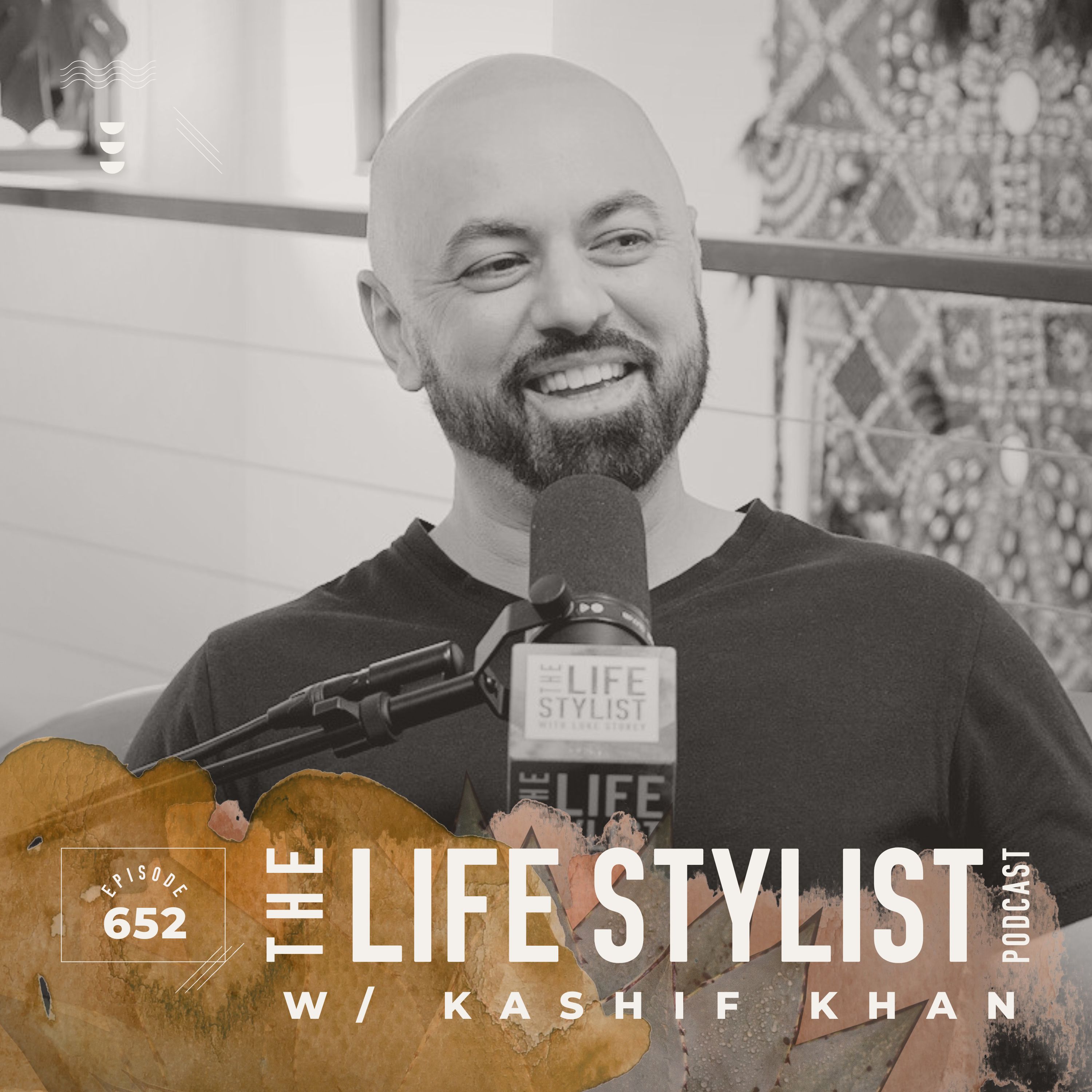
Biohacking Built for You: Using DNA to Optimize Supplements, Diet, & Training w/ Kashif Khan
100m 1s
The speaker critiques conventional medical research for not investigating why some people stay healthy, instead focusing solely on disease. They argue that personalized genetics are the missing element in healthcare, as DNA reveals individual predispositions in processing everything from food to hormones, explaining why universal health advice often fails. The speaker's own health crisis, involving sudden severe symptoms despite an identical lifestyle to a healthy colleague, led them to explore functional medicine and genetics. They discovered that chronic diseases like breast cancer are not simply genetic destinies but result from specific genetic pathways interacting with lifestyle choices. For instance, the BRCA gene is a tumor suppressor; cancer risk arises from inflammation overwhelming its function, not the gene itself causing cancer. Epigenetics is framed as a "volume control" for genes, influenced by daily decisions, allowing for personalized intervention. The discussion highlights that women's hormone health is especially poorly served by standard medicine, which reacts to symptoms rather than addressing individual genetic profiles for hormone production, metabolism, and detoxification. Ultimately, the speaker advocates for a bio-individual approach where all health choices are filtered through one's unique genome to prevent and reverse chronic disease effectively.
Medical research doesn't study healthy people and ask them why didn't you get sick. I did both. There isn't a choice that we can discuss today that can't be filtered through the genome to personal. This is what's missing from healthcare research. They're medical professionals that hate what they're doing and want this training for their patients because they can't get it from their college. If I have your DNA, I can tell you how sick you're going to get from. The average person is seeing 90%. The 95% they're seeing a little less than what's actually going on. Imagine the person who sees 130% that sees literally every little nuance, every little detail. And thinks that's what everybody else is also experiencing. It's no longer about perspective, it's about right and wrong. If you take control of the things that cause the problem, but we just don't know what those things are, but your DNA tells you. So you hit a health wall when you're about 38. I'd like to hear about what contributed to that and what you found out. Because I find that people that are really committed to helping people in the health space often have some origin story that involved them reaching a place that got scary and forcing them to make changes or to research outside of the box. That's the classic functional medicine story. Nobody could help me. I help myself and here in the world needs to know. So yeah, I believed I was sick because me and my business partner who work together, we drove to work together lived on the same street where the same age, same ethnic background. We ate lunch together, we had dinner together because we worked so hard. And I had an exama to the point where I couldn't open my eye. It was like sealed shut from inflammation when I left eye. I had a crisis and got issues, depression didn't want to go to work on some days and what really sent me to the doctor was migraines. That was the thing that I couldn't fight through. It just debilitating. So I believed when I was told you have these things that it was true because why didn't he have them? Like we had the same mirror life. We ate the same food. We did the same thing. But it didn't add up because I had never been sick before. All of a sudden this ceremony, but you all of a stuff all at once. So that drove me to ask a question, what did I do? What did I eat? What did I touch or breathe or who's around me? And that was the first day I realized that doctors don't do that. No fault they're their own. They're training is diagnosed and prescribed. And I was asking why? Different question. So that sent me down a rabbit hole of functional medicine, traditional Chinese medicine, homeopathy, naturopathy, eventually landed on genetics and discovered some pretty big aha moments. What do our genes tell us about things like fitness that's good for us, supplements that are good for us, different foods. When I did your DNA test a couple years ago, it was very spot on, but also there were things in it that I thought, "Mmm, I might be approaching health in the wrong way for me." I think the individuality is often missing from the realm of biohacking and alternative medicine. It's like people hop on these trends and maybe those trends might be good for the people that were in the study, but they're not necessarily good for you. So that bioindividual nature of every decision is where there's always a debate. Is this good? It's amazing. Is this good? This can give you cancer. Literally you'll have that level of extreme for even something as simple as NAD. So maybe I'll use that as an example. And yes, to fitness, yes, to diet, we can talk about all that. But this gap filling of where's the debate? Where's the disparity? So you take something like NAD, which is whether it's a peptide, a capsule, an IV. The thinking is this should work for everybody. And then there's a whole community of scientists over here saying, "Don't do it, it'll give you cancer." So how do you have such a big gap? There's a gene pathway called FOX-3 that's responsible for cellular regeneration. So as we're sitting here, there's skin cells that are becoming senesid, mutating and dying off, and they're being replaced with healthy new cells. So this process is consistent, continual all the time. The efficacy of that gene determines the efficacy of the job. So if the slow version of the gene, you regenerate slow, you're aging potentially a little faster, medium, good version of the gene, you're doing a better job. So if someone do it with the ideal version of the gene, literally is aging slower because they're regenerating faster. So if you have the bad version of the gene, go take some NAD. It might be the exact fuel that makes you feel so incredible because cellular health is already a genetic sore point for you. If you have the good version of the gene, add the rocket fuel that you didn't need because maybe there's some other priority, hormonally, neurochemically, who knows what your genes might say. The bi-product of excess NAD in your body is glutamine. The two things that fuel cancer growth are sugar and glutamine. And so you do have the person that says, this is the one thing that made me feel energized awake, my libido's on fire, my skin looks good. And then you have this scientist over here saying this is causes cancer and they're both true. And using an extreme to paint a picture of in the middle is a bio individual person that's going to react different to the environment nutritional lifestyle choice. So genetics aren't about, here's the gene, good luck. It's more about, here's who you are biologically, here's the jobs are not working well. Here's the things you actually need to work on. And by the way, all this stuff is a waste of your money. Right. Perfect. Yeah. Explain the difference between genetics and epigenetics. So you're born with a human instruction manual that is in every cell 50 trillion cells all contain this book and the kidney cell reads the kidney page, so it knows how to do a kidney job. Hard cell reads a hard page and so on. So every single biological process is driven by an instruction on how to do the job. That's your DNA. That's permanent. So you're born with it, you die with it. And that's the really cool thing about understanding it is that once you know, you know, it's not retesting. It's it's not being told it's being taught you're learning your about yourself. Right. Epigenetics, there's two ways to look at it. The very disease centric way of thinking, which is how most medical research is done is that genes don't matter until they're turned on. Meaning this gene equals a rare cancer and you might do something that causes it to turn on now makes a difference, but until that state doesn't matter. Right. That is a small cohort of the problems we have most concerns are chronic. They're not a switch that turns on Alzheimer's diabetes, etc are developed over time from choices of great information. Right. Those genes are functional and the way we think about epigenetics there isn't on or off. It's more like a volume. Right. It's more like a if I have genes that don't allow me to make enough estrogen, for example. And I decide to eat a certain food or smell a certain chemical that gene might start firing a little harder. Right. So that gives you day to day control and the epigenetic belief around on or off is again coming from a outdated way of thinking about how genes equal disease. I think the empowerment is that once you know what's broken, you can turn it on to the high volume that you wish you had because now we know what the supplements and tools and tricks are that actually turn the dials on volume. I brought that up because I remember some years ago certain women were electing to have mastectomies because breast cancer ran in their family. And this before I even understood anything and I still understand very little about genetics, but I remember thinking, well, I mean, if your grandmother had breast cancer, she was living a completely different life than you're living. I thought, well, you could make choices that are going to be preventative regardless of what your genes say. So do you ever see any case where there is a cause for alarm because something quote runs in the family. So the outcome can run in the family based on broken biology, but it's not a prescription or propensity. It still has to be cost in between those two things are the choices environment nutrition lifestyle. And the way we're taught to think about disease and breast cancer was the first thing I ever studied by the way, it was like when we had all this genetic data and research and put all these pieces together healed myself. I got to apply this to bigger problems than just myself and I partnered with this clinic in Toronto that had the 8,000 patients 80% of them were second, third, fourth, about a breast cancer. So it's a recurring risk answer. And my proposal was let me figure out why you're good at the what let me do the why part, right. So I had to tell a lot of those women that the hormone replacement therapy they were taking caused their breast cancer. But I don't believe that hormone replacement therapy causes breast cancer. I think the wrong prescription on the wrong profile equals inflammation. You could have the same woman could have done it a different way. So taking a step back what we're told is the bracket gene what you're talking about. The Angelina Jolie effect she was told you have the bracket gene go cut your breasts off and she did. Young women are now being told cut your philopean tubes out to avoid ovarian cancer because of this gene. And if you dig in and ask Angelina Jolie's doctor what does the bracket gene do? Why does it cause cancer? He can't answer the question because it's not true. So the bracket gene is a tumor suppressor. What we're looking for is what version of the gene. And if you had the bad version you don't do a good job of recovery repair suppression right no we're in there did a cause cancer. So the alarmist go cut your boobs off is just profit right. The real question should be what caused the inflammation for which the bracket now needs to go do the repair job and we now know. But it's not being told women so when you know the second part of going to tell you is the empowerment where if it's in your family it doesn't have to be you. Right it wasn't your family because you didn't know this now you know this so. This is one example the women that I told that your hormones cause the cancer. There's a gene called sip 19 and one that's responsible for what we call a romanticization so conversion of testosterone to progesterone whether you're a man or woman. Progesterone converts it to a sauce from conversa estrogen there's genes that determine how much you fill each bucket so what degree do you do that job. If you're highly effective in the sip 19 and one gene you're making way too much estrogen. And you referred to as estrogen dominant and there was a purpose for that that was good for going back to your question of exercise it gives you. Muscle mass strength it's meant for like agricultural genetics right you're lifting heavy things women don't do that so much anymore right estrogen dominant and you're not using the hormone is now lingering causing. Now after that there's two more steps. What we don't get told is after you make the estrogen there's metabolites of estrogen to hydroxy for hydroxy and 16 hydroxy they're the net result of hormones synthesis right. Two is good it's the stuff that women think they're doing to themselves when they take hormones brain health bone health heart health right. Four and 16 cause inflammation so if you're genetically estrogen dominant and genetically going down into the four and 16 pathway you're now dominant in a toxic version right. Third step you do have in eight detox pathways that are again genetically driven. Lutinous ion pathway methylation pathway gluconination pathway these are pathways that people already work on that once again may not be working genetically so you might have the trifecta of all this stuff equals. I now make an inflammatory toxin that's accumulating in my body every month right fast forward to menopause no more period primary path of removal of that toxin and now it starts to accumulate even more. And the body understanding that this is inflammatory nature wants to keep it far away from the organ so puts it in your. Tendons your ligaments which is why you see a lot of frozen shoulder back pain for you know first second your menopause but also puts it into your fat because that's deemed a safe zone. And where do women have fat this is like one of the big areas right now you this monthly accumulation right here milk ducks milk plans causing inflammation they weren't supposed to be in place with like index to a toxin. And on top of this story you now add the wrong hormone replacement therapy which may feel this pathway right you can take extra dial a stride a strong there's lots of different things you can take not all of them go into that bucket. And a woman that blindly took the wrong form that filled the wrong bucket who's already genetically wired like this now overwhelms the amount of information a little bit of information is good what like why would the body even have these options because a little bit of information to the utero wall was good. Build it back better more resilient implant an embryo right it was actually meant to benefit you it was not meant to be in a context where you added more on top or you live in a hormone disrupting environment. So now you know this test any female child and you already know how she's wired and you can already say here's the exact habits that would create. You know why does the birth control pill box a this could cause stroke not that will but it can because if you're wired like this it will. So now you can start to make those choices in environment nutrition lifestyle that are empowering in your control is opposed to I had the bracket you know I'm going to cut my breath. Wow right see it seems like one would really be shooting in the dark to try and live a healthy lifestyle without this kind of information. So there isn't a choice that we can discuss today that can be filtered through the genome to personal and there isn't a chronic disease that we can talk about in reverse engineer in this way to no cause and source right now that's the work that I did for your standing. And then three years I studied 7,000 people one by one by one to understand both people that were healthy this is what's missing from health care research medical research doesn't study healthy people and ask them why didn't you get sick. Right I did both I took the people with a bad genes that got the disease figured out what got them there and the people that had the bad genes that didn't get the disease like what did you do right. And that left me with this incredible database that kind of reverse engineers disease yeah wow. Would a woman who's thinking about getting breast implants which I strongly and don't recommend for a number of reasons but to me this might speak to why some women seem to do okay with it and others have so many problems. Yeah we can predict I if I have your DNA I can tell you how sick you're going to get from implants the body responds by building a capsule and you we believe in most doctors understand this yet either that capsule protects your body from the but it's not it's permeable right it's only about 25% let's say non permeable so a lot gets through right. Then there's microbial activity there's bacteria so I actually did a research project right here in Austin with the plastic surgeon here that does a lot of explains and we not only sequence the DNA of the women but we also sequence the microbial activity on the actual ex plant that got removed to see what was in there what pathogens what mold etc and a blue our minds how much was going on. But now you can clearly determine the detox pathways for whom you're going to have a battle and also if you do decide to explain remove it some women still don't fully recover so there's certain other pathways that need to be worked on post explain to get to the optimal recovery right so. And now when you get into that you start to see the pattern where it's the same broken pathways whether you're looking at fibromyalgia whether you're looking at breast cancer whether you're looking at breast implant illness it's the same central biological failures that are like the hub of all these folks of all these diseases right I'm imagining. Issues like fibroids and breast cysts and things like this probably have a lot to do with that to write the down stream mismatch of hormones for your genes and so on. Yeah I would say in all the work that I've done the women's hormone health space is the most broken part of health care really oh yeah it's absurd it's like it talked any woman it just medical the medical experiences gaslighting and blaming that's what it is right for a woman. It's like menopause is supposed to suck what am I supposed to tell you right and the the reality is the gray nature of how hormones are dealt with is reacting to symptoms it's very difficult. But if you look at it genetically it's black and white you know exactly what your body is making you know how you bind it how you make it how you clear it and then you know which part of that cascade is broken and where to actually intervene so you don't everybody doesn't need the same answer it's often does what you know I was dealing with the lady who. Was taking hormone replacement therapy once again and it made her feel absolutely horrible right and so you start to see that. It's not just about I added something to your body and then you have this the biology of it there's a receptor that needs to use that and get it into the tissue and genetically some people don't make the receptors that well and you flood them with a substance that in a certain dose is highly beneficial and another dose creates inflammation. And then literally that the waking is a body trying to create fat as pockets to hide this up only because one gene the receptor wasn't working so we know there's certain supplements that will upregulate that gene and all sudden the treatment work so is there something right or wrong with the treatment this never ending debate or is there one bio individual anomaly that for her didn't work. Most people don't realize this but the standards for coffee in the US are shockingly low quite brutal actually that means a lot of the beans on store shelves are loaded with mold pesticides and even microtoxins so if you're drinking standard coffee every day which most people are you're also drinking that contamination and that my friends is why I love for sigmatic all their coffee is third party tested for microtoxins mold pesticides and microbial contaminants. But it gets even better shrooms for sigmatic is the OG mushroom coffee brand and their original mushroom coffee is boosted with lions man and chaga lions man of course supports focus creativity and cognition chaga is packed with antioxidants and supports your immune system it also smooths out the caffeine buzz so you don't get wrecked by that afternoon crash and it's also got probiotics and B12 added for gut support so for sigmatic's original mushroom. Coffee delivers the smooth rich flavor of a medium roast with subtle notes of caramel and zero mushroom flavor whatsoever so you definitely want to check out for sigmatic dot com slash Luke to get a free bag of their best selling mushroom coffee all you got to do is pay shipping and handling that's F.O. you are s i g m a t i c dot com slash Luke because it's the real real your morning ritual sets the tone for your entire day so why not make it clean delicious and functional hit up for sigmatic dot com slash Luke and grab your free bag today. Are there any ethnicities that are generally more robust in terms of their genetics. You know i'm like i'm a euro might write people ask me what's your national ego it's like fifteen. Yeah i've always had this intuitive feeling that and this is i don't know how to say this and be racially sensitive but i feel like. Pure blooded people for some reason to me just intuitively feel more robust whether that's someone from Japan or somewhere in Africa wherever it's like. I don't know you just look at the physiology or the you know overall performance of a person and it seems like people that have been. Closer to their indigenous ancestry and spent less generations on kind of the slave grain diet yeah. Yeah seem to just be stronger and healthier yeah to me is that have you observed anything in terms of people's bloodline and how. You know how kind of strong they are and resilient and things like that there's a few interesting things are they making me think of. One is that the i would not say there's one particular ethnicity i would say that within the ethnicities that when you stick to your ancestral habits that's what you're designed to thrive in. Right so take for example. We found that Chinese people then China there's really two ethnicities right you picture the sort of. There's a larger more estrogen eyes you see the larger Mongolian style head and then there's a very thin. Very to end your eyes during those are the two ethnicity to make up Chinese people right so that the more thinner frame there was no cancer. Right so you would think like do these people have some incredible anti cancer gene or something. Then fast forward that same group there's been a 400% spike in breast cancer all of a sudden in the last like decade or so we like what's going on here. So it used to be that culturally you go anywhere in China and you're served green tea right and green tea has a potent antioxidant called e g cg which will fight cancer right and if you're drinking it all day long. What happens is our genes we there's no evidence of evolution in humans but there is evidence of epigenic expression being passed on to the lineage so the things that you did. Your your your children are now capable of that but they also don't have the defense against the things you didn't need defense for right or at least the volume of sternum. So if it's anticipated that you're getting e g c g externally then you lose some e red talk support. And then all sudden it's like all the meetings are no longer the T house or McDonald's right there was just a flip all the right right and you remove this cultural phenomenon of multiple times a day e g c g and breast cancer goes through the roof right so every ethnicity has a superpower which also can be a kryptonite in the wrong context and that's the odd ball thing about it right. The other thing we see about what you said that you may think of is for the home for the people that left that assimilated that moved there's a reason right and for the people who stayed behind that stayed in the habits and the call of the motivation the drive it wasn't there right. So the stress level the trauma level the anxiety level the person that left that came here is different one of the key things you'll give your children is the epigenetic expression of trauma stress because your body takes trauma as a highly protective mechanism against loss of light doesn't know why you're so stressed just knows how you feel right and so we see that this expression of trauma specifically gets passed on for seven generations. And I would tell you that the number one contributor to the expression of disease causing genes is negative emotion. Wow. Yeah. The things that actually create those genes at equal cancer that equal a disease negative motion is the number one way to turn those on the number one way to turn off. Negative disease causing genes and induced longevity genes is positive emotion it's literally the most powerful thing you could do. This is another when you're talking about it you made me think of the phenomenon of like who actually leaves who moves and what is their lifestyle like in the stress they went through in the pressure whenever and then you start to see this fragility that gets passed on right right yeah another thing with that this interesting to me is I color and the amount of melanin in your skin right it's like when you look at dark skin people that came from the equator and they move to Scandinavia they don't do that. And in the end of the year they don't do so well. Yeah. And you take someone from Scandinavia and throw them in Brazil or whatever you know they can't handle the sun you know it seems I'm like such a son fanatic and light fanatic right. I personally have really thrive in the more son I get the better I feel like I don't burn I could sit out in the yard naked in Texas all day long and just feel great. How much do you think the genes matching geography matters it matters a lot so I'm going to tell you a story about my niece right and she is a reason I went from Iowa sick to I started researching into my dining room table like literally PhD doctors at my dining room table without any intention it just so enthused about what I was learning that it's like I got a build something here right. She is the reason why I went from I'm no longer researching the world needs to know right then I started going out to events and podcasts and whatever. So she lives with my mom and my sister my her dad passed away when she was young. My mom called saying she can't breathe. I was like what's like she's never been sick why can't she read so I go over there and I call my friend who's a pediatrician and she was in her early teens he said it looks like an anxiety attack. I said okay well what what do we do is that just if it happens again let me know it's it's all it's over right she's breathing now so I did happen again the second time she fell over and she hit a table that actually looked very similar to this one a nice wooden table and she my mom thought she broke her leg or she couldn't walk. She passed out at this table. So I took her call my pediatrician friend to a hospital every blood test everything you could do they said there's nothing wrong blood work everything's fine but if it happens again let us know. And I knew what that meant that meant if it happens again she's getting diagnosed with anxiety conditions and she's going to be taking medications and if you don't give it to her as a you know guardian you're going to be in trouble right so I figured now this was when I was doing that research will 7000 people early early days right and so I said I also got to figure this out but I didn't I went back to work and got busy. So it happened again this time my mom called me bowling in tears saying your niece is run away from home she left a note saying I can't take it the exact words I can't take it anymore I'm leaving. So I get over there and I know her she's like running away from home just means like going down the street because she's you know she that's how innocent she is so I literally found her like two blocks down the street just like what's next right so I asked her what's going on like is it a bullying teacher school pressure whatever. And she didn't know she was trying to leave the feeling of that space didn't change anything still felt the same so in that moment I told my office email me her DNA report and I wasn't looking for anxiety and this is never the way to use genetics which is where I think medicine is failed like the anxiety gene the depression gene that's not the way the way is what biology is broken. Combine with her context and habit and how does that equal this net results right so I just look for the red flags and the first thing I saw is her hormone cascade so. Right before the period is when hormones are at their lowest because you're just getting ready to remove everything right so I saw that she went into a much deeper valley. The hormone cascades it wasn't producing enough wasn't binding enough everything was falling apart so I asked my mom was it right before the period she said yeah you know I looked like text you are well sitting in the car with my knees is it it's right before the period is when she had the anxiety attack three months in a row that I have so it happened on that day. But why now because you had been having her period for two years right so this happened during a time that you enjoyed called peak COVID right. Where it and this is in Toronto in the winter she hadn't been outside in five months oh wow right Toronto had the world's longest lockdown by the way really yeah yeah I don't know why but I mean the testing of communism I don't want you want to call it but yes we had the world's longest lockdown she had been outside we all felt it was normal nobody noticed after while I was able to move around because I was in the healthcare business right I was able to just have special rights to go do things right so I then looked at her vitamin D genetics. And vitamin D has three steps there's a gene called sip to our one that takes the D to from the sun and converts it to the active form called D3. Then there's a gene called VDP that takes that activated form and actually transports it to the cell where you need a you don't need in your blood you need to actually in the cell doing its job. Then there's a gene called VDR that makes a receptor that grabs it and brings it into the cell now the job is done right when you go to your doctor they tell you how much is in your blood. They don't know what's intracellular they don't only look at step one right. So when I looked at her genes that first step she was doing a little kid job so no doctor ever said her vitamin D was low but the second two steps yet the worst genes possible so didn't transport didn't bind so she was designed genetically to be in the sun all day long right right right. She was designed to mitigate an overdose which leads to calcification and black it's not good to have too much vitamin D such thing is vitamin toxicity so she was designed for what her ancestors did. Be out all day right so that step to what what nationality are you guys so we're like your European model Middle Eastern. Okay so we're a mix of like of gunny Persian Turkish. A Kashmir like northern India whole end of that stuff right if you look at all the grandparents desert people yeah basically yeah yeah yeah okay and so now now I put these two things together so it made sense why on this day hormones. It made it sense why in this context zero vitamin D she had been outside but why did it do this why anxiety versus something else. So I looked at her neurochemical genetics so dopamine power satisfaction it powers pleasure enjoy some food it also powers achievement reward achieve something right both or a hit of satisfaction. The genetics of dopamine are you anticipate you knew you smell the tasty food it starts coming then you bite into it there's a euphoria and then you're done then there's a remove and so clear of clearance of the dopamine to get you back to your baseline state right. So drd to the gene determines how many dopamine receptors in your brain. Therefore to what level of intensity to do feel that anticipation and euphoria then there's clearance genes MA on calm to which by the way we have to talk about yours because there's some monkey business going on there okay which how quickly did it get cleared and therefore the duration of that pleasure right. So she had the lowest possible version of the drd to gene so couldn't feel the intensity and the fastest possible version of the MA on the calm so the removal was ultra rapid. So she was wired for depression she was wired for anxiety can't get satisfied. But this had an intention a purpose which every neurochemical failure actually had a superpower behind it which is she's wired for what we call rewards seeking behavior warrior genetics I will lead the tribe I will go do I don't think I do right and if you look at my ancestors that what that's what they did they were warriors right. So now this thing where she was already lingering on chronic anxiety but she was using it in schooling as rewards seeking behavior she was performing well so she channeled the right way. Perfect storm right on that day three months in a row so all I did was give her vitamin D three times a day because I said you're genetically wired to be outside all day but you're in Toronto can do that let me mimic that three doses of vitamin D a day and let me give you some L. And then I started to dig and I found that 30% of university or sorry teenage girls in the United States have considered suicide 30% because of their hormones being messed with the neurochemicals be and then the stimulus of social media etc. That's what made me go out and start talking to the world. Wow that's powerful yeah that makes me think of something I have often contemplated and that is in the realm of addiction alcoholism drug addiction and so on. You know there's a school of thought that it's like hereditary right is again it runs in the family I think I can think of very few people in my family line as far as I can go back that weren't alcoholics yeah. And so for for many reasons that ended up being the path for me you know thankfully it's been 29 years since I got off that train but some people think it's more about the genetics and then others more about the you know level of trauma. Things like that in in my case there was a convergence of both of those things right but I can't help but think when it comes to addiction in general that genes the way you describe them must have a lot to do with someone's propensity. So I have two brothers right I talked about them before and hopefully you guys don't mind if you overhear this but they're close in age they're my half brothers they have the same mom and dad same divorce kind of same level of stress or trauma. And one of them kind of took the path that I did and one couldn't is never been interested in altering his state whatsoever you know and I've looked at them like that's weird same parents very similar life experience and one is very prone to addiction and one you couldn't get him addicted if you try yeah. So two parents so the bit of a Russian or that what did they get genetically right so this is why I said the dopamine path but yours something stood out there right so I didn't know that about you but it was pretty clear that you're wired for addiction really yeah and that's the truth is why it's pointed that out so why as I sit here with my naked tan coffee yeah. And keep it when we say the word addiction people think of all sort of substance abuse addiction right breaking it down addiction means I need it every day on time where I get frustrated everything else is prioritized around this priority that's addiction but that's not all substance abuse there's also binging binging because I don't need it but when I get it I can't stop and it also has to be specific addiction is give me whatever you got I'll take it I just need to hit right then there's copy mechanism. That's not binging and that's not addiction that's what I'm triggered I need to cope my nervous system can't handle this so I need to escape escape is and there's more but those are the three big ones so what's going on with you there's a gene call M.A.O. And it is what breaks your dopamine down so once you're done with the reward seeking behavior it's the next step to the metabolism of dopamine and there's a version of it called the GG version which was referred to as serial killer gender. And that's what you have right great yeah doesn't mean it's a career path but I just I can barely kill a cockroach yeah so why is it that every cellular killer you meet literally every single killer has this profile but you also meet highly successful entrepreneurs you also meet pro athletes and celebrities have this why the people that took the risk because whatever you did yesterday is not enough you need to do a bigger better version of it and it's never enough and the remorse is in felt it's like I'm always thinking about the next step my brain is moving so quick give me the bullet notes right that's one attribute which leads to I need the pleasure on time or I get frustrated or I need the reward on time and look at the incredible work you're doing right you're getting your head but you're getting it from reward achievement is opposed to pleasure the brain doesn't need both and in fact reward is far more satisfying for the brain it just pleasure is more instant gratification it's easier to get the dopamine hit this takes longer but it's more powerful you don't need this once you get this right that's interesting yeah so that's one attribute to what's going on with you the second beating a brain drive nor topic factor this gene drives neuroplasticity the brains ability to physically develop itself and when you learn a new skill adopt a new belief there's neurogenesis there's new neurons produced to give you the physical hardware to process that new information right so you do this with a bit of a leg type a little slower it sounds like bad brain right but we often find the the people that seem to be the most intelligent person in the room the subject matter expert or wired that way when your brain struggles with neuroplasticity it prioritizes the existing pathways and you become an expert in that but you're not really doing the jack of all trades you know spider web type brain development right so specialist versus generalist but what this also means because your brain struggles with neuroplasticity the things that you experience because they take longer to process feel like they have more weight they feel heavier drama queen response right before we started you know adjusting and moving and the plant stuff right like it means something somebody else maybe didn't notice so that weight is the trigger for needing the coping and when you find the tool it's very easy to get addicted so the combination leads to that outcome right but the exact same combination is also your superpower right I'm going to do deep dive incredible work I'm going to do these incredible interviews learn all this stuff and I'm going to get my satisfaction from the work I did so it was a gift that was meant to drive an outcome that in the wrong context can lead to addiction that's really really compelling the way I look at that not really tracks the way I look at it in my own experience is it's like earlier in life I had very like compulsive and obsessive tendencies right but because there was so much unresolved trauma in my life the coping strategies that I reach for were made things worse and were very self destructive right so when I you know made that pivot when I was 26 those tendencies didn't really change and still haven't change right it's just there directed toward things that better serve me and the people around me but it's like I'm still the same way I use supplements and yeah all my shit like a drug addict would right but it's just stuff that's good for you but the level of like I don't know yeah the level of obsessive miss is still the same every so your routine probably means a lot to you that's nothing with dope mean low dope mean routine becomes very important structure becomes very important like it has to happen the way it's supposed to happen I didn't get my workout today I'm pissed off right that's what it feels like we're for someone else not a bit big deal and that's a hand with meditation yeah I will not miss a meditation yeah I mean it the house it have to be burning down or something I mean it's I can't think of a day that I didn't meditate at least once for very very long time and that's what rewards you can be here is I got to do it right and now when you mention trauma even that the way you're experiencing trauma is different than what most trauma is referred to as so I did this when I did that research with those 7000 people one of the projects we did was we work with the Navy seals on there's a group called a liminal collective it's this based out of Australia and they hired they were hired by the Navy seals so like bio hack the Navy seals right so they said we can't figure out this trauma thing it's just not making sense so they hired us to do the genetic research on that. So we found was so same deployment same exposure same food same training why different outcome right because they're biologically not the same they're not going to how do you expect every human to respond the same way what did we find that they all had the ones that were stuck like truly stuck. Had what you had the beating after regulations of the shell shock of the experience was overwhelming the weight that they gave it so when they recall that they equal they recall that we equal weight. But they also had something else going on that you don't have which is there adrenaline genetics were disregulated so adrenaline. Is deployed in a moment of impactful stimulus right some big deal of sorts and it starts pumping we know that feeling right. So adrenaline is supposed to do two things it up regulates your biology so you're bigger stronger faster temporarily to do whatever you need to do in that exciting moment right. It also because that exciting moment is potentially life threatening your body doesn't know what it is it just knows how you feel it wants to remember the cues and signals to prevent this from happening again. So adrenaline causes you to encode information create memories right and so if you have good adrenaline genetics like you do the moment is less intense and the recall is more intellectual. It's more about the data right if you have bad adrenaline genetics the moment is way more intense and you also imprint the emotional information so there's some people that you're genetically wired to remember what things feel like. So the next time they're triggered it's a continuation like it happened again yeah right and that's like I hold the grudge so your trauma is this has weight this is a bird it's a burden on my shoulders and they need to release it for other people it's like I can do it I can't talk to them because they may be. I can't talk to them because they make me feel like that again. Two different ways to experience the same word trauma right and then if you have the combination of both then you're the soldier that says I'm dysfunction with PTSD I can't I can't thrive right so now once again that was a super power that person was wired for empathy they were wired for emotional intelligence they were wired for wisdom and leadership and they were throwing out in the wrong job right and now the question is either don't do that job because now you know who you are. Or add the exact nutrient or supplement or therapy or treatment to up regulate the expression of that gene so you can go to the job without experiencing the trauma and it sounds oversimplified but that's actually how simple it is. That's so cool yeah yeah I really relate to that I think sometimes it's it's difficult for me to understand why some people have such a difficult time letting things go. Yeah right and just surrendering just being the allowing and acceptance and you know it's what it takes practice too right I wasn't always that way but I increasingly find that I just don't sweat stuff yeah you know I mean really bad shit can happen and I'm just kind of like I was what it is next move you know and it's it's frustrating sometimes like god why is this person still hung up on this thing like just let it go let's keep it pushing here you know and I guess from what you just described it just has a lot to do with how we're wired on a genetic level the way that we interpret stress or one might call trauma little T big T and so on it's like some people are just maybe innately more equipped to move through things without getting the stuff yeah we all have RNAs strings and one of yours is not holding the grudge right it's not retaining emotional information which can also be seen as a weakness some people might see was cold right and it's like overly logical in search of scenarios where they wanted more war but you don't it's not that you don't feel it you're not using it as the lens you see through you know we're all in the more and more. But you don't, it's not that you don't feel it. You're not using it as the lens you see through, right? So just the same, like you said, some people might actually be already doing the thing they need to do. And they're like, well, this doesn't add up because I don't feel the way the genes say, right? Because you're already doing the thing, and you, this is another thing going back to ethnicity, where you see consistently cultural trend. They do something as a habit because without that, they're dysfunctional. So take, for example, people from Finland, right? This trait that you have of low-beating F, which equals drama queen and things mean a lot, right? Depending what you're being born and burdened with. People from Finland consistently have this genetic variant that they're wired this way. So you should now imagine having a country full of people like this. There should be a lot of big opinions and friction and mood issues because everything means so much. Meanwhile, Finland is voted the happiest country in the world, which that doesn't add up. So now if you look at their habits and what are they doing, Finland also has the highest use of sauna per capita in the world, right? And when you go into a sauna, your body can't understand what this heat stress is and it thinks you're dying. And so it releases something called heat shock protein to drive all these regenerative processes because it doesn't know why you're dying. So it wants to fix everything, including surging BDNF in your brain, to repair your brain, because maybe that's why you're dying. Your brain isn't working. And so when you consistently use a sauna every day, you don't feel like you have the outcome of bad. You have that zen. You have that ideal things don't mean much. I can get by. It's not a big deal. Then you miss a sauna for a couple days and your mood is off and you're like, I don't know, I'm going to go hit the sauna, right? It's just described my life, dude. I do a sauna. I would say before almost every podcast and look at how you be like, if I were to, what I just said about your behavior doesn't match how you're behaving right now. Very zen, right? Yeah. Because you just did the job you needed to do. So this is why I'm saying that the genetics of this gene equals that versus the empowerment of we can actually manage the expression, the volume of every pathway. You can decide how you want to feel. That's really. Alright, you guys. I'm in my 50s at this point and my hairline just isn't what it was a few years ago. And while I do my best to resist vanity, it's still rough when time takes its toll. So when a brand I love and trust told me they were coming out with a red light cap for hair. My ears perked up. Boncharges products have been a staple for me for years. I use their blue free light bulbs religiously when I'm traveling to create circadian friendly hotel rooms and rentals. And their red light face mask 10 minutes a day for smoother, healthier skin for doing basically nothing. I'm in. And the red light cap seems to be one of the only ways you can do this naturally. I'm just not into putting toxic or untested treatments on the old dome. You know what I mean? But the idea of using clinically proven 650 nanometer red light definitely caught my attention. Studies show it can help stimulate hair follicles increase blood flow to the scalp and support thicker, healthier looking hair over time. And it's also super easy to use. You literally just put on a baseball cap, hit a button and you're done. It weighs almost nothing. Plus it's cordless so I can literally do a session anytime, anywhere. If you want to give it a try, here's how you find it. Hit up bondcharge dot com slash lifestyle list and use the code lifestyle list to save yourself 15%. I'm going to tell you what if this cap delivers the way their other gear has for me, it might be one of the cleanest hair support tools I've ever seen. Again, that link is B O N C H A R G E dot com slash lifestyle, bondcharge dot com slash lifestyle list. And that code again is also lifestyle list. When it comes to BDNF and neuroplasticity, is there any researcher? Do you have any knowledge around how psychedelics land for different people based on genes? So the use of whether psychedelics, I also ketamine all these things, again, blanket term trauma. Right? And if you don't first understand the biology of what created the feeling, not the word trauma, you might be solving the wrong problem. So rewiring or bypassing might be good for someone like you where it's meaning and weight, right? But it may not work for the person that is imprinting the emotion that you can rewire, but the trigger is still going to bring the emotion. And they're like, well, this doesn't work because you solve the wrong problem. So this is why all the trial and error, you know, yeah, for someone that's the exact thing that they need it, but for someone else, it's not going to work at all. When it comes to things like cannabis, et cetera, the canniboid system hasn't been sequenced in depth, like sort of genomics and the microbiome has. So we know that there's things going on. Somebody might use like a CBD to sleep and they might have to go through 10 of them and then all of a sudden one works like really, really well, right? Because the canniboid, so these, the receptor systems for things like psychedelics, canniboid, have them been mapped out so effectively. So the personalization part is in there. But the whether or not you should use the tool that from genetically, we can really easily tell you how is that determined? The thing we just said, which is not when I use the word trauma, not like it's ignored that, it's not looking at the outcome. It's like, what biology got me to feel that way? Is it the weight or is it the feeling? Is it the or it could be that the same thing that I said makes you clear your dopamine quickly also clears your adrenaline quickly. So not only are you not feeling, but you're also not remembering, right? You were in the moment for far too short. So the impact of the loss of control isn't there for you. You don't feel it so much, which is why it's easy for you to bounce back. So sometimes that's a person's problem. It's that they clear too slow. And so because they clear too slow, they're in the moment for way too long. So it's not a feeling. It's not a weight. It's just baggage, right? Which is they have a lot to say about it, right? They know every little detail, what happened. And it just it's annoying and frustrating for some people at Sarah Tonan. This is a big one because when you look at general population data, look at Sarah Tonan's dysregulation, this happy hormone, usually 95% of people are okay. That's the typical based on different ethnicities around 95%. What I'm working on a sort of say I'm hosting like a genetic masterclass for like 200 people, right? Where it's like, I'm stuck, nothing works. I can't lose weight. I have my breast cancer. I have like something's going on and like you're doing everything right. It still doesn't work. In that context, 60 to 70% will have a Sarah Tonan dysregulation. When the general population data stages should be 5%, why does that matter? Because this shows you how directly tied fight or flight and nervous system dysregulation is to disease and lack of recovery. So Sarah Tonan is referred to as a happy hormone. What we learned when we dug in deeper is that it's not just straight this equals happy. Sarah Tonan allows your brain to prioritize information. That's the actual mechanism. So as we're sitting here chatting, what do we pay attention to? And the average person is seeing 90%. There's the 95%. They're seeing a little less than what's actually going on. Someone who has Sarah Tonan dysregulation, meaning their receptors are too short or they don't make enough, they're not binding enough to manage that stimulus. Based on your genetics, you could be seeing 110%, 110% or 130% of reality. Now imagine the person who sees 130% that sees literally every little nuance, every little detail and thinks that's what everybody else is also experiencing. Oh wow. And it's no longer about perspective. It's about right and wrong. Why don't you care? Why we said it was going to be this degree in this color and this time in 459 AM and like you didn't do it. And they're like, yeah, I did it. It's not a big deal. I did it. No, that's not what you agreed to. Remember on page six, it's supposed to be like this, how do you remember? It was on page six. So that person walks around their life thinking that that's what's supposed to happen. The lens they see through is their truth. But the other person who see 90% that's their truth. And this is why you have a lot of friction. So that profile very commonly lives in what we call high functioning anxiety. Picture the helicopter mom. Everything has to be perfect and every consideration is made and like everyone is disappointing to you. Everybody annoys you frustrates you. High function anxiety. Like I got to do it. Nobody knows how to do it. I'm going to fix it. Which leads to living in high cortisol, which leads to cortisol addiction. Cortisol addiction is I'm guilty that I'm not doing anything right now. Like the stress is more normal to me than recovery. I live there. That is fight or flight. That is just shutting off your gut, shutting off your immune system, keeping inflammation high. That's not conducive to repair. So it's no surprise that when we are in a group of people that are stocked 60 to 70% depending on the group are wired this way. Right. So nervous system before all the other stuff they were trying to do. Right. What about genetics and someone's proclivity toward spirituality versus materialism? Huge. So again comes to be enough. I would say that's number one. If you struggle with be enough, everything means more. Which means your beliefs are more rigid. They're more important. You seek perfection versus execution. Right. Measure five times cut once. Right. Which speaks to deeper spiritual connection, deeper meaning spiritual, the value of it. Right. So I have worked on highly religious people and they're almost always wired this way. Right. Now that doesn't mean that a religious person or sorry a high beating a person can't be religious. I am deeply spiritual and religious and I have optimal beat enough. But I had to learn that what drove me to benefit from all the teaching wasn't the dogma or the fear or the fear of heaven and hell. It was the application of how does this help me today? It was the fun of enjoying some ancestral calling of fasting or grounding. Actually, we're now relearning through biohacking. Right. Praying and putting your head on the ground was grounding. There was a reason for it. Right. Fasting is preventing Alzheimer's. Clear all these broken, afraid amino acids and things across your blood. Mary out of your body. Right. So my path is different than a person that comes from a rigid belief path. It just I believe and I just won't cross the line. Right. For me, it's more the joy of the work and the path, the journey of discovery. Out of the 22,000 genes, how many of them make a meaningful impact on our health? Functional everyday biology less than 100. Really? Yeah. The majority is noise. The majority is like your eyes are brown with melanin. So yeah. So hormones. So here's what I would say. If you understood your functional genes, the systems you would take care of. And this is where essentially all inflammation and disease comes from. First is neurochemicals in the mind. Right. There's a, there's these six, seven genes you need to look at, which, but the interpretation is endless. I could talk about it for hours straight, just six genes, right? Neurochemicals. Then is sleep. There's a crossover between the neurochemicals and some other genes that talk about I can't fall asleep, I can't stay asleep or some people sleep eight hours, but they still wake up, not rest it. So different sleep problems genetically driven. Third is gut health. So is your gut leaky or is it somewhat hyperactive in drive driving autoimmune signals? It can be leading to inflammation or auto immunity. Fourth is metabolic. So what did you eat? And are you actually genetically designed for that or not? Fifth is environmental health. And this is probably the biggest driver of inflammation and disease. So you interacting with everything in the environment, which our environment is no longer what it was supposed to be, especially in the United States, right? And then six is hormones. So between all of these, it's only a hundred or so genes. And they inform you of your everyday, consistent, always on biology. These things are always happening. And if you learn what's broken, you learn two things, what's going to hurt you? And the exact thing to add from that stack of biohacking tools that you actually need it. And all the things are removed that you didn't need, right? So I used to do a lot of stuff, a lot, right? My supplement door is very small. I just, everything I eat, everything I do, the way I exercise is aligned to my genetic profile. So it's the stuff I'm going to be doing already anyway. I just remove what was hurting me and did it the right way. And I don't do that much stuff anymore. It must be nice. I wonder how much shit I'm doing that is not good for me that I'm just unaware of. I want to let people know. And I'm excited to join you on this too. You've got an upcoming webinar. It's the free DNA five pillar program. And it's going to be a Q&A with you. And I guess a little bit with me too. So we're going to put this in the show description for you guys. You can click on it right there to sign up again. It's free. But here is the URL. So you have that as well. www.hackmydna.com/lucstory. And all you got to do is just sign up and it'll be live and it'll be coming up shortly after this podcast is released. I'm looking forward to that. Because as you said, you could talk for hours. And I know because I've listened to you for many hours before you even sat down here. There's just so many things come to mind. And I know we can only cover so much. But I do have some more questions in case I forget to them. I think a lot of my questions around huh, how come this person can do this? But that person can't. One thing I've noticed that has always perplexed me is different people's level of sensitivity around EMF exposure. Myself, unfortunately, being one that is really affected by it and I've had to go to great lengths to limit it from my life. But some people seem completely unfazed. And I think, well, my perspective is, well, they might think they're unfazed, but they don't know what's going on into the hood. And they might have some problems later on as a result of chronic exposure. But there are definitely people like me that, you know, I hear from all the time that riding an airplane or even riding in a car through an urban area where there's a million cell phones, sleeping near Wi-Fi and so on, it just wrecks them. And were there otherwise resilient? I was thinking this morning actually, I haven't been sick. Knock on with like a colder flu since November 2020. Oh, okay. Yeah. Which is wonderful. Because I hate being sick like the rest of us, you know. So it's like, oh, wow, I feel pretty robust and do a lot of things like taking saunas and all the things we've been talking about. But, you know, that being said, why am I still so sensitive? I mean, I can like feel when there's a cell phone in the room. Yeah. What's up with that? So there's a reason. So part, there's two parts that EMF is bad for everybody. There's nobody that can say that if you have these genetics, it's okay. It's not, it's bad for everybody. The nature of the wave, it doesn't cross through your body. It gets stuck and it just causes lingering inflammation. So it's like you're constantly smoking. That's what it's what it's doing to your body. But there are some people for whom there's a lack of recovery. And you have things going on that equal that. And so the impact is greater. You're not recovering from it as what's happening. So the that partially is due to total toxic burden. It's not just about the EMF. It's about everything else also. EMF, because of its nature, you would think it's like a electrical, digital, but your body treats it as any other toxin. So it relies on the glutathione pathway. It sees it as something that's causing inflammation, thinks it's some kind of chemical type toxin. That's how it treats it. So there's a gene called GSTT1, which is like the police force in your blood looking for toxins to neutralize and remove. And this gene has a unique attribute of this phenomenon called a copy number variation. So so far, we've been talking about genes where it's this version and that version. There's also something called a copy number variation where how many copies of the gene do you get? Forget about a spelling mistake or like a version. And for you, either mom or dad didn't give it to you. So you have one copy. There's an entire side missing. So that version is not there to read what version you have, right? You're missing half of the code, which means this police force is operating at like minus 60 to 70%. So your response to all toxins that end up in your bloodstream, whether it's on your skin, you eat whatever, they're not getting removed effectively. So put that in the context of EMF, which also gets treated as a toxin. The burden is too high in total. The other area where you're susceptible, your gut's actually doing a good job. It's respiratory. Your first line of defense for airborne respiratory type toxin is about minus 40%. So when it comes to mold, chemicals, fragrances, things of that nature, you might just, if you go into a shopping mall and smell some perfumes, dude, yeah, I can't stand the smell of chemicals. Yeah. And other people like you know, I got funny one for you on that note. And my wife shares this quality as well. We have a neighbor really, really lovely people and no issues other than that. But they started using these dryer sheets that are, I mean, the first week or so, I thought this has to be some kind of new like air freshener that people are putting in their yard. Like some stuff that's supposed to smell nice, like you'll smell in a hotel or something. And it just would permeate our entire yard. You know, we're a half a acre here. We're not that stacked, you know, they're way over there. But their vent is like facing around and the wind always blows this way. And so I'm realizing what it was, what the hell is this? You know, and then I finally deduced that it was like these dryer sheets. Yeah. And we can't even go sit in the yard when the dryer is going. And it's like awkward too, because it's talk about being a Karen. I mean, what am I going to do? Like go knock on their door and be like, um, can you change your dryer sheets? We're very sensitive to chemicals. It's like, I've been trying to find a way to do that without just being completely psycho. So I even put my ozone generator out there the other day and like pointed it that way to see if I could neutralize the gas. But it's, it's just crazy. Like how strong it is to me. Yeah. And to my wife to the point where we won't even like open our windows if it's around because our whole house will fill up. Yeah. And I'm thinking, what's it like for them inside their house? They're just totally oblivious to my life. I'm really good. GSTP one genetics and real good GSTM and they just don't even know. And that's the truth. There's like a bunch of people walk into a cosmetics store. Two people don't notice two people get a headache, right? Right. So you can't handle airborne toxins. And that is your source of information and combine that with the EMF overwhelming, right? But there's things you can do. So your, so the standard answer for detox, if you go to functional medicine doctors, take some glutathione, daily dose of glutathione. Your body, because it's missing half of the instruction doesn't appropriately drive the glutathione activity, meaning if you were to take glutathione, simple concern. You can buy glutathione from any health food store, but some people shouldn't be taking it. Because if you don't have the genetic construction, yes, it's going to bind toxins, but it's also going to buy minerals and nutrients and vitamins that you need because it's not really structured properly. Oh, interesting. And then at least a fatigue. And I've seen people do a glutathione IV that are just demolished. Total heart-slimers response, they vomit because the body is annoying. What? They would say, yeah. Yeah. So because of a gene pathway that's supposed to instruct the utilization of this molecule. So even a simple concern like what vitamins will I take? What's up once? Right? Now, in your case, it would be better to use precursors, endocytosis, teen, cysteine is a amino acid, combine with glycine to allow your body to make its own glutathione that it knows how to use, right? And fortifying the respiratory tissue, almost certainly you have respiratory inflammation that's lingering that you might not even know, right? Because the tissue is going to be damaged when lack of detox. Vitamin A and your genetics can actually tell you which version, whether it's beta-carotene or retinal, the plant form of the animal form that you actually need. And there's something called tiger milk mushroom, which you probably need to take a good six months of to rebuild this and then maybe a couple months every year. And so that's where, okay, the context is, I don't do this job with detoxing here, and I don't move from the bloodstream. So it actually lingers and I feel it for longer, but my neighbor sucks. So you can't change a neighbor, you have to add the amino acids, you have to rebuild the respiratory tissue. And in six months, you won't notice it anymore. Wow, interesting. That's really interesting about the glutathione too, because I take that somewhat regularly. Yeah, but I just bought Alice and some Glineak and she really likes that, so I'll take that instead. If you switch, you might notice your energy level goes a little bit, and you'll notice, I don't know if you have brain fall, but you just notice your brain has a little bit more acuity, just we came out of nowhere. It's drawing nutrients out of your body. Well, the respiratory thing also makes sense as to why chemtrails piss me off. So that's something to it, a part of me that's like, it's bad for everyone, but it's really bad for me. Oh, God. Did you know that one of the most intriguing forms of plant medicine doesn't require a shaman or a trip to the Amazon? I'm talking about flower essences, solar infusions that carry the bioenergetic implant of a plant's life force. And the formulas from Lotus Way have changed how I approached my day-to-day spiritual practice and how I integrate big insights from ceremony or other deep dive healing experiences. Lotus Way founder and flower alchemist Katie Hess hand collects rare blooms and crafts them into blends designed to shift specific emotional and energetic patterns. And Lotus Way just launched something special, the wild earth orchid elixir. If you've been feeling a little stagnant, worrying too much and maybe dancing too little, this might be the medicine you need. It supports physical freedom of movement and lights the spark of connection. It's a call to feel alive in your body again. To get into it, here's what you do. Visit lotusway.com/look and let their master flower quiz guide you to the flowers that support you best. Once you've done that, use the code Luke to save 10% off your first order. That's lotusway.com/look L-O-T-U-S-W-E-I. Oh and heads up. Lotus Way just released an amazing docky series on YouTube called Flower Hunters. It's the first time they've ever shown how the formulas are gathered and created and it's really beautiful and inspiring. So definitely check that out. And again, the site is lotusway.com/look and don't forget that code Luke. All right. So we talked about the D, the vitamin D and the sun. And there was a number of other things I wanted to. We talked about the EMF, detox pathways, cold therapy. Yeah. Again, I take literally, especially when I really need to focus and I'm doing a lot of work which I have been writing, I probably do four to six ice baths a day. Sure. I jump in for, I'm not in there for five minutes. I like to soak my head for a long time. Just it completely changes my world. But then I know people that are like, are you crazy? I'm not getting in cold water. Yeah. How does anyone not have an ice bath? I literally can't comprehend how you exist without taking an ice bath every day. So ice bath, 50% surge in beanieena. Once again, you need it to feel that. Oh, wow. And it's faster than the sauna. Nao. Yeah. sauna has to go through heat shock protein. Cold shock is very quickly like instant beanieena of surge. All right. So 50% in about a 50% increase in serotonin, too, which I think it's more like 80% to give you that happiness and that and that's that bite with your already doing well with serotonin. You need it, but you're still getting it. Now, where is there? There's always this, you know, is a good or is a bad and both people are right for anything you can talk about. Right. So there is a pathway called UCP one which drives thermal regulation. And some people are doing a good job there. And so they can't recover from the cold. And so for some person who, you know, you hear people say cold plunging is the best way to burn fat because of the calorie utilization of trying to stay warm, just strips fat off your body, right? True for everybody in the beginning. Some people will say, I don't know what happened, but the fat started coming back once there are a couple months into the journey. If you don't have good UCP one genetics, the stress that you experience from the cold is hard to recover from, which leads to a fight or flight response, which is store fat because there might be a famine. Oh, that makes sense for some people. Then there's hormones, which is why, and this is one of the big failures of I think the biohacking world is when you think about longevity, biohacking, you think about all these male faces, right? And you have this industry and the solutions that were designed by men for men that are somehow supposed to work on women that have an entirely different hormone cascade that goes over 28 days versus daily that is far more estrogenized and angrilyized, right? So when you add that kind of consistent stress in a more estrogenized environment, it leads to a warrior response versus a warrior response. When you're angrilyized, a lot of testosterone warrior response is going to turn you on, you're going to burn fat, build muscle, brain turns on, warrior response, you store fat, your nervous system gets engaged, waiting for problems, you start getting like almost like anxious instead of calm, the opposite over time because estrogen, that's how it's going to respond to stress. It's like protect the tribe while the warrior's gone out. And we still have this ancestral wiring. So some women will say the co-plunging is fine, I don't know what you're complaining about, but when you look at their genetic profiles, they're going to be more energized. That's really interesting. I think you point to something really important and I'm hoping to see some evolution in this, but I've interviewed a number of people over the years that have talked about the fact that so much medical research is done using only men. I thought, was that some kind of patriarchy thing? And then it's been explained to me that it's not because they're trying to exclude women. It's just that the biology of the male is so much more simplified and our hormonal cycles and so on are just more easier to deal with. There's not as many variables, but I think about that sometimes, we find out, oh, ice baths are really good for you, so that means women should do it. I mean, the things you just highlighted, I think there's a lot of things like that that everyone thinks, well, it's just good for everyone, but obviously we're going down to an even deeper level with the genetics, but even just in male, female biology, there's going to be a huge variance in terms of what's helpful or not just based on that. Male, female and even within female biology, everyone's not the same. I think there's six big hormone profiles. Most women fit, there's some anomalies, but most women fit in one of six, right? So even that, there's a one in six chance of whatever you're going to do is actually for good for you. They've been regardless of what you're working on. And yeah, so women weren't, women were intensely not included in medical research and it wasn't until like the late 1990s that the first studies started happening with women. So the average medical innovation takes 27 years from the time it's found to land on a doctor's desk. Jesus, that's slow. Yeah. Wow. When you go to a doctor today, you're still getting interpretation from the 1950s. When you're looking at inflammatory markers, blood work, that was all invented, you know, many, many decades ago. So what you, what a woman gets at a doctorate did not include women, there was some pushback and then the farmer world started including women, but only postmen, appausal women because a period complicates things. And that was really what it is. Why you do a trial, you have to prove it safe, it to prove it works, but you also want to sell it, then you have to prove it, you know, you can get it to market, right? And so women were included because it's complicated, but then you're not serving half the population. Right. Yeah, you got the trial done, but women are not men. And so that's another reason why women struggles a bunch and why I said earlier that the most broken thing that I found in our healthcare system is everything around women's hormone health. They're just taking, you know, assuming a woman is a man with no penis, right? Right. Right. It's like that's it's not that at all. You know, that stretching a biological, a biological process that happens in 24 hours over 28 days. You can't, so I did some work with the US female Olympic team, right? And one of the things that they found was certain group of women kept getting injuries. And so they asked us genetically like what's wrong with them, right? And so I went into it and I said, did you notice that the injuries kept happening in week three and a half of their menstrual cycle like near the tail end. They said, no, I said, well, there's a reason why it was happening at that time. All these women are training based on current standards, which was designed for 20 year old men, right? Fitness is designed for a man trying to win a competition, right? Now you put it into a woman who has a 28 day hormone cycle that goes to a follicular phase, a luteal phase. The ebbs and flows, the circadian rhythm is not a day. Right? So you can't plan their training day to day. You have to plan it week to week. What a woman does, especially if she's more hormone dominant, there's more strength, more building in the first week. Then there's more sort of recovery and active yoga type stuff. And then there's just there's no build. There's no intentional. Let's stress the body in the end because that's when you just finish getting rid of your hormones. But remember, some women make toxic estrogen. And it wasn't every girl on the team was getting injuries. It was some women and they happened to be the women that were making the forehydroxy toxic estrogen, which your body will store in your tendon deligaments that then become brittle that will snap on that day. Wow. Yeah. So it wasn't that they're prone to injury. They're they were training for a man. And this particular week, they were just meant to rest, build their muscle in the first 10 days only for these women, not for every woman for these women. So the training gets scheduled over a month as opposed to every day it looks the same. You're really good at decoding layers of information and causality. You would have made a good like private investigator. This is when I see you that that one meme of the conspiracy there's where he has all the threads on the pegboard, you know, like you have a really a great knack for seems like taking like raw data and deducing some sort of meaning and logic out of it. So somebody asked me once like, what do you do different that genetics doesn't already do? I said detective work. That's what was missing. Investigation, interpretation. Anybody can go by a DNA sequencing machine and put in their basement today and start sequencing your DNA. What does that data mean? Data is dumb. It's just information. Insights, interpretation is what gets you all the stuff we're talking on here today. So that was missing from genetics. When I studied my own DNA to heal myself, the very first thing we talked about, right? What I got was very underwhelming. It actually didn't answer the question. And I actually thought there's no answer here either. I got to keep digging. Then I saw some things that stood out. For example, GSTM1 is a gene that drives detox capacity of the gut. The same glutathione that you don't do here. I don't do here. I do it really well here. I don't do it here. Then I realized, okay, so I don't detoxify my gut. What am I doing that might correlate with that? So that's where genetics ends. Then I realized that me going to launch my business partner every day, we're eating this Mediterranean diet because somebody told us that's healthy. And I didn't know in Canada where I live. So I then start to look at what is this Mediterranean diet? What could here could be influencing me gut? Nothing. It all looks good. So I study what's in the lettuce and what's in the hummus. And I find that in Canada, because we have long winters, there's chemicals used to dry grain products. And then there's other chemicals used to bring them back to life to process them. And that chemical is tested as safe by health Canada and the FDA. But they didn't test it on me. Who doesn't have the gut detoxing? Oh, interesting. Right. So now that same chemical that is safe for most people, I can detoxify, which leads to significant leaky gut, gut wall permeability, gut inflammation, which leads to leaky brain, the depression, then gets explained, the systemic inflammation, the exema gut explain. So that's how I thought you're supposed to use genetics, right? Which is the gene tells me what biology is broken. Now I got to go figure out all the habits connected to that. But the geneticist doesn't talk to the patient and the doctor doesn't talk to the genes. So he's never put together. Right. And I think it required a lay person just asking questions and doing detective work just with simple logic. And that's what got me to what I know. Yeah, it's like you didn't have the confines of a rigid belief system or, you know, a college degree that you had to defend because how much you paid for it. Yeah. You know, I think that's a lot of the problem when it comes to academia and science and generalist people just they get inadvertently siloed whether they know it or not. And you know, the different kind of departments don't talk to one another. And it's very difficult for people to change their mind once they're highly invested in a particular dogma because it threatens their identity. And in some cases, their livelihood. Yeah. And I think there's a big blessing that what we went through with COVID has changed that a lot because I remember when I used to go to medical conference, I actually remember a specific medical conference I spoke to. There was 400 endocrinologists and oncologists. It was all about breast cancer, right. And they're like, who is this guy? Like why credentials? All they want to know is credentials. The stuff that I've been saying here is what I was saying there. It didn't matter what I was saying. It matter who was saying it. That's all they cared about. If he doesn't have the credentials, we don't care what he said. Today, nobody asked that question anymore. These days, you could say the most credentialed people are the ones we trust the least in some case. Yeah. And now when I run a genetic program, like I do a lot of group programs for training, my belief is because your genetics are permanent, why should I tell you? Why don't I teach you? The tool's permanent, right? So I run these programs. Now about 25%, sometimes 30% of the people in the program are going to be medical doctor, genetic PhD, some kind of oncologists, they're medical professionals that hate what they're doing and want this training for their patients because they can't get it from their college. Genetic PhDs are taking a course, my guy who has no academic training. Love it. Yeah, because they know this is what they need. Yeah. And they're not allowed to learn it at school. Our modern life creates a non-stop load on your nervous system. Travel screens and chronic overstimulation, keep your system stuck and high gear. So even when you finally find the time to rest, your body never fully downshifts. And now with wearables, sleep scores, and constant biometrics, rest itself has turned into another stressful event. That's why I rely on quantum upgrade. It's one of the only things I found that supports my recovery without asking for a damn thing for me. So there's no device, no tracking, and zero effort. Quantum upgrade works by harmonizing the energetic environment your body is responding to 24/7. And when that background noise settles, your nervous system finally gets the signal that it's safe to go into repair and restore mode. So your sleep gets deeper, stress drops faster, and you stop feeling smoked for no apparent reason. And my favorite feature is that quantum upgrade even harmonizes invisible EMF stress from things like Wi-Fi, cell towers, and modern technology. Sounds cool, right? Well, what's cooler is you can try it for free. Here's what you do. Go to LukeStory.com/QuantumUpgrade and use the code Luke15 to start your 15-day free trial. Because recovery shouldn't feel like another item on your to-do list. So upgrade your field with the quantum upgrade trial right now and make recovery effortless again. One more time. Here's how you find it. LukeStory.com/QuantumUpgrade. And don't forget to use that code Luke15 to get the free hookup. So you have a DNA testing company, right? The DNA, it's the DNA company is the name of it, right? Yeah. Which is where I did my test here a couple years ago. This hasn't been a particular concern for me, but because I follow a lot of alternative media, I'm aware of some of the things that have come up in the Epstein files. And there was a lot of talk about 23 in me. There is a lot of strange things going on there. I haven't looked too deeply into it, but the general idea I got is that there are some nefarious actors in the world that seem deeply invested in collecting large swaths of DNA from the population. And so there is some trepidation in general of people now not wanting to give up their DNA because of just, I don't know, the security of it, right? How have you addressed that particular issue? And what's your what's your take on all of that? So first of all, I agree. I would say if you're getting a DNA test, just assume that your data is being sold. Really? You have to agree and assume, it doesn't matter what the paperwork says, your data is being sold, right? The business model sucks because your DNA doesn't change. So your test did done. Never need to deal with that customer again, right? That's why there's some other revenue path required and data gets sold. It's also very powerful data that everybody wants. So I had to make a decision and I don't run the DNA company anymore for this reason that I don't want to be on the biotech medical side. I just want to be the guy coaching and helping people, right? And training doctors. So I now run programs. And in my terms, there's an incinerator in the lab. And as soon as the DNA sample is done, it's thrown in an incinerator. It's burnt, destroyed. So even if my company gets sold in the future, it doesn't exist to sell. Oh, wow. Right? And so people don't do that because that sample is worth the, you know, hundreds of dollars for testing. This thing can be sold for five to $20,000, depending what medical conditions you have. So my, I had to make a choice. Do I do this? Or do I help people? So I burn it. But I also provide the coaching and programs to actually give people the in-depth knowledge of the 23 report will never give you. If you're, if your true customer is this buyer of the data, then the test is designed for what they want. Not for the functional genes I'm talking about. The genes I'm talking about aren't even in those tests because they don't provide value for someone trying to make a pill. Right? So this is where I run programs and people end up working with me clinically. And I know the, you know, questions are going to be like, well, how do I work with that guy? Right? That's why we're hosting this webinar event. So people can ask me live to enable the problems. If I can even think we can help. And then how do we actually do this work of a test is again, just data. I don't think running to the DNA company website and buying a test is the right answer because you're not going to get what we're talking about. It's useful. But to get to this depth, we'll talk about on the webinar how to like extract all of what it gives you. Right? Cool. Yeah. Yeah. I mean, when I got my test results, the one that I printed here was the shorter kind of summary and then there was a more extensive one. But I found it was really easy to understand. I mean, there's just basic things like, you know, you're the way you sleep, the way you approach fitness, etc. food and all that. But even with that information, I learned things here today with you that I didn't learn simply from the report. So yeah, I think that's that's an important part of this is, you know, hopefully the world's going to be populated with more people like you, people that you're training and so on from this perspective. I would like to see a world where this lens is just applied to how we approach everything. Yeah. It's I think it's necessary because every every choice has a bio individual nature. So why don't we ask that question? The reason we don't ask that question is because the system is designed around reacting. I can do whatever I want. And when something breaks, it's a doctor's problem. Versus why don't I do this stuff now to not break? And there's no incentive for this system, this seeming what we call a healthcare system. If that's what you want to call it, to give us that. Right. So but that's why the wave of function medicine and biohacking and it's all there because people want sovereignty, right? They want the control. Yeah. Yeah. Information is power. Yeah. Right. It's like if you're just if you're just blindly trying to cobble together a healthy lifestyle based on a general population metric, you're not going to get the results that you would with something this personalized. I mean, I don't think there's anything more personalized than approaching it at this level. There's nothing before this or under this, right? I mean, this is foundational. It's fundamental. So everything, it seems like everything could be built on top of this and probably help people waste, avoid wasting time, energy and money doing things that aren't right for their particular profile. Yeah. Habits do not need to be complicated. You know, Brian Johnson spends two million dollars a year to look like an L and it's working out for in terms of biological age, right? But I'm saying, you don't need to spend two million dollars a year. Remember, he's doing a lot of trial and error, right? That's why there's a lot of resource suspended to testing, right? But to be your optimal cell does not require a crazy budget. It requires data to direct you to do what you need to do and avoid what you didn't need to do. And it's pretty simple. Like, I don't do a lot of stuff. I know, yes, I take some peptides. Yes, I take some supplements. Not every day all the time. I now know what to react to when did I train, when did I not sleep properly, when did I travel, right? I know which biology is broken. So where do I prioritize if I'm in any environment, new food, whatever, right? A simple thing, for example, I used to train five days a week, sometimes six. And didn't have the results I wanted. I still would say I'm not in my ideal, you know, what I would like to be. But I'm better now than I was when I was training five to six days a week. And now I do two maximum three. But yeah, but now I know exactly how I was genetically designed to train. So just like I remember I said, my niece is wired for the warrior genetics. I'm the same as her, right? And so my hormones are also wired for warrior genetics. All the systems we need to support that, right? So my hormones are wired in a way where my muscles are meant to be active all day long, swinging the sword, fighting, running on a field, right? So if I just go do the bro workout, leg day, back day, chest day, it's not enough failure. Oh, interesting. I have to, so what I do now is two days, upper body, lower body. And I work to absolute failure. Again, on a bench press machine, do what I can do, drop the weight, drop the drop set once shoulder, once tricep, once back once, bicep once, that's my upper day. Leg day. And I do the same thing each part of the. So it's faster, easier and more convenient. And I'm getting better ROI. I'm stronger. I can lift more weight, doesn't take me as much time. I'm not as exhausted, right? So and that's me now. Now some people I'll tell them the absolute perfect thing for you is Pilates. For some people, I'll say you actually should do the bro workout. And for some people, I'll say you are genetically wired to be running on a treadmill all day. And there's some people where I'll say there was actually a really famous tennis player like a Wimbledon level tennis player that was told that he had a high cholesterol issue. He's like, how is that possible? All I do is exercising you clean. They said, go to this genetic research company, maybe have some genetic issue. And I showed him that he was genetically not wired to do cardiovascular training. And that was his career. So the same exact person for whom cardiovascular training can give them life can actually cause cardiovascular disease for somebody else. Because they can't handle the oxidative stress of that level of intensity. Are there any of us that should never exercise at all? Because that would be my preference. Look at my score again. I dude, I literally hate working out. I've tried to fight it all these years. And it's just I just don't like it. I'm not like moving. I'm like walking and swimming. I don't like sitting in my ass all the time. But in terms of getting your heart rate up and lifting heavy weight, we're doing some kind of hit training. I mean, there's been periods of my life where I've done it. Just goes, well, I feel I feel good when I do it. I like I like what happens afterward, right? Yeah. And I'm not really motivated by the vanity of it. My days of like having abs or long gone. And I've just accepted that, right? But it's mostly just I just don't enjoy it. And so the the amount of like momentum that it would take for me to really like hit it hard is just once it once I off ramp from like like a what do you call a discipline like that? It's just so hard to start it back up again. Right? Do you see anything in my genetics? I need to be too self-referential here. I didn't look at your hormones. We can, right? But based on your brain, I think working out in a structured format is too slow and boring for your brain. Oh my god. It's torture. Yeah. Like a gym. If you went to a gym, I literally can't imagine going to a gym. Yeah. That very few things sound as unappealing as that to me for a number of reasons. But one of them being the actual things you do in the gym. Yeah. Yeah. The lighting, the EMF, the off-gassing, too many people. Ego, like there's all that part of it too. Yeah. So your brain, remember I said the dopamine gets cleared so quickly, right? So I had the same problem because I'm like you, my brain dopamine gets cleared very quickly. But I find that this drop set workout I do is so instant gratification and so quick and so challenging that I can actually do it and actually enjoy it. So I'm also genetically wired to enjoy that type of movement, which is this is constant. I do it. Go next next next next next next. And I can feel it instantly. The burn is after one set. And it's an intense burn. So your brain also seeks intensity, right? It's like if you're going to get that right. Yeah. So meaning that workout, it's got a like if I don't get to like whoa, this was overwhelming. I didn't achieve anything. So I would argue if we went to the gym, stop you just to get past the gym for one second and did the drop sets, you would actually enjoy it. You would actually enjoy the reward fulfillment, the pace, and the feel is what your brain seeks. The other way I just have to look at your hormones to tweak it a little bit. Well, you know, it's funny. You mentioned that. There was a time first year. So when I moved here, where I was going to the ARX headquarters, I don't know, do you know the ARX, right? It's like basically fighting an AI weight machine kind of. It's really short. Yeah. It's super intense. And you feel really good afterwards. Yeah. I was going there once a week, right? And I would just destroy myself. Yes. But that it took me 15 minutes. That's what you need. So that's like to your point. I thought, I actually, you know, I was pretty consistent with that. And it didn't bore me because it just wasn't very long. And it was so hard. Yeah. I mean, you get on that leg press and it's like, it's once to kill you. Yeah. So I had my little routine. And I was actually quite fit. It felt good. Yeah. Wife used to make fun of me because I like grew and asked those leg presses. It's long gone. It's back to pancakes. But yeah, that's interesting. I think there's just so much, so much value in this information. So I'm appreciative of you continuing your research and helping people and sharing this information because it feels like I'm really important foundational and missing peace to this puzzle called the human experience. Yeah. It's, you know, I run, I now, I no longer run the DNA company. I now run my own functional medicine practice. We have thousands of patients all of the country. But the only thing I go out there and talk about is this, right? Because it's still to me the most underserved part of functional medicine. Like people don't know that they can know they just, they don't need to guess. There's no trial and error. There's no one side sits full. The pace of what you age is optional, whether you have a chronic disease is optional. You're the way you feel today, libido, energy, hair skin is all optional, right? If you take control of the things that cause the problems, but we just don't know what those things are, but your DNA tells you. Yeah. And I love something that you brought up to that with DNA testing. It's not testing that you have to keep on doing. I mean, I think many of us that have gone down the functional medicine testing route. I mean, you just get burned out and it gets so expensive, right? And it's like you have to retest and retest a couple of years go by and it's like, everything's changed. You got to go through the whole round again. So that's, you know, that's another great thing about this. You just have it on lock and then also as more innovation happens around this type of testing. Then the information that we got, the first time that we'd never need again is just going to keep multiplying in terms of how we can apply it. I literally just went through around of the exact same genes that have already been tested for, that all my patients have been tested for, learning more about what they do. Because your gene result is permanent. But what we learned about the genes, that's not going to end. Right. So I just learned a gene that we used to talk about for other reasons. We now can address what we call chronotype, which is, do you, are you a night owl genetically? Like it's actually ideal for you to stay awake later and work at night or are you more like a morning lock than you see it up early? I didn't realize I was genetically driven until I just, yes, we keep learning more insights from the same genes. Right. So this data just keeps sort of giving. I know the, the chronotype is a real thing because I've just always been a night person. I don't know if you can change that part of who you are to be honest. You know, it's like one can wrestle themselves into trying to fit into society, but it's difficult for those of us that are kind of out of sync with the matrix time schedule. Especially considering like the way we do calendars in time is so artificial to, you know, like what we call the new year is like the middle of winter. That's a whole other conversation. In closing, here's my question for you. Sure. Who have been three teachers or teachings in general in your life that have informed who you are? Wow. So I grew up in an entrepreneurial family, but my household was in poverty, right? All my uncles and all my cousins were well off and my dad because he was so sick, we weren't. So I had uncles that when I watched them and old school business, right, trick people into stuff, it feels long as you meet the sale, you're good, right? And I learned very early what not to do. So by watching a particular uncle, I learned that I never wanted anything to be a transaction. I wanted to be a relationship. I learned that very early, because I watched the stress and problems of transactions. So that really formed how I do stuff, right? Another thing is in that research time when I was working on the 7,000 people, I had, at that time it was very expensive. The lab work, everything was expensive, right? There was a guy who ran one of Canada's largest companies. Why I say, ran, sorry, is a chief technology officer. So still C-suite, CTO type guy, 40,000 employees, right? So he had an EMF issue, his whole family. And they're like, what do we do with this? So that was part of the research I worked with them. And he said, what you're doing here, we fixed it. The whole family was good. It took a few months. So what you're doing here is going to change the world. And then the key thing he said is if you make it easy. He said, the problem with this type of stuff, the scientists that work on it, highly overcomplicated, it's a tool designed by a scientist for another scientist. Never considers the layperson and making it easy. So that's the day I started making it easy. And I realized that's actually what I was on the path doing already. I was trying to do that for myself. But I wasn't, everything that I was being told by all the scientists, I realized just ignore it. I'm going to just keep doing what I think I need to do, just learning from them to it. So that was the third second thing. Third, I would say, is I had a business partner who I didn't know was stealing me from from me for years. Oh, yeah. A lot. Right. So we had, yeah, we had a pretty, this is before I got into this, right? And I learned. So I was very sick. I told you about my gut. And it was also my mind. I was under high stress. And when that hit, it really crushed my nervous system. So he taught me that one of the most toxic things you can experience as people. Right? The fastest way to break your nervous system is people. Yeah. Yeah. But he also taught me the fastest way to heal your nervous system is people. Because I left him seeking the opposite and found it. I found this sort of tribe of functional medicine practitioners that thought and felt like me that worked for purpose from their heart as opposed to for profit, right? Not that profit is bad. It's more like that's a byproduct of the work I do, right? So he taught me you don't have to tolerate all people, right? You have, you can build your tribe and live in peace. Beautiful. Yeah. Love it. Thank you, man. Yeah, pleasure. Big thanks, you guys, for hanging with me on this week's episode and making me part of your journey. Now, before we wrap up, let me tell you about a project I've just leveled up. After years of neglect, my YouTube channel just got a makeover. And if you haven't checked it out lately, you are missing out. Every new podcast episode now comes with a trailer so you can sample the vibe before diving into the full show. And with a library of 600 plus episodes to explore, you'll always find a conversation that hits home. And there's another cool part. YouTube is also a place where you get your questions answered from me directly. So drop a comment. And if your question's a good one, I'll do my best to answer it. So if you want to get in the mix, head over to youtube.com/lukestory and make your voice heard. Whether you want a quick hit from the trailers, to binge through the years of archive wisdom or to join the conversation yourself, youtube.com/lukestory is where it all happens.
Podcast Summary
Key Points:
Traditional medical research often overlooks studying healthy individuals to understand disease prevention, focusing instead on diagnosing and treating illness after it occurs.
Personal genetics provide crucial, individualized insights into health, revealing how different bodies process nutrients, hormones, and toxins, which explains why universal health trends or treatments can be harmful for some.
A personal health crisis led the speaker to explore functional and alternative medicine, ultimately finding answers in genetics, which showed that conditions like breast cancer are often not predetermined by genes like BRCA but result from interactions between genetic predispositions and lifestyle/environmental factors.
Epigenetics functions like a volume control for gene expression, influenced by daily choices, offering empowerment through personalized interventions rather than the outdated view of genes as simple on/off switches for disease.
Women's hormone health is particularly mismanaged in conventional healthcare; understanding genetic pathways for hormone metabolism, detoxification, and inflammation can provide precise, effective strategies instead of generalized, often harmful, treatments like inappropriate hormone replacement therapy.
Summary:
The speaker critiques conventional medical research for not investigating why some people stay healthy, instead focusing solely on disease. They argue that personalized genetics are the missing element in healthcare, as DNA reveals individual predispositions in processing everything from food to hormones, explaining why universal health advice often fails. The speaker's own health crisis, involving sudden severe symptoms despite an identical lifestyle to a healthy colleague, led them to explore functional medicine and genetics.
They discovered that chronic diseases like breast cancer are not simply genetic destinies but result from specific genetic pathways interacting with lifestyle choices. For instance, the BRCA gene is a tumor suppressor; cancer risk arises from inflammation overwhelming its function, not the gene itself causing cancer. Epigenetics is framed as a "volume control" for genes, influenced by daily decisions, allowing for personalized intervention.
The discussion highlights that women's hormone health is especially poorly served by standard medicine, which reacts to symptoms rather than addressing individual genetic profiles for hormone production, metabolism, and detoxification. Ultimately, the speaker advocates for a bio-individual approach where all health choices are filtered through one's unique genome to prevent and reverse chronic disease effectively.
FAQs
Genetics allows you to filter health choices through your unique genome, identifying specific biological needs and potential risks, which helps tailor interventions like diet, supplements, and fitness to your individual profile.
Genetics refers to the permanent DNA instructions you're born with, while epigenetics involves how lifestyle and environmental factors can adjust the 'volume' of gene expression, giving you day-to-day control over how genes function.
Yes, genetic variations can cause different responses to the same environment or lifestyle, explaining why one person may develop health issues while another remains healthy despite similar habits.
Genetic testing identifies specific gene versions that affect processes like hormone metabolism or detoxification, allowing you to understand personal risks for conditions such as breast cancer or inflammation from implants.
Genes determine how hormones like estrogen are produced, metabolized, and cleared, with variations leading to issues like estrogen dominance or toxic buildup, which can contribute to conditions such as breast cancer or menopausal symptoms.
Bioindividuality means that health trends or treatments may not work for everyone because genetic differences cause unique reactions; what benefits one person could be harmful or ineffective for another.
Chat with AI
Loading...
Pro features
Go deeper with this episode
Unlock creator-grade tools that turn any transcript into show notes and subtitle files.
 PodcastTranscript AI