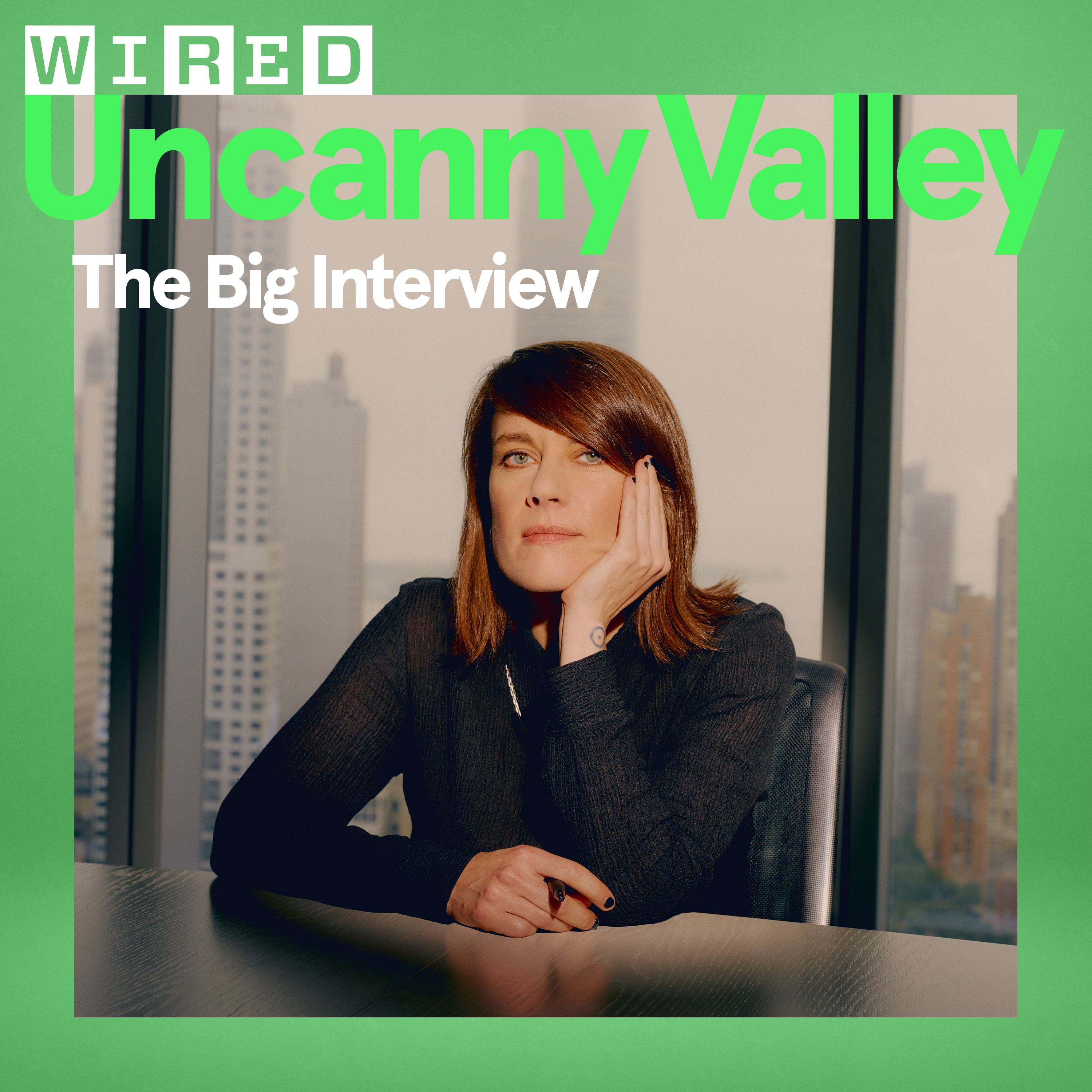
BIG INTV: AWS CEO Matt Garman Doesn’t Think AI Should Replace Junior Devs
45m 51s
In a recent interview with Wired, CEO of Amazon Web Services (AWS), Matt Garmin, delves into the AI-centric future of the cloud platform. Garmin, a former AWS intern, outlines the transformative moment AWS is undergoing with new AI systems and partnerships. He reflects on his career journey within Amazon, starting with early startups and transitioning to AWS in 2005. Garmin emphasizes AWS's mission to simplify technology infrastructure for companies by providing cloud services, allowing businesses to focus on developing applications without the need for managing servers and networks. The interview sheds light on Garmin's leadership approach at AWS, his experience in managing large teams, and the significance of empowering employees to make decisions based on shared mental models. Overall, Garmin's insights provide a glimpse into the evolution and impact of AWS on the technology landscape over the past two decades.
Transcription
8969 Words, 48341 Characters
From wired, this is the big interview. I'm Katie Drummond. Amazon Web Services, better known as AWS, is back in the spotlight. I'm not talking about the most recent outage that nearly shut down 30% of the internet. Instead, it's because of the recent announcement from CEO Matt Garmin that's focused on the very AI-centric future of one of the world's largest cloud platforms. Garmin, a one-time AWS intern, is now guiding the company through perhaps its most transformative moment since its founding, introducing new AI systems, new partnerships, and new questions about who and what will dominate the next decade of cloud and artificial intelligence. In this conversation, we talk about the strategy, the pressure, and the big decisions Garmin has to make shaping the infrastructure that powers, well, almost everything. All right, I'm ready. Okay, let's do it. Matt Garmin, welcome to the big interview. Thank you. Thanks for having me. So we always start these conversations with some very quick questions, like a warm-up. Are you ready? Sure, go ahead. He's ready. It's too late now. Okay. If AWS had a mascot, what would it be? We have a big S3 bucket, sometimes that goes around, so we'll call it that. Sorry, what is an S3 bucket? Well, an S3 bucket is like a thing that you store your S3 objects in, but we actually have a large foam big bucket that walks around and it actually looks like a pink bucket. So you do have a mascot? Well, S3 has a bucket. It has a mascot. It's probably the closest we have, and I like it. Perfect. What's the most expensive mistake you've ever made? Personally or professionally? Either. That's a good question. I think probably personally, well, the most expensive mistakes I ever made was playing basketball too long, and I tore my Achilles. So that cost me about nine months of being able to walk. So, you know, that was, I probably should have known that into my 30s I was well-passed basketball playing age, but I lost a little bit of time there. That sounds personally expensive. Psychologically, that sounds very expensive. Exactly. If you could rename the cloud today, what would you call it? What is it called today? The cloud. Oh, okay. I actually think the cloud is a pretty good name. So I don't know if I'd rename it. I would rename like we called Amazon AWS Amazon Web Services, and now no one knows what web services are. So that I might rename a little bit, but I actually like the name of the cloud. So I'm not sure I would rename it. Maybe Amazon cloud services. Yeah, maybe. Maybe. What's the part of your job you would love to outsource to an AI agent? I try to outsource a lot of the parts of my jobs to AI agents that I, if I can, but I haven't yet figured out how to outsource more of my kind of answering of day-to-day emails yet, and that still a fine takes up a lot of my time that I haven't yet figured out how to do more efficiently where I get the right information and get the right information out. But if I could figure that out, I think that would be great. But have you, it sounds like you've tried, and I'm curious about this, and I know we're supposed to be doing quick questions, but I was going to ask you a little bit about this later. Tell me a bit about sort of how you've tried to incorporate artificial intelligence into your workflow, into sort of your personal professional life. Yeah, I think there's a number of ways that I've done it. I think in particular for me, though, a lot of the benefits that I get in my job in particular are taking a lot of information inputs, and then kind of sharing those out to either the same or other people, and kind of connecting a lot of those dots. And for my particular role, I haven't yet found a huge shortcut into kind of being able to do that, particularly with regards to the medium and which we communicate like email or other places like that, because I find that all of the shortcuts lose some of that nuance. There's some summaries and things that work. There's definitely some tools that allow me to summarize content more quickly or learn new content more quickly, which is I find that to be super useful, but haven't found a huge time win for my role in particular where there's not as much kind of repetitive work or other things like that, and it largely is kind of knowledge that I'm trying to get from a bunch of sources and then consolidate together to send out to others. That's actually very interesting to me and reassuring in a way, because I sometimes feel like I should have found a bunch of shortcuts by now, given how artificial intelligence is talked about, and I haven't either. So maybe, maybe both of us one day soon will. From one former AWS intern, that's you, to a future one, what is your best piece of advice? I find that people always overestimate how much of technology has already been invented and kind of think that there's nothing left to do, and what I find is that we continue to be at the early stages of evolution. As long as you're curious and looking and willing to try new technologies, new areas, there were always at kind of that early stage of what can be invented, and sometimes I run into interns where like, yeah, when you started AWS, it was small, but now it's a big company, and so there's not the same opportunity. And I'd say that that's just not true. I think there's just as much if not more opportunity than there ever has been. Well, which leads me to my next question, which is, how do people know when you're unimpressed? When I'm unimpressed, yeah. Largely would tell them. Fair, so direct feedback. No one's like, I mean, I think, you know, I think largely though, it's not about impressing me. I'm more like, you know, I like when people are thoughtful when they've come up with like the right sets of decisions. It's not that they're like, like particularly like every day, it's not like people are like coming up with something that's super, super novel. And again, it's not about impressing me, but it is, I like it when people have done the work so that we have all the information, whether it's customer input or data input or sales input or whatever, so that as a group, we can make thoughtful decisions. And so that I like and impressed when people are, I've done that work ahead of time, so that when we do get together, we can make good decisions and thoughtful decisions as opposed to like being, and I'll often tell people it's not necessarily the, the recommendation that I'm like going to be like impressed by, but I want us to have all the information so that as a team, we can move forward and make great decisions. Last question, because you have a very big job, so what is a hobby you wish you had more time for? I'm assuming it's not basketball based on what we just learned about you. I've switched to golf, so I caught the bug a couple years ago and quite love playing golf and I don't get to play as much. Well, let me sort of set the stage a little bit. We're here to talk in particular about a bunch of announcements that you recently made around AWS and AI and agent AI that wired covered. I'm biased, but I thought we did a great job with that coverage, you know, just very recently, but I also want to learn a little more about you in a professional context. So tell me and tell all of us about your career journey thus far as now the CEO of AWS, but you've had obviously a very long career at Amazon before that, and even sort of prior to that. How did you end up where you are now? Yeah, after, so I'll, I'll start at the beginning. I had, I worked for a couple of startups early on in my career. None of them did particularly well, but I learned a ton from them, which was great. After my second startup, my wife and I both quit our jobs and went to business school, which is a fantastic opportunity. And as part of business school, kind of when I was there, one of the things during my internship that I wanted to try to explore was what entrepreneurship looked like inside of a company, just because my, and my goal was always to go back and do a startup again. And so as part of that, I looked at a bunch of different companies and I ran across Amazon and actually talked to Andy Jassy, and they were talking about building this technology services capability inside of, inside of Amazon. And I thought that's exactly what I wanted to see. I wanted to see what it would like for a successful technology company to build, you know, to try to build something new inside of it, because I just want to see what that motion looked like and how you could learn from experienced entrepreneurs and what was different than at a startup. And so I did my internship for what turned into AWS in 2005 before we launched. Fast, I was fascinated by it. I thought it was an awesome opportunity. And I said, great, I want to come back and work here for a couple of years. And then I would go back and do a startup. And so then I started full time in 2006, effectively as the product manager for all of AWS, like there was, you know, it was, it was largely kind of defining all of the services as we launched them. And so I started a couple of weeks after S3 launched and before the rest of our services launched and helped launch them and name them and price them and do a bunch of things. And then I kind of kept getting more and more responsibility. I kind of focused on EC2, which was our compute service, started taking on engineering teams, actually launched our block storage service, kind of wrote the PR FAQ for that and hired the first engineering team and launched that. And then kind of grew to lead most of our core compute and networking and storage product areas. So I'm all of the product and engineering teams for that. And it was fun. I got to learn a lot along the way. Like I'm not necessarily kind of, or I wasn't originally kind of a deep technology person, but got to learn about hypervisors and kernel engineering and a bunch of these really little level kind of core technology pieces, which were cool. And it was super interesting for me to learn. And it's just such a fascinating space. And as AWS grew really rapidly, you know, we grew along with it and we grew the team pretty significantly. We were fortunate enough to work with some of the best technology people in the world as we built the service and the bunch of services and the business group. And then I can't remember the exact time it was after about 12 or 13 years. So it would have been like 2019 something like that. Andy Jassy asked me, yeah, he called me in his office one day and asked if I would lead sales and marketing. And I literally had nothing. I didn't know anything about sales and marketing. In fact, I was kind of like looking around like if he was talking someone else. But it was a great opportunity to kind of learn that space. And it was a unique opportunity, right? I was basically handed one of the world's two or three biggest enterprise sales and marketing organizations having never done any of those jobs before. So I think Amazon's a bit unique and that we kind of trust people where, you know, your smart, you know, how to operate. You've, you know, the business, you don't necessarily have to know the exact thing that you're going into. And the team was gracious and helped me learn that. And that was a great opportunity to get to learn how to how to run a field organization at scale and really get to spend a ton more time with customers, which was awesome. Really understand the nuances of what a startup customer really want was looking for versus enterprise versus the governments and kind of the various different industries they worked for. And then to go over CEO kind of a was spent two years ago, a year and a half ago. And, but so I've spent almost 20 years here at Amazon, all, all in AWS. And how big is the organization by employee size that you now run? I don't know if I don't know the exact numbers, but it's, you know, it's in the hundreds of thousands hundreds of thousands. I mean, a lot of that, you know, we have large data centers where we, you know, we, we run kind of very large operational organizations, you know, we have data centers all around the world and pieces like that. And I mean, I, I run a team at, at wired, it's sort of in the, in the low 100s. And I love management. And that's sort of for me was always, it was clear fairly early in my career that that is sort of where I wanted to, to go. Was that always clear for you? Sort of the idea that, yes, taking on sort of larger and larger pieces of this enterprise is what I feel like I am sort of meant to do what I want to be doing. Yes. I mean, I like it. And I think that I'm a reasonably good at it. I guess. So guess I took some of your employees, some of your, you know, I liked it. And the more I did it, the more, you know, it was a ton of learning. I really love is when I get to take on roles where I get to learn more and get to stretch myself. And frankly, I love building and love having an impact on what the business is doing and what our customers are doing. And, you know, scaling beyond yourself, it's hard because you can't do all of the, you know, you don't get some of the joy of like actually physically kind of getting to build the thing or deliver the thing yourself. Yeah, or like, right, this, you didn't write the story in my case. Yeah. That's right. But, but you can write a lot more stories, right? In that case. And, and you kind of learn to do that through others, which is also an interesting and useful skill. And then you learn how to communicate to teams, you know, first through direct management, then through layers of management, then through, you know, through, you know, mediums like talking and things like, you know, all company meetings or other kind of mechanisms like that where you have tens of thousands of customers or employees that you might be talking to. And so you got to think about how do you build mechanisms? And this is one of the things that I enjoy learning, which is how do you think about building mechanisms that allow you to help those individual contributors make some of the, the right kinds of decisions in the strategy that you're trying to drive for the team or the business or the company. And, you know, I've quite enjoyed kind of learning how to leverage some of those mechanisms at different scale. And that's been fun to, fun to do too. Because you just talked about sort of going from managing people to managing managers. I swear I'm asking for a friend. But do you have any sort of particular mechanisms that you have picked up in those 20 years that stand out to you as particularly effective strategies? Because I will say there is something very specifically different about managing someone who then manages people, who then manage teams of people. It's like it has the potential to be a very unproductive game of telephone. And I'm curious about the mechanisms that you employ to make it much more effective than that. Yeah. I mean, look, everybody has their own way of doing this. I think for, I mean, so you a little bit have to find what works. And I do think that as your team and your organization gets larger, you have to change some of those things. And I think that's one of the common pitfalls that I see people fall into is that they will assume that the thing that worked great when they were a line manager, managing a team of six to ten people will work the same as when they're managing a team of a hundred people. And those things same things won't work. And then, you know, I think there's another shift that's like when you don't know the name of everyone in your team or your organization, which I can't unfortunately know today. And usually that breaks somewhere around, you know, 100 to 200 or somewhere in there. You'll run into people who are in your team that you don't know or don't know their names. And you just have to think about all of those things differently. And where they are, it's really hard, I think, to have, you want to give the broadest set of people in your team as possible mental models on how you would make decisions in their place as opposed to what the decision actually is. Because if you have to like send down edicts all day, one, it's not as empowering to your team. And two, like there's chances that whatever you say gets miscommunicated. But if you can have, and this is actually a lot of the power of culture in a company, but also what we think like these mental models, which is like if I was going to approach this situation, this is how I would think about it. Or these are the the ways in which I would make trade-offs or think about kind of decisions. Then you can empower tens of thousands of people to go make decisions. And then you can focus on how do we make sure that we hire smart people and don't punish them when they make bad decisions, but course correct. And that's how I've kind of learned at scale where your real leverage points are ensuring you have those right mechanisms at place, having a mechanism that does allow you to kind of find where things are going well or where they're not and when they're not, where you can dive deep into that and really get into the details and understand really at the very core level, like then you kind of switch modes and you're like, now I'm line manager again, I'm understand the very details of exactly what you're doing, get things kind of sorted and then kind of jump back out again and stay at a high level. And look at mechanisms to how you can do that. And that's the best way I've found to do it. Well, I appreciate the free management advice. I'm sure many of our listeners do too, so thank you. But I want to now ask you about about AWS in a broad context. I think a lot of people listening, I would describe Wired's audience as sort of curious generalists. Obviously they're listening to this because they're interested in sort of technology and where it's taking the world. I'm sure all of you listening have some sense of what AWS is. You have some sense of how important it is to what you do every single day, but they probably don't know sort of in brass tax, just how big AWS is and sort of how vital it is in terms of just infrastructure. So I'm hoping, can you explain it to us maybe not like we're five, but like we're 21. We just graduated with a humanities degree and we're really trying to understand this thing that you that you are in charge of. At a high level our idea behind AWS hasn't changed in the last 20 years, which is there was a bunch of pieces of technology that was hard and non differentiating the companies had to do for a long period of time and that was used to be they had to build a data center. They had to go find servers. They had to take care of the servers when a disk drive broke. They had to go fix it. They had to set up their networks, etc. As a whole bunch of work that they had to do before they could ever, you know, write Netflix. They could actually write a cool application that would stream a movie to your and customer or write Airbnb that would think about logic of how you could connect individuals with people who had rooms that they wanted them to stay in. Whatever your application was, right? And so our goal was what if we could do that work for companies so that they didn't have to do that? And so that was the thesis when we started, which is what if it was as simple as somebody could come and make an API call and simply say, great, give me servers, give me storage, give me databases, give me whatever. And we would provision them for them and then, you know, through internet connection, they could have access to that. And so it turns out that was a very powerful idea. And I think we did a good job executing on some of the abstractions that made it really powerful where a lot of companies went and built their applications on there. And so the companies I mentioned Netflix and Airbnb's and Pinterest are all some of these early customers that we had that built their business from the beginning kind of on AWS and the cloud and don't own data centers. You know, they largely just run inside of AWS. Initially, when we first launched the business, we thought this was going to be incredibly compelling for startups and some technology companies, which it was. But as we grew, we found out that enterprises and really large organizations were equally compelled by this value proposition eventually. And we had to build a lot more capabilities for them, whether it was like encryption capabilities or audit logs or abilities to hit particular compliance things or whatever it is. But now we have customers like Pfizer and JP Morgan and the United States government and the intelligence agencies. That was a big a big win for us when we kind of convinced the US government that we could build a top secret region and that they could run intelligence workloads inside of AWS. And were you in those meetings? I would have loved to have been a fly on the wall in those meetings. Yeah. Yeah. And we we walked through some architectural questions that they had. Yeah. What does it take to convince the United States government that they should they should run on the back of AWS? I mean, you know, I mean, like there was a whole RFP process and there's a lot of work there. But it was also just some whiteboarding where we kind of walked through like how would it work and how would you, you know, and at the end of the day, you know, it's not it the cloud sounds like it's a magical technology, but it is, you know, it's data centers and it's networks and it's it's servers and and other things that we run it at very high reliability, at very high security and and we kind of and we found some forward leaning technology folks that wanted to figure out how they could get the benefits to the government because it turns out if you find the right person in organization, even in somewhere that's as large as and bureaucratic as the US government often is, you'll find people who want to lean forward. They want to go faster. They want to deliver value for citizens and finding that right person and then being able to collaborate with them. You know, their eyes light up just like they do for a startup company, right? And so, so today now it's across almost every country and every industry that you that you think about, you know, NASDAQ trading markets run on AWS. It's financial services companies run AWS hospitals run AWS media entertainment is, you know, whether it's live broadcasting or streaming broadcasting or or any of those things on we power a lot of those that technology across the board really. And so we're we're excited that we have millions of customers all around the world and, you know, we've grown the business now to be about a hundred and thirty two billion dollar run rate business. Wow. It's but it's still growing 20% year over year on that large of a base. Just when you thought you were done learning on the job, enter artificial intelligence, right? Which obviously has been around as a technology for a very long time. But we are in this sort of new era and this new sort of challenge for you and your organization, which brings me to this this recent keynote at the reinvent conference that you held recently. You also streamed it on on Fortnite for the first time I might add. But you announced some pretty significant changes to AWS to your mission to your priorities and to what you you would be offering to your consumers. And I'm hoping you can sort of talk us through that that transformation. If you would describe it as a transformation, maybe you wouldn't. I think technology is always iterating and going through these kind of transformations. So I think for us staying at the forefront of of every technology innovation is incredibly important. And I think there's been almost no technology leaps since maybe the cloud and the internet before that. And so we've been investing in AI in AWS and Amazon for the last decade plus two decades maybe. But definitely with the leap forward from generative AI over the last three years, we've just seen a massive change in what's possible for customers. And so we've had this vision that it's not just going to be AI is over on one side and then the rest of your business is going to be over on the other side. But basically AI is going to be built into what everyone does. And in order for that to happen, number one is you have to have all of your data in the cloud world. And then we've built this whole platform of tools that then allow you once you have that data in the cloud to deliver differentiated value to your customers. And so some of the things that we launched and in particular, I'm quite excited about a reinvent are really around AI agents. And the difference between kind of the first generation of AI tools that we're really around summarization and content creation, right? And then we're all quite excited and got a lot of value out of those. But there's only so far that goes. I think the next stage is these agents and agents, the real value is they can take access to your data. They can still do some of those summarization content creation, but they can go actually accomplished tasks and they're able to reason. And when you have these agents that can go reason and accomplish tasks on your behalf, all of a sudden you can kind of force multiply what you're able to do. And we launched a couple of things. One was called Nova Forge where we allow customers to actually take their data and integrate it in at the early stages of training, one of these frontier models, which is called Nova. And so that gives enterprises one of these AI models that deeply understands their data and their domain. And then we launched a number of these frontier agents that allow customers to really go and deliver big bodies of work, whether it's encoding or operations or security. And we've spent the time to really build this platform where it could actually deliver value. And I think broadly people kind of understood now what that long-term strategy was. They really get it. And as they see projects really delivering into production, where there's real value, they see that kind of AWS is that platform that they want to go do that. And that's that's what customers are telling us over and over again this last week. It's interesting. I feel like 2025, which we are, thank God, almost done with, was like a confusing year in the narrative for AI. And I say that because I feel like in January, I went to some conferences, talking to some people, this is the year of the agent. Agentic AI is here. It's about to change everything. That was in January, that was almost a year ago. Am I using Agentic AI right now? Absolutely not. Has that sort of come to fruition in the way that I think people were talking about in January? No. And at the same time, you've seen reports from MIT, for example, finding that 95% of Gen AI pilots in companies are failing to yield the productivity that I think those corporate leaders thought they would see. How do you make sense of all of those narratives coming together? Were companies just moving too quickly? Was the promise just too fast? If you jump forward and don't build that strong foundation of I have my data, I know the workflows, I really know how some of these things are going to tie it together, then you're not going to get any value out of it. You're going to have just a chatbot, which is cool and looks eat and then everybody has a chatbot and then what. And so it is those differentiated workflows. And they're kind of less sexy and interesting for you to look at, but a workflow that can help you automate insurance claim processing is super valuable. And you can actually get people that are claims processing faster, make sure that you cut your costs, have a better customer experience, make sure you have better accuracy. You can deliver all these things. And some of the technologies weren't available in January. This technology is moving so fast that the capabilities are much better today. And so I will tell you, at reinvent, I sat in a room of executives for a broad set of companies. I asked to show a hands of who is either now starting to see positive ROI to their AI investments or see a clear path to meaningful positive ROI in the next six months. And I think it was 90% of hands went up to people in the room. So it is like people are starting and I think that's not the answer that I would have gotten a year ago. But it's because we've done a bunch of this work. And it's because we've done a bunch of this work together with customers to understand exactly what they want. How do we solve their problems? And how do we deliver solutions that do deliver them real value and not just clickbait headlines that sound good? And on that note, I will say candidly, Amazon has not been a key part of a lot of these AI narratives. There have been other companies that have been out there making announcements. It feels like once a week. I mean, I can tell you leading wired. It's sort of this constant stream of news, this model, that model. We're doing this. We're doing that. Does that worry you? Do you worry about Amazon not being in that narrative? Or do you again just feel like you took your time for a reason? Yeah. I think both of those things are true. I do worry about it because I don't want customers to kind of think they were not innovating or driving the latest technologies they need. And I want to make sure that it's not just kind of headline grabbing stuff. And it's actually great value that we're delivering for companies and value that we're delivering to the business. Jeff Bezos used to have a saying that you have to be willing to be misunderstood for long periods of time. And for us, I think that's what maybe some of the last two years was. And so I think a lot of that narrative has changed now. And if you talk to lots of analysts, if you talk to folks in the press, talk to customers, they didn't no longer kind of think that now they're saying, look, actually, AWS has by far the strongest agentic platform to go build on. They have the broadest set of models that I can build on. They have the broadest set of security controls and compliance controls that actually, if I go put these agents in production, I can actually know what they're doing, control what they're doing. And that is what we're seeing. And it's not taking anything away from, by the way, like Chatchee PT is an incredible consumer application, but it's just a different thing. That's not our business. Our business is to make sure that banks and healthcare companies and media and entertainment companies and energy companies can drive their businesses and deliver more outcomes for their customers or their cut costs or whatever they want to do. And so I'm quite pleased with where we are now. And I think we've already seen that narrative largely shift. I wanted to ask you a little bit more about Nova Forge, which was particularly interesting to me. And what was particularly interesting here is this idea of custom pre-training as opposed to the idea of fine tuning as sort of a way that a company can take a model and really make it their own. Can you explain that distinction to everybody before I sort of dig in a little more? It's not new that people have thought, okay, there's these out of the box models that I want to customize. The best mechanism that we've had to date to customize these are these open weights models that Meta was great and first released with their first Lama model. But now we've seen a variety of these, whether it's Mistral or Deepseek or Quinn or whatever. There's a number of these. But what they are, they're still black boxes. You basically get a fully pre-trained model. And then they open the weights and you can do either tuning of the weights to focus in particular areas that you wanted to focus on. Or there's new techniques like reinforcement learning where we can start to send more information to these models that train them after the fact. What we find is that if you put too much new data into these models in the later stages, they forget the early stuff. And so they forget kind of what made them great at reasoning or they actually forget some of that data because they get it's called over-trained on some of the data you're giving it. And then they lose what was valuable in the first place. And so there's only so far that that can go. What we also find is that those techniques are very ineffective if the model wasn't already trained on your domain. And so if you try to go teach one of these open weights models about protein folding and they know nothing about protein folding, it doesn't work because it doesn't know how to inherently reason about that thing. And so what we found is that if you can train them earlier and I use this analogy in my reinvent talk about the human brain, you're able to learn new languages early when you're younger, much easier. Like now if I try to learn a new language, it's much harder to do. And so models are somewhat similar to that. And so what we've done, which is a unique thing, we kind of refer to it as open training. But really the idea is that if you could take your data, you have this corpus of data that is from your domain and your particular company and the ways that you do things. And if you're able to insert it into the pre-training stages and then mix a bunch of the data that was used to originally train that model and then finish pre-training the model, the model is then when it's done, it actually now inherently knows all of your stuff. It knows about your data, it knows about your company, it knows about your domain. And anything that you do about fine-tuning your post-training after that is actually much more effective because there already knows that. It's just never possible before one because open weights models never would expose their data. And there was no kind of mechanism for them to be able to go do this. And so we did this with with our Nova models and our Nova 2 models. And we what we do is we open them up. And we say, if you're taking a financial services company, you can take all your information and inject your data, mix it with an Amazon curated data set. So this is the data that we have that we have proprietary used to use. And we'll give you tools to easily mix that together. And then you finish pre-training the model and you effectively have your own custom frontier model that understands your business, that you were able to train for a couple of hundred thousand dollars or whatever the cost is to finish that training versus billions of dollars of doing all the research to actually go and build a frontier model. And you know, with any sort of new opportunity, right, there is risk. And I'm curious about risk in the context of Nova 4G in a few different ways. You have one, obviously you already deal with companies who have very sort of confidential proprietary information, right? You just mentioned financial services. You know, inputting all of that data into this model and into this training. There's sort of that piece of it. You also offered a really compelling example off the back of reinvent from Reddit, right? Which is using Nova 4G to develop a model that can be used for content moderation, which essentially means training a model that breaks a lot of conventional rules around how these models are typically designed, right? They would be designed to avoid offensive or violent content entirely. Reddit, on the other hand, needs a model that can like lean into that kind of content in order to do the moderation. So those are two sort of, I think, very distinct examples that I just offered. But I'm curious what kind of risks exist when we start down the road of this kind of custom pre-training. And are there distinct risks that might be different from what we've seen historically? I know that there's any particular different risks. I think from a data protection point of view, we have all sorts of data protections around this happening in data still living in customers' domains and in their VPCs and then having exclusive control over that. And I think that's one of the the things that we pride ourselves on and have over the last 20 years is really protecting customer data and making sure that it's isolated and protected. I think from when people are building their own model, this is true no matter what. If they're fine-tuning it, if they're doing any of that work, companies have to think about what is the output and they have to only output of their own models, whether they, whatever. Even if they're using an off-the-shelf model, by the way, you have to own the outputs of that. And I think that's one of the key pieces is that you can't just give up responsibility for whatever your technology is doing. You can't give up responsibility because a database makes a particular join and you're like, I don't know, it's just how the database did it. AI is no different than that. And we deliver powerful tools to customers, but they have to own those outputs and think about them. We still have safety classifiers, by the way, for things that are really like, you can't go pre-trained something and then create it to go build a bomb or things like that. You still have a lot of other safety controls that are like real safety controls are absolutely still in place and there's no circumventing those. But with regards to things like you meant to a content moderation, that's someone else's choice and they can make a choice and they own what that looks like and they have to be sure that they, by the way, that's why they're doing it is because they want to make sure that they make great choices for the content that's on their website that's appropriate for their site. And so we're talking about sort of this premise whereby AI agents will be much more integrated into enterprise settings, right? And I'm curious about how you think about that in the context of the workforce. Obviously, there has been, again, I'm looking back at 2025 and remembering sort of comments that other AI executives have made around job disruption, cuts to the workforce etc. You actually made an interesting comment where you said that replacing junior employees with AI is quote, one of the dumbest ideas you've ever heard which made me laugh. I'm curious if you could talk a little bit more about that and more about how you see artificial intelligence and agentic AI changing the workplace in the years to come because I think you have maybe a point of view on this that some people might find reassuring and that I think is different than what we hear from a lot of other leaders. Yeah, and at that point in particular, by the way, it was specifically around software developers, but I think it applies to lots, which is there was this kind of thought that like you'll just replace all of your junior engineers and all of your junior employees and you'll just have the most senior, most experienced employees and then agents. And number one, my experience is that many of the most junior folks are actually the most experienced with the AI tools. They're actually able to get the most out of them. Number one, number two, they're usually the least expensive because they're right out of college and they generally make less so kind of like they're if you're thinking about cost optimization, like they're not the only people you'd want to kind of optimize around. And really three is that at some point that whole thing explodes on each other on itself. If you have no talent pipeline that you're building and no junior people that you're mentoring and bringing up through the company, we often find that that's where we get some of the best ideas. We get the new new like fresh blood into the company from fresh hires out of college. There's a lot of excitement. There's a lot of new thoughts. There's a lot of new ideas. And so my thinking was just like you've got to think longer term about how you think about the health of a company and just saying, okay, great, we're never going to hire junior people anymore. That's just a non-starter for really anyone who's trying to build a long-term company. What does this mean, though, sort of for the workforce broadly? I mean, what does it mean for Amazon's workforce? What does this look like as AI agents infiltrate, which is not a generous word, but it's the word that comes to mind, sort of infiltrate the way we work and live? Yeah. I think one of the things that I tell our own employees, your job is going to change. Like, this is no two ways about it. There's only thing I can promise you is that the way that you did your job four years ago is not how you're going to do your job next year. And you're going to be able to have a bigger impact. You're going to be able to do more things. You're going to be able to have a broader scope of responsibilities. And it's just not going to be the same things that even made you successful five years ago, may not be those things. You're going to have to learn new skills. You're going to have new learning ways of working. We may have to organize our teams differently. We may have to go after problems differently. So people are going to need to be flexible. There is for sure going to be disruption and how work is done because jobs are going to change and industries are going to change. And if they don't, you'll most likely get left behind by people who move faster and do change. There is going to be some disruption in there for sure. There is no question in my mind. When you say disruption, certainly the way we work. But disruption in the context of job loss in a big picture economic way. I think it's uncertain to me. I'm very confident in the medium to longer term that AI will definitely create more jobs than it removes. I think any time you find opportunities to create new economic prosperity or build new experiences or things like that, there are more jobs that get created. In the short term, but they will be different. There are jobs that will be eliminated as part of it or reduced, almost for sure. You think about jobs where in particular where there are some jobs that get automated away, just like all kinds of waves of technology that has been true. There are some things where you just no longer need quite as many people to do a particular job. Our job is to also provide training and upscaling so that we can retrain so that there are other roles that some of those folks can do. Not all people want to do that. There may be some churn in the short term as people either are hesitant to learn new skills or don't want to learn new skills or other things like that. There is going to be some, but this is true about almost every single technology change. This is true about when personal computers came around. It was true about an industrial automation in the 1930s. It was true when the internet came and it will be true for AI too. There will be some jobs that there won't be as many up. That is true and I think there will be new jobs. I'm curious about how you're thinking about all of this from an environmental perspective. I think one of the notable pieces of agentic AI is this idea of having them run continuously for hours or days. I would imagine there is a sustained energy demand in that context. We're already talking about a very energy intensive technology. Amazon right now is the single biggest purchaser of new renewable energy contracts in the world, at least for the last five years. If my facts here are correct. How do you put that commitment together with this drastically increased need for energy? Look, I think we have to keep in and so part of what that is is us investing in. That is not just going out and buying existing things. That is investing in new projects and bringing new renewable energy projects online. That is it's a huge commitment for us. It's something we do every single year and we will continue to do because we think that's important that from an environmental impact point of view and frankly from an energy availability point of view is important. Do you think we're going to have to keep looking at other energy sources? I think that nuclear is one of those that's going to be very important for us to look at in the medium to longer term so that we make sure that we have enough kind of carbon zero energy out there. But we need to look at all of those sources of energy and it doesn't mean that like no one's going to use natural gas in the intermedium term. I'm sure some of that is true too. For our goal is to how do we continuously period over period year over year reduce the carbon intensity of the the energy that we consume with a goal to get to zero. That is we're working super hard. We're still committed to that as a company and we spend an enormous amount of time on that. How do you respond to criticism of this venture which is an enormous undertaking internally? I'm curious about the management piece there. A few weeks ago you had over a thousand Amazon employees granted. It's a company with seven figure employee base if I'm correct but they described the company's quote all cost justified warp speed approach to AI development. They say that it will cause quote staggering damage to democracy to our jobs and to the earth. That's quite a statement from Amazon's own employees. So I'm curious sort of when you hear that read back to you. How do you address it? Look, I think when you have number one is we we encourage our employees to have their own thoughts and as to how they're thinking about things. Well, I mean that's good because a lot of tech companies these days are not happy to see that happen. But I would say also say that when you have an organization of any size you have viewpoints from a lot of different places and I would say that that is not the majority opinion from our employees or even close and I think most of our employees are excited about the technology we're building excited about the value that we're giving customers and are excited about the potential and like the climate pledge that we have and the path that we're on there too, which is also important and we're equally committed to. And so, you know, I think that's okay. I think as long as those concerns are respectful, we're going to listen to them. But I think they're far from the majority. In fact, they're the very small minority view. And now, last question, I mentioned sort of at the top of the conversation that in January 2025, everyone promised me this was the year of agentic AI and they were wrong. And so, as we look out to 2026, I'm curious for your prediction in the context of AI, what is next year all about for us? And then in 12 months, I'm going to call you and we'll see. Just be super clear, I'm awful at predicting the future. I am too, but I have to ask. You can call me. I just probably won't be right. But I will say that, look, I think one of the big things that we are going to be incredibly focused on for our customers is delivering real business returns for them. And so, whether that's through agents, whether that's through customized models, whether that's through scalable infrastructure, whether that's eliminating tech debt through using transform to get them off of mainframes, or get them off a legacy databases, that I think is going to be a big focus. It's not going to be about going and experimenting. It's not going and trying new technology. It is really delivering value to the end customers into the business. So, it's brass tax time for the PNL to look a little bit different next year? Yep. And that's where that's looked. And I think that's where customers have relied on AWS to help them improve for the last 20 years, and it's where we're particularly great at. Well, Matt, thank you so much for your time. I really appreciate it. Yeah, absolutely. Thank you for having me. This show is produced by Jessica Alpert with help from Adriana Tapia and Sam Egan. Sound design mix and original music by Pran Bandy. Kate Osborne is our executive producer. And I am, of course, your host, Katie Drummond, Wired's Global Editorial Director. From PRX.
Podcast Summary
Key Points:
CEO of Amazon Web Services, Matt Garmin, discusses the AI-centric future of AWS.
Garmin shares insights on his career journey within Amazon and his role at AWS.
AWS aims to simplify technology infrastructure for companies through cloud services.
Summary:
In a recent interview with Wired, CEO of Amazon Web Services (AWS), Matt Garmin, delves into the AI-centric future of the cloud platform. Garmin, a former AWS intern, outlines the transformative moment AWS is undergoing with new AI systems and partnerships. He reflects on his career journey within Amazon, starting with early startups and transitioning to AWS in 2005.
Garmin emphasizes AWS's mission to simplify technology infrastructure for companies by providing cloud services, allowing businesses to focus on developing applications without the need for managing servers and networks. The interview sheds light on Garmin's leadership approach at AWS, his experience in managing large teams, and the significance of empowering employees to make decisions based on shared mental models. Overall, Garmin's insights provide a glimpse into the evolution and impact of AWS on the technology landscape over the past two decades.
FAQs
AWS does not have an official mascot, but they humorously refer to the S3 bucket as a mascot due to its visibility.
Matt Garmin considers tearing his Achilles tendon while playing basketball personally costly.
Matt Garmin appreciates the name 'the cloud' but suggests 'Amazon cloud services' as a possible alternative.
Matt Garmin wishes to outsource the task of responding to day-to-day emails more efficiently.
Matt Garmin advises interns to remain curious and explore new technologies, as there is always room for innovation and growth.
Matt Garmin values thoughtful decision-making and appreciates when individuals have done the necessary work to make informed choices.
Chat with AI
Loading...
Pro features
Go deeper with this episode
Unlock creator-grade tools that turn any transcript into show notes and subtitle files.
 PodcastTranscript AI