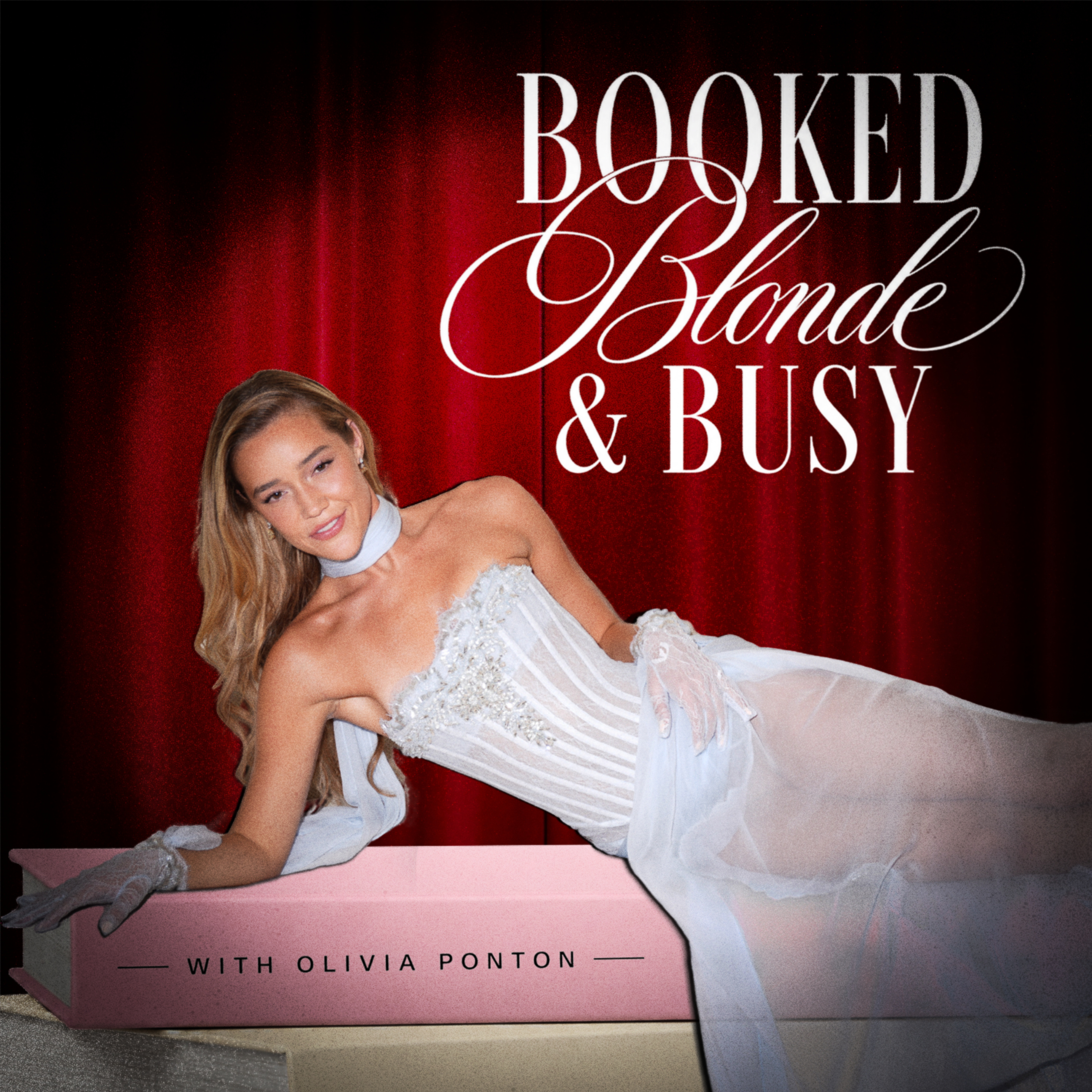
BEST MOMENTS OF SEASON ONE | Booked & Busy w/ Olivia Ponton
18m 7s
Olivia Ponton reflects on her personal and creative journey, sharing how her writing process is rooted in emotional authenticity rather than perfection. Inspired by a college prompt to tell her younger self one thing, she developed a heartfelt message: “Speak now, act now, love now—because tomorrow isn’t forever,” which became the core of her book. The story emerged from personal grief over shifting life dreams, especially after years of pursuing acting. She emphasizes the rarity and depth of true, enduring friendships, which are both aspirational and challenging as lives evolve. Writing for her is not just about storytelling but about evoking real emotion—she writes scenes to trigger feelings, not just plot. She openly discusses her struggles with burnout, errors in grammar, and emotional exhaustion during high-pressure periods like tours and book launches. Despite her success and prolific output, she acknowledges that her journey is not without pain and self-doubt. Her work resonates with readers because it captures universal emotions and real human imperfections. She values reader engagement, including casting suggestions, and believes that creative work is not just about success, but about staying connected to one’s true self amid change and uncertainty.
Hi, Angels. Hi, Angels. Hi, Angels. It is Olivia Ponton and welcome back to another episode of Book to Missy. Book to Missy. Book to Missy. Because sometimes when I read like the, he hates everyone about her, I'm like, that's just never going to happen in real life. Well, and then like, do you, would you really want him coming to Thanksgiving dinner with your whole family? If he's going to be horrible to your mom and your uncle and your little brother and like, and you just, it's okay, guys, he really loves me. We're having to be like, wait, I promise he's a good guy. I promise, I promise. And it seems really great to me behind closed doors, behind closed doors. I see your content, like, I know what content I share. It is me. And so you are allowing people into your heart, your soul, but how do you kind of gauge that of, you know, sharing all of yourself versus just pieces of yourself? I was, but I just got this on a panel at Harvard. I thought it was a question that a lot of people were asking me. Yeah. Truly, I feel like it's finding a balance and having the boundaries of like, okay, I'm going to share this part of my life, but these three or four things in my life, these are for me, these are what I'm going to keep, you know, and I'm never going to share with anyone else besides like the people in my immediate life. I think people would probably be surprised to know that I don't listen to audiobooks. See, there we go. Because most of them are probably in your voice. You've already, I don't listen to myself. So what could possibly be left? No, it's, no, I mean, I do it for professional reasons. And I also have so much narrative in my head at any given time. And I can't possibly have something else yet. Another voice in my head. Do you listen to music then? I do. And even sometimes I can't listen to music with lyrics. Like, it's been a big word day. We'd, I get, I'm like, I'd like some instrumental, please. It was 2021 when we were living together. That that's retched apartment. That was, yeah, a scary, scary place. We were living together and you came home with a humongous book. It was Crave by Tracy Wolf. And I don't know. You just really got into it. Like in a very obsession. I read it when I had COVID in New York City. So I didn't, I was locked in my apartment for two weeks. I couldn't tell you what in my brain was like, let's pick up this 500 page book and like, let me just try reading it. I didn't, like, off rip. Like, I did not read anything else prior to that. You loved it so much. And it made me want to love something that much. I have never been a big surfer. But I grew up in Hawaii. Like, I went to the kind of high school where in the morning, everybody had their surfboards in the back of their pickup trucks. And we're like, touting off from the beach. Like, that's just like what you did at 5 a.m. Before school. I did a little, I did a little bit, but like, I never really took to it. Why? I don't know. That's so crazy to me. I was honestly like a born New Yorker, just like trapped in the body of somebody who was like living like like the cosplaying somebody who lived in Hawaii. But I feel like Hawaii and Malibu have a lot in common in terms of like, when you live in a place where the water is so like omnipresent, I think it really establishes a lot about what the culture is. And I think people are like really drawn back to the water. Like, I think people who are who grew up surfing in particular, like, want to return to the place where they can be in conversation with the water in that way. What inspired this book? And did you just wake up on a random Tuesday and decide to like write the most gut-wrenching piece of literature that I've read? You know, it was one of those things that the story actually came all together in a college class. And she posed a really interesting question, which was, if you could tell your younger self one thing, what would it be and make a quote? And I was like, okay, that's not going to dig up childhood trauma at all. And so the idea started coming from this idea of like, you know, when you think about all the things that you wish you would have done or you wish you would have said, I really wanted to tell my younger self, you know, speak now, act now, love now because tomorrow isn't forever. And so that was kind of the quote that started the short story. And in my professor said, your characters have more to say. And they told me like this book really got me through a hard time in my life. And at that moment, I was like, okay, that's it. Like I'm only going to think about this one person, not, you know, a bunch of people who are waiting for the book. There's just this one person who I had a very human connection with and it unlocked something. But I also was dealing with the grief of losing what you thought your life was going to be about. I had been an actor my entire life. I really thought that's what I was going to do. And I was coming up against, but is this what I want to do? And it's that moment that happens when you realize your dreams change. I'm quite literally going to that right now. Okay. So it's really crazy that you're saying that because dealing with grief in the plans that you have for yourself is such a different. I mean, you're losing a part of yourself. I was like, is that really what I want? Or is that just something that I thought I wanted for the past like 10-ish years, specifically the past two or three months? I've been like trying to shift that and figure out what I want. And that's honestly why I started. Well, good, good for you because we tell people never give up on your dreams. Make sure you're checking in with your dreams. There's that saying, you know, that like a crush is just a lack of information. I love that. And sometimes, yes. And sometimes that's what a dream is. Like everyone can start out saying, I want to be an actor, but then you get into it. And once you have more information and you see what it requires of you and what your life is like, maybe you don't want to do it anymore. And it's not a problem. It's not a failure to quote unquote give up on that dream. How many hours are you writing a day? I would say probably three to four. Okay. So you like that manageable? Yes. I was kind of visioning that people sit sat down and wrote for like 12 hours a day. I think some do. Yeah. And then they write 10,000 words and their book is done in 10 days. I hate them. I'm just kidding. I love you. I'm so impressed by you. I'm secretly really done. It's so jealous. I was in Columbia with my family for Christmas. Yes. Yeah. And there was guys six people in a one bedroom apartment. It me, my dad, my sister, it was a lot, but I didn't really have anything to do. So I read this gut wrenching book and it was so cute. It was a love story. And then the ending happened. And I woke everyone up around me. I was crying at night. And they were like, what? My mom literally thought like something really traumatic happened to me. And I was like, my book. And she's like, bro, are you kidding me? I want to cry. Having that sense of friendship with Danny, like almost kind of me emotionally sad because I've always craved that friendship that you've had with someone where it's like no matter where in the world, Danny will always be there for you. And I say I think I was just jealous. Yeah. At the core of it. I think that that's well said. I mean, I think that the friendship love story is very aspirational. And I think that when I wrote it, I was single. And my friends were really like my family. And I think in a way that they really can be before people have families, I think part of the like unglamorous reality of that kind of friendship is that inevitably some sacrifices have to be made for like the differing lives that you start to lead, right? Like your lives grow in different directions. And some people get married or some people don't. And it becomes more and more challenging to prioritize each other, which is why I say it's so aspirational because I feel like it becomes very rare to have friendships like that that are like really so core. I'm very lucky that I do, but I think that they've also changed as we've like started families of our own. The idea of it sounds like really lovely. The practical reality is just not always that way. And it's not necessarily a bad thing, but it is something that I even myself find like I long for. So I went into my bedroom and I started ripping open boxes to find old journals. So it's like I need to remember who I was. What was I thinking as a kid? I had an injury about a boy that I was absolutely obsessed with. There is like pages where I had obviously cried because there's dry tears. Yeah, I have a lot of journals at home and every time I go home and I read them, I wish I didn't do that because I started getting really emo and I just cry. And then my mom has to come in and be like, what's wrong? And I'm like, oh, I'm reading this like gut-wrenching entry from when I was 12 years old and loved with this boy who didn't even know I existed. Exactly. I'm not crying. Right. In that book, I learned a lesson. Actually, I didn't learn it this time. I learned it the next time. When my editor says, this name is awfully similar to this other character's name. Can you change one? I thought if I said, okay, change it. I thought they would change it. They thought I would change it. So in this book, there's a scene where a character introduces another character and in the next sentence, another character says nice to meet you. Different name. And I cannot tell you how many how many thousands of emails I've gotten over that of just people being confused or what you mean. Yeah, because I mean, it was back to back. Yeah. And then I did it again. No. In the next book, things we hide from the light did it again, because it was the same thing. They're like, we don't like that this name is so close to this other character's name. Same exact thing happened. I said, go ahead, change it. And then change it in one place, not the rest. So after that, every time they say this name is too close, I say too bad. Yeah. Also, something maybe hopefully shocking is that I wear swap hands every single day. I never do my hair. Like, I don't wear makeup every day when my Q and I like, oh, how is your hair? I'm like, my hair never looks like this. I wanted to say, like, you will not care about my hair routine. You'll feel like, how do I get my hair not to look like that? You mostly see the glamorous part about this job. And I'm sure like you, you feel the same. You don't see the behind the scenes. I think I enjoy that also with books is with the authors. Yes, they'll share different storylines and dialogue and characters, but at the core of it, they're still them as a human. So they bring in aspects. There's a voice. Yeah. And maybe it's a comfort thing. Maybe it's because I'm scared to risk it. Yeah, risk it because the book is like it's a commitment. And it's like 12 hours of your life. That's a lot for me. Tell me about it. Whenever I was younger, I really was a big hunger games girl. So like that era of time where like maze runner, like divergent, I was literally gonna ask you. I was like, if you had to pick a movie between divergent Hunger Games and MazeWater.
which would be your favorite movie, Hunger Games. - Really? - Catching Fire Spacepalm. - Yeah. - Yeah. - I was Hunger Games girl. Like, I had the side braid and everything. (laughing) I was a gale. I was just attracted to Liam. That was worth whenever I was a kid. - In five years, was inspired almost entirely from this medium reading. Give me a psychic prophecy about my love life. - Wait. - Yeah. - That's kind of crazy. - I was, I think, 24. And she told me who my future husband would be. And what his name was and how I would meet him and when. - Was it true? - Yeah, and it was all true. And I ended up meeting him. And then the timing was just like, it was honestly off by a day. It was the craziest thing ever. I ended up, thank God it didn't work out because I ended up meeting my husband. - Oh, you didn't, oh, no. - Who was like my genuine true soul mate, but how crazy, this prophecy. And then I ended up meeting him. But it's him, but it's not him. This idea that even if we can see what's coming, we can't see what it will mean. And that became the entry point of in five years, that you can see, you could maybe see what's coming. Like we have ideas about our lives and like how they're gonna turn out and what we want. We can build and we can plan. But we can't ever actually know what the things that we want will look like or feel like in our actual life once we're there. - I'm like 70% down with the book at this point and it's the night before I have a big shoot. I'm really excited about this. Again, guys, had no idea this was going to be a gut wrenching story. I think I had like 30, 40 pages left and that was when I started connecting the dots. Oh, I posted it on my story. I was bawling, like I have not cried over a book like that in ages, but by the end I was so, the best way of saying is email. I was just like, what is going on? So why, yeah, why? That's my question. It's like why? - So I was just in LA and I met with Universal, I met with like the producers of Twilight and all those movies. I have read a script, like part of a script and it's the thing that I really care about beyond obviously the normal stuff is Isle's dresses and they're like, well, you know, like wicked, like we had a great cause too. And I'm like, oh my god. - I didn't say that, but that's a good thing. - Saying stuff is really interesting because there are a few names that like, I think my readers would freak out, the free time. - Readers will tag me in their casting choices and I send that to the producer. - No way. - Yeah, because they cared and they should. Like now a day's really the readers are who are getting people into theaters. So I'm so excited. In summer, the city's also being made into movie by New Line or Warner Brothers. So weirdly, that has progressed very quickly. Like, yes, I think that I'm going to have a lot to say in the new year. - No, I don't want to scare you off with too much woo woo. - Could be manifestation stuff. - Oh, I'm a manifesto. - Oh, thank you. - Okay. So you know with manifestation, like one of the biggest most important things is to be able to actually feel like you have the thing that you want. Like, oh, you have to speak it into your existence. - Yes. - And the things that I'm manifest right now. I'm like, I am going to, like, there's in no world that that doesn't happen. - Right. So I think I approach writing a little bit like that. I'm like, what is the feeling that I want to deliver here? And I get into that feeling and then I write the scene. - I've never heard that. That's, I write this and I feel this. And then you read it and you feel the same thing. Like, that's mind blowing. - Campus life or countryside? - Country side. - Really? - Yeah. - At this point in my life. - Like Oxford? I be an Oxford tomorrow. It's my favorite place in the world. But no, for my own, like, actual life, I don't need to be on a campus anymore. At this point, I just, like, kids get off my lawn. That's how I feel most of the time. - I like to listen to, like, playlist. - That matches my book. - You're one of those people. - Oh my God. When I was reading Throne of Glass, like, I was like, (humming) - Oh, yeah. - Oh my God. - I'm going to sound like a crazy person. Okay, whatever. They were on the battlefield. And, like, the perfect song starts playing. And, like, a scene is playing out in a book. Oh my God. It just feels, like, so serendipitous. It's so awesome. - So, right now, I'm trying to get through a book tour with my husband and my baby's daughter, which is insane. Like, it seemed like a really good idea to bring them. And now, like, half way into day one. I'm like, oh, so happy. And then I am working on five film adaptations of the book. So, and I'm producing all of them. And then I am kicking around another idea that will be always on the road. Right now, it's just all about once it again. - Yeah, as it should be. So, I was like, sometimes when I go into progress and they ask me, what's next? I'm like, I'm just happy I'm here. - I know. I'm like, I need it here. - Yeah. - I've tried to be really honest about this because I do think when people see, like, oh, you're publishing, like, three, four books a year. And I think if you just say, like, oh, yeah, it's great, then people who are struggling feel worse. And so, it has been really hard. This has been the hardest year of my life. I have had multiple, like, burnout moments. I've had multiple times where I'm, like, on tour, just, like, sobbing on the floor, like, in the shower. Like, I can't even talk. And so, the fact that I'm doing it so much and every day has become a problem. And so, there are moments where I'm not doing well. I get what you're saying. Like, crying in the back of an Uber. Very real, and you know, right? And sometimes it just, you're like-- - Just a lot. It's all at once. And people are asking me so many things at once. And you're like, so, thank you for who? Asa, I'm fine right now. And I'm lucky that I get to pull back what I want to, but I mean, I wouldn't do it if I didn't love it. This is my dream come true. And I've wanted to do this since I was a little kid. And every single day, I wake up so happy and so grateful. And also just, like, mystified that I get to do this. I love my job. And it's that love that allows me to be able to write this. - I can't wait until I'm in my 30s. And people look at me, like, I'm crazy. And I'm like, I just know these are ones I hit my 30s. I'm going to be thriving, rather than in your 20s, where I'm at right now. I feel like everyone's been like, you need to figure out what you want. - No, no, the 20s are for experimenting. The 20s are, you need to try as many things, so you know exactly what you like and what you don't like. Don't try to settle down into something. Don't try to pigeonhole yourself into some career in your 20s now. Try everything. - Couldn't have said that better. - Really, thanks. - I'm good with words. - Yeah. - Oh, yeah. - You know, my original writing process was so detailed and so organized. I was always so proud of myself for how I would write. And then I wrote this story and blew it all up 100%. I went for the index card method. And I had told my parents, don't worry, I'm just going to lay out this idea and I had I need this timeline. If the scene doesn't connect the reader to a feeling, then it's not needed. And so as I was writing it, I literally had all these little index cards. And I had laid them on my kitchen floor in a line, thinking that I'm going to be done in a day. It's going to be totally fine. We can eat dinner. We did not eat dinner for a week. It was a door dash moment. Contide, there is a huge new character that you have not met. That has been mentioned since Book One. He is a-- - Can we know who? - I feel like it would ruin it. So it's like-- - Okay, it's not. - It is the villain of this book. It's someone who you've heard about in Book One. And-- - We, I'm going to-- - I tried to go. - Yeah, yeah. - And it was a huge, huge part of the series, like especially Cron Tide. And then I've said this, there's the biggest plot twist of the entire series right in the middle of Cron Tide. And I think-- - He says like torture. - Yeah. - I mean, you have to-- - Right now. - Then the proofreaders get it. And they tell me, you don't know how to use commas. I know I don't. - Just, I don't know how to do that. - I don't know. - If it weren't for that editorial team, it would make sense. - So these books would not be legible. - I feel like that is me with my text messages and emails. I text and I'm like, that didn't make a grammatical sense. I didn't spell it right. - What is it? - It's good to know that. - Polish author also does that. - It makes you feel better. - Yeah, I make a lot of mistakes. - It's like, it's cell phone one word or two. - I don't know. - I always-- - I take it one word. - It's backseat one word or two. - How do you spell restaurant? - I don't know. - There's a-- - That's my thing. - What I think. - That I-- (upbeat music) (upbeat music)
Podcast Summary
Key Points:
Olivia Ponton shares her journey of balancing self-disclosure and personal boundaries in relationships and storytelling.
She reflects on her writing process, emphasizing emotional authenticity over perfection, and using index cards to structure scenes based on emotional impact.
Her book was inspired by a college class prompt to tell her younger self one thing, leading to the core message: "Speak now, act now, love now—because tomorrow isn’t forever."
The story grew from personal grief over changing life dreams—especially shifting from a career in acting to a new, uncertain path.
She highlights the rarity and depth of long-standing, emotionally grounding friendships, which she views as aspirational but also vulnerable to life changes.
Writing is a deeply emotional process; she writes scenes to evoke feelings, not just plot, and admits to frequent errors in grammar and spelling, which she sees as human and relatable.
She shares vulnerability about burnout, emotional breakdowns, and the challenges of maintaining a high-output creative life while staying grounded.
Her work resonates with readers who feel a connection through shared emotional experiences, and she values reader engagement, including casting suggestions for her book.
Summary:
Olivia Ponton reflects on her personal and creative journey, sharing how her writing process is rooted in emotional authenticity rather than perfection. Inspired by a college prompt to tell her younger self one thing, she developed a heartfelt message: “Speak now, act now, love now—because tomorrow isn’t forever,” which became the core of her book. The story emerged from personal grief over shifting life dreams, especially after years of pursuing acting.
She emphasizes the rarity and depth of true, enduring friendships, which are both aspirational and challenging as lives evolve. Writing for her is not just about storytelling but about evoking real emotion—she writes scenes to trigger feelings, not just plot. She openly discusses her struggles with burnout, errors in grammar, and emotional exhaustion during high-pressure periods like tours and book launches.
Despite her success and prolific output, she acknowledges that her journey is not without pain and self-doubt. Her work resonates with readers because it captures universal emotions and real human imperfections. She values reader engagement, including casting suggestions, and believes that creative work is not just about success, but about staying connected to one’s true self amid change and uncertainty.
FAQs
Olivia emphasizes finding a personal balance by choosing which parts of her life to share and keeping certain aspects private, only revealing them to close, trusted individuals.
Olivia does not listen to audiobooks because she finds her own voice too dominant and prefers instrumental music, especially when lyrics are present, as they can interfere with her internal narrative.
The book was inspired by a college professor's question about telling her younger self one thing, leading to the message 'Speak now, act now, love now — because tomorrow isn't forever.'
Olivia writes for about three to four hours per day, which she finds manageable and sustainable, though she acknowledges that some writers may write longer hours.
Friendships are central to her emotional life and writing, especially as a source of deep connection and emotional support, though she acknowledges that long-term friendships can face challenges as lives evolve.
She initially faced confusion over similar character names, and after receiving feedback, she changed only one instance, then stopped making such changes to avoid over-editing and maintain authenticity.
Chat with AI
Loading...
Pro features
Go deeper with this episode
Unlock creator-grade tools that turn any transcript into show notes and subtitle files.
 PodcastTranscript AI