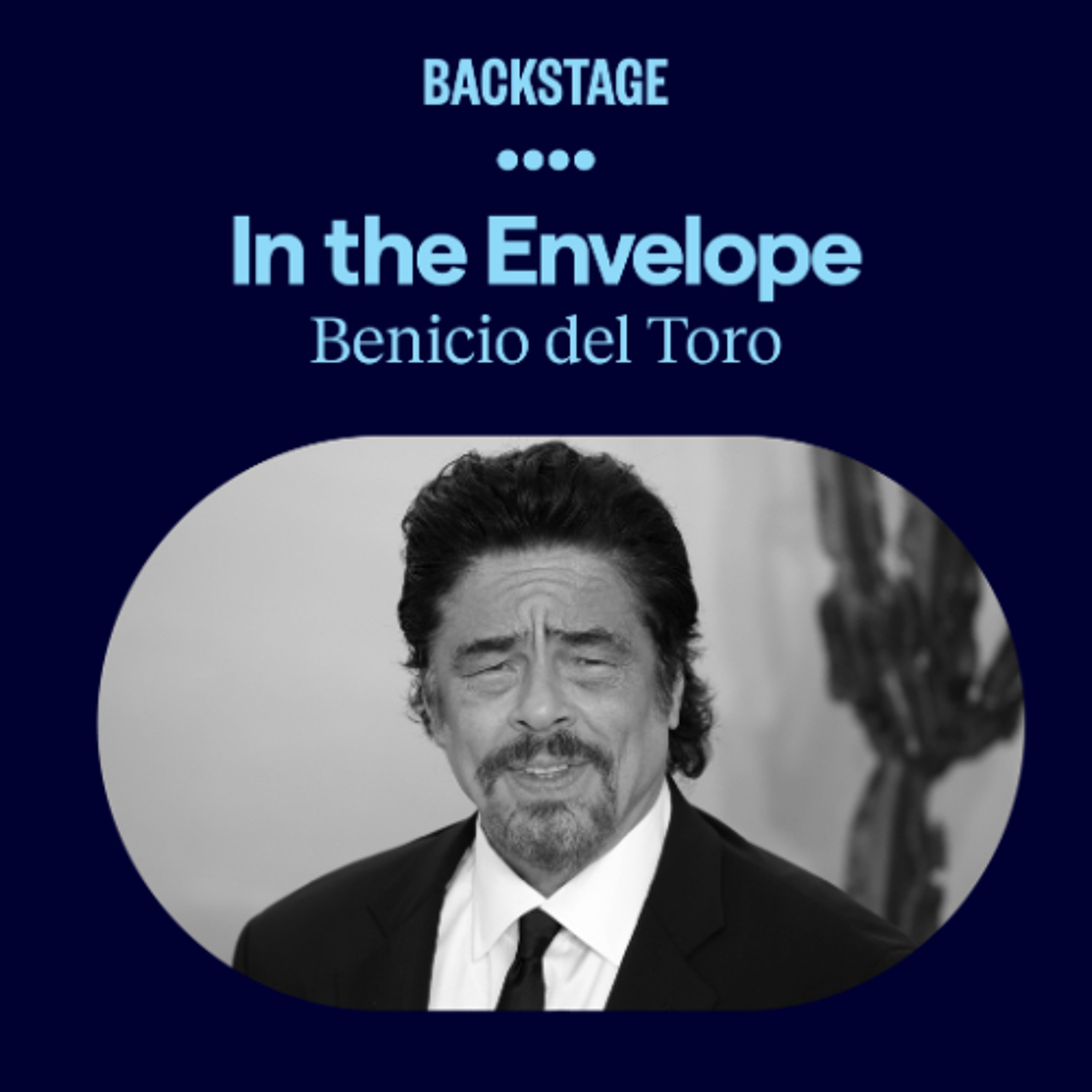
In this interview, actor Benicio Del Toro shares insights into his craft and career. He stresses the value of restraint in acting, recalling advice from Christopher Walken: "if you don't know what to do, don't do anything." Del Toro explains that effective performances often require intense focus, creating an "acting bubble" where external distractions fade, allowing nuanced expression. He cites early influences like Sean Penn and classic film performances, which inspired his own path. His training at the Stella Adler Academy provided a foundation, treating acting as a serious profession. When discussing bold creative choices, such as his line delivery in "Escape at Dannemora," Del Toro notes that these emerge from deep engagement with the story, character, and director's vision. Throughout, he underscores the importance of being a fan of the art form, learning from others, and maintaining concentration to deliver compelling work.
Some of your favorite actors have used backstage to kickstart their career. Denzel Washington, Al Pacino, Violet Davis, Chris Evans, that's Captain America. All you have to do to be just like Captain America is go to Backstage.com/Subscribe and enter the code "OnValope" at checkout for a 30 day free trial. That's 30 days of access to thousands of casting notices uploaded daily. I have to backstage today and again use code "OnValope" at checkout e-m-b-e-l-o-p-e-e-for free. These choices, I know there's talk about some things that I've done and some of them are like, you know, I can even surprise myself a little bit, but it's a process. It's not like you go in and you just do this thing and then, oh wow, you know, the process is this. You first have to understand the story. And you have to understand the character, but you have to understand the story and what the writer and the director are trying to do. Welcome to another new episode of "In the OnValope" the actors podcast. We're the biggest names in film, television and theater offer acting lessons and behind the scenes insights you will not find anywhere else. I'm your host, backstage senior editor Vinnie Mancuso and joining me today is one of the most compelling screen presences of the past 30 years. And now a three-time Oscar nominee, the great Benicio Del Toro. Now, unless you spotted him as a henchman in the 1989 James Bond movie "Licence to Kill", most of you first met Benicio as the mumbling Fred Fenster in 1995's "The Usual Suspects" and he has been the go-to person for enigmatic, dark characters and unpredictable performance choices ever since in everything from traffic and cicario to both the MCU and the Star Wars franchises. His 2025 was quite frankly insane first starring as ruthless business tycoon Shazza Akkorda in Wes Anderson's The Phenysian scheme and then playing with the best supporting parts of the year. Sensei Sergio St. Carlos, a cross from Leonardo DiCaprio in Paul Thomas Anderson's one battle after another. The latter role earned him his third Oscar nomination his first since 21 grams in 2004. As expected, this was a fascinating shot with a fascinating eye, covering his entire unique approach to on-camera acting, how he works with filmmakers like Wes Anderson and Paul Thomas Anderson, the key to making memorable performance choices, including a specific line reading any escape from Denimora that I encourage you to look up if you have not seen it, and just a lot, lot more. It's a wonderful job. Let's get right into it. Here is Benicio del Toro. And he said, "How are you doing?" Thanks for the technical run around. We try our best here to make it as easy as possible, but we're through it. How are you doing? Good, good. It's not your fault. Yeah, I mean, it's above me too. Jamie does it for me as well. Thank you so much for being here. I'm so excited to talk to you. You're one of our long-time wants for this show. It's such an exciting time. One battle after another is movie of the year. It seems like it's just such an exciting time. So how are you doing? Are you able to sort of find some quiet time? Some time to yourself, some time or all the noises are happening? Yeah, I mean, I try to find some of that, try to get busy. That's how you find your quiet time. You try to get busy on something. And I'm working on a project. So I put my attention into that and I seem to drift away from the award season, which is a real thing. It's started in December and it goes all the way to March. And I'm lucky to still be surfing the wave. So we just got back from the Bafta's from London. The movie did pretty good. Sean got his well-deserved award and we all keep charging on. This might be a strange thing to ask you right at the top of our interview we're about to do, but you said something very interesting recently to Scarlett Johnson that you did it. You did an interview with her and you said something. I want to quote you correctly here. You said during interviews, silence feels like failure. So you fill it. If you did that while you were acting, you would be overacting. A lot of our listeners are actors and I just would love to know what that means. You know that that's that sort of idea that feeling that silence feels feels like overacting, but it's something you have to do. Yeah, if I may quote the great Christopher walkin, I did a movie with him a long time ago. And he one of the best pieces of advice that I've ever heard an actor give another actor was Christopher walkin saying to me, if you don't know what to do, don't do anything. So the same thing goes to the question. If you think you've answered the question, that's it. Don't keep talking. You know, it's the same thing. If you don't know what to do, don't do anything. And it's very hard to not do anything because that means restraint. And sometimes you have the rider going like more, more, more, more, more, you know. So, you know, so I think that's what it means to me anyway. That was probably excess baggage around 1997. It was either excess baggage or basket or the funeral. I don't remember. I did three movies with him that he was in and I was in Basque, directed by Julian Schnabel, excess baggage, Marco Brambilla, and the funeral able for R. Might have been excess baggage, but I'm not sure. Yeah. Well, I'm curious. You know, that isn't such an incredible advice, but it sounds, you know, to people who are just starting out acting. It sounds really hard to not do anything. I'm curious, you know, once you have that advice and it sort of instills yourself in your brain, how you went about sort of testing it and learning it. Like, how did you learn to do less? Because it is one of your sort of on-screen superpowers. Is your ability to do so little and for it to mean so much? How long did it take for you to feel comfortable with that? I don't know. I really, I don't know. I don't know. I don't know. It's very difficult for me as it just say like, oh, I learned that one day. Might be the way I look at life too, you know. It might be in me, might be, you know, it's not one thing. It's a combination of many things. And it's almost impossible to name it and to pinpoint it. You know, I would have to go. We would have to do a couple sessions with a psychiatrist and who knows when he or she would come up with. But my, I think, you know, one of the first people I start to imitate that I remember as my dad. And he was, he had it, you know, when he said nothing, everybody perked up. And when he said something, everybody perked up. So I don't know. Maybe starts there. You know, and then, you know, there's actors that you see also eventually when you start making movies and you see other actors doing dealing with that, you know, what that reality that you have to create in front of the camera. That is, I sometimes, I'm amazed to see an actor when I'm off camera, see an actor. And, you know, you take Scarlett Johansson, you know, in the Phoenician's game. You know, I remember she came in. She made everybody laugh on the set. And then suddenly she was in front of the camera and everything just was muted around her. It's not a superpower, but it is, it is something that they call it in acting in the bubble. You create that bubble. And I think actors as they progress and they get better and they get more mature because I think, I think actors get better with time. Or I hope so. But I think that that creating that bubble is just very strange, but I see it. And I sometimes I think I might do it myself, but that's definitely seen it with other actors. And I'm using Scarlett as an example, because I do remember seeing suddenly, I don't know, it's just almost like everything became blurry around her. And what the camera was seeing and I was not the camera, I could see as well. And that's, that's a, that's a, you know, call it quote and quote super power. I don't think it's a superpower. It's just putting that presence and that intentions, those actions, those decisions, those, uh, in putting the interpretation right there in front of a camera to be captured. That's, that's actors do that. And the, and the good ones, you know, they create that. And as, as you progress in your career, I think you get better at it. Creating that focus. And it's almost like that everything goes with that focus, you know, I think that very few people get to see that because I think it's the photographer and maybe the director who sees that. You know, have you ever visited a, a film set? I've been on a couple, you know, from, from tiny Indies to, to the bigger ones. It's a, yeah, too. In this kind of a whole scenario. Right, but, but, uh, if you're not really behind the camera, it's really hard to see what's happening because it's just happening like really tiny, tiny, tiny, tiny in front of the camera. So, that, you know, that's what I'm talking about. I've had front row seats to a lot of great actors creating that bubble. And I think maybe, probably, you know, adding to bringing it back to the question that you were asking me about that silence that, you know, that in order to create that bubble, I think one of the main things, one of the main requisites is just total concentration. And that total concentration comes from focus. And focus cannot be distracted by sound in a way. You know, yes, you can have sound. You can be screaming and be focused. But for the most part, before you go there, it's just like the diver that is going to dive from a cliff or, you know, in a Capulco or something like that, you know, they're very concentrated. And there's like, you know, or the gymnast, you know, is quiet or even the tennis player, you know, you go to a tennis match. There's a lot of silence. So I don't know, maybe that's getting, we're going on to engine here. But of course, you know, that's why we're here. It's so interesting to who you say that. It kind of, I'm curious, you know, I run into this a lot with actors. I talk to them. It's almost like, it's harder to talk about themselves as an actor than it is to talk about other actors. You find it hard, like easier to talk about other actors and what they're doing than what you're doing. Yeah. Why do you think that is? I get to see them. I get to, I get to hear them. I don't, you know, I can see myself in a movie, right? But I don't, you know, but it's like it's so easy to like, when I see myself in a movie, I just see all the works I see, I see different things. I see, I just see details that maybe you don't see, right? But when I see another actor, I don't know what those details are. So I just see them. So it's easier. It's easier. It's also, it's easier when they, when they inspire you, when they motivate you, when they make you laugh, when they make you think that there's something about that that you go, that you really also, you know, I do know a little bit how difficult it is to do this, to, you know, to be an actor is very difficult. And, you know, and, and, you know, when you see an actor that moves you, that's, that's, you know, that's, that's inspiring when, you know, I've seen actors that inspire me and, you know, I would see their movies and then I finish and I go, I want to do that. And so it goes back to, you know, being a fan. Why are we fans, you know, you know, I'm a fan. I, you know, I started being a fan of sport figures and then music and, and then, you know, actors, and actresses and, and directors and, and, and, and, and writers. And so it's easy to be a fan. Perhaps it's one of the main things to do what I'm doing, you know, if I was going to analyze myself, I'm, I've been a fan for a long time and, and I'm still a fan. What, you know, what's really a strange is, you know, you might see a movie that was done 50 years ago and so many of you are a fan of someone that's gone. It's been gone for a long time. That's, that's kind of like, that's really interesting, you know, but being fans of, of, of actors, you know, like, performances by, let's say, Humphrey Bogart or Barbara Stanwick, you know, it just, it just kind of like, what's the forer, you know, it's just kind of like really, really amazing when that happens because it travels in time too, as well as I'm, I could be a fan of someone that, you know, younger than me doing a movie, you know, it's quite interesting. So, do you have any sort of core performances that that are like foundational for you or, you know, performances that are particularly inspiring in a way that you like go back to them? Well, there's, there's, there's several. The Sean Penn and the Close Range. That's a performance that I was starting to become an actor and I, I like, like Tom Cruise and I was coming up young guys that I liked to Tom Cruise, I like Emilio Estivis, you know, Charlie Sheen, but there was, there was something with, with Sean that, that, you know, there was a Close Range. When I saw a Close Range, I remember, I remember saying to myself, that's exactly what I want to do. So, that's that. Then, you know, then there's others that, the classic ones, you know, Robert De Niro and Raging Bull. Then later I got to see James Dean and East of Eden. I mean, that's an incredible first performance. You know, Elsa Lancaster and the Bright of Frankenstein. Oh, there's so many. I mean, you know, right right on the wall right here. I don't know if I see it, but that's one of my favorite movies. Oh, yeah, which one? The Bright of Frankenstein? Bright of Frankenstein, yeah, I actually have her here too. I can't, I can't quite show you, but she's actually saying Tommy for that. That close yet. Exactly. Let's give it some time. Yeah. Oh, yeah. So, yeah, well, Boris Carloven, Colin Clive, you know, you know, all those monster guys, you know, Bella LaGosia, you know, those, you know, I don't know. I liked them when I was a kid. I still like them. When I see them on TV or a picture of them, I kind of, it's almost like you see someone's like vitamin, you know, in some ways, you know, it's kind of like you feel or or you feel you feel like, you know, you feel like you're not alone. You feel like it's like a family member in some ways. But there's a there's a lot, you know, I mean, but Elsa Lancaster might be that Bright of Frankenstein, I might say is the shortest, most incredible, compact performance by anyone. I think I rank it as one of the best short, I mean, she's in that movie for how long maybe I think people are always surprised when they watch it for the first time, but she's only in it for, you know, two minutes at the beginning and maybe two minutes at the end. It's, it's, it's, but right. I'm talking about playing the bright, you know, that that's like two minutes of like incredible adrenaline and compact. There's nothing. It's, it's incredible. It's, yeah, it's maybe one of the best performances ever. Yeah. So it was Boris Karloff, you know, but, um, and so is, you know, Jacob Allordie in that Frankenstein movie. I thought he did a terrific job. I mean, you know, there's also, there's Anthony Quinn, there's Marlon Brando, there's Diane Keaton, you know, um, you got to love it. You got to love that you have to, you have to be able to, to recognize something and have it move you. It's always interesting when you hear people who want to be actors, but they don't watch movies. It's almost like, you know, people want to be a writer, but they don't read. It's like, you have to. Yeah, that consume, but it has to be a part of you in that way. Yeah, and it just, and it it becomes kind of like, um, yeah, yeah, it's, yeah, if you're a lawyer, you've got to learn about cases that happen centuries before, you know, you got it. So it's the same thing. Yes, I agree. I was, you know, you mentioned that you're in your foundation and stuff like that. I was, I was doing, just looking around doing some pre-charts. And I found that, you know, one of your, your early teachers, Arthur Mendoza, he wrote something for us for backstage, not that a couple of years ago. And he mentioned in this thing that he wrote that that when he's working with you, you, this is what he said. He said that you took the stellar advert one and two technique class over and over until he had to force you into doing the scene study. So that how you remember it was that your process. Um, yeah, I think I did take the technique classes. Yes. And I took, um, when I learned quite a bit from that, um, yeah, and but I was in the, I was in the scene classes, also from the beginning as well. I was doing them all at the same time. I was like, I was just, I was sponge Bob. You know, it's, I think we had Tiana Taylor on the podcast. She said the same thing. She said that when she's learning, she was sponge Bob. I don't know. I don't know if we said that to you, okay? I don't know, but, you know, I'm not claiming it. That's for sure. But, but yeah, no, I, you know, yeah, I was just eager to learn. I, you know, I mean, the Arthur, um, teaching Stella Adler was all under Stella Adler. There was Joanne Linville as well. And it was Arthur Mendoza. Um, that's, you know, that changed my, my life going to that school. Then, you know, she was that, that, that whole thing. It took, it just, it just gave acting, um, some kind of like, um, purpose that, and importance, dignity. I mean, Stella used to in Arthur as well, but they used to, like, they looked at actors as, as intense as doctor, you know, you know, it's a profession. That, that, that of a doctor or a fireman, you know, you, you, that was part of being in that school that was so, I think cool. Because it could be a hobby for people, and I understand that. But if you're going to do it, you know, that's a way of going about it. And, you know, I'm part of that, I guess, of, of people that, you know, take it seriously and care about it. You, you auditioned and got a scholarship to the stellar other Academy. I'm just out of curiosity. Do you remember what you auditioned with? What, what your auditioned piece was? I think it was a, a hot spur was a Shakespeare, um, character hot spur from Richard the Sur. It was, uh, a monologue from, uh, Keith's change, the play. There was something, there was a song that I'd taken and I'd turn it into that was messing around with a song by, I think it was the doors. Before we get directly into, you know, one battle after another and all that stuff, I do want to just bring up something that, a performance choice of yours that I, that I, well, I, this is an escape it, Danimora, the limb of the series you did. It is a delivery of the line. Don't tell anybody, which is, is delivered in a very unique way. I, I want to just ask about choices like that, you know, acting choices, choices to deliver a line in an unconventional way or to take a big swing. Where does it, the decision to take a big swing come from and what does it like as an actor to then sort of, um, when you're wrapped for that day to, to, to, to live with the choice you made that day and then move on to the next one. Well, the decision comes from how, first of all, you know, these choices, I know there's talk about some things that I've done and some of them are like, you know, I can even surprise myself a little bit, but it's a process. It's not like you go in and you just do this thing and then, oh, wow, you know, the process is this. You first have to understand the story and you have to understand the character, but you have to understand the story and what the writer and the director are trying to do. In this case, Ben Stiller was my go to director and then as you go through it, you know, you might, that was very much for a particular moment. It was a particular moment that I, that I had to scare her, Patricia or Cat. I had to scare her and I, And so I talked to Ben a little bit about it and you know, there's little to there's a lot to be said about encouragement. And so when you're, when you're director, you know, kind of like encourages an idea that you have, you know, that that's a, that's the, I think that's the, that's the basis of making a choice that might not only make it interesting or original, whatever, but also help the story, you know, and I think that, you know, the purpose of that moment was almost, I think my character, you know, saw people around them like little kids, a little bit, he's a little bit like Tom Sawyer maybe and Patricia might be like, you know, a young girl and how do I scare her in that moment where the door is open, I can't grab her. So I did the monster voice, you know, I'll come back to those monster performances. Yeah, maybe not all of it, but some of it comes back to goes back to lunch, any junior or, you know, Christopher Lee or Boris Carl, Bella Lugosi, you know, Charles Lutton, you know, it was a choice. I didn't know of, and then you asked me, how did I feel after I did it? You know, I know Ben was very happy with it, you know, so that made me feel I could turn the page and concentrate about tomorrow and not feel embarrassed. And that's part of the director too, you know, so like if you did say like, well, I don't know if I liked that list, do it normal or whatever, you know, then we do it that way, but Ben got it right away, you know, Ben, Ben, Ben, Ben, Ben did get it right away and, you know, I think, I think that show is, it's what it is and it's as good as it is and a lot of it is because of him creating that between this, you know, where you can collaborate and I think it's the same with the directors I've worked with and I consider are, they know what they're doing. Well, I do, I do kind of like just to follow that up. You said something very interesting about working with Paul Thomas Anderson, which you said that, and again, I just want to quote you correctly, he said, Paul's camera follows the actor, and then you said with someone like Wes Anderson, the actor follows his camera, just curious if you know actors listening to this, like, what does that, you know, elaborate on what that means a little bit, and what does it mean for you doing your job as the actor? That means that, you know, it means that, it means that, you know, you are, you know, you might have a little bit more physical freedom with with Paul because the camera will follow you and you will have less physical freedom with with Wes. But what it means is it's like, you know, these are two of the best filmmakers very different and at the same time, very similar because they're both looking for to capture that truth. And so I was very aware working with Wes because I worked with him before and I was with Paul, but with Wes, I'd worked on the French dispatch and then the finishes king. I knew his style, his technique, and it's very different of most of the stuff that I have done. Paul is more like the world that I've done most of my movies are closer to Paul than Wes's style. I've done all the movies that are a little bit that can be rigid in a way, but you know, Wes is the best at that. He creates his own world. And so it was it when he asked me to embark on the finition scheme, I knew where I was going and I knew I knew it was for me and challenge and a and that I wanted to approach and and I wanted to expand my what I do. I wanted to I think that, you know, it was it was a choice of going like let me explore that world in a different way approach it differently. Sometimes the words come first were maybe with Paul, we're working with the words that might not come first. With Wes, the words have to come first. It's more theatrical. It's more like theater. It almost brings me back to when I first started, you know, a little bit in the theater, the the West. So it's almost like if I've been playing a guitar, I've always been a musician and I play guitar and I've been in a rock band and suddenly I'm in a jazz. This is jazz or maybe it's classical with Wes, whereas a little bit more, you know, you're you're you're you're playing that instrument, you know, with would would Paul, he might want you to bring it on, you know, play your thing, you know, I want to see what you do, you know, with your guitar. With Wes, you might have this is what you're going to do here and up to here and then then the drums come in, you know, and it's very very much I want to use the word strict. It's more like it's just a different way of storytelling and quite exciting in many ways as much as the other way. The thing is like they're both and I'm lucky to say this, but they're both masters of what they do, you know, so I was lucky to get a chance to to do those two characters last year, you know. I mean, it kind of reminds me that the sort of the different challenges and what it reminds you of and what it takes you back to. In one battle after another, I know that you and Leonore DiCaprio had to work with a good amount of non-actors, you know, people who are they're not trained or anything like that. I'm curious as someone who's you know, has training and works and all that stuff, like what working with non-actors sort of shows you about yourself as an actor, you know, like what does interacting with someone who's a non-actor teach you about your process? Well, I don't know if Paul did this on purpose or not, but it was a real looking back both Leon and myself, we've had a chance to talk about it. We both said that not set the tempo, that first day of me shooting with him. We went into the store where there were all these non-actors and I have to like move them out of the store, move some of them in, tell them what to do. I got to do all this business and I'm the store is a real store. The owners are there, the cashier, the register is real, the money is real, we haven't rehearsed, we're going to come in and walk it and then I'm going to look at the owner, I'm going to say, you know, I'm knowing you for 20 years, I, you're my cousin, I've known you for your cousin with my girlfriend and now I'm part of this store and so we have to establish this relationship right in two seconds and I think that Paul putting Leo and myself in that moment and taking the people, the non-actors and they were like maybe, there were a lot and taking them in and talking to them and we don't have any time to waste and I'm not bringing them into the reality of what's going on which it's fake and giving that seriousness and that you know, energy, it put Leo on myself in a position of leadership and in a position of really believing what we were doing and then hopefully by doing it, by us believing it, we, that's passed to the non-actors and they were really excited because the Lunarity Caprio was in their store and they were very respectful and they were very respectful towards me and they just immediately came up to to the challenge and I remember the first take I went right into the cash register and I just hit it a couple times the thing opened and there was money there and I took $60 close to the thing put in my pocket and then later I came up and the lady, you know, she was great, Maddie Sella was her name and she was very, very nice and very understanding and she was laughing and I said, you know, we're giving it back but I think Paul putting Leo on myself in that situation for the first day of shooting, it made Leo and I like close in a way or way, you know, by making the, I think that by making the, the non-actors trust us, we were making each other trust each other that went through to the end of the picture. So much to the point that I'm driving that car 40 miles an hour when he's hanging out the window and uh, it does a lot of trust there and he, you know, he knew and I think the beginning is in that store and the name of the store is Genesis which is the beginning, you know, so that the name of the store was Genesis and I mentioned it in the film Meet Me at Genesis, so it's, you know, that's that's how it went and you know, so, you know, that period there, when you're doing it, you know, you don't, you know, you can't look at it and but it was, we had a, we had a good time. It didn't feel like we were having a good time but we were having a good time all the way to the end and Paul talks about it, you know, and you know, I think, you know, it starts with the director, you know, the director, he just, he just allowed it to, to happen and, and then Leo, you know, and I would just follow it and, you know, we just, we did have a good time and um, but, but it was work, you know, but when, when you're doing it, you don't think you're doing anything special, you're just grinding, you're just grinding and, you know, you're just doing it and getting it over with and trying to be the best you can be, but looking back, it was a good time. It's interesting because I, before these kind of things I go back, I read, I read lots of interviews you've done over the years and I look for constants and you say a lot and that's something you have said a good amount is that you remind yourself, you remind co-workers, you remind, I think you said that Scarlett Johansson reminded you of this when she showed up to the Phoenician scheme is like that, that thing in her head is like, this should, in its base level be fought, you know, it should, and I'm curious as someone who works a lot and someone who's been working for a long time, like how easy is it to forget the, the Jolay when you're, you're so locked into what you're doing? Oh, you forget it, you have to forget it. You have to forget it, you're not, you have to forget it because every day is new and you're starting from zero. So you can't be enjoying it because you can't go out and enjoy it and then sleep late the next day, for example, you know, you just can't, you just, you just, you just turn a page, you know, you're just working. You enjoy working, you enjoy trying to build something, every day you try to build that character, build the story, you're getting pieces of it, you know, but I don't think I can tell you like, oh, that movie was like going on vacation, you know, you know, it's, it's work, it's work. Well, I'm curious, you know, and as we come to sort of the end of the time, I just want to curious of like, of like, you know, what you're describing is you're so locked in on the work, is it then kind of surprising when something like, you know, a few small beers becomes something else, you know, because like, that's a line you said during the movie and you, you, you probably, it's for character reasons, it's for the scene, and it's what the scene requires is, is it surprising when something you do becomes contextualist and becomes something else? Oh, yeah, completely, completely. There's your silence. I wanted to point it out. I want to point it out. It works, you know, that's, you know, if there's no silence, if that cliff, if we took that cliff out, it would mean more than it does. It's very good. I just wanted to ask you one last last chance, because it's a very, it's a very well-deserved Oscar nomination. And it's been, I think, you know, since traffic in 2021, Gramps, it's been around, we're just over 20 years, 20 years. I'm curious. And again, this is asking you to look at a large period of time, but like, in the time since your Oscar nominations, like, how is acting, you know, changes both the job in art form to you? Like, how does it feel different? And in any ways, how does it feel the same? Well, no, acting hasn't changed. My approach to what I do hasn't changed. And, you know, I've tried to do, I've tried to be as professional and as determined and as caring for every character I've played, probably since I've we're studying with Stella Adler. So that hasn't changed at all. My approach hasn't changed. I think that now there are more choices for young actors. That has changed. I think that if I think that, and this is very different than my time, when I decided to be an actor as a young person, well, let's say my teen, you know, 19, or when I decided to be an actor, that sounded like a real crazy idea where everyone that surrounded me, especially in part because none of them were in the business. So that sounded like a crazy idea. I think now a young person saying they want to be an actor is not as a crazy idea because there's so many outlets. There's so many possible, there's so many shows, so many shows, you know, so you might be able to make a living to an extent, you know, you might not become a superstar or whatever, but you might be able to make a living, you know, I mean, there's more channels than ever. There's more, you know, streamers and there's all kinds of movies and there's all kinds. There's so much now. I mean, you know, people get famous with their own, you know, filming themselves, influencers and stuff like that. I think now, you know, that's a way of, that's an acting, that's a skill, you know, that's a skill and that's like acting. I mean, it might not have the thickness of maybe studying stellar addler and doing check often, but that's a skill and that's that, you know, that's not easy. So I just think that now that's changed quite a bit. And then the other thing that I think has changed also is this, they're called the award cease. Just being, it's, it takes a while and if, if you're lucky, like, you know, and you're in a movie like One Battle Off, they're another and that is connected with audiences, whether they, they, they, they're entertained, they're, they can think, they're put some kind of mirror of what's going on around them. There's a lot of heart. There's a father daughter relationship. There's, there's Darth Vader, you know, with Sean Penn, you know, there's incredible performances. Tiana Taylor and Regina Hall and Chase Infinity. Okay, so that movie, if you're in a movie like that, this wave has been going on for me, you know, and I'm, I'm surprised that I'm part of it to be honest with you, but the fact is that I've been on that wave since December and now I'm going to be there until the Oscars, right? And so you see the same people, variations, you know, sometimes it's almost like the wave goes down and then you see someone else and oh, there you are. And, you know, and it's quite interesting and, and, and it's, it's kind of fun. It's exhausting. It's a job. And it's, I think is fairly new, but for me, it is for sure, you know, for me is completely no, you know, so this, this, this, this award season, you know, and it's been great to be with Leo all through this and Paul and the actors that have been talking about Regina Chase, Tiana Sean, it's kind of like that's, that's amazing to be able to, to be with the whole, you know, at least I'm not surfing this wave alone, you know. So that's been fun. So enjoy it and enjoy yourself. I tell myself, you know, so, but you gotta get groomed. That's great. I, you know, that's the exhausting part. It is exhausting. And then you gotta wear the suit and the tuxedo and the weight, the tuxedo, it's not working. Okay, what happened with tie is not, it doesn't look right. And all this stuff that can happen, you know, the bow ties, twist it, you know, but, you know, the same time you're, it's just different and it's new for me. And, and it's, it's, it's kind of fun and, you know, it takes you places and, let it rip. Love that. Well, I, I cannot thank you enough for making a stop on your wave here with us. This is, it's truly, truly pleasure. I cannot thank you enough for being here. We're talking to you like this. Thank you. Thank you. Hopefully. Thank you. Thanks, as always, to our brilliant producer, Jamie Muffet, and to the whole team at Backstage. Samantha Sherlock, Mark Stinson, Caitlin Watkins, and of course, Kacey Howe. Visit Backstage.com and don't forget you can subscribe to Backstage with code envelope at checkout for a free trial. 100% free, you simply cannot beat that. For more exclusive content, find us on Facebook and Twitter at in the envelope and subscribe, share, and leave a comment. We shall interview you next to let us know. Thanks for tuning in. We'll see you next time for another peek in the envelope.
Podcast Summary
Key Points:
Benicio Del Toro discusses the importance of restraint and focus in acting, emphasizing that "if you don't know what to do, don't do anything."
He highlights the concept of creating an "acting bubble"—a state of intense concentration that allows performers to deliver powerful, nuanced performances.
Del Toro reflects on foundational inspirations, citing performances by actors like Sean Penn in "Dead Man Walking" and Elsa Lanchester in "Bride of Frankenstein."
He describes his early training at the Stella Adler Academy as transformative, instilling a sense of professionalism and purpose in his approach to acting.
The conversation touches on making bold performance choices, noting that such decisions arise from understanding the story, character, and collaboration with directors.
Summary:
In this interview, actor Benicio Del Toro shares insights into his craft and career. " Del Toro explains that effective performances often require intense focus, creating an "acting bubble" where external distractions fade, allowing nuanced expression. He cites early influences like Sean Penn and classic film performances, which inspired his own path.
His training at the Stella Adler Academy provided a foundation, treating acting as a serious profession. When discussing bold creative choices, such as his line delivery in "Escape at Dannemora," Del Toro notes that these emerge from deep engagement with the story, character, and director's vision. Throughout, he underscores the importance of being a fan of the art form, learning from others, and maintaining concentration to deliver compelling work.
FAQs
You can start by going to Backstage.com/Subscribe and using the code 'OnValope' at checkout for a 30-day free trial, which gives you access to thousands of daily casting notices.
It's an actors podcast where major names in film, television, and theater share acting lessons and behind-the-scenes insights not found elsewhere.
Christopher Walken advised that if you don't know what to do, don't do anything, emphasizing restraint and avoiding overacting.
He describes it as a state of total concentration and focus where everything else becomes muted, allowing the actor to fully embody their character in front of the camera.
He explains that when watching other actors, he sees their performance without knowing the details of their process, whereas he sees his own work critically, focusing on the mechanics.
He mentions Sean Penn in 'Dead Man Walking', Robert De Niro in 'Raging Bull', James Dean in 'East of Eden', and Elsa Lanchester in 'Bride of Frankenstein' as key inspirations.
Chat with AI
Loading...
Pro features
Go deeper with this episode
Unlock creator-grade tools that turn any transcript into show notes and subtitle files.
 PodcastTranscript AI