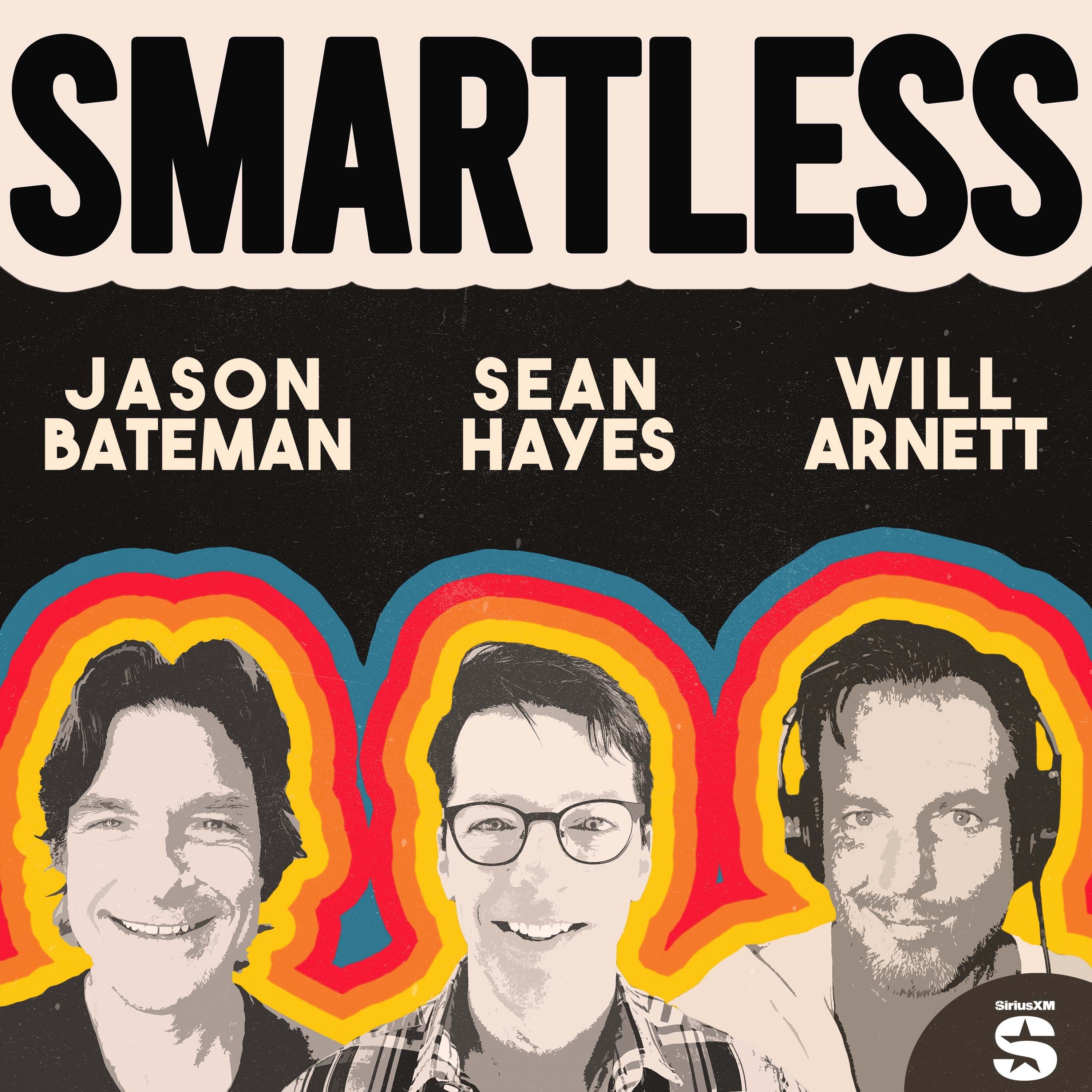
Benedict Cumberbatch, a celebrated actor known for his range and distinctive voice, joins "Smartless" as a surprise guest, bringing humor and insight to the conversation. The discussion centers on parenting, particularly the emotional journey of raising three children with a significant age gap, and the balance between nature and nurture in child development. Benedict reflects on his upbringing as an only child in a family of actors, how early exposure to theater influenced his career, and his experiences in boarding school and teaching in India. He shares vivid memories of early film work, emphasizing the emotional intensity of stepping into iconic roles like Spock and Dr. Strange. The conversation also touches on the importance of trust in director-actor relationships and the challenges of working with legendary performers. Ultimately, the episode blends personal anecdotes with broader reflections on family, identity, and the creative process, highlighting how vulnerability, connection, and shared humanity shape both personal and professional growth. The tone remains warm, reflective, and deeply human, resonating with themes of belonging, resilience, and the enduring power of love across generations.
(upbeat music) Hey Sean, hey, what's up? Hey, it's me, I know it's you. I just said your name. I know, I'm just talking to you. It's just relaxed about it. Hey, we're about to do another episode of "Smartless." Hey, for Tracy, cold open. This is a cold open, cold open. It's like, hey, she knows what cold open is. I hate shut up. I'm talking to her right now. Just give me two seconds. I gotta explain what cold open is. She knows what a cold open is. It's not a million times. Oh, Tracy, cold open is what you say at the beginning of an episode before you start the episode. So people know you're starting the episode. I'm exhausted. Me too, me as well. Don't forget about me, also me. Welcome to "Smartless." (upbeat music) Uh-oh. What was that? Oh, God, that was probably our surprise guest. Our surprise guest probably. He probably, he probably, he probably, he probably. Oh, no. Where are, so let's see. Everybody is at home base. It seems like, you know, Willie, where are you? I'm a Mung Island. Oh, you're back there. What are you doing back there? Our little Arnold. I just made a little quick scoot out here for a night. Where did you, like, forget a pair of shoes? You really liked out there? No, Jason. No, but I mean, seriously. Isn't it a hassle trying to figure out what you're going to keep in your second home's closet versus what's back in Los Angeles? Is it mostly winter wear out there on the island? There's a lot of winter wear. I, and it's chilly out here right now. So it's been really, it was beautiful, beautiful, beautiful. No, I came out here with my little guy yesterday. And just to kind of, the ground we were walking around went into town, went to the bookstore. Well, that's nice. Yeah, it cranked up the pool, even though it's cold, that was just real fun. Yeah, and just super nice. Does he swim yet? Yeah. He does. You know, yes, he's in the process. He sings slowly now, slowly. Yeah, he's five. So he's not, but he's come a long way. Like he's, you know, he does that thing where like he can swim underwater. You know, so they, whatever they don't can't do in terms of strokes, they just can do it underwater. Like a, hey, dad, that means he can't swim. Okay, no, swimming is trying to keep yourself buoyant and above. I know, I know, I know. I can't really swim in there. Did you guys try it? Yeah, I was petrified. Are you, are you a, are you a, are you a weak swimmer? Yeah, I can't, I don't know how to do it. I run out of breath in like 10 seconds. No, truly. Yeah, I know, I can't, I don't have the, I don't have the lung support to swim. That's not true. Well, you don't know how to do it. You don't know how to do it. You swim again. If you swim, you don't, how do you not have the lung? You don't need to hold your breath if you can actually swim. Yeah, but the actual aerobic kind of movements that make your heart pump faster, then you have to breathe faster. I just fail really quickly at it. Uh-huh. Okay, do you know what I mean? I mean, hang on. Yeah, I do, please. I just want to take this one apart a little bit. I can't be the only person that can't swim. No, you're not, but, but no, did, do you, it's like you're tired to keep yourself from drowning. That's what it is. Well, is that because you're panicking, and so you're catching your, your short of breath? No, I think maybe I just do too much too quickly. I don't realize how to, I don't know how to swim. So I paddle really fast. Did you ever use a ballman energy? Is it an immediate panic? Yeah. I wish you. I wish people could see the motions that Shunny's doing. Shunny, do you, did you ever take swim lessons? Clearly not. He's moving both hands at the same time, you listener. Instead of, you know, most of us rotate right hand, left hand, right arm, left arm. I only know that. But Shunny, you can, you exercise and you don't run out of breath. I know. I don't understand it. So it's not like walking up a bunch of steps. Like if you walk up too many stairs, you don't just like collapse and roll down the stairs, right? No, no, no. I don't know what it is about the swimming or the pool. Just go slower up the stairs. Do you think, are you swimming like, have you got a quilt? I don't float. Right. Well, that's surprising. Do you, I mean, have you got like a corn dog in your hand? What's going on? By the way, I love a corn dog. It should be noted. And the pool, I fucking love a corn dog. I do too. And I feel like if kind of gone, by the way of like the bungee jumping and things like that, it. Yeah. I mean, I don't know if I put them in the sink. And stretch limousine. I agree. I want to know where all the stretch limousines and the corn dogs have gone. But you get some, you get a corn dog, you get a corn dog and you dip it in some just yellow French's mustard. Yes. That's the best ever. Forget it. I know. What about some of the little cheese, little cheese dip? Oh, well, yeah. The cheese dip. We'll take a cheese dip. A little tub of cheese. Yeah. I don't do that. A hot dog on a stick was a big, was a big spot out here with the, with the funding multicolored hats. How do you guys do? Where was that? Never heard of it. Yeah. We had a bunch of those like in the valley. There was some out at the beach. It was, Sean, I'm surprised you're not a hot dog on a stick guy. I don't, who says I'm not? I try. No, no, no, but I mean, that was like, that was a famous, that was a great spot. What about it? What about it? I had this discussion with somebody. What about a pig in the blanket? Yeah. I do enjoy those. Yeah. A puff pastry. Anything with a pig. I have not seen Scotty in a long time. Yeah. Oh, he's all tied it up on the couch. Oh, sorry. No, that's a, that's a bear in a comforter. Sorry. I can count the two. A cup. Yeah. A cup in a comforter. Oh, my God. A cup of furter. Scotty's going to kick my ass. Oh, he's good. It's really funny. Well, listen, that's a great cue for his handover. I can't extend a couch just in like a snuggie. Yeah. Just walked up to Scotty. Just there's squirting French's mustard on it. I'm taking big bites or licks. Here goes. Here goes. Guys, we got a real live one today, all right? This guest is a man with talent, looks, smarts, he's got many nominations, plenty of wins, box office, sock, critical respect. He's got massive dramatic range, razor sharp comedic skills, and a British accent. That's the triple crown. But most importantly, he's got a wife. He's got three sons and one of the best names in the screen actor's guild directory. Friends say hello to Benedict Cumberbatch. No kidding. Come on now. It was going to guess. He's got two middle names too. Two middle names. What are they? What are they? Not enough. Benedict Timothy Carlton. Timothy Carlton. It gets better. Yeah. I use them on off days. No, that's Dan's name. It's just it's the thing of just trying to squeeze the whole family into one small child. What is it? Carlton. Carlton Cumberbatch. Yeah. Fabulous. How are you? So nice to meet you. I'm good. I mean, I'm already, I mean, I can't, I can't, I can't, I got a rictus grin on my face. I can hardly speak. Not only because of that absurdly nice introduction, but it's a real privilege. To listen to the top of the show is your surprise guest. And I was kind of guessing, you know, Christ, if I laugh, if I laugh, will they hear me laugh? Would you, are you completely musical? Well, if, if, if Bennett and Rob were on the stick, they'd have your mic down before we introduce you. And instead we're hearing you dropping shit, Bennett, Rob, goddamn it. No, there was a sound like my body dropping with chocolate on your surprise guest. And that was that, that I am in my house with my wife and a full mention three kids. So that was probably the wind catching a door. Let's hope it's not a temper tantrum because I know that. How old were you? Or an intruder. They are. Yeah, guys, I got to go. Oh, I see. Oh, I don't get murdered on the show. No, that'd be great. That would be the first ratings. The boys are how old? Six, eight and ten. Six, eight and ten. Well planned. Yeah. Jesus. Was that on purpose? Kind of. Let's do two years apart. Kind of. Yes. We just want it. We did want to get on with it. Yeah. And so he's a trooper. She's always a good thinking. I didn't, for some reason, you know, because I'm, people know I'm super bright. I'm, I'm, I'm misstive. I wanted three and I just didn't plan it well. And there's a five year gap between the two. And then we just got to, we just aged out, couldn't have a third. You know? Oh, great story. Anyway. What's that? By the way, or you can do what I did, just have the gap anyway. Yeah. You know? Oh, and just reload. Yeah. Sorry. Hang on. What a better way to say that. Is it a better way to say that? So does this guy speak? Still rolling. Unload. Let's reset. What? Oh, Jesus. Benedict, is that something, the three, the three kids? Is it something that, is it like, did you guys agree to a number or is it just like, well, we're living life, and this is what happened. So if he comes from three, and now I'm an only child, so I panicked when our second was on the way. Sure. And, you know, what do you do? Do you divide yourself? How do you love as much, both things, without necessarily having more time to do that? And, you know, there are the odd moments when you're on a kind of solo date with them, with one of them, and you kind of go, well, am I really cheating out of a lot of this? But then you see them, when they're not trying to kill each other, getting on as friends and think, no, I've given you the gift of a lifetime that will last me, you have three, you have two people in your life that will always be there.
Yeah, I do want to do it or not at times. But you know, it's amazing. So I swung around to the idea pretty quickly. And I love it. I love that I can kind of tribe of cubs running. Yeah, you sort of like, you started to go there a bit. I'm like, I thought about that. When I had my second kid, I was like, oh, wait, am I going to be able to love this one as much as I love the first one? And you're like, are you an only child? No, I have a sister. And he just acts like one. Yeah. What do you say? But when we had Maple, we already had Franny. In the five years later, we have Maple. And I was so crazy about Franny. And then here comes Maple. Stranger comes in the house, brand new baby. And you're just like, well, I can't wait to get to know you. I hope I love you as much as the first one. And like, it's a tall owner. It's a tall owner, it's a tall owner. Did he? Yeah. [LAUGHTER] No, but this-- She would be talking about it. No, I think a lot of parents probably will go through that, right? Whether you're aware of it or not. I think it's a very-- I think it's a very natural reaction. Because the first time you have a child, it is, I said, oh, you're entire-- all of it changes to you, all bit of the world, the way you see your parents, your place in that whole thing is just utterly realized at a very real moment. And-- and that is it, is what I'm trying to say. You think, oh, this is it. This is what life's about. And you go, oh no, but it's until the next one. Right. It has to be the same. But it's weird, it's the same as women forgetting most of the time, but you know, that physiologically forget, apparently, the birth pain about what women go through. Yeah, I can't imagine. Otherwise, why would your human body even want to be able to be impregnated? Yeah, it's just the whole thing. Or where he is, focuss on this. He is. And sure, we're just-- You could go ahead, Will. No, I'm not expanding on that. I don't know. You really don't want to touch that light, please. No, I don't want to touch any of it. But it is fine. And what's amazing, too, is how different-- and I'm like the quadrillionth person to bring this up, but I also have three boys, Benedict, and how entirely different they are from each other. Absolutely. Even my boys who are less than two years apart are so vastly different personality-wise. And had virtually the same experience growing up, you know? Yeah. And I've said this before, what's your take on this, Benedict? How much do you think is nature? How much do you think is nurture? Because these three boys and daughters-- It's all nature, right? I mean, you can nurture, I think. Here we go, answering the question for the guest again, which I'd love to do. I think it's like 5% or 10%. You can move your kid good or bad. Otherwise, you just-- you get what you get. If they're going to be fantastic, they're fantastic. If they're going to be a challenge, they're going to be a challenge. You can have the best parents in the world. And it's just you get what you get. What do you think? Well, I don't know. I think you're right about they arrive with something that's beyond our understanding, really. There is this thing, which if you're really open to, especially those first sort of five, seven years, and you present the world as a thing that's open and full of wonder and a safe place and full of magic, as we very much know, sometimes in reality it isn't. But if you give them that space just to be themselves, you do see these extraordinary creatures just become something of their own accord. But I think it does need a lot of nurture and love. However, you're right. Within that, they do things which are certainly to do with nature. Because how can a child give you love in a time of need as an adult, which I've experienced in my family and partly to the film we're going to talk about at some point? But it feels like they are capable in the words of Max Porter and the novel of giving something back that isn't learned. It's not asked for. It's not caused by anything, other than them having an empathy or a link or an understanding of what love is. They're diamond instinct, they're completely born with. And yeah, and I think without getting too wishy-washy about it, if I haven't already, that is nature. That is something that's just sent from somewhere. You start crying in the first 15 minutes that we're going to have a problem. Jason, real quick, empathy is-- Yeah, it's my best home. No, I think it's a mind-blower. It is a mind-blower. It is a mind-blower. And I'd have 12 kids if I could. Yeah, I think they're here to teach us really. So like you say, I think it is, I don't know, about percentile, but it's mostly nature. They are innately, innately, not innately, and very much actively, wonderful. Let's go back there with you, Benedict. Yeah, let's go back there. You were a child, too, so you say you were an only child, and you were born to two actors. Yes, mom and dad. Mom and dad wanted to vent them in Timothy Colton. That's amazing, right? It's so common on our show, too, when we have somebody as prolific as you, that it seems like they always come from an artist's family. But rarely two actors, though, right? Usually there's sculptors or poets or something like that. But so then I'm sure the answer would be no to the question of was there pressure to become an actor? It was probably just something that you were just naturally and interested in, because you saw your two first heroes doing that? A little. And also, if anything, pressure the other way. Like, don't do what we're doing. It's such a huge point to spend a life. Look how parapetetic and useless we are at other things and how family life is a chaotic jumble of loose end commitments have to be abandoned at the last minute because Dan's got an advert audition. I mean, it was just-- You know, they did really, really well in their careers. Mom, especially commercially, dad, printing it as well in the theater. They did a lot of the role-court in the early days of kitchen sink drama there. But the point is, you know, they wanted me to have the opportunities that they didn't, although they didn't have in their life as my parents. And they afforded me in education where I could have gone on to be a lawyer or something of that. So that was the only other thing I flirted with, which is why I say that, I think, for a while. So I'm flirted with the lawyer in the parking lot. Yeah. [LAUGHTER] That is right. And then I got taken a court for it. But what do you mean they wanted it, but Benedict, they wanted you have access to opportunity to something more predictable in your life career-wise. I think something more stable, definitely. Yeah. And-- but the book had bit really. And it was very much to do with watching them and their brine doing what they did. And I remember my dad in a cast of Noises Off, this amazing Michael Frameplay, that's about-- it's a fast within a fast. It's this amazingly kaleidoscopic burinian examination of a British tradition of comedy, which, obviously, you guys know, called fast. My mom was doing the real thing. And even the real fast is that were very dublontondra-heavy, very misogynistic and homophobic at times as well. So at the point, I said, Mom, you really can't do another play where you walk into a room where your husband is having his pants pulled down by his male PA. And it looks like Filet Show. Whereas, in fact, he's just trying to give him a quick change. And it's just like, I can't be your son and call myself proud if you keep doing this. But I do remember, perversely, to that embarrassment, sort of sitting in the wings and watching her go through. And just be mom and sort of chatting to me and saying, hello to the assignment. And then just kind of opening the door in this light and heat and noise of what was happening in front of those flats hitting her and her just transforming just in the blink of an eye. And I thought, what is that? What just happened to my mom? Where did she go? And yeah, I kind of got a taste for that. And as an only child, I think you're already locked in a bit to quite a solitary imaginary universe. When was it that you understood what they were kind of talking about when it comes to the career that you can't really count on? Like, how young were you? And do you remember that moment of going, yeah, but I get it's unpredictable, but I still want to go for it and try it. Numerous occasions. I'm too old to really remember, though. Still today. Still today, exactly. Right for all of them. No, I think a bit, yeah. Am I really doing this to you? I do. I mean, there were moments when I thought, OK, sage advice from ones who know, but I'm going to do it differently. I think I've got a different way into this. And I don't know that it will be different. And in fact, really, all I wanted was what they have, which is a career and is meant from their peers and having a good time doing a job they love. And that's what a great way to live your life. Yeah, yeah. You were chasing the right path. So my way of doing it differently was perhaps going, OK, well, the things that you've done in your life. Maybe, I don't know. I don't know, but I knew I was throwing-- I knew I was throwing it to the wind. I knew I was chancing it. But I think the moment I thought, I can't really not do this, is when I got serious about A levels before going to college, a university in England, obviously. And yeah, I met a lot of lawyers who are saying, look, turn back now. People who were doing bar exams, or people who made it into being part of a chambers, or even people practicing going, it's just it's really pretty hard. It's an oversubscribed profession. It's very-- Painful lawyer. Yeah, you're only as good as your last case. I thought, that sounds very familiar. Why am I doing this? Which would have required an inordinate amount of work on my part. And not that smart at all. And I would have had to work so hard for what? For as big a risk, you know. But at least the credentials, the stuff you come out of college with, you are somewhat guaranteed a base salary and some future to it. but where is with?
anything in the arts, you don't have that. And so if one or two or three of your boys said, "Hey, I want to go into acting," would you as a father would you recommend that they dedicate the requisite number of years needed to kind of build a base? Or would you say, put that time into something that is a bit more predicting? Where there's a guarantee? Something can count on, yeah. As a parent, of course, yeah. Because you worry about what the world will be. I'd learn what that talent will be or won't be recognized as and where their ambitions and dreams are and their expectations and what the reality is and the gap between that. You never know that you're going to get to where you want to be. I just tell my kids all the time, roll the dice. I'm always like, just roll the dice. Just fucking. Yeah. I'm afraid, you know, I did it. I did it. So how can I turn away from something that I'll end up doing? Actually, you know what's funny? You know what's funny, though? I will see what the difference now is. Well, one of my sons, I think, is going to likely pursue something in the arts. And the other one is, yeah. And he's sort of leading that way. And the other one is not. He was talking about Samaria. And I said, here's the thing that they're talking about with amongst their friends. He's my eldest son. He's a junior in high school here. So he's 17. He says, I said, they have to talk about the, what, what are the jobs out there going forward that are going to be affected by AI. And so, so kids are thinking about, like, you know, they don't want to become computer programmers, or they're not going to become, you know, things like, right, graphic dissent. Well, by the way, go down lawyers as well, probably legal work. All that stuff is going to be handled by AI. So now you're not competing against other kids. You're competing against the computers of the world. Right, right, right. I know, I know, I know, I don't, I don't envy them right now. And I, we, yeah, we're, we're avoiding the fact that AI is massively in our industries. Oh, yeah. It's just, yeah, of course it is. Yeah. What's safe? All right. Before we get, it's evening here. Like, just a wet, can you see? I can't, I just got really dark there. Yeah. It got really, really dark. It's very moody. That's very nice. It's beautiful. Oh, nice. Now it's here. Is that better? Oh, vanity. Okay. Got it. Oh, it's been. Oh, it's been a cover batch. All right. So like, like sweet willyarnet, you did some time in boarding school. Was that a positive experience or was it challenging? Because I get homesick real easy. That would be tough for me. How long have we got? I, I, it's just the perfect mixture of both, I'd say. The, the first one was amazing. I mean, I'm an only child. I keep saying it. I, I had a band of brothers for the first time in my life. Yeah. So that was. Yeah. That was easy street to 13. And then the 30, the whole adolescence thing and it was a single sex one and it was at the sort of top of a hill looking down over the London basin and yet so, Osa very far away from it. And I just thought, this isn't quite right. This isn't real. The demographic was very narrow and no girls. And I just, I, I, the school itself was extraordinary, some amazing teachers and fantastic experiences. But at that point, I was like, okay, the boarding thing, I think I'm done with. Not because I was homesick, but because I just, I guess I wanted to be part of a broader community. Sure. But that's a healthy thing. There's also a very healthy thing to be straining away. It was that was me leaving the nest. I was already a home lever, I guess, at the age of eight. I think I boarded one. I was eight. We'll be right back. And now back to the show. Wait, so Bennett, you were eight when you went away, yeah? Yeah. Yeah. That's, I was 12, but my roommate had come from, when I was 12, I was seventh grade. My roommate had just come from boarding school in England and he'd been there since he was seven. Yeah. I bet you're easier when you go younger, right? Well, then when you're older because you just, you've, you've, you've, you've created those relationships once you, once you were way younger. Yes, I mean, I, I'll sort of, I'll sort of jump on what Benedict said, which is you do create, no, I have siblings. I have two older sisters and a younger brother. Quick, what are their names? It's the fuck. What the fuck? Gary. What's else I know? What the fuck? Target, Tesco and, and, for Hannis. Tannis and Shanley are my sisters and my brother's name is Chuck, AKA Charles. So anyway. Yeah. So when I was 12 and you do have, and I'm still friends with some of those guys that I went to school with because in those formative years, you know, and, and I also was just a all-boys, when I went, it was all-boys. It's now co-ed. Yeah. But it is, you know, when I, when I look back on it now and I don't know how you feel about a better day, but I look, I, the idea of my boy is going away at, there's no fucking way. Right. I know. I couldn't stand off. No, not unless they really want to, but no way, no way, no, and Sophie's the same mindset, you know, we do, yeah, and, selfishly, I want them around. I want to be, yeah, even summer camp, whatever would ever die, whatever pushed away, I am, I still want to be there in case the cool comes, the fool happens, the, the need. Yeah. So can I ask a question to the group here? Yeah. Because I don't have so. I mean, it is just wanted to, let me look at the clock real quick. Yeah. Okay. Yeah. If you make it quick, yes. Yeah, I've been in a get-comprede ball. This is going to be a long question. Oh, shit. It's okay. It's okay. It's okay. Yeah. That's all I know. No, is, is, what is the, because I don't know about boarding school, why would a parent send their kid to boarding school? Better education. Okay. Focus. Okay. Yes. Question. Amazing facilities. Yeah. Very immersive education experience where, you know, you have, well, the beginning of it, anyway, you have very structured timetable. So you, they sort of purpose to your day, it's very fulfilling. Oh. Yeah. Kind of something like a brochure, but yeah, because it always sounds like a jail or something. No, no. No, no. They're very posh places. It's like Hogwarts. It's like incredible. Yeah. Oh, I'm mad. That is exactly how I was described once by Martin Freeman. He said, "I went to a North School and then he went to Hogwarts," which I kind of didn't do. It wasn't wisdom school, but it was, it was a particularly old one. It is, but it is true. And, you know, think about all those things. You learn how to, you know, by the time I got to college, I dropped out quickly from college. But, and part of it was because everybody, my peers who were there, who did not go to boarding school, it was their first time away from home. And I'd been away from home so, so much earlier that getting out, I was ready to get out of the world. I was like, fuck all that. Yeah, yeah, yeah. I've been looking at-- And I was having a frat party and like, is it cool to putt, yeah, and you're like, no, I've already done this. True. True, true, true, true. And I think, I don't know, I, I, I'm here and I, I've come out of it okay and I wouldn't really change it. I wouldn't know what I'd change it to. I didn't have any other experience. But like Jason, who taught you how to tie a tie? Oh, that would have been a set dresser, the set, on set, costumer for rest of development. Is that true? No, really. No, really. But I, I did really, really nail it down on that because I had to tie a tie every fricking day. And then loosen it. And then loosen it. And then roll up the sleeves. Roll up the sleeves. Because Michael Bluth, can I just say something just as an aside? Michael Bluth. This guy on the, well, he got down to business. He was rolling up those sleeves. If you go back and you watch Jason Bluth's these days, what else is it about? It's still to this day. Well, you, you've given me a full complex about that because that's just, that's just Jason. That's not Michael Bluth. He's just, I always roll up my sleeves on a button down shirt and still do it to this day. And I think I hear your stupid fucking GMC voice every morning. I roll up my sleeves. It is getting down the business and thinking, stupid fuck. All right. Now, I look, I look at you too, no, Richard, was that, was that when you two first met on the rest of the development? I think so. Too long. Yeah. Yes. Yeah. I didn't know we were stuck on this. Ah, yeah. I don't know. So now you must know. It's got you guys. It's such a blouse being out. I have to say, I'm, I'm a huge fan of this show and it's just, it's one of these things. One of my best friends put me on to, he said, if you got to hear the, I mean, I love all of your work individually, but the, yeah, it's a very good thing. You've got going here. It's fantastic. Now, listen back to you. You must have enjoyed the education at the boarding school and the pets, well, I said that. Do you become, you become a teacher yourself and you teach English? What? In a Tibetan community. Oh, it's like untrue. Just outside of Dejarling, India. Huh? Yeah. Yes. I like that. That's it. Dejarling. That's it. I do. No, I, I was, I have probably to say it. How do you say it? We should all now say it. Dejarling. Um, what, what is it? How do you say it? Did you go to Dejarling? Dejarling. Dejarling. Dejarling. Dejarling. Dejarling. No, I didn't have to. Dejarling. It's great. My, my dad has this a bit of doing, he says, oh, I think I'm going to go to Marx and Spence's and by Marx. Like that, what, you're a trained actor. What did I do? Well, every summer in a visa, I, I, I, I like to Dejay, you know, for like, for like a week or two, I'll go down there to Dejay. Why? Dejay. Dejay. Dejay. So. So, yes. So, so it is true. Wait, so you're taught, you taught English in a to be a community? Yeah. I mean, it's a, it teaches a very loose term. I kind of turned up and they giggle that me, which was. fair enough cultural exchange. Well, no, it was very helpful. I learned so much. As you can imagine, I was a 19-year-old kid who knew nothing. He'd come from a very, kind of, you know, enclosed private school, you know, boarding school education. And it was the first talk at the school that we had given to us. Isn't that the school I went to? We got given talks about what you could do with your year-out. If you wanted to take one between school and university school and college. Yeah. Well, gap year. A little gap year, exactly. And it was the first one I heard about and I just went, I didn't really listen to it being about teaching. It was all about being close to Tibetan culture. I just had this very strong, gravitational pull in my soul. I thought, I have to do this. There's nothing. I knew people, don't you want to volunteer in Africa? Do you want to climb a mountain? All these amazing opportunities. And I just was deaf to all of them because of how strongly I felt I needed to do this. What was the pull to the Tibetan culture? When did that start? Yeah, I don't know. Maybe in a previous lifetime. I really don't know. Well. I mean, I was fascinated by it visually and I knew a bit about Buddhism, but it was just so overwhelming. And as was the experience, I had there was six months of, well, five months of teaching and then some tourism tied to the end, wondering about. Yeah. Wondering about India, yeah. And the pull, which was both of which were extraordinary. And any pull from Everest at all, was it was that part of the pull because I've got this, I've got this fascination with Everest. But you want to do it? I'll do it. Yeah, I want to get at least a base camp in my life. Right. I wouldn't. But, you know, then you hear about how much pollution there is, how much tourism and craziness there is and I kind of go, well, maybe there's a best amount of intervals. Then what watch, watch, watch how quickly we can turn Jason off Everest. Okay. Do you know how dirty it is, Jason? Wait, what? Yeah, wait, what? In the tense, the tense. But I would just I just shower every night, you know, I don't have showers. Did I change the limits? No, it's not. They don't change the limits. How can you sanitize her? Doesn't that ring? That would be scary. Yeah. Yeah. But all right. So that was, so the landscape did have a pull in all seriousness. Of course, it did. It's such an extraordinary bit of geography, that whole area. And this is a foot hill. So going towards Darjeeling, and it's a little hill station town called Sonata. And it was a converted Nepali house and at the top was this monastery, this prayer room, below was the monks accommodation in the eating area and then a small teaching area. And I might have got the height or numbers of levels wrong, but I was basically very much on the bottom. And it was really, we were high up in what, 4,000 metres, something like that. And you open the window and it was sort of coming into autumn and winter there. So the clouds would literally roll in like dry ice through the window. It was absolutely extraordinary. And pretty basic. My dad reminded me his panic. This is pre-cell phones. I'm old and the internet's well and that old. And it was a moment where I'd written in tiny, tiny, tiny, tiny, tiny, tiny scroll on a blue, ML letter home one weekend. Don't worry dad, all the coal is solved now in my room as I have a gas heater and I've managed to block all the vents and he was reading, oh my god, he's going to die of carbon, I'm not saying poison. Yeah, I didn't. But you know, I might explain a few brain cells less than I had now, but it was, it was very basic, but very romantic, very hard, very lonely, very elating, very inspiring and spiritually mind blowing and utterly mundane. And it was just, how do you clean yourself? How do I clean myself? Like how do you, like how do you talking about how many days? How many days? How many people are out there? Shut, shut, shut talking to somebody off camera. He's setting up the weekend. He's talking to his dog licking his balls. How do you do that? We all want to know Sean. We all want to know. That's my teaching class. How do you talk? He's talking to somebody off camera. Show me after when I'm done. I'm sure the podcast and show me, son, your mic's hot still hot. I can't wait to see show you show me after. No, I'm recording a podcast. I'm doing it now, but you start, start now. They can't see, start. Okay, break it. I want nothing. Okay, back to business. What the fuck? What was your concern about? Yeah. Yeah. Even the room. No, when you're out there in a tent. For what days, weeks? How do you, what do you do? No, no, no, no. I was in a house. I was in a house. Oh, next question. Oh, he's filling in for someone this week. I thought you were in a tent. It's ever buttons. Do you need a loop up back there? Scotty get the loop. All right, so let's move to now. So we're back. We're back from dejarling and we're going to we're going to make it we're the DJ. We're back from DJ and we're going to make a career this acting thing and we're going to go for the acting and we get we get a little bit of momentum going and we're on our first film set, which is, that's a fucking long way into the story, but with the baby that's boring. To kill a king is that is a first feature film role? I don't remember. Maybe that was my first. Do you remember what that first being on a set for the first time? How did that how did that jib with what you had you'd you'd gone through all this great theater education, acting education and then you're on a set and you see all the equipment and and you're just doing little bits at a time as opposed to theater like how how did that strike you this this film process? I just remember I remember small snippets of Dugre Scott being very lovely and serious and smoky voice and I remember Julian Ryan Tutt being very sort of funny and witty and just being incredibly on it and I mean laughing quite a lot. I don't remember anything that I did in front of camera. I didn't come away going oh why yeah okay camera work interesting I'm not not not because it was a bad experience I just I'm being genuine about my lack of memory of that particular experience. You remember being scolded for looking at the camera? Did I? Maybe I have maybe spoken to the director. No, no, I'm going away. That would be that would be my fault. Yeah well no so I mean I guess I guess well two things I suppose Mum and Dad helped in that regard a little bit not because they rehearsed me or anything like that and I think stage mummy but just I guess I was a little bit aware of what you do and don't do on a set having been on a couple where they were doing their thing but but also I like funny enough I'd been my first ever film job TV job was in heartbeat which is a night TV staple or was in England. A very nostalgic police drama set on the Yorkshire Dales and was it the Moore's sorry Yorkshire God Olivia did this when she was talking to you about Devon and Devon and Dorset it's Devon by the way that's really fun. See I do listen to your show and I I just remember being very nervous on heartbeat set. I do remember that very very well and just wondering am I any good I don't know what I'm doing I don't I know there's something capturing everything I'm doing I'm like an audience which has this kind of multi camera perspective and you can't watch yourself back you can and I really wanted to but I didn't but I kind of wanted to know what the fuck am I doing I might is I'm doing too much too little because you didn't get any feedback like you were used to from like an audience you know from doing theater was that it no no none because it's just a very you know well oiled machine a crew that mean doing it for literally decades and yeah it was just very kind of oh well I hope that's all right I think I get to work again you know and it was the first job I got I was still at drama school so I had to ask permission I was any at lambda for one year but I had to ask permission to to do the job you're not supposed to work if you're still at a drama school yeah I don't know if that's changed I hope it hasn't many ways but and now you mentioned uh uh not being able to see yourself back do do I ask ask actors this do you watch yourself act and if so have you have you treated yourself to looking at your older work and do you see a big difference between how you used to act versus today and is that it is that it do you do you applaud yourself for having gotten better different how so smaller bigger do you do do that do you want yourself no no I'm not I'm not my own my own sort of crazy fan and I don't mean that sort of it's only vanity that does that it it is that could could be an incredibly useful thing to do but I'm not quite for me it is yeah I'm not a precision tool in that way I kind of um no I'm not going to compare myself to what I have done it's always about where I'm at at the moment and that the the the need to see some reflection of what what is going on is it registering and also to have that conversation with the director going and I think I think I know what you wanted and I I was trying to do something else can we can we go again so I can try and give you something near what you want I've seen now that that's not quite that doesn't quite fit it and I put the character in the movement and whatever it is I mean
It's a really hard thing to generalise about, but so I guess I've been stretched, like, gum and all sorts of directions as an actor, so I can't really be specific. Certain things, like I think proud of the dog I never, I don't think I ever watched a play back on that, because I just, I knew I was in and either it was shit or it was happening. And I just had to just be that guy anyway. So kind of going around as Phil Burbank going and kind of see the playback and I'm being an asshole about it. I didn't really want to have that interaction with crew. And I wanted to have the arrogance of the character. So, you strike me as somebody who's who's skilled enough talented enough and touched with yourself enough to really be able to direct yourself to a certain extent and know whether it's good or bad. How much do you, how much do you, how much do you defer to a direct? You mentioned, you know, well I know what you want is let me do another one to see if I can do what you, will you shape a performance for a director? Will you do what a director wants you to do or what is your opinion on that? Like who's character? Yeah, I think I've been very, very lucky with the caliber of director. Well, thank you for what you just said, first of all, but I also think it is, it is about how lucky I've been with a caliber director. You know, I form trust with that person and so therefore can filter my own innocence of whether I was shit or good, bad or indifferent and match it to their honesty about it. The best directors, as well, often give you a prompt that turns everything around 180 degrees and it's not that they've rejected what you've done or didn't like it. They just want to see something different. That's what that's what excites me is just trying to jump through a different hoop in a way. Do you remember the first time as you were coming up and you know, after you kind of got your sea legs about you and acting your first gigs? Do you remember the first time when you when you took a real big swing and you're like, Oh, God, this is something I never imagined I could do and I'm it scares the shit out of me. I think a little bit on every every Joe, but I it's to one degree or another. Ready. That's a really good question, Sean. You do take great swings and you you you never clank it. You always hit the ball hard. Yeah, you do. Really hot. Merbal like you always feel like you're in great hands as an audience member when when when you're watching. Oh, thank you. Truly. That's a huge compliment coming from you guys. Thank you. No, it's it's and or this drama or comedy. It's it's pretty impressive. Thank you. Well, I I guess the the bottom line is there's no sort of secret source to it. I feel yeah, I feel excited when I'm taking a big swing. When did I first feel that sense of oh, I'm not sure how well I know is that with that that sorry no go well it was I was just going to say it was one of those reactions where I've got I've got the job and then I thought oh my God, how am I going to do that? Yeah. And that was that was playing Stephen Hawking in a television drama about his life. Right. Which sort of compared to Eddie's took it up to you know, he was walking with a stick and that the speech was very impaired. Still married to Jane Hawking. So it was a very it was one slice of his life is extraordinary life. And yeah, the thrill, the elation of that and then going oh my God, I've just convinced people that I can do this. I don't think I can. You know, I was I was immediately terrified after the 10 seconds of elation. Right. So I guess that was the first moment. I thought well, this is kind of a big swing. Yeah. But was there what was that first? What was that first that first moment where you so I I totally get that release of that. But then the the moment you I think you're I think Sean's question is more about you were talking about choices. I mean, yeah, he was talking about. No, no, I was talking about choices, but but when do you feel comfortable? What was that first time you felt? Forget Sean's question. He's when was that first time that you felt that you felt comfortable in a performance where you because you know there's that thing when you're a young actor and you go in and you're just sometimes you're like, I don't want to fuck up or you're just kind of you're nervous and bubble. Yes. And then what's the first one we felt like rather than going, oh, yeah, you hit a groove. You felt tight. You got it. You know, do you remember that job? No, I think that was what Sean was saying. I back in your bucket. I know I do think that's what you meant. I think I don't know. It's so hard. It's so hard to be specific about this sort of thing. Yeah. Fuck, I don't know. I've always I'm always saying to acting students that I feel you can have you can have you can have something very theatrical in a close-up as much as you can have something very biopically focused and close-up on the stage. I think the magnification, magnification of a performance is really to do if something is too big, it means often it's wrong. It doesn't mean that the scale of it is is I want to try to say. I don't know. I some big choices I made where I thought I'm just doing this and I think it's right. I mean Patrick Melrose will probably be one because I've partied but that guy was other level and I think the choices I made with him were pretty committed and I you know because I was in a very sober state doing this crazy different levels of inebriated dance work. I kind of just I just really committed to it and and it's those things where you go I mean this could you know I didn't I don't even remember thinking this could be silly. I actually remember thinking it was quite fun. Maybe I should try Kueh Ludes and and I'm joking. I just had a commitment to it that meant it felt like I was on the ride but also thinking this actually works. I think we have that a lot don't we when we're having a good time doing something as well okay this this feels great and everyone here is enjoying it and we're all it's but is anyone going to watch it or think the same or you're right. Yeah people that aren't obligated to say hey great job yeah you're fully wired on a biased audience and it's a little bit scary and I think I think to your point about directors you can come out of an experience and go I should I really do need to trust my voice and my instincts a little bit more sometimes because I think I could have got that better. I have had moments watching things soon after their completion and gone yeah I should have dug my heels about that. Yeah yeah yeah that's take all the best choice of well but yeah but you were you were not foolish to count on the taste of people like Sam Mendy's or Thomas Alfredson but yeah that's some other guy says some amazing choices so yeah well be right back and now back to the show. Speaking of Tinker Taylor's soldier spy what about the fear of of acting with those incredible actors around you like what was was was that nerve-wracking I mean you were obviously very very well established by the time you did that film but still you can't shake the little guy who was at Lambda you know like you're sitting there with with these titans was that was that frightening yeah I mean yeah the first time I met I mean Mark I done a little thing with Mark Strong so you him Colin was just absurdly wonderful and lovely and nice and goofy and impressionable as well as being ridiculously smart and talented and devilishly handsome and all the rest of years and then Gary when I first met Gary he walked around the corner of he was either working titles office or it was somewhere I'm inspiring and it wasn't where I was expecting to meet him and I'd gone in for a costume fitting and there he was and he just got me look me and he just stopped and the coronary looked at me let me up and down and went oh hello very well oh hello hi I and just was just sort of just a mess in front of him yeah he was very very cool he was very cool yeah and I thought oh fucking hell I thought this horrible ill comfort of I've got to I've got to please this guy I've got to somehow impress him and and make sure he's got you know he literally felt like he was size me okay is this really the guy I want to spend my time with his Peter couldn't I'm not sure really you know those are very kind of I took a little while and then and then I I realized he he was he was the he was the one who's terrified he was terrified really I don't I mean I think I can say this maybe his lawyers will write to me after us I don't know but you know he was frightened he didn't he really thought he wasn't capable of doing it he couldn't push this iconic Alec Guinness performance away he was worried that he hadn't found him and you know it became the most amazing friendship out of that but you know yeah that that man was frightened and that that to have that vulnerability as an actor and to see that in someone as capable and extraordinary as him I was like hooray okay we're all the same really we're all the fucking yeah but I mean like I like like people feel that way about you yeah I think you know your body of work is it's unmatched like I mean Star Trek imitation game I can name them because I've seen them and I love them and and and Dr. Strange in Augusto Sage County and the fucking smog and I mean you're fucking smog in the Hobbit I mean that's crazy to me to me you know and on and on and recently you know the roses I yeah the roses like that that was it that was a total minefield you could have blown yourself up you want to live you at any moment in that it was truly impressive so people feel that way about you too I think where oh for sure or you just want to just you know if if if you get a job with Bennett to come back I know that I'm shissing it know that
But I don't know what I'm doing on a first day. I know that I doubt myself, you know, it's that thing, isn't it? And I don't know if you guys have it, but that first day on set, where you go, you know, here's the crew, they were watching the actors, and directly you think, maybe they'll give me a second day, but these guys, it's just, they're going, it's Roman right away. And it also doesn't, because the focus pull is shitting it. The fucking clap of what, you know, everyone is doing their job for the first time as a unit putting stuff on film. - Yeah, absolutely. - Yeah, yeah. - We have to, you know, if you're in, you're in. - We all have to figure out how to wash ourselves, right Sean? - That's right. - We're all wrong, yeah, that's right. - I do, I do want to, just having done a show there and learning about it. - In the back, too. - Do you do a show for the back? (laughing) - Show me how you do it, how you do it, how you do it. - Just put it in the back. - Just put it in your own, and it's small, you're back. - I mean, just see that. (laughing) - Do you need an extender for the Lufa? 'Cause we've got one. - Scotty? - Oh wow, it's a salvage. - Oh my God, how old are you? - You're so nimble. - So nimble. - Flexible. - No, but for, and theater, and theater and London, they have this thing called, and the barbacanches. - Barbacanches. - They have this thing called Cherish Notes, and I've never heard of this until I went over there, and I'm like, and I had to ask people in the cast, I'm like, what's Cherish, Cherish Notes? Well, we meet every single day, every day, before the show, on stage. We just check in with each other. Like, can't we do that just backstage in the hall, or when the dressing rooms are? Yeah, or just in the evening, that's what I said. Can we just do an email, or like a fax, or something? And no, you have to go on stage. And every day, we would go on stage, and the stage manager would be like, great, I don't have anything, does anybody have anything to? Like, no, why are we standing here? - I like that, I like that, it keeps everybody accountable, and reminds you of where you are, and you think I know, but okay, what do you think about that, Benedict? - I don't think it's quite lovely. - I think it's quite nice, it's quite nice. As long as you're not spending too much time doing that, and as long as there's a moderator, I think what the dangerous thing is, especially in theater, long run, like there's gonna be those moments where something's going a bit strange in a scene, or someone's like, and then the lines of communication can get very, very fuzzy, unless you go through the appropriate channels, which is the assistant director, or the director, and say, I'm putting a bit of a problem with the scene, I'm not sure what's going on, whatever it is. If you go in the cherished scenario and go to another actor, you know that bit where you're doing that bit, that means I can't do my bit the way I want to do, but that, to me, is like, oh, here we go. But that's not what cherishing is. Cherishing sounds much nicer than that, but I guess if it becomes, it cherishes your positive feedback loop, isn't it? That's what that is, and just looking after each other. - But it was nice to see everybody, but if somebody brings up something, is there a problem? - Ooh, let's try to save it now. - Is it, I mean, everybody in your cast is already, they feel like, "Fuck, and this guy just barely put up with it." (laughing) - No, I loved everybody there. - Is there enough time to iron out whatever problem somebody might bring? - Well, that's what, that's what it was. That's what it was. I wasn't used to it here, like in the States, where you kind of, it kind of interrupts what you've created for yourself, your rhythm and your routine in the States. And so now I was like, oh, I have to stop that, go up five flights of stairs or down five flights of stairs. - Oh my God. - I know, it's terrible. - These monsters, this gets worse. - Five flights of stairs, yeah. - I mean, and you can barely, we know that you can't swim 'cause you can barely catch your breath. - And then at the top of these stairs, you had to say something nice about this. - We're down the stairs like this. - It's just in tub of water, I mean, just get in it. Let me watch you. (laughing) - Is it still hot? - Just dip it in, let me see. - I want to talk about, well, Shani, do you want to get it in, Shani, would you want to talk more about Dr. Strange or Star Trek because I'd love to get in in 1917 when you're done. - Yeah, no, I mean, look, are you big into Fancy Shown? Is that you? - Oh, yeah, I'm a huge sci-fi nerd and fantasy like. (laughing) - He had to face. He had to fantasy. (laughing) You should see what he's wearing. (laughing) - For bottoms right now. - Is it suit from the waist down. - Yeah. - Yeah. - So Shani, Shani loves. - I love Star Trek and the movie Star Trek. - Love Marvel, you love Marvel. - Yeah, I like Marvel, Scotty loves Marvel. I like Marvel a lot, but I love the Star Trek movies. It wasn't a huge fan of the television series like Sky's massive Star Trek fan. But seeing you on screen as that character, that iconic character. And I don't know, you have this thing about you where you're so fucking commanding. - Yeah, you're magnetic. - You're magnetic. - You don't have to do a lot and you're just, you're electric right through the fucking frozen. - Do you want, do you want Shani? - Shani, do you want Scotty to come ask a question? By the way, if Scotty comes on camera and he's covered in French's mustard up and around. (laughter) - Wait, let me see if he's got a question. - With Spock ears. - Spock ears. - But also my massive, massive Lord of the Rings, the Hobbit fan, like huge. I've seen him a million times those movies. And to see, right when you popped on today, as I guess, I'm like, oh my God, it's such an iconic character that smog the dragon, that your voice is synonymous with this legendary thing. - And Shani wants you to do this Benedict. Before, I've asked people who've done these kinds of things before, you've done a bunch of these different films, sort of franchises, if you will. But they came out of very well-established sort of ideas that have a very well-established fan base. And there's a sense of, do you ever feel a sense of responsibility to those legions of fans who existed before you kind of stepped into these roles? - Yeah, huge, very big. And then you have to forget about them. You have to make a commitment to something that can't please everyone. So that's immediately, if you pay the aggregate game you're dead in the water to anything original or alive or daring or that asks questions or is worth actually seeing the 78th or whatever I was, the version of Sherlock Holmes, you have to just go. - Yeah, it's gonna be all right. And it's not arrogance. It's just, you can't have that much head traffic. You just have to focus on doing the job. And so yeah, it's a take on something. - Yeah, I forgot about Sherlock, too, which is fantastic. - I loved Sherlock. You were so great in Sherlock. - I mean, the list goes on and on this guy, I mean, you know, you even 35 yet. And the resume is stunning, you know? It's anyway, with already over time, I've got one last question though, because it's something to bring you back down to Earth because you're so goddamn good at what you do. What is the, what is the one thing you'd love to be half as good at as you are as an actor? Is there something that-- - Surfing, surfing. - Surfing? - Oh wow, really? - Or speaking any foreign language. - So you try, but you're not great? - It's actually that. I'm, I started in my 40s and I'm near the end of my 40s and I'm still feeling like I'm starting. But it, and I had a short operation and I'll say, so I haven't done it at all for about, actually know this year, for about six months, but I love it. I love it. - Where did you start it? - Weirdly enough in New Zealand, when we were using power of the dog, we got shut down because of lockdown and we had the decision to make to stay, which by then, 'cause I had to, octogenare in parents, one of whom is a severe asthmatic staying with us as it would happen. My mom and dad and our three very young children at that point, Sophie and her nanny, and we just thought, okay, we're gonna stay. And it was a bit scary to begin with, but utterly magical and extraordinary, one of the best places on Earth to be as it turned out. And there was a little left-hand break in Tiawonga in horse bay, big shout out to Tiawonga's. Anyway, the point is it was where I learned. And I'm goofy, actually, so left-brake's not as good as a right, but I quite like, no, that's wrong. It must have been a right-brake. Yeah, 'cause I'm right foot forward. So you're supposed to be facing the waiver on the facing the shore, but so I learned really on the wrong wave, but loved it. Every night, again, you get a left. And I just, I really fell enough with it. I fell enough with the view of the coastline. I fell enough with that connection to the ocean, that sense of how present you are and the community as well. This extraordinary group of people where all is kind of forgiven, as long as you don't take their wave. And the drug dealer would be there and the head of their local peaceful would be there. It was just that all of human life was around you. And I can't explain to anyone who hasn't surfed what that feeling is of nature giving you a ride from somewhere out in the ocean towards the shoreline. It's just magic when it was. And when you get out of the ocean, how do you clean yourself? I'm kidding. What happened to your shoulder, by the way? You got a shoulder surgery? I was so boring, so 49. I'm, yeah, 50 this year, but it was 49. When it happened, I bet, well, it's a long time of ill use and done a lot of surfing in very bad conditions and overdoing it. I'm probably lifting stuff in the wrong way over the years, not particular, but I basically had a torn rotator cuff and then also a frozen shoulder on top of it, which was a little bit of an internet to do the repair to the rotator, which was a complete tear. And I lived with chronic pain for about a year and a half, not really realizing that you didn't have to. And I kept on doing physio and being told, no, it'll heal, you just give it time. I'm a patient guy, I'm doing everything you're telling me to do, and I'm still having sleepless nights, getting out like three, four times in the night because I'd rolled over on the day.
and it's sunny, but just rainy, but it's better now. It's, yeah, it's great. It's great. Oh, look at that. Look at that. Well, before we let you go, we need to know about the thing with feathers, because this, so this, this new project you guys, you're going to see is if I hadn't said anything about that film. No, it's, it's my, it's not how to clean yourself. It's very much not the thing with feathers, I mean, I suppose you could use that to clean yourself. It's a pretty cool to how do you clean yourself. Yeah. This, this, I, I, I, I, I've, I've only seen the trailer, which is, is, looks magical. What is it called? The least. The thing with feathers. Okay. It's, it's, I'm not going to ask you to describe, because I think that's, that's always frustrating, but it, it seems like there's, there's, there's, you're dealing with loss, but you're dealing with it in a very magical, fantastical way, and it looks like the filmmaking is exquisite, and your performance looks mind-blowing again. Is it, was it something that, that, that you love doing? Very much. And it's something that I'm very proud of. We, I produced it as well. So. Oh, well. It's one of those projects that wouldn't really have got off the ground. Well, I would have probably got off the ground, but we, you know, it, it took a lot of efforts and it was 10 years in the making. We only came on board in the last sort of year and a bit of it. Keeping the production company sunny March, Shadow Mac, and Liam Clarke and myself. And it was an approach for me to act as, as this dad, this man who, because you were so kind in telling me it could be a real board to describe it. I'm going to describe it very, very briefly, but it's a, it's a man who suffers a very sudden bereavement and of his, he loses his wife and has to bring up his two children as a widow and it's about their first year as a family. And it's based on an amazing, amazing novella called, um, grief is the thing with feathers. Oh, I'm just a misquote of the Emily Paymas, Emily Dickinson line, love is the thing with feathers by Max Porter, who is just a, a titan of a heroic human being, um, in actual physical stature and in talent. He's, he's a wonderfully kind, brilliant mind and, uh, he's created a space where male grief is examined in the most unimaginably crazy and imaginative way, um, it's about dealing with it as an acceptance of something you live with and it comes alive. It comes alive in the form of the dad's work, which from the book, maybe the film, but certainly the book more or less is hinted at as being a memory of the boys of what that time was like and you kind of learn that as, as the story unfolds, um, but it's a crow. It's a crow that comes fully to life as this horrific entity that's both Mary Poppins to the children and a menu and sister hero, an absolute nightmare, a ferocious noise in the head, a tormentor and an ally against despair and, um, it's, it's, it's a huge homage to the literature it was born out of the poetry of Ted Hughes. Um, now I've version, he was an academic at the book in our version. He's, uh, he's an illustrator and his illustration comes to life, basically. And lives, torments and is accepted by this family grieving the loss of their mother and wow. Wow. Wow. Wow. And I can't wait to check it out. That's a punchy hour and 40 minutes. Um, and it's, yeah. I don't know. I just, what I was taken with with the trailer is, uh, you know, you all can, you see, there's, it seems to be done in such a sophisticated cinematic, tasteful way. Like, you know, that, you, that can go wrong real quick if you go, Oh, so there's going to be a crow that he's got a talk to that's like, how does that look and how is it framed? What's like, you know, I, it's just looks so tasteful and, and, and, and, uh, and special. So, uh, congratulations. Well, thank you. I mean, that's, I, that's mainly down to Dylan Southern who adapted the book and directed it. He's a pop documentarian by trade as in that's what he's done up until this point. This is first fictional narrative drama and, uh, good for you for getting behind him. Well, yeah. I mean, that's one of the things we do. Which we want to promote and platform voices that are coming out of the stocks over the first and, um, very often female, their talent, but also, um, in this case, someone who hasn't originated their work in this medium and he's, he's, he's spectacular. He's a real cineast. He's a real cultural nurse. So the reference to the thick and fast as Kubrick, the Spielberg, those hitchcock, um, there's all sorts of these embedded Jane Campion and the weirdly, but, um, it is just, it's, it's, a rich tapestry of imagination and minds coming undone reflected through a cinematic idea of how that would happen in the culture of these people. So it's, it's the father's imagination and, and that North London 40-something, uh, mailness, which I know very well, um, the set in South London, but the big deal, not much difference. And it's just, it's, it's, it's, it was, it was a crazy ride to go on. Really short, um, shoots after 10 years of, uh, of, of, of creating it and getting it made. So, uh, I'm really proud of it. But before we let you go, uh, I have to ask you about something that I think that you have been attached to, to either be in or to produce or to do something with for a long time and it's one of my favorite books of all time, uh, it's an absolute mind-blower for those who haven't written, which is, you know what I'm about to say. Rogue mail. Rogue mail. Oh, dude, it's a winner, isn't it? It's, it's so cool. It is such a game changer of a novel, Rogue Mail written in 1939. Yeah. It's, it's, I mean, it's the original fugitive novel. Yes. It's the original, and, you know, I'm, it's a huge relation for inflemming, for bondant. Yeah. And it's, um, and it's so prescient to what's going on in our times, not to do that too much. It's so prescient. Exactly. It really is. You know, when we first sat down to trying to talk about it, so it's just a bit of a game. There's not about, yeah, I know. But it is, it is, it is a bit of a kind of guy's film, and then the longer we were exploring the themes of it and the motivation behind the guy's actions and the outcome and how he's turned on by his own side as well as obviously the side, um, he's tried to take down. It is, uh, it's fascinating how it plays into a political spectrum of what's going on in the world now. I don't want to say too much about it. Good people should read the book. Yeah. Yeah, we will make it. You will make it hard, definitely. Oh. We don't, we haven't got a filming date yet, but it's, it's something we're trying to sleep for next year, although there are other huge commitments involving cloaks floating about. So, yeah. Yeah, be the first guy to watch it. I'll be the first one there. I just want to say that. I can't wait. Uh, me too. Yeah, I know. I need to get going on that. That's good. Um, well, we, uh, we owe you, uh, 12 minutes now and back into your life, uh, we, I think I owe you a lot more because I was very late on. So you owe me nothing. No, no, no. I'm very good to be. It's such a pleasure. I don't know. Yeah. What a joy. And I think you're really cool, guys. Really cool. Really cool to meet you all too. Yeah. I hope to bump into you again soon. Yes. One day. Continue success, Benedict. You too. Sorry. Well, sorry. I've got to say, well, before we sign off, you were phenomenal as in this, this thing on. Oh, I, I asked Bradley because I've, this to give me a link because such I wouldn't. Oh, it's not really ready for a link yet. I went fucking Bradley. Yeah. I missed a screening of it. I don't know. It's, I can see it. You are so good. So, I want to ask you about how you deal with, it's so close to you all the time when you're on with that mic. Like, was he shooting on a long lens at any point? Was it really on stage? Did you get in your eye line? I mean, it was, and yet you're utterly in it all the time. It's so moving. It was all, it was all on a 40. The whole thing was shot, everything was shot on a 40, the entire film on one, on one single lens. And he was, yeah, Bradley. It was right there. Wow. Next to me. Wow. Very tense. But thank you very much. Great work. It's brilliant work. Anyway, I just wanted to throw that in. It's really good. All right. Will you enjoy the rest of your night? Thank you. And thank you again for doing this. Bye, bye. Good evening, Comberbatch. Thank you, Jason. Thank you, Will. Thank you, Sean. Good to see you. Take care. Bye, bye, bye. There he goes. Benedict Comberbatch. I didn't, I didn't get to so much, but that went by. Oh my God. How could you? He's got a million credits. I know. Yeah. That was really cool. I mean, are you guys, Lord of the Rings, Hobbit fan? No. I've not seen them. I enjoyed it. Yeah. I love those movies. So, yeah. He was a voice. He was a voice. Motion capture questions I have here, but I didn't get to them. Yeah, but he could tell. He was just a voice of a dragon, I hear, from a question. Yes. That is correct. That is correct. But also, you can tell just from talking to him, he's, this sounds really corny to say, but you could tell he's such a massive team player. You could say, you can tell he's not, you know, he's a very giving person. He's a very loving guy. You can, you can smell his team spirit. Yeah. Yeah. And he smells like team spirit. Oh, I see. Yeah. No, he's a, he's pretty, it's pretty cool how he's a dances between the comedy, the drama, the big, the big Marvel stuff, and also like things. I know. Like the thing coming out. I know, like intense, like, like a little sort of really cool niche films and then these massive box office hits. Yeah. Are you with them also? Are you with them? I think. Or you could, they're now and you can just jump in with them. Listener. Will's building on the clean yourself. Jump in there with them. And then you guys together. Yeah. You could clean each other more easily reach the back. Just do that, start there.
Hey, Will, was I with you on a plane when we ran into Benedict Cumberbatch? Oh, really? Was I with you on a plane or was somebody else? Anyway, I ran into him on a plane once and he was so fucking fine. I didn't run into him on a plane, I don't think, but I ran into him once. I didn't run into him. I didn't say Adam. He was at the Greenwich and he was trying to repack a suitcase in the lobby. Oh, no. And I was like, you know what I'm going to do? I'm going to leave him alone. You know, that's a way I hate looking inside somebody's suitcase. Do you ever notice that? Why? It just opens up. I feel like there's stuff in there I don't need to see. Don't want to see, especially, not the suitcase on the way to the destination. It's the one coming back where all the dirty underwear is up on top and I'm folded and it's all just like you just know if you've got your face in there. I know you are so crazy. You're so crazy about just regular life. You're so crazy. I know. Like my biggest luxury, the thing, the one big luxury that I love that I really love treating myself to is doing hotel laundry. Hotel laundry. Oh, you just throw it. You give it. You put it in the bag and let them take it. And people are like, oh, I'm not going to do a hotel laundry. They're going to be $4 for myself. I'm like, yeah, you know what? I'm going to treat myself. So you do that laundry before you leave the hotel so that when you get home and you unpack, it's already done. Yeah, depending. I mean, the last few, there might be a few items, but I'm not going to like just deprive myself. So you don't go home with all your dirty laundry, like the rest of us plebes and throw it in the machine. I often do the bulk of my stuff will be clean. Yeah. I'm not jackassing a bunch of dirty clothes across the world. Yeah, why would you? Yeah, when you got all that money to burn, right? Yeah. I think it's a 12 bucks. Oh, is it for a shirt? Nice. Listen, all those, here it comes. Did I meet Benedict Cumberbatch on an airplane, like a jet plane? Or was it a, by plane, by plane, by plane, but we'll allow it by smart, smart, smart, smart, smart. Smartless is 100% organic and artisanally handcrafted by Rob Armjurff, Bennett Barbaco, and Michael Grand Terry.
Podcast Summary
Key Points:
Benedict Cumberbatch, a talented actor with a British accent and a strong family background, is the surprise guest on the show, known for his dramatic range and critical acclaim.
The hosts discuss parenting challenges, including balancing love among three children with a five-year gap, and reflect on how parental emotions evolve when faced with new family members.
Benedict emphasizes that while nature plays a significant role in children's personalities, nurture—especially love, trust, and emotional support—is essential in shaping their development.
Growing up as an only child in a family of actors, Benedict was influenced by his parents’ careers and found inspiration in their work, particularly in theater and comedy.
He shares personal experiences from boarding school, teaching in India, and early film roles, highlighting the emotional intensity and learning curve of transitioning from stage to film.
Benedict reflects on the importance of trust with directors, noting that strong directorial partnerships allow him to trust his instincts and deliver authentic performances.
The conversation explores the fear and excitement of working alongside legendary actors, emphasizing vulnerability and mutual respect between performers.
The hosts and guest discuss the role of community and rituals, like daily stage check-ins, in maintaining team cohesion and emotional connection in long-running productions.
Summary:
Benedict Cumberbatch, a celebrated actor known for his range and distinctive voice, joins "Smartless" as a surprise guest, bringing humor and insight to the conversation. The discussion centers on parenting, particularly the emotional journey of raising three children with a significant age gap, and the balance between nature and nurture in child development. Benedict reflects on his upbringing as an only child in a family of actors, how early exposure to theater influenced his career, and his experiences in boarding school and teaching in India.
He shares vivid memories of early film work, emphasizing the emotional intensity of stepping into iconic roles like Spock and Dr. Strange. The conversation also touches on the importance of trust in director-actor relationships and the challenges of working with legendary performers.
Ultimately, the episode blends personal anecdotes with broader reflections on family, identity, and the creative process, highlighting how vulnerability, connection, and shared humanity shape both personal and professional growth. The tone remains warm, reflective, and deeply human, resonating with themes of belonging, resilience, and the enduring power of love across generations.
FAQs
A cold open is a scene that plays at the beginning of an episode to introduce the show or set the tone, helping viewers know they're about to start a new segment.
He reflects that raising three sons was a natural emotional journey, noting that he feared not loving his second child as much as his first, but found joy in the unique personalities and deep connection each child brought.
Benedict believes that around 5-10% of a child's character comes from nature, with the rest being shaped by nurture, love, and environment, especially during the first few years of life.
Yes, he attended boarding school, which had a significant impact—his early years there gave him a strong sense of independence, though he later found the lack of a broader community challenging.
After school, he taught English in a Tibetan community outside of Dejarling, India, where he spent time teaching and experiencing deep cultural immersion in a remote, spiritual setting.
He recalls feeling nervous and self-doubtful during his first film role, especially when playing Stephen Hawking, but found immense excitement and validation when he realized he had convinced people he could act.
Chat with AI
Loading...
Pro features
Go deeper with this episode
Unlock creator-grade tools that turn any transcript into show notes and subtitle files.
 PodcastTranscript AI