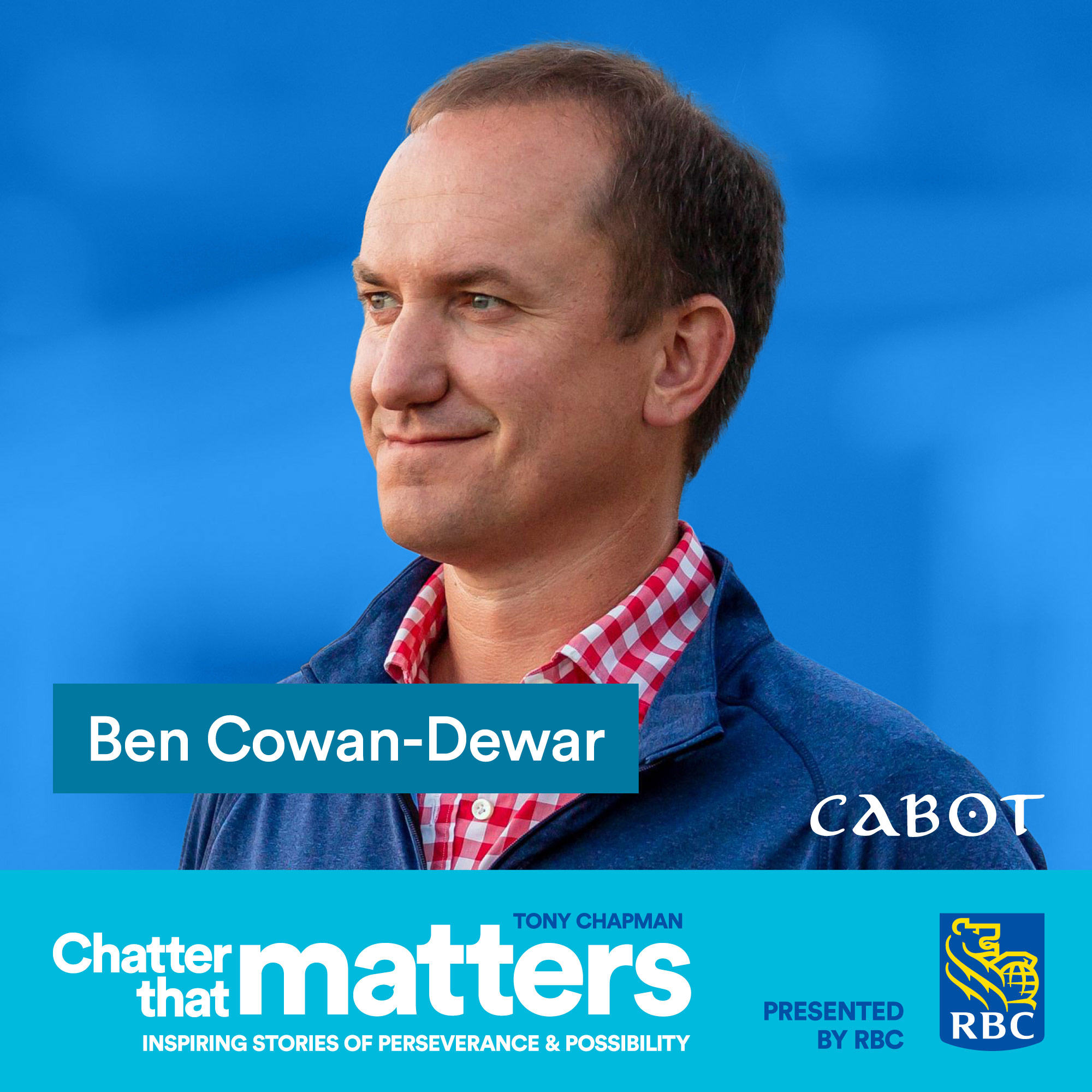
The speaker reflects on their advertising career, particularly the repositioning of Thomas Cook, emphasizing the transformative nature of tourism on economies and communities worldwide. They advocate for Canada to embrace its potential as a top tourism destination by offering distinctive experiences. The narrative then shifts to the story of Ben Callandoer, who envisioned and developed renowned golf courses in Cape Breton, sparking economic growth and community development. Despite facing skepticism and challenges, Ben's perseverance and vision transformed the area, creating a thriving local economy and a sense of pride within the community. The dialogue underscores the intersection of nature, community, and tourism in creating sustainable and impactful ventures.
Transcription
8005 Words, 43697 Characters
(upbeat music)
Over the course of my advertising career,
I've had the privilege of working
with some fantastic brands.
I still do with chatter AI.
But if you ask me what's one that I hold so dear to my heart,
it was the global repositioning of Thomas Cook.
At the time, it was one of the world's
most respected names in tourism.
That assignment took me to London, England
every six weeks to work with their internal strategy team.
And what I learned has stayed with me ever since.
Tourism isn't just about travel,
it's about transformation, places, people, and of economies.
Tourism accounts for roughly 10%
of the world's global GDP and close to 9% of employment.
It attracts foreign capital and fuels entrepreneurship.
It breathes life into local economies.
It's one of those few industries
where creativity, culture, and commerce come together
to create something truly magical.
In Canada, with our natural beauty,
our three coastlines, our multicultural mosaic,
we have cities and eco and adventure tourism.
We have the second largest landmass in the world.
We have everything it takes not to just grow tourism,
but to become a superpower.
But here's the thing,
we need to stop thinking of Canada
as just a place to visit.
We need to start positioning ourselves as the place to be.
What does that look like?
Well, it's the experiences that we offer
that no one else can.
Our true points have distinction.
And today's episode offers a perfect example.
I'd make the right turn at Truro
and head towards Cape Breton Island,
and without fail, every time I came on Cape Breton,
the sun came out.
I'd get to that site in Inverness,
and I'd smell the salt, and I'd see that landscape.
I knew there was nothing else I could do,
but move forward with it.
The Cabot Trail in Nova Scotia,
one of the most breathtaking drives on the planet,
carved in the cliffs,
kissed by ocean air,
and wrapped in history and heart.
It's already a destination.
But it was Ben Callandoer who saw something more.
I think that's what the great golf architects
are really doing,
figuring out how you interact with this landscape
and move through it.
People would say it was magical.
Ben envisioned a field of dreams along this iconic trail,
not for baseball, but for golf.
And in doing so, he created not just one,
but two world-renowned courses
that now draw visitors from every corner of the globe.
And more than that, he sparked a movement,
a local economy, a community,
a reason for young people to stay,
and a reason for people to come back.
He created the reason to be and the reason to believe.
In this episode, you'll hear how it all came together
and why Ben so deeply believes in the power of place
to build economic prosperity.
This is a story of vision, of perseverance,
and what's possible when we dare to imagine
Canada not as a stop in someone's itinerary,
but where memories last a lifetime.
- Hi, it's Tony Chapman.
Thank you for listening to Chatter That Matters
presented by RBC.
If you can, please subscribe to the podcast
and ratings reviews while they're always welcome
and they're always appreciated.
Ben Callandoer, welcome to Chatter That Matters.
- Hi, Tony, it's great to be with you.
- I always start with sort of, how did this all begin?
And I understand your childhood in Kingston, Ontario,
playing something like a hundred holes of golf a day
without a soundtrack, but just tell me a little bit
about how you fell in love with golf.
- I fell hard for golf at a young age
and we lived on a family farm
that my mom still lives on.
We weren't farmers, but as any natural 10-year-old
with a little bit of land would do,
I thought I would go out and play golf in my yard
and that led me to building a golf hole
which my dad helped me with
and I had a 200-yard par three that had 70s
that I used to mow and a really deep bunker.
It gave me a lot of joy as a kid
and I was a member at a wonderful little course
and 12 years old getting dropped off.
First thing in the morning on my dad's way
to work with one of my great pals
and going and playing as much golf as we could
and that was my summer camp.
- And, you know, the game gives you so much
and teaches you so much, but it teaches you patience,
it teaches you manners, it teaches you how to treat people
and I read golf books.
I was a little bit of a golf nerd
and really didn't have a choice but to do this, I guess.
- Crow flight closed second hand.
My dad brought home for my birthday.
We played for the first year
in the field behind our high school.
We made three holes and then we graduated
at Durval Golf Club, a nine-holer
and I remember the first time walking on
and just being mesmerized by the whole experience.
Just curious, your first impression
when you left that hole that you built in your farm
and showed up in a golf course.
Do you remember that?
Do you recall that first moment, the smells, the feels
and what was it like?
- You know, and it's funny.
I mean, growing up in the Kingston area,
the golf was not downtown Toronto
and you know, sort of private clubs.
It was rough and tumble and I remember going on Easter
and being allowed to play and I was 10
and it was soggy and wet as it always was in Eastern Ontario
if you played golf in April and it just didn't matter.
I mean, I literally, and I'd watch golf on TV
on the weekends and I'd draw golf holes.
It's just, you know, I'd drive by golf holes
and be craning my neck up the window
and I remember watching the Masters in 1986
and Jack Necklace winning.
You could only get updates on what happened at the Masters
on CBS at 11.35 just before the late show
and they would come on and they would have sort of
the highlights of what happened that day.
And, you know, as a young kid, I would set my alarm
and wake up at 11.33 and run downstairs
and watch the highlights then go back to bed.
So, you know, I mean, it was magical.
- What do you think it is about golf
that has that bag or vance mentality
where we actually know who designed the courses
and we almost walk in their footsteps at times.
Like I don't know who designed Wimbledon as a stadium
and I don't drive that deep in any other sport but golf
somehow seems to knit this conversation with nature
and this sense of sport.
- Well, I mean, it's amazing, right?
Because if you think about it,
so the world's top 100 golf courses
and, you know, the first rankings of golf
were actually in the late '60s by golf digest,
maybe the early '70s and it was the toughest courses.
It was about what were the hardest golf courses
and that evolved into ranking of one of the best golf courses.
But if you think about what are the best tennis courts
and Wimbledon is just an ethereal experience.
Tennis courts by their very nature are uniform
and so, you know, traveling to one country
or another to play tennis, you know,
you might get some variation of grass or clay
but if you look at the best golf courses around the world,
there's so much at their core reflections
of the places they are and whether that is St. Andrews
or Cyprus Point or Royal Melbourne,
they shine through the landscape and the place.
The best golf architects are really artists
and I think that's why you remember them
and so I sort of think of it like sculpture, right?
And so if you think about Michelangelo and David,
you know, to start with that big piece of marble
and to end with that and to get the proportions right
and to understand the beauty,
I think that's what the great golf architects are really doing
is they're sort of figuring out how you interact
with this landscape and move through it
and we've been so blessed to work with the best
and in stunning landscapes.
And, you know, when we started to see the early guest reviews
and Kate Bratton and people would say, it was magical.
And I thought, that's what I want to do
for the rest of my life.
I want to give people that day in their life
that, you know, is so resonant and special for them.
- When I opened the show,
I talked about the holy grail of life
as you can find passion, pursuit and purpose
and if they all come together,
I mean, that is one of the great gifts of a life well spent.
When I listened to your interviews
and you just see the way you just talked about,
I want to bring that magic every day to people.
How do you think you stumbled on that?
- You know, my mom, who's a family doctor,
still practicing at 75 in Eastern Ontario
and an amazing exemplar and a dad
who really fostered my love of golf.
And so my mom tells the story of obviously being a young woman
and growing up in Toronto and having a dad
who told her she could do anything.
And so she believed that and went off
to Queens Medical School in the '70s
and would have been one of a handful of women in her class.
You know, they gave me that when I was in university
and it was basically the beginning of the internet
and I'd started a golf travel business
and the internet was so rudimentary in those days.
I think it was me and the handful of other people on it
and took it and said, "Oh, I'm going to do
golf marketing and golf tours
and I'm going to do digital photography."
And it got me around the world
and I got to play most of the world's great golf courses
sort of shockingly by the time I was 24.
I was doing this while going to U of T.
You know, I just knew at that point,
I just had to get going.
And as a kid who grew up in rural Ontario,
the thought of being able to set out around the world,
see amazing places and particularly see amazing places
through golf really propelled me forward.
I always say, you know, with golf,
if I wanted to have lunch with a bank CEO four times a year,
you know, everybody would say good luck.
But if you get to play golf with them,
you form a far deeper relationship.
You know, you sort of learn about people,
you learn about their family,
you watch how they interact with service staff.
If you're lucky enough to have a caddy,
how they treat their caddies,
you watch how they act when they hit a bad shot.
Do they take themselves too seriously?
And my grandfather was great.
Always said, no one cares what you score.
Everyone would care if you cheated.
And if you cheated at golf, which we do for fun,
imagine what you would do in the rest of your life.
Those life rules were probably all the foundational pieces
that set me up to pursue a career and a passion.
And you're absolutely right.
I mean, we're 20 years and a month after
I visited Kate Bretton for the first time.
But when I came back from that,
I had a girlfriend who would then become my wife
and two parents who all told me
they thought it was a really good idea.
So I blame the three of them for everything that came after it.
We look at Kate Bretton now and we realize
that you've created something that roars around the world.
Yet it wasn't a skip in the park.
I mean, you had to deal with a lot of initial skepticism
from the local community.
You had to deal with a lot of bureaucracy.
How does someone that obviously has an appetite for life
and getting on with life at a young age,
playing some of the greatest golf courses in the world,
how do you suddenly find patience at a young age
to see something through versus,
"God, this isn't worth it.
I'm gonna move on to something else."
- You know, Ben Hogan, the great golfer,
famously said the harder I worked, the luckier I'd get.
I was so lucky.
I was at a dinner in Toronto.
I got seated next to Rodney McDonald,
who was then a young MLA from Inverness
and a minister of tourism who would go on
to become a premier of Nova Scotia.
But Rodney was talking my ear off
about this site for golf in his home riding.
And I joked with him.
I said, "Minister of every farmer with 200 acres,
since they have the next great site for golf."
But they had this site that they had been as a town
dreaming of golf as far back as 1969.
And they'd worked tirelessly at it.
Jack Nicklaus had done a routing plan.
Mike Herdson, who'd done Devil's Pulpit and Paintbrush,
had said it was one of the 50 greatest sites
left for golf in the world.
And so they'd had all of these attempts
of trying to get this golf course off the ground.
Rodney followed up and he sent me photos.
And I went and saw it on a December day in 2004.
And so I didn't have patience.
I think I had youthful naivety and rose-colored glasses.
But again, I'd seen enough of the world's great golf courses
that I saw the land on a December day
and it was beautiful and the sun was out.
And I sort of thought it might be playing golf
up till Christmas.
And these town fathers and they were all men greeted me.
And it was the superintendent of education,
the dentist, the high school principal.
All of these people had watched the decline of their town
from 1953 when the coal mines closed to 2004.
Inverness was a mining community.
It started in 1880 and went till the '50s.
And at the peak, it was 10,000 people.
When I got there, it was 1,200.
Unemployment was extraordinarily high
and it was a community that had certainly seen better days.
And I think these people just had a passion and a belief
that this land that had been their coal mine,
not an open pit, it had shafts that went down 300 feet
and a mile out onto the ocean floor.
And when you think about that ending 70 years ago
and what it would have cost people
in terms of their lives to mine coal,
you felt an acute responsibility
to the place and the town to do a great job.
And so there were lots of skeptics
and I remember one fellow that I met and I said,
"What do you think of that golf course in my first visit?"
So that'll never happen.
Change has been a bad thing.
It's been about losing things.
It's been about losing children.
It's been about losing industry.
What I encountered in Toronto, which was home at that point,
was people who would tell a young entrepreneur hateful things.
Like, "That's a terrible idea."
And just absolutely brutal things.
You're out of your mind, "Why do you think you could do this?
How do you think you could ever pull this off?"
And in hindsight, it was probably all really good points
which were, you know, people would say,
"Are you a golf prod?"
I'd say, "Now, are you an architect?
Now, are you a construction person?
Now, have you ever worked in a hotel?"
Nope. And so, you know,
that does seem like an unlikely set of things,
but I think that with positivity
and if you're lucky enough to find purpose
and you can work your tail off,
I think the nicest thing, you know, you could say
is people outwork their peers.
I outwork my peers.
Did you ever feel an imposter?
I mean, your young kid, the town elders coming out
and desperately trying to find a way to, you know,
reinvent, re-establish this home?
You must have felt like they're going to see through me.
Totally. Every day, I was also, I was 25.
I felt like I was about 45 when I was 25
and I was desperate to act like it
'cause I didn't want them to say no to me,
but they were clearly in a place of desperation
to trust me who had a little bit of money and a big dream.
But I think I could so clearly articulate
and I had seen it.
I'd been to Scotland and I'd been to Ireland
and I'd been to Band and Dune.
And I had slide shows.
I mean, back when you had a slide projector,
I would, you know, show them and I'd say,
"We can build this here and I believe I can do it."
You know, I'd grown up in rural Canada
and so I knew rural people and it's, you know,
you just have to build trust and I was one
and I showed up and, you know,
some of the entrepreneurial constructs,
like doing what you say you're going to do
and you say you're going to do it.
I didn't know that then, but I knew it intuitively
that that's what you had to do to build trust.
And so I think I did that and built on it brick by brick.
Did you ever want to quit?
Did you ever have a point of it where you went,
"Oh my God, this is just, I've bitten off way more than..."
- Yeah, I used to feel it pretty frequently.
The fear and self-loathing of an entrepreneur,
particularly a young entrepreneur, is an enduring thing.
I was in a business that was get rich very, very slow,
if ever at all.
It wasn't, you know, sort of a tech business
that you were trying to scale and, you know,
and again, this was around the dot-com boom.
So, you know, you watched entrepreneurs
going in that direction and you could have thought,
"God, I was really on the wrong track."
And I did think that.
And it was so hard and it was met with a lot of resistance
on a lot of different fronts.
And so I used to leave Toronto and I'd fly to Halifax
and there was no parkade across from the terminal.
It was just a big, open parking lot.
And I was renting with Budget,
who was at the farthest corner
'cause they were the cheapest.
And every single time I landed in Halifax,
it was pouring rain, just pouring.
So I'd get in my rental car,
drenched and drive 316 kilometres up to Inverness.
And I literally would just think I'm sinking everything,
you know, all of the savings I'd made in my business
in those early days from the golf travel business.
I was plowing into this to try and make this green come true.
I just would feel like I can't do this.
I've got to stop doing it.
And I'd make the right turn at Truro
and head towards Cape Breton Island.
And without fail, every time I came on Cape Breton,
the sun came out.
I'd get to that site in Inverness
and I'd smell the salt and I'd see that landscape.
I knew there was nothing else I could do
but move forward with it.
- You know, you talked about creating that magic
for the golfer.
How does it feel to also create the magic for a community?
I don't mean it, you know, giving you the wand
that you're suddenly Gandalf,
but it must be something of immense pride
that this town has now got a new lighthouse.
It has nothing to do with coal.
It has everything to do with its beauty.
- Well, I think it's not why I did it, you know,
20 years ago and it's entirely why I do it 20 years later.
And I think we've had so many wonderful stories.
The primary school filling up and split classes
in a rural community of the tax-based point
from one of the lowest in the municipality
to one of the highest.
You know, young men having to leave and go to Alberta
to support their families and mothers raising
their children alone to people being able to stay home
and find a community or repatriate to Nova Scotia.
And so those are the magical stories.
And I think if you look at the reviews
we've had out of Citrus Farms in Florida,
which we opened a couple of weeks ago
and some notes I had this morning from groups
that were in St. Lucie last week,
they talk so much about the beauty of the places,
but they quickly go to the magic of the people
and the service, building a culture
that people are loyal to and that they care about
has really been what the success in Cape Breton
has been about.
And as you know, hundreds of people cash a paycheck,
you know, that has a whole series of rewards.
And I think, you know, it changes your outlook
on, you know, people who are down on rural Canada.
- How do you reconcile today?
I mean, you've got this conversation with golfers.
You want to create an experience.
You have to have this conversation with nature
because you're building the golf course
as part of mother nature.
And this conversation with the community,
do they always reconcile or is it a constant battle
to sort of trade each other off
so that you're creating something
that meets everybody's needs?
- It was a battle earlier on.
It is now not for a bunch of reasons.
Mostly we have an unbelievable track record
and, you know, we have the only platinum certification
by the Audubon Society on, you know, sort of for golf courses.
And I think that wasn't a reason we set out to 15,
20 years ago of saying we wanted to be environmentally
sustainable.
That was a key pillar of it.
It just felt like common sense.
And St. Andrews, which is my favorite exemplar,
which is 500 years old in Scotland,
has coexisted in a community, a university town,
and, you know, the original magical place in golf
for 500 years, and Royal Dornock has been a part
of its community's fabric for 400 years.
And so if you think about that, you know,
you wouldn't if you're in St. Andrews
poising the water table in a community
that everybody who works for you
and that you need the support of those folks would do it
and you wouldn't treat your community shoddily
and you can't pick up and leave, you know,
to another country and open a call center.
You're there and you're there for good.
And if I think about part of what we were building
were things that stood the test of time.
And while I don't know what retail will look like
on Bloor Street in, you know, five years,
I know that Pebble Beach will still be amazing
and Bamp Springs will be amazing
and St. Andrews will be there calling people
from all over the world to go and see it.
So I think it's gotten a lot easier,
but yeah, it was incredibly hard in those early days.
- We're not just providing money, you know,
we're there to support community initiatives.
Our team members sit on local chambers,
immigration settlement agencies,
schools and sport committees, you know,
they're active participants in the growth
of these rural communities and it matters.
- Those are the words of Chris Ronald,
who's the president of RBC and the Atlantic.
And he'll talk about why the Atlantic provinces
is such a special place to live, to visit, to dream and to do.
We come back, I ask Ben,
a question I ask any successful entrepreneur.
Your dream has now become big.
How do you hold on to what matters most?
How do you keep the heart of your culture beating strong?
- Hi, it's Tony Chapman.
RBC has been a longstanding supporter of golf
in both Canada and the United States
through their title sponsorship
with the PGA Tourist RBC Canadian Open
and RBC's Heritage Tournament,
as well as key partnerships
with the Heritage Classic Foundation Golf Canada
and the PGA of Canada.
Combined, RBC golf tournaments have raised over $35 million
to help communities thrive.
But did you know about RBC Community Junior Golf?
This is an initiative led by RBC
in partnership with Golf Canada
that's building greater diversity in equity and golf
by providing affordable access for youth
from equity-deserving communities across Canada.
To date, RBC Community Junior Golf
has engaged more than 20,000 youth participants
by providing first-tea programming at no cost
and subsidizing green fees through youth on course.
Who knows, one of those kids might be the next Nick Taylor.
- For the eagle, for the win, to the cup, to the gun!
(crowd cheering)
- The trend is over, the trend is over!
Nick Taylor with the eagle, the 2023 RBC Canadian Open champion!
He's an icon now in this country!
- Supporting Canadian youth,
well, that matters to you, to me, and to RBC.
- Buffett's quote, the greatest luxury
is to do what you love with people you love doing it with.
And I've been blessed to do that every day of my working life.
To me, work is an extension of my life
and it's grown up around my three children
and that is, you know, just so fortunate.
- My guest today is Ben Callendur, a Canadian
who's making his mark globally with his Cabot brand.
Why?
Because he sees golf courses as more than a place to play,
but a place to be.
Be with each other, be with mother nature,
and be with the community.
Obviously you've got a brand now
that you're stretching across a number of sites,
but it's also you as the individual.
I mean, talking to Kim Mason at RBC, Clive Collier,
people that know you and just talk about
who you are and your values,
how do you make sure that continues to cascade
across your organization as well?
Because as you get bigger,
it becomes less about the heart
at times and more about the machine.
So how do you make sure that machine continues
to have a lot of Ben inside it?
- To do it and to do anything at scale,
which obviously we've done now, it isn't about me,
it's entirely about the team.
And it was about the golf course architects
and all of the people.
And we build a culture that people are loyal to.
And so last week in St. Lucia,
I saw a team of people have been making that project happen.
And including Andrew Alcambreck,
who was a friend from childhood,
who was my original GM and Kate Bretton,
who I've gotten to work with for almost 14 years
and his wife, who was my original CFO
and Kate Bretton, who they're now
with their two little kids down in St. Lucia.
And we built an amazing team in Toronto
that support these properties.
And we have amazing people at the properties.
And I think we view it as these places
should shine through the places they are.
And so the number of St. Lucia's,
who we've created opportunities,
and I think we'll create jump off opportunities
to go to other properties.
And we have a project in the north of Norway,
which is amazing.
And the superintendent there is an Irishman,
who's just a phenomenal guy,
who's working in St. Lucia this winter.
It's, there's no golf in the Arctic Circle
this time of year.
And we have some of our really young bright lights
from Kate Bretton over in Bordeaux, France,
where we've done it.
So I think it's cross pollinating it.
And I have a poster on my wall,
which I've had for a long time
that says work hard and be nice to people.
But I think one of the things for me
is it's important to get to those properties.
And when you see a service culture
that is so rooted in kindness,
in the early days of Kate Bretton,
we couldn't have had a kinder team.
And we had a woman, Alan,
who had retired from cutting hair
and came back to help us.
I mean, we needed all the help we could get.
Our first 32 caddies had university degrees.
And, you know, Vince, who was the dentist in town,
would caddy on his off day just to help us out.
We had a gentleman who had a sword back
and he was looking for Advil.
We didn't sell it in the pro shops we do now.
But she drove across town to the pharmacy
and bought it and gave it to him.
And he said, "I'm gonna pay."
She's like, "No, no, no, that's okay."
That was just the service that we had from the beginning.
A woman who came in and saw Wendy
and was just a brilliant woman
who worked with us for many years
and said, "Oh, I love that shirt."
And it was last year, we didn't have the model
and then Wendy literally gave her the shirt.
Building that culture in Kate Bretton,
that really was the foundation.
And so when you look, you know,
at an overnight success that's taken me over 20 years,
it's built on a foundation that was Kate Bretton.
One of the things that we can do
when we acquire something in Bordeaux
is get our GM there, Vincent, to come over to Kate Bretton.
That's a really, really, really positive
and impactful thing that we've just made
a huge part of our onboarding process.
- You talk about these values and the sense of,
I would say almost simplifying business
to bring it back to humanity.
Put the person back in the brand personality.
How does that play when you talked about earlier,
that fear and self-loathing that people have
with entrepreneurs?
When they say, "You know, Ben, you're looking for capital,
"now it must be a lot easier."
But back then, yeah, that's all great,
but show me the profit.
Let me see the spreadsheet.
What's the bottom line like?
How do you reconcile the language they want to speak?
Or do you just find capital partners
that understand that heart matters
as much as the head and the hands?
- You know, Mike Teiser had built Band and Dunes in Oregon,
which was really my exemplar,
a golf resort on the southern coast of Oregon
and that community that, you know,
I'd seen mining and logging pass it by,
and it was just an absolute international success.
And in many ways, Mike was like a second father,
and I sort of met him at the right time in my life
where I needed to mentor and I needed someone
who would give me all the help in the world.
He knew the model and knew what success was,
and he bet on young people and sort of gave them a shot,
and he gave me an enormous opportunity
with probably a belief the downside risk wasn't that great,
and the original investment, you know,
was relatively modest.
And then as we had success, you know,
he found those flames, you know,
pushed me to dream bigger,
and I have five good ideas and 10 bad ones
before I fall out of bed in the morning.
So I think it wasn't a problem of ambition or dreaming.
I think it was just really learning
all of those pieces along the way,
and we have several families, mostly Canadian.
Mike, with my original capital, was an American,
but the rest of the families who've invested with us
have been Canadian, and I think they believe
in the long-term nature of it,
and it was extraordinarily hard.
Early on, a young entrepreneur can underestimate it.
Like, it's just a real grind.
It's just very, very, very, very, very difficult.
If you do it, and then you have the success,
and then you have the spreadsheets
that you can point to, the track record of it,
and I think it's also your network.
It's your knowledge.
It's how many situations you've been in.
So when you hit a crisis,
and I was in the travel business as a, you know,
22-year-old when 9/11 hit,
which was catastrophic in the financial crisis,
almost ended Cabot.
Okay, Bretton, we'd started construction
in the summer of '08.
We were one of only four golf courses
under construction in '09, and then COVID hits,
and, you know, I couldn't have thought of,
like, 2019 was a record year in Cape Bretton.
What in the world could possibly derail 2020?
And over 20 years, you learn how to deal with adversity,
and you have more people.
You have a better team.
You've got more knowledge.
You understand what believers do,
and so I think your knowledge, your network,
your team compound in the same way,
and so the longer you stick with it,
it sort of feels like you start to get a feel for it.
You know, I think what we're seeing in the world right now
is a lot of divide,
and at the same time might be a rallying point for Canada
to start really thinking about making our destiny
a matter of choice, not chance.
And tourism's a key component.
What advice would you give to the public sector?
What advice would you give to the tourism industry
in terms of leading with our best foot forward?
I've had to deal with government a lot
throughout all 20 years of doing what we do.
We touch a lot of different departments,
and you know, you learn a lot about the bureaucracy,
and that there are great people
who can be convinced of great ideas,
and you learn that their downside risk
for something going wrong is they're fired,
and their upside risk is not correlated to success.
They rarely even get a job well done,
and that makes it tough.
In the tourism file,
we have a brand that is one of the top three in the world
as a tourism destination.
Tourism is an unbelievable lead precursor
to people visiting a place
and then deciding to immigrate to it.
I think it's interesting as we see, you know,
tariff week and a week dollar,
this is the most unbelievable opportunity
to welcome Americans, our other relatives really,
you know, our cousins, aunts, uncles, neighbors
from the United States into Canada.
You reinforce with the Americans that we are your friends,
and we've been great friends,
and you know, sometimes in friendships and relationships,
there are ebbs and flows.
But I think that's one of the most potent things,
and I think people don't get tourism credit.
As an industry, you know, the bureaucracy probably knows it.
The politicians don't really care about it.
It gets so much less support than any other sector.
I used to, in Nova Scotia, say it employed more people
than forestry, and everybody would say no,
and I'd say un-mining, no way, agriculture too, no way,
and fishing, no, that was always the one.
But it was actually more than all four
of those industries combined,
and you had to say it again and again to reiterate
that it's so important,
and it works in the rural communities of this country,
and it carries forward our brand,
and it gives people an unbelievable ladder out of inequality
in a first-time job.
I'm not picking on other industries,
but I had somebody say, you know,
tourism needs to stand on its own more.
I said stand on its own, it's all it's done.
You know, what is the farm credit balance sheet?
Is agriculture having trouble getting financed by banks?
I don't think so.
You know, there's private equity in that space.
We have, you know, a banking system that, you know,
is not a huge supporter of tourism,
hasn't been traditionally.
You don't have farm credit equivalent with billions
of dollars on a federal government balance sheet
of our taxpayer dollars supporting tourism growth
initiatives, and most of the tourism product
that's been built in this country
was built around the railway, Bamp Springs, Jasper Park.
All of those great places, you know,
I don't think there's an asset in the country
that's done more for the country's fabric and brand
than the Bamp Springs Hotel and Bamp National Park.
I was in the US and in the Caribbean twice the last two weeks.
I had three people say I'd been to Bamp from the last year.
What a beautiful place, what wonderful people.
This is an industry's just gotten a bad luck wrap
and we've got a number three brand
and a product that doesn't rival
what's happening out there in the world.
What do I say about that?
Is that a complaint?
No, it's an unbelievable opportunity.
We are investing heavily outside of Canada,
being based in Canada.
And what I'd say is whether it's in Florida,
in France, in Norway, in Scotland,
other places, you know, we'll hopefully see soon.
These places are dying to the investment
and it's an unbelievably capitol intensive business
that can't be picked up and moved.
Like to me, I'd be saying that sounds like
it's got a lot of attendance of success
and there's a lot of knock on effects
and it'll work in the rural community.
I just wish we were doing more to sand the flames
of people like that.
You know, Ben, I always end my podcast
with my three takeaways and I just want to go up front
and say I could do a series on what you have to offer
because I think tourism means the world to us.
I think what you've done with the circle economy
and the local community.
But I want to begin with the first one
is your comment about fear and loathing
and the sense of trying to pull people down
and trying to take the shining eyes
and the heartbeat away from entrepreneurs and ideas
at what cement is sadly, I think even more so in Canada
than in a lot of places in the world
that we somehow or other don't celebrate our successes.
We want Blackberry to fail.
We want, you know, roots to not succeed
versus celebrating the fact
that we've built these global brands.
Second thing is the word magic.
And I talk about the magic of, you know, your grandparent,
your parents, the magic of the sunshine showing up
every time you drew Kate Bretton and you wanted to quit.
You've just surrounded yourself with mentorship and love
and people to believe in you.
And I think when you chase purpose
and you chase positivity and possibility and passion,
you need to have that in your corner.
And I think it's a lesson in life for all of us
to surround yourself with people to believe in you
and want you to succeed versus want to hold you back
because maybe your eye shining and your heart beating
is something they either don't understand or are envious of.
And the last thing is the art of serendipity.
You know, the harder I work, the luckier I got.
You can have those passion pursuit,
but at the same time, it takes a lot of work
and it takes a lot of dedication.
As you said, my overnight success to 20 years,
so all of that more about, I just, you know,
I knew I was gonna enjoy this interview
'cause I love the game of golf and I love what you're doing,
but I don't even think this is about golf anymore.
This is about what the world needs.
- Guy Nicholson, who used to be an editor at the Globe Mail,
wrote a piece about Cabot Cliffs when it opened
and he said he was talking about the fabric of Kate Bretton
and Bill Kour, who's our wonderful golf course architect
with Ben Crenshaw, who we would get to work with again
and Saint Lucia said, you know,
this really is a celebration of Kate Bretton.
You know, it's about celebrating the special places
we have in this country and most importantly,
celebrating the people in those places
and I can't get a job doing anything else, Tony,
so I'm gonna get back to work and keep doing that.
- Joining me now is Chris Ronald.
He's a regional president for Atlantic Canada at RBC.
He's been on chatter that matters before.
What I'm particularly happy with is
after spending a couple of years
with his hand on the rudder of RBC's Caribbean operations,
he's finding his way back to Atlantic Canada
because this guy is an impact banker
and boy, the Canadians need to have people
that are capable of making an impact.
So Chris, that's quite an introduction
and welcome back to Chatted The Matters.
- Hi, Tony, you know, it's so great to be here
and as you know, I'm a huge fan of your work
and your podcast and in particular,
you know, your passion for a stronger Canada.
Chris, before I get into talking
about tourism and the circle economy,
what astonished me working with RBC
is how much you go beyond banking
and if you could just give me the highlight reel
of what RBC does to support the Atlantic provinces,
I think it's knowledge that's not readily known
but should be known.
- I'll start with employment.
You know, RBC would be one of the larger employees
in the region, especially when you take into account.
We've got 1,200 people that work
in the RBC Innovation Hub in Bedford,
so that's outside of our main business here
in branch and commercial banking.
You know, and then RBC pays its fair share of taxes,
you know, as we should,
which supports federal, provincial
and local municipal governments.
You know, then I think of the local
not-for-profit community organizations,
many of which we support, you know,
as do other financial institutions.
You know, for RBC last year,
we gave, you know, $5.4 million in donations,
$500,000 in regional sponsorships,
and then add almost a $700,000
in community-to-yether grants
that RBC gives to its employees
for them to give to support the charities
that are near and dear to their hearts.
It's not just about the money,
it's the hours our employees spend
in volunteering at these same organizations
that is equally important.
You know, we are one of the largest,
if not the largest,
financiers of small, medium
and large businesses in this region
and across Canada for that matter.
You know, it's because of that,
you know, we've got the privilege
of dealing with many tourism operators,
merchants, restaurants, service providers,
and we're providing them with the advice
to help them start, run, and expand their operations.
- I wanna now talk about tourism
and the circle economy.
Build it and they will come.
It's not just tourism, it's other industry.
It's young people staying
because of purpose and possibility.
Is that something that you're seeing in the East Coast?
And if so, what does an entity like RBC do
to add sort of that passion to that fire,
capital to that fire?
- You know, I think it starts with our people.
Local matters, they're part of the community
and they're there to support individuals and businesses.
And knowing the community
and being part of the community,
I believe is really key, you know?
And I'll give you an example.
So we've got a branch in West Pubnico
and West Pubnico is a small community
at the Southwestern tip of Nova Scotia.
You know, it's got one of the largest commercial fishing fleets
in Atlantic Canada.
And the fact that RBC is there supporting these clients
and the fishing industry matters.
You know, we know them
and the uniqueness of their industry.
And I was there two weeks ago
and the clients told me exactly that.
You know, the advice we provide,
I believe it's second to none.
You know, we hire the best
and their goal is to really know their clients.
We're hearing good times
and more importantly in tough times
to help our clients turn their ideas into reality,
whether that's saving for retirement,
putting their kids through school,
taking a bucket list trip,
or as you, you know, talked about helping them start,
run or expand their businesses.
- And talk to me about this sense of place,
this beautiful landscape called Eastern Canada.
It's gonna have a magnetic force.
It's gonna attract others.
It's not just the question of,
can I make money on a golf course
or make money on an end?
Can this end support regenerative farming?
Can this golf course support the tourism schools?
Canada's future might not be trying
to solve everything at once,
but creating a series of places across Canada
that in fact, when they start resonating,
what it does is starts revitalizing our economy.
- I've been in and pronounced Nova Scotia.
I believe that Ben has, has created magic there.
You know, it's one of my favorite places on earth.
One of the top golf experiences worldwide,
creating a destination where people want to come
and people want to grow their economies,
bring their businesses from a tourism perspective.
You know, it is the seeds that is generating
more and more economic growth, took risks.
You know, risks that many would have said
that wouldn't have been successful.
Those seeds are showing that entrepreneurs can,
and you know, RBC, the fact that we are
in many of these small communities,
we have the opportunity to end up taking these seeds
and helping these customers grow with their ideas.
RBC has this campaign called Your Ideas Happen Here.
How open, honestly, is an organization the size of RBC
to having these entrepreneurs come in and going,
I have this idea that the dreams and imaginations
of Canadians are welcome when you walk through our doors.
- Ideas do happen here.
You know, I think right now, Atlantic Canada
is having its day.
People are choosing from all around the world
to come to Atlantic Canada.
What has impressed me the most of, you know,
coming back to Halifax is just the different languages
that are spoken on the boardwalk here in Halifax
that wouldn't have happened four, five, six years ago.
To make their dreams happen here,
help them start their businesses,
helping them find the home of their dreams.
And it's really exciting.
- I'm thrilled you're back there.
Hopefully you'll make your way back to Toronto this summer
and we can have a round of golf.
- I look forward to that, Tony.
Once again, a special thanks to RBC
for supporting Chata That Matters.
It's Tony Chapman.
Thanks for listening and let's chat soon.
Podcast Summary
Key Points:
The speaker discusses their career in advertising and highlights the global repositioning of Thomas Cook.
Tourism is emphasized as a transformative industry contributing significantly to the global economy.
The potential for Canada to position itself as a leading tourism destination is explored, focusing on unique experiences.
The story of Ben Callandoer and the development of world-renowned golf courses in Cape Breton is shared.
The challenges, perseverance, and impact on the local community are highlighted in the journey of creating the golf courses.
Summary:
The speaker reflects on their advertising career, particularly the repositioning of Thomas Cook, emphasizing the transformative nature of tourism on economies and communities worldwide. They advocate for Canada to embrace its potential as a top tourism destination by offering distinctive experiences. The narrative then shifts to the story of Ben Callandoer, who envisioned and developed renowned golf courses in Cape Breton, sparking economic growth and community development.
Despite facing skepticism and challenges, Ben's perseverance and vision transformed the area, creating a thriving local economy and a sense of pride within the community. The dialogue underscores the intersection of nature, community, and tourism in creating sustainable and impactful ventures.
FAQs
The global repositioning of Thomas Cook.
Tourism isn't just about travel, it's about transformation, places, people, and economies.
Roughly 10%.
Tourism.
He started playing golf at a young age on a family farm.
He felt like an imposter and faced self-doubt, but he persevered with youthful naivety and determination.
Chat with AI
Loading...
Pro features
Go deeper with this episode
Unlock creator-grade tools that turn any transcript into show notes and subtitle files.
 PodcastTranscript AI