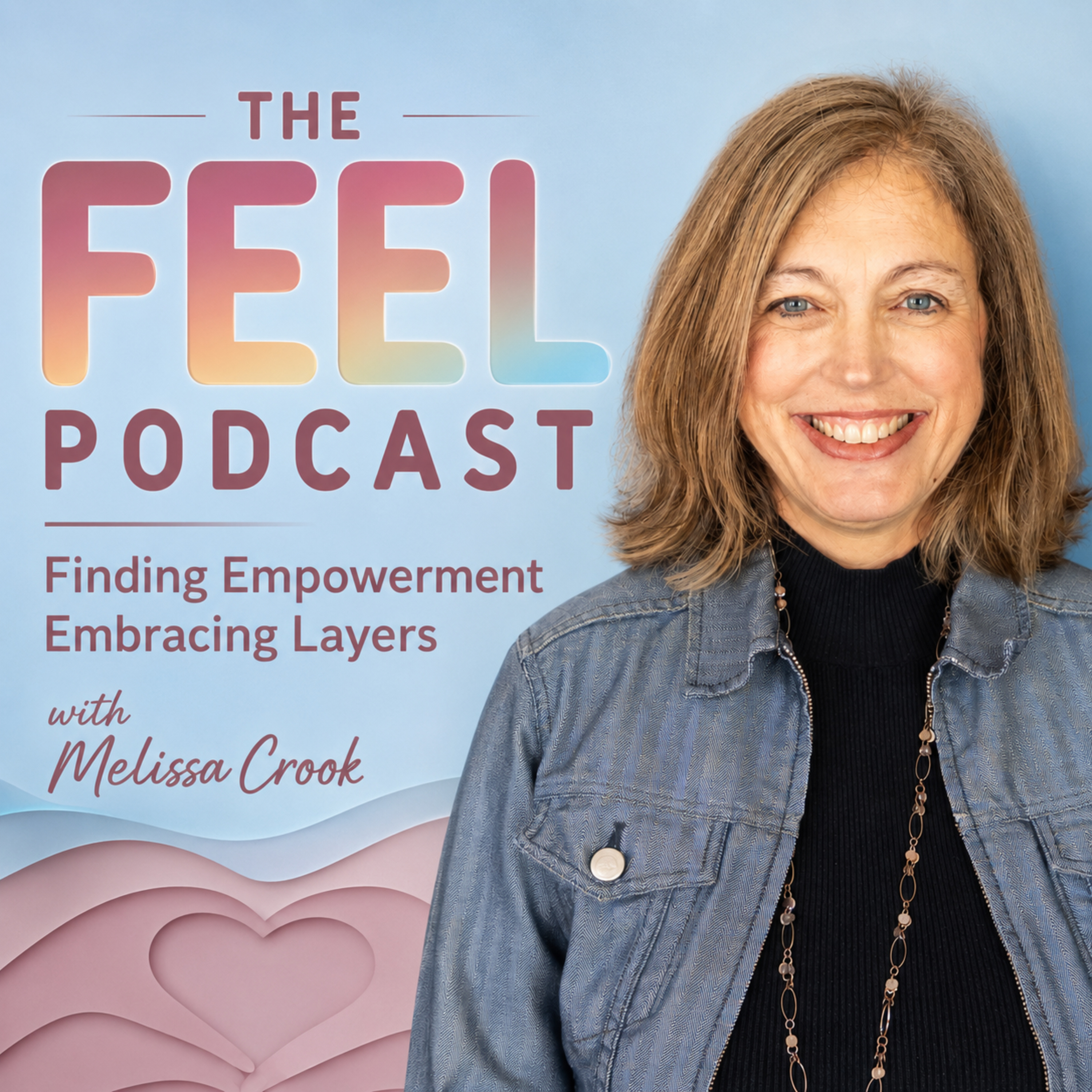
Become the Woman You're Meant to Be: How Your Core Values Shape Your Purpose with Eva Kennedy
from The FEEL Podcast: Women’s Empowerment, Emotional Wellness and Self-Leadership with Melissa Crook
53m 53s
Eva Kennedy shares her transformative journey from a 29-year corporate career to living in purpose, sparked by two breast cancer diagnoses. Initially, she was "married to her job" and never took time to understand herself, leading to exhaustion and suppression. After the second diagnosis, she accepted a buyout and gave herself permission to take five years off as a professional volunteer, intentionally avoiding the hamster wheel of immediate employment. During this time, she faced her emotions, realized she didn't know herself, and began seeking answers within rather than externally. A pivotal moment came when a still small voice asked, "What's important to you?" leading her to define and prioritize her top five values, which became her compass. This process taught her that life events can either define or refine us; she chose refinement, shifting from an external leader (corporate expectations) to an internal leader (her authentic self). Eva now coaches women, helping them embrace their layers, ask fundamental questions like "Who are you and what do you want?" and overcome suppression from past comments or societal norms. She emphasizes honesty with oneself and the importance of self-care, boundaries, and alignment, which naturally flow from knowing one's values. Her work, including summits and coaching, aims to guide women to live the life they want, showing up unapologetically and supporting others in doing the same. Ultimately, she believes everyone has the answers within, and her role is to help awaken them.
First of all, I wouldn't trade anything for my journey. And I'm not saying that my journey's been easy, but what I learned is that when I left that corporate job, I, number one, the job no longer served me, and I was being redirected. Far too often, when things happen in our lives, we tend to allow them to define us versus refining us. So this led me on a journey of being redirected so that I could step and live in my purpose. So now I make intentional decisions, because I know who I am. When I was in the corporate world to your point that hamster, I was performing. But now I get the opportunity to show up. You know, to really focus on the person with them, I call it my internal leader. And I'm guided by that versus my external leader, which was the corporate world, and making decisions and choices around what everyone else expected of me. Now I get to make decisions and choices based on my internal leader. Therefore, I am aligned with what I am called to do. So I've been refined versus defined. Welcome to the Field Podcasts week. I'm your host, Melissa Croak. I got a new friend here. She and I actually connected a while ago. And through both of our busy schedules are finally getting to bring her on here and have a conversation today here on the Field Podcast. And I'm so excited to share Eva Kennedy with you. She describes herself as someone who lives in her purpose. She's pursued that. She's very pursuant. She's a servant. She serves, especially women. She lives in that. She thrives in that. We're going to get to hear her story today through our talking points of how she got there. What her journey has been like and the resources that she has now available to women. And don't you worry, all those resources will be on our website at embracingleaders.com. But today we're going to get to know this woman. Eva, welcome to the Field Podcast. Thank you so much for having me. I'm so excited to be here. Thank you. I'm looking forward to this conversation and appreciate you very much in the work that you're doing. Thank you so much. Well, let's get right into it. Let's talk about your self-care journey. And I mean that really taking care of yourself, knowing your value, doing the things you need to do to fill your cup. And how that's unfolded, when you realized it was important, tell us your story within this talking point. Again, thank you so much for asking. You know, I worked in the corporate world for 29 years. Yeah. And I was married to my job. I've never been married. No children. So I was married to my job. And in 1998, I was diagnosed with breast cancer. Oh, wow. And I was blessed. Had to go through radiation treatment. And during that time, or back in those days, for me, I'd heard that if the cancer does not return within five years, you'll consider the survivor. Yeah. How long have you been to be a survivor? Oh, wow. Fifth year came. Had a mammogram in December. Everything looked fine. And about two or three months later, I felt a little-- it felt like a little pee or kernel of corn. In the same breast, fast forward, I'll fast forward quickly. And it turned out to be breast cancer. And when the doctor called, she said, my recommendation is that we removed the breast. Now, at that particular time, I said no way. Again, fast forward, I ended up having a mastectomy. And eventually, I left my corporate job because I had so many setbacks. And it was like, God was trying to tell me something. So when they offered a packet to a buyout to anyone, I took it. I had not planned on retiring, but I left. And then I became a professional volunteer for five years. I gave myself permission to take five years off so that I would not immediately start to look for something else. I became a professional volunteer. And then I had the feeling of being stuck in eight months. So I started praying and asking, God, what's my purpose? I knew there had to be more than my life. I knew there was more than my life. And I would run the lake front. And I would cry. And I would pray. But when I jog the lake front, the good thing is that I get clarity. And one day, that still small voice asked, "Eva, what's important to you?" I didn't know how to answer the question. I had to sit with it. And you talk about values. I am the values queen. So I sat myself down. Now, this is a process. Yeah. And I identified, defined, and prioritized my top five values. Melissa, what I have learned is most people cannot name the top five values in order priority. Yeah. And that started my journey. I've pursuing my purpose. I ended up in coaching school. And I'll share my top two values in order priority. That's my relationship with God and helping other people at that time. But now, I know is to create experiences and guide women to live the life they want. Yeah. Yeah. And this is evolved. I mean, you just had an event at the end of March, just about a month ago now, that you hosted there in Chicago. So this has become not just something you're passionate about, but something you've really put into action. You've been through so much the cancer diagnoses. My mother-in-law was one of those women who had cancer in probably the early-- late early '90s, late '80s, early '90s, was told the same thing, got the five-year clearance. And then 15 years later, there she was again. And this time she did have the mess like to me. So that can really jarrie, because that was the language at the time. She thought she was clear. She still went in, got the checks. But it really can set you on these trajectories and catch you off guard. And I think it was such a good lesson. And the interesting thing is it really does kind of rewire what you're thinking. Like, wait a minute. This clear, this guarantee that I was given is only as good as the science and the knowledge that they have. And also, at the end of the day, we don't know when our last minute or day is. Whatever time we have left, I think it's such a awakening to hold on a minute. I've had a couple of warning calls here in terms of things that have happened in my life. It seems like that, especially that second time around, it really got your attention. I love. This is self-care, giving yourself permission to take that intentional time off. That is an act of self-care. It's also a healthy boundary around, this is what I will and won't do in this time. I will, if myself, this space, I won't just jump back on the hamster wheel. I will be intentional. I will volunteer and give my time. And I will create and carve out. So it's such a great example of how self-care and boundaries coincide with each other when we're in touch with ourselves. Yes. And then when you go and name your values, and you're absolutely correct. I ask, this is one of the talking points, and we're going to revisit the values saying in depth here soon. When I ask women key questions before they get on with me, you know this already. I asked them to identify who they are, how they would describe themselves. We talk about values so many times, when I'm having those pre-meat conversations, they're like, well, let me ask so and so. I'm like, no, no, no, I don't want you to ask so and so. I want you to ask you. And there's, you know, simply that if you need to, think about that. But I want that to come from within you. You took the intention. And the beauty of that is it allows you to live out of those values. It allows you to know where it is you were intended to put your time. That it naturally creates boundaries for you, because you know where you will and won't give your time in space to. It naturally creates a self-care model, because you're giving to energy to things that you're aligned with.
So I think, yeah, I mean, I think that's such a beautiful day to day way. So many times we think about, and not that the surface things are an important like, you know, absolutely like I have my daily movement. I get my water. I do those things. Those are important things for me and moving my body and taking care of myself. Well, I feel myself mindfully with, with good food. And also I had defined my way to actually my day to day work being aligned with who I was. That in itself and the effect it has on your mental emotional physical health when you're living an alignment versus not. Talk to me about the difference from that corporate hamster, you, I call it the hamster wheel because you're just running. Of course, of course. Yes, versus where you are now and the impact that has had not only on your, you know, the values like really late, like I said, layout where the boundaries are and where you'll give your time. But talk to me about the impact it's had on your mental emotional physical, spiritual health. Wow. It is such a difference. And, and, and I'm not saying that my journey's been easy. But what I learned is that when I left that corporate job, I, number one, the job no longer served me and I was being redirected. Right? Far too often when things happen in our lives, we tend to allow them to define us versus refining us. So now I make intentional decisions because I know who I am. Hmm. You know, to really focus on the person with them. I call it my internal leader. And I'm guided by that, which is my external leader, which was the corporate world and making decisions and choices around what everyone else expected of me. Oh, that is such. I love the way you put that. I haven't heard that before in that context. And that is such a great way. It's like what, you know, we, there's so many narratives floating out around us in the world that we start hearing when we're very young, that we hear once we get into certain spaces. And we're constantly, I feel like, especially in the US, we're constantly chasing that thing that's supposed to be the thing that brings us all this happiness. And we don't stop to consider these questions that you've asked yourself. When the hard thing happens, am I going to allow it to refine me or deify me? Am I going to stop and, you know, ask myself, what are my values? What do I care about and give it all this time? I'm having these outcomes in my health that aren't good for me. What do I, where do I need to shift? And you really took that intentional time to shift. What did you, in the five years that you were working volunteer, which is super intentional time. And I know a lot of volunteers, I worked in nonprofits that give as much or more time as a volunteer than they ever did to their jobs and but they're passionate about it. They want to be there. It energizes them. What did you learn about yourself in that five years? I mean, you've talked about the values, but what are some other key things you learned about yourself? Well, first of all, I didn't even know who I was. Because think about it. You leave home, you go to school, you leave school, you get a job, you go into debt, you pursue a career. That's it. You call it the hamster wheel. So you really don't take time to think about who you are and what you want for yourself. You just said it. We take on the role the world put on us family friends. Right. They define who we are and what we should do. And that's how we live our lives. Yeah. So when I left the corporate world, first of all, I was exhausted. I was mentally, physically exhausted because I had working all of my life. And then, you know, having that second bout with cancer and never dealing with it emotionally. Because most of us do women suppressing our feelings. We can handle it. We can handle it. So what I learned about myself is that I did not know who myself, who I didn't know myself at all. Yeah. And here's the here's the thing. When I started seeking my purpose, I was looking outside for all the answers. I'm looking, I'm listening to people. Maybe I'll hear something here. I'll go to this event when I had all the answers within me. Yeah. And we learned, or I started to learn it was the process of beginning to learn that everything I needed and wanted was within me, not externally. So I learned to start looking within. That was the beginning of the process that led me to my values, that led me to my purpose. What's to look within? Yeah. That looking within piece, I talk about this a lot. When I work with women, you know, you're going to hear it in different, at a different order today. But I actually wanted my last talking points that will get to his embracing your layers. I start there when I'm working, when I'm speaking, when I'm working in one on one sessions, when I'm doing workshops, we start with that piece because it's by learning and getting to know your layers, recognizing what it is you have and haven't processed. What have you stepped? Who are you? Has anybody ever asked you what you want or have you just jumped on well-intended people in our lives? You know, setting a trajectory for us that they believe will be healthiest and best for us. That many times don't stop and ask, how is this feel for you? Does this feel like something you really want to do? And so we're left, we get into adulthood in a different spaces. All of a sudden, we get into the same lab, hold on a minute. I've never stopped to consider if this is what I actually want to be doing. If this is who I am and how I want to be spending my time, then it requires you looking within. I love what you said. It is so true. We have it all within us already, but we weren't necessarily taught to tap into that first. And you know, and that is the key to getting to know who you are is understanding, embracing all the pieces and parts of your story, accepting them. You don't have to love them all, but a healthy acknowledgement of them. Then that leads you down the road of asking those important questions. What what fills my cup? What nourishes me? What lights me up to get up in the morning? Who do I? And what do I care about? What what fills my cup and my resources? And how do I want to feel? I mean, those key things then lead you. That's all interconnected. But it you can't get there with you. Don't sit with yourself long enough to start asking yourself. Sometimes can be difficult questions. We don't like sitting in the quiet because the noise comes up of what it is. Maybe we haven't dealt with yet or haven't asked ourselves. Yeah. And that's why it's so important. The work that you're doing, having these conversations because so many of us want to make changes in our lives. So many of us are stuck. And we want to move forward. We just don't know how. So having needs type of conversations. We need to have more of them. And we're having more of them now than ever before because there are so many women that feel they're not worthy. They're afraid. They're still seeking validation from others. They don't know how to deal with their emotions. Their emotions are choking them. Yeah. Yeah. So and they're carrying the load for everyone else. And they just don't know how to tap into the person with them to even start. Well, and that you hit it. That is what drove me to start these conversations. I got to age 50. I hit my own wall and I realized we have to start talking about these things for ourselves and our own well-being. And also for the generations, our daughters, our granddaughters, our nieces, our co-workers. It's like, okay, hold on a minute here. We're going to change the trajectory here of generations before us that were well-intended, but it's not serving us. And we're going to start with ourselves because when we do start with ourselves, everyone wins. They get the healthiest, most vibrant, aligned version of us. But it's so many times you're exactly right, feel like I don't know where to start.
start, I'm so overwhelmed over. We're going to start with really basic questions. Do you aren't going to necessarily understand that they're going to lead you down a road that's going to get you there? But it's, and that's why so many times I talk to people, I'm like, these are empowerment sessions because I'm going to help lead you to what's already within you. I'm not going to give you anything that's not already there. I'm just going to help you wake it up. And that's what you're doing as well. And that's why, you know, I think that really leads nicely into it. This is what allows us today to show up unapologetically and also support other women in doing so. For me, it had to start with, I had to quit apologizing for everything and everyone else. Talked, is that been true for you? I don't know so much to stop apologizing to everyone else, but to stop, but to, but to, to their own self be truthful. Where I had to start with, and it's the basic fundamental question, who are you and what do you want? Yes. You asked me that. Who are you? Right? But in order for me to be able to answer that, I had to be truthful, truthful with myself, even what do you want out of this life? Yeah. What do you want? And that was like, what is your purpose? What do you want? So many of us have suppressed what it is that truly desire because someone made a comment years ago. You you could never achieve that. Who do you think you are? Or we look at other women and we say, I can see how that would happen for them, but that would never happen for me. Right? So we so, we suppress who we truly are, what it is, we truly desire. And that's where it all starts. You have to be honest with yourself. Yeah. In some cases, we have suppressed it to the extent that we even forgot about it because someone told us that we could never have it. We could never achieve it. Yeah. That is so true. So yeah, that is so true. And I think so many times, it reminds me of a story that I've told before on here where I was a junior in high school and my dad was having a conversation with me about my college plans and what I was going to do. And he made the comment to me that I should be a teacher because it would be good for my family. I had no desire to be a teacher, zero, none whatsoever. And so I was like, well, I don't want to be a teacher. And two, why are you assuming I'm going to have a family? I mean, and I guess I did end up going on and doing that. But for me, it's like, why is that automatically a thing? Just because I'm a girl or a young woman, why do we just go there? Why not ask me? So what are you passionate about? What gets you excited? I always knew I was passionate about women's wellness, women being safe, women being seen known and heard mostly because I grew up in environments where they weren't. And I knew I wanted to be part of something different. That was never the question. I was told to do the same thing. I didn't end up doing the same thing. I got a business degree. I've ended up working in various ways throughout the years and human resources and nonprofits and really being true to myself in a lot of different ways and being. But it wasn't until I got to age 15, like, okay, I've collected all these experiences. What do I want to do with what does it mean for me now and where what's missing? You took the time to ask yourself, I have questions so many times. We don't ask. So ask your daughters, ask your nieces, ask your granddaughters, those young women who are interning for you and your corporation. Ask them is it how do you are you excited about this? Has anyone ever asked you what you're truly passionate about? What lights you up? Those are the things that allow you to then show up. An apologetically, you know you deserve to be seen known and heard. You know that you have a right to pursue what it is you were created for. Yeah. And so talk to me too about the work that you for me, you should, the work that you do is such an example of how you show up an apologetically for other women and their resources you provide. Talk to me about the evolution of those and what it is you provide now and how, when you determined it was time to do that. It's interesting you should ask that because I want to tell you about my summit that I just have but I want to just talk a little bit about. So I went to coaching school, let me back up a little bit and I knew in coaching school that it's funny there was an exercise that we did your life purpose statement. And my life purpose statement was I'm the voice that inspires others to embrace life. I couldn't even say it for six months because I was petrified that little voice, that little saboteur. So who do you think you are? Who do you think is going to listen to you? Yeah. But I continued to do the work. I created workshops. I would speak to women. I started a coaching business because I knew that was my purpose and I have evolved over time because I tap into my internal leader. So I know now my purpose, right, is to guide women and create experiences and remind them of who they are so they can live the life that they want. So I was a last year Memorial Day true story. I declared, now I've always been a speaker but I had not declared that I'm a speaker. Why not? Because in the 1990s at a corporate meeting, I was conducting the meeting round table. One of the BP's sitting across for me wrote a note and passed it to the person next to him. And I could tell the way his hand moved that he wrote my name. I also looked at him, folded the note that nodded his head and left after the meeting they all left. I ran back. I picked up the notice that Eva preaches to us. That suppressed my voice. I did to be known as preachy. I wanted to fit in and live Memorial Day. I'm in my bedroom and the sphere came over me. Now, I'm a life coach. I'm very, very much in tune to my emotions and when they shift and I don't ignore them. Yeah. What I do is I be with it. I'd listen. picked up the phone, call my friends. Nobody picked up. So I had to be with that emotion. And I believe in God. And I said, God, what are you trying to tell me? The little boy said, you've done everything except one thing. And I said, well, we have a human empowerment speaker. That's when I realized I had silenced that part of my voice. Although I was speaking, I had not declared it. Now, that led me on a journey that was absolutely amazing. Yeah. The summit that I just conducted, March 28, remember who you are. That was my journey. My internal leader took me on this amazing journey for me to remember who I am. But not only that, to teach me so that I could share this experience with other women because everybody stands on our shoulders. We have carried the load for so many, but we do it for ourselves. Yeah. 100%. We do and have whatever it is we desire because we have it within us. We just need to remember who we are. Yeah. Absolutely. Thank you so much for sharing that. I think so many things there. I think it's so important that when those, you never know how those voices are going to impact you. And also so many times we get that, it scares us. We treat it as truth instead of just treat, stopping them like, is that actually true? Or is that just their perception? Is there some kind of, did they feel there's something going on in their own life where that felt like maybe it was something they needed to hear and they weren't ready for? So they decided to make you the problem instead of encountering that themselves. I've say all the time and I had to learn the sorry way. If you're hearing something that makes you feel uncomfortable and I'm not talking about things that are just inherently evil or cruel or bad, I'm talking about something that makes something shift in you. That's a clue. That's a clue that there's something there that's calling out attention to you. But it had this impact because we're told, especially as women and you even more so, especially as a black woman in a space where you're just trying to find your way and not rough only feathers because you've got this opportunity and I call it weaponized gratitude that is used on us all the time. Be thankful for or and so we proceed in that way trying to not upset anything so we can continue on this successful quote-unquote trajectory. And we don't stop and consider what's actually true if this is actually aligned because the systems weren't set up for us too. They want to keep us in a certain spot. And so, but
But that doesn't serve us. And that's why this showing up on a polygetically piece to me is one of the most important components because you have to do the work on yourself first because you can't truly show up and support other women in this way. I don't think without authentically doing the work on yourself first, then that allows you to show up as your full self. It allows you to offer the resources that you know you were designed to. It brings in curiosity over judgment when you run into someone who has a different story or path. You start asking more questions. How can I support you? How can I show up for you rather than assuming you already know because you're in curiosity and learning mode? And that's what you have done. I love, remember who you are. I think that is such an important question to continually come back to because also, it's going to change and evolve and grow over time. You may have a great concept of who you were 23 years ago but that shifted. Experience has happened. And so continuing to ask ourselves those questions I think is so important too. Yeah. And you said it, in order for you to live the fullest version of yourself or to be your authentic self, you have to do the work. It's not easy. And that's why so many women choose not to because you really have to tap into those emotions. And vulnerability somehow, somewhere, we have been taught vulnerability is a sign of weakness. Vulnerability is a sign of strength because guess what? Once you have nothing to hide, you have nothing to hide. And we're so afraid if we expose or show our emotions it's going to be perceived as weakness. If we say, I don't know, I don't know, I don't know. Right? Mm-hmm. That weakness, that's being honest. Yeah, yourself. So you have to do the work and so many of us have these deep, deep rooted emotions or even childhood drama that we have experienced. And I'm always advising women, if you need help, get help. If you need a therapist, get a therapist, if you need a coach, get a coach, if you need a mentor, get a mentor, but you owe it to yourself. You owe it to yourself to pursue. What it is you design, not from a selfish standpoint, but just like you uphold everyone else. You owe it to yourself to live the life that you want. And only you get to define what that is. No one gets to define that for you. Yeah. Yeah. Yeah. Well, so, and we have choice. No one gets to define that for you get to decide if you allow others to define it for you or not. That's a decision that we make and so seen it from a choice lens too. I want to go back to the values. You were able to, through this work, go back and identify your top five values. And that was an eye-opening moment for you. It'll let you the foundation to live out the way you do today, where any of these values are surprised to you, talk to me about the kind of the unfolding of that. Not really a surprise, but that alone takes work. Yeah. You won't compromise. Even when I work with my clients and I start with values, right? Because most of us are seeking fulfilled. That's what it is. Most of us are seeking fulfillment. I'm like, some of my clients will come to me and they don't know how to articulate what they're feeling. But at the end of the day, most of us are seeking fulfillment. That happens. That's a roadmap. Because my friends will call me and ask me a question. You know what I ask them? Is this line with your values or going against your values? Right? Because that's a good one. Are you roadmap? But to get down to five and then to prioritize them, really have to know what it is. You want because it doesn't come easy. It's a lot less. Once you do that, whenever you have to make decisions and choices, right? Is this a line with my values or going against? And the reason is five, you get down to five. Because it forces you to stop compromising and negotiating with yourself. It forces you to make those tough decisions. But once you get nail those values, again, it's a process. Right? It's your roadmap. And it's such a great tool that you can use to make decisions and choices based on what's important to you. Because if you don't make decisions and choices based on what's important to you, other people make decisions and choices for you. Yes. You become who they want you to become. And so many of us are living our lives from that lens versus what we want for ourselves. But values is the key. Yeah. It gives you clarity. It allows you to stop abandoning yourself. Because you ask yourself the question, is this an alignment with my values? If the answer is no, then the answer is no. And you're not abandoning yourself to please somebody else to-- I don't want to disappoint them. Or I don't want to make them mad. Well, if they really care about you and want to honor and respect you, then they will honor and respect that fact that this just doesn't align with my values at this time. Thank you so much for asking. And I think we're so afraid to do that. But when we know, I think when you do it-- because I've done it, I've narrowed mine down to three at one point. I'm kind of back to five now-- but it was felt like this impossible task. And also was so clarifying. And it did something that you said so important. It allowed me to quit compromising with myself. Yeah, I mean, I think that was such-- I love the clarity of that. The next point I want to talk about, you just said it, living out of our own expectations versus others, this helps you not to do that. But so many times we do. You-- I think this-- this internal leader versus external leader piece is such a key component of that. When you're trusting your internal leader, when you're living out of your values, it ships you from living out of societal expectations to others. And there's such a freedom in that. Talk to me about that experience for you as you experience that shift. And first of all, for your listeners, I want you to recognize and realize, we're talking about a process that happens over time. Absolutely. OK. And it continues to happen. Yes. And if you are at that place and space in your life, where you're really focusing on what it is, you truly desire a living that highest version of yourself. Number one, know that it's a process. Don't be hard on yourself. Give yourself some grace. Yeah. Why? And if you decide to make a decision and it's going against your values, if you're OK with that, then be OK with that. Yeah. Because you may decide, this is going against my values. But for now, I am going to maintain where I am or stay in the space that I am. And that's OK. Don't be so hard on yourself. But to answer your question, life is a process of evolution. Yeah. And once you tap into that person within, and you learn that that person with them is powerful. It has wisdom, protection, knows whatever you need, just like so many of us Google or use AI. This is your AI right here. Right? Yeah. The question you get asked yourself, am I living out what's been placed inside of me? Am I honoring that? Am I honoring what's been placed inside of me because you know you already know. And then just recognize it's a process. But here's the thing I also want you to remember that you're not broken. There's nothing wrong with you. Yes. You're not broken. You are creative resourceful in whole. But it doesn't mean that you may not need help along the way as you go. And it's OK. But it's a process. Know what you want. And even, it's like anything else. When I talk about living the highest version of yourself, it's that woman you know you're meant to be. That's what I'm talking about. And then when your identity matches that woman, you know you're meant to be. You're living at the highest version of yourself. But guess what? To your point, Melissa, it doesn't stop there because that's the wrong. Then you go to that next level, right? Yeah. Do that internal work so your identity aligns. And it's alignment to your point. That's the word. Yeah. Yeah. Thank you so much for that. And this is such an important for your reminder. We are not broken. So many times we hear that word that we're damaged, that we're broken. And it's like, no, we're continuing to refine. We're continuing to grow, learn, unlearn. I mean, allowing ourselves that freedom and that compassion and that empathy for ourselves.
is such an important part of this process because no one's life is perfect. - No. - No one is perfect. And so we put this insane pressure on ourselves to show up perfectly. That's unattainable and it's not realistic and it's not authentic. - No. - And you said something so important, I wanna go back to two. When you live in the freedom of vulnerability, there's nothing to fear because you're not hiding anything. You're not scared of someone finding out something about you. And that is, that's the strength and that's the trust of that inner self. It's also an invitation to others to know you're a safe space and that they can do it too. - Yeah, that's it. So when you are living that highest version of yourself and I call it living out loud. - Yeah. - And all women permission to do the same. You know, like they all have been in the room and some the presenter ask a question. Everyone looks around because they're waiting for that first person to jump out there, right? And then the first person start to speak that everybody else feels comfortable enough. - Yep. - So you, that person, you be that person that feel comfortable enough to be who you are. Now, and you talked about boundaries initially and habits, right? - Mm-hmm. - So when you are living that version of yourself that you know you're supposed to be, sometimes you have to set boundaries. And even habits give yourself some grace because when you have to, when you're focusing on breaking old habits, you have to replace it with new habits and that does. - Yes. - Yeah. - Well, always remember to give yourself some grace and everyone is not meant to be in your life forever. - Yeah. - Well, brought into your life sometime for a season in a reason. So don't try to hold on to something or someone that you know no longer serves you. - Yeah. Yeah, I think that's such an important point for us to remember. And they, you know, I think sometimes when that happens, it's like no one has to be the bad guy, no one has to have done anything wrong. Sometimes there's just a season and a time. And that's okay. And you move forward from that. And it doesn't lessen the value of the time that you had in that space with them. Thank you. That's so good, so important. Talk to me, we've really talked about it throughout the time but that embracing layers piece. You've really been able to do that. All the parts and pieces of your story, the hard stuff, the beautiful stuff, the messy stuff in between. I talked to women a lot and I had to do this myself of like, I had to get okay with the fact that yeah, there were pieces and parts that I, just decisions I wish I hadn't made. Things I wish hadn't happened to me. And also, that's part of life. Get curious about it rather than judgmental about it. And that really brought me a freedom. When I got curious and like, well yes, I can see why my 18 year old self made that decision. I don't love it. I wouldn't, I wouldn't recommend doing it again. And also considering where she was at that point in life, I get it now. I'm not gonna have any more shame around that. I'm gonna learn from that, but I'm gonna meet her where she is. And so so many things happen to us in life. And we get to choose how we respond to them. And part of that I think is just embracing all the pieces and parts that make up your story. So talk to me a little bit more about that. The ability for you to embrace your layers. I mean, two vows with cancer, that's tough. That's tough. And that can really take people out. You talked about not just physical, but the emotional and mental impact that has. So talk to me about them, embracing all the layers of your journey. - The one word I learned that I use all two, perspective and growth. It's all about perspective. - Yeah. - So when I was going through my cancer journey, I suppressed my emotions. But when I learned and I shit this before, I wouldn't trade anything for my journey. Because now that I look back, it was a growth opportunity and I wanted to be for me to be redirected so that I could serve and live my purpose. Had I not gone through that? Had I not learned to tap into the person with that? Had I not learned to trust myself? Right? And I've not learned to love myself and to be okay. I don't make mistakes, right? What I do is there are times where opportunities for growth are created. See, it's about perspective. So instead of saying that I made a mistake, boy, that was a big growth opportunity for me. And I live, life gives us experience. The skills and the knowledge we need to do what we want to do. So perspective, if you look at your life and you look at your life from a growth and learning and stretched opportunity, you embrace it differently versus me. See, I made a mistake that sounds negative. And if someone's body language, I made a mistake, right? I say, yes, that decision is not, was not, is not aligned with me, but it was a growth opportunity. Yes. Well, in your voice, in a patient and your body language is completely different. Yes. That's it. Yeah, that speaks volumes. Oh my gosh, so good. That's the grace to give yourself. You have everything you need. Life has taught you everything you need to be, do and have whatever it is you want. Yeah, yeah, absolutely. Oh, so good, so good. All right, even you live outfield, what I call field, finding empowerment, embracing layers. Your life is really a great example of that. Talk to me about how that, that's these shifts and intentional decisions you've made have impacted your relationship with yourself, as well as your relationship with other people. So when you are living at that highest version of yourself and you're honest with yourself, and it's first of all, it's contagious. Yeah. What do you want? I want what you have. They people say that. Yeah, because you give others permission to live out loud, so to speak. Yeah. That's what you do. And here's the other thing that I recognize and realize, and a woman reminded me of this the other day. I truly believe I'm put here to serve. So I don't look at my life as it's about me. And that allows me to embrace life fully. And it allows me to grow. It allows me not to get stuck. It allows me not to be defined by my circumstances, but to be refined. Yeah. Because I know it's not about me. Yeah. It is so not about me. What is about me is for me to show what my best, do my best, and be my best every single day. Yeah. That's the part of me that I can control. Yeah. Well, and I think it takes it, when you realize that, it takes the pressure off of how you show up every day. Because it's like, I am a piece of a mungus puzzle. And I'm accountable to that piece of the puzzle I am to show up. But there's so many greater, bigger things going on that I'm pouring into into that that is what is actually about. Yeah. And then once you get to that point, once you truly embody that, I don't want to use the word easy, but it's a natural part of who you are every single day. Right. Right. It doesn't feel like you're not-- it's not extra effort to do what you're doing because you're in alignment. Not that challenges don't come your way, but they still feel-- But they still feel like you're not living out of alignment with yourself because life is hard enough. And it's going to throw you enough curve balls. And then you add that other layer of not living treated yourself. It just compilates it even more. You know, whereas-- Yeah, I know there's a contentment that comes with it. It allows you to not respond in such a hyper-vigilant state all the time because you are living true to who you are. You're not running from anything. You know, there's just so many things within that. There's so powerful thing. So good. All right. As we wind up our conversation here, share with me five activities that nourish you. Oh, I start my day being intentional. I start my day prayerfully. No, I'll be in grateful. I'd like to at least exercise two or three times a week. I like to read. And I just like sometimes just to sit and be still. I have a really good support group surround yourself with people. I have a,
really good friend of mine. You know, she holds me up when I need to be held up and believes in me. And yeah, I make sure that people that are in my circle or are people that believe in themselves, believe in me and believe in doing good. So. - And it does matter who you surround yourself when you're such an important, such a great energy and such a great resource. I'd love that. Thank you for sharing that. - Yeah, last thing is I'm conscious of what I put in my body. That's the last. - Yeah, yeah. - I put it in my body. - Yeah, yeah, me too. I had, you know, and I think sometimes life forces into that. But you also realize how much, you know, if I'm in an honor myself and live in a way that allows me to show up how I want to, then I need to take care of this vessel in a way that's gonna give me the energy and resources I need to. So that's such an important piece of that five words on how you want to feel the next six months. - Oh, first of all, fulfilled, healthy, contributing, making a difference, evolving growth. Because I want to continue to evolve, I want to continue to grow, I want to continue to make a difference. I want to continue to love myself and believe in myself. And to be open, respected. So I can love others and they can love me. - Hmm, I love that. So good. All right, even working people find you and follow you. And all of this, again, we'll be on our resources page at embracingleaders.com. But share with us right now where that is. - My website is evaemcanity.com. And I'm also on LinkedIn. I think it's at evaemcanity. - Okay. - Yeah, but my website will take you. - EVaemcanity.com. - Perfect. All right. What's that thought for our listeners before we wrap up today? - I'm sorry, say that again. - What last thought for our listeners as we wrap up today? - Two. - Okay. - Trust yourself. Number two, you deserve to live an amazing life. And only you get to decide. Only you get to decide what that amazing life looks like. - Perfect. That's such a perfect way to wrap it up. Evaemcanity, you're a treasure. I'm so glad we connected. I'm so thankful to have you here on this platform with me. And for the resources you provide and the way you show up in the world, listeners go back. There's so many gems here. Take a look at evaemcanity resources. Listen back to this episode. Start thinking about yourself and the ways that you can show up in a healthy way for yourself. Start with one thing. Start with that one thing that really, really got your attention today because you are valuable, you are worthy, and you get to choose. Just like you said, you get to choose. Take good care of yourselves and we'll see you next time here on the field podcast. - Hello, and thank you so much for being with us today on this episode of the field podcast. If you would like more information on how you can apply these talking points that I share with our guests in each episode to your own life, really utilize this field framework. Go to embracinglayers.com, fill out our contact form, and let's set up a free 30 minute consultation to talk about how you can start living your most authentic, organic, healthy, field-fueled life. Thanks again for being with us today. We'll be back to you soon with another episode here on The Field Podcast.
Podcast Summary
Key Points:
Eva Kennedy left a 29-year corporate career after two breast cancer diagnoses, which redirected her toward living intentionally and purposefully.
She emphasizes moving from being "defined" by life events to being "refined" by them, guided by an internal leader rather than external expectations.
Eva took five years off as a "professional volunteer" to recover and discover herself, learning that answers and values reside within, not externally.
Identifying, defining, and prioritizing her top five values (including relationship with God and helping others) was a key step in her self-care journey.
She now coaches women to embrace their layers, ask themselves "who are you and what do you want," and show up unapologetically, offering resources like summits.
Summary:
Eva Kennedy shares her transformative journey from a 29-year corporate career to living in purpose, sparked by two breast cancer diagnoses. Initially, she was "married to her job" and never took time to understand herself, leading to exhaustion and suppression. After the second diagnosis, she accepted a buyout and gave herself permission to take five years off as a professional volunteer, intentionally avoiding the hamster wheel of immediate employment.
During this time, she faced her emotions, realized she didn't know herself, and began seeking answers within rather than externally. " leading her to define and prioritize her top five values, which became her compass. This process taught her that life events can either define or refine us; she chose refinement, shifting from an external leader (corporate expectations) to an internal leader (her authentic self).
" and overcome suppression from past comments or societal norms. She emphasizes honesty with oneself and the importance of self-care, boundaries, and alignment, which naturally flow from knowing one's values. Her work, including summits and coaching, aims to guide women to live the life they want, showing up unapologetically and supporting others in doing the same.
Ultimately, she believes everyone has the answers within, and her role is to help awaken them.
FAQs
Eva was diagnosed with breast cancer in 1998, went through radiation, and had a recurrence about five years later, leading to a mastectomy. This experience was a turning point that eventually led her to leave her corporate job.
Eva left her corporate job because it no longer served her, especially after her health setbacks and cancer diagnoses. She felt she was being redirected toward living in her purpose.
Eva gave herself permission to take five years off and became a professional volunteer. This intentional time allowed her to rest, reflect, and eventually discover her values and purpose.
Eva discovered her purpose by sitting with herself, identifying and prioritizing her top five values, and asking herself what was important to her. This led her to coaching school and guiding women to live the life they want.
Eva explains that allowing life events to 'define' us means letting them label or limit us, while being 'refined' means using those experiences to grow and improve. She chose to let her challenges refine her.
Eva's top two values are her relationship with God and helping other people. Over time, this evolved into creating experiences and guiding women to live the life they want.
Chat with AI
Loading...
Pro features
Go deeper with this episode
Unlock creator-grade tools that turn any transcript into show notes and subtitle files.
 PodcastTranscript AI