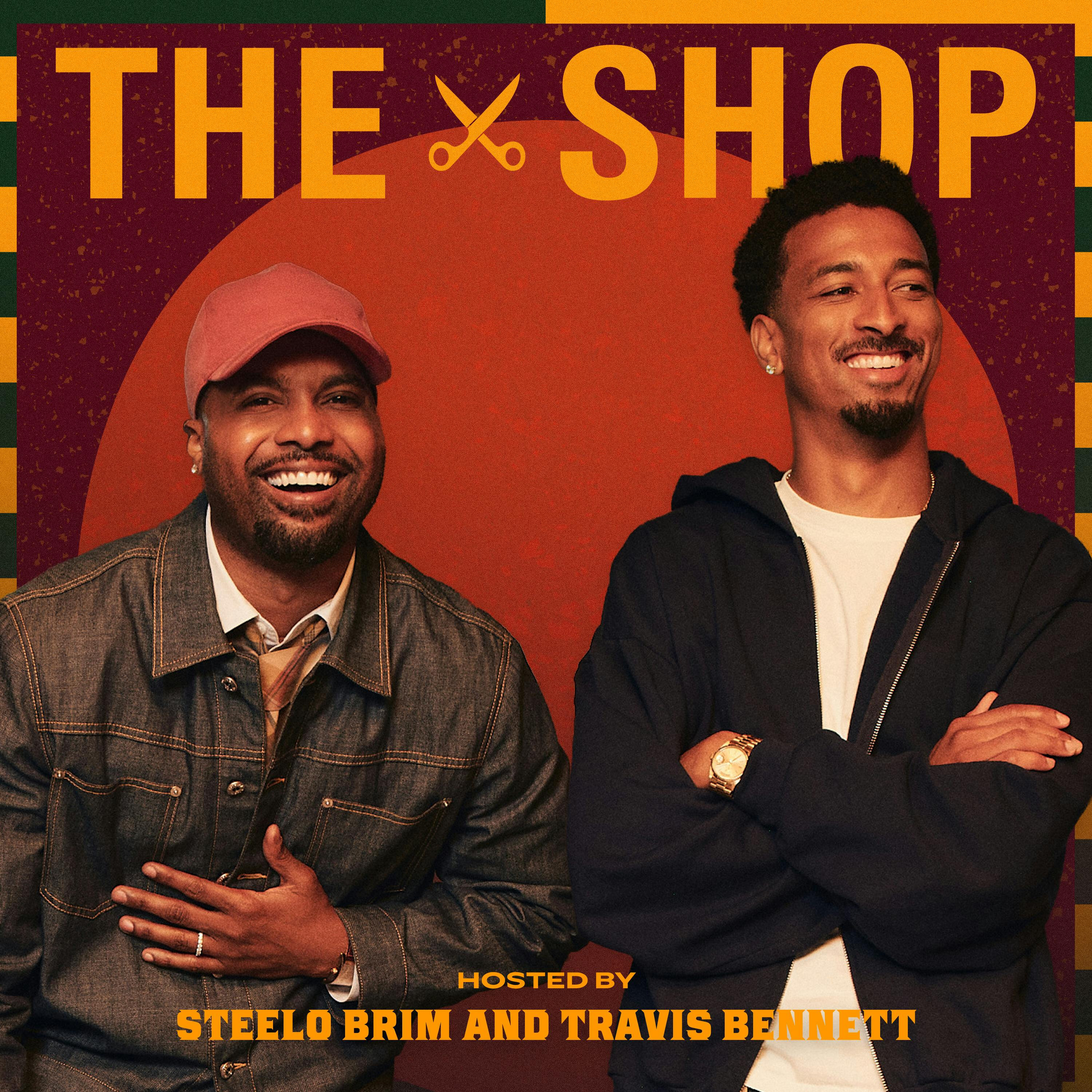
The transcript blends promotional content, personal reflections, and podcast highlights from multiple hosts. It begins with the announcement of Minky Couture as the official Dallas Cowboys blanket, emphasizing comfort and fan connection. It then transitions into a series of podcast features: Alec Baldwin’s "Here's the Thing" with Stephen Root and Alia Mohamed on urban issues, Michael Imperioli’s "Underground Zero" on 9/11’s aftermath, and "Stuff to Blow Your Mind" on the Borg from Star Trek. A central narrative centers on Nelly’s career journey, where he reflects on early success, financial decision-making, and cultural identity, particularly in comedy. He critiques claims of cultural appropriation, asserting that certain jokes are rooted in shared cultural traditions. The conversation also celebrates the growth of women’s basketball, noting its emotional depth and rising visibility, especially with figures like Becky Hammond. Ultimately, the text emphasizes personal growth, financial literacy, and the importance of emotional honesty—especially in relationships and careers—as core to long-term success in entertainment and business. These themes are interwoven with personal anecdotes, showing how experience, resilience, and authenticity drive individual and cultural impact.
Cowboys fans, training camp is here and your official season blanket has arrived.
Minky Couture is now the official blanket of the Dallas Cowboys,
so when Cowboys fans want the real season blanket, they want Minky Couture.
From the couch to kickoff, wrap yourself in award-winning, ultra-plush comfort
that feels like a win before the first snap.
With sizes from infant to grande, Minky Couture makes every game day warmer,
bigger, and more legendary.
Get the blanket worthy of the star.
Shop now at MinkyCouture.com.
Minky, M-I-N-K-Y, Couture, C-O-U-T-U-R-E,.com.
And get your official Cowboys blanket from Minky Couture.
Hey, it's Alec Baldwin.
This season on my podcast, Here's the Thing, I talk to actor Stephen Root.
I'm a people watcher.
You see that guy going down the screen, go, yeah, I can use that.
And Open Igloo co-founder Alia Mohamed.
I love staying on top of what is going on in our city, what is on renters' minds,
and taking all of that knowledge to build a platform that hopefully is going to make
New York City better in the long run.
Listen to Here's the Thing on the iHeartRadio app, Apple Podcasts,
or wherever you get your podcasts.
Hi, I'm Michael Imperioli.
I want to tell you about my new podcast, Underground Zero.
We're looking at the opportunity of a lifetime for us and the other families.
It's about the aftermath of the 9-11 attack.
What's in the tunnels?
Gold bars, silver ingots.
It could be worth half a billion.
Starring Steve Scherippa, Ray Abruzzo, and me, Michael Imperioli.
How far are you prepared to go?
Depends how far you are.
Listen to Underground Zero on the iHeartRadio app, Apple Podcasts, or wherever you get your podcasts.
Hey, this is Robert Lamb.
And this is Joe McCormick.
And we're the hosts of the Stuff to Blow Your Mind podcast.
This week on the show, it's Star Trek.
So we're going to be talking about The Borg.
All week.
Are you ready to get some probes put in your flesh?
That's right.
Tune in.
Resistance is futile.
We're going to talk science, the culture of the Borg, various interpretations, and we're
going to talk about Star Trek First Contact on Weird House Cinema on Friday.
Listen to Stuff to Blow Your Mind on the iHeartRadio app, Apple Podcasts, or wherever you get your
podcasts.
What an honor to have said here, made the greatest movie ever about barbershop.
I thought you was going to come here at NK Wood with Hulu one hell of a second.
It's a barbershop.
That's what I feel when you're sitting in here, man.
It's good.
I'm glad we're just in the same space.
All these comics fighting right now.
Oh, my God.
I was like, wait a minute, boy.
I was going to be coming in here like, who y'all got coming in here with me right now?
I swear to God, if I got to fight Shucky Ducky, this is like.
Paul Rivera here.
On this episode of The Shop, myself and Mav are joined by Nelly.
The first day that the album dropped, Universal presented me with a gold record.
Cedric D'Antaner.
In comedy, certain things are just cultural, man.
Cedric D'Antaner.
Cedric D'Antaner.
Cedric D'Antaner.
It doesn't mean that it's theft.
And WNBA legend Becky Hammond.
I love to play basketball.
If there's two things I love, it's basketball and Jesus.
Check it out now.
Best thing about my daughter is that we're similar.
Just alike.
Just alike.
Just fucking alike.
That's why we clash now.
Because she knows how to get what she needs.
She knows what you care about.
She knows what to get out of me and how to go about it.
You know what I mean?
And that's the most.
She's just like, you mother.
You know what I'm saying?
When you go through them hard years, them late teens,
when they're finding themselves like that,
that's when you're really the most motherfuckers.
First boyfriend, she walked in.
I said, who is this little fucker?
I was talking to her mom.
She was at my house.
I said, yo, who is this little motherfucker sitting there?
She said, what you think?
He looks just like you.
No, he doesn't.
And then I had to step back, and I was like, damn.
This little nigga looks just like me.
He looks just like me.
That's. I mean, no.
I have it.
My daughter is like my best friend.
Yeah.
But when we have our moments, we have our moments.
Yeah.
The thing we've connected now, she's like, dad, thanks for showing up.
I go to therapy with my daughter.
I've never been to therapy in a relationship.
That is the first time I ever did it with somebody, her and I.
When we sit there, and sometimes I'll be like, I'll be like, ma'am, don't say it.
I'll be like, yeah, I got to say it.
Don't say it.
Be like, you got to say it.
Say what?
The facts.
That's not what happened.
But then I'll learn to go, but does it matter?
Because that's how she feels.
So I got to appreciate that.
That's the thing.
Like, guys, we got to learn to deal with it, you know,
because we don't necessarily operate from feelings, you know what I mean?
We stop our feelings.
Somebody feels something, you know.
It's like, what you feel?
When you said the magic word, showing up.
Showing up.
Show up for your girl.
Because if you don't, somebody else is going to show up.
Yes.
You're right.
That's a great point.
It's going to be a little Nelly showing up at the container.
Yeah, you better do it.
Singing melodies and everything.
Where are you?
Some waves.
Yes.
I told you.
6'3".
6'3".
He's going to be at least 6 feet.
When he come walking through your door at 16, 17 for prom,
I promise you, he's going to at least be 6 feet.
I bet on anything, and the hair is going to be similar.
Sid, I want to know what you were doing when you saw the clips
or heard the chat.
Like, were you just minding your business at home?
I truly was, man.
Like, I'm not really.
I'm not an internet dude.
Everybody loves Sid.
Like, watch Sid.
Everybody got to think about it.
I'm truly a grown-ass man.
Like, I'm not sitting around watching the internet.
Like, that's not what I do.
So, everybody was hitting me like, yo, but people start calling me right away.
Hey, you know, and then people don't know, St. Louis people are very sincere.
Oh, no, you know I hit you.
Yo, what's up?
Hey, like, real.
Hey.
I'm like, about what?
Hey, when dude pull up, what you do?
Who, bro?
He said, who?
They was like, cat.
I was like, oh, that's the same?
It's literally, dog.
It's just something.
It's one of those things for me.
Like, comedy is definitely a space where we hear jokes, sure.
But for me, that was a situation where he was claiming cultural appropriation, in my opinion.
That's all I feel like.
Driving an old car, rolling down a window, that's 70s.
That's what anybody, if I ask anybody, like, how you drive your car, that's that.
You can't say my joke about a spaceship is your joke about driving a car because we doing the same gestures.
That's my.
That's my opinion about it.
Well, and niggas in the hood been doing them gestures since the 60s.
It's like, what's hypocrisy about it is, he stole J.B. Smoove's joke.
Again, for me, I appreciate Young Gun.
I think he dope.
And not for that bullshit he did.
But I'm talking about as a comedian.
And so, I'm like, I've been around this dude many times, which was my whole point.
Why don't we have a conversation?
It's like, we've never had a personal conversation about that.
So, why is it this?
Yeah.
Right?
Because if we rock.
With each other, and I see you, and you like that, you feel that way, then say that to me, like, don't do that later.
Like, and that's what I didn't really appreciate because, and, you know, more than anything, like, you can have your opinion about the joke, his fans, his people who love him, all that.
Like, I don't wake up worried about that, dog.
I've been doing this.
I am me.
By the way, coach, first of all, we're going to say thank you for having the shop in your house with the Aces Chrysler, two straight championships.
Congratulations.
Thank you.
Coach of the NBA, now have won two championships at the WNBA, and along the conversation, we're talking about feelings, man, how, what's the biggest difference coaching men versus women?
Oh, feeling.
No, you know, I, I think everybody just has their own personality.
There's some guys that are a little bit more outgoing.
There's girls that are more outgoing and some that are just, you know, more reserved.
And I think it's just getting to know the athlete.
At the end of the day, if you can help them win, it doesn't matter, male, female, they want to win.
They want to win.
And if you know what you're talking about, it could be Kermit the Frog telling them they're going to do it if you've built that trust in that relationship with them.
So I had a great time.
The guys are never the problem.
The players are never the problem.
And I think for women, women care more, they care more, they care more about the game.
They care more about women.
Guys, we'll just take our check.
Yeah, sure.
After a while.
Like, a lot of guys, we do care.
We have a lot of guys that care.
But there are some who don't, and what makes women's basketball so great is that they care.
They'll dive, they'll bust their head, they'll do that.
A guy running towards out of bounds, he's like, ah, executive decision.
Exactly.
Like, yeah, I'm on a contract.
Yeah, you know what I'm saying?
Women, I love watching women's.
I love it, too.
I mean, what, Kaitlin Clark, WNBA is awesome.
Kaitlin Clark outrated an NBA game.
Her game outrated an NBA game.
You must love that, right?
Yeah, no, it's crazy.
Because I think the evolution of women's basketball, like, it used to be cool to kind of bash on
it.
It always used to tick me off, because it's like, all right, come out here and get some
then.
You think you're so good.
Like, if we had a dollar for every YMCA guy that came up and was like, let's play one
on one.
You were going to say bum.
I was going to say bum.
I heard it.
You know?
Like, stop.
Stop.
Stop.
Obviously, the visibility.
But at the end of the day, I'll be real straightforward here, NBA guys showing up.
Because when the women's game, and I think that's one of the greatest losses, you know,
with Kobe for, I think, the women's game, he personally popularized that orange hoodie.
And that that advocacy of like, no, this is this is legit.
Like, game recognizes game.
And at the end of the day, you watch what these women do.
And I'm like, they're just.
They're just and first of all, they're getting better and better like they're better than when I play.
And what Becky was talking about, the guys.
Okay, hold on, I have to piss.
Go, go, go, okay, okay, I'm sorry, go, let's just go, it's a barbershop.
I'll be back.
Go.
Nelly's going to take them.
There's one right out that door.
What door?
Becky's house, that door.
There's one right out there, just turn to the right.
Get my key out, let me let you back in.
By the way, Nelly, there's no urinals in there.
No, there's men's and women's, we're accepting of everybody.
Use the bidet.
It's sad.
Does it make you at all sad when you see like Cat come out and all these people?
Monique and everybody in this all black comics, white comics don't do that.
Does it make you sad at all, like it's just us?
Yeah, I mean, mainly because of the idea that it's just such,
the attacks end up being personal and they end up getting personal.
And they get more personal to the people that love you more than you, right?
Cuz that's what I feel like.
Like in both of these situations, like I can handle the ridicule.
I can even handle the accusation.
For me, cuz I wake up being me, I don't really worry about it.
But for the people that love me and you realize it touched them so
personally that it hurts folks, right?
That's what I really don't like about it.
And then, of course, it causes for what they call like when people do copycats.
Yes. So you got the copycat crime now.
Now everybody got something to say about it.
Everybody got something to say about it.
That's what's pissing me off, too.
It is old.
It's like bringing up stuff from like when, what happened, in 89.
What are we talking about?
You've been in the game a long time, a super long, amazing career.
Yeah.
In this world of, now he's back.
Yeah. I hit him 10 minutes.
I washed my hands twice, too.
Yeah, it was good.
In this age, to your point of internet, people picking apart everything you said,
did he offend this person?
Where a comic's job is to make us have fun and laugh.
Is this the hardest time ever to be a comedian?
I would think so, man.
I mean- Talk about like a cancel culture and
all that, right?
Yes, cancel culture.
You don't know where the line is.
And it is an opportunity for so many people to have voices, right?
So any joke, anything phrased wrong, however you phrase it,
it is a counter side to that.
You triggered somebody.
No, it's true.
Even the people that get triggered are now offended.
I feel like the most honest, truthful stuff, too, is the stuff that gets canceled.
He's saying the exact truth.
Yeah, and the thing about it is that it is a combination of people just kinda,
again, piling on.
So it is, but again, if you're an orator, if you're a person that gotta say what you
gotta say when you walk on stage, you try to calculate the risk of what it is you
wanna say, and you say it, like if you're a writer of a song, and you got a way that you
wanna phrase it, you can only work it, work yourself through it 19 times before you say,
this is the way I feel it.
I don't give a damn.
This is the way I feel it.
I'm just gonna say it.
Now then, you also had, your first joint was one of the biggest in the history of music.
Did you think it was just gonna be like that?
'Cause you were young, too.
How old were you?
No, we was just--
How old were you?
I was-- OK, here's the thing.
Originally-- originally, you know, when you get your date, you're like, man, I'm gonna
say when you get your deal, and we got a deal in the '90s, in '99, so back then they had
all these things, artist development, do all of this and all of that shit, right?
So technically when I got my deal, I was 23.
I just, you know, like 23.
The record label just put it out, "20-year-old Nelly."
I said, "Shit, the check cleared.
I don't give a shit."
20-year-old Nelly.
20-year-old Nelly.
20-year-old Nelly.
I don't give a shit.
They were like, "No, but you look-- you look like you're 20."
I was like, "No, but you look-- you look like you're 20."
Should I say something, or should I not?
But again, the check cleared.
I didn't care.
So they said I was 20 when I first came out.
But I knew, and everybody around me and the whole U City knew, man, that man graduated
in '93.
Okay.
Whatever.
It's working.
He must have gotten put back.
So--
Did you ever play in the Little League World Series?
No, I didn't.
Because I was just hoping to go gold.
I go gold, I go on tour.
I can make a little money.
I open up a liquor store, car wash, laundromats, barbershop--
Hood business.
Yeah.
Like, liquor business.
Hey, listen.
Straight to it.
Barbershop.
Because our group was, like, naturally created in a barbershop.
Like, Leroy's Barbershop.
Shout out to Leroy's.
And that was our whole thing.
So I'm thinking, yo, get this money, we open up our own shop, get a couple PXs, which was
liquor stores.
Yeah.
So-- and I thought that that would be it.
And the first day that the album dropped, Universal presented me with a gold record.
And I was like-- I was damn near in tears.
And you know, we just was fortunate.
But then how did you not-- because my point is, like, your shit was so massive.
Instantly.
You were the most famous rapper in the world all of a sudden.
They tell you it's so crazy.
Because we had said-- and I know he probably--
Yeah.
He probably wished he could go back in time travel.
Oh my god.
Yeah.
But he did the intros on "Country Grammar."
If you listen to the commercials and the skits, he did those on "Country Grammar."
That's right.
But he did those for a little of nothing.
Yeah.
A little.
A little of nothing.
And no--
I'm emphasizing that.
And really no--
Hold on.
Hold on.
And really no--
He said.
He said.
He said.
No, he didn't write on the album like that.
He said, like, it ain't too late.
He was like, we offered everything.
Like, yo, he was like, nah, you know, y'all just getting started.
Don't worry about it.
We'll knock it out.
It's nothing.
You know, y'all from the loop.
Yeah.
That's amazing.
Then the shit goes 10 million.
He's like, yo, what the fuck?
Yeah.
That's crazy.
Where are those points?
That's wild.
That's wild, huh?
That's the one you go like, that's crazy.
That's crazy.
Crazy.
Man, you did do your thing.
Yeah.
Y'all killed that shit.
Yeah.
That was about four million.
But that's crazy.
Yeah, man.
Hey, man.
But you don't--
But you don't know.
Oh, I did.
You know what?
I did get a platinum record, though.
I never got the money.
How you gonna laugh?
Thank you, Nelly.
I ain't gonna shout.
I did get something.
I did get something, y'all.
They presented me with the platinum.
With your name in the box.
See what my name said.
You did it.
There wasn't no money.
I was looking at the back to see if it was a check.
But I got that.
That's nice, man.
But you wasn't-- was you expecting, like, oh, shit.
I'm now Nelly, like--
No, we didn't know.
And the thing about it is, when you're going through it,
you still don't know.
You have no recollection.
You're just working.
You're just doing it.
You're just working.
And you're about to go on tour now, right?
Yeah.
With Janet.
Yeah, yeah, yeah.
How's that feel?
It's dope.
It's dope.
I wasn't going to go, but--
Why'd you consider not potentially doing the--
going on tour with her?
Well, the only thing I was saying
was I had got to a point I wasn't opening for nobody.
You're Nelly.
Of course.
Well, I was just at that point.
I mean, but it's freaking Janet Jackson.
She's just a dope person.
And she was like, Nelly, you have to go.
I gotta go.
We're going to go.
We're going to have so much fun.
It's going to be--
OK.
I love that.
That's the vibe.
I'm about to do a residency with Tony Braxton.
Love and laughter.
Yeah.
Look at that.
That's the vibe.
So right here in Vegas.
And that's the fun idea of taking like that--
That makes your love bring your ass home.
--beautiful.
Right?
You got the dope music.
Good times together.
How did that come together?
Has that been done before?
You know, not in a real way.
Yeah, I think so.
And it was one of the things that Vegas has been trying to grow and trying to grow the
show.
Of course, shout out to Usher.
Usher just made the idea of being here and bringing real urban entertainment dope.
But the idea of doing a really great comedian and beautiful love songs and this idea that
these are the things that we share as culture.
You know, you like good music, we're going to love, we're going to be with our people,
and then you want a good laugh.
And that combination, we're going to do some fun, you know, study and share in a way.
Like, we're going to have fun with it.
You know, clothes and doing things-- you know, people will be surprised.
Tony's funny.
She's unique.
You know, these are things that she gets to get out of herself and not necessarily just
being super diva.
Like, she's going to have fun on stage, and we'll do some really cool things together.
So like, even is the skit she's going to be in that's funny, are you writing all of it?
Are you writing all of it?
No, we got a combination, yeah.
I write most of the lines.
That last name is still Braxton.
It's not Williams?
Not yet.
I don't believe it.
Cedric, how did the tour idea come together?
Well, mainly a good friend of mine, Demetrius, he thought of the idea.
And then I got to work with him.
- Right. - And she should've won.
- Yep. - She should've won in 2001.
- But I wasn't even. - How are you not nominated?
- Nominated. Country Grammar's not even nominated. -
Nelly's not even nominated for Best New Artist ever
- in the Grammys. - And how did you feel about that?
Uh, I was-- I was-- I was-- I was pissed.
I mean, you know what I'm saying?
But what are you gonna do? Because I'm fairly new.
I don't know if I got the right to even be pissed.
Because these are the Grammys, and you put so much stock
into what they-- what they know and what they do
when you're a brand-new artist until you get to be--
have the blessings and the knowledge to someone like Hov
to be able to get up there, take their award,
- and cuss their ass out at the same time. - Right.
Like, you can only hope to be that.
Nelly, coming from the loo, did you ever have
Chip on your shoulder? 'Cause everything was L.A., New York.
We always talk about that with the Midwest, man, I'm like. - Goddamn right. - Yeah?
Goddamn right. But you gotta understand,
my era of music was the toughest era in hip-hop ever, ever.
When I put out songs, I had to go against DMX. - Eminem. - Jay-Z, Eminem, Lil Wayne, 50 Cent, Luda.
- Nah. - Yes.
All of us are fighting for one spot.
So, from '99 to, like, 2008, '10,
it's the hardest era ever to get records.
- I'm Pimp Juicing Us! - Yeah.
Becky, you're obviously an incredible coach.
Records numbers speak for themselves.
There's been conversation about there will eventually, at some point,
be a woman head basketball coach in the NBA.
Do you feel there's an unnecessary importance in that?
Meaning, like. Meaning, like, you've already reached the pinnacle of coaching.
You've won, we're sitting in the home you helped build, right?
Back-to-back championships.
Would that mean that much more to you, being an NBA coach,
than the success you've already had?
Mm, I think it used to.
- Okay. - I think it used to.
I think that was the goal.
I'm so happy here, and I have so much joy
coming to coach these women every day.
Their vibe-- I don't know if you know our group, but they're. - They're hilarious. - I mean, being the champs, though.
- Yeah, of course, yeah. - Back-to-back champs.
- Winning songs, a lot of problems.
- Looking like the Bulls over here. - Yeah.
You know what? I mean, I got calls, and I--
to interview this last year, and I just said, "Thank you, but no thank yous."
- Oh, really? You got calls? - You didn't even interview.
- You didn't take the interviews. - No, I did not.
But I want to go back to something you said
about the Grammys and not being nominated.
And the--
'Cause here's what people don't see, is they see--
they don't see the pain and the disappointment
in these very personal moments.
There was some moment where it was like,
"I don't need your validation anymore."
And I guess that's where I-- I-- I landed.
I landed a little bit on the NBA.
- Yeah. - Now, I like challenges.
- Mm-hmm. - But, like, I don't need it
- to tell me that I can coach it. - But, Becky--
And just because you're-- you might be like, "Can do it,"
doesn't mean you should do it all the time.
- Right. - Sure.
But I got to push back on that, because. - Tell me. - Part of that, I think, is. is nothing wrong-- we're humans. We care.
We like to be liked. It feels good to be liked.
So if somebody or something doesn't like you,
sometimes, especially amongst black men, we, like--
if I say, "Man, that hurt me," when he said that
or she said that, it's like, "What? That hurt you?"
- You're in your feelings. - So we don't ever get a--
- Why are you in your feelings? - Why are you in your feelings?
- That's that therapy. - My dad is like that for sure.
That's that therapy, Sid. I'm learning, Sid.
- I'm learning. - That's shame.
- My daughter's been helping you through. - So I would say people--
She has really helped me. That's my homie.
That's my friend, my daughter, everything.
But it's-- sometimes people don't always
tell the truth about that. Like-- like, if you lose,
it's, you know, "I lost. That hurts. That sucks."
If-- if I went for something, a job, and I didn't get it,
I wanted that shit. I didn't get it.
Like, I think people can be more forthcoming about that, too.
Let me ask you guys this. You guys have all been great
and are in the legend, icon phase of your careers,
meaning, like, the amount of success you've had,
the longevity of it.
When did you guys realize it was a business, right?
You played ball. You were an incredible basketball player.
You loved to play. You rapped. Incredible, incredible comedian.
When did you realize, "Oh, shit, it's not just about the love.
This is also a business"?
How soon in your career did you realize that?
I would say at about 30.
Right? It was like, "Oh, I'm not gonna be able to play forever.
-I better start." -Oh, well, that's late.
-Yeah. Yeah. -Think about that.
I'm saying late-- as a-- as a professional athlete,
-that is late in your career. -For sure.
But we weren't making a lot of money, either.
-Of course. -So it was just like--
-The love. -I love to play basketball.
Like, I have loved it.
I mean, if there's two things I love,
it's basketball and Jesus, and then I just go.
-And-- but I've been a basketball player. -This is why this should be
-in a movie. -Done. You're on the wrong line.
We'll be right back after this conversation.
And did you-- at that moment, were you like,
-"I'm gonna be a coach"? -Um, no.
And did you say you wanted to be a coach in the NBA?
-When did that-- how did that all happen? -No, no.
So, I was doing some women's broadcasting
for, like, the Pac-12, and-- and they were walking off.
We had just called their game, and the losing coach was, like,
walking back, and the-- the analyst was like, "See, that's why, like,
TV is the best. You never have to leave the gym a loser."
And I was like, "Yep, it's not for me."
-'Cause you can't ever win a-- -'Cause you can't win.
-You can't leave a winner either. -Yes.
So, that was kind of my, like, a-ha moment that I was like,
"Okay, I'm gonna get into coaching," because at the end of the day,
the people that had impact on me were coaches, teammates,
the relationships that I built.
So, I decided I'd much rather be in the business,
like, in it with 'em, than talking about 'em.
And how did the coaching in the NBA come about?
-Yeah. -Yeah, and I-- and-- and--
and to his point, did--
did you feel people were actually--
when did you know people were actually taking
your criticism to heart and not just listening to you?
-Oh, that's a good point. -Because--
I mean, obviously, you got the shirt on.
-Yeah. -You know what I'm saying?
But actually feeling like you're getting through
to some of the players, because, I mean, you know,
I know Coach, and he's a Nelly fan.
-Oh, I know. -Yeah, yeah, I know, I know.
-I think we ran into you in a-- in a hotel. -Yeah.
-Maybe in Atlanta. -Yeah, hell yeah.
-So, I love him to death. -We were, like,
on our third dinner, about eight bottles in at that point.
-Coach loved his drink, too. He loved his wine. -Oh, yeah.
So, um, I was coming off a knee injury, and he called me.
I-- so, normally, I'd be overseas playing in Russia.
And, um, I blew my knee out, so I was there rehabbing,
and I asked if I could come to, like, all the practices
and just kind of watch, and he called me.
And he was like, "Well, you-- why don't you come
to all our coaches' meetings, too?"
So, I was like, I would do rehab at, you know, 7:00 in the morning,
shower, go over to Spurs' facility,
and go to their coaches' meeting and then watch practices.
Fast-forward, you know, six, seven months.
They won the championship. They beat Miami.
I was playing. He called me, offered me the job.
And I was like, "Yeah, I'm-- yeah. Yes."
-You knew-- you knew immediately. -I said-- I said-- no.
I was like, "Let me think about it."
-Yes. -
-And you got to play it smooth. -Yeah, yeah, yeah.
And, you know, I was with him eight years.
Was there any player at first out of the men
that you knew that you connected to
that was really, like, horning in on your advice
and on your insight at the time that you felt that helped him?
Well, like, I was really good friends with Tony Parker.
-Like, me and him were real tight. -Oh, good.
He's like my little brother, so respect was never an issue.
-Yeah. -But when you talk about
different relationships and trying to connect,
like, the guys come in, they hug me.
They ain't hugging no assistant coaches.
-No. -They're-- they're-- they're--
they see me, they hug me.
Which is-- it's just different.
I'm not saying it's better, it's worse.
It's a different kind of connection,
and it's a different kind of respect, if I'm being honest.
-Oh, yeah. -Bringing a little full circle.
-We're talking about '99. -Mm-hmm.
Word on the streets, masters, selling masters.
Can you talk about that a little bit like that?
But also, I want you to talk about it from two points of view.
-Okay. -There's Nelly, the artist.
-Mm-hmm. -And there's Cornel Haynes,
-the businessman. -Right.
What's the-- when you-- how do you filter both--
-What is the thing? -through both of those?
I don't really sell anything like that forever.
Technically, at least.
So, in, like, 30 years, it comes back.
-The reverse product. -Right.
So, if I ain't took the little 50 mil
and made nothing happen in 30 years,
then I need my ass whooped anyway.
-Right. -You see what I'm saying?
Like, but, you know, you hear a lot of people,
"I would never do it, I would never do it."
Why wouldn't you do it? That's your equity.
That's your goal.
That's why you would never have generational wealth.
Because what you don't understand
is that that's what you're vying for.
Every time LeBron steps on that court,
he's doing the same thing with his body.
-His body's his health. -Mm-hmm.
-That's his equity. -Right.
Yep.
If he can lease that out for 30 years--
But what you just said, Nelly, is a point.
You can call it economics.
You can call it financial engineering.
It's something we don't get taught.
And you have to-- people make these decisions every day.
You have an asset that generates cash,
you have an asset that generates cash flow.
-Mm-hmm. -It's ex-cash flow.
-Yeah. -Somebody's willing to pay you Y.
The question becomes, it's not selling it or not,
'cause people saying they're not selling it to me
are always saying it's like a pride and ego thing.
-Yeah, sure. -Which, if you don't--
It's like a business, the same thing with a business.
If you don't want to sell it, there's no problem with that.
But it's a simple math thing.
Can you-- can I make Y worth more
than X was paying me year over year?
If you take the money and go buy Rolls Royces
then you've made a bad decision.
-Exactly. -If you take the money,
you pay your taxes and then take the money
money and turn it into more money,
then you take that, because he's going to buy other assets.
Go buy buildings. The man said,
pay your taxes. First, you got to do that.
Write that down.
Write that down. Pay your taxes.
Is Uncle Sam in one of these cameras? Yeah, yeah, yeah.
He's in there, old trust. He's everywhere.
Old trust. But his point
is right, that we never learn
making money. It's like, because we always come up,
we don't have no money. You just want to make
some money. Make money, make money.
You actually realize, if you talk to very wealthy
people, they will tell you, money
becomes a problem. They'd rather have
assets, because once you get money,
you got to pay taxes. But if you own the building,
it gains value. You don't pay taxes, and you can
borrow against it. It's all what
he just said is the key.
What does he do with the 50? No, but I think
you're taught, like, you're trying to get
to a certain
spot, and then you think that's going to make you happy.
And then you get to that spot, and you ain't happy.
At the end of the day, you can't
snuggle with your $100 bills. No.
And I'll
just go back to the, you know, as an
athlete, you have a shelf life.
Yeah. You ain't making this money for the
rest of your life. Now, if you invest it
right and do the right business moves,
yes, it will make money for you. But
the problem is, is we get these big
chunks of money as kids, and then we
don't teach them how to make money
off their money. 100%. And
that's a big problem in the NBA, or just
professional sports in general. You get this big chunk of money, and then
by the time you're out of the league three, four years, you're
broke. Sure. And it's like, how?
And it's because of that, I
think, the lack
of investment, but also just, like,
somebody needs to take some of these guys
under their wings and say, hey, let's do this. Business
partners, business moves. And I think you see it more
and more. It's becoming, like, popular. Like, you see
all the guys dipping in wine, dipping in anything.
Like, they become businessmen.
They're enterprises. Every
individual is an enterprise
on an NBA floor. But I was always a
hustler. Of course. And I'm not,
and I don't mean to say that. I don't know who's
watching, but statues of limitations
are far gone by now. But listen,
I'm just saying, like. You got calculated risk, though.
On a certain deal, you went
bad on yourself. Because I always
know at the end of the day, I know how to make money.
I know. I just
know. I've always
known. Saving money,
investing money, that's
the key to learning.
Making money was never my key to
learning. I knew how to do that.
So who taught you how to. My mom.
My mom. My mom worked in fast. Because I imagine when you
first started making it, you didn't know. My mom worked in fast
food restaurants for 35 to
40 years.
And if you ever worked at a McDonald's,
Dairy Queen, Rally's, or any of that,
you know how hard work
that is. And it's constant.
And my mom did it for over 30 years.
She got me my first
job. My first job came when I was
14 years old.
Homecoming was coming up at
high school. My mom said, I got 50 bucks.
That's the most I can give you. She said,
but what I can give you, because she was a manager
at the McDonald's in Clayton, Missouri,
shout out to Lou. And she
said, yo, I can't give you a real
job, but on the weekends, they got
truck. And if you know anything about truck in the
morning, that's when they come and they stock
the freezers and all that other shit.
And they be needing people to take it off the thing.
She said, yo, I can give you a job there.
I said, cool, I'll take it. And the owner
would pay me $25.
So I wound up getting about $140
by time
homecoming came,
which was a lot for me, being
a freshman. So she taught me how to work.
My mama has never not
had a job
until I pulled up at
rallies
after country grammar and
say, yo,
tell them you're done.
Yeah. And I'll take some large fries.
Tell them you
quit. And she's like, what are you talking about?
I said, tell them you quit.
I was thinking about you, Maverick,
in the sense that you've
also become known as a prolific
dealmaker, right? Now
people would emulate actors
and comedians and rappers,
but now people want to be you guys.
Like, you got a whole generation of folks
that think it's easy
to be the dealmaker,
the mover and shaker
in the world. I don't know if people would
know the journey or how you
feel when you are the only person
in the room, when you do have to
be creative, when you do take
one thing and turn it into another,
right? Like, what's
just talk about that for a minute.
I would say
I was
I got very lucky,
blessed by God, to have
one skill. I once saw
a quote in life
by Albert Einstein. It resonated
like more than anything
with me, which was
I have no special talent. I'm
just passionately curious. So I
was, I've been blessed.
I had
one of those grandmothers, my family,
I think I told both of you, I was from
a little tiny place in Missouri,
my dad's side, called Mexico,
Missouri. Have you ever heard of Mexico?
Yeah, I was from Carruthersville.
Oh, right there. T. Lewis.
Yeah, T. Lewis from down in Missouri.
So I grew up with a grandmother
who ran an after hours.
That's how I got my name, Maverick.
Her favorite TV show was the 60s show
when it was a cowboy and a card player.
Wait a minute, hold on. Your mother
ran an after hours? My grandmother. Your grandmother
ran an after hours in Cleveland.
No, she started in. In Mexico?
She started in Mexico. So my grandmother
and my grandfather. My grandfather was a
construction worker. Wait a minute, I know about
Mexico. But he couldn't. She ran an after hours
in Mexico? For sure. She was popular.
Miss Carter to the day. We had to make her stop. Statues of limitations.
My grandmother couldn't, when you was a construction
worker back then, as a black
man, you couldn't keep a job. They would hire you for
a short time, do a job. So they
went from Mexico
to Joliet, Illinois.
Which is another little town on the side of Chicago.
Racine, Wisconsin. And then they
landed in Akron, where I'm from.
But the whole way, black family style.
My grandmother had seven kids
in nine and a half years.
Talk about hustling. Yeah. My mom would
pull up on a Friday, and my grandmother's,
I was like six years old, front door.
And she said, get out the car and go in there.
Somebody in there.
Before the door got open, she'd be pulled.
She'd go. Go.
See? I look back. Nobody's here.
She'd burn her up.
And I would be there until
Sunday night. My mom was
22 when she had me, her and my dad.
It was out in the streets popping.
But in that, learning that, I learned
to understand and read people quickly.
My grandmother knew how people
felt, and who was who, and how to
treat people, and because she loaned money
and said, you need a little money
the next Friday here, I know you're going to pay me back.
But not him, because I know he don't pay me back.
He fuck up his money. So
I learned those skills, and I took them
to work with me.
And I love to learn. That's the
thing. For you, like you said,
you're a comedian, been doing it forever.
Do you feel like you're still learning to be a comedian?
Oh, definitely.
To us, as a fan, you've mastered it.
The idea to be creative
is one that I really
appreciate. That's the opportunity that
exists. And so I take a lot of shots.
You know, you just get the ball up.
Get the ball up, baby. Let's go.
You Broadway, I'm
going. You got me. I'm doing it.
How was his form? How was his form there
on the jumper? How was the form?
I mean, the whole side, he got a whole
jab step with it.
He got a whole jab.
I used to be
in the park, though. I used to be in the
park.
I used to be there.
So
you're not afraid
to take your shots. I'm not afraid to take
shots. Big shots, little shots. That's the other thing.
Like, as a creative person,
I'll just jump in with other
creatives. Like, if people doing something
dope, I'm gonna jump in. Like, you can
I'm that person you can call. That's what
really a lot of
my goodwill comes from.
You know, it's a movie. Afion got
a good, funny little movie out about the
Hip Hop 50. It's coming out. People gonna see
it. It's a parody of him doing a lot of
characters. He called me on a humbug.
Was like, bro, I need you
to come in and do this Biggie thing for me real
quick.
We got a Coogee sweater.
I went over there and like, boom.
And then, I mean, I shot for
30 minutes. He like, bro, you're killing this movie.
But it was an opportunity
just to do something fun. To do more, yes.
Play a character. You get sharp.
Yep, you get sharp. You get your pen
out and you try things, right?
And so, I really love that
about the opportunity to entertain people
more than anything. And so,
that's really the spirit in which I kind of
go forward. And I think that
that's
really what we do as comedians.
And your next movie is Outlaw
Posse. Yeah, Outlaw Posse.
Mario Van Peebles, a legend.
Legend. Legend. Director of New Jack.
Western, dog. And again, another opportunity.
Okay, but I need to be called for the music
for that. Yes. Yeah, oh, man.
They put it together. I'm loving it.
Cut him the same deal he cut you on that album.
Cut him the same deal.
Hold on, hold on.
Sam, we want to hear about working with Mario Van Peebles.
Please, because he's a legend. Mario is just,
he's just such a solid person, man.
He directed me. I did a little
small run on Power.
And he was the director. And then, so
he had the Western
shaping up. And he was like, man, I really like the way
that you came in and did this.
You know, would you consider doing
a Western? And I was like, of course.
You know, and I've ridden a horse
maybe twice. So
we went. Sam, that felt
like a lie, but keep going. Dog, twice.
Twice? And I'm running
a horse, and the one is the slow one that
somebody caught.
And some little kid. The one in front of the grocery store.
That don't count.
He's in the whole show time.
The whole show time.
That don't count.
But he called me up.
We shot in Montana.
Beautiful movie.
Opportunity to be in, you know, in a western.
And, you know, Mario is just great, man.
You know, he understands, like, you know, he understands what it is that he wants an actor to do.
And he'll give you, you know, he'll give you a place to play.
You know, be creative as a creative.
And yet he, you know, he's there about his day as a director.
Like, he like, I got to get these shots, this shot, and I'm going to keep it moving.
So, it was just a great opportunity.
We become great friends.
He's just cool.
And the movie is going to be great, man.
Now, you're going to act again?
Real husband.
You're hilarious.
Longest show.
You've been.
I like it when it's right.
You know my problem?
I don't like reading.
Like in life or?
No, no, no, no.
Fuck you.
Scripts.
Scripts.
No, no, no, no.
I'm saying, like, you know, when you go in and read.
Now, for the longest yard, I didn't have to read for real.
Adam Sandler wanted, he wanted me to play that role.
So, I get it.
And that's probably why I don't.
I don't knock a process for anything.
If I choose not to participate in that process, it's just like, it's just different.
Like, going into reading is very humbling.
Very humbling.
You're sitting in there, and I didn't sit in.
No matter who you are, you treat it.
They're like, are you right now?
I've sent in, you know, you're sitting in front of a whiteboard.
Audition tapes.
Audition tapes.
And you're reading to yourself.
And you're trying to talk to yourself.
I'm like, what the fuck is this?
This is the most corniest shit I've ever talked in my life.
Like, I'm not talking to anybody.
I was just.
Yeah.
Yeah.
And who do you think you are, Mr. Mel, man?
Yeah.
Like, and I hate that part of it.
And I just always do things that are more geared towards me.
Like, and I hate that part of it, and I just always do things that are more geared towards
knowing that they want Nelly.
I'm blessed for that.
I'm not saying that I'm special or anything, because I understand that reading.
It's like wanting to be a rapper, but hating to go to the studio.
Yeah.
You see what I'm saying?
Like, no, motherfucker.
Like, I love.
That's part of the process.
I love being in the studio.
But I understand that, and that's the thing.
It's just like.
That's the most humbling part for me.
I commend y'all.
I don't know how you do it.
Yeah, they all are.
All of these guys.
They look like Seth.
They all sitting out there.
You're just like, well.
One of my favorite guilty pleasures of doing this show is sitting with people like, you
know, I've been a fan of yours since the Liberty, a fan of yours since day one, a fan of yours
since day one.
Yo, you're just hitting me.
Yeah.
With your freaking face.
She just put it together.
Like, we've known each other for years.
Like, from New York.
Whoa, hold on.
It's all good, right?
No, no, no.
It's love.
It's love.
It's love.
Too much love.
Your face just sitting there.
And I'm like.
All right.
I freaking know this guy.
Jesus Christ.
I know this guy.
But it's 20 years ago.
Yes, for sure.
For sure.
Fucking Paul.
But it's been.
But it's been dope, like, sitting here.
But I also am excited as a fan of learning, like, the other shit y'all doing now.
Like.
Yeah.
Barbecue.
You have a barbecue source.
Yeah.
Talking about that.
You have businesses outside of.
Like, I want you guys to talk about that.
Anthony and I have AC Barbecue.
And, you know, it's a business we built.
Me and Anthony Anderson.
We built.
But both of us like to cook.
and we start grilling.
So we came up with this concept, and we
started building it last summer.
Ended up doing a TV show around it.
So we got rubs and sauces, and we're in Walmart
and big online business.
And we're going to have our first store open on Jackson
State University.
Wow.
And so we're just growing it, man.
You get busy on the grill?
Yeah, yeah, yeah, yeah, yeah.
White weight, though.
White weight, but I get it.
What's your shoe get?
You wear the sandals with no socks?
Like, I need to know.
No, no, no.
No, no, no, no, no, no, no, no, no, no, no.
I can't be out there like that.
Now, you always diversify just because the hustler mentality?
I've been very fortunate, man.
Apple Bottoms, I'm relaunching Apple Bottoms.
Oh, really?
Yeah, I'm relaunching Apple Bottoms coming up.
And I think it's just--
Is it hustler's mentality, or you do, like, I love--
Always a hustler mentality.
Or is it I love this, I love that, so I'm doing it.
It's like, or are you looking at where's the opportunity?
I think it's both.
I think it's both.
As you grow.
And as you have success, then you
learn to get into things that you love.
I think when you're starting--
That's a great point.
You'll do whatever the hell you need to do.
To try and make some money.
Yeah, because that's what a lot of brothers in the hood,
quote unquote, that hustle a different way.
They're like, man, it's all I need.
That's all I'm going to do.
That's all I know.
No, that ain't.
Or their risk is greater.
Or their risk is greater than their reward.
And you can be much more.
I don't knock anything.
What I don't like--
I don't like a lot of times-- and we get this in hip hop a lot.
And I just hate hypocrisy, bro.
It's not righteous.
Hypocrisy is not righteous.
No, for sure.
And that's what I was saying about-- listen, I love Cat.
I love Cat.
But I hate the hypocrisy.
Yes.
Yeah.
So he was rolling.
You stole JB Smoove's joke, bro.
You stole it.
Your very first Netflix special, when you came out
talking about this song, when he was like, yo, this is
my jam.
You could do so much.
You just make up a dance.
That's JB Smoove.
He did that back on freaking comedy.
What's the one Martin Lawrence used to do?
Deaf Comedy Jam.
Deaf Comedy Jam.
JB Smoove did the same thing.
Interpretation wasn't the exact same, but it was the same.
His joke wasn't the exact same, but it's an interpretation.
It don't matter.
What are you talking about?
Certain things are just cultural, man.
They are our culture.
You cannot own the culture.
That mean people can't do a black preacher.
No.
You can't do it.
You can't do a momma joke at night.
Art inspires art.
It's impossible.
If I say anything about coming home and when the lights go out, then I stole your joke.
Well, what time you got to be at the house?
Some of them street lights come on.
Oh, you stole that.
Crazy.
This season on my podcast, Here's the Thing, I talk to actor Steven Root.
You see that guy going down the street and go, yeah, I can use that.
And open.
Igloo co-founder Alia Mohammed.
I love staying on top of what is going on in our city.
What is on renters minds and taking all of that knowledge to build a platform that hopefully
is going to make New York City better in the long run.
It's about the aftermath of the 9/11 attacks.
Starring Steve Scharippa, Ray Abruzzo, and me, Michael Imperioli.
So we're going to be talking about the Borg all week long.
That's right.
Tune in.
We're going to talk science, the culture of the Borg, various interpretations, and we're
going to talk about Star Trek: First Contact on Weird House Cinema on Friday.
We've all heard the phrase "all things in moderation," but that's clearly not us.
That's why we're celebrating 300 episodes of That's Messed Up, our Law & Order SVU podcast.
Where we cover the real crimes behind the stories and interview actors from the show.
We're doing it big for the 300th episode.
We've got icon, heartthrob, and SVU guest star, John Stamos.
And we're best friends now.
In waiting for Guffman, Chris. Are you serious?
It's like her favorite movie.
That's like my favorite movie of all time.
I've seen it like 150 times.
Me too.
Oh my God.
New episodes of That's Messed Up drop Tuesdays.
Listen to That's Messed Up on the iHeartRadio app, Apple Podcasts, or wherever you get your podcasts.
Podcast Summary
Key Points:
Minky Couture is the official Dallas Cowboys season blanket, offering ultra-plush comfort for fans across all game days.
The podcast "Here's the Thing" features conversations with notable figures like Stephen Root and Alia Mohamed, focusing on urban issues and city development.
Michael Imperioli's new podcast "Underground Zero" explores the aftermath of 9/11, starring Steve Scherippa and Ray Abruzzo.
The podcast "Stuff to Blow Your Mind" dives into Star Trek’s Borg culture and science, airing on iHeartRadio and Apple Podcasts.
Nelly shares his journey from early success to business growth, emphasizing the importance of financial literacy and mentorship.
A recurring theme is cultural appropriation in comedy, with Nelly defending the shared roots of jokes rooted in Black American culture.
Becky Hammond and other athletes highlight the passion and dedication in women’s basketball, noting its growing respect and visibility.
The discussion underscores how personal experiences, emotional honesty, and financial wisdom shape success in entertainment and sports.
Summary:
The transcript blends promotional content, personal reflections, and podcast highlights from multiple hosts. It begins with the announcement of Minky Couture as the official Dallas Cowboys blanket, emphasizing comfort and fan connection. It then transitions into a series of podcast features: Alec Baldwin’s "Here's the Thing" with Stephen Root and Alia Mohamed on urban issues, Michael Imperioli’s "Underground Zero" on 9/11’s aftermath, and "Stuff to Blow Your Mind" on the Borg from Star Trek.
A central narrative centers on Nelly’s career journey, where he reflects on early success, financial decision-making, and cultural identity, particularly in comedy. He critiques claims of cultural appropriation, asserting that certain jokes are rooted in shared cultural traditions. The conversation also celebrates the growth of women’s basketball, noting its emotional depth and rising visibility, especially with figures like Becky Hammond.
Ultimately, the text emphasizes personal growth, financial literacy, and the importance of emotional honesty—especially in relationships and careers—as core to long-term success in entertainment and business. These themes are interwoven with personal anecdotes, showing how experience, resilience, and authenticity drive individual and cultural impact.
FAQs
The official Dallas Cowboys season blanket is called Minky Couture.
You can purchase the official Cowboys blanket from MinkyCouture.com.
It offers award-winning, ultra-plush comfort that feels like a win before the first snap and is available in sizes from infant to grande.
Alec Baldwin hosts a podcast called 'Here's the Thing,' where he discusses city issues and renter concerns with guests like Stephen Root and Alia Mohamed.
Michael Imperioli hosts a podcast called 'Underground Zero,' which explores the aftermath of the 9/11 attacks, featuring actors Steve Scherippa and Ray Abruzzo.
The 'Stuff to Blow Your Mind' podcast features a weekly deep dive into Star Trek, including the culture and interpretations of the Borg, with episodes airing on iHeartRadio and Apple Podcasts.
Chat with AI
Loading...
Pro features
Go deeper with this episode
Unlock creator-grade tools that turn any transcript into show notes and subtitle files.
 PodcastTranscript AI