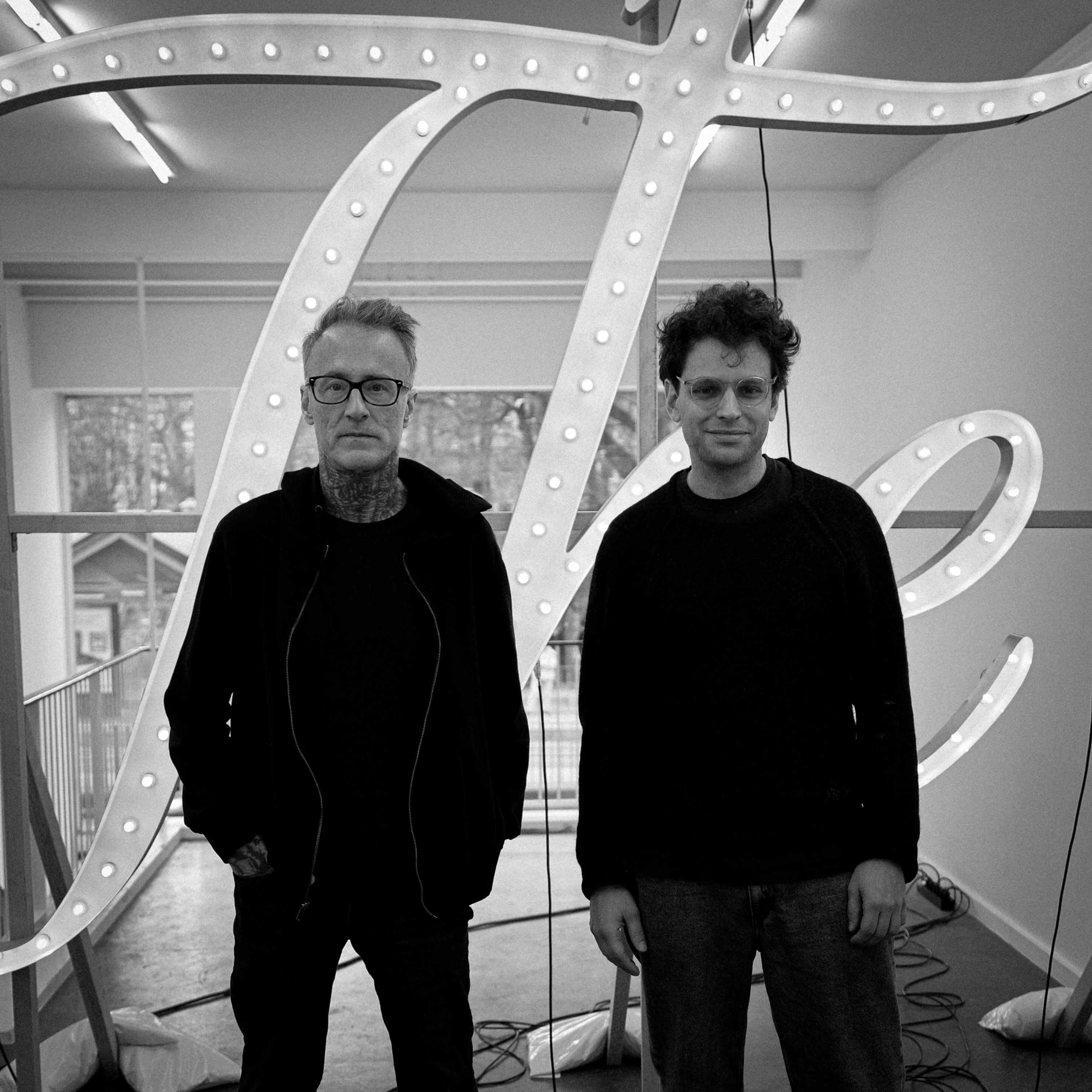
In the podcast debut, host Christoph Anofsky converses with artist Banks Violet, who challenges conventional views of misunderstanding. Banks notes the word's inherently negative connotation, contrasting it with his artistic embrace of accidents, degraded signals, and feedback loops. After a meteoric rise as a pioneer of new Gothic art, Banks withdrew from the art world for a decade, frustrated that critics fixated on only a fraction of his references (e.g., black metal) while ignoring broader contexts. He now returns with "Wish You Were Here," a multi-story installation at Tic Tac in Antwerp, created with musician Stephen O'Malley. The work memorializes artist Stephen Prino, who died in 2003 after a New Year's Eve celebration at Banks's home. Banks explains that the show is built around an absence—Prino's unfinished video project, which Banks never saw but which his ex-wife described to him. The installation uses phase cancellation in sound, shifting perspectives, and black-and-white aesthetics to physicalize mourning. Banks also discusses the politics of "theatricality," seeing its pejorative use as class-based condescension, and values subcultural references (like hardcore fonts) as living, dynamic archives rather than fixed symbols. The conversation frames misunderstanding not as a flaw but as a generative space for deeper engagement with art and memory.
[Music] Hello and welcome to the first episode of Misunderstandings. My name is Christoph Anofsky and I've been having conversations with people about understanding and its opposite for about ten years now. First these conversations were a book and now for the first time here they are as a podcast. A misunderstanding is usually seen as a mistake or an impediment, something that needs to be cleared up. In these conversations however we try to lean into the mess. My guest today is Banks Violet. Banks is an artist who was for many years known as a pioneer of new Gothic art, a movement of like-minded, somewhat self-destructive, free spirits who gathered in early 2000s in New York. After a meteoric rise including a seminal show at the Whitney Museum, things came to a head for Banks in the early 2010s and he took a break. In keeping with the excess of the era, that break lasted a whole decade. Now he's back and after an incredible retrospective at BPS22 in Charlotte-Roye Belgium, he just showed a new multi-story installation called Wish You Were Here in collaboration with Stephen O'Malley, the celebrated guitarist of the Bant Son at Tic Tac in Antwerp. And it is in the basement of Tic Tac that we find ourselves today. It's really weird like you would not expect it for this room but this actually has amazing acoustic qualities. It's great. Okay. So we can just sort of slowly get into it. Sure, I'll show you. Afterwards we'll probably add it a bit. We'll make it digestible. But let's just slowly wander into misunderstanding. I'm really good at that. Hello Banks. It's a real pleasure to be able to finally meet you and to finally speak with you. Later on I'll replace this bit with like a really fluid, beautiful introduction about the sort of work that you've done. But at this point, I would just like to slowly start off. So usually when I speak to people, I'm quite prescriptive. I ask them, please tell me something that you've misunderstood and tell me something that you think has been misunderstood. And what I loved about your response to that is that you misunderstood. I think what I mean by misunderstanding. Yeah. Which is a really fun place to start. So maybe I would open to you to say, what do you misunderstand about the misunderstanding? I don't want it too much of a feat. I think a feedback clip is good. Yeah. That's something that's really important in your work. Absolutely. And also the idea of a degrading signal. Instead of holding that as a positive or a negative value. Which is, I think, an unavoidable consequence of the word misunderstanding. There is a pejorative dimension to it that you can't excise from the word. And I think that's what I was responding to. I like accidents. I like degraded signals. I like feedback loops. I like distortion clearly. So those are things that I find really, really important. And then this word misunderstanding, not denotatively, but connotatively, has this kind of dimension to it that is somehow construed as a negative. Because I think I was less directing my rambling response to the idea of misunderstanding to use specifically more towards the word itself. Which is a really fucking melodramatic way of responding to a word. But here we are. But I think that's really appropriate. I mean, I feel that something that's often been talked about in relation to your work is that you embrace the theatrical callitcy of minimalism. That is often been like used again pejoratively as it's like this, this negative term, oh god, these works. They are somehow their figures in a play. And you know, how could that possibly be? Whereas you really, as you were talking before, you really embrace this narrative sense of this abstract narrative. Maybe you could talk a little bit about how that's been working in this show. Yeah, I mean, I think just in sort of broad strokes, I think one of the, I think that idea of theatricality being extruded as a negative is really interesting, not as a negative, but why is it construed as a negative historically? And I think that there's a sort of, for a lack of a better description, I think a class-based condescension worked into that, that it is like, it's an excess of something. You know, that it's usually, you know, somebody is sweaty and somebody is loud and somebody is excessive. Like these are terms that are used to, you know, sort of create a line between a half and a half not for lack of a better description. So I think there is a really urgent fucking tension in that bland description theatrical, you know, in that that is just that as a starting point. And I don't think it's a tiny starting point. I think that it is a huge way to enter into a much broader conversation about how I think about things, how I look about things, certainly about the show in specific, which is about grief in general terms. And I think that it is a specific evening and the idea of how do you sort of remember an event that it's impossible fundamentally to remember. It's also a way of looking at the world and where we are at this moment, which is, you know, urgently apocalyptic in it's kind of resonance, which is a weird way of describing something. Does that even have way answer my question? I feel like it does. I feel like it's an interesting aspect to your work. I guess I've never looked at it in terms of class consciousness, but it's really interesting that you mentioned that. But one thing that I was, it was a strange coincidence for me recently that I was looking at a book about boot lagging that Ben Schwartz brought out recently. And in it, there's an incredible interview with these graphic designers, experimental jet set. And I want to get the quote right. So I'm going to bring it up here. But they say something really beautiful about the potential of a t-shirt to function as a social democratic archive as a manifestation of living memory. And especially in relation to the subcultural. And so for me, immediately, with the advertising images of the show, with the reverse wish you were here, it was immediately struck by the relation of that sense. And in that specific instance, for the graphic design for the show, that refers really explicitly to, I have a background in a history with American hardcore and straight-edge hardcore. And the font that was used for the show specifically on the shirt, a friend of mine, who somebody I essentially grew up with, that was designed for me by an American graphic designer named Justin Govann, goes by Guav. Who has done some of the most famous logo designs for American hardcore bands that you get like Earth Crisis. And these really hugely influential bands. So there is, even in this little tiny thing, which is a t-shirt that you're making for a large show. Like there is an acknowledgement of a broader history and connecting it to a broader set of ideas. And that Stephen obviously has his, you know, I'm collaborating with for the show, has his own sort of background in relationship to, you know, subcultures. And it really, really urgently intimate way. You know, it's not a casual kind of passerby kind of sense. So that kind of, I always get really disturbed and bummed out when you see somebody casually reference these things that are so vital for another person's understanding of the world themselves. And another person sort of casually, and I think very cruelly, references that without sort of understanding, you know, what that means to another individual. Which again, this is not being very, very generic and broad strokes in how I'm describing things. But, you know, it's funny that you would say that and bring up that specific quote from those graphic designers. Because that is a very important and be also, I think, very pertinent to this show and it's kind of graphic identity for lack of a better description. Yeah, I thought it's something about the referentiality in your work as a way.
always seem to be incredibly generous, because you're giving people this sort of really clear access point to something that is often quite-- well, one, it's obviously consciously obscure. You're usually working with negative surfaces, like the color black, or just these really binary sort of modalities of black and white. And on that level, you need sometimes to be taken by the hand. So this show is dedicated to Stephen Perino, as you told me before. And it's something like Stephen Perino's work, because of how much it embraces the abrasive character of-- perhaps, I could even say the abrasive aspects of the American character, even-- becomes much more difficult to pass without what you often do, like, tight link something after a record. Or like you said, using this sort of graphic identity that a lot of people will be able to reference from, say, like a judge album cover. So that generosity is that something that you think has been perceived by people often? Not really, but I don't know if it's-- I think it's been perceived, but not necessarily in the clearest way I would have wished for. And at a certain point, I took over a decade off from the art world. It's not that I stopped making art. I just stopped showing art. And I stopped trying to engage with it, because at a certain point, I got very frustrated with the art world in general terms, but really, like, the way my work is discussed. I got tagged right when I was starting to show with this sort of new Gothic, whatever, and I make work about Black Metal and Bubble, my work touches on a lot of different things. And reference is a lot of different things. But if only one tenth of that kind of body of reference is the thing that somebody constantly comes back to in sites again and again and again. Yeah, that's ultimately-- I have responsibility for that, because I'm the author. I'm creating this thing. And I should make it sort of like, well, why aren't you looking at the other nine tenths of the references that I'm sort of building into that? But when it happens consistently over and over and over, and over, I think there's a little bit of laziness in terms of art writing. And I certainly had that experience and I got frustrated. And I was like, and it's a very juvenile response, which is fine. I'm 52. I can, with a hand in the air, way claimed to being a fucking juvenile about things. It was a responsible, well, fuck you. I'm going to take my ball and go home. So not the most mature response, but it's fine. But you could. I mean, that's like an incredible sort of thing that there was a point where you could say, that's enough for me. Thank you. Yeah. I mean, the engaging with the art world has not affected how I work at art, think about art, interact, and digest art. Getting to the point, I need to rely on the art world because I need to eat, because this is my job. And this is, unfortunately, the reality of the world. I can't exist as modically as much as I might wish to. But aside from that, taking a step back and fully understanding intimately how little I need any of the shit in my life-- wonderful. I recommend it for everybody. I think that's great. That's really important. It's important, but it's important to see what the different kinds of community can give you. Because I love about that term, new Gothic art. I know it's like an actura. And I don't have to probably just to clarify that. Here, going back to the idea of misunderstanding, I don't have a problem with that as a description. And there was some wonderful writing about that as an idea, like people like Francesca Gavin. I thought there was something very interesting. It's when I got frustrated when I thought there was the beginning of a conversation, the beginning of a sentence, and instead, it turned out to be the period at the end of the sentence. Nobody wanted to go past that point. And I thought, wow, this is a great way to open the door into a broader kind of conversation. So that's-- I don't think in unrealistic frustration. And again, yeah, I just got exhausted by that. I see, sorry, I won't try and spend too much time on it. But it's just for me, this idea of the Gothic and Goths, in particular, it's like there's just such a strong community. They really support their people. They really support their bands. They really support the context. And want to maintain memory. And that's something that it feels really quite applicable to the way that you've done stuff. I mean, even naming an incredible work of art after a Penta style album, which was, for a long time, that was an obscure record. Yeah. An incredible record. Incredible. But it's the same thing with black metal. Now this thing where like, oh yeah, Kanye West wore a fucking Burzen shirt. There is an accessibility to this information that wasn't there when it was first being presented out into the world. And that's changed the register and changed the way people can approach it. And that's great. And that's wonderful. These things should shift. These things are part of lived experience. They are dynamic parts of our culture. In any of this, isn't to embalment and tar and stop it. And that was my frustration with the conversation about, say, like the new Gothic thing. It was like, I am attracted to the urgency of the culture that people create to understand their environments and understand themselves and create communities. It is very alien and very unsettling when somebody tries to freeze that in time. I just have a difficult time relating to that, which is kind of at the core of I think what this show is about. There was somebody dying as a period at the end of the sentence. And having an unrealized project that was described to you and trying to understand what that is, and keep it not letting it become a static thing, not letting it freeze itself into a single moment in time. But you know, a bad way of describing it, breathing life into a life that is no longer there. Sorry, that's a very corny way of freezing it. But I think that's also OK, because there is that aspect of-- it's not like the aesthetic approach that you engage with, which is this stark, often quite stark, binaries of black and white. And you know, at times, shades of gray, but very often, really reduced. And something like that is less effective, because we, as a culture, have been working with that form for over 100 years. It still has a really clear message behind it. And it also has something that has taken on so much connotation over the years, especially in relation to these sort of DIY scenes as they were at any rate. That you've been involved in and that your DR has referenced over time. But maybe just to take one step back, could you explain specifically the night that this exhibition is referencing? Sure. Yeah. So the background for the show-- I mean, a lot of shows that I've done in the past are kind of constructed-- there's a narrative core, you know, informing a project or a show and exhibition, whatever. And it usually revolves around something bad has happened. And it could be a series of church arson's. It could be a murder. In this particular instance, there was an evening, basically, 20 years ago, on a January-- this is the month of January right now-- when on New Year's Eve, I had a few people who were over at my house in Brooklyn in the apartment that I lived in with my wife at the time. And I think it was myself, my wife at the time, Alyssa Bennett. And I think maybe two or three other friends of ours, including the artist Stephen Prino, very quiet evening. And we were just all spending time on New Year's Eve. And one point in the evening, Stephen and Alyssa went over to his studio, which was in Green Point. Stephen wanted to show Alyssa this video project that he was working on, which was based on the opening animation from the 1936 version of the Universal Pictures Opening Animation, which is that globe with the text scrolling across it. She came back a couple hours later. He went home. And this is probably one in the morning. And I walked him down to his motorcycle and said goodbye to him, went back up to the apartment. We both woke up in the morning to a phone call telling us that he had died in an accident, leaving our house going back to his studio. So that's the central core of the show. That is the kernel around which everything accretes.
You know, the, the, that sort of simultaneous feeling of, you know, here's a celebratory evening and then the hangover of the morning of finding out that your friend has died. You know, that you were the last person who have experienced them. I had a conversation with him that night about this video project that he was working on. My ex-wife saw that project that night and described it to me. So I've always had this relationship to this event, this sort of simultaneous joy of a celebration with utter heartbreak of losing some of you care about. Sitting in the exact same, same, same place. And I've always associated with this, this unrealized project which I've never had the opportunity to see. So this entire show is kind of based around that. The, the, the sort of finality of something being able to see something while also simultaneously not seeing something. The way a presence can be structured by being built around an absence, almost like the accretion disk around a planetary object which is a very pertinent kind of metaphor for the imagery that exists in the show where these, these fears revolving in space and crashing into the ground and, and these switch perspectives between inside and outside and upstairs and downstairs. All of which is conditioned by the soundscape that was produced by the musician Stephen O'Malley which is, you know, this, this lovely, lovely, I think around like 21 minute musical composition that really incorporates a lot of the phenomena phase cancellation where, where, you know, two sound waves, the waveforms sort of crisscross each other 180 degrees and it kind of, they annihilate when another, and almost produce the sound of beating wings or this sort of distortion in the air. This, in a very theatrical way, conditioning the way the viewer interacts with all the objects in the space because Stephen tuned it very specifically to the, the, the, the environments of the sound, almost functions as architecture in certain ways. Yeah, this broad strokes sweeping description of what the show is about. Great, well, we can continue getting deeper from the, you know, into the strokes of that, as we go on. I mean, it, what of course strikes me is that this is like just an incredibly moving act of mourning, but it's not like more kish in any way. It's still, it's seeking to like make that mourning very present, very physical, although I have to say at this point we still haven't been able to hear the music, maybe we'll be lucky. Oh yeah, yeah. No, 100%, 100%. But I can completely understand the necessity of physicalizing, or you know, not just externalizing, but the fact that physicalizing this act of, yeah, remembrance in a way. That's sort of been a theme in your work, but it's not, I don't think it's an ever quite been as personal as this before. Yeah, right. Yeah. And I think I, I, I referred to these themes, and maybe in a more sort of distant or, or, or, or, or, or critically frame them in a little bit more of an elliptical fashion. This is much more sort of, you know, direct, imminent and personal, because it feels like a necessary thing to do at this moment, like the, the, the idea of critical distance. It's one of the things that I responded to so directly in Stephen Prino's work in the first place is that he offered this functional alternative to how you can relate to certain kind of, you know, cultural, a femur, or subcultures, or, like, just, just as an example, if you look at Richard Prince's quotations of American outlaw biker culture versus Stephen Prino's American outlaw biker culture. One is anthropological and borderline cruel, right? There's a kind of class condescension in the way that that culture is being presented by an artist who I don't believe has a sincere relationship to that particular culture versus Stephen who deeply love that stuff. And it could be the same image, but there is an affect. There's a tone. There's a, the indefinable quality that you, the, the string that vibrates that, that creates a harmonic that you respond to, like the way Stephen approach that was different. And it's not an uncritical embrace of something, but it is a different, how, how do you make appropriation not be irony? I see. You know what I mean? And I think right now the idea of specifically as an American citizen at this moment in time, of treating into irony is a luxury that is semi obscene. So and that's a truly malgematic statement, but I, I, I absolutely 100% believe that. So I think like there, there's, yes, there's the grief of this particular evening and this thing that I'm responding to, but I think it's also in, in a broader sense also just grieving the state of the fucking country that I happen to live in. And having these things all relate to each other and like how do you, how do you, how do you construct a grammar or of, of, of, you know, I don't know, sorrow, you know, without, without it having, without resorting to marcushness and, and, and, and, and gross sentimentality and, and treat it as a critical language in and of itself. Yeah, I mean, it's, it's fascinating to look at that aspect of Stephen Perino as being drained of irony or like how there's that great Dillentrian skate plan record irony is a dead scene. And because I, when, for me, when I read Perino's texts especially now, because that's the most accessible sort of entry point to his work at the moment. So sadly, you know, maybe we can resolve that at some point. And there is that point where he really comes to embody this American darkness that we're seeing around ourselves that like there's the, that he's not afraid to enter into that state of exceptionalism. And yeah, I wonder if you could maybe speak a little bit more about how his work resonates with you. It's, I mean, it's, it's, there is, I, I, somebody asked me this relatively recently sort of in, and it's a, it's a term that is like Stephen Perino and, and Nihilism are sort of presented on the same kind of plateau. And that's, that's, I've always had a difficult time reconciling that because he is, in, in, in a really kind of generic sense, yeah, I guess Nihilism in terms of like, well, I don't, like, this means nothing. If, if you are directing that towards the idea of established canon or respecting precedent or respecting authority, then sure, yeah. So I think you need to clarify a little bit more and say like, I, and I don't know how to, how to, how to qualify exactly in the right way, like ontological nihilism, categorical nihilism, canonical nihilism, like, his is a very pointed critical kind of evacuation of, of precedent. And there is something fucking wonderful about that. Like, in, in the good sense of Americanness as a, as a, as a, as a definition, the idea of like, cool, let's not do that stupid thing that we've been doing for the past few hundred years. Like, that is what I respond to. And it's not, it's not a polyanna-ish, optimistic, wide-eyed kind of thing. It is fully acknowledging the whore of our inheritance, you know, the nasty, gross country, western, fucking cowboy, high-noon bullshit, you know, which is, again, part of the grammar of, of, if you read his writings, you know, he's, or, or the titling for pieces. There's a reason why, oh, we marvel as a title of the painting. Like, I'd really conscious of that thing. I'd really conscious of that, that the, there is no gap between Jackson Pollock and Clint Eastwood. That there isn't, you know, that like for all intents and purposes, same fucking person. So how do you talk about that? Yeah. And that is, again, that's not nihilism. It's constructing an alternate kind of hierarchy in language and, and, and, and, populating a landscape to allow us to understand ourselves. Sorry, that's very vague. Yeah, but that's, I feel like that, that come, but it's very difficult to pin it down and that's what's more incredible about the work. Because of course, just as much as in your work, there's this incredible sense of, you know, community and like the relationships that Perino built, like whether it's with Utah Cartel, with your self, or with a Lissa, and, you know, it's like you can definitely feel that in his work and feel that in like the influence that, you know, and of course, like he clearly, like there, there was a reciprocal influence between your works with like black I can point you off, then, in the way that he's collapsing paintings. It's also functioned.
So when the one hand, there's this incredible nihilism, but on the other hand, there's this incredible again, and I need to go back to this word, generosity. - Yeah, yeah, yeah. Yeah, I mean, that's the, and I think that is the part of my, where I stutter when I get up to the word nihilism. And that is a word that he freely embraced, and used again and again and again in his writings, and people constantly use to refer to his work. So I think that's my hesitation, because it is such a dramatic fucking term that it has the capacity to overshadow the generosity at the heart of his practice. And the deliberate and very strategic and very concerted way he approached reimagining a different kind of canon, a different set of precedents, which is, that's wholly positivistic. That's wholly productive. Like that isn't just destroying for the sake of destroying, which is really fucking fun to say. Like, yeah, fuck yeah, but he was not Darby Crash, he was not GGL, and he wasn't like, this was not like, let me just ram myself straight into a wall because that's my mission. You know, instead, there was something really lovely about that, and that's the part that it's a delicate thing, and it is worth preservation, and I think it is too easy for people to lapse the shit into caricature, where he was like, oh yeah, he wore leather jacket, he had a long hair, and he had a beard, and he played fucking loud guitar, and you know, made shit that skulls on it. So obviously it's about this, and you're like, don't know, no, let's not do that. Let's not turn them into a comic book character. Sure, I feel that, at least with the way that I even counted him, he brings me back to what we're talking about earlier about theatricality, is that there was this performance that took place, that embraced the, you know, it was like, yeah, the nihilist noise guy, which there are a few, and it is a type, you know, I follow meme accounts, that entirely like, you know, - Got his brains and his houses of like, oh my harsh noise artist dad shows up for career day, like everybody is aware of the kind of, sorry, the means of those images, you know, like it's a thing, we all get it, right? But like, there's another core to that, which is the sense that the absolute love for something, that the devotion you have to an idea, like these really hopelessly saccharine, disgustingly fucking sugary terms, that if we're being honest, are really the fucking thing that's motivating it, not like, watch me be a bad ass, but like, watch me break my heart, because I love this thing so much. - Absolutely. - And I'm definitely on the side of the like, hey, let's all just like, go sit in the corner and cry for a while, like, that is the more I age, the more I'm into, like, yeah, I just, I like being sad. (laughing) - So I understand that, yeah. - Or being honest about that. - Yeah, yeah. - 'Cause I feel something else that comes up in, like this context, especially with the involvement of Stephen O'Malley, with whom I think this is the third installation that you've done. Could it be? So there's Oracle, and then there's the morning, and I'm sorry, but that Oracle was a morning pilot. - We did one. - Then team gallery. - Which was also Gladstone, and then we did one at Chanson. Then we did the first one that we did together was for a group show that was curated by Neville Wakefield that was at Gladstone before I was ever working with them. That was the first time I ever met Barbara. Then this, so that's five. And then I wanna say there's other things. But maybe that's it. - But that's still, so it's a document of your friendship. - Yeah. - Anyhow. - Yeah. And it's a longstanding, and it's one of those, we aren't constantly in touch. I mean, sort of dropping it out. But yeah, it's a longstanding. I mean, I was thinking about it recently. Exactly. If I can't remember when the group show, the Neville had curated was, but that must have been 2004, 2005. And that would have been the first time Stephen and I ever did something together. So that's 20, 20 years. Which is like, holy shit, I'm old, but yeah, 20, 20 years. - And I assume that you'd 90-term before then. - No. Well, we met. I had done a installation at the Whitney Museum that was a collaboration with a Norwegian band called Thorns, and they came to town when I was doing the show was opening because I wanted them to be there. They knew what we snorey, who's the guitarist and really it's his project. He knew Stephen. So they were in town and they contacted Stephen, and I met him through those guys. And I obviously known Stephen's work. And I was invited to do this group show that Neville Wakefield curated, and I asked Stephen if he had any interest. And that's really kind of how the conversation, so just meeting them sort of socially through one set of musicians I was collaborating with, meeting them in New York, who lived in New York at the time. So it was a very easy relationship for him to come out to the studio in Brooklyn and see what I was doing. And then obviously the much more elaborate sun project that we did at Paley. So yeah, yeah, yeah. Incredible. And so see, I've only heard the music from the sun project of Paley. Because you consciously refused to document their performance in that. But I didn't. I consciously refused to document the performance, but I also very much documented the performance. So that show Paley's face at the time was a two floor gallery. And the bottom gallery had the same footprint as the upstairs gallery. And the upstairs gallery at one point had been Wolfgang Tomen's studio. And there's these amazing set of photographs of him on the last night that he was there. And he had a party. And so these incredible sort of aftermath of party photographs. So before I had ever seen Paley's space, marine space, in person, I had seen these photographs, Wolfgang Tomen's photographs of her upstairs gallery after what was clearly a fucking amazing party. So there was this really like hangover vibe for that space already. So sorry, that was a little tangent. But the show with sun was in the downstairs gallery. And nobody was allowed him during the performance. And it was a hard, who's the singer from Tormentor and Mayhem and a bunch of different projects. He was in a coffin. And he was screaming while this performance is happening. And it was a full sun performance. Fucking loud. There were robes. There were smoke machines. There were all sorts of crazy shit happening. Nobody was allowed in to see it. And then in the upstairs gallery, for some psychotic reason, what Greg and Stephen allowed me to take every single piece of their musical gear and cast it in Silicon, make a Silicon mold from their guitars, from their amplifiers, from the tubes from their amplifiers, from their chords, from the keyboards, from their effects pedals. I took all those things, dumped them all in rubber, so I called it rubber, then cast every single object individually and reconstructed it. It was all cast in like a salt that was bonded with polyurethane. So when you went to the upstairs space, you saw essentially a sculptural photograph of the performance that took place downstairs. So the performance, nobody was allowed to see, and there was no documentation of that. But then upstairs, there was this huge sculptural one-to-one recreation of every single component that was used for the performance downstairs, but it was all made in salt and was kind of this ghostly, ghosty afterimage. So on one hand, yeah, there was no documentation on the other hand. Yeah, there was definitely documentation. It was the longest, most labor-fucking-intensive documentation humanly possible. So it was both of those things. And you didn't even sneak in. I did. Because of course I did. Of course I did. It was great. So we reinstalled that-- we installed both components of that show. The downstairs, which were just these black backdrops and black stages in this coffin that Atilla was in, and then the sculptural snapshot. I had a chance to reinstall both of those projects in 2024 and Shalala. And credible shine. Thank you. But it was the first time I had a chance to see both of those things together. And what was amazing is, at some point, somebody dropped like a bottle of wine during the day.
the performance and shattered it on the ground and at the end of the show because the whole thing like the whole line between like sculpture and documentation and performance and what's you know what is the thing that is being preserved here was so hazy that somebody at Marines in London had carefully swept up the broken wine bottle pieces packed them in fucking foam core and that was in the box so I'm reconstructing all the black stages and everything and there's this this last little package and I'm opening up it's the smashed wine bottles from 2006 so yeah it's it's it's great but it does get to the the core of that kind of like you know just like with the show here's this event that you were never going to be directly able to access there is a void at the heart around which all these things orbit and that absence is an interesting way to construct a presence and there is a direct continuum very in very different ways between that show at Marines I'm just describing and this show specifically like this may be about a specific event in a specific loss but the idea and the approach to it is very very similar that there is this this thing that you cannot access and that we accrete a layer around it you know I think that's a very human response absolutely I was wondering so I deeply loved the show in Shalua I don't think there could have been a more appropriate space for like a retrospective of your work it what it functioned on like so many levels of this old industrial space with like you know which like here in the city itself exactly and like here letting so much sunlight I am not pleased with that but he somehow is still that the strains of sunlight in this incredible industrial space like just watching that because I mean you know your work isn't just about like this deep void it's about the void reflecting back at you or so and there was a lot of like reflecting back at you in in that context so it was an incredible show and whether any other discoveries for you as you went along other than the wine bottle oh yeah I mean there were I this sounds like I am unduly focused on morbidity and within the broader context of my work maybe yes but the I had a very close friend of mine who worked for me for a number of years who committed suicide and the anniversary of his suicide was just the other day two days ago and while I was opening up these these crates of things and you know I'm not I make objects that look like they're precious but they're not when you look at them up close there's there's warts and mistakes and stubbed out cigarettes and you know you can tell the process that that was employed to produce these things so I was opening up these crates and pulling these things out and there were little sharpie marks they were written by my friend who commit suicide and he was like written doodle like little dumb pentagrams on this side of like frames like that penistar piece that you were talking about this is great little skull drawing that he did with an upside-down cross and a pentagram and six six six like perfect but that was there was this kind of a femur the sort of like a patina of lived experience on these things where they these are yeah it's a sculpture and that they exist in a rarefied kind of universe you know that they're an object to look at from a distance and put in quotations but I know them in a different way which is you know physically making them with friends and and you know the memories of those kind of things that they are a part of the direct continuum of my my lived experience so that was a big part of it because I had again I had stepped away from engaging with the art world in any way shape or form for you know over a decade at that point so suddenly opening up these crates and seeing objects that I had not seen but also encountering the evidence of the people who had made those and what that meant yeah so it's it's I've made a lot of shows that refer to crime scenes and that show had a very sounds awful had a crime scene dimension to it because there were these things that were like oh yeah yeah the forensic evidence of like this other past that you'd lived in some ways which I think like that idea of a forensic relationship to art I think is a very interesting thing and if you look at sort of like the history of making sculpture jokameti what women with their throat kind you know like that that here's the thing that is escaping the pedestal and extending itself into real into real space and it what is it it's a crime scene like that there is I don't think that is such a exceptional position to adopt and I think it is one that is actually a way to urgently communicate with our history in a broader sense so yeah that that kind of criminality morbidity forensics however you want to describe it like I think that as an amazing way to access a kind of narrative core that already exists within art history is that something that you're aiming for with like the new body of photographs because that's something that like I recently got the Vodamon catalog that came out and it you know it comes out comes with this like quite surprising body of photographs some of which you're obviously you have like some of that i've learned compression in them which i think really like you know it nowadays if you're very intimate seeing that that like the these sort of signs of how the work was made especially in the sort of high contrast black and white that you you usually aim for yeah I mean could you talk a little bit more about like where those photos were taken and what you're aiming for with them I mean a lot of that those were all taken in the area that I live in right now which is an area of upstate New York and upstate New York is a very New York state is a big state and a lot of times when you say upstate New York to somebody in New York state especially New York City they'll imagine oh you're talking about the Hudson Valley which is at this point co extensive with Brooklyn you know it is a wealthy place where people especially post-COVID kind of escaped out to and they've got marvelous and lovely farmhouses and it's great and it's it's wonderful that's not where I live I live in western New York which is like Charlotte lot an area that has kind of been economically depressed and devastated the joke in the area where I'm from is that either your your town has a university or has a prison or has nothing so we're warehousing somebody that's kind of what we do and it's it's it's a very different space and there isn't a lot of like the Hudson Valley like there's a school of painters associated with area like there's fucking the legend of sleepy hollow there's a culture to it like western New York kind of doesn't it it just disappears it doesn't have a core to it in the same way it's a very it's a place you you skip over you drive through or you don't think about so a lot of those photographs are I feel deeply protective of the area I think there's something really awful and amazing about it and a lot of those photographs were just me taking pictures of the area and thinking about you know that the specifics of that environment and yeah that's that's the background because the so it's how it brings me onto a point that I was thinking about yesterday because I have a few few books about you and I decided okay I'm just going to go through all of them and see what like the consensus is about banks via left and somehow the consensus is that like you're somehow a minimalist and I look at that and I think yeah but there's so much ornament yeah and so for me like this new this new series of photographs I felt like the sort of ornamental iconography or the acts or sort of the accidental ornamental iconography of this space in in upstate New York yeah which is something I'm like regionalism or the specifics of space you know I are really really really important for me to think about and and a part of what that is like you know it's the typography that's used in the place and it's like what what kind of architecture and you know it's it is exactly that like it doesn't have to be ornament in terms of the like embellishing a corner kind of thing but in the broader generic sense of what ornamentation is the the idiosyncratic aesthetic decisions that are specific to an area in a group of people and if I'm trying to communicate an area that does not have a a instantly recognizable cohesive culture to the outside world it is to me because I'm from there but most people think upstate New York what Western New York does in fact into that it's a no space it is an absence I'm obviously interested in those things so I'm trying to figure out what are the what's what how do you elaborate on the a femurite in the artifacts and the the sort of dumb decisions that in aggregate produce this thing that I in quotes and my head exists as upstate New York so that's kind of part of what that project is.
And it's like the the rear decisions about like somebody builds a billboard in their field and why are they doing it this way versus that way? I mean there's 10,000 ways to make a vertical structure with a flat surface, you know? So why are you making it that way and why is it not just you but your fucking neighbor 10 miles down the road? Like what is that about? Is that a sheer grammar? Is there some utilitarian aspect? Is the utilitarian aspect determined by the climactic conditions that you have to like relate to because it's very cold there. So those are all things that yeah I'm trying to parse that out kind of unpack what a region is. But it's not documentary. No. So you're not going up to these people and like you know can you tell me the history of your house? Yeah no no it's it's it's yeah it's it's yeah it's not documentary it's just you know the the driving around. There's a lot of driving around. New York State is I always had this misunderstanding with people in in Europe if I'm like well I can travel there and they're like oh cool so we'll have you fly out of JFK and you're like I am five hours away from JFK that is several of your countries that I have to drive through in order to get to the airport the things that I'm traveling from New York State is this very big state even though it doesn't seem like that like because it's oriented in this kind of oddball shape. And I live in the area that is the least accessible for what I can do better description but yeah it's like you guys drove two and a half hours from clone it would be maybe five and a half hours for me from my home to go to JFK in order to take a flight to get over here and that's just to get to the flight. I mean that's unreasonably long. That's a long fucking way. Yeah. And there's no other airport. And and I mean there's regional airports so I can fly out of my regional airport and I can fly from there and I can fly to JFK. But the Ithaca is also this oddball space the town that I live in where it's not connected to the interstate system there's no train. So it is really it's hard to get to like there's other parts that's that part of upstate in New York that are easier to get to but for some reason Ithaca just feels like it's tucked away in a weird geographic corner and it's just and if it could also where you come from that you were born. Yeah yeah yeah yeah and it's it's like it's I'm describing it as if it's like you know the middle of nowhere I mean it's there's this huge university Cornell university this there that's part of the Ivy League system. So you know it's it's definitely it is open to the outside world you know I'm not talking about some inaccessible you know sort of middle of nowhere kind of thing. But it really does feel like that certainly culturally certainly you know people's perception of it they'll they'll know the university but they won't know the surrounding areas I've spoken to so many Cornell alumni who've gone there for four years or gone there for post grad or something and then and they'll they'll describe their experience at Cornell and then you ask them about the area and they'll know nothing their entire experience is only filtered through the specific lens of the university because the university is a large enough to accommodate two years worth of experience or four years worth of experience and never ever have to engage with the outside world which is there's a little bit of class kind of sentient in that there's all sorts of problematic things to that so yeah all of which I'm totally fascinated by. Incredible I mean so this anonymity is something that you consciously sought out after your time in New York right. Yeah like I it's it's it's going back to an area where like nobody's impressed by you is excellent is as as a as a way to really sort of like reinforce humility 100% recommended. I mean for me like being someone who's born in London that's it's a difficult thing to do it's like from from the frying pan into the fire but I can certainly appreciate like after like the overload of New York. Yeah and you you went really hard in those years. And that that New York just doesn't exist anymore like it's been priced out of existence like in it and that sounds like old man yells at clouds kind of thing like but it is it is very very significantly different my nephew who's you know in his 20's lives in New York City right now and amazing guy and just talking to him about his experiences it is such an alien kind of thing I mean that the the pressure of rent is wildly. Different when I was there so that's that's it's a different city. I mean do you still feel like it's a city that's necessary for you to do business because I like it's you know I've been calling which luckily enough is like and has this sort of very strong arts. Yeah but you know yeah really. And although if I lived in a city of an equivalent size like somewhere else in Germany I would always be looking for what's what you know what is the point like what is my like point of reference. Yeah yeah yeah. Does New York still feel like a point of reference for you. I mean it does because it's so model with it like in it's it is it is a failing model. You know and it is it rapidly seems like nose die failure and that's not simply in solely the the fall of the art world in in in broad strokes. It is a problem with the city it's a finite amount of space you know that is endlessly churning and becoming more and more expensive and as a consequence you have. What should exist in a healthy ecosystem you should have like these young galleries that's like here's my little space it's a closet in Chinatown and I'm showing my friend that I went to grad school with or I know from the bar and then you have midsize galleries where they. You know get some of those artists from those smaller spaces and build out their careers and start taking dark fairs and then you have these bigger galleries that are able to offer I don't know like you know. Access to curators and really great collections and much more prestigious art whatever there should be kind of a gentle slope in a broad ecosystem in place for all those things to exist and now. It's too expensive for those younger spaces the midsize spaces just get fucking cannibalized by the bigger spaces you know and and the stakes are so high for. Opening a space and going to our fairs and there's too many fucking our fairs that those need to be taken into the back of the shed and shot in the back of the head like it's just a stupid model it's just dumb and transparently fucking not tenable and yet people endlessly. Keep going through the motions as if this is this is somehow going to course correct as if this is somehow. Eventually going to pan out it's like I'm a recovering drug addict I know what recovering I know what drug addict behavior looks like this looks like a business model that is. On par with being a drug addict so. Yeah it definitely feels that way and when one one looks around and looks at how. Things look just really really starts to look the same you know we were even walking down the street here and there's some beautiful like you know showrooms. And they're showing the same stuff that you see like literally everywhere and you feel like well. Yeah it then you know you come somewhere like here and a great phrase that I read about you like describing your work is that it's a catalogical showroom. I love that and I feel that you really feel that here you know. Okay so I just went I just described the area that I'm located as if it is this kind of blank slate there was a moment there was a huge civil engineering project in the 19th century there was building the Erie Canal right which was this massive up until I think like the Panama Canal is one of the biggest. You know civil engineering products that projects that have been undertaken by the United States is a massive thing that connects the St. Lawrence C. Way and the Hudson Valley with the Great Lakes and it was this huge huge project. That brought in all these different groups to build the canal into Western New York where I'm located and it was during a period during sort of Christian revivals in American history. So there were all these kind of a pockle-liptic cults in military and Christian cults that sprouted up at that time where there was suddenly all there was huge there were huge employment opportunities or people coming into this area. And so you get as a consequence this is where Mormonism comes from. It's originally started in upstate New York during that period and you've got shakers Quakers United communities you've got utopians you've got all sorts of crazy to the point that American historians refer to this area as the burnt over district because the the panic hostile fire sweat through it so much and people are filled with the you know the fire of Christ and.
You know, it's it's also referred to as second grade awakening. Oh, what? Trying to remember one more point is all this stuff was motivated by this kind of millionaire and end times kind of thing. So that is the one thing the area that I am from that I'm constantly trying to get my head wrapped around is known for is eschatology That's it like that is the only thing like oh shit like the Miller rights who are really famous for trying to calculate the end of the world and really really believed it and then then Schismatically branched out into the branch to Vidions and the Seventh-day Adventist that's from where I'm from So I think I come by eschatology Honestly like that eschatological focus very honestly. It was in the water. It was in the water. It was in the eerie canal and so like another phrase that stood out for me is this idea of like and staging your own funeral which to me feels like a little bit, you know sort of It seems like it speaks very much to this This generation that you were from that had like this self-destructive aspect to it that you know Like had this sort of vice magazine Aspect to it where it was you know self-destruction Was like incredibly cool. I remember that time. I thought it was really incredibly cool myself and but To me, but you know again to me it seems to go beyond that. It's like it it seems to be staging these end times and encouraging them and it like so and Would it be right to think of like that? installation reasons to be cheerful as sort of an endpoint of that of actually having a complete death in like of these flowers in In a gallery room and now something else is happening. Do you feel that? Yeah, and and that was really supposed to be that of like, you know, here is at some point I'm imagining in the 1890s Fantangletor had a basket and he had some roses and he painted that and then that painting went out into the world and There you know Peter Savile used it because he saw this in the you know National Museum in Scotland, but it was also The title power corruption wise I think is taken from Gerhard Richter spray painting that on the side of a museum in Germany But that's not where the order got that title. They got that from a group exhibition that named itself after the graffiti There was named out. So it's it's all these kind of endless a creation of one thing on top of the other and top of the other and Eventually, you know my iteration of that was this this basket of flowers and I had somebody The kind of backstory for that was that I had a basket maker look at that fantangletor painting into the best of their ability Reconstruct the basket So they made a real basket that basket. There's a way you can make a metal casting by actually taking a wooden object and Investing it in refractory cement. You put that in a kiln that heats it up so much that it burns out the wood turns it into ash And then you pour the metal into the void remaining So the the I had a reconstruction made the reconstruction in order to be Made into the object had to be annihilated and then there's this flat the flowers that are put into that as a monochrome But those were reconstructed based on the painting and those just kind of die through the course of an exhibition So the whole thing is about the life cycle of these ideas and the way they turn over and they become overburden And eventually sort of rot into Kay and die in one thing has to annihilate itself to make room for the next one So yet in microcosmic sense that is a perfect I don't know. It's like a metonym for my broader project You know here is a void and something fills it, but it's never really the thing Which is staging your own funeral which is an amazing point to end on I think Thank you very much Thank you. Was that okay? Thank you for listening to this episode of misunderstandings with me Christof Hanoffsky and my guest banks via lat Misunderstandings is produced by Christopher Gabbarding for temporary room his nomadic curatorial project It is at Christopher's urging that we are making these conversations widely available and all your favorite podcast platforms And I would like to thank him for his initiative and his support Temporary room have also published a new edition of the original Misunderstandings book The conversation is that starts it all and you can buy it directly from their website check the link in the description I'll be back soon with more new conversations and hope that you can join me again until then goodbye Oh (gentle music)
Podcast Summary
Key Points:
The podcast "Misunderstandings" redefines misunderstanding as a creative, generative force rather than a mere error.
Guest Banks Violet discusses his decade-long hiatus from the art world due to frustration with reductive criticism, particularly the "new Gothic" label.
His new installation "Wish You Were Here" (with Stephen O'Malley) is a personal memorial for artist Stephen Prino, who died in 2003.
Banks critiques the pejorative use of "theatricality" in art, linking it to class-based condescension.
He emphasizes the importance of subcultural references (hardcore, black metal) as living archives, not static tokens.
The show uses absence, phase cancellation in sound, and physical objects to explore grief and memory.
Summary:
In the podcast debut, host Christoph Anofsky converses with artist Banks Violet, who challenges conventional views of misunderstanding. Banks notes the word's inherently negative connotation, contrasting it with his artistic embrace of accidents, degraded signals, and feedback loops. , black metal) while ignoring broader contexts.
He now returns with "Wish You Were Here," a multi-story installation at Tic Tac in Antwerp, created with musician Stephen O'Malley. The work memorializes artist Stephen Prino, who died in 2003 after a New Year's Eve celebration at Banks's home. Banks explains that the show is built around an absence—Prino's unfinished video project, which Banks never saw but which his ex-wife described to him.
The installation uses phase cancellation in sound, shifting perspectives, and black-and-white aesthetics to physicalize mourning. Banks also discusses the politics of "theatricality," seeing its pejorative use as class-based condescension, and values subcultural references (like hardcore fonts) as living, dynamic archives rather than fixed symbols. The conversation frames misunderstanding not as a flaw but as a generative space for deeper engagement with art and memory.
FAQs
It explores misunderstandings not as mistakes but as creative spaces, leaning into the mess rather than clearing it up.
Banks Violet is an artist known for pioneering New Gothic art in early 2000s New York. After a decade-long break, he recently returned with a retrospective and a new installation called 'Wish You Were Here'.
He sees it as having a pejorative connotation, but he embraces degraded signals, accidents, and feedback loops—treating them as positive rather than negative.
The show is a personal act of mourning for his friend Stephen Prino, who died in an accident after a New Year's Eve gathering. It revolves around an unseen video project and the tension between presence and absence.
He was frustrated with how his work was discussed, particularly the lazy focus on only one aspect of his references, like New Gothic art, without exploring the broader context.
He embraces theatricality as a positive, challenging its historical use as a class-based condescension. It opens conversations about excess, memory, and how we engage with art.
Chat with AI
Loading...
Pro features
Go deeper with this episode
Unlock creator-grade tools that turn any transcript into show notes and subtitle files.
 PodcastTranscript AI