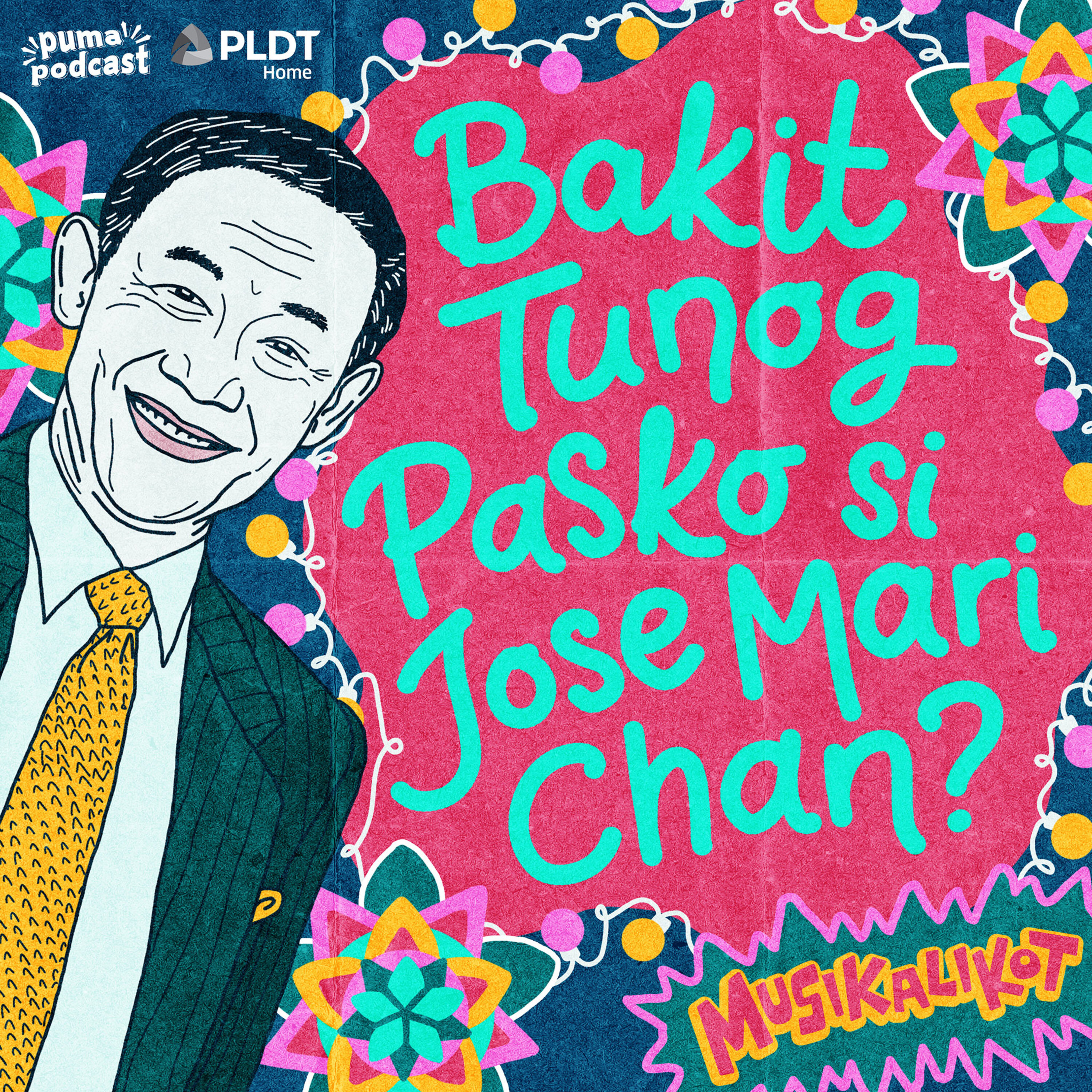
Tinalakay sa episode ang kasaysayan at ebolusyon ng musikang Pasko sa Pilipinas. Nagsimula ito sa panahon ng kolonyalismong Kastila sa pagpapakilala ng mga awiting panrelihiyon tulad ng "Villancico" at "Pastores". Sa pagdaan ng mga dekada, ang mga awiting Pasko ay umunlad mula sa mga tradisyonal na komposisyon tulad ng "Pasko na Naman" patungo sa paggamit ng wikang Ingles at paglikha ng isang natatanging tunog na Pilipino.
Ang pangunahing pokus ay sa kantang "Christmas in Our Hearts" ni Jose Mari Chan at kung bakit ito naging napakahalaga sa kulturang Pilipino. Sinuri ang mga elemento ng awitin: ang mga simpleng ngunit makabuluhang liriko na nagtuturo ng pagmamahal at pagbibigayan, ang istrukturang musikal na hango sa mga katutubong anyo tulad ng Kundiman at Villancico (na gumagamit ng pagbabago mula minor patungong major key), at ang natatanging, payak, at nakakaugnay na tinig ni Chan na nagpapadama ng pagka-bata at katapatan. Ang kombinasyong ito, kasama ang malawak na promosyon at pagtugma nito sa pakiramdam ng Paskong Pilipino—tulad ng pagdiriwang sa kabila ng init, pagbibigayan, at pag-asa—ang nagpatibay sa awitin at kay Jose Mari Chan bilang mga simbolo ng kapaskuhan sa bansa.
This episode of Musicaly-Cut is powered by PLDT Home. Experience the best that a digital lifestyle has to offer with the Philippines' fastest broadband. This is the season. Kuma kalem pagna ang mga kampana ng simbahan na ang minkun ng hamon at kakaimbiing ka. And, of course, maririnig ko ng busis ng paburi to natin musikero na para bang buhay na buhay ka pagpasko. Walang iba kondisi hose maritan. Pero teka, why do we associate him with Christmas so much? And why do we associate him with Christmas so much? And why do we take a staple of the past kong pinoy ang mga kantanya? Saagutin natin ng mga yan, sa episode nato. Ako simisi hoven puma podcast, at ito ang muzikalikot kung saan natin kinakalkal ang malikot nakasaysayan ng ating muzika. Alam na alam natin ang mga kantani hose maritan. Sabihin ko palang, whenever I see girls and boys, diba alam niyo agad title. Pero bago naggaron ng hose maritan, marami mo nang pinagdaanan ang Christmas music sa pinas. And for that, ba balik tayo sa panahon ng mga kastila. Let's hear it from Kreena Kayabyab, a musician and music educator at the University of the Philippines College of Music. So when this Maynard's came in the 1500s, the Catholic tradition of celebrating Christmas came along with them. The Christmas song tradition was, of course, heard in the liturgical ceremonies. The most popular genre is the Vigian Siko, which was actually not initially a Christmas carol or a Christmas song. It's a song, genre, for different feast day celebrations, such as you mga essential, you epiphany, and kasamadon yung Christmas. But later on, in the late 19th century, the popular Vigian Siko was more popular during the Christmas celebrations. It was a Christmas song, genre, that's often used. Popularly outside, the liturgical practices of the Catholic Church. This is pastores abelén, a lively villain Siko song about the pastole or the shepherds going to see the baby Jesus. Spanish ang lyrics nito, at hanggang ngayon, kinakan ta at sinasayo parin sa Pilipinas. If we're going to describe what the Gigi structure is, if you're familiar with the Kundiman, the major and minor relationship mode, it starts off first with a minor mode. Later on, it goes on to its relative major mode. So, again and then, the Gigi harmonic form of the Vigian Siko. So, Gigi's or a major mode, it makes you feel more light or upbeat or happy, and then the minor mode has a darker, dimmer effect. To illustrate this, here's a sample. That's the major mode, while this. Here's the minor mode. Here, the 30th of the 1930s is the Pasco Isumapid, which is one of the traditional Filipino Christmas songs. It's believed to be originally written in Cebu by Vicente Ruby and Mariano Vestil. But, originally, Christmas Carol, it was part of a play, and then later on, the Hango Etoat, Guinamid, Sony, Josefino, Cedizal, that's the Marching Song of the 18th of the 18th. Later on, in the 1950s, this song was written by Luis Lerio, and the Pasco Isumapid was written by the 18th of the 1940s. It was usually compared as the Gallo version of Silent Night, and then later on in the 1960s, most of the songs were written by Filipa De Leon, the one that was written by Luis Lerio, the Pasco Nanaman, and the Noche Buena, and then the song that was written by Ramos, the Himignang Pasco. Usually, we don't really know this, but in the melodic line, for example, "Well, let me dance, let me dance." In the 70s, combining English and Filipino lyrics became a widespread practice, and so, the first English Christmas song was born. There's one, I think it's from the vow composed by Hermi Ui in Feayala, a familiar cadunsa, a cantanisus and Fuentes, a beside and singer, the Miss Kitakong Christmas. So, this is the significant thing, since in 1975, the song was written by the cadunsa, and it was also written by the sound of the cadunsa. From the 1500s to the 1900s, the Christmas songs were written by the song Pinaigbago. This is what local flavor is. It's not only used in the weekend, but also in the lyrics. So, if we will look into the lyrics, it's very much experiential, it covers the experience of Filipino Christmas. The same thing happened in Filipino every Christmas. The usual tropical heat, so the nature of the song is not that good. We have the happy aramos, and we have the idea of the sadistic aginado, the most famous, we have the year-to-tradition, and of course, the most famous, we have practiced in a lot of christianized countries, and we have our own expression of what the most famous is. Again, by the 90s, the recording industry had already boomed. It was also very famous when Pinaigbago was the most famous. And this is what we saw in the first episode of the song. This is what it is. It's called "Mari Chan". JMC had a lot of Christmas hits, but because of frequent radio-airplay and its omnipresence, we saw the Christmas in our hearts. What inspiration is this? The melody of Christmas in our hearts is a song that was released in the first half of the year, which was the title of the "too big I buhae". That was in 1988. In 1990, his producer, during that time, Sibelitan, asked him to write a Christmas song. He tried to remember the Christmas songs that he grew up with. And these songs, there are many American Christmas songs. And he singed out one song, which was entitled "Little Christmas Tree". And from there, he took the inspiration of starting off with a minor mode, going to a major mode, which is Sabehanya, very Filipino. Coming from that condemon and villain-seical structure reform. So maybe we can find that connection. The melody that is it, influenced from the Christmas songs he grew up with, and "too big I buhae" in 1988. It became a really big hit in the 1990s. Sabehanya was the most famous double diamond seller in the world. The double diamond was 800,000 copies sold. And to this day, guess what? The number one best-selling album in the book on Filipinas is the Christmas album of JMC. 1990s, the song was released, because of the Christmas in our hearts.
Hold on to that question, 'cause we'll be back after the break. This episode was made with support from PLDT Home, which believes that the strongest connections are meant to be shared. Tawing Pasco, panay ang videocall sa mga kamag-anak, pagbati sa mga kaybigan through messaging apps, at patinaren last minute online shopping. Kahit yung paburito mong Christmas Carols maramin ang playlist na poed ang is stream. There's so much to do and so little time. But with a strong connection, siguradong happy ang iyang holidays. Magsiyahan, magawitan, at mag-mahalan with PLDT Home, the Philippines' fastest broadband. And now, back to the episode. Both Christmas and our hearts and its singers have their own charms. And yes, you heard that right. Singers, dahil hindi lang si Jose Maritjan ang Kumakan Tarito, kasamanya ang anaknyang Silizacan. Pero balikan natin ang tambala nila mamaya. Pag usapan muna natin yung kanta. We're here with another special guest to break down the song for us. I'm Lara Katrina, Mendosa. I'm a teacher at Atenei. I'm an assistant professor with the Development Studies Program. I'm a musician. I'm an ethomusicologist. So in the CCPN cyclepeed of art, a music volume, I wrote about John Maritjan several years ago, just trying to really give an overview of his impact in the music scene of the Philippines in the sense that OPM, his OPM contribution. Okay, so us saan muna natin yung lyrics. Boko sa opening line nakumalat sa internet dahil naging meme, yung whenever I see girls and boys, naging na wang whenever I see girls and boys and the boys and girls see me. Anum mong is special dito. The strongest appeal of the song is in its lyrics. It tells the Christ story. The lyrics hulf, tupe noisant mentalities, with its appropriate religiosity. Nativity scene story rooted in the Holy Family dynamics. Kot and kot, the season may be never forget to love you for Jesus. So it's not as materialistic as people making lyrics, "Buy special gifts," you know what I'm saying? Nakakapang leanis ng budhi yung kanta. It mentions virtues of giving, sharing, rather than taking, acquiring. It's not just feel good. It's a song that invites you to be dead. So when you hear that Christ must, it's a reminder of how beautiful and simple life can be if people were just kind and good to each other. Toto, and it speaks to our inner hopes, for a bright tomorrow, dahil yung din naman ang gusto natin lahat. Kayak na pakakap lifting ng kantangto. Speaking of lyrics, we also notice that, although pinoy song ito, englisang selita. It's something that we are used to as a people. We mimic styles from the west. So when we hear English, it's an aspirational language, do you know what I mean? I'm a linguist, right? So for those who do not subscribe to the idea, dahil yung glicero ka, mas magaling ka, or mas motalinoka. Kayak, so he did not believe it. However, I cannot also discount the fact that if you hear somebody speaking English, or English, you know, it's just like a level-up thing in Toto. Prina has another take on this. If you are 70, you will be able to reach your goals. In the 80s, you will be able to reach your goals, but you will be able to reach your goals in English. If you know the hits of what's it, or that's it, you will be able to say, "Do you know what to do whenever you want it?" Or what to say when I was young. Those songs became hits. And Jose Maria Chan was also known to write English lyrics rather than Tagalog. And maybe in the 1990s, this was yet again something new caught on to the listeners who were English and Christmas songs. [Music] We were able to see that Ruta is a Filipino Christmas experience of the instrument we used to play. [Music] With John Marys singing, it's a plucked, that's a key word for the sound. It's a similar plucked strings. And that's what the band is like. It's like a symphonic. [Music] Before you head to the refrain where his daughter comes in. [Music] It's a piece of drum. There's a bass line, or a bass guitar. But it's basically a bass guitar. It's a synthesizer. And sound effects. That's it. You'll notice that there's a significant impact on the background of the band. And it punctuates the song. Have you noticed that a lot of Christmas songs use bells? [Music] These bells? The band is a bit different. This is the band that is being played in the band. It's a song that is used to play in the band. It's an original Pinoy tradition. Finally, we can't deny that Hosema Rechans voice gives us Christmas vibes. Not just because we hear his songs every Christmas, but because there's something in the quality of his voice. Okay, so it's a little thing. Light, conversational. He sings because he has a certain connection with the listener. He's sure that he's able to do something. He has a certain or something that he's supposed to do. There's always a appeal when he's supposed to do something. Because he's a child like. So in that sense, it evokes something that is simple, uncomplicated. And because it's young, it's a young sound, it's not expected to be perfect or polished. In that sense, actually, very wrong as he jumbled. Very straight when he's delivering the lines. And he's also getting a lot of relief from his refrain. He's not just singing in the song, he's also the broad way to the song. It's just a bit of a hassle to the song. Or he's just singing his voice in the song. He's not just singing. That's why we're back to our story. It's just simple and simple to say to my friend. The singing style and the timbre of JMC's voice fit the season so perfectly. And it's just a little bit of a shame that his family is still alive. He's still a little bit silly. Jose Maritian and Christmas in our hearts have found a special place in the Pinoy Heart. It's just that he's still a little bit silly, but he's still a little bit silly when he's just singing. And we're excited about our JMC. Because it's just a mean. September 1st, he shared his meme with his family. Or I'll call him. But he's still a little bit silly. He's still a little bit silly when he's just singing. And he's still a little bit silly. [Music] [Music]
You can also check out another Puma podcast show, Dekateka, and look for the episode titled "What Makes a Christmas Song Filipino?" Detok in a usap natin si June de Leon, former chairperson of the NCCA about this. Memang ako entoren siya tungkol sa aman yang si Philippe de Leon. Y'know, the man hukong post, payapang daig dig, noo cebuena, and pasko na naman. Hanggang sa susunat na session. [Muik]
Podcast Summary
Key Points:
Ang tradisyon ng musikang Pasko sa Pilipinas ay nagsimula sa panahon ng mga Kastila sa pamamagitan ng mga genre tulad ng "Villancico" at "Pastores".
Umunlad ang musikang Paskong Pilipino sa mga dekada, mula sa mga awiting tradisyonal tulad ng "Pasko na Naman" hanggang sa paglitaw ng mga awitin sa wikang Ingles at pagbubuo ng modernong "OPM Christmas" sound.
Ang kantang "Christmas in Our Hearts" ni Jose Mari Chan ay naging isang pangunahing simbolo ng Paskong Pilipino dahil sa kombinasyon ng mga elemento tulad ng mga nakakaantig na liriko, kinaugaliang istrukturang musikal, at ang kanyang natatanging boses.
Ang tagumpay ng awitin at ni Chan ay sumasalamin sa mas malawak na karanasan at pagpapahalagang Pilipino tuwing Pasko, na nag-uugnay sa tradisyon at modernidad.
Summary:
Tinalakay sa episode ang kasaysayan at ebolusyon ng musikang Pasko sa Pilipinas. Nagsimula ito sa panahon ng kolonyalismong Kastila sa pagpapakilala ng mga awiting panrelihiyon tulad ng "Villancico" at "Pastores". Sa pagdaan ng mga dekada, ang mga awiting Pasko ay umunlad mula sa mga tradisyonal na komposisyon tulad ng "Pasko na Naman" patungo sa paggamit ng wikang Ingles at paglikha ng isang natatanging tunog na Pilipino.
Ang pangunahing pokus ay sa kantang "Christmas in Our Hearts" ni Jose Mari Chan at kung bakit ito naging napakahalaga sa kulturang Pilipino. Sinuri ang mga elemento ng awitin: ang mga simpleng ngunit makabuluhang liriko na nagtuturo ng pagmamahal at pagbibigayan, ang istrukturang musikal na hango sa mga katutubong anyo tulad ng Kundiman at Villancico (na gumagamit ng pagbabago mula minor patungong major key), at ang natatanging, payak, at nakakaugnay na tinig ni Chan na nagpapadama ng pagka-bata at katapatan. Ang kombinasyong ito, kasama ang malawak na promosyon at pagtugma nito sa pakiramdam ng Paskong Pilipino—tulad ng pagdiriwang sa kabila ng init, pagbibigayan, at pag-asa—ang nagpatibay sa awitin at kay Jose Mari Chan bilang mga simbolo ng kapaskuhan sa bansa.
FAQs
Malakas ang asosasyon dahil sa kanyang iconic na awiting 'Christmas in Our Hearts' at sa madalas na pagpatugtog nito sa radyo tuwing Kapaskuhan. Ang kanyang boses at estilo ay nagdudulot ng mainit at masayang pakiramdam na kaakibat ng selebrasyon.
Nagsimula ito noong panahon ng mga Kastila sa ika-16 na siglo, kung saan dinala nila ang mga liturhikal na awitin tulad ng Villancico. Ang Villancico ay isang genre na ginamit para sa iba't ibang kapistahan, kabilang ang Pasko.
Ang Villancico ay isang genre ng awitin na ginamit sa mga pagdiriwang ng kapistahan ng simbahan. Sa paglaon, lalo itong naging popular tuwing Pasko at naging bahagi ng tradisyonal na pamaskong awit sa Pilipinas, tulad ng 'Pastores a Belén'.
Ito ay naglalaman ng mga lirikong nakatuon sa diwa ng pagbibigayan at pagmamahalan, imbis na materyalismo. Ang melody nito ay may kombinasyon ng minor at major modes, na tipikal sa istruktura ng mga tradisyonal na awiting Pilipino tulad ng Kundiman at Villancico.
Noong dekada 1990, ang paggamit ng Ingles sa mga awitin ay itinuturing na 'aspirational' at nakakaakit sa mga tagapakinig. Si Jose Mari Chan ay kilala sa pagsusulat ng mga liriko sa Ingles, na naging bahagi ng kanyang estilo at nakatulong sa pagiging popular ng kanyang mga awit.
Ginamit ang mga plucked strings, synthesizer, at sound effects upang lumikha ng mainit at masayang atmospera. Ang paggamit ng bells at mga tunog na pang-Pasko ay nagpapatingkad sa damdamin ng selebrasyon at nagbibigay ng kakaibang karakter sa awit.
Chat with AI
Loading...
Pro features
Go deeper with this episode
Unlock creator-grade tools that turn any transcript into show notes and subtitle files.
 PodcastTranscript AI