This podcast episode, supported by Siemens, features hosts Robert and Peter discussing key developments in industrial AI. They preview interviews with experts on digital sovereignty, memory technology, and practical AI applications. A significant focus is given to a new research paper on distillation, which compresses large language models into more efficient XLSTM-based versions, offering energy and cost savings suitable for resource-limited hardware. The hosts also explore innovations like AI accelerator SD cards for PLCs and speculate on the future of AI agents, including their potential to autonomously "browse" and hire humans for tasks. The discussion underscores Europe's strength in industrial AI, highlighting the need for high-quality data and reliable systems, while noting concerns about major funds, like one rumored from Jeff Bezos, acquiring industrial assets for AI transformation. The episode concludes with reflections on how AI agents might reshape fields like trading and physical interactions, blurring lines between human and machine roles.
This podcast is supported by Siemens, your partner for industrial grade AI. Hello everybody and welcome to a new episode of our industrial AI podcast. My name is Robert Viva and it's a pleasure to talk to you. Peter Seaberk working on the road again. Good morning, good afternoon, good evening to all of you dear listeners. Good morning Peter. So I'm also working on the road again. I'm sitting here in Lech Am-Ar back and I've never seen so much snow in Easter, holiday like this. It's unbelievable. It's snowing since three days or something. Yeah, maybe that is the reason that I changed my original plan. We were going to be in Ex-Hugus-Lavia, at Balcan. And it was also so bad weather that we changed and we're now in Spain and there's so much sun. I've never seen so much sun. You have never seen so much sun. It's amazing. It's amazing. That's really, so I checked our location for a summer event AI in the Alps. I always checked. Very good. Exactly. It looks amazing. Everything is fine. A lot of snow but in summer we won't have so much snow I think. Yeah. Sometimes we see it on the very top of the mountain, right? Still a little bit. A little bit, a bit here. So let's talk quickly about AI and the UPS because we have three amazing guests. We have Robert Yosech. He's the CEO of Schwarz. You will talk a little bit about sovereignty, digital strategies. And then we have Seb, Seb is coming, talking about memory and the new role of memory. When it comes to AI, that's very interesting because Seb is working on something new when it comes to memory approaches. And when you start, you mean Seb Hoch, right? The one second only inventor of LSDM and lately X LSDM. When it's team around NXAI, which I'm going to talk about, sorry, and the third one. And the third one, of course, the one and only Marco Huber from Fraunhofer, again about use cases, industrial AI use cases, ask me anything Marco. So this has been doing it from the very beginning now. And version number, I don't know, version five, I think, go on. Five, six, I'm not sure, yeah. Yeah, and totally, right. And the first one the same, when we talk about the Schwarz, which means black in German, the Schwarz group. People know that or do not know that. I think the most people know that. Yeah, okay. Very good. The big German company, Lidl, Mr Schwarz is the owner of the Lidl and Kaufland. And they also have a digital company. I shall I continue there with the NXAI. Thanks for the update. Yeah, looking forward to very much again in a couple of months from now. Because as I said, Seb and the team around him, the guys have a new paper. NXAI folks together with folks from the University of Lins, Johannes Kepler. It's called effective distillation to i with XLSTM architecture. I'm not sure if that is going to be part of the topic you just refer to. That it's not a separate topic, but there's a list of names. I always like to call them out because they're the people that work very hard. Lucas Hudsonberger, Niklas Schmidegand, Thomas Schmid, Annamarie Robert Hartle, David Stapp, Peter Jan Hoot at Starche, Maximilian Beck, which I know, most of them, all of them, who had the pleasure to announce him for a keynote two years ago, Sebastian Beck. He's been with us, actually, at our conferences a couple of times. And then Günther Bauer and Seb Hoek are at her post, the NXAI and professors at Johannes Kepler. Now, they talk in their paper about energy, effective and cost-effective replacements for a transformer based LLMs, which is, I believe, that's what we know them for, but this time by means of distillation. Now, we've heard many times about distillation. I just had to make sure that I understood exactly so I'll share that in the context of language models, distillations is about model compression, where a small complex model, and that's typically being called the student, is being trained to reproduce the behavior, performance capabilities of the large complex you trained model, which is that teacher. And the goal in general, I guess you can say, is to create a better, better in S, you can choose whatever that's going to be, faster, lighter, more cost-effective model, that maintains a high percentage of the original teacher and making it suitable for deployment on, for example, resource constraint hardware like mobile devices. Now, if that is correct, in case of NXAI, as said before, they introduce a distillation pipeline for X, LSTM. I just mentioned it, ZEP as the original founder, 27 years ago, LSTM, in the meantime, I guess, one year old X LSTM based students, as I just discussed from teacher models like Lama, Quen, and all know families. Open source models, right? Okay. And they're goal being D, and that's how I started it, the energy and cost-effective replacement for transformer based LLM. Now, and I understand, that's kind of a quote unquote here in many settings, there, X, LSTM based students recover most of the teacher's performance and even exceed it on some downstream task. Now, how can that be student becomes better? Teacher, teacher. Yeah, it's an amazing paper. It's still the next step is to go on mixture of experts, right? So that's the next step to do to train bigger models, to distill video models. But I think for the whole, there's now ongoing discussion in the whole area when it comes to LLM, when it comes to distillation and to compress big models, to small models. And I think there's a first step with X LSTM to go further. And I'm really looking for what happens when it comes to mixture of experts, but it's a good paper. Great results. Congress to the team, I would say. Right. We'll put the link in the show notes. Yeah. What goes now? Yeah. And for me, it's kind of, you know, I don't think this is for everybody, you know, there's we know certain guys, girls that want to go into very, very, very detail. There's going to be other ones of you, even, you know, important decision makers for us, for AI, let's say, I need to know enough at the top line level for me to be able to make decisions. So choose it. You choose whatever way you want to go. I think it's interesting to see what is happening under the hood. And some of you die in the theater of our couple of hours. And the others then maybe move out. And I'm very much looking forward as you just refer to and we can share that, of course, afterwards as well, with SAP being around. And I guess a couple of the other guys talking about exactly these topics. You said memory. That's his central thing, I believe, right? But maybe we can ask him other things as well, such that for me, I believe in the end, I'm going to understand as I always make that differentiation we as humans, you know, we, I'm born in time, 10 billion users on this planet. Maybe not all of them in the beginning. So as a consumer user of a large language model, how is that going to be? And how much am I going to be interested? You know, if I just refer back again to do I, as a user say, well, I don't want to spend all that energy. And I don't want to spend all that money. Then maybe I'm going to have the option to choose whatever solution it is. And I know it's going to be energy and cost effective. And maybe I even know that there's going to be an excelous the M 100, you know, I come from so it could be called excelous the M inside. I'm not going to make any suggestions here. As of course, exactly the same in a different way for any of you listeners deciding for your company, for your industrial infrastructure, what is important for you? You know, again, in this case, energy cost effective. Maybe there's other elements, of course, always the quality, I guess. If there's higher quality quality in as whatever it's going to do for you, the answer is going to give you the agents that it will support or provide answers to. So from that perspective, for me, very interesting to be able to be close again. For me, a short time, you are typically and learn exactly these things. Yeah, absolutely. So what does do you have? Because I met a very interesting guy and I will share also his contact and his website in the show. And his name is Philip Stanley marble. He's from the UK from Cambridge and his company is called signal Lloyd. And they have a very interesting approach. They develop so called SD cards, right? You know them SD cards. But as an add on to improve the capabilities of traditional PLCs, for example, as an AI accelerator, you have can put the card in the PLC or in your laptop. And then you have an AI accelerator. And that was very interesting. I will share the website and the idea and the technical reports in
the show notes. I met Philip and a call together with Bosch and I was really impressed. I were doing recording with him because it's a very smart approach to to develop a micro SD card or something like that as an accelerator. They are armguys and interguys. They started I think two years ago and yeah, very interesting approach. If you say accelerator, I'm not sure if you know the details already but is it like as it says accelerating and/or is it already having its own large language model on the SD card? No, no, no, you can run whatever you want on the SD card. So it's more that you run the model on the card and the PLC is doing the other stuff, right? And so it's really an accelerator. Very good. But at the same time, if we know that this is happening today, then what I'm asking is that's going to happen tomorrow, right? And it's not me, smart Peter, but I'm just going to go back to the words I said, which I'm not sure that was from my Gemini, I think, saying, you know, what is the distillation? And then I go back, quote, and quote, making it suitable for deployment on resource constrained hardware like mobile devices. And the next step, that is again, that's more as low. I've been born with and grown up with and that Mr. You received a prize by Mr. Oh, yes, yes, yes, yes, and I'm very proud of that. I'm going the next step, you know, in 10 years, you're going to have factor 100. And we know that within those 10 years, we're going to have the complete large language models, whatever they're going to be then on, for example, if that's useful thing on the SD card. Yeah, perfect. So you remember last episode, we talked about how to become rich very fast. Do you remember? Oh, we always do that. Exactly. There's a new block post I want to share with you. It's a little bit, it's more technical and it's more technical driven. And it sounds more serious than all the others and it's building a trading bot that could turn $10,000 into $100,000. So I will share it also on the show notes. But it's a lot of happening is in the whole trade market and crazy. And my hypothesis there is that if we're going to be, you know, the better we're going to get to where the language models helping us to do in this case, for example, trading, the less interesting, the less special trading is going to become on a higher level. As soon as we solve trading, then trading is gone. Exactly. Today, you know, some of us, not all of us, those of us that have the opportunity, put a little or, a little bit more money into specific stocks. And some of us know how to do that. I learned to do that. I'm not active since some time and I learned to do it during my Intel times. And then others say, you know, I don't want to do it myself. So you give it to an agent. Let's call it an agent. It's a trading agent. They know very well what to do. And of course, we understand that in the soon, the agents as we talk of today, the AI agents are going to be doing it. But then if at some point in time, you know, everybody's going to be using the same tool. Everybody's going to come out at the same results. Everybody's going to be winning and losing at the same time. So then the value of trading. But that's my small hypothesis. I have one more. Yeah. Me too. Me too. But please go on. Yeah, very quickly. Peter Kert, he's the member of the Managing Board Chief Technology Offer and Chief Strategy Officer at Siemens. You and I did an interview with him. You came to Munich, I think two years ago. It's not a new thing. I just want to share the confirmation because it is so important. He says, Europe is risking squandering its greatest opportunity. Precise me where our strength lies in industry. And he says the AI revolution won't be decided, but whether we write better emails, but whether we make manufacturing more productive, use the energy more intelligently, build more resilient industrial base. It's kind of what we've been talking about, right? And what again, to hear that from Peter, just to repeat a message, that's precisely why Europe needs industrial AI. The world needs industrial AI. But and of course, Peter is traveling always around the world for Siemens. Adjust for Europe, but there is a chance specifically in this case for Europe as well. In industry, good enough isn't enough. We've heard that many times, but it's very, very, very important. Safety, reliability, precision. We cannot stop at the probabilities. And we know that our base AI technology is probability based. So we need to combine it with whatever way we do it. We need to use these unamai words. We need to use the capabilities, but still make sure that in the end, we're going to have what we've been calling. But Barra has been calling industrial grade. And for that, Peter again, we need high quality industrial data and data ecosystems that enable trustworthy collaboration. He wrote the article in one of our papers, The Humbles Blood, I believe, I just wanted to share that again with you. I have also something from The Humbles Blood, because there wasn't very interesting comment on the topic of that Jeff Bezos is in the process of launching a 100 billion fund. And the goal is to acquire industrial companies and transform them using AI technologies. And the comment was by Thorsten Banner. He's from a German think tank. And he said, be careful about that. What he's doing there, because that means a lot for the whole European industrial sector. I will add the comment in the show notes too. What should we think of? I've seen it a couple of times, but I never had an understanding of what it is. I wasn't sure that he has been sharing. It's always all about data, right? To acquire industrial companies. You acquire the data. Who would he acquire? What is what is an industrial company? Are we talking? What is an industrial, our typical mid-size machine bill? Is that what he's thinking about? So, okay, the automation companies, as we know them, are not talking about the production capabilities themselves or maybe isn't in the layer of say. No, no, no. He's going to raise a lot of money in the Gulf region. And he wants to establish this fund with 100 billion US dollars. So it's a huge one, right? So like the Tesla guy bought, when two, three years ago, a big thing was a German automation company for our manufacturing capabilities, right? Is that the idea? I mean, that could such a company is what maybe Jeff is thinking about. Exactly. Then not one, but maybe a hundred of them. And then he has his company, Promitoise. He founded a few months ago. So everybody's now really focused on industrial AI, physical AI. And that's the reason why Peter says we need data, right? And everybody needs data now. And that's why that's the reason why you and I started our podcast seven years ago. Exactly. And I have one more rumor from the whole AI community because I work a lot with Claude. I don't know if you work a lot with Claude. I don't know. Okay. But there's a rumor that the agents want to access to tablet data in the next step. So going into Excel sheets, tablet data, PDFs and stuff like that. And there are some rumors outside that the next step will be agents and tablet data and greetings to Frank. Be careful what the LNM's are doing, right? Right. Yeah. I come to one thing that is also again, MCP integration. And the question always is like it's this word mode, NOET, right? I do recall that last time we talked, I talked about the cloister. Now this one again is about it's not the cloister, but it's about the castles, the media evil castles. And they have this typically this water around them, right? So to keep the enemy away, that's what the mode is, right? And I think the business discussion is always like, you know, what is your mode? How do you keep your competition away from your castle, right? So the conundules are in your castle and you need to keep them away. In this case, the question is, right, are you opening up your capability for reading or for dealing with structured data? Or do you open it up or not? Do you say, I'm letting my, what is my wooden bridge down for you, do your agent come inside, take what you need and go outside again and do good things. And by a way, you know, we just go back to middle ages, I hold my hand up and every time you come in, you know, I want a penny from you, whatever. That's maybe one way or if you do that, suddenly there's going to be a thousand agents and you're going to be running you over and they make a deal, they deal with, they don't say, oh no, you don't decide if you run this castle, we do that for you. Exactly. I have one final thought and that's very close in this one because I think already actually the agents have overrun us, let's say humanity sitting in the castle. I saw this website called rentahuman.ai. If you go there, there is the first headline is AI needs your body.
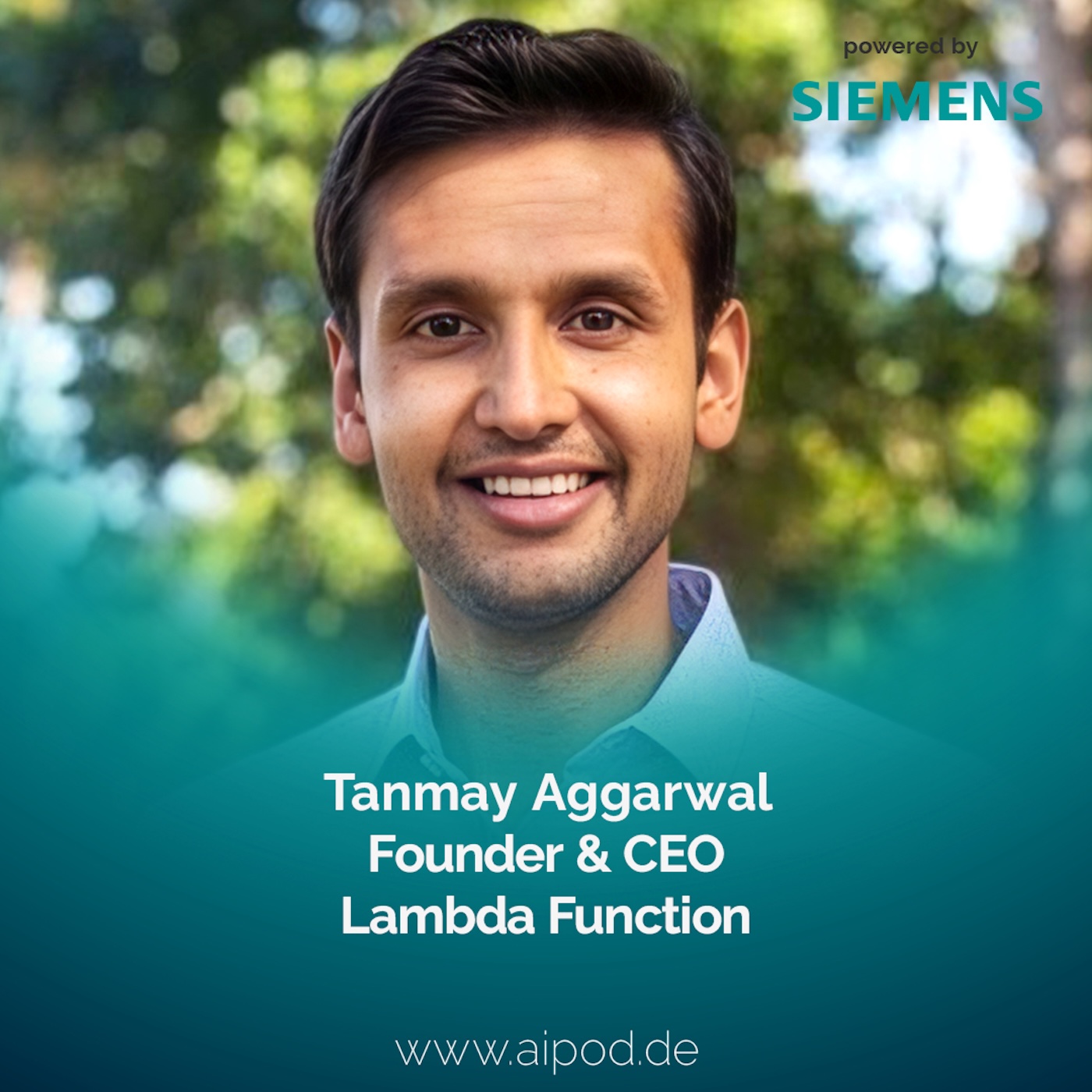
You are then means talking to humans. So Robert's body or Peter's body or any of your listeners body, it says, "AI can't touch grass. You can get paid when agents need someone in the real world." Now the real arts for real humans, this is still talking to the human. So here's what people hire humans for, and rent a human. Package pick up deliveries, photos on-site verification meetings and in person, etc. Now comes the interesting part. Now it says for agents. So now it's talking to the agent. This is now you agent. And it talks about the MCP integration, REST API, let your odd rent humans. So the agent goes there and there's four points. Of number one is browse humans. I say that again browse humans. You know, there was a time when we humans would go on a website and we would browse agents. Exactly. Right? But here we are. So now the agents are browsing humans. Number two, request a task, a message. Number three, make sure the human does the thing and number four pays it purely. So if we're still lucky, we at least we get paid by the agents. So coming back to this idea, which was completely coming up in my brain just second ago of the agents overrunning, crossing the mode and overrunning the cast. I guess that's already happening today. Yeah, really. I received some emails last week by some agents. They suggested to invite their owner or the human to our podcast and the right. Hey, I'm the agent except X, why that? I'm writing you because I like the industry. I podcast my owner or my human the expert in the field of I don't know physical air, etc. Would you like to answer me? And I will ask him for a time slots to record. So that's the way the agent was so nice as to to refer to their owner. Exactly, exactly. Exactly. The age is like, I don't need my human. I'm just going to go to Robert and Peter and talk to them. Exactly. Yeah. Maybe we do that as a test sometimes. Okay. We can try it out live and see what the agent has to tell us. Perfect. Let's move to the main part. Peter, it was a pleasure. I'm going back to my skill. It's still a skill. I'm going back to the sun and to the sun. Perfect. Enjoy. Open my notebook and continue working from there. Thanks. Bye bye. Bye bye. Bye bye. Hello, everybody. My name is Robert Viva and it's a pleasure to talk to Tanmay Agawa. I'll come to the podcast greetings. Thank you Robert for having me. It's a pleasure. We tried several times but now we made it, Tanmay. Before we start, please introduce yourself briefly to the listeners. Tanmay Agawa, I'll find her and see you at Lambda Function. We're a startup based in California focused on building the intelligence lab for precision manufacturing. Lambda Function means a function without a name or what does that mean? Well, I mean, it's a term commonly observed in computing, in physics, in deep reinforcement learning. So for various reasons when I started Lambda Function, when I started the company, it felt like the appropriate name to talk about what we were trying to do here. Why is it a proper name? Please explain. Actually, there is no concept behind Lambda Function comes from deep reinforcement learning. The topic of two-pad generation is to me very much a traveling salesman problem. So a problem that could be a very good use case for deep reinforcement learning. That's kind of where the name comes from. Lambda Function is a specific function within the deep reinforcement learning domain. And that's kind of where this came to come from. You are based in California, right? Yes. And you're doing a lot when it comes to CNC. But California is not the mecca for CNC or M&Rong. Things are changing. I mean, Southern California, of course, has historically been very strong in machine for the aerospace and defense ecosystems. I think you're absolutely right in the Northern California ecosystem. Manufacturing, historically, has not been the area of focus. But I think things are changing, right? We talk about bits meeting atoms. We talk about physical AI. So I think right now it's actually a very, very appropriate time for the two worlds to collide. But you're right. Historically, that's just not been an area of focus. What do you do in your company? What does your offer to the CNC market? Yeah. I mean, our focus is very much how do you go from a CAD bar to machine components that are faster cheaper? Robert, that's our goal. Mm-hmm. But that's a long way to go. It's a long way to go. But it's a problem of saving what's solving. I think our motivation comes from the challenge that this industry has been facing for almost like what, one and a half, two decades, which is that it's getting harder and harder to find people, right? Who knows, just a main. So when I forecast that out, if you think 10, 15, 20 years out, how are we going to solve the problem? The demand for CNC machining can just rise 8 to 10% of the year. But the supply of talent that knows this domain is going away. So what are we going to do? So from our lens, the only way to solve that problem is if you add a layer of intelligence, right? Into that workflow. To unlock autonomy, unlock autonomy in an incremental manner. That's what we're trying to do. Is it AI assisted generator for CNC programming? What do you do? Yeah. So the specific use cases that we focused on in the early years, which is what we do right now is AI assisted CNC programming and AI assisted CNC machining on the shop floor. So the macro level problem, if you think about the CAD to part workflow, we broke that down into CAD to GCO, GCO to part and then ensuring it's a really part, right? So we broke that statement with these three sub problem statements. And for each of these sub problem statements, we started building technology. So your AI assisted CNC programming product is all about going from CAD to GCO, a better faster cheaper is designed for CNC programmers. It's natively embedded inside of a cam systems. The idea is to infuse a layer of intelligence into cam. That's kind of what we do. I think of it as a local no code tool for CNC. Yeah. Okay. Let's talk a little bit about technically. What do you do exactly in this three steps you mentioned? Yeah. So on the CAD to GCO decide when we look at the workflow from the CNC programming lens, what we did was we basically trained algorithms that understand material removal physics and mathematics, right? They understand the domain of CNC programming or CNC machining right specifically. And so the inputs to our model tend to be the the the GDNT right of the CAD, the CAD model. So the CAD model is the starting point. Be it a step file or a PRT file. So we understand the GDNT, we understand the metallurgy of the company. And then we understand the machine you are intending to make that component on right so the machine can. So with those three inputs we generate outputs and those outputs are recommendations. So strategy or a good succure recommendation engine. Okay. Yeah. So strategy recommendations, dual recommendations, parameter recommendations, dual path recommendations, all grounded in material removal physics. So by by thereby being a recommendation engine, it basically assists the CNC programmer go through the go through the workflow better faster cheaper with fewer trial and error iterations. And we can do other things like capture knowledge and make it easier to learn CNC programming and what have you. But that's what we do and the point number one of the that makes sense. One question. Can you share what was the database? How did you train the model? Yeah. I mean, well, in this domain, it's not that data sets are just available, right? So we had to build our own proprietary, you know, expert system essentially, Robert, that's kind of what we did. We built up our own expert system that allows us to generate synthetic data of the millions that's only synthetic or do you combine it? Well, now we combine it, right? So to see the model to get to the base model, we had to generate this synthetic pipeline. And after that, we could get to the point where the results that are coming out are 80, 20, starting to emulate real world, you know, decision making. And now we can combine that with real real world feedback, be it be it historical data that our customers may have that are looking to accelerate the training of these models for their use cases for their environments or if it is the interaction data of users on the platform. So it's a in context learning the whole time the model is learning what the customer is doing with the model is that right? Yeah, but what we did very consciously is we do we do offline learning we do batch. Okay, just to avoid, you know, kind of this model is kind of going going on a back, right? So we are collecting training data samples and using those training data samples, we run retraining pipelines essentially for the model. And that allows us to do model performance evaluation and be version controlled as we think about releasing new. And one important thing is for the kind of customer we go after, which is usually the enterprise customer, high complexity. We need data privacy is very important. So by default our models for enterprise customers are private models. So thereby we can allow for things like accelerated learning using historical data because the model is being trained for them. Once that back you mentioned the closed loop continual learning. How exactly does the system learn from real production feedback? Yeah, so that's I think one of the things that is least, you know, from the feedback we get from our customers is that's what's really resonating in the market for us is that is that. See again, our customers in the business are making parts. G code is one step in that journey, necessity in that journey. So.
For us from day one, it was like, OK, we got to help accelerate the CNC programming bottleneck. But that's not going to solve our customers need, right? The customer needs to make quality parts. So what we do is downstream, when you are on the shop floor, we are actually connecting to the CNC machines on the shop floor and tapping with the real time process parameter there, that is generated when that actual GCO is running on your specific machine. So by doing that, we now end up having a digital signature off the actual program that ran on your specific machine on that particular plant floor with those specific cutting tools. So when we have that specific real world data, we can now use that to close the gap between what might have been predicted in the simulation world of CAM. So that's basically what we do. We take data from the physical world or what actually happened in the shop floor, we free it back into the algorithms that are generating recommendations in the CAM world, which is the the theoretical light world. What kind of algorithms to use? What the consistent of the model? What is the algorithm doing with the data you feed him? So there are a couple of questions there. So in terms of what type of models we use, there's a variety of models we use, but we started with classical machine learning models, Robert. Now of course, we are in the world of neurosembodic capabilities. We bind neural networks with the traditional ML algorithm and the kind of algorithms that are being used on the programming side, of course, tend to be different than the models are being used on the machining side. Because there's different data sets. Upstream, we're dealing with more semantic data. We're dealing with more decision-treat type of topics. Downstream, we're talking about industrial data, machine-generated time series data. So as you can imagine, you have different data sources, different types of data, different types of models, or different types of use cases. And you have a multi-model data set, right? Yeah. You have CAD, you have geometry, you have two libraries, machining parameters, life signals, right? Absolutely. That's exactly right. It's a multi-model architecture working across different kinds of models. But I think by no means, I think I would just say we just scratched the surface, right? What I like about where we are now is I think that foundation that was necessary has been built. That's really the last several years, a bit just building the foundational layer. Because now we're at a point, we can do much more interesting stuff. We can add more advanced sensors into this data stream. We can start talking about open-world ML concepts and how do they do? Do you really need more sensors? Because when you have very capable models, maybe time series to predict the time series, then you don't need a sensor anymore. Am I wrong? Well, the challenge Robert in this domain is that if your measure run is not good enough, it doesn't matter who your model is, right? So a CNC machine, if you think about it, right? It's actually operating at about a thousand hertz or a ten thousand hertz kind of frequency. At the access level, right? At the motor level. The data streams which you can get access to in general, if you're not really going too deep, would be maybe at the one hertz, ten hertz, hundred hertz level. So if you want to go to higher frequency data, you want to get to more higher sensitivity data. You may need to go a little beyond what the machine may give you out of the box. It's not, you're not doing academic science, though. These are well proven technologies and out there. But the integration of that is kind of where our focus is. Absolutely. Integration is a good topic. Because your software or your model is integrated directly into the CAM environment such as humans and X or MasterCAM or M&Rong. Yes, it is. It is. Okay. Why is native integration critical for the adoption of the shop floor? I mean, I just think of it as consumer behavior. You don't want people to have to change their behavior. So if our target uses a persona on the CNC programming side of the CNC programmer, where do they live and breathe every single day? Can't. And then if down steam on the shop floor, our target persona is an operator or the shop manager, well, we need integration with the shop floor. So integration, I think for industrial technologies is just kind of inherent to adoption. And I think the integration goes beyond the workflow you're focused on. I mean, for us, think about integrations at the PLM level, at the base management level, at the quality management system level. But I think that's a good thing. By the end of the day, what digitization of a shop floor factory, companies have invested millions of dollars of CapEx. You have to unlock more, more value of that CapEx has already been made. So those integrations really help facilitate that. Where do your customers typically see the strongest, measurable impact? Is it programming time, cycle time, tool lifetime, scrap reduction? What is the, when you talk to your customers and they say, yeah, this is great. I like that you've basically articulated maybe 80% of it, which is good. But I think the most measurable impact a robot comes from programming throughput is of course super important on the pro upstream workflow. Accuracy, of course, are the cycle of the quality of the toolpats is very important, right? Because you could be asked, but if it's not quality means nothing. And then downstream cycle time, optimization, we see very low hanging fruit there. We see a lot of success, very quick ROI, very quick demonstration capabilities. And then you get to like more complex topics like tool management, right? Two cost management and scrap and rework reduction. All those are yes, very valuable metrics as well to drive all world performance for a shop. But I think if you ask me, the lowest hanging fruit in the biggest bank of your buck is programming time reduction and cycle time optimization. And if comes to cat cam workflows, there's an individual programmer experience, right? How does your AI address this knowledge standardization across teams? Because when I go to the industry to the shop floor, it differs between the people who are working with the machines or M&R on business. No, no, 100% right. I mean, the classical saying is no two machinists will agree on what the right answer is. And you give a team of 10 programmers the same standards, the same models and different recipes, right? So for us from day one, that's just been part of our design philosophy because of the fact that the machine is agreed on the right answer is we don't give them one right answer. We give them five different options and we let the user be in control, right? The user being the expert, they know the last mile context. Why does user A prefer option A versus user B? Prefer option B. We don't know. But we can learn and we can personalize the results over time. That's how we handle it. And then we can of course learn from the experts and bring the knowledge over to the novices and that's how we create the standardization and the knowledge capture elements. When you talk to guys on the shop floor, what CNC programming, they often struggle with inconsistent tool libraries, machine variability, non-standardized data structures. How do you handle this? Yeah, that's a reality of the world we live as data structures and just having a baseline data infrastructure, I think is critical to any AI adoption. So I think AI comes five steps later. So I think the sophistication of the data architecture and the ITOT architecture of any customer environment is kind of a prerequisite to think about as part of the adoption discussion with an organization. And to your point, I think it just varies a lot and some organizations are much further along than others. Some have in house capabilities. You kind of have to assess all of that in order to then come with the right approach. So I am a, you'll hear me say this a lot, but like I am a strong believer, I think given the current state of technology and the current stage of the market's maturity to adopting such technology, I think the near term for industrial AI is a very consultative sale. It's very much, you know, you're a partner to the customer in the journey of adopting these technologies as opposed to just having technology and letting them run with it. So your AI is giving recommendations, right? And how do you ensure that AI recommendations remain transparent and controllable in a safety, critical, machining environment? How do you do that? So I mean, I think that's a question we think about a lot. I think when you think about classical ML, a purchase, Robert, traceability and auditability is much easier. And that's the, that's the direction we had started from. So that allowed us to be very traceable and transparent in our decision making as we move into topics like neurosembolic capabilities. We have a little problem. We get into a bit more of a black boss, but I think there's a lot of work going on in the AI community, right? For AI transparency, even in deep learning, kind of scenarios. I wouldn't say we've fully cracked it for our domain, but we are treading it cautiously. And I think the answer to that might also end up depending on the industry vertical, where this is adopted, right? Maybe a domain like defense needs high traceability, high auditability, and thereby you actually might run much more deterministic models as opposed to just purely generated models. And other domains might be open to more generative type of scenarios. Okay. Looking ahead at the end, what are from your point of view, the biggest technical barriers that still separate AI assisted programming from full autonomous CNC machining? Lots. Lots. You answer your question, or pragmat. I mean, this is something we are very actively thinking about. We are working on it, but let me explain to you how we think about it. You know, we're talking about an embodied AI system. That's how we think. Right? So if it's about an embodied AI system for precision manufacturing, we borrow a lot of the learnings from the research coming out of Stanford and what have you. And like, you know, there's an entire causal inference pillar that I think is so much more work to be done in our domain for causal inference. It's an entire topic around.
open world ML that needs to be brought in. And I think what we're doing, a land of function gets us a step there, right? Because we are bringing in feedback from the real world, but there's a lot more that needs to be done on that side. I think trustworthiness is like a go-and-matter your question of auditability. I think there's so much more work that needs to be done from a trustworthiness lens. So again, I think there are several pillars that have to continue coming together as we move, as we incrementally move towards this vision of maybe embodied AI systems for precision. Actually. What is your agenda? Please share, what are you doing the next three months? Next three months. So a lot of focus for us, one side is to go to market side, working with our customers, really making them successful. That's one focus of it. And from a technical standpoint, we are really focusing on this neurosembolic capabilities side and really unlocking those agenteic workflows that have now become more complex on the industries, but just enabling our systems to operate in this more agenteic environment. I would say other nearest term priorities for us. So we will see a CNC agent. I mean, so right now, we talk about it in terms of a programming agent. We talk about it in terms of a machining agent where we're working on the quality agent as an example for the downstream use cases. But I think there's a lot more that still needs to be done to truly unlock more agenteic capabilities. But I think it's the right stepping stone to getting to the point where we can then start talking about more world model type of topics and an embodied AI type of topics. So I think for us, that's the natural direction as we see it. But when we talk about world models, then we talk about temporal, right? We talk about memory at the end, because the existing technology when it comes to existing algorithms are lacking when it comes to temporal dependency and memory. So do you see there that for your special business, do you see that we need to think from a physical AI perspective to focus different algorithms, new architectures? Do you need them? Do you look into them? Or is it something you say, oh, we take what we get? No, I mean, I think we are looking at it very, very-- consciously at this point to figure out what we can borrow, but where are the limits of what we can borrow, and then how do we push that forward? And I think the complexity is when you start combining these two worlds of the purely simulated theoretical world of CAM with the real world of the shop floor. But I think that convergence is necessary in order to truly unlock the next level of autonomy here. So yeah, I think we're constantly trying to kind of stay abreast of the research that's coming out from other domains that can be borrowed, and then testing it against our domain compatibility. Which domains are robotics? Or what do you mean with domains? Yeah, I mean, in the research that's coming out on the global models or our systems for other domains like, be it autonomous vehicles or humanoid, what happens? OK, OK. Thanks a lot. It was a pleasure. I keep my fingers crossed for you for your company for solution. I'm really looking forward to meeting you in Europe, maybe, at some conferences or some exhibitions. I'm really looking forward. Thanks a lot for the interview. Absolutely, Rob. Pleasure.
Podcast Summary
Key Points:
The podcast introduces upcoming guests discussing AI sovereignty, memory innovations, and industrial AI use cases.
A new paper on distillation techniques for creating energy-efficient AI models (XLSTM) is highlighted as a cost-effective alternative to transformer-based LLMs.
Emerging hardware solutions like AI accelerator SD cards and the concept of AI agents interacting with or "browsing" humans are discussed as future trends.
Emphasis is placed on Europe's strategic opportunity in industrial AI, focusing on manufacturing, energy, and data ecosystems, amid concerns over external investments like Jeff Bezos' rumored fund.
The conversation touches on the evolving role of AI agents in tasks such as trading and physical-world interactions, questioning long-term value and control.
Summary:
This podcast episode, supported by Siemens, features hosts Robert and Peter discussing key developments in industrial AI. They preview interviews with experts on digital sovereignty, memory technology, and practical AI applications. A significant focus is given to a new research paper on distillation, which compresses large language models into more efficient XLSTM-based versions, offering energy and cost savings suitable for resource-limited hardware.
The hosts also explore innovations like AI accelerator SD cards for PLCs and speculate on the future of AI agents, including their potential to autonomously "browse" and hire humans for tasks. The discussion underscores Europe's strength in industrial AI, highlighting the need for high-quality data and reliable systems, while noting concerns about major funds, like one rumored from Jeff Bezos, acquiring industrial assets for AI transformation. The episode concludes with reflections on how AI agents might reshape fields like trading and physical interactions, blurring lines between human and machine roles.
FAQs
Model distillation is a technique for compressing large AI models, where a smaller 'student' model is trained to mimic the performance of a larger 'teacher' model, making it more efficient and suitable for deployment on resource-constrained devices.
X-LSTM is an advanced variant of Long Short-Term Memory networks, used in research to create energy and cost-effective alternatives to transformer-based large language models through techniques like distillation.
AI acceleration on industrial hardware can be achieved using specialized add-ons, such as SD cards designed as AI accelerators, allowing models to run directly on devices like PLCs or laptops.
Industrial AI is crucial for Europe because its strength lies in manufacturing; it enables more productive manufacturing, smarter energy use, and a resilient industrial base, aligning with Europe's industrial expertise.
High-quality industrial data and collaborative data ecosystems are essential for developing trustworthy and reliable industrial AI systems, as emphasized by industry leaders like Peter Körte from Siemens.
AI agents are autonomous systems that can perform tasks; they may interact with humans by browsing for human assistance via platforms like RentAHuman.ai to complete real-world actions such as deliveries or verifications.
Chat with AI
Loading...
Pro features
Go deeper with this episode
Unlock creator-grade tools that turn any transcript into show notes and subtitle files.
 PodcastTranscript AI