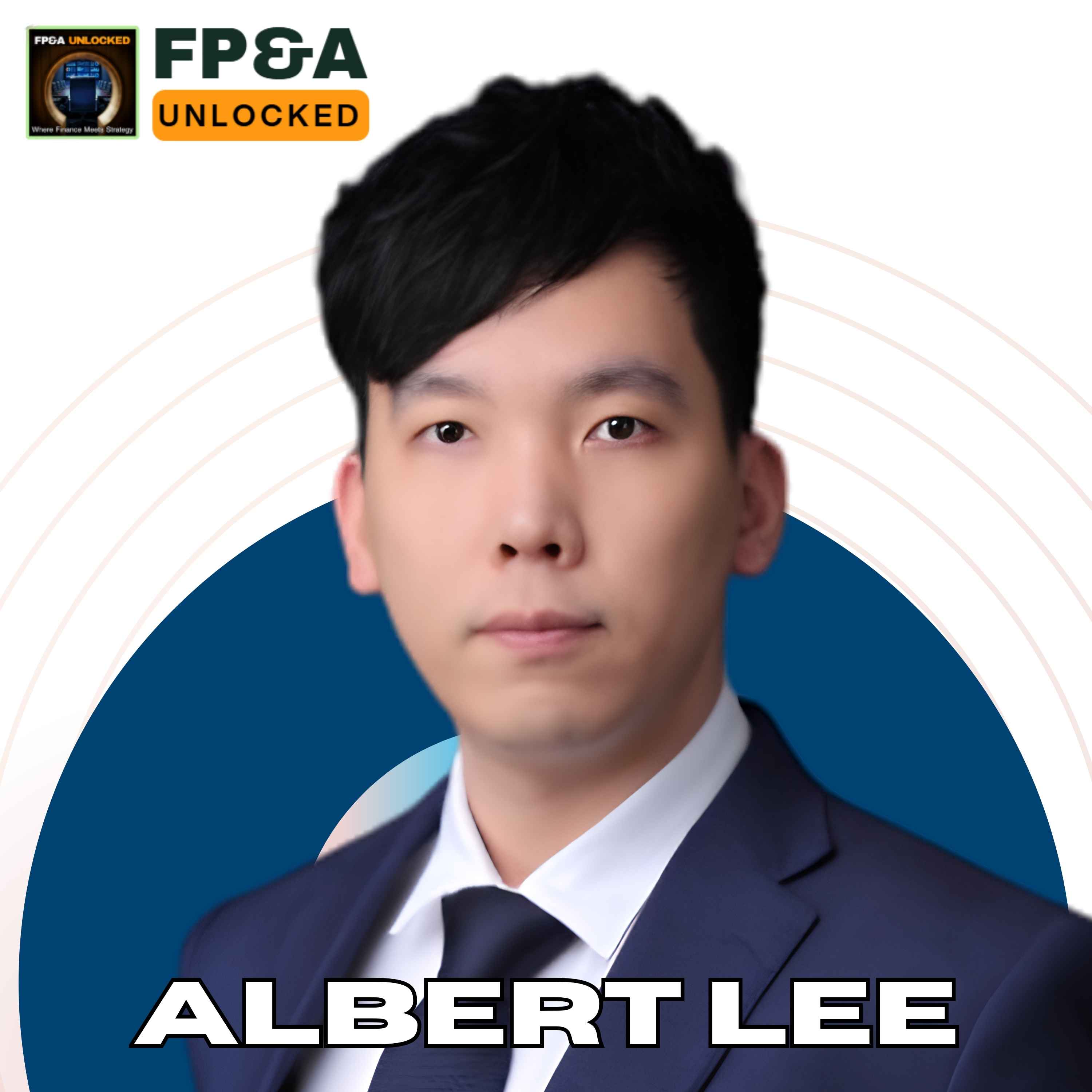
Automating Financial Workflows and the Role of Human Judgment with Albert Lee
from FP&A Unlocked
41m 52s
The speaker emphasizes that AI is a powerful analytical assistant, but humans must retain control and accountability over decisions. Great FP&A involves connecting numbers to business decisions, generating actionable insights, and building trust. In enterprise training, Microsoft Copilot is favored for its security, governance, and integration, though the speaker personally uses Claude and ChatGPT for cross-validation. A pivotal moment came when AI helped automate manual workflows, saving significant time. The speaker now trains CFOs and finance teams on AI applications, including automation, audit trails, and ROI measurement, for both large enterprises and small businesses. Key challenges include tool selection, rapid technological change, and effective implementation.
I think anyone who uses AI seriously knows it's intuitively, because like in my opinion, AI is like your analytical compiler, it helps you navigate, watch the dashboard and spot the prime spots you meet. But the real is still in your hands, right? The accelerator, the break is still in your hands, so you will not just let a compiler decide where the plane is going to land. That's my opinion and that's my idea. The suggestion, definition and also the accountability. For my opinion, it must stay with the humans. Are you tired of being seen as just a spreadsheet person while others get a seat at the table? Well, then welcome to FPNA Unlocked, where finance meets strategy on your host Paul Barnhurst aka the FPNA guy. And each week, I'll bring you conversations and practical advice from thought leaders, industry experts and practitioners who are reshaping the role of FPNA in today's business world. Together, we'll uncover the strategies and experiences to separate good FPNA from great FPNA and will help you elevate your career and drive strategic impact. Today's guest is someone who's earned that seat at the table and I'm thrilled to have on the show. Albert Lee, welcome to the show. Thank you Paul. That's all you've had to me. Yeah, excited to have you. So Albert, someone I've known for a few years, I've had the pleasure of chatting with him and really excited to bring some of his expertise and experience to the show. So a little bit about Albert, he's an FPNA leader, AI Finance Coach and corporate trainer with over 13 years of experience spanning big four audit, global consumer brands and global 500 organizations. He has held FPNA manager roles at Merlin Entertainment Group and the Cookware Company, leading regional forecasting, profitability modeling and process automation across APAC. Albert currently serves as a coach at the AI Finance Club, guiding CFOs and finance directors on integrating AI tools into finance workflows. He is also a corporate trainer for a global 500 asset manager and has delivered sessions and partnership with CFA Society. He is also an MBA candidate from the University of Chicago Booth School of Business, a BBBA alumnus from HKUST and is a certified fellow CPA. Again, welcome. Love the background. Thanks for having me here and I just kind of met you in my home. But thanks for having me here. I love to be here because Paul, you know me for several years, happy to be here and in my honor to be here. That's because. Well, excited to have you. So we're going to start. This is a question we ask every guest. So we'll curious to see what your answer is here. From your perspective, what does great FPNA look like? How would you define it? Actually, this is one of the questions I answered for CFI Coverage Finance Institute. I think my answer is the same like high-impact FPNA always connects the numbers to decisions. Like that's a free perspective. First, you got to know understand the business, not just the profit and most, but also the operations marketing dynamics and what gives the CEO at night. And then secondly, that you need to generate insights best, move the needle and everything. And the final thing I think is everyone, most of the people for our parties, like you need to build a relationship and trust with your business partners. This is my opinion. Yeah, you definitely have to have that relationship trust and be able to connect things. So appreciate that answer. Now we're going to spend pretty much the rest of the time digging into mostly AI, right? Not that anyone's ever talked about AI lately. I've heard it's a big subject. You got a lot of AI posts in the LinkedIn. You had to humble. I've had some fun lately with my AI tips posts, kind of making fun of all the AI stuff we see. But I totally get it. I use AI all the time. It's a great tool. And where I'd like to start is I know you're training. You focused a lot on co-pilot. Why co-pilot? What led to co-pilot training? Actually, I used the M-ProPick one and also chat GPT more because I do most of them like the deeper work for these two models. But I'd use co-pilot for training. It's because when it comes to enterprise training, I think co-pilot has its own place like it's inside the Microsoft Econ system and also the security, the data governance is best of the best and also the licensing economics just makes a lot of sense as scale. I mean, I do not have any preference on any tools, but if you come to enterprise training, you got to be co-pilot. Just what's our pick thing? Yeah, there's definitely a lot of your large enterprise companies. No question of use co-pilot. So totally understand that. That makes a lot of sense. You mentioned you use cloud, chat GPT a lot in your personal life. So ignore training, ignore all that. Do you have a kind of favorite that you find yourself that you use the most when it comes to these tools right now? Yeah, I have. I majorly use cloth because cloths, something you know, every model has hallucinations. When I think that it has to hallucination, I will find chat GPT to challenge cloth and find cloth to challenge that chat GPT. That's what I call as cross-model rep felitation. I think it's a good idea. I mean, I definitely use both and I use a pilot chat GPT, cloud, all three of those almost daily. I'd say cloud, I use the most, but I definitely use all of them. And yeah, the cross validation is always a good idea. So how did your jury go about? How did you start spending so much time kind of investing in AI in the work you do? Like what led to becoming a trainer? First of all, I want to tell a story when I was still in corporate. I worked in corporate company, a belt joint company, and the finance function back then has been vacanced for several months already. The handover, the documentation is very minimal. And then there are lots of reports that needs a lot of headmanial adjustment. I have nowhere to go, no one teaches me and nobody's there. The finance department is empty. I mean, I got to find a way. Then I come to AI, I find GPT, I was of desperation and very quickly it became a man there. No, it's walked me through the manual workflows and even teach me how to use a tool called C data Python D365 connector. That's a tool I never heard of and never used before. And then I just pull all the data directly from the ERP and out of populace the Excel. That's a aha moment for me. I just never think of any tools can do that. But AI helped me a big favor. Yeah, how much time do that save you? Yes, maybe 80 to 90 percent because it's all automation to cover the many work. I know a lot of people that are finding great use cases like you mentioned to figure out how to automate the pulling of data. As one person said, look, if you're still manually pulling it, you should be using AI more. Sure. But you know, that's our security issues for every model. So you've got to figure it out anyway. There are some situations where you may not be able to security. Like you'll find this interesting. It was Chris Riley. He shared on LinkedIn the other week that one of the contracts he signed it basically right in the contract he had to agree for some modeling he was doing that none of their data could touch AI. Regardless of what security you had, that was just their policy. Like you couldn't you could not use AI on the model. You could use AI to help you with something. But you couldn't give it any of the data. You couldn't even use Excel add-ins because they get the data. It was 100 percent lockdown. So there's definitely times for security reasons. You know, whatever those reasons are for different companies. The Belgian company I just mentioned actually the head of IT stopped me from pulling all the data from the ELP and Auto Poplase in the Excel. He said it's too risky. You got to pass through the funder and the chairman. I just I just hold on it and I never try again. Yeah, no, I get it. There's definitely you know, people want their data all to stay within one tenant, one system. As soon as you start passing it different places, right, there's always more risks. So that's still a big concern. But I like what I know you know Glenn Hopper. Yeah, I know. I know. I know. I know. I know. Sure. Sure. Sure. I thought you were right. It's a ton about AI and he says a lot of people use security at the same time as an excuse. He goes the reality is AI is as safe as your SaaS products you're using. Right. If you're on the cloud, they're they're sock compliant. They're meeting all the different risk compliance. Now obviously that doesn't mean be stupid. There's still you know, oops, things you need to do. But I think sometimes because it's new, we use security as an excuse versus looking at it and saying, you know, weighing that risk against the other tools we have and saying, is it really higher? Things over there. I thought that was an interesting kind of perspective he gave, but interesting on the Belgian, the Belgian one. Inside it's very good. I thought it was. I think when came, yeah, I agree. He's really he's really good. So you did that, the Belgian company and you were like, wow, saw the benefit. How did you continue to kind of learn AI from there? What were the other kind of aha moment you had? Another aha moment is like, I know Nicholas is very famous. Nicholas Boche. So he's one of my friends and he has founded an AI finance club. And I joined AI finance club and I found that lots of the AI finance knowledge. I don't know how I don't know how it exists and I don't know how to apply and then I just joined at a NUFee and then his incredibly kind to me. He referred a lot of clients to me and Boche told me when I had no record on it. So a lot of doors for cooperation and he actually opened the doors for me and I opened my lots and I appreciate for Nicholas helped. Yeah. Got it. So is that how you was Nicholas, how you kind of got into doing the training? Exactly. And what does it you like about doing training on AI? What do you enjoy about it? I love to, you know, I'm an implementator and
not just the one who won't want to speak. I want to measure the ROI. I want to make sure after the training everyone got benefits, got value, they cut a lot of time and then save a lot of many works and then every time I finish the coverage training I want to measure it. And that's gives me a lot of feeling of satisfaction. It's always nice when you know they use it and you're able to see real results. What's your typical training look like? Are you training people to build agents to use Excel? How to do analysis, write prompts and talk a little bit about what kind of training you're doing. So I basically do two types of training. One is the AI Finance Coaching in AI Finance Club. We have an accelerator program and then I coach every individual CFO and Finance Directors 101 for their projects, for the AI Finance Real-Kat Real Analysis and Real-Kat Study. Another one is like I train the corporations, large as small corporations. I usually tell them how to do the AI Finance in a gathering way. How to keep all the audit trails, keep all the track records. You can trace back to the difference figures. And at the same time you also can save a lot of many works and do a lot of automation. And sometimes I even teach them how to use agents. But as agent is not my major case, major case is still other. So you're not doing a lot right now with agents. It's a lot more with kind of the LLM. Maybe it's like the research agent, the LLIS agent in Copilot. And sometimes you can say, I use Clawed Co-Work sometimes for my personal business. Yeah, something like that. Have you used Copilot's Co-Work yet? Copilot's Co-Works I'm still applying. You know, you've got to pass through the Frontier program. I'm still on the procedure. Yeah. I believe I'm part of the Frontier program from previous. And I've been meaning to walk into Copilot Co-Work. I haven't. I'd use Clawed Co-Work for some things. And I need to use it more. Clawed Co-Work is just amazing. Can do a lot of work. Can make judgment. Can utilize the tools. Can apply the judgment. I mean, amazing tools. Favorite use case so far for Co-Work? What's the thing that you're that's kind of blown your mind? You're like, oh, wow, I don't have to do that anymore. I can let the tool do it. For Co-Work, sometimes I will use like, actually, for Copilot Co-Work, I'm still in very beginning place. But I can tell you one function is like Copilot in Excel, something like this, or at least in Copilot, something like this. So I can extract the information from the PDFs, thousands of pages of tens of any reports and then just make sure every figure is extract go to specific sales and specific location in the Excel template. So we feel like 10 minutes, 15 minutes, you've got a whole financial analysis or even investment analysis reports ready. When back then, before AR, you need to do a lot of many tasks, many stuff like two to three hours. You just cut a lot of time right now, yeah. And funny enough, I don't know if he saw this. There's a guy on LinkedIn, he shared, I want to say it was, I think it was a thousand dollars. He gave a thousand dollars to chat GPT to Copilot to Claw. He gave it all its preferences and said, you need to tell me what stocks I should buy in Excel. And he's up 180% on Claw. What the? He's not on the others. Amazing man. Like 40 and 20 or something and he's just 100%. He does the trades himself. So he doesn't have code work where it's actually processing the trade, but he completely just follows whatever he figured, okay, it's 3000 bucks. If I lose it, I lose it. Let's see what happens. And I think a total, you know, he's made now, he's doubled like his money overall between the three different LLMs or something like that. It was, it may even more. He's been doing it for quite a while and I was like, it's pretty amazing what they can do. Got to learn from him, you know, I know I was like, I don't think I'm ready to give a thousand dollars to my LLM to spend a whole lot. That's a whole lot. I cannot save money. Although it could be fun just to, I'm tempted to just have it pick stocks and just track it for a few months without money type of thing and see how it does. It'd be interesting. Although, right, as soon as people start getting good at that, the opportunity goes away because the market will start adjusting for it. You have to kind of be early at some point. It will, I, I would imagine, although, and you never know, because it's probabilistic, right? Some people might win, some people might lose and be really interesting to do a study. And I know we're off base from F P and A, but I think you're right. No, it's okay. It's okay. Take 50 people with each of those tools, take some money and like track it over two years and just see how it changes over time and what, and what happens and how good the return is. I think it would be an interesting study because it's going to give different answers to everybody. If they were all using the same prompts started from the same place, how divergent and different would everybody be at the end of a year or two years? It would be really fascinating to see things old. Yeah. Kind of an interesting. Yeah. Yeah. And I imagine we'll see those type of studies. It's just a matter of time. Yeah. Yeah. Exactly. All of it's a matter of time. So I know you do the finance club. You've also done some enterprise and startup training. Do you have a preference? Do you like the coaching, the one on one, the startups, the big enterprise companies or doesn't matter? Do you have one you prefer? To be honest, that's no preference for me because I can tell you the reason because I think smaller companies deserve access to the same AI capabilities. The big enterprises are deploying because like the technology has just go to a point sense already like 20 to 30 people business can run real growth that is already at a fortune 500 budget or level. So I don't want to be the guys that only taking the big logos. If just some small team want to get you serious on the AI practice, AI finance practice, I'm just willing to have kingdom with them and fuck them yet as well. Yeah. I can at the end of the day, they're all for the most part they're all using the same tools. They're all using the same models. Sometimes they may have their own customized AI in some of these companies, but they're still using more than likely their chat GPT or anthropics model maybe an open source like Lama or some of these others out there, but the backend models are all pretty similar. Like Clod's model, it's answers are better in certain areas. I don't think they're better in others versus Gemini or chat GPT, but right now I think most people feel like it's the most complete and that it's the easiest to use the way they built skills and the way you got code work code and Clod just all in the desktop app. I don't know that the package right now is the best, I think. By the time we released the episode that could change. One model we play is not a model. Yeah. Yeah, I mean, I don't know if you saw that, but they're on pace. So last quarter, anthropic did from the numbers I see and they did four billion in revenue. Yes. This quarter, they're on track to do 10. I believe they already surpassed OpenAI, right? I'm not sure, but I read some news saying they're they're kind of I think in this quarter, they'll pass OpenAI. They're going to pass over here. OpenAI is around 30 something. Thanks. So I believe. So if they did 10 on a run rate basis, I don't think they passed them in a on a yearly basis. Yeah, run rates. In you on a run rate. I believe by next quarter, they would have a big maybe bigger than OpenAI. Yeah. Everyone's talking about the crop right now. Everyone's talking about them. Yeah, it's amazing how many companies are switching to Clod. And you know, a friend of mine made a good point. Many people know David 14 as we talk AI and I'll get your thoughts on this. But you know, he said, look, the reality is sure, Clod's great. And you can switch. But Copilot can probably meet 90% of your needs. And the bigger problem is your people don't know what they're doing. Pick a tool, train them, get benefit, give it some time. Don't just switch to the latest tool because everybody says it's the best right now. Your thoughts? I think I'm kind of tool, I'm not thick. I don't have any preference or any tools. Just I want to pick the tool that I am like I like to use and I am comfortable to use best if the best for me. I don't care if it's functionalities or functions or the power. I just want to use the one I am most comfortable with. Yeah, no, and that makes sense. And so I think, you know, you kind of agree, it's a good point that companies need to be careful switching for switching sake. Usually doesn't work well because I want the latest technology, right? If you did that with an ERP, it'd be a nightmare. We've all been through a ERP implementation and it's not something you change lightly. Yes, it's a lot easier to switch AI at least right now. Will that be case in two years when you've built it into all your processes? I don't think it will be as easy, but fascinating to watch. So what do you find as the biggest thing people need help with? Is it the prompting? Is it understanding the type of tasks they can do? Building workflows? What do you see most people struggling with in finance with AI? I think the people are struggling with they first of all, they do not know which tools to use. The tools are much of tools. It's just overwhelming. It's just a lot.
of to use, a lot of to learn, and then they don't know how to pick which tools. Second thing is that I think the evolution is so fast. Back then, two years ago, we were talking about ARM and now we are talking about agent and agentic AI become a very hot word. And sometimes I don't think a lot of things you need to use agentic AI, but sometimes people just want to do the things using the most hyped tools or the hype tools rather than using the most suitable tools. So that's what I think in the current situation. Yeah, I mean, I think a great example I was on a call. And somebody's like, I have the standard process where I need to pull some data and do some different things. Can I use AI for that? Like, why would you? You have power query, it's deterministic, just out of your steps and run it each month. And it was like, they wanted to use AI. Well, that's a cool new thing. So I could figure out how to use it. And I just said, I wouldn't in that case. Just you already have a tool that you know works, you know you're going to get the exact output you want and you can automate it. And I think sometimes people think, but I got to show I'm using AI. And at the end of the day, any good leader could care less what the tool is. If you get the right answer, you're doing a good job, it's saving time, you're being productive. Right, if you're doing the things that a good employee does, I could care less if you call it AI or whatever you call it. And I think, sometimes people need to remember that because we feel like, oh, I got to be on the bandwagon. Yeah, you should be using AI, but that doesn't mean it's the right tool for many situations. And you know what, actually, I'm a big fan of power query and power API. So if I can solve the issues by only using power query or power BI, I would not use AI. Just no need. I mean, I'm on with you. I'm a huge power query fan. I mean, there's definitely times when you don't need AI or use AI to help you write the code in power query because at the end of the day, as I've talked a lot about on the show, and you know, right, generative AI is probabilistic. Exactly. I'm not going to get the same answer every time. You need those deterministic pieces in there and power query is deterministic. If I give it the same data and the same code, I'm going to get the same output, whether I run it one time or a million times, never going to be the case with generative AI without a deterministic step in there. And so that's something I've been preaching, you know, quite a bit is helping people realize, you need to think about the amount of variability you could have in the process. And that will change how you build it. I imagine you've had some of these conversations with people you're talking to. Yeah, actually, we have a program called AI Finance Accelerator a basic promotion, you know, but for the Nicholas AI Finance Club, you know, in the week four to weeks six, we have our teaching on something about probabilistic, we as deterministic. So for the, for myself, I will use the draft of strategy plan and planning and also the generation of code. I may use some probabilistic model like LRM, like CROD and GPT, but for the calculation part, the factual part, the context part, I need to use Python. I cannot use LRM. So it's like a Q-Link combo for Python, where plus the chat GPT or CROD is a Q-Link combo. I mean, you cannot wholly rely on each one of them. I mean, 100% degree. So yeah, we're on the same page there. So I'm curious, when you are training people on AI, how do you ensure they have sufficient data? You know, the other challenge, you have to have enough data to produce good outputs from AI. Actually, we have some thing called some custom GPT called "affectitious data generator". So you just describe the situation, the data you want, how many rules, how many cells, and then you give it to a context, give it the requirements it will generate for you. But of course, I mean, it's not as good as the real-world situation, because real-world data, you got a lot of messy stuff, you got to import from an export from the DLP, a lot of different sorts of data. We cannot mitigate that to be honest, but we try our best to provide the fetishist data. Yeah, so you're often doing the training on fictitious data, but what kind of, what guidance do you give them about the real world? Because we all know real data is messy. There's a lot of companies that are struggling to get good output from AI because data challenges. So what would you say to people on that front? Actually, for real-world data, I usually go to the corporate training part, because it is not really included in the air finance club. We have real data to be trained in air finance, but sometimes you go to deal with the confidentiality and security. So, corporate training, when I sign the NDA, the non-discosure agreements, I will teach people how to do these real data stuff. So, it's go back to my framework of the model, like how to automate the data using the governance and also audit trials, something like this. But I want to talk about so, I don't think we have enough time to solve that. Yeah, so how do you think about just high level? What's your framework that you teach? Just what's the basic idea? So, for example, I can give you some example like something like Gabych in Gabych, Gabych, you know, sometimes you need to audit before you automate. For example, when you point to a data set, you've got to describe the data where it comes from, who owns it, how often it's refresh, and what's the long issues it has, and then you start to start narrow the second step is try to don't try to fit AI order data lake from your ERP. Provide a clean, well understood data set, like a single key and out export from the GL and then build a workflow around it, and then expand it a bit by bit by bit in the workflows. And then the last step is to build a verification into the prompt itself. I teach people to ask AI to flag inconsistencies, missing values, and anomalies as a part of outputs. So not just produce the answer, but also do the data quality check by using LMM itself. DLMs are great for checking things. It's always good when you load some data, first ask it to review the data and just ask questions about it. It's a good way to start. Like, I don't know if you've seen this copilot just added in Excel plan mode. Have you seen that yet? Yes, I have seen that. But I did not use that to be the scramer. Yeah, I did not use that yet, but I know that's a function. Yeah, so I used it. So one of the cases we tested when I did my mod squad series for financial modeling is we had all the tools build it to for revenue schedule. And then I started having them build it and provide instructions. Well, this time I get instead of my big long prompt that was really detailed. I tried to really short prompt and I used plan and it brought up a number of things that I didn't have in my typical deferred revenue schedule that were really helpful. So I was really impressed. I got a better end product than I did with my detailed prompt that I'd worked on forever because there were just things that I wasn't including. Now I could have added into my prompt and asked for them, but I had necessarily thought of it and what I was doing. And so it was I was impressed with I've only used it kind of that one time. But I was impressed with the job it did. And I think we'll see more and more of that right. We've seen a lot of tools do that of I think all the agents will eventually have some kind of plan mode first because the reality is if you just build rarely are you going to get what you want on the first try and you're much better to go through all the questions go through the planning really get into detail. You're going to get a lot closer than if you just let it build with one prompt. I got to share you out. Yeah. Yeah, I would love to get your thoughts once you've had. Yeah. You know, one thing you say, I know when you train AI, you say AI is a co-pilot, not an auto pilot. Talk a little bit about that. I think anyone who's seriously knows is intuitively because like in my opinion, AI is like your analytical co-pilot. It helps you navigate. Watch the dashboard and spot the blind spots you meet. The accelerator, the brake is still in your hands. So you will not just let a co-pilot decide where the plane is going to land. And I'm like the suggestion, the detonation and also the accountability. Yeah, no, you're example of the pilot, right? Pilots, a lot of the plane is flown by the machine, by the automation. But the pilot is there the whole time and ultimately the pilot makes the call. So, all right. Another question I have for you, we talked about data. But what's the key with AI to having kind of good verification, a governance layer? Right, we all know AI can hallucinate. We know their mistakes it can make and ultimately we're responsible for it. So how do we make sure we have a good kind of verification governance layer? Any advice there? I would give an advice of all three dimensions. Revocation, explainability and governance. No, verification is knowing what to check like. You don't need to check those low-risk stuff. You just check the high-risk stuff like the key financial figures, the citations, because AI hallucinations sometimes and time sensitive data because the data keeps changing all the time and then casual claims and scenario assumptions.
For a blank ability, you should be able to understand the data and re-stase it to the people who don't know. So you use simple English to re-stase it. If not, you just students put your name on it because an unexplainable conclusion is just not useful. The first thing and the final thing, I think, if the curve governance, I personally have an outright g model. I mean red, white means yellow, green means green. So green means that AI can run by itself. Yellow means AR drafts, human reveals. While for the rest, I think humans can lead while AI only applies. These are my three steps approach. Makes a lot of sense, right? There's certain things where it's like, I'm comfortable letting it run if there's a mistake. It's not a big deal. Or I've run it 50 times, it's been right every time I'm comfortable enough. This is low enough risk versus the other side where this is going in front of the board or this is going public. I better double and triple check all the numbers before I let it out. So it's always good to have a framework. I like that. And Regiello green, everybody knows that. That's a simple one to use. So thank you for sharing that. So I'd love your perspective. We see a lot of promises that AI can do everything, right? We see a lot of marketing hype. We see a lot of vendors, probably over promising. From your point of view, what's realistic to do with AI? Where does it struggle? How do you kind of think about that? I think AI is good at something like information synthesis, like put the most important three things from several hundreds pages of annual reports in just minutes. Second is like first draft generation and also multi-angle framework. You know, sometimes you've got to build up from zero to 70 points stuff. It's very difficult back then when there is no AI. But right now it's very easy. So the point for human to be here is to improve from the 70 points to 95 points. This is the good thing that it can go. And also I think it's also a celebration of the repetitive menu task for the things is struggles. I guess it's some factual accuracy under pressure. Because if you just have time limit, you ask the AI to run thing, it's just gonna hallucinate. And the second thing is that the contest sensitivity, like the same data points can be used, can generate different things in different mathematical environments and industry cycles. And also I think something needs our accountability is also struggling with right now at this current moment. But I think it has its own pros and cons. I think the most honest framing is like AI is a powerful efficiency multiplier. It amplifies whatever the user brings because like if a strong analyst using AI, it will be much much stronger. While the weak analysts using AI, it will make the mistakes faster. That's what I think. Makes sense. Appreciate that. All right. So we're going to move on from AI to I have kind of a some standard questions I ask everybody got F P and A in your opinion today. What's the number one technical skill F P and A professional should master? I just answer back then is like the power theory. I'm a big fan of power. I'm very controversial. You know, I think most of the people will say Excel or modeling, but I think it matters a lot. But in modern F P and A power theory is the skill that turns you from someone who waits for clean data to someone who creates and own the clean data. So you can pull you can transform you can refresh the data automatically. Your monthly close gets lots of faster and your various analysis gets much faster and then you can use the time safe to make even better decision. This is the most important thing. Love it. You know, interesting. We've started to see lately a lot more answers around data thinking system thinking with AI. You know, which part of gets back to being able to clean and model data which power query is something that can help a lot with that. So we're seeing more and more answers that kind of think center around data design system thinking than just Excel and modeling. It's interesting to watch it all change. But power query got me promoted. I'm a huge fan of power query. So I can appreciate that answer. What about softer human skill? What would you say is number one? I think communication like specifically started telling with beta like there was so what now what by the framework by a lot of storytelling group like so from Hamid, you know, what so what now what's framework. I think most of the analysts will talk as what like here are the numbers and what numbers there are. But I think the good analysts will go to so what so why is matters while the great analysts will go to now what what we should do and what's the call to action what's the recommended action for the situation. So that separates and FN a analysts from those true business panel. That's what I think. Yeah communication is always huge. That's a very common answer we get the framework dimension is one we use my training all the time the what now what so what it's a great what so what now what great framework. Next one I'm curious to see and I think I know the answer based on your previous answer if it's one feature tomorrow which one would cause you the most panic. You know what's the idea is man. I'm a curious. Power query. Yeah. I knew I looked at that one. They said based on the answer a minute ago. I'm like 99% sure I know exactly. Exactly. Exactly. How do you know bring up no bring up of it. Okay. So if you had to pick a second one, which would be number two number two maybe the V stack or X looked up. That's my preference. No reason. No reason. Just my preference. Yeah. No, that's that's good. We'll go with that one for number two. I was just curious to see what you'd say after power query. All right, so we have a get to know you section. This is where I ask kind of some fun questions of each of our guests to get to know you a little bit better. So if I said you could have dinner with one person alive in the world today, who would you take to dinner and why let me pass you what do you think who do you think we will have a dinner with. I think you know the answer as well. Yeah. Just give you some tips. You know I'm that. Hi on my list would be Warren Buffett. I think you'd be fascinating to go to dinner with. If Nelson Mandela was still alive, I'd love to have dinner with him. A lot of people I could list Davis Smith actually right now you have no idea who he is. Most people don't. He started the company Cotto Paxy. He's a corporation B and a fit corp and his goal with the company is to alleviate what they call not just poverty, but I think I call it severe poverty, which is you make less than one dollar a day. And so they they use areas that are very poor to source all their materials and just an amazing guy. I've always really respected him. So he'd be my dinner. I'm a big fan of Warren Buffett, but I may choose another person. I watched his basketball game since I was very young since I was teen. I think I was just team-bunking a basketball legend in NBA league. Definite legend. I'm a big Utah jazz fan, so I can remember some good matchups against him and Karam alone. I watch him plays when I was a kid. What I might really his championship is his emotional stability. Every time he failed, he lost to Lakers, he got back up and won the champion again. I mean, he crossed three decades of basketball era and three different playing files and three different growths. He's still in the champion. I mean, the confidence was in the composure, the leadership, the ability to make whatever and whoever was around him better. So I will just have a dinner with him. I want you. You had three different teams. You had David Robinson with this first title. You had Parker and Genobli with the next three. The last one, the leader of the team was really quite Leonard in that last time. Exactly. Exactly. And then the others were eight games. So there's really kind of been, yeah, three different. I agree with you. That's an interesting. I hadn't thought about that. All right. So next one here, if you could have any superpower, what superpower would you have? That's a pretty challenging one. I'll choose time traveling because I can tell you the reason because I want to go back to my younger self. You know, when I was young, well, I was still in corporate FN a in maybe different companies, different FNA department really don't know how to handle people and relationships. I rubbed colleagues in the wrong way and said things that are shouldn't said and also I didn't appreciate everyone work with me enough because like I know they have that bad vibes. Sometimes I just say something that is not appropriate. So if I could go back, I want to teach and coach my younger self how to treat people differently with more patience with more grace because the technical skills you can pick up anytime, but the people skills, it's going for a lifetime, you know, last time learning here. Last one, do you have a favorite like movie or TV show you like to watch for movie? That's one for TV show. That's one. So for movie, I will choose the pianist. I forgot through the main characters, but it's the pianist so touching for me to see the pianist for the TV show. I think it's Game of Thrones kind of hard to beat to share the storytelling and vision, but even though people say the ending is not too good, that I'm still a big fan of Game of Thrones, you know, amazing. I will admit I've never seen an episode so I'll take your word for it. Yeah. If you could offer one piece of advice to our listeners to be a better FPNA business partner, what advice would you get? I think it's the understand operations from the operation partner or the sales partner, the business partner you have in the sales team or operations team.
sometimes figures gotta be very cool, very cold, you know, you need to understand how to build a relationship. You've got to know the real world situation from the business partners, from the operation partners. You've got to know the news at the whole story. You can not just know about numbers. The whole story is in the operations, it's in the sales, it's in the business. So you got to know from the others, not from numbers. I think you agree with you. I think that's really good advice. So as we wrap up here, last question, if someone wants to get in contact with you, maybe you know, questions about training or just reach out to you, what's the best way for them to do that? You can search in the link in search, my name is Albert Lee, FCPA. I'm the Albert at Asium and I send me a connection request. Just mention you heard my podcast and I will always reply and connect with you. Right, perfect. Well, thank you so much for joining me, Albert. As always, fun to chat, appreciate you sharing some of your experience and I'm sure it is late for you. So we'll let you go and enjoy your evening. Thank you, thank you so much for coming on, Albert. I appreciate Paul. See you. That's it for today's episode of FPNA Unlock. If you enjoy FPNA Unlocked, please take a moment to leave a five star rating and review. It's the best way to support the FPNA guy and help more FPNA professionals discover the show. Remember, you can earn CPE credit for this episode by visiting earmarkcpe.com, downloading the app and completing the quiz. If you need continuing education credits for the FPAC certification, complete the quiz and reach out to me directly. Thanks for listening. I'm Paul Barnhurst, the FPNA guy. And I'll see you next time.
Podcast Summary
Key Points:
AI is a tool that assists with analysis, but humans must retain control, decision-making, and accountability.
Great FP&A connects numbers to decisions by understanding the business, generating impactful insights, and building trust with partners.
For enterprise AI training, Microsoft Copilot is preferred due to its integration with the Microsoft ecosystem, security, data governance, and cost-effectiveness.
The speaker uses multiple AI models (Claude, ChatGPT) for cross-validation and to reduce hallucinations.
AI can automate manual tasks (e.g., pulling data from ERP to Excel), saving 80-90% of time, but security concerns may limit its use.
The speaker trains individuals and corporations on AI in finance, focusing on practical applications, audit trails, and measuring ROI.
People struggle with choosing the right AI tools, keeping up with rapid evolution (e.g., from LLMs to agents), and applying AI effectively.
Summary:
The speaker emphasizes that AI is a powerful analytical assistant, but humans must retain control and accountability over decisions. Great FP&A involves connecting numbers to business decisions, generating actionable insights, and building trust. In enterprise training, Microsoft Copilot is favored for its security, governance, and integration, though the speaker personally uses Claude and ChatGPT for cross-validation.
A pivotal moment came when AI helped automate manual workflows, saving significant time. The speaker now trains CFOs and finance teams on AI applications, including automation, audit trails, and ROI measurement, for both large enterprises and small businesses. Key challenges include tool selection, rapid technological change, and effective implementation.
FAQs
Great FP&A always connects the numbers to decisions. It requires understanding the business beyond profit, generating insights that move the needle, and building relationship trust with business partners.
Copilot has a place in enterprise training because it sits inside the Microsoft ecosystem, offers top security and data governance, and its licensing economics make sense at scale.
He uses Claude primarily, but when he suspects hallucinations, he asks ChatGPT to challenge Claude's outputs and vice versa, validating results across models.
While working at a Belgian company with an empty finance department and minimal documentation, he used GPT to learn manual workflows and automate pulling data from the ERP into Excel, saving 80-90% of time.
He offers two types: AI Finance Coaching through the AI Finance Club's accelerator program for CFOs and finance directors, and corporate training for companies on how to implement AI in finance with audit trails and automation.
They struggle with choosing which tools to use due to overwhelming options, and they find it hard to keep up with the rapid evolution from LLMs to agentic AI, often overcomplicating their needs.
Chat with AI
Loading...
Pro features
Go deeper with this episode
Unlock creator-grade tools that turn any transcript into show notes and subtitle files.
 PodcastTranscript AI