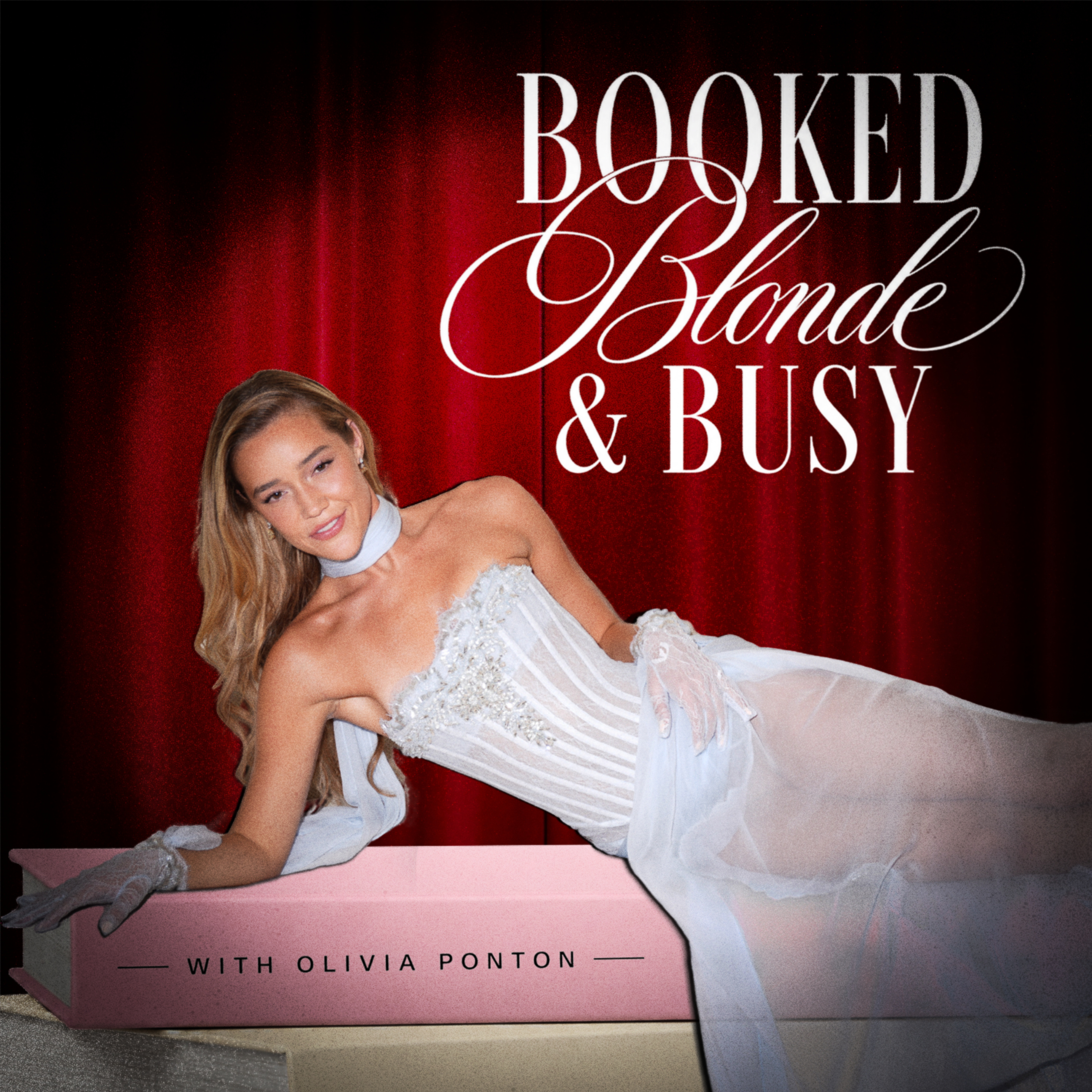
Author Lucy Score On Her 'Knockemout' Series, Plot Twists + More | Booked & Busy w/ Olivia Ponton
47m 50s
Lucy Score, author of the New York Times bestseller *Mistakes Were Made*, shares her deeply personal journey of becoming a writer at age 33 after years of struggle and instability. She describes how writing became a form of self-discovery and emotional healing, especially through the character of Naomi, a people-pleaser who grows into self-acceptance. Lucy emphasizes writing with emotional truth, focusing on the balance of heartbreak and humor in real-life experiences. She credits her success to writing the story she’d want to read, not one dictated by industry demands, and values authenticity and spontaneity in character development. Her writing process involves emotional immersion, using tools like timed writing sessions and ambient music to stay productive. She also highlights her surprise at how side characters, like Lucien and Waila, organically evolved into pivotal storylines. The upcoming TV adaptation of her work excites her because it allows the story to be reinterpreted by other creators, reinforcing the idea that stories belong to readers. Lucy reflects on small joys—like micro-hobbies such as microscopy and yoga—as reminders that happiness comes from quiet, meaningful moments. Her favorite trope, enemies to lovers, stems from emotional complexity and real-world relatability. Ultimately, her journey is one of resilience, authenticity, and the belief that stories can transform lives. *Mistakes Were Made* is set to release on March 10th, offering readers a fresh blend of emotional depth, humor, and heart.
Hi angels, it is Olivia Ponton and welcome to Bookton Busy. This is my podcast series for the girlies who love to read. I'm so excited for today because we have an incredible special Gaston and her name is Lucy Score. She's a number one New York Times bestseller and the mind behind some of the most loved small town romance books. From the knock-em-out series to her newest book, Mistakes Were Made, Lucy has created these stories that feel like really quick before Lucy arrives, we are going to do the beverage of the day. In the things we never got over booked by her, one of the opening scenes is when Naomi goes into the cafe to order a coffee and everyone is really mean to her and she has no idea why. Then we find out she's a twin and her twin is evil. Duh, why didn't I think about that? So for the beverage of the day, I got just a regular ice coffee because that's what Naomi would want. I cannot wait for you guys to hear all about Lucy's story and get into everything from character development to writing routines. So without further ado, Lucy Score, welcome to Bookton Busy. Thank you. Thank you for having me. I'm so excited for you to be on today and for people that don't know, we are pre-recording this way in advance. This is coming out in March and it is currently December 3rd. So she is actually my second author on Bookton Busy, which I'm a little nervous, but a little excited about because I love your writing style. We're going to get into all things look related, but I want to start off with talking about you as a human being because being an author in my opinion is quite honestly one of the most impressive things to sit down and to be able to spew off. How long is this book 600? I think it's 150,000 words. That's insane. I want to start off with you on a personal level. What is something that is shocking that you learned about yourself while becoming an author? Honestly, this is this is kind of silly to say, but the fact that I could sit down and write a book and complete it was the biggest shock to me. I was looking for a challenge. I was working regular jobs and I've always been a huge reader and every time I would read a book that kind of touched me, I would get this thought like, oh gosh, what if I could do that someday? But like we were just talking, it's like a marathon and it's intimidating. The idea of dedicating that much time to something and maybe not completing it was really intimidating to me. So the fact that I ever sat down and finished writing an entire novel let alone 35 is so many. But I'm just I am so proud of myself because I've struggled a lot academically and in real life, like I just never found my thing. You know how some people like they have that thing and they know your best friend in high school is great on the soccer field and she's getting A's in every subject and then there you are just like floundering and that was my that's been my entire life. I've been looking for my thing and failing failing failing floundering floundering floundering and the first time that I sat down to write, I felt like I came home. Thank you. How old were you? I was okay, let me think. So it came out in 2015 but I started it in like 2013. I was 33. Yeah, so I mean like everybody around me at that age, everybody was married. They had kids. They were doing these great jobs and advancing. They were getting promotions. They were traveling and I was just a mess. I don't think at that point I didn't have health insurance. That's important. I didn't have a place to live for a while. You know, it was it was really rough but as soon as I started writing stories, I found me and I found my home. That's so inspiring. Because I've always said I cannot wait until I'm in my 30s and people look at me like I'm crazy and I'm like I just know these are once I hit my 30s, I'm going to be thriving because I feel like at that point in your life you have a little bit more of a grip on who you are as an individual and what you kind of want out of life rather than in your 20s where I'm at right now. I feel like everyone's being like you need to figure out what you want. No, the 20s are for experimenting. The 20s are you need to try as many things so you know exactly what you like and what you don't like. Like don't try to settle down into something. You know, don't try to like pigeonhole yourself into some career in your 20s. No, try everything because your 20s are all about revealing who you are as an adult or who you're going to become. I'm good with words. I want to know on a personal level what has been the thing that you are the most proud of besides writing the book because I know we just talked about that. Oh boy. Okay. Could be something small. It could be something not small. There's just there's been a couple of things that have happened. Like especially in the past few years I think Mr. Lucy and I we work together so we get to travel together. He's in the back folks. He's back there. You can't see him but he's super handsome. We've we've been able to be on this journey together and I think we just keep finding these little pockets of wow. Look what we've accomplished together. Like we you know where we were in September. We were in New Zealand and Australia because I wrote books and the people in New Zealand and Australia wanted to celebrate that and I like I was basically crying the whole flight there because I was so excited that this was happening. I never imagined that I would be able to contribute something to the world that would make people feel seen or or you know the way other books have made me feel like I could recognize myself on the pages and just for that to happen with one person let alone two entire countries was incredible. I did an event in Concord. Where's that? Where was that? New Hampshire. Massachusetts. Dang it. Massachusetts. Yeah so I did an event in Concord. Massachusetts. No we know. And it was the biggest event I've ever done and it sold out and it was in a theater and there were 700 readers there and I just remember walking out on stage just feeling like the luckiest person on earth because writing's very solitary which I love. I love being a hermit. I love being home alone in my office just being there with these fictional characters. But to remind yourself that there are readers out there who are falling in love with these stories the way you did was just so cool. I thought I walked down like this stage like and I was like who do I think I am. I have my team of crayon Taylor Swift woman. I know I know. Well that's incredible. Okay so now for more so the writing aspect when you're creating a story or scene what is the most important thing that you are focusing on is it like your emotion is it the dialogue is it the world building. I think it's a little bit of everything but it all boils down to the emotion. So your books aren't incredibly. Did they give you the feels. Yes. I was reading this to set the scene. I was in Los Angeles for a few months and I was all I was doing was horseback writing and tanning. It was a great life. And I was reading this and just by the pool and I was just like going through all these emotions and I was like what is going on? What is going on? But the book is so pretty and that's why I got it in the first. Oh it's so it's pretty and then you open it and it delivers all the feels. Oh yeah. That's my goal. Like when I sit down I think about and you know I don't want to scare you off with too much woo woo. It could be manifestation stuff. Oh I'm a manifesto. Oh thank you. So you know with manifestation like one of the biggest most important things is to be able to actually feel like you have the thing that you want. Like oh you have to speak at any existence. Yes. And the things that I manifest right now I'm like I am going to like there's an in no world that that doesn't happen. Right. So I think I approach writing a little bit like that. I'm like what is the feeling that I want to deliver here and I get into that feeling and then I write the scene. That's a great I've never heard that. That's smart because I've always been so curious on how people just like you know go into the office and just are like okay I'm going to write this incredible book. I'm like how does one feel those emotions because I'm feeling it because I'm reading it. How are you feeling it and then reading it or writing it? It's the craziest form of communication I think. Like it's I write this and I feel this and then you read it and you feel the same thing. Like that's that's mind blowing. Okay so this book specifically things we never got over. Yes. It does. It has in my opinion a perfect balance of like humor and heartache. How do you balance the two without like leaning too far on one but keeping it still I don't use the word light enough but still like okay I'm still going to get through this. How do you balance the two? I feel like I want it to reflect real life and I'm I'm the kind of person that if I go to a funeral I'm I'm going to cry and I'm going to laugh.
- I'm gonna have these memories that are heartbreaking, but I am also going to be thinking about these stories of connection with this person that made me laugh. - That is such an interesting way of explaining it. - I think life is like that. We're all gonna experience heartache, heartbreak, we're gonna experience loss, but we need to come back to the love and the light and the humor because otherwise, we're not gonna make it through all the rest. - Yeah, 'cause if you're focusing on the negative, all you're ever gonna feel is negative. - Exactly. - If you could give advice to someone or maybe even just yourself, when you were first starting to write professionally, 'cause I'm assuming, wait, did you write for fun before you started publishing? - Yeah, okay. - I would write little scenes and notebooks that nobody ever saw, but okay, so when an advice when you first started publishing, what would you give yourself or that person? - I would say one of the most important things is write the story that you wanna read because one of the best things about sitting down to write your first book is you're doing it in a vacuum. You don't have an audience with expectations. You don't have an agent trying to sell something. You don't have a publisher with a deadline. You are writing this story just for you and that is the magic. You have to work so hard to get back to that spot after you're published and you have the agent and you have the publisher and you have the publicist. - It's crazy how it's like rolls a verse. - It is, it is. - So like during that moment you just want everything and then you get everything and you're like, "I didn't know what was gonna be like this. "I'm not prepared." - So I think it's just really important to write the story that you wanna read. That's why you're sitting down to write. Don't worry about anybody else. Don't worry if it's absolute garbage. You can fix garbage. That's what editing is for. But yeah, I just write the story that you want to read. Are you gonna write a book? Well, Megan asked me today and I was like, "I don't think so." But it has always been something that I'm interested in but I think for me, the most daunting thing is like sitting down and writing. I don't know if that's in me, right? Unfortunately, it cannot sit still for more than like 10 minutes at a time. So the idea of like writing like a 400 page book is a little scary to me. Well, let me tell you what I do 'cause I have a similar issue. So I sit down and I put my headphones on, queue up my playlist, and then I set a timer for 20 minutes. And all I'm allowed to do in that 20 minutes is write. - Wait, that's actually really smart. - It's, I mean, it's honestly how I get a lot of stuff done. Like I'm like, "Oh, laundry, 20 minutes timer." - I do feel that. I will give myself like increments of time up from like, okay, this time and this time I'm gonna clean my apartment. This time and this time I'm going to et cetera, et cetera. So that's actually very smart. - Yeah, and for me, like, oh, I guess it's 25 minutes, yeah. For me, 25 minutes, I can do anything for 25 minutes. I mean, maybe not like burpees or something like that, but normal thing, I can do anything normal for 25 minutes. And that is just enough of an entry to get me into the writing space. So I wanna stay there, but every sprint is 25 minutes, and then I get a break. But it's really good way to, it's called a Pomodoro, but it's a really great way to get things done because you know the end is right there. - Honestly love. So I wanna talk about covers. We see the most beautiful polished version of this. - Yeah. - What is a mistake that you made while public in the publishing process or in the editing process or in the process of it, that you are able to laugh back on, but you were like, yeah, this is in that book. I learned a lesson. Actually, I didn't learn it this time. I learned it the next time. When my editor says, this name is awfully similar to this other character's name, can you change one? I thought, if I said okay, change it, I thought they would change it. They thought I would change it. So you, so in this book, there's a scene where a character introduces another character. It's literally, they're on the page for like two sentences. And the character introduces this person with this name. And in the next sentence, another character says, nice to meet you, different name. And I cannot tell you how many thousands of emails I've gotten over that. - Of just people being confused or what you mean? - Yeah, they were like, what is this? 'Cause I mean, it was back to back. It was, I really, like I would remember that. - And then I did it again. - No. - In the next book, things we hide from the light, did it again, 'cause it was the same thing. They're like, we don't like that this name is so close to this other character's name. - They do that. They do, they want everything to be as non-confusing as fun. - So same exact thing happened. I said, go ahead, change it. And then change it in one place, not the rest. So after that, every time they say this name is too close, I say, too bad, I'm sorry. - And they're like, you know what, it's okay. It's fine. - It's not gonna get done. - Everyone will understand that the names are similar but they'll understand that. They're at least consistent. - Yes, so there's something like that in every, there is no perfection in writing and publishing. I mean, and if there were, I wouldn't be allowed to be part of the industry. - In industry. - Okay, so I wanna know, is your favorite part while writing, like drafting, revising, editing? - I love to do my edits. So I will sit down, I will write the first draft. - Okay, okay. - And how long does that take you? - It depends. I used to write so much faster. But I wanna say that a whole book will take me six months. So that's first draft and then my edit. So it's six months to start it and turn it into an editor. - Okay. - I don't want to jinx anything, but the book I'm working on now is going extremely well. (laughing) - We're gonna manifest that that's going to continue. - Yes, we're manifesting that this is just the way it is from now on. But my favorite part is when I finish that first draft and I go back and I get to polish it. I get to fix everything. I get to deepen the themes and make sure the arcs for each character are there and really visible. I love doing that. And then I hate getting edits from other people. - I'm curious on that aspect. So you send your polish version to someone, then they go through it and how do you send you the edits? Is it just a ginormous email or do they anecdote on it? - This is crazy. So thankfully my editor now she will go through I write in scriptener which is a word processing - Okay. - Cool for writers. I export to Microsoft Word. - Okay. - The editor reads it in Word and then she will do comments and then she'll also do a letter to me like, "Okay, these are the areas." Well, this is like a developmental edit. This is the one that always kills my soul because they're basically like, "Well, you obviously can't use a calendar because the timeline's a mess and we feel like this didn't work." So it's one of those moments where like this book has belonged to only you and you had to turn it over to somebody else and it's their job to tell you everything that's wrong with it. - And it is crushing. - That would be pretty devastating. - And so like basically I'm just very sad after I turn a bucket. 'Cause you're like, "I know it's coming." - I know it's coming. Because after they tell me all the developmental things that I screwed up, then the proofreaders get it and they tell me, "You don't know how to use commas." I know I don't. - Just I don't know how to do that, I don't know. - If it weren't for that editorial team, it would make sense. These books would not be legible. I feel like that is me with my text messages and audio messages and emails. I text and I'm like, I look back at it and I'm like, that didn't make radical sense. I didn't spell it right. What is, I can't with it, but it's good to know that. Paula Schossler also does that. - Makes you feel better. - Yeah, I make a lot of mistakes. Mr. Lucy has an entire list of, it's basically things Lucy refuses to learn. So it's like, it's cell phone one word or two. - I don't know. I always, I take one word. It's backseat one word or two. - How do you spell restaurant? - I don't know. - There's a guy when I think that I cannot, for the, I could probably sit down right now and actually learn how to spell it. Every time I always spell wrong and I'm just like let the phone audio correct it. And if it doesn't, you have to know what I'm saying. - Yeah. (laughs) - I want to know what a typical writing day. So in these six months that you are walking in and writing this book, are you writing in the morning or are you writing at night? Walk me through the day. - I would love to be a morning writer. I feel like my life would be so much better, but I'm not a morning person. So my day usually starts, I get up around like 8.30, maybe nine, depending on how I slept, and I have a slow morning. So I do breakfast, I put her around the house, like clean things up, do some laundry, basically procrastinate. And then I sit down to write probably around 11. - PM? - AM. - Okay. - I was like whoa. - I do my best writing at night, but I want to be a normal person. I want to have a life. I want to spend time with Mr. Lucy. I want to spend time with friends. I want to go out to dinner. So I have shifted from nighttime to late morning early afternoon. - And then how many hours are you writing a day? - I would say probably three to four. - Okay, so you like that manageable? - Yes. I was kind of visioning that people sit, sat down and wrote for like 12 hours a day. - I think some do. - Yeah. And then they write 10,000 words, and their book is done in 10 days. I hate them. I'm just kidding.
- Kidding, I love you. I'm so impressed by you. (laughs) I'm secretly really done. - That is so jealous. - I feel that in my industry sometimes things just come so natural to people. And I always want to know, do you appreciate that? Do you appreciate how easily this is coming to you? - Yeah. - Because I don't think you should. - You should, they should though. - Damn it. - Okay, so I want to ask questions as a reader from Readiness Buck because I had a lot of questions starting with, did you always plan for Naomi and Knox to have such, or I guess in your brain, were you always like, they were gonna be a slow burn and kind of have a redemption arc at the end? Or like, did you always know that? Or was that kind of something that as you were writing you figured out? - Yeah, I have a sickness for slow burn. I love it. - Oh, this is a slow, slow burn. - When I'm reading a romance novel and they get together in the first 20%. I'm like, I feel like I, I don't know. I feel like I didn't get my value. - Really? - I feel like I went from signing, and I want the conflict. I want that to build. - So you like endless lovers. - Yes, my faith. - Yeah. - Okay. - That was me one of my questions was like, what's your favorite trope to write? - My favorite, yeah. I just love the conflict. I love the build up. I really like that these two can't be together because this, this, this, this, but oh no. But they have all these sparks. Oh no, what are we going to do? Like, that's my favorite. (laughing) - Gosh bless. Okay, so my next question is the Knappig scene, which was, I so caught off guard. I was like, everything, you know, it was so cute. They're on this cute little town and it's like, bam. Let's just have this be thrown in there. Was that a part of the writing process or was that just something you were in the middle of writing of just like, hey, I'm gonna throw in this crazy plot twist really quick. - Oh, listen. The thing about the knock-em-out series is, it was just gonna be one book. I didn't know it was gonna be three books. - Yeah. - Until I was writing the first book. And I didn't know that there was a suspense storyline when I started writing. Something I should have known. Something I should have figured out ahead of time. This series was so difficult and challenging for me to write because I didn't do my job before I sat down to write. I got excited about knocks and Naomi and the slow burn. And I was like, let's dive in and I have enough information. So in this first one, when knocks and his brother Nash get into that fist fight in the driveway, I was like, oh, Nash is getting a book now. And I was like, okay, all right. - That was literally my next question. Is like, how do you figure out the side character? - Yeah, so I was like, he's getting a book, he's a cop. There should be some suspense. Because I'm immediately thinking what can this man bring to the situation that's unique to somebody else? If he's a cop, there's gotta be danger. And I'm like, well, I can't just have this happy, fluffy, small town rom-com for the first book and then with no suspense and then bam, suspense. - So then I was like, I don't know what it's gonna be. - So it's slowly as I was working through book one, a storyline took shape, Lucien, the third hero came. He showed up, I didn't know he existed. - Oh, so that was just like a, you added that one in. - I added him in, like he walks on the page. I'm like, oh, now it's a trilogy. And I love that's how your brain works. That would so be me as a person, it's like, well, that started, so I just have to keep going with it. - You know, and a normal author would be like, hey, I planned this from the beginning. - Yeah. - No, I'm like, oh, I met him, he just showed up. I have no control over the things that my fingers type on the page. So I think the hardest thing for me with this series is I was building up the third book, Sloan and Lucien. They have been enemies through all of the other books and no one knows why. You know, I won't do any spoilers or anything, but I also didn't know why. I'm building this up, building this up. Book one is done, I have no idea. I start book two, I'm writing it. I'm like, I need to like start adding things in and I can pay off in book three. No idea, no idea, I got to almost the end of book two. I was just brainstorming constantly at this point. And I finally, an idea hit me and I just stopped. I just froze. I was like, that is it because it had the feeling. I had built it up so much it couldn't be something like he left her at prom or he broke up with her blah, blah, blah. It had to be something that you felt and monumental that affected both of them. And that, I'm like, I want to know. I need to be there. Just know I really suffered, which is. Gosh, but okay, in any of your other series, has that been the same process if you're figuring out if some, another character's getting a book? Like people are really obsessed with your side characters. Obviously, obviously in my favor, it was waila. Oh, are you pronouncing her? Yes, okay. She, I was so emotionally invested in her just because of her story and like her mom obviously and just the whole situation going on. And she just was like this light throughout the entire book and she was so grounded and so humbled. And I'm like, you're going through the craziest thing right now and you're just like, I'm happy to be here and I'm happy with my makeshift family. So how do you, how's that happening in any other books? It definitely does. I get, I get very attached to the secondary characters too. Like why? I think the problem is I want them to feel as real as possible. So I spend a lot of time building them up and then I'm like, well, they need a little arc, you know? So waila comes into this series literally abandoned. She has nobody to depend on. And through this series, she gets to grow into a family, like a found family. So it's, it's things like I get very attached to these secondary characters and, you know, sometimes readers do too. I, but since not come out, I have tried to be a lot more cognizant of, okay, this book that I'm starting because it has standalone or is it a series? Like let's, let's figure that out first. Interesting. So then with characters, are you ever shocked that some of them take bigger roles than they're actually to? Like when you're writing, you're like, okay, this person comes onto the page. Oh my God, I have a third book now. How are you ever shocked? Like when you first started writing this book, which character were you shocked that had the biggest? I think Steph Naomi's best friend. I just wanted him to be the best friend that every girl deserves, you know? I just wanted him to be that guy, yes. I just wanted him to be that guy that we all deserve to have in our lives. And that's all that was in my head. And by the time I was done with him, he has a whole entire love story himself in these books. And it's, I just, I want everybody to end up happy. And I want to show readers how many different ways you can end up happy. It doesn't have to be like, you're all straight and you get married to make babies. Like that's not the only path. So I love that. So in my thread, the opening scene is quite insane. I love their meet queue. I was reading this on the plane and I was a little taken aback. I was like, what is going on? They're fighting. I was like, the girl, these are fighting right now. Yeah. Yeah, they don't know each other. And I was like, what, like grumpy, he's a grump. He's, I think that's my favorite kind of trope is like when he's just like this angry mean person. And then she's just like, well, what's wrong with you? Like, she's like, leave me alone. So what do you think makes a good like first spark with characters in the first chapter too? You know, for me, because I love enemies to lovers. I love when their initial reaction is, this is what I don't like about you. Because they're having a strong reaction to somebody. And it's not the true reaction. It's underneath that is layered. I am uncomfortably attracted to you and I don't know why. So let me like immediately look for all your flaws. Let me catalog them. It's I know my brain is a wild place to live. But yeah, it's, you know, they look at each other and they don't hate each other immediately. They have a connection that they're uncomfortable with. And how they choose to approach that connection is what determines how their relationship starts. Well, I love the mom. So I'm reading. I don't know how I'm reading from mom, but she's my favorite. Oh, yay. That's what I was failing. Okay, so now we're going to talk about what's next because we have mistakes. - We're made. - I know. I feel like it could be the title of my autobiography. It's not. It's a fiction book. (laughs) And it's coming out on March 10th. Yes. And so I know we can't talk that much about it because obviously I don't want to spoil anything. But are there any like tropes that are being introduced that you haven't played around with before or what can you kind of give us as a quick synopsis for it? - I don't know if I'm like going horribly wrong with this. I don't know. - We just started answering. - Right way to sell this book, right? Okay, so I always struggle a little bit with writing the good guy. I think what happens is they show up and they're already fully formed and I don't have anything to work with. But he's the good guy. He makes the right choice. - Yeah. - With Gage, he's nice to everybody but Zoe, the heroine. And I'm like, oh no, I'm really into this. And I'm like, I don't know if anybody else is gonna be in this. 'Cause like, you know how it's in Dark Romance, he hates everyone but her, which is super hot. And I'm like, what if he's so unrealistic? What if he's nice to everyone but her because he's so attracted to her and he's uncomfortable with it? I feel like that's. more common in the real life world, but not in reading, which I'm really interested to read it because that's more realistic to me because sometimes when I read the, he hates everyone but her, I'm like, that's just never going to happen in real life. Well, and then like, do you, would you really want him coming to Thanksgiving dinner with your whole family? And he's going to be horrible to your mom and, and your uncle and your little brother and like, and you just, it's okay guys, he really loves me. We're having to be like, wait, I promise he's a good guy, I promise, I promise, and it's really great to me behind closed doors, behind closed doors, and normally it's my super somewhere. They're bad. So I don't get me wrong. I will read the crap out of that for sure, but yeah, it's, it's living it would be a different question, I think. This is always my favorite question because if I, not that I am an author, obviously, but if I ever was, I feel like this would be my favorite thing to do is like the Easter eggs. Have you, are there any Easter eggs in any other books? Yes. Really? Especially. So the Story Lake series, Story of My Life and Mistakes were made. These were actually, this series was inspired a little bit by Taylor Swift's Aeros Tour. I went to her show, yeah, exactly the mother of Easter eggs. I went to her show and, you know, I was just in a, in a funny place creatively. I was getting ready to start a book and I was really facing a lot of like, fear about doing something I'd already done. Okay. Like, oh, I've, I've already written enemies to lovers. I've already written small town. I, I was feeling like pressure that I needed to keep it fresh or completely change it. And I went to the Aeros Tour and I watched how Taylor treated her early albums with such love and respect and appreciation. So she wasn't like trying to distance herself from early work. She wasn't trying to pretend that the evolution didn't happen. She was savoring it and showing it off, you know, like, this is how far I've come and this is how proud I am of myself and where I was then and where I am now. And I, I thought, what if I do that in this series? What if I go back to my favorites and I pull little bits and pieces? There's a perfect question to ask. I know. Oh my gosh. I know. Good job. Thank you. I took the three brothers, which is how my Blue Moon series started. I took a small town with their own little system of justice, which was from bootleg springs. I, I took all of these little bits and pieces, even kind of hints at grand gestures. And I made them new again and I put them into these stories and they feel fresh to me. So it's things that I've done before, but because it's new characters in a new setting, it was just a reminder to myself that I can keep doing this. I can keep the same stuff fresh. They can still fall in love. They can still be funny. They can still break up horrifically and we can still have all of these things. So that was a big focus for this series. So I'm actually writing the third one right now. And that's one that you were talking about a little bit earlier. Yeah. Yeah. I'm manifesting. And it's going amazing. Because we'll just keep it going. So now I want to talk a little bit about the TV adaptation because myself, I'm very excited about this because I have interesting thoughts about movie adaptations because I have it all in my head. Yeah. This whole world is, I have, I have what Naomi looks like and I have, I have their house that they live in or I guess more so cabin situation. I don't know, like I have it. So I'm really curious to see how it lays out. What are you the most excited about from this book that is going to be in the film? Or where do you hope to see that? So I'm really excited that, so I'm working with Amazon MGM Studios which was my ideal partner for this because it's Amazon. They know exactly how well the books did, they know exactly how readers feel about them. So they're, they're very respectful of that audience that's already there. And they decided they wanted TV series, which I was at first I was like, really? And then I got very excited because I started thinking if you tried to put all of this into a movie, it wouldn't, it would be the longest movie ever or it just wouldn't make sense. So I really like that they were thinking about how can we take this material and deliver what the books did but on screen. You know, I'm turning this over to professional storytellers in that medium. I don't know anything about TV production. I don't know anything about like behind the scenes and on camera and script writing. So I'm, to me, this is like such a huge thrill to take this book and give it to another artist, several other artists and say, make this into your thing because, you know, the book stopped belonging to me the day it was published. It belonged to the readers. And now somebody else is going to take it and they're going to create something new out of it and it's going to belong to a whole new audience. And I'm, I'm really excited to see what these books inspire. Are you nervous about? Yes. Are you nervous about like the screenwriters because obviously they have to condense them. Oh yeah. Yeah. I mean, these are huge books. Yeah. And that's always been my one thing with like movie adaptations or TV adaptations is like there is so much information in these books and so much detail, attention to detail. And I'm like, how do you even have enough time to capture all of them? Right. Yeah. But I think, you know, if we focus on the feeling that the books gave us, if we can replicate that feeling with TV, I think it's going to be a win. What was your first reaction when you heard about the email or dumbfounded? I was dumbfounded because I have an amazing lawyer. He's like, listen, 95% of these things never get made. So from day one, he was like, don't go into this thinking this is going to happen. This is going to happen. You know, he's like, it is a million baby steps between here and a green lights line. I just went into it thinking, oh, that's nice. They're paying me for an option. And then, but we had that first initial call with Amazon MGM where they told us everything that they loved about the series and what their hopes were. And I'm not going to say anything, but if you're a fan of Waylay, they have some very cool plans for her and the TV show. Is it going to be different? She's going to be older. We love. We just have a little sassy. Yes. Okay. I'm just going to hypothetically say it, just imagine adding a high school storyline to everything that already exists. Oh, I like that. I like that too. I like that too. It's more because Waylay is so young, like she's just very like, oh, like, LaDida, in my opinion, she's just very much like, go with the flow, like, honored to just be with the family. So I'm like, having that aspect of the lore so much more. And that was a thing, like, I loved Waylay, but I didn't have room on the page. Mm-hmm. To go deeper. Mm-hmm. So that's where adaptations come in. They can give her a bigger, more important story. I. She's one of my favorite characters. She's the best. She's the best. Okay. Now we're going to do some like more fun things that I personally love. So we're going to start off with this or that. So the first one I already know your answer, enemies to lovers are friends to love. Enemy to lovers. Hands down. Time's a million. Which one do you prefer to write enemies to lovers? Yeah. Yeah. Valid. Naomi or Nox? Naomi. Writing Naomi was special to me because I, too, have been a people pleaser in my life and exploring that on the page and watching her grow out of that was really gratifying and it was like therapy for me. Do you listen to music, like, ambiance music or silence when you're writing? I usually do music with this book that I'm working on. And I've been doing a lot of ambiance stuff, like cozy, I always do a cozy French cafe music. Yes. I love that. It's a nice little background. Yes. And I love it because YouTube, you can type in cozy Pomodoro and it'll give you the 25-minute sprints with, oh, that's really nice. Yes. So like, for some reason, my brain has not been, I blame Taylor Swift. I've just been listening to the life of a showgirl since it came out. So I couldn't, like, just turn on my normal playlist because then it would just be, like, yeah. But I couldn't listen to the life of the showgirl while I was writing because I would not write. So yeah, I've been doing the ambiance ones for this book and it's going really well. We're going to do plot twist or cliffhangers. Plot twist. I love a plot twist. I love something that I'm like, oh, my God, I didn't see that cut. It's just like, oh, if I had to choose, I don't know, because I love a cliffhanger at the end of the book, because I'm quite literally sprinting to the unions where Barnes and Noble. And I'm like, I need to get the second book. Yeah. Oh, and I get really frustrated if the second book is gone. Oh, yeah. That happened to me recently and I was like, do you watch the diplomat on Netflix? No. I watched the first, like, four episodes or five. I did start watching it, though. Debra Khan, the showrunner, is the most magnificent genius when it comes to cliffhangers. And she had a cliffhanger. The season ends with this mega huge twist that you never see coming. I love that. Like, I don't, I don't want to spoil anything for you, but the season two twist was so wild. Mr. Lucy and I were watching it. And we jumped off the couch screaming. That's how you know it's good. Yeah, it takes a lot to get me off the couch in the evening. Usually the next. We'll do the Christmas fix and then the miso toe kisser. Oh, gosh. I love both of those. Oh, that was the Christmas fix cat is a very feisty
heroin and I love that. I love that she's just very aggressive. I do like reading books where the main character is a little bit like a little mean. I know what I want. Like get out of my way. Yeah. Okay, so now we're gonna do, would you rather. Okay. So we'll do, would you rather write a book in 30 days or take six months to edit it? I would rather write a book in 30 days. Because a book in 30 days? No. I wish I could write like a 100 page like a 100 page book. Well, let me tell you okay. So I started this book that I'm working on mid-October and I am 85,000 words into it. So it's going really well. Yeah, however, my books are like 150,000. Yeah, 160,000 words. You really have fish. Yeah, yeah. If I were a normal author, I would be done. Yeah. I would, this would, the book would be done. Yay. I was there. What was there? Okay, so we'll, we'll do, would you rather live in Nakamau or Story Lake? Story Lake. Why? I want the lake. Okay. Me too. I feel that. Me too. Okay. I like the lake life and I like the idea of being able to throw potatoes at people you don't like. Oh, it's, it's a social justice. They do that there. Yeah, like, oh, you wronged the town. People get to hit you with baked potatoes. And you know, maybe we should bring that really. I do. That's kind of what I was thinking. I mean, and they're baked potatoes. So they're soft. They're not going to do any damage. Yeah. But it would be so satisfying to hit a few people with some, with some fake potatoes. Would you rather your book be turned into a TV show or a movie? Well, I'm going to say TV show because. But that's for this book. What about for this? By a thread. I think by a thread would be a movie. Yeah. I agree as well. We're going to do a few quick fire. Oh, okay. So we'll do, um, character that you would grab coffee with out of any book that you've ever written. Marley from Rock Bottom Girl. Why? I just love her. Just, first thing that you do when you're stuck with writing a scene. Oh, um, I start typing a note to myself. Um, so I keep my fingers moving. Okay. So it's like my brain thinks I'm still writing, but I do like a double asterick. And I'll be like, this scene is boring. What am I doing wrong here? Do I need to do this? And I'll ask myself a series of questions like typing. And usually that jogs something loose. So I'll be like halfway through a paragraph where, you know, X was going to happen. And I'm like, this isn't working. I am bored. If I'm bored, nobody's going to read. So I'll start the note and I'll be like, should so and so do this instead. And then I, if I like it, I start to write that. That's my way to like sneak over. Yeah. Mini writer's block. Or I leave it for future Lucy. And I'm like, hey, sorry, I couldn't come up with anything here. So good luck. What are you doing on a weekend that you're not writing anything? Oh, I'm super lazy. I like, I, I love being cuddled up on the couch with Mr. Lucy, with a movie we haven't seen. You know, like, I love that. I am trying to be more social. So I also enjoy going out with friends. Really? No. You're about that trying. I'm trying. I'm trying. I do a degree. I definitely understand that because there's something just so comforting about just like putting on a really like intense movie and just locking into it for like and a half hours. You get to escape and then like, come out the other side and, you know, as, as an author, I'm constantly looking at everything for the storytelling. I'm constantly breaking it down and examining it or mining it for inspiration. So I'm never off duty, I guess. But it's really nice to lose myself in something, some piece of art that somebody else has made. So it's really fun to be the reader or be the viewer or, you know, kind of see it from their perspective. Yeah. So hobby that you do outside of reading. I need more hobbies. This is an ongoing conversation with me and Tim. Mr. Lucy has several hobbies that he's really good at and he's good at maintaining. I am not good at maintaining hobbies because I feel like I'm barely getting through the day with the bare minimum of adult productivity. So I do yoga. I love yoga. So I found a yoga studio that I really love and I go there a couple times a week. Yeah, that's about all I've got. I mean, I like to read obviously. I also have a microscope and I like to look at stuff under the mic. Anything? Or is there anything specific that that's? Well, okay. So first I bought a child's microscope off of Amazon and I use that for like splinter removal, but also like, hey, that freckle looks weird, but I also have a bigger microscope and I bought a dish of slides that already have things on it. It's all nature stuff. And I just love looking at tiny, beautiful things. There's a willow stem and it's like the most beautiful thing I've ever seen. Just the symmetry of the cells and I know this is so nerdy. I'm so sorry. Oh my gosh. But it's beautiful and but it's like it's so important to have those hobbies that are outside. Yeah. Like the cultural norm in my opinion. Yeah. You can kind of just be like, okay, this is my thing that I'm going to just weirdly be obsessed with and yeah, when really needs to like it or not. And for me, it's like a statement on it's a reminder to me that joy doesn't come from these big huge massive shifts that are happening in our world that doesn't come from big events that it comes from these tiny micro pockets of time that you find. And so that's literally me looking at these tiny beautiful things that exist even when I'm upset even when the world is going to hell. There's still beauty and and fun and something novel to explore. Your microscope is my reading. Yeah. Whenever I'm like, oh my god, everything. Yeah. Everything. I'm like, let me just say five pages and I'll be okay. And normally after the five pages, I am okay. And that panic attack I was having, I'm okay. No work. So my last question I'm going to ask is what's a book that you wish that you could reread for the first time? The Husband Secret by Leanne Moriardi. Really? You're obsessed. Obsessed. It's so good. It's basically this woman finds an envelope with her name on it in the attic that her husband left her. He's traveling. And he calls her for the day. And she's like, hey, it's so weird. I found this like, don't open this until I die. And he's like, don't open it. Please swear to me, you won't open it, right? And then it switches the scene to another character who's going through something. It touches on several characters and their stories all end up interweaving. And you eventually find out what was in the husband's letter. Is it a thriller? No, it's more like women's fiction. Okay. But it's not scary. It's not scary. Oh, but it brings all the people. Something like something is pretty insane. Oh, it was. It was pretty. It was pretty insane. Not going to lie. I love, but love books highly arrive on that. Okay. Well, go ahead. Well, thank you so much for coming on with some music. Is this so cute? This was so much fun. March 10th, babes. Mistakes were made. Make sure to pick your up for your order now. Yeah, pretty or not. Right now or by now depending on when this comes out. Yeah. Okay. Thank you so much. I appreciate it. Thank you. [Music]
Podcast Summary
Key Points:
Lucy Score discovered that writing a full book was a life-changing shock, as she had long struggled with self-doubt and academic failure, finding her identity and purpose in storytelling.
She writes with emotional authenticity, focusing on relatable human experiences like heartbreak, humor, and connection, which mirror real life’s balance of pain and joy.
Her writing process is rooted in feelings—she enters a scene by embodying the emotion she wants to convey, allowing the story to emerge naturally from emotional truth.
A key lesson in her journey is writing the story she’d want to read, not one that meets market expectations, emphasizing authenticity over perfection.
She embraces spontaneity in character development, often adding side characters unexpectedly, which leads to organic series expansions like the "Knock-Em-Out" trilogy.
The TV adaptation of her work excites her because it allows the story to be reimagined by other artists, reinforcing that the book belongs to readers, not just her.
She uses tools like Pomodoro timers and cozy ambient music to stay focused, and finds joy in small, personal rituals like looking through a microscope.
Her favorite trope is the "enemies to lovers" dynamic, especially one rooted in emotional complexity and personal growth, like Naomi’s journey as a people-pleaser overcoming her past.
Summary:
Lucy Score, author of the New York Times bestseller *Mistakes Were Made*, shares her deeply personal journey of becoming a writer at age 33 after years of struggle and instability. She describes how writing became a form of self-discovery and emotional healing, especially through the character of Naomi, a people-pleaser who grows into self-acceptance. Lucy emphasizes writing with emotional truth, focusing on the balance of heartbreak and humor in real-life experiences.
She credits her success to writing the story she’d want to read, not one dictated by industry demands, and values authenticity and spontaneity in character development. Her writing process involves emotional immersion, using tools like timed writing sessions and ambient music to stay productive. She also highlights her surprise at how side characters, like Lucien and Waila, organically evolved into pivotal storylines.
The upcoming TV adaptation of her work excites her because it allows the story to be reinterpreted by other creators, reinforcing the idea that stories belong to readers. Lucy reflects on small joys—like micro-hobbies such as microscopy and yoga—as reminders that happiness comes from quiet, meaningful moments. Her favorite trope, enemies to lovers, stems from emotional complexity and real-world relatability.
Ultimately, her journey is one of resilience, authenticity, and the belief that stories can transform lives. *Mistakes Were Made* is set to release on March 10th, offering readers a fresh blend of emotional depth, humor, and heart.
FAQs
The biggest shock was that she could finish writing a full novel, which she once thought was impossible due to her struggles with academics and self-doubt. She felt like she had no 'thing' until writing gave her a sense of home and identity.
She draws from real-life experiences, noting that life involves both pain and joy. She balances the two by showing characters who experience heartbreak but also find love, humor, and connection, reflecting how real life is full of both emotions.
She loves the editing phase, where she can polish the story, deepen character arcs, and refine themes. This is when she feels most in control and creative, even though she initially dislikes receiving feedback from editors.
She starts by feeling the emotion she wants to convey, then writes the scene from that emotional place. She believes writing is a form of deep connection where she feels something and readers feel it too.
She once used two similar character names in close succession, causing reader confusion. She learned that names should be distinct, and now she allows slight repetition as long as consistency is maintained.
She uses a Pomodoro-style method—writing for 20 to 25 minutes with a timer, then taking a break. This helps her stay focused and makes writing feel manageable, even though she struggles with long stretches of concentration.
Chat with AI
Loading...
Pro features
Go deeper with this episode
Unlock creator-grade tools that turn any transcript into show notes and subtitle files.
 PodcastTranscript AI