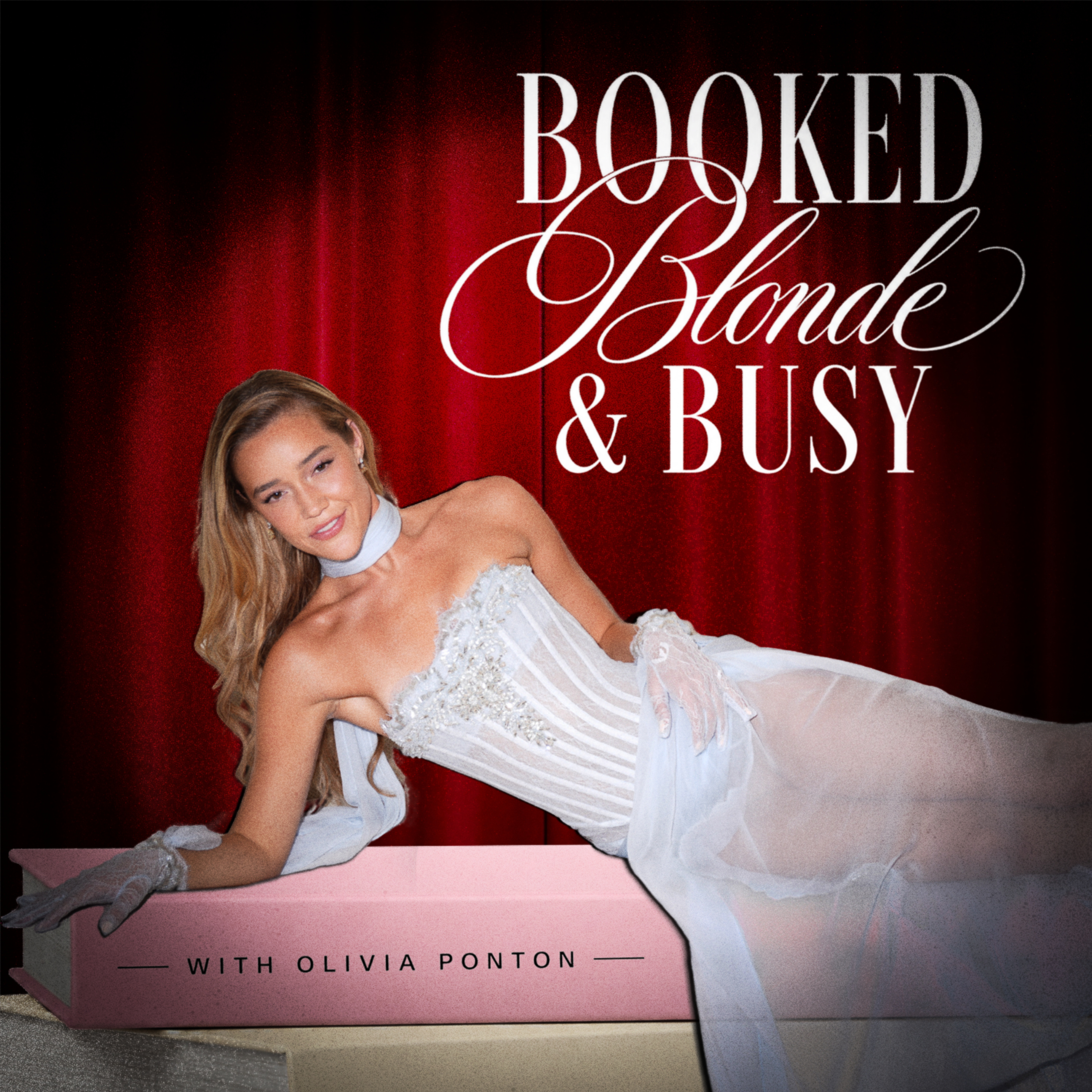
Author Haley-Grace McCormick Made Me Ugly Cry + Almost Ruined a Campaign Shoot | Booked & Busy w/ Olivia Ponton
43m 48s
Haley Grace McCormick’s *The Enemy of Time* is a deeply emotional novel that explores the fleeting nature of time, friendship, and love through the lens of a 24-hour timeline. Set in the present, the story weaves together past memories and present moments to highlight how our current relationships are shaped by our entire lives. The narrative centers on four close friends whose bond is tested by misunderstandings, growing apart, and unspoken emotions, culminating in a heartbreaking revelation: Jamie, one of the central characters, has died in a car accident. The story’s emotional core lies in the message of immediacy—“speak now, act now, love now”—as the characters confront the reality that tomorrow is not guaranteed. Inspired by personal journals and a college writing prompt, McCormick’s process was deeply introspective, shaped by her own heartbreak and emotional growth. She used index cards to organize scenes, focusing on emotional authenticity and reader connection. A romantic scene added during editing reflects her desire to balance emotional depth with cinematic romance. The book’s final moments, including a hopeful epilogue, show that even after loss, lives can continue with new meaning and connection. The cover’s time—742 PM in Boston—hints at Jamie’s tragic fate, adding a layer of subtle mystery. The novel resonates with readers through its raw honesty about friendship, change, and the enduring power of human bonds beyond the immediate moment.
Hi Angels, welcome back to another episode of "Booked in Pussy." This is my podcast for the girlies who cry a lot when reading or just feel a lot of emotions and we kind of deep dive them on this podcast. And today we're specifically talking with an incredible author and quite frankly the only female that's made me cry in the past six months of my life. And I ugly cried at this, insert the video of me following my eyes out in Tampa, which I'll talk about later in the episode. This is the novel, "The Enemy of Time" by Haley Grace McCormick. Pretty quick read. Haley Grace McCormick just released this book in February, I believe. Got wrenching. Absolutely got wrenching. But she's also a social media personality. She's really funny in my opinion and I am obsessed with her content. And I feel like it's kind of similar to what I do here on "Booked in Busy." She was a book talk creator and now she's a author. So I'm very excited to talk about that pipeline with her. Haley Grace McCormick, welcome to "Booked in Busy." Thank you for having me. Of course, and thank you for being here. So basically this is the most depressing book. I would say I have personally ever read it, but for anyone who has not read this beautiful book, could you give them a little synopsis and pitch before we get into the deep diving and all the spoiler alerts? Yeah, absolutely. So it is a love story between Alex and Jamie, but it's also a story about found family and friendship. You have this whole group of four friends that are going through their childhood together and it's told within 24 hours in the present timeline, but we have all these moments in the past that really equal up to who they are in that present. And the whole point of the story is really to help you kind of just have this moment of, speak now, say it now, love now because tomorrow isn't forever. And at the end of the day, you know, we only have one moment to make every second of our life count because your moment is right now. You're in the middle of it and, you know, just having all of that come together and show that through childhood and present and past and all these moments that equal up to what your present is in the moment. It's a great elevator pitch. Thank you. Great elevator pitch. So this book had parents with the parents B. Oh my gosh, okay. So we have like friends to lovers of love Rosie. Love that one. Love that. The book and the film beautiful. And then I also had more of that friends to lovers, but like that timeline and showing how somebody grows and changes in relationship and how maybe you're not the right person for somebody in this second, but in this second you are. You need to grab that. Yeah. That particular aspect of the story is definitely from like one day. And I love using one day as an example. Yeah. It was beautiful book, gorgeous book. Then you have a movie that again, it's a very different representation of the book, but also gives this point across. Then you had the TV show. Yeah. That was the TV show was mind-boggling. Mind-boggling. And it's one of my favorite pieces of art because it's lived in three different ways and it's still told the same message every single time. If I had to give two, that's kind of where they would be. When I read this, there was a sense of familiarity. And now that you say one day, that makes, but I didn't know what I was like referencing it to, but now that you say one day, I'm like, oh, because also I just read people who met on the beach. I think it also has that kind of like the back and forth of timeline. I loved in this book because it was written over a 24-hour period. I liked following the, because you would do like timestamps, obviously. And I liked following that all. Thank you. I was very picky about those timestamps. I really, I drew every single one of those. That's like the clock that you have the book and then you have like the time because again, being very dyslexic as I am. Yeah. I wanted neurodivergence to have little breaking moments in the story, because I feel like even if you're ADHD, you kind of have like where your brain, you need a break from moment, from, from words, from stuff, you know, on a page. Words, some words. And so having those little pictures in there, it helps people like me and the neurodivergent community say, oh, okay, I know what's going on. I know where I am in this story. And it's very quick to just, okay, I can go right into the next one without being like, wait, what did I just read? Where are they now? So I was very picky about those timestamps. Very bad. Well, made me understand about myself. I'm hoping, I'm hoping it made other people understand. What inspired this book? And did you just wake up on a random Tuesday and decide to write the most gut-wrenching piece of literature that I've read? You know, it was one of those things that the story actually came all together in a college class. I was in a short story class. And I will admit, I was not the happiest to be writing short stories because I was like, I want to be a novel writer. Why am I doing this? And I'm so glad I did because it teaches you how to get a message across really fast. And she posed a really interesting question, which was, if you had to ask your younger self one thing, if you could tell your younger self one thing, what would it be and make a quote? And I was like, okay, that's not going to dig up trial to trauma at all. And I'll be fine here. And I had just moved at the time. And so I went into my bedroom, and I started ripping open boxes to find old journals. So I was like, I need to remember who I was, what was I thinking as a kid? And you very quickly realized you're like, wow, that never needs to be seen. We should burn this one. And, you know, going through them and kind of laughing at your younger self. I had an entry about a boy that I was absolutely obsessed with apparently when I was like 13 or 14, so obsessed. There is like pages where I had obviously cried because there's dry tears on these pages. And you can like see the smudged ink. And I was here. And he was like, in my mind, I should be thinking like, oh, poor, you know, young me. And in reality, I was dying laughing over something that was obviously so important to me. But now is, you know, 20-year-old me. I'm laughing at that younger version. And so the idea started coming from this idea of like, you know, when you think about all the things that you wish you would have done or you wish you would have said, I really wanted to tell my younger self, you know, speak now, act now, love now because tomorrow isn't forever. And so that was kind of the quote that started the short story. And in my professor said your characters have more to say. And I was like, yes, now we get to go into that novel. I get what I want out of this. Wow. Yeah, I have a lot of journals at home. And every time I go home and I read them, I wish I didn't do that because I started getting really emo and I just cry. And then my mom has to come in and be like, what's wrong? And I'm like, oh, I'm reading this like gut-wrenching entry from when I was 12 years old and loved with this boy who didn't even know I existed. Exactly. Right. Right. Okay. There's four characters in this book, four main characters I would say. And I guess from what we're hearing, why did you choose the number four? Because I would say when you're writing, that makes a lot of sense because you have four people to like create dialogue with because sometimes with two people, it's like, right. But I feel like four is a specific number because when you're in a group of four people, a friends, I feel like it's set up for success where you're like, oh, it's supposed two people are going to be friends and two people are going to be friends. But somehow there's always someone that's left out in the group and that's what I feel like I related to with the main character because spoiler. I'm just, I have to get through this because obviously we find out that she thinks those two hooked up. Right. But then, you know, the obviously, no, the lonely aspect that she felt where she had thought all three of the closest people in her life had turned on her. That's what I related to the most in the book because fortunately, I have not related to the grief part. I'm very grateful and I pray every day for that. But why did you choose four characters? Was that something that was siphoned from the journal entries or was that like, as you're writing? Yeah, absolutely. So I really wanted to show, you know, this bond and relationship with, you know, female friendships in particular. And obviously a lot of the story is focused around the love story with, you know, Alex and Jamie. But I wanted to show female friendships and the ups and downs with all that and the beauty that, you know, comes with it all. And then I also wanted to show a sibling relationship and in one that maybe wasn't the typical, you know, a sibling relationship where it was this blended family. And so I think there were so many layers to get to explore with all of that. And so that was really why four was such a big deal to me was that I wanted to show all these different aspects of relationship and of friendship. And I, you know, I think I'm a huge fan of like the Breakfast Club and of, you know, having these stories of all these different people that somehow find a connecting piece together. And I wanted to tell the story that we all have a way to connect with each other, even if you're the most different human on the planet. And that was Jamie and the person that was like, would connect them all. That was like actually the one piece that I was thinking about throughout the book of like, why is there these three characters that were introduced because I was telling her before we started recording. I did not read the, the blimp. Wait, is that what you call it? I called a blimp. Like a blur. Okay. Yeah. I oftentimes with books, I don't read them. I judge based off the cover. And so when I started reading, they were talking about a friend group before. But there was only three characters having any dialogue. So I used to waiting and I was waiting for Jamie to come and I was waiting and then it got to a point where I was like, this Jamie comment. Right. And then we find out Jamie never comes. So that was a little depressing. I started on my flight to Tampa three hour plane ride. You know, I was just reading the entire time. Get to Tampa. I'm like, okay, I'm like 70% down with the book at this point. And it's the night before I have a big shoot. I'm really excited about this. Yeah. You know, this is going again, guys, had no idea this was going to be a gut wrench. And I think I had like 30, 40 pages left. So I was like, okay, I'm going to read like 15 right now and then I'm going to shower and then I'm going to read maybe potentially read the rest. I read a little bit and that was when I started connecting the dots that Jamie might potentially not spoiler be alive. Because there was that specific quote, or I guess seen that Jamie's dad gave the package to her and was like, he would have wanted you to have this. And I felt like specifically that sentence was like, well, what do you mean? He would have want like I feel like the past tense of it kind of was tripping me out. So I take my shower and I'm in the shower and you know, like most girls I like think about books on the show and I'm like, okay, like that was really weird, right? I was like, he wouldn't have used past tense if he was currently living. So I go to the shower.
and like, okay, I have to finish it now because what else am I going to do with my life besides sleep? Oh, I posted it on my story. I was bawling like I have not cried over a book like that in ages. I don't know. I was so emotionally connected to Jamie or I don't know how I was connected to any of them, but besides through your storytelling. But by the end, I was so the best way to say is email. I was just like, what is going on? So why why was at the end? Like, did you know when you were creating this book that he was going to be passed away the entire time? Like this five year high school reunion that you make it seem like is actually Jamie's funeral, which makes it, oh my god, I do not want to start crying. It makes it just 10 times more depressing because the whole time you're thinking like that you can relate to this dynamic of like, oh, you're going your high school reunion. And I was thinking about that from my perspective because my high school has never had a reunion and I or I've never been invited. Um, and I was thinking I was like, maybe I want to throw my own like I had all these like positive thoughts going on. Yeah. Why? That's my question. It's like, why? Yeah, you know, that was really so that when I originally wrote the short story for this, that was the ending. The short story was really just her in these in this, you know, kind of 24 hour time period. And there was no flashbacks in that it was really just her kind of going through these moments. And, you know, there was one or two flashbacks about like, you know, a prom moment when she's running her hands on her old prom dress and her closet. So it was little things like that in the short story, but I'd always had this ending that I knew needed to be said. And I, that's what I wanted to wrap it all together with. And so when I was writing the book, trying to figure out, you know, I had a beginning and I had an ending, but you know, what's this middle and why do I want people to care about these characters? And what do they have to say? Um, and I'm glad that you said that you, you connected with the characters because I wanted every character to be so different from each other that everyone could relate to somebody in this story, even in the smallest amount, you know, what it was, you know, when it came down to the ending, you know, Alex is very much an unreliable narrator in some sense because she's lying to herself pretty much the entire time she will not admit it until reality is smacking her in the face. She's walking into the doors, literally walking in. And I wanted the reader to experience exactly what Alex was experiencing as her world is kind of crumbling and as she's allowing herself to realize like, okay, this is actually happening and this is, this is my world now, this is my reality. And her own enemy of time is facing her, you know, right there. And I want people to feel this importance of like, okay, I need to say something to the person that I love when I feel it because again, we don't know when tomorrow is our last tomorrow. We don't know when that moment is just gone. All two things. After I finished this book, I did text every small person that I am, is near and dear to my heart. I was like, he's just letting you know, I love you. Yeah, right. Number one, number two. So if you had the beginning and the end, what process did it look like when you were filling in the blanks? Like, how is your writing process? Do you are you like a sticky note type of person? Do you like figure out certain scenes? How is yours looking? So, you know, my, my original writing process was so detailed and so organized. I was always so proud of myself for how I would write. And then I wrote this story and blew it all up 100%. As you should do, as any good writer, and I decided to get like, you know, index cards. Yeah, I went for the index card method. And I had told my parents, don't worry, I'm just going to lay out this idea in my head. I need this timeline. And I had had scenes, almost like a scene card when you're doing like a screenplay. Yeah. And I had these scenes that I knew needed to be said. And my whole thing is like, if a scene doesn't, if the scene doesn't connect the reader to a feeling, then it's not needed. And so I kind of had like the scene and then why it was needed the scene and then what was the lesson. And that's also kind of where the, you know, the little poems come in is like, okay, how do I bring in this feeling and making somebody have an emotional response, whether that's happiness grief or anger or whatever it may be. Second hand embarrassment happens a lot. I feel like in this story, I feel like it happens a lot in this story. And I wanted people to feel that. And so as I was writing it, I literally had all these little index cards. And I had laid them on my kitchen floor in the line thinking that I'm going to be done in a day. It's going to be totally fine. We can eat dinner. We did not eat dinner for a week. It was a door dash moment. And you just kept it all there. Just kept it all there. And I literally like stuck it to the floor because we had like tile, think goodness. And so I could like stick it all to the floor. And at the very end of that week, I, you know, I grabbed the note cards and then I put them on a ring, basically. I felt like I was back in high school making study notes or something. And from there, that's where I started. I would take a scene card out and we would write that scene. And then they all just kind of started piling together into chapters. But it was very messy and not organized. And I would throw chapters out. I like randomly mom would see them just flying in the house. I literally would throw them. Is there any that you like wish you kept in? Or was there someone that was like, oh, maybe you shouldn't keep this in? Yeah, I actually, I had a, I think a tree for building scene when they're like 13. And I thought it was really cute because you have like Lucas who's that, you know, very sturdy. He's got everything on his little checklist. We love him. And then you have Alex who's just a mess of a human at all times in her life. It was a sibling dynamic chapter that I was trying to put in there to show like how he's yelling at her how she's yelling at him. But I think you do a good job. Thank you. Without even that. There was points of time where I could also see obviously I don't have a brother, but I was older sister. And I could kind of relate to them and almost kind of like wish I had their dynamic a little bit because I feel like they have this very like back and forth relationship. But at the end of the day, I feel like he's always going to be her protector. And he's always going to like watch out for her and the whole thing with Kayla. I think this was in the first couple of chapters where she's really angry at him for still being with Kayla or like, are they supposed to be together? Are they not supposed to be together? Why is he getting back with her if she hooked up with Jamie? Like there was a lot of points where I was on Alex's side. And I was like, oh, I do see where she's coming from. Like if I was in that position, I would be just as angry at my older brother for getting back with the cheating girl. But then we find out that doesn't happen. Speaking of that scene, what possessed that to kind of come about of like the fake cheating situation? And why do you think Lucas never told her or why don't you think any of them ever told her to protector? That was the idea. You know, I really wanted to show again, it was another one of those lesson moments. It was like miscommunication. We forget to have those moments with people and to take that time to like really understand like, what is going through your mind? Like, you may have hurt me deeply, but why? Like, what is going on with you too? When you don't communicate and you don't share your feelings back and forth with somebody, then life can get messy. And we don't have a lot of time for it to be messy. And so this miscommunication, you know, kind of trope within the story was there to one, you know, play obviously a little bit of a lesson, but to, you know, show like, okay, for them, the whole group was, you know, Alex is not going to leave without Jamie. And Jamie is in a position where he can't leave now because of what, you know, happens at the party. And so he can't leave. And he is not going to hold her back because everything in his life is to move her forward. And I think he comes to this realization, he's like, he can't be selfish with her. And he wants her to go have her life. And he wants to see her succeed. And Kayla is that same kind of person, you know, she's like, I'm not, you know, I, she totally agrees in that moment of like, you're right. She needs to move forward. And I think Kayla is also this character that feels like she's holding Lucas back when she's young. And so I think you think she has this, you know, she's the life of the party. She's just this big personality, but she's also one of the more, she's always self-reflective and she's very hard on herself at the same time. And I feel like we all kind of know a person maybe or maybe we are that person who is, you know, in the crowd and you're, you have the perfect stage life, right? And then, boom, you go right back home and you don't feel like that you're that person. And it's very much the smoke in mirrors reality. And so that was kind of Kayla's character. She had a lot of this self-doubt that no one else sees. And Lucas is always there to kind of bring her back up. But she, again, covers back to that, you know, her mother left her when she was young. And there's that feeling of like not being enough. And so I think she's kind of self-protecting herself in this moment because she's scary. I think Kayla was supposed to be self-protecting of like, if I have the life I want, that's almost scarier to her. And so she kind of self-protects in the name of protecting Alex. And then Jamie's always going to be there for Alex's, you know, character. And then he realizes later on in life that like, oh my gosh, wait, I made the wrong choice because she's still not doing what she should be doing. She's still not with me. Still not like with me, she's still living her life. And you know, that's where he grows up and he finds who he is, but she hasn't figured it out yet. All of that messiness again. Wow. That was a complicated answer for me. Yeah, no. I'm debriefing it in my head, but did you cry while while writing any of the scenes? Yeah, I cried the most during you cried the most. I don't. And I'm not like a big cryer. And kind of the funny thing in my family even like my mom and dad used to like say I was made a stone basically because I just would not cry. And would never say that about me. I could not cry. Like maybe a couple sad movies here and there and like writing this story. I was bawling on a daily basis and my mom was so happy. She's like she has a heart. Well, you know, like it's one of those moments like she she can cry. But I was. I was just bawling with the story, but I think the most that I cried was the scene where Jamie does let Alex go. And you know, he's basically breaking her and she's begging him not to. And I think I cried the most because I understood both of them in that moment. I understood where he was coming from and I understood obviously where she's coming from. And that miscommunication again. And I think I was yelling at my own characters and myself for writing. And I'm like, what how dare I do this? Yeah, I think it was that scene that got me. The ending really should have been the worst. But that was the catalyst to the ending in my mind. And so I bought the most there. In that specific scene, who are you picturing? Do you have like inspiration from people? Is it like like, do you already picture an actor or a childhood friend? Like who is. in that moment because I'm obviously not a writer. I can't put myself into the mindset of like, when you are writing such an intense scene like that. I feel like in my life, I would have to attach that person to someone and kind of think like what would they do? Does that make sense? Did you do that or? - Absolutely, and I think all authors, we do have like a memory or a moment with somebody that then we expand and we make it bigger for the story. And I had, you know, I definitely had people in my life that you can love somebody so wholeheartedly and still know you have to let them go. - I'm not good at that. - No, and it's terrible. - I don't think I've ever done it in my entire life, by the way. I'm just kidding. - I'm like, "Oh, that's so good for you." - Yeah. - Oh, I just don't think I can. - Right? And I think that, you know, for me, I joke about this and I probably shouldn't joke about it, but he knows I joke about this, which is, you know, at the same time I was writing this story, I was going through my first real love and my first real heartbreak. And it was what age was that then? - So I was 21 when you were doing, like, the note card thing. - Yeah, I was, I was 21. - I was 23, I cannot write. - Right? - That's crazy. - I was like, I was desperately in love with this person and, you know, while writing the first draft and in the second draft we broke up. So it was great. - Did you change things during the second draft because of it? - Absolutely. Because then I finally knew heartbreak and I knew what it was like to love someone so dearly, but not be with them and not, you know, for whatever reasons, you know, it may be in life that you can't always be with that person. And so I always said to you some all the time, like I'm so happy that you happened and we're really good friends, but I'm like, I'm so glad you broke me. - Because it's like that. I know a lot of artists, they'll be like, I'm so happy I just got my heart broken because this album is going to be crazy, right? (laughing) I feel like it's like similar kind of. So in the first draft to the second draft, was there any, like, huge shifts that, like, did the ending change or did anything like that happen in between the two that was influenced by that? - You know, it was a lot of the middle with changed action. I kept the beginning and the ending pretty solid to what I wanted it always to be. - Okay. - There was a lot of these moments in the middle that after I did experience heartbreak for the first time and, you know, after I did kind of flip through my old journals again and really try to understand where my brain was with friends and things, then I realized I was like, wait, this character would not do this. This is not, you know, it's not accurate to what somebody would be going through in this moment. So I tore out major sections of it to rewrite. So that way, again, it would connect back to readers and they'd be like, oh, I went through that. Oh, I felt that. So yeah, 100%. - I'm really happy that you did that emotion thing with the, like, on the note card where you would do the scene with the emotion 'cause I feel like, well, try a good book to you have to have the feelings behind it because if your reader is not feeling what the main character is going through from me at least, I put myself in the shoes that I am that character. I am Alex for the time that I'm reading this book and maybe that's not the healthiest way of looking at life because sometimes I read really gut-wrenching things like this and then I'm a mess after for like a week. What chapter do you think currently was added in? - I guess I'm gonna go with first. Like was the hardest right? The hardest chapter that was added in was after I had turned in the book to my publisher at the time and so this was pretty far into the process. But in your mind, you're thinking, I did amazing. You got it? Check this off. There's no edits, not the case. My publisher was like, hey, we love everything. We love the concept of all this but we should was like, this isn't a dual love story and if it's a dual, we already had one romantic scene of the two characters. She was like, but we could do something like, we could have another, like good, we could have something good, you know? I was like, you know what, you're 100% right, let's try it. I'm gonna put a chapter and I had the chapter of kind of that, you know, there were union moment and in Boston and I was very, you know, I wanted it in Boston when the city life kind of feel to it and I went into my room and also, okay, let me think about this. How do I write like, classy spice? - That's how to figure out like the nicest, that's such a good way of finding this, this is way to do this. And you know, it was the funniest experience because I was literally in my bed, I had books surrounding me and I also had my computer screen up because I'm a big movie person. I love movies and television and to me, some of those best romance scenes are really the cinematic moment and in sometimes in literature, we miss some of that, that beauty of just like the simple hand touch of something and so that's why I was trying to figure out how to put in there. How do you properly write a scene that's gonna be romantic? - Yeah, also still, you know, so good. But in that romance, you know, meaning of it all, 'cause these characters have been through so much, they deserve to have a cinematic love scene. And so that was the one that I was really trying to figure out how to write, I was panicking, literally writing this and my mom came into the room. You see all of this literature in front and she knows what these are, she's got TikTok, she knows what these are. - Yes, she's got TikTok. - And she kind of just looks at me and goes, okay, and close the door. That was it, she didn't ask me any questions, she went downstairs, she made some lunch, did her thing, and I wrote the scene and I was content with it and I have this thing where I make my parents read it out loud, to me, I make my dad read my stuff out loud to me because I'm like, what? - Yeah, so I'm really dyslexic, so I gotta hear it. - I didn't know that, yes. - I have to hear it. And so he had been reading the whole book with me and so he was excited to hear that we were adding a chapter. Did I tell him what chapter we were adding? No, that's not a fun conversation to have with my old dad. - I'm like, I feel like that was my case. And I didn't tell him as he goes to read it. He starts reading it out loud and he goes, is this what we're, oh, I need the wine. And so I need the wine. We got some cabinet system and everything was fine, but it was so funny and it really was the hardest thing for me to write 'cause I never had to write anything like that. But then it became probably my favorite chapter to add in because it was such a funny moment to have, not only with my parents, but just being that new writer, a debut writer, trying to learn how to write spice. - I cannot do, by the way, that I give every author who is able to do that in like a beautiful way. 'Cause sometimes I read and I'm like, okay, that just really didn't need to be in their babes. - Right, yeah. - But sometimes when it's needed and it makes sense, I'm like, wow, that was actually a beautiful portrayal of it. So interesting that that was the hardest thing. - That, 'cause I wouldn't, I don't know. I guess I've just never really thought about that in that capacity. Okay, kind of switching up. 'Cause I want to talk about this theme, which is the theme of growing apart. And I feel like you write it in such a beautiful way that I could strongly relate to, because I think growing up and growing apart from friends, especially like high school friends, is a bit peculiar sometimes. And because not always, is there a reason you're not friends with someone anymore? It's, life gets crazy. And, oh my gosh, it was like four weeks ago now, I met these two girls in Fort Lauderdale and I was like, oh my god, they're gonna be my new best friends. I hung out for like a week straight, had one nights every night. I was like, this is my dream. Like we're playing card games. I'm like, sign me the, like I will move here. And then I come back to Newark. And I come back to my normal lifestyle. And, you know, like I text them every so often and we keep in touch and we'll FaceTime. But I feel like you wrote it, obviously, without social meaning involved in such a beautiful way that growing apart isn't necessarily always a negative thing. And then it's not always where a huge fight has to happen and that you stop talking to someone. Because that was really hard for me. I haven't read it or even watched that many things where people just slowly grow apart. And there's not really a reason for it. And I feel like you write it very beautifully. Is that something that you have like gone through so you knew how to write that or was that something that you were self-discovering in that moment because you were 21? Yeah, you know, absolutely. I think we've all gone through it. I think, you know, matter who you are, you've gone through that process where, you know, we're all growing and we're all changing constantly with life. And I mean, gosh, think about when you were in high school and then think about college. And then think about after them and now thinking in your first job and in doing what you're doing. And it's, you just grow and you change so much as a person. And you're not going to change and grow at the same rate that your friend that you grew up next door to did. And that's a really hard thing. And it's sad. But at the same time, you know, I have this big belief that, you know, people are in our lives for a reason. But sometimes they're only in it for a chapter. They're not in it for the full book or the full ending. I always say that because I literally always say that. And that's, I feel like how I cope with this problem that I sometimes have is I try to think like, people come into my life for a certain reason. It was in Barcelona. I think this was maybe three years ago. And I like followed this guy who was like a snow skier for a few years and he just looked like a cool human. And I ended up posting that I was in Barcelona. He was like, oh my god, like I'm born and raised here. If you want me to like take you around, I'd love that. I was like, sign me up. We took me like surfing skating into like a few restaurants. And I told him I was going to two Tahiti in like two-ish weeks. And he was like, no way, my step sisters there right now. Like you have to meet her. And it's one of the situations where you're like, yeah, like okay. And this island of Tahiti, I'm just going to like meet up with this girl that like, and I'd only met him like, what two or three times. Fast forward, I'm in Tahiti. And so there's like the little island of Tahiti. And then right next to it is an even smaller island called Moria. And I stay on Moria every time that I go. I'm on the ferry from Moria to Tahiti. And this girl comes up to me giving mine. I have a bottle of tequila and one hand and a red bull on the other. - As you should. - She's like, she's your name Olivia. And I was like, yeah. And she's like, you were just with my brother in Barcelona. And I was like, this ferry holds like maybe 50 people. There's no way that you're on my ferry right now. Like what? So I called him in that moment and was like, this was fricking. Like, yeah. probably proving your point, like people come into your life.
for a specific reason and for, you know, she was maybe only in my life for like a week and a half, two weeks while I was there, but we had like the best time ever and we went diving and it's surfing and she took me here and she took me there because she lived there. And, you know, we talk every so often, we eventually grew apart because that's what happens in adulthood. - Yes. - But like while I was reading, I was simultaneously being reminded of things where I did have really close friends, but anyways, I don't know how I got into that story. - No, and exactly. - I think it, you know, it's someone just like talking about like just how even you said it, you know, an experience that you had during all of that might teach you something in the future, right? You just never know why people come into our lives and why we have these connections. And I also think it's okay to grow apart from somebody and then find them 10 years down the line and then pick up exactly where you left off. There's something really beautiful about that as well. And it's these connections that you've made with people that they don't want to be in your life every single day, but they're going to continually make a difference in your life. I had friends and stuff that I've had to, for big reasons had to let go of and it still kills me. And I have friends that again, like you said, they just, you grow apart and you change. You still love them, that feeling is still there. You know, and you have a deep respect for them, but we can move on now. And it's okay to move on. It's okay to give yourself permission to move on. - That's a beautiful way of looking at it 'cause I always get so guilty with myself for being like, oh, this is another random example. I like communicating with the closest people in my life, all my close friends via Instagram. So I'll post like many life updates every like two or three weeks and just like kind of explain what has happened. And that way my friends can find a kind of feel like they're still on FaceTime with me and then they'll slide up and we'll talk about it. And I feel like that's my way that I've coped with it. - You know, I try to be a FaceTime person. That's what I always thought 'cause I grew up moving a lot. I moved 15 times by time I was 23. So, wait, yeah, my father will blame it all on him. He had a really cool job using the hotel industry. So when he was done helping a hotel succeed, we moved on to the next one. Sadly, he was really good at his job. So we left really fast, but I don't mean to cut you off, but what was your favorite place that you lived? - Ooh, the most beautiful place I ever lived was Park City, Utah. - Really? - Lord, I'm actually, I lived in this area called Midway at the time. And when I lived there, it was very underdeveloped. So you just had these rolling hills, you looked like you were in like lower the rings. Like it was breathtaking. So I, just the gorgeous place was just, it was so wonderful to grow up when I was so young there. And then high school was in Tennessee. So for me, I'm a big Tennessee girl, like Smokey Mountains, Galenburg, Severeville. That was my considered home. So those were my two favorites. - Okay. - All I ever lived. But I was born in California as well. So I loved anywhere in California. All my families in California. So those were like my three hubs. - Wow. - So you've just really been everywhere? - Yeah, I've been hopping around, you know, forever at this point. But because of that, I've like gotten this opportunity to like, I have so many friends. As you said, like everywhere, right? I mean yours is like a little bit more glamoury going to different like countries. Let's talk about that. - Oh my god. - That's crazy. Do you keep in contact with any of those people? Or is it that situation where it's like, you have grown apart with them? - I kept in contact with so many from people for so long. And then you do get to a point in your life where, you know, people are getting married. They're having fate, which by the way, that just blows my mind in general. But they're, you know, they're having children and they are having their own little lives and they're starting their own little story books, right? And I'm in a different part of my life. And so you do start losing contact. And because of that, it went from FaceTiming my friends all the time down to, you know, a good example is actually me and my closest girlfriend. We have stayed. We've worked to stay in contact. Like, you have to put an effort. - You have to put an effort. And she's my girl that like, we can go months without talking and we will send each other. We do it once a month. We will send a like 10 minute voice memo and it's like a podcast of our lives together. We don't have to answer, we have rules. Like, we don't have to answer each other. We just want to hear from each other. And it takes off so much pressure. Also, it's like, oh, I don't have to like, text her right back and be like, hey, I'm so sorry, I'll get to that in a second here. She's so sweet and like, we do it with each other where it's like, we'll send you a crazy long voice memo when you're ready to listen to it and when you're ready to respond, awesome. It can be months in between, but that's how we keep up with each other and each other's lives. Like, she's not even in this country right now. And we're still doing this. - That's kind of like an ongoing, but with me and my friends is like, I will send, maybe not a 10 minute voice note, but I'll send like three, five minute ones. And I'll just send like like, bunch of blurbs specifically with my one friend Renee. She like, just had a baby. So that's why we used to do FaceTime before. She was with child, now she's with child. I'll just send her a voice note and I'll be like, take care of the baby. - Yes. - Whenever you have a free moment in the next few weeks, listen to this and then she won't answer for two weeks and then I get like 30 text messages of her being like, what about this? What about this? So honestly, that's a very relatable way of looking at it. - And it's so much like less pressure. I feel like we put so much pressure on ourselves in anything in life, but specifically keeping up with people and it should be fun. - I know. - It should be like communicating. - It's communicating. It's not serious. Like I have a friend in California. Like she actually came. She flew all the way down to Mortal Beach to do an event with me, Claire Margaret Donovan. She's amazing. And we do the same thing. We send these crazy long voice memos. She has a ton going on in life. And so when we find our chance to get to send something together, we do and it's so much fun. It's like no time has passed. - That's so awesome. - I guess what I want to kind of go into next is this obviously came out in February from having conversations with other authors. I understand the pipeline of books. Are you working on anything else currently and where did those inspiration comes from? - I am. I'm always working on something. My brain doesn't sleep. It's actually like a problem. People have to force me to like actually rest. - Oh, you don't force me. - Really? - Actually, I don't have to force me. - You know, I think especially like, I had been kind of working on stuff during this book as well. And when you go on your book tour, there's so much like, there's this creative energy with all these people that are coming up and they're telling you what do they connect with and maybe what do they not connect with. And that's what I love to hear all the different takes on the story because it helps me be a better writer in the future. 'Cause I can say, okay, I didn't connect here. How do I fix that for my next one? And so my brain just starts going crazy. And you know, I have these other stories that I've been dying to get back to. And so now I have that ability that I can kind of dig my hands into it a little bit more. And I will always write something within a love story. I love, I love love, right? I want that in there. And I want to write all versions of loves and the ups and downs that it comes with. But I wanna get to experience a few other genres now too. So I have two that I'm like, I don't know which one's gonna hit the pipeline first, but I have a, it's like a psychological thriller romance. Wait, can you describe it like a book that is out? Like something, like if you had to make a baby between a few, what would that kind of look like? If there was like a. Have you ever read the silent patient? No, but yeah, I know a lot of people who are. That vibe. Okay. But add in Shutter Island the movie. Wait, wait. And then add in like a Titanic style romance. The most confusing things I could have ever just given you. All like really very strong topics too. Like very, very strong movies or by the stilms and books. Wow. Yes. That sounds like a great baby to me. I'm so excited. Yeah. And I have a friend who he's an actor and he looks, the funniest thing is I had kind of written the base. I had actually written this in a screenplay format originally a long time ago. And I was like, oh, I can't wait to like develop that into a book. And I'm one of my friends looks a dinnacle to the main boy in this. And I wrote it before I ever met him. And so we were in person recently together. And I was like, I'm staring at him like, huh? You look like a psychopath. And he was like, what? Excuse me. I mean, that's in the nicest way. Oh. Now I've found I have like a face. Yeah. And I love having like casting in my brain for it. So I'm like, now I have someone to work with on this. So that's my next one. And then I definitely want to dive into. I have a fantasy romance that I really like to play with. So I was my two next time. Like, wow. Well, that's really this. Extremely different. But I was also talking with, I think this was Alex Astari. I believe she was explaining like 10 years ago it was really hard to like genre run around. And nowadays it's a lot more normalized. You know, she's so right. And in the past, we were not supposed to do that. Right? Or supposed to kind of like stick in your in your lane, keep writing what you write. And I think, you know, that's great. And some writers are just beautiful at doing that. I think I'm just too ADD. And I need to hop and move and play around. It's kind of like movies. And I always talk about like, you know, if you went to an ice cream shop and you only ever got vanilla, vanilla is good. But you're going to be missing out on like mint chocolate chip and all the other good stuff there. So we've got to play over. We're free now. Right. Thank you. You're right, one. Wow. Well, stunning. Is there anything else you want to, or if there's any other topics that you feel that people should understand about the book? Oh, I do always like to tell people that once you're done reading the book, once you've finished it, take a look at the cover because the cover kind of explains a lot of the story. And I love to hear, we, from people about that, really? It does. Can you help me explain that? Because I did not do that. So that's like, that's why I love like when I was doing like, I was on tour recently with, you know, all the different stops. And somebody had only one person had figured it out. And I thought that was so cool. It was like this little hidden mystery of the story. Is it the time? Uh-huh. The time is marked on a very specific part of the story. It's actually in the story. She says it in like the last, I think it's like the last two pages. She'll say it within there. Now I kind of want to look. Oh, yeah. So that's like, kind of brings the whole story. And like, you see, the front is Boston. It's because-- Yeah, I did recognize that. --riving back in at that time. I didn't put that two and two together. Wow. OK, also if the swaler, obviously, because this whole majority.
this is where they're, but Jamie was taken from this world at 742, killed by a drunk driver on the wrong side of the road. And so on the cover, it's 742 PM. Wow, in Boston. Driving back into Boston. And on the very back, you can see it time clock with them and their future slipping away. I kind of understood that when I was looking at that. But while I did not even put two and two and two together, that was something like my little self-indulgent moment there. Yeah, about the cover. We really quick before we're done with this. I want you to talk about the epilogue because I didn't talk about, I didn't read it because I didn't have, I did not read it. I didn't have the book that had the epilogue in it. Okay, no, to preface that. Yes, but continue. Because what is it, it's about Kayla and Jamie's wedding. So yeah, it's Kayla and Lucas is kind of like, not Jamie. Sorry, I would have been a big clutch. You know, I wanted to show, you know, from me, I knew the ending. From day one, I knew how I wanted it to end. I wanted it to be a gut punch and I wanted it at the end of the day. Life just ends. And that's what I wanted in the story. And I wanted this very final moment in there because again, this idea of like, we don't get back time. It's just done. And I wanted that for the story. But, you know, listening to people who had read the story and who had read the arcs, they liked that. But at the same time, they're like, I want more. And everybody was craving. Just a little extra ending to understand. Okay, now that we see where these characters have come, I'd like to see where they go. And it was a very interesting moment because I have this freelance editor who was a extremely good friend of mine who I make read everything I do because she is, she's blunt, but in like, a peanut butter way. Do you know what I mean? She's like, she just snooves every day and just love her for that. And she writes the best notes and stuff to things. Yeah. The arcs were sent out. The book was sent out. The book was done. And I sent it to her because I was like, I need your opinion, something off for the readers or something missing. They need something more. And I want to give that that the end of the day. I write so that a reader can enjoy it. And if it's something's not connecting, then that means I haven't finished my job. And so she told me, she's like, I understand what they're saying. I need more. And she's like, I really think we need to add an epilogue in there. And she's like, I think you need to show where are these characters, you know, six months down the line of year down the line. Like, where are they? And how did this journey change them? She's like, that's what we're missing. And so I created the epilogue. I sent it to her and she balled, but this time with a more of a happy balling. And that's what I wanted to have a happier ending in a way that obviously it's a sad story, but you can have a light at the end of darkness. And that's what the epilogue was meant to show was, you know, there is a happily ever after for everyone in the story. It's just not in the way that you think it is. You can expect it. Yeah. Not as expecting it. Let me tell you that. I'm gonna, I'm gonna, I'm gonna like fully read it when I get home because if it makes you cry, don't cry. It's like only three pages. Yeah, for sure. But it gets, it gets a lot of the clarification. I feel like four readers. Well, thank you so much for coming on. This is so beautiful. Well, thank you for having me. This was so much fun. And keep the fit. Guys, the blue. Oh, and we also just didn't do this, but we have our beverage of the day. Yes. This is from a place called Tostique. So it's banana, almond milk, spirulina, and some type of berry. I'm not sure why, but it's blue because obviously this is blue. Oh, that was such an ugly way. Me holding up the book. No, it was great. Beautiful. Okay, can I taste that? Let me show on a class here there. That's fine. Oh, it's cinnamon. It's almost like banana cinnamon bread. Yeah. Oh, that's okay. That's what I was saying. Mm-hmm. Smash. I like it. Very good. Thank you. (gentle music)
Podcast Summary
Key Points:
Haley Grace McCormick’s novel *The Enemy of Time* is a emotionally powerful story about fleeting moments, found family, and the importance of speaking and acting in the present.
The book’s structure, set in a 24-hour timeline with vivid timestamps, creates a sense of urgency and helps neurodivergent readers navigate the narrative with breaks and visual cues.
Inspired by personal journals and a college short story prompt, the novel explores the theme of "speak now, act now" as a message to readers about the impermanence of time and relationships.
The story features four interconnected characters, each representing different facets of friendship, love, and family, with a focus on emotional growth and miscommunication.
The ending reveals Jamie’s death in a car accident, transforming the high school reunion into a funeral and deepening the emotional impact by showing the fragility of life.
McCormick’s writing process was iterative and deeply personal, including index card scenes and emotional revisions shaped by her own heartbreak and experiences.
A romantic scene added during the editing process reflects her effort to balance emotional authenticity with cinematic romance, a challenge she overcame with help from her family.
The book’s themes of growing apart and reconnection resonate with real-life experiences of friendship, change, and letting go, emphasizing that emotional bonds can evolve and reappear over time.
Summary:
Haley Grace McCormick’s *The Enemy of Time* is a deeply emotional novel that explores the fleeting nature of time, friendship, and love through the lens of a 24-hour timeline. Set in the present, the story weaves together past memories and present moments to highlight how our current relationships are shaped by our entire lives. The narrative centers on four close friends whose bond is tested by misunderstandings, growing apart, and unspoken emotions, culminating in a heartbreaking revelation: Jamie, one of the central characters, has died in a car accident.
The story’s emotional core lies in the message of immediacy—“speak now, act now, love now”—as the characters confront the reality that tomorrow is not guaranteed. Inspired by personal journals and a college writing prompt, McCormick’s process was deeply introspective, shaped by her own heartbreak and emotional growth. She used index cards to organize scenes, focusing on emotional authenticity and reader connection.
A romantic scene added during editing reflects her desire to balance emotional depth with cinematic romance. The book’s final moments, including a hopeful epilogue, show that even after loss, lives can continue with new meaning and connection. The cover’s time—742 PM in Boston—hints at Jamie’s tragic fate, adding a layer of subtle mystery.
The novel resonates with readers through its raw honesty about friendship, change, and the enduring power of human bonds beyond the immediate moment.
FAQs
The main theme is the urgency of living in the present moment, emphasizing that tomorrow is not guaranteed. The book encourages readers to speak, act, and love now because life is fleeting and each moment is precious.
The 24-hour timeline creates a sense of urgency and immediacy. It allows readers to experience each moment as a fleeting, real-time event, which mirrors the emotional intensity and the feeling that time is running out.
Her experiences with grief, heartbreak, and self-reflection during adolescence, including reading old journals and reflecting on her past relationships, directly inspired the emotional core and the message of 'speak now, love now.'
Jamie represents the idea of a lost love and the pain of missing out on a chance to be with someone. His death at the end of the book underscores the central theme that some moments in life are permanent and irreversible.
The book shows that growing apart from friends is a natural part of life and growth. It emphasizes that connections are temporary and meaningful, even if they fade over time, and that it’s okay to move on while still holding deep respect and love.
The epilogue was added to give readers a hopeful, hopeful ending after the emotional weight of the main story. It shows how the characters grow and find peace, proving that even in loss, there can be a light at the end of the darkness.
Chat with AI
Loading...
Pro features
Go deeper with this episode
Unlock creator-grade tools that turn any transcript into show notes and subtitle files.
 PodcastTranscript AI