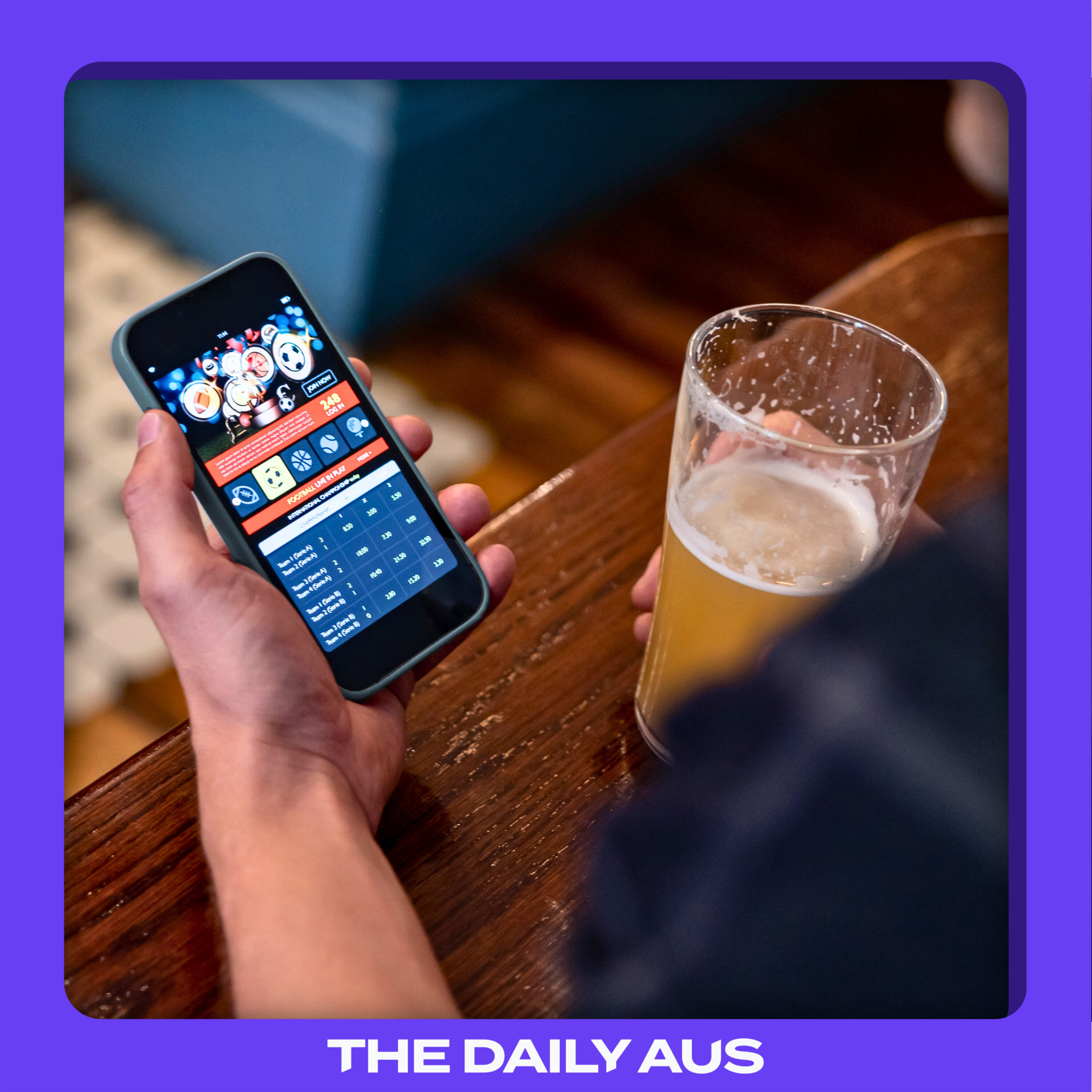
Australia leads the world in per capita gambling losses, with annual losses projected at $36 billion, driven heavily by sports betting and online gambling intertwined with popular sports like AFL and NRL. This week, a Senate inquiry into gambling reform heard explosive testimony, including allegations from former NRL player Luke Bateman that gambling companies offered him illicit drugs and other inducements as a VIP client. Gambling reform advocate Tim Costello corroborated similar cases involving free accommodation and bonus bets. The inquiry stemmed from the government’s gambling reform bill, which proposes limits like capping ads at three per hour and banning them during live broadcasts, but critics—including the Greens, Coalition, and crossbenchers—argue it falls short of the 31 recommendations from the 2023 Murphy inquiry, which called for a total advertising ban. A separate report revealed deep ties between sports clubs and gambling/alcohol sponsors, with every NRL club and most AFL clubs having such partnerships, and leagues profiting from bets placed on games. While companies like TAB and Sportsbet denied the allegations, advocates emphasize the need for cultural change, drawing parallels to past tobacco advertising bans. The bill now awaits Senate inquiry findings and a vote, with its future uncertain amid political dissent.
Today's episode was made possible by our friends over at Revoh Fitness. Ready? And good morning! This is the Daily Oz. Oh! Now it makes sense. Good morning and welcome to the Daily Oz. It's Friday the 7th of August. I'm Elliot Laurie. I'm Zara Sidelah. Australians lose more money on gambling than anywhere else in the world. For years, everyone in Canberra has agreed something needs to change. And this week, a Senate inquiry heard just how far gambling companies will allegedly go to keep people betting. VIP manager would offer you a "Hey, mate, what drugs do you want?" "Do you want a couple bags for this weekend?" On today's podcast, we're breaking down the gambling landscape in Australia. The fight over reform and what a new industry report reveals about the dark side of the country's favourite sports. So, Elliot, you just started that intro by saying Australians lose more to gambling than anywhere else in the world. Did you know that? I did know that, but it blows my mind every single time I hear it. Because when you think about places like Las Vegas and, you know, like hotspots of gambling and yet, on a per capita basis, we are so far above in terms of problem gambling. It is quite mind-blowing. Yeah, you are. I think we do often think of gambling as conceptually, like, in the casinos, around the table, you know, throwing money down. But it is a much more commonplace practice here in Australia through sports betting and online betting. Which is a completely. Actually, I don't know if that's fair. I don't know if that's fair if it's to say it's a completely different base, but it is, I think, targeting a different cohort of people. And it's also much more accessible. Yes. Because it's following you around everywhere you go. You need a phone. That's it. Exactly. So, the data shows us that Australia records the highest gambling losses per capita in the world. That's how they work out that figure that I spoke about at the start. And national losses are currently forecast around $36 billion a year. So, that's roughly $1,000 per person in Australia. And it's kind of showing that overall we're just losing on gambling. No one's really winning. Yeah, and that is the undercurrent of why there has been a push for gambling reform so much of it being that, you know, it is designed to make you lose. Certainly, pokeys, for example. I know that in the makeup of the technology, they are there to make you lose. You are not meant to be able to win on those sorts of machines. But as we kind of said at the beginning, here we're more talking about the entanglement with online gambling, specifically with sports. And sports here in Australia, talk me through that relationship. I mean, it's so interconnected. Gambling companies deliberately advertise a long sport. A lot of, you know, the sort of gambling activities you can undertake are directly connected to sport. I'm not a gamble myself, but you know, I feel like I can relate the message of saying, "I'm going multi-you do that kind of thing." Because it is so embedded in daily culture and the way that we watch and consume sport here in Australia. And the result is that we now have sort of a generation of young Australians that have directly connected the two things. We now can't have watching and enjoying sport without placing a bit. Yeah, and that has been the focus of some of your reporting this week. There have kind of been a lot of different angles to this story. So it has been ascended inquiry into the state of gambling here in Australia because of a piece of legislation. But then there is also a separate report. Yes. Where do you want to start? I think let's start with the report because it helps give a little bit more context to the state of play here in Australia. Okay. The report itself is called the state of play report. Oh, perfect. Here you go. Perfectly. We threw it. Yeah, so it's from the foundation for alcohol research and education. It's been a little bit more than a year since I've been on the show last week to share the report and say it was being released this week. And it kind of mapped the connection between alcohol and gambling sponsorship and Aussie sports specifically around the AFL and the NRL. And then their women's leagues, the counterparts there. Okay. Basically it found that every single AFL and NRL club has an alcohol sponsor. And it also found that every NRL club and five AFL clubs carry gambling sponsorship. Wow. That is significant. Yes. Now there is a little asterix on this. When I posted this story quite a few people commented, a message just saying that there are NRL clubs that don't have gambling sponsorships. And I did some digging into this. And basically they were right in that there's clubs like the rabbit ores or the bulldogs in the NRL who are partnering with the Clean the Game, which is a Newt Health Wales government scheme that aims at reducing the amount of betting. But those clubs do still have ties to the gambling industry, which is what this report found. So an example is the rabbit ores, even though they do have that partnership, they are also sponsored by the Australian turf club, which runs the Randwick race course and a bunch of horse racing events around the city, which obviously very closely tied to gambling. So there's this really close connection where the sports are being funded by these, you know, quite dangerous industries. That also is extended to broadcast partnerships. So you know, people like Channel 7, when they're broadcasting a live sporting event, they can run ads about these products. And an interesting part of this that I learned while I was doing the reporting is that the leagues themselves actually profit from every single bet that is placed on their game. I did not know that. No, neither did I. Oh, interesting. Yeah. So there's a financial incentive for them there to be getting people to be placing more bets. Right. Well, I mean, I guess this goes to the way that sports clubs are funded in the first place, like this, you know, like in media, like in anything really. There is going to have to be some sort of partnership or sponsorship that keeps these clubs able to continue to invest. Is there a suggestion that because you said every single club is sponsored by. Yeah. And alcohol company and alcohol company. Okay. So is this suggestion there that these alcohol companies are for in some way or another, I guess, keeping these clubs afloat? Well, that was the question that I had because I think when you hear these big advocacy pushes for reform in these sorts of places, you think, yeah, that all sounds nice. But, you know, there is so much money tied up in this. And you can understand why the clubs and the leagues as businesses would be accepting that money because that's their job to. You know, keep the sport going and to keep the clubs running. And I actually put that question to fair CEO her name is Ila Chouley. And here's what she had to say about it. We heard this before back with tobacco advertising when there were discussions in the community at the time about removing tobacco advertising because there was an acknowledgement of the level of harm that it was causing the community. And at that point in time, you know, the sporting clubs came out very clearly and said, we will not survive if you take away tobacco advertising. They absolutely did. They're still here to this day. If anything, they're more profitable. They make more money than ever before. So they're doing just fine. And they will absolutely be fine without gambling and alcohol advertising. These products are no ordinary commodity, right? We think about alcohol. One Australian dies every 90 minutes in this country from alcohol. These are harmful products. They are hurting our community every single day. There are some wonderful programs and products out there that I'm sure would be able to come in and take over this sponsorship opportunities that don't create extensive harm in our community. And I'm sure they're lining up at the door to do that. I mean, I guess that's a question to put to these clubs. Is that the reality for the clubs? Can they be in a position to be turning away this sort of sponsorship? Well, I did actually reach out to the AFL and the NRL when I was doing this reporting to say, would you consider removing your. You're like me throwing you under a bus being like, you haven't done your drill, you're a genius, Elliott. That's what I did. I reached out to them to see if they would consider removing alcohol sponsorships in particular because that was, you know, across both those codes. Yeah. Neither of them responded to me about it. I would say they're having a pretty big week with what's going on with the gambling inquiry. And it's such a big issue that they might not have a statement that they're ready to put on record about it. Well, when they do, and if they do, we are here, we want to hear what you have to say because, you know, like any story, it is very important to hear both sides of this. And to hear, I think also important to call out the financial realities of these clubs. Yeah, but I did think that was interesting. The tobacco analogy. Yeah. It kind of helped me make sense of it a little bit more, especially because I can't remember a time when tobacco products were being advertised in sport, but obviously there was a way we were able to, you know, backfill that sponsorship slot after the fact. Yeah. I'm also really enjoying this implication that you're watching Heaps of Sport. For listeners, you told me that you tuned into the AFL Grand Final last year at half time to watch Katy Perry perform. And I was really happy to hear that. I was really happy to hear that.
because after he left the NRL, he became quite a problem gambler, and he was very closely embedded with some of the biggest gambling companies in Australia. And he kind of spoke to me about how normalized alcohol and gambling has become in the professional sport culture and in the sport culture at large. He's a little bit of what he said during our interview. So the children growing up in people don't see the difference between alcohol gambling in sport. They just become one of the same thing and I've heard many stories of young man who cannot even watch a game without alcohol or without a bet being placed on most of the times, both things happening. Luke in particular, I think, has been a very vocal advocate and certainly someone who has been in the media a lot talking about what the issue is and outlining for people who might not be familiar how widespread it is. But on the flip side, there is also the push to fix the problem and what some of those solutions look like. I want to get into what that is. But first, let's go to a quick break from today's sponsor. I recently saw Revvo Fitness was $9.69 a week and I had to double check that it wasn't some limited time flash sale ending at midnight and turns out it's not. That's just the price every week all year round. There's no lock-in contracts or sneaky hidden fees and you get 24/7 access to every club. The catch was that there is no catch. Find your nearest Revvo at r-e-v-o-fitness.com.au Okay, so before the break, we were talking a bit about adding color to what this challenge is here in Australia. Certainly, there have been many attempts by many governments of all persuasions to address this. Talk me through what the current government, the Labour and the Japanese government, is putting forward. It kind of actually goes back a few years to 2023. That was meant a parliamentary inquiry into online gambling was chaired by Labour MP Peter Murphy. It ended up producing this report. It's called you win some, you lose more. It made 31 recommendations about how to reform gambling in Australia. It included a total ban on gambling advertising that would be face out over three years and across TV, radio, online. It also recommended a national gambling regulator, a ban on inducements and a national public education campaign. Quickly before we move on, do you know what an inducement is? No. No. Okay, good. Basically, it's anything that could convince you to keep betting. An example of a lawful inducement, something that companies can do under law, is say, if you bet $50, we'll give you another $50 that you can then keep betting. Now, they don't actually give you $50 cash. They give you $50 that you can use on a further bet. The idea there is that they're encouraging people to keep betting, continue to get a little bit more addicted and get the fill from it as well. Sometimes when they might be thinking, oh, I don't actually want to bet anymore, it can be that one thing that ticks them over to get back onto the app. Okay. Now, Murphy did die in December 2023, and so she never got to see the government's response, which hasn't come until a few years later, and that brings us to now. Yeah, and just on Peter Murphy. So, as you mentioned, she passed away, but a lot of her legacy, specifically her political legacy, has been wrapped up in this inquiry. Yeah. She chaired it. It was chaired by a Labor member, and it was something she was extremely passionate about. And so, if anyone, I guess, watches or listens to or reads any of the discourse about this legislation, you are going to hear Peter Murphy's name. Yeah. And I guess an assessment of whether this would have passed the thresholds of what Peter Murphy thought should have or shouldn't have happened. So, on that, what has actually happened? So, I mean, we're now in 2026. Yeah. So, you know, three years after this report was handed down, and the Albanese government tabled a gambling reform bill. Inside that bill was a cap on gambling ads to three per hour on three to our TV between 6am and 8.30pm, a ban on betting ads during life sports broadcasts, so very topical. Yeah. And bans on gambling ads on play uniforms on the grounds and stopping celebrities and influencers from promoting gambling products. Now, that was set to start on the 1st of January 2027, but it's hit a bit of a road bump in the Senate. Which is that it's been referred to inquiry? Yeah, exactly. Which is a fairly normal part of the process, if there is a big piece of legislation, oftentimes, you know, the Senate is called the House of Review. The idea there being that there should be more scrutiny on the bill before it gets voted on. And that's what's happened this week. The interesting thing about a Senate inquiry, though, and a committee hearing is that it is public, so we are seeing it to play out. You always come to Zara Saadle and the Daily Oles for Civic's Education. And the news that is interesting to approximately nobody. But that is what is super interesting, though, is that there has been quite a lot of pushback against the urban easy government from different perspectives along the political spectrum who don't think that this piece of legislation should pass in its current form. Can you unpack what some of the opposition to the bill looks like? Yes, I mean, like you said, the Greens, the Coalition, cross-bentures, they all kind of came out and said, this bill doesn't go far enough. It doesn't nearly stack up against those 31 recommendations made under Murphy's Review. Which is rare. Like, it is rare for you to in one sentence have just said that the Greens, the Greens, basically everyone except Labour, feels very strongly about the same thing here. Yeah, which has led to this inquiry. It was, you know, there's multiple parts to an inquiry, but the thing that's been getting a lot of attention is this two-day hearing that happened on Monday and Tuesday of this week. That was where we also heard from Luke Bateman, who, like I said, I got to interview shortly after he gave his testimony. He basically alleged that gambling companies unofficially offered him illicit drugs while courting him as kind of a VIP client because he was spending so much money on gambling with these companies. That was backed up by a bunch of advocates as well. So gambling reform advocate, Tim Castello, also related to the case of a man who was giving, you know, free accommodation out of Casino, $50,000 in bonus bets, which are also called. "Inducements." Good work. I'm trying to take it. And also very similar to Luke, you know, offers of escorts and drugs. So these kind of unlawful inducements is what they're called. And just to be abundantly clear here, Luke Bateman didn't identify any specific companies in his. He didn't, but Tim Castello did. But then I heard sports back come out and say, we reject this idea. Yeah, TAB and sports bet were named during some of the testimony and they very unequivocally said that would never happen. We would never permit that to happen. They denied those allegations. I actually asked Luke, you know, they've come out and denied what you had to say. And here's what he had to say in response to their denial. That industry is shown for decades now that there's absolutely no accountability responsibility or self-reflection whatsoever. But at the same time, like, I'm not here to hold a specific company or a specific person accountable and see them suffer or see them punished for something. I want cultures to change. So those were kind of the major headlines that came out of this inquiry, but there was a lot more discussion had in there specifically around the impact on children that are affected by gambling, advertising in particular. Independent Senator David Paukock, he's one of the people running this inquiry. He raised that gambling ads do reach young children. They're played, you know, at all times in the sporting matches that these kids are watching. And also, um, some-- But that would change under the new legislation. Okay. Kind of. Okay. It would change during those hours that I mentioned. So 6am and 8.30pm. Yeah. But, you know, AFL and our other often go later into the night and the kids are staying up or if they're in the stadium. Yeah. And then he also presented evidence of sports clubs where kids are running around in uniforms with big gambling logos on the front of them. And, um, you know, people representing the gambling industry did admit that that was probably a stretch too far. So just if I can to summarize the opposition to-- and I'm saying lowercase opposition, not just the Liberal Party, but the opposition to the government's bill that we've certainly heard is that it doesn't go far enough. Correct. The Albanese government obviously stick into their guns there and saying that this is the first step and that this is what needs to happen. Yeah. Where does this piece of legislation go now? It's in front of an inquiry, but then presumably they'll hand down that report and then it will get voted on. That's the idea, yeah. As far as we understand where it's at now, in the Senate, it will need the support of either some independence, the Greens, the Coalition, some mix of all of the above, the Greens have pretty squally said, "We're not going to support this because we want something closer to Murphy's Review." We wanted all outgambling advertising ban. The Coalition hasn't been very forthcoming about what they would accept. They said they want to wait until they hear all the recommendations made by this inquiry before they can--
commit to the bill or against the bill. - There has been a, I think it's Simon Kennedy who replaced, I'm just gonna fact, check myself. Who replaced Scott Morrison, who has been an extremely loud critic of the government's gambling bill. He's a coalition member, and he is leading the coalition's push to make these laws stricter. And I think he actually got ejected from the House for yelling at the Prime Minister about it. So there is clearly, yeah, there is clearly quite a bit of dissent within the opposition there too. - Yes. And the last thing is what is the government's position on this inquiry, this review of their legislation. Yesterday we heard that they would consider throwing out the bill altogether rather than make concessions and changes to it. So there is a chance that after all this discussion about the harmful effects of gambling in Australia that we end up with no change. There are so many stakeholders with so many different perspectives here, you know, also important to acknowledge the role of media. A lot of the big commercial networks here have quite a lot of money writing on that gambling advertising. - Yeah. - And so I know that there have been a lot of conversations there too. So obviously not a simple thing. - No. - But pressure from all sides of the political spectrum to act and to act soon. Elliot, thank you so much for taking us through that. - Of course. - Do you have a tip? - I do, but I have to invite a special guest to come to the tip of it with us. (upbeat music) - Surprise. It's me. - Surprise is Billy. Actually, both Zara and Billy don't know why they're here. I have invited them to your camera. - I just looked into your camera. - Sorry. - Well, there is a co-hosting hot pass. And Billy just can't say a lie. (laughing) - No, so I wanted to use the tip of it at the time today to talk about why we say tip it. - Oh, I love this. Thank you for having time. (laughing) - Take it away, girls. - Please, have a look. - Okay, thank you all. - Wait, can we just, first before you do that, can we just add some context? - Yes. - Because we got a question in our question box. We do a question box on Instagram every week. And someone said, why does Billy say it wrong? - Yeah. - All the time. - Which is why we have to bring her into the-- - And we love her, she does miss pronounced words. But this is not one of those cases. - Okay, so. The origin story, the tidbit started in the TDA newsletter, which has been going for many years. It is just like this fun thing that we did in the newsletter. And one day it was actually my uncle who said, why do you call it tidbit? That is the US spelling, not the Australian spelling. The Australian spelling is tidbit. And I was like, oh, bit. - My god, I love that tidbit. I'm gonna say tidbit from now on. And so in the news that I did the greatest tidbit of all time, which was that I have been miss spelling, tidbit, because I've been saying tidbit, but it's actually tidbit. And do you remember that day's hour? That was a great day. - I couldn't forget it. - I did do some research on this to work out when that was. - Yes. - It was the 14th of May 2025. So how many years into doing the tidbit? - It was like-- - So many. - Yeah, four years into doing it. And honestly, it was just such a fun day. It was such a good tidbit, tidbit. Whatever you want to call it. - If you want to tell the work here, we do it very exciting. If that's a fun day in the office. - And then when we introduced it to the podcast, I've just been saying tidbit and providing no context, because I have seen many comments of people questioning why I call it that. And I'm like, one day I'll tell them. - And today's the day. - Today you're probably in. This was unprepared. I love it. So yeah, that's why it's called the titbit. - Thank you, Billy. - We can make it something else. Tittie bit. (laughing) - That's what I'm saying. - Tittie bit. - Tittie bit. I love that. Okay, Tittie bit. - Tittie bit. - Tittie bit. I love it. - All right, do you want to take us out? - All right, thank you. Oh, I'm sure it was a great podcast. How did the podcast? It was brilliant. - Yay. Was it really interesting? - It was. - Amazing. - Well, the audience will be the judge of that. Well, thank you for listening to the Deep Dive and thank you for listening to the best Tittie bit. (laughing) - We'll be back later today with the headlines. Unfortunately, there's no Tittie bit in that. But on Monday, we'll be back with a better Tittie bit than ever. We will see you then. - Bye. - Bye. (laughing) - My name is Lily Madden and I'm a proud Arranda Bungalung Calcuton woman from Gadigal Country. The Daily Oz acknowledges that this podcast is recorded on the lands of the Gadigal people and pays respect to all Aboriginal and Torres Strait Islander nations. We pay our respects to the first peoples of these countries, both past and present. - Last week, I spent almost $10 on a coffee. That's the same as a whole week of a gym membership at Revoh Fitness. Just $9.69 gets you access to every Revoh Club any hour of the day with zero locking contracts and no hidden fees. Check them out at revohitness.com.au.
Podcast Summary
Key Points:
Australians lose more money to gambling per capita than any other country, with national losses forecast at around $36 billion annually.
A Senate inquiry this week heard allegations that gambling companies offered illicit drugs, escorts, and unlawful inducements to VIP clients to keep them betting.
A report from the Foundation for Alcohol Research and Education found every AFL and NRL club has an alcohol sponsor, and every NRL club plus five AFL clubs carry gambling sponsorships.
The Albanese government’s gambling reform bill, based on the 2023 Murphy inquiry, proposes capping ads at three per hour and banning them during live sports, but it faces opposition from the Greens, Coalition, and crossbenchers who say it doesn’t go far enough.
Former NRL player Luke Bateman testified about the normalization of gambling in sport culture, and advocates like Tim Costello backed claims of unethical industry practices.
Summary:
Australia leads the world in per capita gambling losses, with annual losses projected at $36 billion, driven heavily by sports betting and online gambling intertwined with popular sports like AFL and NRL. This week, a Senate inquiry into gambling reform heard explosive testimony, including allegations from former NRL player Luke Bateman that gambling companies offered him illicit drugs and other inducements as a VIP client. Gambling reform advocate Tim Costello corroborated similar cases involving free accommodation and bonus bets.
The inquiry stemmed from the government’s gambling reform bill, which proposes limits like capping ads at three per hour and banning them during live broadcasts, but critics—including the Greens, Coalition, and crossbenchers—argue it falls short of the 31 recommendations from the 2023 Murphy inquiry, which called for a total advertising ban. A separate report revealed deep ties between sports clubs and gambling/alcohol sponsors, with every NRL club and most AFL clubs having such partnerships, and leagues profiting from bets placed on games. While companies like TAB and Sportsbet denied the allegations, advocates emphasize the need for cultural change, drawing parallels to past tobacco advertising bans.
The bill now awaits Senate inquiry findings and a vote, with its future uncertain amid political dissent.
FAQs
Australians lose more money to gambling per capita than anywhere else in the world, with national losses forecast around $36 billion a year, roughly $1,000 per person.
The report found that every AFL and NRL club has an alcohol sponsor, and every NRL club plus five AFL clubs carry gambling sponsorships, highlighting deep ties between sports and these industries.
Chaired by Labour MP Peter Murphy, the inquiry produced a report called 'You Win Some, You Lose More' with 31 recommendations, including a total ban on gambling advertising phased over three years.
An inducement is anything that encourages continued betting, like offering a $50 bonus bet if you bet $50, designed to keep people engaged and potentially addicted.
It proposes capping gambling ads at three per hour on TV between 6am and 8.30pm, banning betting ads during live sports broadcasts, and stopping gambling ads on play uniforms and celebrity promotions.
The Greens, Coalition, and cross-benchers argue it doesn't go far enough compared to Murphy's 31 recommendations, leading to a Senate inquiry and demands for stricter measures.
Chat with AI
Loading...
Pro features
Go deeper with this episode
Unlock creator-grade tools that turn any transcript into show notes and subtitle files.
 PodcastTranscript AI