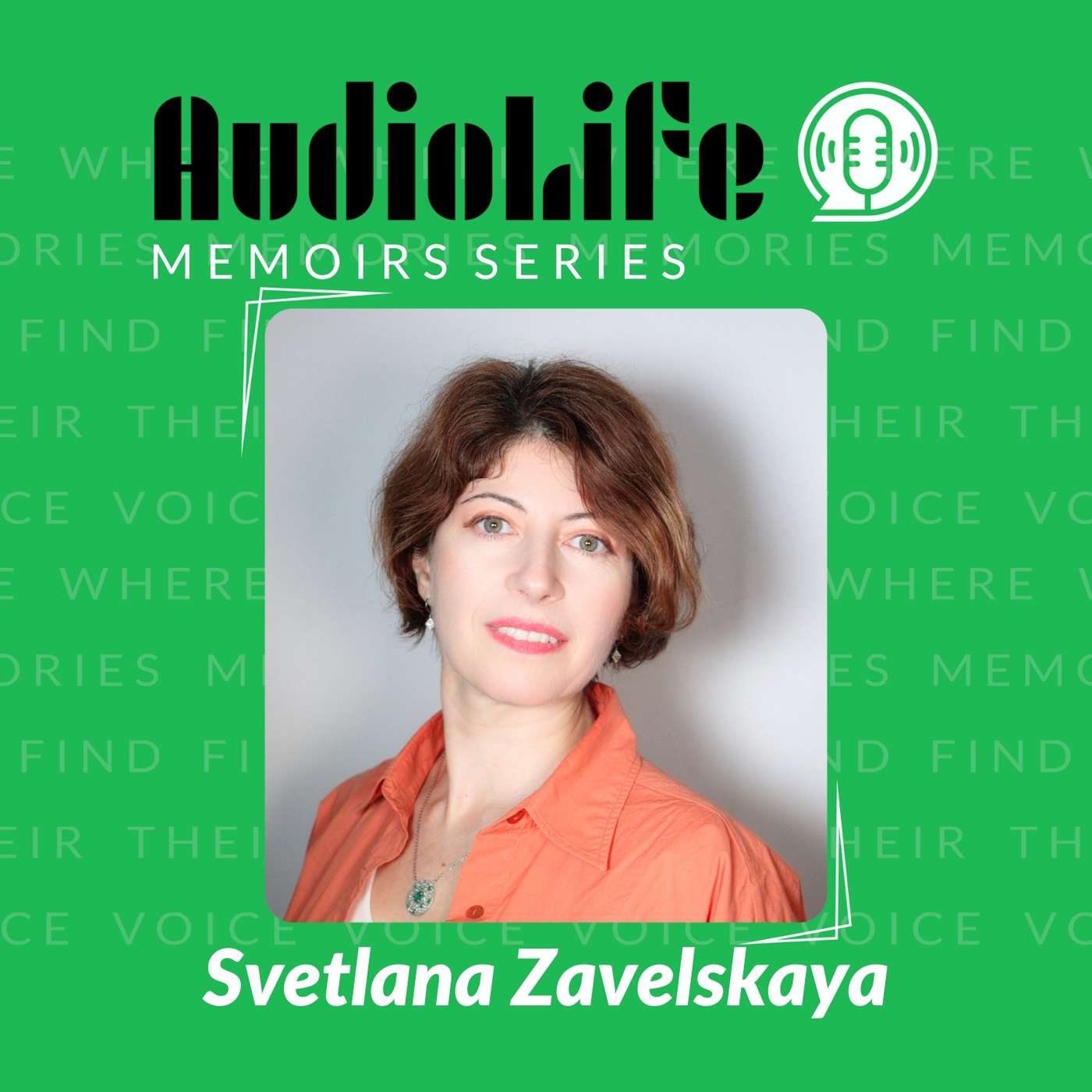
The discussion centers on the role of skepticism in technology adoption, highlighting how it enables progress through risk awareness and controlled implementation. Svetlana Zevalskaya, a technology leader in finance, shares insights from her career and her chapter in "The AI Revolution." She explains that AI has long been used in finance through statistical methods and machine learning, with recent advances in generative AI expanding its applications. Challenges include managing vast data sets, navigating evolving regulations, integrating AI with legacy systems, and mitigating data bias to ensure ethical outcomes. Benefits of AI in finance include democratizing access, automating processes like loan approvals, and improving efficiency through tools like document summarization. The conversation concludes by emphasizing that AI amplifies human potential by enhancing productivity and creativity, rather than replacing jobs, underscoring the importance of lifelong learning in a rapidly evolving technological landscape.
how skepticism actually enables us to move forward, because if you see somebody saying, "Yes, all in, you would immediately want to start back and ask what are the risks." But if you're moving forward, understanding the risks, and understanding what you're facing, then you can put boundaries and controls around the trees, and you can move forward much more conscious about it, and make more conscious decisions. Welcome back to AudioLife, the podcast where we tell your story in your voice. I'm your host today, Carrie Purcell, and today I'm joined by Svetlana Zevalskaya. Svetlana brings over 20 years' experience as a senior technology leader within the financial services sector. She currently holds the title, Head of Software Engineering Data Platform at Infrastructure at Quantana, and she's based in New York. She also holds the title of International Best-Selling Author as one of the contributors to the AI revolution, thriving within civilization's next disruption. You've probably heard a few stories from my co-authors on this book so far on the podcast, because we have an incredibly diverse, talented global team of 34 experts who came together on the collaboration and they each have an amazing story. So today, it's my privilege to speak with Svetlana and discuss her life, her career, her chapter, which is entitled Transforming Financial Services, Leading Technology Innovation and Operational Excellence with AI. Svetlana, welcome to the show. Thank you, excited to be here. I'm excited to speak with you too. Of course, I've had a chance to read your chapter. I'm drawn in by the title and I'm excited to share the information that you have in that chapter with everybody listening, whether there are experts in the field, or whether they're people like me who just interact in financial services. But before we get there, I want to get to know you a little bit better. I want other people to get to know a little bit more about you and your background. So I'm going to start with a question I sometimes ask, going right back to the beginning, and I want to ask, where were you born and is there a story behind your name? I was born and gave you a crane, and my name, actually, historically, is a little bit artificially made up name. It was made by one of the Russian poets and used and in his poems, they became very popular in early 1800s. But for about a hundred of years, people couldn't officially use this name because it was not viable, and it was just like not usable. Yeah, but then it became a pretty popular name, and the root of this name also means light. Beautiful. Yeah, there's always a rich history behind the meaning of people's names, whether it's historical, cultural, or otherwise. So thank you for sharing that bit of background with us. Can I ask you a little bit about family life growing up, maybe whether you had siblings or how long you stayed in Ukraine, a little bit, a little bit about childhood? I'm the only child, so in that way my childhood was a little bit boring, and there I came to Sweden in 2000. Wonderful. Okay, good. Remember, if you're old enough to remember in technology as a crisis of year 2000, or why to give? Yeah, of course. Yes, very well, thank you. Wonderful. Good. Okay, so before that, you had done, so what brought you here? So what had you done some schooling before that? Had you started your career? Tell us a little bit about that. I came through the family connection. Okay, and what about your studies? I have a massive engineering back from Ukraine, and I was also doing some studies around management there, and I have a BA, this double major in information technology, and financial services, I hear and so you ask from past University. Wonderful. Yeah, obviously lines up very clearly with your career, your professional background. So you've had a very long career in, well, I'll say, a very long career in financial services. Tell us about, you've been on the technology side for the most part, and again, we'll dig into some of the, you know, some of the content from your learnings over that time that you've published for us. And what were some of your early experiences or values that shaped how you think about technology today? I think one of the biggest value, and maybe I was just like it, but when I just started working here in the US, an amazing team of people to work with. My English was pretty poor, and I was relatively new to some aspects of technology, and they were great. They were always like very helpful, and they were supportive. Yeah, wonderful. If I asked you, and I'm sure there's been many on both sides, if I asked you for a professional accomplishment and a professional challenge, what would you share with us? I'm not sure if it's a challenge, I really enjoyed it, but one thing, if you're in technology, you always have to learn. It's a good point. You can't get to seeking, well, you learn, not get a degree, or get a certification, and you pretty much done, and you can start working. Technology always changing, technology is updating all the time, and learning is something you need to be mentally ready for. And obviously, I have too many degrees, and I love learning, and partly that's why I love technology, and I worked with many different ones during my career best. Interesting, and very good perspective, very good advice, but yeah, very, very interesting. I'm somebody who enjoys being a lifelong learner. I haven't spent as much time hands-on in technology, but still your point resonates with me that you have to continue learning, your problem-solving, your continuing to expand your skill set, great, great points. Well, let's take that as a segue into talking about your chapter in the AI revolution. So this was just published a few weeks ago, and I know I've had a chance to read your chapter, many of our listeners may not have yet. So we're going to give some of what they'll find in the chapter, not all of it, and probably some things that you didn't include in the chapter. Just a little bit of extra that they get by joining this podcast. Now, I enjoyed that you really clearly talked about. So again, whether you're in financial services or not, it was very clear the way you laid out the current state and potential benefits of AI and finance, some key challenges facing AI adoption, and also the future of AI and finance. Amongst many other things, but you took us through those steps quite clearly. If I asked you to tell people about your chapter in 60 seconds, maybe a little more than I just did, what would you share with them from your chapter? One thing I would like to highlight, and I think it's a reflection of the popularity and a lot of buzz around the word AI or the official intelligence lady. But AI in finance existed for quite a while. It was not as sophisticated as it is now. I'm sure a lot of people heard about vintage trading, and that's partially unrelated, maybe not directly to AI, but machine learning, which is an aspect of AI. And even before that, people would analyze the trade or analyze financial transactions and make assumptions based on what they've seen before. And just another example of how it was used. So a lot of statistical studies in finance and other industries as well really contribute to what we call AI now. A lot of what we call AI is also attributed to recent success of charge and what we call large language models. And we need to keep in mind that in addition to language models, the way we see them, there are also a lot of mathematical models or physical models, or models coming from other areas of science that really contribute to AI. And then we can get into philosophical equations of what intelligence is, and if really CHGPT is intelligent, always in just the word probabilities versus systems that can learn from itself. So I just wanted to say that's a really good point about how long AI has existed within the financial services in the various terms people might hear around AI. So we do on page 279 of our book. We do have actually in several points in the book, we do talk about what is AI and why does it matter now. On page 279, we have a really basic diagram and it just shows artificial intelligence as an overarching concept, machine learning underneath it, deep learning within it and generative AI within it. So as Fadlana was saying, you know, a lot of people are familiar with AI as generative AI or CHGPT or LLMs today, but I think particularly in the context of finance, understanding the breadth of AI applications, including machine learning is really important. And it's some of that history that's actually been transforming financial services for a long time. And without taking too much from your chapter, I'm going to let you share, you do talk about how in many ways finance has been at the forefront, but over time, adopting these technologies in order to keep a competitive advantage. So I think that might segue us into some of the key challenges that finance does face with AI adoption today, which you talk about in the book. So do you want to highlight some of those for for listeners? Sure, if you think about finance that industries that exist for many years, so they accumulated a lot of data and the data managed and stored and again managed and used properly. And that's always, it's a lot of data. Of course, because there's a lot of data, it makes it very attractive field for any data processing applications, AI being one of them, but we also need to make sure that the data is used properly and acically, and the coding tool like governance and regulations and to the benefits of people. I think one of the benefits that AI brings to us is actually what I would call democratizing all finance and let people who had limited access to different financial institutions and options getting there. Yeah, that's a really, really good point. So finance is highly regulated, but we know that we're seeing a bit of a lag and regulation coming up with the advance in AI development today. And I think that's true even in the financial industry. You also note in the book that there's different standards, right, based on where you are in the world. So different standards by, you know, certainly by country, by, you know, in some cases, even more specific than that. So it sounds like that, you know, how much is that causing lag in adoption or causing a challenge around adoption and finance, or are there certain areas that are still, you know, quite far ahead in adopting within finance and other areas that are maybe waiting? I think a role of and charge, you know, open AI just introduced charge BT in such a huge step. And nobody was ready for it like fully and how amazing it would be especially use it for the first time. And I think that's why the regulation is sort of behind technology. Yeah, but it's probably very open now is the case not only in finance, but everywhere. And they're having that multiplied by existing governance. Sometimes that slowdown introduction of new technology or new features or new capabilities. And sometimes also this is a new technology. And if we're looking at the financial institutions that existed more than now, 50 years, for example, then they would have to incorporate this new technology into their old existing processes. Yes, all the challenges. That's why sometimes start up or people who just start a new technology, don't have to look back and think I don't need only to build, but also to make sure that whatever I build works is whatever was built 50 years ago. Exactly. I'm able to move much faster. Yeah, yeah, it can be an issue that, you know, as you said, larger organizations highly regulated enterprise level, you're, you know, a little bit more bureaucracy there. And in some cases, those smaller, the new entrants or some of those smaller companies can move more quickly. They're creating from new, right? They're not building onto something. Yeah. You know, you did talk about, you talked about data a little bit already because that's one of the benefits that these companies have that have been around for 50 years is they have a lot of data. In the book, you also talk about data bias and some of those risks. Can you talk a little bit about about that for people that have less familiarity? So, when I look, when AI, what AI does, they look at particular sets of data and they make some sort of a conclusion based on the data. And if data is screwed in particular direction, that conclusions would be all screwed. Or if, for example, we are looking for data collected from a particular demographic subset, then the data would reflect the points of your situation of that demographic. And I'm sure you try to split, for example, you can split it by many categories, by each background, other things, but the data that we would receive would be the reflection of, say, like points of your and lifestyles. Yeah, which can be, needs to be managed carefully during the data cleaning and processing stages. But also, it's something that, you know, through testing, sometimes biases is discovered. So, you talk about it as an imbalance, there could be imbalanced data that will give an imbalanced result. People might have heard the term garbage and garbage out, which is kind of commonly used today. If the data isn't good, you're not going to get a good output, a good result, right? And again, in finance, you know, it's high stakes. So, this is a field that we, that it needs to be, it should always be taken seriously, but in particular, this is a field that's highly regulated that does need to be taken seriously, and it could be biasing people against loans or mortgages, or things that they should qualify for, but the data may, may contain a bias. Yeah, but if you remove the bias or you control the bias in this data, having this, like, for example, loan application, automatic process, or mortgage makes it so much faster and easier. Yeah, yeah. So, I think that's a nice segue bringing us back to the potential and what's available today. So, we can't ignore the risks. We can't, you know, the data needs to be handled very properly. We do have to be careful about ethical considerations, which we can come back to some more. It's an area I like to talk about. It's incredibly important, and it is an, it's an important area to talk about. But let's talk about the potential, right? Why is it all worth it? Why, why put up with the building on 50-year-old legacy systems and cleaning all the data? And yeah, like, why do we, why, what's the potential? Show me the vision of what we could have if we do it right. Pretty much anything. So, you bought up the idea of loan applications or mortgage applications that it could, it could streamline and just create, you know, save time, create efficiencies there. My clients, for people who need them in a way to look at them, having a more wider opportunity just for people to use finance, thinking about financial planning. You have a pension account, financial account, and based on your age, your income, your goals, your location, it can give you suggestions on how to balance a different type of, as a financial instrument, so in your portfolio, it can also probably make such a type of financial instrument that, limitately, well, right now, much more widely available and used, and for what people use much more opportunities. Absolutely. I mean, there's some real practical examples for, again, anybody listening, people working on the financial side. Let's talk a little bit. So, you do mention in the book, a little bit about how it has in the past and can continue to support investors, right? So, giving different different formulas, different algorithms, or different investor insights. How else might it transform, you know, from the employee perspective working within, within financial services? What tools exist already? Or, I know we, I know you talk about emerging trends. I don't want to go there too quickly, but if you want to, you know, the tools and processes that exist today, or emerging trends that you think will make an impact in those teams working in financial services. So, for example, it's financial services, we said it's very heavy and regulated industry. Yeah. So, there are a lot of documentation that's been created there, and the documentation has to be consumed, and people need to understand it better. So, one nice feature is, where AI can help, is to give you a summary of a document. Yes, absolutely. Yep. And it makes it, if you have 200 pages document, and it can give you a summary in just a couple of pages, it can save your tremendous amount of time. Well, it can tell you, hey, this was a previous law, and this is a current law, whereas Delta is how it's different. And it's a huge time savings for when you need to implement the processes, though, adjust to that law. People talk a lot lately about a genetic AI and AI agents. This is where a lot of automation may happen, and also we can use AI to help better understand internal processes. And in this case, if we understand the processes better, especially if we can map new processes, and all processes, all processes from two different departments, and compare them and map them one next to each other. Maybe we can see opportunities for optimization, so maybe there are some steps that's been done elsewhere and repeating them, and we can move past. Yeah, now I like that a lot. And now for a word from our sponsors. Ready to share your stories and life philosophy, or capture those of a parent or a grandparent, or maybe a corporate package is right for you to build connection across your workforce and add value to your clients. Visit audiolife.io today to learn more. Our listeners will get 10% off using discount code gift 10 and order number audio life podcast audio life, where memories find their voice. Can I ask? So keeping in mind, we haven't had this conversation before. I'm just asking out of interest and whatever you're able and willing to share. So what types of AI tools or processes or automations have you already integrated into your company or your work? So because I am in a team, a lot of what my teams are doing are writing code, and then they've incorporated and tried multiple tools that would help to build the code faster. And it is also very helpful in your space quality assurance to make sure that the code is works properly. It's written right and works properly. And it can also help to come up and create different edge cases which to test the code. Yeah, that's wonderful. So I have to ask because people might be thinking this. If they're not thinking it from our conversation, I know that they're thinking it in other conversations. What are the risks to people being replaced as these tools are able to do more and more? Optimize, create efficiencies. Does that mean that we're reducing our teams as there are a risk of job loss? I actually don't think so. I'm one of the people who doesn't think so. I think that it will potentially improve productivity of the people. And it may also change how you do things. And of course, using AI will make you more productive and it'll help you to do more, but humans are humans. In creativity and human mind cannot be replaced. And we've seen some creative and worlds use AI, which were not really already people are using it. And that's why we need humans to understand and maybe in a way. Yeah, I agree. So I'm in your camp. I had a feeling that you would say something like that because you started your chapter with a quote. AI is not about replacing humans. It's about amplifying human potential. And I really like that. It's a sentiment that I've shared, but I didn't have that quote to use. I do believe that it amplifies our expertise and our potential. I do believe that it can and will open up time in our day. But if you ask anybody what they would do if they had 20% more time, I'm pretty sure they have answers. There's so much more that we could be doing. Another one of our co-authors, his term was think of it as a growth opportunity. You don't need to add headcount to your company to grow now. If you can add AI to be able to do more, you can find growth that way. And so anyway, I'm very much in that camp but I appreciate you reassuring everybody listening. And probably your team at work as well. I think it's not only about being productive, but it's a little bit also about a barrier to entry. If you think about it before, even like before, you had cloud computing to use to build a data warehouse, which is a place where you store the word of data. You would need millions and millions of dollars invested in hardware. And then step now, you have cloud and you don't need all this to buy all this hardware. You can just pay for the percentage of hardware you use in a cloud. And the same happens to this AI. You don't need to build everything that happens. You don't need to build it from scratch. There are already pre-existing models and pre-existing infrastructure. And you can build your own model or you can train, for example, your internal model on your internal documentation and use it this way. Yeah, and I think that speaks back to your point about it changing our roles. It might change how we do our job to some degree. It doesn't change the human aspect. It doesn't change the creativity, the judgment, the accountability, all of those pieces. Your team doesn't have AI-develop code for them and they hand it to you. Your team has AI assist with code development and then they will review it and then they will do whatever else they need to with it before they've done the sign-off on it, I imagine. And I think it's an exciting time to look at how our roles and our curiosity and our creativity can grow with the assistance of AI in our jobs. With that in mind, can we talk about emerging trends that you're seeing in AI in finance. So maybe things that are not being broadly adopted today, maybe they're still in research and development or maybe they're just very early stages out there. What are some of those trends that you see coming? I would say democratization of finance, something that we know and that's what I see is happening. Yeah. And actually I think I worked for 20 years in finance, 21 in finance and now I'm in the children's, which in the children's colony, which is some considered to be a subset of finance. And I the same thing, how AI has the potential to speed up, for example, insurance claim processing. Yeah. Like that. So wouldn't it be nice that instead of waiting for several days or weeks until you're playing this review, you have one so right away. Isn't this all right? Yes. That would be nice. So as we're talking about emerging trends and in your section, the future of AI in finance, you bring up decentralized financial services. And I'm just curious if you can explain a little bit more of that for people listening. Yes. Currently, a majority of financial transactions at the end of the day get sort of processed and settled and one central place. And the central counterparty is becoming pretty much responsible for all those transactions and their processing and making sure they're done right. But what if it could be replaced and not by this one counterparty, but set of companies or parties that make a particularly decision altogether. So if you think about the technology like blockchain, which there may be technology that enables things like Bitcoin, for example, when they are equipped with artificial intelligence, they could do so much more and then they can do many decisions. But again, of what if this decision is screwed or how do we deal with overall governance. And now with the multiple parties having access to the data to process it, again, how do we deal with all the laws and make sure that the data is properly governed and properly accessed and not linked and use how it's supposed to be. Yeah, that's great. Do you have strategies for that? How to manage that data properly, ethically, securely? I think every company would have, like, the would be laws and regulations done, example, at the federal or state level or country level, maybe American versus Canadian versus European Union, etc. Every country would have their own and sometimes in the US, for example, different states may have a different take on those things as well. And this all would have to be taken into consideration. And then it would have to be translated into internal companies, policies and then procedures and processes on how to deal with data and there is still things around data. And make sure that it's secure and only people who tries to access it can actually access it, things like that. And then going from there, how do we prevent that access? But also, how do we make this data available when it's needed? And how do we make sure that it is correct, proper and reliable and we can transfer this data? So really, really good overview. Both broad and specific, right? It does depend where you live. It depends, you know, what industry you're in. And then it depends how your company adds on to that. It still sounds, I know it's incredibly important, so I hesitate to say it out loud, but it still sounds like another barrier, another delay to getting things, you know, actually integrated and executed, but I do know how important an aspect it is. You also brought up trust, trust in the data. In the book, you do talk about the importance of trust more generally, not just with the data, but with AI in general. And you talk a little bit about one of the ways that we can build trust is through explainable AI, which is a very important concept today, but not everybody listening might be familiar with it. Do you want to speak a little bit about that? Just explaining XAI, explainable AI, and that importance of trust. Yeah, I mean, even sometimes if you work in a big company, sometimes you can run into situation where people would look at the data and say like, it can't be right. And sometimes it's just their first instinct, and the data is kind of present right. It's just not what they expected to see, or sometimes it could be that they look at the data and they start digging and trying to understand it and where it comes from. Or it could be that two people in two different departments, in one big company, maybe in two different cities and the headquarters, talk about a particular term, but their definition of what it is could be very different. And because they define something very differently, the data they look for to support their position is different, and it can also create a confusion, which would make others question which data set is correct. And they're both correct. They just talk about different things. And having that common unified language definition is very important. It's just one example and could be considered my example, but it can cause a lot of confusion, and therefore it can also cause a loss of trust in the data. But then if you don't trust the data, you have to make a decision. Another very common thing, an issue with AI is what's called hallucination, and where it's not hallucination in the way human would define it. It's something that AI just sometimes make up. If you ask garbage, in garbage out, if you ask it, the cell equation, it will give you a solution. And sometimes you ask about something that doesn't exist, and it will give you an answer, talking about something that does not exist. But have to be very careful with it. That's why originally when AI just came up as a solution to those, would be what was called human in the middle, is the very, you have a human who would review the outputs or AI, and make sure that this is correct output. It could be human that reviews it in the middle of the process and say, "Hey, as we go through AI, doing things, is it correct to test them?" Yeah, those are excellent examples. Thank you for walking us through that very clearly. If you had, you know, is there one main insider takeaway that you hope people get from your chapter? I hope that they will be as excited about AI as I am. And I'm really excited. I know you talk a lot about issues, and it may sound like I'm skeptical, but I think that approach of like healthy skepticism actually enables us to move forward. Because if you see somebody saying, "Yes, all in, you would immediately want to start back and ask what are the risks." But if you're moving forward, understanding the risks and understanding what you're facing, then you can put boundaries and controls around the trees, and you can move forward much more conscious about it and make more conscious decisions. Very well put. Very good advice and very well put. Was there anything as you were writing your chapter that you debated or wrestled with and maybe you didn't include it or you decided to? I think one of the things, because I work in technology, I do tend to get a little bit different as of sometime, and Eric had to stop me and say like, "Don't forget, readers could be anybody, so make it well understood." And I actually got one of my teenager kids to read the book, at three days of work and so I said, "Oh, that's good, that's good." I thought it was very accessible, but I, so it's funny, Eric, our editor had to pull you back a little bit. I've said this to multiple authors in this collaboration that when I got to the end of their chapter, I wanted more, and I did feel like that with yours. I felt like you introduced a lot of really important topics. It was very clear. It was a snapshot of what we're facing, but I still want to add this conversation with you. I want to hear more, I want people to read everything that we haven't talked about, but also, you know, hear from you. So you found the balance between, you didn't go too deep, but for some people, you know, they're still going to want that. Maybe a year to two from now, we should get together and look at the book, and the next one of what everybody would say, "Hey, this is how this is or just to look for ourselves," and say, "This is what we were facing, and this is what materialized, and this is what didn't, and wherever you are now, and I think it would be amazing how far food will be." I think you're complete. I think that would be incredibly interesting. I think you're right. I mean, things are moving so quickly in two years. Looking back at this, you know, there are things that we won't believe we were worried about, we won't believe delayed us. You know, some of them will still be there. Many of them will be miles and miles and miles past them. So I love that idea. So if you want to do that in two years, I will do it with you. I hope we can get some others together. Let me ask you. So outside of your work, outside of the book, what's a favorite use or hack that you like to incorporate AI into your personal life? I think probably the one and the easiest one would be writing. I don't mean writing a book, but I mean writing an email, for example, sometimes I think like that. But lately, you have to be careful because it tends to be wherever both. And sometimes it doesn't sound very natural. But if you think, "How do I say this?" It would help. I would admit that my kids Vancatcha GPT came up to try to feed them mass homeworks. What it was new and disaster and it was not good. I don't forget, this is a language model. This is a mass model. I think this is, I really love this example of how it highlights some different models. If you look about it, there are, for example, applications that are particularly designed for, let's say, chess players, you can play chess with them. But you can't do anything else. Or you can AI, at this point, should have particular problems. You can absolutely have AI that holds your math problems, but it should be trained for that. And it should have almost like a calculator. I'm oversimplifying it, but it should have something like that built in. Or it should have something built in of like how chess figures move and being able to calculate the moves, not just do them and the moves. You can see if you try to use the chat GPT, that would happen. I would say use the right AI tool for what you're trying to do. Yes, good advice. Good anecdote. I like that one. Okay, I'm going to ask you one that's probably a little bit challenging. It kind of brings us back to your point about in two years. How are we going to look at this book and how much has changed? So in a generation, you know, let's go out one or two. Let's go out a generation. How do you think they're going to look back at what we've done or what we tried with AI and what would you say to them? I would say it's you are leaving in a very fun time. I still remember the phone that was bound to the wall and you'll have to hold it and dial it in and they can't imagine that. No, I know. I would say your kids probably won't know how to drive a car. Oh, yeah. So things are changing. And you talk about flying cars and maybe they might be closes and maybe imagine results of drone technologies that can. Yeah, so much stuff now. That's incredible. I, you know, I like, I like asking that question because it lets us kind of strip away everything we're worried about today and really just go forward and say, you know, we're not worried about the bureaucracy. We're not worried about the risk. We're not worried about all of that. Just once we're past all of that, this is what it looks like. But you pushed me. It's funny because we can see it. We just in our day to day, we often can't. So you say kids aren't going to know how to drive a car. I was thinking about kids not knowing how to use their mirrors. They're going to have so many cameras and so many indicators that they won't know how to reverse what their mirrors. And I was thinking what an important skill that is that they should still learn, but you're right. They're not going to need to drive at all. I just have to look a little further ahead and realize where we're going. They won't need to carry keys and other things because everything will be going smart. So I already hear. Of course. And that's, you know, as you've already said, I mean, that's the fun, exciting part is is all of the potential and where we can go. And yes, we have to do it responsibly and we can look at, you know, we can look at how to actually implement this and bring it into work and bring it into personal. But I think I asked you earlier, what's the point? Why go through all of this? And you know, it is that exciting potential. It is that fun and that amazement that's really around the corner. Yeah. So, Svetlana, I want to thank you so much for your time today. Where can people learn more about your work or connect with you? I think LinkedIn is the most place. Okay. Perfect. And we will have your information in our show notes as well. Is there anything else you wanted to share with our audience that I didn't ask you about? I think you asked great questions. And again, I'm very excited about the future. And if you have anybody has any questions, absolutely, please reach out. That's amazing. Well, I enjoyed our conversation. I enjoyed what you put in the book. I love the idea of coming back in two years. So we will record that as well. That'll be something to wait for. It'll be, it'll be wild to see where we've come. But in the meantime, I want to thank you so much for your time today for sharing your expertise, your story, your advice and your vision. For everybody out there, you've been listening to another episode of Audiolife where we tell your story and your voice. I've been your host today, Carrie Priscilla, joined by Svetlana, Seville Skaya. And if you like what you heard today, please don't forget to rate our show and subscribe so you never miss an episode. We'll be back in two weeks with another one for you. If you like what you heard today, consider recording your own Audiolife private podcast. We're giving one to a loved one for a unique memorable gift. Today, Audiolife listeners will receive 10% off using discount code gift 10. An order number, Audiolife podcast. Also, remember to rate our show and subscribe so you'll never miss an episode.
Podcast Summary
Key Points:
Skepticism in technology adoption allows for proactive risk assessment and informed decision-making.
AI in finance is not new; it has evolved from statistical analysis and machine learning to include generative AI and large language models.
Key challenges in AI adoption include data governance, regulatory lag, integration with legacy systems, and addressing data bias.
AI democratizes finance by improving accessibility, streamlining processes like loan applications, and enhancing financial planning tools.
AI augments human potential by boosting productivity and creativity rather than replacing jobs, emphasizing the need for continuous learning.
Summary:
The discussion centers on the role of skepticism in technology adoption, highlighting how it enables progress through risk awareness and controlled implementation. " She explains that AI has long been used in finance through statistical methods and machine learning, with recent advances in generative AI expanding its applications. Challenges include managing vast data sets, navigating evolving regulations, integrating AI with legacy systems, and mitigating data bias to ensure ethical outcomes.
Benefits of AI in finance include democratizing access, automating processes like loan approvals, and improving efficiency through tools like document summarization. The conversation concludes by emphasizing that AI amplifies human potential by enhancing productivity and creativity, rather than replacing jobs, underscoring the importance of lifelong learning in a rapidly evolving technological landscape.
FAQs
Skepticism encourages asking about risks, which allows for setting boundaries and controls, leading to more conscious and informed decisions.
Svetlana has over 20 years as a senior technology leader in financial services, currently Head of Software Engineering Data Platform at Quantana, and is an international best-selling author.
AI has existed in finance for quite a while, including earlier forms like machine learning and statistical analysis, not just recent advancements like generative AI.
Challenges include managing large volumes of data ethically, navigating regulations, integrating new technology with legacy systems, and addressing data bias.
AI can streamline processes like loan applications and financial planning, making services faster and more accessible to a wider range of people.
AI can summarize lengthy documents, automate code writing and testing, optimize internal processes, and provide insights for investment and financial planning.
Chat with AI
Loading...
Pro features
Go deeper with this episode
Unlock creator-grade tools that turn any transcript into show notes and subtitle files.
 PodcastTranscript AI