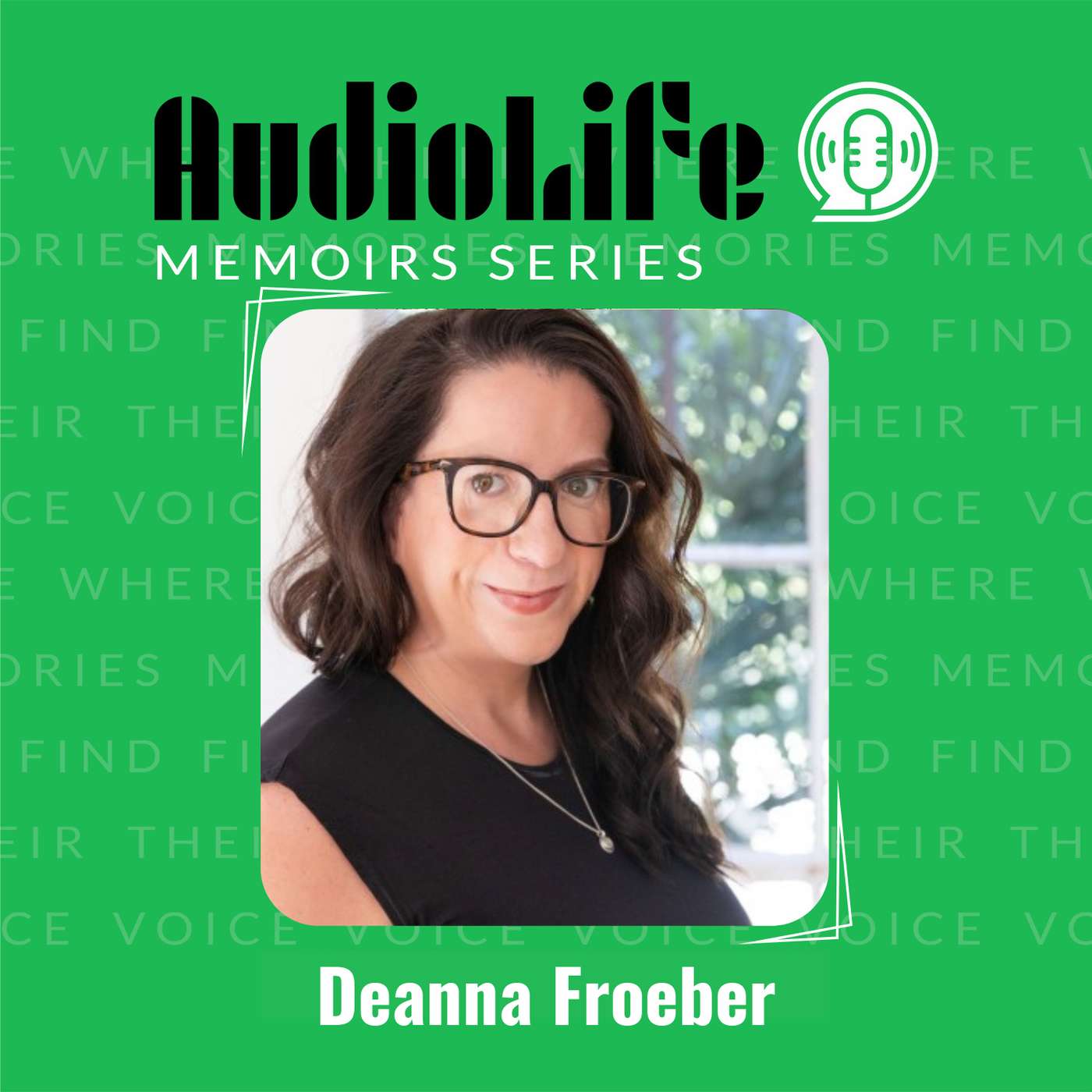
Deanna Frober, founder of The End Collective, discusses her experiences with Treacher Collins syndrome and critiques the film *Wonder* for perpetuating "inspirational porn" that reduces people with disabilities to symbols rather than recognizing their multifaceted identities. Born in 1985, her mother's dental hygiene expertise was crucial in diagnosing her condition and facilitating early interventions for speech and hearing. Deanna's childhood involved extensive surgeries and isolation, yet she also recalls familial closeness. Raised in an evangelical environment, she pursued religious studies but faced a crisis when a family friend's suicide uncovered abuse and church complicity, leading to a profound reevaluation of faith and personal identity. She advocates for creating spaces where authentic, shared stories can foster collective liberation, emphasizing that true representation honors complexity over simplistic inspiration.
each woman is saying, here, I've gone through Hellenback. I've taken the heroin's journey. I've met allies. I've met advocates. I've met adversaries. And I've gone all the way all the way to the end. Here's my elixir. Here's my my truest notion of what I have to offer in this world at this moment knowing that it will continue to change. Here's what I have to offer. And the only way we actually get to hold that offering is by giving it to one another, sharing it with one another. Welcome back to The Audio Life Podcast, where we tell your story and your voice. I'm your host today, Carrie Purcell. And today, I'm joined by Deanna Frober. Deanna is the founder of The End Collective, which we'll talk about more today. She and I first connected on LinkedIn. And I want to share the post that prompted me to invite her to The Audio Life Podcast. So, this is from this summer 2025. And Deanna wrote, "I kind of hate the only movie about a kid who looks like me because I once played along with that version of the story and it nearly broke me. You're our little wonder. That's what people texted me when the movie Wonder came out." Now, I'll pause for a second. So, for our listeners who haven't seen it, Wonder is a 2017 movie starring Owen Wilson, whose son, Oggi, he's a character who has Treacher Collins syndrome, which is a rare genetic condition that affects the development of facial bones. And in the film, his son is at multiple surgeries, but he's entering his new school with a distinctive appearance, a facial, well, not just facial, but mostly facial appearance. And it becomes the center of a story around acceptance, bullying, friendship, that whole experience. So, let me move it back to Deanna. So, Deanna writes that so many have reached out to her, calling her our little wonder, which is very nice. She says, "They meant it sweetly, but here's the thing. It tells a story I know intimately. And still, it gets it painfully wrong. And I don't love it. The whole plot centers on a single story that's someone with a facial differences inspirational, simply for existing. I lived this. Ten surgeries, paper thin bones, a childhood where I learn to read people's reactions faster than I learn to read books. This isn't fiction for me. It's lived. And yes, I'm a kid with Treacher Collins, but also a writer, a lover, a leader, a wackadoodle, and a whole damn cosmos, which I can't wait to see more of today. So, back to Deanna. Reducing someone to a symbol, especially one meant to make others feel inspired or charitable is not representation. It's a racer dressed up as empathy. A few years ago, I applied for a fellowship. My mentor told me, "Play up your disability. That's your edge. I did. I got it." And I cried on the bathroom floor wondering what it cost. Here's the truth. I wish Wonder had the guts to tell. When we flatten people into inspirational porn, we miss their actual brilliance. We forget that exceptionalism is just another cage. And we lose the plot entirely. And I'll pause there, but I will just say that I thought, "Wow, this is a story we need to tell. It's a person we need to hear, and it's a legacy that I need to amplify." So, I was totally honored to be able to reach out to our incredible guest, Deanna Frober, who I'm meeting for the first time today virtually. And I didn't reach out to her because of the way she looks, although she's beautiful, but because of life she's lived in the powerful honesty and truth that she shared. So, Deanna, welcome to the audio-life podcast. Thank you so much. I really believe that the magic of what you were doing is in creating safe, shared, collective containers for stories to come together in a new way and be amplified in a new way. And I believe that's at the heart of liberation for us all. So, truly, Gary, thank you. Very well said. And I can't wait for the conversation. We're going to have a head today. Now, we've really dug into the heart of your story already. But I want to take us back to the very beginning, which I usually do and let it unfold a little bit for our listeners. So, a question I often ask, "Can you start by telling us where you were born and is there a story behind your name?" Right. I should have anticipated this question. Yeah, I was born in Raleigh, North Carolina, a fascinating town at that time that was more, I would say, world suburban than it is today. It does have a more urban character at this time. I was named after my father and my father's mother. And of course, my father's father, Deanna, his name was Dee. My father's mother Amelia, and my surname, Frober, being my father's as well. That, in and of itself, is a bit telling as a first child. I was going to be named after my father. Come how are I water? He was a Baptist minister for most of my life. So, I grew up very much in the evangelical, purity culture, good girl's self. And my mother was and still is to the stay a dental hygienist, which also comes in to play with the way I was born with Trichard Collins syndrome, actually. Okay, how so tell us about that? Well, I was born in 1985 and at that point, Trichard Collins was not so well known as it is today. It certainly didn't have a feature film about it in any way, super form. And certainly in the more suburban south, there wasn't a whole lot of concentrated knowledge about this particular very rare cranial disorder. So, when I was born very quickly, the doctor said unlikely that she's going to be walking, talking, living, breathing. Like, this is not, if she lives, it will not be a life that is conducive to thriving. My father, and I choose at this point to believe it was a cry of compassion, but my father cried. I wish she had just died. It would be so much easier for her, where there's not a life that she wanted to live. My mother, meanwhile, she'd always wanted to go into nursing, but instead went into dental hygiene. She says it's because of the career projections at that time. I also happened to know that her mother had no teeth. They were pulled out by a clactinus. So, as daughters or want to do, they will try and repair their mothers all the way back to the origin stories. But because my mother did go into dental hygiene, what was true is that she spent her career studying face and neck anatomy. And so, she told my grandfather, who was in the L&D round at the time, "Hey, I've got, there's a book. There's a book on my shelf at home. Somebody has to go get it. It looks like this. Just bring me the book. It's one of my textbooks from school. She was given the book. She turned open to the page. And started pointing it around, even called my pediatrician, my long pediatrician. It said, "This is my daughter. This is what she has." Wow, there's hope here. And I will make sure there's hope here. Interesting. Wow, that's incredible. So, she really found, she really identified it and, yeah, and shared it with her elders. Yeah, and that's that's kind of the direction that it went from there. I mean, even to this day, I'll have people ask about my hearing loss for instance, and why my speech is the way it is. Because again, at that time, it wasn't necessarily common to pair children with hearing aids at such an early age. And yet, my mother was like, "I don't know how to have a child in deaf culture. There's not a lot of that here." She would later discover that that is something of import. But at the time, what she did know to do was make, as a, so a contraption, that for a small child would somehow keep an external oscillator, which is to say an external mic of sorts on this toddler child so that the child could learn some pattern of speech, some way she performed. Isn't that amazing? Oh my goodness. Well, I'll tell you the only thing I noticed about your speech was that you don't seem to have a Southern accent. It'll, it'll come out, it'll come out. Sorry, I should tighten you in there. I think any child who grows up in the South at that time knows that Southern accents were not always identified with intelligence, which is a false story. And yet, it is one that I interpolated as needing to be true for myself. So I went that out fairly, fairly quickly, as a way I think of hiding my disability, even though it's so much about who I am. Yeah. I think I'm going to ask you at this kind of early stage in our conversation. How would you describe yourself? And I'm asking you today, so how would you describe yourself using three words? A secret, a storyteller, wholehearted, beautiful, okay. And just given where we started our conversation with your post, I want to, I want to reflect that back and ask how you believe others would describe you. I think we have just come off a writer's retreat where this was an exercise. Each of that posted notes from everybody else with three words that would describe us. I don't have to look too far this time. Yeah, some of the most common words were mystic, resilience, and light. Beautiful. You know, it's funny. I almost didn't do the three words part of the question. I just, it helps people to kind of focus in. I was just kind of, anyway, so it's funny that I chose it and you have the actual answer. I got to come straight. I'm well prepared. You know, I was hoping you were going to dig in and say, even though I'm like, this, I think people see me this way, but no, just, just, here's the paper. This is what they told me. It's also lovely though. I'm like that. Yeah. Yeah. I am who I am. And it's nice that that I finally come home to that enough. Yes. To where there's actually not that much separation most days. Some days. I have my updates, but well, I won't ask you about those now. We can come to those later. I want to stick in childhood a little while. I mean, we were at the very, very beginning there. Let's get into childhood and what it was like growing up. Now, there are a few ways I could tell this story. There's the one that feels somewhat idyllic. We were a family who our nights were. Everybody crowded on the same bed before it was time to go to sleep. We'd all just be swapping stories of what happened that day. And let's ask each other the biggest deepest questions we know to ask at five, six, seven, eleven, right? Like, let this space be the safest space that could possibly exist for a while. And then there's the story that I did very much grow up in the evangelical church. I spend more time than most would know there in the halls. I mean, I even to this day, I don't think I've set, but in the church that I essentially grew up in and a decade or so. But I could trace every single wall. I could take you down passages that most laypeople don't know exists. I could tell you the stories of what happened here in this room in 1992. I mean, it was it was very much a house that I knew deeply and intimately. But that also meant that it was a house I knew the secrets of more deeply and more intimately than most would know. Another way of telling this story is that, you know, from the age of five to about twelve when my last of the first eight surgeries I had was I was in and out of surgery in elementary school. I don't know if they actually still have this today. I hope I hope not. But in elementary school there used to be at the end of every year perfect attendance awards. Like, oh, here's the kids who showed up to every single day of school. I knew that I was never going to get one of those. I knew I didn't have a chance because I was lying from North Carolina to either California or to Texas for a series of very intense. We're talking 12, 18, 20-hour surgeries and months of recovery for the entirety of my my young childhood. And in that sense, it was isolating. Both on a developmental level. I was not in school. Now I was able to keep up with it thanks to my mother and her lessons in various hotel rooms elsewhere. Like, I remember very vividly learning how to be like, right, how does money work? All right, we're going to count money, right? But I wasn't around friends consistently. I remember very vividly my brothers being very scared. A, because they were not with my parents. While my parents were caring for me during these surgeries. So my mother would come home to pick up my baby brothers and my youngest brother, for instance, was at such an age where I wouldn't remember her. And that story would get repeated over and over again. And when they saw me because my head was the size of a basketball usually. My eyes were swollen shut. It's just a very daunting series of craniofacial surgeries. They were terrified of me. Yeah. And so, for the most part, were the adults. I remember a lot of fear surrounding me. In the same time that I was experiencing a lot of isolation, it's not particularly easy to be a young child who can't see, who can't hear, whose world is suddenly collapsed into pain and trying to figure that out for yourself. Wow. So there is a lot there. And, you know, thank you for sharing that. I'm going to pick up on different aspects of it and go in a little bit further. You started with family, that sort of idyllic version. So tell us a little bit about, you've talked about your parents, and then you've mentioned brothers. How many siblings? It sounds like you were the oldest. I was the oldest. I have two younger brothers, both of whom I adore and both who are staunch allies of mine in their own beautiful ways. Very nice. Okay. Good. Well, we'll maybe come back into, to family a little bit more. Let's just briefly move over to religion and the church. What's your relationship with religion today? Oh, okay. So I am quite fortunate that I got to go all the way to the affair when it comes to my own religious story. So I had already become a sense of dissolution of identity with the church, particularly in high school, but realized even, even then, that where I going to completely have my own pathways separate from my father's, I would essentially need to relax at the better term, one of him when I came to my religious education. Completed. You didn't say that. It's just a realist. You're a criminalist. Inevitably, when it came time to go to school to apply for college, I applied to the good schools in North Carolina, because a good Southern girl does not leave more than an hour away from where she grew up. I applied to some schools. You might have heard of a few of them, Duke, UNC Chapel Hill, and then some back-up ones that I knew I would never go to, for instance, this little university called Campbell University, out in a town called Bowie's Creek in North Carolina. I got into some of these really good universities with scholarship and for choices, for reasons that I will acknowledge that I am still coming to grapple with today. Ended up going to Campbell University, which, fun fact, is where my father also went to undergrad. That said, my best friend decided to come along with me. She and I have been best friends since we were four, but grew up in the probes together at church. So we were an unlikely pair, even at that time, but a pair that had the blessings of like blossoming in school. But yeah, I went through Campbell University to Baptist College. I became a religion major, religion and Christian ministries. You can talk to professors still to this day, and they'll be like, "I don't think Diana had the best time at Campbell's." Which is true. I mean, even at that point, I remember some folks coming true stories like a guy stranger came walking towards me from like across the quad as the kids say. And he just stopped right in front of me and he said, "I heard you were a liberal," which is akin to a slur in that particular area of the style at that particular time. Also not true necessarily. I don't know that you can be a liberal at a Baptist College in your like young, like that's just not a, that's not an actual thing that happens. But I very quickly found some frustration with my experience there and realized that either I was going to get out fast or I was going to transfer and have to essentially restart college from the beginning. And the restarting wasn't an option in my mind, so I set myself on a path to graduate in less than three years. From there, I decided I would go no matter what onto figure something out about this religion thing. So I went down to Miami for a while. I had applied for some some fellowships down in Miami and San Francisco side on scene for the most part. I just knew I was like, "I gotta get to a city somewhere." But I worked with the community development corporation down in Miami for a little while. And then after that, I had made the decision to go to Vanderbilt University Divinity School to get my master in Divinity. And quite frankly, that is both where I came to life. And where any last parts of my understanding of faith as I had construed it, as it had been construed to me, fell apart in all of four years. The first beauty was that I found these incredible humans. I was privileged to live in an intentional community with some other Divinity school students, both in my class and above my class, brilliant scholars, deeply faithful in their own rights. I was able to study with professors who were Hindi, Jewish, Catholic, like representative of the whole spectrum of humanity, able to study under folks who were LGBTQ, which made a really safe space for my own coming out, which was a surprise to me. Given that how I grew up, I never had the language for it. I never knew that it was really a thing. And then to both have the language for it, and for it to be such a safe and beautiful and quite rightly divine space to come out into my own flourishing is a gift I don't know that I could ever ever really repay. Vanderbilt also at that time might still offered free counseling to all of his students. And while I had been in therapy and often on since I was five, this was the first time I really got to choose my own therapist and choose my own pathway. And so a really amazing opportunity is set a stage for a different kind of unfoldment for myself. And it turns out a very necessary stage. My second year of Divinity School, I got a call the day before I was about to interview for a job that would then become a safe haven for me for the next eight years. But I got a call from it was more than likely my mother saying that a close friend of the family had died by suicide. And this would become the sort of final straw of my understanding of what faith, church, religion were at the time. Because it turns out that that close friend of the family who had died by suicide had, I'll say allegedly because we're dead now, but had allegedly been abusing my brother since a very, very early age. This side of all of it, I can see a lot of interesting patterns. This man was one of my father's best friends. He was also a leader in the church where my father was the associate pastor for some 35 years. This man also had a daughter born one day apart from me who also was in Divinity School at the time had a wife. I mean, I can see so many similarities there that both yielded a culture of secrecy, yielded a culture of silence, and yielded a world where power is coercion over, not liberation with, and what that does in an environment that treasures secrecy above all else, and uses the Bible to do that. That's just building a system and living within a system that only yearns towards death. My world quickly fell apart, and by that I mean it was only for houses, like it was stick houses at this point, right? Like it was, my religious identity was barely holding on. And so what began was a total dissolution and separation. It involves going very low contact with my father, it involves spiraling out myself. There's all kinds of trauma stories I could share from that era, but for the sake of reverty, we'll just say, I was not in a good look. I was not in a good look. Gary, I was mean. I was doing everything to avoid my own sense of looking in the mirror. I mean, like, what am I doing in this system? What am I doing here? How am I holding up secrecy? Like, I was determined not to look at myself and look at the system. I was determined to just turn all the blame on myself if I could and go down to swinging. And by swinging, I mean, let me dive deep into a bottle if I can and just ignore all of this. And so from there, I would finally make the decision after some adheres to simply step away from all of it and go and live the most normal basic life I could. Like, I was tired of seeking. I was tired of trying to find God anywhere. I just did not want to be in the presence of that. So I moved into nonprofit leadership for almost 10 years, where I would just try and live as normal a life as I could in various cities. Well, again, recognizing that I wasn't a kind person to myself or others. I had some really bright spots, but I was bitter and I was resentful. And as much as I tried to keep the good girl, southern, respectability politics that I had learned so well, the truth was it always came out sideways. It came out sideways to like somebody that I loved dearly who was on a team of mine. I would just snark to my best friend of almost 40, you know, 35 years at that point. Isolation is running away from relationships. The second they got too sensitive, too vulnerable, too close, right? Even all the while, I was in lots of therapy still. And I was trying my dandist. I was trying my absolute best to figure out what it would be like to be a full functioning human. Until one day, I think around 2018, when my mother finally chose to divorce my father. And I realized, oh, good, I can be free of my father. I'm no longer in low contact. I can go no contact. As hard as that is to lose a father, even in that way, it's challenging to lose a father. I said, at that point, I remember a journal entry that I wrote, I don't know what's going to come in the next few years, but I know two things. One, I will save my life. Two, I will find God again. And from there, it's been the greatest unfoldment of mystery and coming home to myself that I could ever possibly have imagined. I've been privileged to explore various plant medicine journeys. I have explored eastern wisdom in a new kind of way. The pandemic as wild as it was for all of us was also this beautiful time when I was like, all right, we're going to make this my own personal meditation retreat for two years. I will figure out how to be back home in my body again. I will move it with a gentle kind of softness as only I know how to do right now. I will read a thousand and one text and try and write my way through them. I will do the artist's way every three months if I need to. I had several different coaches, several different meditation teachers. I mean, I went all in from the period of about 2018 to 2022. And then from there, I realized, oh, it's still not enough. So I quit my job. I quit my partnership at that time. I let go of my lease of my cute little bayfront condo in Miami. And I packed my cat in my aprius and we drove to my exposity to become a writer as if that was a thing that people do. And that's when I learned how to tell the stories of myself in a different way to myself and to others. And when I really started learning how to bring all these tools, I had now collected the sematics, the breathwork, the meditation, the coaching, narrative reconstruction of self into a community of folks who, women who have forgotten how to dream because they were never taught to, women who have forgotten how to desire because they were never taught to, and women who are told one story of their own lives, the wonder of it all. When in fact, it is a story that can be told from 82 different angles at the bare minimum. You asked a question, how did I have a religion? And that's the story of a little bit of it. Yeah. And I should, and I should have, we can't be naive that the answer to that question is usually not simple, right? We opened a whole box, we went through an entire journey. I feel like we've gotten to the end collective, which I do want to talk about, but I think I want to pause before we get there. Is that okay with you? Please. Okay. I want to go back to a few things. And instead of picking up on a few points of what you just shared, which I will come to, I want to go back to that third version of the answer of what your childhood was like, which was surgery. So we've, like, we've gone through this whole journey with you of going through school, of moving, of really finding yourself, we're about to get into kind of what you do today and who you are today. We ended at those five to 12 years, you know, five to 12 year old Diana, you'd had at that point eight surgeries, major surgeries that you had to endure, both the travel, the time and the recovery, but also the isolation. And you describe, you know, there's that physical aspect of the isolation, the the sight, the hearing, the distance, but there's also the isolation of when you actually are back, even just within your own family, that isolation of people being fear being that first reaction to your swollen head to not having seen you. You've mentioned that there's a best friend that you, you know, that you met, I think, from around four years old in church. So at some, somewhere in this background, we have this friend, but of course you have distance in terms of travel, of recovery, just kind of not being present, not getting, not winning the attendance award at school. Talk to us a little bit about that Diana, right? I don't know if we're going into high school yet or if we're, if we're still kind of navigating that return to friends and family multiple times, but catch us up on that little middle part that we kind of skipped over. I'm so glad you mentioned my best friend's name is Sarah. I'm so glad you mentioned her because in many ways she wasn't as and always will be, but she was my re-entry to life. So my last surgery, I really couldn't tell you much, Carrie, I could not, I still, maybe there's more plant medicine to do, I don't know, but the ages of five to 12, they feel like surgery. Yeah, there's not, there's not a lot of texture in between that, but 12, you know, I thought I was done having major surgeries when I finally reached middle school. And yet this funny little thing happened where one of the, one of the screws, the middle surgical screws that they use to re-fasten your head together, your actual plate bones here together, started popping out of my head. First it looked like a zit, oh my gosh, it's just 12 year olds getting acne, it's about time. And then it became quickly evident that that wasn't the case. So my father and I flew out to Texas to sort of have this looked at. And the other reality was that the last three surgeries were reconstructions of the cranial facial bones that involved bone grafts and they hadn't taken. So the left side kind of, the right side even to this day, still, I mean, I've now had three on this side and it just never really took. But that last one, it was like, well, the doctor kind of said, you know what, if we're going to go in there anyway, let's just do it one more though. Let's give it one more college try and see if we can get the bone graft to take. As if again, that this is a simple outpatient thing, it's not, it's not like we're going in for the long haul. Yeah. So that last surgery, it is the more vivid one that I have in my mind because it was so like, I was almost done, Carrie. Yeah. But when I finally got back into like the about the seventh grade in middle school, was when I started feeling like, maybe I've got a, got a chance. And this, this woman who would eventually become and still is to the state, like one of the pillars of my life, Sarah, also during that time, her mother unexpectedly died, which I just hate in some ways, the ways our lives have unfolded. And I am still almost very grateful that I had a friend who I could turn to that her trauma, very different than mine. But we had a sense of the depth of each other's souls in a way that I don't know that many other 12-year-olds could. So yeah, she became a, in a way that I don't think she knows, but we started taking photography and arts classes together. We would spend our high school days when we both finally got to go off campus for lunch. Instead of going out with a whole bunch of other folks, she and I would take our lunches to the park. And we would sit and try and figure out, figure each other out as best as we knew how. And then we got to go to Campbell together and be, each other's wing folks for how to navigate friendships and this strange world that we were both sort of thrown into her father and all so gone to Campbell. So we both knew we were carrying out legacies that weren't our own, but trying to figure out as best we knew how to do that and come out with our own sense of dignity and grace. She, for one, has done it much better in terms of the dignity and grace that I have. It's all perspective. I don't know what she would say. I know exactly she'd say oh honey. I know exactly what she would say. How do you hear it in my voice or in my head right now? Yeah, I don't know her, but I am imagining a supportive rock who wouldn't let you get away with saying that, but I don't know. I don't know. And now, for a word from our sponsors, ready to share your stories and life philosophy or capture those of a parent or a grandparent, or maybe a corporate package is right for you to build connection across your workforce and add value to your clients. Visit audiolife.io today to learn more. Our listeners will get 10% off using discount code gift 10 and order number audio life podcast audio life where memories find their voice. Okay, so that kind of brings us from surgery back into the world, back into school, back into friendship. You touched on this a little bit. So I'm just going to pick up on a few of the the points that you've already brought up, but briefly, they ask you about romance, romantic relationships. And I don't know if we want to if this is starting in college or where we're moving into, you did already preface that you didn't always handle them the way that today you would. So we know that, not trying to dig at any of that, but what was that experience like just kind of entering your friendship and romantic part of life? Okay, so I grew up in a true love weights culture, which is to say no sex before marriage, but not just that like your entire worth as a woman is entirely wrapped up in your purity. And that's physically, emotionally, spiritually and in a very like submissive way. I did somehow get the benefit of being a preacher's daughter in that one of the things my father loved the most about me was my ability to ask questions. As long as I fit within the box, but he was like, ah, this is a reflection of how smart I am, too. Look at this girl asking questions. So I got the opportunity to go around the bend a little bit more than perhaps most other folks in that culture might have, which is to say I started to suspect it was if not all a hoax, certainly not for me. But I didn't quite, again, I just didn't have the names of what my own relationship with my own body and my own sexuality would be, especially since my relationship with my body was literally marked by scars, and marked by surgeon men, placing scars in areas of my body that would be reserved for sexual or intimate encounters. So as I entered college, I was really trying to figure this out. I had no concept of sexuality, but I knew I was going to try on a lot of it and see what worked, which for me meant I was having sex with quite a few, quite a few gentlemen that were not so gentle in game polish. And trying to figure that out, it never really quite clicked. I was like, this seems, that seems like a cool sport. Yeah, cool sport. Seems like it's got rules. Seems like there could be a winner. I don't know, that'll really understand why we're playing this game the way we are, but got it. Very cool sport, very athletically talented. Excellent. I see the point. And then it wasn't until I got to Divinity School. And this was not an easy coming out process by any means when it comes to my family. But I started to finally get a sense of like, oh, there's a little more broad options here. They always say they, the great they always say that queer time moves slower than straight time. So you sort of have these later in age awakenings, right? The guy I was essentially going through puberty in my early 20s with regard to what I knew about relationships and how they work and what is like to be in relationship that's kind and understanding and truth telling. And I wasn't doing that well either. I did not have a, I didn't have a guideline for it, which is okay. Yeah. I was also doing the best I could. I had knew at least enough to wear, where it counted, try and bring in some couples therapists to the relationships that I really did treasure. Recognizing that my, my own stuff probably had 90% of 90% to do with why some of my relationships weren't working out at that period. And after one particularly brutal heartache with a woman that I still am so grateful for to this day. I mean, at the end of our relationship after five years and living together and all the therapy was her being like, I'm so sorry, I never loved you. And me being like, yeah, I think somewhere I knew that and I accepted it as if that's all, that's all that was mine to have. And from then I, I went on to become a bit of a, a port for any wandering thing. Letting folks get attached only to the extent where I would inevitably say like, oh honey, this wasn't about us anyway. I was just here for you to dock yourself in while you figure out your own traumas. Which again, great internship, my own understanding of self-worth and relationships at that time. Finally once upon a time, I got to, I do believe this will be the last band I ever, ever date first and last. But I met a wonderful gentleman who calmed my nervous system in a way that I did not think was possible. I just got to be myself around him. I got to say all the whack-doodle things that come into my head on a daily basis and be like, here's what I'm thinking about. Insert esoteric topic here, right? And he'd be like, yeah, let's follow that. And while again, I know that relationship was not for us, for a lot of reasons. I genuinely, at this point, had it him to even my ability to be somebody who might want to be in a relationship someday. Thank you for that. And that sounds like a great place to pause that part of our conversation. You brought up something, you brought up a thought in my mind and then you started to answer it. You've talked about therapy. Basically, you said from five onward. So lots of different time periods, lots of different, I'm sure, discovery, lots of different therapists that sounds like, or at least there was a point where you got to choose it, you know, and so on. So I don't know what I want to ask because of course I want you to share what you're comfortable sharing and I don't want to push you beyond that. Even though you said nothing's off the table. But maybe I'll start just kind of really broadly with your relationship with therapy. Yeah, let me stop there. Talk to us about your relationship with therapy, please. My relationship with therapy has been one where I've gotten to realize the depths of my own metacognitive abilities, which is to say the depths of my own ability, not to be in contact with myself. I've had brilliant therapists and some that I chew this day and like, wow, you really should reconsider why you're in this little sport to begin with. Or if not, should I invite you to reconsider why you're in this sport to begin with? But by and large, especially in the latter, the second part of my life this far, I've had these therapists who are brilliant, they hold their PhDs and they have not let me off the hook with my own narrative, with my own sense of, wouldn't it be nice if I were the victim in my story, with my own refusal to meet myself and all my shadows? And there did finally come apart a place about five or six years ago where I recognize that therapy as much as it, it does still serve me in terms of looking back. It wasn't getting me anywhere forward and it certainly wasn't helping me reconnect to my body, which is the site of yes, 10 different surgeries, but also like one in three women, the site of sexual trauma, the site of a lot of other kinds of abuses. It wasn't helping me reconnect to my breath, it wasn't helping me unpack things in the same way, at which point a few things became true. I turned to a lot of somatic work, which included breath work and movement work. I turned to a lot of plant medicine, which helped me go deeper and still helps me go deeper. I'm on the side of psychedelic integration coach, but it still helps me go deeper into the work of myth and mystic and the greater connection of self-to-self, right? And a lot of more traditional coaching as well. So what does it look like to shape a narrative differently that provides me an opportunity to move forward in life with a sense of who I am becoming, not who I am at this moment because of X, Y, and Z, and also the family legacy and the generational trauma and all of that, right? Like what is the opportunity forward? Great, okay, great answer. So the only follow-up question I have for you is at five. Who suggested you need to go to therapy and what did they suggest you needed to go for? I couldn't answer the, I could give you a guest best, a guest best guest at the second part of that question. It was my parents, thankfully. Okay. I have a suspicion that it was probably somebody at school, a teacher who already noticed that the various impending surgeries and the interactions with the medical system at that time were disruptive. I wasn't really on track with like reading, for instance, even though I'm a voracious reader today, you could not have put me in front of a picture book back then. There were certain indisha at school, I believe, that would suggest that therapy could be helpful. So it's in play therapy at age five. Distinctly aware of like some of the state, I was like, "Oh, I know this is not something that the Baptist puts her child in. That's can't be good." And yet also distinctly aware of this being a particular kind of grace that my parents were giving me, even though they might have been struggling with their own sense of stigma, shame, what my people think, isms around it. Yeah, great. Okay. So that's clear. And therapy was a, you know, a seam throughout your life, a tool that you brought into relationships at points, and then it sounds like it took you to kind of as far as you as you could get with it. Again, looking back and kind of led you to look for other strategies, tools, approaches to be able to look forward. Just before we go there, you know, you've brought up your parents again, of course, at five years old. They're big, huge parents of life, decision-making and all of that. Your mom is this almost, I'm just going to use my words and just going to use my interpretation from back here, you know, almost this heroic figure that when she was handed a little baby that they said, you know, we don't know what this is and she won't make it, said, no, I can figure this out. And, you know, built contraptions to help you be able to sense the world around you and taught you in hotel rooms when you weren't able to be in school. I mean, you've shared those details. There's always a lot of depth and relationships and a lot of, you know, dynamic across them. I mean, who is your mom to you today? And is it, you know, the mom of five to 12-year-old Diana? I would say even the mom of five to 12-year-old Diana was completed. And the reason my mother is a myth is because she also, still to this day, chooses to believe that because she was pregnant with me and working around X-ray machines, that she somehow caused the deformity. And that's a choice. That is a choice, Harry, at this point, to continue to hold to that particular story for herself, right? So like, I, the mom of five to 12, even I knew, I was like, okay, we're playing out. We're playing out our own stories. We're playing out our own villains to ourselves and our own heroes to ourselves, trying to all come back home to oneness, to like a full sense of self. And still to this day, I mean, this is also a woman who did finally leave an abusive marriage. I remember having a conversation with her when I was 12, as I was coming back to life, I was like, what do we think about divorce? Forgetles. Like, what do we think about getting a divorce? Or like, 'cause this doesn't seem good to me. This environment doesn't seem good to me. And we were sitting in front of an ATM machine and she looked at the ATM and was like, "Tiana, I don't even have my own bank account. There's not a way. There's not a way." And by this time, her father had died. Perhaps if my, if my granddaddy had still been alive at that point, different end to that particular story, but that really was her last semblance of understanding a sense of escape or possibility outside of her marriage, which was isolating. And like, so many victims of abuse, whether emotional or financial or otherwise, like had had any of the land lines to her family and friends disconnected, severed, yeah, yeah. When she finally did leave, it was her first holding of the trumpet. I'd be like, God, I've got to have a story in my, like, I've got to have a voice in my own life. I don't know what it's going to be like, but I've got to. And she really had to learn how to do things from scratch. She had to buy her first car by herself. She bought a beautiful little house, her own house by herself, but those were massive milestones for a woman who fears funny, capable, courageous, wide open heart, but a woman who still to this day, it is my hope for her that she learns to love herself as fully as I love her. Yeah, it's beautiful. Thank you for that. Do you want to talk about your father? Do we want to come there? Yeah. Yeah. Okay. You asked about my names. My middle name, Amelia, after my father's mother, we died in 1981 of an autoimmune disorder shortly before I was born. My father's father died when he was 16 of a sudden heart attack. My father would not tell me this until I was in my 20s, maybe even almost 30, but he performed CPR on his father until the paramedics came and declared him dead. After which point, the lure that I always grew up with was that my father was a rebel without a cause. He rode motorcycles too fast, too furious, got into drugs, all of this until one day the motorcycle crashed and he had to go off to rehab. I can see now that's a 16 year old with a broken heart and very little wider support. And he perhaps needed a lot more of that than what he received, but what he did receive was a sense of a call to the Evangelical Church. That was his salvation and also his connection to, I believe, control. I cannot fault him for that. Not one bit. I eventually, in my 20s, got to learn that that didn't mean that I needed to be on the receiving end. Of that control didn't mean that I needed to be on the receiving end of his verbal abuse. I had the opportunity to say, "Hey, I understand at least some of what you've been through, my guy, and I love you. I'm just going to have to love you from way, way far away." And that was challenging for all the members of my family. I mean, Justin, who is not, he's my middle brother. He in particular was like, "I just don't understand why you keep pushing him away his family." I was like, I got to figure out my own two feet. I've got a nun that I sit with on a weekly basis now to talk some stuff out. I got my therapist. I've got some really excellent professors in school. And all signs are pointing to the best thing I can do for myself. And I think probably the best thing I can do for y'all, because I love you both so much, than being my brothers, is not be anywhere close to this relationship. At the period of 2016 to 2018, it was interesting. I lost my, I'd been laid off from a job in DC at that point. And before then, I had been talking to a girlfriend of mine. I was like, "I just get this sense of I need to move home. I need to go live with my parents." And she, I'd known her for a long time. She was like, "You don't like that. Why would you do that?" Then I was like, "I don't know. It's just the sense I get." But when I got that layoff call, I sort of quickly did the math. I was like, "Yeah, I can stay here for a year and look for a job where I can figure something else out. I don't know that I want to live in DC much longer anyway." So I called my dad and was like, "Hey, can I, can I come stay all for a while?" A while turned into 18 months and 18 months turned into me seeing from a very adult perspective that marriage that I thought at age 12 needed to dissolve. Which later would turn into, once I left there and moved down to Miami, it would turn into me calling my aunt and being like, "You got to get her out of that house." There's no way of of knowing how this will turn out. But at this point, I've studied enough about family dynamics. I've studied enough about what the end results ultimately of abusive marriages is, even when there's been no physical violence, quote-unquote. I know what the end result is and this isn't going well. I want to say this, too, just in case there's any confusion. The divorce was just my final opportunity to be like, "Oh, I can have a relationship with my mother and not have a relationship." The divorce was not the paddling incidence of my attachment from him. It was simply the final, "Oh, this thing is this tether is gone in some way and I can choose differently from here on out." Yeah, understood. Okay, so we have covered a lot of ground and I paused us at a very important point in your discovery journey, your professional journey, your personal journey, where you've gone to Mexico, you have your cat, you have your Prius, you, I don't know what you're doing there exactly, you were going to be a writer. I don't know if this is where, you know, I don't know at what point or if we've reached the point where you've come back to finding God, as you said, you were determined to do. So let's pick up there and talk about the end collective as well. Yeah, thankfully, the finding a bit of God, again, started before I left for Mexico. I don't think I would have been able to go to Mexico actually had I not. But while I was working with several coaches and various different modalities at that point in time, I still remember for the first time and you would have thought that this time would have come a lot earlier in my life or maybe perhaps at several points. I felt this depth of despair that was taking me completely out of life, even as I was grasping for all of these modalities, meditating with my head barely above water at like most days. The depth of despair, like a lack of connection to any semblance of truth for me was so palpable that it sometimes took me out for days at a time. Like I would, I, this wasn't depression, this wasn't burnout, this, this was like what are we doing here in life? What is the point of any of this? My brother had become a very close friend. We had traveled to Ecuador some years before and really gone to, just gone to, had every fight we probably never needed to have and then some with each other during that trip together and since then it became one of my closest friends on this planet. He kind of looked at me and was like, "Diana, look, I know you've done psychedelic journeys before and they've gone whatever way. I think you got to try again. You got to, you got to try again and you got to try again with this hope of getting through in a different way. Like go forward." So I did, I started up that journey again in a way that was all about trying to recover a sense of what I had lost and continued that journey of various different psychedelics and plant medicines, including some ayahuasca journeys one in particular where I was laying on the floor having just drunk the first cup of this terrible brew as anybody's taken it knows. Like it's not a pleasant experience. She don't do this for giggles, but having drunk the first and terrible brew and I was laying there on the floor going, "Oh my god, I've kind of come this many thousands of miles. Like again, just to have it all be bolts, just to have like no sense of any connection to anything that's divine or bigger than us or an expanded consciousness. Like I'm just here. This is all I get out of this and that one question started to unfold something entirely different from me even from the the journeys I'd had before, which was a connection to creativity as the interruption of all of our suffering, which perhaps is a story I should have known from then. Already, right? Like I'd studied Genesis. I can translate it from the ancient Hebrew. And the Spirit of God hovered over the root of God, which is the breath, the wind, the Spirit of God hovers over the deep. It's not a new story, Deanna. It's just when you forgot, which is also why I needed to go to Mexico to become a writer. Where do you ask? Like where were you in Mexico? It's a, I first went to a town called San Pedro, Acto Pan. It's actually in the very very southern mountain of Mexico City in Mirvalta, which is like the largest area of Mexico City and also the most impoverished. But I had decided against the advice of my therapist that I was going to give up my life and drive down there. And I was going to rent an off-grid cabin in the middle of nowhere for several months. And I was just going to write. And I wasn't going to tell anybody that that's what I was going to do. I was just going to go and I was going to write. And I was going to literally chop wood, carry water. What do you do before enlightenment? You chop wood, carry water. What do you do after you chop wood, carry water? I was literally just going to chop wood, carry water, and do some more of that old brick and meditation. And try and come back to a sense of like, who is this God that I am rediscovering? Which became a series of dialogues. So much of the work I do these days is about reconnecting to the witness. Right, there's the external witness, but then there's the internal witness. The internal witness being the most non-judgmental, most compassionate, most loving sense of witness of everything that we have ever experienced and been through. I'm doing so with a deep sense of compassion that only teach us that you are your most beautiful, essential self. And that's all you ever have been. And everything else is just something to tour around with while you're here on Earth School. But the dialogue that started coming out was one where I got to tell. I just got to tell every part of my story from 12 different angles. Yeah, I could cast my father as the villain if I wanted to or I could cast him with this like lens of compassion or I could cast him as a great mystery that I never know. I could do the same with my mother, I could do the same with my brothers, I could do the same with Sarah, I could do the same with my cat for all I cared, right? I could do this this task of just being in conversation of like, deep as self to all the parts of my story. And thus being a conversation with myself in a way that helped me, I think, bridge the gap. I mean, you ask that who would other people say you are? Who are the three words? It brought that who I know myself to be in, who others experience me to be. So, so much closer than I had ever had the opportunity of having that gap bridged before. And again, it's what I hope for my mother, it's what I hope for you, Carrie, whatever parts of you that are still apart. It's what I hope for Sarah, it's what I hope for everybody because the process of coming home to that means that I have the rest of my life to live differently. I can write the story here while I'm living it versus having to go through another 10 year, 20 year, 40 year arc and doing the work in reverse. That's beautiful. So, we have gone through a journey with you today. There are pieces that I have not picked up on yet and we won't today, although they're curiosities for me. We haven't delved deep into abuse, abuse that you've experienced, your brother, your mother. We haven't talked, although there have been hints of guilt. We haven't talked about guilt that maybe you felt as a child with your brother, not remembering your mother, guilt that your mother probably felt feeling responsible for your condition, guilt that she maybe felt in her marriage and so on. We haven't talked extensively about your brothers, although they've been this really important part of your life. Bravery is a big thing that's come up. We really didn't emphasize the bravery that you've shown at so many points in your life, particularly giving up everything that you thought was the right version of living life that was a good life, a good job, a good home, a good relationship, giving it all up because it wasn't that true centered you that you knew was missing, right? When we go back to those words, you're a seeker and you're still seeking, you're a storyteller, you're whole-hearted, you weren't living that whole-hearted life. There are all of these aspects that have come out and we haven't delved into all of them, but we've seen a lot of it today and I want to give you a chance to talk about the end collective because I think we have a really good sense of where your journey has come from and where you're mission-driven today. So tell me about the end collective, why you found it and what it does, what it means, please. The end collective, it's the ampersand collective. I'm kind of attached to the ampersand in that it looks rather like, it always evokes the Hindu or Buddhist symbol. It comes from both lineages, but there's this symbol called the Hunalome, which it starts with this tiny, like, constricted spiral, which is to say the genesis of us, the birth of us, the origins of us, and then evolves into a series of sort of sideways infinity symbol switchbacks that get increasingly smaller in nature until it eventually goes up into a straight line with three dots, which is to say inner freedom and peace, right? Like it's a symbol for the pathway to enlightenment. We start from chaos, we start with the the root of God hovering over the waters of the deep and then we get to replay out patterns of ourselves in new and interesting ways until eventually we're still enough and centered enough in ourselves to perhaps be able to self-transcend, which is of course too lofty of a goal for a coaching program, but it's something we can at least endeavor upon. So I started the end collective. Simply as an opportunity to continue to do my own work, frankly, there's no sense of enlightenment without others on this journey, but also to provide an opportunity for other folks, particularly women, to come into some of the ways I have learned to talk gently to self and do so in a safe supportive environment where we're supported by semantics, where supported by a breath, where supported by the ever-expanding presence of the witness, except this time it gets to be both the internal witness that we're developing, and we get to be in circle with other women who are also feeling like, "Why is this all there is surely not?" and telling their stories in new and different ways to one another over the course of about three months until the greatest gift of all happens, each woman creates something, creates an offering that they give to the other women in circle. Sometimes that's a speech, sometimes that's the emergence of a body of work. Sometimes that's a container, a workshop, but it becomes this sort of collective repository where each woman is saying, "Here, I've gone through Helen back. I've taken the heroin's journey, I've met allies, I've met advocates, I've met adversaries, and I've gone all the way to the end. Here's my elixir. Here's my truest notion of what I have to offer in this world at this moment, knowing that it will continue to change. Here's what I have to offer, and the only way we actually get to hold that offering is by giving it to one another, sharing it with one another, which I think is the difference between this program and so many others. I've been through a lot. A lot of my healing journey, where I'm like, yes, 12 weeks, here's some courses, I'm going to watch some videos. Here's like a group call here, and I've been through a lot of those, and none of them have quite the special magic of being like, whoa, I'm sharing something of my own with this community of women, and because I am doing that in a group of strangers, nobody's holding me to some old story. And yet, because I'm in this group of women, something I am remembering an old song to myself, we are all remembering the notes of our work collectively, to songs older than we individually know, but are remembering because we each are hearing each other's notes. It's work I've learned from a host of our other great teachers, but I will say it's work that originated. If we back to a portion of my story that I haven't even told. Once upon a time, I led creative writing circles for victims of sex trafficking, and I remember when I started this very brief, lived project of being like, who am I? What I don't share this narrative? Like, what am I doing here? What is the point? And the thing that I learned then that is still all the more true today is that as soon as each woman started telling her own unique story, which yes, in this case, there was a common thread that I didn't share, but came to learn that I would share it in some ways. A new kind of magic begins. We get to topple all of these mechanisms of control and identity and coercion and power over. We get to topple all of that. When we tell our stories, 82 different ways until we get to the heart of what needs to be spoken in that moment for that person for that woman today, that's where liberation for us all starts to come in. Because I'm convinced that if one woman can talk to herself with gentleness and compassion and create something from that, that's not a woman who could possibly be anything less than a radical force of love in this world. Incredible. So if people want to learn more, where can they connect with you or learn more? At this moment, strangely enough, I'm only unlinked in. I choose not to be on other social media platforms, though I acknowledge that that might change as I continue to let my writing unfold more publicly. But you can find me Dianna Frober, D-E-A-N-N-A, Frober, F-R-O-E-B-E-R, Unlinked Thin, and my offerings are there and fairly frequent. Wonderful. And again, that's how I don't know. If the algorithm connected us if, you know, common people, some greater, greater force, but that's how I found Dianna. I'm so glad I did. As always, there's so much we haven't covered that I would love to, but we've gone through quite a journey today. We've shared some incredible experiences with everybody. As we wrap up, Dianna, was there anything that you really wanted to share that we haven't touched on? Just that I'm exceptionally grateful. I don't remember whether I said this on camera or not, but for those who might not have heard it, Gary, I told you, you know, unfortunately, I've just come back from a writer's retreat, a group of memoirists, and we all did the same old thing of telling our stories over and over in different ways. And so I'm going to give myself the freedom to tell this story and even a new and surprising way to myself today. And I'm grateful that I had the opportunity to do that because it's helping me uncover even freedom that I still could pursue for myself. So thank you. That's wonderful. Thank you for sharing that and for sharing with us today. And as always, I wish we could keep talking, but this is where we'll wrap for our conversation today. There's been so much amazing content we have to share with everybody just in our conversation today, which I'll call brief. It doesn't feel, it doesn't feel a brief, it doesn't feel long, but ultimately it was a brief conversation today. So for everybody listening, it's been another episode of the "Audio Life Man War" podcast story. You tell your story and your voice. I've been your host today, Carrie Purcell, joined by an incredible guest, Diana Frober, whose story of resilience and finding herself as a roadmap for so many. And a story that I'm honored to share with our audio listeners today. Diana, again, thank you for joining us. Thank you. And for everyone else, if you like what you heard today, please do rate our show and subscribe so you never miss an episode. We'll be back in two weeks with another story. If you like what you heard today, consider recording your own audio life private podcast or giving one to a loved one for a unique memorable gift. Today, audio life listeners will receive 10% off using discount code gift 10, an order number audio life podcast. Also, remember to rate our show and subscribe so you'll never miss an episode.
Podcast Summary
Key Points:
Deanna Frober, born with Treacher Collins syndrome, critiques the film *Wonder* for reducing individuals with facial differences to inspirational symbols, arguing this flattens their full humanity.
Her early life involved multiple surgeries and isolation, but her mother's background in dental hygiene helped identify her condition and advocate for her care, including early speech and hearing interventions.
Raised in an evangelical Southern family, Deanna's religious journey led to disillusionment, particularly after a family friend's suicide revealed abuse and systemic secrecy, prompting her to reevaluate faith and identity.
She emphasizes the importance of sharing authentic stories collectively as a path to liberation, moving beyond simplistic narratives to acknowledge complexity and wholeness.
Summary:
Deanna Frober, founder of The End Collective, discusses her experiences with Treacher Collins syndrome and critiques the film *Wonder* for perpetuating "inspirational porn" that reduces people with disabilities to symbols rather than recognizing their multifaceted identities. Born in 1985, her mother's dental hygiene expertise was crucial in diagnosing her condition and facilitating early interventions for speech and hearing. Deanna's childhood involved extensive surgeries and isolation, yet she also recalls familial closeness.
Raised in an evangelical environment, she pursued religious studies but faced a crisis when a family friend's suicide uncovered abuse and church complicity, leading to a profound reevaluation of faith and personal identity. She advocates for creating spaces where authentic, shared stories can foster collective liberation, emphasizing that true representation honors complexity over simplistic inspiration.
FAQs
Deanna criticizes 'Wonder' for reducing people with facial differences to inspirational symbols, which flattens their full humanity and misses their actual brilliance.
Deanna's mother, a dental hygienist, used her textbook knowledge of facial anatomy to identify Treacher Collins syndrome, providing hope and direction for her care.
She underwent multiple intense craniofacial surgeries from ages 5 to 12, leading to isolation, developmental challenges, and fear from others due to her appearance during recovery.
Growing up in an evangelical church, she later attended a Baptist college and Vanderbilt Divinity School, where her faith was reshaped, leading to a dissolution of her earlier beliefs after personal trauma.
While well-intentioned, people calling her 'our little wonder' felt reductive, as it centered on inspiration rather than acknowledging her full identity beyond her disability.
She describes herself as a storyteller, wholehearted, and a mystic, reflecting her resilience and multifaceted identity.
Chat with AI
Loading...
Pro features
Go deeper with this episode
Unlock creator-grade tools that turn any transcript into show notes and subtitle files.
 PodcastTranscript AI