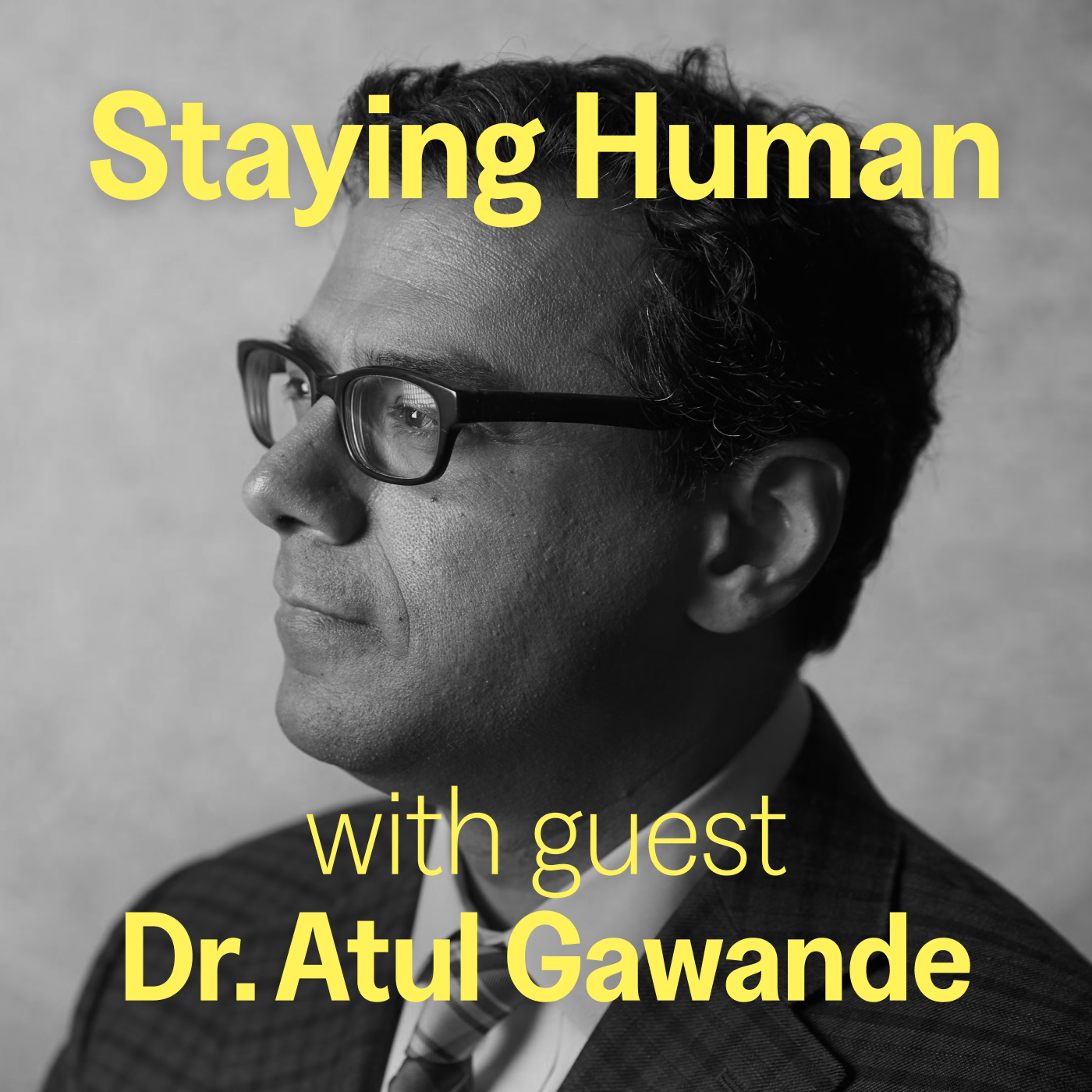
[Music] Are we paying too much attention to how long we live? And too little attention to how well we live? For most of my medical training, my goal is to doctor where to help patients live as long as possible. But the more I've sat with patients, I've come to question whether we've been missing something. Because more time isn't always the same thing as more life. And the people I've cared for haven't only wanted to live longer, they've wanted to live in a way that meant something to them. That's a question most of us in medicine were never trained to ask. What does dying teach us about how to truly live? And that's a question that a doctor at Ilgo Wande, surgeon, writer, public health leader, posed years ago in his powerful book Being Mortal. What I love about this question he poses, what makes life worth living, is that the answer is different for all of us. Ask it honestly and it unfolds into a whole set of more beautiful questions. What do we actually want when more time isn't the only thing on the table? Those priorities are different from person to person and change over time. The best way to learn what people's priorities are is to ask them. And when we don't ask them, they suffer. What is the role of the doctor when longevity is not the most important goal? I would have said the job in healthcare in medicine is keep people living as healthy and as independently as they possibly can. And you know, save lives. People have priorities in their lives besides just living longer. Helping people serve those and achieve those loyalties is, I think, the larger purpose in medicine. Help people live their parties. One was the last time a doctor asked you what you wanted. What are your fears if your health worsens? What are your hopes if your health worsens? What are you willing to endure and not willing to do for the sake of more time? I'm Dr. Vivek Morthy and this is Staying Human. Join us in this conversation with Dr. Athul Goande as we talk about what dying can teach us about how to live. Stay tuned. Political tensions, anxiety and loneliness are on the rise. But problems like these aren't new and the solutions don't have to be either. For thousands of years societies have asked questions about how to live, thrive and love. And it was spiritual traditions that offered wisdom and tools to help people find their way. Tools that science is now discovering offer real benefits. Join me, Dave Dostino, to explore how we can all use this wisdom, whatever our beliefs. Listen to how God works from PRX, wherever you listen to podcasts. I'm excited for today's conversation because my hope is that we'll just have this conversation as friends who are going to help each other explore. This question that has been on my mind more and more over the years, which is what does it really mean to live a deeply fulfilling life? He is a question I would love to start with. If you go back, I'll go to your childhood. Can you tell me about a person or an experience early in life who shaped your beliefs about what a good life actually is? I grew up in rural Ohio in a small town, Athens, Ohio, college town near the West Virginia Kentucky borders. And the, you know, I was mainly just trying to figure out how do I belong in a place where it was my parents were Indian immigrant physicians caring for people. In, you know, a poor community has the highest poverty rate in the state, as a county. And my mom was the second pediatrician to be there. My father was a urologist and general surgeon arriving in town in the early 1970s. And I didn't belong for a million reasons. And I think everybody has this feeling like you don't belong. And so the number one thing about having meaning in life that I felt like I identified with as a kid was whether you belong and that's striving to belong. And so the people that I think of are my parents who were trying to instill in me that, you know, who cares if you belong? We had a funny religion with Hinduism, you know, difficult to raise a Hindu in rural Ohio. I was already like, what are we doing? And then we're the richest people in town. You know, we had the only Mercedes. My parents are two doctors doing well in a poor community. We had a swimming pool in the backyard. And I had prospects in my life that I knew I would have expectations and exposure from my parents that other people wouldn't have. You know, they expected me to become a doctor or to at least go to graduate school, like forget just undergrad. And half of my high school class didn't go to college. And I think about the people who were influential, you know, I think of teachers who allowed my nerdiness to flourish. But I think of that time as and them as creating ways that I could belong and make sure I was trying to be myself. And also at this time, wearing bib overalls and Rocky Mountain boots to try to fit in and like, you know, trying to chew tobacco like my classmates and all of that kind of stuff. I'm trying to imagine you in overalls and chewing tobacco with my hearted blood. And it was definitely, you know, an invitation of being, you know, it wasn't it wasn't me. Let's just say. Well, I very much relate to your point about belonging and about this struggle for belonging. I think there's some lot of overlaps between how you and I were brought up as kids of immigrant immigrants and you know, it's important to Indian families raised in Hindu traditions with parents and medicine. But this interesting question about belonging, I think is an important one. And I find it's one the question that has come up to my belong at many points in my life. Is there a time where you came to finally feel like you belong? And if so, like when and where was that? Yes. And you know, I think of you a lot about this question because it's the opposite of loneliness. Right. Belonging is when you feel you you are not alone. And I think there were many points along the way, you know, I felt like when I arrived, I went to Stanford University. And there are a lot of nerds at Stanford University and you know, just entering the dorm, you know, I had a Air Force ROTC roommate and conservative religious evangelical guy who had a million records and we all started a radio show together. Like my roommates were this place where I suddenly felt I belonged and I avoided going into medicine for a long time. It was the natural thing my parents wanted to do. I worked in politics for a while, including including in the Clinton campaign and then administration. But when I became a surgeon, I really felt like I belonged ironically, not necessarily among surgeons. I was a weirdo surgeon. I wanted to do public health and I wanted to suddenly became interested in writing. When I became a surgeon, I felt like I could go anywhere in the world and I knew who I was and I knew how to enter the rest of the world. I could I found myself at home, you put me in any hospital, any clinic anywhere in the world and I feel at home and I feel like I belong with these people. So as much as I resisted it, that was the place that I found I readily belonged. It's such a powerful thing about medicine. I find that for so many people who have trained, you know, as internal medicine physicians, as surgeons, as anyone within the broader house of medicine, I know for many of us it becomes a primary identity. And it becomes a language in a sense of culture that spans borders. Like you said, you go to India, you go to Sudan, you go to anywhere.
you're in a hospital and you're something about it feels like you're at home, you're in a familiar setting, you know what your mission or your duty is. And I think I think about that a lot because I sometimes I also struggle with this lack of belonging for a long period of time. And I think the first time I experienced some semblance of belonging was when my sister and I began this organization in college to work on HIV in India. And we recruited this cadre of college students around the country to go and spend their whole summer like it doing workshops in India and we were building branches of organization in the US and we do all this stuff but there was this mission that tied us together that was deeply rooted in a core set of values that were centered around trying to do everything we could to try to make other people's lives better in the best way that we knew how. And we were just bonded together and I remember feeling like okay these are my people it was a feeling I had never had before. And after that work ended I would miss that for a long time until I came to medicine and found a sense of belonging, a home if you will again. But I do think that that is so important because I remember acutely what it feels like and what it felt like to an essence of wonder, you know, in the woods looking for that sense of belonging. And it's not fun. It's a tend to feel like you don't necessarily know who your people are. One of the things I think is interesting is finding a place where you belong where people don't necessarily share your mission, don't necessarily share all your values and yet you feel you belong, right? I do feel like when I go back to my hometown in Ohio people are all over the map politically, I've read you different beliefs but I always feel I belong there now. In a weird way even though I left long ago I didn't feel I belonged when I left after graduation from high school but now I return I know people in various walks of life there. I feel like hey I belong this is my hometown, this is where I'm from. And in a similar way in medicine I can have arguments, I can walk into a hospital and they're doing things in a completely different way than I think is you know what should be done or whatever. But we all have the same language and we have a history. We are rooted in in in some things that we can we can link up around basic commitments in joining the field. You know I thought one of the things I loved about being mortal as somebody who was learning how to be a doctor and what kind of doctor I wanted to be. Was it really pushed me to think differently about what the most important responsibility of a doctor is. Like I used to think that the primary response of a doctor is to heal people when they were sick but being mortal pushed me to realize that that was perhaps too narrow. I was curious if you could talk a bit about how you think about the role of a doctor. Yeah. The in many ways being mortal was my book of struggling with what did it mean for me to be a competent doctor. I'm a surgeon and built a practice ultimately in cancer surgery. Saw a lot of people who had serious illnesses and when I could fix them I felt comfortable and clear what it meant to be competent and what I what it meant to be really good at my job. When I'd encounter someone whose problem I couldn't fix you know ultimately terminal cancer for example then it was very unclear to me. You know I would have said the job in healthcare in medicine is keep people living as healthy and as independently as they possibly can and you know save lives. That's what got me up every morning. When you come to realize people will have chronic illnesses they will not be able to manage and you will reach a point where you're not healthy. And you cannot be independent. Then what is the goal? And it's sort of embarrassing that it took me I did 200 interviews for that book you know with families and and patients who were facing the end of life or serious illness where that might be the outcome. Plus practitioners from geriatric social workers to nursing home attendants to palliative care physicians and the answer that came out was kind of duh. The best way to learn what people's priorities are is to ask them and when we don't ask them they suffer because the treatment and the care we're providing is often out of alignment with what is their priority in their life. What matters to them. And that helped me understand that the aim is to grasp what people's priorities are. What really matters to them in their life and to help them achieve them. It might be your country. It might be an ideal. It might be your religious beliefs. It might be your family. It might be beauty. But helping people serve those and achieve those loyalties is I think the larger purpose in medicine help people live their parties. It seems so simple when you say it but it is so not how I think many of us were trained as you alluded to in the book. And I'm curious. Can you think in your own experience as a search and that tool about any examples with patients where having that conversation about what better to them, what their priorities and values were ultimately changed the clinical course and the team's plan? So one of the challenges is how do you learn what people's priorities are and just asking them, "What is your priority?" Like, "What do you mean?" Well, what matters to you most? Well, I don't know. But if you ask, "Well, what are your fears if you're health worsens? What are your hopes if you're health worsens? What's the minimum quality of life you'd find acceptable?" And so one man had said, "Hmm, minimum quality of life." Well, if I can eat chocolate ice cream and watch football on television, that'd be good enough for me. He had told that to his daughter Susan Block a palliative care physician who ends up being really influential for me. And Susan suddenly realized she knew what mattered to her father because he was at the time that he said this to her and she was trying to understand what mattered for him. He was about to undergo spinal surgery. He would end up having a severe bleed. So the surgeon came out of the operating room and said, "He's got major bleeding. We have an option here where I can do it, but I can try to stop it, but I can leave him paralyzed." What would he want to do? And he'd already said, "If I can eat chocolate ice cream, watch football on television, that'd be good enough for me." And so she said, "Would you be able to eat chocolate ice cream? Would you be able to watch football on television?" Yes, well then go. It was the best living will ever. Like, let me ask you, what would you find the meaningful minimum quality of life you'd find acceptable? Oh my gosh, you know, I've thought and had these conversations with people, but you're pushing me to think about my own life, which is good. I think I would want to be able to have conversations with the people I love, conversations where I could be coherent, where I could listen to things that were happening in their day and understand what they were saying. I could express myself as well. So if you lost that connection with people, that would really cross the line for you. That would, that would, you know, that mean do you have to remember them? Remember the stories? No, I don't think so. I think you'd be able to connect in the moment. Yes. Yeah, being able to connect in the moment. I'm thinking about my grandmother who passed away about four months ago. It was my last living grandparent and she had worsening dementia for a number of years. And it got to the point where she didn't recognize this most of
the time. And she couldn't remember, certainly, much, much at all, you know, for beyond a few seconds after a conversation. But she wasn't able to remember us and she was anxious a lot because she was convinced, for example, that she was very young and that she needed to go to her parents' home and that they were worried for her or that she, you know, was a young mother and her children weren't being unattended to and she needed to go and make sure they were okay. And she was anxious about where her kids were, where her parents were, how to find a car to go there. And I remember the years of caregiving that were involved because she lived with us at home, you know, with my parents home and my Amy. And it was very hard to know whether or not she was living a life that she would still want to continue living. Like, we had to be gone beyond the threshold for her where life was not what she would still find, you know, meaningful or where we're not there yet. It was very hard for us to know because we'd never had these conversations with her for a whole bunch of reasons. So we felt lost quite often and wondered whether what we were doing to care for her was what she would want and choose beyond a place where we could ask her that anymore given cognitive decline. But I so often wished that we'd have the conversations that you had with your father because I think that could have made our lives and potentially her life a lot easier. One thing, I mean, we see this issue a lot in dementia. We didn't have that conversation. I do think you can still sometimes see what they're, that people are actually telling you what their priorities are. So with your grandmother, for example, did she have things that gave her joy? Yes. She liked ice cream. She liked seeing her grandchildren, her great grandchildren, I should say. My kids were small at the time and when they were around her, she would smile and she would laugh, you know, at their antics. Those two things, and the third thing is she was very particular about waking up early in the morning and saying her prayers each day. And that brought her a sense of peace. And so those three things, I would say ice cream, prayers, and great grandchildren, we know that those made her happy. So that's telling you a lot actually because, you know, let's just start with the food example. In many, well, it was one story, for example, I wrote about him being mortal. In advanced Alzheimer's, you reach a point where your swallowing isn't as coordinated and you have the risk of aspiration. And so you'd be on pure-aid food only, right? Or at least very soft food only, like ice cream, that kind of thing. And one woman kept being caught stealing cookies. She wasn't allowed to have them, but she'd steal them from other residents who had it. And then she'd hoard them. She'd try to hide them in her drawers or in a pocket, and they'd find them. And then they'd write her up, call the child at home, the adult child who's supposed to be in charge and say, she's eating cookies again. And she's telling you what her joys are and what risks. And she's, you know, this is one of her lone joys left in the world. Let her eat the damn cookies. Okay, so maybe she has an aspiration event, but she's telling you right now, right? Let's maximize these things and create connection. For my father, he said the same thing, you know, he loved food, but what he loved about food was gathering around the family dinner table. And having people and connection, he'd build, you know, in his later stage, you see a lot of pain from his tumor and pain control became number one. But he would summon his energy. He'd look forward to it for your whole day, an hour, an hour and a half sitting down with people connecting, having some mango and being together. And so I do think people are often telling you what their priorities are, even when they can't quite tell you what their priorities are. Yeah, that's a good point. And I will say that during my grandmother's experience, inspired in no small part by your book, which, you know, I had read and my wife Alice had read as well. We brought hospice and early in her course. And it was interesting because, you know, my father trained in medicine many years, obviously, before you and I train. And he had a particular conception of hospice that I find older generations have, which is that you only call hospice and it's a last resort that they'll give morphine to people and essentially hasten their end. And so we brought them in and we had the same conversation actually about what to eat because she clearly was an aspiration risk. And she was actually aspirating and developed several aspiration pneumonia. And we had to ask ourselves a question, does that mean that we shouldn't let her eat the things that she wants to get one of the few pleasures from life that she still desires or should we let her derive some pleasure from that and tolerate the risk. And so we made the choice to do the latter. And she ultimately ended up when she did pass away, it was shortly after. I think we think she had another aspiration event. But she lived for several years eating what she wanted to eat after even, and I think from any of those years, conventionally people would have said, no, don't give her any of those things, whether it's ice cream or other liquids that she wants because she will aspirate. But so that was actually helpful. And you know, in one of the things I think that I'd appreciate it in being mortal is that you wrote about how in medicine, we sometimes build a whole industry around caring for people with the best of intentions. And we do that particularly with old age, right? And to the end of the life. But it doesn't often lead to the outcomes that we think it will. Like I was so struck by some of the data you shared about how in multiple studies, looking at people with cancer, lung cancer, melanoma, and other types of cancer, the people who actually were in hospice lived longer than those who were getting continued aggressive care. And I heard this also from one of my most important mentors in medicine, Rachel Remmon, who you may know, but who wrote the wonderful kitchen table wisdom and for much of her career. She took the patients who were told by the hospital that there was nothing more to do for their cancer that they just needed to go home and get their affairs in order. And she realized that they were still healing to be provided even though there was wasn't more medicine to offer. And so she would meet with them. She would learn about what their joys were in life. It would help them understand how to get more joy out of their relationships, out of time in nature, whatever spoke to them and found that those patients ended up living far longer than what their oncologist predicted. There's this beautiful story you share that I'm hoping you could tell us about Bill Thomas, who in the spirit of turning the model upside down took over this nursing home in upstate in New York in the 90s. And he talked about like three plays of the nursing home life and took a really unexpected way to addressing them. But could you tell us Bill Thomas's story? So these were not independent living facilities with some home care visits. These were people who needed care around the clock. And what he saw was incredible loneliness, depression, not much will to live. And not feeling they were anywhere that anybody would call home. You know, the most common things families would find when they walked in the door and saw a family member was, you know, when can I go home? And the reason why was that he diagnosed was there wasn't life. And they didn't have a chance to give and share in life. And so he started by introducing plants that people would take care of and grow themselves. And then said, why can't we have pets? He said, you know what, we're going to make this a place where everybody who wants an animal can have an animal and made it a place full of birds and cats and dogs. And people, you know, would have their own bird or their own cat or their own dog. And yes, the staff had to sometimes help with dealing with the, you know, letting the dog out or things like that and needed to make it into a friendly place for that. He ended up creating something called greenhouses, which advanced that concept further that you needed to physically build the entire
place so it's not built around the nursing station. It's built around common living areas and you're supporting and you're not regimening it like a hospital where there's you know everybody wakes up at the same time and the meals at the same time and you know you get in the pill line and do all of that stuff. You're instead building it as a home where you have access to the refrigerator. You have access to the stove. Yes, someone might cut themselves with a knife or you know but that's a home. You you have recommendations and choices that that you can make and and you fill it with life as well. What he demonstrated was striking improvements in outcomes, significant reductions in need for psychotic medications, medications for antidepressant and anti-anxiety and and just people liked it better. You know at the higher end the places that you can afford if you have money. This is becoming more of a norm. These are you know since I wrote the book more than decade ago there's that movement has started to really happen in many places. Maybe even most places you know because at the higher end because people are really shopping around and they start to know this is something we should be building. You know it's not necessarily what is available to people especially with the highest level of need and Medicaid pays for majority in the United States of nursing home care and particularly for people who are who end up having to spend through their savings that becomes the safety net for people. And many of those places are still not in a in a place where you are living in an environment that is supportive in this way. Part of Viltatmist's work is to demonstrate that he could do it on Medicaid payments which he is not. And it was I was also really struck by this the outcomes that he was able to change that were surprisingly prescription drug costs falling by 38% I believe it was and deaths falling by 15% staff turnover dropping and for programs especially public insurance programs that are so strapped for dollars. It seems like this is actually helping patients and helping improve costs at some level. Yeah it's one of the striking things about trying to scale these to work you know I tell the story of building assisted living which was originally to it also demonstrated great outcomes in small scale and then you grew it as a big for-profit industry and the efficiencies and what you create has not consistently demonstrated those outcomes as they you know sacrifice the culture and maintain the structure. The really hard thing is building these around the original culture and intent we're trying to achieve. Yeah. I do I want to come back to the conversation that you had with your father about his health and about his goals really for for his life and I'm thinking about this in very personal terms because I think I like many people have people in their life likely parents or others who are grappling with health challenges and they're trying to figure out what the right balance is between optimizing for their safety and doing sometimes what our loved ones want which is and always consistent with safety and I'll tell you that in recent years this has been a struggle for me with my father. My father is 80 years old now he's still very active he still practices primary care medicines he's patients in the office part of his time and then spends a much of the rest of his time in India working on charitable projects in the village that he was raised in. It's very poor village there's not a lot of philanthropy coming in so what he's doing is very important but each time he goes to India now for extended periods of time often two three months at a stretch and is largely there on his own we worry a lot for his safety you know once he went and he got COVID they didn't have packs of it available another time he went and got dengue and we had to actually force him to go to the hospital and when he ultimately went there you know his liver function test were through the roof his platelets had dropped significantly and he was not in good shape and the last time he went he tore his Achilles which was just a challenge for so many reasons so we worry you know just about his safety and as he's gotten older you know he's physically slowing down a little bit sometimes forgets things here and there but I've been struggling to figure out how much to lean on on him to make sure that he minimizes his time there that he's in a safer environment versus allowing him to do something that I know is obviously very important to him even though there may be significant risk associated with it and I was just curious if you had based on the conversations you had with your father and I don't know if you had ended up having subsequent conversations with your mother as well based on your father's experience but I just curious what advice you would have for folks like me who have parents or other loved ones who are you know in this circumstance where their health is at risk but they're they have things that they want to do and those are in conflict about how to navigate some of those conversations yeah um it's brutally hard because you feel like what you want to ensure is that they are safe which is what your parents wanted for you when you were a kid yeah and that's the last thing you were thinking about you wanted to live yeah I can tell many stories but I'll just say your dad's actually a great one the reality is this is a priority this matters to his life and there's weighing the risk to others versus the risk to himself you know I've I came to accept with some of the choices my dad made or then my mother made before she died of ovarian cancer in December of this past year that that some choices meant that there'd be there will be a crisis call you know that she was taking a trip and and I would find out that you know she'd be in the hospital or having some trouble and we'd have to drop everything and and come deal with it and and and accept that as part of the story along the way people do change their minds but it's a but it does not an event it's a process and you're walking people yourself sometimes through that process as well my mother it wasn't great after my dad died living on her own in Ohio she had a she had a sort of a fender bender going to a rotary meeting she swore her that the accelerator just went on its own but plowed into a ballard in the parking lot could have been could have been worse the airbag went off and she wandered into the lunch without realizing that all the powder from the airbag was on her face and everybody was like oh my god what happened oh no she was hoping to get away with it a little bit and you know there was some other couple of issues and I'd started having her you know we'd bring her for visits to up to Boston and every time I'd take her around to visit some of the retirement communities so as she would see that it's not as bad as she feared it was and it was a couple years of her visiting and then finally it was you know one one issue more and I'd say do you want to look again and she'd always walk out of those saying interesting not for me and this time she she said well remember that place we went to maybe we look at it again and she made the move and at that point oh my gosh but I love the gentle way in which you started and continue that conversation with her keeping the door open for her to make the decision tell to me move to be closer to you and I'm so sorry to hear that she passed away recently I didn't know that how are you how are you managing with her loss you know so she was 89 she lived a long life and I do think that the thousands of years of crafting how we celebrate and honor people's lives really worked for me we she had six years of ovarian cancer we kind of knew the bus that was gonna come to hit her at some point and so she did better than really projected for she had stage four cancer when she was diagnosed and I was lucky because we had she was being seen at the Dana Farber Cancer Institute I had and I had run a trial of at the Dana Farber where we were
And I did it with Susan Block. You know, we had a whole team where we randomized the entire institute with half getting trained in what we came to call the serious illness communication program. Among the Ovarian Cancer specialists was Alexi Wright, whom you might know. - Your friend too, is my classmate in residency. - And she was amazing because she could recognize from my mother staying in her independent living apartment and not having a fall or harm that would affect that. But otherwise, being willing to tolerate the consequences of chemotherapy, she had some boundaries about what she wouldn't tolerate. Alexi Wright really crafted a departure from the standard therapies. We stopped one therapy when it started to cause numbness in her feet and she had become unsteady as a consequence. And she ended up with no evidence of disease despite having started with widespread Ovarian cancer and like, a lot of me and all of those kinds of issues. And she found she could live and tolerate and adapt to things she didn't expect and my mother did. And found the others kept her successfully living and enjoying life and doing lots of things she loved. - I'm so glad that she had such a positive experience in light of such a difficult diagnosis. And we know that Ovarian cancer is prognosis often not very good for many people although it is starting to change. I'm so glad she got Alexi as her physician. Alexi is a doctor's doctor and I'm just glad that she was in your mother's life. - Although you are such a good son. (laughing) And I just, I say that as somebody who feels some guilt like over whether I'm doing-- - Oh, you don't have to have a guilt. - You're hearing all the good parts of me being the son. My sister really took good care of her in the last three years and there was a lot of challenges and difficulties. And I was gone a lot with travels and working with you in the last administration. So yeah, plenty of ways in which I was not the good son. I wanted to be. So we all feel that. - Yeah. (laughing) And guilt is quite widespread among all of us. But you know, thinking about Alexi and the other clinicians that you're training. It strikes me that what you're doing is, you're trying to move us in some ways toward training physicians to be able to treat the whole person, which we talk about a lot, but it feels like training and curricula change slowly. And what do you think is making it hard for us to shift more quickly toward this model of treating the whole patient, making sure clinicians are adept and comfortable at doing that? How do we get better at this? - There's two things. I mean, I think are critical. Number one is understanding that it's a skill. And number two is recognizing that there's a difference that a goal is in a culture that we have to work to create. So let me start with the skill 'cause in some ways that's the easier thing. It's not easy to have these conversations. It was, you know, you're taking Dana Farber Cancer Institute oncologists who are experienced people and saying, "I have a different way that you might approach your conversations with your patients." They're like, "What are you talking about? "I know how to have a conversation with my patients." And so in the training, we would have them, we'd give them a scenario, have a group of colleagues, they would do this thing that all doctors hate, which is have a mock patient. (laughing) And it'd be one of your own colleagues, you know, you're talking to. And you'd have to talk through, okay, they've gone through one set of chemotherapy and had a recurrence. And then a second attempt with chemotherapy and now the disease is not responding. And you wanna think about what the options are from here. Have the conversation with this person, the way you normally would have it. In front of everybody, a group of your colleagues, (laughing) that's awkward, difficult, right? Suddenly it exposes you, some extent. And then we're gonna ask you to follow this checklist. You start with what's your understanding of where you are with your illness at this time. How much information do you want about where this may be going? What are your hopes, if you get your health worsens, what are your fears if your health worsens? What are you willing to do or et cetera? And it taught them a couple of things. One is it didn't take them longer, like if they thought that it would. And number two was some not a technical conversation. The way we normally have a conversation about this is let me describe to you, you know, I'm a surgeon, right? So let me describe to you the technique of what we're going to do and I get out of a piece of paper and I draw the organ and I draw the places in which we attempt to remove it. And you know, like here are the options. And then here are the complications. And then, so you talk through the pros, the cons, the risks, the benefits. And then we'd say, now, what do you wanna do? And what do your patients say when you get to the end of that conversation? Almost always. Do you know what I think generally I think those say, okay, what would you do if you were a athlete? They'll say, what would you do? And then we were actually taught this in medical school. You're supposed to answer, no, no, no, no, no. This is not for me to answer. Only you can know your priorities and preferences you need to give the answer. And instead what you need to do, and this is what makes people uncomfortable, is make a recommendation. But it's not a recommendation on what you would wish. You need to know what are their priorities, what are their goals. And I've got now the experience and knowledge. Here's what I'd recommend that we can do. A great researcher, Gretchen Schwarze, who has recorded conversations like these and studied them and recommended it and says, you know, the majority of the time what doctors have is a primarily technical conversation. And it goes on quite long and they talk 80% of the time. And the conversation that you should be having is one where you're saying, let me understand your goals in this situation, what you're hoping for. And then if you understand what they're hoping for, explain, well, this is what I think we can do. And what the best case, worst case, and most likely case is if we go down this path. And then I'll answer any questions you want to know about this. Some people want to know technically. Well, what does it mean to go in and take out the head of my pancreas? What, you know, you're discussing what the best case, worst case, most likely case is in terms of how your life will be coming out of these things. Then she's shown these are not longer conversations. They're different conversations. They're much more satisfying for both the patient and the doctor. And you're more likely to have the patient feel aligned and supported by what you're going to do. The barrier is shifting to recognize where counselors and not technicians. Most of the time what people want is a counselor who can offer you a recommendation and goals. And reaching a point where the system regards it as not just a nice to have, it's malpractice. It's a failure not to be able to discern people's preferences and then make an appropriate recommendation to achieve them. That's the place where we're not getting to yet because there's a technical aspect in training people. There's training you do as a medical student. Being able to have a discussion about prognosis is really an advanced skill that even in residency, it's very difficult to do. And then there's the culture and the goal and recognizing your developing clinicians who are able to be counselors. Yeah, and on that last piece around culture, we don't often see people who are promoted in academic medicine for being good counselors at the bedside. We see them promoted for other things, like bringing money in through research grants, publishing and top tier journals. But I think our trainees look at that as do attendings and they clearly see what's valued. And so I think that there's a shift that has to, If we really want to shift what is value in medicine, we have to shift what's rewarded.
medicine as well and I think that's a cultural problem that we have. You know, I feel everywhere I go when I talk to trainees, you know, docs who have completed their training. These days a question I always get is around artificial intelligence and about how it's going to change medicine. And when we think about what you and I are discussing today, this goal of trying to tailor care to what people's actual goals are to their values, to understand like who they are as a whole person and not just as a diagnosis, when you look at what's coming and it's already here in some ways with artificial intelligence, do you see AI making that goal closer within reach farther? What do you think the impact of AI is going to be? I've got almost too much to say on this, so let me just try to not get it in a simple way. I've been doing a lot of work with AI. I did a lot of work deploying AI when I let global health at USAID. We brought X-ray readers, AI-based X-ray, chest X-ray readers to seven countries and having an AI capacity in places that didn't have enough radiologists and then pairing that with molecular diagnostics to diagnose TB and get people on TB treatment, boosted in Nigeria, the TB diagnosis rate by 40%. So I believe in what technology can do. You know, people have been talking about the idea that your computer is going to replace your doctor almost my entire career. So why didn't it happen before and what's going to be different now? My whole career in health systems and public health has been around the idea that the gap is not in our performance, it's not lack of intelligence. Can a super intelligent machine improve some of the things that intelligence matters? Yes, I'll get to where that could be. But it is mostly about to failure to coordinate. We have 70,000 different diagnoses as human beings, 70,000 different conditions that where the human body can have difficulties and problems. And for them, we can deploy 20,000 drugs, 4,000 medical and surgical procedures. We have well over 1,000 public health solutions that also make a big difference. And we're trying to deploy this capability in the right way and the right time for everybody alive. That is a massive delivery and coordination problem. And most of the solutions where we've been able to generate incredible results, lowering the mortality of surgery or having people live longer from HIV or from complications of childbirth, have been about getting things like, can we get people's, people taking their medications 60% of the time to 95% of the time? Can we get an operating room team doing the 10 things that we know save people's lives? Most of the major gaps are failures to coordinate and make the system work. And AI can help with components of that, can perhaps reduce some friction. That's where the huge value would come from. But it is an obvious where AI eliminates whole components along the way. So I continue to believe what people say that AI is not going to replace doctors, but doctors who use AI are going to replace doctors who don't use AI. If you know, AI and other information technologies need a few things, a clear consistent goal that outcome that you're driving for, a to have most have all of the relevant information that matter for achieving that goal available digitally. And a safety and consistency profile, you know, no hallucinations that allow you to achieve high levels of accuracy. Just doing those things gets you to narrow places. You know, mammography review. I can't imagine it's not going to be something that AI is going to primarily do. You know, some dermatology diagnosis of a rash that may well insert in pathology reading functions, clear outcome, maybe digitally fully available, all the relevant context, and can achieve an accuracy rate that is the tie enough. I can see those individual functions. But now you're going to put a primary care doctor in the position of, I've got a patient with a rash. Do I prescribe the app or do I prescribe the dermatologist? And that's going to depend. Can the person manage the app? What dermatologists are available? Is there a complexity to the need that falls outside the parameters of what, you know, like maybe it'll make a great diagnosis? But what's the right treatment given this person's other complex issues that they're on and the trade-offs they have to make? Because, you know, the average person over 65, for example, is on five medications. And even choosing between those, they have trade-offs already that you're having to make. And the world of being able to be the counselor is going to be the one that is more and more necessary. And it may in fact push doctors to recognize this is a function that we have to fill. I told you I mean, it go on at great length on this one. Well, it's complicated. It's nuanced and it's evolving quickly. What's your take? What's your take on AI? I think that AI is, I think AI can make medicine better. I think it can make it more consistent. I think it can improve diagnoses. I think it can help us with coordinating care and deploying care more strategically where the need is. I think all of these things, if designed and applied well with the right safety parameters, I think AI can be extraordinarily helpful with. And I think it can help make the average doctor better. I think it can help make most doctors better. Again, if delivered and deployed with the right sort of safety parameters, where I'm more skeptical about AI replacing clinicians whole sale, is it when it comes in particular to the human parts of medicine. And what I think about is the human parts of medicine are having a conversation like we talked about with a patient about what their values are, trying to understand what's really important to them, trying to provide them with comfort as they're going through a very difficult process of coming to terms of the diagnosis or figuring out what path they want to take forward. Because AI might say the right things. You might train it on, I know, with full of data about how to be empathetic and sensitive in a conversation. And initially it may seem like it's saying the right words in the right sequence. But I think part of what is meaningful to a patient when they have a conversation with a doctor is I think the same thing that's meaningful when you have a conversation with a friend, which is knowing that there's a real human being who's had real experiences to it. And through those experiences, they can relate to what you're talking about. They can understand that it's important for you to be able to walk your child down the aisle because they perhaps have a child as well, or if cared for patients who have had children and see how much joy and how important that is in your life. I think our stories as human beings are part of what make for a therapeutic relationship between a doctor and a patient. And the truth is AI doesn't have its own stories. It doesn't know what it feels intrinsically like to experience joy and heartbreak and pain and discomfort. And so I think that that part of medicine really matters. And to me, it's part of understanding the whole person that responding as a human being and a clinician to somebody who's suffering or going through a difficult diagnosis. And that's why I think that AI augmented medicine can be powerful. And I think it could be very beneficial. But I don't think that AI can ever fully replace a human being when it comes to ultimately providing the care that you need. One challenge I have with what you just said is that I think a lot of people don't feel they have that empathetic relationship with the clinician. Most people don't feel they have any clinician who notes them. And aren't you know, they're [BLANK_AUDIO]
The average working American has a $2,500 deductible or higher just to get in the door and see a clinician for most things. So they're trying to avoid many of those interactions and turning to an AI in that circumstance can feel like the easiest friction for you. Lowest cost thing to do, especially if no one's going to charge a deductible for it, right? Yeah. So I agree with what you have to say. And yet I also think our system's not delivering on it and mostly what people have are technicians. And if I'm just looking for a technician, then an AI may be what will provide that. I think the challenge right now is in a world of technicians, people still are not necessarily going to be able to easily use AI. Because my experience with it right now and observations with others is it's increasing the fragmentation rather than decreasing it. I think it's an augmentation for the patient and the doctor, but on the whole for a while it's going to be increasing fragmentation. And I do think we all are hungry for a more humane relationship-based experience in healthcare in order for that to be more successful. We need more relationship-based life in order to be more successful. And the push of technology is driving us if anything away from that. I couldn't agree with you more. And I do think that one of the great failings of our healthcare system is it is not provided people with I think what they really want, which is a human partner in healing. And many people don't feel like they have a degree of relationship with a primary care provider or with a clinician at all. I think that if you don't have anything right now, access to care or relationship with a care provider, it very well could mean being in the future when AI as it matures more becomes more integrated into care that having AI is better than having nothing, sure, in terms of an AI clinician. So my hope is that the AI's increasing presence in medicine can force us to think just more boldly about how to close that gap between what medicine is now and what it should be for everyone, which is an experience of relational care where you're treated as a whole person, where you're understood for your unique values in life experiences and goals, and where your care is tailored to that where you have somebody who's on a journey with you in the way that Alexi was on a journey with your mother and with your family. That is what medicine ideally should be. And if AI can help as it gets better, safer and more integrated, I think it can help support and free up clinicians to be able to focus more on that. Sure, I think that would be extraordinarily valuable. But I don't think that that will happen unless as a medical profession, we make a decision that we want to reclaim that purpose, that mission, that mantle, if you will, of relational care, of whole person care, and that we want to be the people driving at individual clinicians. Yeah, what you're describing, I see emerging in ways that make me concerned about the future. Concierge medicine is that. It's getting to pay, you know, you pay more if you have the money to have a relationship with someone who knows you, who's available, who's going to bring you all the technology capability, but help you help coach you through it with experience and wisdom. And everybody else gets AI. And that's what I feel is the bifurcation that's emerging. You know, I call customer service now and, you know, I had an airline issue just this week. And I'm amazed by how good customer service is with AI. It's becoming very rapidly, very effective. But it's a world where, you know, so I can get the AI without a half an hour weight. It can solve some of my problems and then I can depart it. And then if I have a million frequent flyer miles, like I've now accumulated after working in government, I get a special number I can call that, you know, I get a shorter weight and more likely to get a human being and that relationship. That alarms me a great deal that, you know, I can access it because there's, you know, I'm paying the money and have accumulated the miles and can get the privilege. And otherwise I can get 50% of my questions answered with an AI. Yeah. It's a really important point you bring up about this disparity in care. The human versus the AI service, if you will, that we're seeing in medicine and likely you're going to see across the board. And I think if this is a place where I do think medicine has a really, as a profession, has an important role to play because our mission has never been to solely provide concierge care, right? Our mission has been to provide care for everyone who walks through our doors who needs it and even to go seek out those who don't walk through our door, but who may need that care anyway. And so I think that it'll be important to have people pushing and guarding against that gap growing. And my hope is that people in medicine and public health can be among those who help lead that charge. Yeah. It will have to happen across a range of fields because you can imagine this is happening in education as well. You know, you know, whether you're more likely to have that meaningful human teacher relationship over time and not just only learn technical stuff. Yeah. And the bifurcation, as you technologize more and more that in education, it becomes reserved for those who can get the private education. Yeah. I told you, we've covered a lot of incredible ground today and you give a lot to think about as our conversations often do. I want to ask you though, now thinking 12 years after being mortal came out, you've had so many conversations, you've reflected so deeply in this material. And I'm curious to ask you the question that you asked me in the beginning, which is like, how is your understanding of your own mortality shifted since you wrote the book? And in particular, when you think about what's most valuable to you in your life, what your goals are, what would you share with a clinician or a friend who wanted to have the conversation with you? Yeah, that has been evolving. First of all, it forced me to have that conversation with my wife where I was saying, okay, chocolate ice cream, football on television, that'd be enough for you. And we found that we're very different in our orientation. I'm all in my head, like if you reduce me to a brain and a jar, as long as you hooked up some sensory systems that allowed me to communicate, to hear, to connect, to hear people's stories, to remember them, to create relationships in that way, that's what would be meaningful. And my wife said, well, that's stupid. Let me honestly give his spouse. She said, for her, if she can experience joy, then keep her going. And if she can experience joy, let her go. It doesn't matter whether I know you or I'm connected to you or, you know, like you know me. And if you see that I'm capable, you know, maybe, you know, it's almost the opposite. If her brain isn't there, but she's still enough of it is there that she can experience joy, keep the body going. And that that's what will really matter. And the things that really alarm her much more are how her body goes and removes the ability to experience joy that her, you know, you have back pain and various afflictions that come with each decade. And that that constrains and limits how much the joy happens. And I find I'm gravitating in that way. My mother, you know, dying recently watching her, she lived in a community when she was in Boston before she went to Hawaii that had a number of people with various stages of dementia. She started a, she used to play tennis, avidly, when she couldn't anymore, she started a ping-pong group at the, at the place. And they'd play every day at her senior living community at four o'clock. And so even people with dementia would show up, they'd learn that, okay, four o'clock we go for ping-pong. And I went to pick her up to take her to dinner after ping-pong one time. And there was a group.
group before women and my mom and three other ever ever good friends. And they were all just busting out laughing when I walked in the dorm like, what are you laughing about? And she said, well, no one can remember the score. I'm the only one who can remember the score, but I can remember the score only if I call out the score on every point. And I forgot to call out the score. And now we don't remember who won or who lost. And what was great is like one of her best friends there was a woman with relatively advanced dementia who, you know, couldn't always remember everything. And my mom would have to remind her, but they were genuinely friends. They experienced joy together. And that made me much less afraid of what happens if my brain goes in particular ways. And so I'm evolving still. Thank you for sharing that. I thought as we bring our conversation to a close, there's one final question I wanted to ask you that I ask. I thought that was my final question. There's always one more. But this is, I have some thing in my life that I call a soul box, which is a virtual box that I reach for whenever, you know, I've had a rough day or I'm peeling pessimistic or burned out. And it includes a whole raft of things I've collected over the years, poems, stories, inspiring speeches, I'm a speech junkie, songs, some verses from scripture pieces of art, movie clips. Basically it's wisdom and lessons from the world, from the universe. And I was curious, if you had a soul box and maybe you do, what would one of those items be in your soul box that you turn to when you need a lift or a moment of joy? I don't have a soul box. And I think part of the reason I don't have a soul box is I'm in my head too much already. And part of my answer is to get out of my head and do stuff. You know, getting out on a tennis court, going to hear great music and just music is one of the things that gets me out of my head and gets me back into feeling capable. But I think it's, I usually find one way or another to just do something because I've mulled over and read and tried to get perspective and all of those things to the point of being just a way to stuck. And that's how I feel like I have to do it by turning the head off a little bit. That resonates deeply. I think in general we're all in our heads probably too much. And when I was, when we were at the Brigham together, when I was in training, I actually took up salsa dancing as a way to get out of my head. I remember when I bought that. And music too was great. I remember the first and last time you and I had been at a concert together was in Cambridge, I think in central square years ago when a small group that I had never heard of called Bishop Allen came to perform. And I came with some friends and I see you in the very front clearly enjoying the music and then learn later that this is a group that you loved and had followed for some time. They just had their 20th anniversary tour and we just saw them a few months ago. Really amazing. Yeah, music's a powerful thing. But although I've so enjoyed this conversation, thank you so much for joining me and you just vek. Most importantly just thank you for being the good human and good friend that you are. I know you inspire so many people around the world. But I just think the world needs more people like you who are willing to take these deeply human values of compassion, generosity, empathy, courage and bring them to bear in this moment and try in whatever way we all can to tilt the world toward a more compassionate and connected society. So thank you for everything you do. You're doing more than anybody I know. So thank you Vivek. Appreciate you brother. Thanks for joining this conversation with Dr. Adolga Wande. Here's a question I want to leave you with and I'd love for you to share your answer with me. "Neon simply living longer. What makes life worth living for you? And have you told the people closest to you?" Leave us a message at 1833-74-Human. It's 1833-74-48626 or email us at
[email protected]. That's
[email protected]. We'd love to hear from you. I'm grateful for the humans who make staying human possible. The producers are Liam Arino, Rebecca Steinberg, Kalen Tansel-Sutteth and Matthew Horskowitz. Sound designed by Kyle Murdock. Casey Kalish is our research and editorial producer. Our series editor is Annie Abilis. Our executive producer is Ann Kim. Original music by Rishikesh Herway, art direction by Helen Chen. Staying human with Dr. Vivek Murthy is a production of the Together Project and is made with support from the Knight Foundation and the Arthur M. Blank Family Foundation. I'm your host Dr. Vivek Murthy. Staying human is distributed by PRX.
 PodcastTranscript AI