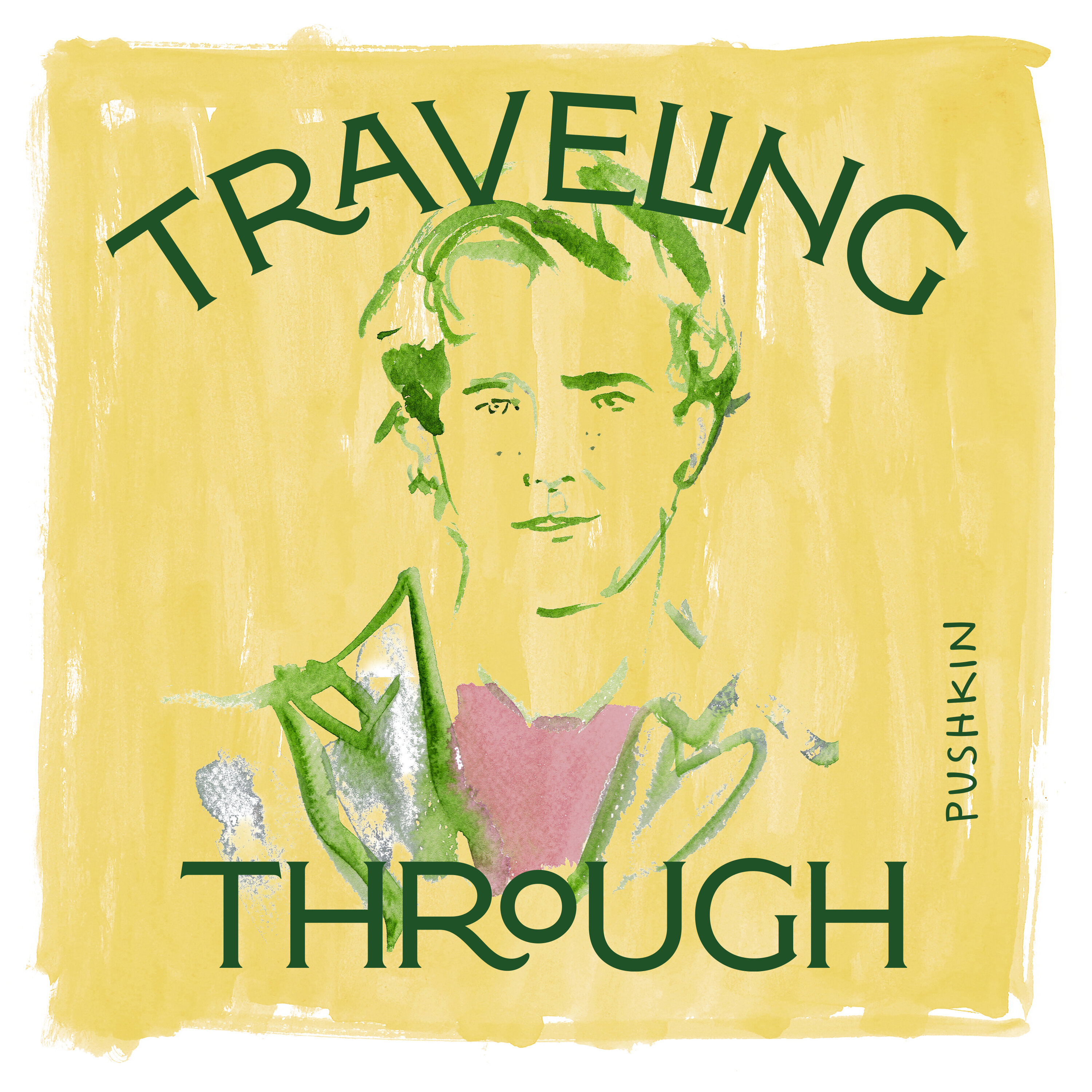
Athena Calderone on Aspiration and an Endless Aesthetic Education
55m 22s
Athena Calderon, a self-taught designer and cultural traveler, attributes her success to her insatiable curiosity and lack of formal education, which fuels her hunger to learn and experience new worlds. Her journey began with early trips to Vermont and Europe, but pivotal moments—like her visit to Morocco with her son Jeevan and her deep immersion in Ibiza—shaped both her personal and professional life. In Morocco, she discovered the intimacy of home-based hospitality and the value of cultural exchange, while in Ibiza, she found a balance between nightlife and nature, reinforcing her family-centered values. Her design aesthetic evolved through travels to Rome, Paris, and Vienna, where she absorbed influences like red porphyry, Art Deco architecture, and Viennese leaded glass. Each place leaves a tangible trace in her homes, such as a hand-forged metal vase from Paris or a table design inspired by the Vatican’s color palettes. For Athena, travel is not just about sightseeing—it’s a daily practice of self-education, emotional resonance, and renewal. She embraces the unpredictability of discovery, often finding deeper meaning in unexpected moments, like a child’s quiet reaction to the Sistine Chapel or a sudden emotional connection to a cultural artifact. Her journey reflects a core belief: that awe and curiosity are not just creative catalysts but essential forces that keep one alive, grounded, and connected to the world. Whether through designing a home in Milan or planning a family trip to Italy, her travels remain deeply personal, rooted in love, memory, and the quiet joy of being present.
Pushkin
Self-taught is not a slight when it comes to Athena Calderon.
In fact, it might be the singular quality that makes her so special.
She's famously been called the new Martha Stewart by the New York Times
and the Brooklyn brownstone she designed is the home that launched a million Pinterest boards.
But knowing Athena is to know she doesn't really think of herself as an authority or even as an influencer.
Growing up in Long Island, she hit the nightlife of New York early
where she met her husband, DJ Victor Calderon, and they lived a life on tour.
But her curiosity was never confined backstage.
It's in fact where her aesthetic education began.
So from discovering another side of Ibiza, being drawn in by Moroccan hospitality,
renewing her roots in Rome and now embracing the evolution of her eye in Vienna,
Athena is one of those rare people
that despite her beautiful life, she still manages to take us all on the road.
Here's my conversation with my collaborator and friend, Athena Calderon.
Welcome to Travelling Through.
This is really a conversation for me about curiosity and curious people
and how travels have shaped their life and their lens.
We can start anywhere, but I'd love to think about like,
what is an earlier travel in your life?
That maybe kicked things off.
Earlier travel wasn't really in my orbit at all.
I didn't grow up with travel.
I think the only places that we traveled to throughout my high school years was Vermont.
Like my dad would take me fishing every summer in a freshwater lake called Lake Beaumacine in Vermont.
We went to Florida once and we went to Puerto Rico once.
And besides that, I'd never really been on a plane.
Yeah, I didn't.
I didn't travel much when I was growing up.
We went on a trip like kind of Griswold's National Lampoon's European vacation.
Yeah, it was that. Exactly.
To Europe one time, which was very lucky and kind of changed my life when I was 10.
But we stayed in youth hostels.
It was not a kind of a glamorous thing.
And also I think, you know, there's this thing about being Australian where it's just those distances.
So we traveled a bit, you know, to like beach towns and things like that.
But, you know, I have like this theory and I would never change it
that if you traveled a lot as a child, sometimes you don't have. The appreciation?
The appreciation, but also this romantic sense of the rest of the world
and this kind of inner urgent need to go and do those things.
And I often, I think about you as having this inner urgent need around so many things.
And I think that's why you're so voracious.
I think you're absolutely right.
I think we both share that for certain.
Also my lack of formal education as well as my lack of travel and culture as a child.
Has just made me like ripe for curiosity.
And like I want to self-educate.
I want to understand more.
I want to see more.
I want to learn more.
And it's just made me like really hungry to see as much as possible.
I'm also thinking back.
We went camping a lot.
Every memory that I have of travel, even though it was close by,
was always it holds a lot of emotion for me and an adventure for me.
I feel like the same way.
I was obsessed with rock pools and finding little things and shells and starfish
like at the beach town that we went to or like exploring up a creek,
which is a very Australian kind of background.
But I think it's like it doesn't matter that you kind of went to the other side of the planet as a child.
It's if you have that innate sense of curiosity, it sort of grows.
Yeah.
You were telling me a little bit about your Morocco trip.
And I'd love to talk to you a little bit more about that.
Yeah, for sure.
Well, when I had my son, Jeevan, Victor, my husband was on the road a lot.
So travel coincided with marriage and family life.
And we just took Jeevan everywhere with us.
And I also didn't have career at the time.
So I was just on the road a lot with my husband.
And we would just begin.
That's like really when travel began.
But Morocco holds a very Marrakesh specific.
Marrakesh specifically holds a very special place in my heart because I'd never been to Africa before.
And it wasn't even something that I had really researched.
Like I wasn't really at that point of my life where I was like studying and researching before I traveled.
I was kind of just like up for seeing where we landed and, you know, what presented itself.
What year did you go to Morocco?
Jeevan was probably around two.
So it was 2005.
And I'll just never forget, you know, walking through the Medina to get to the Riyadh.
And it's just utter chaos and scents and sounds and, you know, just meandering like small little blocks.
And I was like, where are we going?
Did I make the right choice?
You know, like it was just crazy for me to think about like you opened these like beautiful wooden doors and an oasis awaits.
And I just loved this idea of this like intimate small home where you have these hosts that are legitimately like your host.
They are cooking for you.
And, you know, there's this nucleus of family, which was really my nucleus at the time.
Like my family was and still is my everything.
But I didn't want to say that it's all that I had.
But like I didn't have a creative outlet at the time.
And I'm such a creative.
So I really threw myself into my family.
And it was the first time I was exploring like, you know, cooking and hosting and designing just in my home, not professionally.
So being in this Riyadh and seeing these people so graciously host and care for every drop of experience that they were offering us.
You know, Jeevan, they invited Jeevan who was two years old, but they invited him to the kitchen every night.
And he would stand up on a chair and he would cook with them.
And I'm getting emotional because like they were communicating with this two-year-old and not speaking the same language.
And they were offering him this experience that I could never really offer him.
Like he was understanding kind of culture.
And culinary and like and love and care of food and family in a way that I could never have offered him otherwise.
And I just remember being just hit with so much emotion as I am right now about how magical this experience is.
And so far from our life and from our everyday existence.
I can feel that from you.
The interesting thing about Morocco is it's not a restaurant culture at all.
Like to the exclusion of almost any other culture.
Like you get the best food in those Riyadhs or in those homes.
Yeah.
I always tell people when they're going like eat at the Riyadh, eat, you know, try to get into people's homes because that's where the best recipes are.
Sure.
And I take that from Moroccan culture too that it is that principle of enveloping people.
Yes.
Yes.
I will never forget when we entered the Riyadh, it was really late at night.
And Jeevan who was like a very kind person.
Like a very kind of chill traveler and calm kid who still to this day is like, he's not very outward.
He doesn't like, I'm not going to say he doesn't emote.
As a child, he wasn't super like verbal and like crying and yelling.
And I didn't even know what a Riyadh was.
And then I was there and saw how quiet and small and intimate.
And I was just like, I don't want to be that parent that has this kid that's like losing it.
And I remember trying to settle him and quiet him.
And in that moment, I felt like he was psychic and he was feeling energies in the space.
Which is so, I've never really like talked about this before.
But I felt like there was like something that was like triggering him in that space.
But then on the polar opposite, like the next day we went out into the Medina.
And I remember being so overwhelmed by like everybody coming at you and trying to get you to come into their shop and buy something and negotiate with you.
And I remember being like completely overwhelmed sensorily.
And I remember Jeevan just like being there like looking, taking it in, calm as a cucumber.
And I was just like, this kid, man, like he like is meant to travel.
I feel like Marrakesh has another thing altogether now because, you know, it's such a tourist destination.
And of course, it still has its magic.
But it's kind of evolved as well.
There are a lot of designers based there now.
That are creating great things that are within that Moroccan design vernacular.
Like Benny Ruggs.
The people that you did a collaboration with.
And I think from a design perspective, those tiles, those rugs, like the Touareg mats from Mauritania or the Berber culture.
That can be translated into homes that I have one in my house in Milan.
And I don't know.
I think that now Morocco, it's a successful example of using.
The craftsmanship from there.
And contemporizing it.
And that's not the case with a lot of these places where traditional craft sadly becomes kind of a museum piece or a tourist piece.
When I wanted to talk with you about my experience in Marrakesh.
It was more so initially that I wanted to talk about how it was the first place that I visited.
that really pushed me from a culinary point of view to explore flavors outside of the Italian
American vernacular that I grew up with, as well as like my design aesthetic back then for my homes
was very like minimal and sleek and like singular, like B&B Italia. And then I went there and I just
saw these like sun drenched colors and things that had patina and chips. And, you know, I started to
suddenly see how I was like appreciating time-worn colors and patina and history and craft. I'm just
remembering this right now, but I was in the midst of designing an apartment that we had bought
in Dumbo, two apartments that we were combining. And it was the first time that I really used
travel as like this catalyst to make sure that I'm pulling pieces from these far-flung places
in the world.
Every time I travel somewhere, I bring some sort of trinket home that really celebrates.
I'm a suitcase traveler.
Yeah. You can't help that.
I bring back things. No, for sure. I mean, I think, look, there's definitely a reason why
so many of those decorators not just go there and collect things, but think about Tangier,
right? Some of the great decorators on the planet have these houses there and then have
exported to wherever they have their kind of businesses, whether it's London or New York.
Yeah. It's really at the center.
Of like who I am as a designer right now. And I think that it started there. I didn't even think
about the whole Jeevan Riyadh part of the story because the home is this nucleus of my world
still to this day. And whether it inspired the culinary side of my career or the design side of
my career or the family at the center of it, I really feel like that Riyadh and that experience
is so in alignment with like who I am today.
Yeah. It's such a place and a labyrinth to discover. I remember going in and shooting
something for Vogue Living actually when I was kind of quite a naive travel writer actually,
which actually is to be honest.
The best.
Yeah. The best ones are the ones that are excited for the first time. Because then if you've got a
good editor, you can temper it a little bit. And I had a very good editor, but I went sort of,
I remember it vividly and I have this image that we shot and I could not tell you,
who it was, what Riyadh it is. But it's this extraordinary image of a kitchen actually,
with the mosaic tiles on the walls, just a little wood table with kind of
rattan back, a little window opening into a courtyard, which had like this kind of
very straggly jacaranda. When the cooking is happening and the sun goes down, the call to
prayer is like coming in through the roof and like it's getting nighttime and the orange blossom is
starting, you know, because they often have an orange blossom.
Orange blossom in there. I know it's incredibly evocative. I wanted to talk to you, you know,
you mentioned Victor, your husband, and why you traveled so often. And he, you know, is one of the
great music producers and DJs, worked on, from what I understand, one of the best albums of all
time, which is Ray of Light, of course. But yeah, you know, I think that's kind of why you traveled
a lot to Ibiza. Is that right? Ibiza, we traveled to before we got married. We got married in
99. I feel like the first time we went was maybe 98. And so yeah, he's a DJ and he plays all around
the world. And, and it took us to, you know, Singapore and Australia and Japan in one trip.
And then, you know, Israel and Italy and Ibiza and another trip, you know, like we were just
constantly, or he was constantly on the road. And, you know, back then there were bigger budgets and,
you know, they would fly both of us and Jeevan until he,
he was under two. We didn't have to pay for a flight. So we just, we literally traveled the
world together. But backing up to our first time in Ibiza, it was like the start of our love
courtship. And then. Did you meet on the dance floor?
We met at the tunnel in New York City. I was a bartender. I just moved to New York. I was 19
years old. I had a shaved head because I was, and a septum ring because I was trying to be like a bad girl because I was
such like a Long Island good girl who did like all the right things, you know, like never like drank
or like partied or anything. And then I moved to New York City and I was like, she's gonna become
a bad girl. But it was like, just like on the facade, you know? Well, one of my favorite parts
of you actually is that you're still a party girl in ways. I mean, I do love a dance floor.
I love a dance floor. I've seen it. So yeah, I mean, I'm glad you brought that up because my roots,
as somebody, I mean, talk about where I saw culture for the first time. It was at the nightclub. Like I
was seeing fashion and art. I worked at the Palladium and there was a Kenny Scharf room and
there was, you know, murals by Keith Haring. And I saw drag queens for the first time. And, you know,
I just had like, I was experienced so much newness in my world and I didn't have to travel very far
30 minutes from where I grew up. And all of a sudden I found all this like art and culture and
fashion. But anyway, Victor and I met at the Palladium. And I was like, oh my gosh, I'm so
excited to be here. So we met at the nightclub. And then we started his career kind of took off
after we met. And then Ibiza happened. And what I love so much about Ibiza is the very first place
that we ever traveled with Jeevan as a baby, he was under one years old, was Ibiza. So I, you know,
it started with like Victor's career and our courtship. And then it became where like,
a place where we went as a young family, also as he was DJing. And then fast forward,
now, the past like, you know, we've been going for over 25 years. But more recently,
we've been spending a lot of time there. And it feels like this beautiful full circle moment where
you know, Jeevan's early years were there. And now Jeevan's a DJ, and he's a producer,
and he's on the dance floor with us in the nightclubs. And last summer, Victor DJed at
Circo Loco, which is like one of the biggest parties in Ibiza. And it was like, me and Jeevan
and some of Jeevan's friends, like all in the DJ booth, like, go, like going for it. And it just,
I was just like, this, this is the talk about the center of my world is my family. But it's
also nightlife. And the fact that like, now we still do it as a family.
I mean, that's rare.
It's really rare. And also, you know, that Jeevan is 23 years old now. And like, he's still in the
to be with us. He still wants to travel with us. Like, you know, it's, it's really sweet. It's just
really sweet. And, and Ibiza is so much more than just nightlife. You know what I mean? Because
well, there is like, a very literal other side of Ibiza. Yes. And another side of Ibiza. Like,
how do you understand the other side of it? Like, we hike a lot when we go to Ibiza.
And it's so funny. Sometimes I say Ibiza. And sometimes I say Ibiza. But you know,
I mean, same, same.
Just kind of whatever comes out.
Yeah, yeah. The nature is just like the rugged coastline is so incredible. The exploration,
the just like the raw and the wild, the north side of the island is so special,
which is where we first started going.
Oh, really? Yeah. Okay.
Yeah, we were there. The very first hotel we ever stayed in was all the way north.
And then, yeah, these past few summers, we do these really long sunset hikes,
and it literally gives me life. Like those hikes. It's so beautiful because it pushes
me outside of my comfort zone. You have to be so present. It forces me to like jump inside these
like, you know, underwater caves. And I'm always doing it with my family and with our dog. And
it just, you're so. You know, it's funny you say that because like,
I only got to know the Balearic Islands and mostly Mallorca in the past few years, obviously, because
it's no secret.
It's no secret to Germans or British people. And it is. I mean, there's a certain thing
that happens there. But it's had this big kind of renaissance. And part of the thing that I didn't
really realize about those islands is they're kind of the hub of European healers. Like,
I did not realize that there is some energy there. And those communities, like,
I did a watsu massage, which is one of those like whirlpool ones. It's like being in a. The womb. And it's only because it was the only thing that was on the spa menu. And my
girlfriends were going to something. And I'm not like the biggest, you know, wellness or spa
person. But, you know, I'm up for everything. And it was kind of extraordinary. This woman was like,
it was almost like a doula. You know, it was one of the most intense experiences that I've had in
that vein. And I just didn't realize there was that energy there.
There's a huge community of healers, especially in that north side of Ibiza,
and there's a lot of like agriculture and farms, which is why the food is so fantastic. Like,
the north really has this like beautifully like rooted, I don't know, healing energy. But then
also Esthedra, which is, it's that big formation of rocks on the like more western side of the
island. But they say it's one of the most like energetic and magnetic places on earth.
People are like, oh, Ibiza either welcomes you or it's. spits you out and I'm just like, okay, I don't always like. into the whole woo-woo thing but there is something beautifully energetic about the island
the other thing i was gonna i was thinking about is you know i think sometimes for these places that
actually we return to because we have memories or an experience that replicates year to year
it's kind of that return place yeah and that's kind of special i thought maybe as your life
evolved it would be different but i think that's really interesting i think i stopped like going
out and with victor and like being a part of his nightlife world and i think it's also something
that's at the core of our marriage like we've always had really individual lives but also like
a unit as you said but when i was trying to figure out career and i was a young mom i kind
of stopped going out and it more recently nightlife and dancing you know now i have this
like big career and i have a lot of pressure and i have like a lot of time that i'm like
head down and in a computer and like that part of me like that real free spirit where i get to
like quote unquote let my hair down and like just be kind of anonymous and be with the people that
like pull joy out of me like i needed her back in my life and i like made a strategic choice to make
sure i honored who i was as a club goer you know what i mean like it's it's part of who i am and it
does bring me a lot of joy but i will say if i can if i let myself just go too far into that
nightlife part of ibiza because you can right that doesn't speak to who i am either so in a way the
island became this like mirror for me like last year i like was doing yoga three days a week like
in these like up on the top of a hill on a platform like hearing the cicadas and these
like big pine trees and like i really tapped back into that like yogi part of myself i was going to
the market a lot and i was you know cooking non-stop like in the house that we rented so like
that part of myself that sometimes falls to the wayside when i'm too busy in new york city
like i do feel like ibiza really allows me to focus on like who the various parts of who i am
i don't think design and like culture like it doesn't have like museums or like you know but
it does it's like it's it has it has a culture of its own completely you know i think that when we're
talking about the unit and your like great love um victor that's kind of how we met right i was
just thinking about it because you were planning your i was planning my yeah my 25th year wedding
anniversary coincided with that's so interesting yeah yeah i kind of hadn't realized that i got
married at 25 so then it made my 50th birthday and my 25 year wedding anniversary coincide and
and in that moment i didn't
do a big celebration for my 40th birthday we actually went to africa we went on a safari
at that point in my life i didn't feel like celebrating like 4-0 but 5-0 coinciding with
25 years of love it just felt like a celebration of love and life that needed to be like a big
event you know and i and you were the first person that i thought to reach out to to help me
navigate that my great love of course is italy and one that we share and you you share as a as a
background right as a heritage sure and victor as well and victor too oh well of course calderone
calderone but that's how we first i think you messaged me and then we had a little a little
coffee and we weren't going to work together necessarily on the trip because you know i have
a very strong point of view you have a very strong point of view on things but it's been a really
fun collaboration and i guess it started as your vow renewal and just some ideas for the 50th birthday
but i'm gonna hand it over to you because it's really your story oh well thank you i i have a
love of italy as you do and i'd never been to umbria and i was trying to find the perfect place
to do something very intimate with just my family and then also to do something a little bit more
over the top and grand with my friends and i felt like umbria offered that like quiet countryside
and then rome offered the
the grandeur of like literally a living museum but those were two places in my mind i feel like
i shared a lot of places though like i was thinking we just had started to have this conversation like
is it palermo because that's where victor's family's from the palazzina chinesi which is
this like chinoiserie folly on the edge of palermo to venice i think was the we talked about venice
yes we went all over the map and that's that really speaks to like the chaos of my creative brain a
bit but it wasn't until you helped me find the locations and first and foremost you had just
toured palazzo talia yes and it wasn't even open yet right so for me it's it's so funny because i'm
this way about like design and real estate too like recently people are like why did you move
to tribeca and i was like well it wasn't tribeca it was just finding the right place so i until i
i would have gone anywhere in italy i would have gone outside of italy it was just finding the place that
was intimate enough to host friends without being this grand hotel where everyone would get lost
and also something somewhere where a lot of people have done things before like you want to show
something new and bring something like a different thing to to your gigantic audience
and also do something that spoke to you in a special way i love you know part of the reason
i was like yes and then we really got into the planning and the execution around
it but i love working with people who have a romantic sense and an idea of what they want
to do and an idea of a place and then like pulling it together with the reality well you did that
brilliantly because i wanted well it's true i wanted a grand room to host like 40 guests and
it needed to have that like palazzo grandeur but also delicious food and in a city that people from
new york can get to like
like without having to travel like that was another thing like you couldn't get off the plane and then
had to like travel two to three hours if you're only going for a long weekend so i you know it
really speaks to what you are so brilliant at and like thanks i mean i think also it was like
just on that point of you know romance and reality it's not like i'm gonna take you to the reality of
how we're gonna do this actually what i find and the joy of it is when you mix those two things they
become something actually more romantic and special because you're you find the way to put
the spotlight on the best of the place which i think was so fun for us to do we had such a like
collaboration around that was amazing incredible and your team is incredible and capital you know
bringing capital one into the fold was also you know incredible because beyond having that
exceptional experience for my 50th birthday at palazzo talia we went back to rome
together with capital one a year later and you know created this beautiful experience for card
holders and got to you know replicate going to the that i mean can we just talk about like everybody
says to me like how did you get into the vatican like privately what is your secret sauce about
like you know getting access to oh don't share too much because i mean you know what people can
get you into the vatican right you can go
like early hours and you know the catholic church is is looking to monetize yeah
monetize no but look they got a lot of pieces that they got to restore and um and keep like gleaming
like the vatican museum does but you know my colleague carlotta who is a very special person
who is able to
you know she's what they call in italy educata very polite knows how to navigate asking the
right question she has like a very calm demeanor a ninja unbelievable and i think this is the case
and i am certain in various different like iterations when you're curious about something
and respectful to anyone whether it is you know the papal rooms or the fishermen wherever that
might be
and i am certain in various different ways you can get into the vatican museum like you know the catholic church is looking to monetize
like early hours and you know the catholic church is looking to monetize
always open up in the right way yes that was threading a needle and getting the swiss guard to
agree not only the after hours but the real thing that from our perspective because i know you wanted
to take photo because it's a special moment to it was more than just visiting it as a tourist or as
someone interested in that i know you wanted to keep that memory i think you think like i do in
photo moments
not just because of your work and not just because of my work but because it it just affirms that that
thing that you did it kind of imprints it into your story and it triggers the memory for a lifetime
and beyond yeah so calora i still don't know exactly how she got the swiss guard to allow
them to do that but yeah we were inside the vatican the sistine chapel oh yeah sorry we were
inside the sistine chapel yeah we were
allowed to take photos in the vatican but the vatican museum but inside the sistine chapel we
were told you could not take any photos
And then they said, you're allowed to take a photo.
And, you know, I was up on the altar and I was just like, somebody grab a camera.
I mean, everybody had their camera, but like everyone was told they couldn't.
So then it was all of a sudden, you know, it actually I won't say it distracted me, but I'm so happy.
Like then all of a sudden I was like seeing it through the lens instead of seeing it for real.
So when we went back with Capital One, I didn't take my phone.
I was like, oh, I've got this already.
So the second time around, I just like took it in and took in the emotion.
That was a very special experience.
And also, you know, there was like, I didn't know.
It was my first time also ever at the Vatican.
But there was like also so much Greek history and like learning about Athena.
What about the map hole?
I mean, that is.
The map hole was amazing.
For me, that is like absolute heaven.
But talk about how I take inspiration from everything I see when I travel.
Red porphyry is one of the oldest Roman stones.
And there is this like massive like sculpture or structure as well as in the mosaic floors that is red porphyry.
And from there, I dove down the rabbit hole of discovery.
And now in my Tribeca home, like there are elements of red porphyry in my home.
So I feel like, you know, I can walk through my home and know, you know, every place that I saw and traveled to.
And it triggers a memory.
And that's how you create.
And build an emotive living home, you know.
So yeah, it's funny.
I just went again.
But we went with 15 members of my family from age four to 85.
It's a very different experience when you're cycling through with thousands of people.
But, you know, that's that's what we were doing.
And this trip actually was quite special because it was basically 30 years to the to the day since we went as a as a family.
Oh, wow.
Yeah.
And so it was really special.
And, you know, my eldest brother passed away not long after that.
You know, he got diagnosed with cancer and and well, and it was just interesting.
I mean, I don't mean to go to too far into it, but one of the eldest boys is the same age.
It was really meaningful for my parents.
But there's actually kind of a it's a funny story.
The littlest one who is, you know, like the team mascot, let's say her name is Joey.
She's just a very chill, you know.
Little perfect thing that, you know, you can throw around everywhere.
And she marched around Rome and wherever we were the entire time.
But we went to the Vatican Museum.
It was towards the end of the trip.
You know, when you're four and this size, you're not seeing things.
You're not that, of course, that interested.
Basically, you're eyeline with everyone's asses.
Yeah.
You're just there.
And this kid never complains about anything.
She's kind of extraordinary.
And as we walked into the Sistine Chapel.
This little kid went boring, very boring.
I was mortified, but I had never seen anything like it.
And it just killed us.
It cracked us up.
And, you know, they haven't traveled much at all.
It was a very special gift for my for my parents to the whole family.
And that trip to Umbria for my 25 year wedding anniversary.
My brother had never left the country and had always wanted to go to Italy.
So it was just, you know, myself.
Victor and Jeevan and then my mom and my brother and my brother's wife, you know, having this
like beautiful experience in Umbria and giving them that gift of travel was something that
it was so important to like all be together in this like beautifully magical place and
honor our marriage.
And this is probably too intimate, but my brother struggled with addiction and he was
unable to be at my wedding when I got married 25 years ago.
So to have him there for the renewal of the vows and he's sober now was really, really special.
And we found a house, which I don't know, you know, it wasn't it wasn't a palazzo.
Just to be clear, it's a little not little big house, but not what you're thinking.
It's not a castle on a hill.
It's a house that had a chapel in the house from the 13th century.
Yeah.
And in this palace.
Pale yellow and violet.
And the photo of you, I have to say, is just you take a good photo.
But this one is absolutely.
It was so special.
Yeah.
And also it was just like, you know, you think about your wedding.
This wasn't my wedding, but like it was wedding part two.
And, you know, it's usually like somebody else is doing everything for you.
And this was just us.
You know, it was like me and my mom and my sister-in-law, like running around, like lighting
candles, like it was just like.
Just like the most like intimate and grand thing at the same time.
Again, it was just it was just perfect.
The last thing I want to talk about in Rome is Palazzo Talia in this Sala, this Aula Alemannia.
Alemannia.
You created this table.
I mean, you're, you know, that's a signature.
But just tell me a little bit about that table, because I am still blown away that how you
did that.
Thank you.
Food and design, where those two things intersect is around the table.
And around the table is where I have found my passion, my community, just like you found
your secret sauce and your like special talents, like, you know, you fuse together with prior
like your love of travel and writing and curation.
It really was around the table that gave me my love of noticing and realizing the importance
of all of the elements coming together.
It's not happenstance.
It's not by accident.
It has to be the right lighting.
It has to be the right tones and the florals.
And you have to draw inspiration in the way I do.
Anyway, I have to draw inspiration from the culture itself.
So it was like being and I didn't really exactly know what was going to happen on that table
until I was in Rome.
And I saw the colors at the Vatican and that porphyry, that purple.
I mean, you know, I went to the market and saw the radicchio was kind of bursting and
the artichoke was, you know, in season and the color of the radicchio.
I read porphyry at the Vatican and I drew inspiration from all the tones and colors
and the markets and everything seasonally that was happening and just built this beautifully
undulating cornucopia of like flower and food and design.
And it was just the fusion of Rome coming to life on the table.
One thing I like to do when with Rome, you can you can travel through the basilicas,
the churches, the kind of Catholic lens.
You can go the art Caravaggio.
You can do.
Ancient Rome.
But I like to think as well.
And sometimes you can also do gelato, by the way.
But but I like to tell people to travel through Rome through vegetables.
Oh, I love because you get the artichokes, you get the Puntarelli, which is kind of a
bitter green, you know, all those bitter greens, the chicories like there is so much
through that kind of Lazio, the region of Rome where you can really pull from.
This episode of Traveling Through is sponsored by Capital One.
Capital One cardholders are passionate.
About unforgettable experiences.
Together, we partner to connect these curious travelers to world cultures, to expert guided journeys from the peaks of Machu Picchu to the grand architecture of Vienna.
These once in a lifetime trips take you somewhere truly off the beaten path through Capital One entertainment.
Eligible cardholders can book exclusive experiences and so much more, all while earning elevated rewards, save a card holders and 8% cash back and venture X and five X miles.
Thanks to Capital One.
Your dream getaway is one step closer.
We're talking about the Eternal City.
Let's go to Paris, which is, you know, the muse of so many for, for a variety of reasons.
But again, there's so many doorways in I'd love to hear your take on it.
Well, Paris was the first place I ever traveled to with my mom.
My mom worked at American Airlines growing up, so we used to do these like buddy passes where we would like travel standby and Paris was
the first place I ever traveled to in Europe with my mom at about 20 years old.
And the reason we went there is because I was trying to model and an agency in Paris like brought me there.
And so my very first experience was getting off.
Well, I went with my mom first and then I went back with this modeling experience and I was so, so young and so green to travel and I remember like getting off of the
plane and like having to go straight to this modeling agency and having them send me on all these castings and having to figure out the metro system with my luggage before I even like found my model apartment, which, by the way, was like this teeny tiny apartment with a toilet, which was a hole in the floor in the hallway.
I didn't grow up fancy, but not the bathroom in the Tribeca apartment on the cover of AD currently.
No, not at all.
Yeah, I was just like.
Like this, like the hole in the ground.
But that was my very first experience with Paris.
And kind of fast forward, we spent our 10 year wedding anniversary in Paris and it was the first time I like visited the Rodin Museum and really was kind of smitten by culture, like Parisian, like sculpture and culture and music.
It was really the first time when I lived there as a model.
I didn't really go to a lot of the museums.
I don't know why I didn't appreciate it back then, maybe.
More recently, when I bought this apartment in Tribeca and really became so immersed and
inspired by the Art Deco movement, I really spent a lot of time in 2023 and 2024 just educating
myself and visiting not only the museums, but also so many beautifully private homes. Like we did a
photo shoot for Benny Ruggs in the Augusta Perrette apartment. It was this most beautiful apartment
building that he designed the entire facade and interiors, but this was his private apartment and
it had these beautiful wood paneled clad walls, which is very similar to my apartment. Had this
gorgeous deco kind of cove ceiling that was like glimmering and white, but also very industrialist
in that, you know, there were these beautiful columns that were poured concrete that were met
with this gorgeous like metal brass trim.
Like there was just this like coming together of so many beautiful design elements that, again, I've drawn so many of the details from that experience in that apartment into my apartment, like including all of the doorknobs when I walked through the apartment building were center doorknobs, like very low center doorknobs. And, you know, now in my home, I have these beautiful center doorknobs. And I just think that, you know, I have really used Paris and I actually brought an object today.
Oh, I'd love to hear about that.
With curiosity and excitement. And I start to read everything. I start to educate my eye. But then like being there and picking up these objects. But Jean Denund is, he did beautiful lacquer work and metal work. And there's no way I can ever afford one of his vessels or vases. But in the Paris Flea, I found this vase, which is, it's probably like some sort of replica. But it really represents like the deco movement and, and craft. And this was one of the
What's it made of?
It's made of metal.
Okay.
But yeah, it has this like beautiful patina. And if you look at it, it has this like gorgeous hammering detail and has these geometric forms on it. And this was one of the very first objects that I ever bought for my apartment. But it just goes back to like everywhere I go, I'm finding something that lives on in my homes and is triggering memories of where I've been. And it speaks to my love of travel and design and self education.
It's through the,
kind of
idea of travel. It's so, it's so clear that you take, you know, you research, you're a researcher, like for sure. I know that firsthand, but you're also really open to the unexpected. I'm like that way too. I've got, okay, this is what I'm after. Yeah, I'm finding other pieces, but also I'm responding to this in a way that I didn't think I would.
Well, you have to be able to kind of pivot as well.
We're talking about like that.
We're talking about that early 20th century design and that Art Deco movement. When I started to study that period in design, and also bought my apartment, I just got flooded with this. This apartment reminds me of Vienna. And I was like, huh, that's so strange. I've never been to Vienna. Why would this apartment remind me of it?
Right, right, right, right.
You almost like have to listen sometimes.
Of course, yeah.
And that trip that I went to Paris, oh, by the way, that trip to Paris, I went by myself. It wasn't a family trip. It wasn't with a friend.
It was just me going and giving.
Giving myself license to go explore and self-educate. So I went to Paris, and then I went to Vienna. And I just went to understand the Viennese succession and understand craft. And one of the things that I had no idea I was going to be smitten by was like, falling in love with leaded glass, which started in Vienna at the Mac Museum and walking in and seeing this like beautiful grid like pattern with this like beautiful craftsmanship and metal.
Right.
And metalwork and hand-blown glass. And I just became so smitten with it, not really realizing that I had elements of it in my apartment. And I was planning on demolishing it. I didn't appreciate its beauty. So like, I guess what I'm talking of is like, sometimes there's like these hidden codes and things that you see that is triggering something within you, but you don't even realize it. And then I didn't know that like craft and materiality of the 20th century.
Right. And I just became so smitten with it, not really realizing that I had elements of it, but you don't even realize it. Right. And then I, yeah, it's dense, but I kind of, I did do more on it when we were thinking about this particular trip, because everyone says the most famous kitchen in America, basically from the previous house, you know, the most Pinterest, dah, dah, dah, dah. And I'm not, I didn't want to talk to you about that because it's an evolution. And what I thought about was like this idea that there's an exhaustion with the previous aesthetic. They had that. There's an anxiety.
There's an anxiety about moving into the new thing. And I know that this project that you've done was like a swing, a challenge, like the biggest thing in many ways. And you correct me if I'm wrong, that you've, you've done, you know, it was a big challenge. And that's the thing of like moving to a new aesthetic and evolving. And I, that's why I wanted to give you that.
Thank you. And I really appreciate you kind of seeing that in me. And.
And honoring or appreciating that because, yeah, it was a big divergence. Like most people would have never sold that townhouse, but I, I needed, and it also speaks to what we started this conversation about this kind of this, this drive, this need for newness and, you know, evolution and I'm always trying to not reinvent just for the sense of reinvention. I'm not doing it to shock other people. I'm doing it for me. I'm doing it because my curiosity.
Always wants to change and evolve. And every time I get to design something, if I get to go on this journey of self-discovery and self-education, like I am filled with so much excitement and, you know, it is the research. I love doing the research and I was not a good student. So like the fact that like I get off on like diving into and reading and educating and understanding at the core, what the successionists were, why they were there.
Why they were challenging the status quo. And, you know, I thought it was really interesting that you were comparing me to that and it, it felt really special.
Well, I think that, yeah, I, I completely believe it. And I think with this Capital One project as well, you know, it's going to be sharing your, our view on it. And they're very, they're very good to give us a big canvas in which to explore that, I have to say.
Bring in some experiences like doing an after hours thing to the Mac Museum where you, I hope, are going to do a little reading of my new book, which is?
So it really is the unpacking of the creative mind of going on this journey of design for this particular apartment and how travel helped inform and made its way through an entirely new lens. You know, I'll share so much about how the things that I saw in Vienna.
And the stones I saw in Rome and all the places that I've traveled, even, you know, going last year, I went to Kyoto for the first time and, you know, found this beautiful parchment and lacquer work that then informed a furniture collection that I'm designing. So it's really just about how both self-education and this apartment and travel coalesce to like push me to explore new ideas and new forms and new everything.
As a teacher, rather than a self-educator.
So it's really just about how both self-education and this apartment and travel coalesce to like push me to explore new ideas and new forms and new things.
go to other people who you admire and have them teach you. And I think I've learned so much from
other people that I do have this, I always want to learn, but I always want to push it back out
into the world and share. So there is like a teaching thing. And I think about curiosity
is that it keeps you vital. I read something recently that, you know, people say you've got
to practice daily gratitude, which of course is great. Or joy is the thing that will give you
a long life. But actually there's some kind of study and I can't, you know, I'm not going to
reference it because I saw it in passing. It said, awe is the thing that will keep you
awake and alive in this world. And I thought, well, awe is curiosity. I mean, that's the two
things and that childlike wonder or respect for the beauty and difference of the world is honestly
for me, the thing, A, that's interesting in my career, but also I think the thing that keeps me
like alive, feeling everything. That's so beautiful. And like, you know, I've said so
many times that like my greatest, I've said this, but it comes off negatively. And I don't mean for
it to come off negatively, but I've said so often that my greatest wound is my lack of formal
education in design, but I actually think it's my greatest gift because it keeps me hungry. It
keeps that awe. You know, if I already knew about the successionists and the Art Deco movement,
like I wouldn't have thrown myself into this discovery with such awe, you know?
Yeah. You know, and this sounds, I often say as well, Alice Waters, who I used to work
for, you know, it was several months in, let's say, and she had the office door ajar and I
overheard her say in reference, I think to me, you know, what naivety is powerful when harnessed in
the right way. And that's not a negative thing. No. That's a powerful thing. And I also think
Australians have that. What a gift that you got to overhear that.
I agree, actually. I took it as a wound at that point. I was like, well, I'm not naive. I just
lived in Italy. And, you know, Australia is not the end of the world. It's the 14th biggest economy.
And, you know, I partied in Sydney. But actually, it's not about like your experience. I mean,
it is about your experiences as well, but it's also about your attitude to life because it's
also curiosity. And if you lose that, I think it's losing a powerful gift. So I'm aligned with you.
A little bit because everyone would like to know, of course, a few of Athena's first reactions,
things that she loves, of course. So I wanted to ask you like a little bit, let's say a lightning
round. What's the place that you would always return? I will always return to Italy. Any place
in Italy, I don't care where. Where's a place that you would never go back? I really didn't
understand Rio when I went, but it just might have been that I wasn't with the right people.
Where do you feel most at home in the world? I feel most at home in Ibiza.
Where's a hotel you could live in? Favorite hotel?
Oh, goodness. My favorite hotel. I love the soccer hotel in Vienna. It's so different than like my
life. Right. Yeah. Well, I mean, it's different from most people's lives. A restaurant or taste
that you wish you could experience again?
I grew up eating fish. Sorry, I know this is supposed to be a lightning round, but
being in Greece for the first time and having like a whole fish just with exceptional olive oil
and lemon to me, like on a Greek island. Great. Museum?
The Mac Museum. Yeah. And shop or market?
I will go back to the Roman vegetable market any time of day.
Testaccio. Fantastic. Me too. Me too. Where would you spend, ideally, complete fantasy,
drop everything?
A part of the realities of your life. A weekend, a week, a month, a year?
A weekend. The first thing that came to mind was going back to Vermont. Since my dad passed,
I haven't been back. So I'd love to go to Vermont for the weekend. I want to go back to where we
used to fish. Week?
I have never been to Iceland and I recently found out how close it is. So yes.
For sure. Month?
I want to go alone to India.
By myself.
I got you. And a year.
Well, I will go for multiple years living in the countryside in Italy. I want to learn how
to speak Italian. So that's only going to happen if I spend a year there.
Well, come and visit me in Milan.
Great.
What are you traveling through right now?
I am traveling through growth and expansion and figuring out what that looks like of retaining my
purity and authenticity and humility and also wanting to grow and scale with grace.
Amazing. Athena, this has been wonderful.
Such a great conversation. Thank you, friend.
Thank you, friend.
Podcast Summary
Key Points:
Athena Calderon’s self-taught background and deep curiosity have shaped her unique perspective as a designer, influencer, and traveler, making her approach to design and life rooted in self-education and emotional connection.
Key travel experiences—especially in Morocco, Ibiza, Rome, Paris, and Vienna—have profoundly influenced her design aesthetic, inspiring elements like red porphyry, Art Deco details, and hand-blown glass that now define her homes and creative work.
Travel, for Athena, is a continual act of self-discovery and emotional renewal, where each journey fosters awe, curiosity, and a deeper connection to culture, family, and personal authenticity.
Summary:
Athena Calderon, a self-taught designer and cultural traveler, attributes her success to her insatiable curiosity and lack of formal education, which fuels her hunger to learn and experience new worlds. Her journey began with early trips to Vermont and Europe, but pivotal moments—like her visit to Morocco with her son Jeevan and her deep immersion in Ibiza—shaped both her personal and professional life. In Morocco, she discovered the intimacy of home-based hospitality and the value of cultural exchange, while in Ibiza, she found a balance between nightlife and nature, reinforcing her family-centered values.
Her design aesthetic evolved through travels to Rome, Paris, and Vienna, where she absorbed influences like red porphyry, Art Deco architecture, and Viennese leaded glass. Each place leaves a tangible trace in her homes, such as a hand-forged metal vase from Paris or a table design inspired by the Vatican’s color palettes. For Athena, travel is not just about sightseeing—it’s a daily practice of self-education, emotional resonance, and renewal.
She embraces the unpredictability of discovery, often finding deeper meaning in unexpected moments, like a child’s quiet reaction to the Sistine Chapel or a sudden emotional connection to a cultural artifact. Her journey reflects a core belief: that awe and curiosity are not just creative catalysts but essential forces that keep one alive, grounded, and connected to the world. Whether through designing a home in Milan or planning a family trip to Italy, her travels remain deeply personal, rooted in love, memory, and the quiet joy of being present.
FAQs
Athena's design aesthetic is deeply influenced by her travel experiences, especially in Morocco, Italy, and Vienna. She draws inspiration from local crafts, colors, and traditions—like Moroccan riad hospitality, Roman porphyry stones, and Viennese leaded glass—blending them into her homes and collections.
Growing up without formal education or extensive travel, Athena developed a deep sense of curiosity. Her early experiences—like fishing in Vermont and exploring beaches as a child—fostered a lifelong love of discovery and learning through firsthand experience.
Travel acts as a catalyst for her creativity. Each journey provides new sensory inputs—colors, textures, food, and culture—that she translates into design, from table settings to home interiors, ensuring her work remains authentic and emotionally connected.
Morocco, particularly Marrakesh, was the first place that deeply influenced her culinary and design sensibilities. The warm hospitality and intimate host experiences, especially in a riad, taught her the value of shared culture and family-centered living, which now shapes her design philosophy.
Athena integrates her family and travel into her design identity. Her life in Ibiza, with her husband Victor and son Jeevan, reflects a balance between family, nightlife, and creative exploration—showing that personal experiences and professional work are deeply intertwined.
Athena loves Italy deeply and would return to any place in the country. The Roman vegetable market in Testaccio, in particular, remains a favorite because it offers a vibrant, authentic connection to local food, culture, and daily life.
Chat with AI
Loading...
Pro features
Go deeper with this episode
Unlock creator-grade tools that turn any transcript into show notes and subtitle files.
 PodcastTranscript AI