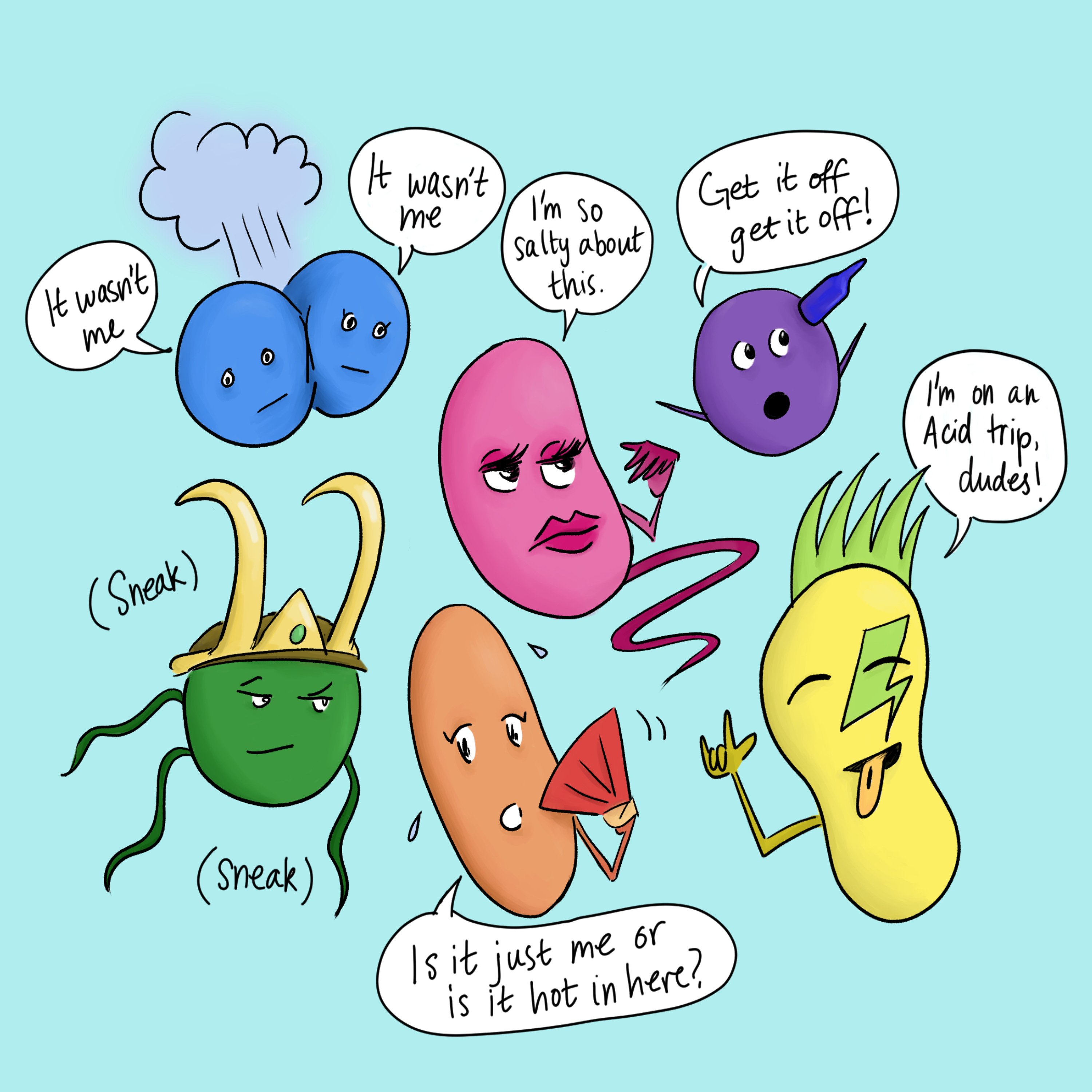
The discussion centers on Asgard Archaea, a superphylum discovered through metagenomic analysis of samples from deep-sea hydrothermal vents like Loki's Castle. These archaea are identified as the closest prokaryotic relatives of eukaryotes, possessing unique eukaryotic-like proteins and membrane protrusions that may facilitate symbiosis. Their discovery has profound implications for understanding the origin of eukaryotic life, supporting hypotheses that eukaryotes evolved from archaea through symbiotic events, potentially involving the engulfment of bacteria that became mitochondria. Cultivating Asgard Archaea is notably difficult due to their slow growth and dependence on symbiotic partners, but advances in genomics have allowed researchers to study them without isolation. Multiple phyla within Asgard, such as Lokiarchaeota and Heimdallarchaeota, have been found globally in diverse environments, with Heimdallarchaeota considered a prime candidate for the archaeal ancestor to eukaryotes due to its aerobic capabilities and genetic features. The research highlights how these microorganisms provide crucial insights into evolutionary history and the complexity of early life.
Hello listeners. Today Priyanka and I will be discussing one of the newest superfilms of archaea. That's right, Connor. We're going to talk about Asgard, Archaeota. Our story begins in 2005, Ralph Peterson, a geologist with the University of Bergen Center for Geobiology, along with his team sent off from Norway to discover deep sea hydrothermal vents near the Mid-Atlantic Ridge between Greenland and Norway. They were successful. The team also found indications of hydrothermal vents even further north from where they ended their expedition. These deep ocean hydrothermal vents typically form along mid-ocean ridges where two tectonic plates diverge. When water sinks through the porous rocks surrounding these vents, it is heated by the magma deep within the earth, causing superheated water to rush upwards through the vents carrying sulfide minerals. When this enriched water hits the icy cold ocean, the minerals form solids around the hydrothermal vents. These areas, rich with the essentials for life, coupled with a high diversity of temperature, provide an environment for diverse and unique microbial communities to thrive. Three years later, in 2008, Ralph set forth on a new expedition, accompanied by a multinational team of scientists aboard the research vessel, GeoSARS. Their mission was to discover the hydrothermal vents, which had eluded them on their earlier expedition. This time, they go 120 miles further north from their previous expedition. To what is, possibly, the largest deposit of sulfide minerals ever seen on the ocean floor. Thought to have been active for thousands of years prior to its discovery over a mile beneath the ocean surface, this field and its hydrothermal vents would become to be known as Loki's Castle. I love Loki's Castle. The researchers did such a wonderful job naming it, and it's anything but Loki. The name gives it an air of mystique, which is only amplified by seeing the pictures of it. Absolutely. We have included pictures in the show's description for those who are interested. It is remarkable, and named as such because it reminded the researchers of a fantasy castle. The vents have this layered look to them, spikes jutting upward from the ocean floor. They look crusted over with minerals and white bacterial mats, and they are super alien looking. These particular hydrothermal vents were also crucial to one of the most important phylogenetic discoveries of the 21st century. So far. So far, initially identified as Loki Archaea, we now have an entirely new superfilum, which we know as Asgard Archaea. Loki is exactly what you're thinking, named after the Norse god, not Tom Hiddleston the actor. But this also started to trend. All of the Archaea in this family are named within the Asgard Pantheon, like Thor Archaea, or Heimdall Archaea, or a Bray Archaea. I like it when scientists have fun like that. This superfilum is now recognized to be the closest pro-cariotic relatives of you, Cariots, meaning the Archaea we are talking about in this episode are the closest relatives of you, the listener. Asgard Archaea were discovered after researchers took gravity core samples from the deep sea hydrothermal vent in Loki's castle, after a metagenomic analysis, they found novel archaeolineages, one of which would become known as Loki Archaea. It wasn't until 2015 that the researchers were able to publish an assembled 92% complete genome of this organism revealing what they called and I quote, a host with a rich genomic starter kit to support the increase in the cellular and genomic complexity that is characteristic of you, Cariots. And quote, the author said that these results support the hypothesis that you, Cariots evolved from Archaea. Since this discovery, Asgard Archaea have been found elsewhere in sediments, soil, and marine water in addition to the hydrothermal vents around the globe. The members of Asgard Archaea have been found to possess a multitude of quote, "You Cariotic Signature Proteins" previously thought to be specific to you Cariots. For example, proteins that can remodel membranes to give them the ability to create protrusions to stretch themselves out. They were isolated from locations where there is very little or no available oxygen, so Asgard Archaea were generally considered aneroids. But actually, it was found that some of them can potentially grow with oxygen, so exposure to it doesn't seem to kill them, like in other anaerobic organisms. Some even seem to be centrophic, that is, have a mutually beneficial relationship with sulfur reducing proteobacteria and methanogenic Archaea. Both of which were found in the bacterial mats surrounding the deep sea vents. The first cultured Asgard Archaea was published in 2020 with the name Candidatus Prometheo Archaea Centrophicum MKD1. Honour, I can't believe you said that whole name. Can you repeat it for the audience? Candidatus Prometheo Archaea Centrophicum MKD1. Practice makes perfect, but it is a member of the phylum L'Ochiarchioda. This bug lives in symbiosis with either a methanogenic Archaea, a sulfate reducing proteobacterium, or both. And the name Candidatus is a provisional status reserved for species which are well characterized but uncultured. The researchers are using it here due to the difficulty associated with maintaining the strain under laboratory conditions. My favorite part of this publication, probably because I wasn't the person responsible for it, is that due to the slow rate of growth, it took researchers over a decade to enrich this Asgard Archaea, to the point where they could confirm its existence and characterize it. Like, imagine optimizing an experiment for 10 years. I'm sure they had some other things going on too, Priyanka. The symbiosis this Archaea has with its methanogen and bacterial partners is extremely important for their growth. Because while their energy metabolism is tied to hydrogen production, they can't tolerate higher hydrogen concentrations. Soforeducing bacteria utilize this hydrogen for, well, soforeduction. While methanogens utilize the hydrogen for carbon reduction and methane production. Symbiosis of organisms in the environment can be a complication when trying to isolate strains in a laboratory setting. If they absolutely require other organisms for growth, scientists need to identify what their centrophic partners produce and add it to the culture medium. For many strains, that remains a mystery. But that's not all. If a strain isolated from the environment doesn't grow in the lab, it could be missing a partner, but it could also be the temperature. The salinity, the pH, the carbon source, inhibitory components in the media, the partial pressure of gases, the presence or absence of oxygen, agitation, too much light or too no light. Basically, if figuring out how to culture a new organism can be really hard and overwhelming. That is true. Many studies into novel prokaryotes can die on the lab floor, so to speak. When the researchers are able to identify an organism in a complex microbial consortium, but are unable to isolate the organism for further research. It's unsurprising that a large proportion of microbes remain uncultured. Perhaps we should take a moment to clarify for the listener. How are researchers able to initially identify an organism, which they are unable to isolate in a laboratory setting? I'll try to make this brief, but it ties back to our first episode on the discovery of archaea. Oh no, not more taxonomy. So you remember the issues with categorizing different microorganisms, right? That the earliest classifications were based on morphology observations, which were then called into question once they began looking at the organisms based on their genetics. Right. Well, one of the earliest ways we were able to identify the presence of specific organisms within microbial communities was by looking at a particular gene, 16S, related to the incursion.
coating of ribosomes. However, these sequences can be difficult to extract for analysis if you don't already possess a sequence which closely resembles the 16S gene of the unknown organism. But within the last several decades, the rapidly decreasing costs and expanding availability of genome sequencing has led to mags. Mediginome assembled genomes, MAG, it might sound redundant, but we promise it's not. A mediginome is the DNA extracted from a collection of organisms which may not be able to be individually isolated. Instead of enriching for 16S genes, our expanded sequencing capabilities allow us to sequence parts of these genomes directly which can then be stitched together using a computer program. That'll love technology. An issue which was raised at the time of the discovery of low key archaea was whether this organism which appears to sit at a branching point between eukaryotes in archaea was real or merely a chimeric construct. The computer spit out after mixing the DNA sequences of a eukaryote and an archaea. The researchers had an indication that these weren't contamination from eukaryotic sequences though because they were in operons, a type of organization classically related to pericareotes and they appeared to be ancestral in their phylogenetic trees. But this cultivation of a low key archaeon was able to establish that the Asgard archaeota do exist and their taxonomic position between eukaryotes and archaea is appropriate. A fantastic development with implications to the origin of eukaryotic life. Indeed, many of our listeners may be familiar with the most traditional view of eukaryogenesis. A story in which one cell eats another but instead of digesting the cell it lives and becomes the mitochondria ubiquitous to eukaryotic cells. And if you remember, the mitochondria is the powerhouse of the cell. Yes, thank you for that reminder Priyanka. It is unknown if the first eukaryotic cells were a bacterium in an archaeon or two bacteria and who engulfed who and how they started cooperating. But there's a body of scientists who believe this origin was with a archaeon bacterium combination. However, we haven't observed any Asgard archaeota with this engulfing capability. Yet. Although that does open the possibility of alternative mechanisms for endosymbiot incorporation. The researchers noted, along with some beautiful photos taken using cryo-electron microscopy and transmission electron microscopy, these locular ciotoproduce membrane-based cytosol-connected protrusions and branch out in a manner unlike those observed in other archaea. These protrusions don't form elaborate networks nor intercellular connections like those observed in some species of thermophiles and helophiles. It is hypothesized that these protrusions may assist in the centrifuge between the locular ciotoproduce and its partners. And the researchers behind this first cultivation of locular ciotoproduce put forth what they refer to as the E3 model. Standing for entangle, engulf, endogenize. Ooh, that's a good alliteration. The basic idea is that one cell can send out these protrusions towards a centrophic organism in order to promote their growth around it, leading to a symbiosis between these two organisms. These tendrils could then entangle that organism, eventually leading to an engulfment, where one organism is absorbed into the other without it being digested, thus leading to endogenization. If you didn't quite understand that, don't worry, it's a lot to take in, no pun intended. In the podcast description, we've linked a video from the Research Institute, which shows how this process would work. You get more specific. The scenario being proposed involves a proto-ukaryotic cell, thought to be an asgard archaeon, engulfing a bacterium, which would later become the mitochondria. The powerhouse. Their symbiosis allowed the mitochondria to metabolize oxygen, which can be destructive to anaerobes, while providing energy to the host, which would in turn provide protection and nutrients to the power, I mean, the mitochondria. How about that? A win-win situation. Don't get too excited yet, Connor. There are issues with the proposed hypotheses, though, such as how the host archaeon would transition its membrane composition to one which resembles bacteria and eukaryotes. The second complication is the question of how the eukaryotic nucleus formed. Interestingly enough, one of the hypotheses proposed suggests a sulfate-reducing bacterium engulfed an asgard archaeon, which would then become the nucleus and the endomembrian system. In a second engulfment event, a bacterium would also be engulfed, which would then develop into the mitochondria. So in this hypothesis, there are three organisms involved. Well the engulfing and internal symbiosis between three organisms is a bit more complicated than involving only two organisms, but it is fascinating to think about. Okay. We talked about locarchia, originally identified in locarchia, but there are other phyla within the realm of the asgard, correct? Correct. We have several others, each named after various gods within Norse mythology. Thor Archaeota discovered incediments from the White Oak River in North Carolina. The next two were actually first reported in a massive deep dive into mags from locarchia castle, Yellowstone National Park, Arhospay in Denmark, and aquifer near the Colorado River, Radiata Pool in New Zealand, Tekatomi Island vent in Japan, and the previously mentioned White Oak River estuary. There are a handful of others, however, and at the time of our recording, they appear to have the Candidatus Satis. Wow. Asgard archaea really can be found all over the world. It's crazy to think about all the microbes we had no capability of identifying prior to mags. I agree. The researchers found locarchia in nearly all of the mags from these various locations. The researchers found Thor Archaeota in the Arhospay samples. The two new asgard were Odin Archaeota, discovered in the Radiata Pool and Yellowstone, and Hindall Archaeota, discovered in Loki's castle, White Oak River, and Arhospay. The only places they didn't find locarchia were those with Odin Archaeota. Actually. That's correct. That Odin really can hold a grudge, can't he? He really can. So what distinguishes these phyla from one another? Beyond the phylogenetic analyses, indicating that these are genetically distant enough to be considered different phyla, the Thor Archaeota appeared to be capable of both acetate production and sulfur reduction, while Odin Archaeota appears to be exclusively present in high temperature environments. The Hindall Archaeota appeared to be the only asgard phylum, capable of aerobic metabolism, and possessing at least three types of light activated redopsens. Redopsens is the protein, which signals the presence of light in our eyes. The researchers here believe this could indicate an evolutionary history of asgard archaeota present in light exposed habitats. Phylogenetic analyses point towards Hindall Archaeota as one of the best candidates for that Oh, so coveted position amongst prokaryotes to be the closest archaeal relatives to eukaryotes. This really helps us to understand the evolutionary history of eukaryotes, the age-old questions that have bugged scientists. Hindall Archaeota have also been inferred to possess the components of the aerobic respiration blueprint. This means a complete TCA cycle supported by an electron transport chain. This was presented in contrast to the other asgard that closest being locary archaeota, which possesses a complete TCA cycle, but it is thought to primarily function in the reverse direction for CO2 assimilation. Hindall Archaeota, by contrast, used the TCA cycle to fuel digestive or catabolic machinery. Unfortunately, there isn't much else we can add about these organisms without diving even deeper.
deeper into biochemistry. - Well, I suppose we can't ask for much since these are mostly uncultured phyla and the genomes obtained through mags aren't complete in and of themselves. - Exactly. So, within this episode, we have covered some of the most recently discovered and least well-known archaea and what they can tell us about the history of life. - Now we'll throw it over to our fellow podcaster colleague, Dr. Alex Phillips to have a discussion with our expert, Dr. Brett Baker, about Asgard, Archaeota. (upbeat music) - Hello, everybody. I'm Alex Phillips, a writer for Archaeocast and a postdoc in the lab of Aving Schmidt, a Duke University. I'm excited to be running our interview for the Asgard Archaeota episode of Archaeocast with our guest, Dr. Brett Baker. Associate professor at the University of Texas at Austin in the Department of Marine Sciences and the Department of Integrative Biology. Dr. Baker earned his PhD from the University of Michigan and Earth and Environmental Sciences and then served as Senior Research Fellow in Marine Science at UT Austin before joining the faculty there in 2015. Since then, he's earned awards such as the Sloan Foundation Fellowship and Ocean Sciences and the Seamons Early Career Award for Microbial Ecology and Evolution. Well, Dr. Baker's lab has played a key part in discovering the new Asgard Archaeota lineages, work in his labs associated with many aspects, submarine microbiology, and I'm really excited to dive into it all today. Thanks for joining me today, Dr. Baker. - Yeah, happy to be here. - So let's get started. How would you describe your research? I gave like an extremely basic overview, but yeah, what do you tell people when they ask like what you two? - Yeah. So I would say that's always like, whenever a family member who is in a scientist asked me, I always instantly get feel overwhelmed because it's hard to just sum up in a few senses. Well, I'll give it a shot. My research tries to understand the full diversity of the microbial world. And how they evolve to be what they are and how they interact with each other and so their ecology. So we do a lot of work in using primarily used genomics because most of what is out there hasn't been cultured and laboratory. And so we use approaches that don't rely on trying to grow things in a lab. - Very cool. Well, that I also do similar things. What kind of methods besides genomics do you? So I know that you do both lab work, field work and computer work. What does the field work look like? - Yeah, the field work is primarily going out on research vessels. So going out and they're commonly referred to as cruises, but they're certainly not vacation type of things. They're more of a work atmosphere. So they're we like to call them expeditions. So we mostly go out on large research vessels that hold 50 to 75 people and go down and we collect samples using remotely operated vehicles or submarines, RVs and submarines. And we mostly have in the last 10 years collected samples from in the deep sea. So like talking 2000 meters. So miles deep in the ocean around mostly around head and thermal vents primarily, but we do other things like yeah, from oil spills, different things like that. But yeah, so that's like our field work is very much based on having access to three expensive boats and so's like that. And when we get back, we get the samples. We extract all the DNA and we literally spend years analyzing. So we sequence all the DNA that comes from these samples and we spend years analyzing it. So we, you know, and that is all sort of computer based. Like I would say 90% of what my lab does is on a computer. Like we use very large sugar computers here in UT. We have a record computers in our lab. We do other types of works. So we do a little bit of microscopy. We do a little bit of culturing. But that hasn't been the focus recently for various reasons, but yeah, so that's a lot of computational based work. Yeah, very, very cool. So how did you get started doing that kind of work? And how did you get started on RTS specifically? Yeah, so I mean, my interest in RTS goes back to, so when I was not a grad, they had only really been a known about for 20 years, I guess. And what fascinated me about RTS is that so little is now. Right? And so one of the motivators to me and science is exploring the unknown. And if you look at, I mean, there's been, you know, 100 plus years of work that looking at bacteria, but RTS a large portion of the micro university, there's very little now. And so I got into that as an undergrad and then the lab I worked in at Berkeley sort of developed these techniques to reconstruct genomes from samples. So using all these, what I call the management, I'm like using these approaches to do all this was developed. I was involved in it from the beginning. So it sort of, I had, it was, I was, I was head the advantage of being involved in developing these approaches and then using them since the beginning. So yeah, so that's, I've, just got sucked in in various ways. It's become my life. Yeah. Yeah. This interview is for the episode of Ascorder, Kiyota. That's really, really big things in our KIA right now. And similarly, if you've been there, kind of since the beginning. So, do you want to tell us a little bit about the story of your involvement with them in particular and what they're, they're just, they're in general? Yeah, that's, that's, it's a crazy story, right? So I started my lab here at the University of Texas interested in going out into the ocean floor and, and using these new approaches that I'm just, I'm just, to see who's there and what they're doing. 'Cause really, I was sort of surprised when I started my lab that really no one had done much of that type of work. There was really just a handful of papers that had done management on my skin or in sediments. And so I said, okay, I'm, that's where I want to go. And we started reconstructing genomes from various places, on getting samples from cleverness of things. And we, we, we started, we could start a genome so I'm gonna realize that there's, when we added these genomes to the tree of life, there were genomes that kind of shocked me how different they were from anything else that had, that had been described before. And so we were sort of running a paper at one of these groups that we got from an estuary in North Carolina. And we, we were sort of running a pretty basic paper saying like, here's the genome, here's the size of the genome, here's the mouth of all pathways it has. And then as, as my grad, my first grad student was writing that paper, this paper came out in nature, describing this group called Loki Arquia from Loki's Castle, which is in the North Atlantic. And I literally, I tell the story as I ran into her office because what Loki was supposed to be was the closest ancestor to osteocaryons. So all like sexually passed animals or anything, see the naked eye. These were proposed to be sort of the missing length in the evolution of eukaryotes. And I thought that it looked very much similar to what we had and sure enough, she added the Loki through our trees and realized that we had essentially something very similar. So we ended up calling our group Thor Arquia to go along with the Norse mythology theme. And that literally changed my research focus in a few days, like what my lab did, completely shifted. And it wasn't sort of a conscious choice, it just realized that I was telling people what we were working on, all the stuff that I sort of planned to do in my lab became not boring, but less exciting. I started talking about these asguards and I literally got to get shivers in my spine because I was so excited about what we had found and what the potential was. And that's still the case, like I still sort of say now that a lot of people working on asguards, I'm like, man, maybe I should move on to do something else, but then like when I talk about it, I might just get excited. So that's obviously just a good, so yeah. So we ended up collaborating with the person that discovered Loki's high-tech mom, but Upsilope University at the time in Sweden. And we've been working with him since, let's been, I don't know, seven, eight years down. - Do you want to give us kind of a highlight reel of the exciting and interesting things about asguards or Kyoto? - Okay, so there's proteins in your care else that are to call acting. and acting.
inform these filaments within a UKRA, they reserve all sorts of functions in terms of how a cell of shape, and how it can move, and different things. That one of the proteins that you always find in Asgard is active, and what we call locale active. So it's sort of first on a locale, but all the Asgards have them. So there's been cultures of locale are here, where they've actually shown that these acting sort of form these filaments, and then they make these sort of arms that come out of the cell. And it's not really entirely known what these arms are for. Or you can call them protrusions, there's not really arms. But they're essentially just protrusions, or things that stick out of the main cell. It's thought that these protrusions may actually grab other organisms and form an interaction with them. So all the sort of things that go along with acting, so how the acting proteins are related within a cell with profilins and genocence are all sort of present in Asgard too. And if you look at those proteins, people have taken those proteins and expressed them in a lab and looked at their function, they essentially behave like those in an occurrence. What do you think the next big step is in studying Asgard or Kyoto, and what kind of techniques are necessary for it? Yeah. So there's two things, right? And I alluded to one of them already. So one of them is really easy to sort of summarize. I want to do a lot more difficult. The first one that being easy is, I think that Loki Arquia was the first one that was found. And we've sort of learned, as we've expanded the diversity of Asgard's, we've realized that actually Loki's are pretty not the closest organism to Eukaryotes. It's in this group called the Heimdall, Arquia, specifically the Hodr-Kalees. At the moment, there's only around 12 published Hodr-Kalees, genomes. We have my lab now around 75 or so that we're looking at. And we're finding that these organisms are-- I mean, Loki really changed what we thought about things. The Hodr are absolutely mind-blowing in terms of everything that we look at. And we're still sort of working a lot of it up. But the main-- so I think that once we find what Hodr's interactions are, so my suspicion is that within the next couple of years, we will find a hot interacting with a bacterium. That will be a real game changer, because I think that is going to really tell us a lot about what little biological events that led to the origin of Eukaryotes. That's the sort of easy one. It's a harder one, and I think we're starting to see it a little bit. And this is something that I always had in the back of my mind when I started doing this is like, well, there must be real applications for Asgard's in terms of being a biomedicine. Maybe it's-- I'll just leave it at that, right? I don't. I can't fully-- and people would say, there's going to be some huge breakthrough from understanding the biology of Asgard's that will be something that can be really applied to broader biology, right? And I think about-- when I say broader biology, I say Eukaryotes, people that study plants and animals, right? And one of the things that we found was looking at viral defense systems, this is so important a lot now. So how Asgard's deal with being infected with viruses and how they defend themselves from being harmful to viruses, we did as we went, and we did like a broad search of defense systems that were known in Asgard's. And we found a lot. I mean, as many there as there are in bacteria, and we look at these defense systems, some of them are clearly very similar to what Eukaryotes use. So we're wondering if there's some biomedical-- maybe therapeutic, anti-viral-- things that could come out of Asgard's and hit this point in such a hand-wavy-- and I have no idea. This is an example of this. I feel like there's going to be something else that I can't even imagine, right? Going back to my imagining. That's where it is going to come from. If you look at all the applications from bacteria, and people are trying to develop anti-viral therapeutics from bacteria, well, Asgard's are more closely related. Carehouse, there's got to be something that's going to be really huge. So I can example that CRISPRs are anti-viral system that are not used for gene editing. I don't know that gene editing will be compromised guards, but people are looking at this. There's companies that are looking at it. So yeah, maybe we'll see if future will tell. Yeah, it's super exciting to think about. Yeah, it is really exciting to think about. It's so cool being the early days of saying, we don't have them-- we have them kind of in culture. And these are in-person, in-person cultures. A lot of the focus is on the evolutionary story, which is incredible. It's that big missing link that no one ever really expected to find. But we will get to a point where we are studying them for them more. And yeah, I agree. If their molecular biology is so similar, there will be insights we can gain that we will not have been able to gain in our other systems. Like I study solvable low-bests, right? I always argue, it's the genetic system in the archaea that's closest to you, carry it still. I love it. Not to be the case, because solvable low-bests is very idiosyncratic. And when we-- I think we will finally get there. We'll have systems in the lab for growing these things and instead of getting them better. And I'm really excited for that. Yeah, we're really excited for that. Having a-- I mean, I don't know if we're going to be working on just someone as girls, but yeah, it's an obvious thing to do. It would be, yeah, that would be huge. Maybe something. What is your favorite thing about being a scientist? Yeah. You know, so that change is for me. I mean, early on, I would say that the discovery, finding things before anyone else, sort of exploring the unknown-- I mean, that's still a big driver for me. So we pole a genome out of a sediment from 100 meters below the surface of the ocean. And it's a genome that no one has seen before. It's a entirely new file, a new branch of the tree of life. That's super exciting still. But lately, it's gotten more me. Like, you've sort of done those things. So now I get excited when I see people that I'm mentoring doing this for the first time. That gets me excited. Like, I guess I'm getting older. And I'm like, oh, yeah, I've sort of done all this before. And like, yeah, yeah, yeah, yeah. Motion paper and blah, blah. But going in on-- and I see one of my students get excited about it. That is actually really-- and this is really just like in the last year, I noticed that I get energized by coming and lab and talking to students. So yeah. That's really cool. Ventorship is such a big part of the process. Yeah, I didn't appreciate it until recently. But I think it's maybe something that's getting older. And you just appreciate more. What are some of the challenges of your research and your methods? The biggest challenge for Asgard stuff is their low abundance. And so if we go out into any environment and say, let's just take-- we can start as an example of this. And this sort of translates everything that we do. They're almost always less than 1% of the community. So if we pull off, we go in and this translates. If we go in and we reconstruct 1,000 genomes, we'll get 10 asgard. And that means anytime I talk to somebody who does molecular biology or someone here that's very much interested in the origin of stilia, any carryouts. And they think that the last common answer to your carryouts had stilia. So do Asgard's stilia is something we're looking into. They say, well, can you give us a culture? Can you give us some cells? Like, no. I wish we could. So if there was a way, even the cultured organisms, that you can't-- you grow them for six months, and you can't even get enough cells to extract proteins to do proteomics. It's just-- and that's part of the reason why no one had seen these things before, obviously, because they're such low abundance. So we're constantly dealing with trying to get enough cells when it's--
enough. Yeah, that's the biggest challenge that the moment. Yeah, hopefully, like it's better over time. Yeah, I mean, we're still sort of, and every time I say this, like, anyone that's like, if you're working on an environment and you find a sample that has ads guards that are 5% of that sample, please let me know. We would be, it would be a, we would, we have lots of funding to go in and do all kinds of amazing things like, yeah, it would be great. You heard it here, everybody. Yeah. Good collaboration opportunity. Yeah, we're actually going out at this one cool thing. So we're actually planning on the Schmidt family as the CEO of Google has a research vessel, and we're in negotiations to go and try and go on a cruise and bring a sequencer with us and do a transect of the place. So in the Atlantic that we suspect have lots of potarchy, these lots of these ones are related and literally pull out samples and do laundry sequence and dozens of samples trying to find the sample that has a lot of them and focus on doing that. So it'll be a lot of fun to go on this cruise and do sequencing real time. And like it hasn't noticed, I think everyone's taking sequencer to see and sequen samples, you know, as you get on and see who's there. And like, so we're hopeful that we'll find a sample that has a lot of a bubble seat. Yeah. Oh, that's really exciting. Isn't that, isn't that one of the big challenges though that like a lot of mycology methods are hard on a boat, on a vessel, I'll say. Yeah. Yeah. I heard that you can't even take a centrifuge at all. You it's there's all kinds of safety issues, associated with just taking a center to use. And that's actually going to be the biggest challenge. Like so then we're getting one of these we're buying one of these prometium. It's a metal core signal signal machine. And you know, it's like quite their size of the red buffer bread essentially. And they can, I wasn't across with the early versions, but the new ones have. They can get quite a lot of reads from them pretty quickly. But actually the hardest part is going to be doing the spinning down and doing the centrifugations get to the DNA extractions full figured out. Yeah. So maybe just put on a big rope and uh, actually my, I hope you're just in my lab doing that centrifuging. They just they literally took two, 15 or two to try to roll on and spawn. I just need to spin down the sediment. Yeah. Yeah. We'll figure out a better way this time. Wow. That's really exciting. If you ever have any space in the extra hands, you know how to reach me. Yes. Sounds good. Yeah. Do you have any advice for students, people early in their career who want to study Arkea, want to study Asgard? Yeah. And then I'll wrap that in with is there anything you wish you had known before starting and if you have any parting words for the audience? Yes. My advice um, if you're going to the sciences, do not get discouraged by failure or rejection because that is that anyone who is successful deals with that on a daily basis, right? So let's just take as an example that everyone can relate to. Let's take LaRod James who will be always remembered for how many wins he had or how many baskets he shot, but he if you if you also look at the number of baskets that he missed or how many games he lost, he had to have a lot of failures to have a lot of success, right? And so I see a lot of students get disappointed by oh, I didn't get that fellowship or I didn't get in a grad school to forget it to move on just keep going like you can't let that discourage you something I wish I would have known. That's a hard one. Something that I hadn't appreciated until I started doing I guess the learning how to write and probably the single most important thing you can do is learn how to write ball and the only way you can learn how to write well is by practicing it. Yeah, I mean if you want to become successful in science, if you want to get funding, if you want to get published in good journals, you got to learn how to write. I mean, so if there's someone that's starting out, I'm sure you that's obvious, but somebody's younger, that's really I hadn't appreciated that until I started getting into things. I want to say this because I believe that it's my instrumental private foundations have been huge in supporting Asgard Research. So other government agencies, you know, these are high sort of these like looking for defense systems in Asgard. These things are high risk and a lot of like common funny agencies haven't done so the science foundation and the Gordon and Buddy Moore Foundation have been huge and they've funded my research entirely now. So they're yeah, I mean, so I'm told about it. Yeah, that's good for real. Yeah, make sure if you want to study weird stuff especially like we do. Don't just focus on NSF, practice your writing, go for those Simon's foundations and a grand school. Go for Gordon Buddy Moore. Yeah, that's great. Awesome. Cool. So thank you very much. Yeah, let's go. Hello, this is Dr. Connor Hines. Thank you so much for joining us for another episode of the Archaicast. This episode was written by yours truly Dr. Connor Hines. Fact checked and edited by Priyanka Chatterjee, Dr. Alex Phillips and Theopirados. Archaicast was created and produced by Priyanka Chatterjee, Dr. Connor Hines, Dr. Sound editing and mixing by Dr. Connor Hines. Our intro music is an excerpt from Down By the River by Darnel Cole in the Vive. Audio production done by Jeet Chatterjee. The Archaicast cover art was designed by Priyanka Chatterjee. Special thanks to our interviewee, Dr. Brett Baker from the University of Texas at Austin and the University of Pennsylvania for audio equipment and the post-shorted Bisson, Vaughan and Schmidt Labs for support. Thank you to the Archaic Power Hour for this platform. You can read more about this initiative at the website, Archaicast.page. And special thanks to you for listening.
Podcast Summary
Key Points:
Asgard Archaea, a superphylum discovered near deep-sea hydrothermal vents like Loki's Castle, are the closest known prokaryotic relatives of eukaryotes.
They possess eukaryotic signature proteins and unique cellular protrusions, suggesting a role in the evolution of complex life through symbiotic relationships.
Cultivation is extremely challenging due to slow growth and symbiotic dependencies, but metagenomic techniques have enabled their study without isolation.
Multiple phyla exist (e.g., Loki-, Thor-, Heimdallarchaeota), with Heimdallarchaeota being a key candidate for the closest archaeal ancestor to eukaryotes.
Research into Asgard Archaea supports models of eukaryogenesis, such as the "entangle, engulf, endogenize" hypothesis, involving symbiotic engulfment of bacteria.
Summary:
The discussion centers on Asgard Archaea, a superphylum discovered through metagenomic analysis of samples from deep-sea hydrothermal vents like Loki's Castle. These archaea are identified as the closest prokaryotic relatives of eukaryotes, possessing unique eukaryotic-like proteins and membrane protrusions that may facilitate symbiosis. Their discovery has profound implications for understanding the origin of eukaryotic life, supporting hypotheses that eukaryotes evolved from archaea through symbiotic events, potentially involving the engulfment of bacteria that became mitochondria.
Cultivating Asgard Archaea is notably difficult due to their slow growth and dependence on symbiotic partners, but advances in genomics have allowed researchers to study them without isolation. Multiple phyla within Asgard, such as Lokiarchaeota and Heimdallarchaeota, have been found globally in diverse environments, with Heimdallarchaeota considered a prime candidate for the archaeal ancestor to eukaryotes due to its aerobic capabilities and genetic features. The research highlights how these microorganisms provide crucial insights into evolutionary history and the complexity of early life.
FAQs
Asgard Archaea are a superphylum of archaea discovered in deep-sea hydrothermal vents, recognized as the closest prokaryotic relatives to eukaryotes. Their discovery provides crucial insights into the evolutionary origins of eukaryotic life.
They were first discovered in 2008 at Loki's Castle, a hydrothermal vent field located over a mile beneath the ocean surface near the Mid-Atlantic Ridge, after analyzing gravity core samples from the site.
Researchers use metagenomic assembled genomes (MAGs) by extracting and sequencing DNA from environmental samples, then stitching sequences together computationally. This avoids the need to culture organisms in a lab.
Culturing is difficult due to slow growth rates, symbiotic dependencies on other organisms, and specific environmental requirements like temperature, salinity, and gas concentrations. It took over a decade to culture the first Asgard Archaea.
The E3 model (entangle, engulf, endogenize) suggests that an Asgard archaeon could use membrane protrusions to entangle and engulf a bacterium, leading to endosymbiosis and potentially the origin of mitochondria in eukaryotic cells.
Key phyla include Lokiarchaeota (found in hydrothermal vents), Thorarchaeota (capable of acetate production and sulfur reduction), Odinarchaeota (present in high-temperature environments), and Heimdallarchaeota (capable of aerobic metabolism and considered a close relative to eukaryotes).
Chat with AI
Loading...
Pro features
Go deeper with this episode
Unlock creator-grade tools that turn any transcript into show notes and subtitle files.
 PodcastTranscript AI