The Marketplace episode covers two major economic themes: the surge in gold prices and the expansion of AI infrastructure. Gold has reached record highs as investors seek a safe haven amid global instability, and central banks are increasingly holding gold over U.S. dollar assets, signaling a shift in reserve diversification. Meanwhile, durable goods orders rose in November, boosted by AI-driven business spending on equipment like data centers and computers, though trade policy uncertainties persist. The AI sector itself faces public skepticism, with concerns about its psychological impact, academic dishonesty, and local opposition to data centers over issues like rising energy costs. The episode also explores the physical infrastructure of AI, visiting a data center in Los Angeles to illustrate the high energy demands and loud, hot environments required to support computing power. While data centers are crucial for the AI-driven economy, their growing energy consumption—projected to nearly double by 2030—poses challenges for power grids, though industry experts argue that efficiency improvements and increased energy supply can mitigate these issues.
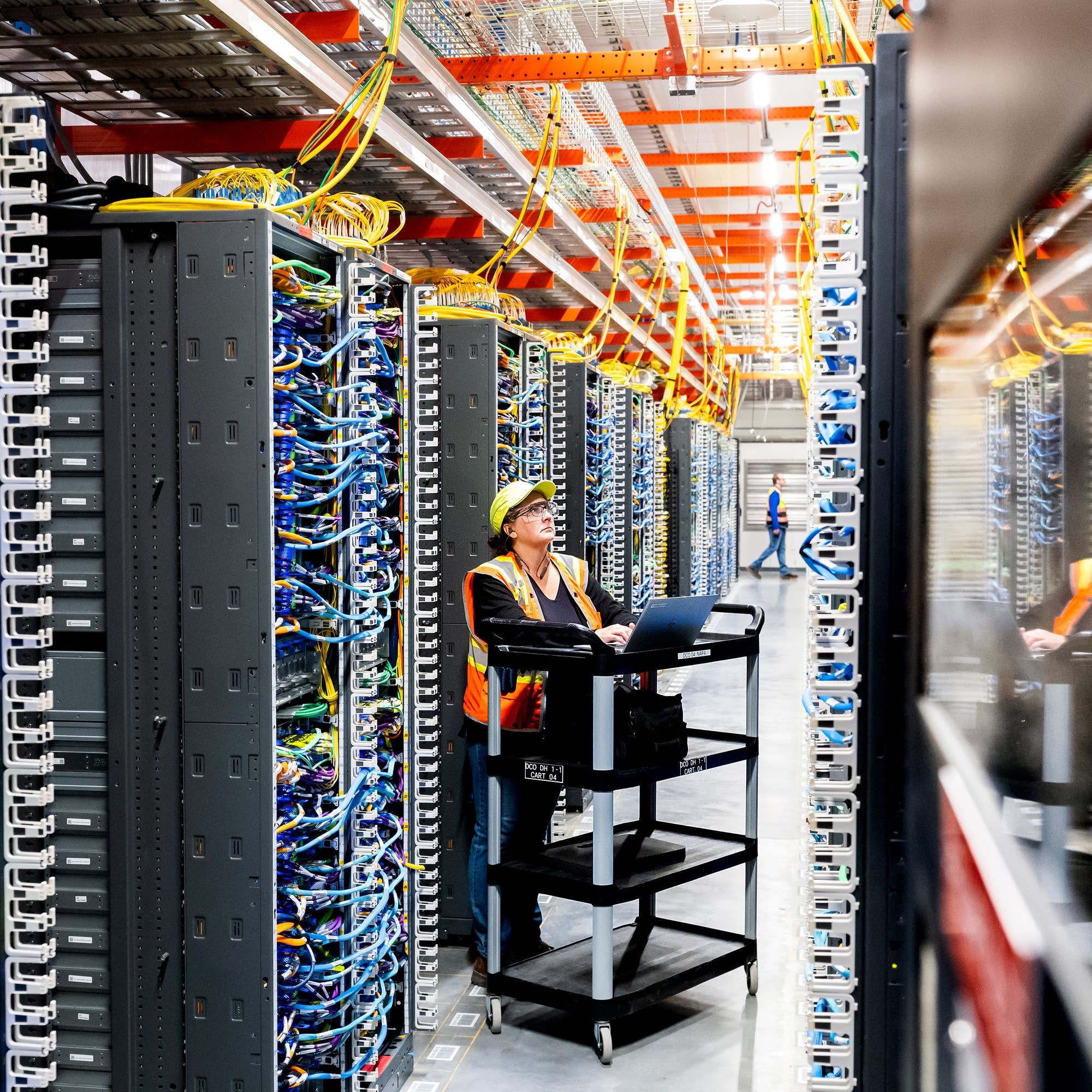
On the program today macroeconomics in the two flavors gold and AI from American public media this is Marketplace in Los Angeles. I'm Kai Rizoli. It is Monday today. This one is the 26th of January good as it always is to have you long everybody. We are going to begin today with a story that's not really about the story that you think is going to be the story. I know but stick with me I'll go slow. Gold has been and there's really no other word for it. Simply soaring. Futures topped five thousand at dollars an ounce over the weekend. First time that has ever happened and five thousand and change per toy ounce is almost twice what gold was just a year ago and that's been happening and here's the twist as it's been happening gold has started to displace dollar denominated assets in the holdings of central banks around the world. Rotors reports gold now slightly out values treasury bonds in those holdings and data from the IMF shows US dollar assets now account for less than half of those holdings in absolute terms even as gold has risen sharply to make up around 28% of those holdings. That is exactly what you might expect to see happen. If US dollar we're losing its appeal as a safe haven go to marketplace Mitchell Hartman gets us going. Gold has been edging ever higher partly because investor stress has says Samir Samana at the Wells Fargo Investment Institute. There's just a very high level of things about all the things that are going around the world. Tariffs and trade wars geopolitical tensions in oil producing regions rising government debt across everywhere. I think a lot of investors are looking for a port in the storm and investment that's outside financial assets right which end of anything like stocks and bond gold is one of the things they see as being money good. Foreign central banks have been buying up gold too. That's partly a defensive move a hostile government can slap on sanctions but it can't seize gold out of another country's vaults. The trend took off after Russia invaded Ukraine in 2022. This rise of gold in central bank holdings doesn't necessarily imply they're selling off US dollars and treasuries says Jennifer Lee at Bank of Montreal. I don't think it's sell America that's a bit strong but just maybe diversifying away a little bit from American assets and going into other areas like the euro like the yen. There's another factor at play here says J. Hatfield at infrastructure capital advisors something that one should never ignore in markets which is momentum things go up then they go up some more. Not just gold but silver copper other metals like lithium are in a momentum rally. It just becomes every invest in the world saying oh that's going up all by some. Hatfield says the problem with momentum rallies is it's really hard to predict when they'll peter out. I'm Mitchell Hartman for Marketplace Wall Street today all three major indices moved higher perhaps expecting good things as big tech companies start reporting profits later this week speaking of momentum as Mitchell was. We will have the details when we do the numbers. No look now but we were graced with some more shutdown delayed government economic data today. Durable goods orders for November this time that is orders for big expensive things meant to last three years or more. Your machinery your airplanes too. They were way up in again it was November but is this a blip or more significant Marketplace and Nancy Marshall Gensel reports. New Durable goods orders shot up more than five percent in November after falling in October. Now you can chalk a lot of that up to a surge in bookings for new planes from Boeing. Those numbers are turbulent but if you exclude the whole transportation sector new orders were still up a half percent in November. Not a blip says or in Clatchkin an economist at nationwide. When you look under the surface just definitely signs that business spending is up. Clatchkin says a big chunk of that spending comes from AI for data centers and computers orders for machinery were also up Richard. Shazel is an economist at the investment firm William Blair. He says factory owners put off buying new equipment for years. So the at the plant equipment machinery they have is is quite old and they need upgrading to Shazel says some companies are upgrading now because of more generous deductions under President Trump's new tax law. But other Trump administration policies on things like tariffs and disputes over Greenland they're still causing uncertainty which largely helped back Durable goods orders last year. Bernard Yaros is lead US economist at Oxford economics. Uncertainty still going to remain a corrosive on business investment but I would say that there's still a lot of other forces at play that are positive for equipment orders going forward. Yaros says those positive forces will win out unless we go back to sky high tariff rates that hold businesses back. I'm Nancy Marshall Genser for Marketplace. Here's a not so random fact about artificial intelligence in the US economy. It comes to us from the Federal Reserve Bank of St. Louis AI in all its components. So after our equipment R&D and last but not least all those data centers that are being built added just shy of one percentage point to gross domestic product in the first three quarters of last year. Now one percent does not sound like a whole lot I know but in a $31 trillion economy that is real money. So of course Americans are thrilled with this new technology that is upon us right? Well not exactly. Generative AI has yes been adopted at a dizzying pace but plenty of people are still uneasy about it whether it's boosting the economy or not. We ask Marketplace Megan McCarty Karina to do a vibe check. It's hard to keep a classroom full of college students engaged these days. So Professor Enid Baxter Rice takes her outside. I had class in that tree down there in November. For 20 years she's taught cinema and technology at California State University Monterey Bay and for a while now she's noticed some troubling changes in her students as smartphones social media and short-form video have become ubiquitous. I saw a huge amount of distraction. I saw that they weren't socializing as much and I saw that they had more anxiety. Now she's contending with a new disruption. One day I turned on my computer and there was chat GPT available on the dashboard for free. Last year the Cal State system made a 17 million dollar deal with open AI to provide chat GPT to half a million students and faculty whether they want it or not. We're being told if you don't teach these kids this technology it's just going to be another way that you know everything's working against them succeeding. But Baxter Rice is already noticing unsettling effects students cheating on papers of course but also a sense that people on campus are struggling psychologically with the new technology. I'm concerned I'm I'm really scared. What's happened to young people over the past 15 years is is scary enough and then adding this technology to the conversation is really frightening. The tech industry is racing toward a future that doesn't sound great to a lot of people. Recent data from the Pew Research Center show Americans are much more concerned than excited about AI and in communities across the country data centers have become a lightning rod. Local opposition has already shut down dozens of projects. Presidents in Hobart, Indiana outside Chicago have been protesting a proposed Amazon AI data center for months. I got in touch with a couple of the organizers Angelita Soriano lives across the street from the 700 acre site and Barbara Cotellas lives about a quarter mile away. They've been distributing yard signs going door to door even sponsored a billboard at a busy intersection in town. It's definitely uniting people together regardless of party lines for share. I'm a Republican and I've met many nice Democrats doing this. It's a quality of life issue really. They worry about noise, pollution, traffic, declining property values and strain on the power grid. Electricity prices in the area have already gone up an average of 26% in the last year and they doubt the benefits of AI will make up for it. It's kind of being like forced down our throws at I open Google. There goes automatically AI. I open a Microsoft word on my computer. AI is on there. You can't even opt out of it. It's like what do you do? Just stop using your phone and not just go back to what a year ago when you just did a regular search. How hard is that? That's what we can do. In early January after an hour and a half of public comment universally opposing the Amazon data center, the Hobart City Council voted to move forward with the plan which includes a $47 million payment to the city and a promise to cover the additional energy infrastructure it would need. Big tech has some pretty big trust issues to work through with Americans after the social media era and it sure doesn't seem like the industry is trying too hard to disabuse consumers of their fears. Whether they're hyping products to investors or earnestly concerned, we've heard leaders speculate about AI obliterating jobs, substituting for relationships or wiping out human civilization. I feel like a lot of people in the field in San Francisco don't really understand how different the world is from the Bay Area. Spencer Kaplan is an anthropology PhD candidate at Yale who studies the culture of the AI industry which he says is more philosophical than other corners of tech. Many researchers are deep into intellectual movements that prize reasoning out loud about big existential questions like how to save the species from rogue AI. I mean one could just say well why not just not work on the technology if you think it's going to destroy the world. Mm hmm. Yeah. Why not? I do think there is a sense of inevitability in the field about AI that if I don't work on it then someone else will. He says many who come off as doomers are also extremely excited about the tech. It's a contradiction that feels natural in their world even if it doesn't to the rest of us. I'm rooting for natural intelligence. That's what I'm rooting for. That's Professor Enid Baxter Rice in Monterey again and I've got some news for her. She might want a route for artificial intelligence at least a little. So I brought some documents that I actually had a chatbot helped me put together just to show how much you're in this for. She's vested in California's public employee pension which is heavily exposed to AI from index funds to individual stocks to infrastructure funds and real estate trust tied to data centers. Does it concern you that you're sort of your personal future is invested in kind of the the success of this whole thing? I mean it's just really distressing. I'm now I'm part of another system that I haven't had any input into and it's going to possibly drastically affect people's lives. Whether the AI industry keeps booming or not I'm Megan McCarty-Carrie-No for Marketplace. Coming up. The evolution of data transfer is pretty remarkable. Also gets pretty loud and pretty hot but first let's do the numbers. Down industrial is up 313 today 2/3 1% 49,412 the NASDAQ had at a hundred points about 4/10% 23,601 this and P534 points about a half percent 69 and 50 some of the big AI players out there in video dropped 6% Broadcom supplier of semiconductors and software increased 1.5% micron technology dropped about 2 and 6/10% bonds up yield on the 10 years you know down 4.21% you're listening to Marketplace. This is Marketplace I'm Kai Rizdal we're going to continue with the thread of Megan's piece now artificial intelligence and to do it do me a favor and picture for me if you would a data center. What does it look like? We are sitting in actually what they used to call the terminal annex for the US Post Office. Well whatever you imagine it's probably not an historic building smack in the middle of downtown Los Angeles right? This building was built in 1938 and it was used to transport all of the mail off the train and then send it on its way. How much the love that in 1938 they built this building for information and transfer of data and all this jazz and now you're doing the same thing come on. I know the evolution of data transfer is pretty remarkable. My link is with the person I'm talking to is the chief revenue officer of a company called Corsite. It owns 30 data centers across the United States three here in Los Angeles and they're building more because as you've heard the artificial intelligence infrastructure that so much of this economy is betting on right now and that we talked about last week is getting perilously close to being too big to fail depends on data centers. Lots of them being built all over this country powering we are told our economic future. There are something like 5,000 data centers in the United States right now. Some like the one Miley and I are standing next to repurposed office buildings you walk past every day. So we're doing some special coverage this week about AI and you and the infrastructure being built to run. So yes we'll start walking. Yeah so we're going to show you our LA three facility. This data center campus includes that old post office building where we checked in. It's hardwired into a brand new building right next to it that opened in 2020 and this is a 18 megawatt purpose built facility specific for high-performance data center applications. That's Eric Delapeña also with Corsite. So people think as we get into the elevator people think data center right now in the common parlance and it's some ginormous building out in the middle of like Virginia or Iowa or or or something. That is not this. Correct. There are different kinds of data centers. We you're hearing hyperscale data centers major AI built data centers. Those are focused on all compute and that compute can kind of sit anywhere in the US. Compute. What is that? Compute is just like thousands of thousands of computers all in sync all supporting whatever the business requires. You talk about it like it's a living being which is mildly terrifying. I'm just saying. Those hyperscale data centers the ones being built by AWS and Google and Microsoft are mostly training AI models. You want Microsoft co-pilot to get better? Well that's got to happen somewhere. Those are single tenant buildings. It's all Microsoft. It would be all Google and those can sit somewhere where there's a low cost of power, low cost of real estate but they're connecting back to the Google network or the Microsoft network. This data center is not that. The infrastructure of the AI economy is being built by a lot of different companies. Corsite is what's called a co-location provider. All kinds of businesses, banks and social media platforms and hospitals. It's kind of like an apartment building for computing power. You do not have here in Los Angeles. Certainly a low cost of real estate. You do not have a low cost of power. So what's the benefit to being here? Because we have one of the largest user populations that sit here in Los Angeles that need access to all. When you're using your phone and you have access to all the different applications on your phone from whether you're depositing a check in on your Wells Fargo application or you're ordering Uber or whatever it might be, that is all being accessed from a data center like Corsite. It's easy to forget in this hyper connected economy of ours that the internet is basically and not over simplifying too terribly much a series of tubes. A network of cables and wires going all over the planet under oceans as well. Plugging into data centers like this one. Let's get inside and see these cabinets. I hear a vague hum, right? Is it gonna be loud in there? All right. Okay, well that's you know that's why we have crack audio engineers on the staff here at Marketplace. So down a windowless hallway and through a locked door we walked into a sterile-looking room with rows and rows and then more rows of metal cages. Oh, it's hot too. It's really hot. This is an operational computer. The amount of energy coming into this building is enough to power a small town thousands of homes. Best guesses are that about a third of the energy that data centers use goes to keeping all these computers cool. We're in the hot, hot area of the room. Right. There's a hot island cold-out configuration which is done for efficiency purposes. If we put you in the cold-out, it'll be below 80 degrees. We keep the cold-out around 75 degrees. This is insanely loud. Yeah. And it's just computers. And these are just all computers running right now. That's insane. So this room is going to have a lot of infrastructure that CoreSight provides to support powering and cooling the servers that you see, racked and stacked across all of the rows that sit inside this room. So fundamentally you're the landlord, right? Correct, right? I mean, is that the analogy? Yes. A lot of the focus on data centers right now is on those hyperscale projects. And you might not think you're using AI if you're not, say, asking chat GPT what you can make for dinner out of what you have in your fridge. But the more AI is integrated across the internet into the processes of your bank, your employer, your health care provider, the more data centers like this one that we are going to need. My guess is CoreSight wants to build. You've got to get bigger, right? Absolutely. So as you think about building here in LA, how do you think about that in terms of your sunk cost versus, you know, what you're going to be able to get in revenue? So there's a couple things to think about when we're developing more data centers. First of all, we have to continue to support our customers growth and scalability. But when we think about building another building, we are looking at the, you know, how much power do we think we need tethering it back to the existing campus and building out liquid-cooled solutions to support these higher density? And when I say density, I'm talking about more power to the cabinet. Right, right, right, right. Data centers, this is from pure research, used 4% of all the power used in this economy in 2024. Best guesses are that's going to increase by 133% by 2030. I will do the math for you. That would mean data centers would be using just shy of 10% of all the power this country consumes inside the next five years. And as you probably heard, in some parts of the country, wholesale electricity prices have more than doubled because of that increasing demand. This is going to sound flip and I don't mean it to but when people look at data centers writ large, whether it's the hyperscalers or you guys, and they say they're just using up all this electricity, they're using up all this water, they're destroying the planet. Yeah. And I'm going to paraphrase, right. That's the cost of what we want in the internet today. Well, so let's say it this way. Companies have been building data centers for years and years and years. There's an evolution of the data center because of the fact that AI is now requiring more power. However, the most efficient place is a colocation facility like this. It's not good for every single enterprise anymore to build their own data center. They're not getting the same energy efficiency metrics that we can get by building it scale. The problem we have right now with power is there's not enough on the grid. Right. So the department of energy is working on building out more power. Once we have more supply, cost goes down. That's good for everybody. So while the data centers do take up a lot of power, that supply is going for them and for residents and it will bring the cost of power down when we have more supply. Let's walk down this aisle. I just want to see what else there is right here. We saw more cages with computers in them plus the power room with rows upon rows of battery packs and a whole lot of fluorescent lid hallways. How do you guys not get lost? Literally every little hallway, every enter room, every corner is exactly the same. Lots of signs. Lots of signs. There's one sign in here, corner number one, corner number two. My takeaway from this is that cloud is very ephemeral. Wi-Fi is very ephemeral. But fundamentally, it's all a bunch of computers hardwired together. Yes. Right. That's that's basically how all this works. That's exactly correct. Which sounds idiotically simple, but you never really think about it that way. Which makes these kinds of data center campuses very critical. Not I won't say like a hospital because that's life or death, but this is basically where the digital economy resides. That digital economy is the economy these days. The most valuable company in the world right now in video with a market capitalization of $4 trillion. This data center in fact is certified by Nvidia for the specialized cooling systems that their chips require. Chips that are being used more and more as AI becomes critical for so many different parts of this economy. And that's why tomorrow we're going to the belly of the beast. You want to talk AI? You want to talk AI and money. Got to come to the area right? Fair enough. This final note on the way out today in which I am required once again by the Business Reporters Code of Ethics to remind you the tariffs or taxes paid by consumers and businesses. Here is today's data point on that subject. The CEO Volkswagen has told the German newspaper that the company is rethinking its plans to open a second plant in the United States. Here's the money quote if you'll pardon the pun. Given an unchanged tariff burden he said large additional investment cannot be funded. The existing VW plant in Chattanooga by the way employs about five thousand people. I remember by way Caitlyn Ash. John Gordon or your car and Stephanie Seek are the Marketplace. Editing staff Kelly Svera is the news director and I'm Kai Rizdall Wee-Wills. See you tomorrow everybody. This is APM. I'm René Mechrace and this week on This is Uncomfortable. Fellow podcaster and host of scam influencers Sarah Haggy joins me to sort out your work drama. We answer your questions about scammy bosses managing workplace friendships and co-workers who pushed boundaries a little too far. I'm going to stay at your place for a bit while I'm breaking up and obviously I'll need a key and that is how you get a squatter. Listen to This is Uncomfortable on your favorite podcast app.
Podcast Summary
Key Points:
Gold prices have surged to record highs, partly due to global investor anxiety over geopolitical tensions, trade wars, and debt, leading central banks to diversify reserves away from U.S. dollar assets.
Durable goods orders rose significantly in November, driven by AI-related business investment in areas like data centers and machinery, despite ongoing policy uncertainties.
Public ambivalence toward AI is growing, with concerns about mental health, academic integrity, and local community impacts like increased electricity costs and opposition to data center construction.
The AI boom is fueling massive demand for data center infrastructure, which consumes substantial energy and is evolving to support higher computing power, though efficiency gains and increased grid capacity are seen as solutions.
Summary:
The Marketplace episode covers two major economic themes: the surge in gold prices and the expansion of AI infrastructure. S. dollar assets, signaling a shift in reserve diversification.
Meanwhile, durable goods orders rose in November, boosted by AI-driven business spending on equipment like data centers and computers, though trade policy uncertainties persist. The AI sector itself faces public skepticism, with concerns about its psychological impact, academic dishonesty, and local opposition to data centers over issues like rising energy costs. The episode also explores the physical infrastructure of AI, visiting a data center in Los Angeles to illustrate the high energy demands and loud, hot environments required to support computing power.
While data centers are crucial for the AI-driven economy, their growing energy consumption—projected to nearly double by 2030—poses challenges for power grids, though industry experts argue that efficiency improvements and increased energy supply can mitigate these issues.
FAQs
Gold prices have soared due to investor stress from global uncertainties like trade wars, geopolitical tensions, and rising government debt, making it a safe-haven asset. Additionally, central banks are buying gold as a defensive move against sanctions and to diversify away from U.S. dollar assets.
Central banks are increasingly holding gold, which now slightly outvalues U.S. Treasury bonds in their reserves. U.S. dollar assets account for less than half of these holdings, reflecting a shift away from the dollar as a safe haven.
The momentum rally in metals is fueled by investor behavior where rising prices attract more buying, creating a self-reinforcing cycle. This trend includes not just gold but also silver, copper, and lithium, though it's hard to predict when it will end.
AI components, including equipment, R&D, and data centers, contributed nearly one percentage point to U.S. GDP in the first three quarters of last year. In a $31 trillion economy, this represents significant real economic impact.
Many Americans are more concerned than excited about AI, worrying about job displacement, psychological effects, and ethical issues. Local opposition to data centers also arises due to noise, pollution, and strain on power grids.
Hyperscale data centers, built by companies like Google and Microsoft, train AI models and are single-tenant. Colocation data centers, like those from CoreSite, host multiple businesses for computing needs, acting like apartment buildings for servers to support everyday applications.
Chat with AI
Loading...
Pro features
Go deeper with this episode
Unlock creator-grade tools that turn any transcript into show notes and subtitle files.
 PodcastTranscript AI