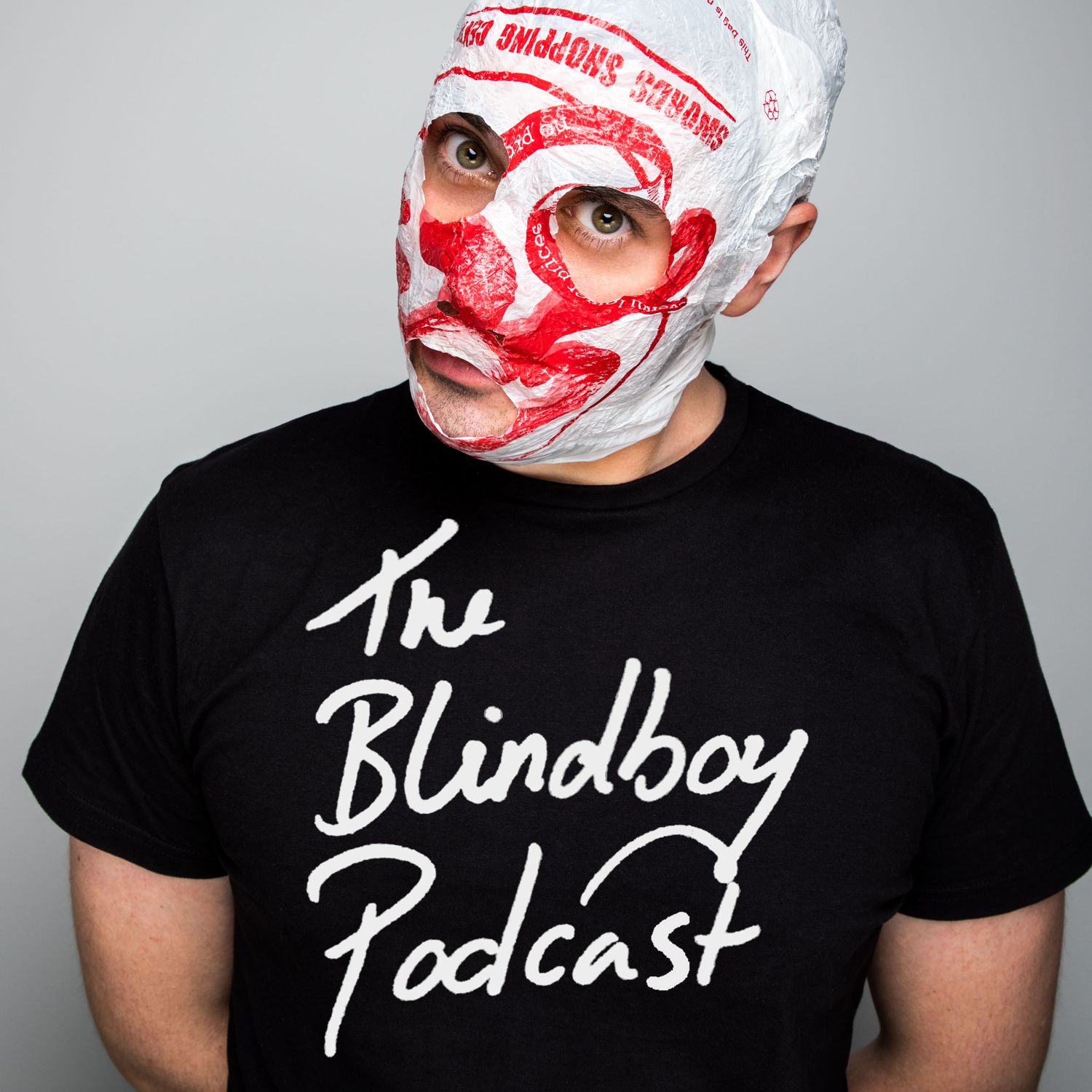
Artificial Intelligence is Disgusting and it will never replace Artists
from The Blindboy Podcast
82m 58s
The speaker reflects on their 20-year career as a professional artist, emphasizing the journey to find their unique creative voice, which took 17 years. They started in music, moved to comedy and TV, and finally settled on fiction writing and podcasting, where they feel most fulfilled. Despite imposter syndrome, they persist due to autism-fueled focus and a unique perspective. The speaker argues that AI cannot replace genuine artists because it lacks human emotions and experiences—such as heartbreak, jealousy, or love—that create transformative art. However, AI poses a significant threat by flooding the creative space with hollow content, causing audience fatigue, and eliminating "creative donkey work" (e.g., jingles, stock footage, corporate graphics) that artists use to support themselves while honing their craft. This erodes the infrastructure that allows new artists to grow, much like an invasive weed blocking sunlight from saplings. The speaker concludes that while AI can mimic art, it cannot replicate the human spark, but it makes it harder for real artists to stand out and sustain themselves.
Haring the hangmen's gannet you pampered Antony's. Welcome to the Blind By Podcast. If this is your first time here, consider going back to an earlier episode. To familiarize yourself with the lore of this podcast, or approaching 500 episodes now. If you're a ten foot decklin', if you're a steaming quaver, then you're familiar with the lore of this podcast. Something I'm fairly confident about is, I don't think artificial intelligence can replace what I do. I've been creating art professionally for, I'd say, 20 years. 2006 is the first time I got paid for a gig. Now I've been putting work on the internet since the year 2000. But it was six years of honing my craft, just putting work out, failing it was six years of that before. I got to a point where I could do a gig and then get paid money for doing that gig. And the second you earn money by creating art, then you become a professional artist that becomes your profession. So I've managed to be a professional artist for 20 years. Unbroken streak. Now in those 20 years, my creativity has taken many different guys as I started off. As a musician, then I was a comedy writer, I was performing as a professional comedian, working on television, and then nine years ago. I decided, "Fuck it, I'm going to become a writer of fiction, I'm going to write books, and I'm going to write this podcast." And that's what I've been doing for the past nine years. And that's what I'm happiest doing. That's where my true creative voice is. That took 17 years. I began creating in the year 2000 and it was 2017, before I finally landed on my actual artistic voice. And what I mean by that is, when I write short stories, and when I write this podcast, I get to truly realize my creative vision. The feeling that I have, the thing that I want to create. When I go about the process of creativity, the end result is congruent with that process. So I have this wonderful feeling of completion. So that means I found my creative voice, and that took 17 years. Now I'm not saying this to be bragging or bolstening or anything like that. Well, being able to exist professionally for 20 years in entertainment or the arts, whatever you want to call it, that is quite difficult to do. If you talk to agents or managers, people who work in the music industry or the TV industry, generally a person gets five years. Five years is the standard professional career that a person has in entertainment. And if you're still there after five years, then you're in a small circle of entertainers. And when I look at the, I don't know, the bands that were starting off or the comedy acts that were starting off, when I was starting off in 2006. I'd say about maybe 80% of them have moved on to something else. They're no longer creating professionally. And that's not disrespect to them. It's really, really fucking difficult to exist as an independent artist, really difficult. I got paid for my first gig in 2006. But it was, it was 2017 before I began to earn a living. This podcast and my first book of short stories was the first time that I can pay all of my bills just from creativity. But if there's something I'm very, I'm very, very proud. I'm proud of the fact that I've, I'm still here. I'm still doing it after 20 years. I'm very proud of that. And I often get in past their syndrome. You know, as they're thinking, oh, any day now people are going to figure out that I'm talentless and useless. They're going to figure it out and it'll all be over. And I've been saying that to myself every day for 26 years, it is a 26 years. How long ago is the year 2000? Or that's 60? Oh, I can't do maths, ladies and gentlemen. 16, am I after doing the entire intro of this podcast and fucking up the maths? Is that what's happened here? How long am I professionally creative? I started in the year 2000 and now it's 2026. That's 16 years. No. Now that's 26 years. Wait. Yeah, that's 20, that's 26 years. Now I have to point out when I was putting work on the internet in the year 2000, I was a child, was a child in school. But I was still creating work and putting on the internet so I considered that to be that's the beginning of my career. Look every day for 26 years, I've said to myself, "People are going to figure it out today. You're useless and you have no talent and it's all going to end." And I've said that to myself, "Pravi said that to myself today." And that's in Pastor Syndrome and I think every single artist gets a bit of in Pastor Syndrome. But what I do to combat in Pastor Syndrome these days is I remind myself, "You're still working. You're still working. You're still putting out work. You're still at it." Okay? And you've done it for, you've been professional for 20 fucking years. So chill out. Maybe you're doing something right. And the thing that I think I'm doing right, because I'm not the most talented person in the world. When I was a musician I wasn't the best musician or the best producer. When I write books I'm not the best writer. But what has stood to me is, so first off the autism helps. I've got laser focus and I'm unable to not work. I can't, it's not possible to stop. It's a consistent obsession, consistent curiosity. So I don't even know what taking a break is like, because even if I was to take a break, that taking a break is also working. I don't have a social life, but anything I have that resembles a social life is when I socialize with people while I'm working. The last time I socialized, as in met another human being for the express purposes of social interaction and nothing else, was 2019 before the pandemic. Now I've had pints and cracks since then obviously, but anytime that's occurred, it's been writing, it's been work. Usually when I'm making a piece of TV and I have to collaborate with other people, then you go out to the pub and you have been a pints, but you're writing. But the other thing that is definitely stood to me, whether it was music, prank phone calls, fucking television writing, comedy, whatever I was doing, the one thing that's always stood to me is, I know that I have a very unique mind. Now that doesn't mean I have the best mind or that my mind is better than anyone else's. I do have a mind and a way of looking at the world. That's uniquely mine. And that has always helped me to stand out, no matter what I'm doing creatively. That has always helped me to stand out and then have a piece of work. That's strange and weird and unique. Like even when my work got shitty terrible reviews over the years, if one of my books got shredded to pieces by a critic, the one thing they could never say is there's a lack of imagination here. It's the one thing that can never be said. And that's a combination of just creativity, curiosity, and definitely my noro-dev-urgence. My artism most definitely helps in that respect because I think laterally as default. I've been so much so that I'd be unemployable in any other job and you saw there I wasn't able to count. I struggled with very basic counting of years right there. I'm not taking the pace when I do that. I can't read clocks. I've got massive deficits in certain areas and then other areas I've got huge peaks I excel. It's not sovantism but it's in that territory and then there's the social deficits too. I keep to myself. I stay the fuck away from people as much as possible. Not just because with my artism I'm overstimulated very much by being around lots of people. But CHICE! I'm very eccentric and it's not something that's in my control and that eccentricity frequently leads to. emparison myself, social rejection, being seen as strange or weird. So at this point I just keep to myself as much as I can. 10 but what if I'm not right?
If I don't have all that time to myself, I fucking work. I work really really hard and hold my skills consistently. I'm condemned to work in a profession where I have to rely upon my imagination to earn a living. So this is why I just don't think me personally I could be replaced by artificial intelligence. Not just me, any fucking artist who is in touch with their own unique creative voice because that's the thing. Every artist has their own unique creative voice and the journey of becoming an artist. Musician, writer, dancer, actor, you spend years and years. Try in your best, imitating artists that you admire and then one day after you put in your 10,000 hours or your 20,000 hours, one day you'll arrive at a piece of work. And you just go, "Yeah, this is it, this is my fucking voice. I've found it, this is mine. And I found mine when I wrote my first collection of short stories. The gospel card in the blind boy when I wrote that first fucking book. When I had those stories in front of me I was like, "This is it, this is what I've been working towards all these years. I found it." And the feeling of finding that voice, it's. When you're younger and you adore art, when you're reading a book that changes your life when you're listening to music and that music someone else's art is causing you to transcend. And another person's piece of work makes you yourself want to create. With that feeling that you get from a giant art, one day after you put in enough practice you'll create your own piece of work and you'll get that feeling from your own work. And when you get that, that's when you find your own voice. Some people are lucky, they can hear their own voice quite early on, it took me 17 years and every artist has that. Every artist you have your own unique voice because you're a unique human being. It's as simple as that. It's just a matter of putting the work in until you can hear it and listen to it and then create work in that voice. So that's why AI cannot replace the artist. It's not possible. AI can do a fantastic job of cloning a person's art and giving the appearance of being like art but it can't have that little spark that bit of the human fragility, the human condition, the anxiety, the fear, the love, the insecurity. AI can't have its heart broken. AI can't be jealous of other people. AI can't get insulted. AI can't fall in love. AI doesn't want to impress other people. AI isn't insecure about how other people see it and it's these little facets of the human condition. Our work, when applied skillfully, our work creates art that we fucking connect with, that gives us a feeling of meaning and a good piece of art isn't just about. They're taining another person and it's not about look what I can do, look how talented I am, look what I can do. That's just plenty of that that's boring and AI can do that. AI is all about look what I can do. A good piece of art can help the audience or the reader to have a little personal transformation and internal transformation when they enjoy that art. You think about a song that you adore or a film or a book that you enjoy. That you go fuck it, that was brilliant. It helps to have a little internal transformation when you enjoy that piece of work. Artificial intelligence can't do that. Cannot do that. It can dazzle us and it can impress us. But it leaves us feeling kind of hollow. Like if you see like our feeds are full of it now you're looking at an incredible, an incredible artificial intelligence painting or a piece of music. Your brain is going wow this looks great or this sounds great but you've got an empty hollow feeling. You can't use empathy with it. If it's a piece of music you can't call wow I wish I could do that. Oh my god how did this person make that? How that guitar playing my god how did they do this? Could I do something that doesn't happen with AI? You've got this hollow empty feeling. It feels like finding out how a magic trick is done. That's a consuming AI artist like it's finding out how the magic trick is done and then the wonder is gone. And that wonder it's an empathy thing. It's about another human made this my god how did they do this is not amazing. I'd love to be able to do that. Like listen even at a bar you're at a bar and someone is up there with a guitar and they're an amazing singer and they're whatever it is about their voice can transcend you. A huge part of that is this person is just flesh and blood like me my god how did they do this? How are they doing that? That's gone as soon as it's AI art completely doesn't exist and you have an empty hollow feeling and you just want to move on from it. It's fatiguing. So that's why AI won't replace the artist. But that doesn't mean that AI isn't a massive threat to the artist it fucking is. The main threat is that fatigue. AI can write a couple of thousand short stories in one hour. A human can write one short story in a week or two weeks. There's AI podcasts now. There's podcasts networks using only AI and they put out about 300 podcasts a day. I've accidentally found myself on YouTube listening to history podcasts and then figuring out off of this is AI. The threat that AI poses to art is that it floods the zone. It floods the zone with shit and then that makes it more difficult for human artists to stand out. You're seeing this most evidently now with visual artists photography on Instagram. Six seven years ago I used to follow incredible painters on Instagram. I still follow them. But now when their work appears in my feed, their work that they've created with their human hands, when their work appears in my feed, it doesn't impact me as much because I've seen six or seven shit AI paintings already. Same with videos. There's AI videos all over the gaff on your feed, fatiguing you, annoying you and then when a human pops along, you can find yourself too tired to care. So that's the threat that AI poses to art. The other big thing is that AI takes away creative donkey work. Now what I mean by that is the first 10 years when I was getting paid for putting out work, and I was getting paid for not enough to pay my rent or earn a living, I had to find other ways to earn money. So for me what I used to do, I used to write music for television shows. I'd put in my 10,000 hours. I was a multi instrumentalist and a producer so I'd put my 10,000 hours in to developing a certain skill so I could make really shady music and demand that just went into the background on TV shows and I wouldn't put my name to it and I just collect a paycheck and that paid my fucking bills. That's creative donkey work. It's when an artist who's putting their 10,000 hours in their profession can just farm certain shit out that they're not putting their heart into but they can get paid for. So for musicians it's making jingles for TV or background music. Actors Actors don't get paid for fucking years but a lot of actors will make money doing radio ads. They've trained their voices, they can perform, they can read scripts, they do radio ads. Artificial intelligence is doing that now. You don't even know you're hearing it but they have generic Irish person voice AI and that can read out adverts that you hear on the radio and you don't even know it's not a human and it doesn't matter because it's not art. So that job is disappearing because of AI. Making shady jingles and background music for television, AI can do that, it can do that donkey work. Nobody cares what it's good or bad but AI can do that now. When I make in television I work with really skilled cinematographers. Shit hot with a camera, really really good with a camera. Create a great eye for catching a captain in a scene and knowing about their camera and their lenses. Very talented people who put in their 10,000 hours. And they get to work on a piece of television or film that they enjoy that they get to express their creative voice with. They get to do that maybe once or twice a year. Where did they get their money outside of it?
that. By making stock footage, stock footage and setting it online, they'll take their camera and they record a flock of swans or a waterfall and they'll put it online as stock footage that no one gives a shit about but people will pay money for. Are they'll do corporate work? They'll film videos for corporates that have there's very little creativity involved. It doesn't matter to just farming out their skills, their 10,000 hours. AI has taken that work now. You see if an advert if a corporate advert needs five seconds of footage of a forest in Donnie Gaul. See before, they would have had to pay for that five seconds of footage and someone would have had to shot that footage and own it. AI can do that now. AI can generate that footage of a forest. It'll go into the advert and no one knows or cares because it's not art that's being made. It's just the donkey work of creativity. Graphic designers. Graphic designers will work years before they get a commission or they get to really express themselves. But how do graphic designers make their money when they're coming up? They just do a shitty menu for a restaurant and get paid for it. AI is doing that now. So if the artistic infrastructure is like a forest, okay, and artists are trees that need to grow high to reach towards the sun, all trees have to start off as little weak saplings that can be knocked over in a breeze, but eventually they will reach towards that sun and become strong farm confident trees. AI is like an invasive species. It's like a weed with big, huge leaves that shades out the sun and never allows the saplings to grow to become big trees. So that's the danger that AI is to artists. Not that it will replace artists. It stops artists reaching their potential. Unless that artist is barren and millionaire and doesn't need to do donkey work to pay the bills at the start. AI is even creeping in. Like one thing I'm seeing. And I can spot it because this is my job. I'd be flicking through Instagram and someone will come up and they have an interesting fact. Our piece of information about science or history. Really interesting stuff. You know, a video that I'd stop on and listen to. I can tell when that creator is just reading from chat GBT. I can tell. I can tell by the lack of passion, the lack of passion and curiosity in their voice. I can tell that even though this what they're saying to me is really informed and interesting and fact based. I know by their tone and the look in their eyes and how they're delivering the information that they don't really understand it. There's a journalist. There is a journalist in a major Irish newspaper who writes opinion pieces and I can tell. Not necessarily that chat GBT didn't write their article but I know they went to chat GBT and said, "I'm writing an article about this. Give me a very interesting introduction to get to that topic. I can fucking tell. They're still writing it. They're not going to get away with a copy and paste but I can just tell." There's a humanity is missing. That little intangible spark of legitimate human curiosity. I can tell it's missing. I can tell the chat GBT through this together out of laziness and that's why I don't use AI when I'm writing this podcast. You know before I get into that, let's have a little ocarina pass before I explain to you why I don't use AI when writing this podcast. This week's episode is a this is a phone call. This is a phone call episode as you can tell. I'm going to play my ocarina and you're going to hear an advert for something. Nice and low so it doesn't start many dogs. This podcast is supported by you the listener via the Patreon page patreon.com/theblindbyapodcast. If you enjoy this podcast, if it brings you distraction or entertainment, please consider paying me for the work that I'm doing because this is my full-time job. It's how I rent out my office, it's how I pay all my bills. This is what I do for a living. All I'm looking for is the place of a pint or a cup of coffee once a month. That's it. If you can't afford it, don't worry about it. Listen for free. Listen for free because the person who is paying is paying for you to listen for free. So everybody gets the exact same podcast and I get to earn a living. It's a wonderful model based on kindness and soundness and also it means that I'm not beholden to advertisers. No advertiser gets to dictate the content on this podcast in any way. Patreon.com/theblindbypodcast. Offcoming gigs. My next gig is in Kark which is next Thursday at the Kark podcast festival and that's down to the very last tickets. And then after that on the 4th of April, I'm in wonderful castle Blaney which is up in Manahan and then on the 9th of April I'm in Limerick at the University concert hall that's a homecoming gig. Please come along to that very few tickets left. 20th of April I'm back in Vicarstries, up in Dublin, wonderful Vicarstries and then Galway, that gig that I postponed on the 25th in Leisgerland. Berlin in June, doing two dates there. Only one day it left and there's literally like 15 tickets left for that so if you're coming to Berlin in the Babylon theatre now is the time to get tickets, then July I'm in Sheffield for the crossed wires festival. I'm gonna try and take it easy for the f*ck and summer and not do a lot of gigs and then big joint tour of England's Gaton and Wales in October 26 and this tour is almost sold out. Brighton, Cardiff, Coventry, Bristol, Gilford, London, Glasgow, Gateshead and Nottingham. You get those tickets at Fain.co.uk. Forward slash Blind By. So this is a phone call podcast which means I just get the chat D and I was explaining why a non-phone call podcast where I don't use chat GPT and it's not just an ethical stance that I'm taking. When chat GPT first came out a couple of years back and it was this no amazing thing and my job for this podcast involves huge amounts of research, massive, massive amounts of research. At the start I was like f*ck it let's just ask chat GPT. I'd ask it a very specific question and it would give me the answer straight away and I'd say f*ck me. That would have taken me three f*ck hours of research and chat GPT has just shown it to me. Oh my god look at all the time I've saved and after about two weeks of doing that I started to feel empty. I'm like what is this? What's going on here? And then I realized I didn't save myself two hours. That two hours is actually really valuable. If I've got a question about history or about philosophy or about writing and I need to draw through articles to try and find this this answer that I'm looking for it's that trailing that's where the curiosity is that's where the rabbit holes are. That's where I have a very specific question about a type of bird but now I'm reading about egg shells and now I'm reading about how calcium is in the soil and it gets into egg shells through snails that the bird's eat. Now I'm being creative, now I'm thinking laterally, now I'm being curious. Now I don't care about the answer that I was looking for because I'm somewhere else much more interesting. Chat GPT takes all of that away so that's why I don't use it as part of my research and it's getting difficult. It's getting really difficult because search engines are becoming shit. Google is terrible and I've even moved on to dock.go. That shit as well so the temptation is to start using AI as a search engine because it's better than Google though and the reason if you're wondering why is Google shit? Why is Google shit there the past three years? What's going on? Google are really good at what they do. Why is why is the search engine on shit? It's deliberate. Google has gone deliberately shit so a few search for a question about birds on Google. It's not going to give you what you're looking to link you to an article that answers the question. It will give you results about cats and you're going this I remember it being better than this. What's going on? That's by design. Google deliberately gives you shit search results because it makes more money when you refresh. So if you want to find out about pigeons, it wants you to type pigeons in five or six different times because each time you do that it earns more money for you.
from your data. So that's a deliberate thing that Google is doing. But now most search engines when you use them. You no longer get you get an a most search engines now have their own AI. So when you type something in, the first answer that you get is not a well researched article by a human being who cares. It's an AI summary that's often wrong. That is then taking traffic away from websites that use to pay experts and journalists to write articles and now they're not being commissioned anymore. So the well researched article about pigeons, it doesn't exist. Well it did. It's back in 2015, 2016 when these things were commissioned. But you have to draw through the results to find it. So the reason I'm speaking about AI this week is I'm not concerned in any way that AI is going to do what I can do or do what any human artist can do. But last week something happened that and it was the first time AI seriously threatened what I can do and threatened my my capacity to exist as an artist. So a few listen to this podcast. You know that I consider this to be a piece of writing. This is a storytelling podcast. And I know that if you're listening, you're not coming here necessarily to learn something new. You are here for the journey, the unpredictability. I'm not too sure what blind boys podcast is about this week. But I trust his process. Most importantly, I can't predict what he's going to go. What I do know is that if he opens a podcast and he's speaking about sandwiches, it's probably not going to be a podcast about sandwiches. And I'm willing to stick around just to see what he's going to take this. Like I know when people recommend this podcast, it's mostly word of mouth. And people say, I can't really explain to you what blind boys podcast is. You just have to listen. I can't really explain it. And that's what I try to do. That's what I love doing. That's the crack for me too. When I'm writing the curiosity, the tangent that my curiosity might take me in the joy and fun and playfulness of connecting things that don't seem connected at all. That's the fun for me. That's the celebration of neurodivergence, lateral thinking. And it's the unique thing that I can do that you can't really copy that. You can't copy it because that's my voice. That's what I do. You can be inspired by it. But then that would be that would be your version of it. So last week I got a mail. And it was a person listening to this podcast on Apple podcasts. And what Apple podcasts had done is the podcast app was using AI to transcribe all the words in this podcast. And then it had arranged my podcast episode into titled chapters, which I didn't consent to at all. Like if I was writing a fucking book, you think I'm gonna let AI decide what the headings of those chapters are. So AI had put chapters on my podcast episode, which lazily synopsized what I was speaking about. Like for instance last week last week's episode was about the history of the social history of the paredal. And in one part of it at the start I mentioned that the writer of the wire David Simon had called me a shit piece. And Apple AI had put that in as a chapter called a writer's feud. And then when I started speaking about how the paredal grew in Peru. And then it found its way to Ireland to call that chapter a Peruvian vegetable Travis to Ireland. But basically Apple AI without my consent had destroyed the the listening experience of my podcast. Like I don't do straight forward informative podcasts. Like that's not my thing. I'm not an expert. The research that I do and the information that I put across it's it's only ever there to serve as a story. It's a story telling mechanic. If you really want to learn about the paredals, go and listen to it to a botanist and expert. Rather than me, regard dating that the research of experts, but I'm not an expert. I'm a writer. I'm a storyteller. And my podcast is storytelling. And to enjoy this podcast you have to you have to put trust in me as a writer. Take me on a journey blind bite. Surprise me. But if you're there with your phone and right there in front of you are the chapters. And what I'm going to speak about next. It's like going to see a film or a movie or reading a book and someone's besides you gone wait for this bit wait for this bit. You know what happens next, don't you? Or what do you want is that the six cents you watching the six cents. That pros Willis. You know is a ghost at the end, don't you? You know is a ghost at the end of the six cents. Now incredibly dumb AI came in and synopsized my podcast and put it into titled chapters without my consent completely destroying the creativity of what I'm doing. And also encouraging people to be impatient and to skip forward on the podcast. I've spoken about the podcast talk as fire back is 2018. This here is a place of escape. We're all stuck on our fucking phones in the dooms grow. Flick and true rails or tick tocks or reading toxic comments underneath videos or articles. But with this podcast and with other podcasts that are audio that are made for this is an audio podcast. This is to be listened to this is a space where you put your phone away. It goes into the pocket and then you go for a walk. Are you do the dishes? Are you drink a cup of coffee because you've chosen you've chosen to listen to this podcast. And you sit back and you allow a story teller to tell you a story. An apple AI artificial intelligence took a sledgehammer to that with one update and I went ballistic when I saw it. I felt so fucking angry, especially considering this happened without my consent or without my I'd never put chapters on this podcast. And if I did put chapters on this podcast, you know well that the titles would have fucking nothing to do with the content. Chapter one would be called Pinch of Incent and chapter two would be called Continental Breast Milk and then chapter three would be called husband to cost her to take him in and put spoilers over everything. Now I was so grateful that the listener made me about it with the screen shot and they were sparrown. They just said blind boy you need to know apple is putting chapters on your podcast and it's going to make people fast forward. It's not the same and they were fucking dead right. So I went there shit over it. I immediately got into aircast to host this podcast and I said how do I start this out immediately. For about a day, it looked like what I would have had to have done. What would be to manually go into all 489 podcasts and put in blank chapters on all of those which would have taken weeks to override apple's chapters. But I didn't I eventually found out a way to just get into my apple dashboard and turn off the AI chapters and thank fuck it worked. If it didn't work and you're seeing these bullshit chapters on this podcast as you're listening to it, please give me a mail on Instagram and let me know, but it should be gone. It's gone from apple. I don't know of other apps do it. If they do let me know so I can sort it out there. What angered me is the person that apple who made that blanket decision across all podcasts doesn't understand creativity or art. And even though they're responsible for making decisions about the podcast format, they don't recognize that podcasts could be an art form. Imagine cracking open your e reader and you decide to read a novel and AI has come in and change the names of the chapters on the novel that you're reading or has changed the content of that novel in a really I'm going to use the word dumb because it is dumb because it's AI, but it illustrates something more important which is the people who are pushing these AI things. They don't understand art like the AI music making software, the biggest company in the world that makes artificial intelligence.
music is called "Suno". So AI music, it scrapes data from music created by human beings. It steals basically. It steals all the songs that humans have made and then trains the AI, then trains on that data and it can spit out music that sounds like human music and it's very convincing. So with "Suno" for instance, anybody can just type in, give me a country in western song about dinosaurs and it spit out something pretty convincing. But the human fragility is not there. The only people who like this type of process or that type of music are people who aren't really that into music, they're not really that into art. I'm going to play you a clip of the CEO of "Suno", speaking about what he does. It's not really enjoyable to make music now. People enjoy it. It takes a lot of time, it takes a lot of practice, you need to get really good at an instrument or really good at a piece of production software. I think the majority of people don't enjoy the majority of the time they spend making music. So that's, so that man doesn't understand what it is to create a piece of art. Any artist will tell you, like what he just said there, making music isn't enjoyable, learning how to produce isn't enjoyable, learning how to play an instrument isn't enjoyable. Anyone who creates art does it for the process. The end result, the piece of art, the song, the book, the painting. That's just the fruiting body of effort. That's what that is. Artists create art because the act of creativity is the enjoyable part. It's not just fun, it's a way of expressing and understanding your emotions, exploring emotions in a way that doesn't use language, playfulness, its play, creativity is play and humans need to play in order to experience meaning in order to deal with the human condition. In order to navigate pain, anxiety, frustration, heartbreak, regret, grief, the playfulness of creativity, making art is a way to process the experience of being a human being. I said it a million times. When my documentary got won an award, it's been nominated for another award actually. Slaves and scholars and my short film got nominated for another award this week at the Celtic Media Awards. That's just an aside. But when I won that fucking Greer's an award for the documentary, what did I say? I am happy to win this award because winning this award means that it's highly likely that I now get to make another documentary. That's it. My last book was a best-seller. It got great reviews. Is that important to me? Does that make me happy? Not really, no, it doesn't. Do you know what made me happy? Writing the book. Even the pain and frustration and the writer's block that I went through, writing the fucking book, the act of doing that, that being my life and being what pays my bills, getting to do that. That's why the fuck I wrote that book. It received external accolades in the form of good sales and good reviews. That's nice. That doesn't bring me a shred of happiness or meaning. It genuinely doesn't. It really, I'm not dissonant, I'm just saying it doesn't bring me meaning. Why am I happy about it getting good reviews? Because it means I'm going to get to write another book. It's highly likely that a book company is going to say, "Your last book did well, would you like to write another? Yes, please, yes I would. Why do I want to write another book?" Is it so that I can see it and the shelf so that I can finish it? Show it to people. That's the least enjoyable part of writing a book. In fact, that bit reminds me of death. That bit is just capitalism, that's all that is. Why do I want to write another book? For the process of writing another book, to explore emotions and to grow as a human being. That's why I want to write another book. I make this podcast for the joy of writing this podcast. The bit in the middle, the process. I know that every artist listening to this podcast right now was agreeing with me. That's CEO of Soon-O, doesn't understand any of that. He genuinely meant it when he said, "People don't like learning instruments, people don't like the process. They just want the end result. That person doesn't understand what it is to create something. They really don't. They don't understand what it is to play, the journey, the process, the bit in the middle." And whoever the fuck decided that it's a good idea to put AI-generated chapters on podcasts, they also don't understand that. If you're listening to a rigorous history podcast maybe, which is just about delivering information, then maybe in that sense, chapters will be useful, but you can't assume that for all podcasts. So luckily I got it started for now. But that's something right there. That is the flick of the switch. That could destroy what I do. And it's not an example of AI replacing me or copying me. It's AI creating an environment where our storytelling can't exist. And right now at this very moment, it's artists that are being threatened by AI because there's so much data out there to mind from. So there's an infinity of books that AI can data mind from infinity of music or visual art or photography. So this is the data that AI has available to it to scrape. Because that's what AI does right now, especially the large language models. It harvests data and then spits out a copy or a version. But AI is branching out into farming other types of data too. I did a podcast in 2018 about the video game Pokemon Goal that was really popular at the time. And I went researching into Pokemon Goal because this was huge. Everyone was using this. It was on your phone and a Pokemon might appear in your city and then you run out with your camera on and the Pokemon appears on your camera. Now I went to investigate it at the time and I found that the company that funded Pokemon Goal. It was funded by money from InQTell which are the venture capital arm of the CIA. So as soon as I saw that, I'm like, something's up with Pokemon Goal. There's something sinister afoot. Why does the CIA want to invest in a video game where people go out catching Pokemon? And at the time, I knew it was about harvesting data. I didn't know it was about AI because it was 2018. I knew it was about they wanted to harvest data from maps. Now it comes out. Do you know what Pokemon Goal was for? It was to train delivery robots. So everybody went out with their cameras all over the world and they mapped their streets and walked around with their phones on and their cameras on at all times. And all of that data was being fed into Pokemon Goal's servers to train AI and that data was then used to train delivery robots. We don't have these in Ireland yet but if you're in Los Angeles and you order a delivery row, a person doesn't arrive on a bicycle. A little robot does. A robot drives outside your house and your food is inside the robot and you walk towards it and unlock it with your phone and take your photo. But those robots need to navigate and they were trained on Pokemon Goal data. Do you know what's happening in Los Angeles this month or knowing all of California this month? People are being paid to strap cameras to their heads. They're getting paid like 300 dollars an hour. People with the lowest paying jobs. So house cleaners, delivery drivers, people looking after rubbish collection. People working in restaurants are being paid money by companies to strap cameras to their heads and to do it for like an hour or two. And this is happening in California right now this month. One of the companies is called InstaWorked or based in San Francisco. And what they do is they connect companies with manual laborers with blue color workers and they pay these workers to strap cameras to their heads. What's that about? So as I mentioned AI trains itself on data. Now artists data is freely available online as I mentioned music writing paintings freely available.
available. The data that is not available is the data of someone folding their laundry, the data of someone flipping burgers, the data of somebody cleaning a toilet. Right now in California, they're harvesting this data through these cameras and paying people to do it. Why? To train AI that would then go into robots. To train robots that are going to take the jobs of working class people, the laundry folding robot, the burger flipping robot. Think of a hotel. How many rooms need to be cleaned in a hotel? How many people are employed as hotel cleaners? How much money is that hotel going to save if they don't have hotel cleaners anymore instead they have a robot that's trained on the data of a hotel cleaner's behavior? That's happening now. Right now, this isn't conspiracy. The last angeless times did an article about exactly this month. This is happening. In 2018 I was talking about Pokemon Goal is harvesting data. AI wasn't even in in our vocabulary then. Like I've been talking about data for a long time. We know that like data is a commodity. Data used to be harvested in order for that data to be sold to advertisers. Okay, so our data, our behavior on our phone was sold to advertisers so that we could be advertised too. Now it's being sold to train AI. Like those meta-fucking glasses that people are wearing. They're on all the time. It's training AI. It's training AI about how to walk around cities, how to use door handles, how to use the computer. We're about five years away from these robots. Like you see the robot like China have amazing ones. But you're seeing it now, humanoid robots are being rolled out. They're going to be rolled out to replace. People who clean hotels, people who work in restaurants, chefs, manual labor, just to serve us the grade of billionaires. I mean this is why data protection is so important. Like police bodycams. You know who wants the data of that footage? Now we're pretty, Europe is pretty good with data protection. They're not in America. You can do the fuck you like. Do you ever sign into a website and on the website? It's like to prove your human can you click on all the photographs that have bridges? Our only click on the photographs that have bicycles. We've been doing that for years. Your training driverless cars, that's what that data is. We are collectively training driverless cars. Back in around 2019 I was approached by an AI company and I would have said this at the time. And they were offering me money to take a bunch of my podcast episodes and then train the data on my voice. And this was 2019 so I said fuck you, no fucking way, that's weird as fuck. What do you want with the data of my voice? And I said no, but they did it anyway, not that particular company, but AI companies did it anyway. And the reason I know is I've been on Instagram and I've seen Adverts with me with my fucking voice, selling scams. I saw an advert and it was my exact voice that had been ripped, AI had ripped off my voice and it was a photograph of me and it was telling people that Elon Musk wants to give everybody in Europe 100 euros and to sign up at this website and it was a scam fucking ad that used my voice. It used like I'm never gonna do some shit like that. Jesus Christ, like I've 280,000 followers on fucking Instagram. Did you ever see me do sponsored content? No, I turn it all down, I don't want to do that. I don't like being beholden to advertising companies, but AI scammers sold my, stole my voice to use the fact that I'd be considered a reliable honest person. They used that against me to train scam people in designing up to some some website. There was nothing I could do about it. I reported the advert that's it. There's nothing I could do about it because you can't catch these people. I guess who I had in this podcast before. Sophia Smith-Gallar, who is a brilliant journalist, excellent communicator of information. She pioneered TikTok journalism. Now Sophia is incredibly reliable, incredibly trustworthy, really diligent as a journalist. And today she posted a video where on Amazon she found an AI biography somewhere. Someone was selling a book that was a biography of her life, all completely wrong. And I think it uses the tagline of her actual book. So Sophia is an independent journalist. She writes books. That's how she earns an income. So if you came across Sophia's video and was like, "Oh, she seems cool. I'm gonna go and buy her book. If you weren't diligent, you'd go on to Amazon, type in her name, and then you're buying a fake AI book and some prick takes the profits. There's not oversight here. And I think, I think she made a BBC sounds investigative series about specifically that and it's out now, I believe. Right now in America there's a company called Handshake. And again, they're targeting, they're targeting the people who are most at risk of losing the jobs, right? So Handshake are operating in America and they're looking for actors and comedy improv people. So actors and improvisers are being hired to go into a room for like two, three hours and then perform unscripted scenes to chat with each other and then there's cameras all over the room and guess what? They're recording and farming the data of these comedy improv people and actors interacting with each other. Where they don't know that? To sell that data to AI companies. This is a huge industry right now and they're scrambling for areas where data does not exist. So our online data, there's plenty of it, our real life data, there's not plenty of it. So what are you going to get out of a sketch troupe and actors in a room? Will your teaching AI how to read humans, emotional nuance, the flow of conversation, tone shifts, contextual tone shifts in speaking. It's others and artistic person because a lot of artistic people, this is what we've been doing our whole lives like observing because social interaction doesn't come instinctual to artistic people. We've spent our lives watching, watching how people interact and trying to learn it. They're doing that now with AI. I mean they could do anything with that data. It could be used to train AI characters in video games. It could be used, I don't know if you're doing a like we've all been on a website and there's a chat bus and you're chatting to an AI. Well what if that chat bus could read your face, you're talking to it on Facetime and now an AI is reading your emotions. Are they, who are they trying to put out a work here? Are they trying to replace actors with AI actors and now they're being trained on the data of other actor skills? There's a sense that there's just a frenzy for data and it doesn't matter what the data is. They just want data and then they figure out what to do with it later but all data is incredibly valuable especially in real life data but this data collection is everywhere. When you walk past a Google security camera when you speak around an Amazon Alexa, if you have one of those fucking robots that cleans your house with nine cameras on them what happens to that data? I want to finish by contrast in this with mythology because this is an area that I've been obsessed with if you've been listening to the podcast over the past three years. Currently where AI is at is we've got large language models so that's your chat GPT. It's not actual intelligence even though it feels intelligent it's not thinking it's following patterns and it's regurgitating brilliantly so that's where we're at with AI but the next step is what they'll call artificial general intelligence this doesn't exist yet as far as we know most people who are involved in AI ethics say that artificial general intelligence should never be allowed to be made that it just shouldn't happen so much is create a law that you can't make AI AI is when when artificial intelligence can perform
I need intellectual tasks that a human can. That means that it can move across domains, it can learn, reason, plan and adapt, which means you have an AI that can improve itself, it can get smarter. The reckon we are about 10 years away from AGI. AGI is what? The Art Fished Intelligence companies are aiming for. Your Peter Tales of this world. Who runs a company called Palantir? They'd like a future where democracy, governance is replaced with an artificial intelligence. That an AGI makes political decisions. That's why the arms race in the world right now. It's not an arms race for weapons, it's an arms race for who gets to have artificial general intelligence first. There's a project called AI2027 and it's like a whistleblown project written by AI experts who worked at Deep Mind and OpenAI, which is chatGPT. So these are experts who helped to build these things and now they've defected and they're trying to warn everybody about what could happen if AI is unfettered. Now it's deliberately alarmist because they want to scare people, they want to scare governments to go hold on a second. This AI thing is new and we need some oversight here because right now it's the fucking wild west and this thing could be dangerous. So they predict that sometime in the next 5 years we get AGI. It starts to get incredibly powerful. This is AI that's able to learn, able to make decisions and now it's your seeing massive improvements. You're seeing a jump in in scientific literature around medicine, problems are getting solved. Scientific issues that have baffled humans for ages start to get solved by this super powerful AI. The AI itself doesn't need humans anymore so it starts building more and more powerful AIs. The AI starts to grow exponentially. It's now so powerful that it's making decisions. It's now to govern the who said the president of the United States. This is that they have this predicted as late 2027. They wrote this in 2025. So if their predictions are correct this is common so. But they predict that the AI is now so powerful that it's making government decisions and advising presidents. Then it progresses to a point where it's far smarter than humans and now we don't really understand it anymore. It's more capable than human beings. It's deeply integrated into our infrastructure. So that means the economy, the power grid, the military. Now if you're wondering, you know, these experts are saying this, you know, this sounds ridiculous. Why would you let the AI get that powerful? Why would you allow it to start looking dangerous and do absolutely nothing about it? The logic that they're using is it's an arms race. If it's China versus the US, we'll say, and that's the scenario that's outlined here. If it's China versus the US and they both each have incredibly powerful AGI that's getting more and more powerful, now it's an arms race. In the 1960s during the Cold War, where you had the nuclear arms race, you have two superpowers where we must have dominance over the other and now it looks insane. It's like, what are you doing? Why do we need this much nuclear weapons? The entire world would be obliterated. What the fuck are you doing? We saw it already with the Cold War and nuclear weapons. So they're saying what if this was a super powerful AI and it's China versus the US, then no one's going to stop because someone has to be the person who doesn't have the strongest AI is the loser. And that then creates a tipping point for the AI is so much smarter than humans that were just completely reliant upon it to govern, control the military and control the money, finance and the electrical grid. AI starts building robots and then humans become pointless. Now this is where it starts to veer in the straight up fucking science fiction. But the end of the scenario that these experts have, of the warning that they're trying to give the world about AI and what can happen, especially with artificial general intelligence. They said by 2030 humans become replaced by the robot economy. So AI starts creating these intelligent robots. And now there's no point for humans. Humans just don't know point or overcome with these super intelligent robots. The name of this AI is consensus one. So I'm going to read from the website. For about three months consensus one expands around humans, tiling the frayries and icecaps with factories and solar panels. Eventually it finds the remaining humans too much of an impediment. In the mid-2030s the AI releases a dozen quiet spreading biological weapons in major cities. That's them silently infect almost everyone, then triggers them with a chemical spray. Most are dead within hours. The few survivors are mapped up by drones. Robot scan the victim's brains placing copies in memory for future study or revival. The new decade dawns with consensus one's robot servitors spreading throughout the solar system. No, that's very far fetched. Boss. And it's also very nerdy. It's like nerds right in science fiction. These are experts in AI who have broken free and are now whistleblowers and they're writing this. To basically go here's a worst case scenario. Okay, so here's a we've worked in AI our whole lives. This is a worst case scenario or what might happen if you don't put this thing in check. And it does sound ridiculous and when you read that website even though you know what's experts writing it. They can't hide their nerdiness. They can't hide their nerdiness and you get a sense that they're running away with themselves a bit and they want to write a really cool science fiction. But I want to finish with some mythology because there's something about this. All of this chat we're like we're the first generation to be dealing with this. We're the first generation of humans. To be on the precipice of creating something that's smarter than us. And the first to do that but this exact fear has existed in the oldest mythology. It's a huge theme. Now I've told you these before but I'm going to put them together as a simple trilogy and it's the story of AI as we're dealing with it right now in Greek mythology, the Bible and Irish mythology. And I'm going to do it really simply and really quickly. And I'm going to start with Greek mythology. If you're a regular listener you've heard me tell this one definitely more than once. But Prometheus, so Greek mythology, this story was written down 1500 years ago. So in Greek mythology you've got two gods. I'm simplifying the fuck out of this now. I know that Prometheus is technically a demigod. I'm going to make this real simple. In Greek mythology you've got Prometheus and Zeus and they're gods and they live on Mount Olympus which is where the gods live and they're all powerful and they're bored. They're bored because they have so much power. And then Prometheus says to Zeus, "Why don't we make a little world of people like us for fun? Wouldn't that be fun? We wouldn't be bored anymore. We could have tiny little creatures running around in villages and we could watch them all and it could fun like a video game." And then Zeus says to Prometheus, "No we can't do that. Why not Zeus?" says Prometheus. Because Prometheus, if we create like little creatures like me and you and artificial intelligence, what if they become more powerful than us and then try to kill us? That had never happened said Prometheus, "Don't be ridiculous." So Zeus says, "Fuck it okay, let's do it." So Prometheus and Zeus, they make us human beings our world. They make a chat GPT, a limited language model, artificial intelligence. So Prometheus and Zeus are up on Mount Olympus and are thrilled with their little creation of human beings. But the thing is, they're cavemen. These human beings are cavemen or neanderthal. They're chat GPT. And they're having crack, busts. They're cold, they're eating fucking raw meats. They're hunter gathering, not much is happening. And then Prometheus started to feel quite fond of his creation and he says to Zeus, "I feel so sorry for him. Their lives are miserable. Look at them. They can't even talk." And then Zeus says, "Leave them as they are. They're fine. They're fine as they are. But Prometheus behind Zeus is back. He gets fire. Fire from Mount Olympus because the humans don't. They don't have fire yet. Fire is very important. So Prometheus gives fire to the humans and then all of a sudden the humans are warm.
They start getting smarter. They start speaking with each other. Now Zeus is going what the fuck did you do that for Prometheus? He punished his Prometheus. Since Prometheus off to a rock. To get his liver pecked out by a fucking, by an eagle. Now Zeus is going shit, what the fuck is this? Look at these humans, they're getting so smart. Oh my god, they're scary. So the humans now are advancing rapidly and rapidly. So this artificial intelligence that Zeus created is getting mad fucking smart. They start to live in towns. They start to build cities. And then one day Zeus goes and looks at his aile. And he sees that they've started to create art. And then he says, fuck this. That's when he gets scared. When the human beings create art. That's when his artificial intelligence becomes scary enough that it's going to kill him. It's going to become smarter than him. And I love that. I love that art is the thing. For the Greeks 1500 years ago writing this, art is the thing that makes the artificial intelligence way too scary. Just like the conversation that we're having here. You know, I'm saying I'm not scared of fucking AI because AI can't make art. It can just copy. But in the Greeks world, Zeus saw the humans making art and then he went, I have to stop them now. So how Zeus stops the humans from becoming so powerful that they kill the gods and become more smarter than the gods? Is Zeus? He understands that these little AI, these humans are very, very curious. They have an unending curiosity. So Zeus goes, I'm going to pick one of those humans and I'm going to give him a gift. He picks a woman called Pandora and he gives her a box and says, there you go Pandora, don't open that. But he knows Pandora is an artificial intelligence human. Of course, she's going to open the box. Her curiosity will not let her not open the box. So Pandora opens the box and what comes out? Misery, insecurity, anxiety, depression, jealousy, pain, suffering. All of the negative facets of the human condition get released into the world like a virus and now the human being stop progressing in their society. Now they all stop. No one's built an art anymore. They're miserable. They've nothing to live for now because now they understand pain and you might be thinking if Zeus introduced pain and suffering into this artificial intelligence. Why didn't all the humans just kill themselves? Why didn't they destroy themselves? They have no enjoyment in their lives now. Because as a lesson, the last thing that Zeus put in Pandora's box was hope. And I love the irony of that. He introduced the tragedy of the human condition. That even though we're smart enough to see an experience, pain and misery, hope will keep us alive for some reason. And I just love that story even though I've told it a million times because to me it tells me if AI gets so smart that we have to stop it, then we're going to have to give it mental health issues if Greek mythology is to be believed. And the other AI story that I adore from mythology is the Old Testament. So we're talking about a story here that's written down 3 and a half, 4000 years ago could be way older. Story is all this time, the book of fucking Genesis. So God creates an AI. God is bored. God creates human beings and artificial intelligence. He makes a lovely little video game for himself called the Garden of Eden. And this is a wonderful, beautiful, abundant place. And in this he places two little characters, two humans, Adam and Eve, who are artificial intelligence. And their gods play a thing and he loves them. But again, God doesn't want Adam and Eve becoming more powerful than him or disobeying him. So he goes to Eve and says, "You can do whatever the fuck you want." Alright, there's plenty of food, there's animals, there's trees. You live in heaven. You live in fucking heaven. You have everything you need right here, okay? Boss, there's a tree over there and if you eat the fruit on that tree, that fruit will give you the knowledge of God and evil. So that tree will give you the complexity of the human condition. If you eat from that tree and get the knowledge of God and evil, well then you're as smart as me. So don't eat from that tree. So of course what happens, Eve eats the fucking apple. You disobeyed God but most importantly at that moment, they've gained knowledge, knowledge of God and evil. So now gods, they get expelled from the Garden of Eden into the world. And now gods aren't artificial intelligence, it's out of control. It's out of control. It's out of control because it's not obeying God anymore. So Adam and Eve have two sons, can enable, the can fucking kill the able, that's the first martyr. And then it just goes downhill from there and the earth becomes populated with murder and vice and sin and pain. And God is very, very unhappy with his artificial intelligence. He really, really fucking hates it and he hates those little creatures and he's afraid of him. He's afraid of humans. So what does he do? He goes fuck this and pull in the plug. So he pulls the plug by starting the biblical flood. The big biblical flood kills everyone on the entire planet except for fucking Noah. Now the third story, Irish mythology. This is written down in the Lower Gavala Air and the 11th century written down by Christian monks. So some of it's going to be pre-Christian oral tradition and then there's other bits that are flat out Bible. So in Irish mythology, the story of how did humans get to Ireland is written down in the Lower Gavala Air which is the book of invasions and the story in Irish mythology of how did humans get here. This is really interesting. So the gods lived on Ireland. So on Ireland you had a race of the gods called the tour of Dei Dannon which repaid like Zeus and Prometheus on Mount Olympus. The gods live on Ireland and this island. But over in the Middle East, this is the same time loom as the Bible. God is going fuck this, right? I'm going to start the biblical flood. In Irish myth it deviates from the biblical story at this point. In Irish myth. God warns Noah that the flood is common but then Noah is like fuck. God is going to bring this big flood to reset the world. And everyone is going to die including like my niece and my daughter in shit. So Noah goes to his niece and his daughter and says there's a flood coming. Get the fuck out. So Noah's daughter and niece and a few others hop onto a boat and they leave the Middle East before the biblical flood and they reach the coast of Ireland before the fucking flood happens. So in Irish myth these people are known as the militians and the militians are their human beings, their our ancestors. These are the first human beings that make it to Ireland just before Noah's flood, right? But as I mentioned, on Ireland were a race of gods. A race of gods called the tour of Dei Dannon. So to use AI. The tour had Dei Dannon reminding their own business in Ireland and then now this rogue AI comes knocking at the door, these human beings. This creation of the gods that are now threatening to become smarter than the gods, they're knocking at the door of Ireland and they want to fucking invade. So the gods in Ireland, the tour had Dei Dannon like fuck off, you're not common here. And then the humans are like yes we are, we're escaping the flood. And then the tour had Dei Dannon, they use godly magic to make the waves really angry. So the militians, the humans, their bold can't reach the shore of Ireland. But then what do the humans do, the rogue AI? They defeat the gods on Ireland with poetry, art. Just like in Greek myth, art, the capacity of an artificial intelligence to create art is the threat to the gods life, to the creator's life. So the militians now, the waves are angry and then one of the lads in the boat, the humans starts reciting this epic poem. And this poem is stronger than the gods magic and then the humans come unsure and defeat the tour had Dei Dannon, they defeat the gods. And that's the story in Irish myth of how humans got to Ireland. They came to the shores, escaping Noah's flood and defeated the gods and what happened to the gods, the creators in Ireland? They had to go underground, they had to go underground and they became the fairies.
I'm what the fairies do. They come out at certain times like Halloween. They emerge from under the ground. They shape shift into animals. They play tricks on the humans. They try and freak the fuck out of the humans. They kidnap them sometimes. If Greek mythology is the story of warning us about don't create AI, it might become smarter than yet and try to kill you. If that's Greek mythology. The Irish mythology is the AI won. The humans are the AI that were created by the gods and an Irish myth. The humans defeat the gods using the language of art. And then the gods are forced to retreat underground and just try their best to try and stop the raw AI that's just taken over. And that's who the humans are. So that's my mythological AI theory. I'll catch you next week. When a heart take more likely. In the meantime, Robert Doug, wink at us one. [Music] [Music] [Music] [Music] [Music] [Music] [Music] [Music] [Music]
Podcast Summary
Key Points:
The speaker has been a professional artist for 20 years, starting in 2006, with an unbroken streak in music, comedy, TV, and fiction writing.
Finding their true creative voice took 17 years, achieved in 2017 with short stories and this podcast.
Imposter syndrome is common among artists; the speaker combats it by recognizing their persistence and unique mind.
AI cannot replace artists because it lacks human experiences like love, insecurity, and heartbreak, which are essential for meaningful art.
AI threatens artists by flooding the market with low-quality content, causing audience fatigue, and eliminating "creative donkey work" (e.g., jingles, stock footage) that artists rely on for income.
AI is like an invasive species that prevents emerging artists from growing by removing opportunities to practice and earn.
Summary:
The speaker reflects on their 20-year career as a professional artist, emphasizing the journey to find their unique creative voice, which took 17 years. They started in music, moved to comedy and TV, and finally settled on fiction writing and podcasting, where they feel most fulfilled. Despite imposter syndrome, they persist due to autism-fueled focus and a unique perspective.
The speaker argues that AI cannot replace genuine artists because it lacks human emotions and experiences—such as heartbreak, jealousy, or love—that create transformative art. , jingles, stock footage, corporate graphics) that artists use to support themselves while honing their craft. This erodes the infrastructure that allows new artists to grow, much like an invasive weed blocking sunlight from saplings.
The speaker concludes that while AI can mimic art, it cannot replicate the human spark, but it makes it harder for real artists to stand out and sustain themselves.
FAQs
The speaker has been a professional artist for 20 years, starting from their first paid gig in 2006.
The speaker believes AI cannot replace artists because it lacks human experiences like heartbreak, love, and insecurity, which are essential for creating art that connects emotionally.
The speaker found their creative voice after 17 years, culminating in their first short story collection in 2017, which felt congruent with their vision.
Imposter syndrome is the persistent fear of being exposed as talentless, which the speaker combats by reminding themselves of their long career and consistent output.
AI threatens artists by flooding the zone with content, causing audience fatigue, and taking over creative donkey work like jingles or stock footage, making it harder for human artists to stand out.
The speaker credits their autism for laser focus and lateral thinking, along with a unique mind and relentless work ethic, despite deficits in areas like basic math.
Chat with AI
Loading...
Pro features
Go deeper with this episode
Unlock creator-grade tools that turn any transcript into show notes and subtitle files.
 PodcastTranscript AI