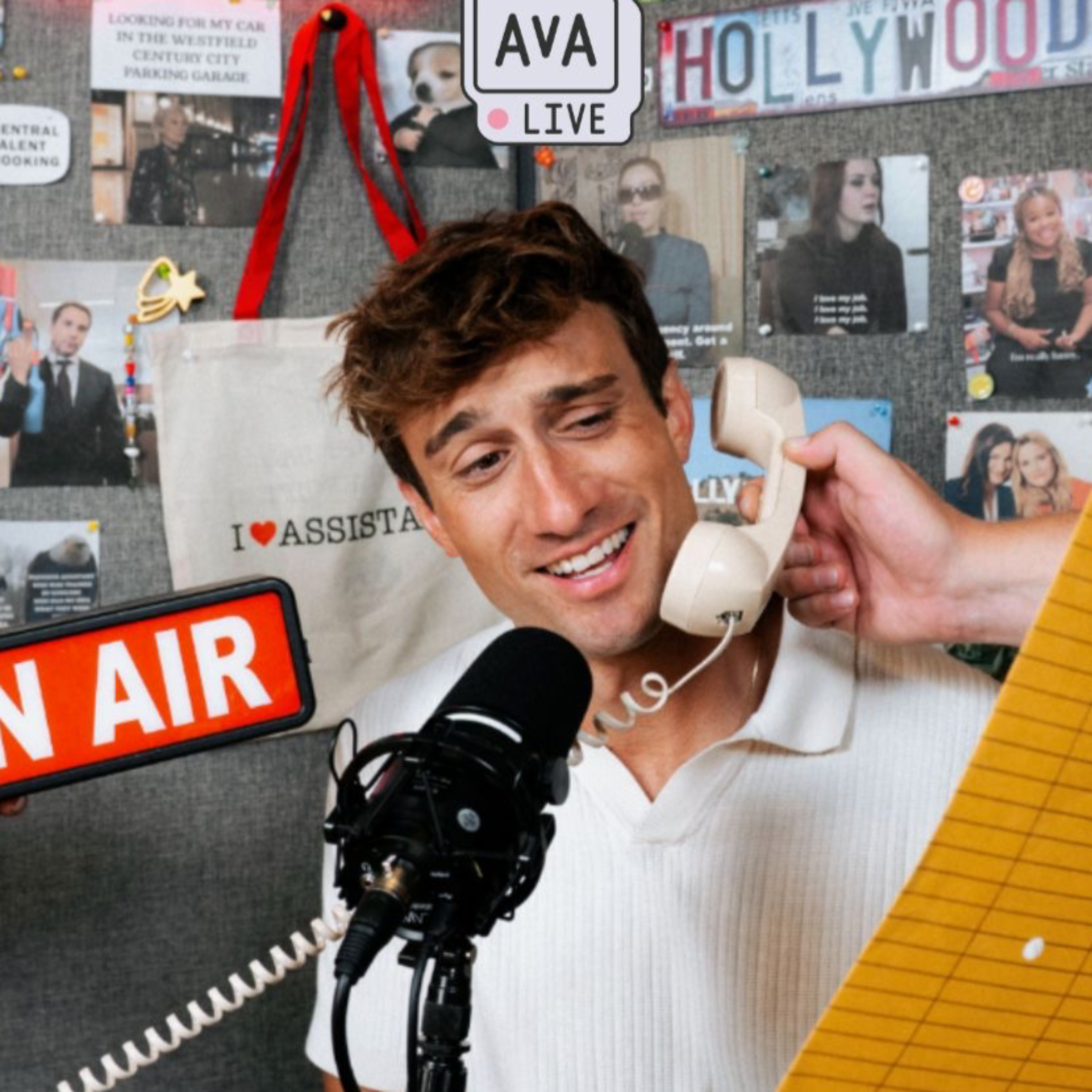
Ari Shaffir, glamBOT Cole, Bustle's Editor-In-Chief, JT Barnett, Mt. Joy & Hollywood Camera Ops
1h 23m 49s
The episode features a record six guests, including Cole Wallace, Ari Shafir, Charlotte Owen, and others, discussing pivotal trends in Hollywood and media. A central theme is the growing value of authenticity and live experiences as AI enables mass content replication. Theater owners are pushing for protections around film exclusivity, while ABC files a free speech lawsuit against the FCC over a licensing dispute. Travis Kelsey’s new NIL agency Tecta connects 45,000 D1 athletes with brands, signaling a $4.5 billion growth opportunity. Cole Wallace recounts his early career journey—from editing content on Craigslist to directing red carpet events—highlighting the power of networking and authenticity. Ari Shafir emphasizes that comedy success comes from being true to oneself, not mimicking trends, and that live, unscripted moments resonate more than polished, formulaic content. Charlotte Owen shares insights on how media brands like Bustle are shifting toward niche, experiential storytelling and deep audience engagement, arguing that original content offering unique perspectives is essential in today’s saturated digital environment. The segment also features a social media "shredder" to counter negative online narratives about content creation, affirming that passion, authenticity, and resilience define success in the industry. Together, these discussions underscore a broader shift: value in media is now tied to human connection, originality, and individual authenticity rather than scale or conformity.
It is Wednesday, August 19th. Welcome to episode 20 of AVA Live. Thanks for tuning in for the past 19 weeks. We have 1,000 more to go. Today's episode, as always, brought to you by Central Talent Booking. We love them. They put together an amazing episode full of six guests, which is a record for us. So starting from the top, we got Cole Wallace, who's sitting about seven feet away from me. I can see his beautiful hair over there. Behind the glambot and so much more. We got Ari Shafir. Everyone's favorite stand of comedian. We might get canceled today, but it'll be worth it. We got 20 episodes in. That's fine with me. We got Charlotte Owen. She's the editor-in-chief of Bustle, as well as JT Barnett, who's a creator and the founder of Core. Kira, who is a camera operator, a real unsung hero of Hollywood. She's a cinematographer. And I'm a Philly guy. So I'm very excited to be hosting here, Matt Quinn of Mount Joy, who's on a world tour, stopping in LA this weekend. We might be having some tickets to give away. But before we get into all that, we have the biggest celebrity of them all. One of them, definitely the biggest, my better half. S.J. in the house. S.J., how are we? Talk to us about that jacket first off. Guys, the jacket is my life. It's become my new personality. It is an extension of me. I can't believe I didn't come out of the womb with it, but I'm kind of trying to, like, be dolly-parten, I feel. I think the hair and the jacket were giving dolly. It's given dolly. One of us has style and he's not the guy in a green shirt. But let's go through some news. We got a crazy week in Hollywood as always. We're going to go through four of the top news stories. I'm going to give my take. S.J. is going to give hers. Let's roll. First up, from the Hollywood reporter. About Paramount Warner Bros. I feel like we talk about this every week, but we have something new to cover a different angle. So Cinema United, they represent more than 31,000 movie screens in all 50 states. They're urging Paramount Skydance CEO David Ellison and California Attorney General Rob Bonta to settle their beef. S.J., what's your take? This is kind of like if the two hottest kids in school started dating each other and everybody has an opinion about it. And then it gets really dramatic. And there's a lot of beef. And finally, the principle is like, promise canceled unless you guys sort this out and squash the beef. And everyone's like, okay, I'm sorry. I didn't really mean it. Like, maybe we should, it's fine. Like, you guys can just date, doesn't matter. And so that's kind of what's happening. And so really the movie theaters don't, they're not as concerned anymore about this merger. And they care a lot more about the movies being made. And this really matters a lot for the younger generation too. Because if we want to be PAs, we want to get entry-level jobs, who want to work in sets, on sets, we actually have to have sets to work on. And so it matters more that the movies are getting made than with the opinions we have about the merger. Yeah, a lot of theater owners at this point are pushing for protections around theatrical output, exclusivity windows. All the things we talk about rental terms, access to films, they've decided that essentially emerging studios better for their business. We're behind it as well. Always got to protect those studios and movies. Next up from Deadline. We love them as well. The title ABC Files First Amendment lawsuit against the FCC claiming the administration retaliatory campaign against its free speech. That's Jay what we got. So this one is a little bit more serious. But basically what the truth is the FCC wants to do an early renewal for the license for ABC to broadcast its network. And the issue with that is that they're trying to do it quicker so that they can just take away the license. But without the license, ABC is not going to be able to broadcast. And so I would really, really hate it if ABC had to revert to posting on X in order to have freedom of speech. Brendan Carr called it, said we can do this the easy way or the hard way, which sounds a little bit like a bond villain. So that's for sure. Yeah. But yeah, so we really want to make sure that this all gets settled and works out for the better. We love free speech here. We got a comedian later. I should fear who believes strongly in it. And we all do. So shout out free speech everywhere. Last story here. Second last Travis Kelsey. Mr. Swift over there. Him public publicist group in three art sports. They're launching Tecta, which is a new agency helping brand strike NIL deals blah, blah, blah. There's a lot of words. Why does it matter? Publicists is one of the world's largest advertising marketing firms. This deal is now giving them access to 45,000 D1 athletes across 68 universities. I was a D1 athlete. I'd be making $0 if I was part of it. But it's good for athletes out there. It's also good for a lot of people in the business who want to break into sports. There's a ton of money in NIL. It's a 4.5 billion with a B market. SJ. Are we making money in NIL deals right now or no? I mean, I believe I think we just open the floodgates to a whole new world of opportunities, which I mean, honestly, I'm honestly reconsidering just reenrolling in Chapman just to try out for it to soccer. We were D3. So maybe I wouldn't make quite as many as much money on brand deals as like if I was going to USC or somewhere. But yeah, I think this is a really great new market to like break into especially within branding and sports and all that good stuff. So it's really exciting, actually. And I love that Travis Kelsey, the man of the hour is behind it all. Man of the year, I would say. The guys everywhere. Honestly, he's got football to worry about now though. No, literally. Now he's going to talk about college student problems. We got it. Not a problem if you're getting 4.5 billion across, but also shout out Carlos Lerma from the chat. He's watching this as I run across Manhattan to deliver a hard drive to an editor. That's an unsung here right there. Shout out Carlos life on the chat. Last story here. Oh, wait, Emmys. Nams aren't new. But what's new here is NBCU. Some of those nominees sent us a little video, given some tips and tricks to all those young people out there. Let's roll it on your community before you find your job. There's no such thing as faking it to you, make it. Just make it. Do more that is expected of you. Stay funny. Comedy and funny is two different things. Look to Chicago. Take every opportunity that you can. I'm going to reference Alan Moore, the comic book author. Yeah. See and read bad things. There's nothing more motivating than seeing something and going like, I could do that. Embarrassment is temporary. You got to try to be as good as you possibly can. Do not watch TV. Do not watch movies, but read scripts. Be kind. Cause if you're not kind, let's go to come back and mention the bug. When you go to the deli and you take the number, don't get out of line. If you stay there, you stick with it. One day your number will be called. It's something that you have to do. Living every day as an artist is your job. Shout out to all those, especially Ariana Maddox and I feel like she's everywhere. She send us a little video during our word show. But someone that may know more about red carpets than anyone is sitting right next to me. We got Cole in the house. Welcome to AV live. It's a pleasure to see you. Excited to be here. Thanks for doing this in studio. I think we haven't seen each other maybe in two years when you made me do the glam bot. Made me. I begged you to do it. We're going to roll the video at the bottom. But how are you? I'm doing well. I'm doing well. And for people that don't know you out there, they obviously don't have social media. Who are you? What do you do? And tell us a fun fact by yourself. Yeah. Name's Cole Walser from Vancouver, Canada. Most known for directing the glam bot on E, which is a slow motion camera rig and all the big red carpets. But people might not know I've been a director for NLA for maybe 20 years. 10 working more than 10 working years. But a while now. Fun fact. That's a pretty fun fact. Yeah, I guess how have you been working for 20 years if you look about 25 right now? So you started as a child later. That's my that's my secret. Yeah. So that's the secret I'm going to hold to the grave. But you could probably just Wikipedia my age. So what was the first job in the industry? First job in the industry. Well, I started as an editor. Like when I moved to LA in 2006, it was like content wasn't a thing yet. And so you could get jobs by just telling someone you knew how to edit because you couldn't bluff it. You know what I mean? And so I would literally do Craigslist jobs editing. I edited like a bunch of random movies and I knew a lot of dancers when I first moved to LA. So I would edit like choreography reels, highlight reels, that kind of a thing. So like in some sense, that is a bit of a start. Like I would call that kind of Hollywood adjacent. But my first time working with like any kind of star was with Miley Cyrus in 2008. We directed the I directed these online dance battle videos that were like one of the first time celebrities were really like making content online, which was wild and epic for sure. How did you get your foot in the door with someone as iconic as as Miley? It was through my friend. So like I said, when I moved to LA, I mean I used to dance, I guess that's a fun fact. I used to like beboy and do like hip-hop choreography and stuff. And so I knew a lot of dancers and my friends, Tree Suspendoza and Allison Falk were choreographing for Miley Cyrus during her Hannah Montana days. And so this is like, this is this is this is the lore. So there's like, you know, step up to it, just come out. And we were trying to get some some interaction going between some of the cast members. And so this John Chu had this idea to do this like online dance battle. And then Miley needed a director and I had done a couple little like small music videos and like small things. And so Theresa and Allison asked me to direct Miley's video. Well first they asked me like, do you want to do it? Of course you want to do it. You're doing it. And then so we called all our friends and we shot a couple of dance videos over. I mean there was like, we released one video. They released one video. We did another one. They did another one. We ended up doing a performance directing a performance on the Kids Choice Awards, which actually ends up being kind of like full circle. Why I end up doing the go-on bot, which I started eight years after that. So there's a lot of like interconnectedness in Hollywood as I'm sure we all know, right? Yeah, early career people, a lot of people, you know, young people out there are looking for work right now. When we talked earlier, you had mentioned a lot about how you got a gig with pink, I believe, by, you know, doing work and putting yourself out there. How much do you urge young people right now to just get their foot in the door? Or do you you think it's important for you to hyper focus on a
a certain role that they're really looking for. - Ooh, this is a really good question. And I think there's value to both approaches. There's always a question of like when you're freelance and when you're doing something creative, it's like should you do some pro bono work, right? And I think like the amount of people asking people to do pro bono work, you should not do any of those jobs. But there is a few occasions where I think it is worthwhile. And so my job, so my second sort of foray into Hollywood was directing stuff for pink. And the reason why I have that job, or I got that job was because my good friend Allison Falk, who was doing some of the money stuff, she went on to choreograph for pink and she asked me to come film like some behind the scenes, footage just for her. She's like, hey, do you want to just like come? You can meet some of the people and like 'cause it was her first big job. And I was like, of course, yeah, I got you. So I came, worked for free for a day and then met Alicia, who's pink, and then Bass Halpin, who is the tour director. We all kind of caught a vibe and then they like hired me for like five days and that five days ended up being like seven or eight years. - It seems like a lot of the success, well obviously it's through incredible hard work, but it's through a lot of the people that you know. And like you seem to want to be one of the most like people you've been incredible to me before we met, but your network's incredible and gotten you into rooms. Like how much do you feel like you were focusing on that early and do you wish that you had done things differently when you were so called networking? - I don't know if I. It's hard to say if I wish I'd done things differently 'cause I am happy with how things turned out. - I would be too. But I do think like, you know, the network is super, super valuable, especially, but you know also like when I moved to LA, like I was first starting to work in the industry 2007-89. It's a very different climate, right? Like networking did mean like go to an event and like actually network in person. Now obviously like social networks, like you can connect with other people and I still think that's super valuable today. But I do think that there's really just something about sitting in a room like part of the reason why I wanted to come here and do this in person. There's just something extra about like being face-to-face with someone and I do really think that like relationships really help you in your career. And that actually, also I mean you hear it too, that extends to like why I make an effort to be kind to people because you know, it's like you never know where people are gonna end up. So I try my best, I'm not perfect, but we do what we can. And yeah, I think it's super valuable to network and yeah, to just be, you know, good person. - You had mentioned networking's changed a lot, but the industry's also changed a lot too. And you've been involved now for a long time. How have you seen the biggest changes in the industry on Fold and what's your prediction for where it's added from where you sit? - Ooh, yeah, things are changing still at such a rapid pace and I'm trying to understand and see the future and where it's gonna go. It's interesting 'cause I do think like, like basically we're at this point now. I guess like, you know, earlier, you could sort of consume all of the content being made. Like you could watch a network show from like morning to night and you see all the shows, right? But with Netflix and with social, now there's like literally too much content, right? And so you can't consume all of it. And so everybody's eyes and attention are getting pulled in different directions. And so I think like you really need to have a good reason to watch something, to use your attention on a certain thing. And I do kind of think that like live things are a reason to watch and a thing that can pull people in because people watching home like, no we're doing this right now. And there's sort of a kind of like a baked in, either immediacy or value to it. So I do think like live events, like sports and things, how that transitions into like movies is another thing. I mean, earlier you guys mentioned like the theater tickets are up and that's another thing. We're like that performance is happening right then and there. You have to be there to experience that. And so I think we're placing value on those kind of experiences, where that's gonna go for like TV film content. I have no idea. - But I think for you, you mentioned live, like what you're doing and I joke before, but like when I did that glam, but that was like, I was locked the hell in. - But there's an element of doing things live where there's no safety net. There's real authenticity around what's happening in the moment and there's a lot of unpredictability. So you do that. There's also a repeatable format of what you do when people are scrolling by, hopefully they're seeing these memes with you. It's like if I see you walk by or they glam, but I'm like, I'm watching this video because I know it's about to happen. You see a lot of men in the street stuff trying to replicate that. Was it always from the beginning when you were framing up the shots to post on socials? Was it like immediate success for what you were doing with the glambotters? It's something that you learned along the way and shifted how you were framing things to see the success that you've had. - Well, with the glambot specifically, it was the success on social was pretty immediate, but also it's not like that's where I started my social journey, right? Like I was directing commercials and making content and even directing glambot. Like I started in 2016. So, you know, 2016 season, 17, 18 and 2019, I kind of started filming some behind the scenes and kind of started doing some content, but then 2020 was really like where I had it kind of like locked in. So it already been doing it for many years and it just sort of like dawned on me that like the before and after. And also the technology, like you finally around that era, you were able to post like minute long videos. And so this really was like the first time I could actually like share kind of like short form content. And yeah, and it was the first time people seen like behind the scenes of like what this world is on the red carpet. And so like it really, it did take off quite well. This also was like during the pandemic, during the time when like everybody was getting on TikTok. And so it was just kind of like the perfect storm of like new format and also sort of like novel in the sense that like back then, like even 20, like 18, 19, like people weren't really sharing process videos. It was really like, look at my life on this jet or on this Greek island or whatever. And here I am being like, oh here's a bunch of equipment and like how we make this thing. I think that type of content was novel back then too. So people were like interesting because that was different. It was kind of like the perfect storm to kind of like launch my social media career. - I love it. And I think there was a shift away from it towards ultra polish. Now there's a shift back towards behind the scenes. No one knows a red carpet better than you though. Take us behind the scenes and what actually happens on a red carpet. - The red carpet is so crazy. I mean like I obviously was familiar with them, but like being like ground zero and like the Oscars or the Grammys, you really don't realize just like how many people are screaming at once, you know? And how big the carpet is. Like it's like a full street, you know? And it's like, it'll take you minutes to walk from one end to the other. And there's literally outlets everywhere. So when people are coming in that's like, they're just getting screamed at the entire time. And then so I'm typically for whatever reason near the end of the carpet. And by the time they come to me, it's like either they just wanna go straight inside or like they've been yelled at for like five minutes already. And I'm like, hey, you know what I mean? But thankfully people tend to stop for me. And so that's also part of the reason why like I try to, I try to like calm the energy down. Because a lot of times it's so just crazy and just like back and forth. We have a little moment we can connect and then we can try to like come together to figure out like this one special little moment that's gonna look like glamorous. So yeah, that's kind of my approach. But it is, the craziness is just, it's unsurpassed on all the red carpet, that was crazy. - It is, has there been a moment that stuck out to you during your career where like, holy shit, I've made it? And you feel like I belong in this industry? - Yeah, like the belonging thing is always a thought in your head, right? So like, you know, even like the first, like there's obviously being on the red carpet of the Oscars for the first time, you're like, man, like I'm here, this is crazy, you know, for sure. But I also think that like, you know, I always, I view successes, fleeting, right? So it's like, it's really hard 'cause I don't know if I've really like defined like me belonging. Though it does feel so like now, but I think it's like many, many years in. Like there was a point where I kind of realized, I was like, wait, I'm kind of like a staple at the award shows because the host change all the time, the nominees change all the time, but I've been there for like 10 years. This, this coming Emmys will be my 10th year at the Emmys and my 10, like I've kind of become this sort of familiar face. And that realization, I'm like, oh, I've kind of like ingrained myself into, into award show pop culture. And even like, you know, like Emily and Paris like parodied the grambot on their show. And I was like, okay, like this, like something has happened like where we've infiltrated sort of like pop culture. So that was quite flattering and definitely a sign of like, okay, there's some, there's some kind of like authority in this world or made it insensitive. - I think it's also like, there's a 10,000 hours thing where you're doing one thing and being coming an expert at it. A lot of people try to do a piece everyone. You're doing one thing, doing many things in life, which we'll talk about a second, but that one thing, you stuck with it, there was immediate success. But there's a repeatable element towards it where you can then pitch it to other carpets where people are like, I want that on my carpet. Talk to us about the coffee company. We have a little gift you gave me here. One of my favorite, I mean, I don't get a lot of gifts here, but my first unboxing video ever, there's some socks here. Talk to us about what's on the bottom of these socks. And also this mug. - Okay, yes. So, so Creole Coffee is a coffee company I started. It's actually like just starting. I started wondering the pandemic, but then decided to rebrand and relaunch. My whole thing is like trying to just promote creativity. Like, I love the idea of someone waking up, sort of having a cup of coffee and then pursuing their biggest dream. So like, Creole is a company that is in support of that. So we have this mug, which is actually like, I call it the Compliments mug because it's all compliments I've said to people on the red carpet. So you can read, you know, it's like we're saying beautiful, stunning, gorgeous, you know what I mean? So all these little moments that I've had on the red carpet, I thought it would be fun just to drink your cup of coffee and get a little like little serotonin boost from like a nice little compliment. And then the socks, the socks have messages on the toes. And so you can put the socks on and however you mix them up, it'll give you like an inspirational message. So it'll say like, you know, create your big idea. So this is like the mantra you have for the day and the socks are interchangeable. So there's three sets, but there's nine different messages. So like whatever left sock and whatever right sock you find that day in your pile of clothes, it'll be like a new message for you to go kind of pursue your biggest dreams. - Dude, I love you. You're the most positive person I've ever met and you know, who's not positive? a lot of people online. And so. - And there's a little thing next to you, a new segment sponsored by many chat, shout out many chat. It's called Shreddit. So there's a lot of people online that talk negatively towards the creator economy as well more broadly. So what we're gonna do is we're gonna, I'm gonna pass these to you, and you're gonna read these. And you're gonna react to them. And these are messages that were anonymously sent online, just in random Reddit chat, shout out to many chat. - All right, we have the first one. - Hot take, influencing slash content creation is not a real job. And quitting education for it is foolishness. This seems silly because, I don't know, I don't know who said it, but content creators probably make more than this person. So that's a start. But then also like quitting education, is it, it's foolishness? There's a little foolishness to like pursue this type of dream, but I think that's what makes it exciting. So we can get rid of that one. - Yeah, let's do that. - Yeah. - You know what we're gonna do? We're gonna shred this. - Let's shred it up. - We had Alex shout out Alex, paint this shredder. - We're gonna see if it works here. We have a purple bedazzled shredder. - That's the most beautiful shredder you've ever seen in your entire life. - To get rid of these stupid comments. Here's another one. Being a YouTuber social media influencer is not a job. Oh, these are the same. It's kind of the same theme. Same thing. - Same thing. - Get rid of that one. - We're gonna shred that as well. We got one more here. Take this out, shred it. - Let's read how much garbage it is. These quote unquote jobs are nothing more than hobbies. They build no career skills, other than speaking and web skills. - Okay, so with that, what skills do you think you have gotten throughout your career? - Through content creation or just through content. - I mean, the people skills alone is something that you can take to any industry. I think that if you interact with people, working with other people, and it's like you interact with people in such a different level when you're trying to create something, I think it really helps, because you are both typically managing people, but then also listening to others. You're listening to brands and their sort of desires, but you're also managing people that are working for you. Being on both sides of that, I think is super helpful in any career, and like you can apply it to anything moving forward. So like, there's a lot of skills. I don't know, web skills don't even make sense. - What are web skills? - I don't know, I think I was written in like 1999. - This person who was talking about HTML for sure. - I'm gonna read this last one here, and we're gonna shred 'em. They're working comparatively less hours in the average American getting paid far more. Maybe getting paid is correct, but what about less hours? What does your work do? - There's no way. The problem with being freelancers is that there's always more work. The number of times it's reached 10 pm and I go, I can do this thing. I just got out a bed at five in the morning, actually. I couldn't sleep and I got out of the house. - You're just so excited to be here. - I was, yeah, yeah. And I had these things in my head. I was like, "Oh, I gotta do this, gotta do that." And it's relentless and it's endless. And I love it, but at the same time, you gotta find the right balance. There's no way other people are working as much as creators do. Especially when you're starting, you're grinding. - You're grinding, so you know what we're gonna do. We're gonna shred these. - Yeah, get rid of 'em. - We're gonna shred 'em. These are misconceptions and bad ones. Get rid of 'em. - See you later. - We love you, Cole. You're the best. - Thank you for having me. - Make sure there's absolutely be dazzled. There's glitter all over my hands. We work hard. Cole, I appreciate you joining. - Thank you, man. Hell yeah. - Thanks for having us. Cole, we'll see him. We'll see him on the red carpet. - You know it. - You know who's been on a lot of red carpets and the other side of it. Well guy named Ari. Ari Shafir. He is a comedian. He's a stand-up comedian. One of the funniest people I know. One of my favorite people I know. Let's bring him onto the show. Ari. How are you? There he is. - How are you? - I'm well. How are you? So it looks like I believe London LA, where are you at right now? - I'm in another dimension. I've transported here not too long ago and I'm trying to like make my way about, but speaking crazy language here. - Yeah. I mean, he's got a, I like the dimension wherever you're at. I want, I want whatever in there. I got to put in my Diet Coke right here. - Yeah. I've been in Airbnb in London. - I love it. How's the move to London been? - Difficult. (laughs) It's pretty unbelievably difficult. Not found a place to live yet, but here, over two months, not even to have any prospects. They're pretty, everything's a little different in different countries. The anti-immigration here is different than the anti-immigration in America. So I'm not getting shot here, but they also make it incredibly hard to rent an apartment as a new person. So I'm getting used to it. - It seems like a pretty good trade-off. I'm not getting shot. I can't find a place. But you know what you find a place? You can't get shot in there. I'll play. - Yeah. I love it. My dog goes to sleep with the gentle sounds of stavings. - That's beautiful. (laughs) - Yeah. - You got a production guy. - He's got a production guy. I am. - Yeah, gunshots wake him up. But let's go to the early career. I think a lot of people in these interviews are going to just harp on and talk about this success you've had, which we will. I want to go back to what I think, well, actually, I know because I looked on Wikipedia. One of your early jobs, running the door, answering the phones, I believe, at the comedy store. So answering the phones at the comedy store, take us back to that moment. - Yeah. It was New Relay. Graduated, uni. - Yeah. - A wonderful job. - A wonderful job. (laughs) Got to get the football tickets left. Yeah. And we're going to jobs. So I moved to LA and I was driving by the comedy store. I'm like, this looks like a good way in. Young Jewish boy. He was supposed to work for the bottom. I didn't realize that's not how it really works. So yeah. They hired me on the answer phones all day. My way in. And eventually, they moved me up to working the cover booth, working the door. Seating people. Pretty wild. - Do you remember your first time then playing? Take us through the track of you doing those jobs in the first time playing on stage. What was I like? - You get to, you get, same. You get to do your employee spots every Sunday, three minutes, which is pretty bomb. Pretty cool. A lot of bombs. And then eventually, you just get like, years later, you're regular now, you get to work with the rest of the man, the stuff I saw was such training for stand up. I mean, seeing people bomb, really good people, seeing people crush, seeing random sex acts in the back. Just like, I know humans were capable of stuff. The blow that flew around. It was like, I was just a young Jewish kid. I was just a young, formally religious, not too long ago. And now I'm seeing like all sorts of nutty stuff. And it was just like, what a training ground. A bunch of other misfit toys all showed up there to be employees. Yeah, it was, it was pretty nutty. Don't control so well. I worked with him. He actually hired me on the, on the phones. All these people, Steve Bernadier, Steve and League, we worked the door together, Bobby Lee. - We're taking you down memory lane right now. - Yeah. I haven't thought about it in a long time. It was, it was pretty wild. There was all potential. No, you know, you could be broke. It was living off McDonald's, meal deals. - So there's a lot of young people that lost the job. You can get you one of those. Maybe they have those in London. I bet you they do. But there's a lot of young people that lost the job, which is why I ask. A lot of people are looking at your career like, I want to be in his shoes one day. It's important to know where you started. But let's play a little game. What do you think? - Anyone young, it fucking sucked. It blew dude. I mean, honestly, it was like, you couldn't afford to take a girl out. You couldn't afford to take a girl out. You don't have to like, convince her, I mean blockbuster days, important Netflix and chill. But you don't have to convince her that's what you want to do. Make way with popcorn and just like, let's watch her move because you couldn't afford anything else. It blew. - What do you think of at the same time? - What do you think is the best and worst piece of advice for current assistants or young people working in the industry out there? - Assistance. - Or young people? - Yeah, I mean, assistance is like, okay, for on your guys's end, you mean like agents and assistants stuff like that? - Yeah. Find your own talent. Yeah, find your own talent that you want to get with and then grow as they grow. All the best guys, when I started, had their manager from like, when the manager was doing nothing and they were doing nothing. And then they were like, you signed with that guy? They're like, he wasn't that guy when I signed with him. And so, just like the big, the young comments wanted to get with the big agents and managers, the young managers and agents wanted to get with the big comments, but then, then he kind of happened. He finds your own little crew and like, you grow together. I did nearer on all those guys, all the casting agents, they were all like, they all worked the same bars, right? And then they just eventually became like people who ran the industry. - And what about flip side? What is the worst piece of advice for someone to go in and get fired tomorrow? What would they have to do with that? - We had a visit lady who worked the CIA, she's pretty much one of the most powerful people at Hollywood now, but she was working as a, like, putting the other, like, a stand-up TV show, Rachel. And she had to drive us from, in a minivan, from New York, into New Jersey, or vice versa. And man, we were all drunk. She was trying to do her best, and we were all, like, throwing shit at her. And she was like, "Guys, stop!" And she was like, "Do you guys want to die?" And this one guy was crippling arthritis, who was in the back, and he just goes, "Yes!" [laughs] And she was around. He's dead now. So it all works out in the end. She's running Hollywood and that guy's gone. - Wow. So, arthritis is not the key to success, I guess. And let's talk about Hollywood for a bit, like, you've carved a career out, you're unapologetically yourself, you're authentic, you push the boundaries a lot, but it's seen a lot of success, obviously. And do you think Hollywood as an industry has something to learn from what's happening in comedy right now? - Yeah, probably. I mean, yeah, we're outsiders, general and think, we're invited to your parties. We were, like, not invited to any of it, especially comedy store, because we were, like, the real outsiders. Couple people did well, but really nobody knew anybody. I mean, just kind of, like, lived on our own, got better on our own with nobody's forming us. So, like, this will be good for a sitcom, or this will be good for, just, like, yeah, be true. You'll be fine. I mean, people will relate to that way more than if you're trying to recreate some shit in the past. Look at this session. You know, it's just, like, there's a bunch of nobody's doing some fun Hollywood stuff. I guess eventually. I mean, they didn't even take it. They kind of really know the whole story, but it seemed like they were, like, I will just do our own thing. And then everyone's like, every love this is really. good. It's not some dumb fucking Marvel movie rehashing the same shit. Oh, this is my crew, this is not your crew. You've got some both good guys. Shut up. I've seen this movie before a thousand times. Quit redoing it. It's they're all just making dumb shit for dumb fucks in the middle of America. So you're excited for this cool people in Appleton, but like fucking get them grow up. So you're excited for the 17th Fast and the Furious, right? I'm like, well, I do love those. They are pretty fun. They're so ridiculous and it's pretty fun when he's like driving off a cliff and he ropes. So dumb. We're going on. But it's fun. I love it. But yeah, I think going back to the comedy point, you've Napar Gasey just sold more than two million tickets. He's on one of the spectrum for gossip. Sorry. Plays it. He did something too. You got clean before anybody's selling to that's what I'm saying. He was true to himself. Yeah, that's what I'm saying. But then you have Shane Gillis, who I love, he just had a record for most tickets in a stadium. They have two very distinct types. I would say maybe you have a different feeling of comedy. But they're both seen success. Where do you see the industry headed? And what does it tell you about, essentially the industry as a whole? Well, you guys have always been like, we'll take what's already working. So Nate and Shane couldn't get sick going on. And then now they're massive. I mean, Nate's pitched for 30 sitcoms. And there was like, I don't know. Another begging him to do one. And it's like it's too late. Those are done on what network. Unless it's a streamer. It's like, you're all, they all died. We're even going to pitch something anymore. There's two places to pitch something. Three, like it used to be you take meetings all over town. You know, fuse, fuel TV, spike, FX, Comedy Central, HBO, all of them. And I was like two or three and they have all the power. So it's like, I think we're going to do our own thing, which they did. They're like, this has become huge in podcasts and other one. And I'm Netflix and all those people are trying to get into it and trying to like put it into a category. When the whole point of it was like, do whatever you want, let it get good on your own. You know, we'll do ad reads that are 18 minutes shitting on the product. And people are like, eh, all right, it sells. Who cares? Yeah, just let us run. We're also really talented. So like, let us run. It's still not going to happen. There's still going to wait for Shane to be that, that huge before like, you know, really, really come into him and Nate too. So, but I mean, I see it from your guys perspective. You're not going to just like do a show with a nobody and haven't failed. Hey, I mean, I'm on an Hollywood. I'm an outsider as well. I'm hosting this in a fucking nice and a little mailroom that makes shift to my garage. We just cover the industry, but we we we're on your side as well. Where do you want to write? You're right there. Yeah, we'll come back. Where do you want you mentioned? Whatever we want. Yeah, whatever we want to do, whatever our mind goes to. Let us do it. I had a friend for him. I saw a friend for him on right. He was working on a Chuck Laurie show, which is like the most basic boring middle of America. This will work type of show. And he said when he was writing on it, he goes, this let me write. I'm a professional stand-up comedian. You guys are having meetings about plot. He said, and I agree with him. He goes, I feel like a Ferrari idling in the garage. Like set me free. Let me write crazy stuff and then pull it back to however you need to. So like, I don't know if you want to do it. It was he Atlanta show. Nothing in the city. So like, yeah, yeah, every like once a season or twice a season, he'll just do like an unrelated sketch episode that's got nothing to do with the characters in the show. And that was never allowed before, but he made a musical career. So now they're like, all right, do whatever you want. You know, and it works. Some of the best episodes of that show were the one-offs. Yeah, that's right. I mean, Ron, I'm like, let us do whatever we want to do. What's the dream thing? The craziest shit that you'd want to do. What is it? You haven't done yet? I mean, I'm really just happy to understand up to be honest. Every time I get offered some like, some like, acting thing. I look at it and it's so rarely good that I'm like, I don't want to, I don't want to be stuck on this thing for three weeks doing something I don't believe in. And then my agents eventually were like, well, we're not going to send you what we don't know what you think is good. And I'm like, yeah, he's just half-sending me out. It says, you know, by only chance of getting on something. It was like, like, shame or stuff, like puts me in something. Do you think it's young people feel too much pressure to try and become multi-hive in a versus do what they love and stay true? Yeah, or doing what everybody else is doing. Yeah, you're kind of common with just as long bits like this isn't working in today's world to get ahead. You need to do crowd work and post those all the time or do like topical stuff and you feel like, I don't care about top of it. I just want to make fun of my sister. Then you're like, well, there's no place for you. So they feel as pressure to do something what normally do because of what would be successful. It's kind of sad. It's kind of throws people off. That's why the benefit of the comic store back then when nobody was going is like, we had no chance to succeed so we could really find our own lane, find what really we liked, get dirty, get clean, get whatever. And there's no like, you know what a young like painter gets some success early on, they're stuck doing that same style forever. And like, they would have evolved. But so I got lucky. I never booked any sitcoms or stuff. Or I'd be like, pretty lame now. Yeah, I mean, you're the opposite of that. Do you think social media is good or bad for the industry? It's great. There's that negative of like trying to keep up with everybody. But man, we no one had chances before. Yeah, in stand up. I don't know about acting, but in stand up, it was like, nobody had a chance to show that they were good. If they're like build a career with feature on the road and hopefully they bring it back, people start to get to know you and like, only Comedy Central HBO could be like, we're going to give you a special that was your only way. And there's hundreds of comics now who do in theaters. There were none back then. It's such a booming time because everyone can find their own thing. So if we were Comedy Central back then or Netflix now, you know, they're curating a certain thing. And if you don't fit in, then it's like, we can't have you know, or if we already got our three gay comics for the year or two old timers or our four, you know, young ones. And so like, well, then the fifth one gets nothing. But now it's like, no, they get punished. Look at Marcelo. When he got on SNL, he was a stand comedian. There was like a four episode like tester. And man, he got 50,000 Instagram subscribers every week. And he was, look, they might not pick me up. They did. He's killing it. But like, they might not pick me up. But I'm taking those followers with me. And the old days, you're off after four episodes and people like, I kind of remember you. But now he goes, now I have, I'm able to sell tickets now because of that. It's a great time. All the negatives. Like, thank you. I mean, there's so much, there's an overwhelming amount of negatives spoken by you people are like, how clearly better for us. Yeah. So clearly better for us. I think there's more pressure. But like, even the people who like some young comics, like I put up my special on YouTube, but only got like 500,000 views. And that's like a negative. But I tell them like, you know, I had a comedy central special in the later years of comedy central. And it was one of their, their highest rate of specials. And they didn't know, they didn't understand that I had like an internet draw. So they were kind of surprised. But like, you did like third best for the year. And that was 500,000. So I'm like, you guys have done that same number. And, and it's like a negative. It's like, it's just comparing yourself to everybody else. I love it. You know, I have like super wealthy friends. They're like, if you applied yourself, you could be rich. Like, bro, I am rich. I'm just not a multidilionaire. You, you, you're that, that Airbnb upgraded to a mansion in London very soon. That dog will be living life. I can even pay a extra. You'll do it. So we end every segment with a little question called unsung hero. So during your career, who is someone behind the scenes that has helped you out, you want to give a shout out to damn one person or two. Okay. Here's one focus on the positive. So the industry seems to fucking shit on Joe Rogan. Like he's this evil guy. Let me just tell you this. Not only to get me a therapist when I was ready to kill myself and get me a paper on my, you know, anti fucking suicidal pills. He took me on the road with him. Showed me how to be a real comic and go right out of crowd. He also pays comedians better than any comics ever paid. I was already getting paid more than anyone who paid me as a feature. And then he just said, hey, I'm paying you a hundred bucks more because you deserve more. I wasn't even asking for it. I would go home with all my money because he wouldn't let me touch my wallet. And everyone wants to shit on them because they don't agree with every view he has. The guy got mushrooms legalized. Chill the fuck out. Pretty says the best answer in history. Usually it's someone's like my mom or my, my coach, but that was past it. Yeah, damn it. My mom's a very helpful fuck. That's going to get me in trouble. Yeah. No, you, I said too. You didn't say or so. That's on you. We appreciate coming on the show. You're, you're, you're a good sport and you love a good wisdom. And thank, and you're out somewhere you're doing. We're going to go check out the Netflix special. See you live. I've never seen you live in person. So that's my New Year's resolution. Bro, any comics, see him live is a hundred times better than seeing him online. 100%. I won't be on stage any time soon, but I'll be in the crowd. I appreciate you joining the show. Where do you live? I live in London. I live in LA. So yeah, I was like, I mean, yeah, I'll get you to take us next time. No, that's not why I'm asking, but thanks for joining the show. We appreciate you. Enjoy the, wherever the zone you're in on those on behind you. Whatever you say that, yeah, we'll see you. Yeah. Thank you, all right. Good sport. Probably get us candy.
with the amount of profanities that was used, but from someone that is up on stage, to someone that is in the media world that has, you know, unbelievable reputation. Charlottetown, and she's built an incredible company at Bustle, she also started as an assistant, which we're gonna ask her about. Charlottet, welcome to Ivy Life. - Hi, great to have you, thank you for having me. - Of course, when your name came up as someone potentialist, I was like, yes, please, I've been following your career for a while, but for people that don't know you, give us a quick intro. - So, my own Charlottet, I've been with BDG for eight and a half years. I started out in the UK when we launched Bustle's UK office. And then since then, I came over, I moved to New York in February, 2020, which I don't recommend just before pandemic. I've spent the last five or six years here overseeing the different media brands at BDG. I started just on Bustle, now I work across all of the BDG brands on the editorial side. And then like you say, I started my career as an assistant at Vanity Fair many years ago in 2011, which feels like a different era of the internet and magazines, it was a wild time. - And before we get into that, 'cause we're gonna start at the assistant, but can you just give us a scope and scale of what Bustle is and BDG as a company? - Yeah, so Bustle itself is a brand that sort of speaks to women age sort of 25 to 35. We cover a mix of entertainment, beauty. I'd say a two about big tent poles. We're very big on books coverage. And that any of the sort of key passion points for our readers coalesce around that. And then a big growth area for us as being sports. Our readers are, you know, I think desperate for a connection and hobbies and fun ways. And I think sports is not only the IRL of going to a game, but the fun vibe of watching it with all your friends as well. So that's one of our big tent poles. You know, a lot of our connection with our audience comes on social media. We have nine million followers on Instagram. We're very dedicated to sort of entertaining our audience there. And then on the site we're very committed to basically trying to take them into rooms and places that there may be not themselves and get them information that they can't find elsewhere. Bustle itself sits within BDG, which is our parent company. And so I also oversee Nylon and Elite Daily. The Zoe Report, Scary Mummy, Fatherly, a sort of host of brands across the spectrum. Though my role is sort of different on those brands because they all have editor-in-chiefs. So with those, I'm sort of more like a sort of business support and sort of strategy lead, rather than in the day-to-day of deciding what the brand should be and how it should speak to its readers. So you're across a lot. What area of the business are sectored? Do you see growing most rapidly right now? I think experiential and how that ties into media brands is a huge growth area that advertisers are interested and also our readers are really keen to find ways to connect with our brand IRL. Nylon has had a big experiential strategy for the last five or six years. We show up at Basel, New York Fashion Week. We're at the Surf Lodge in Montauk. These are, you know, often quite sort of more focused events attended by influencers and creators and celebrities and people who are sort of out in that space. And they're very fun and very music focused as always, fantastic performers. And I think that we are increasingly seeing that as an interest point. Basel, we're going to have an event in LA in November, which we're very excited about coalescing around wellness and how to live well. So there's a lot of different sort of temples that experiential can live under, but I do feel like that's a big growth area for us. And I lied. I do want to stand this topic before we get to the assistant days. But quote that you had recently was AIs making generic content worthless. I also think it's making experiential and IRL more valuable because of the human connection, live is becoming more valuable. What else are you seeing become more valuable in the age of AI? I think it's stuff, it's reporting that doesn't exist anywhere else yet. You know, I think the era of aggregation of writing up a new story there. You know, we do sometimes do that. That's important for our audience. We don't want them to feel like we're just ignoring certain topics. But I think any kind of service that synthesizes a bunch of information that already exists on the internet is not something that's particularly helpful to our readers. I think they can find that at the places. I think an exception is where you bring a particular lens. And I think one of the other significant shifts that we've seen over the last five to 10 years is that audiences are becoming more niche and more sort of specific on niches people say in America, but more sort of focused and narrow. And I think if you can bring a really focused and narrow perspective to a piece of service, then yes, that's an exception. But generally, you need to be, I always say this to our team, our stories need to say something that doesn't exist anywhere else on the internet. And it needs to offer something that you can't find elsewhere. And so I think that is the cornerstone of any kind of good story, whether it's on social or on site. And for the record, I say niche as well. So maybe I'm part of your world. But I think there's a lot of pressure for us too. It's like we service a young audience that wants to break into entertainment, took me eight years to convince seven years to convince advertisers that that was worth investing in. A lot of people now are flocking towards the more niche media areas. Why is that becoming so much more important, though? I think it's, well, we, the final digital media boom of the 2010s, everyone was trying to be everything to everyone. It was about scale, right? And then I think that the became cheaper and easier ways to acquire eyeballs at scale. And so then it becomes a question of what new wants can you bring to have you connect with audiences? And I think that's where experiential or like you say, a really specific focus perspective can add value and do something that you can't get when you're just buying like eyeballs on little boxes on screens. And I think, yeah, the niche focus, it's interesting. I think it's also just part of the saturation of eyeballs. And I think people are just looking for something different and want something that they haven't seen before. And so it's forcing all of us to be more inventive and more creative. And I think that means you have to find a rabbit hole and like, delve down it. Yeah, and find a way in is what you did in the industry. Let's go to the assistant days, walk us back, take us back. What was it like? It seems like every girl's dream, where every boy's dream to be a vanity fair assistant. But what was it like? It was amazing. I mean, it was, it was hard. I was 22, not long just out of university. I was assisting the publishing director at Vanity Fair in London. And she oversaw the kind of whole of the London office, which is the satellite of the US office. I did a lot of grocery shopping, a lot of formatting. One time I free-farmated all the images and then got them frames that were hanging in the boot room of her house in the country. But it was also just the most incredible learning experience. And I think, you know, I really understand the appeal of remote work. And I think there's times when it can be helpful and valuable. But when I think back to what was most adhesive about the assistant days, it was really just the opportunity to be in the room, in the room that you weren't necessarily contributing anything to the room yet. But you could just listen and you could block. And I think, as an assistant, my boss used to call me on Fridays and she was driving to the country and I'd go into her inbox and I'd have to read the emails out loud to her and then type the replies on her computer. And it was really just like a crash course of like what, you know, the chairman was writing to her about what was going on at the business level, what the interpersonal politics, the people fighting with each other, how she was like straightening out those disputes. It really is just the best shattering, I think, at, you know, at its core. And I think, you learn a lot. It was kind of a bit like finishing school in that way. And, you know, the British media scene is very shaped by class. Like there's no two ways about it. And I found that difficult in many ways. But I also feel like the boss that I had really tried to help me give me the skills to navigate an environment and I was very grateful for that. What do you think people get wrong in the, the assumption of what assistant life is like? And that's a two-bar question into, what do you think makes a good assistant? I think what I'll start with the second one. What makes a good assistant is I think you always need to be told through steps ahead and think not just through the blunt ask that the person is asking you to do, but what the problem is that they're trying to ask you to solve. And that's not to say that you go, you ignore what they've asked you to do, but I think you should always be thinking about, okay, what's the bigger thing issue that I'm there trying to solve for here? And how can I help that for next time? How can I anticipate that next time? It's honestly a little bit like the lady below stairs in Gothford house or in that movie where you're always like, you're trying to anticipate the needs before they, before they have it. I think you've got to have the work ethic. You can't be too proud for anything. Like, I was very much my approach to being assistant was like, there's no task too small. I would put my head down. I would try to do it to the best of my ability and move on. I think you have to take feedback really well. You just have to be willing to hear difficult things sometimes and, you know, just roll with the punches. But what do people get wrong about it? I don't know. I mean, it sucks in a lot of the ways that people think being an assistant sucks, but it's also you can get a lot out of it. And so I think you have to remember it's not forever, but there's a lot to add. I mean, what do you think? No, I mean, I was an assistant. No, I think I, I mean, I grew up watching Auditorage and a lot of it is crazy. Drew, but I, I think the opportunities that I had as an assistant, same as you, it's the people that put in the work, take it seriously. You're doing stuff that you probably isn't on your resume. You weren't hired for, but those people separate themselves quickly. They can show their boss that they care truly about the industry. there for the next.
the right reasons, but it's all about the rooms that you're getting in. I would never have gotten into rooms that I was early on or listening in on the calls and getting exposure to those people. So I think what you said nailed it. And we're gonna clip that as they say in the social media world, but excited to talk about that. But let's go to the current day. What are some of the media deals right now that showcase where the opportunity is heading right now in the landscape? - I think it's, people talk a lot about the Creature Economy and Personalities. I think that's a really interesting opportunity for media brands as well. Because I think people are off the idea of these kind of faceless entities. And so even if I think as a brand, we're often thinking about ways that we can have our editors show up and show more of their personalities and show the ways that they're singular. And I think when you think about the big deals that are happening for creators, whether they're getting on Netflix or whatever the adaptation is, I think I'm always thinking of ways to fold that into what we do. I think one of the challenges a bit like what you were saying about how it's taken you eight years to build, it takes some while to build IP that people care about. I think there are some runaway successes fast but generally a lot of the time we're trying to start stuff, do it as cheaply as we can, build it, fix it, fix what doesn't work after the first few times, improve it, keep circulating, keep improving. And then you start to see it having returns and then it starts to build towards big deals. But it takes real patience from the executive level at the business level to be able to do that. And I think you have to manage up to sort of like try and create the circumstances that allow for that and be willing to get down and dirty while you try to create something that has the potential to become one of those deals down the line. - Yep, so if you're a young creator right now or a creative exec, a rising one, where would you be putting all of your emphasis and focus on to try to build a successful career and entertainment? - I would be putting focus on trying to find something singular that only you do. I think there are like, listen, there are some podcasts where people just, it's two people chatting but it's still that the creator's individual personality. And I think that's true, whether you're an editor, whether you're a stylist, whether you're a writer, whether you're a novelist, like you have to lean into the things that you just are. And I think I found that hard early in my career, I was always trying to adapt and like, okay, this person needs me to be this kind of person, this person needs me to be this kind of person, but I think if I were starting out, yes, do that, while you're like navigating and trying to get ahead, but also really develop your own voice, your own point of view, your own singular thing that you do, you know, on bustle, the podcast I host One Night Stand is all about celebrities and their favorite books. And I was definitely feeling this pressure to be more out there and like maybe on camera. And I was like, I can't host about, you know, I'm not gonna post about what I'm wearing in the way that many people do wonderfully online. By love talking about books, this is something I can do authentically. And as a result, I think we've had real success with that, both with talent booking and with the audience and the amount of views that we're getting. And it was just like a kind of lesson of just being like, oh, return to basics of what you know you can do authentically and really well. And I think that's the advice I give to anyone starting out and I would look for creators who can do that kind of act, can take feedback but can still, you know, just narrow in on something. - Are you available every week? I wanna bring you back and just have you say that every single week 'cause that was incredible. But yeah, I think there's so much opportunity there too. And I think people fall into this trap of trying to fit into the sameness. There's a content abundance now. I asked about AI earlier 'cause there's positives around it because if you avoid it and become true to yourself, there's a lot more opportunity there. What is one hot take quickly in the last two minutes for the industry and where you think it's headed? - Oh, that's a great question. And I think it is a bit of a, we're in, I wouldn't be surprised if there were like fewer media brands in 10 years time and fewer creators. I think right now we're in this sort of big explosion. And I think we, I think anecdotally, we're all already starting to feel the winnowing and things becoming narrower. And so I think, you know, just for my own sanity of like everything that I'm trying to read and be across, I wouldn't be mad at that. And I think it's forcing all of us to improve, all of us to get better. And I think even though it can be sad when something goes away that was once beloved, it's also that's just life with care and you've got to keep moving forward and keep trying to win. - I love it. I lied, one more quick question. What is one book that changed your life? I love the testament of youth by Vera Britain. I read it when I was 18 and it's a memoir and it's set about, it starts during World War One. When her husband, not well, her boyfriend at the time, fiance and her brother and everyone's going to war. And then it lifts through the sort of feminist revolution of the 1930s and the UK and everything. And it just, you know, it's a bit of a like, you know, not emo 18 year old because, but, you know, you're just going through stuff a lot of that age. You have a lot of feelings. And I think it was just one of those books that expanded into my brain in a way that I was like, oh, it could be so much worse. But also, like, look at this incredible story. It just takes you out of yourself and I love it. And I always recommend it. - That's when I haven't read. I saw Tamara, Tamara, on the page this morning. I have read that to be clear, but I haven't. - Did you like it? - It was amazing. I don't read a lot of books. I'm learning to read well. I don't speak well either. But Tamara, Tamara, Tamara is a fire book. And I saw it as a wreck. We're going to, we publish a little book list and we'll include that. - Cool. - Cheryl, thank you so much. You're the best. That was incredible advice. Everyone out there takes it to heart. And also follows your career. It's been incredible to watch from afar and to now up close and seeing you rise from an assistant of anti-fair to what you're doing now. Taking over the world, we're excited to follow your path. - Thank you, thank you for having me. - Of course, we'll see you soon. Thank you Charlotte. We'll drop that book and the comments in a link to it. We have, next up is a guy JT. We love him. He's about a half a mile down the road. We're going to get him on video. We met about a year ago. We have him in the chat, we're going to bring him up. JT Barnett, he, he, I've been following him afar. I was recently in that kitchen behind him at a little coffee pop up. JT, how are we? - Great man. Great to be here. It's good to see you. How's that? - Thank you. - Talk to us about the coffee. - I host a temporary cafe at my house, basically every weekend for about 70 to 100 people. It started as a, it started as a friends birthday, just an idea to throw a little fake cafe at my house. And I love hosting people, I'm bringing people together. It was so easy to do. And so now I've done it about 25 times in a row. And it's really fun. I make every coffee, I love making coffee. And it's mainly creators, founders, people that work somewhat of marketing and all Los Angeles. And I've loved it, it's been really fun. So glad you got to come to one. - What's your coffee go to order and what's your favorite, what's your least favorite one to make? - I make a flat white, my favorite, my favorite coffee is a flat white. Dude, I do a signature drink at every one of them. So I make a menu. There's something that's like special that people will put requests in. My least favorite thing to make is probably matcha to any matcha lovers out there. I'm sorry. - I think my wife ordered that from you. - Saltella, she's in touch. - I'm not a matcha, I'm not a matcha person. But it's on the menu, it's on the menu for people. - I love it. The reason why I asked is because you said it was easy, but I've seen what you did a can. Certainly that didn't look easy. But you pull off these opportunities for creatives, creators, and execs to come and meet in person. I met a couple people there. Weed on CatchyBT here. She was at that event the next day. Why is IRL so important in a world where things continuously get focused to be online? - Dude, I think that I think everybody's overwhelmed online. I posted this yesterday where the amount of content people consume doesn't allow you to actually digest things. And if you can't digest things, you're not actually building real relationship because it's not actually getting into you the same way that an experience in person is. And so that's why I think this is an explosion of experiential. I also just, to me it's such a creative act of building something that is so immersive rather than like my historical has been content. And just the physical act of being able to create something that people can feel and experience has been really intriguing to me. And just like you were saying, if people come to us and a lot of the people that come are Los Angeles, not Los Angeles native. They're transplants that are here for work that spend so much time in their car or at the office. And they don't build their own community. And so coming to one of these to me is like, it goes so much deeper than just seeing a video of mine. And so that's why I'm pushing really hard into experiential which I think a lot of other people are as well. And they should. - Yeah, and we are as well. We try to do these make and feel experiential. I'm also a transplant that came here for work. That's probably why I was invited. But I see a lot of, there's, we have memes behind us. You have certain pictures behind you. You talk a lot about your creative process and the content you make. Can you walk us through a bit of your creative process when you're thinking about working with brands, working with creators or doing things yourself? - It always starts with the end consumer. It literally always starts with who's the people that I want in the room and what would make them have an incredible experience. This is the same way that I do content too. It's like, who is the person? And I try to get to, I try to really get to know that person and be curious of like, what are they doing right now? What's interesting to them? What are they not liking? And then that's where I go. So like with the thing that I didn't can, which is this party at a villa, I knew all the people that were in can that were going to be there and what their current experience was and what they were missing. So I try to fill in those gaps and really just like expand on that for them to be like, Oh, this was something that I did. A lot of times it's something that they don't even know that they need.
So I try to think about that and get really close to those people spend time with them and then everything from what's the actual physical experience? Like is there an activation? Is there a moment to what's all the creative around it? Who are the brands that should be there that makes sense in an organic way? All comes from the consumer. And you work a lot with brands. Point of view included where where my wife and about works. But what are some of the things that when you're approaching a brand in a in a in a quick way? What are some of the things that you're thinking about in order to either sell them on a partnership, sell them on yourself or sell them on the concept? I build out the full concept before going to a partner because I need it to feel or and it's such a buzzword. I need to feel organic. It needs to make sense for the brand to be there. So nobody that I partner with is just like a logo slap on somebody that I don't want to talk about. Anybody that I'm working with, it's like you are additive to the experience. And so for me, everything that I'm doing is I make the whole thing before. This is how I do my brand partnerships as well. I go to brands with the concept already done. And I say, here's the outline, here's the way it's going to be. Here's going to be there or here's just going to watch it. And this is why you're the right partner for this. And I want to work with you so much easier to get sponsorship that way as well because most of these brands don't want somebody coming and being like, hey, I would love to partner with you. What should we do? How? Yeah, exactly. So I try to build the whole thing out myself. And then that that helps me understand who are the actual brands that should be in the room that I like want to talk about. Yeah, I love it. We've got one minute here. I want to hear from you. Who are some of the brands or creators doing some of the cool stuff out there right now? You mentioned Kat. I think Kat's doing a great job. There's a friend of my name, brand that's he was on your show. Thanks. Last week. Yeah, like I look at I spent a lot of time with creators. So I look at creators that I think are doing a job of building community. I think they're both great examples. Like for me, it's always like who are people that genuinely care about their audience and that you can feel that. And how are they building that world around them? And I think both of them are doing a good job. We love it. Thank you to the best, man. I'll see you hopefully at a coffee shop soon. Your coffee shop won't be ordered much. I promise you that. I appreciate it, bro. Thanks for having me on later guys. See you. GG Barnett. Awesome stuff. Go check out the socials. Talks a lot about the creative process. Reminds me a lot of Orin who we had last week. Cool behind the scenes. Look into how brand partnerships are done, how events are thrown. And someone even more behind the scenes, her name is Kara. She's a unsung hero of Hollywood. She's a camera operator. And we are going to bring her life to go into and behind the scenes the world of working in Hollywood. Kara, how are you? Good. How are you, Warner? Thank you for having me. Thank you for joining. We appreciate it. Can you give everyone a bit of an intro on yourself? Yeah, for sure. I'm a camera operator and cinematographer. I'm living in LA and I'm freelancing and yeah, working on set. And now you're here. We love it. We need to, we have cameras in front of you. I wish we couldn't. We had another operator. Tell us about what goes into that role. Yeah, I mean, there are a ton of moving parts, you know, to create an image. You have a whole team using extremely technical equipment in a creative environment. And it really is a team sport like within the camera department and outside. So in this neat apartment, you have the camera team, but you also have the grip and electric team who handle and the like they handle the implementation and shaping of light, but you're also working really closely with the directors, with the producers and also almost every other department on set. For example, with production of designers and set decorators, we kind of create the environment that we're actually filming. And so you have to work with them closely like where are we shooting? What are we seeing and what goes there? What was your first ever gig in Hollywood and talk us through how you got your fun in the door? Yeah, so my first gig was actually an indie feature called Clawface. And it was a slasher, 80 slasher that we shot in Big Bear. And I was the gaffer. So we were living in Big Bear and shooting there for three weeks. And I just got really lucky. I had some great mentors and just had a friend who recommended me. And that was my first ever job. And yeah, I would say the word luck is interesting, because I think you clearly put yourself in the right position to be able to get that as through who you know. And then from that point, what you've done, talk to us a little bit about what you've learned about yourself and some of the challenges that you've had to face along the way in your career. Well, I guess being a cinematographer, you know, you're attempting to be a control freak in an environment where you can never fully control your surroundings. So, you know, you have to have a lot of patience. And I think there's a lot of just collaboration and you know, like being kind to yourself, being kind to others and just being communicative because it is a creative and fun process. And so, you know, event inevitably, there are location limitations. Or sometimes like actors do something spontaneous, something doesn't go to plan and you just have to roll with the punches. And I think, you know, having a team that really supports you in what the vision you and the director are trying to make as well as, you know, being willing to listen to other collaborators as well as how you, you know, really just keep going. And I think it is a test to character in addition to skill. And so, I've never been on set. This is our set where we're built out of fake cubicle over here. But what is something about being on set that would surprise people? I mean, I guess even before you step on set, you would be shocked with how much goes into the pre-production process. You know, you have to create an aligned vision with the director. You have the location scout. You shot list. You lens test. You light test. And you figure out if the camera move or whatever you're trying to do even is feasible in the environment you're shooting in. And you need to prepare that, especially if you're shooting on motion picture film because you only have however many feet. And so, I guess one example of this is I was shooting a boxing film. And we had this one shot where the actor was back to camera like this and gets punched and then spits blood on the camera. So first of all, we have to simulate, okay, how does it look like he's getting punched? And how does it look like there's blood flying out of his mouth? And he's shooting it, you know, or he's spitting it at the camera. And so, naturally, you know, like the director of the makeup artist and I decided to go to a public park and just test out, you know, spitting blood at like my phone. And I felt pretty bad because there actually were some kids ice skating nearby and they were probably really freaked out. But essentially, we decided that him turning around and spitting at the camera just didn't look real. Even if the punch looked real, it just didn't look real. There was something that was missing. And so, what we realized through this collaborative process that the guy who was actually punching needed to have a tiny little water balloon in his hand with a little hole in it. And so, when he punches, the blood was going directionally this way and towards the camera and that sold it. And so, by the time we get to set, because you know, like if I'm getting blood sprayed at me, we have a whole plastic, you know, like protection over the camera, over the lens. And you know, there's a huge cleanup process involved. You know, the actor has blood all over him. And so, we decided that like we need to figure this out before we even get there, because you know, time is always a constraint. So, we ended up, you know, practicing before and then by the time we got to set, you know, it was seamless. We had, we had a couple takes and that was that. I love it. And so, in the last two minutes here, I want to talk about the outlook on Hollywood. There's a lot of negativity happening. You know, I think there's also, from our point of view, a lot of opportunity. How do you see it as someone so ingrained in the work being done? I mean, I think there's just, I think there's a ton of opportunity. I really think like, you know, there's a lot of change and change can be scary, but I think there also are new ways of creating. I mean, so many people just post stuff online, you know, they, they make something and they share it, they make stuff with their friends, you know, we, I have people I know that shoot on their iPhone, you know, and even older cameras like this one, you know, they all, they all come back, you know. So, there are a lot of people who are shooting on film, a lot of people are bringing out their old camcorders. I think there is, you know, in a changing environment, there is, you know, this desire for your analog and, you know, older methods of filmmaking, but also I think the tools are so new and compact at the same time. So I think if anything, you know, you can get a small Insta360 camera that's this big and you can shoot 4K or you can use your phone again, you know, there, I think there's just a lot of new opportunities to shoot and I think, I think it's exciting. Yeah, and there's also, I mean, obviously, challenges across people losing their jobs, there's less work, you know, in our city, I'm in L.A. And yeah, I think that, you know, with opportunities, people who are self-starter, also people who put themselves out there, you're on the show right now, give you a huge amount of credit, I would never have been able to do that or early in my career. Real quick in the last 30 seconds, what is one piece of advice you have for all of the young people out there who are trying to find a job in Hollywood? Just say yes to as many positions on set as possible. Every role is crucial and interconnected and, you know, the quicker you learn how they work together, the better you will be in whatever role you want to be on set. And you never know what position, role, volunteer job, anything, where it will take you next. I love it. You're the best. Thank you so much. We wish you all the best. Excited to see your career continue to rise. Well, thank you, Warner. Bye. We'll see you soon. We love it. I love that little camera. I kind of want one of those. I don't have anyone here. We got big ones in front of me, but last but definitely not least, because we're episode 20. We got a thousand more to go. Matt Quaid of Mount Joy. I'm a Philly guy. I'm excited for this one. Let's bring him up. Bring him up. There he is. How are you? Hey, how are we doing? Can I get a go bird? Is that in the repertoire?
Oh, you're getting a go birds right off the rip cord here. Let's go love that what you're out. What's your outlook for the team this year? That's a good question. I feel like, you know, this is the time of year you drink the Kool-A and you believe you believe that that we will make AJ Brown pay. Yeah, yeah, we're gonna make a pay. I think there's like a joint practice. We're getting to niche across into the sports world, but go birds how to give you one of those introduce yourself for people who may not know, which is crazy, but yeah, tell us about yourself. Yeah, my name is Matt Quinn. I write songs and play guitar and sing in a band called Mountain Joy. And I'm from Philadelphia, so go birds. We love that. When did you start your musical journey in life? You know, like I feel like, honestly, my dad, my mom too, but my dad was like a big record guy, like record collector. Music was always on in the house. All different types of stuff. And then playing instruments, probably I was like 12 or something like that. Something like that sort of taking guitar lessons and then was super bored with that. Yeah, they were like teaching me like, yeah, I don't even know, like nursery rhymes on guitar. And I was like, this is super boring. And I gave it up and then I started just learning songs that I liked and that kind of got me back into it. Yeah, I think I did hot cross buns on that recorder. I think I took one guitar lesson and gave it up. That was my career. You've had a long career. It's been exciting to watch you hit LA also. We may talk about a little giveaway later. What did you learn about yourself throughout your career? And this is a two-barter. What was important to you earlier in your career that doesn't matter as much now? You know, I think I've learned about myself that like I just like the process of like trying to achieve a thing almost more than the actual achievement for better or worse. Like I guess the journey, you know, so to speak, to use a cliche, but you know, without all these goals and we've reached so many of them. And then it's really just like the like putting our heads together, rehearsing like that stuff is like, you're so in the moment and you're just battling. I sort of feel like that stuff. I love the most. I think that's that's kind of like how you end up in a band doing all this stuff year after year. But what was the second part? What mattered early on in your career that doesn't matter as much now? You know, I think probably like being cool. And like in the cultural sense, like, you know, there was like when I was in college anyway, there was like pitch fork and this idea of like being hip and cool and getting like a 9.1 and whatever that would mean for me as like a person individually from an ego perspective. I think that mattered a lot to me and like was maybe even disappointing in some of the like growth of Mount Troy because we've never been that type of a band. So that used to matter to me a lot. And especially in the last like few years, like I'm just like, oh man, what a curse it is to die in the hipster ghetto. I think they just gave out a recent 0.0 or for the first time in a while pitch fork still around shooting on people. We love it. But yeah, for you, a lot of young artists out there are trying to break in right now. They feel like it's an unbelievably saturated environment. Everything's on social media first. There's also still way to cut through you have artists every year, seemingly every day cut through you know and rise fast. What advice would you have for young artists trying to break into the into the world of music right now? I feel like it's getting tougher, you know, the pool has so many more people, the barrier to entry is lower, which is amazing in some ways. But like you're describing, I think it just makes the competition that much more difficult. There's that many more people participating in the competition. I think through I think it's just harder. So I think giving yourself some grace for that the fact that you're trying to do an extremely hard thing and that at the end of the day, like it's not any failure you feel like you're having is not is not necessarily because you're failing. There's there's a lot of luck that goes into this. You got lucky. I could sit here and describe to you guys the this one. Give us one. Give us the craziest break you guys have ever had. Yeah, the craziest break I've ever had is red rocks. We we were opening for rainbow kitten surprise at red rocks in 2021 you get that about a year in advance. The COVID happens and rainbow kittens surprise the sides, you know, totally fair that they're not going to tour that year because of COVID. And what ends up happening long story very short is the guy who promotes red rocks is like, hey, do you guys want to play a socially distance show like, and you're just the opener and we were like, yeah, but by the time the show happened, we got our own headlining show at Red Rocks because vaccines and this that and the other thing and we had no business getting that show ends up being a live record for our band and being a huge turning point for us. It makes that's a ridiculous break that things have to break your way. Just just make stuff you love make stuff for your friends like that you think your friends would love. Don't worry about anybody else. I love that. It's so refreshing here. Everyone's trying to chase the same thing. I think you put yourself in positions to be lucky, though. You put in you put in a ton of work to that point where it wasn't like you were just handed the opening slot for rainbow kitten surprise also one of my favorite bands and then given the opportunity to. Edline Edline Red Rocks, but there's a lot of taxiing amount. There's Torin's taxing. You know, I've been on the other side of it. Talk to artists. What is the reality of touring that may surprise people? Yeah, I just think like right now we got I got to LA three in the morning. And you're so wired up like I'd fallen asleep for a second on the bus and we got into a hotel, which was a bit of a weird choice. It's just the repetitive tiredness I think eventually kind of wears you down mostly in an emotional way. And then you're constantly having to be like, I like this person. I'm just tired. I'm not mad at you. I'm just tired. It's just that constant like you just woke up from the wrong and the wrong point in a nap. You know, and you just feel so grumpy. It's a good decent chunk of tourists vent that way and you just sort of have to kind of, you know, try to be zen it out three in the hotel. You got a couple shows this weekend. What we're going to do if you guys are down, maybe give away some tickets to assist. That's what you think. Let's do it. I would love that. And now it's what we're going to do is we're going to cut this clip. We're going to put it on our Instagram after this. And we're going to give away two pairs to two both shows this weekend at the Greek theater Mount Joy shows and made the best person win. I may try to rig that so I can go. What does it mean to be planted a venue like that? It's unbelievable, man. This this, you know, we played red rocks and are playing the Greek. It's like you do pinch yourself truly. I know it's a cliche, but yeah, it's like there's a whole last movie about getting to the Greek. There is and hopefully none of that happens to you guys as you go from hotel to back to green room. But what's the craziest tour story. I got to hear one real quick. Well, man, I just was telling this story last night. We were in a people are sports fans. This would be crazy. We were like, it was early on we were playing the anthem. And I'm a big like football or soccer fan European football. And we played DC, which is super random. You would never expect this. And we were eating pizza backstage and the knock on the door and Wayne Rooney, who people who don't know is like one of the all time great players in the sport. And we're like, what the hell is that guy doing here? It's super random. We're like a random indie band. And he, you know, somehow caught one of the band. I don't know, but the funny part about it was that he came in. We're all star struck. Some of us don't know who he is to be clear, but we're star struck. He has a very heavy liver pool or scouser accent. I understand a word he was saying. So a relative heroes in there just saying things and we're all just like, yeah, yeah, whatever he says is right. It's like, yeah, it's like Ted Lasso. You're just like, fuck yeah, no idea what you're saying, but we love it. That's amazing. Is that like the biggest, the most random celebrity running you've had at a show. It's kind of just random. I can't think of the top of my head of anything super crazy, but yeah, I don't know. I was just telling that story last night and it was super funny because our basis is like not a not a Michael is amazing. It's not like a big sports guy. And for whatever reason, like once we started understanding the worst coming out of his mouth, he was being super nice. He was like, you look like you could play soccer. And I was like, yeah, thanks. He looked at Michael. He was like, except for you, you can't. There's no way you. I love that. Well, hopefully we get some redemption this weekend, maybe find a field near the Greek two shows August 20th August 21st Friday Saturday. I'm to see you guys there. Go birds, Matt, you get a nap in before. I don't know, but we got to not for sure. I'll be ready. Yeah, we'll appreciate you, Johnny. Congrats on what you've done. And thanks for the words of wisdom. Of course, thank you for having me. Keep making this amazing funny content, Maya, our manager and our day to day manager are in love with what you guys do. So you guys are bringing joy to lots of people out there. So I appreciate actually before you leave. We got one, one thing we do this with from time to time. We're going to do with you. It's called unsung hero who is someone behind the scenes in your career, who has made an impact that you want to shout out that doesn't get enough credit. I'm going to go with our day to day manager Cameron. She, you know, I think obviously our managers done an amazing job and they've become the kind of the hero, but it really is amazing to see the amount of work create creative work sometimes even like making us look like a band that's way cooler than we are. And you appreciate her.
We appreciate you, Matt. Take care and we'll see you this weekend. Of course. Thank you, guys. Thank you for joining us. Matt Joy, goaded. We love 'em. We got a quick pre-recorded video from Kier Jo. He's going to talk to us about the leading ladies of entertainment. Take it away. Hi, I'm Kiera. I'm an ABA student ambassador. And today I'm going to tell you about this week's leading ladies in the business of entertainment. First, Alex Cooper, host of Caller Daddy and Queen of the Whole Onwall Universe is in serious talks to leave UTA and sign with CAA, though no deal has been finalized. This is coming afternoon while I received an investment from Patrick Y. Selen Jason Lublin from WME, even the company reported $500 million valuation. So Cooper's now being treated like a major media executive or talent brand over just a traditional podcast host. Next, the Warner Bros. EVP of Communications, Katie Martin Kelly is leaving for Netflix, where she'll become the VP of Communications film. She'll oversee communications for Netflix's live-action films, documentaries, animations, international film and TV and licensing, including a major upcoming slate like Narnia and David Fincher's next film. And this move comes amid uncertainty around the pending Paramount Warner Bros. acquisition. And lastly, 10 things I hate about you is being turned into a Broadway musical with previews to start August 17th, 2027. The production features the book by Lena Dunham and playwright Jessica Huang with Carly Rae Jepson working on music. And as we've seen, movie-IP adaptations have been a big trend on the stage recently, keeping a somewhat dying industry afloat, though they typically have short-life spans. See you next week, AVA. Kiera Jill, the best, the goat, leading ladies of entertainment. Recurring segment here. Thanks for joining us on that. Before we let you leave, before we kick you out, we have a couple jobs here. So every week we highlight 250 jobs on our job board. And we're going to go through the top five right now. So why don't we start? We pull them up. First up, Spotify. You might be listening to this on Spotify. If you're not listening live, they have podcasts. They have audiobooks, spongebors. They're hiring an executive assistant in Global's Comm. And we're going to put that one up on our job board to LA. Next up, we have Substack. We write on B-Hype. We love Substack. I was at that event. They put on a hell of an event and a great platform for creators. They're hiring a product manager. Go write a newsletter. I did. It changed my life. That job is also available on our job board. Next up, YouTube. Hopefully you're watching live. That's where we're streaming this thing. YouTube's hiring, a partnership, marketing manager. It means when you're working at a company like YouTube, they turn watch time into the most valuable currency media. That's the truth. We hope you're watching it on YouTube right now. Next up, C-A. Great place. I worked with W-Me. I started as an assistant. I started as a music touring assistant. That job changed my life and I urge you to go try to do everything if you want to break into the agency world to take that job. Also, if you want to break into the music world, C-A, also available on our job board. And last but not least, this one is wild. There's a celebrity hip-hop pop entertainer named, and I can name him. I'll give it a way to him. It's a anonymous person, hiring a personal assistant. I promise you you want to go work for this person. I wish I could say his name. Go apply for it on our job board. And that's it for jobs. Go check out a bunch more avi.rl.com. Before we let you leave, we have one more. Many chats. Shreddit. We're going to read it. I'm going to try to shred this thing. You're not going to hear it. But content creators are low-key and serious. I have to look up that word. With the way they toy with people's lives and emotions. Do you know what I say to that? F-that. We're going to shred this thing. Beautiful. Hopefully we played with your toy-- your toyed with your emotions in a positive way. Because that's episode 20. And we're going to see you for the next 20,000 S-Day. Hit it. We'll see you later. Same time, same place next week on AVLIVE.
Podcast Summary
Key Points:
The episode features six guests, including Cole Wallace, Ari Shafir, Charlotte Owen, JT Barnett, Kira, and Matt Quinn, marking a record for the show.
A major topic is the growing importance of live experiences and human connection in media, especially as AI makes generic content less valuable.
Hollywood theater owners are urging protections for theatrical exclusivity and film availability, prioritizing movie production over merger debates.
ABC is filing a First Amendment lawsuit against the FCC over a potential license renewal, highlighting concerns about free speech and media independence.
Travis Kelsey’s new agency Tecta is launching a major NIL (Name, Image, Likeness) platform, connecting 45,000 D1 athletes with brands, opening a $4.5 billion market.
Cole Wallace shares his journey from early work as an editor and assistant to becoming a red carpet director, emphasizing networking, authenticity, and behind-the-scenes content.
Ari Shafir reflects on comedy's evolution, noting that authenticity and individuality are more valuable than formulaic content, and that stand-up success comes from being true to oneself.
Charlotte Owen highlights the shift toward niche storytelling and experiential media, stressing that originality and deep audience connection are essential in a saturated digital landscape.
Summary:
The episode features a record six guests, including Cole Wallace, Ari Shafir, Charlotte Owen, and others, discussing pivotal trends in Hollywood and media. A central theme is the growing value of authenticity and live experiences as AI enables mass content replication. Theater owners are pushing for protections around film exclusivity, while ABC files a free speech lawsuit against the FCC over a licensing dispute.
5 billion growth opportunity. Cole Wallace recounts his early career journey—from editing content on Craigslist to directing red carpet events—highlighting the power of networking and authenticity. Ari Shafir emphasizes that comedy success comes from being true to oneself, not mimicking trends, and that live, unscripted moments resonate more than polished, formulaic content.
Charlotte Owen shares insights on how media brands like Bustle are shifting toward niche, experiential storytelling and deep audience engagement, arguing that original content offering unique perspectives is essential in today’s saturated digital environment. The segment also features a social media "shredder" to counter negative online narratives about content creation, affirming that passion, authenticity, and resilience define success in the industry. Together, these discussions underscore a broader shift: value in media is now tied to human connection, originality, and individual authenticity rather than scale or conformity.
FAQs
Cole explains that red carpets are incredibly chaotic, with large crowds and constant yelling. Being near the end of the carpet, he helps calm the energy and creates special, authentic moments that stand out in the chaos.
Cole began as an editor on Craigslist, editing choreography reels and highlight videos. His first major break was directing online dance videos for Miley Cyrus in 2008, which led to a long-term role with Pink.
Cole emphasizes that networking is crucial, especially in person, as it helps build genuine relationships. He believes face-to-face interactions and kindness create opportunities and long-term connections in the industry.
Cole notes a shift from polished, ultra-polished content to behind-the-scenes, authentic content. This shift, especially during the pandemic, helped his glam bot videos gain popularity by showing the real process behind red carpet moments.
Creole Coffee promotes creativity and self-belief, with mugs and socks featuring positive messages like 'beautiful' and 'create your big idea' to inspire people to pursue their dreams.
Ari advises young people to find their own talent and grow with a team, rather than chasing big names. He emphasizes authenticity and independence, saying success comes from being true to oneself and not following trends blindly.
Chat with AI
Loading...
Pro features
Go deeper with this episode
Unlock creator-grade tools that turn any transcript into show notes and subtitle files.
 PodcastTranscript AI