Speaker 1The first introduction that I had to drugs and alcohol, I was always an extremist and I'm sure, pretty sure you can relate. Always very excessive, always the loudest, heaviest user in the room, like over the top, always pushing the boundaries. That was me. And I don't know why I had to behave like that back then, but I felt like I just had a really big need to fit in. I had a lot of insecurities. I always felt like everyone was looking at me, like I had to impress people. I had to make you like me. So I was really a people pleaser and there was a void inside me that I just had to fill. So now I can answer your question. Why did I use cocaine? But really I would put anything in me that would get me out of myself, right? Anything that was there. And I know you can relate to that too, right? Like whatever was there, I would take it. But the coke was really, I think it just really fortified my ego and my ego was what was getting me through life. It helped me wear this mask and I'm so happy it's behind me, man. I'm so happy because I just passed five years. A little while ago. One day. Yeah. Respect bro. One day at a time.
Speaker 2I want to talk about this fitness thing because I had to change my, this is the one thing I like about Instagram is that you can sort of control your algorithm a little bit better now. It's a new couch.
Speaker 1Yeah, no, I just want to make sure the mic's good. Yeah. My algorithm's all pickable.
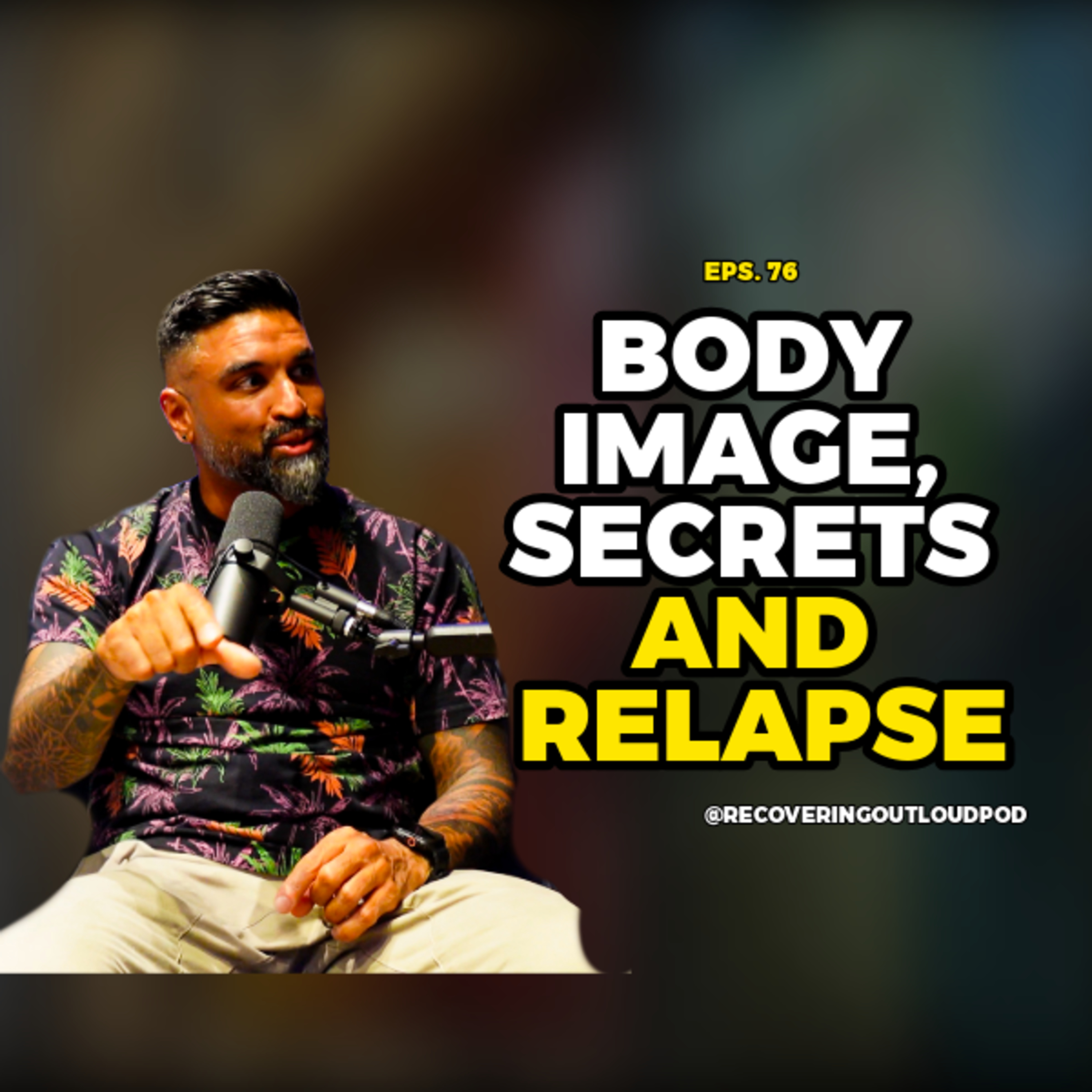
Speaker 2Last time we were like falling through the thing. They put a new couch in here. Um, I, you can kind of control your algorithm a little bit more. I had to get rid of the fucking jacked guys working out on my Instagram because it's like drugs. I'm like, and again, you know my story, you know that I relapsed after steroids. It's the same. It's a drug for me. When I see that guy that's looking like he has abs everywhere he goes. First of all, that's not sustainable to be like that all the time. Maybe. For some people it is. I don't know, but I'm like, why don't I have that? I need to work harder. And then you're there all the steroids. Yeah. I saw you put up a post recently about steroid use. Body dysmorphia. Yeah. Body dysmorphia. Yeah. I saw that man. Um, I, I, I, cause you know why? For one, I, I like to get it out, but I can't tell you how many times I've shared at recovery spaces about that. I don't go into too much detail from certain podiums and stuff like that, but I talk about it because it led to my relapse. It's not why I relapsed. It just, it was a part of the secrets and all this. I can't tell you how many guys come up to me and be like, yo, me too, man. Yeah. Like I, I look at myself every day and I fucking beat myself up every day for, I think I told you this before, but I don't share about this for the longest time. It was like first thing in the morning, you're a fat piece of shit. You're you ate too much. You do this. You don't even notice it happening.
Speaker 1Yeah. I'm smiling. Cause I can relate, you know, growing up, like people in my life, like my dad. You know, it'd call me like fat belly and stuff like that. And I wasn't an overweight kid, but because I had like a little, I'm talking about like when I was 10 years old, 15 years old, like every year of my life in my community. I don't know if this is the more I talk about my community and, and this, the stereotypes and the criticism that exists there. I find that it's in all communities, but we have this thing in the Guyanese community or the Indian community in the Brown community, where it's like, if you haven't seen someone in a minute, the first thing you do is not high. How are you? It's a comment. It's a comment about your weight. So it's like, if I see an aunt and this has happened my whole life, an aunt, I had an uncle, an uncle did this to me in Guyana last year. Immediately. It's like, Hey, Hey uncle, how you doing? And it's like, why you get fat, you know, or like, you know, and, and it actually went a little bit further where he's like, you should probably get to the gym. And I'm like, and I'm training like five, six days a week, bro. You know, and it's sick because, and then he turns around and goes to an aunt and says, you know, you're looking MAGA, which means you're looking skinny. You're looking frail. You're looking malnourished. Right. And it's. And it really bothered me. So like, I don't know about, I don't think I have body dysmorphia, but I've been very conscious about my figure over my life and I'm sensitive about it, man. And I've been made to feel sensitive. And I put up a post on Instagram about this, about body shaming and the psychological impacts that it'll have. You don't know how that individual will take the information, but why is it normalized that as soon as you see someone after a while, uh, you comment on their weight. And the problem with it is this, is that there's no scenario where you look good. It's either you're too skinny or you're too fat and it's, it's kind of sick, man.
Speaker 2Yeah. Do you think it, and I, I would assume it has to do with the way they feel about their body.
Speaker 1Well, I've learned in recent years that oftentimes, if not always, if someone's commenting about on you, that they're deflecting something. Um, but I feel like it's just the behavior has been normalized because that aunt or that uncle or that individual that's doing it to me, that's how they were raised and the people that raised them. That's how. Those people were raised. So it just becomes natural. It just becomes a type of conversation, an icebreaker. It's not like, Hey, how's it going? It's like you put on weight, you're looking skinny, you know, but.
Speaker 2What's the motive behind that though? Like what is, cause they're not bad people trying to hurt you. I would assume, right? Like what, what is, there's obviously something there that they're trying to.
Speaker 1I don't feel like it's really deflecting. Like, you know, and it happens in Guyana a lot. Like when I go over there, there's actually another influencer. I'm not going to mention his name. Yeah. He talked about how he, I'm not going to say where he went, cause I don't really want to call, uh, men, people to figure out necessarily. It's not my business to talk about him, but I will use a story. He left town for a bit and he came back and he realized after being away for six months or a year, everyone's commenting on his weight, but how he put on so much weight and he went online and he did a video about this. And I don't, I don't know why people do it. I want to tell you, people are deflecting. It's just a way to have conversation. Your people probably say it and catch themselves. Like I probably shouldn't say that, but they just spit it out. Like, you know, and, and I talk, I talk about it because I think it should stop.
Speaker 2Yeah. It really hurts people. Dude, to your point, like I'm going home and I'm like, you know what, maybe they're right. Right. And you start giving it some more power. Um, and it's, it comes down to perception too, right? You can fuck, you can go up to six different people and they'll have six different opinions on their body. Um, this is why the, the, you know, what's interesting that you talk about that is when I went on steroids and I got really big, I posted that. Yeah. Yeah. Yeah. Yeah. I hated the attention that it brought me, which is the craziest thing. I would like everywhere I would go, people would be like, man, you're getting big. And I think it was subconsciously because they were like, oh, they're, my brain was like, oh, they're, they know you're on steroids. They know you're a fraud. They know you're cheating. Ah, I think, I think that's what it was. There's some guilt there. But it would happen every guilt probably. Yeah. And shame. Guilt and shame. I shouldn't be doing this. Right. Especially someone in recovery. Um. You felt deceitful. Yeah. Again, my experience. I know a few people that are public about their recovery, assumingly on steroids, just because I can, again, I'm assuming they've been sober for a while. Yeah. Right. And that's the dangerous thing for me is like, if he can do it, why can't I? I like, I just, I stay away from that thinking altogether. If he can do blank, why can't I? Is probably a dangerous thing for me.
Speaker 1Are you, is someone still sober if they're on steroids? That's a good question. Is it a mind altering substance?
Speaker 2I think it is. I think it is. You think so? I wouldn't have said that when I was on it. Yeah. Yeah. Um, it's certain doses of testosterone affect your mental, do your dopamine. Because.
Speaker 1Certain doses. Because I feel like if, if, if someone were on steroids, let's just use me. If I was on steroids and I started to get big and whatever that, that does for you, I may act differently. Yes. And is that the mind altering part of it? Yeah. True. Or is it actually a chemical, uh, change in the brain? That occurs. Yeah. Like peptides and all that stuff. Are you sober if you're taking all that?
Speaker 3Ultra running shoes are all about space. The space to go further, to feel better, to do something you never thought possible. And this space starts with ultra fit. Unlike traditional running shoes, ultra fit gives toes more room to move naturally. So every step is strong, balanced, and comfortable. Whatever you're lacing up for, stay out there with ultra shop now at ultra running shoes. That's ultra running.com. That's a L T R a running.com.
Speaker 2That's a whole other, that's all. This is a whole other podcast. I like talking about this stuff. Yeah. Well, for one, it feels good not to be on. There's a little bit of like, uh, uh, I don't know. There's a little, to be honest, a part of my ego is like, you know, I like to be, I don't, superior is the wrong word. There's a little part of that. Like. I don't like that, but that's, that's true. That's true. Like, because I've went through all that, I did all that. And when I was doing all that, the peptide, I've done it all the peptides, the ozempic. I felt like shit because I felt like a fraud to your point, to your point. But you're looking for the shortcuts. Yes. Hmm. This is interesting. I dude, I agree with you a hundred percent. I think all of this comes back to the question. And I saw a, I saw a doctor post a video about this. Who's the addiction doctor. It better. Yeah. It begs the question. What are you hiding from? What are you escaping? What are you shortcutting to your point?
Speaker 4Hmm.
Speaker 1Like what's the root cause of why you're taking it? What's the why? What's your motive.
Speaker 2Right. And so what was your motive for doing cocaine when you did? Me? Yeah. You just came out of nowhere with that one. Yeah. Sorry. Yeah. Yeah.
Speaker 5I was like, bam. Cause I, I think it could always. Shit.
Speaker 1This is an addiction podcast. Yeah. Uh, okay. Uh, what was my motive? Okay. So I didn't know this at the time. Right. I feel. started getting high in my late teens with hard drugs, but my introduction to drugs, we don't need to be too specific. I was 13. Well, I should know hard drugs was 13, 14, unfortunately, but cocaine came a bit later. I was 18. Um, my motive, I couldn't have answered at the time. All I knew is that I didn't like the way that I felt and I had to change it. But even that I couldn't vocalize to you 20, 15, 10 years ago, my whole thing was, I want to have fun. I want to feel good. That's all I cared about. It's only until I went to a treatment center, uh, that I went to Renaissance back in 2015. It's only until I went there that we had, we're filling out forms. And one of the counselors is like, write down why you get high. And it's like, I love the feeling of it. And then the counselor, as he was reviewing, my answer said, what's wrong with the way that you feel without it? And I was like, Oh shit. Why do I have to keep escaping? At that point, I realized that I was changing the way that I felt that the way that I felt now back then with nothing in me was very icky. And I felt cold. Um, in recent years, I've learned through copious amounts of therapy and internal work. It was a lack of love. I was lacking love from one of my parents, not that the love wasn't there, but the love wasn't expressed in a way that I could receive it. And, uh, that took, that took many, many years. Like, honestly, that's like in the last couple of years, man, that I figured that one out because I lost my brother in 2006 to suicide. And that was 2006, but I was a mess before that. The first introduction that I had to, to drugs and alcohol, I was always an extremist and I'm sure, pretty sure you can relate always very excessive, always the loudest, heaviest user in the room. Uh, always the most public, not necessarily the most public about it, but just aggressive men like over the top, always pushing the boundaries. That was me. And I don't know why I had to behave like that back then, but I felt like I just had a really big need to fit in. I had a lot of insecurities. I always felt like everyone was looking at me. Like I had to impress people. I had to make you like me. So I was really a people pleaser. And, uh, there was a void inside me that I just had to fill. So now I could answer your question. Uh, why did I use cocaine? But really cocaine, I would put anything in me that would get me out of myself, right? Anything that was there. And I know you can relate to that too, right? Like whatever. Was there, I would take it, but the Coke was really, I think, uh, it gave me, it just really fortified my ego and my ego was what was getting me through life. It helped me wear this mask and I'm so happy it's behind me, man. I'm so happy because I just passed five years a little while ago. One day. Yeah. Respect bro. One day at a time. And I want to actually say something to anybody out there listening, because, because I'm public about this and you're very public and I love the content and the humor that you bring. I don't have the courage to say that. I don't have the courage to say that. I don't have the courage to say that. I don't have the courage. I have a courage to do a lot of things, but I don't have the courage to do Coke skits online yet bro. I don't have, I don't, I can't do it just yet, but a lot of people, because of the content that I put up, reach out to me. Someone reached out to me a couple of days ago. I'll never say their name, but, uh, their family member is struggling and went into treatment and came out and keeps relapsing and they're at their wits end. And I do my best to provide resources like AA meetings, Al-Anon, et cetera, et cetera, et cetera. But people out there are they don't know what to do, man. And, um, I wish I could do more sometimes. I wish I could do more. You know, it's, it's, it's, it's a question that I struggle with. It's like, how do you help a family member or how do you help someone you love who doesn't want to get help? Like, what do you
Speaker 2say to people? Cause people reach out to you too. All the time, all the time with, with my job, but also on, on Instagram. And I get, um, it seems to come, this is where I'm struggling with it right now, because again, I'm like you, I want to, I want everyone to have my solution, my, the light. Like I want everyone to be on this side of the, the, the water, whatever you want to call it, the bridge, right. Just cross the bridge. You and I have crossed the bridge. And sometimes, um, I think for a lot of people, the bridge just isn't even a, it's not even in visual view. Like it's not something that we can see, but for us, it's like, just follow the direct, like the simple things. Right. But I get messages all the time. Yeah. We'll get, we'll get into that. This is a whole thing, but, um, you have to suffer, man. Nobody likes to hear it. They're not done. They're not done. Right. Um, what, sorry, what I was going to say was, I don't know if this happens to you. I get them in bunches when someone reaches out to me, it's like four other people will reach out to me in that same week. And then it kind of just like, I'll get like an odd one here or there. And so just two weeks ago, I was, I'm getting phone calls all hours of the day. And this is what I'm struggling with right now. It's like, I just, I don't want to be available. I don't want to be able to help right now. Like I'm in the middle of something and I have to force myself
Speaker 1to pick up the phone. I can relate to all of this. There are times where I get messages where I send a link to AA meetings. And then there's times where I'll go back and forth sending five, six minutes voice notes. I totally agree with what you're saying. Um, but there was someone that reached out to me recently and I felt like I just couldn't help them. I just felt like, man, like, what do you say? I'm, I want to be like, you know, recovery begins where denial ends, but what are you supposed to do? With that? When it's your son that can't put the bottle down or can't stop smoking crack or whatever, it's your dad, you know, who, who's waking up with the shakes every morning. And you said something about like, they can't cross, like you want to tell people how to cross the bridge, but I don't know about you, but you could probably relate to this, but me crossing the bridge is like, it's like a million different things. You know, it was going to AA it's doing stuff like this. It's being open to the conversation, connecting to a higher power. Like it's so many different things, people, places, or things avoiding all of those. It's so many different things, but I guess one thing I do want to say is at the beginning, recovery looks impossible. Uh, we couldn't, you couldn't picture yourself here when you were in the thick of it. I couldn't picture myself with a week clean in the thick of it. But I think that people who are approaching recovery, it's too hard to visualize what long-term recovery looks like. So just get through the day. And, you know, in AA, we say just for today, but I know a lot of people will say, just get through the hour. And just get through the second, which is kind of daunting, but yeah, just get through one day at a time because in early recovery, I'm thinking about how am I going to go to my boy's open bar wedding in six months? How am I going to go play golf? How am I going to go to the Jays game? How am I going to go to the club or do all these public things? And that comes with time, you know, cause people watch my content. I actually picked up a spawn C because I was at Caravana and a couple years ago in the thick of it. And he's like, how are you able to go to these events? I didn't know him. He reached out to me. He's like, how are you able to go to these events and not pick up alcohol? And I ended up taking him through the whole book and stuff like that from there. But, um, it just comes with one day at a time. And I think if you think, if you're thinking long-term, it's going to seem too daunting. It's too much. And especially when, when you start going to meetings, when you start going to meetings and you have to get a sponsor, you have to show up, you have to be of service. You have to volunteer. You have to pray, meditate, do daily inventory. You have to call your sponsor every day. You have to check in with people from the meeting. You have to, uh, do book work. Like it's too much shit at first. Right. So that's why it seems really daunting, but I wish I could just grab someone who's in the thick of it and just kind of give them a hug and say, it's going to be okay, man. Just hang in there. You know?
Speaker 2Yeah. I think, um, for me, yeah, I love what you said about taking it one step at a time because yeah, I mean, I think all of us are future trippers. You come in and my big thing was, how am I not going to drink on my wedding day? I was 23. I'm like, I can't fathom that. Right. That's like the, in Italian culture. And I'm sure in yours as well. Okay. Guyanese culture. It's like, that's like the, one of the biggest events in your life. It's too much, bro. Our culture is too much alcohol food. It's like a part of the rite of passage. You know, I didn't have a drink on my wedding day and it was great. You know, I, now I didn't stay sober after my wedding because I rushed back into recovery, but I can honestly say I didn't drink on my wedding day and I had a great time now. Um, yeah, I think it's very I agree with you. And I forget, I I'm, I'm grateful that you remind me of, it can seem very complex and I don't think our brains are designed to handle complexity. We can handle pressure all day, right? You're just, before we started recording this, you're telling me about all the pressure in your life right now. And you're, I'm going to get through it. And I know you are. And same with me. Like I can handle pressure, but when you start complicating things and layers and you got to call this guy to call this guy and do this. And then if you don't do this, you failed. It's like impossible for me to grasp. So I always tell people to simplify it very, very short, simple, sweet. I had to find someone that had what I wanted, right? Be it 12 step, be it whatever your thing is. A lot of people don't like 12 step. Fine. I don't care. Go to something else, find someone that has what you wanted and not the cars, not the money, not the girls. That's what I'm talking about. I'm talking about that. They're just calm. Serenity. Serenity. Peace of mind. You know, when you're around them, you feel like you're on drugs. I that's my mentors like that. When I'm around him, I'm like, Oh my God, there's nothing to worry about. I just, he brings ease and comfort into the rooms that he walks in. That's why I love him. You find that person, you ask them what they did. And then you just one step at a time, follow that direction. And if they'll present it to you in a way, that's not impossible to digest. It's palpable, right? Palatable. And it's, but I agree with you. I think we forget that sometimes people come in and we're like, okay, do all this this stuff right now or you're going to die.
Speaker 1And they don't come back. I love how you simplified that though, because when I share, I do talk about in my early recovery, I found people that had what I want and I stayed close to them and I started shutting up and listening twice as much. Right. And that's really, really important. You reminded me to say something, um, and I don't know why I thought of it, but it goes back to like, Oh, when you were talked about, how am I going to drink on my wedding day? I had a buddy come in who we used to be close. We used to be close many, many years ago and he moved abroad. He flew in from overseas and we were in the car driving, going for a coffee. And, um, I was telling him about, about my bachelor party coming up with all these dudes, you know, uh, coming up next week. And his first question was, how do you feel about that? Like, are you going to drink or, or, or, or, you know, like, what's that look like? And you know what I told him? And this is the honest truth. I never thought about the possibility of drinking until you just brought it up to me because I'm just in a state of mind one day at a time. Like. Like in a month, you got to check in with me, but right now, and when he asked me that question, it's not an option. I've also reframed the way I see drugs and alcohol. And before I say what I'm going to say, it doesn't mean like I don't get tempted to use or think about, you know, what would that pint taste like or whatever that scenario might be. But I'm just in a, in a, in a, in a headspace right now, I'm just in a place where if I put it into my body, it has to be good for me. And I'm finally here. You know, one of the biggest things that I've accomplished, which I think is more, I, I'm more proud of this than drugs and alcohol is quitting cigarettes because I was sober for three years and I was still hacking darts. And I felt like a fraud because I'm going to meetings, telling people how to get their life on track. I'm taking guys through the book. I'm this person of influence online, but yet I'm like driving around the back of a convenience store to hack a dart, you know, and then like Purell and head cream and cologne. And then you smell like darts and cologne. Right. Um, but man, ever since I kicked that, uh, about a year and a half ago, I just feel like now I'm finally at a point in my life where if I put it into my system, it's gotta be good for me. But that took me 42 years to figure out.
Speaker 2I love that. I agree with you too. It's I don't think about it because, because it's, it, at one point it was okay. We're going out. I need the party favors first to be able to fathom enjoying the night. Now it's kind of like it's in reverse where it's like, okay, what are we going to do? Are we going to do this? And this, I don't need to enhance anything. There's. Nothing to enhance. There's no problem because I'm comfortable in my own skin and I know I'm going to be in a room full of guys, even if they're drinking or not drinking, right. I just, I don't drink like that. It's like a simple, it's a mindset shift, right? I just, I just, that's not how my partying looks. It doesn't look like that. Right. Um, the, that's you, the part about the smoking is so that's exactly what I'm talking about with the peptides and the steroids, that behavior. Right. And I'm not, listen, I'm not. Sitting here saying you would have relapsed if you kept doing that. That's not what I'm going to say at all, but that's the kind of behavior that scares the shit out of me with the steroids and the peptides, the people that are doing them in recovery, because it creates this sort of double life for us. And that's how I relapsed. It was, I missed a recovery over here. I'm doing well. Don't you know, I've got, I'm working with guys going to this, I'm doing that. Everything's perfect. And then I'm sneaking around and you know, the darts, that's just an example. But for me, it was like, I'm sticking around, I'm sticking a needle in my body. Yeah. Like there's like an identity crisis there. Who am I? Am I Mr. Recovery or am I guys sneaking around, sticking needles in my, in my body? And so that's what, when you just said that, that reminded me that that's how people relapse in my experience. It's not the substance. It's not, it's the behaviors, the secrets around it, this double life.
Speaker 1And then they start to build and they build. And once you have one secret, you it's easy to keep a thousand. Yeah. And then you have to use a thousand lights to cover up the one.
Speaker 2Yeah.
Speaker 1You know? Man, that's interesting that you say that. So what's next for you, bro? You were telling me that you're jumping on the road soon. Cause I want to get on the road. I went to Madison, Wisconsin a little while ago. Remember we were talking and did the recovery cast, man. That was an incredible experience. They got a professional studio there. Did you talk to anyone over there? No, not yet.
Speaker 2No.
Speaker 1You want me to connect you? Sure. I told them about you. Yeah. Um, they did have a minimum, uh, follower thing or something, but you're well beyond that. You know, it's so funny. Yeah.
Speaker 3Ultra running shoes. Ultra running shoes are all about space, the space to go further, to feel better, to do something you never thought possible. And this space starts with ultra fit. Unlike traditional running shoes, ultra fit gives toes more room to move naturally. So every step is strong, balanced, and comfortable. Whatever you're lacing up for, stay out there with ultra shop now at ultra running.com. That's a L T R a running.com.
Speaker 2You're serious though, right? I'm a hundred percent serious, bro. It was like 50 or a hundred craze. The funny, that sounds so stupid when you say it out loud, but I get, listen, I get it.
Speaker 1Yeah.
Speaker 2But that was, I, I, I actually assumed that too, which is even more funny because I was like, oh, they probably have a, they only go after certain people.
Speaker 4You're perfect.
Speaker 1You're perfect. And it shouldn't be follower account. It should be engagement. Yeah. You know, I'm going to. I'm going to connect you.
Speaker 2What a fucked up world we live in.
Speaker 1It's something else, bro. And I'm right in the middle of it in content creation. I spent all day yesterday. We did five pieces of content. I almost collapsed at the end of the day, but I'm right in the thick of it, bro. I have a community manager, you know, I don't respond to comments unless I have to. And I'm just, I'm right in it, bro.
Speaker 2It's the best. Don't read. You know how much happier I am when I don't read my comments too. Most of them. I'll be honest with you.
Speaker 1You have some. Most, most, most of mine are good. 99% are great, but it's the 1% that. Uh, it's the 1% that, uh, that I got hung up on. Yeah. And Joe Rogan talks about it a lot too. Don't read the comments. Don't read the good. Don't read the bad.
Speaker 2That's what he says. That's literally, that's where I got that from. No. Okay. I I'm going to be like, I still read them. Don't get me wrong. We're human. I tried my best. Um, so yeah. So like what, uh, that's interesting that you're, you're in the thick of that. And I don't know. What do you like about it? And what, what do you not like about it?
Speaker 1So that's a really good question with respect to content creation. The whole reason why I started doing content creation in the first place, very quickly, like in 2019, I was traveling for four months. I was cooking in Turks and Caicos all month of December. I went to Pakistan. I'm cooking in India. I'm in Istanbul cooking a borough market in London all the way up until March 13th, March 14th, actually 2020. I flew back March 15th, 2020 right before, right before. And then, uh, I was in my room with food poisoning. I came back to my parents' place at that time. I was gone for so long. Uh, I moved out of my place before leaving. So long story short, I came back to my parents' place, food poisoning. I'm pretty sure I had COVID. I had both, uh, because when I was in London, I was at the bars and I was doing all this stuff. Uh, this was right before recovery, about a year before, but everywhere was packed in London and London became one of the places that got hit really hard. I mean, a lot of places did, but anyways, I came back and after five days I emerged from my bedroom and I graded like $50 worth of black truffle that I had in the fridge, uh, over KD. And, uh, it performed really well. But what I realized was, cause I have so much, TV experience and so much cooking experience, um, that people were more interested in the way that I moved and the tips and tricks that I naturally gave up. Cause I'd done city line 10 years, you know, uh, just about at that point. So people were just more, more, more intrigued by that. And that's what encouraged me to do more and stop with the theatrics, do more cooking. So that's when I started doing all the pantry staple stuff, like carbonara. Most people have bacon, Parmesan and eggs in their fridge and black pepper, right? And pasta. So I started to do Mac and cheese things that, that people, eggs, Benny, you know, pancakes, all, uh, banana bread, all these different things. And I've always been in for education. So if you look at my content, I want to educate. It's very practical. Yeah. It's very, I want to teach life skills. That's why in all my videos, you're always going to learn life skills. Uh, whether it's like, you know, you're going to bake something, uh, put some water down on that, on that tray. First, the parchment paper will stick to it. Things like that always want, because the things that we take for granted, it can help people and I'm proud to say, I've helped a lot of people learn to be better home cooks, you know? And feed their family and put loved ones around the table. That's what it comes down to. And I love entertaining. So always with my content online, it's to either entertain it's to teach, or it's to bring awareness, like what we're doing now is bringing awareness to recovery and mental health, or, you know, I'm traveling through Guyana or Pakistan or wherever I am, Antigua, Mexico, and I want to profile, um, I'll never go online and really criticize anybody. My mother taught me at a young age to praise publicly and criticize privately. So those are the kind of the pillars. As to, as to why I do so much social media yesterday, we filmed a couple of recipe videos, but I also filmed the video for hope in motion, which in Guyana, every 10 minutes, a gender-based incident of violence and domestic abuse occurs. So every 10 minutes, someone like someone's life changes and they're doing a 210 kilometer bike ride in October. This guy is going to bike right the way through Guyana as much as he can to raise funds for this. So we filmed that, you know, we filmed something else for beyond the call, which is about empowering the youth, uh, you know? Allowing them to be seen and heard and all that. So it's always, it's always a mix of this kind of stuff. And I get, I get great fulfillment, but it's also exhausting AF all these Shelby's collabs, driving to London, like all over the place. It's even when I was in Prince Edward County this past weekend, I got invited to be guest chef at the Drake Devonshire iconic property, huge honor and privilege. But I had a camera crew following me around the whole weekend. They're at the gym with me Saturday morning, they're at brunch, they're at service for prep, they're watching me play pickleball Sunday morning, going to jump out of the car, jumping in the, in the lake, going to the barbecue on the way out. Like it's exhausting, bro. There's always a camera. on you and it's like it's really really tiring but i do it for the love of the game i guess i also like i crave chaos bro what can i tell you like i it's like i need to be like i need to be engaged and it's something that i'm still working through my fiancee is really good at blocking time in my calendar so we can uh we can get some r and r and i can decompress and disconnect but like i need to be engaged i feel like if every minute of the day i'm not doing something i'm not being
Speaker 2productive yeah yeah that's the strivers curse right that we always the walkers the strivers curse strivers strivers i feel like i am too we work as hard as we did now as we did trying to get high and drunk like we're mad dog you just said you know you're a mad dog using it's like i need to be i can't help it it comes out i i agree i'm always needing to do something otherwise i'm like uncomfortable just not doing anything and they say in recovery uh
Speaker 1put the same effort into recovery that you put into scoring and getting high right and i totally agree with that bro i could grab in the middle of the ocean nothing for a thousand i would find
Speaker 2i was that resilient and that driven i was talking to somebody on the phone the other day i was like yeah if i you know i needed because people ask me all the time back to your earlier question about help i needed to be physically separated from drugs and alcohol i needed rehab i i tried the you know just going to recovery groups just doing this and yeah same i needed to be physically If I moved to Philippines today, I would be able to, you know, I'd, I'd find. Geographical. I would find. Cure doesn't exist.
Speaker 1The problem is everywhere you go, there you are. You know, and, and I'm glad you bring that up. Cause I hear that often is like, should I just, you know, go to the States? Should I go somewhere? And I always tell people that, you know, the reason why you're using is in here and wherever you go in the world, you're going to take that with you. So if you're not addressing the root causes as to why you're using in the first place, then you're going to take that shit everywhere. But then people talk about, oh, I'm going to, you know, France for a month and, or I went here for three weeks and I didn't, my buddy was just telling me this. I'm not going to say where he went. So no one puts it together, but he was here for a certain amount of time and he didn't use and he came back. But I don't think people realize when you go somewhere else, there's all that stimuli. Like imagine me and you go to Croatia for a month. There's going to be so much stimuli, so much new experiences. The air is different. Everything's different. That could potentially just fill up your brain. Where you don't have the need to use, but when you come back here, you know, or eventually it will catch up to you there. It catches up to everybody everywhere. But I think that's one of the reasons why when people travel, it's all, it was no problem. I did two weeks in Guyana and I came back and it was no issue, but there's just so much to fill up your brain there, you know, but you bring all that shit back with you. A hundred percent.
Speaker 2It'll catch up eventually.
Speaker 1I agree. A hundred percent.
Speaker 2I was, it's a distraction. Temporary. It's a distraction. Exactly. Distraction. I was talking to, you know, we were at the cottage last weekend and my wife loves water, loves water. Same. She is not. If, you know, when I talk about God with her, she doesn't like that word. She's not, but I think every human being is spiritual in some aspect. Okay. And so where I'm going with this is everybody has a spiritual cup, right? We always talk about, is your cup full today? And what it's a spiritual cup. It can be empty. You can't pour from an empty cup. My cup gets full from doing things like this, helping people going, you know, hiking in the, in the, in the woods, my wife, she needs, if she's in water, like she is content for the day. And that is her connection to spirituality, right? She just, she wouldn't, she wouldn't phrase it like that. Right. And so to me today, that is the most important thing in my recovery is that I'm connected some way or another to spirituality when I'm with my wife, not on my phone. And that, this, this was the thing. So we're at the cottage. I was sitting on a rock in the water, watching the sunset. And that's another one sunset. And I'm just like, wow. This is it, man. There's nothing for drugs and alcohol to fit, to fix. Sorry, to fix. It would turn that upside down. Right. There's nothing to fix. Everything is, I was connected to what I choose to call God today. That's where I get connected. Now, the hard part is when you're not in those situations all the time, someone's yelling at you at work or you have a deadline or how do you connect to that power? Right. So let me ask you, like, what does spirituality look like to you in connection? Before I answer, what does your wife do in the winter? Yeah. Good question. Um, so we go out snowboarding, we go outside and we connect that way. Nature. Yeah. Nature. It's nature, nature, nature. So water is her preferred. I mean, we live near water, even sometimes just walking by the water. Right. We'll fill her cup. Yeah. Yeah. Yeah. Because it's just the sound of the ocean and stuff like that. Uh, but I guess snow would be a close.
Speaker 1So spirituality for me, what I keep going back to is simply just believing in something. Something greater than myself and spirituality to me is being humble. And I was thinking about this quote earlier today. I don't know if I mentioned it last time, but like, when I think about spirituality, I think of being humble. I, uh, because if I think of being humble, then I know there's something greater than myself out there because for, yeah, there has to be, because I thought of myself as a, the center of the universe for so long, man. Like that's how I lived through my twenties is like my shit didn't stink. And I always had to be the loudest and you know, uh, the most loved in the room or so. I thought, right. Um, but yeah, true humility is not thinking less of yourself. It's thinking of yourself less, so not thinking less of yourself, but thinking of yourself less. So for me, spirituality is constantly being grateful. I try to talk about it so much and I try to let people know how grateful I am. Grateful for you. Grateful for coming in here. I hit you back up to get back in here because I, I, I wanted it. I needed it. You know, it's, it's just a good thing that you're doing and I want to support you. You know, you know, I'm a big fan of yours. Uh, so for me, that's what spirituality is. It's constantly living in a state of gratitude, uh, and humility that that's it for me. And if that's me saying gratitude in my head or coming on here and vocalizing it, but you'll, you'll notice in my post, even like when, when I talked about the Drake Devonshire, uh, I'm always very careful with my words. It was an honor and a privilege to be able to cook there with that caliber of, uh, of chef and that iconic property, like. No matter if it's a, a small hotel or a big hotel, it's everything is a privilege for me, man, because everything I have today is as a result of doing the work to get clean. Everything I have today is from that the fiance that I'm marrying soon. Sandra is by far the best thing that's ever happened to me. Um, five years ago, 10 years ago, 15 years ago, she wouldn't have looked at me, bro. She wouldn't have looked in my direction and I knew her 10 years ago and she didn't like me.
Speaker 2You have proof. Yeah. Yeah. I have proof.
Speaker 1She, she, she told me she loves, no, she loves telling the story. I didn't like him when I met him, you know? So everything I have today, uh, the ability to come in here and speak to you, my training regimen is, is pretty heavy. I think I'm over-training by the way. Yeah. My knees all banged up. I had physio today. I couldn't look left. It's better now. They did osteopathy or something on me, but, uh, I think that's still, I still have addict tendons tendencies. I'm not perfect. I still do things like over-train. I have to. There has to be some type of chaos happening in my life, but it's much more manageable than it was, uh, five years ago.
Speaker 2I want to ask you this because, uh, I was having this discussion the other day. I, gratitude is one of my favorite words. And I think gratitude is an action as well. What did the simple action of you coming in here is showing that you're grateful for being able to speak about recovery, right? And sometimes it's hard to connect those dots. Gratitude is an action. I'm showing up expressing gratitude, not just by saying it, but just by showing up, doing the thing in Prince Edward County, you show up and it's almost like two. You're thinking this could be gone in a second too, right? Like it's, it's so finite. Yeah. That one of my favorite mentors used to always say, we could have missed it all. One of my favorite quotes, like we could have missed it all. If you continued on the way you were, you were going, if I continued on and didn't come back into recovery, we could have missed it all. Bro. That's really heavy. I love it.
Speaker 1It's so simple. That's so heavy and powerful.
Speaker 2That's gratitude right there.
Speaker 1Yeah. I, I also can't help, but feel like I miss so much. I just blew so many years, man. Um, they say never be regretful for anything, but it's hard not to be regretful for man. All those years, like all those nights I played with my life, bro, all those nights staring at the stucco on the ceiling, counting them almost where it's like, I don't know if I'm going to fall asleep. And if I fall asleep, I don't know. I'm going to wake up. Like, I just feel like, why did I have to put my. Self through it. But I guess at the end of the day, gratitude, gratefulness for being on the other side of it at this moment today. Right. But it's, it's hard, man. What, what, what's the opposite of gratitude? I couldn't think of it. Oh man. Selfishness, selfishness, ego, self-centeredness for me. That's what it is. Selfishness, self-centeredness and the inflated ego. Yeah. That's, that's what I think it is at the end of the day.
Speaker 2For some reason, I agree with you. I, I, for some reason, I agree with you. For some reason, my first thought was entitlement almost like a little bit of, I don't have enough, right? Like what, it's not really greed. It's not really, I agree with you. It's selfishness. It's, it's, you know, but if you really think about it and I mean, not to get too lost in the weeds here with this, but I like to think of it because am I being grateful or ungrateful? Well, how do I know I'm being ungrateful? Yeah. Thinking of your humility, it goes back to humility. All circles back there.
Speaker 1We have this saying in Sanskrit, Seva. You've heard of it, right? Yeah, I think so. SEVA. Do you know what it means? No, I think you. Did I talk about it last time? Yeah, I think so. Yeah. Let's talk about it again. There's this tattoo here, right? Seva, Sa with the A, Va. it's selfless service yes yes yes but the reason why i'm bringing it up is because the ideology and this took me years is it's selfless service without praise and recognition because when i was in active addiction i always felt that i was a very generous person that i was always thinking of other people i was putting the oxygen mask on everyone but me right but i wanted to be recognized for it i wanted to be called out for it i wanted to be you know if i was volunteering over doing a charity event i wanted them to say my name on the mic i wanted them to post and tag me you know i and and that's been one of the biggest parts of my journey is doing things anonymously giving with the right hand so anonymously that your left hand doesn't even know and that's where i try to live these days man so and it's and it's a daily practice bro it's i have to keep catching myself no you don't have to post this no nobody needs to know about this like what's the intention where is this coming from why are you doing it in the first place and keep going back to the selfless service aspect of it you know keep going back to why you're doing it yeah i love that um i i agree i
Speaker 3think uh ultra running shoes are all about space the space to go further to feel better to do something you never thought possible and this space starts with ultra fit unlike traditional running shoes ultra fit gives toes more room to move naturally so every step is strong balanced and comfortable whatever you're lacing up for stay out there with ultra shop now at ultra running.com that's a-l-t-r-a running.com
Speaker 2a lot of the time too it's it's it's gonna inconvenience you too right i think you know one of my there's like a i heard from john wick the you know the movie's john wick one of my favorite quotes it's a japanese saying the guy one of the japanese guys says friendship means little when it's convenient and it's true it's like friendship means little when it's convenient like you can say that about that you can say that about relationships too is like and service service means little when it's convenient i'm gonna help this guy on my way to work you know what i mean like it's and it's not like it's not to say i'm gonna ruin my life to help somebody i'm not i'm gonna jump in the hole with them right you can still put the ladder out and say hey i'm right here you gotta take the step though i'm not coming in with you and that's what recovery did for me and that's what people did for me they threw the ladder down and said you gotta we're gonna be here but you gotta take the steps out bro you've dropped some bombs today what was
Speaker 1the other one i just steal it all from everybody we could have missed it all we could have missed it all and friendship as you're talking and i'm processing friendship means little when it's convenient it's like yeah you wouldn't show up for that person if it was inconvenient and then what what how real is that right how pure is that at that point what's the intention behind it and it does apply to all aspects of life it applies to every interaction we're all relationships and it's heavier than i thought we could have missed it all bro i'm telling you i mean he's 25
Speaker 2years sober so those are like those are the guys you gotta just pick their brain i say this to i'll tell everybody go find someone with 10 20 plus years of sobriety and that's not to say that everyone that less than them has nothing to say yeah those people have been through pretty much you could probably say everything right death like sober like when you when you spend 20 years you've probably experienced cancer death and and stayed sober through it probably especially if
Speaker 1you're in the rooms right and so you have some some pearls of wisdom that have been bestowed to you right i have a confession to make actually and it's something that like i haven't really told anybody about it and i wasn't planning on telling you today but just as you're telling me about your mentor sponsor whatever you want to call it it's like i don't currently have a sponsor my sponsor um antonio who was my higher power in early recovery i'm not gonna lie in fact when i was on my knees in like february of of uh of 2021 i got clean in april of 2021 when i was on my knees like in tears with like chest exploding out of my sorry heart exploding out of my chest when i reached out to the person that i reached out to um who owns a treatment center and antonio was with him at the time and that gentleman i was eric i can say everyone knows eric a lot of people know eric because i'm antonio you're gonna look after dev right um but antonio has fizzled away from the program um i chat i check in with him every six months or something like that and then i started working with another buddy named josh and we started going through the book again and then that fizzled away but there's i'm very i'm having conversations with you now and i always have them online and you know i'm always looking for some guidance i try to stay open-minded and be open to constructive criticism etc etc but i'm not currently working with someone i probably should get on that eh i don't call mine enough so there you go right but you have someone yeah
Speaker 2and i could call these guys here's why it's good though because he's the kind of guy that's not gonna co-sign my bullshit like i can i can tell him something and he'll immediately pick out my side and i need that i need someone to be like you're being a fucking idiot right and he doesn't say it like that but it's not about you like he'll he'll just say that and i'm like oh yeah that's my fiancee you're not
Speaker 1it's not about me she tells me everything i don't want to hear and what irks me the most is she's like you're just like your dad and i just want to that's a good one i want to scream i want to scream because she's right yeah you know but uh obviously your partner should not ever be your sponsor or mentor like that but she has been that figure in my life to be like you're overreacting or you're being selfish or you're you're you're not yourself right now or this is not you or please sleep on it all these different things she immediately calls me out of my bullshit it actually goes back to what i was saying before is that five ten years ago she would never looked in my direction you know but she's seen the growth she's seen uh the person that i've become today uh but after having this conversation with you
Speaker 2i'm gonna look to see someone love it i love it man yeah you know what when you say it out loud though it loses it for one it becomes real and then you it's accountable instead of you know i probably do that thing later we all do that right yeah i should probably do that yeah i should probably do that and then you say it out loud and you're like okay now yeah i'm gonna hold myself this is why i said it and i'm gonna do it and it's it's it's icky it's uncomfortable because i i want to sit here and tell everyone that i've missed a recovery and i've got everything together but yeah i've i can't tell you how many times i heard someone say this once and i love it how many times have you sat in a room listening to someone share their experience in recovery and thought to yourself man i'm the worst recovering member of whatever fellowship ever like i'm i'm i'm doing it i'm doing it i'm doing it all wrong and that's not productive right that's not that's not productive so it's like you know you pick up one more thing nobody does it perfectly i don't like when i hear the people sit down try not to criticize but there's people that will sit down and say that all the bases are
Speaker 1covered all the time we know those individuals it's not true they're they're everywhere there's some people when i go to meetings i can picture this person's face right now where it turns into a ted talk and it's all like i learned in recovery to always speak i you know i i i i i but there's a lot of individuals who should i mean this is a whole other podcast too but there there's a lot of individuals who share it's like you got to do this you need to do that and you should do this and it's very i tune out immediately i tune out completely and you're sometimes guys will you know i you know really yeah for sure man that's a good group for sure it's like oh that guy went to treatment
Speaker 2yeah all right well we're uh how do you want to land this thing
Speaker 1i don't know man but these chats always feel like four minutes bro that was good i know it wasn't i
Speaker 2love when we just go into yeah start what did we start with steroids and body dysmorphia yeah
Speaker 1this this flowed for me better than the last one but it's also because i'm getting to know you better uh but like i said before um i wanted to train with you today or it doesn't have to be trained but i do want to do something with you outside of this coffee or whatever cottage you know getting married in a month so the schedule is a bit crazy but it would be important to me i would appreciate it if we grab a bite or something like that and where do we land it um what do you think we should land it i've talked a lot today
Speaker 2i mean you just i'll challenge the audience what's one thing you're gonna do differently to improve your recovery today right you you already said it you know for me go ahead go ahead no no go i i need to be more of service to the guys that are calling me okay make myself more available because lately i have not been impressed with my ego taking over and saying i don't have
Speaker 1time for this there it is it's real now that's it man i'm stacking my calendar too much and i'm stacking my calendar too much i'm not making enough time for me or the people that matter in my life and like if i showed you my calendar like why is it eight to eight every day it's like a ceo it's unnecessary i've already done three things before coming in here i got the top no and then i have tux fitting at 12 45 i'm going to be late and then we have done three things before coming yeah we have dance class after and then i have to shop for a shoot uh for youtube wednesday a thursday morning because i don't have time to prep tomorrow and then we have a dinner with this doctor and his family with my parents and it's it's it's just why is it like this um i got into a good habit of of keeping the days free but that hasn't happened recently and i think it's it's it's behavior from the past It's behavior from the past of... just having to keep my mind occupied because maybe with the wedding coming up and stuff like that and thinking of buying a home and having kids and everything i don't i need noise in my head so i'm being aware of this and i'm going to definitely make more of an effort to uh to live
Speaker 2with my own thoughts i can relate to that and i want to say this to everybody listening if you think you're too damn busy for recovery i'm going to post the screenshot of your schedule and say you can stay sober and have a busiest life in the world but you got to do the important things first
Speaker 1but if you if i don't do it if i'm not here then i lose everything yeah if you know that we say if we once you put the recovery in the rearview mirror and it's not front and center anymore you lose everything they always they always say like when someone relapses what were they doing and it's what they weren't doing right so i'll come here every day if i could thank you thanks bro
 PodcastTranscript AI