Ashish is an insurance surveyor living in Mumbai. He recently bought a flat in a redeveloped
building. While he hasn't moved in yet, there's construction and repair work underway in his
new flat. His place also has a smart meter rather than a regular one. He launched at
his mailbox recently expecting his usual stack of letters. There it was, his new flat's
first electricity bill. So there were only light and some work going on, carpentry work
and other stuff. In that I received the first bill, what I had received was more than 8,000
rupees. So that was a shocker to me and the second bill now what has come is 10,000 rupees.
So this is the kind of situation what a common person has faced.
Ashish soon approached a social activist called Kamnakar Shnoi. Shnoi's team told the signal
daily that they're in touch with several such consumers who complained that after their
local electricity authorities switched their previous meter for a smart one, they're seeing
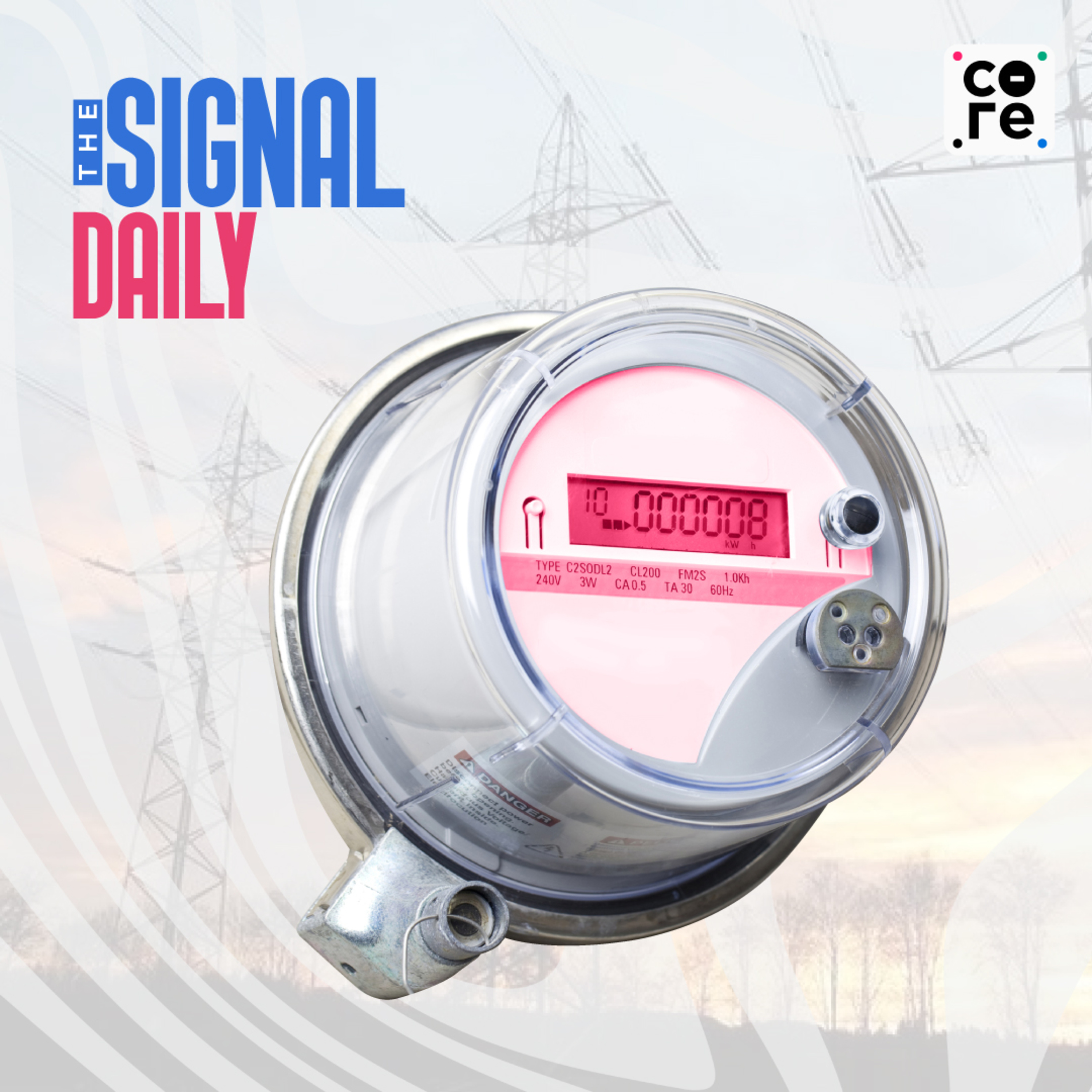
much higher bills. Smart meters by the way are digital devices that measure and record
electricity usage in real time unlike traditional analog meters. More on this later.
My name is Qudrat Bahadur and you're listening to Signal Daily. We don't do hot takes. Instead
we bring you deep dives into the how and why of consumer trends. In this episode, we learn
about India's smart meter mission. Why are some consumers unhappy about these new meters?
As a country progresses, it needs to update its infrastructure. To that end in 2019, the
Indian government launched the smart meter national program or the SMNP. Its goal was
to replace 25 crore conventional meters with smart meters by March 31, 2026. The biggest
difference between traditional analog meters and smart ones is that the latter send usage
data directly to state discounts or distribution companies. This means that a human doesn't
have to come and report your meter reading. The government's rationale goes like this.
Smart meters will help contain losses and prevent electricity theft. Losses are a serious issue
in India. In FY24, the Ministry of Statistics and Programme Implementation found that India's
power sector lost 17.08% of electricity in the transmission and distribution phases.
Another pro to smart meters is that consumers can track their electricity usage themselves
through an app. Each state has one of its own. All this sounds great. But by mid July
of this year, power entities had installed only 2.41 crore smart meter units, according
to government data. That's just 10% of India's 25 crore meter target for 2026. So on 16 July,
the Ministry of Power extended the smart meter deadline by 2 years to March 2028. Low consumer
awareness along with outdated utility infrastructure and unreliable connectivity are the primary
hurdles to smart metering, according to an August 2025 survey by the Confederation of
Indian Industries. Many consumers across the country do not trust smart meters, as the
survey found. Some, like Ashish, who we heard from earlier, say it's because they are seeing
higher bills. Others say that the electricity department is making these changes without
involving them adequately. In Vadodra in Gujarat, residents even travelled to the MGVCL office.
That's the entity that manages electricity in the city. The demand that the government
remove newly installed smart meters and reinstall older ones. In Akota in Fatehganj, residents
vandalized and set fire to a state-diskorm office in protest of these smart meters.
The signal lady spoke to Dr. J.R. Voda about this. He is a social activist living in Mumbai.
See, they came to my building. Fortunately, our watchman asked them, "What are you doing?"
So, they said, "We are replacing and there will be no charges for you. We are replacing
it as we are doing in all other areas." So, he immediately got into the security and
the managing committee strongly opposed it. They didn't have any background about it and
of course, they had heard the news about other meters being replaced in the Mumbai side,
the city side, without their consent and the overmilling. So, immediately they put their
foot down. They said, "No, sir, answer our queries first. You just can't come and replace
our meters. We are not giving you consent for this and if you do that, we'll file a police
complaint for theft of our property." Dr. Voda's building did not allow the BSES
to install smart meters but he says that he knows of several people who couldn't stop
them and they feel very angry. That's the word, very angry. Why?
They never changed the game. The mistake was that maybe they didn't lock the cabin,
all right, or even if they did, watch where I opened it for them, for the BSES. They said,
"Oh, these are the government authorities. We need to open up." So, that's one cheating
and the second thing is despite after changing, overmilling. That's a double whammy. So, they
are very angry with it. One thing is, without my consent, you have replaced it and you are
not giving me something good, you are giving me something bad, worse.
Consumers are upset but experts say that these loud voices of anger do not represent most people.
There have been cases where there are genuine cases but also these tend to take sort of a
disproportionate limelight in the social media space. That was Dhruvak Agarwal. Dhruvak is a
program lead at the CAEW or the Council of Energy, Environment, and Water. That's the think tank
that has conducted several studies on the smart meter rollout. We've seen that when you look at
sort of a larger base of consumers that's sort of more structured, that level of mistrust or
dissatisfaction doesn't really show up. We did this exercise in 2022. It was still early days of
deployment but we spoke to about, this was an in-person survey that we did of about 2700 consumers
who were smart metered and who had been smart metered for more than six months by that time.
60% of them said that they were happy and more than 60% said that they would actually recommend it
to their friends and family and relatives. So the sense that that gives us is that these instances
sort of pop up from time to time and they get a lot of limelight but that's not the general experience
of consumers and if it were the case then we wouldn't have reached where we have in terms of
installation. For the most part people are happy with smart meters according to Dhruvak.
There are many benefits to them. Consumers can track their electricity usage on their
state's app. Smart meters are also better for state discounts because they can track where
they might be losing electricity electronically. Now that's not to say that the people who saw
the electricity bills shoot up are making it up. Dhruvak said that the CEW has noticed that there
have been instances of manual error when officials installed smart meters. This part of the process
is manual. This process of sort of taking the old reading and putting it in the new reading.
So there have been isolated cases of where this has gone wrong. Maybe one less zero,
maybe one extra zero and that's the base reading that any smart metering system will then take
to start generating bills from there on. So there's manual error in installing these meters
which could be contributing to incorrect readings and inflated bills. Another factor could be catch
up billing. It's possible that the older meters were faulty and were underestimating electricity
usage. Another factor could be time of day tariff. Some discounts are charging consumers lower rates
for electricity that they consume during say 9 a.m. to 5 p.m. As that's when the scum can provide
solar energy to them. But after that they charge higher prices. Right now not all consumers know
about technicalities like this one. Dhruvak said that states are working on these issues in real
time. They're also figuring out how to better communicate information to consumers. His organization
is actively working with governments to help make their apps more accessible to consumers.
The Signal Daily also spoke to another expert Dr. Anukram Mishra. He has worked in the power
sector for over four decades and now works as an independent advisor. He said that as any new
technology comes out there's resistance among people to adopt it. Whenever something new comes
there's always a resistance. And public is very mature. So they understand whether they are getting
a fair and just bill or there's some discrepancy. So it might have happened in some odd cases that
the meter had some problem or something which would have resulted. A load probably an air
conditioner which has gone bad. So if the gas reduces, the consumption increases. So something
would have happened or some high energy guzzling load would have been left on for some time. So
there can be many such things but these are the things that type of negative things we all like
to pick up and make our own story. So it happened in Rajasthan also that someone said my bill is
four times that of the usual bill I used to get. So what the authorities in Rajasthan have decided
that when they are putting a smart meter they are not removing the old meter. So one or two months
you can compare. Once you are satisfied the old meter is removed. So this is one good initiative
they have taken. Smart meters are not going away. In fact India isn't even the first country to
install them. The US, European countries and even China have initiated similar drives. In addition
to making their own electricity usage data more accessible to consumers smart meters also helped
state discombs track electricity usage. That's crucial in today's world where data is everything.
Dr Misra told the signal daily that smart meters are better from sustainability perspective too.
India wants to build 500 gigawatts of non-fossil capacity by 2030 and go fully carbon neutral
by 2070. Smart meters are essential to those goals. Renewable energy like wind and solar is
intermittent meaning authorities need electricity usage data to better provide these sources of energy.
It's important to not always go and you know it's as true for smart metering as it is for anything
else to go and hear say on on on social media. It's not always the case that if a small place has
happened with another consumer it'll happen with with you too. Inherently there's nothing wrong
with smart metering. It's a tech that's worth adopting in the interest of overall efficiency.
There'll be pain points here and there but I think over time if consumers are willing to take it up
willing to share their feedback with the discom staff I think overall we'll land up in a better
situation in a few years. With any new technology there's initial resistance among consumers but
something like smart meters are not optional. Countries across the world have conducted similar
drives so why should India continue archaic practices. India has one of the highest rates
of electricity losses and better tech is important to counter that problem. In fact Dhruvak of CEW
said that consumers could potentially see lower bills too once the government installs more smart
meters. That's because the authorities will then be able to track electricity theft better which
would then lower costs altogether. But if you as a consumer are experiencing inflated bills
experts say that you should reach out to your local discom. If the discom does not resolve the
issue satisfactorily the consumer can then approach the CGRF or the consumer grievance
redressant forum which every discom is required to set up under the Electricity Act of 2003.
If you are suspicious of fraud consumers could also write to the consumer court under the consumer
protection act of 2019. That's all for today. You just heard the signal daily. We don't do
heart takes. Instead we bring you deep dives into the how and why of consumer trends. The core
produces the signal daily. Follow us wherever you get your favorite podcasts. To check out the rest
of our work go to www.thecore.in. If you have feedback we'd love to hear from you. Write to
us at
[email protected] or you can write to me personally at
[email protected]. Thank you for listening.
 PodcastTranscript AI