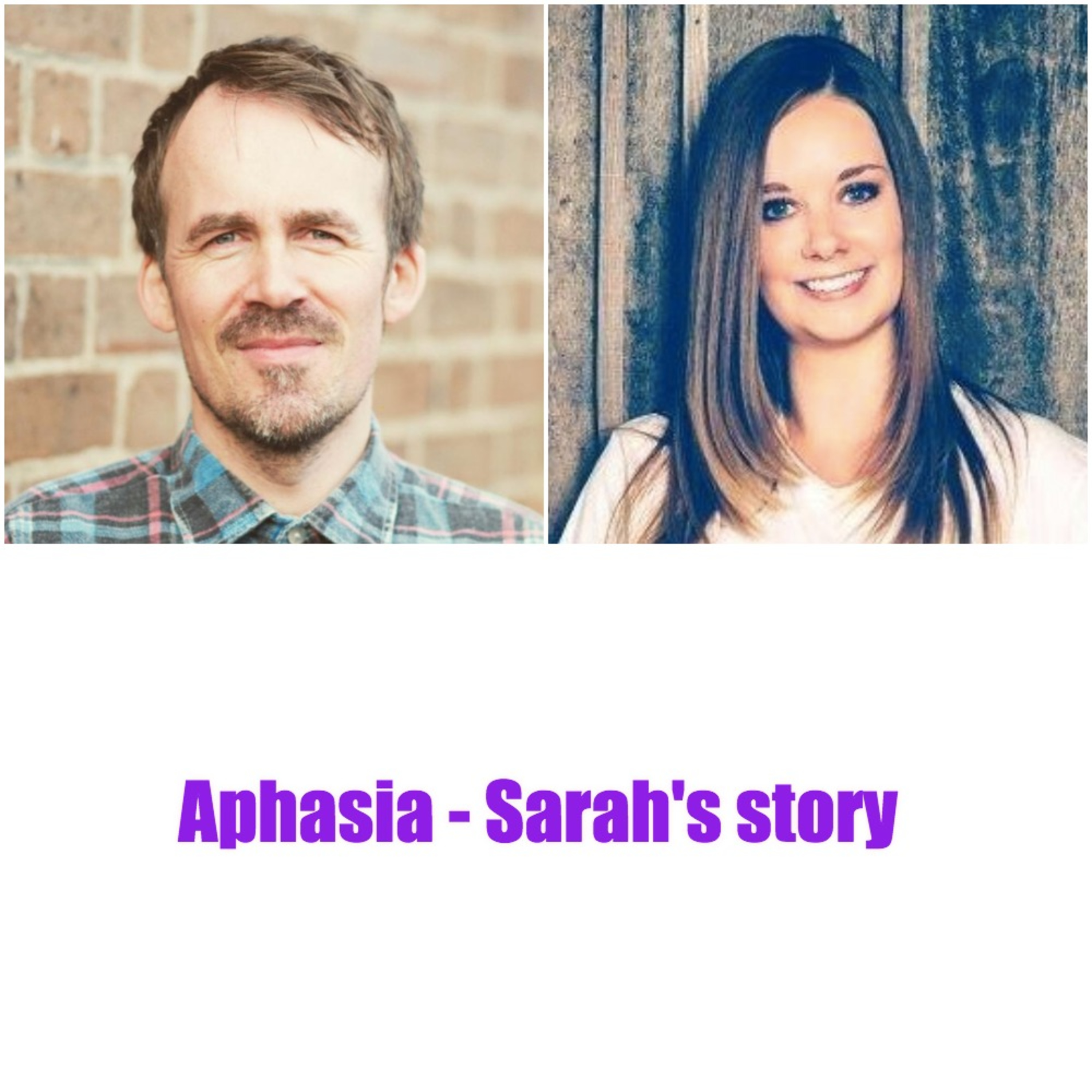
Sarah Bethany Scott, a person with aphasia, shared her experiences on a podcast discussing neurodiversity. She explained that aphasia affects communication due to brain damage, often from a stroke. Sarah highlighted the challenges she faces in daily life, such as difficulty in reading, writing, and conversing. She emphasized the importance of speech therapy and practice in managing aphasia. Sarah also discussed the various types of aphasia, including Broca's and Wernicke's aphasia. Furthermore, she touched on the need for increased awareness and understanding of aphasia in society. Despite the struggles, Sarah remains optimistic and engaged, even sharing her plans for marriage. The conversation underscored the significance of acceptance, patience, and support for individuals with aphasia, showcasing the resilience and determination in overcoming communication barriers.
Transcription
2712 Words, 14991 Characters
Hi everyone, I'm John Offord, I'm a broadcaster based in the UK and welcome to Different Minds,
a podcast series that looks at neurodiversity, the different ways our brains can work and
interpret information. Today we're going to talk about aphasia. I'm delighted to be joined
by Sarah Bethany Scott from the UK, along with her mum, Joanie Scott. Sarah featured
in the second series of the Undatables, which is a TV programme in the UK on Channel 4,
and Sarah has aphasia. Sarah, how are you? I'm good, thank you. How are you? Yeah, good,
thank you. So tell us about, obviously we're living in extraordinary times. Tell us about
how your year has been so far. It's been a strange year this year. I'm all right. It's
been difficult because obviously I've been at home a lot of the time, but I've got my
partner, so it's been strange not seeing my friends and family so much, but I'm coping
well. Brilliant. Have you learned anything about yourself in particular, Joanie, in lockdown,
Sarah? I feel like because of my aphasia, I'm not very good at throwing people up or
contacting my friends and family, but because of this Covid at the moment, and I don't see
them face to face, I'm actually talking them on Facebook or Twitter or messaging them
more. So it's kind of good for me, actually, and I'm actually maybe talking to them more
at the moment, so yeah, it's good. Brilliant. At this point, I just want to say hello to
your mum. Joanie, how are you doing today? Hi, I'm good, thanks. Good, good. Just thought
I'd bring you into the conversation as well. So Sarah, just tell us a bit more about yourself.
So what do you do for a living? So I've been really lucky that I'm actually working full
time after my stroke, because straight after my stroke, I wanted to go to uni, but because
of my difficulty with reading and writing, I couldn't. So my path was different and I
did some, not jobs, but volunteering at the time and build up some work, and then I'm
actually actually working with, I can't say. This is very official. So I'm actually working
with people that have cancer and actually producing a product to help people that have
cancer and to hopefully treat them. So that's my job. Fantastic. So perhaps the first question
then is, if you can tell us so, what is it, aphasia? So aphasia is a part, if you have
aphasia, you've got a part in your brain that is affected, near to the left side of the
brain, near to your ear. So it affects your communication ability to communicate. What
causes aphasia then? So it's more likely if you have a stroke, that's what I had, but
it could be a brain injury, or if a person is an operation and it has to do with the
brain, that sometimes people have aphasia after that. So you've already touched on this,
but what are the main symptoms then of aphasia? So you could have difficulty with reading
writing, or your speech, or numbers. I have aphasia, but some people have just one, so
they can't talk, or they can't read or write. It just depends about the part that is affected
in your brain. What is it like for you, day to day, living
with the condition, and what some of the challenges are? It's been really difficult, day to day,
things like reading a menu, fanning people, just everything. It's really hard to go out
and live your life and talk to people, like strangers as well. People are very anxious.
It's been really, really difficult, and obviously some people that have aphasia alone, and it's
very isolated. Sarah couldn't speak at all after her stroke. She could only say yes and
no, so she's come a long way really. Wow, that's amazing. And so is aphasia something
that you can treat then? So I have done speech therapy for a long
time, years, which I was very lucky. Normally in the UK, it's six weeks. So it's not a long
time. And obviously the best thing is to do, practising as much as you can, and obviously
speech therapy is better than doing it yourself. So which is a shame, people want to do speech
therapy more, but there's not enough people to help them. So it's very important to do
as much as you can, but you can still, if you do still do practice alone, you can still,
you know, but also, so at the moment I'm not doing speech therapy anymore, but I have apps
that really help. So when I'm actually working or just messaging my friends, I've got apps
that, because obviously my speech is better than reading and writing. So I just talk to
myself with my phone and it converts. Yeah, so that's really helpful for me.
That's really good to hear. I understand there are several different types of aphasia, which
affect people in different ways. Is that correct? And could you tell me about one or two of
the other types? I remember it would be better to...
So we're not experts except in the sort of experience that we've had with aphasia over
the last 10 years or so, but we do run a stroke support group as well, so we meet a lot of
people with aphasia. And basically there are three different types. There's broccoli aphasia,
which Sarah has. And broccoli was, I guess, the person that most discovered it when he
did studies of the brain, and that affects your ability to express yourself. So Sarah
has all the words in her head that she finds it hard to communicate them. And then there's
a vernicus aphasia, which is a really strange sort of condition where you think you're speaking
the right words, but they're coming out as jargon and not proper words. So it's quite
an unusual type of aphasia, but that's called vernicus aphasia. And then there's primary
progressive aphasia, which is a type of dementia, whereas people with broccoli aphasia tend
to improve over the years if they work on that speech. Unfortunately, people with primary
progressive aphasia will deteriorate, so it's a type of dementia where you probably won't
recover from it, unfortunately. So you'll lose your speech over a number of years. So
yeah, different types of aphasia, but it's all to do with communication.
And what's the difference between aphasia and dysphasia?
Well, technically, I think aphasia means you lose all your speech and dysphagia means
that partial loss of speech, but aphasia is the term that most people use now to describe
people to say they're as condition safe. And it's generally used, you do sometimes
hear people using the word dysphagia, but normally people are described as aphasic.
I see. And I just wondered if you could tell us about what we could do to raise more awareness
of the condition?
Well, I've tried to be raising awareness as much as I can. I do a new channel, YouTube,
you get. But I've done also lots of interviews and things like that. Obviously, it's difficult
when people have aphasia because obviously normally their speech is affected, so it's
really difficult and people don't understand and sometimes people don't want to talk about
it. But I remember when I had my stroke and I couldn't really say anything, I feel like
if there was a person that could help me to raise awareness, it would help me. So that's
why I kind of helped people.
And about one in three people who have a stroke have aphasia. So there's quite a few, you
know, hundreds of thousands of people really in the country with aphasia, but because it's
very invisible, people aren't aware of it.
And all people could have a stroke, even babies. I think people are saying, you know, I want
to make people that have strokes, but I think people don't realise younger people could have
it as well. It's important.
Yeah, absolutely. Do you ever see it portrayed in the media also?
A lot of people think that because of my speech that I'm some more stupid or I'm drunk a lot
of the time. So if I go out and drink and stuff like that, I'm always very anxious to speak
to people that I don't know, because maybe people would think that I had some, you know,
just drinking too much, not because I have aphasia. I've got actually a card now and
it says that I have aphasia and I have difficulty with my speech. So it's always there just
in case, but I think just people don't understand what aphasia is. And I know it's difficult,
but, you know, it would be very useful and people would be not there to go out if people
realised what it was.
And sometimes when you see people with aphasia or a stroke, I think there was a character
in East London who had aphasia and they recovered after just a few weeks and that was unrealistic.
I think it's about years for people to recover their speech with at all. So it would be really
more perhaps a sort of mainstream coverage of people with aphasia.
You Sarah, you featured on the second series of Undatables, which is a TV programme in
the UK on Channel 4. Tell us a bit about that experience.
It was interesting. Obviously I was single at the time, but it was more raising awareness
than anything because I know that younger people watch the programme. So actually the
people were really nice. They had cameras, but they were not big cameras. They were really
friendly and obviously they didn't know what aphasia was, but they understand completely
because I said this is the difficulty. Sometimes some days are bad than others, so maybe this
day I'm not going to be very good to you, but I'll try as much as I can. They were really
good. Yeah, it was a good experience and also having a stroke. I didn't really, I tried
to do as much as I can going out and doing different things. So it was a good experience
for me.
Good to hear. What would you say to anyone out there that perhaps as a similar condition
in these struggling and looking for support?
I think there's a lot of support out there. I think when I had my throat, I felt like
I was alone, which is not the case. There's a lot of people that have aphasia out there.
It's just hard to find them. There's lots of groups actually in real life obviously at
the moment because of the COVID maybe not, but there's lots of Facebook groups. There's
lots of different ones and I went to lots of different groups. They were not as good,
so we actually set up a group. So you can do that as well. Always talk to people. Don't
be thinking that you're alone because you're not. It's a long journey, but I feel very
happy. They don't feel like you're...
You still get a lot of enjoyment out of life. It's not the end of your life having a stroke.
It's more difficult.
Absolutely. That's really good to hear. Are there any particular websites that you might
recommend in terms of resources, useful resources?
I think there's actually a worldwide one called Aphasia Recovery Connection, which also has
a good Facebook group and different strokes as well. They're for sort of younger strokes
survivors and there's lots of people there. And of course the Stroke Association.
My podcast series is about neurodiversity. I guess neurodiversity is an approach to learning
and disability that argues diverse neurological conditions are a result of normal variations
in the human condition. What are your thoughts around kind of neurodiversity and the fact
that we're basically leading towards a society where we're celebrating everyone's differences
and trying to understand that everyone's brain works differently and actually that's
okay?
Yeah. I think that we all make judgments about people and quite often you're completely
wrong. Like people think that Sarah's shy. In fact, she's not shy at all, but because
of her lack of communication skills sometimes, she comes across like that. So I think people
need to just give each other a bit more time and just be a bit more tolerant. And I think
maybe COVID has sort of encouraged that a little bit, which is a good thing. But we've
learned a lot since Sarah had a stroke that you've got to be a lot more accepting of people
and a lot more tolerant and in some ways you say that it wasn't necessarily a bad thing
that happened to you.
Yeah. I always think that I've got lots of friends that have Aphasia now. I have more
friends now than I had before my stroke. And obviously I think I'm actually more understanding
of people now because I understand that it's difficult and that some people, you know,
not because the people that have Aphasia, but other people, I understand that maybe people
need to wait for longer and instead of just like, you know, talk, talk, talk all the time.
You just need to wait and listen. And that's the most important. And obviously my speech
is affected, but because you have Aphasia, you listen more because that's what you can
do.
Yeah, that makes total sense. And obviously listening is a powerful thing, isn't it? And
there's so much power to simply just listening. And what's the best advice that someone ever
gave you?
Actually, I was not in the ring that my mum was talking to me about the end one. I was
still in the hospital at the time. And one of the nurses, I think, was talking to my
mum about it's difficult when you have Aphasia. And some of your friends will not be there
anymore. But the friends that you're going to have later on that didn't know me before
will just think this is Sarah. And it was a powerful thing to say. And I think at the
time my mum was just upset that she said that. But it is true because I've got some friends
that are still there before my stroke, but some people have gone and they're not really
my friends anymore. But also, there's people that they didn't know me before. And they
just think this is Sarah. This is what I...
And you are a different person in many ways, aren't you now?
Yeah. But they just think this is Sarah. And it's true. I've changed. But I'm still Sarah.
Yeah. And a lot of people gave us advice not to give up hope because there's no plateau.
A lot of people, older medical people, will talk about a plateau and say you can only
recover like a year after a stroke or something. But we've been running our stroke group for
over 10 years and we've seen people progress more in that time. So I think that's old
fashion thinking. So it's really important to know that.
Even doctors have said that, which is wrong because we know that's not correct.
I think if you live with it, you sometimes know more than the professionals.
Yeah. I can relate to what you're saying there. What's the future look like for you, Sarah?
Well, I'm actually engaged at the moment. Congratulations.
Thank you. So, hopefully, I'm doing the wedding sometime when we can actually book the place
at the moment. But it's a good life.
We're lovely to hear that. And it's been such a pleasure speaking to you both. And Sarah,
especially despite your humility, you obviously have been doing extraordinary amount over
the years. And to hear the great work that you're doing, my view is inspirational. Just
keep up the good working and raising awareness of the condition. And yeah, pleasure to speak
to you both today.
Thank you.
Thank you.
Podcast Summary
Key Points:
Sarah Bethany Scott, a guest on the podcast, has aphasia, a condition affecting communication abilities.
Aphasia can result from a stroke, brain injury, or brain operation, impacting speech, reading, and writing.
Different types of aphasia include Broca's aphasia, Wernicke's aphasia, and primary progressive aphasia.
Summary:
Sarah Bethany Scott, a person with aphasia, shared her experiences on a podcast discussing neurodiversity. She explained that aphasia affects communication due to brain damage, often from a stroke. Sarah highlighted the challenges she faces in daily life, such as difficulty in reading, writing, and conversing.
She emphasized the importance of speech therapy and practice in managing aphasia. Sarah also discussed the various types of aphasia, including Broca's and Wernicke's aphasia. Furthermore, she touched on the need for increased awareness and understanding of aphasia in society.
Despite the struggles, Sarah remains optimistic and engaged, even sharing her plans for marriage. The conversation underscored the significance of acceptance, patience, and support for individuals with aphasia, showcasing the resilience and determination in overcoming communication barriers.
FAQs
La afasia es una condición que afecta la capacidad de comunicación debido a una lesión en el cerebro, generalmente cerca del lado izquierdo.
Las causas comunes de la afasia incluyen accidentes cerebrovasculares, lesiones cerebrales y cirugías que involucran el cerebro.
Los síntomas pueden incluir dificultades con la lectura, escritura, habla o números, dependiendo de la parte del cerebro afectada.
La terapia del habla es crucial en el tratamiento de la afasia, y practicar regularmente puede ser beneficioso. Sin embargo, la disponibilidad de terapias puede ser limitada.
Existen varios tipos de afasia, como la afasia de Broca, la afasia de Wernicke y la afasia progresiva primaria, cada una afectando la comunicación de manera distinta.
Técnicamente, la afasia implica la pérdida total del habla, mientras que la disfasia implica una pérdida parcial. El término 'afasia' es más comúnmente utilizado en la actualidad.
Chat with AI
Loading...
Pro features
Go deeper with this episode
Unlock creator-grade tools that turn any transcript into show notes and subtitle files.
 PodcastTranscript AI