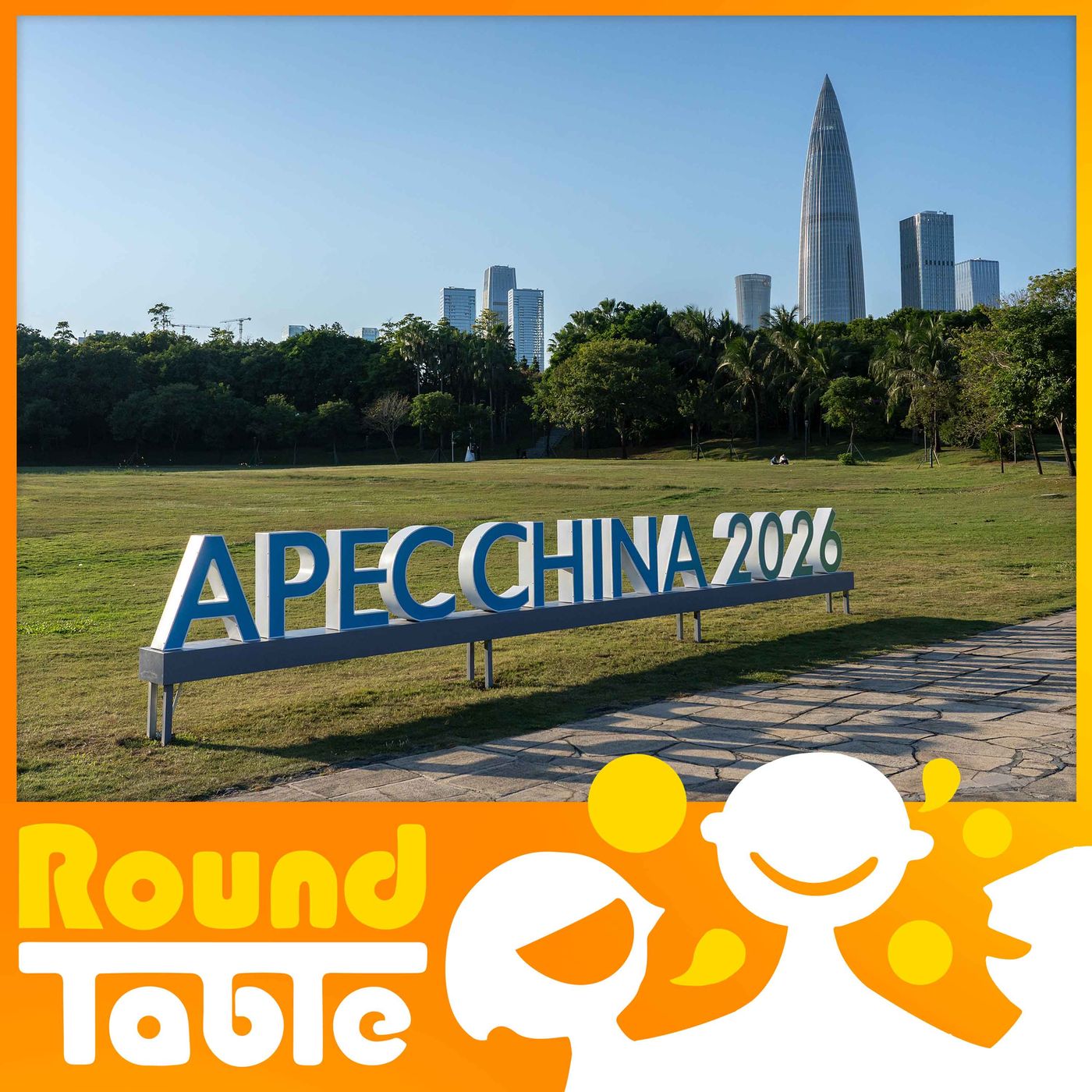
Shenzhen, renowned as a global tech hub, is undergoing a significant green transformation that balances rapid urban development with environmental sustainability. Despite its futuristic skyline, the city has become an "International Garden City" through extensive urban parks, green corridors, and restored natural habitats. Key achievements include full electrification of public transport, one of the world’s first megacities to do so, and a network of over 1,300 parks, with plans to expand further by 2035. The city’s sustainable efforts extend beyond infrastructure—projects like the China Overseas Building showcase low-carbon, human-centered architecture that integrates natural ventilation and daylight. Deeply rooted in ecological principles, initiatives such as bird migration corridors and community-led programs demonstrate how cities can rebuild relationships with nature. Experts emphasize that true sustainability lies in understanding ecological systems, not just technological solutions. Shenzhen’s experience shows that economic growth and environmental stewardship can coexist, offering a powerful model for other Asia-Pacific cities. This transformation is not just physical—it changes people’s habits, values, and daily experiences, proving that sustainability is about reconnection, not sacrifice. The city’s success reflects a shift from viewing nature as separate from urban life to seeing it as an integral, living part of the city. As Shenzhen hosts the 33rd APEC Economic Leaders Meeting, its green narrative underscores a broader message: thriving cities must align economic progress with ecological harmony and human well-being.
"Discussion keeps the world turning."
This is Roundtable.
Shenzhen is known around the world for technology and innovation.
But as the city hosts APEC this year, it's also spotlighting another side of its development.
It's push to become greener.
Roundtable's Yushan recently traveled to Shenzhen to see these efforts firsthand.
He brings back a closer look at what other Asia-Pacific cities might learn from its experience.
Coming to you live from our studios here in Beijing, this is Roundtable.
I'm Steve Hatherley, thanks for being with us today.
And for the show, I'm with Yushan and Feifei.
This year, Shenzhen is hosting the 33rd APEC Economic Leaders Meeting, bringing economies
from across the Asia-Pacific region together to discuss shared opportunities and challenges.
Following the many topics on the agenda, sustainable development is an important one, and Shenzhen
itself offers an interesting perspective on the issue.
Known internationally as one of China's major tech and innovation hubs, the city is also
making considerable efforts to become greener, from electric mobility and energy-efficient
buildings to urban parks and low-carbon communities.
So how is this fast-growing, mega-city balancing economic development with environmental sustainability,
and what might its experience offer other cities across the Asia-Pacific region?
Roundtable's Yushan recently traveled to the city to explore its green transformation
first-ten.
He visited some of the city's green spaces, innovative buildings and local communities,
and he brought back some interesting observations, and here they are.
Shenzhen is often seen as the tech hub of China, a city of drones, EVs, and futuristic
skylines, but what many people don't know about Shenzhen is that it carries another title,
International Garden City.
I know it sounds a little bit counterintuitive.
How does a city filled with skyscrapers and concrete junkels become known as a garden?
Can a mega-city building so fast while retaining pieces of green?
So I came to Shenzhen with all of these questions in my mind, walking through the parks, buildings,
neighborhoods, and universities, trying to figure out how this city is attempting to reinvent
itself, not only as a center of innovation, but as a greener place to live.
Let's go!
My first stop was Shenzhen Bay Park.
Early in the morning, the city felt unexpectedly calm.
Along the waterfront, people were already jogging, cycling, walking dogs were simply sitting
by the sea, watching the skyline wake up, and what struck me most was the contrast.
On one side, there were glass scrapers, symbols of Shenzhen's rapid rise as a global tech hub.
On the other side, there were wetlands, mangroves, and public parks stretching for miles.
In many cities, development and nature often feel like opposites, but here, Shenzhen seems
to be trying to make them co-exist.
Over the past decades, Shenzhen has built one of the largest networks of urban parks in
China, while continuing to expand as one of the country's most economically dynamic cities.
By the end of 2024, Shenzhen had established more than 25 protected natural areas and
1,320 parks, making it a reality for residents to see greenery from their windows and stepping
to parks just outside their doors.
The city plans to build more than 1,500 parks by 2035, ensuring that residents can reach
open green spaces within a five-minute walk.
In 2024, Shenzhen ranked third in air quality among 168 major cities in China and recorded
zero smog days throughout the year.
Shenzhen is the world's first megacity to achieve full electrification of its public
buses, taxis, and ride-hailing vehicles.
And today, electric vehicles have become part of the city's everyday rhythm, but what
interested me even more was how transportation changes the atmosphere of a city.
The streets here often feel quieter, cleaner, more pedestrian-friendly.
Around Shenzhen Bay and Tallinn Park, dedicated cycling lanes and walkable public spaces encourage
people to slow down and spend time outdoors.
And from here, I realized that Shenzhen's idea of green transformation is about redesigning
how people experience urban life itself, and maybe that's one of the most interesting
things about sustainability.
Sometimes it doesn't feel like sacrifice, sometimes it simply feels like a better way to live.
That idea became even clearer as I moved deeper into the city.
As I continued exploring the city, I began wondering, if transportation can reshape urban
life, what about the buildings themselves?
Buildings are among the world's largest sources of carbon emissions, and Shenzhen is trying
to change that.
One tower at a time.
In Houhai, one of Shenzhen's business districts, I visited China overseas building, a near-zero
carbon-office tower that represents a new generation of sustainable architecture.
From energy-saving systems to renewable energy integration, the building achieves an impressive
level of efficiency. But beyond the technical numbers, what fascinated me most was the philosophy
behind it.
I spoke with Yorai, General Manager of Design Management at China overseas.
Our core concept can be summarized in three key words, low carbon, healthy, and smart.
We have always believed that truly outstanding green buildings are not about saving energy
by lowering service standards. Instead, they should deliver higher quality, lower carbon
emissions and greater efficiency while providing a more comfortable environment. That has been
the most important starting point of this entire project.
Traditional office buildings are often sealed glass boxes that rely heavily on air conditioning
systems throughout the year. China overseas building, however, was designed around the
concept of a breathing building from the very beginning.
For example, we created a daylight atrium that runs from the 6th to the 21st floor. Naturally
ventilated side courtyards connecting the north and south sides of the building, and large
operable windows and terrace spaces. Even in a hot and humid city-like Shenzhen, we're
still able to utilize natural ventilation for approximately 2,000 hours every year.
At the same time, we arranged most office areas on the eastern side facing the sea, providing
employees with better daylight, views, and comfort. Meeting rooms and support spaces are
located on the western side. This reflects a people's center design philosophy.
So this is not only a low carbon building, but also one that emphasizes harmony and coexistence
between people and nature.
What became clear during our conversation is that future buildings are no longer being
designed simply as containers for work or living. They're increasingly being designed
as ecosystems, spaces that interact with sunlight, air flow, water, and human behavior.
Later, I visited biosphere 3 in Dameshad District, another project that explored green architecture
long before sustainability became a global mainstream trend.
Ringwater collection systems, natural ventilation, double-layer glass facades, many of these
ideas were already being implemented here more than a decade ago.
But perhaps the most interesting idea behind the project was this. Architecture should not
isolate people from nature. It should reconnect them.
Walking through these spaces, I started noticing how different they felt emotionally, more
open, more breathable, less disconnected from the environment outside. And that raised
another question for me. If cities want to become sustainable, is technology alone enough?
I took this question to an expert at Tsinghua Shenzhen International Graduate School.
Here, I'm at Ecological Engineer Mateo Convertino. His research focuses on ecosystems, urban
resilience, and how cities can better coexist with the natural environment.
During our conversation, he mentioned something that stayed with me. A sustainable city is
not simply a city with more green technology. It is a city that understands ecological
systems. How water flows, how biodiversity survives, how human activity affects the
environment over time.
So when I came here, I was immediately attracted by the size of the parks. And there are
many of them. They are actually really almost like nature ecosystem.
even though they're being massively designed.
So not all the species that are in these parks
are endemic, they're not native.
Some of them are being introduced into the city,
which is creating other challenges.
But despite that, the green area of the city is very large,
which creates a lot of opportunities even for recreation.
The second thing is that Shenzhen is also
along several corridors, such as the bird migration corridors,
you heard birth, fish migration corridors
into the coastal space that are really important.
So even though Shenzhen is unique in its own way,
Shenzhen is also extremely well connected
with the hydrological pathways, ecological pathways,
that plays a Shenzhen in a very important role,
at least in the greater Bay Area,
but also in China, I would say.
If you consider the long migration of birds.
And the transformation is still underway.
Mateo also told me about something he has noticed.
In the last five years, what I noticed
is that Shenzhen is rebuilding many natural corridors
that were compromised during the construction of the city.
So for example, right now, there is a master plan
to create this green corridor that reconnects the park together.
This park is where connected 30 years ago, 50 years ago.
And their connection was destroyed
because people started to develop massively.
And right now the city is saying, okay, well,
let's bring man nature.
And I think that's a really good thing.
This corridor, they also create corridors for people
to move, to enjoy the outdoor.
So I think it's close to creating
some sort of ecological education.
People are more in contact with nature,
people understand the power of connection.
Why they're there, what's their purpose?
Listening to him, I realized that Shenzhen's transformation
is not only visible in iconic buildings or electric vehicles.
It's also happening in quieter ways,
in restored wetlands, in mangrove conservation projects,
in public parks woven into dense urban areas.
Places like Shenzhen Bay Park and the mangrove coastline
are not just recreational spaces.
They also function as ecological buffers
for the city itself.
Sustainability is not only about reducing emissions,
it is also about rebuilding relationships between us
and the nature.
And maybe that's why Shenzhen feels different
from the stereotype many people have of it.
Yes, it is futuristic,
but it is also surprisingly human-centered.
The success of a green city is not measured
only by the infrastructure.
It also depends on whether sustainable living
can become part of people's everyday life.
Back to Damesha, compared with the futuristic skyline
of downtown Shenzhen,
this district feels slower and more intimate.
Near the coast, residents walk through community gardens,
sort household waste,
and spend time in shared public spaces.
On paper, low-carbon communities are often described
through statistics and policy goals.
But standing there, what I noticed was something much simpler.
The environment changes people's habits.
I spoke with Jiang Hao, Chief Coordinator
of the Biosphere 3 Community Project
about how low-carbon ideas are being integrated
into daily community life,
and how the neighborhood has evolved over the years.
Actually, this building has undergone tremendous changes
over the past one or two years.
In many ways, it has evolved into a co-created community
and also a carbon neutral community.
On one hand, we have installed 8,000 square meters
of photovoltaic panels on the rooftop.
Through continuous construction and renovation,
about 85% of the electricity used in this building
now comes from these panels.
The biggest change is that,
beyond its traditional office functions,
we have introduced a wide variety of new activities
and programs.
For example, we have introduced art-related programs,
sports activities, about diversity initiatives,
and an increase in number of educational
and research programs for young students.
This place has gradually become a shared home
that is built and developed collectively by everyone.
During this process of community co-creation,
many nearby property owners and residents
organize workshops here,
bring more people together to participate in environmental protection
and public welfare activities.
All of these efforts are part of a co-creation model.
Lee Yen is now a retiree
and also one of many volunteers in the community.
I think that people, especially in case
when they go back home, they will have more knowledge
and more meaningful things to think about
to the waste assorting and recycling things.
Those are related to their low carbon lifestyles.
I think it's a very fundamental change
for those special kids.
Changes for kids, low carbon lifestyles.
These keywords are also echoed by Xu Guan Hu.
He oversees day-to-day operation in the Dameshah community.
I believe that for ordinary people,
the idea of a green city
is not some distant or abstract concept.
It means a healthier living environment,
lower living costs,
and a more comfortable and enjoyable daily life
when living conditions improve.
When the air becomes cleaner,
when the water becomes clearer,
and when there are more parks,
children have more places to run and play,
and older people have more places to walk and relax.
All of this is directly connected
to the physical and mental well-being of every resident.
Now coming back to the questions
that lingering the back of my head throughout this trip.
How does a city a place known for steel, glass,
and concrete become a garden city?
Are greener buildings and more larger parks the answers?
Maybe there's more.
There are also people.
People live, move, rest,
and connect with buildings, parks,
and the urban spaces around them.
People are not separate from nature.
We have always been part of it.
And perhaps the real meaning of a garden city
is not simply a city filled with greenery
or creating a way of living
where cities, people, and nature
can breathe together again.
Like every major city,
Shenzhen faces challenges between growth,
consumption, and sustainability.
But what makes the city interesting
is that it continues to experiment.
Not only with technology or urban design,
but with how human life can coexist more closely
with the natural environment.
- Shenzhen is in the spotlight this week
as the city is hosting the 33rd APEC Economic Leaders Meeting
and that was Yushan's report entitled
Inside Shenzhen's Green Transformation.
Hey, thanks for that.
That was really fun to listen to.
- Thank you for saying that.
I really enjoyed making everything,
enjoy the trip, enjoy also putting all of these soundbites
together and work with our sound producer
to make this whole thing happen.
- Were those really the sounds of the birds?
- Exactly. - Wow.
- All the birds chirping are all real.
And I, yes, but you mentioned it, I really loved it.
- It sounds like you were in the middle of the jungle.
- Yeah, it's actually a university campus, right?
That was also with Yushan Shenzhen.
And also, by the way,
there is a video version of that whole report, also.
- And where can we see that?
- On different platforms and the city team podcast,
the website, YouTube, so on Facebook, so on and so forth.
We've already uploaded the video version
and we will put the link in the bio of this episode.
- Wonderful.
Well, let's talk a little bit about your experience.
You got to see, I suppose, another side of Shenzhen,
because I think I mentioned it when we got started,
when we hear Shenzhen, we think tech.
I think it's the first thing, at least for me,
and for many other people too,
it's the first thing that comes to mind,
but you got a chance to see another side of the city here.
- Yes, it is normal to think Shenzhen as a tech hub.
- And it is, but another fact is,
Shenzhen is also a very young city, right?
Just over 40 years ago, much of the area
was still made up of small, fishing,
and also farming communities.
And in 1980, Shenzhen was designated
as China's first special economic zone,
and that really marked the beginning of its rapid transformation
in just a few decades.
It has really grown from a relatively small coastal town
into one of China's biggest and most dynamic mega cities.
- It's really shocking and wonderful.
and surprising, and all of these different adjectives
to describe Shenzhen, the fact that it didn't even exist
there 40 years ago, and now it's one of the most advanced
technological cities in the world, and, as we're learning today,
or just learned a great green space, too.
- Yeah, I think I had a really good way going through
all of these green spaces, I spent about two hours cycling
along the coastline, myself, and I didn't really want to stop,
honestly. I think I spent a night, like two hours at night,
cycling along the coastline, and then next morning,
I also just tried to get up earlier and did that again.
'Cause I just wanted to enjoy that feeling of riding a bike
along the sea for as long as possible.
- And also, yeah, surprisingly, Shenzhen is a very, very
bikeable city, very surprisingly, 'cause, I think,
on Roundtable, before we also talked about, there is a huge park
called the Shenzhen Bay Park, and when we visited the city,
I was like, I really, really want to visit that park,
'cause on Roundtable, we'll talk about how people are complaining
about bird chirping and not having enough lights in that park.
- Yes, we covered, we did that episode of Roundtable,
a good few months ago now, and that story was,
the citizens of the city were complaining a little bit,
because the city was turning off the lights.
- Or dimming the lights in the parks quite early at night,
and people were complaining, hey, wait a minute,
that's where we like to go and hang out or go jogging
or whatever at night, and the city said,
well, this is for the birds.
- Yeah, and I really want to visit a park,
and people like, which part of the park you are talking about,
it's a massive, massive park, and the park that dimming the lights
is somewhere down there, so it's kind of a distant away
from where you were at the moment.
And then I realized it's basically a stretch of different parks
along the coastal regions, and so that's why you can basically
bike through the city.
- Aha, so the parks are somewhat interconnected then.
- Exactly. - And they just keep going and going and going.
- Yeah, and you can actually visit different types of sceneries
in the city of Xinjiang.
Of course, in one way, it is the coastal line,
and then when you go deep down maybe to western side,
then you can see the, you know, the skyline of Xinjiang.
- Mateo's job description, I think, as you put it,
he's an ecological engineer.
- Yes. - Now, those two words are kind of new for me
next to each other.
An ecological engineer, their job is to make sure
that the city doesn't interrupt the green space,
and also, I guess, the green space doesn't interrupt the city,
they somehow work together hand in hand.
- Yeah, and he offered some really interesting insights to me.
He explained that Xinjiang is working to, as we mentioned,
restore some of its natural corridors, you know,
which were disrupted during earlier stages of maybe urban development.
And these corridors are important because they allow birds
and other species to move between different habitats.
And that, you know, Xinjiang Bay Park is one of these corridors.
It is, you know, all of different types of trees
and maybe bushes and green areas that allow birds to rest
and maybe transfer during different types of, you know,
like they will travel from one region to another.
- Yeah, it's like a rest stop on a highway.
- Exactly, yeah.
So they also help maintain connections between the cities,
parks and also wetlands and coastal ecosystems.
And these park and wetlands serve another important purpose.
They give residents more places to relax.
And that's also how they can make me cycling along the seaside.
Did you notice, I heard you mentioned it in your report,
or I heard it mentioned that it kind of has a big impact
on the way people live and the way people behave
and maybe even the way people think in Xinjiang.
- Yes, one thing he said, really state with me,
he said that we're not actually protecting nature.
We're simply just giving nature back to nature.
And the best way to protecting it
is just giving nature back to nature.
Because humans are part of nature too.
So when we restore these natural spaces,
we're not just helping plants and wildlife,
we're just also creating a better environment for ourselves.
- Let's bring this back to the bigger picture now,
Sha, we have APEC.
The Asia Pacific economies are at different stages
of development and they face different environmental challenges.
The big meetings are happening later this week.
So from what you learned in your experiences down there,
Feifei, and you should,
what makes a city sustainable do you think?
That's a big question with a long answer, I'm sure,
but if you could kind of sum it up, what would you say?
- One sentence that has been like frequently mentioned,
as long as you arrived in Xinjiang,
that is once in Xinjiang, you are a Xinjiang-er.
- Did you notice this, Feifei?
- Yeah, it is Xinjiang, in Chinese.
As long as you come to Xinjiang,
you are part of Xinjiang, basically.
- And I think that's how they stress the importance
of people in a city, in the community.
And I think that is one of the key factors,
how you can make a space, screen,
or make a space more sustainable.
Because I think people is a very, very important factor.
In the way that you need to influence their state of mind
and make them understand.
Maybe, of course, first of all,
the importance of protecting the environment
or living in the greener space is important.
And another way is that the whole design,
the whole idea of making the whole community,
and no matter it's the green space or corridor,
that's how you can make real connections with nature,
and people.
- Yeah, I think also to compliment Yushun's part
is that when we think about economic development
and sustainable development,
a lot of you think they are sort of,
you have to make a choice.
You need to pick economy.
- Either or.
- Yeah, but I think in Xinjiang,
you sort of witness how they can go together.
Like Xinjiang, like, surprisingly,
if we talk, look back at the history of APEC,
when China first hosted one of the APEC meetings,
was in Shanghai, and Xinjiang was, like,
in the early stage of this development.
Nobody knew about Xinjiang back then,
but now is one of the tech hubs in the world,
and also is sort of also going sustainable,
sustainability alongside with this economic
and technological development.
So I think he, for you, are in Xinjiang this week.
You can actually see that electric vehicles
or drones making deliveries are going inside
one of the greenest parks,
with a lot of birds chirping your background.
Surprisingly, they go really, really well together.
- Yeah, it's a nice, unexpected match.
- Yeah, exactly.
- The city, again, is hosting the 30, 30 APEC economic
leaders meeting later on this week,
and we look forward to the stories
that come out of those meetings.
Fei-Fei, to get us to our mid-show break today,
we have a bit of music, which is something
we normally don't do.
So what are we gonna hear?
- Yes, here at CGTEM Radio,
we asked AI to help us generate a song, a track called,
"This Came a Long Way" is for APEC 2026,
and it's part of the three tracks we've developed
together with the team.
And so let's enjoy the first one.
♪ Mystery box, what's inside? ♪
♪ Pop it open, surprise, surprise ♪
♪ Wait, wait, wait, this ain't just an ad ♪
♪ There's a whole business behind that ♪
♪ First stop, China, let boobles the name ♪
♪ Big ears, cheeky grin, taken over the game ♪
♪ From a mystery box to a global craze ♪
♪ A little monster, making waves ♪
♪ Making waves ♪
♪ Next stop, America TikToks, the scene ♪
♪ Unbox, hit, record, light, up the screen ♪
♪ Pop, mark, unboxings, come watch, come play ♪
♪ On US TikTok, shop, fans, click, shop all day ♪
♪ But wait, there's more behind the show ♪
♪ Behind every lick, there's more to know ♪
♪ Now to Canada, Shopify's in the mix ♪
♪ Helping sellers, then it's products ♪
♪ Order's in clicks ♪
♪ Ooh, ho, ho, ho, ho ♪
♪ Order's in clicks ♪
♪ Products in stock, orders in sync ♪
♪ Making commerce smoother than you think ♪
♪ One little scroll, a world in play ♪
♪ New ideas, new markets, a digital wave ♪
♪ From clicks to commerce ♪
♪ Watch it grow ♪
♪ That's how the digital economy flows ♪
♪ Once grow ♪
♪ Inless possibilities ♪
♪ The world is closer than it sounds ♪
♪ Back, 2026 ♪
Podcast Summary
Key Points:
Shenzhen, known globally for its tech innovation, is also transforming into an "International Garden City" by integrating extensive green spaces and sustainable urban design.
The city has established over 1,320 parks and plans to expand to more than 1,500 by 2035, ensuring residents can access green spaces within a five-minute walk.
Shenzhen achieved full electrification of its public transport fleet, making it the world’s first megacity to do so, resulting in quieter, cleaner, and more pedestrian-friendly streets.
Sustainable architecture is evolving beyond energy efficiency—projects like the China Overseas Building use natural ventilation, daylight, and people-centered design to create "breathing" buildings that connect people with nature.
Shenzhen is actively restoring ecological corridors, such as bird and fish migration routes, to reconnect fragmented natural habitats and promote biodiversity.
Community-led initiatives, like the Biosphere 3 project, foster co-creation, environmental education, and low-carbon lifestyles, showing how sustainability becomes part of everyday behavior.
A sustainable city is not just defined by green technology, but by a deeper understanding of ecological systems and human-nature interdependence.
Shenzhen demonstrates that economic growth and environmental sustainability can coexist, offering a model for other Asia-Pacific cities navigating similar challenges.
Summary:
Shenzhen, renowned as a global tech hub, is undergoing a significant green transformation that balances rapid urban development with environmental sustainability. Despite its futuristic skyline, the city has become an "International Garden City" through extensive urban parks, green corridors, and restored natural habitats. Key achievements include full electrification of public transport, one of the world’s first megacities to do so, and a network of over 1,300 parks, with plans to expand further by 2035.
The city’s sustainable efforts extend beyond infrastructure—projects like the China Overseas Building showcase low-carbon, human-centered architecture that integrates natural ventilation and daylight. Deeply rooted in ecological principles, initiatives such as bird migration corridors and community-led programs demonstrate how cities can rebuild relationships with nature. Experts emphasize that true sustainability lies in understanding ecological systems, not just technological solutions.
Shenzhen’s experience shows that economic growth and environmental stewardship can coexist, offering a powerful model for other Asia-Pacific cities. This transformation is not just physical—it changes people’s habits, values, and daily experiences, proving that sustainability is about reconnection, not sacrifice. The city’s success reflects a shift from viewing nature as separate from urban life to seeing it as an integral, living part of the city.
As Shenzhen hosts the 33rd APEC Economic Leaders Meeting, its green narrative underscores a broader message: thriving cities must align economic progress with ecological harmony and human well-being.
FAQs
Shenzhen is recognized globally for its technological innovation, but it has also invested heavily in green spaces and urban parks, creating a balance between high-tech development and natural environments.
The city has built over 1,320 parks and plans to reach 1,500 by 2035, ensuring most residents can access open green spaces within a five-minute walk.
Shenzhen is the world's first megacity to fully electrify its public buses, taxis, and ride-hailing vehicles, contributing to quieter, cleaner, and more pedestrian-friendly streets.
Buildings like the China Overseas Tower use natural ventilation, daylight atriums, and renewable energy to reduce carbon emissions while providing healthier, more comfortable environments for occupants.
Shenzhen is restoring bird migration, fish migration, and coastal corridors to reconnect fragmented ecosystems, allowing wildlife movement and improving urban ecological resilience.
Communities in areas like Biosphere 3 co-create green initiatives, such as recycling programs and educational activities, fostering low-carbon lifestyles and stronger environmental awareness.
Chat with AI
Loading...
Pro features
Go deeper with this episode
Unlock creator-grade tools that turn any transcript into show notes and subtitle files.
 PodcastTranscript AI