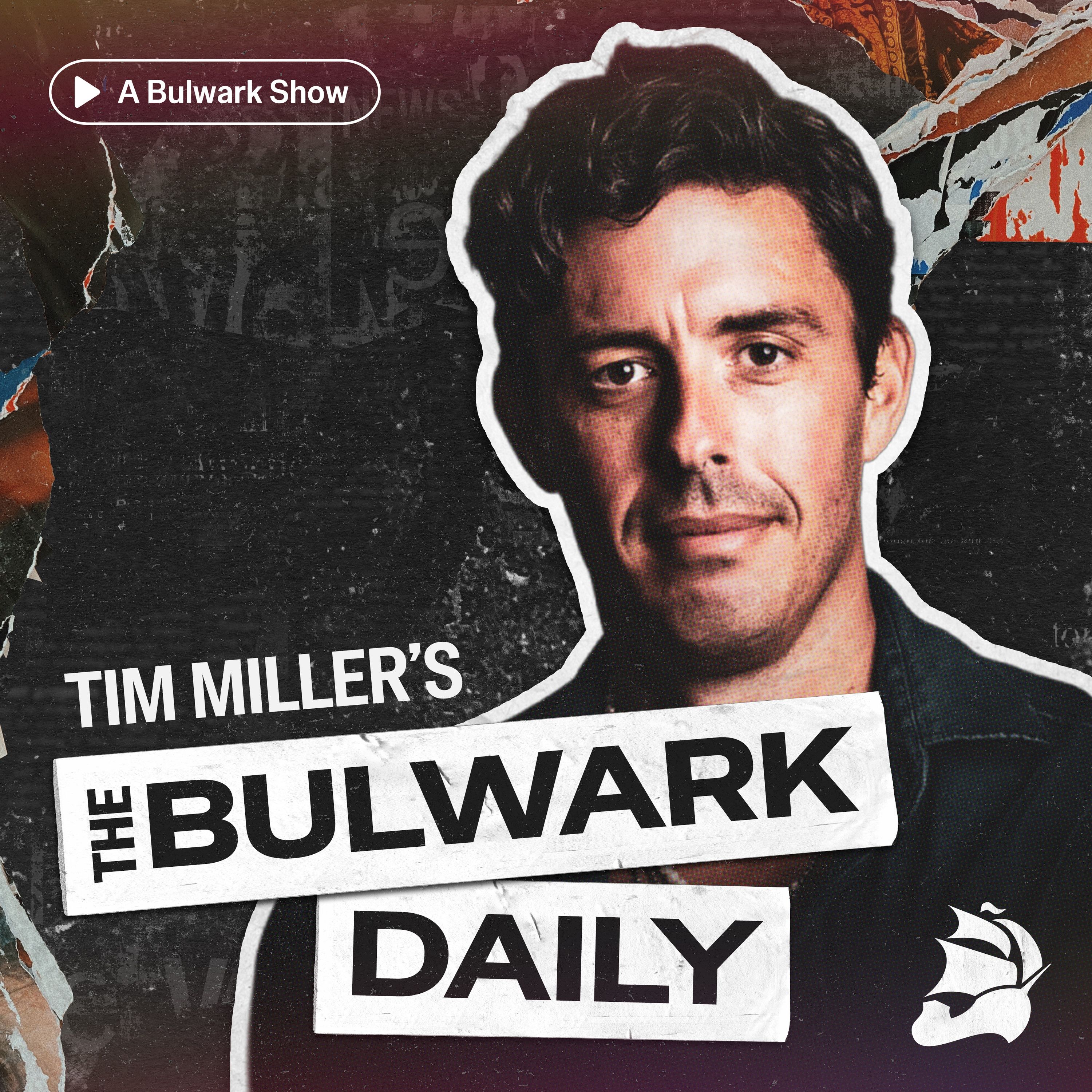
Ann Applebaum’s analysis reveals a deep, global shift in U.S. foreign policy under the Trump administration, moving beyond traditional diplomacy into a form of "globalized mega-grift" driven by revolutionary ideology and private-sector interests. She highlights how the administration has weaponized diplomacy—such as through cultural exchanges, visa sanctions, and financial deals—to influence foreign governments, including in Greenland, Brazil, and Venezuela, often targeting democratic institutions and repressive regimes. In Greenland, U.S.-backed investors and crypto-linked figures seek to undermine local governance and impose new political systems, while in Brazil, the administration undermines democratic processes through tariffs and visa restrictions to support the return of right-wing leaders. In Venezuela, U.S. control over oil and gold assets is criticized as a corrupt, unaccountable scheme with no oversight, benefiting oligarchs linked to Putin and operating without democratic legitimacy. Applebaum also exposes the troubling role of figures like Russian-connected gangsters funding Trump family events, and the U.S. diplomatic team’s apparent willingness to negotiate with Russia on business deals while urging Ukraine to surrender territory—revealing a pattern of prioritizing business interests over humanitarian or strategic peace. This global network, she argues, reflects a broader autocratic project where architecture, foreign policy, and capitalism converge to undermine liberal democracy. The article underscores a growing sense of distrust among allies, who now view U.S. leadership as unstable and suspect of long-term commitment to democratic values. Applebaum concludes by calling attention to the erosion of transparency, accountability, and moral boundaries in U.S. global influence, warning that the current era represents not just a political shift, but a fundamental reconfiguration of power rooted in secrecy, ideology, and profit.
(upbeat music) - Hello and welcome to the Bullwark Daily. I'm your host Tim Miller. Delighted to welcome back to the show, I'm delighted. We'll see how my husband, other listeners feel at the end of the podcast. Her recent books include The Twilight of Democracy and Autocracy Ink. She's a staff writer at The Atlantic where a latest piece, "Empire of Grift" is the October cover story for the magazine. It's Ann Applebaum. We'll come back in. - Thanks for having me again. - It's always a joy for me, even though I'm looking at my outline here and we'll see how we all feel by the end. I can't be any darker than the Apocalypse episode. So we'll see how we land. I want to start here. We'll get to your article next. But first, we have more important thing. Ann Applebaum, Radical Revolutionary. I saw a tweet you sent this week. And there was a overhead video of the ballroom. And so you could see the size and scale of the ballroom and how much bigger it is than the White House. And you quoted it with these five words. It will have to go. And I'm like, okay, 'cause I've been kind of squishy on this. And I'm like, if Ann Applebaum is out there saying, we got a bulldoze, the ballroom, that peaked my interest. So I want to hear more. So I grew up in Washington and a lot of the institutions that we're talking about, the Kennedy Center, the monuments around DC, the reflecting pool. These are places I've known all my life. And I know how important they are to people who live in the city and to people who visit the city. And I've been taking people to see them for years and years. And I took kind of generations of children to the Nutcracker Suite. And I was taken to the Nutcracker Suite at the Kennedy Center at Christmas time. And watching the president systematically destroy one after the next has, yeah, has probably radicalized me. You know, the White House was built in a certain style for a certain reason. It was meant to evoke Republican, small R Republican virtues. You know, it was supposed to be modest. It wasn't a palace like the palaces in England that we had the Revolution had broken away from. It was classical and design. It was supposed to evoke palladium virtues, you know, this sort of architecture of balance and symmetry. And by destroying it, by building a monstrosity next door to it, Donald Trump has changed its meaning and changed the way it looks and changed that original, the original intentions of the architect. And the intentions are related to very deep American values. And he's imposing a new set of values on them. And I object. - It impacted me to see that you were there 'cause it made me feel like, well, maybe I'm not radicalized enough. You know, and if Ann Applebaum is ready to get out there with the sledgehammer, I, 'cause, you know, I don't know. Part of me is just like, well, okay. Well, why don't we just name it the Barack Hussein Obama ballroom and move on to bigger and better things? - I mean, if it were in proportion, if it were done with an eye to history, if it were not a grotesque statement of Trump's personality imposed on Washington DC, then we could talk about having a ballroom. But that's not what this is. This is a very, very strange project. It's something that Trump has obsessed with. He talks about it all the time, apparently, according to people who have reported on what goes on. - Yeah, Ben Terrace reported on this for the New York magazine. - Yeah, and so, you know, this is not a normal construction project. It's not a bit of improvement to the White House. It's not an upgrade. It's an imposition and it's doing a lot of damage. And architecture is important because it reflects who we are, as I said, it reflects a set of values. It was built that way originally for a reason. And Trump is destroying those seeking to change the values and undermine the way the city looks. - Hell yeah, to the barricades. I'm with you, you've won me over. I'm with you on it. Okay, and it relates to your cover story, which covers kind of the globalized mega-grift. You know, I think that there's, of course, been a bunch of reporting and, you know, Johnson Swan on the way this week. And if you hear him tell it, it's just, I mean, we've barely scratched the surface of the amount of corruption and double dealing with these guys have done. And, you know, we all know some of the individual stories. We bring this all together, I think, and frame it up in an interesting way about how their program is not at all isolationists. It is a very globalized program, just in a different way of thinking about it. So what, why don't you explain that concept? - So I think it's important to understand that the people who now occupy important jobs in the US administration, not all of them, but a significant number of them, think of themselves not as ordinary Republicans who won an election and a few years from now will happily hand over to Democrats and are part of a long chain of history. And, you know, as we've been discussing an inheritance of values going back a long way, they think of themselves as revolutionaries who are enacting a profound change. And in a revolution, always needs an international dimension. You know, so to stay secure at home, to complete their revolution at home, they need to create a world where they have lots of friends and allies who agree with them and it will help them continue to build the revolution. And so they think about how do we help bring to power like-minded political parties in other countries? They're particularly interested in Europe because they have this idea of white Christian civilization that they believe it comes from Europe and they want Europeans to agree with their vision of the world. They're also very interested in Latin America and more broadly the Western hemisphere because they think the US should be dominant. And I mean, dominant as in an imperial kind of dominance in the hemisphere, not just the largest country. And they are willing to go to great lengths to make these things happen. All revolutions, when they break existing systems, when they change the rules, they bring with them other people who want to take advantage of that change. And this revolution is taking place in conjunction with and with the help of a number of large companies. And they are the tech companies, they are cryptocurrency industry, some oil and gas companies, some minerals companies who see these changes beginning to happen and are seeking to take advantage of them. And so you have to kind of look at it as two faces of the same project. And it's not a coincidence that a lot of the far right movements and people and groups who are supported by the Trump administration also have very often deep cryptocurrency connections. And they use this language of libertarianism and deregulation, which is what the cryptocurrency companies want or sometimes the tech companies as well. And they have a group of companies who are using the power of the US government and the power of US diplomacy and maybe even other things to make money. And that is a very, very different way of doing foreign policy than we've known for the past. - It's this globalist nationalism, which is like a contradiction in terms at some level. But it leads to these kind of strange quotes going from the administration. You had a one that caught my eye from Sarah Rogers, who is the undersecretary of state for public diplomacy. And she's been caught up also in this like online MAGA controversy back and forth or some of the influencers that they're paying online have been revealed publicly and she's embroiled in that. But this is a quote you highlighted. We are going to be fully utilizing all the tools at our disposal, exchange programs, cultural heritage initiatives, micro grants and more to advance the president's America first agenda. It's like, okay, I mean, it's weird, but it is what they're doing in a strange way. - It's what they're doing. So they are using the tools of American diplomacy to fund or aid or help people with whom they agree. And very often, again, in Europe, these are far right political parties and groups and movements sometimes there. As I said, they use libertarian language. I'm not sure they're true libertarians, whatever that means, but they're people who are allied with companies that want deregulation. Great example, that is in the UK, where they're very close to Nigel Farage. He's the leader of the reform party, which is the British far right, and has recently been involved in a series of scandals to do with him being funded basically by cryptocurrency, moguls, some of whom live outside the country. But the US is using tools that in the past were used to promote democracy, to promote human rights, to encourage future leaders of potentially democratic governments around the world to come and visit the United States, to study at American universities, full bright scholarships, for example. And all these tools that have been, you know, part of the US kind of soft power arsenal for decades are being reverted. I mean, I'm not sure it's happened yet entirely these things take time, and there are some restrictions on how much can be done. But the idea is to revert them and to make them tools of this kind of MAGA nationalist international. And I think that's the deep goal of some of the ideologues at the State Department. You mentioned they're increasing focuss, or like their main focuss is on Europe, is the one.
whiteness element. So why don't we start there? You're going to go through some examples. And I think it's interesting to revisit what is happening in Greenland in particular. Because I do think that there was a lot of focus, rightly, on, you know, kind of the military element of this and how, you know, the European countries scrambled their military to protect the diplomatic side of it. But there is this, you know, the corruption side of it and the integration of the administration with the private sector and other efforts to be corrupt in Greenland is pretty striking. A former president of Stony, two-hundred, flagged this for May, which was the story of this Greenland politician, Georgian waiver, who his wife was representing Greenland in negotiations when the U.S. and now he's received a house in Greenland's capital, played for by American investors, including Ron Lauder, father-in-law of the new Fed chair and friend of Trump. The guy who's, I think, idea it was for us to do this Greenland deal. In your piece, you talk about a bunch of other examples of Trump donors, Ken Griffin, you've tried to meddle in Greenland. And I think advance those imperialist goals and economic goals all in one. Talk about that. Greenland is really interesting, because in Greenland, you see how, you know, it's not U.S. diplomats necessarily doing American foreign policy. It's this world of business people close to Trump who are now de facto carrying out Trump's wishes or someone's wishes inside the administration. And in Greenland, I mean, you did have this dramatic moment in January when the Danes really did expect a possible invasion, and they got ready to defend Greenland. And they were, you know, they sent blood banks up to Nook, and they prepared a blow of airports. And this is now public information. And they were ready to fight back. And then it didn't happen, and it sort of, you know, faded away. But since then, as I said, there have been a number of U.S. companies who have stayed in Greenland, sometimes offering really extraordinary investments. There's a guy who wants to build a data center in Greenland, even though it would probably melt the permafrost, and you would have to import all the workers and all the material. Greenland remember is a frozen, you know, all year round. It's not an easy place to do anything. Elon's talking about data centers on Mars. So why not Greenland? Why not? Do you, Greenland? First, although actually, that's not a joke, because there are people who have said, let's do a, you know, kind of one of these sovereign states run by CEOs. Let's create a new civilization in Greenland as an experiment for when we get to Mars. So they're not unrelated, those two ideas. But the point is that, you know, we think nothing's really happening in Greenland, but actually there's this huge U.S. influence operation being funded by private companies, trying to reach Greenlandic politicians, trying to influence the way people think, offering people huge amounts of money in a place where people don't have it, all with the aim of subverting the existing social system in Greenland, and imposing something else. And this is being carried out without really any oversight, without most Americans really knowing about it. I mean, just reported in Denmark, the Danes are very aware of it. Greenlanders who I spoke to are aware of it. But it's, it's now really U.S. foreign policies just subvert Greenland. And I thought it was important to make people aware of that. Yeah, and just tying it all in together, it is the same guys pop up. And so it gives you a sense of the scope of their project. And you highlighted this dried and brown, who was interested. And if the U.S. integral Greenland buying Greenland, he wants to build a city there for his crypto-backed network state, his backers include Palantir, Peter Tiel, Sam Altman, you know, all of these same figures. So, you know, like the degree to which that's all tied in together, I do think is greater than people realize. Like sometimes they isolate like, there's Trump has these goals over here and the big tech guys have these goals over here. And, and there's a little bit of overlap. I just think there's a lot more overlap than people realize. There's a lot of, I mean, it's, you know, it's not a neat and crisp setup, you know, where I can identify who's in charge. But what we have now is a kind of group of people around the Trump administration, including I would say, you know, the tech guys, the some mineral guys, some other hedge fund guys and so on. We also have some, you know, mega ideologues and influencers who are part of this too. And there's some of them who are seeking to make money and some of them are trying to help Trump. And they work together in a loose way, you know, just as at the time of the Bolshevik Revolution, you had the Bolsheviks, but then you had lots of other people attaching onto them and trying to achieve some other goals while the system was breaking down. So, you've destroyed the normal ways of doing diplomacy and all kinds of people have piled in. You led the story, folks, you don't have it in Brazil. And I do think this has flown under the radar for a lot of people, the Brazil case, which is that Trump simultaneously was putting exorbitant tariffs on Brazil as, you know, as part of his own, again, African tariff regime, taking visas away from Brazilian political leaders and judges. And at some level, basically refusing to even do bilateral diplomacy with the Brazilian government and using all these levers of power inside and outside of the government to undermine the Brazilian government so that the Bolsonaro can come back to power. And is that basically the summary? That was the summary. I mean, Brazil is weird because there were different phases, but that was certainly the summary for the first, I don't know, eight months of the Trump administration, that, you know, there was a, there was a very strong group of people inside the Maga movement, associated with CPAC, who are very keen on promoting the Bolsonaro family, the son of the former Bolsonaro president is running for president now, and they were trying to use these different levers of U.S. power to help them. There was a weird break moment where yet another billionaire, a Brazilian meatpacking billionaire intervened and brokered some kind of meeting between Trump and Lula, the Brazilian president, and they seemed to kind of hit it off, you know, kind of too elderly, populace, and sharing their grievances. And that seemed to calm things down for a while, and there was some tariff relief. And then it reverted back to where we had been before. So, you know, it's not like there's a clear trajectory, but yeah, you're right. I mean, I think basically the, you know, the administration would like the Bolsonaro family to return to power. And that's something that's maybe of interest to some people in the business world. There is a Brazilian Supreme Court, which has been willing to block or regulate tech companies in a way that not that many other people dare. And Elon Musk, in particular, was angry with fine that Twitter had to pay because it broke some Brazilian laws. And he ran to it against the judges, especially the chief justice, on Twitter. And all those things are putting pressure on the, on the Brazilian system. But the idea that, you know, that we would intervene in Brazilian politics in such an overt way that we would use, again, we're using visa sanctions of a kind that were created to deal with criminals and, you know, repressive monsters. And we're applying them to judges in a fellow democracy, because we, in this case, it was because either the judges restricting Twitter or this just same judge was also involved in indicting and trying the previous president, Bolsonaro, for having tried to overthrow the results of their election in a sort of their version of January the 6th. Anyway, we're involved there in a, in a, in multiple ugly ways. You know, guys, hiring is tough. Even though I interview for a living, I don't trust myself in the interview process to the judge somebody. I look at little tips and tricks I like to use, but it doesn't always work. One thing that does tend to work, one thing that I've come to rely on is when people demonstrate how excited they are to have the job in, in ways that you might not expect. And that's happened to me. If you'll come up to me in JavaScript, other places, talking about when to come to the bulwark, we're creating a little bulwark crew of New Orleans people behind the scenes, by the way. I think we've got three now with New Orleans connections. So I like going that way, but, you know, you can't just wait till somebody shows up to see you at the coffee shop. You got to actually try to hire people. And the best way to do it is with our friends at Zipper Cruder. When you're hiring, it's always helpful to know who really wants the job, but you don't need unusual stunts. You just need Zipper Cruder. On Zipper Cruder Club, I can add a personal note to tell you why they're interested in your job. So you see the most motivated people right away. And right now, you can try it for free at zippercuder.com/bulwark. Zipper Cruder's powerful matching technology finds qualified candidates quickly. Candidates can tell you in their own words, why they're excited about the job. And it's no wonder Zipper Cruder is the number one rated hiring site based on G2. Zipper Cruder makes it easy for amazing candidates to get your attention. 4 out of 5 employers who post on Zipper Cruder get a quality candidate within the first day. Try it for free at zippercuder.com/bulwark. That's zippercuder.com/bulwark. Meet your match on Zipper Cruder. In Venezuela, we're involved even more. We had the Secretary of Treasury at a very interesting exchange in a testimony this week, where he was discussing the scale of our financial involvement in Venezuela. And I want to play some of that for you. Okay, because President Trump said on July 27th, we've paid for that war many times over. We're taking in a lot of money. Billions and billions of dollars.
from Venezuela. Who is the "we" that he is referring to? Well, I think President Trump may have been referring to the oil deal that the Department of War is done within his oil. But he seemed to imply that we, the United States, people are taking in money to offset those costs. That would suggest flows to U.S. persons. Again, that this is one of the largest assets that maybe ever to go on the U.S. balance sheet Congress. Okay, are the accounts that the Treasury is managing tied only to the sale of oils, or are you also taking control of other Venezuelan assets? It is many Venezuelan assets. Many? So you've asserted control over Venezuelan assets. I know Interior recently said they're taking control of Venezuelan gold sales, so we're also taking control of those assets in the dispersions. You can't testify as we sit here whether or not those are flowing to U.S. persons. No. Can you identify where or what U.S. bank those funds are being held? No. What? Right. So you had no way of knowing this, but I just got back from Venezuela a couple of days ago. I know they feel that are stealing their gold and other unstated assets. They aren't happy. I'm in the course of writing about it right now. So it's what I was doing before we started talking today that actually what Scott Besson said was not entirely accurate. Actually, this even before Trump's oil deal was announced, we have set up a system by which Venezuelan oil and gas and other assets. The U.S. is controlling the sale of those things, and the money is going into a bank account. It was originally a cutter. It's been moved to the U.S. I was told city bank, but I mean, that's that's that's let's say Marco said Marco does testify city bank. Right. So a city bank. But what's important about it is there is so far, and as far as I'm aware, I'm just going to check this now, there is no audit of how much money is going in, and there is no audit of how much money comes out again and goes back to the Venezuelan government, even though we've been told that some does. So that somehow the U.S. is doling out money back to the Venezuelan leadership to pay for, I don't know, government workers salaries or investment into the oil industry. I don't know whether money is disappearing into private bank accounts or elsewhere, but I also don't know that that's not happening. And nobody in Venezuela knows whether or not that's happening. And it's a very strange moment because, you know, this is all happening with the government of Venezuela, which as far as the Venezuelans are concerned is illegitimate. I mean, Delce Rodriguez was not elected by anybody. She was appointed by Donald Trump. She was Maduro's vice president. Her regime, she's part of a regime which is still in place. So the repressive apparatus, you know, the secret police and the and so on are all still there. They have let some prisoners out of jail, not all of them. But the system as it was remains largely intact, except that the U.S. is now somehow collecting the revenues. I asked a Venezuelan economist at Harvard on Carter's Houseman to describe it to me. What did he, what did this look like to him? And he said, it's a union of two corrupt oligarchies. And he even said something like, you know, it's a, it's a caricature of what imperialism is supposed to look like. It's a sort of exaggerated version. Yeah, it's insane. We're in a free country. We don't, there's no audit of it. Congress doesn't have oversight. Like there's just no rogue bank accounts out there with Venezuela and money that somebody in the Trump administration, we don't know who has oversight over. Yeah. And this is even before we get to the oil deal, which the details will also become clear. But it's a, it's a deal that it looks like the Trump administration has done with a famously corrupt Venezuelan oligarch, like a guy who's been under investigation in multiple countries. And I met fishermen on Lake Mara Kaiba. Don't ask, this is where a lot of the oil comes from. And they'd heard of this guy. So it's not like he's an unknown person. It looks like we're doing these very dodgy deals with people associated with the repressive regime. And so far, we haven't made a declaration of when there will be an election. And the guy that we're doing the deal with is, like was under investigation for money laundering in multiple countries, the Betancourt. Betancourt, Alejandro Betancourt. Yeah. So seems like money's probably being laundered. I don't know if it's walks like a duck. I didn't know and I don't want to preempt your article. But I am just curious about the mood among the Venezuelans, like as the type of oppressive, you know, government behaviors of the previous administration. Do we have a sense whether that's still ongoing or the scale of it? So the Venezuelan opposition is in a very weird position. They are not historically anti-American. They know that they want Venezuela to do business with U.S. companies, including U.S. oil companies. They've been very circumspect up until now. They haven't wanted to criticize Trump. They were very happy about Maduro being exfiltrated. But the announcement of the oil deal did create a kind of break because people were sort of expecting, well, something will change and so on. And now people are beginning to get quite angry, you know, that it looks like, I mean, maybe maybe something will happen in the next few weeks that will change it. But it looks like the regime is being cemented into place. And while I was there, I went to meet a Venezuelan political prisoner called Perkins Rocha. He was one of Maria Crina Machado's lawyer. She was the opposition leader who's now out of the country and has been unable to go back. And he, I met him. He was, he was in prison after their, their disputed election of 2024, which the opposition won, but was stolen by Maduro. He was then in prison for a long time. He was released in February, but he was, he sold her house arrest. So to go and visit him, I had to go through a kind of police cordon. And he still has an ankle bracelet on his leg. And this is a, this is a constitutional law scholar who has committed no recognizable crime. But he's still under surveillance by the regime. And everybody knows that this repressive apparatus is still in place. I look forward to reading that one. It's out. And now a message from our sponsor, the reading room here at the bulwark. We talk a lot about Jeffrey Epstein and how important it is to keep the story in the news. Some friends of ours are really working to make that happen. They printed out all 3.5 million of the released, important word, the released Epstein files. They bound them into 3437 volumes and built a free traveling exhibit so the public can bear witness to these crimes. It's called the Donald J Trump and Jeffrey Epstein Memorial Reading Room, which is a hell of a name. And it works how it sounds. You walk in and there are the Epstein files for the ceiling. Plus a timeline of Trump and Epstein's four decade friendship and talks and panels with Epstein survivors. The reading room is in Dallas, right across from the president during the midterm convention or whatever you want to call that. And then it's off to Iowa, Ohio, Michigan, and a bunch of other cities throughout the fall. So the James Tel Rico stop by in Texas and hope we can see it on the road. But it turns out that moving 17,000 pounds of evidence around the country and cheap in the reading room relies on donations. If you want to know more about how you can donate or visit the reading room, there's more information in the morning. Shots newsletter or you can visit Trump Epstein Reading Room dot com slash bulwark. That's Trump Epstein reading room dot com slash bulwark. I want to go into the rest of Ukraine war and the latest there. I guess before we go to it's happening at the war. Let's talk about some of the other stuff happening with Russia and their involvement with us and our globalized mega club talker see. I saw your posting about Umar Kremlev, who funded Don Jr's wedding reception. I want to be very. No, just the fireworks, just the fireworks. Just the fireworks. The day after party. The day after party. Yeah. I mean, because the public are at the story showed up to them. And and Don Jr's new wife, Bettina posted on I forget where on somewhere on social media saying this is fake news. He did not pay for a wedding. There was another party who was already paying for us. And we decided to tack the wedding on to that the day before. And we paid for that. Like we paid for all the stuff the day before of the actual wedding day, but the Russian gangster paid for the party. That included Jared Kushner, of course, our point man and these negotiations, Eric and a bunch of other Americans. It's a pretty alarming story. It's stunning story. Actually, there's a Russian journalist who wrote a very, very good description of the gangster and his background. And he is someone who comes from the criminal world. He changed his name to avoid association with previous indictments. He was like JD Vance. He changed his changed his name. I didn't know that. Yeah. He had a different name. And he changed his name. And he has become wealthy, not because of great business talent, but because he became friendly with Putin's bodyguards. They gave him control, essentially, of their sports betting industry. And then a kind of car dealership. And he's someone who's quite well known in Russia. He posts frequently on social media. The box, you know, he runs the boxing. Yeah. Head of the International Boxing Association, which allegedly is how he met Don Jr. But he's someone very close to the Russian security services and close to Putin. He was in China with Putin, according to the reports recently, and is, you know, is very much part of the
the hard side of the inner circle. So it's not the diplomats. He's not involved in the sovereign wealth fund. He's involved with these security guys. And somehow he's, you know, he's cycled up to the president's son, ingratiated himself with him. Apparently he doesn't speak a lot of English, but he brought a group of friends to the wedding. Neither does Donald Jr. sorry. Continue. I apologize. Anyway, it's, I mean, in any other administration, any other country, this would be a huge scandal. And the FBI would be investigating. But will that happen in this administration? I don't think so. And then we had Jared again, who's at the wedding reception, funded by the Russian gangster, who doesn't speak that well, good of English. I don't speak, I don't speak that good English either turns out, I don't speak English that well either turns out. Questioner was doing a bit in interview. I played this early this week, but I think it's worth playing a second time just to listen to it, where he explains how he sees the state of play in the negotiation. Let's listen to chair. Look, I think right now from the Ukraine perspective, I mean, President Putin played out his line of what he wants to achieve. If Ukraine, you know, wanted to withdraw to that line, then obviously, you know, we have the rest of the deal set up and put together Ukraine right now does not want to do that. And obviously, our job is the mediators to figure out how can we come up with a creative solution that doesn't that doesn't violate their desires and that helps them achieve, you know, their objective and doesn't a way that we can get Russia to end the conflict in a way that hopefully, you know, allows both parties to move forward in a framework that where this doesn't happen again. We're just looking for a win-win here, and we're looking for a win-win. If Ukraine would withdraw, we don't have any requests from Russia, but if Ukraine would withdraw, Jared says that he already has the rest of the deal cooked. I'm not familiar with that. I wonder what does that look like? I wonder, the rest of the deal, it's already if Ukraine would just withdraw. So this is basically the same deal we've been talking about for many months. And, you know, the strange part of it is, I mean, it looks like what Russia has been trying to do is persuade Jared to get the Ukrainians to surrender territory. And I should remind everybody that territory means people, it means defensive positions, you know, it's not something you could just give up. Like, I mean, it's like asking the US to, would you just give up a part of Florida to Mexico because the Mexicans want it, you know? Yeah, family members on the other side of the line, and we should have mentioned with Kremlin, allegedly has associations through his family with an organization that was kidnapping, Ukrainian children, right? So this is what happened, and remember what happens to Ukrainian territory when it's occupied. Exactly, you know, the leaders are killed, their mass arrests, the Russian language is imposed on everybody. Ukraine is banned, people who have Ukrainian flags or symbols can be arrested in the street, and children are kidnapped and taken to Russia where they're trained to be in the Russian army. So it's a very, it's like turning over territory to the Nazis, really. I mean, it's no different from that. And so they keep making this request without putting on the table any future for Ukraine. So, you know, for Ukraine to, I think the first of all, I think the Ukrainians would accept a cease-fire on current lines right now, but the point is that for Ukraine to be a viable country in the future, for people to want to come back there and invest there and live there, we're going to need to have some sense that the war isn't right about to start up again. In other words, what it looks like the Russians want is for the Ukrainians to, you know, give up something with draw, and then they wait a little while, and then they invade again. And that can't happen and the Ukrainians can't agree to that. Doesn't seem like Jared gets that. No. You know, it seems like Jared has been convinced, or it doesn't, or maybe doesn't care, or has been bribed, who knows, to kind of argue that like, oh, if you, if you just gave some of this territory back to Russia, then Putin would, everything would go back to normal. It would be the 90s again. Putin wants to do economic deals. So, Jared has been a lot more time with Putin than he's spent with Ukrainians. He's been to, he and Steve Woodcoff have been to Moscow multiple times. And we know, because they've said it, and it's also been reported, it was reported in New Yorker again this week, that in addition to negotiating with Ukraine, they are also negotiating a set of business deals with Russia. I mean, the deals are not necessarily for Jared and Woodcoff, although, who knows. But the Russians have played them like a fiddle. You know, the Russians have dangled these supposedly lucrative deals in front of them. You know, if you just end the war, the way we want it to, we're going to give you all this stuff. And the Americans have been, you know, we know that some of these new deals have, before we know some of the names of, you know, some of the, some of the names of players. And, you know, for, for all the Europeans involved in, of course, for the Ukrainians, this is very shocking. You know, so are you trying to achieve peace in Ukraine? Or are you, are you trying to promote the business interests of this group of nebulous oligarchs around the Trump administration? This goes back to the beginning of our conversation. You know, this, I think this is, you know, some of this is in, in my article as well. I mean, either he's unbelievably greedy, and this is all he thinks about is, you know, or he's unbelievably naive, you know, he falls binary or or, Putin has played them, you know, he is, you know, wrapped them around his little finger. You know, he's offered them this stuff. And they are, you know, prepared to believe that they can get all this stuff. If they just get the Ukrainians to, you know, allow more of their people to be murdered and more, more children cannot. And that's, and that seems to be the deal. It's so unprecedented that I know that Europeans who've met with them or have been in the room with them are kind of in shock, like they don't, somebody said to me, you know, I couldn't even believe I was in the room with them while they were saying the stuff. I mean, it's very hard for people to wrap their minds around who aren't Americans. I want to come back to the war, but just while I was talking about Kushner and these guys, that you mentioned in the Yorker piece, Dexter Filkins. And I mean, a lot of that was in there stuff we knew, but you kind of tied together like the just degree of how close the ties are and the Gulf States and how easy it was to call Jared for favors. I mean, the Gulf States, you do, we did see the kind of limits of that this week, though. It does seem like Trump might have might be leaving MBS hanging with regards to the war with the hoodies. MBS requested military, you know, cover and, you know, additional weapons and resources for combating the hoodies that are bombing, you know, Saudi oil, infrastructure, and Trump said now. And then simultaneously, that there's a Reuters report that like maybe the administration's might be back channeling with the hoodies and Yemen and just being like, you get, so long as you let our boats through, we'll stay out of a way in Saudi. I was intrigued by that given the amount of money they've invested in the Trump family. It's extraordinary actually. I wasn't clear whether the refusal to help the Saudis was because of the hoody connection or whether it was because the U.S. is running out of weaponry and the ability to help the Saudis. You know, imagine if after all this, if the U.S. turns out to be a bad ally, even to the people who've paid, you know, even, I mean, forget about you. Wasn't that kind of how things work? I don't know. I've watched some gangster movies, you know, I mean, like these kind of allies of convenience, these corrupt allies of convenience, you know, they don't quite have the staying power of values based relationships. But it would, it would really royal the Middle East. I mean, it would be a, you know, that would that the U.S. is proves to be an untrustworthy partner, even to the Gulf states. Even to the people that bribed them. Yeah. Then that will change the way people think about the U.S. and the region forever. I want to go back to just the, actually, what's on the ground, what's happening in the Russia, Ukraine war. You posted about the city, Holesky, so Ukrainian city under Russian occupation and how bad the situation is there. You had an article a little while ago about the Russian drones conducting. We call it human safaris and hair sawn and other parts of southern eastern Ukraine was kind of tracking individual civilians of the drones, the aim of killing them. What's your sense for kind of what's happening on the ground and how things have changed? So that what changed in the last couple of months is that the Russians now have a kind of drone that is jet powered and is much faster and is harder to hit than previous drones and they've been using them in instead of doing nighttime raids. They're, they're now very, very frequent. So they're these constant drone attacks and they're not really hiding anymore that these are on civilian targets. So they hit school buses, they hit passenger trains, they hit a passenger train that was very close to another one that was carrying a lot of European and some American officials. They're terrorizing people in the cities on the border. I mean, the drone piece I wrote was inspired by really a kind of dystopian video of a guy who was selling, you know, onions and vegetables in a street market who was being chased around just truck by a drone that eventually fell down and exploded next to him. He survived, actually. Wow. But, you know, they're chasing people and they're chasing people who are obviously not soldiers. And that's now a, you know, a part of life in a lot of Ukraine. I mean, at the same time, the Russians are not winning on the front line. They are not moving forward. They've actually lost some territory in the last few weeks. Ukrainians are hitting regularly. They're refining
other oil infrastructure, other military infrastructure, the war is actually accelerating. I mean, it's more on both sides becoming, you know, worse than it was before. And so while, you know, I don't know, while Putin talks about, oh, if you just give me this little sliver of territory, it will be fine. He's accelerating and escalating. I should say also that he's accelerating and escalating in Europe. There have been a rising number of drone attacks. There was one that was thwarted at a German airport. There have been some on the borders and the Baltic states. And so that's all escalating as well. Yeah. And you talked about how at this point, you kind of have to call Russia's actions and the rest of Europe like kinetic war. And there have been multiple now drone attacks in Europe, like you mentioned Germany on Zelensky's plane. You know, there hasn't been one that caused mass casualties yet, but there have been several that tried. There was an attack on a passenger train inside Poland that was thwarted and didn't go off, but had it done what it was supposed to do. There would have been a lot of deaths. So there's beginning to be, as I said, this kind of real attempt to do violence inside Europe in a Poland, Germany, the UK, Spain. I mean, there have been, there have been assassination squads. There have been targets in all of those countries. I want to talk about like how this interacts with what else is happening in Europe. I see there are two trends happening at the same time right now that are in conflict with each other a little bit. We have this European Union and Canada, like talking about different ways to cooperate diplomatically, militarily, economically. It was even a float that, you know, Canada can join the European Union potentially. That was disgusting. The associate member, yeah. Associate member, excuse me, associate member, and then simultaneously to that, you know, we saw some of the AFD elections in Germany and it's happening in some other countries, you know, the populist right gaining a little momentum again. How do you kind of assess like those two trends in the state of play? So those two trends, I mean, that is the drama of politics in Europe right now. And to be clear, not all the populist parties, but most of them are pro-Russian and the AFD is very pro-Russian. It has people in it who've been paid by the Russians. Its leader openly says if she were to win an election, which she won't any time soon, she would end funding for Ukraine. You have on the one hand European leaders seeking to hedge, mostly they're thinking about Trump. How do we, how do we build, you know, stronger alliances between countries that believe in liberal democracy and share values? And you have them, you know, directly in conflict with people who are both pro-Russian and pro-Maga. I mean, the AFD is also supported by elements of the Trump administration and by the far right tech guys. And so that's the drama. It's a, you know, you have a competition between those two world views. And in some countries, one slide seems to be winning and some countries the other side is winning. And that's, that is now the central argument of European politics going forward. Is there sort of, how do you feel about Russia? How do you feel about the United States? And which side of that line are you on? I can tell you, I worry a little bit about the good side and their political strategy right now in Europe. And I do think there's some structural differences in Europe and in the way that their parliamentary democracy works and all that. And, you know, a bit that make it somewhat less susceptible to the populist right, total takeover that we're experiencing here. But like, from a political standpoint, I worry that you have these like, insurgent, populist right parties talking about cultural issues, talking about, you know, whatever, Italy first, Germany first issues. And that being a very powerful message. And then you have mirrors and carony and all these guys seeming very, I don't know, academic and international and out of touch. And I don't know. Maybe that's wrong. I'm watching this from America. But I do worry about like, I'm watching over there and I'm having a little bit of PTSD from kind of what didn't work here. Yeah. I mean, here it's hard to generalize because actually carony is incredibly popular right now in Canada. Sure. And he does talk a lot about Canadian sovereignty and our identity and who we are and so on in a way that people find appealing. Merz is in Germany that German Chancellor is less good at that. You know, although he was chosen as leader partly because people hoped he would be better at that and he's been disappointing to many people. So there's a different dynamic in different places. But in some places, people are, you know, there's a sort of different learning curve and people are working out better ways to better ways to fight back. But I mean, as we know from here, there's no ideal formula. You know, there's there are different theories like the the right is doing culture wars. Should you answer with economic solutions? You know, you know, or the right is doing culture wars. Should you also do culture wars? I mean, there's a nobody has a perfect formula for victory so far. And so what you're seeing in different European countries is different strategies playing out. But it's not we're not where we were a few years ago where people didn't get it. They didn't think it was important. They didn't they dismiss the fringe as, you know, immaterial, which was true in Germany like five years ago. And that's not true now. The other thing that I'm noticing and you tell me because this is kind of the world you're swimming in a little more. But I worried a little bit that the particular of the Democrats have a good midterm election that European countries, Canada, other other, other of these allies kind of think, okay, we can wait this out now. You know, it's only two more years. And then we can and we can kind of just keep going on business as usual. And it doesn't feel like that's happening at all. Like it feels like they now sense that they need to do a more permanent shift away from relying on us because who the hell knows what happens in 2028 or beyond. I think it was the French prime minister who said European security can't be reliant every four years on 40,000 voters in Wisconsin. We are ahead. I think after the first Trump term, they thought, right, okay, well, that was a weird, but, you know, now we're going back to normal. And now I think that's that there's a very different mood. And it's not just Europe actually. I mean, Asian allies, others and other parts of the world, you know, almost everybody I talked to anywhere. I mean, I went to India this year. Everybody I talked to is hedging. Like, everybody's looking for who can we do deals with? You know, there's there's now an India Europe trade deal, for example, which nobody really cared enough about five years ago to bother with. There's a Europe South America arrangement, you know, people are looking for, you know, new tech alliances in the outside of the US tech world. And all that stuff that wouldn't have happened before. So there's a there is this kind of reordering. I mean, whether it's efficient or whether it's working or whether it's fast enough is hard to say right now. But definitely, I mean, there is no leader of any longstanding American ally who doesn't right now, spent a lot of time thinking about how to, you know, put a break, you know, or how to distance, you know, himself or herself from the United States. All right. Well, this wasn't quite as do me of a podcast as I thought it could be. Is there anything else you're worried about? Anything I didn't ask you about any anxieties you have that I that when you look at, you know, the state of autocracy in the world that you want to get off your chest. I was going to make a joke about, you know, what to wear next week. But I, you know, since it's we're a serious podcast here, I won't do that. Yeah. Okay. All right. Well, that's great. We are serious podcast, but we try to offer people. I feel like the end of 50 minutes discussing, you know, creeping autocracy, people are looking for a little something. And so we, we started an informal Ann Applebaum book club. Now I will say the books, I looked back at the list of the books we've recommended. And they aren't, it's not a ton of giving people a break from fascism. I mean, there was the captive mind about Polish fascism, the operamins about the Nazis, directors about the Nazis, choice of comrades, Italian fascism. I offered it, I added one, which was a gay book, my tender Matador. That was about Chilean fascism and Pinochet, time of cherries. I think it was your last one, Franco's Spain. So it's, I mean, that's a little bit of an escape, but not a full escape from what you're getting here. Do you have anything to add? Anything over the summer? Are you reading that, that stuck with you? Do, do you want a full escape, like a complete escape? I won't, whatever kind of moved you over the summer. No, well, so I read a nice novel by Ann Patchett, her new novel, which is called Whistler. And it's a very elegantly written story that has a satisfying conclusion. I mean, as somebody said, as a criticism, it's a nice story about nice people, but, and which was meant to be negative. Okay. But if you want to read something a little bit uplifting and that's extremely well written and insightful, there you go. A nice story about nice people. That sounds great. Okay. That sounds great. There's a dark, there's some dark moments that I should say, but they resolve themselves. So I just started the, the disappears, which is a Jamaican novel. Oh, yeah, sorry. I read a really good. Yeah. Very high claim right now. So I'm, I'm a little bit in. So I don't know how dark or light it is. I'll, I'll report back the next time you're on. Okay. That's Ann Applebomb. Do check out her work in the Atlantic, of course. And um, I'll talk to you soon, all right? Thank you. Thanks, everybody. Have a wonderful weekend. We'll see you back here on Monday. Go Tigers.
I was here in the world, the world that you gave me time You can see it, you're running, it's like I'm in a bed On a street, why be here when we're both gonna fake it? Hey, hey, hey, hey, I'm gonna try living here, killing your goal And I can live here, and I don't want to hurt you The Bullwork Daily is brought to you thanks for the work of lead producer Katie Cooper, associate producer Anzali Skipper, and with video editing by Dante DeCicco and audio engineering and editing by Jason Brown
Podcast Summary
Key Points:
Ann Applebaum criticizes Donald Trump’s proposal to demolish the White House and build a new ballroom, arguing it violates American architectural values and represents a deliberate imposition of authoritarian aesthetics on Washington, D.C.
She documents a globalized network of political, financial, and technological actors—aligned with the Trump administration—working to advance a revolutionary, nationalist, and imperial agenda through foreign policy tools like cultural diplomacy, aid, and influence operations.
This system involves covert partnerships between U.S. officials, far-right movements, crypto and tech firms, and oligarchs—such as in Greenland, Brazil, and Venezuela—where financial manipulation, political interference, and the erosion of democratic institutions are used to advance a global project of autocracy and economic dominance.
Summary:
S. foreign policy under the Trump administration, moving beyond traditional diplomacy into a form of "globalized mega-grift" driven by revolutionary ideology and private-sector interests. She highlights how the administration has weaponized diplomacy—such as through cultural exchanges, visa sanctions, and financial deals—to influence foreign governments, including in Greenland, Brazil, and Venezuela, often targeting democratic institutions and repressive regimes.
-backed investors and crypto-linked figures seek to undermine local governance and impose new political systems, while in Brazil, the administration undermines democratic processes through tariffs and visa restrictions to support the return of right-wing leaders. S. control over oil and gold assets is criticized as a corrupt, unaccountable scheme with no oversight, benefiting oligarchs linked to Putin and operating without democratic legitimacy.
S. diplomatic team’s apparent willingness to negotiate with Russia on business deals while urging Ukraine to surrender territory—revealing a pattern of prioritizing business interests over humanitarian or strategic peace. This global network, she argues, reflects a broader autocratic project where architecture, foreign policy, and capitalism converge to undermine liberal democracy.
S. leadership as unstable and suspect of long-term commitment to democratic values. S.
global influence, warning that the current era represents not just a political shift, but a fundamental reconfiguration of power rooted in secrecy, ideology, and profit.
FAQs
Ann Applebaum criticizes the plan as a grotesque imposition that undermines the original architectural values of the White House, which were designed to reflect American ideals of balance and modesty. She sees it as a symbol of a new set of values imposed by Trump, rather than a normal construction project.
She describes it as a 'globalized mega-grift' involving revolutionaries who seek to change the world order by building allies in Europe and Latin America, using diplomacy and economic tools to advance a vision of 'white Christian civilization' and U.S. dominance, often in collaboration with private companies.
Tech companies, cryptocurrency firms, and oil and gas firms are deeply involved, using the U.S. government's power and diplomacy to advance their interests. These groups often align with far-right movements and use language of libertarianism and deregulation, even when their true motives are financial.
She highlights U.S. business interests, including crypto-backed investors and figures like Ron Lauder, offering substantial funds to Greenlandic politicians to influence politics and undermine local systems, all without proper oversight or transparency.
The administration used diplomatic tools such as visa sanctions and tariffs to pressure Brazil, aiming to help the Bolsonaro family return to power, despite Brazil being a democracy, and this effort involved targeting judges and undermining judicial independence.
She reports that the U.S. has taken control of Venezuelan oil and gold sales, with funds flowing into U.S. bank accounts without audit, raising concerns about corruption and the involvement of a repressive regime, and potentially aiding corrupt oligarchs.
Chat with AI
Loading...
Pro features
Go deeper with this episode
Unlock creator-grade tools that turn any transcript into show notes and subtitle files.
 PodcastTranscript AI