163. Angel Flight West Pilots: And Those They Serve
28m 42s
Clay Ross, a pilot and volunteer with Angel Flight West, discusses the organization's mission to provide free air transportation for patients facing severe medical conditions who live far from specialists. Founded in 1983, it serves the Western U.S., flying over 4,000 missions annually. Volunteer pilots donate their aircraft, fuel, and time, while "Earth Angels" drive patients from airports to appointments, and mission assistants accompany flights when needed. Ross shares moving stories, including an 11-year-old heart transplant patient on his 50th flight, a woman named Debbie who masks chronic pain with an upbeat attitude, and a stage 4 cancer patient who finds peace viewing landscapes from above. The organization also supports camps for disabled or burn-victim children, relocates domestic violence victims, and transports veterans and service animals. Volunteers can contribute through flying, driving, or donations, with costs borne personally by pilots. Ross emphasizes the profound sense of purpose and perspective gained from these missions, noting that even brief interactions, like a 14-year-old’s final hug, leave lasting impacts. He encourages involvement via angelflightwest.org or the Air Care Alliance for broader public benefit flying options, highlighting the need for both active pilots and ground volunteers to sustain operations.
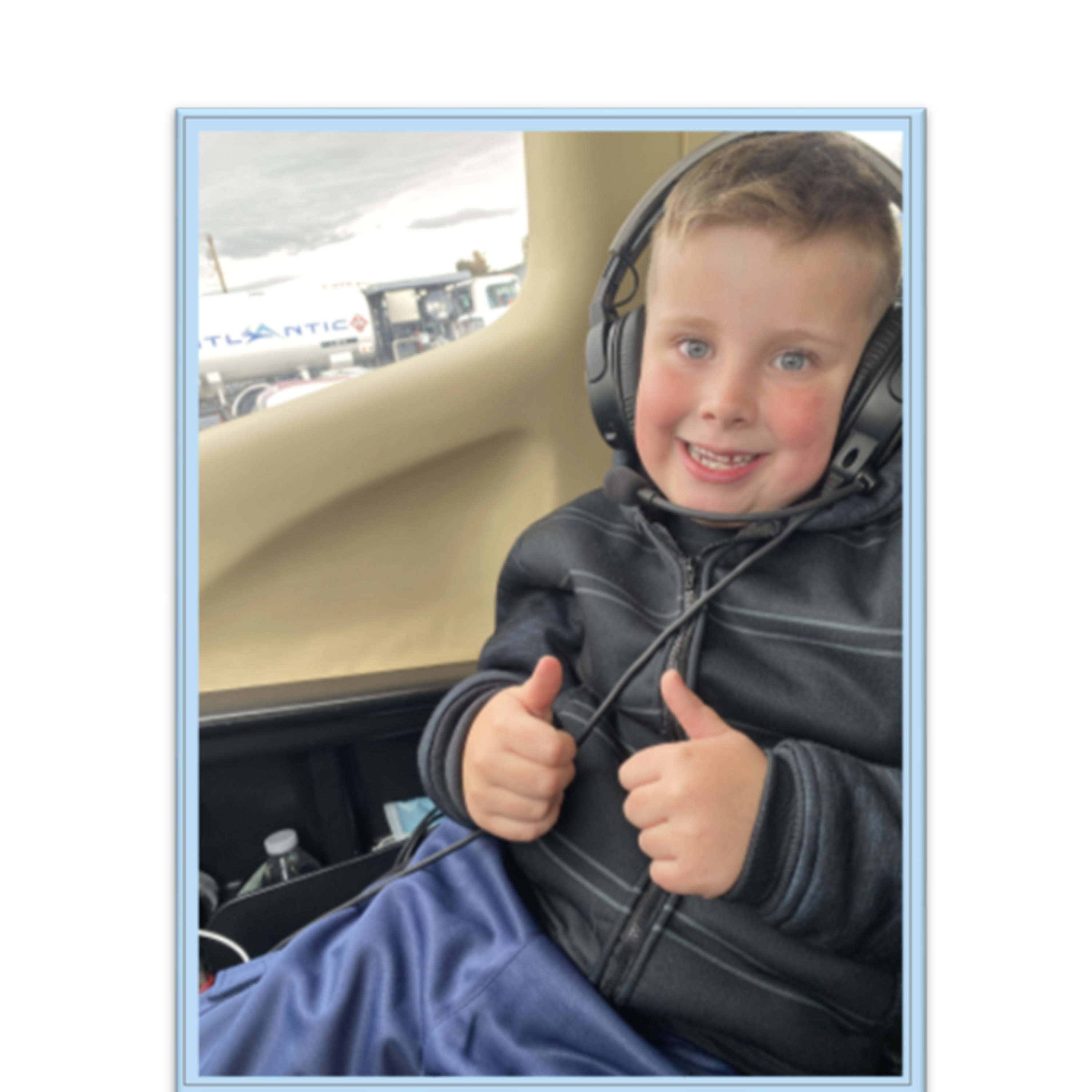
Welcome everybody, this is the Rotary E-Club of Silicon Valley and every week we bring you the story of people all over the world who make the lives of others better. They do this locally, globally, and digitally. We're part of Rotary International, 1.2 million members and 36,000 clubs in 100 and something or other countries around the globe. And ours is a bit of an unusual one. The Rotary E-Club of Silicon Valley is both online and asynchronous, which means those people who have crazy busy schedules, but hearts for service can find an intensely flexible option with us. If you're interested in that, you can learn more at rotary.cool. That'll get you to our site. If you want to learn more about rotary, go to rotary.org. Either way, you'll find that there are a lot of good souls out there who would love, get you involved, helping people, help make all kinds of things better. It's exciting to be able to explore and tap into the joy and meaning that comes from serving others. And in that realm, we are talking today with Clay Ross of Angel Flight West. This is a story I have been wanting us for us to be able to share for some time. I'm really excited that we've gotten here. I think this will be a story that inspires you. Clay is not only a pilot. He is a scout master and a really good guy. And I am excited to have him here. Clay, I hand the mic over to you. Welcome to the Rotary E-Club of Silicon Valley. Thank you very much, Rustin. I'm happy to be here and thank you to the Rotary E-Club of Silicon Valley for hosting me and for all you do in our community and globally. Okay. If you were suffering from a severe medical condition, would you get treatment at a hospital? If that condition was extreme or rare, you would seek treatment from a specialist. Now, imagine you live hundreds of miles from that specialist. Perhaps in a rural community, your travel for treatment could take many hours by car, worsening your condition and compounding the pain you endured daily due to your illness. Maybe you're fortunate to live close to an airport where you could fly commercially to your appointment, but the flights are so expensive and you have to travel every few weeks for your treatment and you can't afford the expense of travel. And even if you have access to these flights and can afford them, it is likely that your condition is accompanied by a compromised immune system and being locked in a plane with a hundred or more people could literally be a desense. Angel Flight West was created in 1983 to serve patients who are dealing with exactly these circumstances. Our volunteer pilots transport people in need to the medical care they deserve at no cost to our patients. Patients or passengers. The flight costs are donated by the pilots who fly the missions in planes they own or rent. We serve the Western United States, flying more than 4,000 missions and 1,000 patients a year. Here's the region we cover showing some of our major healthcare partners. We transported passengers to more than 300 healthcare facilities last year. We carry a wide variety of passengers and cargo, but most of our missions are to carry patients for medical care, followed by children attending camps. As soon as I learned about Angel Flight West, I knew that I wanted to fly for this organization. It is definitely flying for a purpose in the best way imaginable. Each flight is memorable and rewarding. All the passengers are extremely grateful, in spite of suffering from conditions that would break most of us. One that really sticks out was the 11-year-old boy flew for a follow-up to a heart transplant he had had when he was 9 years old. He flew every 2 weeks and this was his 50th mission. Six months later, I had back to back flights between the Bay Area and Arcada. The first passenger, who I'll call Debbie, was being treated for abdominal adhesions which constrict her organs as the adhesions grow. There is no cure. Surgery causes the adhesions to grow back twice as fast, radiation and chemo accelerate growth, and exercise or pressure on the abdomen also causes them to grow. She was 39, she looked fit, but she had to get around in the wheelchair just to avoid angering her adhesions. Halfway through the flight, I asked naively if she ever was in much pain and she said she was always in a lot of pain, even right then. Over the 7-year she had suffered from this condition, she had become a master of hiding her pain. I asked how she could mask it so well and she had such a upbeat attitude and passion for life. She simply responded, "I choose happy." When Debbie learned that I was flying another patient the other direction, she asked who it was. I didn't feel I was able to share the name of the other passenger, but when I described her, Debbie immediately identified the passenger who will call Beth and said that they have been close friends for years but lost contact when Beth got breast cancer five years earlier. It turned out that Beth had been Debbie's nutritionist when she developed the abdominal adhesions. As soon as we landed, Debbie sent a message from my phone to say hello to Beth before she headed home with her young family. The return flight with Beth was just as inspirational. Beth was an abit outdoor enthusiast, kayaking, mountain biking, backpacking, climbing, doing everything outdoors. She had been treated for breast cancer five years earlier and was in a mission until six months before I flew her. Now her cancer was back and at the stage 4. She was traveling for treatments she could not get near her home. As she watched the scenery slipping by below us, Beth said the most rewarding thing I've heard on AMI missions. She said that she looks forward to these flights not because they make her driving and her life simpler but because she gets to look down on the beautiful scenery that she explored on bike, foot and kayak and that it takes her mind away from ever so briefly her destiny and the cancer treatments that she had the next day and to the life and thinking back to the life she had lived so fully. When I flew Debbie again three months later, the first thing she told me was that Beth had passed away the previous month. As I wiped tears of sorrow from my eyes, I was overcome by the sense of purpose and the joy of being able to improve stranger's life, stranger's lives, if only briefly, at such crucial times. Angel Flight West does far more than transport patients to their appointments. We also carried disabled children and burn victims to summer camps, relocate victims of domestic violence, fly veterans, service animals and deliver Christmas gifts to our younger frequent fliers and their families a part of our Santa Flight program. Our mission goes beyond providing access to medical treatment to enriching the lives of our passengers. This is our family. Who can fly? When someone asks or learns that I'm a pilot, the inevitable first question is, where do you fly? But to me the more meaningful question is, whom do you fly? I love to fly our Angel Flight West passengers because they give me the gift of perspective and a special sense of purpose. I feel fortunate to meet every one of my patient passengers and feel more fortunate for having known them. Angel Flight West exists because of volunteers. This quote, seen here, applies to many of us. Roughly half of my own flying is for Angel Flight West. But we also need drivers and non-flying volunteers just as much. Because if you think about it, when somebody gets from point A to point B and those are airports, your doctor is not at the airport. You need to actually take ground transportation to get from the airport to your medical treatment. So we need drivers and also volunteers who fly along to provide extra help. I had one person fly along with me who it turns out was bilingual. And even though my passenger spoke fluent English, as soon as my friend, my colleague, started speaking to her in Spanish, you could see the relief set on her face and she just felt more comfortable with the flight than what she had ahead of her for that day. So how can you help? The drivers we call Earth Angels. They volunteer their time and mileage to take patients from the airport to their appointment. Mission assistance like the one to subscribe, accompany the pilots on flights when the patient might need in flight attention. If you want to elevate your flying, or you're driving with a real sense of purpose, please volunteer or donate by contacting the charitable organization that covers your state. We're one of seven organizations in the US that does this and we're the oldest being founded in 1983, as I mentioned before. If you're in the Western United States, visit angelflightwest.org to learn about Angel Flight West. Otherwise, see aircaroliance.org for a full list of volunteer pilot organizations. Here's the QR code, which you can scan and we'll also have a link available later. Clay, thank you so much. You're a wonderful story. Oh my goodness. Now, I want to dive into the Q&A, but I want to start by introducing just the group that we have for this recording. From our club, Sandy here in the Bay Area. I am.
in San Jose also in the Bay Area. A charter member of our club, but now a member of a club in Eastern Canada, Chris, good to see you, sir. And long down front of the club, Claire and Newport Oregon, always good to have you with us as well. So let's start with this. These missions that you guys fly as pilots part of Angel Flight West. Is there is there kind of a standard cost? Do you end up working with organizations to say, hey, you know, can you fund 10 of these missions or how do you approach the the collaborations that allow you guys to do this? That's a great question. So I should I should probably insert here. So we're an organization of volunteers, but we can't get our job done without a team of about 15 very dedicated full-time staff. So while we are predominantly volunteer run and volunteer donated, there's actually a lot of money it takes to keep this organization going. Those those volunteers include coordinators. So if a patient needs a flight, the coordinators make sure that they find volunteers either through automatic sign up on our website, our volunteer website or through calling the volunteers and texting to get them to sign up. So the actual cost to the mission is born entirely by the individuals and there's no prepaying for it. If I sign up for a mission, I know that everything that lies ahead for me in that mission is going to be cost that I bear personally. And so people individually decide do they want to fly one mission a year? They want to fly five, 10, 20. We have one pilot that flies about 70 or 80 missions a year. I think the second most in our state is probably about 30 and there's a group of us sort of in the range of 20 and then hundreds of people doing one mission a year. So if you were flying from here to the central valley, what I understand that you can take a commercial flight, but I mean I don't know what it would cost to pay for the fuel to do that. Yeah, so it actually it's a tougher question to answer than you think because it really depends on the type of airplane. But if you talk about the plane that most people fly and most of us are flying either four seed or six seed single engine piston power planes, a plane that has an engine much like you would have in your car. And those planes typically cost between 150 to 250 dollars per hour is the way you pay for it. It's the engine's not running, you're not paying. And a flight to the central valley will run you about 40 to 45 minutes. So you're looking at an hour and a half of flying somewhere between say 250 to $400. Well, that is a generous contribution, although I would say that your time and heart is what really makes this work so well. Do you have a sense of how many pilots and how many earth angels you've got like the organization? I do. In fact, as the slides that beginning, I'm the Northern California wing leader. We have one wing per state except for our beautiful state of California, we've split into North and South. And so there's actually 12 wing leaders. So what the wing leader does is is sort of coordinate the volunteers behind the scenes. So I don't worry about whether somebody's flying a mission tomorrow. But I want to my mission is to make sure that all of the pilots are flying or get answers to questions they might have as they become a new pilot, a new volunteer mentoring them into the program so they become an active participant. So we have about in Northern California, we have about 380 pilots listed as being active. Interestingly enough, a stat that I found out four months ago I took on this job, 70% of those did not fly in 19 in in 2025. So one of my first objectives is to get people to become active again. There's a number of reasons people don't become active. And so one goal I'm going to do is to get them to become active or to consider volunteering other ways. As you said, time is something that for most people is a bigger shortage than cost. And so often people sign up with good intentions, but they just don't have the time to volunteer. But as I said, it does take money to make our organization run. So I'd like to see volunteers, you know, giving one of the three T's we're all familiar with, maybe giving up some of their treasure in addition to their time if they if they can't volunteer their talent. Well, having such a group of people have an opportunity to do this kind of thing is clearly very important. So, you know, we think about rotary and it's opportunity to get people into a space where they can serve, where they can get engaged in service. And, you know, same thing with angel flight, you know, where you're giving pilots and others the opportunity to serve. I would imagine that the stories themselves are part of the reason people make a choice. And I understand that you made a presentation at the Niles Club here in the in the South Bay, just recently in that apparently got somebody to say I'm going to be one of your angels. We're going to do this. So so what so if people want to learn more about the stories that are so powerful, your YouTube channel, your website, where is the best place to do that? So, starting from the website, there are links from the website that will take you actually to the YouTube channel for for angel flight. So, that link I sent earlier, info@an angel flightwest.org and the video has the QR code. We can send the link along also. That's a good place to start. And you'll see some of the testimonials that the video I wanted to share is called Luisa's story. It's about a young man whose eight years old have liver transplant when he was four. It's a very moving story, but it is unfortunately or fortunately not very different from what a lot of these are. I shared a couple of my personal experiences. You mentioned earth angel. I'd like to take this point to interject something about earth angels and why I find them to be so valuable. I'm not sure how many of you have flown in a small plane before, probably most of you have. And you know, you're right there with the pilot. And one thing you probably know, if the pilot is in a busy airspace, is there's a lot going on. There's not much time to talk to your passengers. And so, what we call a sterile cockpit means that we can't be talking to the passengers most of the time. So, I find that actually learn more about the passengers, if particularly if it's a short flight, if I decide to drive them from the airport to or from the appointment. And again, you don't have to be a pilot to do that. This is a great chance to serve people and really get a sense of, you know, boy, I'm really lucky in life here because I don't have this ailment or this condition they do. And I'm helping them out. And there's just a great sense of pleasure in that. And so, the story I wanted to share with you was one of my friends, a colleague in Angel Flight named Thomas. One day I saw him sitting at the pilot to the airport. He was waiting for a flight to come in. And he was one of our pilots, but that day he was driving a passenger. And he told me he really likes driving the passenger. He shared a story that had happened a month earlier. He was waiting at the airport for 45 minutes with a 14-year-old boy that he had picked up from Stanford Hospital. And this boy was going to be flying back home. And the pilot was running late to the weather delays. Finally, the flight got there. So after 45 minutes of talking, this 14-year-old boy that he didn't know an hour earlier stood up, gave him a big hug and said, "Mr. Rick, this has been the highlight of my life or highlight of my week." And two days later, Tom found out that that young man had passed away. And just the joy, the sadness, but also the joy to think that he had made such an impact on this young man in his final days, was just really moving. And that's something that you can't buy. And we don't want to be in that situation, but we also want to help people so that they have that highlight. And that's why even though we often use the money to pay for ubers and lift when we can't find a volunteer to drive, we'd really prefer to have a volunteer drive because guaranteed nobody's in an uber is going to get the same experience unless they have an exceptional uber driver that they would from one of us. And it doesn't take much to be a driver. It just takes people with a good heart like Rotarians and Angel Flight people. Wow, that is incredibly moving. I mean, so we're talking about pleasure being able to help others purpose in life. The privilege of having the opportunity to be able to help in this way, I mean, this is an incredible story. So Claire asks a question. Or she talks about how in her part of an organ, there's a lot of need for specializations that may not be in the community. And that there's another organization that she mentions in the chat you may see there. Are there other organizations like Angel Flight West? Or are they mostly just kind of services for which people would have to pay? So I mentioned the Air Care Alliance. So the Air Care Alliance is an organization and alliance.
of more than 50 organizations that do what's called public benefit flying. And this is flying for the public could. It can be carrying organs, carrying blood, carrying passengers, carrying dogs, we carry dogs do. For service dogs, they're going from, you know, eight week old service puppies to take them to their trainers so they can be given to be like dog guide dogs for the blind. I'd say angel flight and the other seven organizations, six organizations like angel flight, that have the angel flight name and the title. They're sort of the most broad. There's one organization that flies just puppies. There's a couple of those. There's one that flies turtles on the northeastern United States. These are all part of air care lines. If you're looking in organ, if the organization is doing something like us, as far as I know, it's probably something that's charging because I don't know if anybody else in the Western United States that does the breadth of what we do at no charge to the recipient. Well, that element of the organization that or angel flight there is no charge at all for the recipient. That by itself can give people hope. Right. Just the knowledge that that's out there. Right. Let's talk a little bit about some of the other ways that you made reference to this minute to go with the dogs and the turtles. But you also talk in the presentation about taking kids to camps, like kids who are barn victims, and things like this. Can you tell a little bit more about some of the other services that you're able to provide or the other opportunities that your service is able to provide? Yes, our camp program is a very big one. We have at least a half dozen camps that we support every year, and we fly kids in from all over primarily California to camps. There's one in the hills above several in the Fresno area up in the foothills, some cases, sometime in the valley. We will fly the passengers from their home airport to the camp or in groups. A lot of times there would be multiple kids on one plane, which is they get to sort of bond with the other kids. So these are kids who they're burn victims. There's camps for the blind, camps for the deaf. I've got some veterans organizations we service. We do have on our list that we transport victims of domestic violence and victims of trafficking. I do not know if anybody personally that has flown anybody, that that is in our charter. So their charter is very broad. We're not necessarily flying many people outside of sort of the camp and veteran and medical care. During COVID, we were doing blood transport because we stopped flying during COVID due to social distancing, flying passengers, but we would fly on blood. Well, let's let's zero in on you and talk a little bit about the experience of getting to where you could be a pilot and you could be a pilot who would have the opportunity to do these things that you do. I know that you've got a background in scouting, but is there a bit of a life path that kind of gets you to this point where you appreciate the chance for service and to do something you love doing? I mean, how does that work? I think so. So I was a scout as a youth. I'm an Eagle Scout as you are and wanted to give back to scouting for years, but I did not actually do that until my son turned 11 and joined what was the time boy scouts and now it scouts BSA. But the passion for flying and the passion for giving back really dates back to college. I learned to fly at my college, which is Harvey Mutt College. They had an air not ex-programs to their in California. The founder of this program was a woman named Iris Cummings-Kritgel, and if you have not heard of her, I recommend that you look her up. Fantastic women, she was actually in the third class of wasps during World War II, the woman air service pilot. So she was ferrying planes from Lest to East Coast to be taken off to Europe. She also was an Olympian in the 1936 Olympics, and I had the pleasure of speaking to her in December. I spoke with her regularly by spoke to her in December on the occasion of her 104th birthday just a year and a half ago. And she passed away five weeks later. She gave, she would talk about, well, her favorite term was the privilege of flight. A privilege of flight means that you don't learn to fly just to go out and have fun. You recognize that it is a privilege and you don't do something good with it. Whether it means becoming an instructor to share that joy in that privilege with others, or it means giving back. When I called her in a 104th birthday, I was told by a classmate that she actually wasn't taking any calls because she didn't feel up to it. When her daughter answered the phone, she said, well, she's not taking calls, but she will on to speak to you. So I was, I believe one of the few people she spoke to that late in her life, largely because what I was doing, the mission I was doing with angel flight, aligns so much with her core values, what she had done as a woman air service pilot during, you know, World War II. She was very active in the 99s, which is an organization of women pilot trying to promote women as a woman athlete in the 1936 Olympics, which is probably one of the most, if not the most in the Nafori Olympics. And certainly was not something for part of the world that women were particularly welcome. And she was just always a trendsetter and she made it clear that one should be giving back and making the world a better place. So I credit her with really where I got to today, even more than sort of what I learned as a values in scouting. Well, I'll tell you what, that is a story that I think can inspire a lot of people. We treasure our opportunity in the Rotary E. Club of Silicon Valley to share these stories, in part because we believe that they can inspire people in places all over the world to say, I'd like to get involved with that. I'd like to do something like that. I'd like to do, I'd like to do something that I know is needed. Right. And so what, what a joy it is to be able to explore this in this fashion. I'll wind the recording down. One of the perks of being in this club is that we get to keep talking to these fascinating people after we stop the recording. But first of all, for all of you who are taking your time to watch this video or listen to this podcast, we thank you. There's a lot of different ways you can spend time out there. And this is the way that we hope is giving you that extra bit of positive energy that can be hard to find with the news as it is. Just say, as we always like to do though, we hand it back to our speaker for the final word. So Clay, what would you like people to have clearly in mind as they finish up the video or the podcast? Thank you very much, Preston. And thank you again for everybody for participating with me and being here. Like I said before, when somebody asks me, find out in flying, they tend to say, where do you fly into me? The more meaningful thing is, whom do you fly or what is your mission for flying? And I extend that not just from flying, but also to driving and doing things in life. If if any of you have the interest in helping people through Angel Flight West, like I said, it takes money to make the world run, but it also takes time. We've got opportunities for people to help not only as drivers, but volunteering. We would love your help. Love for you all to get the experience that I have and working with these fine people. They are so grateful. Even that 11-year-old boy on his 50th mission, you know, you get so much reward from the sense of the people you're helping. So thank you again for being here. And I hope that I get to speak some more with some of you today or in the future. Excellent. Thank you so much, Clay. Everyone, you can find these links on the page where you found this video and we hope we will hear from you and we will see you next week.
Podcast Summary
Key Points:
Angel Flight West is a volunteer-based nonprofit founded in 1983 that provides free air transportation for patients needing medical care, serving the Western United States with over 4,000 missions and 1,000 patients annually.
Pilots donate their time, aircraft, and fuel costs, while "Earth Angels" (drivers) and mission assistants provide ground support and in-flight help, with about 380 active pilots in Northern California alone.
Personal stories highlight the emotional impact, such as an 11-year-old heart transplant patient, a woman named Debbie who "chooses happy" despite chronic pain, and a stage 4 cancer patient finding solace in scenic flights.
Beyond medical transport, the organization flies children to camps, relocates domestic violence victims, transports veterans and service animals, and delivers Christmas gifts via its Santa Flight program.
Volunteers can contribute time, talent, or treasure; the Air Care Alliance connects people to similar public benefit flying organizations across the U.S., including those specializing in animals or other cargo.
The organization relies on both volunteers and a small full-time staff, with pilots typically flying 1-80 missions yearly, and costs per flight ranging from $150-$400 per hour depending on aircraft.
Summary:
Clay Ross, a pilot and volunteer with Angel Flight West, discusses the organization's mission to provide free air transportation for patients facing severe medical conditions who live far from specialists. , flying over 4,000 missions annually. Volunteer pilots donate their aircraft, fuel, and time, while "Earth Angels" drive patients from airports to appointments, and mission assistants accompany flights when needed.
Ross shares moving stories, including an 11-year-old heart transplant patient on his 50th flight, a woman named Debbie who masks chronic pain with an upbeat attitude, and a stage 4 cancer patient who finds peace viewing landscapes from above. The organization also supports camps for disabled or burn-victim children, relocates domestic violence victims, and transports veterans and service animals. Volunteers can contribute through flying, driving, or donations, with costs borne personally by pilots.
Ross emphasizes the profound sense of purpose and perspective gained from these missions, noting that even brief interactions, like a 14-year-old’s final hug, leave lasting impacts. org or the Air Care Alliance for broader public benefit flying options, highlighting the need for both active pilots and ground volunteers to sustain operations.
FAQs
Angel Flight West is a volunteer organization founded in 1983 that provides free air transportation for patients in need to access medical care. It serves the Western United States, flying over 4,000 missions and 1,000 patients annually.
Patients with severe or rare medical conditions who live far from specialists and cannot afford or safely use commercial flights benefit. The service also transports disabled children, burn victims to camps, domestic violence victims, veterans, service animals, and delivers gifts via the Santa Flight program.
No, all flights are provided at no cost to patients. The pilots donate their time and cover the flight expenses themselves, including fuel and aircraft costs.
Non-pilots can volunteer as Earth Angels, who drive patients from airports to medical appointments, or as mission assistants who accompany pilots to provide in-flight help. These roles are vital and require no flying experience.
The cost varies by aircraft, but most pilots fly four- or six-seat single-engine planes that cost between $150 to $250 per hour. A flight to the central valley, for example, might cost $250 to $400 for about 1.5 hours of flying.
They can visit the Air Care Alliance website at aircaroliance.org to find a list of volunteer pilot organizations. For those in the Western U.S., they can visit angelflightwest.org to learn more or volunteer.
Chat with AI
Loading...
Pro features
Go deeper with this episode
Unlock creator-grade tools that turn any transcript into show notes and subtitle files.
 PodcastTranscript AI