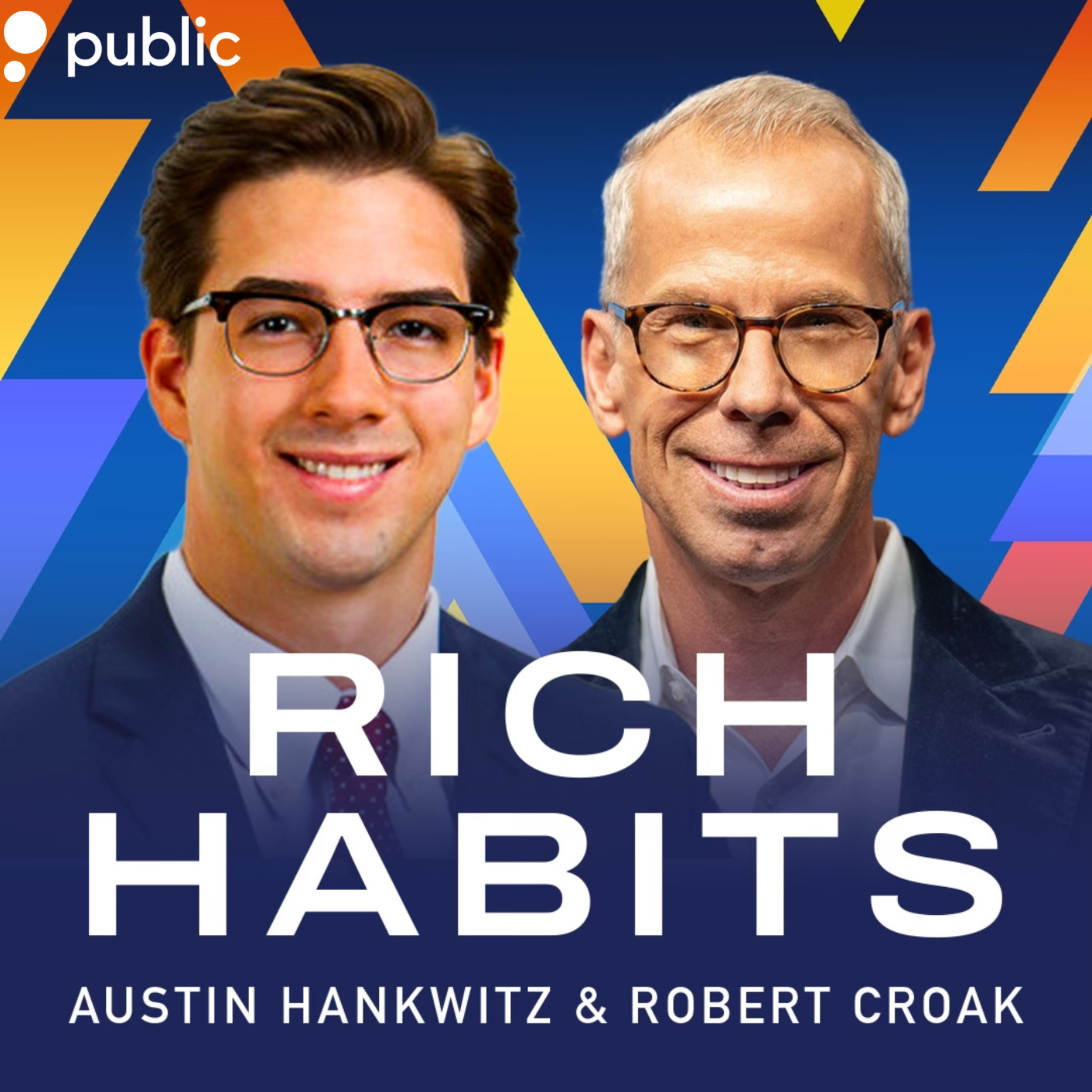
153: An Honest Conversation w/ Affirm CEO Max Levchin
60m 26s
In this episode of the Rich Habits podcast, hosts interview Max Levchin, CEO of Affirm and co-founder of PayPal, to explore the evolving landscape of consumer credit. The conversation centers on the structural differences between traditional revolving credit cards and Affirm's "buy now, pay later" installment loan model. Levchin criticizes credit cards for their lack of transparency, hidden fees, and compounding interest, which he argues keep consumers in debt longer and increase financial stress. In contrast, Affirm offers fixed-term loans with clear, upfront costs and no late fees, providing predictability and control. He emphasizes credit's vital role in enabling major life investments—such as education, home ownership, and small businesses—while advocating for models that prioritize consumer well-being over profit. Despite the entrenched profitability of revolving credit, Levchin believes technological advancements and increasing financial literacy are paving the way for more honest and equitable credit systems.
All right, everybody. Welcome back to the Rich Habits podcast. This episode, we've got a very special interview. We are talking with the CEO of a firm, the by now pay later company, Max Levchin. He also was the co-founder of PayPal back in the day before they were acquired by eBay. And first off, this is not a paid interview. There's no exchanging of anything going on here. We saw the headlines of Trump talking about the 10% cap on credit card interest rates. Everyone was up in arms about, oh, is this bad for the banks? Is this good for by now pay later? How is this going to work? What if everyone loses their credit? So we said, all right, let's go talk to somebody that might have some insight to share. And so we got the CEO of a firm, Max Levchin here on the show. This episode is going to be awesome. We are going to talk about a ton of things as it relates to credit, which credit to use for how does by now pay later work? How do they make their money? How do they not make their money? All these headlines about phantom debt. This is an awesome conversation. As you can tell by the title, it's not just going to be awesome. It's going to be honest. The goal here for the rich habits podcast, of course, is to always have honest conversations with thought leaders and people that are doing the most inside of their specific sectors of the market. And we think this is a great example of that. I love that takeaway. And I'm super excited about this because a firm does it differently. And it's just really great to uncover these ways. And what does all this mean with the by now pay later? We hear all the horror stories and all the different things happening in the market. But what does a firm do differently? And I'm so excited because Max is a legend, Max Levchin. He's been around one of the co-founders of PayPal and just a rock star in the world of entrepreneurship and creating magnificent companies. All right, Robert. Let's now jump into the interview. Hey, everyone. And welcome back to the rich habits podcast, a top 10 business podcast on Spotify brought to you by public.com. By the end of today's episode, you're going to understand why credit plays such a powerful role in everyday life. Why not all forms of credit are created equal and how the future of payments, especially after the recent headlines with Trump potentially putting a 10% cap on credit card interest rates, may look very different from the penalty driven systems most consumers are used to. My name is Austin Hank Whits. I'm joined by my co-host Robert Croke. Robert is a seasoned entrepreneur with lifetime revenues of over 300 million. And I'm a multi millionaire MLA 20s with a background in finance and economics. As the show name might suggest every episode, we talk about rich habits as they relate to business, finance and mindset. But Robert, today's a little different. We've got an awesome interview. So who are we sitting down with in this episode? That's right. Today we're joined by Max Lebchen, founder and CEO of a firm. Max is one of the original co-founders of PayPal where he served as chief technology officer before its acquisition by eBay. He's also founded and scaled multiple technology companies, served on the boards of Yelp and Yahoo. And as an active investor in more than 100 startups, which is just incredible. A firm was born out of Max's belief that credit should be honest, transparent and aligned with the consumer without late fees, hidden charges or compounding interest traps. We're excited to dig into all those details and what they really mean in today's episode. Max, welcome to the show. Thank you. Great to be here. Well, I'm really excited about this conversation, Max, because credit at its core has existed in some form for literally thousands of years, right? We know that. But today it plays a very important role in people's lives. It seems like if you want to do absolutely anything worth doing, like buying a car, renting an apartment, qualifying for mortgage rate, you need to have a positive relationship with credit. How do you think the role of credit in modern society has evolved over time, specifically as a tool now for investing in your future? Think education, owning assets like a home or even career opportunities? That's exactly right. I'm not sure there's a ton more to add to the punchline. And that is thoughtful, responsible usage of credit is basically investing in your future self, future success and can take the form of anything understood as borrowing for your education. Bass majority of Americans, yours truly included, have to borrow money to afford higher education. We all understand and you know, the things are changing pretty rapidly with AI. But even in the post AI world, my guess is being well trained to do a job will pay better. And so when we go to college, when we go to vocational school, we borrow money because the future earnings are old but assured. But that's kind of the canonical use case. There are many others in terms of investing in a productive version of yourself, including borrow money for a small business startup, etc. The kind of more varied use of credit, if you will, is just affordability where you're borrowing money for a car to get to your job or perhaps to just to around your bar. Obviously, have to borrow money for a home. These things are expensive, but they are kind of the American dream, the storage of wealth. And you definitely should be investing in your real estate holdings if you can. And so borrowing money is typically the only way to go about it. And then probably the most banal, but most frequently used case for credit is simply smoothing out your personal cash flow. For a lot of folks, it is not a guarantee that the suddenly necessary or even pre-planned $1,000 purchase is something that just comes right out of savings account and it's no big deal. And from many savings account does have that $1,000, but it is scary to drain it because what if an unexpected hit comes in next. And there's sort of off repeated line about Americans are a couple of hundred dollars away from real financial trouble in case of medical emergency, etc. And so you should just credit when done right just provides that sense of control and certainty of your personal finances, even at the sort of a couple of hundred dollars, a couple of you know, sometimes under $100. And so that's where a firm plays obviously. And we really see our role in our mission to provide this sense of clarity and control for each consumer as they navigate their ups and downs of everyday life. I think that's a wonderful segue actually into our next question. So Robert, kick us off. Yeah, Max, one thing a firm is very vocal about is not all credit is created equal. So can you walk us through the structural differences between revolving credit cards and transaction level lending models, like by now pay later like a firm and why those differences actually matter so much for consumers over time. It's a great prompt and obviously I'm very passionate on the issue. So I'll try to keep it compact, interrupt me and ask me to clarify if I'm not clear since this will make so much sense in my head. I think it makes a lot of sense to our roughly 40 plus million consumers. But the basic difference between revolving credit and not is you're essentially signing up to a product that gives you no sense for when you're going to be out of debt. Most of us sort of consciously or so consciously subscribe to Benjamin Franklin's point of view that it's generally speaking not a great idea to be in debt. And yet as we established, it's actually a really, really useful tool to have credit for anything from cars to everyday purchases. And so how do you sort of slice this thing into two parts in a way that makes sense for both of those approaches. And it's really simple. You have to know when you're done paying off whatever it is you borrowed. That gives you the sleep at nights. The I know my schedule, I got control, like all those positive things come with the notion of start here, this many payments and there. That is how a firm works. But before I get there, there's not how credit cards work. So credit cards basically say swipe. You know your rate. You kind of know some fees might apply. But what you don't know is when are you going to be done. If you look at the design of credit cards, it's actually deliberately made obscure. If you look at the fine print, which 99% of us never do, but if you flip your paper, say, then there's a lot of sort of nine point font in grayscale telling you, here's all sorts of things that could go wrong, including when your rate might get adjusted, et cetera, et cetera. But the most important thing that it doesn't say, it doesn't say anywhere is when you swipe a card, you'll be done paying the swipe off by date X because that doesn't exist. You have a notion of a minimum payment where the card tells you, hey, you got to roughly pay off 3% of your balance every month. Otherwise, there'll be problem. The reason for it is very, very simple. I'm passing in a judgment here, although, obviously, M, the bank that gave you the card has the following math to go through. Here's a total balance you got interest, which is what a cruise over the course of the time it takes you to pay it back. Whatever you have in paid back, there is interest calculation goes in. That goes right into the principle, the total amount you have to pay back. So the longer the balance stays high, the more money you'll owe to the bank. The reason the minimum payment exists is basically some degree of both regulatory pressure and the banks need to believe that you're still going to pay something. But in general, they kind of want you to stay with a big balance, accruing a bunch of interest and just paying it off for as long as possible because that maximizes their profits. It's a business model, but is it very, very stressful product for the end borrower. A firm was born from this realization that most of us actually have a very stressful relationship with our credit cards. We don't know when we're going to be done paying it off. And so for thousands of years, there was a notion of an installment loan where you would say, I'm going to borrow X dollars, I'm going to pay it off in why months, there'll be some interest or Z whatever, whatever variable you want to use. At the end of the period, I'll be out of debt. Maybe there'll be some fluctuations. There might be some rescheduling, whatever, but generally speaking, everything going well, I will be out of debt for this particular transaction in this many months. That is literally what we built. And before things like smartphones and online transactions, it was very hard to scale that kind of borrowing, which is by what? This is exactly what we do when you buy a car, exactly what you do when you buy a home. So the installment loan is alive and well, even sometimes use that in buying big things like refrigerators.
or each fac systems are really expensive stuff. Doing this for $200 purchase would have to a lot of work just swipe your plastic and move on. Because of the internet, because of smartphones, because of modern technology, we can scale this down and give it to you in a form of a little menu that shows up everywhere you go these days, where it's available and everything from Amazon on down in e-commerce and now in store, where you just say, hey, I want to borrow $500, I want to be done in six months, here's my monthly payment off we go. And that is the fundamental difference between borrowing with revolving or not revolving. The fancy way of thinking about it mathematically is revolving is essentially constantly refinancing your debt. Which most of us know constantly refinancing your debt is probably a bad idea because you're staying in debt. A firm and binomial pay later in general, you don't have that option and that's a good thing. You actually are given a constraint that keeps you clear and in control and sleeping well at night because you know when the transaction is done being paid off. Max, why do you think those structural differences actually matter so much for the consumers over a long period of time, specifically from helping them achieve those outcomes of not finding themselves just up to their eyeballs in debt across this card, this card, this card. Why is it so important for those consumers to have this difference with this buy now pay later, understand that installment loan? The very basic answer is because planning is hard and planning against exponential curves is like basically impossible. So the funny anecdote true story, 15 years ago when we just started a firm, we were still, I've been in payments, internet payments my entire adult life. So kind of a professional if you wanna call that and our first CFO Rob and I were flying for I'm saying for just good to New York to try to explain our newly created business to some potential investors. And we were deciding sort of how do we explain this thing? So credit cards are kind of easy, like everybody knows how they work and this thing is like a throwback to basic installment lending. By the way, we don't compound interest in the principle, we're not gonna charge late fees, we're gonna make it super user friendly. So we were supposed to make a presentation. So deck page number one was here's how it from works. Bar of $500 decide on an interest, I don't know, let's say $30 more, so over the course of the next six months, I'm gonna 30 divided by six off you go, that's your family that had done. The next page is like, well here's what it cost to do a credit card. So like well, we didn't, this is in the days when they didn't have a especially great Wi-Fi connection on the plane. So they're like, well, instead of looking it up on some online calculator, we're just gonna do it by hand here because we're a math and the traditions, we're credit card rates, whatever. So in the next six hours, the entire flight to New York separately doing this, initially on napkins, that on a real pad, they're like, well, we don't seem to agree on a number. If you borrow $500 to the credit card and you have a minimum payment of X and a rate of Y, and you're not gonna be later, there's no late fees to compute over, what's the total cost? And so at the end, we landed without a number that we could agree on. And by then, we were both modeling it in Excel. And then we finally got on Wi-Fi and looked it up online, and neither of our numbers was right. That number came from some random online bank that was willing to pre-calculate for it. So the short version of the answer is, no one knows what the true cost of credit is. And with a firm, you do. And the reason, it's hard to plan. You have family, you have health issues, you have job issues, you all the things that you have to deal with because they're real stressors. Why would you wanna add a stress of, I have no idea how to think about my money. And yet it is one of the most important topics people think about all the time. And so just the reason it's so important is because it's a stress, it's a weight you don't have to carry. You can just use something like a firm, or please use it a firm, obviously. And feel easier and better about yourself and about your money and not worry when will I be done paying it off? What's the true cost? You really cannot know the true cost of a card's wipe. You know, even people who are supposedly professional cannot figure it out, how will the normal people do it? - So this makes a ton of sense to me. This seems like a better mouse trap as they call it than a credit card you clearly understand. - It's an old mouse trap, but it is a better one. - This is an old mouse trap, but it's better for sure. It makes a lot of sense why this is better than the current situation we have with our current lending system. So why aren't more companies doing this? We look around to the current lending system. It's littered with penalties, late fees, unclear terms to your point. Why are they still using these old, revolving credit models where you all are trying to help people understand what to borrow when you need to pay it back by and just very clear terms. And if you don't pay it back, this is gonna happen. Like why aren't more people doing this? - Two reasons. - It's really convenient and it's really profitable. The profitability of a revolving credit is easy to imagine. Like if you wanna, if you remember your high school math, the cost of credit with a firm is basically, a total cost of the whole loan with plus whatever you might pay a firm is you can think of it as a line. Like it sort of, it starts with your first payment and the last payment, it's a line. People are pretty well wired to think linearly. Like one, two, three, four, like, I kinda know what the next number's gonna be. I can predict that. Credit card cost is an exponent. In other words, it's a thing that looks like a curve. One, two, four, for a lot of people's like, what is it eight or six, the next one? And so we are wired to think it's gonna be six, but it's actually gonna be eight if we're talking about an exponential curve here and so on. And so the cause is hard to figure out because it is stressful and I think people who issue credit cards, revolving credit cards anyway, understand that it's stressful. But because most of us have a hard time figuring out whether it's a six or an eight or a 16, like, ah, there's a lot of profit in between those numbers. And so once you taste that profitability, it's very hard to go back. You have shareholders, you have people saying, wow, that's an amazing mouse trap you invented there with so much profitability. So that's hard to see why the incentives are on the wrong side of that story. It's also the case that revolving credit is a more flexible model. I'm not actually into revolving credit as a concept. I just think that you need a lawyer present at all times. Because you need to read the fine print. You need to know the penalties. You need to know how the minimum payment factors into this thing. Happened if your rate changes. So as a corporate borrowing mechanism, if you look at like giant companies borrowing money from each other from banks, sure, you use revolving credit, all you like. That's a great idea. They have massive lawyers, armies on staff. As a consumer, you just have you. So simpler is absolutely better. And by the way, it's also cheaper. And so in the case of a firm, you will pay less just because there's not a that exponential curve. It's hard for those that created these exponential curves to say, cool, I'm gonna get out of this business. I'm just gonna start charging these linear terms. And so I think the world, by the way, is changing for the better. And I'm sure we'll get into it because it is the topic of the moment. But there's a couple of things happening secularly that are pretty conducive to the positive change. So part one, we're all getting smarter. AI tools are there. They're available. They're really inexpensive. A lot of them are free now. You sort of have a financial advisor available to you at all times from the likes of Chad Gbt and Gemini and everything in between. And so over time, you'll get better and smarter about just managing your money. Thank you for your money. Maybe you'll still be stressed, but at least you'll have transparency into what's really going on. So I think we're all getting smarter about money. Two, we took a really maximalist approach where we said, no late fees, no compounding. We kept out the total amount of cost you could possibly pay us back. So if you borrow $100 and interest is 30 and then something went wrong and you rescheduled the payment, that 30 doesn't change. It's still 5.30. Obviously we're leaving money on the table. It's open to abuse, so we have to be thoughtful about it. But generally speaking, we picked this because we wanted to be super simple. We wanted to be really, really easy to understand. When we started, I met a bunch of people who run banks that issued these revolving credit cards and 100% of them told me you're insane. Like this is far less profitable. It's never going to work. You're an idiot. Just get over yourself and issue a credit card already. And you'd recognize some of the names of these CEOs, by the way, they usually like, well known, very thoughtful, very smart people. Fast forward 15 years, it's not just us. More than half of by now pay later volume in the US does not charge LATIs. We were the only ones that start. It's now more than happy in the industry. And so people are generally realizing that if you treat the consumer right, they're loyal to you. North of 95% of our transactions come from repeat customers. So there's something in this product that really makes sense. And so as we sort of went around doing our thing, the way we would do it, people started to copy us. And that is a good thing. Like I love the fact that more and more people are shifting to no LATIs. More and more banks are offering some version of Binaltelia with a pre-priced credits. They have an upfront pricing. And many are now saying, well, not having any keys. So it's all kind of shifting towards this model. But I think for folks that primarily make money on revolving, it's just going to take a very long time to kind of get off the drug of the profits of these things generally. Now before we ask Max our next question, Robert and I have a very special announcement to make. We built the Rich Habits Money Map for both personal and business finances, quick shout out to those side hustlers. And it's a really cool plug and play set up that reflects exactly how we think about money, which is to say first, invest consistently, and let systems do the work for you. The name of our podcast is Rich Habits for a reason, because knowing what to do with your money is only half the battle. The real key to building wealth is making sure those habits actually happen consistently without just relying on willpower. That's why we've partnered with GetSequence.io. GetSequence.io is how you turn your money habits into automatic systems so that your money saves, invests, and works for you in the background automatically. With GetSequence.io, you create rules for your money. And when something happens like getting paid from your employer or revenue hitting your business bank account, those rules execute automatically. Saving, investing, taxes, debt, All.
of it gets handled automatically without you even having to think about it with getsequence.io. We at Rich Habits teach you what the right moves for your money are. Getsequence.io helps you follow the system without relying on memory. Getsequence.io takes your entire financial life, personal accounts, business accounts, credit cards, loans and organizes them all into one clean money map. From there, Sequence actually helps set everything up for you and tailor it to your situation. Want to save first every paycheck? Done. Want to invest consistently without timing the market? Done. Want to automatically set aside money for taxes or optimize debt repayment? Getsequence.io can do that too. And if you're a business owner like me, this is huge. You can automate taxes, expenses, payroll and cash reserves without spreadsheets or manual transfers. If you want your Rich Habits to actually happen automatically, check out the Rich Habits money map at getsequence.io, front slash Rich Habits podcast and take the stress out of managing your money. We are super proud of the Rich Habits money map, what we've built in partnership with Getsequence.io. So please go check it out, go use it, it is going to be a game changer for you. Alright Robert, back to our interview with Max. So that's a great lead into my next question. One of the firm's biggest differentiators is that every transaction is underwritten individually, rather than extending an open and then it revolving line of credit, like legacy banks do with their credit card purchases. So why was it so important to take the harder path, specifically underwriting every purchase instead of relying on late fees and hidden charges to drive revenue like the credit card companies do today? A couple of different reasons actually. So one of the things I realized at the very beginning is a lot of the fees and a lot of kind of the stuff that we all have come to hate about credit cards is actually there because the provider doesn't get a chance to say to a consumer, "Hey wait a second, that's a bad idea. You're borrowing money. Maybe you really won this college or this bicycle or whatever it is you borrow money for, but it's just a dumb financial move. You're making a mistake. Put that card down, let's rethink this." In part because these cards are so convenient, like I just touched on it, you just swipe the plastic and it happens there's nothing to sign, nothing to really sort of upfront, nothing to think about. That creates for a wonderful engine of the economy if you will, but it sure allows you to overspend. So one of the key early design criteria was what if we made purchasing conscious? What if we made you ask yourself, "Is this a good idea?" And what if we gave ourselves a voice? That would allow us to make it cheaper for both sides. If you get into debt, if you get into a purchase that you shouldn't have, we should lower things like return rates because you might not be trying to get out of a thing you shouldn't have bought in the first place, we will definitely lower defaults into the link, because we would tell you, we understand a financial situation reasonably well. This seems like a dumb move. At least, let us ask you more questions. Sometimes if you use a firm, like really extensively, you'll see, we want to say, "Okay, let's go with the strategy." We'll say things like, "Hmm, this seems like something we need to learn more about. Can you please tell us your income?" Or can you please let us see into your bank account so that we can understand our cash flow better so that we can tell you whether it's a good idea or a bad idea. None of this is available in credit cards because the transactions are literally one touch and you go. And so we wanted this interaction to give ourselves the right to communicate with you and to ask you, "Is this a good call?" That is also why our delinquencies and defaults are so much lower than the standard credit card world because we do have a chance to tell you, "Wait a second, this is a bad move." We're going to say, "No, if you want to do this thing, you should make a bigger down payment, you should maybe save up. Maybe you just shouldn't do it at all." And it seems like an exactly kind of thing a consumer product designer would be like, "Oh my God, you're telling someone no?" It turns out that people love this. They really enjoy the interaction of no one likes to be told no. But if you're like, "Sorry, it's a hard no-it card's been declined," versus, "Hey, here's kind of why you should reconsider." By the way, there's probably a way to come into this item that you want, but you should save up and make a bigger down payment because then you could afford the monthly payments. And so that was a key design criteria. As we thought of this, we realized that we wouldn't need a late fees. We wouldn't need all the crutches because they really primarily exist to cover up for the, "Oh man, we should have never given you a line of credit that long." And that's why it works as well as it does. That is fascinating. I mean, I've never used a firm. I've never done the buy-and-out pay later stuff, but very much understand and solve it. I understand how you get, right? But I've never had to do some sort of an installment loan to buy a refrigerator or something. I don't know. We just pay cash for stuff like that. So like, hearing for the first time right now, that that's the way you guys approach it. I know you underwrite every purchase like that, but it's how have you been able to scale that? You mentioned 40 million, I mean, is this just AI on steroids that you guys are sort of underwriting transaction by transaction? That's right. And every transaction is underwritten by machines. No humans are involved. We actually find that we are much better software engineers in terms of underwriting. And by we here, I mean, the industry. And the throwback to the 1950s where a fat banker shakes your hand and says, "You sir, look like a good risk." Because you look just like me. That's where all the discrimination came from. People are like, "Oh, I don't want to lend to someone who does look like his from this neighborhood." He's like, "That was a great thing that we left all of that behind." Machines are really, really good. They're also very good at saying things like, "I will not consider race. I will not find out what race you are. I'm not going to guess what race you are because it's an illegal basis. Shouldn't use that. Can't use that." And so it's much easier, actually, if you have the capacity to build these models and train them, to build a really good, very fair model that will pass your fair lending exams and all the sort of usual regulatory hurdles that you have to clear if you lend. So we have a giant infrastructure that does, we've been an AI company for a lot longer than AI companies were cool. And for a little while, I was bothered by the AI revolution. I've been under forefront of this thing forever. And it's obviously, this particular tide is lifting all the boats and has been lifting us for a very long time. But it's all entirely machine driven. We have a large group of AI and machine learning engineers that are extraordinary. We continue building completely different kinds of models that the industry has never seen before in deploying them. And we do it responsibly, so we run it right alongside older models and make sure that the new model approves more people with better financial results and doesn't discriminate and all like that stuff. And so it's probably the very core of what's happening at a firm is just a bunch of math nerds who are obsessed with credit and also have this like extremely clear point of view on what isn't, isn't moral. And that's allowed us to build a pretty, pretty great company. That's incredible. And you know, it really kind of bodes to your own experience as an immigrant, right? You were talking about how specifically you thought that the legacy credit systems might have failed you in the past despite being financially responsible didn't fit this perfect mold of being from the right neighborhood or looking or firm handshake, whatever, right? So like, let's just be zoom out. Can you tell us about that story and how it ultimately led you to founding a firm? So before a firm before the current, the current thing, my current thing was PayPal, which I co-founded basically straight out of college. I got to the US just a year and a half before college. So I was completely sort of fresh immigrant. I came from USSR at the time. And so my exposure to capitalism or American credit system was, let's say, non-existent. So if I got to college, I got my first credit card on campus. That was great. I didn't make my minimum payments because I didn't read the fine print, but who does, you know, it's you busy doing homework. And 90 days into not making any payments. I got an extremely nasty notice saying, Hey, like, one of your credit cards is not going to work anymore. Two, you owe us $600. So get on it. And by the way, your credit score is trash. I'm like, Wow, I can go earn $600, which I didn't paid it off. And didn't think of it twice. Fast forward six years, we just took PayPal public. I was independently wealthy. And I decided that it's time to upgrade my Honda to Mercedes. So I flew to LA with my then girlfriend now. wife went to Cardiola ship inside. I'd like to buy this really cool looking Mercedes convertible. And that's great. We're going to talk to the finance department. They're going to get your car loans. Going to be great five minutes later. Get back to that. Actually, can't buy this car. In fact, young man, you should get out of here and wait a second. What's going on? So while we looked up your credit score, and even though we know your name, because PayPal just made the rounds of new LA times that this big spread on, you know, PayPal founders made good. Yeah, yeah, yeah, your credit score basically says you're a deadbeat. We don't know what you did to yourself back in a day, but with a FICO score of 600 or 500 something, you can't buy this car. Like, maybe you can go rent one. So I was embarrassed to like the color of my face was some of she's darker for a couple hours. And I eventually have to figure out a way to pay cash for the car. And that stuck with me where, and the unfairness, the fact that the mistake I made in college, which I rectified very quickly, was six years ago. And my credit score had been recovered. And I looked like a total idiot in front of the girl I was trying to impress at the time. And anyway, so that sticks with you for a lot longer than you might expect. Another five or six years went by. And I would still look up my credit score, which I became very conscious of. And it would still not update. And it would still be like, yeah, you know, you've never been late in the last 10 years, but hey, you're not that good of a risk. And so after PayPal, I was hanging out with one of my earliest compatriots there. And he and I just got into this long debate of like how in he was very aware of the embarrassing car purchase story. And so we sort of got talking about like, why didn't we bring the kind of math, expertise, and willingness to go the extra mile and figuring out human behavior through AI and modeling, which we did at PayPal, by the way, plenty. Why don't we bring that to credit? And we're sort of like, we don't really have a good answer. Maybe we were too young to understand credit at the time. We were were just too focused on payments. And one thing led to another, KNI co-founded the--
So that's the full story I'm a harm. There's no better story than no better motivation. The personal thing that sits in the back of your head and still embarrasses you. - That's just an incredible backstory because you think about it from the experiences I've had as an entrepreneur for 35 years. I can have a great year make all this money and they're like, where's your W2's when I go for a loan? Where's this? Where's that? I'm like, I own my own companies. I make money. It's not traditional income. And they frown on you because the credit system to me has been kind of broken for a very, very long time. So I love that story and the fact that you took a problem, your own personal problem, and then you made this great company to help so many other people deal with the same issue because I know I've dealt with it in the past, not in many years, but it's definitely an incredible journey. And thank you for sharing that before we go into the next question. - One sort of asterisk our post script into this thing. Part of why it took me so long is when you're young, you don't have the empathy for others as much as you do 10 years later. A firm start of when I was in my late 30s and in my early 20s when this happened, it's just me, this sucks. This was so embarrassing, but obviously I'm the only person to ever happen to. In my late 30s, I knew enough people who had a version of the story because I would get triggered. When somebody would say, "I got the client for this" or I was told my rate's gonna be that. I'm like, "Oh, let me tell you my story. I was so angry." So by the time I got to it, I was like, "Oh my God, I know these people "and this is a terrible broken system. "I gotta do something." - That was Max's villain arc. And that's why you got the arc on the Affirm logo, huh? (laughing) - Actually, the arc in the Affirm logo was not my idea. For years, I was designing Affirm logos and it turns out I'm a bad designer. I'm a family-okay product designer, but visually I got nothing. And at some point we hired someone who's really good and he said, "You know, Affirm was like a warm rainbow cover "that keeps you safe and makes you feel good about money." That sounds great. I'm gonna add a rainbow. That sounds good to me. - So would you say, Max, that that experience is what still energizes you today about Affirm's mission? Or is it maybe the future of what Affirm could turn into in 10 years' time? We've got AI, you know, a couple of years now into this, several years into it from your perspective. But what's making you wake up every morning, say, I need to go turn our 40 million customers into 400 million. - I think the core mission is still very energizing. Like, you can probably tell, I get fired up thinking about this. This isn't fake. I get out of bed and think about top 10 things. I need to get done that day and get stressed out. And I'm like, wait, I know why I'm doing this. This is really important. It was important to young me. It's important to old me. And I think it's important to a lot of people worldwide. So that motivates me. And that's just in and of itself, great fuel. - The other thing, and I think it's really true about old businesses and particularly true about payments businesses, it's sort of truly fractal. Like every time you look into a thing, an opportunity or a problem and you start solving it, you make lists of like, oh my god, if I ever have the time, I'll get to that other thing because that's even more embarrassing or even more horrifying. And so the motivation just from the entrepreneurial perspective, like, I have this long list of things. We're supposed to fix in this industry that we just got around to fixing credit cards, but not even that fully. There's only other things credit cards are used for that we're not being used for. And so the list, the to do list of things, products to build, things to ship is only growing. Like, I have no shortage of, man, I just had a little bit more time or a few more engineers. And so this AI productivity age we're hitting now is actually an incredible boom because I can imagine shipping more stuff faster. That's what motivates me. And it's exciting to be alive. It's exciting to be able to build software with plain English instead of having to train people how to write code. And then all of that is very powerful. But the core mission is really nothing. And it's definitely not limited to credit card better alternatives, not limited to purchasing. My initial products are stressful. I was trying to find a way to come up with a tagline for a firm over the years. And I sort of settled in on this notion that you use a firm when it matters to you. And of course, money just matters all the time. And for, you know, Richard Porra, and you know, your upper-polloting name in the podcast, people don't like thinking about money because it feels stressful. If you have a lot, you need to put it to work and you don't know where to go. You want to lose it. If you have very little, you're stressed. We're going to get the next paycheck. How are you going to afford the next thing? How are you going to feed your family? But there's not a happy zen moment thinking about money for just about anyone. And that isn't how it should be. You should be able to say, I feel great. I feel abundant. I feel like my goals are being met. I know how I'm going to plan my next financial move. I will get where I need to go with my financial goals in time. I'm not going to run out of money. I'm not going to feel like I'm under deploying my money. And that is sort of the happy vision for the long-term affair. We wouldn't be there for you making you feel great about your money instead of stressed. Now, before we ask Max our final question, got to give a shout out to public.com, the investing platform for those who take it seriously. On public, you can build a multi-asset portfolio of stocks, bonds, options, crypto, and now generated assets, which allow you to turn any idea into an investable index using AI. And it all starts with your prompt from renewable energy companies with high-free cash flow to semi-conductor suppliers growing revenue over 20% year over year. You can literally type any prompt and let the AI do the work. It screens thousands of stocks, builds a one-of-a-kind index, and lets you back-tested against the S&P 500, all with just a few clicks. Generated assets are like ETFs with infinite possibilities. They're completely customizable and based on your thesis, not someone else's. Go to public.com/richhabits and earn an uncapped, 1% bonus when you transfer your portfolio. That's public.com/richhabits. Paid for by public investing, full disclosure, and the podcast description. All right, Robert, let's now wrap up our interview with Max. You've spent your career at the intersection of computer science, mathematics, and consumer finance. So what advances in those specific fields are enabling the next evolution of consumer financial products that simply weren't possible before now that we have AI? And what's being built right now that's blowing your mind? So I think the, obviously, AI is almost impossible to overlook at this point. And AI, by the way, is a very squishy term. I enjoy beating up on the various squishiness parts of it because you used to mean one thing and that means another. But slightly more formally, statistical learning, which is what a firm was built on with our superior underwriting system is what allowed us to very quickly, without human involvement, make decisions, and whether something's a good financial decision or a bad financial decision, make it cheaper for you, make it easier to access all of that. And so that's been our go-to for a very long time. And we continue to see incredible results. The ability to put that into human language with large language models and kind of the newer flavor of what people are now calling artificial intelligence is really powerful because it takes a lot of the. But I still don't understand or help me navigate this change or what do I do next out of the hands of humans who are busy and sometimes have bad days and sometimes can be frustrated or not understand you and puts it in a hands of a machine that can be designed to always be thoughtful. And there's always going to be human in the very core of the system because we're not yet at a place where AI will develop its own personality and its own sense of taste and fairness. And so you have to have humans involved but being able to just give access to easy to understand, easy to communicate in language of your choice with a metaphor of your choice for every human on Earth as they access money, I think is going to be very, very powerful. And so I'm very excited about L.M.'s and natural interfaces and we're probably going to go through a bunch of iterations on that and we'll be there for it. But just being able to talk to your money is a profoundly important idea that just wasn't possible five years ago and is now absolutely possible. That is fascinating. And I'm so grateful that there are people on this Earth like you who are building and doing the good work of helping people understand and have that healthy relationship with money. Have that. I don't understand this. Why did I not have the ability to make this? Why can't I do. Well, here's why. Here's the cash flow. Here's your pay. All this stuff, I think that's so, so powerful. Max, again, incredible conversation, my friend. Thank you so much for joining us. You're focused on transparency, incentive, alignment, and responsible credit. Really challenges how people think about money and we all know our audience is going to walk away from this episode seeing credit through a much more thoughtful lens. So if people want to learn more about a firm follow you specifically, probably recommend LinkedIn. But where can people learn about a firm and what you're up to and the products that you're shipping on which is probably a weekly basis at this point? It's all accelerating. Definitely find me on LinkedIn. I'm there with sort of longer form discositions on what I think matters. I'm fairly active on Twitter, although in my copious spare time, I have at least two other passions that I'm constantly talking about and that's road cycling and coffee. So you're ready for some unhealthy dose of those two topics right next to consumer finance and computer science. But Em left you on Twitter. I think Em left you on LinkedIn. At a firm on Twitter is the official channel. That's where we talk about just today. We announced that we are adding more than 10% more approvals. We think with a deeper cut at cash flow underwriting using AI. Like super excited about that one. And so you heard it here, but you could have heard it there first. So falls in social media. We're just as transparent there as we are in our business. Thank you so much, Max. We really appreciate your time. I'm going to have you back. Thank you. Robert, that was our third conversation with a billionaire on the Rich Habits podcast, which is mind boggling to think, right? A Harley-Finklstein that we had Reid Hoffman. And now we've had Max Levchin, which read and max both co-founded paper.
and now they're on the Rich Abbot's podcast, which is so fun. But dude, I just, I feel like talking to billionaires and people that are building businesses, I mean, a firm right now is a $25 billion business. It was probably $5,600 billion back when it IPO'd, but it's just, I feel like I get so excited, right? It's just, it's so inspiring to see how one thing, one instance in this man's life, not being able to buy that Mercedes-Benz after selling PayPal, getting probably $30,50, $500 million deposited to whatever investment accounts he had after the acquisition of PayPal to eBay and being like, wait, what, I can't do this. Okay, cool. I'm just gonna go disrupt the legacy credit card system in response. It's just, it's so cool how these people think and I'm so grateful to be able to have incredible people like Max Ludchen on the Rich Abbot's podcast. - Yeah, I mean, let's look at it from the audience perspective. - We bring on these absolute rock stars, these billionaires and multi billionaires and people that have built meaningful household name companies and that's what makes the Rich Abbot's podcast so special and different is, you know, a lot of people bring on famous people to their podcast, but we're here to bring as much financial and business value as possible. So having these conversations to me is just the coolest thing I've ever gotten to do in my career to do this with you each and every week. So what a great episode and I feel like I could just run through a wall right now. It's so crazy. I will say too and after having an honest conversation with Max about how a firm works and what they don't do and what they do and like how just how they're underwriting these transactions one by one like that. It's just, I'm, of course, I'm never going to encourage someone to take on, you know, high interest debt. And I guess theoretically a firm, I guess it depends on the implied interest rate of your loan, right? But it's like after this conversation, I'm no longer bucketing, by now pay later, specifically a firm. I can't talk to a foreigner, these other ones, 'cause right, they talked about, you know, no late fees and zero percent, all this stuff. But I'm no longer going to be bucketing a firm in the same conversation with credit card debt. They're just, they're doing something completely different and I really think they're fighting the good fight and they're trying to provide credit and assistance to people that need credit whenever they can in a very non-predatory manner. I think credit cards are predatory. I agree, like, you know, he signed up for his first credit card. He probably got a slice of pizza. Hey, signed up for this credit card, he gave you some free pizza, right? It's like, and then he got bamboozled and owed $600 because they weren't transparent. And so it seems like a firm's fighting the good fight and I really want to encourage our audience to think about a firm. Again, I can't talk to these other buying up pay later companies 'cause I don't know, you know, I think he mentioned that they started with the no late fees, no interest than other people have kind of followed suit. So again, a firm specifically, I'm no longer looking at them as any sort of like, you know, predatory credit card, anything and it's fighting the good fight. And I want to encourage our audience to think the same. Definitely, I am of the same ilk now after that conversation and totally different world and totally different opinion from me as well on a firm moving forward. And again, a firm's not paying us a dime to say that, a firm, like, we literally, like, this was a, hey, I wonder if we can get the CEO of a firm on our show? And we did, like, that's how this is. So I don't want you guys to think we're over here just getting bought and sold by anyone that's throwing us cashed, we on the show or whatever. It's like this was our doing because we've had so much headline news and interest and the phantom debt by now, like whatever's going on. And I think this was a really cool way for us to better understand how companies specifically affirm in the buy now pay later space are operating and what they do differently than legacy credit card issuers. So Robert, let's now jump into the Q&A section of the show. Our first question comes from Sanjay P on Instagram. Sanjay says, hi, Robert Noston, a long time listener from Canada. I love your show and I've been sharing it with my friends and family. Sanjay, thank you so much for sharing the episodes with your friends and family. That's what we ask everyone to do if you enjoy the show. Sanjay says I got a quick question. My spouse and I are 40 years old, $700,000 in a self-managed retirement investment accounts. Are our SPs and Tfs FAs? We have 800,000 in equity in our principal residence. We also have an investment property that is positive cashflow and about $500,000 of equity in that investment property. Oh my goodness. Sanjay says my question is we have three young kids and life is getting expensive to help with monthly cashflow from extracurriculars and trips. What do you think about taking 100,000 of the Tfs A money investing it into Canadian dividend ETFs? So I can start generating $1,000 per month. I'm trying to balance living in the moment while the kids are young versus retirement. This is a really good question. How I understand this is like you're trying to take money out of a retirement account to then invest it in such a way call it NEOs funds that it's going to spit off $1,000 a month in distributions so that you can then support these extracurricular activities and trips you want to take with your family. In my humble opinion, I would not cash out a retirement account. Instead, I would consider selling the investment property that has $500,000 of equity in it. If you sold that investment property, let's say that $500,000 of equity now is yours and you took maybe one, two, or 300,000 of that, parked it into NEOs funds or some sort of high income, tax-efficient dividend-focused ETF in Canada, spit out $1,000 to $3,000 a month in distributions. I think that is a much better approach. Now you've got this 200,000 that you can invest into the self. Yeah, why don't you take 300,000 of this 500,000 put it in a taxable brokerage account. So now you have 300,000 invested over here, 700,000 invested in your retirement accounts, totaling $1 million now invested in the stock market, growing for you, stock market went up 20%, right? NASDAQ was a 20% return in 2025. The other 200,000 of the 500 can now go toward these dividend-focused ETFs to come up with another $1,000 or $2,000 a month depending on what you do. But it sounds to me, and Robert, this is what I want you to talk about. It sounds to me like you're trying to borrow from Peter to pay Paul in a sense that maybe if you did a really detailed budget or maybe you pulled back on the frivolous spending over here, maybe you're just a little bit more intentional with your money, you could find that extra $1,000 a month that you're trying to come up with. Yeah, to me, my brain automatically goes to when I hear a scenario like this, are you trying to decrease depletion or increase cash flow? That's where my brain goes. Because in this instance, you already have a lot of money working for you, and I don't know the taking money and possibly paying penalties from these TFSAs makes sense to then move into a dividend ETF that may not give you all the returns that you desire. So I think Austin's play is the best play, because at this point, I feel like you're doing exactly that, robbing Peter to pay Paul. I would reevaluate, decide what you need. Do you want growth more or depletion less or both, and how to achieve that given what Austin laid out, I think, is the best plan? I mean, you're 40 years old, right? I'm assuming your spouse is likely staying at home with the kids, and you are out doing your career earning money, putting money aside and making sure that you guys are kind of living life here. So maybe there's another career play, right? Maybe there's a path to earning more money, as well as on top of these investments. There's a couple ways to think about this, but before you make any drastic changes, my biggest piece of advice for you is to really lay out that honest, detailed budget, understand where your money is going, and maybe you find $600 a month that was bleeding into other things. Oh, I got this money now. I'm capturing it and being more intentional with my spending. And I really only need 400, which means maybe I just work one weekend at this job, or I drive Uber for three days a week for the, maybe you don't have to do a drastic change, like selling an investment property, pulling money out of retirement, like doing the things that you're alluding to here, Sanjay. So really great situation to be in. I think you got some flexibility, you got some options, and we're rooting for you, my friend. Our next question comes from OT on Instagram. OT says, "Hi, Robert Noston. I'm a big follower, and I've been following you guys since April of 2023. I've done everything you've suggested. But with all of the headline news now that the US is going to collapse because of debt, I'm concerned if it continues to make sense to keep putting money toward US stocks and equities, or should I be thinking of something else?" Huh, okay, Robert, what do you think about this one? I'm always going to be a buyer of US equities. We talk about this all the time. I think I would not worry so much about the headlines. And if you have enjoyed the Rich Habits Network, and you're worried about this headline, now is the time to join, because as we always say, if you're surprised by the stock market, we're not doing a good enough job. So for me, I'm always a player in the US markets. Can you have some international flair? Yes. Do I see a world where we're going to have this big meltdown in the US stock market and equity markets and maybe even real estate? I don't see that happening. So I'm not going to flee into cash anytime soon. But again, that's my opinion, and that's what I would do. So what are your thoughts on the current? Call it debt situation with the US. Yeah, we talked about this last night in the weekly live stream. And that is, you know, we have this K-shaped economy. So I think there is kind of two worlds here. There is the haves and the have-nots and the people that have all the wealth. They're not as affected by the debt as other people are that are living paycheck to paycheck. And so that's why this entire episode is so important. So for me, yes,
there are definitely problems with debt, both from a consumer standpoint, but also the US government. So I'm not as concerned with it on a day to day or anytime soon in the next few months, but it's definitely something we need to keep an eye on. But I don't think we're at any situation right now where we have to worry about seeing a total collapse in the US markets. I don't think we are either, but I will caveat that with we are on an unsustainable path as a country of borrowing. We just saw what's going on and being proposed in California with this billionaire's tax. But one, it's caused, I think, two trillion or whatever dollars worth of wealth now to leave California because they don't want to go pay this tax, which takes from, I guess, a lot of other taxes that they probably were paying during that period of time. So it was counterintuitive. But on the same token, it's like, we've seen a lot of headlines and ideas on let's just tax more. Let's do these things to generate more wealth for the US government from a revenue perspective. But then we're sort of simultaneously ignoring that we're borrowing trillions of dollars a year. And there's, I mean, we've seen what's going on with fraud and these sort of, you know, activists journal and journalist investigations with fraud, right? So it's like, it's not even that we're borrowing so much. But also there's like clear instances of fraud for the money that is being taken in as revenue. Like this really weird catch 22 where I feel like the average American is explicitly trying to avoid to pay taxes because one, they think, well, never going to see this against like social security, right? It's like, never going to see this again. It's on a runaway train. And what I do get, you know, goes into this system as revenue for the, for the US government gets paid out to people in fraud, which doesn't make sense to me. So like, they're kind of bucking the system in that sense. It's a really peculiar place to be and it's not a healthy place to be as a country. So no, I don't think it's going to cause the big collapse that you might be thinking about OT, but I certainly don't see it as a sustainable path. And we must as a country figure out how we're going to move forward. And I will die on the hill that taxation in my humble opinion, no matter if it's a billionaire, a millionaire, whatever. Remember, when federal income tax started, it was only taxing the top 1% of earners. Now every single person in America pays federal income tax, right? They might start in California with these billionaires with this private property seizure, but they just, you know, oh, now it's people with a hundred million. Now it's people with 10 million. Well, now it's people with five million. Oh, if you have over 500K now, you got to pay your fair share. So it's like, it's just a slippery slope of taxation. And I would much rather find a solution from the expenses side of it going into so much debt, having all this money flow out of the US from a, you know, on the balance sheet from the expenses side, then trying to solve for the revenue side, which is taxation. I think that's a great takeaway. And for me, it's all about, you know, and it kind of got touched on some with the whole doge thing in Elon Musk is getting our government to be more accountable and efficient. So then people can have more trust in why they're paying taxes and why we're in the boat that we're in. That's where I'd like to see it start because right now, and we hear about all this fraud in Minnesota and other states where these people are getting millions and millions of dollars off of taxpayer money. And they're not even performing what they claim they were performing as a service. To me, it all starts with efficiency and really cracking down on the expenses more so than what the government's borrowing. So our next question comes from Nihah on Instagram. Nihah says, "Even with schedule flexibility, I'm exhausted juggling shift work in real estate. I have a government pension of $40,000 car loan at 5.5%, and very little invested in the stock market, only about $6,000." My goal is to eventually quit one job, keep my other job, avoid burnout, and still be financially free. So my question is, have I over complicated my life by going all in on real estate too quickly? Should I pause and aggressively pay down debt or start diversifying into the stock market so I can build real freedom instead of just accumulating more properties? Thank you. I would really appreciate your honest take. So you mentioned going in all in on real estate, I don't see too much of like what that means in this situation, but I'm going to try and read between the lines here. So you're probably in your 30s or 40s. You've got a $40,000 car loan. You're working several jobs, your juggling shift work in real estate, and you're just like, listen, I'm getting burnt out. In my humble opinion, I think there's like three milestones of building wealth. The first milestone is I'm going to get a job. I'm going to, you know, as to what we just talked about with Max, use credit to get a better education, transportation to my work, great things like that, owning a home, right? I'm going to get a job and do the normal things that I'm supposed to do. Once that's done and you're implementing rich habits to ensure that you're not going into high interest credit card debt, you're investing consistently, you are trending in the right direction, then I think you hit milestone too. This kind of happens after you've built your base, but kind of like make that the sort of the check mark here, which is now I'm going to start to get a little bit fancier. Right? Robert talks about using this as an opportunity to diversify and to real estate, small business ownership, maybe there's other things you can do to speed up your wealth building process. And then number three is like people like Max who just like make big businesses and they just scale in perpetuity and they're like huge billionaires, right? I'm very much in number two. Robert's very much in number two. And I think a lot of people can get to number two if they do it in order, right? One, two, three. It seems to me, Nihah, that you just jumped to number two. And you say, I'm going all in on real estate. I'm going to work as many jobs as I can. I'm going to take on this car loan. I'm going to go not invest in this stock market. I'm going to do whatever it seems to me like you need to get back to basics, right? And so getting back to basics in this situation might mean getting rid of the $40,000 car because you can't afford an $892 monthly payment. Maybe getting back to basis means you're working two jobs, but the second job you're working at, you're only making $12 an hour and that Chipotle is paying $18 an hour with the opportunity to make $24 as a manager. And so maybe there's a different way that you can optimize your earning, optimize your expenses so you can find that true $12,000, $15, $18, $20% of margin in your budget every single month to start paying down any high interest that you might have to start building that emergency fund. So there's a little bit of breathing you between you and life. Maybe to start investing in the stock market, get that base built instead of going all around with these crazy things and the real estate. So for me, I would try and get back to basics if I were in your shoes. Maybe that means selling some of these. I don't know what properties you have if you didn't mention that, but maybe it means selling some properties. Yeah, I think that's a great breakdown. And always remember, Neha on anyone else listening, when you turn in a question to us, always give us the details and at least include your age and a little bit more about each element of the question because then that way we can better answer. But awesome. I think your takeaway was great. Keep it simple. Get moving forward and get more money invested. Not necessarily in real estate, but just overall and then go from there. So when do you think is the right time for someone who wants to start diversifying into real estate? We talk about the $100,000, getting that base built, things like that. But what's like things that need to get taken care of before you even think about diversifying into real estate? What an incredible question. I think too many people put the car ahead of the horse. They want to go buy property right out of the gate because someone told them they're going to get rich in real estate. And I agree totally. I think people should have their Roth IRA set up and maxed out every year. I think people should build towards their base of that $100,000 we talk about first because here's the scenario that happens time and time again. Someone gets their first $25,000 together. They go buy a house. They go buy a duplex. They're going to fix it up with a buddy and they're going to fix it up with their boyfriend or their girlfriend. They go broke. It costs more. It takes too long. They end up losing money and they're starting over at zero again. We do not want to see anyone go back to zero in the rich habits podcast or the rich habits network. So to me, get the base built of the $100,000 saved in a vested make sure that includes having your Roth IRA set up and fully maxed out and make sure you don't have a ton of credit card debt sitting on the sideline while you're trying to maximize your earnings through real estate. But meanwhile, you're losing money on these 25 and 30% credit card debts. That's what I would do. Those are the three steps before you ever think about signing for a piece of real estate. Bingo, bingo. I heard it here first, everybody. Thank you so much for joining us on this week's episode of the rich habits podcast. And again, made your shout out to Max Lebschen for taking the time to chat with us today and educate us as to what he's building with a firm. If you like interviews like this, be sure to come back to the rich habits podcast because we're going to have a ton more of them in 2026 as well as just the consistent, awesome content. Again, as a reminder, these are our Monday episodes. So if you're new around here, we have these Monday flagship evergreen financial concept interview episodes Thursdays are our Q&A episodes. If you want to ask us a question like the ones we just answered here, email us at rich habits podcast at gmail.com or DM us on Instagram at rich habits podcast. And finally, they're back. Those Friday episodes, we were gone for a couple of weeks because of Christmas and New Years here, but we're back and they're every Friday morning bringing you the biggest headlines and happenings impacting you and your money. That's the weekly breakdown. We're so grateful that so many tens of thousands of you come back every single week to listen to the show. And as a reminder, too, don't forget to check out the rich habits network, the rich habits newsletter, all of the tools and downloads in the show notes below. And also we'll link out a couple things that Max mentioned. I think we'll look at his Twitter, a firm, something like that that he was talking about in the interview. Get a ton of value from these shows, make sure to share it with a family friend, somebody at work maybe and just really get the message out there because everyone needs a little nudge in the right direction when it comes to mindset, business and finance. And we're here to provide that.
Thanks everyone, and we'll see you on Thursday. (upbeat music)
Podcast Summary
Key Points:
The podcast features an interview with Max Levchin, CEO of Affirm, discussing credit systems, particularly contrasting traditional credit cards with Affirm's "buy now, pay later" model.
Levchin explains that revolving credit cards are designed to be opaque and profitable through compounding interest and fees, often leaving consumers stressed and uncertain about repayment timelines.
Affirm's model is based on transparent, fixed-term installment loans with no hidden fees or compounding interest, giving consumers clarity and control over their debt from the start.
The discussion highlights the broader role of credit in society for investments like education, homes, and cash flow management, emphasizing the need for responsible and transparent lending practices.
Levchin argues that while the traditional credit card model is deeply entrenched due to its profitability and convenience, technological advances and growing consumer awareness are driving a shift toward more honest credit alternatives.
Summary:
In this episode of the Rich Habits podcast, hosts interview Max Levchin, CEO of Affirm and co-founder of PayPal, to explore the evolving landscape of consumer credit. The conversation centers on the structural differences between traditional revolving credit cards and Affirm's "buy now, pay later" installment loan model. Levchin criticizes credit cards for their lack of transparency, hidden fees, and compounding interest, which he argues keep consumers in debt longer and increase financial stress.
In contrast, Affirm offers fixed-term loans with clear, upfront costs and no late fees, providing predictability and control. He emphasizes credit's vital role in enabling major life investments—such as education, home ownership, and small businesses—while advocating for models that prioritize consumer well-being over profit. Despite the entrenched profitability of revolving credit, Levchin believes technological advancements and increasing financial literacy are paving the way for more honest and equitable credit systems.
FAQs
Revolving credit cards have no fixed payoff date and can compound interest, making costs unpredictable, while buy now, pay later offers installment loans with clear terms, fixed payments, and a set payoff timeline.
Affirm earns revenue primarily through interest on loans and merchant fees, but it caps total costs upfront, avoiding hidden charges to maintain transparency and consumer trust.
Knowing the payoff date reduces financial stress, allows for better planning, and prevents the uncertainty and exponential costs associated with revolving credit, giving consumers control over their finances.
Credit is a tool for investing in the future, such as funding education, buying assets like homes, or smoothing cash flow, enabling responsible borrowing to enhance personal and financial growth.
Affirm focuses on honesty and transparency by offering fixed installment plans without late fees or compounding interest, helping consumers avoid debt traps and manage their money with clarity.
Revolving credit models are highly profitable due to hidden fees and compound interest, and they offer flexibility that benefits lenders, making it difficult for companies to shift away from these lucrative practices.
Chat with AI
Loading...
Pro features
Go deeper with this episode
Unlock creator-grade tools that turn any transcript into show notes and subtitle files.
 PodcastTranscript AI