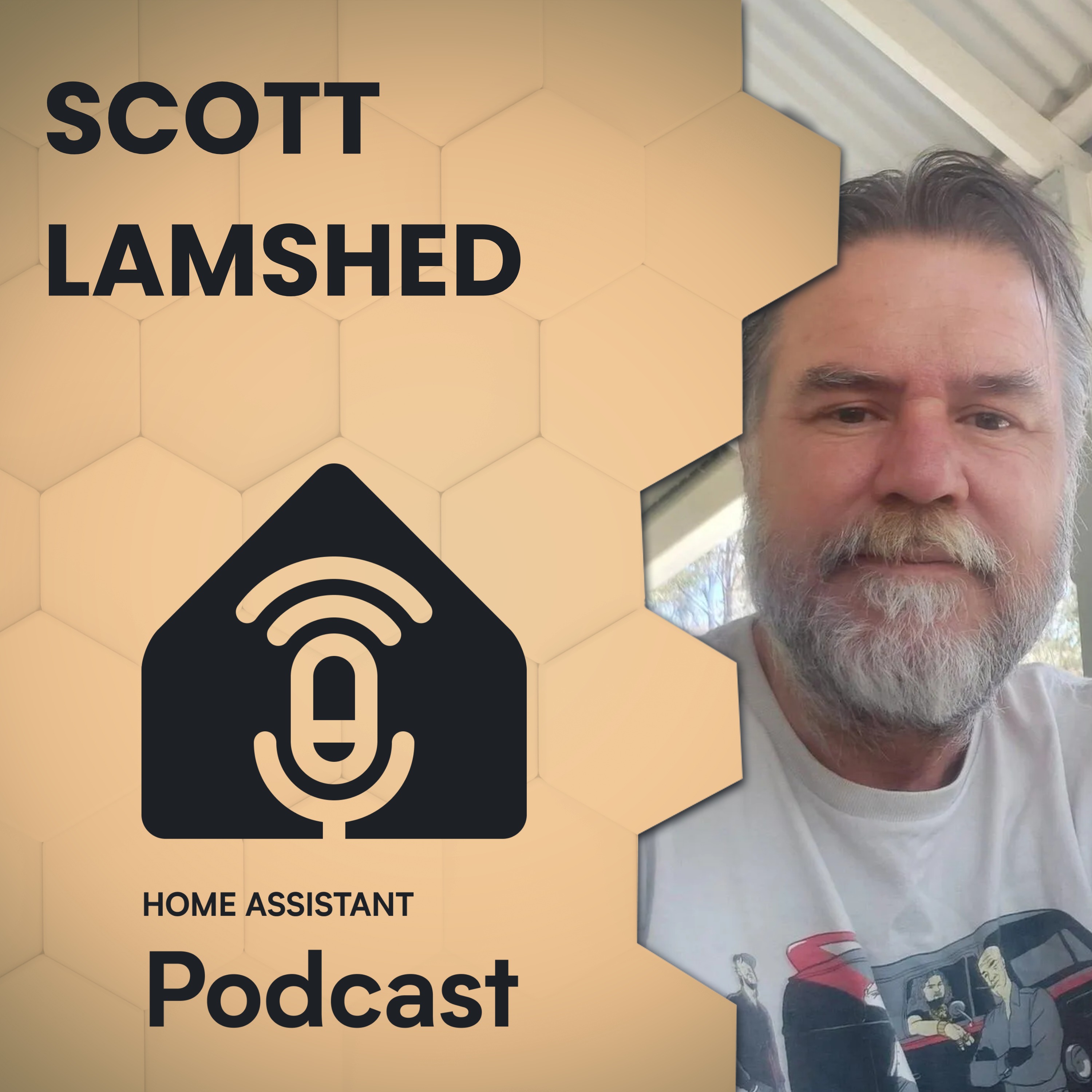
Hello and welcome to the home business podcast. My name is Phil, joining me is usual. I've got Rohan. How are you doing mate? Hey, good Harrier. Yeah, very good. Thank you. As usual, this podcast is sponsored by home business cloud by Nabucasa. For some more monthly fee, you'll unlock powerful features, lack secure, effortless access to your system from anywhere, with choice of voice assistance, off-site backups, and more, all configurable in the UI with no yaml needed. It also supports the development of home assistant, ESP home, and other open home foundation projects. Click the link in the description to learn more. We'd also like to give a shout out to our Patreon members, including our executive producers Benny and Rob. You can help support the show and get early access to episodes, or in an ad free feed. Support the show, check out home assistant.fm and click Patreon in the menu. Now, a couple of weeks ago, Mark Shelby on Twitter asked us to put a call out for empty nestes to share some of their stories, and our guests today answered that call. So we're heading north, way north to the Lockier Valley in Queensland, which is over 1,300 kilometers north of me here in Melbourne. Our guest is Scott, he's a licensed sparky with a deep background in IT, who's been bouncing between code and conduit for years, including stints in lift mechanics, industrial automation, and tinkering with smart homes since the X10 days, where I'm sure a few of us all started. These days he's working full-time, volunteering, maintaining acreage, and somehow still finding time to build an impressively automated shed. 300 square meters of pure smart wiring mayhem with 1.2 kilometers, or 3/4 miles of cabling, and enough Shelley devices to make your break-up box blush. He's all in on power monitoring, believes keeping things simple, so it's usable for the whole family, and he's got thoughts from the state of Ziggabee to the YouTube rabbit holes we'll all fall into. Whether it's chickens, smoke sensors, or pinball machines, he's working on it, and we're excited to have him here today. Scott, thanks so much for coming on the show. Thank you very much for having me, General. As that little intro for you, I went really, we were conversing on messenger, and he was saying, "Sparky, you're in Australia." It's like, "Okay, all ready to start me, all right, I need to get you." And you've got an IT background, so you've got the perfect intersection of everything that I think is useful in home automation. What sort of started your interest in home automation back in those? Was it X-10? Was it where you started, I guess? X-10. Ooh, lovely. I've still got it off. Home-seer, and X-10, believe it or not. Prior to that, I'd actually bodged some, there was literally about not automation so much, but now switches, to switch things on and off, to make my house simple, because I was an electrician, so I got carried away. Then went right down the rabbit hole of X-10, and I've got literally a large cart and full of vintage X-10, if anyone wants some, having to send it to you. And then gradually, through my career, Sparky initially, and then Lift Mechanic. And obviously, it lifts up a little bit more sophisticated and involve programmable logic controllers. So I then ended up trying to automate my home with a PLC, which was probably a particularly unwise move, and overkill. And I've not recovered from that, and I've still tinkering now, obviously with home assistant. And a lot of variety of equipment, a lot of Shelley, a lot of very dodgy home made. Things like creation there, which is, you know, a bodge job of sensors and POE modules and other bits and bobs and D1 minis. So I'm still very active in building out my smart home and my smart shed. Yeah, very cool. That's awesome. So, I mean, with all of this stuff, you showed us your kind of hodgepodge of cables, as you called it. I mean, you know, clearly you're a bit of a tinkerer and do a lot of stuff. And I'm sure your electrical background helps there too. And your PLC background as well. So, I mean, how much how much PLC stuff do you still put into that kind of stuff that you're that you're because you kind of sounded like you're like, OK, maybe that wasn't the best idea, but at the same time, you still have a lot of it and whatnot. Do you still you still do DIY PLC kind of deals or is it strictly ESP and all those kind of things now? I'm pretty much sticking to commercial quality equipment these days, just because of the ease of use and ease of maintenance. And because the obviously the community is amazingly supportive of those, you know, there's some fabulous manufacturers. I think unfortunately, not many in Australia, which is a bit of a shame, but there's some very clever things out in the world now that you can just basically snap all the Amazon if you want to or some other way of purchasing one line. Yeah, I think the PLC is really, you know, it's a sledgehammer approach. It's a little bit overcooked to be honest. I'm doing really cheap now that used to be thousands of dollars you can buy for a couple hundred bucks now, but I'm really trying to stick to off the shelf equipment just because of the ease of maintenance because obviously I'm the only one in the home that can maintain the technology. So when it fails, I'm going for a quick swap, easy to replace things and keep everything running. Is that a reason why you've sort of not, you're not using X 10 anymore like you said you've got a whole box of X and stuff. One of the cool things, I think, I'm just a community of doing is, you know, like bringing back in old technology that would be considered a waste right now extend lovesly very old technology. But I guess with homes that there is the ability to revive that. Have you considered reviving it? I have sadly, because I'm just tragic, because I've got such a large shed and I've got so much stuff. I'm actually thinking of building like a test rig, which will be a wall, some switches, some lights and just to put all that really ancient on you back in into play for no particularly good reason apart from the fact that I can do tinker with it. I've got enough to probably automate half the home with X 10 should I want to one of the issues I'll have though is I've got three phase power which introduces some niggles with X 10 because it really needs to be on the same phase. But that time I know good back you can fix it for me so it's a zero cost prospect for me. I think it's really important that we don't throw this stuff away and I've literally got one of the biggest stashes of technology from the 90s through to now sitting in my mesonane because I just can't bear to throw it away. So just repurpose it and try and keep things going as long as possible. I think it's pretty critical especially because there's such a throw away society now and it's I think that's probably one of my only concerns with with our hobby is that. The commodity devices especially things like the sun offs and so forth that are so cheap now I wonder how long are they going to last and how soon are they going to go into waste. I think fairly rapidly. I think I think it's two phase right one is to some extent you get what you pay for. Right and I mean I'm just as guilty I've got a ton of devices stuff like that that are like you know microcontroller based whatever few bucks here a few bucks there it's like how long will that actually last. Right and the other side of it too is is obviously it's like a great I don't need this thing anymore just chuck it it was a couple of bucks whereas it was it's a lot you think twice before it's when it's three four hundred bucks or a thousand bucks or something like that right and it's. Very different mindset. Yeah exactly and I mean you could you can go crazy so I can go and buy a temperature and humidity sensor for a handful of dollars as you say. Or I could go and buy a commercial grade one that would be 250 us effectively does exactly the same thing but my expectation would be that would last a lifetime and I've even got some. Old server monitoring sensors that a P O E that are literally 25 years old that still work so you know it's it's about a price point and I think. And I'm an emptiness that my son turned 40 this year so he was just my wife and I know I'm tending to. Not go crazy with automation or with equipment but to be a bit more picky about buying quality. And and to make sure that I do it once and get it spot on so I know it's a set and forget to some extent and that's part of the reason I started tinkering with Zigbee and a few of the other. Technology system really good stuff that's coming out now that's quite robust and. A lot of it if you're willing to crack it open. It can be as simple as adding a whole bunch of solder to some traces on a board and gives you another couple of amps worth of robustness with your real is or you stop the real is out to better ones. And really upgrade the stuff to make it a little bit more sort of commercial quality and substantial. So you started with at ten and so that's obviously dating a little bit there so I'm guessing kids were home at that time when you sort of with dabbling into this had you. You're automating your home to a level considered today is a smart home would you see for you know automations in place to help out around the house or. People would have laughed the level of automation was not sophisticated I think the most exciting thing I did was write a script to scrape the weather from from the internet when which was in its early days and I could ask press a button and get the price of the weather for the day and I thought that was high high technology. I thought I was pretty special. It was it was mainly just turning things on and off there was very little bully and logic behind it there was no if this and that type thinking it was just you press that button and in four different lights return on a once or you could give them very low tech compared to the chaos. Yeah being electrician yourself and and the rules in Australia around being able to do certain things that that I feel like you know you kind of lend yourself a little bit of an advantage there to you right because you don't need to call somebody to do a lot of these things you don't need to do. You don't need to have you know spend thousands of dollars to say hey come rewire this thing for me like like what you were talking about about you know even doing those things with the relays and stuff like that because what what tells me it's pretty strict down there for. Making sure you have an electrician to do anything it is it's heavily regulated and I believe rightly so well done slightly biased. And it I'm actually pleasantly surprised I've got a kite and says and friends in my little country area who was sparkies and electrical contractors and there's half a dozen of them that are all over it with home assistant and and Shelley and and all the technologies are out there so it's a bit of a thing at the moment amongst Australian electricians I think which is great for the consumer because one of the things I always see on the internet because like in the middle of the world. So the little earth on all the various groups is people saying I got my electrician in need just look at me blankly and has no idea what to do with my smart device or how to implement it. Whereas I'm surprisingly pleased to say that there are a lot of very switched on electricians who at least in this area of Queensland who are doing some cool automation stuff. I even gave a friend of mine and Shelley sorry no I have H.A. Green is a president and sent him down the rabbit hole I don't think his wife will ever talk to me again but yeah it's like here you go have one of these I'll talk to you in six months. There goes your retirement savings. So we're pretty spot and I think it's important especially domestic electrical people and having lived in the UK and you know and worked overseas one like you can basically do whatever you want. It is really quite straightforward when it's working well like you know wiring a house isn't particularly difficult I can teach you to do it in a week. And something isn't right that that's where the real magic of the trade comes in so I've dealt with houses worldwide in the 30s and the 40s and the 50s and the 60s and the standards changed over time and to be able to retrospectively troubleshoot those installations is is a real skill. It's a gift given to you by a tradesperson as you being trained so yeah there's a new stuff easy troubleshooting and finding weird problems not so easy so I think it's I think it's important to keep those trades licensed. Yeah and we have you know not pretend voltages you know doesn't tickle I can assure you I've been I've copped red to blue face hand and it knocked me up cold and I was very lucky not to be fried so it's it's not fun. And it's and it's written and people don't realize how easily a simple thing like a loose connection and it's literally just a screw that isn't tightened up enough will happily burn your house down. It's as simple as that I've seen it many many many times so it's that's by by getting a little concerned and frying by some of the DIY stuff I see I need to. Yeah people with the way goes and 400 different switch wise they're going I this doesn't work like well I'm not surprised it's a dead short from activity neutral you're going to blow yourself up you know so it's hopefully yeah I think that's where the industry has got got a lot to offer and even look at some things that you've got discussed in previous podcasts like the the plug-in batteries you get in Europe now where you literally plug it into an outlet and it's a standalone device. So I think more appliance like things would be great to get people started in high automation so you you you getting a box and I know the big box stores sell a lot of them. But now that's it's just a really good entry level things just go and buy some power monitoring GPO units and and get yourself started you know and not tinkering with your wiring. Yeah yeah anything outside of the wall I think it's fair game as long as you know cut and why is there anything you should be okay. So you started with X-Tan you are you had you then I was families moved away now you're an empty Nesta how did you was was a progression to homelessness did you move from home see it or something else or is it straight from home see straight onto home business like how did you journey come along. I was actually it's funny you should say that because I was thinking about as I was preparing myself to talk to you guys and I suspect that I was caught on to home assistant thanks to hack a date. I'm a frequent visitor of various geeky websites and that was one of them and I thought wow that sounds really cool and and we're talking quite a long time ago it was a very rudimentary this is pretty love lace it was pretty basic. Yeah the old states and we had to use the groups to put out your UI and everything yeah it was great and it was fast free open source it's not trying to wait I'm in love I need some of that thank you and I had a very sad and quite ancient new you computing floating around. So I pointed on there and since then I've spent hundreds and hundreds and hundreds of hours on the lots of money. Fiddling with it and it the way so I do subscribe so I'm happy to you know pay the pay a few dollars to keep keep the wheels moving because I think what the team is doing is just incredible. The constant the releases of the always there's something always really cool in every release a lot of it I don't use because I'm a bit of crusty old so and so so I don't use AI until I can wash my dishes or do my laundry that then I'm I'm very keen I don't tend to use voice very much I do use the announcements announcements are great. So I'll get my various you know devices that can talk to me to make announcements based on triggers coming out of home system. But it's I think it's just an amazing. EGAP system and I keep finding new and exciting ways of. Attaching things that probably should never be automated into it just because you can. Yeah it's the kids be off the streets as I say yeah I mean it's one of those things where it's like at some point maybe you will care to do something interesting with it right and it's. But do you find that you know is there is there a little bit of upkeep that's involved in that where it's like hey I've added this stuff to home assistant now it's like. Oh you know something broke but you don't really use it so do I care to update it like what's what's your thoughts on that. There is upkeep I think it's you've got a feed and water home assistant I think it's really important. And I know a lot of people you know concerned so obviously with the deprecation recently that they'll probably just freeze their version and not move on based on the platform that they're using. I'm I'm I'm easy I'm running in a docker on my nose so it's bulletproof. But yeah just this morning my vacuum cleaner decided that it no longer wanted to talk to home assistant so you gotta deal with that spent 15 minutes one of the entities had gone pear shaped luckily ghost love ghost thank you Frank. Yes just popped up and went hey this is this is gone ski and fix that but I think it's important that I and I've. Got much better hygiene now than I probably did say 12 months ago where I just go hey there's an update bang just do it. Now I read the release notes I check the breaking changes first just to make sure that some obscure thing that I've implemented isn't going to get broken. And I think I've been really lucky it's it's been stress free I've I've had H.A. fall over a couple of times after updates and had restored backups but that's just computing and you know it's. It's just like how it works and sure it's um. But I think and I'm always looking for new opportunities for ridiculous things and one of my favorite automations is. We obviously have to put out our really bins for the rubbish collection we have recycling and we have rubbish or garbage and. Or many weeks so I. On a popular social media marketplace site managed to buy myself a full size traffic light. With with with the arrows as huge this thing is it's like four foot six tall you know it weighs a ton it's now completely automated so when I pull my car into the driveway it's anticipated me coming home and it'll tell me with the traffic lights which bins we've got to get out. Oh lights up the corresponding car we've got two bins to go today red and you're like we're going to take them out so I'm constantly trying to find ridiculous ways to use things like the traffic. There's just introduced a purple bin down here in Victoria so I hope that I do that for you and Queensland. What's a purple bin. Purple one is gloss so that we're moving glass from the yellow recycling bin from the string like this. We just have blue and it where it's like there's one blue bin for paper and one blue bin for everything else like plastic glass metal all that stuff. And but I haven't heard of a purple one that's and we have a green for compost and. The green bin in the city next to us which is bad in the house drive away and they've just rolled out composting bins to the entire place and it's a so it's obviously a thing that's happening yeah it's coming oh yeah yeah yeah. We're in the we're in the boonies here we're lucky we've got a bin to be honest you know it should just be thankful. Beach digging up a hole and throwing a fire or whatever ages burning it yeah exactly let a little more environmentally safe. We yeah we just we live on a room we've got five acres of effectively bush what we call bush yeah it's it's dry sclerophyll forest is what it's called. And so we have a healthy population of kangaroos that live on the property wallopies coales. Lots of different possum and gliders and things so we're I'm I'm fairly pedantic about making sure that we don't ruin the place with waste so it's a hundred percent. But it can come by malls and say sadly totally off topic but I'm also permaculture designer so I got bored and went and did the course one year. So so I'm trying to build out our property with automated permaculture principles which is impossible so yeah. Explain a bit more that what what are some of those principles that you have to to do. I'm focusing a lot on water so obviously water is a real issue here in Australia and in Queensland you either the winter time is the dry time now so everything is dying literally in the space of two weeks the grass around the property is gone brown and just killed over. So I'm now trying to water make the movement of water between various tanks and I've got nearly a hundred thousand litres of storage on my shed. I've got thirty odd thousand on the house and then three thousand half way up the hill if that makes sense. So I'm trying to come up with a level way of monitoring those tank levels yet succeed still fiddling around with ultrasonic sensors. To try and balance the water. Depending on the season so during fire season I want water near the house for the fire sprinklers and I want it up the hill so that I can gravity feed during winter. I'm not so fast about the house tanks but we have the issue that if in some time we get very large storms it's basically I kind of. That's hard to describe you get one hundred millimeters of rain in 40 minutes. So everything floods and all the tanks overflow so in that period of the year I actually want to move the water away from the house and put it in the tank somewhere else and or pump it into the dam. Because I know if I'm going to get a hundred millimeters of rain that I'm going to fill them back up again but I don't want that overland flow across the property because it causes so much erosion and damage. So trying to come up with this clever automation of a K where is the water what's the weather doing and how do I shift it to be where I want it to be. So it's not it's not working. I'm literally moving you know water around and pumping things here and going which way up hills downhill yeah yeah I've got a manifold that has 11 25 millimeter polyplights coming up into it. To move the water around but then trying to create the zones and have robust solenoids that can cope with all the different types of weather is is proving to be a little bit trickier. Luckily I've got a friend who's a landscaper and he's taking me along that is you know tell you. You basically rolls his eyes at me and says well you it's not going to work with those you need those you idiot. Yeah so he's trying to teach me how to do this in a robust way that that will last because you can't have it fail. During fire season or what I guess this is that's the whole point of this the fire system is to protect us so it's got to be full of proof and then did I got to make sure the hares and fall over. As well so it's it's an interesting project that was probably going to take another 12 months to. So with with the fire is the idea from a fire protection perspective because I'm guessing you're concerned about like forest fires or bushfires that kind of thing. So the idea I'm guessing is just you know fire up irrigation everywhere and keep the land wet. Then that's what you're using that water for here and at this point for that I mean you can use grey water whatever it doesn't have to be. You know proper fresh nice. Well I don't know is kind of are you connected to the mains where you are or is it all tank water. We have what they call a trickle feed which is as it sounds if this it's like a so it's not mains pressure it's gravity fed I assume from somewhere I haven't switched it on in the last three years. So we're purely off tanks and you're right right hand that the I'm unfortunately with one of the reason we moved to Queensland is because we got burnt out in the black summer bushfires in Victoria. And the I said it's fine we we still need to talk about it and that's all the matter. But one house burnt down on the other one didn't the one that didn't was because I ran the sprinklers until the tanks were empty and it was like a swamp who was squeegee and wet and humid. And you know I didn't realize I'm now much more experienced in all things the disaster of resilience but that bubble of humidity was great because we we managed to get our stock like a goats and dogs and cats and what not off the property but we had chickens and ducks that we couldn't. There was 60 on them we couldn't catch them and that little bubble of humidity in that wet area saved them and saved the house and. What was a real eye opener for me afterwards was because everything had been burnt black around us all the native birds and little possums and things all came to that little green oasis for the next several weeks until stuff grew back so we. So yes i'm very can on the sprinkler system and it is it is pretty simple it's a great big pump with 10 impact sprinklers that just go around 360 degrees and dump a whole lot of water everywhere. And this is the beginning going back to our automation the next thing i'm trying to work out now and there is some commercial products that are available is wireless smoke detectors that I can actually put out so we've got 15 acres of bush five of which we own I want to put sensors out there. Unfortunately I got what they call a nozzmier which means I can't smell I have no sense of smell at all I can't smell smoke. I want to know when they smoke so again trying to find something that will integrate with h a that I could preferably solar power and actually put out in the landscape is as a heads up in a warning system and I know it sounds a bit apocalyptic but. It's going to be interesting project and it's going to be a cool thing to build and it's going to talk to have a system so I can make a dashboard yeah awesome so it's just a matter of. Coming to groups of that and trying to get yet another project you know. Like how are you dealing with you know like having such a vast property and the radio frequencies like using it Laura to communicate over a long distance or if you for sure enough that you got like. You know it runs out to remote places we can run to be radios. I've basically P o e at the moment is my saviour i'd love to use Laura and I've been tinkering with Laura. It's still it seems to be quite a costly solution still and and with a different radio standards and so forth a lot of the stuff that you can buy here in Australia. I think it's still a little over price but I'm interested to see what shelly do with their. Want to be Laura I mean it's not Laura but it's Laura like it's long range. Yeah I'd be super different interested in what what integrations could be created and what devices we could cook up that use the Laura standard. It always comes back to that low power being a problem yeah we need to be exactly right need to be out of power and I've been searching for months and there are some commercial. Things out there for even if it's just powering an esp 32 by solar you know in a robust way that might even get me across the line for a lot of this stuff because being a typical techie I've got external access points you can get Wi-Fi every square inch of that property. Well problem with Wi-Fi is Wi-Fi is taxing power wise right like so from a to your point if you're running it on solar and stuff like that that that becomes a little more. Hard with wireless and that's where stuff like Laura. Actually it's kind of interesting but. Check out the MeshTastic project if you haven't. Yeah there's some cool stuff going on there even from a communication perspective for you and your neighbors and all that right not to mention sensors on top of that but. I looked at it for bushfire resilience because of one of the biggest problems we have is. Cell phone towers you know our our national infrastructure owners fill up the diesel generator on the tower and then drive away along comes a fire and they come back and fill it up again and they even stop the locals from putting these into the generator and everyone lost everything so we were looking at. MeshTastic is a backup but I'm trying to be strong. I guess it's in another rabbit hole that I would. Yeah and they're not the only ones there's a couple of other standards not standards but like applications that you can apply on top of Laura right MeshTastic is the popular one it's that's the easy choice there's I'm trying to think of the other ones names but I can't I can't remember them right now but there's there's some cool ones again same kind of deal right it just. Many S P with a with a Laura radio throw it on there and a lot of people are doing you know you cut up your. Buy some solar lights for cheap cut this older panels out of that and wired up to an 18 650 battery or whatever it's called right and. Call it a day right and that that seems to work. For a few people but getting again powering the actual extra sensors on top of that and that kind of stuff that's where the battery usage starts to. Do and all. It does and it's in a few minutes and so some of those little hill tech devices were not just amazing for the cost they are very there are very slick solutions. I think if I was a little bit better coding because I'm quite terrible at coding. You could put you know your ESP into deep sleep and you know and have a not not sample your sensors so frequently to save battery. But I totally agree with you know with a voltage regulator and a battery. Jarger circuit and one of those you know dollar store or even a big box store solar spotlight thing is will be perfect I mean it's ready to go you just got to. Make sure you don't fry your hardware and I may have to dismantle the one that I've got sitting out in the yard. Yeah yeah there's I mean I've got I mean the case of my a Laura 32 here from a hell tech great against for obviously for North American. Frequency but it's pretty cool I mean to got Laura Wi-Fi and BLE right so provisioning all of that stuff gets pretty simple but. The big thing is the battery charging that's what you got to keep. Keep on top keep on top and if we're we're so spoiled and if you look at the standard of the hardware is coming out. These days in here in just seed studios and people like that who are just. Producing amazing stuff and I've actually had the luxury of having worked in China. Not in electronics but in actually a parallel and we're not set up some factories and things and. They are the most amazing manufacturers is you know it's the quality of the stuff is a lot of people assume it's not great. They have every price point but the good stuff is really really good. So it's a it's a great time obviously that's not so much a great time in North America. At the moment with some of the issues but it's it's a great time to be buying cool stuff out of China and Tinker with it because it's so much really clever technology out there. Yeah I mean it's not I was about in Canada compared to the U.S. but. Yeah I'm just fine lucky you that you're on that side of the board over so. Yeah interesting times quick question once the last time you cleaned out your max storage. You're like me then the answer is never and that's why I like clean my Mac by Mac Pa and all in one tool that keeps your Mac running fast clean and clatter free. My favorite feature lately cloud cleanup. It digs into your iCloud drive and cloud folders to find massive forgotten files and temporary junk taking of space and helps you clean it all up in just a few clicks. It's one of those things you don't realize you need until you see how much space you can back. Whether you're editing video compiling code or just want a smoother experience clean my Mac keeps your machine lean and mean. So if your Mac's been feeling a little bloated or you're constantly juggling storage give clean my Mac has been. Get tidy today try seven days free and use my code homicicin podcast for 20% off at. CLN m y dot com slash homicicin podcast that CLN m y dot com slash homicicin podcast get tidy today. Well if you're looking for a chance to upgrade your smart home you can't go past Zeus. Add ZWave long range to your home business set up with a Zeus ZST 39 USB radio. The advanced technology operates in dual network mode combining reliable mesh system with ultra fast direct device to hub connectivity. And with ZWave long range support you can get coverage up to 1300 feet or 400 meters both indoors and outdoors. Up at its extremely secure with unique DSK QR code scanning which you can now do it directly within home assistant. The ZWave JS integration in home business enables seamless compatibility with a range of brands all working together through the secure private and standardized off cloud protocol. But that's just the start Zeus offer a range of affordable and innovative devices including water leak sensors water valve controllers smart plugs sing controllers and even color paddles. The color paddles for the same controllers dim as in switches allow the smart devices to blend seamlessly into your home. For the best prices on all Zeus products head over to the smartest house dot com that's the smartest house dot com great segue here but. ZWave LR is also seems to be a nice like almost a sweet spot right so you lose a couple of the ZWaves typical functionality like mashing and all of that stuff. But you get the range right and it is quite a bit further I mean again now will you be able to cover five acres maybe not right depends I guess on how in placement and stuff like that right so. So I'm going to throw a spanner in the works here and this is a classic Aussie problem I don't think LR has been enabled for any Aussie. Yeah, I don't think they have unfortunately because of the actual European US first. Yeah, and in time give me the sales pitch guys because I've just started tinkering with Zigbee which which I find is fabulous and the little coordinator that I bought is just. Brilliant piece of get the POE coordinator it's just it's so bulletproof it's just amazing but. Why should I go to be what can I do what was you go is that what you mean why is it right is there by yeah yeah not Z was. Well I was the right one was Canadian so I think from for me. So Zigbee has conflicts with the 2.4 you know it's Wi-Fi band right so you do need to be conscious of what channel of Zigbee you're using and what Wi-Fi band you're using Scott in your circumstance if you probably don't have neighbors Wi-Fi is to contend with. Whereas if you're in an apartment complex or in the inner city you know you can't control what Wi-Fi channels your neighbors are using so there is the possibility that your Zigbee devices could get a bit restricted. Zigbee I think how do you describe Zigbee for honey it's an open protocol was open into interpretation I think is correct so correct and that's how I describe all open protocols right it's open to interpretation. Yeah so you know just because you bought the Philips Hue or my Philips Hue is actually pretty good but it's just because you bought a Zigbee light bulb doesn't necessarily mean you're going to be able to control it with this Zigbee control or with this Zigbee ecosystem right. Every manufacturer has a slight nuances to it whereas with a Z-Wave it has a standard body where each device class must conform to a certain you know protocol so that it is interoperable it doesn't matter if you're dealing with brand A and brand B if there are light they have to you know act within the same way and that way means a controller from brand C can control both of those light bulbs doesn't care what brand as the manufacturer the light bulb to an extent there are some obviously there are nuances everywhere you know but for the most part that is the way the Z-Wave standard works. That's why I prefer it you know I can switch out from an aotech you know dimmer to a fibro dimmer I know that you know my stick is generally going to be compatible with it. And the long range support that is coming which is bringing you know within the last 12 24 months does a pretty exciting. A lot of people you're complaining that you know is that way being a mesh system sometimes the machine doesn't work too well across branded products but now that you can go to a star system with you know some pretty impressive range like I think it's a kilometers of range or maybe up to a kilometer of range yeah it's pretty fascinating like I would like to get that in Australia. Yeah that sounds fabulous especially I think with the aotech they've got a dual band stick now as well that will do both. I like to move Zigbee to the shed and upgrade to a Z-Wave Zigbee for the house. I think the only problem with Z-Wave especially in Australia is the price like you do because of the licensing and I do have to pay you know like you just get a Z-B light bulb you know couple of dollars right like you know 10 bucks. The equivalent one of Z-Wave you know about be 30 $40 so there is a premium that you have to pay for. And it is a significant premium but it's a trade off right and it's kind of what you were saying Scott earlier about. You're at that point in your life where you kind of want stuff to just work and you don't want to tinker you don't want to fix you don't want to do all that stuff set it up and it's there right. And to me that's what Z-Wave's that way whatever you want to call it that that's what it brings in right so I think I think there's you know you're trading that reliability and consistency for that. And even matter I'm seeing at least the way that it's run by the same folks that that that Z-B is built by right so the CSA used to be called a Z-B alliance now it's they're renamed with matter they're renamed to connect to the activity standards alliance I believe our CSA so it's still again is still open and open to interpretation so on so forth from the device manufacturer whereas this you kind of get a little more quality and there's only. Again it's good and bad but there's only two vendors that really build all the that build the chipsets for it right it used to be just one so it's usually just silicon labs now there's another company called Trident I think. If I remember correctly and and we actually we actually spoke to a couple of those folks I don't think we did in a proper interview or anything like that but there is a at CES we did get the chance to you know hear a little bit from them and you know shake hands and kiss babies kind of thing right but but it sounds like they're doing some stuff on that front as well right so. And Z-Wave is aligning more around that alliance type of mechanism where before it was just centrally controlled by everything right so so Z-Wave alliance exists they have a four or four more president so on so forth and and I policies part of that that board as well from what I understand on the home assistant front but you know all that to be said that hopefully this means that there's going to be a wider variety of steps. Variety of stuff to choose from like by wider variety of sensors and all those kind of things I know again are we had an episode with zoos right with Agnes talking about a lot of stuff and obviously they're sponsoring this episode as well but you know the point is there's some value to that protocol right. At the trade office cost but what you get is security and consistency right which eventually drives quality so. That's my very long rant about. I think you're right and it's funny you mentioned zoos because one of the things I was really impressed with and one thing I constantly moan about is the lack of a heavy duty switch. And I see so many people frying hard we're trying to switch water pumps inductive loads and so on so forth and zoos have got a pretty robust heavy duty switch so that that in the self is probably a good enough reason for me to go across that protocol. Not unfortunately not type certified in Australia but depending on how you read the regulations as an electrician you can self certify some things believe it or not. If you're willing to take the rate then you've got to take the risk it but I think there's a huge market out there for if someone basically came up with a if you got a Shelley and a contacter and smudged them together so it could switch 20 amps at 240 volts and be robust. I'd buy about ten of them because I put them on all my pumps so forth first I've had power monitoring and better because currently I've got CDs going to Shelley's on all the pumps so I can tell the pumps are going on it's a very it's a pretty rough and ready bush mechanic type version of power monitoring was if someone could flog me one that you know 100 bucks a pop that switch 20 amps I'd. Hopefully buy six of them over 9 years. This is perfect because this is one of the no luxuries I get as being the host of this podcast and you being Aussie and electrician I can you know query some Aussie specific questions and I want to know how you're doing Aussie power monitoring I've there's many option out there. A lot of people with just the quality there's a lot of some products convenient issue I've seen you know Facebook reviews I'm personally using a mix of some Zikbe smart switches that have power monitoring but mostly Z wave things but you know all for the right like dishwasher washing machine. I'd like to get into you know being able to power monitor some of the heavier things in my house for example we've just got electric climate control so I'd like to go to get a little on that that's 32 amps. I believe it the broadcast so you know that puts out anything you know commercial that can just buy off from a local big box store. What's your go to for monitoring devices around your home what would you recommend I personally use Shelley. The PMs are very robust my whole shed is completely Shelley control there are there are no cables or I've run cables but the all the switches are basically just sending your wife I signal and then Shelley switches them all and the PMs monitor all the power in the shed on all three phases then I've got another one in the house which is monitoring the single single phase installation in the home. But it also does the induction cooked up so that when the inductions on I can tell the inductions on the then my LED strip changes color to remember that the induction still on. I know the kitchen counter you know geeky things. Very very robust for the cost I mean there are other really good products out there as well but not. Like that's the Shelley is a dot all to integrate with H a and it just works straight away and I think that's the main. You know selling point is that that integration is so robust and so easy to do you will need a lot of selection to install them. This Shelley is great because they're a din rail mount so you can live literally just got them mounted in the switchboards and and they've never had neutral with them. My only criticism is the CTs are really easy to put ground the wrong way because they're not very well labeled and it's got a little arrow on them so you're you may find yourself wondering why you using negative power and you have to go and switch to CTs and for anyone who's. Perhaps going to experiment it's it's very important not to open the CTs on a live circuit. It will break your equipment and it can induce some very high voltages so make sure it's switched off when you're adding and removing current transformers to things it's super important. But yeah, I recommend doing it because it does it opens up all these opportunities are like we're in we're in the throws of going out to buy solar for the for the home. Our previous property had solar and of course obviously in Australia the concept of what they used to call feed in tariff when you could export. Solar to the grid and get paid some money is now a thing of the past it's pretty much zero in most cases and there's a fairly strong room is doing the rounds of the solar industry they're actually going to start charging us to export. So it'll cost you money to put electricity back in the grid so I've got to get this home to the point where I. He things up pump things around as much as humanly possible during the day when I've got solar so having a really good overview of what my power consumption is and and making the most of using that up during the day will become critical. So even simple stuff I just use the TP link tapos on GPOs I mean they're a cheap and cheerful solution they integrate pretty well you know for the money the IKEA little outlets if you can get them because they're unobtainium most the time but they're a little pow my freeing outlets they're not a great form factor but they work a treat for just tracking. Yeah yeah then if you if you're in a key and they've got them just take all of them. I'm sure someone's running a black market IKEA some. They disappear overnight those things and they again been really good way of getting you foot in the door with automation is just to use those power monitoring outlets and start looking at your power consumption. And you the ghost loads you know it's surprising some things are there that you don't I switched on our television for three months. You said stuck watch TV much anymore. So I unplug that because it was sitting there burbling away using about 450 milliamps of electricity for nothing. Yeah so just waiting for you to turn it on. Yeah so you and it's I think the partner factor is important there as well because it's yes you geek out. Yes you can automate all the things but you can also say hey look I I've reduced our electricity bill a little bit. Even monitoring like I monitor the washing machine and the dryer because they can and because there's that lovely little integration from hacks that you can. And if you want to pop on H a it works a treat and I don't forget to put the washing out. Useful perhaps fun definitely. But you know it's at least I'm attempting to make it something useful for the other people who live in the house as well. So that's yeah yeah. You mentioned you use a lot of Shelley devices are they use Shelley have a few protocols now. Are you using them on Wi-Fi primarily? Just just from a legacy point of view because I started out with Wi-Fi I'm pretty lucky that I'm all ubiquity. So for a home like for a house we've got a ridiculous level of network infrastructure. I've actually got a proper cabinet with multiple nice all all Cisco switches in the core. Or I've actually got five between my switch in the house. Why? Because I could basically and then all ubiquity UFOs for the infrastructure and can't talking you back to back to ZigBee. Because I've got a dream machine as my router or as the brains behind it or it was trivial for me to then spread the channels across Wi-Fi to give room for ZigBee. Because you just went no it actually complain to set how you your AP spread isn't good enough. If you want to fix this and I went yes please click click click and it was done. So again a big investment upfront. But for pretty bulletproof technology and I could say the same about grand stream as well. If you're not concerned about I mean these products are all made in certain countries anyway. But some people have concerns about where they come from. But the grand stream is also an impressive product set. And they very much trying to basically be the next ubiquity I suppose. Whether or not I get a ubiquity doorbell or everything and that would cost not because I live in the country. There's no one in no one rings the door anyway. Yes I would be quiet or something like that. But as far as you know and I'm not I don't know if you guys obviously listen to either podcast but I'm definitely not going to buy one of the AI horns in the near future. Apparently not much. So it's much as I'm tempted by the whole thing. So it's I would that's why I went to Zigbee just to size out how how it would interact with with the 2.4. And I've I've basically isolated that it's called the networks and IOT network. It only runs on 2.4 it doesn't broadcast at all on five gig to keep lives simple. But I'm very interested to try the Z wave and see how that integrates on top of it. Plus you can never have too many new things really. That's right. Now I do want to get into some fun stuff. So you've got a lot of animals on your property. What sort of automations have you got around the animals? This is what I'm working on at the moment is the chicken automation that my favorite one, which is a very benign automation. And you'll think I'm a lunatic. It's my fox automation. So every single spotlight on every building on this property including a little garden shed that's about 300 meters away or 30 meters that way. I've got one button, it's a fox button and it turns all of them on all at once. It absolutely it's like Luna Park at lights the place up because it's a really good way of deterring foxes. And we have lost chickens to foxes in the recent months unfortunately. Right. Even though it sounded really easy, it was like there's just a whole bunch of lights that they're in the cheds and some in the house and some are automated, some are not. So then I had to go and shelly everything. It's been super difficult because it actually saves the lives of my chickens. Now I'm working on the chicken door automation. Can I automate the opening and closing of said chicken door, if not, can I at least have a reminder to close the door. Being the high tech sort of person that I am the current system is a pulley in a tree with a very long piece of cord that goes through the pulley and down to the chuck door and I literally close it because I built an electronic sole of tower door opener and closer using the mechanism from a car aerial, you know, the wonder. Completely unreliable and didn't work. So I went back to the manual. So my next step is to say, okay, how can I have an assistant now take over the chickens and become the chicken overlord. If you're just doing a pulley, I'm guessing you do something like a roller blind motor that you could get, you know, like, and then just wanted to say that's closed, wanted the other way. I don't know how you got to close the door if it's just a string, but. I think it was the kind of quite there was a good choir. I think it was a little motor that look good probably is where the proof. It's got to be something with a proof so I'm I'm just and we've mentioned this already and I'm basically going down the YouTube rabbit hole of watching other people at the end with home assistant to automate things like. There's some really clever ones, there was one gentleman. I think had some mobility issues and he actually had an automatic door opener and closer on his apartment door. Well, maybe even something like that, yeah, just open the door. So it'll depend what Ellie expresses got that I can find. Yeah, wait for singles day sale in November and I was going to say you might you might be able to get like even on like marketplace or if you just go to some liquidation people like the people that liquidate like companies that shut down and stuff like that. Because again, a lot of a lot of these lot of places have accessibility rules where you have to have a automatic door for just for just for like the little accessibility button, right. Which opens a door that I mean, if you can get those for pennies on the dollar used. I mean, I don't know if you necessarily care that it has to be brand new if it works. I love recycling. The other thing I'm building for the chickens and it's not very exciting. That's it there is a esp32 sound detector. I've got three of them. It's powering them again is the problem. I'm actually thinking of running a cat six. I've got some overhead cat six. It's got catenary built into it perfect for overhead runs because I want to detect unusual noises at night while they're asleep because that's a good indication that there's a predator. If there's a lot of noise, so I've got to see if I can get this to talk to home assistant. And this is potentially the only use case I can think of for AI is to sense unusual increases in noise at unusual hours in the chicken house. And to a turn on the fox lights illuminate everything and to also warn me through an announcement on one of the speakers or however I decide to do it. So that's that's the next high tech thing is to spy on the chickens through audio. So right now you've got the fox button like hit a button. All the spotlights turn on. Is that button automated in any way that it would like if the house thinks there's a fox somewhere to turn on those lights or is that phase two. That's phase that's part of this project here. This phase two and the other thing I've ordered some Ikea. Zigbee buttons. So I'm literally going to make some buttons put a picture of a fox on them and just book them around the place. So if you hit that button, the fox lights come on. So I'd really love for that to be automated. I think that would be fun. If he detects an unusual. So it's all about looking at the pattern. So if there's a little bit like cyber security, you know, someone's logging in suddenly from a country you're not expecting them. There's a problem. So if I'm hearing noises that I'm not expecting at a time when it should be really quiet out in the countryside, I want that to then trigger an automation that would turn on those lights alert me and potentially. I don't know if we ever got really sophisticated, maybe make a noise or something to try and to to predators, but that's. That's the future future state when my brain comes comes up with a better idea. I really concern is that when you by the time you get to the noise stage, it may be too late right like the fox is already in the house at that stage, especially at night, have you considered something like cameras with once again you like frigate or something. Yeah, I've even just got like last yesterday, the day before recording, I installed a real-length camera up in one front of my house. And last night it detected a possum, we get a lot of possums where I live. And so I could see on the timeline, you know, animal detected, you know, it detected there was an animal and it was a possum running across. Now you're going to detect, you won't be able to tell the difference between a fox and a possum. But if you angle a camera in the right location and really kept a great integration with our assistant, you could run a, yep, animal detected on this camera at 2 a.m. in the morning, let's turn the fox lights on. That'd be perfect. And I'd be really interested to fill in your experience because I've not had a lot of luck with real-length and interesting mainly because a lot of them with a solid points which are terrible. Well, this is it. Yeah, but you're running ethernet, right? Like these cameras on POE that and I've got frigate. Yep. I'd be interested. No, send me an email one day telling me which camera you've got. That would be that would be idea of mostly nearly everything's high vision, which is OK. Or I look sure. But yeah, that would probably be the gold standard. If I could get a camera out there, I can spy on the chickens and do some movement detection. I could even get more sophisticated, and actually because the attack vector, so to speak, is pretty predictable as to where the predators would come from. I could probably do two and actually do perimeter monitoring. Exactly. And you could, yeah, at that time, like you could arm those, you know, thresholds like if an animal or if there's something crosses this beam or a virtual beam in a camera, right? You know, OK, something's moved across here. It's moving into the zone that shouldn't be in. Let's turn on the fox lights. Even if it's a false positive, it's probably better to turn on the lights than, you know, to the risk of, you know, not working. Do you do you find that when all the lights go on because you said it kind of blankets the property rate with the lights. Do you do you find that like in the middle of the days that something that will wake you up or do you have enough like curtains and whatever or do you want to be woken up? Like, how does that work from? It's actually, no, no, it wouldn't make some that the house is what they call a Queenslander. It's the style of building the heavier in Queensland. So it was built in 1920. So it's very tall, ceiling, small windows. Because it's timber. It's literally one layer of timber. It's there's there's not even a gap. You know, so we've got curtains on everything to keep the place cool and warm. So we're pretty good on the light side, but I would love for, you know, one of the little UFOs, shape, talking devices that we have. To gently whisper at me, if if if I could get that detection to work, that would be fabulous. I mean, you could do how you could go crazy. I could set up some hoses with some solenoids. Right. If there's a button detected, I could screw them with water. Then off we go down the automation. Honeyhole. Yes. Then I could get a drone. Well, exactly. Right. Like, you know, fire up a drone and to circle the perimeter of a perimeter of the Indian. That would be so awesome. And I'm sure someone's done it. I'm sure I'm going to have to go. Have the drones you're chasing around the fox and we just when we're at sea, yes, we saw alarm alarm. The comrade they had. You know, it's part of their thing. They had a drone that you could as an add-on to your property. You know, if you know the alarm was detected, it would launch a drone at your property. And using AI, follow the person on your property. That's awesome. That's a clue to them. That's so geeky. It's just the best thing ever. And you can buy them cheap drones for like 30 bucks. Now as you could literally destroy them. Exactly. Poor chickens, all their feathers are full out because of all the lights flashing in the drones circling. Yeah, that's true. They'll be like, oh my god, what's he doing? Yeah, yeah, yeah. I love that. That's great. They're going to think that the drones are predator now. It's a. Is it the interior is the trouble you go to if you few pets, but anyway, I think it's it's one of the. One of the great joys of this hobby is when you can actually. Do something that's sort of cool from a technical point of view. You know, you've had to think about it. You've had to research that you've got to find the right devices and procure them and do all the things. But then to actually have a really good, quite useful real world use case for it. Where it does something like my traffic light, not so much. I mean, I could just literally remember which day to put the bin out that wears the fun in that. What a calendar event. I've done the same thing. I've using AI to tell me which bin to put out. But AI still gets it wrong, but I want to tell it to me in a nice way. Not just the light. It's a great use. Yeah, it's like for me, it makes me laugh, but you know, I want to monitor my letter box. Like every other person who does home automation in the whole planet seems to want to. Sure. Yeah. Where's the manufacturer? This is the thing I don't get. And like in these wonderful companies like Zeus and one who is super clever. Make a letter box monitor, guys. It's going to be a dry contact and a battery and some sort of technology. And absolutely everybody on the whole planet is going to buy one or two. I mean, it is, we say that in theory, but I think Ring actually do have that product. You know, if I'm correct. But it's only in America, of course. I think it's a ring. But yeah, there is a company like it was just random like it was a doorbell company that sort of has a letter box monitor as well. Oh, they have a Ring mailbox center. Yeah, you're right. And it's even just a dry contact sensor that's good quality and low power. I can think of 50 different applications where I could use it. You could use it on the gates to see if the gates are open or my role adores the letter box. Yeah, where the proof and you know, it just doesn't need much power and it has the ability for long range. Yeah, especially in your situation, I'm guessing your letter box isn't outside your house. It's probably down the dry. Yeah, I can't, I can't even see it from there. So it's a yeah. What do you want to wander down there and check it every couple of days? So I think there's there is so much and we talk so much about AI and HA and you know, very much investing in in AI and integration. So all these really clever stuff, but I sometimes feel like we're boiling the ocean a little bit when if you could manufacture a half a dozen robust low power. I know potentially sold a power to whatever sensors you would you would sell a screen enough of them have some of the screenings. And you look at the polo's new multi sensor. I mean, that's P o e that's super smart. Yeah, I so want one of those. I just look at the price going oh man, it's you know, it's $150. But I'm still really tempted. I mean, there's some cool things that people are coming up with and I'm excited to see what the next 12 months or even there is to this use going to look like. And you guys from the best idea having gone to see yes, I mean, that's just heaven. I love trade shows. So the AI was the thing around it. So yes, I was just AI and palm reading blocks. Everyone wanted to show us their palm reading. That's funny. Yeah. And you're both developers. So is it just me or is this AI thing just the current snake oil? I mean, I understand like I love chat GBT. I use Grock from a Yammer. I guess it's really good at Yammer. But as far as putting it in charge of my fridge, I'm not so keen. It's almost I can't see the use cases for 99% of what people are talking about. The frigate and patent recognition things like that makes perfect sense, you know, but broadly, do I want to in charge of my robot vacuum cleaner? No, thank you. I'm not convinced. Yes, you've got to consider it is still fresh technology, right? Like when the iPhone first came out, the capabilities of the iPhone could do today, you just wouldn't like you wouldn't be able to imagine like smartphones would be. We have folding smartphones and you know, have all that information in our pockets, right? I think it will be a very transformative technology and it's already done so much in the what two years it's been here. So I think it is certainly a watch this space as a developer. I think you would need to be I think it's very important to keep your finger on the pulse here. I think that prompt engineering and being able to explain to AI what you want to happen is going to be very important. And I think that's what becoming a parent now, right? Like a lot of people that are going, oh, just get AI to do it and you start doing it and actually it's not doing it the right way. There's actually a bit of it's going to take a little bit of human, you know, knowledge and intelligence to get AI to give us back what we're expecting. So yeah, I think it's definitely a watch this space. Yeah, it's pretty fascinating. I don't know. I agree with you. The the art of the prompt is my favorite thing is when you actually ask the AI to say, right, what's the best way to prompt you? Yes, it's probably. Well, but I think even like for certain things like like like the chicken automations or the chicken, whatever you want to call it, like if there's like a you take that you take and take a screenshot. Hey, listen, there's something going on here, screenshot, send that to it and, you know, maybe something like, hey, is there is there something you see that could put my chickens at risk here. Right. And then it could detect, hey, there's, I don't know, like there's a fox versus theirs. I don't know, some some other animal. That's not. I'm so touching it. Right. Right. I'm also something like that. I don't. Right. So whereas it can go in and say, okay, it's not it's not an all or nothing or it might be a little more intelligent around. Hey, what is this thing? And again, it's been trained on. I don't know, like a bajillion pictures of what a fox looks like or whatever and it can kind of correlate that right again. Is it going to be a hundred percent accurate to Phil's point? No, I think it's still very early. But, you know, that might still be pretty interesting to see what it can do, right? And say, okay, based on this, this is what we're, what it's seeing and then turn on the lights based on if you think it if it thinks with a reasonable amount of confidence that it's. It is what it thinks it is. And I think that will mature. Once, once we can run LLMs at home. So it's the decoupling from the cloud for me that it was to think because if I lose my internet connection, then I lose my overlord as well. But I think as that becomes commoditized and as you both said, there are some smart people making some really smart things. If you could buy a box that's, you know, AI box and just plug it in, it's like a toaster and it just, it's your local language model. Then we're going to see a paradigm shift as everything is going to go out the window and it will all change really quickly. I don't think that's very far away. I'm pretty sorry. Yeah, you can already run LLMs locally now. You just need a good hardware, right? Once we get that, you know, once LLMs, you know, over a bit and don't need as much hardware or getting them or. Yeah, efficient. I think that will be a possibility. That will be, that'll be really cool to have H.A. just talking to your local AI. Imagine the potential for us as home automatiles, if that's a word. To do that, again, that patent recognition say, okay, hey, this PowerPoint switched on at an unusual time. It doesn't usually come on at this time of day or hey, that punch running in the afternoon. But I know that Scott's not home because I can see that he's at work based on the presence. That's weird. And then to do some decision-making and maybe say, okay, well, I'm just going to switch that off just to be safe. And that's, that, that gets really exciting because you're, you're going beyond your Boolean, if this and that. And it's actually saying, well, just take a bit of a guess and make the decision you think is best and using the LLMs or the AI to do that. Cool stuff. Yeah. Yeah. I think the next, I mean, I don't know, couple of years are going to be definitely interesting. But I think even over the next, like, let's call it 10 years or sometimes that as, as stuff becomes very commodity. Then I think that's where it's going to be. I think it's going to be a lot more accessible, right? Right now it's still in that early adopters kind of phase. At least for the local part, right? Even, even actually to some extent, even like chat GPT, as much as we think it's super popular. Like, I don't actually haven't asked them, but I don't know if my parents know it even exists or stuff like that, right? Like, it's not, it's in the masses, but not across every demographic or what have you. And so, I don't know, maybe some cool things there. Yeah, I think that's going to be great for us, because how are your motivations just going to get more and more interesting and more and more cool things to tinker with, which is fabulous. Yeah. And more dynamic, right? So it's, which is cool. Now, one thing, again, we talked about this, and I think it was Mark on Twitter that said, hey, you know, like give us, you know, get somebody who's an empty nester on and get somebody who's, you know, I don't, cool, great that you guys have kids, but I don't, I want to hear more about automations and those kind of things that aren't that don't involve children and so on. Well, I'd love to hear from you, Scott, one, how has your, how have your automations evolved, but to, you know, describe some of those that that you think are like that you would classify as a specifically empty nester kind of automation. If, if, if you have any, I do. The, my favorites are the simplest ones, to be honest, and, and that's funny. And I think that's just an age thing that, um, automated, that's so motion sensing and lights. So if I get up in the wee small hours to go out and see what the cats have knocked over or whatever, I have to go to the bathroom or what have you got these beautiful 40% slow rampups on my lights. It's nice and dim, I can see where I'm going at weights five or six minutes and ramps back down again. This thing ever simplest, I mean, I literally could have put a PIR and a spotlight out to do it. But just having that lovely control, you know, the LED strip in the kitchen comes on at 20% if I go in there. It's silly, simple, but from a, for personal benefit, it's the business. It's fantastic. Monitoring again, things, the, the automations that look after the washing machine and dry their ability to be busy. Again, just trying to make life a little simpler, you know, my wife works full time. I work full time. So, you don't want to spend your whole time doing laundry. And that sort of thing, so the more I could squeeze out of automation for those things that better. Ah, the vacuum clean is probably my other favorite because we've got two cats. And one of them is very, very fluffy. And as a result, there is cat hair everywhere, all of a time. Yeah, right. So, I've got an automation that I launched from my desk at work. So I work about 60, I think it's 50 odd kilometers away. Yeah, it's about a 45 minute drive for me to commute. But I'll get there and I'll think it'll wait until about nine o'clock because then the cats have woken up and have moved away from there. And it'll fire up the robot vacuum cleaner, send about the vacuum up all the cat hair and then put it back to bed again. Again, the simplest thing, but just, and it's, I, I, latched it. I think I've paid $169 for my vacuum cleaner. We're talking like the cheapest to your robot vac that exists. $169 on a robot vacuum cleaner that he's integrated into home assistant. I don't believe you. Yeah, absolutely. And it's, it's brilliant. It's cat hair sorted. And it doesn't get clogged on the cat, where did you find his vacuum cleaner at second hand? No, it was on that large e-commerce site that everyone knows and loves. And I think it's still on there. I actually bought my son one as well. I'm surprised. And I'm trying to work away, work out a way now from mounting a camera on it so I can actually observe the cats as I vacuum up the cat food. That's a future project. So it's been funny. So the biggest benefit for the household have been those really simple things. Whereas I like geeking out with the media players and bumps moving water around and that sort of thing. And I, I also monitor our broadband through HHA, which has been really good because my wife needs broadband to work. So I can get a heads up if there's an issue with the internet service and I can notify myself. So it's just endless use cases. Home assistant is just so amazing for what it is. And I constantly amaze that the team behind it. I love watching their videos and hear the new things that they're developing. Sometimes I think, "Oh, that's all very nice. It's really not for me. I don't use all of the functionality." But, you know, things like hacks, I mean, we'll be without hacks. I mean, there's so much cool stuff on there. And I always amaze by people like you guys who are developers. And if they have damn clever, it all is. That you can just sit down and go and create these amazing pieces of code that do such cool stuff. So I'm eternally thankful to the open source community and the HHA community. Just for making something very enjoyable to be involved with. I think it's just good fun. Yeah, it is the community of HHA system is amazing, right? Like everyone is just happy to share and contribute back. And we all get better together. We all have fun together. And I think that's really special in this community. Yeah, I was a bit sad that we didn't have a meetup anywhere in Australia. I think we need to work on that for next year. Absolutely. I do want to finish on another fun one that you mentioned. Can you tell me about your pinball machine, please? Yeah, I've got a bit of a problem with pinball machines. Nine at the moment. Nine pinball machines. Just out there. Ranging the earliest one I got is a 65, Electro Mechanical, 1965. Through two, I've got a sub problem with Star Trek. So I've got all the Star Trek team. The newest ones about 2013. So they go through Electro Mechanical, Solid State, through whole components, service mount and the modern stone stuff. And I'm very interested in seeing how I'm going to implant the SP32s or something similar into them so that I can start controlling my pinball machine through home assistant. Even if it's just tracking the scores and silly little things like batteries. One of the greatest killers of pinball machines is batteries. People forget to change the batteries and the alkaline damage on the circuit board destroys them. And of course those boards made in the 90s, 80s, they're unobtainian. So even simple little things like having a reminder saying, "Hey, you got to change the batteries out of pinball machines." But I'm really interested. Now, fortunately, every generation seems to have a different technology. And a lot of the manufacturers have different technology. They're all very closed source. They're very heavily guarded. Still, even today, the IP for pinball machines is heavily guarded by the people that I know. Even if it's ancient. But I'm determined that I'm going to somehow either integrate my machines into H.A. So I've got a fully automated pinball power, which will probably drive my way crazy. That's cool. So I guess that's another emptiness of the thing. Like you've got some time in your hands, let's go into combined hobbies. I like pinball machines. I like home automation. Let's do it all together. Yeah, exactly. And it's like it's my wife. She actually, she's way, way better at playing them than I am. All of the high schools are her. Not me. I like fixing them because they're electronic things. I've got at least five minutes of spare time. I need to develop a new project, wishing for all the things. And it's, I think it's good. And you do, you don't want to get too set in your ways. And I like to keep my hand in, so to speak, technically. And you do that. You're doing, doing is learning, if that makes sense. So, you know, just even if I don't get, you know, like as I showed you earlier, you know, it's probably not going to win any design awards. But it does exactly what it was. It's got PoE. It's got sensors. It's got, uh, they can make noises and flashlights. It does all the things. Um, I'm not sure I'd ever began to show anyone. Yeah. The finished product. But it's, it's, it was a great little challenge. And I had to work out how to bring it together. So I just keep doing that. It's here. That's awesome. Um, Scott, thank you so much. This has been very interesting. I love having chat with you today. Um, yeah. Thank you so much. Thank you guys. It's such a pleasure to meet you. And thank you so much for your time. You're connected to how much I appreciate it. Thank you for your time. Thank you for yours. Yeah. If you want to share your home assistant journey or come on as a guest, reach out to us at
[email protected]. That's h-a-s-s-podcast.io. The home assistant podcast is hosted by Phil Hawthorne and myself, Rohinge Caramandy. For links to topics we discussed today, check out our show notes on haspodcast.io.
 PodcastTranscript AI