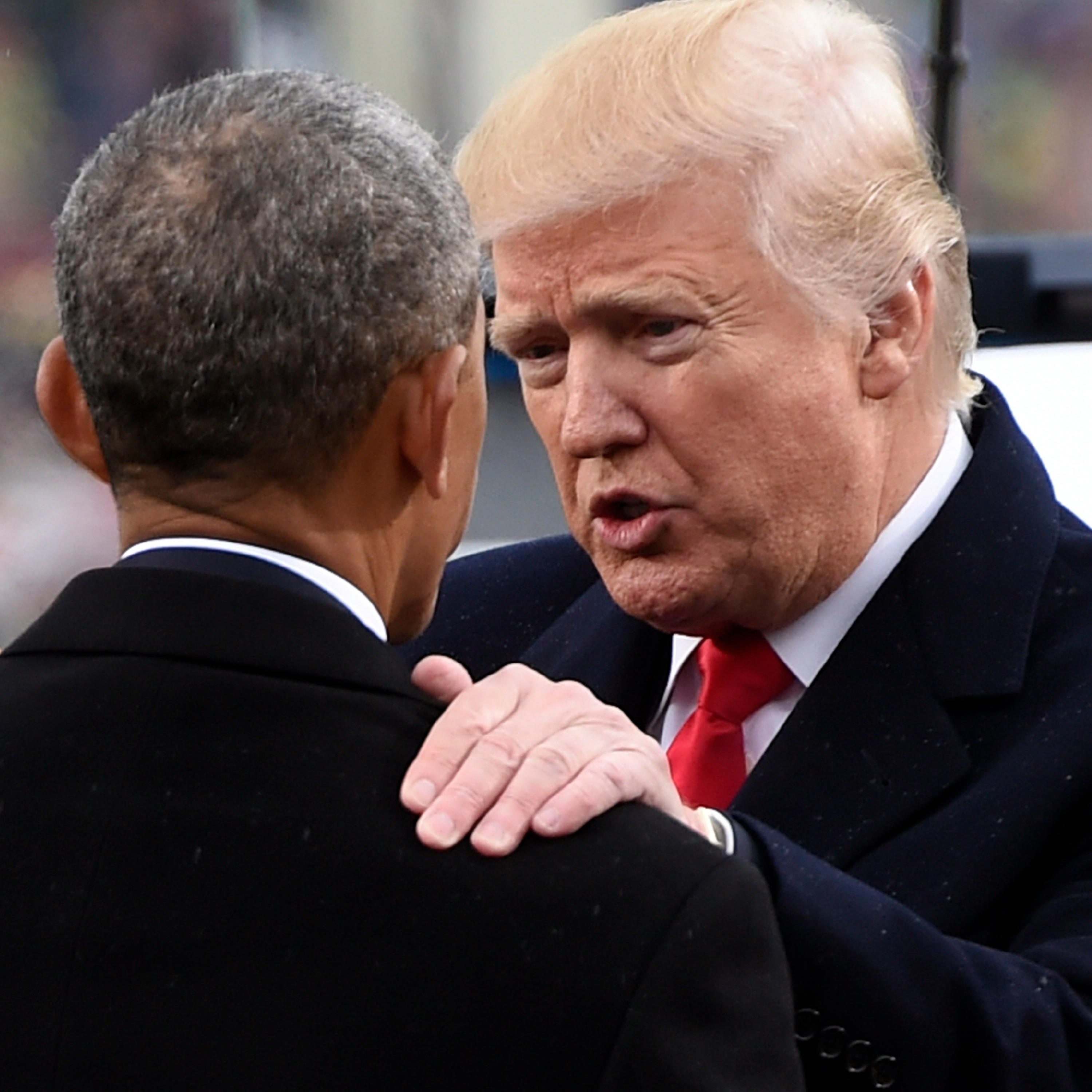
America Had a Black President. Then Came the Whitelash.
31m 56s
In a podcast featuring Jelani Cobb, discussions cover the Trump presidency, Obama era, higher education, and journalism. Heidi Blake explores the White House Farm case and criminal justice cover-ups. Cobb's insights range from America's political shifts to the Trayvon Martin case and the Black Lives Matter movement depicted in his book. Reflections on Obama's presidency touch on racial justice challenges. The conversation delves into the Black Lives Matter movement's impact, attacks on Black history, and the significance of teaching and understanding Black history. Cobb emphasizes the political objectives of Black history studies and the battleground history represents. The discussion underscores the importance of acknowledging and learning from historical injustices to navigate the present effectively.
Transcription
4966 Words, 27687 Characters
I haven't given up on the idea of there being victory, of there being a better tomorrow,
but I also think that it will exact a hell of a cost for us to get to that place.
On this week's more to the story, New Yorker staff writer and Columbia Journalism School
Dean Jelani Cobb.
We talk about the whiplash between the Trump presidency and the Obama years, the fragile
state of both higher education and journalism, and so much more.
You don't want to miss this, so stay tuned.
It's one of Britain's most notorious crimes, the killing of a wealthy family at White House
Farm, but I got a tip that the story of this famous case might be all wrong.
I know there's going to be a twist when there a massive twist.
At every level of the criminal justice system, there's been a cover-up in this case.
I'm Heidi Blake, Blood Relatives is a new series from In the Dark and the New Yorker.
Find it now in the In the Dark podcast feed.
This is more to the story, I'm Al Ledsen, and if you listen to this podcast at all,
you know I often think of America as a pendulum.
It always seems that justice political power swings in one direction, gravity finds a way
to pull it back.
Just look at the last 10 years or so in America.
The country saw its first black president and the rise of the Black Lives Matter movement
followed by President Trump's election, an erasure of black history, and a resurgence
of white nationalism.
Few writers have charted these wild swings better than Jelani Cobb.
Jelani is a staff writer at the New Yorker, dean of the Columbia Journalism School, and
author of a new book, Three or More is a Riot.
Notes on how we got here, 2012 to 2025.
And he argues that to better understand our current moment, it's helpful to rewind to
a defining incident that happened more than a decade ago.
Jelani, thanks so much for coming in and talking to me.
Thank you.
When I think of you, I think of you very much as a character in the Marvel universe, both
comics and movies.
I'm outing myself as a huge nerd, anybody who listens to this show knows it, but I look
at you as like the watcher.
The man who looks at the whole of the universe and has thoughts.
I feel like as long as I've been reading you, which has been, I don't even know, many years,
I think the first thing I read from you was around the time when Trayvon Martin was murdered.
It seems like you have, for lack of better terms, a God's eye view of what's happening
in America from the lens of race and racial justice and progress.
And it just feels like you've been doing that for a really long time.
And when we look back, Trayvon Martin passed away years ago now.
It feels like such a moment in history that in a lot of ways, when I think about it, it
feels like it happened yesterday, but it didn't.
It didn't.
13 years ago.
13 years ago.
Unbelievably.
Yeah.
Tell me about that time when you started writing and reporting on Trayvon's death and how it's
evolved into where it is today.
That was a really striking moment, I think, partly because of the contrast.
There was a black president.
We had seen circumstances like Trayvon's, the decades, centuries.
We had never seen that in the context of it being an African-American president.
And the first thing that I ever wrote for the New Yorker was a piece called Trayvon Martin
and the Parameters of Hope.
And it was about exactly that contradiction, the fact that we could be represented in the
highest office in the land, that we could look at Barack Obama and see in him a barometer
of our progress.
You know, lots of things people agree or disagree with about him politically, but the mere fact
that he could exist was a barometer of what had been achieved and at the same time, we
have this reminder of the way in which the judicial system can deliver these perverse
outcomes and especially when there are cases that are refracted through the lens of race.
And so, at the time, I thought of Trayvon as this particularly resonant metaphor.
But I didn't understand that he was actually the start of something much bigger because
Black Lives Matter is an outgrowth of the phrase, the framing of that language.
Black Lives Matter came out of the aftermath of the verdict that exonerated George Zimmerman,
who is the man who killed Trayvon Martin.
And in a weird kind of bizarre world response, it was also Trayvon Martin's death was also
cited as the impetus for Dylan Roof, who three years later killed nine people in the basement
of the Immanuel AME Church in Charleston, South Carolina, and he said he had been radicalized
by the Trayvon Martin case.
And it went from there, really, both of those dynamics, those twin dynamics of this resurgence
of white nationalism, and this kind of volatile Christian nationalism, and this very dynamic
resonant movement for Black equality or for racial equality, and almost the kind of crash,
the path that those two were put on in that moment.
Yeah.
And three or more is a riot, is a collection of your past essays.
And after you were finished putting all this together, I'm just curious, what did you learn
about the things that you had written, and also what did you learn about yourself?
Because I think when I look back at old writing that I did, I see myself in where I was versus
where I am today.
Yeah.
I think that all writing is either, I think writing is either intentionally or unintentionally
autobiographical.
You're either putting it out there and saying this is what I think at this moment about
these things, or time does that for you.
If you come back, you can go, oh, wow, I was really naive about this, or I really saw this
very clearly in the moment for what it was.
And when I was combing back through these pieces, one conversation came to me, which
was a discussion I had with my then editor, Amy Davidson-Sorkin at The New Yorker.
And Amy said, after I'd filed the first piece on Trayvon Martin, she said, why don't you
just stick with this story and see where it goes?
In effect, I'm still doing that.
I'm still kind of hearing the echoes of that moment.
And looking at each of these pieces, there are 59 pieces in this collection.
Some of them short, some of them lengthy.
But in looking at each of these pieces, I started to kind of plot out a path.
And that's why the subtitle for the book is Notes on How We Got Here, 2012 to 2025, because
I started to plot out a path, seeing the rise of Trumpism and the MAGA movement, seeing
the backlash to Barack Obama, the mass shootings, the racialized mass shootings in El Paso
and Pittsburgh and in Buffalo, all of which I had written about, and the way that these
things were culminating into a national political mood.
Yeah.
Yeah.
I'm curious.
I can remember when Obama was elected, I was volunteer/working with young black men, boys
at the time.
Now they're all grown up.
But I was mentoring a group of black kids that were in a very poor neighborhood and they
were struggling to get by.
The parents were, a lot of them had single parents, not for the reasons that most people
prescribed, a lot of them had single parents because their other parent had passed away.
And they were just trying to get by.
And I remember when Barack Obama was elected, I felt this sense of hope and also a little
bit of relief because I'd been telling these boys that they could be anything they wanted
to be.
And deep down inside, I felt like I had been selling them a lie, but I'd been selling them
a lie for a higher purpose, like for them to reach for something bigger, right?
And when Barack Obama got elected, I felt like, okay, I'm not lying anymore, right?
Like this is a good thing.
I felt hopeful.
Over his first term though, what I began to realize with working with these young men
is that like nothing in their life was changing, nothing at all.
Nothing that was changing in their lives happened because of what they were doing, but nothing
changed when it came to national politics or what the president can do.
And I guess like, the question I have in saying all of that is, how do you look back at the
Obama years?
Do you feel like in this weird way that it was a dream that never was really actualized
or was it a dream that was actualized?
Did we see progress through that?
You know, what's interesting, and you know, I hate to be this on the nose about it, but
I actually kind of grapple with that question in one of the essays called Barack X.
And it's a piece I wrote in the midst of the 2012 election because, you know, he was running
for re-election, which didn't have the same sort of resonance because we already knew
that a black person could be elected president.
We had seen that.
And that motivation, you know, was different.
It was this question of whether or not people would stay the course, whether people would
come out.
You know, incumbency is a powerful advantage in American politics, but there's also, even
at that point, you could see these headwinds forming around Obama.
And you know, in that piece, I grapple with the question of not only what Obama had done,
but I think more substantively, what it was possible for him to do in that moment.
And you know, it became this question for history, I think, like it takes 25 years after
he's left office to have a fair vantage point on what he reasonably could have done versus
what he actually did.
And the reason I say that is, you know, substantively, I think a lot of us felt that way, that things
weren't changing, that, you know, we were still grappling with the same sort of microaggressions
at work, sometimes even worse, we were dealing with, you know, police who were behaving in
a way that they were.
And at the same time, this is the president of the United States who was called a liar
while addressing Congress.
This is a person who got stopped and frisked essentially and had to show his birth certificate
to prove that he was eligible to vote in the election he actually won, you know, it was
like not the question of whether he was eligible to be president, it was a question of whether
or not it was even legal for him to vote in that election if he wasn't a citizen.
And so when you stacked all of those things up and you saw the entrenched opposition that
had determined that their number one objective from the time that he was elected was for
him to be a one-term president, you know, that's what Mitch McConnell said.
That's what, you know, the other kind of aligned forces in the Republican Party, where the
standard thing is, even if it's just boy-look-like, you know, even if it's just kind of standard
political speech, that they say, well, we'll work with the president where we can, but
we'll stand by our principles, you know, blah, blah, blah, blah, blah, that's not what
they said.
And I mean, normally they're just like, well, we're going to work for the good of the American
people and if the president lines up with us, we will be happy to work for him.
Yes, yes, exactly.
Mitch was very clear.
That's not what they said about him.
And so balancing those two things, figuring out what the landscape of possibilities actually
was, and then inside of that, what he achieved or failed to achieve relative to those things.
So when Barack Obama was running for election, I just didn't believe it was going to happen.
Like until the day it happened, I was like, I mean, I was in disbelief.
I was shocked.
On the flip side, all the black lash that we have gotten over the last, you know, ever
since his presidency ended, all the, and during his presidency, really, all the black lash,
like I was completely like, yeah, that's par for course with America.
Like it's so unsurprising to me, I mean, you can just look back to reconstruction and see
like how all that ended to kind of understand where we're going.
You know, one of the things that Obama did in his presidential and in his political rhetoric,
you know, period was that he frequently denounced cynicism.
And you know, he didn't talk about racism very much, but he talked about cynicism a
lot.
And in fact, he often used the word cynicism in place of the word racism.
If someone would do something racist and he would say it was cynical, you know, and it
made sense because, you know, as the black president, you can't be the person, you know,
who's calling out racism left and right, you know, it just won't work to your advantage
politically.
At the same time, as his presidency unfolded, the people who he had called cynical or at
least people who were skeptical or maybe even pessimistic began to have an increasingly
accurate diagnosis of what he was up against.
And you know, I like to think that before he was elected, Barack Obama knew something
that nobody else in black America knew, which was namely that the country was willing and
capable of electing a black man to the presidency of the United States.
But after he was elected, I think black America knew something that at times it seemed like
Obama did not, which is that people will stop at no ends to make sure that you are not successful.
My father grew up in Jim Crow, Georgia.
And you know, he had the standard horror stories that everyone who grew up in Jim Crow had.
And the message that he would give me is never be surprised by what people are willing to
do to stop you as a black person, especially if you make them feel insecure about themselves.
And it seemed like as the Obama presidency unfolded, that sentiment that he had kind
of dismissed as cynical became more and more relevant as the backlash intensified, you
know, as he denied the unprecedented denial of a Supreme Court appointment, which, you
know, was astounding and, you know, the tide of threats against his life that the Secret
Service was dealing with, all of those things.
When you pile it all up together, it begins to look like a very familiar pattern in the
history of this country, especially as it relates to race.
I was definitely taught those same lessons.
Definitely.
Certainly my father is a Baptist preacher who loves everybody, but was also very clear,
like, you know, you've got to work harder, you've got to be better, and don't be surprised.
And I feel like that is the thing that has stuck with me all these years.
It's interesting, like the right-wing political commentator, Megan Kelly, recently said that
basically that everything was good and then Obama came and kind of broke us.
And I just thought it was such a telling statement.
Well, it's a very cynical statement to borrow a line from Obama.
Yes.
It was a very cynical statement and kind of telling on herself in the sense of, like,
I think that that's where the backlash is coming from, the idea that, like, oh, we had
this black man as president and now we have to get this country right.
Yeah.
Well, the other thing about it, like, there was a kind of asymmetry from the beginning,
you know?
There was this congratulation that was issued to white America or the portion, the minority
of white America, that voted for a black presidential candidate.
And you know, on the basis of this, people ran out and began saying, which is this astounding,
you know, statement to even think about now, they ran out and said this was a post-racial
nation.
Yeah.
Yeah.
I remember that.
But the fact that it was, and I would point this out, I was, you know, a minority of white
voters in 2008 and in 2012 voted for a presidential candidate who did not share their racial background.
In short, a minority of white voters did, but the majority, the overwhelming majority
of black voters had been doing since we'd been allowed to vote, since we had gotten the
franchise in our newly emancipated hands.
We had been voting for presidential candidates that did not share our racial backgrounds.
No one looked at black people and said, oh, they're post-racial, they're willing to look
past a candidate's skin color to vote for someone.
In fact, you know, it was more difficult for African American presidential candidates to
get support from black voters than it was for white candidates to do so, which is the
real kind of hidden story of Barack Obama's success.
One of the lesser kind of noted things was that Barack Obama won the South Carolina primary
with an overwhelmingly black electorate, but he won it after Iowa.
After he had demonstrated that he had appealed to white voters, and I've long maintained
that if those two primaries had been reversed, if they had been South Carolina first and
then Iowa, he might have still won Iowa, but it's doubtful that he would have won South
Carolina.
When we come back, what Jalani tells his students at a time when journalism itself is under
attack.
This is indicative of how important journalism is.
Powerful people don't waste their time attacking things that are not important.
Before we get to that, for the past few weeks, I've been asking for your help growing our
Instagram following.
Big thanks to all of you who followed us there, but you, yes, you.
I have not seen you there.
No likes, no follows, no shares.
Come on, come on, what is it going to take for us to make this Instagram official?
All right.
I like you.
You like me.
Let's just tell the world, pull out your phone unless you're driving, find Instagram.
Now follow reveal news.
Just like that.
You see how easy that was.
All right.
Now we're official.
Okay.
When we come back, more with Jalani Kyle.
Hi, y'all.
My name is Nadia Hamdan, and I'm a producer here at Reveal.
Reveal is a nonprofit news organization, and we depend on support from our listeners.
Donate today at revealnews.org/donate, and thanks.
This is more to the story.
I'm Al Lehtzen, and I'm back with writer and journalism professor, Jalani Cobb.
So the Black Lives Matter movement, you know, it was like the rebirth of the civil rights
movement, so to speak.
But right now, like we're living in an era where Black Lives Matter signs are literally
being demolished, and Black history, I'm a Floridian, I'm talking to you from Florida
right now, and I can tell you that the assault on Black history, specifically the schools
is real.
Do you feel like Black Lives Matter as a movement failed?
Do you see us coming back from this as a country, like being able to like, you know, really
talk about the history of this country, because it feels like we're just running away from
it now.
You know, I think that there's an essay that I'm going to write about this, about what
Black history really has been, and what Black history month really has been, and why Dr.
Cardi G. Woodson created what he then called Negro History Week in 1926, and became Black
History Month in 1976 to mark the 50th anniversary.
But they had very clear objectives, and these were explicitly political objectives, that
they were trying to create a landscape in which people would spend a dedicated amount
of time studying this history for clues about how to navigate through the present.
And, you know, that first generation of Black historians went through all manner of hell
to produce the books, to produce the scholarly articles, to produce the speeches, to create
a body of knowledge that redeemed the humanity of Black people, and specifically made a case
against Jim Crow, against disenfranchisement.
And so they understood that history was a battleground, and that people were writing
a history that would justify the politics of the present.
And so when you saw that Black people had been written out of the history of the country,
that slavery had been written out of the history of the Civil War, that the violent way in
which people were eliminated from civic contention had been whitewashed and airbrushed, and that
what you saw in the day-to-day was segregation, poverty, exploitation, the denial of the franchise,
the denial of, you know, the hard-won constitutional rights.
There's a reason, for instance, that the first two Black people to get PhDs from Harvard
University, and those two were W.E.B. Du Bois and Carter G. Woodson, they both got their
doctorates in history because they were trying to create a narrative that would counterbalance
what was being done.
When I look at the circumstances that this field came into existence under, I am less
concerned about what's happening now, and I should say that what's happening now is
bad, but I think that we have a body of scholars.
Now there are, you know, people who, every spring, you know, a new crop of PhDs in this
field is being minted, and people are promulgating this history in all kinds of ways and so on.
And so I think this is a battle that has to be contested, and has to be fought, and ultimately
has to be won, but I don't lament about the resources and our ability to tell these stories.
You're on faculty at Columbia University, and the last couple of years it's been center
stage, not only for protests.
Complicated.
Yeah, complicated.
Like, how do you manage that in the classroom?
I have to say that at the journalism school, there's a very easy translation, because the
question is always how do we cover this, what do we need to think about, what are the questions
that need to be asked at this moment.
After October 7th, when the wave of demonstrations and counter demonstrations and the kind of
solemn memorials on either side, I said to my students repeatedly, I said it once, I
said it 20 times, which is that you lean on your protocols at this point.
You question yourself, you question your framing, you question how you approach this story.
What is the question, the person who disagrees with how you feel, what's the question that
person would ask?
And is that a fair question?
And you relentlessly interrogate, and that's also the job of your editors, to relentlessly
interrogate, you know, where you're coming from on this story, you know, kind of jokingly
said to them, I said, we have told you from the minute you got here to go out and find
this story, and we forgot to tell you about the times that the story finds you.
Yeah, yeah.
How did you feel about Columbia's administration's response to the Trump threats?
The only thing I can say is that it was a very complicated situation, and as a principal
in life, I have generally been committed to not grading people harshly on tests that they
never should have been required to take in the first place, if that makes sense.
So, there was a lot that I thought was the right thing, you know, a lot of the decisions
I thought were the right decisions to make.
There were other decisions that I disagreed with, you know, some disagreed with strongly.
But the fundamental thing was always framed in the fact that the federal government should
not be attacking a university, and that was what my overarching kind of statement was.
But you know, I will say that also the journalism school has tried to navigate this, you know,
while maintaining fidelity to our principles and our support of free speech and support
of the free press.
Yeah.
I think there's a lot of hand-wringing among journalists right now, fact-based reporting
is being drowned out by misinformation and disinformation.
What do you tell your students?
How do you teach them in a time when journalism itself is under such threat?
The thing that we teach is that this is indicative of how important journalism is.
Powerful people don't waste their time attacking things that are not important.
And so, we're able to establish kind of narratives and, regret it, we've lost a few rounds in
this fight, you know, that people not only have less trust in us, but they have more
trust in people who are sometimes outright charlatans, or people who are demagogues.
And you know, that is a real kind of difficult circumstance.
But I also think that it's reminiscent of the reasons that Joseph Pulitzer founded this
school in the first place.
The school was established in 1912 with a bequest from Joseph Pulitzer's estate.
Pulitzer understood, and at the time, journalism was a very disreputable undertaking.
And he had this vision of it being professionalized, of journalists adhering rigorously to a standard
of ethics, and thereby winning the trust of the public.
And that was part of the reason that people actually did win the trust of the public over
the course of the 20th century.
Now we've had technologies and cultural developments and some other changes that have sent those
numbers in the opposite direction, which also will, you know, say this is not isolated.
People distrust government, they distrust corporations, they distrust the presidency,
they distrust all of these institutions that used to have a much higher degree of public
trust.
And so, you know, my standard has been, or my approach to this has been, we should not
ask the public to trust us.
We should not anticipate ever regaining the level of trust we had once enjoyed.
But I think that the alternative is that we now just show our work to the greatest extent
possible.
Sometimes we can't because, you know, we have sources who can only give us information anonymously.
But we should walk right up to the line of everything that we can divulge.
So they say, don't trust us, read for yourself what we did.
If you wanted to, you could follow Freedom of Information Act and get these same documents
that we are, you know, citing in this reporting.
We should try to narrow the gap between what we're saying and the degree to which people
have to simply take us at our word.
America has obviously changed over the last 10 years.
How have you changed?
Oh, you know, what's really interesting is that, and this is the kind of unintentional
memoir part of it, I think that I'm probably more restrained as a writer now than I was
10 years ago.
I'm keeping my eyebrow raised and kind of like, hmm, where's this going?
You know, I try to be a little bit more patient and to see that, you know, what the thing
looks appears to be may not be the thing that it is.
And at the same time, I'm probably more skeptical than I was 10 years ago.
And I haven't given up on the idea of there being victory, of there being a better tomorrow.
But I also think that it will exact a hell of a cost for us to get to that place.
Jelani, it has been my pleasure to talk to you.
I've been such a big fan of your work for so long, so I'm really excited that you came
on to the show.
Thank you so much.
Thank you.
It was really great being here.
That was writer and Columbia Journalism Dean Jelani Cobb.
His new book is Three or More is a Riot, Notes on How We Got Here, 2012 to 2025.
If you liked this episode, you should check out a couple recent More to the Story episodes.
Being Black in America almost killed me, Parts 1 and 2.
They feature my interview with journalist Tremaine Lee.
It was frankly a pretty emotional conversation about how Lee's near-death experience made
him look at gun violence in a completely new way.
We laughed, we cried, we confronted all the things.
Lastly, a reminder, we are listeners supported.
That means listeners like you.
You can help us thrive by making a gift today.
Just go to revealnews.org/gift.
Again, that's revealnews.org/gift.
And thank you.
This episode was produced by Josh Sandburn and Kara McGurk Allison, Brett Meyers, editor
of the show.
Theme Music and Engineering helped by Fernando Mamanio Arruda and Jay Breesley, Mr. Jim Briggs.
I'm Alex and you know, let's do this again next week.
This is More to the Story.
Podcast Summary
Key Points:
Discussion between Al Ledsen and Jelani Cobb on the Trump presidency, Obama years, higher education, and journalism.
Heidi Blake's investigation into the White House Farm case and cover-ups in the criminal justice system.
Jelani Cobb's insights on America's political swings, the Trayvon Martin case, Black Lives Matter movement, and his book "Three or More is a Riot."
Reflections on Barack Obama's presidency, challenges faced, and impact on racial justice.
Examination of the Black Lives Matter movement, attacks on Black history, and the importance of understanding and teaching Black history.
Summary:
In a podcast featuring Jelani Cobb, discussions cover the Trump presidency, Obama era, higher education, and journalism. Heidi Blake explores the White House Farm case and criminal justice cover-ups. Cobb's insights range from America's political shifts to the Trayvon Martin case and the Black Lives Matter movement depicted in his book.
Reflections on Obama's presidency touch on racial justice challenges. The conversation delves into the Black Lives Matter movement's impact, attacks on Black history, and the significance of teaching and understanding Black history. Cobb emphasizes the political objectives of Black history studies and the battleground history represents.
The discussion underscores the importance of acknowledging and learning from historical injustices to navigate the present effectively.
FAQs
The podcast 'Blood Relatives' is a new series from In the Dark and the New Yorker.
Jelani Cobb is a staff writer at the New Yorker, dean of the Columbia Journalism School, and author of a new book called 'Three or More is a Riot: Notes on how we got here, 2012 to 2025'.
Jelani Cobb describes his writing as autobiographical, showing his thoughts at the moment and reflecting on them over time.
Jelani Cobb's first piece for the New Yorker was called 'Trayvon Martin and the Parameters of Hope', focusing on the contradiction of progress and racial injustice.
Jelani Cobb discusses the challenges Barack Obama faced as the first black president, including denial of a Supreme Court appointment and threats against his life.
Jelani Cobb highlights the asymmetry in the post-racial narrative, emphasizing that black voters had long been voting for candidates of different racial backgrounds, unlike the white voters' reaction to Obama's election.
Chat with AI
Loading...
Pro features
Go deeper with this episode
Unlock creator-grade tools that turn any transcript into show notes and subtitle files.
 PodcastTranscript AI