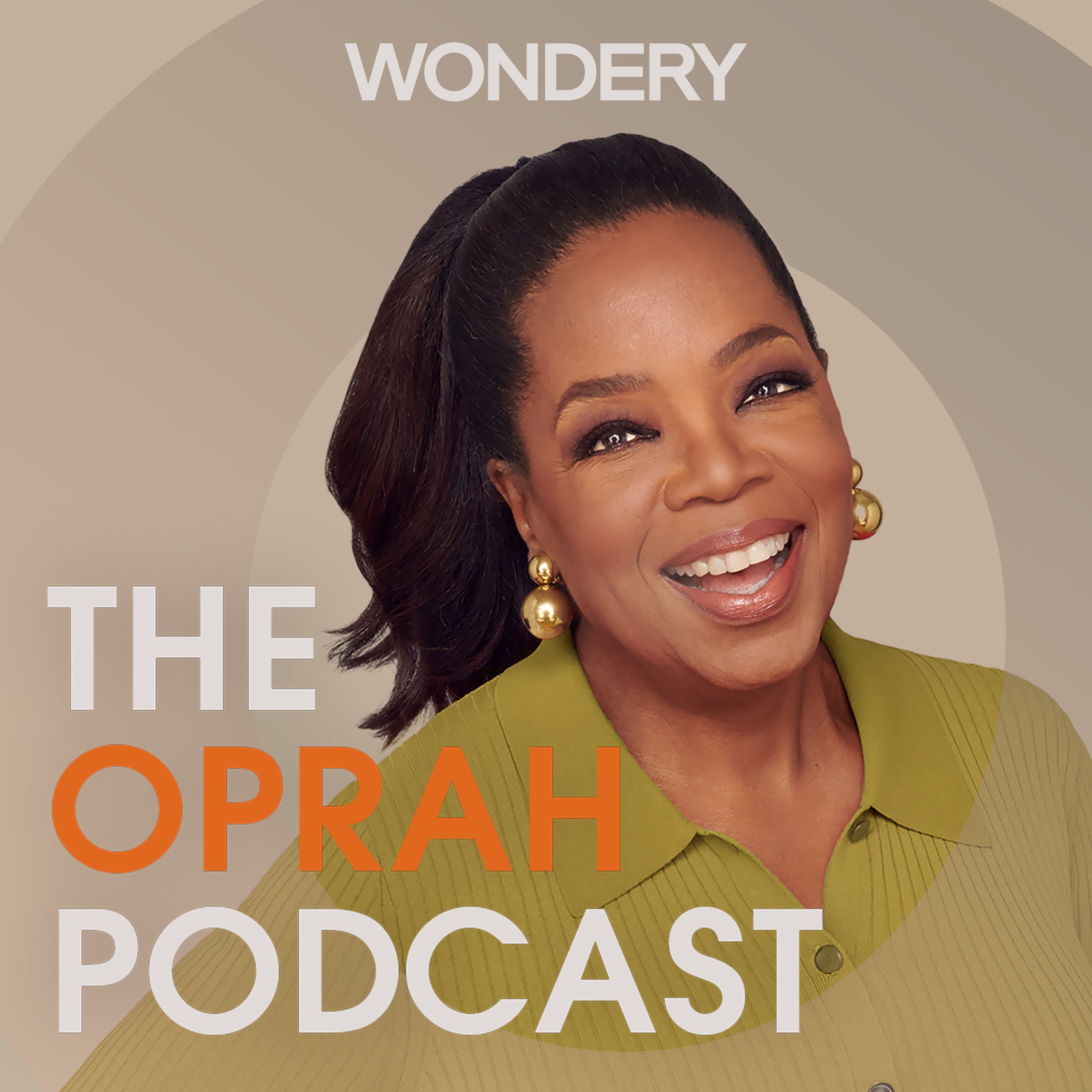
Amanda Rizkala’s debut novel *Hungered* offers a deeply human and emotionally resonant portrayal of a family navigating homelessness in the United States. The story centers on 12-year-old Sophia, whose life is upended when her parents separate and the family is forced into a car, losing their home amid economic hardship. Rizkala, drawing from her own childhood experiences, captures the emotional and sensory reality of hunger through Sophia’s vivid, childlike perspective—using imagery like shimmering soap bubbles and imagined gemstones to convey scarcity and hope. The narrative balances darkness with moments of humor, resilience, and everyday small joys, highlighting how families persist through isolation, prejudice, and the constant need to hide their circumstances. A key theme is the invisibility of homelessness—Sophia’s friends and teachers remain unaware of her family’s struggles, making the experience feel both alienating and deeply personal. The novel also explores identity, language, and belonging, particularly through Sophia’s mixed-race heritage and the pressures of code-switching. Rizkala’s intention is not to offer a neat resolution, but to present a realistic, unflinching portrayal of survival. The book challenges readers to recognize that even those who work hard and follow societal rules can fall through the cracks. Through personal and communal stories shared by listeners like Natalie and Amber, the novel becomes a powerful testament to the shared experience of economic vulnerability, the strength of human connection, and the need for empathy and systemic change. It serves as both a literary achievement and a compassionate call to action.
This episode of the Oprah Podcast is presented by our partner, GEICO.
I love the fact that your book, Hunger, illustrates that hardworking people who are trying and doing everything that we've been told to do to be a part of the American dream can end up with no shelter.
Exactly. Before any of this happened, we had a very comfortable, stable life, but we've still lost our housing, so it can really happen to anyone.
What do you want readers to know about your intention for the ending of the book?
Because I know a lot of people, including my friend Gail, is like, what? What kind of ending is that?
I know. I've heard that from so many people.
What kind of ending? I don't even understand that.
And I don't blame them at all.
Hello. Welcome. So glad you're joining me here on the Oprah Podcast.
Y'all know I've been saying it. It's the 30th anniversary of my book club.
And I have to say again, it's all because of you.
Because of you, phenomenal readers, who have come along for the journey.
I sit in the space of just pure gratitude that this little idea we had back in my office 30 years ago,
Alice McGee, my producer at the time, and I, has expanded to millions of readers and books sold around the world.
And now we arrive at my 125th. Book pick. Wow. It's called Hungered.
It is a poignant and beautifully told story that takes us inside the world of families who are unhoused.
Hungered is masterfully written in a way that allows for humor and compassion, also some hope and some joy,
within a family trying to just survive day to day.
That is not easy to do.
So it is my great pleasure to welcome debut novelist. And Steinbeck Fellows. Fellowship recipient, really.
Amanda Rizkala.
Amanda, thank you so much.
Thank you so much for having me.
First of all, you're so young, and I read you started writing Hungered, really, as a college assignment.
Yes.
When you were just 19.
Yes.
Yeah. Where did the idea come from?
So I started, like, as you said, started writing this book when I was a sophomore in college.
And I had this deadline I needed to meet, this short story assignment that was due.
And at the time, the writing advice that was floating around was a mix of, you know, write what you know. Write what you know.
And write those stories that only you can tell in a way that only you can tell it.
And so initially, I used this assignment of the short story as a way to make sense of this experience of housing insecurity that I experienced when I was a teenager.
But the more I studied fiction, the more I learned that storytelling actually requires more than that.
It has to be more than just a way to make sense of difficult things like a diary.
And so I decided to use my experience as a jumping off point to invent these characters and get at evoking what this experience felt like instead of beat for beat, you know, elucidating.
This happened and this happened and that.
Exactly.
So tell me, tell us what actually happened to you when you were a teenager.
You were unhoused for a time?
Yes.
When my parents decided to get to separate.
And my mom, brother, and I decided that it'd be best if we started a new chapter in our lives.
And so we decided to move away.
And this is around the time of the recession.
It was a few years after actually the recession.
And so finances were tight for a lot of people, including us.
And we ended up losing our housing.
And when that happened, we had to quickly learn how to rely on each other in ways that we could not have anticipated.
How old were you?
I was around 13 or so.
I was in eighth grade.
And your brother was?
He was two years younger than me.
Okay.
All right.
So at 13, when this happens, it's just life shattering, I would think, because you have to explain or deny and try to hide from your friends and the people at school about what's going on with you.
Right.
Yeah.
Right.
There's a sense that a lot of this experience felt.
And it's something I wanted to capture in the book as well, that there's this really big paradox to an experience like this.
The paradox being that in the book, this experience has completely upended and disrupted Sophia's life.
But it has done so in a way that is almost entirely invisible to the people around her.
Her friends at school have no idea that this is happening.
Her teachers don't know.
And the effect that has is it makes this really loud, disruptive experience.
It's actually Passover very quietly and, you know, feel all the more isolating and alienating because of that.
Okay.
So without giving away too much, would you set up the characters and the plot for us?
Yes.
So Hungered is a coming-of-age novel.
It is about a young girl named Sophia and her mom brother who live in a car with her after her mom decides to leave her dad.
And the story is about all of the things.
The family does and all the people they rely on to try to get back to the sense of normalcy.
And to me, the book is really about different kinds of safety.
There's physical safety, of course, but also the emotional safety we look for in our relationships with other people and all the things the family does to reachieve those types of safety.
Well, you know, one of the reasons I was drawn to it because I grew up for a great part of my life with a single mother.
Who had two other children.
And there was this fragility around whether or not you were going to always have what you needed.
We never had to be unhoused.
But this idea of trying to make ends meet, being in a world where you're around other kids, you know, because I had been sent to this school in the suburbs where everybody was a rich kid and I was a poor kid.
So being around other kids and trying. To not let them know where you've come from reminded me very much of the characters in your story who are trying to, you know, navigate this world where they don't want everybody to know that we're living out of our car.
We're living out of our car.
We're not alone in this journey called life.
As the official insurance partner of the podcast, the folks at GEICO understand that the way we move through life and who we move through it with matters.
And I know that life starts to move even faster as a new school year begins.
Fall routines get underway.
The calendar fills up.
Whether you're waiting in the school pickup line, loading up the car for a weekend getaway, taking a quiet drive home after a hard day or cheering on your son or daughter from the sidelines.
These moments remind us.
The road is not always a straight line.
GEICO is there with insurance designed to help keep you covered along the way because life happens and with the right support, we all just keep driving forward and that, dear listener, is everything.
So what do you want people to come away with understanding about people who are actually going through this kind of experience?
One of the things that comes to mind is how. Dehumanizing it can feel, you know, there's a sense that maybe you feel like a number or a statistic or a point on the graph in a way that doesn't actually account for the varied reasons someone might find themselves in this situation.
And another thing I want people to take away from this is that, you know, people might actually be closer to this kind of experience and they realize they can do everything right, but still be one person.
And I want people to take personal crisis or medical crisis away from not being able to afford it.
I love the fact that Sophia's mom was working and was working as a nurse.
And I just feel like your book, Hungered, and also Brian Goldstone's book, There's No Place for Us, which won the Pulitzer this year, illustrate that hardworking people who are trying and doing everything that we've been told to do to be a part of the American dream can end up with no shelter.
Exactly.
Yeah.
Right.
That was kind of my experience as well.
I mean, before any of this happened, we had a very comfortable, stable life living in a big house at the pool.
But we still, through a series of events, lost our housing.
So it can really happen to everyone, to anyone.
And that's what's really disturbing about this kind of thing.
And you write the book from 12-year-old Sophia's perspective as she comes of age.
I realize I really gravitate to coming of age stories.
Me too.
And you write, we go to the public library.
We're the soap in the bathroom, pumps out in pearly white droplets.
I hold them in my hand for a moment, the shimmering, slippery beads, and wonder, who could I trick?
If I could sunbake them into pearls and sell them, then maybe we could sleep on real beds tonight.
And, you know, one of the things I liked about that passage is that you capture the magical thinking of a child with passages like this.
why was it important for you to tell the story
from the point of view
of a child? You know, I didn't originally intend to tell the story from the perspective of a 12
year old. I really wanted to understand Sophia as a character and her voice and what mattered to her
before trying to reverse engineer her age and think of all of the logistics surrounding that,
like if she was at school or if she had a job and how many hours she'd be working at that job.
I think why the voice ended up skewing younger is because, as you mentioned, I was a lot closer
to Sophia's age when I started writing this book. And so I felt like I could more accurately
access the worldview of someone that age instead of trying to imagine what a mother in that
situation might be thinking and going through as she looked for the sense of stability for her
family. On the first page, you write, Mama says we eat with our eyes. Lava cake spilling out the
center. Quesadillas with bell peppers grilled flat inside. Third Street has everything our
eyes could want. Our eyelids are teeth that close shut. Each blink a bite, she says. I just thought
that was so powerful because when you can't actually afford to buy the food, you're looking
at the food and pretending to take it in with your eyes and each blink a bite. How are you able to
write so vividly about hunger? Have you been hungry? You know, when I thought about writing
this opening scene, I really wanted to capture how distorting it can feel to be asked to experience
food with the wrong set of senses, you know, visually instead of through taste and how
disorienting that can feel. It's like asking someone to hear with their nose, right? I think
when I had thought about how to approach the hunger in the book, I was also thinking about
all the imagery surrounding food. And something I wanted to do,
was not just provide these images of food as decoration or like ornamental to this in a way
that was ornamental to the story. I wanted every instance of hunger and every instance of food
to help translate Sophia's inner life and how she's thinking and what she's feeling.
There's another moment in the book where she thinks of these lollipops she could have had
and she didn't take them when she had the chance. And so it makes sense in that moment to think of
the candy as these gemstones, these amethysts and rubies.
Because in that moment, candy feels as precious as those gemstones. It feels like a luxury.
And what I appreciated about your telling of the story is that despite their circumstances,
they're still light moments, they're real moments of laughter and humor. Why was
humor such a vital part of the story? So although this book does tackle
heavy topics, I knew there had to be room for joy. There had to be places in the book where
things like friendship and self-discovery and triumph can take center stage. The reason being,
I wanted this book to capture the fullness of a life and the good and the bad that comes with it.
Because when my family and I went through this, we still laughed. There are things that happened
that were funny or ridiculous, and we still laughed at them. I think that humor can actually
be the source of release and relief for people who are going through difficult things because it's a
way of being able to point at something that feels wrong or unusual and kind of identify it as such
when people laugh at it. So that's something I had in mind when I approached those lighter moments
in the book. Maybe you're feeling it, too, with so many ways to reach each other. It can be easy
to mistake being reachable for being truly connected.
But I've learned that what many people are longing for is just to be heard, truly heard,
by another person. That's what we're trying to do here on the Oprah podcast. I see you contemplating,
and I can see that you're seeing yourself a different way after he said that. Making space
for real connection. Because every time we stop and actually listen to each other,
something shifts. Something opens. AT&T believes that, too. The right connection at the right
moment between the right people can change the course of a day, a relationship, and even
a whole life. So the next time you reach for your phone to call someone you love, know that AT&T is
with you, keeping that connection strong. Because AT&T is there when the connection matters. And
connecting changes everything.
So we have readers who are excited to ask you about your book. Natalie joins us from Texas. Natalie, my team
tells me you've been nodding all along this time. Tell us why and what really resonated with you
from Hungered. Yes, I have been nodding. My cat obviously is wanting to join the podcast as well.
But I relate to everything that you wrote in your book. It was very poignant in the sense of,
like you said just now, you were saying about how you still joke. You still have traditions.
You still have normal things that you're doing every day. But you're surviving this
abnormal situation, right? Are you speaking from experience here?
Absolutely. Absolutely. Ten years ago, I was homeless in L.A. with my mother, and we were
living out of our car. And the book not only took me back to that point, but it took me back to when
I was 12 years old, and we were house hopping and trying to figure out where to stay as well. So
I related to even your market scenes where they were trying to pass time and things like, you know,
when I was homeless, we would be at the libraries and the malls and showering at the gyms.
How old were you? How old were you? When I was showering at the gyms, I was early 20s. But when
I was 12, we were house hopping. So I've had homelessness experiences a few times throughout
my life. And as some would say, you did everything right, but you can't control circumstance, right? So
that's one of the things that I've learned. And I think it's important to also be able to relate to
the part in your book where you were talking about being multiracial. So I was dealing with Hispanic
and African-American culture growing up. And I love that you talked about how her friends were
asking her, what are you? Where are you? Like, who do you look like? And trying to place her. My
question for you was about that in particular. Like, how did you portray those feelings?
How did you portray the feelings of those others asking her what she was, trying to place her when
she's just this kid that's 12 years old, trying to figure herself out and going through what she's
going through? Right, right. Good question. Yes. I mean, growing up as a mixed race kid myself,
I really wanted Sophia to grapple with what it means to grow up in this multicultural family.
For me, I remember feeling the sense of anonymity growing up because people
couldn't quite tell where my parents were from based on looking at me, or they could tell where
like one half of my family is from, but not the other half. And so there was a lot of explaining
I felt like I had to do to just be legible to the people around me. So you were part Egyptian,
part Mexican. Yes. So that's something I absolutely felt it was appropriate for Sophia to grapple with.
I also tried to do that through the moments in the book where she's wrestling with the different languages that her family spoke.
There's a sense that a fluent command of a language can grant access to a community
in a way that a choppy command of that same language can complicate. Because when I was
growing up, I didn't speak Spanish or Arabic fluently, and I felt really self-conscious about
that, and I still do. And, you know, neither does Sophia, right? So I just wanted to explore how complicated
it can be to feel like you belong and how that feeling is actually shifting almost all of the time as a mixed race kid.
Natalie, did you also feel that sense of trying to keep this a secret from other
people, trying to not allow other people to know that you were going through this?
I think when I was younger, I wasn't really thinking about it. I wasn't thinking that I had to
hide it. It just was the day-to-day, and it was surviving and doing what mom said and, "Okay, we got
to go here this night, got to sleep at the storage this night, shower here, this and that." I wasn't, as a
younger person, thinking, "Oh, I got to hide that I didn't get to shower, or I got to hide that I,
you know, am not living anywhere." But as older, I guess that thought might have came across,
but not really, because I'm an open book, and I'd rather you know my story, and if I can help you
in some way, it affect you in a positive way rather than you think that I'm perfect, because no one
is. No one is. How did being unsheltered for you impact your school life, Natalie?
Um, when I was in like sixth, seventh grade, I mean, I had encounters with the teachers, like
they would get mad when I couldn't bring my flute to school, and I didn't tell them what was going
on, so I guess there I hid it a little bit, but um, I didn't, I didn't really let it affect me
too much in school. That was my happy place, being able to learn and be around friends and make people
laugh when I was going through a tough time made
me feel better. So
I can't say it affected my school too, too much.
Well, we appreciate you reading the book
and absolutely having it resonate in the way that it did.
I love the way fiction can do that for you
and that you were able to read it and not feel triggered by it,
having had experienced it, but actually relate to the story.
Right. It was awesome. Loved it.
Thank you so much. Thank you for reading.
Thank you, Natalie. Thank you.
Amber and Ashley are friends joining us from Massachusetts.
Welcome. Hi, guys.
Hi. Thanks for having us.
So Amber and I have been friends for 18 years
and we met at the school that we still currently work at.
So as educators, we really enjoyed reading this book.
We love sharing books that we read with our friends,
family, and our own kids and students.
We felt like this book resonated with us a lot
because we're always dealing with different families
that have different backgrounds and different housing situations.
Mm-hmm.
So for us, knowing that sometimes a classroom
is the safe place for your students means a lot to us,
but sometimes we don't even know that.
And so that was really important when we read this book.
We felt like it hit a spot for us.
We also really connected with this book as moms,
thinking of the strength that it takes to leave
and the guilt of having your children go through something so challenging.
And going back to. Yeah.
How we talked about the mom being a nurse.
We thought that was really interesting
because it just shows that it doesn't matter where you come from
or the job that you have.
It can still feel impossible to start over.
So our question to you was just asking more about the intention
of choosing that career for Sophia's mom
and if you had any other ideas that you maybe shot down
that you had for her occupation.
Mm-hmm.
That's a really good question.
The choice of a career was really important because, as you mentioned,
Nina is someone who works full-time in a skilled profession as a nurse
and it's still not enough to make ends meet.
It's not enough to cover her own expenses,
let alone pay for rent or things like school supplies for her kids
or Christmas presents, right?
Mm-hmm.
And so something I wanted to do there was just show that,
you know, the option of leaving is something that has a lot of considerations.
There's financial considerations to leaving an environment
that doesn't feel good, that doesn't feel safe,
and just all of the work it takes to uproot oneself and one's family
to trade what's familiar for something that's terrifying,
which is the unknown,
because I don't think Nina knew what would happen when she left home.
She just knew that she needed to leave, and that's what was on her mind.
But, you know. Amber and Ashley, when I read this book,
I thought I have been in situations, I'm sure,
you know, in a parking lot, you see a car, it's stuffed to its brim,
and realizing now, oh, that was probably somebody living out of their car
because that was all that they had in that moment.
Did it do the same for you in terms of, you know, your teaching
and, you know, perhaps maybe there are kids in your classroom also?
I mean, definitely.
It's always really important to keep that in mind.
Like Natalie mentioned, you know, school is supposed to be
a safe, joyful place, and we try to do that for our students.
That could be the only hot meal they're getting in the day.
It could be the only time they feel warm in the middle of winter.
So it's really important to us that we are there for those students.
Yeah, I know.
And for many kids, it's your happy place
because you didn't have anything else.
That's why teachers are the most important,
one of the most important forces.
One of the most important forces in the universe.
Absolutely.
Yeah, I just, I have loved teachers all my life,
and I thank you, Amber and Ashley,
for joining that group and using your lives
to really empower the lives of other children.
That's incredible.
Thank you.
Thank you both.
Thank you.
Thank you.
Nobody ever forgets their teachers,
especially now in every school.
Yes.
Thank you.
Sophia and her family, as we see in Hungert,
encounter prejudice like the scene where,
Nina pulls up to the school and she's mistaken for being the nanny.
Why was this theme of not belonging also important to you?
I think when you feel like you don't belong in one way,
so when your sense of housing is in flux and you don't have a place
that you feel like you belong to,
then other forms of belonging start to feel really important.
You want to feel like you belong with your community,
with your classmates or your coworkers.
So,
these moments of prejudice in the book to me highlight
how far away and distant Nina and her family feel
from the people around her.
These are people who just want a sense of belonging,
but it's made complicated when Sophia's teacher
or Sophia's vice principal asks her not to speak Spanish at recess anymore,
or when girls in her class make these offhand remarks about skin color,
things that they might think are harmless,
but really can stick with people who hear that.
So, I wanted the idea of belonging to be something that wasn't just confined to a place, right?
Like you feel like you belong to your neighborhood and community, but also how you belong socially,
how you belong culturally to the people around you.
I love it.
On page 105, you say, "Mama puts her proper voice around parents from school using words like definitely and absolutely and surely."
I look at her weirdly, and I'm like, "What's wrong with her?"
when she does this, part of me wondering if I should be doing the same.
What has been your experience with code switching, as we call it?
I've watched people around me change how they speak.
They use either words that are more sophisticated or just have more syllables in them to feel
like they can belong socially and professionally in these different environments.
It's something I learned when I was growing up as a kid, just by watching the adults in
my life who maybe sometimes felt like outsiders want to feel like insiders and use language
as a way to help facilitate that.
I love this passage on 214.
Rafa and I swing open the bathroom door.
We twist the knob of the shower until water comes out cold, cold, then hot.
Royal melon goes on the rim of the tub in a caddy.
I turn on the faucet in the bathroom sink, clear water.
We go to the kitchen where mama is standing in front of the stove.
Dull, switching the oven light on and off.
It works, she says, nodding, hands at her hips.
And I have to say, it's such a classic scene of just being in the kitchen and your mom
and what that means to now, like, have that experience.
Did you have a similar experience in your own life?
I think when my family and I were going through this, I had imagined what it would feel like
to have a place that was entirely our own again.
And I think I imagined it so often that it felt like the story I was telling myself.
So then when it actually came time to experience it again, it felt like I was, you know,
experiencing something that I had seen on TV, these family dinners on, like, Disney Channel
or Nickelodeon, this, like, family of three or four just sitting around a table.
And you just, it felt like being in a movie.
It did.
It did, I think because of how surreal it felt to experience that again.
You've been on the street living in a car.
Mm-hmm.
Washing your hands in the bathrooms and gyms and all the things around, going into, you know,
restaurants and stuff to use their bathrooms.
And now you have your own home.
Right.
It feels like coming home to yourself.
What's your writing process like?
My writing process is not as glamorous as I would like it to be.
It's really simple.
I just, I write best in the mornings when my mind is at its clearest.
And I try to have a glass of water next to me or some tea.
A glass of water, some tea?
Yes.
And other than that, I just try to make sure I read a lot before I write because there's something
about stepping into a world another writer has created and seeing them juggle things like dialogue
and action and plot in a way that makes it easier for me to try to do the same thing when I sit
down to write.
Okay.
So what is it that you read that's, who are the writers that stimulate you?
I love Jhumpa Lahiri.
I love Min Jin Lee.
I love Salvador Placencia, who just wrote this beautiful novel.
It's probably my favorite book at the moment.
It's called The People of Paper.
Wow.
And what were you reading coming up as a child?
Did you like to read?
I love to read.
Mostly, I think I mostly read nonfiction, the National Geographic.
I loved anything about marine biology and the ocean.
Wow.
Wow.
So what did it feel like when the book was finally released?
At least to the world?
What has this response been like?
It's been surreal to see the book on shelves because it makes me think of all of the other
forms the book has taken in the eight years it took to go from the first draft to the
final draft and all the different lives the book has lived.
You know, it wasn't that long ago that "Hungered" was just a file on my computer, a word document,
or just crumpled papers around the floor of my apartment.
So to hold the book, to see the book.
when friends spot it at their local bookstore,
and send me a picture, it's something that I think never gets old.
And in terms of the reception, that's really meant a lot to me
to see how my family and friends have really gone out of their way
to support this book.
My in-laws, for example, ordered so many copies
that the book shipped in a retailer box, like a crate of books,
which was just so nice of them to do.
And to see that and the way other friends have supported this book
and the readers who've reached out after they've read it,
or have tagged me in posts, has really made what's already
a meaningful experience even more incredibly meaningful.
Without giving anything away, what do you want readers to know
about your intention for the ending of the book?
I know, I've heard that from so many people.
What kind of ending? I wanted the ending to feel honest and realistic.
I respect these characters too much to give them
an easy, redemptive ending, because you can do everything right
and still come up short.
I wanted to ask the reader to sit with the family
in this moment of precarity and all of the anger
and frustration and anxiety that comes with experiencing that.
Wow. Well, you did. We did.
Thank you, Amanda Rizcala.
It's a provocative and thoughtful novel.
My 125th book club selection.
And thank you to our readers, Natalie, Amber, and Ashley,
for sharing your stories and your questions.
And I'll see you next time. Go well.
And thank you to our friends at GEICO for presenting today's episode.
Amanda Rizcala's revelatory debut novel, Hungered,
shines a light on the lived experience of thousands of unhoused families
in our country.
And you can buy your own copy of this book,
this beautifully crafted book, by scanning the QR code
you can see on the screen right now.
Our listeners tell us that the podcast is resonating with you
and is serving as a bright spot in your day.
That means a lot to me.
So here's the thing.
I would really appreciate it if you like and subscribe
to the Oprah Podcast on YouTube or wherever you podcast.
It's just a quick tap of the subscribe button,
and that way you won't miss an episode in your queue.
You don't have to pay.
You don't have to pay anything.
I know subscribe usually means you're paying something,
but this time it means you just are notified
when there's something new.
There are many more to come that we're excited about,
so thank you for watching and listening.
Podcast Summary
Key Points:
Amanda Rizkala’s novel *Hungered* is a poignant coming-of-age story that follows a 12-year-old girl, Sophia, and her mother and brother as they live in a car after losing their home due to financial instability.
The book reveals how housing insecurity can strike even hardworking families who follow the rules of the American dream, highlighting the dehumanizing and invisible nature of homelessness.
Written from Sophia’s young perspective, the narrative captures both the emotional and sensory realities of hunger, using vivid, imaginative details to convey the disorientation of deprivation.
Humor and moments of joy are essential to the story, reflecting the resilience and everyday resilience of unhoused families in maintaining a sense of normalcy and connection.
The novel explores themes of identity, belonging, and code-switching, especially through Sophia’s mixed-race background and her family’s struggles with language and cultural misrepresentation.
The ending is intentionally realistic and honest, avoiding redemption to reflect the complex, ongoing nature of poverty and instability.
The story emphasizes how schools and communities can become sites of both safety and invisibility, underscoring the need for empathy and awareness among educators and caregivers.
Through personal and shared experiences, readers connect with the book as a mirror of their own struggles, affirming that homelessness is not just a statistic but a lived, human reality.
Summary:
Amanda Rizkala’s debut novel *Hungered* offers a deeply human and emotionally resonant portrayal of a family navigating homelessness in the United States. The story centers on 12-year-old Sophia, whose life is upended when her parents separate and the family is forced into a car, losing their home amid economic hardship. Rizkala, drawing from her own childhood experiences, captures the emotional and sensory reality of hunger through Sophia’s vivid, childlike perspective—using imagery like shimmering soap bubbles and imagined gemstones to convey scarcity and hope.
The narrative balances darkness with moments of humor, resilience, and everyday small joys, highlighting how families persist through isolation, prejudice, and the constant need to hide their circumstances. A key theme is the invisibility of homelessness—Sophia’s friends and teachers remain unaware of her family’s struggles, making the experience feel both alienating and deeply personal. The novel also explores identity, language, and belonging, particularly through Sophia’s mixed-race heritage and the pressures of code-switching.
Rizkala’s intention is not to offer a neat resolution, but to present a realistic, unflinching portrayal of survival. The book challenges readers to recognize that even those who work hard and follow societal rules can fall through the cracks. Through personal and communal stories shared by listeners like Natalie and Amber, the novel becomes a powerful testament to the shared experience of economic vulnerability, the strength of human connection, and the need for empathy and systemic change.
It serves as both a literary achievement and a compassionate call to action.
FAQs
The novel explores the experience of unhoused families, focusing on themes of safety, belonging, and resilience. It highlights how physical and emotional instability affect daily life, while also showing moments of humor, hope, and human connection.
Amanda Rizkala chose a young perspective to authentically capture the world view of a child navigating hardship. The child’s voice reflects the innocence, imagination, and emotional complexity of growing up in unstable circumstances.
The book shows how families live in constant survival mode, relying on community, humor, and small acts of hope. It emphasizes that even hardworking people can lose housing, challenging the belief that financial success guarantees stability.
Humor is vital to the story as it provides relief from hardship and helps the characters maintain a sense of normalcy. It also reflects how people cope with difficult situations by finding joy in everyday moments.
The novel explores how mixed-race children and families navigate identity and belonging. Moments of code-switching reflect the emotional stress of trying to fit in, especially when faced with prejudice or misunderstanding.
Rizkala wanted the ending to feel honest and realistic, not redemptive. She avoids offering a simple solution, instead inviting readers to sit with the family’s ongoing struggles, frustration, and uncertainty.
Chat with AI
Loading...
Pro features
Go deeper with this episode
Unlock creator-grade tools that turn any transcript into show notes and subtitle files.
 PodcastTranscript AI