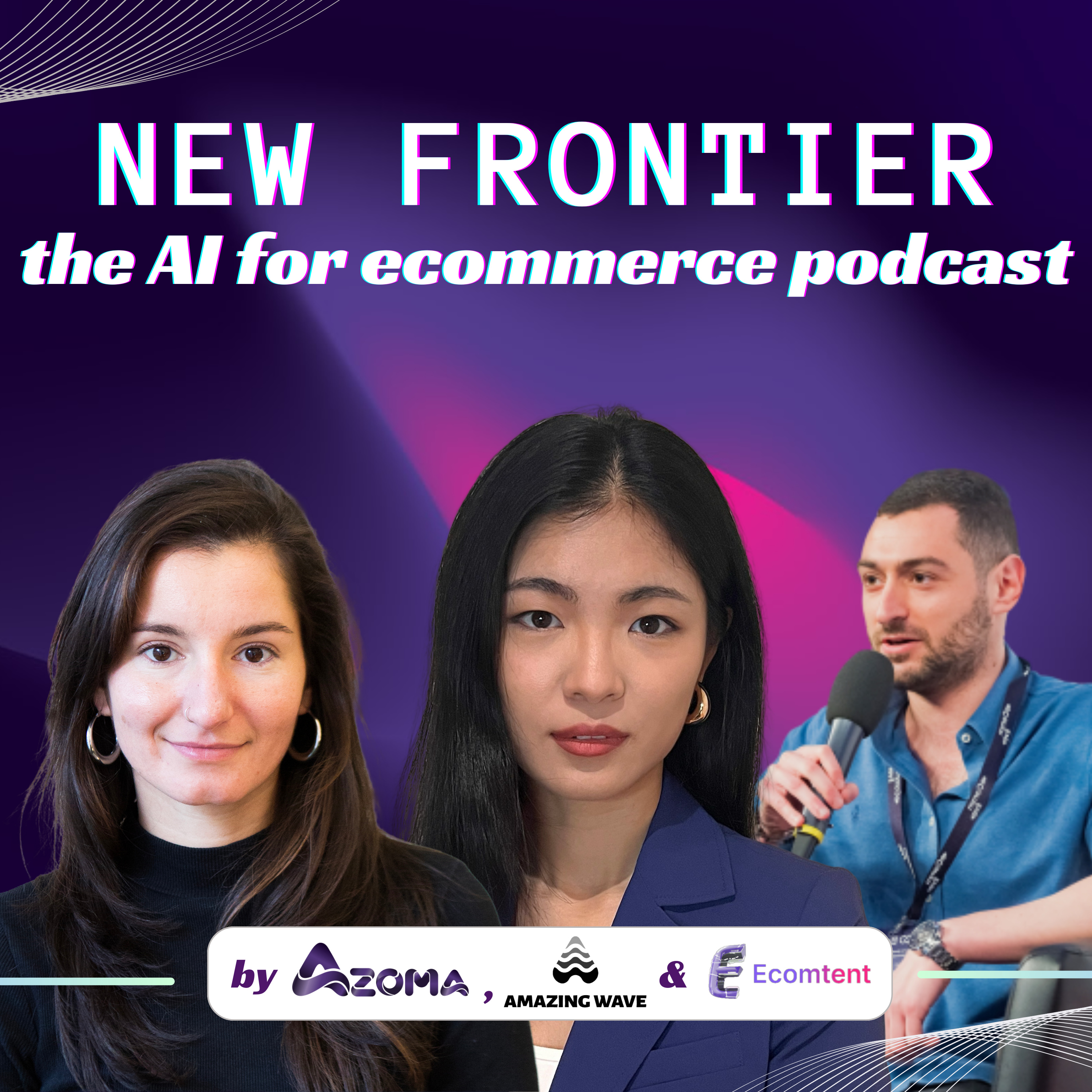
Alibaba’s AI Sourcing Agent Accio, and the Future of Agentic Commerce, with Ziwei Chen
from The New Frontier: The Agentic Commerce & Answer Engine Optimization podcast
37m 21s
The conversation begins with a discussion on the contrasting technological landscapes of China and the US. The guest, based in both regions, observes that while the US often leads in foundational innovations like large language models, China excels in aggressively applying these technologies across diverse daily scenarios, such as using facial recognition for campus access, payments, and vending machines. The integration of social tools like group chats into commerce is also more pervasive in China. The dialogue then shifts to AI's transformative impact on procurement. The guest explains that AI adds value by either automating manual tasks ("do it for me") or acting as a guide to uncover unknown opportunities ("teach me more"). She illustrates this with Axi, an AI-powered sourcing platform that assists users—from Amazon sellers to procurement professionals—by allowing them to search for products and suppliers using prompts or images, generating comprehensive business reports, and facilitating supplier communication. The tool aims to streamline sourcing while educating users on market trends and best practices.
Hello and welcome to the new frontier. It's great to have Joe back. Joe, I think you've been on holiday for the last few weeks. So how's that been? It's been wonderful. Everybody needs some holiday sometimes and I definitely think. Fair enough, you weren't very hard. So it's good to have you back. You've been busy as well. She want to share anything about this or not. Oh yeah, we can share that you may have seen the LinkedIn posts or the press. Yeah, we raised a four million round at a zoo, which is very exciting to continue to partner with the world leading brands to help them get recommended in AI. So super super exciting and a means where double triple quadrupling down on all the efforts we're doing. So yeah, very excited time and I'll be on holiday in two weeks. We go to rest and recharge as well. But yeah, today we have a really exciting guest. We have Zewa Chen, who is a product marketing lead at Axio, Alibaba. And I hope I haven't butchered any of those. We'll go for it. Rosue has had years of marketing experience across a full AI full stack from processes and models to the relevant tools and applications. She's currently product marketing lead at Axio and AI sourcing agent that makes sourcing simpler smarter and more efficient for product based businesses and human professionals. Welcome. Hello, hi, Matt. Hi, Joe. Thank you so much for having me today. Thank you for coming. So before we start recording, you were just saying how you're born in China, but you've been based in sunny view, California, and you haven't been back for four years. But now you're back in Hong Jo in the Alibaba HQ. So how is China changing the last four years since you've been on the ground? Yeah, it has definitely changed a lot. I think if I have to summarize that shift in mentality, I would say there's a lot of the foundational technology that is not new. Like I've used that say, we the facial skin and everything. But because of the population, the amount of the scale of how people are adopting those tools and those kind of technologies. I think I get to experience triple or maybe quadruple the density of the same technology used across your experience. I think two things that really stood out to me, the first is facial skin. We also have in the US as well. But I think it really stood out to me how everything, all the transactions, all of the engagement or opportunities that you may have during your day can get processed through the same experience. For example, on our campus, you scan your face to get in the skin your face into the campus into the building, you pay for your meals through your face and even for vending machines and you unlock the vending machine just by scanning your face and then you take whatever and then you get charged. So I think it's just same technology. But I use 10 times in 10 different use cases in the same day, which I think really helped me receive the potential of the foundation of technology. That's one thing interesting. The other thing is more about the connection of community. So what we're talking about is like social group chats. So you know about we chat or we have lots of different tools where it can imagine that a lot of your purchasing experience, including a mom and pop shop, including a restaurant at the corner that you get lots of discounts by joining their group chat. And then learning about what are the latest discounts, which sounds silly at first of all, why do I have to join a group just for barbecue place around the corner, right. But then because it's just in your own your home, you always learn about what's new in the same conversation and you paste through it, you get the discounts, you learn about what's new. So that again, it's the same concept of a group chat, but it's integrated everywhere in your experience and again helps you think about what could be even more possible with all the new things that we're experiencing. So every time I go back every like three or four years, I see the same technology, the same concepts, use across 10 different areas. I feel like, wow, I never thought about there could be so much more use cases of the same application. That's so fascinating. I actually can't even imagine the level of connection and digitalization that is happening that's really fascinating. And yes, from me, it's really interesting because you obviously like you have so many like touch points in China, but you are based in the US, your base like close to the makeup technologies and friend. And they're obviously like everything is bubbling with AI and all of that. So how like how would you compare the differences in consumer experience and just generally like how this technology touches like everything in like from a US base point of view and then versus let's say China. Yeah, that's a great question. I think I might take a slightly different perspective there. I think just from a taxi perspective, we're really stood up to me and also chat with our colleagues and friends about that is I think the strongest, the most impressive innovation that we can remember from the US typically focus on a foundational level. We think about the initial round of LLM's of all the models that foundational technology and approach. I think in many ways still US is leading when it comes to those the first waves. But then there are just so many of the second wave of innovation of taking that foundational innovation to the application level and then multiply by a hundred times a thousand times. I think all of these type of diversified application, you see a lot more aggressively with lots of competition in the world of China. And then so lots of the impressive at least opportunities or innovation that I have seen in conversation with my colleagues and friend groups are usually at the application level. So I go back to my earlier experience, but the same technology, but then really amplified through all different ways. I think that has been a key difference that I have observed across the ocean. Yeah, as you were talking us, writing down my question, I was going to ask you, who do you think is winning the AI race, but you answered that in a way, which is really interesting. So I'm going to change my question, which is what applications do you feel the West should copy from China. Oh, that's a good question. I think, let me think. For example, this is a really old example at this point, but when we think about mobile payment, right, I wouldn't say the I wouldn't talk about the words originated from, but I definitely would say that the massive adoption of mobile payment and now you could not facial like scanning all of that really started a first wave of massive adoption in China. And that you're gradually seeing it here more often in the US. So I think that would be a good example of the same technology and that really got adopted across the board, seeing all the possibilities. And then of like, we are seeing that maybe another example, which is still on its way. I would say it's the live stream shopping. So that has been crazy already for multiple years in China, even till now. But then I definitely think the waves started in China, where people are watching the live screens. And I'm purchasing through that. And now we're seeing a second wave on one of the US consumers more aggressively. Absolutely. And go on. I just curious to me, life's shopping is like for the younger generation. Have you purchased and live stream shopping like I don't know how you are, but I've to work at the same age. Is it our generation as well? Is it more, more the younger generation that are doing it? You know what? I wish I have some data on that, but I have some hypothesis because I do feel like the reef. If we think about why life's from shopping makes sense. I think it has a lot to do with lifestyle. Right. So who are the people who are seeking that type of entertainment on top of a shopping experience. And I would say that maybe I first thought we would say that all from adoption perspective, trying new technology or new ways of shopping. It will be the younger generation. But then if you think about who are the next wave of population who has that time or that interest in a different form of entertainment of connection of learning. I actually do think that there are a lot more kind of that slightly older generation. Maybe your parents and your like uncle's and aunties are these people doing it in China. Find live stream. Yeah. Yeah. Okay. I think like you might be too young to remember, but live stream. Thing is nothing new is just a concept that was taken from TV and then put into like social media. I remember when I was when I was a kid, my my granny is always used to love to switch on a live shopping channel. And it was exactly the same concept. So I think the actual idea of it will be appealing to Like all generations is just now it's this sort of a different. Yeah, different media. The first screen. Exactly. All right. They let the old. Yeah, as you say that it's always a task and the apprentice where they go and do the light stream shopping. It's always tonnison like 60, 70, 80 year olds. Do you have any more questions on this kind of like fascinating topic of us China. We can move on to or I have some move on to the main meat of the podcast. Yeah, no, I think we should because I think it actually like flows really nicely because we are talking about innovation. We're talking about the technology that is completely disrupting the way we do things. And I would say that Alibaba like really disrupted like e-commerce. Essentially it was the foundation of how like most Amazon sellers across the world started actually finding products and Essentially selling on Amazon. And so I think what's really interesting is that now we are moving in
into an AI-powered version of this. And so I'm really interested to understand how does AI play a role in procurement and how is it basically transforming that essentially experience with so many sellers when through in the last, I don't know, 15, 20 years. So yeah. - Yeah, absolutely. I think to answer your question about what's the role or the opportunity for AI in the world of procurement? I would take a step back, just talk about I think at the application level, like AI-native application, generally speaking, I have a framework that I see two types or two categories of values that AI can bring, which I summarize as do it for me and teach me more. So the do it for me means that you know exactly what is the end result, you know exactly how to get there, what are the things that you need to do, and all you want is just a tool that can do it for you. So you can get freed up and do something else. And this is great for AI in the Senate. You tell the tool what you want, the process. It can follow you by the intern, right? But then on the other hand, when it comes to teaching me more, it typically happens when there's this phrase of you don't know what you don't know, right? So if there are things that you never knew, the right question to ask, you never thought about something to look into, then based on all of the research, the database and knowledge that the tool already has, it can then bring you that insights of, oh, have you thought about this and this? And in this case, AI kind of takes on a different role as a teacher. So for both of these are actually super relevant in the world of procurement or sourcing. So if you think about do it for me, there's lots of paths that are repetitive, that is manual, right? So think about you are looking for something but you have specific requirements when it comes to be to be sourcing, right? You have lots of different requirements. Now you have to apply the same set of rules to thousands of suppliers or thousands of products. So that's the process that AI can really do for you of automating this process. And then on the other hand, not only just from new sellers, it could be an even if you're an experienced seller, you might always be getting into a new category. Let's say you're expanding to a new line, you're opening a new business. So there's always cases where you might be getting into a new prototype, a new type of audience, a new market and there are things that you completely just missed out on without even knowing and those are the cases where the AI tools can be a teacher for you of hey, here are the five additional things that you need to think about or hey, have you thought about this new material that has been emerging in the market? So I would say these two types of roles has been very critical in driving the results that our end users as business entrepreneurs or business owners can really benefit from by adopting AI across their procurement process. - Cool, and funnily on for that. Do you wanna just talk about these people, how they're using it and any impact they've seen? - Yes, absolutely. So I think when it comes to, so we develop access to exactly with that vision in mind that both we both want to automate some of the manual processes for people that increase their efficiency and we also want to open up new doors for them, teach them, guide them along the way. And then so it has been launched for, we just have our one year anniversary and just looking back at the data for the past year, what we have seen in terms of core user personas are three groups. The first group we can generally summarize as product-based businesses. It can be online, such as on Amazon, you have a Shopify store. It can be offline, such as a Brigham Water Store, Mom and Pop Shop. And the second group will be what we call procurement professionals. It typically takes place at the merchandise team, procurement team. It can be at a really large retailer or manufacturer. So as long as there's a need for sourcing either materials or tools and those people also has frequent ongoing regular need for sourcing for new materials, et cetera. That's the second group of procurement professionals. And the very last group, we can generally categorize them as consultants. And they can be sourcing agents as most common type. And also it can be for designers. Let's say it could be a packet in designer when they are pitching their new ideas to their client. It's always a value ad for them to validate their ideas and provide the next steps for their clients by adding on top of that sourcing or kind of that manufacturing process. So these are the three groups. But we have seen that really stood out among all of the users for Axial. And then to answer your other question just about how these people are using the tool. I would say that generally speaking, when I constantly use cases for Axial, we can also put into a few buckets. So when we first launched Axial last year around November, so just over a year ago, we really focused on the core brand and butter for sourcing, which is finding products and suppliers. And we have been iterating along the way of making sure that there's more extensive data of how to make the assessment. There could be comparisons that you can communicate with the suppliers. So all of those, the goals would be for you to base out your needs. It can be a complex set of requirements across the material, the location, the experience, maybe the MLQ, right? So all of these limitations were requirements and garages we might have. And then accurately match it with the right audience. So lots of times people get asked, what's unique about Axial? It's really that accurate understanding of we understand that category. We understand exactly what you're looking for and we can match you correctly with the right items. There was an example about a ski strap. And then so they were looking for this for like almost three years. The user was like a motorcycle shop in Netherlands. And he has been really struggling to find it because all the other platforms will give back, let's say the Apple Watch strap or something similar, but not the same, right? And then what he just looked around Axial within just one prompt. He was able to pinpoint on the right item, which he hadn't been able to do for hours. So that's the first bucket just looking the bread and butter of looking for products and suppliers. And then what we have also been doing for the past year is to expand beyond that. And the insight there is that knock all the pine people know exactly what they're looking for, right? So usually the premise for you to know what you're looking for, you figure out the material, you figure out the design. But we're not always there. We're even you're so close, but you might be missing out on stuff, right? So what we have been doing is to add additional capabilities before that source, in part, including things such as the research. It could be as early as market research, business research, competitor research. And then into all of the research related to product development. Let's say what's the right category to look into what are the trend cut selling products that could bring a better profit margin into the product engineering side. So we have also included not only the research but the database, the research, but also image generation. So all of these things to get you closer to the point where you feel comfortable about what you are looking for. So that kind of echoes back into the earlier the values for AI tools of the first stage about teaching me more, guiding me along the way. So I have more clarity on what to sell. And then once I get there, then do it for me of looking for who can make this. - Amazing. And actually, let's take one step back because I would really love to understand how Axi actually works. Like basically, if I am, let's say, just starting my journey and I'm trying to figure out how to use the tool, how does it work, where should basically sellers start looking at? - Yeah. So when you go on the site, so for Axi is available both on desktop and on the app for iOS and for Android as well. So when you go on the site, you see a very intuitive kind of search box. And then you can search both with natural language, powered by all of the various, probably the state of the art models and also with images. And also we're exploring more multimodal kind of searches such as voice files that it's upcoming. So this can be an opportunity for you to talk about all of the things you might have in your mind. It can be something like, I'm thinking about starting a new brand and this is a type of thing I'm looking for where maybe I saw some cool products on Pinterest or on Etsy that I wanna see if I can do something similar but I need help in finding the right design, the right supplier, where teach me more about is this the right opportunity? So all of these you can input into the search box. And then what Axi is gonna do is to create a plan for you, just to validate that Axi understood the assignment. So all of these you can tap along the way. And then you can skip that on once maybe in a few minutes you get a comprehensive report, almost like a business plan. And hey, here are the few things that you asked for and also here are the additional things that you didn't ask for but based on our knowledge, based on the reason that you should really care about. Maybe it's compliance, maybe it's new materials, maybe it's things to caution when you are engaging with the manufacturers. And then you will have a chance to engage with the report or saying, oh, I have some follow up questions or iterate on this idea. I like this idea specifically, let's deep dive where you can do comparisons. And then at the end, once you are able to figure out a supplier, then you can communicate with those suppliers within the app or the interface itself. So then you can really bring those ideas to life. And along the way, so Axi will get it, it does all the things by following your rules and your guidance, but also it's adding in those piece meals.
of best practices that you can then incorporate into your workflow. So we often have this debate and I'm actually having this debate this morning about agents and everyone bands around the word agents and I believe the you guys use this word as well a sorting agent. So my definition of an agent is an AI that can take multi-step reasoning. And as I understand Axio, it's basically chat GPT on top of Alibaba that will help and guide you source products and that kind of stuff. So just making, you know, what something that I was saying this morning was that I don't feel that agents are really here yet. I don't know if AI can take multi-step reasoning. But it seems this is pretty pretty close. So what is your like case of yes, like this is an AI agent and we it should be labeled as an agent because I think it's fair to make one in this instance. And actually there was Axio went through a repositioning a few months ago from a sourcing engine to a sourcing agent and it kind of very similar rationale as Maxi, you just mentioned about that multi-step reasoning. So again in the past, the rationale where the initial idea came from that in a initial V1 of Axio, you can do a lot of different things separately. You can do like market research, you can do like product research, you can do supplier, but they're all separated. So they start in a one cohesive workflow and you don't know what else you have missed. So then once we enhanced it, we're repositioned with all new capabilities. The core thing that really enabled Axio to become an agent would be that multi-step reasoning. Okay, here's an idea you might have, but to answer that question, what really help you achieve that goal as opposed to just answering what you explicitly said, then now Axio can say, okay, here's the plan. I'm going to do a B and C. I'm going to look for all of these sources. I'm going to do these type of analysis. And then I'm going to process them and give you the output, right? So I think the agent part also had that activation that in that instead of just giving you some ideas or just some results. Let me turn those insights into potential new product ideas. Let me turn those ideas that are in words that could be mouthful into real images. So then you can communicate that with your internal stakeholders or do 80 testing with your potential audiences, right? And then in addition to that, to really bring your ideas to life, then bring it really to your shop. Let me find you the suppliers who can really do that. And let me give you a summary where highlights of how many requirements each of these fulfills. And that also is the it's guiding division for Axio moving down the line. That on the one hand, we want to have more data, more cohesive like global sources to empower that insight and empower your sourcing shortlist process. And on the other hand, ensuring that apps can do more of that in depth analysis for you, as opposed to waiting for you to tell Axio or tell the tools of this is how you run the analysis. So I would say just to sum up is that multi-step reasoning of how I'm going to approach it, getting it done. And then thinking ahead of what else you might need in your next step, so I can predict that and give the results in advance. That's really interesting. And actually I have also a question around obviously how you based your recommendations and what your suppliers are essentially required to provide, because obviously large language models like work of data and like the answers are only going to be as good as the data they have. Now when it comes to let's say the manufacturers in your directory, like what are the requirements, specifications that you enforce in order for that data to be accurate, and to be actually useful. And do you use just the sort of the text information that they provide on their profiles, or do you also, does the large language model also take in consideration their images? So I have a few thoughts here. So the first thing is that, and that actually relates one of the key updates that we are launching very soon in the upcoming week. So initially the core and the database where the suppliers are based on the alibaba.com network. So the network itself has its own processes such as verify suppliers based on their certificates, which can take place in both text and image, and also their factory photos and all of that. But then what we are launching very soon is something we call multi-platform sourcing. It means that now in addition to alibaba.com, we're also sourcing products from aliexpress, from 1688 to the global sites such as like Etsy, Amazon, etc. And also some of the European or local marketplaces for suppliers. And then lots of that data does require kind of the sources of that. But what Axio does is to layer on top of the reasoning assessment of, okay, here's the same supplier across different channels. So let me cross check and validate that. And also let me layer on top of the additional analysis that you can do for a double click. Because most often, the suppliers might have, let's say, their own website alibaba.com on their independent store. So all of these cross channel or cross stores, this information gets synthesized by Axio. So then what you are getting is a processed information that you can trust. And then you will still have the opportunity to communicate with the supplier for additional validation. But definitely because of the the tools of automating this process, we definitely have seen a significant enhancement when it comes to efficiency. For example, we have a procurement team from a really major toy manufacturer in Europe. And then he mentioned that in the past, he might have to fly to different countries five to six times per year just to cut through the noise. Like I want to be there in person to validate that. But he has become a power user of Axio. And now he has cut his international trouble into only one or two times per year, at least for this year, because he was able to do that short list, do the verification and clean up just at home, where he is on office and only fast track to the qualified suppliers at the last step. And then just go once or twice a year. So really saving that cost when both in terms of time and the resource for the business to get to the right supplier. That's very cool. Are there any other kind of big picture, exciting AI themed roadmap items that you can share? Yeah, I think there's a very recent one, which is for the latest in-emissioneration model for Nana Banana Pro. So we have also incorporated that to further enhance our image generation capability. And that's the interesting part is that we have seen there's a huge interest or value when I come to image generation and editing within the sourcing process. I briefly mentioned earlier is that throughout the process, having the images to visualize the ideas and to iterate on those ideas can really help with smooth out the process without you having to go to a different platform or working with other professionals. It's not replacing them, but it's getting you close to those ideas. For example, in the initial phase, you get some ideas. I think the other day we would look for something like let's say I want to create some corgi themed mugs where any sort of combination we also have an example about those fluffy, ugly slippers that have the monster theme. So you might have those interesting ideas, but then if you're just describing it, it doesn't get your team as excited, right? But then what you can do now with Axio is your tell Axio your ideas and you ask Axio a layer on top of what else is trending in the market and then just turn them directly into high quality images so you can communicate those concepts. So we have seen that for the product itself. We have seen that for packaging. We have seen that for subscription box or gift box of hey here are a few items. Show me how they can look like as a gift set. So all of these things really helps you become a semi designer and the goal is for you to communicate those ideas better with your stakeholders and also with your maybe users and then you can iterate on them. Oh I thought that green goes really well with this type of material, but the examples are not as well. So you are that iterating just really quickly in minutes to build on top of that and then throughout the process when you are feel better about your idea and then you can continue to build on top of create let's say photo shoots, right? So all of these materials were marketing assets. So all of these use cases that we have seen so far help us realize the continuous value of having that high quality image generation and editing capabilities. So we have been super excited to have that capability that now is paired up with the knowledge of Axio because you can generate images but if it doesn't make sense, it doesn't fulfill that procurement or product based businesses requirements that you cannot use it. So you really need to make sure that you are layer on top of Axio understanding what you want, what you need, what your industry expectations are and then bring it to life with the image the model capabilities as well. So that has been something really exciting that our users have been playing with trying out new things that I think is exciting to share. And Nate, do you share these images with the suppliers as a user and say I want to build these slickers in this funky ugly way? Yes, and then so we work the examples that we have
seeing. So the first is definitely communicating directly with the supplier. So it's easier to communicate, right? It's over showing your ideas. That's one use case. Another one is that lots of times now we have seen from product-based businesses is that instead of if one the initial pilot works out well, you want variations. So you can use the same existing design. Give me like new colors, new variations of a design, new patterns. That's another thing. And then again, they can show directly to the existing manufacturers. And also sometimes maybe your product is a bit more technical, where it does require a professional designer. But now you can show those examples to the designers for a much more efficient and effective collaboration. And the very last one that is also something that we are diving deep into for our next iteration is for A/B testing, right? So you have some ideas, you don't know which one is going to work, you don't know how the market is going to react to it, and now instead of describing to it on a survey, you can just show it and then use various tools on site to say, okay, here are the two examples we're trying to prefer. So now it's really like empowering you to get closer to the validation process as well. Really cool. Actually, I'm really interested. It's a slightly off topic question, but it's connected from us. So obviously you guys are aying the shit out of it, which is great. The question is, have you seen the same trend for the actual manufacturers? Are they actually adopting AI within their processes, within like how they concept, within how they manufacture? What is the actual speed of development from a manufacturing process? This is one of Jörg's favorite questions. You love this question. I just find it really interesting. I'm very curious to see how it goes into like the, because we are obviously right at the top, we are like the kind of, I would say the consumer facing or the business facing part, but like the people who actually make the things are so removed from our world, I feel sometimes that I'm like, I always work question like, are we living in a massive bubble that we think, oh yeah, AI is like right here and everything is affected by it, when actually most of the world is probably not. So this is really interesting for me. That's what I'm asking. Yeah, I think there are definitely a few cases that I can think of. So first thing first, if I take a step back to think from the perspective of only about what comes as a platform, right? So we connect suppliers and what we call the buyers and the sellers, but in the real world, there are all sellers and buyers in their own way. The enterprise has definitely have separate, like aggressive experimentation on different AI features and tools for each of those categories. And in initial phases, what we have seen a lot, it's related to communication. If you think about there are only in different time zones with different languages. And so the one of the key like adoptions that we have seen from the suppliers on many factors side has a lot to do with communicating with potential buyers or for their buyers through those communication agents that does all the translation answers questions directly for your collects or clarify. That's one thing I definitely think has been already widely adopted. And then the other thing I'll take a different perspective on that it does happen a long time ago. It's really the computer vision. So when you think about things at defect detection, right? So that's a whole different sets of AI application. But when it comes to development with a manufacturing process, how can you speed up the efficiency of identifying defects or analyzing kind of errors in the machine, predicting what could be the maintenance, all those needs. So there's lots of kind of use cases at the industrial level that has been adopted long time ago with the pre almost like the computer vision world pre AI, but also post-ed with more kind of that capability. But I definitely think that whenever it comes to enhancing efficiency for the business, all of these are opportunities that the manufacturers are aggressively experimenting and adopting. Yeah, I want to as we come to the end of the podcast circle back to where we were at the beginning. So follow them now. Take us to the cutting edge of these manufacturing factories in China. What's going on in there? Do we have crazy robot arms? What is really on the frontier that you're seeing in your role at Alibaba like in this in these factories? I think a few things that comes to mind. Maybe we can start from the perspective of what's the ultimate goal, right? So there are a few buckets. The first one is probably related to cost saving. So all the source of the way is to enhance efficiency, speed up the process to make sure that they can get the same thing done in the shorter amount of time with less resources, all the things that we talked about communication, about identifying defects, all of that is one category. And that the other category would be just unlocking new opportunities. So for example, we do see the most, I would say, in-depth, integrated type of collaboration that we are seeing from business sellers and the manufacturers are them collaborating on what's the next hot selling item? What's the next like trending item, right? So all about identification of what kind of new materials is out there in the world. What kind of things that people are looking for? What are the key complaints that users might have that needs challenges for one brand, but that opportunities for another. So all of that early identification, I think is a great opportunity. And the most so mixing that opportunity piece is early testing, right? Not all the ideas will work out, but if you can speed up the experiment when it comes to testing out a new type of molding or testing out the color results, all of those is a mix of enhancing efficiency, reducing the cost for experimentation. But ultimately, it's getting you faster to the next better idea that you can bring it to the market. So I think in general, these are two buckets that we have seen of suppliers where I would say both suppliers and the sellers were our business owners, try it out in their own ways. Very cool. Anyway, it's just been fascinating to talk to someone who comes from a completely different world. It's both in California and you're obviously your Chinese background and also your manufacturing background, but also someone in the same industry and working on the same kind of problems and with the same kind of customers as Jeremy, so it's been really fascinating conversation. I've learned a lot. Any final ones from you, Joe? No, I think this was a great, super insightful. So thank you. Do you want people to reach out? I'm, well, link, as you know, people can go and look at it. It's very cool. It's like Chachypti has a baby with Alibaba. It's maybe the one minute version, the one or the one second version of it. I don't know if you like that summary or not. I'm maybe not on on brand what you guys do at the market, but apart from just going and having a play, do you want people to reach out and this, so how should they? Yeah, sure. I think LinkedIn would definitely be the right spot. Perfect. We'll put your LinkedIn and they can follow along. And yeah, thank you so much for coming with us on the new front end. Thank you. Appreciate it.
Podcast Summary
Key Points:
The host and guest discuss significant technological and consumer behavior differences between China and the US, highlighting China's extensive, integrated application of foundational technologies like facial recognition and mobile payments in daily life.
AI's role in procurement and sourcing is framed as having two core values
The guest introduces Axi, an AI sourcing agent from Alibaba, which helps product-based businesses, procurement professionals, and consultants by enabling product/supplier searches, market research, and product development support through natural language and image inputs.
Summary:
The conversation begins with a discussion on the contrasting technological landscapes of China and the US. The guest, based in both regions, observes that while the US often leads in foundational innovations like large language models, China excels in aggressively applying these technologies across diverse daily scenarios, such as using facial recognition for campus access, payments, and vending machines. The integration of social tools like group chats into commerce is also more pervasive in China.
The dialogue then shifts to AI's transformative impact on procurement. The guest explains that AI adds value by either automating manual tasks ("do it for me") or acting as a guide to uncover unknown opportunities ("teach me more"). She illustrates this with Axi, an AI-powered sourcing platform that assists users—from Amazon sellers to procurement professionals—by allowing them to search for products and suppliers using prompts or images, generating comprehensive business reports, and facilitating supplier communication.
The tool aims to streamline sourcing while educating users on market trends and best practices.
FAQs
Axio is an AI sourcing agent that helps product-based businesses and procurement professionals find products and suppliers more efficiently. It uses AI to automate manual processes and provide insights for sourcing decisions.
AI in procurement automates repetitive tasks like matching requirements with suppliers (do it for me) and provides insights for new opportunities or categories (teach me more). This increases efficiency and helps users discover what they might not have considered.
Axio serves three key groups: product-based businesses (online/offline stores), procurement professionals (in merchandising or manufacturing teams), and consultants (like sourcing agents or designers).
Users can input natural language or images into Axio's search box to describe their needs. Axio then creates a plan or report, offering product and supplier matches, along with additional insights like market trends or compliance considerations.
In China, foundational technologies like facial recognition and mobile payments are widely adopted across many daily use cases (e.g., access, payments). The US often leads in foundational innovations, while China excels in diversifying these into numerous applications, such as live-stream shopping.
Live-stream shopping is an interactive format where viewers watch live broadcasts and purchase products. While popular among younger generations in China, it also appeals to older demographics seeking entertainment and connection, similar to traditional TV shopping channels.
Chat with AI
Loading...
Pro features
Go deeper with this episode
Unlock creator-grade tools that turn any transcript into show notes and subtitle files.
 PodcastTranscript AI