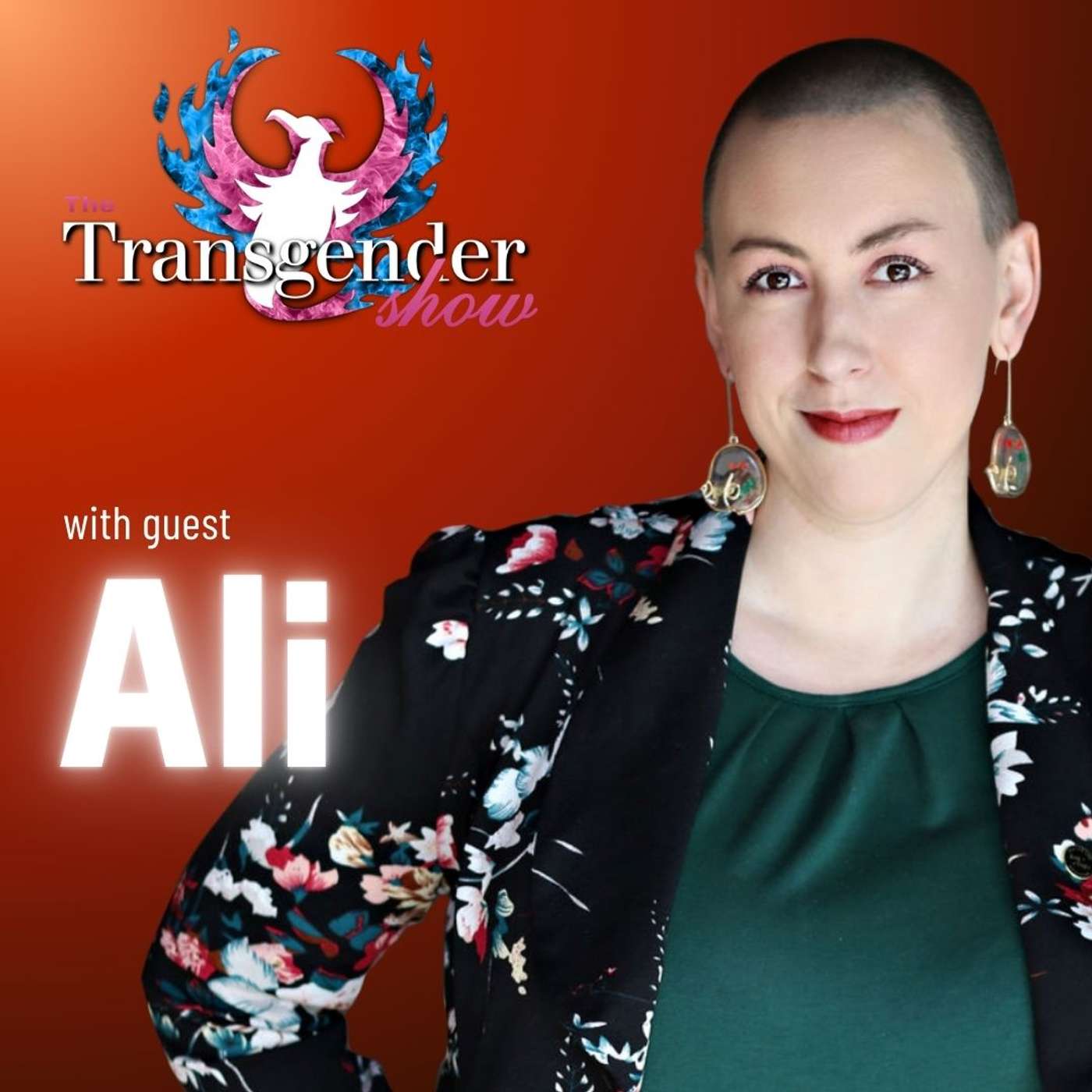
The Transgender Show features Ali, a non-binary, disabled small business owner from Southeast Kansas, discussing their journey of self-acceptance and identity exploration. Ali founded Q Space, a local community supporting LGBTQIAP+ individuals. They share insights into realizing their non-binary identity, reflecting on past experiences, and finding gender euphoria. Ali also discusses the challenges of navigating gender presentation, societal expectations, and the intersection of disability with gender identity. They highlight the importance of affirming environments and the complexities of managing chronic illness while facing societal perceptions of health. Ali's story emphasizes the need for broader understanding of gender diversity and the struggles of obtaining accurate medical diagnoses and support for chronic conditions.
Transcription
6115 Words, 32440 Characters
From the Transverse Network, this is the Transgender Show, an interview program about
self-acceptance and discovery.
I'm your host, Emily.
This week on the show is Ali, a non-minary, disabled, small business owner living in Southeast
Kansas.
Hi everyone and welcome to the Transgender Show.
I'm your host, Emily.
I'm excited about my guest tonight.
Ali, they are the founder of Q Space, a local, not-for-profit and community of support
for LGBTQIAP+ people in Southeast Kansas.
Welcome to the show.
Ali.
Hi, Emily.
Thanks so much for having me.
For the record starting off, how do you identify?
I identify as non-binary or gender fluid or gender-fay.
All of those terms kind of work for me and I also identify as bisexual and queer.
Jumping into your story with my favorite question.
Did you get to choose your name and if so, how?
Well my full name is Allison and I don't use that.
I use my nickname Ali and I have most of my life and I never really identified with my
full name.
If that's something that I've been thinking more about lately and anytime you hear the
word, I just cringe and I think or I think I'm in trouble or I'm about to go to the doctor
because at the doctor they used your full name and then they call you in and I have white
coats and drum and I'm chronically ill so it's like a great mixture there.
Yeah, no, Ali just kind of suits me I think.
I've thought a little bit about other names but then I'm like, I don't know, I feel like
this just kind of suits me.
When did you first realize or start to identify that the term non-binary or gender fluid
was what fit with you?
When did you come to terms with that?
So, I'm a late bloomer so I came out as bisexual about four years ago around that same time
I think I just started really evaluating and reflecting on who I am as a person and who
I want to be kind of unpacking past traumas, all of that fun stuff and that's kind of when
I started to think about I'm like, well, I'm like, what about my gender, I'm like, well,
I just think that I'm a girl, like I guess, like that's what I was told so I guess that's
fine.
But I always came back to it, like I always would think about it all the time and I'm like,
am I, I don't know, am I a girl?
And then I was like, do cis people think about this all the time?
And I was like, oh, I had several friends come out as either a non-binary or trans and so
it made me think about it even more and just like over the last few years I didn't come
out officially until like last year and it was actually like non-binary, I think was like
non-binary awareness day that I was like, hey, to my friends I was like, hey, I don't think
I'm a girl, maybe try using they-them pronouns for me.
And one of my friends did so on Facebook because I liked to forage and that summer I was
just driving around like you do in Kansas and picking wildflowers and so I was like picking
wildflowers and putting them in bases and like delivering them to my friends and I delivered
them to one of my friends and they posted about on Facebook and like tagged me and used
they-them pronouns in the post and I was just like, oh, I just got this feeling like
gender euphoria, I feel like.
I was like, oh, that's me, that's me.
And anytime I get that feeling it's just like, oh, it's just like I'm settling in a little
bit more to my identity in who I am and I've had little snippets and they happen more
often the more I'm with my people who affirm who I am.
You know, I don't have really anything against sheep pronouns, I think that they're just
kind of met and I guess I'm like pronouns don't exactly equal gender.
You know, people could call me sheep and I would still be non-binary.
I don't know if it was also just like the love and intention put in from a friend too of
affirming like my exploration as well but they and they definitely seem to fit better
and make me feel more myself and my own skin.
I've found that as I've moved through my transition and learned to accept myself and my identity,
looking back at my past and my childhood, I can see sort of breadcrumbs and the things
that I should- I might have a more stoop person might have been able to see and go, oh yeah,
this is leading somewhere.
Looking back for you, do you have some of those memories that provide a roadmap for where
you are now?
Oh, so many.
Yes.
You know, being a like bloomer with, you know, sexuality and gender identity, like I have,
you know, what I call like bisexual flashbacks and now I'm having, you know, the non-binary
flashbacks too, of those moments where you're like, oh, why didn't anyone tell me?
And I felt that way too, like the way that my friends reacted when I told them was just
kind of like, oh, yeah, okay, and I was like, how long have you known?
And why didn't you tell me?
Yeah, which is fine, but I was like, yeah, I feel like you knew before I did.
And they're like, you've been like talking about this on Twitter and in person for like
a while now and I'm like, I have, I didn't really recognize it either or maybe I thought
I was being covert in my like questioning around them, but I wasn't.
As a kid, I think I never really, I had, you know, I was kind of split into, or very forced
into the gender role of, you know, being a girl and what a girl looks like and what a
girl dress is like, I think when I was young, young, you know, they kind of let me do whatever
I want, right?
Whatever you're like six and under, you know, you can wear what you want and do what you want
they're just like, yeah, they're just a child, they, you know, they play in the same box,
they get money, they run around, they climb trees, they play dress up and there are siblings
clothes, you know, for me, like it wasn't, you know, me dressing up in like different genders
clothes or necessarily, but just like being able to dress like how I wanted as I grow older,
you know, that's when those expectations come in of, oh, you need a bra now, oh, you're
going to start your period soon, like those types of things.
I was having this conversation with someone recently where I'm like, do you ever just like
forget that you have a uterus like, and they were like, oh, she was like, no, and I'm like,
well, sometimes I just forget, like I feel like it shouldn't be there, like I just should
be like an empty vessel or something, you know, and I'm also kind of, I'm a person who
is child-free and wants to be child-free too.
I always felt like you should just have like body parts or genitals that just were the
most convenient for you, like I was like, I felt like, I'm like, I was kind of jealous
with my brothers who got to like, peace standing up and I was like, I would try to be standing
up to you.
Like this is difficult, like wouldn't it be easier if I had different equipment here?
Not necessarily that I wanted a penis, but like I was like, you know, whatever's convenient
in the moment, like it doesn't really matter to me.
You mentioned clothing before and how that didn't fit for you.
Do you feel now a pressure to present in a way that's non-binary to find what that is
and how you're supposed to look or do you feel like you're free to just truly wear whatever
you want to wear?
That depends on the day.
You know, I really do like fashion and like putting together, you know, different outfits,
whether they're high-fem outfits or more androgenous outfits or what I feel like is a little mask,
you know, and kind of playing with that a little bit.
What maybe what I feel is kind of like a mask outfit other people don't see as one.
A lot of times how I present, I kind of had this realization recently, I think during
a presentation I was giving for a Q-space to a group of people.
I was just like, you know, because we were talking about passing and I'm like, you know, I'm
never going to pass.
I'm never going to walk into a room and someone be like, oh, that person's non-binary.
Maybe unless we as a society kind of change from what I see, you know, people put people
in boxes, people put people in a binary of, you're either a boy or a girl, a man or a woman,
when they see you and, you know, we're taught that from birth, right?
We're taught that to put people in those boxes and those categories and that's why people
get kind of confused, you know.
And older people get confused more often, I think.
I shaved my head right when the pandemic started, so almost two years ago.
And I did have shorter hair than, so it wasn't a super extreme, like I didn't have hair as
long as yours, Emily.
I had a pixie cut and you know, it was getting long and everything was closed down.
And I used that, I think I used that as kind of an excuse, like, oh, yeah, I'm just going
to shave my head, like, but I've always wanted to do it.
I just wanted to do it.
And when I did it, oh, I felt so empowered.
I was just like, man, I'm a boss, I'm a badass, oh, my God, like, this is, this is me.
And now I, you know, I shaved my head like every couple of weeks, I just shaved it in the
morning.
That gives me gender euphoria too.
And like, this is the only thing I think that confuses people a little bit.
Sometimes I had an older gentleman ask me, he just kind of looked at me and he's like,
are you a boy or a girl?
Well, that's the perfect opportunity because you're like, no, neither.
In those situations, you kind of like, when you're out and about and you don't know someone,
you're like, okay, do I want to have this conversation with someone or do I want to just
feel like neither and then run away or because I'm not, I'm not someone, I'm like, I'm not
someone that lies ever unless I feel completely unsafe.
And in that moment, I didn't feel unsafe.
He was just really confused.
And I was like, do I explain this to him or not?
But so there are varying moments and those are like, I'm like, I have confused you.
This is the point.
I have this mug right here that says like, causing confusion for the straights and it's the gender
pay lag and I made this mug because me and my friend were talking about this who they are
also non-binary and an acquaintance of ours who seem to have an attraction to my friend
but was very confused about it because they're like, well, what does this now mean about
my sexuality and like, am I straight or not?
Am I still straight?
It's like, I'm attracted to like a non-binary person and we were joking.
We're like, we just cause confusion for the straights all the time.
You know, one thing that you mentioned there was the, you know, the fact that people like
to put people in boxes and there's this side or that side and that's all that that
people can handle and that made me think like, we can understand toddler and, you know,
child and preteen or tween and teen and young adults and adults and then, you know, someone
is elderly, dragging this out too long but we can understand as a society, there are
proven, there are proven pieces where it's like, we can understand a spectrum.
You know, I like to talk about that all the time.
Like, really, what is binary anyway in social construct, even biological sex isn't binary.
You know how many varying chromosomes people can have and who goes and gets their chromosomes
tested, right?
Does every single person who is like, I am biologically female or biologically male, do they actually
know if they are, they may be intersex, you know, like, and that's something that I bring
up a lot to and like nothing is really binary, is it?
How does the disability affect and pertain to your gender identity exploration?
Disability really makes you think about your relationship with your body and whether, you
know, you're physically disabled or not.
I'm chronically ill.
I have pots or postural orthostatic tachycardia syndrome, another tongue twister for you and I also
have probably many undiagnosed things, my doctor suspects, I have fibromyalgia, but when people
look at me, just like when they look at me and they're thinking about my gender identity,
they also see what they think is a healthy person, like she doesn't look sick, this person doesn't
look sick, they don't act sick all the time, they seem fine.
Like, I told you before, like if someone asked me about, like, are you a boy or girl or asked
me about my gender, you know, I would first kind of evaluate if I was safe, right?
In this period of time, it's a little safer for me to be out as queer and non-binary than
out as disabled, you know, I have a cane and I don't use it all the time because I don't
need to use it all the time, my disability is dynamic, so I could be feeling okay one day
and then the next day I can't get off the couch, I can't do anything for myself.
So that chronic pain and that chronic fatigue kind of go up and down, there's a spectrum
there too, so it changes every day when I've had to use my cane, you know, there are so
many stairs and so many looks that I get because I appear to be a young healthy person.
I've had moments where, you know, go to a doctor appointment and I'm like, well I don't necessarily
need my cane today, but if I brought my cane, would I be taken more seriously by my doctor?
Well, I gotta assume with something that's dynamic, like that that sort of comes and goes,
it's really hard to convince healthcare people sometimes that it is real and that you really
are experiencing that, if you had a lot of that experience with the healthcare professionals?
You know, I say that I probably have some undiagnosed things as because, you know, I think that
being diagnosed is a privilege in itself because it, you know, I had symptoms that progressively
got worse with my pots starting at, you know, age 21 up until age 26 is whenever I decided,
I'm going to try to get diagnosed and like I think that I have this, which I pretty much
diagnosed myself because that was correct. And you know, I had read all the things about, you know,
what you can do to control or minimize your symptoms and to live your life the best way possible.
And I was doing those things and still, you know, struggling. So I decided I'm like, okay,
I'm going to go and I'm going to get this diagnosis took me over a year of fighting, fighting,
fighting, fighting, fighting over $10,000 in medical debt. And I had to like squeeze it out of that
cardiologist because what they were focusing on was the fact that when I had my tilt table test,
which is a fun test where they strap you to a table and then slowly move the table up to where
you're standing, strap to a table, you're strap to a table just in case you faint, which you're,
you probably will faint the way they do the test. If you have dysatonomia or some form of pots,
which I didn't, they had me up, they were talking to me, passed out. So whenever I had that fall,
I'm like, okay, he's going to tell me everything, he's going to tell me exactly when my blood pressure
dropped, he's going to tell me when, you know, how the diagnosis was formed and all this different
stuff. And he was just like, we want to put you on this medication because this little blah blah blah blah.
And I was like, so like tell me exactly what happened in the test. Tell me when this, he's like, oh,
I don't have that in front of me. What is the point of this appointment? Like I want to know like what
happened and how, you know, obviously this is going to, you know, affect my life. It still is affecting
my life. When I freaking stand up from a sitting to standing position, my body freaks out. It's like the
when, you know, you have your dash on your car and all your lights come on. My body's like, what,
why are we standing? And, you know, that's something, you know, the average person can do.
Without having their body freak out on them. And I'm like, okay, how are we going to make this happen? And he's
giving me a med, I'm like, okay, fine. And that, you know, I've had, you know, good experiences with
medication and bad experiences. And this is one of those that wasn't so good and tanked my potassium
levels and gave me like crippling cramps all throughout my body. You know, I went through all of that
to get that diagnosis and nothing changed for me. I was still the one in charge of my health. I was
still the one who was supposed to be doing all the research. I was still the one who was, you know,
trying different compression wear, figuring out what worked for myself. I was the one creating
herbal convictions to help myself. It wasn't doctors, it wasn't medical professionals. So after that,
I was like, what, what's the point of getting any diagnosis for a chronically ill person where,
you know, that's not going to go away. And there's no cure. If doctors aren't going to be helping you
with managing your symptoms and being able to live your life, like, what's the point?
How were you able to do research that led you down the right path to actually diagnosing what it
was that you had? Yeah. So figuring out, you know, my symptoms and everything led me to honestly,
I don't even know, I went through so many rabbit holes from the originally whenever I was looking up,
you know, and figuring out like, okay, I have some form of dysautonomia, which is autonomic dysfunction,
or dysfunction of the autonomic system, which, you know, pretty much does everything in your body,
of os, and... So you narrowed it down. Do you have a body problem? That's sweet. Cool.
Which like, you know, I knew I had like, inappropriate sinus tachycardia, which pretty much
means that my heart beats really fast sometimes. And that along with the fainting, along with, you
know, some other things, I led me to this and then showed me, you know, other symptoms of autonomic
dysfunction. I'm like, oh yeah, I have those two. Then going into those support, online support groups,
and online like Facebook groups of people who actually had dysautonomia or pots,
and talking through like their experiences, talking to real people who were experiencing the
same things that I was. I'm a very organized person for the most part. So I have a, you know,
a document where I keep lists of all my medications and supplements I'm taking in herbs,
for, you know, whenever the doctor asks, I'm like, I'm not going to list these off. Here's a piece of
paper. And I also have a list of, you know, every reoccurring symptom that I have ever had.
And so when a new one comes up, I'm like, okay, am I dying? One of the symptoms that I have had for
the longest amount of time is like, dizziness and vertigo. I learned finadrill helped. And so I thought
it was like some allergy symptom and like dizziness allergies and like, I don't know. So I just like
finadrill works. If I take finadrill every night, then I'm mostly not dizzy. And if I miss a night,
then I would be like on the floor, wouldn't be able to move. And I would still have some dizzy days,
even with taking the finadrill. But for the most part, I was functional. And I really wanted to figure
out that symptom at one point. And I got sent to so many ear nose and throat doctors for because I
got allergy tests done. And the allergy tests told me I was only allergic to the two types of
dust mites there are, right? And for environmental allergies. And that it wasn't even an extreme
allergy, like on a scale of one to five, it was like a two. And I was like, that doesn't make any
sense either because I have allergy symptoms all year round. And I do everything you're supposed to
do when you have a dust mit allergy. And I was sent to all of these ENTs to figure out the dizziness
thing because a lot of times if your hearing is off in one ear versus the other, like you hear
better in one ear than the other, that'll cause dizziness and vertigo. And I didn't even know that
was a thing. And so I'm like, why are you testing my hearing? I'm dizzy. And they're like, oh,
your hearing is perfect. I'm like, okay, great. And they looked at my ears and their like your ears
are also perfect. I had four ENTs tell me that my ears, not the outside, okay, not the outside.
But the inside of my ears, like my ear canal, my eardrum, should be in a textbook. And I was like,
great, like this doesn't help me. So I'm doing all the things to figure it out and to try to figure
out what works for me because every individual is different whenever you look in those support groups
too. There are some things that help a lot of people, but then they don't help others.
I'm so struck by the similarities between this and gender identity and that the thing that really
helped you figure this out and find it was finding other people with similar stories. When it comes
to gender, did you have anybody that you looked at as a role model or perhaps somebody that you
had as a confidant to help guide you through? Not any like one particular person, I don't think.
But I think that I have really, really good friends who are family who
are all queer in some way or some form or another who are open to asking those questions and helping
kind of figure out how you feel about different things and kind of exploring that unknown when
you're figuring things out and just kind of being like, yeah, we can try out those pronouns. Let's see
how you feel about them when we, you know, talk reference to you. And if, you know, and they check
in and they're like, oh, so did that work for you? Like, do you want me to keep using that pronoun?
Also for like gender fluidity, kind of talking about like maybe some days like that pronoun doesn't sound
right. It doesn't fit me. Or for me, it's more not so much pronouns as, you know, just other words
used to reference people, like just phrases people say, like, hey lady. Oh, I hate being called
lady. I'm like, oh, please do not call me a lady. I really want to pin this as that.
I made up a little graphic for my friends. And I'm like, this is a ever working graphic,
like it may change tomorrow. But it checked off like pronouns I like, like terms of endearment
or like phrases that you can, you know, use to refer to me. And then ones that are like, I'm not
really sure about like, maybe use this and then maybe we can figure it out if I like it or not.
And then ones that I'm like, please don't call me that. I'm still figuring it out like as I go.
And so if my friend calls me something or it refers to me, I don't know, by something. And I'm like,
oh, I didn't like that. Don't feel like, okay, noted. Noted for the future. Or if I'm like, oh,
like I really liked how you called me that. Like it's something that we communicate back and forth.
I think that we should always be kind of figuring stuff out. Like we should never be
completely in one place. We should always be open to change. And there's a quote, I have it on
my wall right here. So you're allowed to be both a masterpiece and a work in progress simultaneously.
As you've started to explore this, you know, like I said, again, that you're fairly new to this.
We talked a little bit about coming out to your circle of friends and everybody was sort of like,
yeah, we know what was your experience and coming out to family. And how did you approach that?
Whenever I came out as bisexual a few years ago, I kind of like made a big deal about it.
Like not a huge deal about it. But I was just kind of like, I was terrified, really.
To come out to family, to come out, especially to my biological family. And so, you know,
I like wrote this whole letter to my mom and like met her and person even though she like lives like
thousands of miles away. For this, I was just like kind of like, I'm like, I'm done. Like,
I'm done coming out and like really extravagant way, I guess. And so I just, I posted like
on social media and was just kind of like, hey, this is, this is me. Some of you know,
some of you don't. Now you do. And, you know, some, you know, my biological family did not,
has not even talked to me about it, has not mentioned it to me, has not, which is something that they do.
They pretend things don't exist that they are uncomfortable with because they do say something
because they are still very much evangelical. They know that I will be upset and make boundaries.
And so they don't want that to happen. So they just kind of like have this weird, like neutral
relationship with me where we talk about very mundane things like the weather and they pretend
that I'm not a queer disabled witch because I'm not avoiding it or anything, but I'm not like
purposely bringing it up all the time. I am not speaking with my biological father at the moment.
Because I set up those boundaries and because he said really terrible things to me after I came
out as bisexual. And so then I was just like, well, you don't, I don't really want you in my life,
so you don't get access to me. And that's been very awkward for the rest of my family.
So that's been fun. For my spouses, family, it's been completely different.
First of all, my mother-in-law missed the announcement on Facebook and then saw some,
oh, I think I updated my profile picture and I put a little commentary that said like
these titties are non-binary too or something like that. And she texted me and she was like,
is this, is this some millennial like lingo that I don't understand or are you coming out as non-binary?
And I was like, well, I already came out, but I think you missed it. Like, sorry.
She's like, oh, I'm so sorry. Like, when did this happen? Like, I haven't been on Facebook. Like, I
came out on all the social media, but okay. And we kind of had like this text exchange about it
that was actually super cute because she was like, yeah, she's like, you know, I understand like,
like binary trans transition and like what that looks like and stuff. She's like, but like,
I'm going to work on like figuring this out, you know. And so I was just like, well, just
because she watches, have you watched the good place?
Yes. Great job. So I was like, just to just imagine I'm Janet. Like, I'm not a girl.
And I'm obviously not a boy either. And she's like, oh, that's perfect. Okay.
Found it, found a framing for it that could sink in for her. That's great.
I think that's where, you know, representation matters. And in a lot of things too is, is it helps,
you know, family understand their loved ones as well as people seeing themselves.
Otherwise, most people just were like, cool and moved on or unfriended me. Either one of them,
one of the other. Isn't it nice that the quiet, you know, the, you are so afraid when you come out
of the negative reaction and all of the, the vitriol you'll get from all the people that you know.
And it's just like, you either get support or like, maybe some questions from the ones that are
that are struggling. And then the ones that truly have a problem just sort of fade away. It's like,
oh, that's nice.
Fine. Yeah. I'm like, in between people, I really bothers me more than just the people who
unfriend and leave your life. Like, the people who try to stick around, but aren't affirming.
And you have to navigate, you know, boundaries and, okay, where is the line for my mental health
and, you know, my seniority versus like the people who were just like, okay, see yeah.
I've decided right now, I'm a militant bitch.
I like it. I love that level of self-respect. I think that's kind of the main place that that comes
from that not only self-respect, but that confidence in yourself that like, I am who I am.
I deserve to be here. I deserve to be who I am. I deserve to feel to be safe and comfortable in
that. And no one has the right to step on that no matter what their station is in life or their
relation to me. I usually say in this spot, you know, what transition means to you. I wouldn't,
you know, as a non-binary person, I feel like it's less of a transition, but more of a gender
exploration journey. What is that? What is that process? What is it meant for you?
I think that being able to just say it out loud, like, I'm non-binary. I am gender fluid.
I don't fit in the gender binary, like saying those things out loud gives myself permission to
explore gender in a way that isn't socially acceptable. I guess you could say. So I guess you could
say my transition is never ending. And that is exciting. Being able to explore and portray my gender
in different ways that feel euphoric and wonderful to me personally. I am non-binary, but that doesn't
mean that I owe you androgyny, right? Is there anything you feel that you've been able to accomplish
specifically because of your gender exploration and what this has unlocked for you?
Friendships and beautiful conversations and seeing cis people start to get it a little bit.
And so being able to something that we do with queue spaces do a kind of LGBTQ 101 trainings
and more in-depth trainings for the community. And so being able to leave those trainings now
and kind of use myself as an example and talk through that with people
like, oh, okay, yeah. Like I can see it now because yeah, I'm standing there in front of them.
And so, and also having like conversations with people. I was correcting someone
at a local bar like when they misgendered my friend and the person was like, he was like, oh,
I'm sorry, I don't really understand like non-binary. And I was like, that's okay, you don't have to
understand it. Like, I'm like, you just have to like respect it. And they're like, so they use
it. They, and I was like, yes. And they're like, I don't think I've ever met a non-binary person
before. And I was like, well, I'm non-binary too. And they're just like, oh,
I could just see their mind exploding, right? For me personally, to be as open as possible with
the people around me and on social media and being as authentic and honest as possible,
because I know that those, that that matters to people. You know, it matters to me to see those
stories. And it matters to other people to see those stories. So, do you have a favorite thing
that you've learned along your journey? I've become a lot more comfortable with
not knowing things. And saying like, I don't know. I don't have to be the person that knows everything
to you. You know, I can share my story, but that doesn't mean I'm like the expert on
on this at all. And it also means that my, you know, like I said, my, I see my identity is very fluid.
And so change is imminent. And that's something that as, as a person who likes routine, as a person who
likes organization, a person who likes things in their place, I honestly don't like being in the
in between, but then I just suddenly find myself there all the time. Like, because it's scary.
And like being in the in between as far as like being non-binary, being bisexual, being someone
who says both all the time, or all the above is something that I find myself in all the time in
the crossroads. The more I find myself there, the more I feel just maybe a little bit more comfortable
there. But also it reminds me that like it's okay to be uncomfortable and that kind of pushes me to
find myself even more if that makes sense. Like every time a little bit more uncomfortable, then like,
I'm like, oh, I figured this out and I figured that out and I meet these people. And you know, that's
that's when life gets better. What advice do you have for young or closeted trans folks out there,
trans non-binary, gender fluid? Anybody out there that's going through some of these things and
questioning who they are? You know, finding people with with similar stories, but also just finding
people who are safe. People who will accept you for who you are. It doesn't matter, you know, what
their identity is or what their story is, but I think you can find the safe people and be able to
slowly grow like your network of trust and being able to be yourself in your world.
Thanks for listening to this episode of the Transgender Show from the Transverse Network.
Watch the show live Tuesday nights at twitch.tv/thetransverse or at youtube.com/thetransverse.
We've got great new merch in our Etsy store. Go to thetransverse.etsy.com to shop today.
If you love what we're doing and want to help support the Transverse and get access to
exclusive content, you can do so by visiting patreon.com/thetransverse.
Podcast Summary
Key Points:
Ali, a non-binary, disabled small business owner, discusses self-acceptance and identity.
Ali founded Q Space, a local community supporting LGBTQIAP+ individuals in Southeast Kansas.
Ali shares their journey of realizing their non-binary identity and the impact of disability on their self-perception and interactions with healthcare.
Summary:
The Transgender Show features Ali, a non-binary, disabled small business owner from Southeast Kansas, discussing their journey of self-acceptance and identity exploration. Ali founded Q Space, a local community supporting LGBTQIAP+ individuals. They share insights into realizing their non-binary identity, reflecting on past experiences, and finding gender euphoria.
Ali also discusses the challenges of navigating gender presentation, societal expectations, and the intersection of disability with gender identity. They highlight the importance of affirming environments and the complexities of managing chronic illness while facing societal perceptions of health. Ali's story emphasizes the need for broader understanding of gender diversity and the struggles of obtaining accurate medical diagnoses and support for chronic conditions.
FAQs
Uso mi apodo Ali en lugar de mi nombre completo, Allison, ya que nunca me identifiqué con él.
Me di cuenta hace unos años, durante un proceso de reflexión y evaluación personal.
Depende del día, me gusta experimentar con diferentes estilos de vestimenta.
Mi discapacidad crónica me hace cuestionar mi relación con mi cuerpo y cómo me perciben los demás.
A través de investigaciones en línea, grupos de apoyo y manteniendo un registro detallado de mis síntomas.
Recuerdo momentos de mi infancia que me hacen comprender mejor mi identidad no binaria actual.
Chat with AI
Loading...
Pro features
Go deeper with this episode
Unlock creator-grade tools that turn any transcript into show notes and subtitle files.
 PodcastTranscript AI