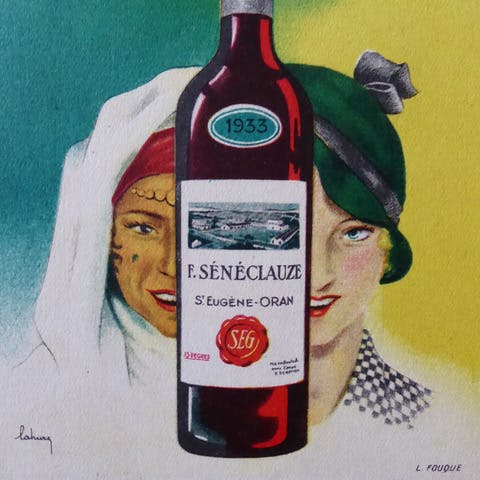
In this episode of High Theory, Nina Studer tells us about alcohol. The restrictions and prohibitions, medical and moral discourses surrounding alcohol reveal a great deal about a given society in a particular historical moment. Nina uses alcohol as a lens to analyze the history of French colonization in North Africa. Who consumed alcohol, in what places, how much, and what kinds, what was viewed as healthy and what was viewed as dangerous, even criminal, can help us approach larger questions of gender, class, and nation.If you want to learn more, check out her new book, H...
Transcription
2838 Words, 16353 Characters
Hello everybody, this is Marshall Poe, I'm the founder and editor of the new books network. And if you're listening to this, you know that the NBN is the largest academic podcast network in the world. We reach a world by the audience of two million people. You may have a podcast or you may be thinking about starting a podcast. As you probably know, there are challenges. Basically, two kinds. One is technical. There are things you have to know in order to get your podcasts produced and distributed. And the second is, and this is the biggest problem you need to get an audience building an audience in podcasting is the hardest thing to do today. With this in mind, we at the NBM have started a service called NBN Productions. What we do is help you create a podcast, produce your podcast, distribute your podcast, and we host your podcast. Most importantly, what we do is we distribute your podcast to the NBN audience. We've done this many times with many academic podcasts and we would like to help you. If you would be interested in talking to us about how we can help you with your podcast, please contact us. Just go to the front page of the new book's network and you will see a link to NBN Productions. Click that, fill out the form, and we can talk. Welcome to the new book's network. Hi. [Music] Welcome to Hi Theory. In this podcast, we get high on the Substance of Theory. I am Sharon Igboshu. And I am Kim Adams. We are two tired academics trying to save critique from itself. Okay. Welcome to Hi Theory. Today, I'm speaking with Nina Studer about alcohol. Nina, may I ask you to introduce yourself to our listeners? Yes, thanks so much for inviting me to be part of the podcast. So my name is Nina Studer, and I'm a Swiss medical historian. And I'm currently working in a project at the University of Geneva on the medical history of wet dreams, which is also a very fascinating topic. And I work on aspects of medical and psychiatric histories in colonial contexts, specifically Francis North African colonies, with a particular focus on questions of gender on the one hand and on drinks on the other. And I have just written a book on the history of absent, with the title "The Hour of Absent, a Cultural History of Francis Most Notorious Drink", published by Miguel Queens University Press in September 2024. Yeah, and we're super excited to read your book. So let me ask you our first question, which is, what the heck is alcohol? Yes, that's a great question. So technically speaking, it's just all drinks that are either fermented or distilled. For my context, I've always been interested at how alcohol was divided. And so for the French, for example, in the 19th century, they made a very strong distinction between what they called hygienic alcoholic beverages, which are beer, wine, and cider, and thrust. Right, and so they, for example, believed that these hygienic beverages were healthy, completely healthy, recommended for everybody, and that only the other forms of alcohol, which from their point of view were the distilled forms of alcohol, a process that is not very old, distillation of alcohol was dangerous, and that if you should restrict your alcohol consumption, it only applied to these distilled forms of alcohol. The hygienic forms were always excluded from that discourse. And so when you speak out what is alcohol, you have to really think about, okay, what context are you in? What are the societies we used of alcohol in general? And so from my projects, it's usually France. Alcohol was a part of their cultural identity. The consumption of alcohol was part of their cultural identity, and they very much understood it as part of being French. So the consumption of these hygienic drinks. And so when they were confronted with Muslims in North Africa, they're North African colonies, which is what I'm interested in. They were confronted with abstinence people. And that was very difficult for them because they viewed alcohol not just as a drink, but as a marker of cultural difference and as a carrier of identity. Yeah, I'm curious about one thing you said in the historical scope. So you said that distillation of alcohol is a fairly recent historical process. How old is the like, the sort of larger brewing of and fermenting of things? I'm guessing really old and how recent is the distillation? Yeah, great question. So the brewing of alcohol is really old, so that really goes into the antique period. And our earliest documents from Mesopotamia and so are often connected to brewing alcohol, and we have sources from Egypt, for example, that are millennia old, on the brewing of alcohol. The distillation of alcohol comes from the Arabic world, so it's an alchemical process that I was developed in the late Middle Ages, early modern time, and it really goes back to the 18th century, not much more than that, the distillation of alcohol. And it was developed in the context of alchemy, so it wasn't done with the process of consuming those drinks. And from the beginning, because, so technically, in the Quran, what is prohibited in the Quran are drinks that cause intoxication. And so when they developed the silt spirits for the first time, that was included into that group of any substances that cause intoxication. And so they were immediately prohibited. Obviously, just the fact that alcohol is banned in Islam doesn't mean that people don't drink. All over the Muslim world, there has been always a long tradition of consuming alcohol. So in the context of North Africa, that ranges from wine, from the Roman period onwards, there was always wine, that is calm wine, for example. But then they also have distilled forms of alcohol that are local to North Africa. So these are usually date and fake flickers. distilled ones with a strong anisee component as well. And so they are part of these drinks that you can find all around the Mediterranean, really, up of Raqri, and Arak, and Uso, and all of those, and Absant, in my case, and so on, that you can find all around the Mediterranean. And so in North Africa, when the French encountered these strangely abstinent people, they were shocked by it, really, because they really believed that alcohol, so again, hygienic beverages were necessary for civilization, and that you could not gain true civilization, Frenchness, in that point of view, without the consumption of alcohol. And so they very much believed that they encountered completely dry regions, where there was no drop of alcohol before the conquest, which started in Algeria in 1830. And they almost, they were blind to the local traditions. And me and other historians of alcohol in the Muslim world very much believed that this idea of Muslim regions being completely dry is both a misinterpretation by the colonial nations, and then afterwards a backlash towards colonialism. So, yeah. Okay, so alcohol is part of the civilizing process from the British? Yes, very much so, very much so. So they very much interpreted Muslims drinking alcohol as a step towards France, as a turning away from Islam, as a step towards civilization. At the same time, they also viewed it as extremely dangerous, because they thought that Muslims could not drink moderately, that they were physically incapable of French moderation, what they viewed as French moderation. And so there was always a conflicted view on alcohol amongst Muslims, but they very much believed that those Muslims who drank alcohol, French alcohol, especially, that they did it because they wanted to become French, they wanted to show their assimilation by their consumption of alcohol. So, assuming French identity through consuming French alcohol. Okay, so I think you've sort of already started to answer my second question, but let me ask it because how do I use alcohol? Yes, so lots of different ways of answering that. So, as I said, for my French subjects in North Africa, they used it as a moment of sociability, the consumption of alcohol. So they were in a foreign place, they were a minority, an oppressed minority, amongst an oppressed majority of Muslims, and they very much used alcohol as a way of counteracting their highway, their nostalgia towards France, of living their French identity, and as having a social moment of contact with other French people. And so they interpreted Muslims drinking it in a very specific way, whereas the Muslims mostly also saw it in the same way, those who drank alcohol also saw it this way, even though the French sources didn't understand that, but obviously for the Muslims in North Africa, it was also a social moment, drinking alcohol, it was a shared moment of leisure amongst those two. But for me, as a historian of alcohol, alcohol is a lens. So I am looking at those bigger problems of colonialism that I am interested in, so I am looking at questions of gender, at class differences, at all those questions that have motivated my research and my interest in North Africa. And I look at these questions through the lens of alcohol. So I am looking at who consumed alcohol in what places, how much, what kinds of alcohol, what was viewed as healthy, what was viewed as dangerous, what criminality was excused through alcohol, what criminality was blamed on alcohol, like all those kind of questions. So for me, it lens, yeah. Cool. Yeah. And so I'm really excited to hear more about class and gender questions that you asked, but let me ask you one other thing first before I lose it. You said earlier in the conversation that there is this discourse of alcohol as a civilizing force that comes from the colonizers and then there's a counter-discourse of abstinence as a like empty colonial measure. Yes, yes, very much so. So there are quite a few historians who work now recently in the past 15 years, started to work on questions of alcohol in Muslim contexts. And they have been quite a few different ones who have looked at this specific aspect and who have found that there were always bands on alcohol or through the Muslim history, repeated bands of specific alcohols, forms of alcohol or general prohibitions of all alcohol. But after the decolonization processes, most of these countries instituted quite strong bands. In Algeria, for example, Algeria had before the Algerian war of independence, which started in 54. Algeria had been the largest exporter of wine in the world, global exporter of wine. And they had huge vineyards and they had been a tradition of producing wine in Algeria. But because it was partly, so that's the discourse that there are loads of different reasons, but partly because it was so associated with this discourse of Frenchness and it being part in parcel of French culture, it was rejected after decolonization. And these vineyards disappeared, not immediately in 62, but over the next two decades they disappeared. There's also economic reasons for it, which are a bit more complex, but it was definitely argued that this rejection of alcohol was due to how tightly alcohol had been bound to colonization, both metaphorically and practically, and how strongly alcohol had been used in the discourse, in front of this course, difference between North Africans and themselves. Wow, that's kind of crazy. So did the French plant the vineyards in the first place, or were they there? Yes, some of them were there. Yes, yes. So they have been vineyards in North Africa before the French colonized. Theoretically, that's what many muslim sources say. These vineyards were exclusively for the production of raisins, of grapes and raisins. Whatever. I believe that explanation that they can have that explanation if they want it, but they were vineyards before the colonization. And then the French, when they came to North Africa, they quite desperately looked for products that they could reduce in North Africa that would be useful for the French market. And they tried quite a lot of different products, and none of them worked. And then from the 1860s onwards, so that's 30 years after the colonization started, there had been the philoxera crisis in France, which destroyed huge amounts of the French vineyards. And the French had to import wine from Italy and Spain, which they didn't like. And so they now turned to Algeria and started to plant vineyards there, and it became hugely successful. Algerian wine was for a time depicted as the savior of the French table, because they produced cheap wines that were used in France. But then the French vineyards recovered. And did they become like an evil competitor? Yes. Exactly. And they were prohibited from having the same distinctions as the French wines, et cetera, et cetera. So it's a fascinating. Oh, that's wild. That's okay. Crazy. Absolutely. And you find this idea of colonizing by like the vines and these kind of things. It's so present in 19th century, early 20th century French descriptions of North Africa, this idea that wine, the vineyards colonized North Africa. Like the plants themselves are doing the work independently of the people. Exactly. So France taking root in North Africa through the roots of the vineyards, yeah. Yeah, wild. Let me ask you our final question, which is, how will alcohol save the world? I'm not sure it will save you well. Let's put it that way. People usually answer it won't, but we still ask it every time. Yeah. So if you speak to medical experts today, they will, univocally, tell you that the consumption of alcohol is unhealthy. And they will suggest that we drink as little as possible of it. Yes. But I think looking at the past through alcohol is hugely productive because it gives people who aren't really interested in history and approach and in. They can understand the historical past if we talk through them through something that they know themselves and that they experience. They both experience the social ability of a shared glass of wine. They experience drunkenness. They are maybe scared of the violence caused by alcohol and all of these things. So looking, presenting alcohol as a historical study is I think hugely productive and saves people by introducing them to how interesting history can be by giving them an in into history. So I always find it that if I try to talk to people about North Africa, Francis colonies in North Africa, they're not interested usually. But if I talk to them about wine, if I talk to them about absent, which is hugely strongly linked to North Africa, that interests them, that shows them that it's not an academic subject, that it's an actual lift thing that they share with people in the past. And so that's my only way through which I can see alcohol as a net positive in a way because otherwise, health wise, for example, yeah, apparently it's really not, but. I feel like health can be something of a tyranny anyways like discourses and healthiness. Yes, yes, yes. I also think like, you know, when nowadays, when all these discourses of total abstinence are coming back, it's also useful to look at the past. So, you know, my topic of absent is the only drink that was ever banned in France. It was banned in loads of countries, the US as well. But it was banned in France, the only form of alcohol. But it didn't work. It was banned in France and in Switzerland. And in Switzerland, especially, there was a clandestine production and consumption for the 100 years of its prohibition. So, the idea of total abstinence of preaching total abstinence is just unproductive. It's not working. It won't work. People will find their way around it. And so I think that's also another lesson from the past that we obviously have to listen to medical advice but that we also have to understand that there is more to alcohol than just its influence on our health and our bodies. Thank you so much for coming and sharing your research with us. I love talking about alcohol. It's my favorite pastime. So, thanks very much for giving me the chance to talk about it. And thank you for listening to High Theory. If you like our podcast, please review and subscribe wherever you get your podcast fixed. Oh, and Quinn composes our theme music, Shoronic Bosu and Kim Adams edit our audio and Shoronic Bosu manages our social media. You can find High Theory on the new book's network and also on hightheory.net. We hope you have a highly theoretical day. [Music]
Podcast Summary
Key Points:
Summary:
Chat with AI
Loading...
Pro features
Go deeper with this episode
Unlock creator-grade tools that turn any transcript into show notes and subtitle files.
 PodcastTranscript AI