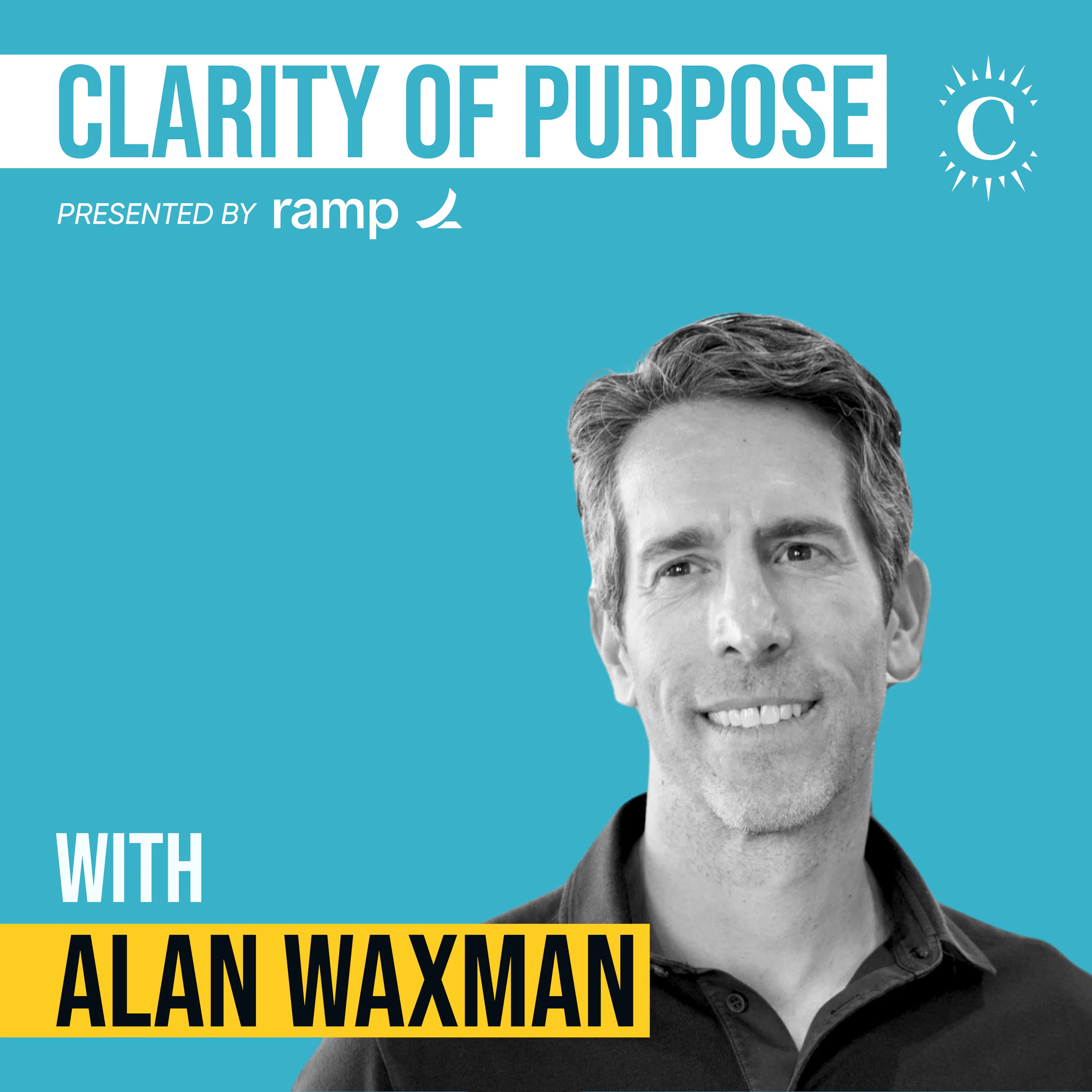
Alan Waxman - Private Credit and the Modern Financial System
from Invest Like the Best with Patrick O'Shaughnessy
62m 19s
In this conversation, Alan Lacksman provides a historical framework for understanding the current financial system, dividing it into three distinct eras. System 1 (1933-1999) began with the Glass-Steagall Act, which separated commercial banks from investment banks, creating stability through strict guardrails but limiting economic growth due to conservative lending. System 2 emerged after Glass-Steagall's repeal in 1999, driven by globalization and competition from European banks that combined commercial and investment activities. This led to excessive leverage and asset-liability mismatches, culminating in the 2008 Global Financial Crisis. Post-crisis, System 3 was established through Basel III and Dodd-Frank, imposing capital and liquidity restrictions on commercial banks, while private capital—such as private equity, credit, and infrastructure—grew from $2 trillion to $14-15 trillion, filling the gap for risk-taking activities with matched assets and liabilities. Lacksman argues this system was effective until 2018, when behavioral changes began to undermine its stability. He emphasizes that financial crises are typically caused by leverage and asset-liability mismatches, and introduces the "factory model" of investing, which industrializes capital raising and deployment, contrasting it with traditional investment models focused on returns. This historical perspective helps investors navigate the current dynamic capital markets environment.
Ramp is the only platform built to make your finance team leaner, faster and better, saving businesses 5% annually on average so you can stay focused on growth. Ram customers grew revenue 3.2 times faster than the average American business. Visa, Fersel, Cursor, Stripe, Notion, 11-Mibes Shopify, and 70,000 other businesses all run on Ramp. Mind those two and social doors. Learn more at ramp.com/invest. Felix Byrogo is a personal finance agent that turns a single prompt into finished, client-ready work using your firm's own templates, context and standards. Send Felix an email like "Take these comments and turn them for me" or "Update my tracker with the context of these emails" or "Run the ability to pay math on this buyer" and Felix sends back Finnish PowerPoint decks, Excel models and source research. Felix works the way your team already does, delivering work quickly and accurately around the clock. Learn more at rogo.ai/fuelix The best AI and software companies from OpenAI to cursor to perplexity use work OS to become enterprise-ready overnight, not in months. Visit workOS.com to skip the unglamorous infrastructure work and focus on your product. Hello and welcome everyone. I'm Patrick Ochanasi and this is Invest Like The Best. This show is an open-ended exploration of markets, ideas, stories and strategies that will help you better invest both your time and your money. If you enjoy these conversations and want to go deeper, check out Colossus, our quarterly publication with in-depth profiles of the people shaping business and investing. You can find Colossus along with all of our podcasts at Colossus.com. Patrick Ochanasi is the CEO of Positive Sum. All opinions expressed by Patrick and podcast guests are solely their own opinions and do not reflect the opinion of Positive Sum. This podcast is for informational purposes only and should not be relied upon as a basis for investment decisions. Clients of Positive Sum may maintain positions in the securities discussed in this podcast. To learn more, visit psum.fc This is an unique conversation. It's my second with Alan Lacksman, the founder and leader of Sixth Street, one of the largest private capital investment firms in the world. Him and I have been going back and forth about the history of financial guidelines and incentives and how those systems through time shape the system that we live in today and shape outcomes in the financial markets. We thought it would be a neat opportunity to walk through in great detail what he calls System 1, 2 and 3 going all the way back to 1933 and the initial regulation glass stegel which kicked off System 1. We then go through System 2 from 2000 to 2008 and the global financial crisis and then go into great detail for the system that we're living in today. The reason all this history is interesting to me is that ultimately it's about the incentives and the ways that investors and investing firms make money. We have this great conversation about what Alan calls the factory model of investing defined by the industrialization of both raising money and deploying money. Sure, the opposite of the old school or Tisinal investment model that's entirely focused on earning outstanding investment returns his historical perspective and lens on what's driving outcomes. I think is useful information and history for all of us as we try to navigate one of the most dynamic periods of creative destruction in capital markets history. Please enjoy my second conversation with Alan Wacksman. We're facing one of the most interesting capital markets setups of all time alongside one of the most interesting just world environments geopolitics technology and you and I have talked a lot about the shaping forces that will determine how things play out from here. One of those things that I want to start with will talk about AI will talk about geopolitics some other big things that might be shaping the world but there's one that is probably under discussed that you are in a very unique position to teach us about which is what you call the guardrails and the incentives of the financial system itself. The reason we're doing this today is so much discussion of private credit direct lending things happening in private markets that's getting a lot of attention in the news you can see in stock prices of certain companies. And I think the whole world's grappling with this trying to figure out what the hell is going on and what to expect and you are a deep historian of this topic and so I thought it would be a really cool opportunity just to have you teach us all about this important factor in what's going to happen in the future. So what is your general frame for the financial system and how it impacts the world. There's a lot going on in the news what I'd say is what you're reading in the news today are the symptoms but not really the root cause and as an investor when we try to figure out what's happening in a current moment which is we're definitely in a moment right now we do two things first of all we think about it from the standpoint of how did this get here what's the point of. What's the history of it how do we get here to really figure out the current moment and also determine where we're going so I think we'll talk about a little about the history of how we got here and then the second thing and you hit this is looking at everything through systems and we think about systems we think about the incentive system guardrails and market structure first of all not an economic historian. What I'm going to do is tell the story of history as relates to the current moment I think you got to go back to pre 1929 crash and when you think about the American financial system is basically like the wild wild west is pretty unregulated and there are many causes of the 1929 crash there was poor monetary policy. Agriculture recession margin-winning but one of the main parts it caused it is you had this idea of commercial banks so think about commercial banks so individuals go put their money into a bank as deposits commercial banks basically were in the same house as principle risk taking activity so the investment banks so these were all part of the same thing as you can imagine when that happens there's a massive conflict of interest so really the story starts for the current moment. Starts for the current moment starts in 1933 so this is after the 1929 crash this is after 9,000 banks fail think about that 9,000 banks fail. 1933 glass legal probably one of the most important regulations that took place and also the establishment of the FDIC which be insured deposits for individuals at banks up to a certain limit. Glass legal basically said these commercial banks which was deposit taking institutions from individuals just got really burned in the 1929 crash they see becomes separated from the investment banks or at the time think about principle risk taking to think about today's parliaments private capital investment banks those got separated. And that's kind of the first system when I think about the first system that explains where we got to the current moment which is call it system one it's from 1933 to 1999 and when you look at post-war war two with this separation of commercial banks and investment banks you basically have after post-war war two 50 years a pretty stable system other than the SNL crisis in the 1980s which was a big event. It was a pretty good system but the system wasn't optimized for economic growth because you only had a pretty conservative with a lot of guardrails commercial bank providing finance. Yeah, just low risk appetite. So it's a low risk appetite and again because when the fixed income market hadn't developed which is part of the story here but also because investment banks they were more in the moving business than the storage business. They were pricing securities to basically sell to other people they weren't pricing it to hold for their own balance sheet now that changes we get into these but again broadly speaking for this first system from 1933 to 1999 it was working it just wasn't optimized. The lesson from this is with really good guardrails you can get long stability you can get long stability but again you also have to think about job creation and economic growth and I think if there's one that's the reason why this is a system which is why the Glass-Steagall Act got repealed in 1999 I can talk about why it got repealed what literature to the steps leading up to that is that it wasn't optimized and as you go to a more globalized world and you're competing with say European banks you become less and less competitive so in a non globalized world it was probably OK but as we got to more globalized world it wasn't really optimized to maximize economic growth for the country. OK so we get to the mid late 90s what happens in addition to new competitive pressures walk us through the transition into what becomes system to start the time again we've got separation of investment banks commercial banks all son European banks who weren't part of the same Glass-Steagall regulation they started to unite with each other so commercial banks and investment banks in Europe started to come together with started to put the American commercial banks at a big disadvantage. Not only were they coming together but they were also taking on more leverage than what was allowed with the guard rails of American commercial banks so as a result of that as you can imagine all the commercial banks and many market participants are saying hey we can't really compete against some of these European guys in 1998 do each a bank bought bankers trust and that was definitely a moment city bank announced that it was merging with travelers which at the time when they announced the market was going to be a big deal. So that's what sort of led up to it so I think it's a couple things globalization now all of a sudden you're competing against Europeans who have think about they can provide services and balance sheet and capital you're at a pretty big disadvantage so the system won started to get.
less competitive as we moved into a globalized world. And that led to 1999 when Glass-Steagall was repealed. - So what comes in its place? It's basically just deregulation. - It's deregulation. And literally after that, you saw a wave of mergers of combining commercial banks and a Besson bank. So you saw-- - Big Morgan Chase. - Jason Morgan Chase. There's many others, but with everything, there's not gonna affect. So that came together, create these powerhouses that could compete with what was going on in Europe. But now you had all these investment banks that work commercial banks. So think about my own firm Goldman Sachs and many others. Now they had to start competing. They didn't have access to cheap capital because they weren't a commercial bank. They had to compete with combined investment banks and commercial banks because a lot of the commercial banks both in Europe and the US, they started to use their balance sheet to get investment banking business. So what did all the investment banks do? They started to leverage up. And that's one of the other stories leading into the system is the development of the fixed income market. So think about corporate bonds, mortgage-backed securities, asset-backed securities, sovereign debt. That went literally from the 80s to the 90s, went from $7 trillion to $14 trillion. These are all financing mechanisms that could finance the investment banks to basically allow them to leverage up. And that's what started to happen. So literally from the time of Glass-Steagall being repealed, you had commercial banks uniting with investment banks both in US and Europe. You had leverage going up. Leverage went up for commercial banks. In some cases, 20, 30 times leverage and all the investment banks were operating with leverage because they had to take it on leverage to be able to compete with the combined commercial banks and investment banks. And then nine years later, what happened? You had the GFC. Now, just to be clear, there's a lot as a polarizing debate of how much attribution the repeal of Glass-Steagall had on the GFC. What do you think? Well, I think like everything it's nuanced, there was definitely some attribution to it. I think that was clearly not the only reason. My view, it's some combination, but ultimately it had to do with the system and the set of incentives. In that case, after putting all this together, a lack of guardrails that existed in sort of the first system we spoke about. And in system two is the lesson that it's the combination of liquidity or asset liability mismatches and leverage that basically is the cocktail for every historical financial crisis. One of those two are both are involved. Leverage always plays a role and they're all connected, but just the mismatching of assets and liabilities. You could be the best investor in the world making the best illiquid investments, but if someone comes and asks for your money in a quarter when you have it at time to actually have that investments, play out the way that you underwrote it to do, you're going to be a bad investor, you're going to be caught out of your option and you might have to sell it in a deep discount. So there's a few things. I think it's one, anytime you bring retail or individuals to think about people depositing into a bank next to principal risk taking activity, I think that's one thing. The second thing is just anytime you mismatch assets and liabilities and then the third thing again, going back to what we talked about earlier is what are the incentives, what are the agar drills and what's the market structure. - Okay, so then what happens? So obviously we know about global financial crisis is terrifying and the reaction is many things, but what is installed post GFC that sets the seed for I guess we'll call the current system system three. - So in 2010, two things happened. First is Basel III was passed by G20 nations. I'll explain what that is and the second thing is Dodd-Frank. When you think about Basel III, so this applies across all commercial banks and by the way, a number of investment banks that were not commercial banks were forced to become commercial banks as a result of this. Those commercial banks, and this is really a Basel III thing, had restrictions on capital, which for your audience, think about that as leverage. So the amount that they could be levered up so they didn't get levered up 30 to 1 or 41 like they did, create GFC. And the second thing is restrictions on liquidity and liquidity is basically through a bunch of shocks and areas, a bunch of things going wrong. Do you have enough liquidity to meet all your obligations? That was a key part of it. Dodd-Frank was more aimed at in the Volcker rule that that didn't really last along, was really aimed at the principal invest in activity. I would say it's more for the commercial banks. It was more Basel III, but Dodd-Frank played a big role certainly in the short term. How would you explain just system three and its guardrails and incentives to people out there? - System three, in my opinion, it took like 125 years to get here. It has the potential to be the best system American finance has ever had. Because when you think about commercial banks or deposit-taking institutions, by the way that are basically backstop by the government, through the FDIC, so think about GFC. There was a bail out the taxpayer bail out. That's not good for society. That's not good for the middle class. That was not a good outcome for America. For those institutions having restrictions on capital or leverage and liquidity, where they're doing lower risk-taking activity to finance a system, that's a good pillar of any financial system. Converse on the other side, and this is where the current movement starts to come in, is now you've got private capital in a committance. When you think about private capital, think about pension funds, sovereign wealth funds, endowments, insurance company, providing capital in the beginning of this period so it's called System Three, Post-Basel Three, post GFC. That's what resulted in the growth of the private capital industry, because it was filling in the gaps. So think about principal risk-taking activities. Private capital was filling in the gap, and with the exception of hedge funds and really reats, those were matched assets and liabilities. So you think about private equity, private real estate, private infrastructure, private credit. They never had someone that could literally ask for their money back, or they didn't have deposits saying, they need to get their money back, they can't get it back because of a liquid assets. So that just did a positive in context, private capital from pre-GFC to post GFC, it's about two trillion, pre-GFC, it's grown to around 14, 15 trillion. Private credit, which is in the news today, grew from 500 billion to about two trillion, what is today. So massive growth. And this filled the gap for that principal risk-taking capital, provide risk capital to all parts of the American economy, which is a good thing. And I would say up until 2018, the system was working great. Yet commercial banks, deposit taking institution, effectively backed up by the government, doing safer things, and then you had matched assets and liabilities where an investor, a set of assets, couldn't get caught out of her option, providing the risk capital. That's a pretty good system until we started to see behavioral changes in 2018. - Vanta automates security and compliance for over 16,000 fast-moving companies, like Ram, Kersher, and Harvey, keeping an audit ready around the clock. It's the number one agentic trust platform. And it now helps companies like yours watch for the risks that show up between audits across your vendors, your AI tools, and your whole environment. Every new tool your team signs up for, every vendor that turns on AI features is an opportunity for something to go wrong. And most security programs weren't built for AI's pace of growth. The Vanta agent works like a 24/7 GRC engineer in the background finding issues, drafting fixes for you, and cutting vendor assessment time by up to 50%. Whether you're a fast-growing startup or a global enterprise, Vanta helps you earn and prove trust. Invest like the best listeners get a special offer for $1,000 off at vanta.com/invest. Rigline is the first end-to-end system of record with embedded AI for investment management firms, running portfolio accounting, reconciliation, reporting, trading, and compliance on one unified platform. Firms are moving off legacy technology and onto Rigline because of how far ahead Rigline's AI features are compared to anything else in investment management software. Which is why I believe that firms that come out ahead in the AI era will be the ones running on Rigline's unified platform. If you're serious about your firms' AI strategy, Rigline should be part of that conversation. You can request a demo at Rigline.ai. Just to put a pin on an elegant, well-designed system of guardrails and incentives, the commercial model where it's lower risk and protected or backstopped, and higher risk seeking capital where the assets and liabilities are matched is a good system. It's a good system. All crises is generally caused from not credit issues or others. They might start in other issues, but it's mismatched assets and liabilities. So you mentioned this here 2018 as being a pivotal point. I want to explain that transition, but it feels important you and I have talked with the notion of yours of the factory model before. We're going to go into that in more detail, but just to plant the seed in people's mind, define the factory model just briefly, and then I want to talk about what happened to get us transitioned and the incentives towards that model. Sure. So the way that we define the factory model in our industry is there's two parts to it, and then there's an output. First part is the industrialization of the fundraising process, say liability gathering, literally raising as much capital as you possibly can, as fast as you can. So that's the industrialization of the liability side [BLANK_AUDIO]
fundraising side, that comes first and then what comes second is then as a result of that, the industrialization of the asset side. So think about investing. So if you're on an investment team and all of a sudden your firm has a lot of money to invest and it's just sitting there and maybe there's a time stamp on it, all of a sudden your behavior has to start to change because you have to deploy that money much quicker. And what's the best way to raise a lot of capital quickly? Make it very simple. Make it very narrow because if it's wide, that's too hard to explain. So you want to make it as narrow as possible. And you're also willing to take, let's say, make concessions on the type of capital you raise. So meaning maybe it's got a term where they can ask for your money back. Instead of perfectly mass assets, my abilities, maybe you're willing to start to not have perfectly matched assets, my abilities because you want to raise it as fast as possible. And again, when people cure this, they're going to think I'm only talking about the bigger firms in our industry, but it filtered down to mid-size firms, smaller firms for a whole bunch of reasons. But this whole factory model behavior started to reveal itself in 2018. The visual that's coming to mind on the asset side and again, we'll come back to both these ideas in more detail. But I think of an artisan making a horse saddle or something by hand. And then I get an order for a hundred thousand. Exactly. I can't make it by hand. I got to make a fact. That is the exact way to think about it because it's a different model when you're building that horse saddle versus you get a massive order. But one point is important is that it starts always on the liability side and then it goes to the asset side and then you get the current moment that we're in that I know we're going to talk about. It starts on the liability side because why? Because if you just all send good to that example, it's a really good example of the horse saddle. Also, and if you don't have a factory that can produce a hundred thousand on the artisan, so you're not ever having to think about it, you could have an industrialization of the asset type. If your liability constrained, you're not going to change behavior because you don't have the capital to go do that. You'll run out of money in five days. So it's got to start on the liability side where you raise all the money. Then you have it. Then the behavioral change starts. These two things, its first liability side, it starts the industrialization and as a result of that, it goes to the asset side. Which is interesting because if you add up every conversation of ever having an investor, 98% of the time spent is on the asset side. What are you investing in? Exactly. By the way, that's okay. If you have perfectly asked assets and liabilities, it's okay. But let's imagine a world where every investor you spoke about had a term in their agreement after three years, the investor had the option to call their money back. That would probably be something you want to be talking about a lot. By the way, prior to 2018, going back to the financial system, the private capital was pretty perfectly mass as assets and liabilities. It would seem if everything was frictionless and I was a GP, I would of course have matched liabilities. If I could just snap as much capital as I wanted into existence, yeah, of course, I want to have no problems. So what's the series of events starting in 2018? What were the first examples of this and then how has it evolved? The first signal is underwriting because investing or lending, you can invest as much money as you want. You can lend as much money. That's not the skill. The skill is investing. It's that artisanal behavior. Everyone talks about private credit, but we started to see it in every asset class. We started to see it in real estate. We started to see it in infrastructure. We started to see it in private credit. It wasn't actually bad, but we started to see behaviors like terms that you would never do because obviously when you lower your underwriting centers, guess what happens? Your deployment pace can go up. You have an origination engine, you're sourcing all these deals and let's hear an artisanal. You might have a hit rate of half a percent you look at. If you lower your underwriting centers, your hit rate on deals that you might do might go to 2%, or 3%, it's literally all in your control. So I think we started to see it, but it was just like something we started to notice changes behavior, but it wasn't full-fledged factory model industrialization. COVID happened and then post COVID, it was game-alone for the factory model, both on the liability raising side and also on the asset side. Literally that behavior started to accelerate in incredible ways right after COVID. The capital, the liability has come from lots of different pockets, but my mind goes to the wealth channel that everyone's talking about now, institutional channel as well. Maybe put a little more color on where it actually came from, what is coming from? What started to change in 2018 is there are these things called SMAs, so separately managed accounts. Prior to 2018, for the most part, the private capital ecosystem was basically funneled through funds. So think about coming on funds, lots of investors come into one fund to pursue a certain strategy, and all of a sudden, they started to be every conversation with every LP was basically, we want an SMA. We want one fund a one just to do XYZ for us. You go to an LP, you basically say, "Hey, we're going to raise $500 million or $100 million and we're going to do direct winning or we're going to do private equity or we're going to do real estate." And all of a sudden, there started to be a proliferation where literally three years prior, it was not in any conversation, every conversation was SMAs and what it is, it was just the industry starting to raise capital from the institutional channel. So not wealth, the institutional channel, so pension funds, sovereign wall funds, to some extent endowments, raised as much capital as possible in the simplest form. It started on the institutional side with SMAs, but the growth in institutional SMAs started really taper off. The next place where the industry started to go was the wealth space. And the wealth space in general, just from a historical perspective, it is typically the easiest to raise, the simplest to raise. It's typically the cheapest. That doesn't mean that they're not smart, just the cheapest, but the other characterization of the wealth space is that it's always easiest to raise in the prosyclical environments when things are going really well. But when things start to not go well, the wealth space or retail or individuals want their money back quickly. I just want a level set on that's an important concept, and that's where it started to go. And that got us to one of the symptoms that are here today, but the one thing I want to point out and we'll talk about the current moment is that the SMA was a symptom. What's going on in the wall system, the wall system is a symptom. When you think about some of the stuff you see and step private assets where there's so many assets around the world in private real estate, private infrastructure, private equity that literally were companies or assets or bought and really post-COVID sort of 2021, early 22, paid way too much. They're stuck assets. All that stuff is symptoms. The root cause of this is the change of behavior patterns of the factory model. That's the root cause. And again, one of the things that's not frustrating, but unfortunate is that everything that is covered in the media is just talking about the symptoms and not actually getting to the root cause. And again, when you think about history, people talk about the symptoms, but when you start to diagnose what happened and how we got there, it had to do with the root cause. And I think that's something that hopefully this conversation provides some greater clarity on. So if I think about this model and we've talked about, maybe you can mention the multiples that markets had been putting on asset management companies that we can look at public markets and see everything transparently, how much markets were willing to pay for the equity in multiple basis. What the multiple is of that drives the incentive to raise money. The story of the factory model starts to correspond with FRE multiples. What is FRE? FRE states for fee-related earnings. fee-related earnings is basically your management fee profit. So you raise the fund. It's got a manager fee on it. You got a set of expenses. And what's left over? That is your fee-related earnings. These things for our industry started traded between, let's say, early 2010s, call it 10 to 15 times FRE. In 2018, when all this started, it stepped out to call it 15 to 20 times. Obviously, it depends on the comp set. Before this current moment, we're at 25 to 30 times plus. That's where it is. And by the way, if you go back to the early passing of Basil 3.fr, there was a massive sector opportunity to fill the gap that was left from commercial banks being constrained. And then the system found it sort of stays stay-placed, but in order to keep growing, and again, it's the whole industry. What do they do when the participants adopted the factory model? And is maybe the crash way to say this in the factory model, the GP, the founder of the firm, stands to make a lot more money from the equity of their GP than from the carry they would earn through investing or something like this? What I'd say is that, look, to be a CEO of one of these larger, it's hard. You have a lot of different constituents. It's really hard. As an investor firm, sometimes it's good to grow, and sometimes it's not good to grow. It depends on what's the investor environment, what's quality of your liability structure, what's the flexibility of your investment model to sort of migrate to where the best opportunities are. It just depends. But I think it boils down to what's your clarity of purpose. There are a number of people that are public that I would say have not a doubt.
that a factory model. There are a number of people that are not public that have adopted a factory model, maybe because they want to get bought by one of the larger guys, or maybe if you're mid-sized for and you want to be one of them. The issue is just because you're large and just because you're public, it doesn't mean that you've adopted the factory model. It's like, what is your clarity purpose? Now, if your clarity of purpose is to be an investment bank, then maybe that is what you want to be, a factory model. But if you're going to do it, you better have a really good risk management. That's why, if you look at commercial banks, Jamie Diamond is probably one of the best risk managers of all time. What he can do from a risk management perspective, and you saw him GFC, and you see the other times in his career, he's a better risk manager, but the rest of the industry that follows suit because they want to be Jamie Diamond, they might not be as good a risk manager as him. And it's the same thing over here. So it's not just the larger guys, because remember, the industry always follows the larger guys, but it's not certain that just because you're public, just because you're large, you've actually adopted the factory model. What are the most common in your mind, telltale signs of a firm that's in this model? What is a firm that's adopted the factory model look like that's distinct from an investment model based firm? First of all, you know when you see it, you can see it in the underwriting. We're in a bunch of different asset classes, you can see it, particularly like if you're a fixed income investor, a credit investor, because you have capped upside, there's terms you just don't give. A lot of those terms have been given to facilitate deployment. You should not do those terms because it's all good when you're in a post-cicle environment. But if you have capped upside and you're earning a 10% return in all the collateral that your 10% is based on can literally be taken out of your collateral package overnight, or for that 10% return, you can be levered up because let's say there's an AI disruption and some software company needs to reposition their business and they can basically lever you up. So you go from 50% loan to value to 120% loan to value. Those are just things that you shouldn't do for a 10% treatment. The first time we did this, we talked a lot about return per unit of risk. It basically sounds like the thing happening in the factory model is that that has fallen out of whack. The objective function becomes more deployment of capital because that ties to size of my business, multiple in the business, how much money I'm making as a shareholder or whatever, and it's fundamentally divorced from the investing equation which is return units per unit of risk or something like that. So map this on to like the news cycle today. What is happening? Where are their asset liability mismatches? What are the nature of them? What's the implications? Again, go back post-COVID, that's when the wealth space took off through the democratization of alternatives or a private capital, which just to be clear, not against that. Some of the factory models that are out there have raised capital from the wealth channel in irresponsible ways. So first of all, in general, you're taking an illiquid asset and you're giving investors an ability to get their money back quarterly. They say semi-liquid, there's no semi-liquid. Okay, there's no such thing as semi-liquid. Anyone that's an investor that's been through a bunch of cycles, there's liquid, and then there's illiquid because again, going back to the history of the wealth channel or individuals or retail. The one thing we know, it's very post-cycle. We're in a prosicle environment. It's easy to raise money and when you're not and when there's problems or dislocation like there is today, they want their money back. So you basically had mismatching of illiquid assets and liabilities, so that's one part of it. The second thing is that they would raise these very narrow, what I mean by narrow is it's just direct-20. So it's not like you can invest in direct-20 and real estate and infrastructure and asset-based finance. No, no, just very narrow, just direct-20 or just asset-based finance or just this stretch. That's a narrow strategy. And maybe that's okay if you raise the right amount of capital. But if you raise an unlimited amount of capital where your investing is dictated not on good investments in the market, but basically dictated by how much money you can raise, there's never a governor on how much money to raise. And the thing about these wealth vehicles, when they raise it, they have to invest it right away. We call it inflow investing. They have to invest it right away. So they raise as much money as they can. And if they don't invest it right away, it delutes the return of that vehicle. To ground this in actual reality as much as possible, we've talked about all these guardrails, all these incentives, the three problems. All this stuff where the system structure begins to determine fate, what is fate? What is actually happening today? What's happening today is there these vehicles called perpetual private BDCs. These have been raised in the wealth channel. So individuals, wealthy, massive one, they've been raised. And again, in some cases, not all cases, in very narrow strategy. So just direct lending or just private equity. And really the catalyst was software in AI. And also some of the market volatility, but started to question the quality of their portfolio. Or it could have just been market volatility because of what's going on outside of this, where people want their money back. There's a limit on how much money people can ask for. And basically a lot of in the perpetual private BDC space, the amount of money people have asked for has exceeded what is the 5% limit. And that's creating all the noise you're reading about. - What's the range of so-what's here? - I can imagine once a what is like, tough shit, you can't have your money back. And we'll keep spinning. Another is something dangerous and scary and systemic because past financial crises have tended to be downstream of some domino, like private BDCs or whatever it is. Each time it's different. What do you think the range of implications of all this is? - I don't think this is a systemic issue yet for two reasons. One, it were only five years into this. So it's early. And the second thing, at least for now, there's a pretty strong economic backdrop. There's definitely risks to it. So I don't think this is systemic. It could turn out that way, but that's actually not what I think is going to happen. I do think there needs to be a major recalibration of behaviors in the way that people approach this wall channel 'cause if you go back to what we talked about earlier, anytime society or finance system puts wealth or retail individuals mix the principal risk-taping. If you look throughout history, that's where problems start to happen. Most of it's been with commercial banks 'cause that's been the primary pillar of the finance system. But now with this new pillar in private capital, it's starting to touch risk capital and it's starting to become more asset liability mismatched. But when you look at the quantum of the problem, as it loses specifically relates to this, it's pretty small on the green scheme of things. - So what's going on is in private markets in the wealth channel, very small allocations to private investments historically, 1%, 2%. And that channel is smart. They see that value creation and returns are happening without them in private markets. They want access to it, seems fair. That 2% is expected to go wherever, 10% plus percent in the decade to come. So I guess the question is, how can we do it responsibly? If you are gonna raise a narrow strategy, just direct winning or just privately, you need to govern the amount of inflows that come in. So sometimes you just say no, maybe you have a waiting list, but again, because flows come in in prosycical times, if you only have a hundred million dollar vehicle, maybe it's always a good time to invest. But if you have a much larger vehicle, it just gets really hard because maybe it's a good time to invest, maybe it's not. And that's why I think where this will go responsibly, I think you're gonna have to have very wide apertures because ultimately in every ecosystem, whether it's direct winning or private equity or real estate or infrastructure, they go through supply demand dynamics. Sometimes there's supply capital is really high and demand is low. That's probably not a good time to invest. And sometimes demand of capital is really high and supply capital is really low. Again, that's certainly, but probably a pretty good time to invest. And it oscillates within each ecosystem all the time. So I just think you want a wide aperture, but if you're gonna do that, you can't just all send show up, which is probably what's gonna happen after this week. Everyone's gonna show up and say, oh, I'm a multi-strategy private capital fund. I'm gonna do whatever. Well, yeah, you gotta be able to do it, but you also gotta have the capabilities to be able to do that. And there's a number of people that do, but you can't just all send do it. It's like a style of investing. And I think those are the key attributes that will make up responsible investing. But I think the biggest thing is just being very upfront when you want your money back, you have to assume it's a 2008 crisis, 1929. And if you're comfortable keeping it invested, then you're probably suitable investor. - You said before that maybe System Three could be like the Goldilocks scenario. I was always interested in around financial crises, moral hazard as a topic. And the socialization or spreading of this risk that one person takes to make more money and they'll be bailed out or something like this. It seems like this mismatch, this asset liability mismatch is something that in the current system, maybe it's cyclical and it waxes and wanes, but selfish people are gonna take advantage of the ability to raise more money forever unless the responsibility is mandated or regulated or more clearly laid out. Do you think we have some evolution still to do to create the Goldilocks scenario? - I think that's what really needs to be thought about. I think that's gonna happen part of the story.
this recalibration process, but that is a much better outcome. There can be good legislation, but there's a risk that it's not the right guardrail and it's not good for competitiveness. It creates like the next crisis. The best answer is a market mechanism like you have within institutional investors where if you do irresponsible things or you're not a good investor, if you change your business model, they're going to punish you by not giving you money for your next fund. If I turn all of this into ideas or guidelines for people running investment firms or who want to launch an investment firm or something, what are the right principles to take away? Obviously, one is keep your liabilities in your assets while matched. That's a major one that's anyone can do and maybe you have to work a little harder to raise money, but you'll be thankful for it. A second is maintain an underwriting standard that's extraordinary or however you want to define it. Any other major advice that you give to people running investment firms or just principles you have for building six street that flow from all this history and thinking? First, what's your clarity of purpose? What's your day one clarity of purpose? Is that say consistent over time? Like is your clarity of purpose to raise a bunch of liabilities or is it to drive good returns for your investors? Maybe it's both. Maybe you can do that. Maybe some firms can do that, but what is your clarity of purpose? Is something we talk a lot about at six street is that if you look at all the great companies that have been around for a long time, they got one thing right? They never forgot what their purpose was, which is to serve their customers. It's enticing to raise a bunch of money. It's enticing what you raise into a best lot of money. That doesn't mean that you have to do it. Six street, we're multi-strategy private capital firm. We do a bunch of things. One of the things we do is direct-line it. We have one of the best track records. We've been here longer than in direct-line, like I started the direct-line business at 2001 when there was only two of us. We've watched this and we could have gone to the wealth channel and raised all the same vehicles because of our track record. We have how many dollars of perpetual private BDCs we have, exactly zero. It's not that we couldn't have. We just didn't think it was the right thing and we didn't think it was consistent with our clarity of purpose. That's why we didn't do it. It's easy to get FOMO. I just think you just got to block out that noise. It always comes back to first principles of clarity of purpose, what are your values? If you say consistent with that, judging by the best companies that have been around for a long time, that's your pathway to building a great company that's going to be here for a long time, not short-termism. Again, back to the news cycle. There's this thing of firms that manage lots of private credit strategies, SMA exposure, et cetera. Some of their stock prices are really hurting. We've talked about all the reasons ad nauseam for the mismatch, et cetera. What do you think happens in private credit land? I think in hope that this is going to be a recalibration. People are going to re-adopt and more prudent underwriting. I think people in the industry will change behaviors. By the way, in some cases, the market will change their behaviors because you may not be able to raise more capital, so the market mechanism will work. Then obviously, in this as a hopeful, I think it will stabilize. Hopefully, the best thing about the current moment is that this happened, not in a deeper session. It happened when the economy is pretty relatively helpful. There's definitely risk out there to be worried about. This would be much different. If you think about redemptions on a lot of these wealth vehicles, if it were a distressed environment, the redemptions will be 2, 3x what they are. To me, this is a gift to the industry to recalibrate. There's a lot of smart people in our industry, a lot of great investors. I think the industry will recalibrate. If you think stepping back for the American financial system, commercial banks, you get a really powerful system supporting economic growth with commercial banks providing one pillar, safer, good guardrails, and private capital providing the risk capital. That's a pretty good system. I think if we get that right, it's really going to set up America to be really optimized economic growth. That's what I'm hopeful about. You alluded to AI and software being one of the early dominoes that got this whole discussion rolling and people's redemptions and reactions and things. It seems like if you think about creative destruction as a force driving the US experiment since its inception, talk about facing a tiger. We are facing a hard core period of creative destruction. How do you think about that given the open wide mandate of 6th Street, your ability to go put your capital and your customers' capital in so many different places? Just talk to you like the opportunity set today. Of course, I want to hear what you think about AI and software. I can't help myself. This just feels like such a time to be alive, but also opportunity and danger. There's lots of opportunities. I live on valilems. I play with them. Actually, my wife makes fun of me because I'm constantly playing with my friend Claude or my friend Chat or my friend Jim and I. Nice. Nice friend, rock. I actually play with them all because I like to ask them the same question to see how they enter it differently and just try to get a feel for it. But big believer on the productivity opportunity, there's a lot of good with it that there's definitely risk on the transition. I mentioned software. Everyone's so focused on software. I think having live in Silicon Valley, I know you spend a lot of time there. This is not just software. This is every industry because once one company in any industry figures out how to actually use it as a tool and really figures out how to use your agentate capabilities and drive higher margins, if you're one of the companies that's a sole adopter and you're not active, you're going to have some of the same problems that people perceive the overall software industry to have today. It's not just software. It's across everything. But look, it's one of the best things about the American project is creative destruction because it allows for pruning allocation to capital to the right places that are going to drive the right outcomes. If you think about the unfolding set of opportunities that it creates, one of the categories that you and I always talk about that I'm so interested in is one's own development and the highly adaptable people seem like they're going to be set up for lots of success in this environment. How do you think about your team? I know you have a team that's very long tenure that tends to be at six-thread for a career. How do you think about their development and new things that you can do as the leader to make sure that they are all dynamic as things change really fast? I know you're playing with the LLM all the time, but this is an important part of your job. I think that's a team. How are you thinking about it? When we hire someone, we're looking for a lot of things, but two of the things that we're looking for, are they an open architecture person? Can they play tennis, what we call playing tennis, bounce different ideas even when you disagree? It was someone and the second thing is, are they a Werner? Surprisingly, we track all the AI usage on the LLM models. Our usage across our entire firm is off the charts. It's a team because of the types of people we hire, but I just think in general, stepping away from six-thread is that if you're not adaptive in this environment and you're not a Werner, you literally commit it to Werning every day and improving yourself every day, you have the risk of getting lost in what's happening and about to happen in a more accentuated way. I have an off-the-wall one for you. It's been deeply impactful on me. When you explain this paper one sheet system for how you get everything done and track what you do, I actually did a presentation to our entire firm on personal organization systems because I think as an investor, as a business person, the scariest thing you have is time. One of the most important skill sets is your dynamic prioritization of that time on the highest impact things. That's why we always talk about return on time. My personal organization system does, I call it the brain, is I literally try to get the way my brain is structured on one sheet of paper. All my important priorities, people, businesses, investment themes, I made changes over time based on what's needed for me because my job changes every year because I have to evolve. I try to get my brain on paper and it allows me to dynamically prioritize where the highest return on my time is. That's number one and the second thing it allows me to do is I capture so that I never have loosens. I try to always follow up on everything, be proactive about things. I just think proactive is a key thing. It's very clear what my top five strategic priorities, all the tactical stuff and I'm constantly looking at it, updating it. I do it all by hand because for me, I have to actually put pen on paper. Once my sheet fills up of all my tactical stuff, the small stuff I have to do, I start a new sheet and then I write literally all it takes me an hour. I generally do it on a Sunday and there's never a time I actually go through that process on a Sunday where I don't connect two or three dots or think of a new idea. That's my left brain and that's why on the second sheet, if you can't remember if I shoot you, I would do the right brain, right? Then I'm my right brain sheet, which is the second page, which is all my creative ideas, themes, business building ideas, people, better leadership, just whatever comes to mind, thinking about the current moment. I literally start thinking about why are we here? How do we get here? That's kind of how I start to really dive into history and I just write stuff down and I track it and I've done that for 25 years. So I have all my right brain thoughts over 25 years and what happens is I'll go
go back and I'll look at them every year at the end of the year, I go back and read all my right brain thoughts. And sometimes there are ideas that I had from 10 years ago, from 15 years ago, that's surface today and become relevant today. So I try to get my left brain on the first page, my right brain on the second, and then I try to get them working together. And again, it just helps me see things. I want it's just a clear thinking on so I can try to see the world not only for what it looks like today, what it's been, but also where it might go and how it can six degrees be part of that. - One of the things that stuck out to me seeing the actual sheet, I'm thinking about the left brain sheet where there's different boxes, I'm curious what the different boxes are. And one of the things that I found very powerful was that one of the segments is a list of people to call. It was a crazy list. It was like, shitload of people. And then like tons of strikeouts. And when you run out of space, you then copy it to another page, but you also copy over all the stuff that is lower turnover, I guess I would call it. And that act is like a big part of just embedding it in your brain. - The process of that, so looking at its part of it, but the best ideas come out of actually the process when I'm writing it over. - Just like you're writing. - So what are the other segments of that first page? So there's a list of people to call. There's like five or six boxes I can't remember what they are. What are those boxes? - I think I told this last time. We have everyone affirmed our personal business plan. My personal business plan at the end of the year, I've done for kind of 25, 30 years. It takes me three weeks to do my personal business plan. And that's why I said the last time, we spent all this time evaluating companies, do they have a business plan or not? And then most people, do you have a business plan for yourself they don't have one? That's why we make everyone affirmed do personal business plans. But from that personal business plan I do at the end of the year, I get a lot of clarity just from reading, going back, stuff like that. What are my top five priorities, of how I can drive the most impact to our firm, our investors? What are the absolute complete clarity on what those five things are? And I have a box for each of those five things. So that's five boxes on each of those things. Then I have high priorities, 'cause again, those have different cadence to them. Everything has a different cadence, which is why I think you have to see everything together. The boxes on the page change every year, just like our themes every year change. Everything has to change every year 'cause it goes back to adapting, 'cause the world's always changing so quickly if you're not adapting yourself then you're gonna get lost in this world. So I'll have my five strategic priorities, my time. I'll have people I really wanna focus on that could be internal external. I also have on there my health, 'cause despite drinking this, I think about it 'cause I actually think I have to be healthy to be able to do my job. What would be an example of something that gets written down in health? I've got on there vitamin D, I'm very focused on vitamin D. I've got my left tip, I had an old soccer injury, so I'm focused on left tip mobility. But it's something you just see every day. I see it every day. Yeah, everything. Like there's different things. It's also the personal side, so I keep balanced. It is an intention system, but it's also a return on time system and an ability to dynamically prioritize. He talked to younger people who are just coming up to the business. Even some older people still don't add to prioritize their time. It's really hard to do 'cause literally you could spend all your time on one thing. So how to manage a time and just being able to see that in your brain or in the matrix, that's kind of I think about it. Another thing that last time we talked really stuck in my head was I just turned 40 and we were talking about the opportunity that you have from age 40 to 50, which got me wondering about 20 to 30 and 30 to 40. If you think back on the major eras of building and managing a life's work in a career, tied to specific ages, what have you learned? 20 to 30 for me was education, learning just as much as I could, asking as many dumb questions as possible. 20 to 30, you think you know stuff, but if you haven't been through cycles or made a lot of mistakes and seeing other people make mistakes and see people make good decisions and good long-term decisions and short-term decisions, you don't really know anything from your 20 to 30. 30 to 40, you're incredibly ambitious, you're still learning, but you're trying to prove yourself. I started six straight with my partners when I was 33 or 34, so I didn't know what I didn't know. I mean, I knew a lot, but it's like you're going through that, but you haven't made enough mistakes yet to refine everything. And you get to 40 or 50 and 40 or 50, it's like if you've spent time learning again, contain the word, you've made enough mistakes, you really know who you are at that point, know who you are as an investor and how you approach things, it's primetime. You get to 50 and then you're trying to really focus on being a mentor, developing the next generation and just trying to provide that voice in the room, not only in terms of investing, but also leadership management and really just trying to be a teacher to your team, but also a learner, 'cause I still learn a lot from them, but 40 to 50, let's go time. In go time, one of the questions that I've been asking everybody 'cause I'm just selfishly curious about it at this age, feels like the right time to ask is around the measurement of success. Kevin Kelly, one of the founders of Wired Magazine has this amazing idea, which is like, your success definition should be extremely bespoke to you. Traditional measures of success are traps, money power fame, et cetera. And I heard a founder recently say something like he measures success through the degree of radical self-respect. Success means complete self-respect. And obviously that then means lots of other things, but I'm so curious how, if I'm going into primetime or something, I don't want to waste that. So the objective function of primetime needs to be success. - That's good wisdom. Let's hit the mistake that people fall into is this whole idea of money, fame, fortune. Once you start to prioritize that, that's a cup that will never get filled. Keep trying to fill the cup and the cup keeps getting bigger and bigger. That cup never gets full. So I think that's one of the problems I think people make in our industry is that they think the cup, even people say, oh, it's easy for you to say where you are now. This is something my dad taught me when I was 10 years old. So this is not new, it was never the thing. For me, it's like, I just want to do great things, be excellent and do it with great people that share my values and do things right way. That's on the business side. I want to do all that in a way and be excellent, not competing against anyone else, competing against ourselves, but do show it away where on the best dad, the best husband, and it's getting one without the other. I just think you're gonna be eight years old, you're looking at your mirror and what was the purpose of life? There's no purpose. The purpose of life for me. And again, it's certainly not about the cup. That's definitely never been it. It's about all those relationships you form and those experiences you go through with people. When you're 80, 85 years old, you're looking back, hopefully I'm healthy because I looked at my sheet a lot of times. And it's those relationships and those experiences that I think drive to a fulfilled life. And obviously it starts with your family, but I have a lot of Hawaiian friends, you're Hoey. The Hoey is a term for your group, your posse, having those experiences of climbing up the mountain together. And that's to me what it's all about. And if you are around the right people, you have the clarity of purpose, you have the right values, you have the right culture, and you're going up the mountain together, it's so fun. And you never have to question first principles. How you're gonna do business, trying to do the right way. And it's what we call clean living. But again, doing that at the expense of not spending time with your family, I think that would be pretty unfulfilled to me. - Last time I got to asking my traditional closing questions I had to come up with a new one this time. One of my favorite things from our first discussion, what you sent us the visual, which I love is the concept of facing the tiger. I mean, you can remind us what that means. I thought you were kidding in the conversation, but like literally off the elevator is he giant tiger in your office, which is so funny. I like the principle a lot, but I'm also curious what it means to apply that principle for you and Sixth Street today in this fascinating dynamic environment. - Face the tiger, it's when I like the core ethos of Sixth Street, which is there's hard things in this world. We're gonna make mistakes, we're gonna have problems. But when those problems happen instead of pointing fingers, we have just a saying from day one of our firm, is that we look at the problems head on, we look at them together and we don't run from them, we run to them, we run right at them. And that's what face the tiger is. For the environment we're in, and this is what I told our entire firm, is that we're in a world that the pace of change is rapidly accelerating. And if you think the pace of change is accelerated, now it's gonna just continue and it continued, it's sorry, which is why by the way, from an investing standpoint, going back to what we said earlier, the idea that you're gonna have a narrow investment strategy when the world's changing so much, you're gonna have oscillating supply, demand dynamics of good time, bad time, like it's just crazy to raise it or too narrow strategy unless you put a governor on the amount of capital raises. But I think the biggest thing when you look at the human being is human beings in general don't change. There are small percentage of thriving chaos and love it and step up like Michael Jordan. He will have chaos, his heart rates low and hit a game winning shot. But most human beings don't like change. And as we start to go through this pace of change, there's obviously a lot of anxiety, his AI is gonna take my job, is it not? And our whole thing is you can sit there and be anxious about things or worry about things and be like, "Hey, this is what it is, the world's changing, we gotta face the tiger, it's gonna change." Whether we like it or not, it's gonna happen. Yeah, there's stuff from there, but what are you gonna do about it? And that's what we say to people, it's like, look, we gotta face the tiger and just remember, you get one life,
Do you want to be average or do you want to be excellent? And that's how we talked to our people. You keep talking about it enough and they get in the right headspace. So when change happens or their disruption or something goes wrong, they've got the tool that they can use, let's say face the tiger to be able to approach it and we try to just get that in our firm. I think I said this last time when problems happen, we were like, "Good, let's go. Game time, let's go." And that's the way we've been since day one and I think to some extent the way we are is people. I wish I could do this with you every year. I hope we do. Thank you so much for your time. Thank you so much, Patrick. Appreciate it. If you enjoyed this episode, visit Colossus.com. You'll find every episode of this podcast complete with hand out of the transcripts. You can also subscribe to Colossus, our quarterly print, digital and private audio publication, featuring in-depth profiles of the founders, investors and companies that we admire most. Learn more at Colossus.com/subscribe. You know how small advantage is compound over time that's true and investing and just as true in how you run your company. Your spending system is your capital allocation strategy. Ramp makes it smarter by default, better data, better decisions, better economics over time. See how at ramp.com/invest. As your business grows, vanta scales with you, automating compliance and giving you a single source of truth for security and risk. Learn more at vanta.com/invest. The best AI and software companies from OpenAI to cursor to perplexity use WorkOS to become enterprise-ready overnight, not in months. Ridgeline is redefining asset management technology as a true partner, not just a software vendor. It firms 5x in scale, enabling faster growth, smarter operations and a competitive edge. Visit ridgelineapps.com to see what they can unlock for your firm. Every investment firm is unique and generic AI doesn't understand your process. Rogo does. It's an AI platform built specifically for Wall Street connected to your data, understanding your process and producing real outputs. Check them out at rogo.ai/invest.
Podcast Summary
Key Points:
Alan Lacksman, founder of Sixth Street, discusses the history of financial systems, dividing them into System 1 (1933-1999), System 2 (2000-2008), and System 3 (post-2010).
System 1 began with the Glass-Steagall Act and FDIC, separating commercial banks from investment banks, ensuring stability but limiting economic growth.
System 2 emerged after Glass-Steagall's repeal in 1999, driven by globalization and competition from European banks, leading to increased leverage and asset-liability mismatches, culminating in the 2008 Global Financial Crisis.
System 3, shaped by Basel III and Dodd-Frank, imposed capital and liquidity restrictions on commercial banks while private capital grew to fill the risk-taking gap, with assets and liabilities matched.
Lacksman highlights that crises stem from leverage and asset-liability mismatches, and notes behavioral changes in 2018 began to undermine the stability of System 3.
He introduces the "factory model" of investing, which industrializes raising and deploying capital, contrasting it with traditional, return-focused investing.
Summary:
In this conversation, Alan Lacksman provides a historical framework for understanding the current financial system, dividing it into three distinct eras. System 1 (1933-1999) began with the Glass-Steagall Act, which separated commercial banks from investment banks, creating stability through strict guardrails but limiting economic growth due to conservative lending. System 2 emerged after Glass-Steagall's repeal in 1999, driven by globalization and competition from European banks that combined commercial and investment activities.
This led to excessive leverage and asset-liability mismatches, culminating in the 2008 Global Financial Crisis. Post-crisis, System 3 was established through Basel III and Dodd-Frank, imposing capital and liquidity restrictions on commercial banks, while private capital—such as private equity, credit, and infrastructure—grew from $2 trillion to $14-15 trillion, filling the gap for risk-taking activities with matched assets and liabilities. Lacksman argues this system was effective until 2018, when behavioral changes began to undermine its stability.
He emphasizes that financial crises are typically caused by leverage and asset-liability mismatches, and introduces the "factory model" of investing, which industrializes capital raising and deployment, contrasting it with traditional investment models focused on returns. This historical perspective helps investors navigate the current dynamic capital markets environment.
FAQs
Ramp is a platform designed to make finance teams leaner, faster, and better, saving businesses 5% annually on average. It is used by companies like Visa, Cursor, Stripe, and Notion, among 70,000 others.
Felix Byrogo is a personal finance agent that turns a single prompt into finished, client-ready work using your firm's templates and standards. It can create PowerPoint decks, Excel models, and source research from emails or other inputs.
The conversation explores the history of financial guidelines and incentives, focusing on what Alan calls System 1, 2, and 3, from 1933 to the present. They discuss how these systems shape financial markets and outcomes.
The Glass-Steagall Act, established in 1933, separated commercial banks from investment banks to prevent conflicts of interest after the 1929 crash. It created a stable system from 1933 to 1999, but was repealed due to reduced competitiveness in a globalized world.
The transition was driven by globalization and competition from European banks that combined commercial and investment banking. This led to the repeal of Glass-Steagall in 1999, allowing US banks to merge and leverage up, eventually contributing to the 2008 global financial crisis.
System 3, established after the 2008 crisis with regulations like Basel III and Dodd-Frank, separates commercial banks with strict capital and liquidity rules from private capital firms. Private capital, with matched assets and liabilities, provides risk capital, creating a potentially better system than before.
Chat with AI
Loading...
Pro features
Go deeper with this episode
Unlock creator-grade tools that turn any transcript into show notes and subtitle files.
 PodcastTranscript AI