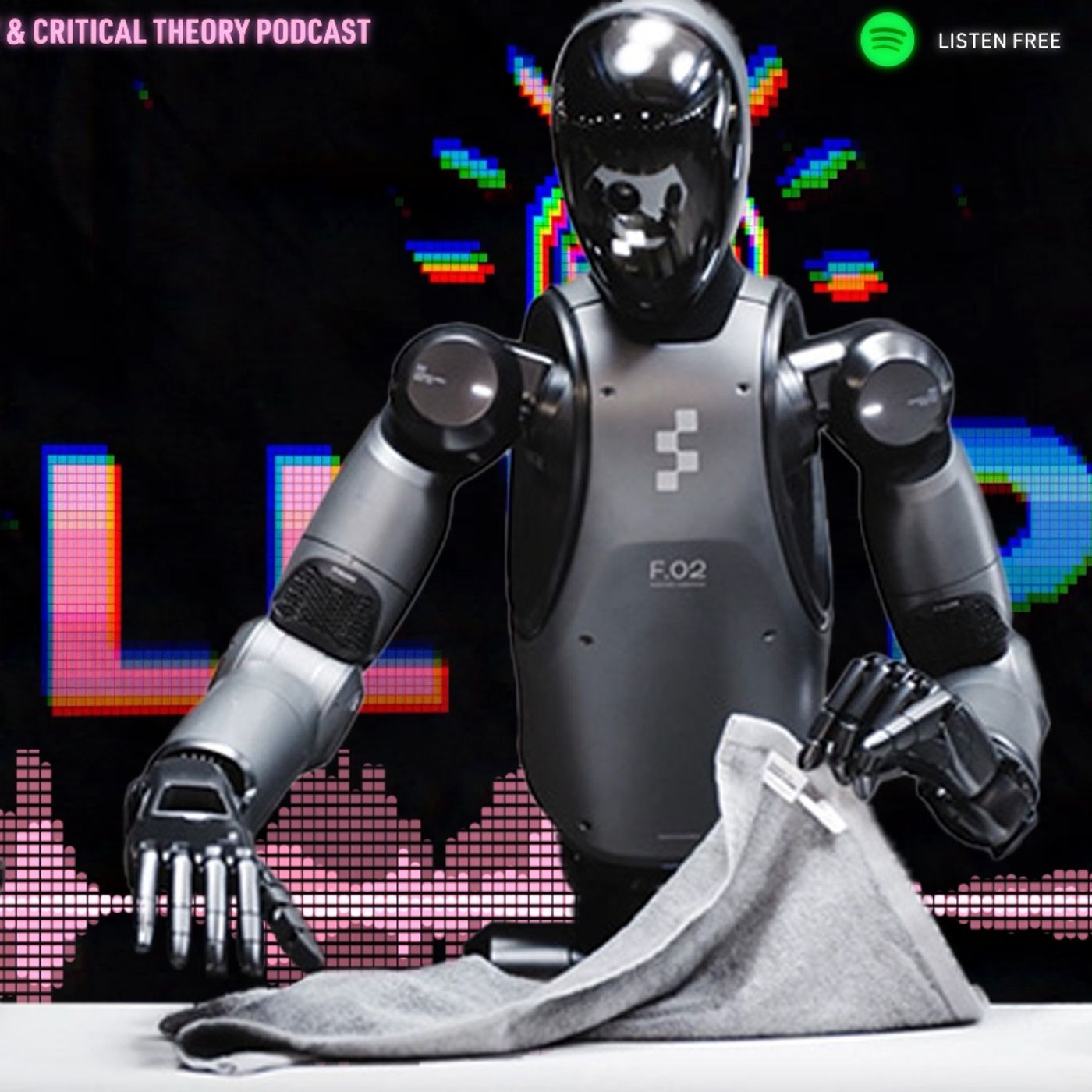
Keskustelussa tarkastellaan Hubert Dreyfusin tekoälykritiikkiä, joka perustuu Martin Heideggerin ja Maurice Merleau-Pontyn fenomenologiaan. Dreyfus väittää, että tekoälyltä puuttuu kehollinen kokemus ja kyky olla tilanteessa, mikä estää sitä saavuttamasta ihmismäistä älykkyyttä. Keskeinen ongelma on "kehysongelma": tekoäly ei kykene valitsemaan oikeita tietoja tai ymmärtämään tilanteen merkitystä, koska se ei ole "tilanteessa" kuten ihminen. Esimerkkinä käytetään autoilua, jota ihmiset oppivat helposti, mutta tekoäly on yrittänyt ratkaista sitä vuosikymmeniä ilman täydellistä onnistumista. Dreyfusin mukaan tekoälyltä puuttuu "huolenpito" – halu ja tarve, jotka ohjaavat ihmisen toimintaa. Keskustelussa huomautetaan, että John Searlen kritiikki on osuvampi suurille kielimalleille, koska se keskittyy kieleen ja merkitykseen, kun taas Dreyfusin kritiikki koskee kehollisuutta ja tilannetietoisuutta. Vaikka tekoäly on edistynyt tietyillä osa-alueilla, kuten kielimallien todennäköisyyslaskennassa, se ei kykene ymmärtämään tilanteita tai toimimaan joustavasti kuten ihminen. Dreyfusin näkemys on edelleen ajankohtainen, sillä se osoittaa, että tekoälyltä puuttuu ihmisälykkyyden perusta: kehollisuus, halu ja kyky antaa merkityksiä.
Sistää, miten tämä joukkaina rikki? Sami fixa se just. Sami huu! Einen talo mestare. Sujuu kuinsato. Huokraa elämäsi koti. Satopisteffi. Suurit päätökset voivat pienekauas. Siksi tarvitsein rinnaleeni kumpanin, joka ymmärtää minne ollen menossa. Nordea Private Bankingissä omasioitusjohtajani tuo selkeyttä päätöksiin ja pieninut askeleen edelleen. Nordea Pisteffi. Kotta Private Bankingin. Sitten näytä, että joku kotiin näytä. Mutta kun ei näytä, niin kotiin näytä. Ksiin näytä, että että jos kotiin näytä, niin mä oon. Sen on niistä erittäin eri oon. Tämä on noin. Ja ei ole muistaa, mutta se ei ole muistaa. Tämä on joo, mitä onko kotiin. Kuten minuus on, mä oon kotiin näytä. Ja, mä oon kotiin näytä. - Kotiin näytä. - Mä oon kotiin näytä. Ja mitä on kotiin näytä. Huokraa, onko joku? Onko joku? Programmassa on joku. - Oh, ja. - Onko joku? - Ja, ja, ja. - Onko joku? - Ja, ja, ja. Ja mä oon kotiin näytä. Mutta mä oon kotiin näytä. Onko joku? Programmassa on, että joku kotiin näytä. are authentic noodles. But this is kind of a perfect lead up into AI language because AI language and human language can sound the same. But Somali type language is not done for the sake of communication. So we're already on to like a difference here. Sometimes in my feed, these coffee snobs come up like with their YouTube videos and they like, and I just watched them with their stupid fucking tools where they're like rubbing the coffee with like this rake and they're like padding it down perfectly and they're like, like, like setting the temperature perfectly. And it's like, I just want to cap feed and boost. And I guess the thing that I always think to myself is like, I'm glad that they're having fun with their little circle jerk of their coffee like contraptions. But like, why would I want to live that way? Like, why would I want to live that way and like get up and like suffer and have my, my little scale perfectly there and like my grinder by hand because doing it by hand. And then it's like, why would anyone want to live that way? And I get it. It's like your obsession. You're a nerd about it. But that's like another thing about connoisseurship is, is you end up like, you end up needing like the perfect conditions to enjoy like what to me should just be a simple delightful pleasure of having a nice warm cup of coffee in the morning. Anyway, it's kind of like the paradox of an acquired taste. Like, how do you go from not not liking something to liking something? Like I check olives every now and then to see if I've acquired a taste for them. And I still don't like them. Yeah. And I still don't like it. And you can't acquire a taste just by like eating the thing over and over. Like, how do you go from not liking something to liking it? It's like a total world. It's like a total shift in you're in the frame, right? Like other things have to change and develop. If you develop a really subtle taste for something, in a way, you spoil the simple and pleasure of it, right? Like you just, because now you like needed to be perfect. And it's like absurd. Anyway, back to Drifus, I wanted to say about Drifus that I'm, I've always been a fan. I was like, did my masters in a department of philosophy that had these Merrill Apponteans really didn't like Drifus? Like for some reason that I still don't really understand. They're a bit more like pure tanical. Well, that's maybe a little bit unfair. Just about like reading the original text. And I think they're a bit more skeptical of people coming in and, you know, applying. You know, I feel like there's people who are just like, we just got to stay with the original text, right? And then when people come and start applying Merrill Appontean ideas, they're like, it's not quite perfect. I've always been not hostile, but just I've always been a little bit like, well, I'm not that kind of person. I'm not interested in being like pure tanical about reading the original text. I think it's more fun to be taken, even if an idea is inspired by. So I've always thought that like, you know, yeah, I wish I had like a better grasp on what their objection was. It's been so long, but maybe it's just that he kind of invents his own terms, his own interpretations of Heidegger, right? Like this absorbed coping terminology. I don't believe that appears anywhere in Heidegger, right? Or Merrill Appontean. This is kind of like Travis's own invention of describing things, which is, you know, like when something becomes habituated in your body, it's like you're because you're coping with the world all the time, right? Like, you know, we're coping with the temperature, we're coping with gravity, right? In like the most simple way. He's participating in Heidegger's like struggle to articulate and thematize and objectify like the ready to hand, right? Which is like not non objectifiable. And so he goes his own way with it. And maybe it's just people disagree with the way he goes with it and prefer more, say Merrill Apponte gets it more right than, but anyway, yeah, he, all this is relevant. I think because it's like, how do you get AI to do that? He, you know, this, this article is he's taking stock of his early work in the 60s and 70s, like culminating in what computers can't do. His, his work at like the Rand Corporation and MIT, which he said, like, you know, these things will never have like human intelligence. They'll never have consciousness. And he was just completely like ignored and blackballed by the AI community, not taken seriously. But then now this article in the 2000s, he's like going back and showing how, well, he has had some influence after years and years of experimenting and failures with making AI intelligent. And there's a few high dagarian AI projects. He looks at like three of them, three different ones that try to like, he basically went to MIT. I think it was and said, you know, why people who are developing AI should read, being in time. And I guess some of them did. And some of them started using high dagarian and phenomenological ideas and trying to like operationalize them in the programming of AI. And he goes through a few of these projects and like shows why they fall short, like why they don't translate properly into like AI functionality, but that they're on the right track. He left MIT. He had 10, your buddy left it probably because he was abused and maligned. And then the people in California, I think it was Berkeley. You see somewhere. And they were a little bit more. You see Berkeley. It was a Berkeley. They were a little bit, they were a little bit more willing to listen to him. But the guy who in this text supposedly got closest, he's the son of a very famous lobotomist. Was that Walter Freeman? Yeah. He's Walter Freeman III. His dad, Walter Freeman II was a mangal. He's a mangal level of notoriety in the Western world for lobotomizing people. Oh, yeah. Freeman Freeman. I mean, in this text is 2007. And I don't think Freeman's project went anywhere. He's dead. You can see, I checked out his 1965 paper. They were already promising, like AI is the next big thing in 1965. And they've said, for every five years, since 1965, we're going to have self-driving cars and autonomous robots. And they never have. So this, this is a very bitchy article. But he is also the most vindicated man in history. As of 2007, we're going to debate whether it still applies. But up to 2007, the most vindicated and maligned AI skeptic in history. Also interesting detail. So, Dreyfus was in the same philosophy department at UC Berkeley as probably the other, maybe actually probably the most well-known critic of AI, John Surrell. So Surrell and Dreyfus were in the same department. Famously didn't like work together. I think Dreyfus was interested in maybe collaborating. But Surrell was probably just like, I don't know what all this Merrill upon T stuff is. Like, I'm not, you know, I'm not going to touch any of that. Although weirdly, like Surrell was also friends with Foucault and like, and Bourdieu, which is weird. Surrell was too busy masturbating and sexually harassing female students. We're about to talk about the Dreyfus objection to AI. I will say for LLMs, I actually find the Surrell kind of objection more relevant because it's more specifically about linguistics and language and communication. The Dreyfus stuff is very like embodiment phenomenology, which right now none of these AI companies are really actively making claims about conscious like a robot with LLMs that can move and has consciousness. But they are making claims. Well, you have Dawkins believes that the cloud is a huge idiot though. Dawkins, there's no point. But yeah, the world's most famous renowned skeptic believes that this computer is conscious. Yeah, Dawkins. Oh, yeah, I see that in the Guardian. Dawkins concludes AI is conscious, even if it doesn't know it. Olen Shannon Maldonado, the artisanist of the artisanist movement, Jaui Lahakaoban Perustaja. Validcin Shopify, when it comes to the artisanist movement, it is a very important and a very important part of the artisanist movement. I was also very interested in the artisanist movement. All the other artists have been working on the artisanist movement for the first time in a year. I was very interested in the artisanist movement. I was very interested in the artisanist movement for the first time in a year. of it. It just kind of takes that as it is instead of how humans actually are supposed to be different, which I don't, I mean, I don't have a problem with it. It seems, it seems like it's right and it's kind of proven, but it's born itself out. But yeah, we have a little bit of a problem here in that our most advanced AI, or the, I shouldn't say that, the most hyped AI is LLMs, which is specifically linguistic and treats language as a, as a probabilistic structure. And more of Merluponti and, or Drapha's application of Merluponti
bears on the body and why you need the body first to be conscious. But it does, I think, line up in that if Merleuponc is correct about what consciousness is in terms of the body, then an LLM in principle can never be anything like conscious. They're just different categories of things. And thus, you can never have an AGI based on an LLM alone. But I think you're right, Victor, that I think you're right. We have to read. Surle is much more applicable to the LLM. This, this is more in the field of, I guess, self-driving cars or, you know, can robots accomplish simple tasks? Yeah. I'm not sure about the development of it, but like the earlier AGI design kind of overarching principle was was called symbolic AI. And it was programmed with rules and, and it was basically predicated on manipulating symbols, basically like, like logic. Whereas that model was abandoned at some point, I'm not sure when, maybe like the 90s. For, and I'm pretty sure then it moved to that probabilistic model where it's just mapping out frequencies and probabilities and proximities of, I don't know, I guess words in terms of the large language model. It would be a third language. That's its language training. It's mapping out probabilities. But it's left behind this like, you know, you just have to program it with millions and millions of facts. And it would know which fact is relevant in any situation. But basically this brings up what's called the frame problem, which is to say like the computer, the AI, whatever, doesn't know what situation is in. Like it doesn't know when it's in a supermarket buying something or when it's in a birthday party and then it has to like the exact same fact can have two different meanings in that in those two situations. And you have to be able humans can do this easily, right? You know, oh, birthday party, give a gift. Supermarket give money, receive item, right? Like we just know that very, very similar sort of action, but two vastly different meanings, right? And that's, that's the problem. It can have as many facts as you want. But if you have the frame problem in place, yeah, you just, so then the question is, well, how do you tackle the frame problem? You just, okay, you program rules, but then you just end up with like an infinite regress because then you need rules for those rules and rules for those rules. And it like you can't just get grasp the tot, you can't get it to grasp the totality of a situation because it's a situation like we said earlier that gives meaning to the facts. This is why I like the driving example because humans share a lot of the intelligences of animals and they share a lot of the intelligences of robots and robots are better at some of those intelligences. But only humans can drive and any idiot human can drive. But robots, what seems like they can drive now though, not autonomous. Taxis, yeah, not, not autonomously. Yeah, what do you mean there's waymo taxis like in a bunch of American cities that are that like that people that anyone can get into that has no driver in it? Yeah, but I mean, are you going to say that having a geofead city is autonomous driving, they can't just go on the road with their own abilities. It's like not even the question is whether you are going to say that a geofan and a Wi-Fi connection being necessary is that autonomous driving. So like Volvo says that they're going to have autonomous driving in what four to five four or five years or so. And I find this funny, not that they can't do it. I think it's plausible that they're going to do it. But they've been saying this since the 60s in 1965, the artists saying we're about to have self-driving cars and just like think about any idiot human 14 year old has the skills to drive a car. It takes you like a couple months to learn to get over your your fear of it. And you can basically do it if you're able body and it's not one type of intelligence. Like spatial reasoning, but then also following the rules, following other people's intentions, following the signals, changing, changing based on the weather, changing based on kids running in front of the road. And it's weird that we have like we don't we call it artificial intelligence, but how many intelligence is that go into it? Like animals probably have much better body movement, awareness than humans, better spatial reasoning, probably in a lot of cases. But they don't know what the signs mean, right? So you need driving is something that you do and then you don't even pay attention to it. And you're listening to a podcast or music or thinking about something else. It all fades into the background. That's kind of what that frame problem is. So it looks like they're going to do it, right? It looks like I'm going to have to eat my words on this thing because Volvo is saying three to five years now. But what's interesting about it is that they've been saying it's three to five years away for 70 years. So if nothing else, this shows us like the complexity of what doesn't seem like a problem, which is how many types of reasoning go into the driving activity that a dumb human can do and the smartest computer can't when according to our other measures of intelligence, like I don't know the LSAT or something. Chad GBT can probably ace the LSAT or at least do much better on an LSAT. I suppose more often than a human can, but they can't do something that any human can do. I suppose it's artificial general intelligence now. That's the term, right? AGI, that's probably what we're talking about here or what like, I don't know if if Draface was talking about it with modern terminology, he might be saying AGI now, but he's saying, you know, well, this one thing, like think of driving a car, right? That's a limited, I guess that that is a limited frame, right? And you could probably program like a system of frames to cope with driving, right? And then I don't know, like what would you know the difference? If someone gets into your jumps into your car with like a gunshot wound or somebody's like trying to rob you and like take over the car, like the AI, I guess you could program rules to like recognize those things and override normal, like operating procedures and stuff. You could layer it, but like you couldn't get it generally intelligent. It couldn't just like drive to the hospital and then perform the operation on you and then take you home and put you in bed and give you medicine. Like it couldn't and then take care of you like you know, he says a system of frames isn't in a situation. So in order to select the possibly relevant facts in the current situation, one would need frames for recognizing situations like birthday parties and for telling them from other situations such as ordering in a restaurant, but how could a computer select from the supposed millions of frames in its memory, the relevant frame for selecting the birthday party frame as the relevant frame. So like because then you're just programming in those frames as more facts. And then the AI has to select that fact to give all the other facts relevance. And how do you do that? You can't like I guess I guess that that's the thing again. You can't do that. So you won't have the artificial general intelligence, but you can have a limited kind of ability for it to execute tasks like driving someone somewhere. Yeah, because driving is also like pretty rule down, right? And like also the way that the these self driving cars work. I mean, it's very telling how different it is. You have a bunch of sensors all over the car. They like have a lidar map of like the whole world, like a 360 degrees around it at all times, right? Yeah. So they can I think this is a it's a problem that's solvable in principle, but the point of this from from the 60s to 2007 is written is that what's neglected by programmers or AI boosters or even just rational philosophers, right? He starts with Cartesianism, but what's neglected is the other kinds of reasoning. However many there are however many you want to name, but like animal reasoning, evolutionary intelligence, if you want to call it something like that. There's a there's a caring about what happens to you or even the broader sense, the high to carry in sense of care, you know, that you are in a situation and you see possibilities in the situation. You direct yourself at things. You're there's always a reason for where you are or and if there's not, then you give yourself a reason, you know, the reason the reason might be staying alive or it might be relaxation because you're so tired of staying alive. So there's desire with you in every room that you're in or you could be in other word. Yeah, significance you get you give significance to things or significant to yourself and because you're significant to yourself, then other things are significant to you as well and rationalism, whether it's the Cartesian form or an AI programmer who just says forever were five years away from general intelligence. They don't factor.
desire into human intelligence. But it's the reason that we are intelligent in the way that we are, which is not just one way. Like animals are never also, animals are never doing anything for no reason, right? They find a reason for doing whatever they're doing. And no computer, conversely, seems to have a reason for anything unless they're just explicitly told, here's what you're supposed to do. So you need to start with caring, at least in order to have our kind of intelligence, which is not just facts, but meaning of facts, interpretation of facts. And that comes from us needing stuff, having an organic body. And that's not to say that they couldn't simulate this in principle. But as part of our animal intelligence that's not been considered, I don't know if that makes sense, that's kind of a round. Yeah. One of the points he makes, I think this is pertinent to what you're saying is what. So one of the points, Drayfah says, well, he says he did a talk called why AI researchers should study being in time. And he, one of the main points he makes, he says he repeated this in the talk. He written it earlier in 1972, what computers can't do. And he wrote, the meaningful objects among which we live are not a model of the world. Stored up in our mind or brain, they are the world itself. So that's one difference. We're not working from like a miniature eyes simplified model of the world. You know, that like the whole map is not the territory thing, right? Like the objects are the territory for us. And that's the difference. Again, he's going to bring up, you know, the distinction Heidegger makes, like you said, like the first part of being in time between ready to hand and present at hand, right? And when you're thinking about something, when something's objectively in front of you, it's present at hand, right? And you're in, you're in, at that point, you're in offline mode. And the wrong way to look at it is that like the present at hand things are just a model. And the territory is the ready to hand stuff. And you're just working off your present to hand model. And you're, when you're, I don't know, swing in a hammer hammering a nail, that's always comes up. You're hammering in a nail and it works because you have a model of that kind of behavior. It's like the phenomenological explanation is no, no, no, like the ready to hand underlies all that the ready to hand is far deeper than the present at hand. And so that's that's that in and then Dr. Fisk gives it that language of like the involved coping stuff. But yeah, like we're building a eyes to have this model of the world and work off of the model. But then the problem becomes it's working offline with this model. And then the world is constantly changing around it. So how does it update that model? It needs a way to in real time in its online behavior, quote unquote, online behavior when it's when it's doing the ready to hand thing, it needs to be able to update its model in real time. But again, this like whole model reality map territory kind of paradigm is just completely wrong headed because when you're ready to hand, yeah, it's like they forget the ground that it's all built on because we forget too. We think that our rationality is the thing that we're thinking about explicitly, but the whole rest of the world we're thinking about implicitly at the same time, like choosing, choosing to focus on something is also an active de-choosing of the rest of the room or the rest of the environment. You know, it'd be fun. Like is to ask for me to maybe ask Claude Claude, I'm trying to say it right that time. I almost said it wrong. Like what it thinks about this paper. Like does it think that does it think that like what's its best objection to the paper? Well, we skipped to problem two, which was the readiness to hand problem. And we missed, we missed problem one, which I think is probably more interesting to Claude is he says researchers were running up against the problem of representing significance and relevance. And depending on your point of view, the chatbots are very good at this. They know what's relevant and what's significant. Yeah, because of language. They're even getting better. They're even better than people at it. And unlike Drayfus's supposed, he thinks this can't be solved rationalistically, but it seems like it is. The computer doesn't experience relevance. It does it statistically. And then we have to get into issues of do people experience it or do people do it with a different kind of probability that they've obtained by habit rather than training data. But they do understand the significance, the relevance, you ask them a question. It's almost always a relevant answer from among 100,000 possibilities. They usually give you a pretty decent one. And if we remember how these the training happens, right? The training happens from human inputs. The reason that they understand significance in so far as we can use the word understand is because it went through these models, went through, you know, like crazy amounts of human input where the model would spit out some answer. And then you had a bunch of humans being like, is that right? Is that wrong? Right? And then the system would then take that input in and be like, okay, like what's common to all these things that the humans said are correct, right? And that's how they create these large language models that actually spit out things that are for the most part and ever increasingly giving you things that are significant. It's not because the system itself like figured it out on its own, but it's because it's getting a bunch of human input, right? Where, and then what it does, and this is where there's actually like a bit of a mystery. From this is my cursory understanding of how these models work is like the way that then the system like maps what's similar about these things that the humans rated as being like correct or more relevant or more significant. It like, kind of identifies patterns and a bunch of overlapping patterns and like cross, you know, connections that the AI programmers don't really understand. And that doesn't mean that it's like magic or conscious. It's just that the thing figures out, oh, like it just automatically is like, okay, these things are common. These things are common based on when humans say like, yes, that's a good response. It's like creating these kind of weird connections that like the programmers aren't really sure like how they work. Yeah, I saw that this was really interesting in the go game where the deep mind beat the best go player in the world. And the analysis of it was like, when this happened, no human would have no human understood why the why the token was going there, the piece, I don't know what they call them go. But there's like very weird moves that seem inhuman and then it turned out, it turned out to have a reason later on. But we can say like with an LLM, the Chinese room, they can give out significance. The question is whether and how, like how comparatively, how do humans get their significance? Because it's like for like an LLM, almost all human intelligence is learned from other humans and then imitated copied. But on the other hand, it's like we don't need the Wi-Fi connection at a certain point. And again, it's that 5% freedom versus 95% imitation. But it is at a very early point. I'd say like four or five years old, then you get the capacity for self reference beyond the training data. So I don't know personally, I don't know how important that is, but understanding meaning self-referentially, it seems like like a human moves from pseudosignificance to real significance, self-referential significance pretty quick. And it also seems like LLMs can never make that jump. So it's an in principle or is it just not there yet kind of question? It seems like you can't have AGI without self-reference. And personally, I'd say it's in principle impossible. Our significance to us is also what they think significance is. They just think significance is our significance imitated. The problem of significance, yeah, it's definitely a pseudosignificance. Because what he's saying is again, like the facts get meaning because of the situation. They already went over that, but the AI solution is to just program in the significance, right? And he says, but he had a good warned values are just more meaningless facts, right? So again, when you're working in this Cartesian framework, which is also called representationalism, and it also relates to the model reality or map territory view. You have this internal model, whatever. You're giving significance to external meaningless facts, right? Or what John Sirall calls functions, right? So you have this thing. It's a hammer. It's meaningless. And we give value to it or we give it a function. And so that's the programming solution.
You say, okay, a hammer is for hammering nails. And then, but you've just put another meaningless fact into the system. So now it knows that a hammer is for hammering nails, and it might be able to pick up a hammer and do that. But again, the point of Heidegger's readiness to hand thing is that, again, well, I guess that's where the problem is, like, it's not ready to hand for the machine. Yeah. He says merely assigning formal function predicates to brute facts such as hammers couldn't capture the hammer's way of being or the meaningful organization of the everyday world in which hammering has its place. So it's not, you can't, so if the hammer gets its meaning from the meaningful organization of the everyday world, and yet AI is not embedded in a world, it's not embodied in a body, then it doesn't have that meaningful organization of an everyday world that gives the facts, meaning not externally and not a court, not after the fact and not according to some representation. It's non like Heidegger's again, it's called non-representational. So he wants non-representational ideas to start influencing AI. Yeah, exactly. And that it's not, it's not possible now, and it seems like it may be in principle impossible, but who knows, it could be wrong. Brooks approach is an important advance, but Brooks robots respond only to fixed, isolable features of the environment, not to a context or changing significance moreover, they do not learn. They are like ants. And Brooks admits that and calls them enamats and says, you know, I've basically made like insect like intelligence, right? Right. There's the, the statement he says about the advanced robots or the learning robots, the insect robots is they don't need a model of the world and advanced their model of the world is the world. And you can kind of see that with the self-driving cars that they've crossed that threshold, that they don't need, well, I mean, they're in between. They need both a model of the world, they need like a map, a Wi-Fi map updating in real time, but they can also seemingly like if they're allowed on the road, seemingly they can also adapt to the world as it is. I mean, according to the 60 minute story recently, I actually linked it in our chat. And it's very relevant to actually what we're talking about because it's about how London is about to experiment with self-driving cars. And the story contrasts that with traditional cab drivers in London, you know, they have those black cabs. And I didn't know about this, but they have this test that they all call the knowledge. And it's like a crazy test to get a taxi license where like you go in and they just like tell you random streets and they're just like, how would you get from this place to this place and from memory, they have to like list the turns and there's like a 95% fail rate. And it's like you just have to get so good at knowing London and understanding the city. And they're kind of like, oh, like a machine could never like know do this, could never do the knowledge. And then, and then you have these CEOs of like Waymo and these other companies that are that have self-driving cars and Waymo because they've been in business now for a couple of years in a few different cities. I mean, the sheet, the CEO says, I think the journalist is like, well, do you think like how safe what's the safety record? And she's like, well, it's safer. Like we already know, like we have enough data. Like we can say that there's fewer accidents per capita per car on like a self-driving Waymo than there is from humans. Now, the question I have, like I think it has to be both like representational knowledge and the world as model knowledge because just for example, there's so many one way streets in London. So does the, does the Waymo look at the sign to know it's a one way and or does it look at the map to know that it's one way and it kind of has to be both like what if I don't know there's in Toronto, there's certain streets that are only only, you can only drive a certain direction on them at a certain time of day like not rush hour. They want to keep the traffic off the streets in rush hour. That all could be programmed, right? And then you would just, now the question is like if it's a holiday and then the traffic changes and then the rules change or like a school zone on a holiday, it doesn't apply when it normally would apply. Or construction, right? If there's construct always construction downtown Toronto. Now does the construction have to be presumably they've solved it if they're allowed on the roads. But does the construction have to be manually entered or does the come or does it the waymo look at the signs and then know which way to go to navigate through the construction? I guess it has to be both somehow somehow. Yeah. Put up a new stuff. It'll have Google maps or whatever other mapping data, which will tell you like what streets are one way and everything like that. But then it has to be responsive to the circumstance. It's just like if you see a pedestrian coming in front of you, it has to be able to read, well, it has to be able to read street lights has to be able to read. There's like new signs and stuff like it, you know, it needs to be able to figure that stuff out. I don't know that much about it, but I think it's, you know, I think it's better than a lot of people might think, right, who don't live in those cities. I think people are a little bit surprised. I am looking it up. Okay. So it does, it looks like most of the time they just skip it. If there's a construction zone noted, they will go around it on a different street, but they can follow like a handheld sign if they hold up the stop and turn sign. But if it doesn't know what to do, it'll just pull over and stop. And then a real person looks at whatever looks at the car and helps it to get out if it gets confused. So it's, I guess it's an all of the above. Yeah. Then just remember there was, there was that those were the two problems with it, right? With it can have real time feedback. Okay. And that's getting way better. But then the other problem is is learning as well. That was the other thing. Can they learn like what if the self-driving car encounters a completely new traffic signal? Or what if it's driving in one zone and it passes into another and it uses, and it sees like an advanced go and it's never seen an advanced go before. Can I look around it with all the other cars do and learn that? Oh, I'm supposed to like advance go. I guess, I guess there's that problem of like learning too, right? Because then you've programmed in what to do at a stop sign and then you even have external sensors. So like if a temporary stop sign pops up or suddenly there's a crossing guard somewhere where there was never a crossing guard before, it's going to know what to do because it can have that real time environmental. My understanding is it does, but it kind of learns at the model level. So like every single time like all, everything that the cars are doing like at WAMO for example, is being monitored and the data is being processed. And then I think the software programmers, like whenever there's some puzzle, something that happens, it's like updates the whole model for all the cars, right? Like, but they probably have to press some button. Maybe it's done automatically. Like I think that there are algorithms that that self improve. And actually, this is the thing that I think anthropic like has been talking about that they're a little bit worried about that they're like, we should probably be careful because they might start getting like good at improving themselves. But I guess just to back to the core philosophical like puzzle here, which I think I guess what I feel the LLM era that we're in now has shown is that so I generally agree with dry fuss that to get something like a human consciousness, all these things we've been talking about are relevant and are huge barriers. And I don't really see how an LLM could do that. Like, which to me is like creating essentially an artificial human, right? Where you have something that basically has like desires and interests and has intentional arcs, you know, toward the world and significance. I mean, that's like an artificial human being or an artificial being of some kind. That has tremendous barriers and I don't really see LLM's getting anywhere near that. Well, I think it's completely fair to say, I think we'd all say that an LLM can be like us. That's just flat out impossible. Could yes, I agree. I mean, could machine intelligence ever be there? I mean, that's more possible. But if you think of how many systems are overlapped here, you have an evolutionary intelligence that's constantly afraid that you're going to starve to death, then that's converted into a psyche. And then the psyche needs to be repressed. You need a, you need a father function that's mad at you. Then you need drives. You need drives to be sublimated into different forms so that it could be ever like us, generally intelligent. I think that's impossible. But it's not to say it couldn't be a different type of. No, yeah, of course, exactly intelligence that's applicable to different situations. I agree. I agree with you. I agree with you. I mean, I've always thought that and I think, of course, like, do I think, and there's something Surrey used to say, like, I mean, I think that human beings are a machine. They're an organic machine. So like, in principle, there might be a way to create an artificial human. It's just with silicone and like, you know, ones and zeros. It's just, we're never going to get there with just that. Like, you need some other paradigm. You need something else completely. And I don't know what that looks like. That's speculative, right? Like, I'm not, you know, I'm not, I don't think there's anything. magical about human beings. Like, I think we're just an organic machine of some kind. Now, but on the philosophical, like, I guess there is, we're where, like, maybe this article, like, doesn't land. And like, some of the things you guys have been talking about, I just think that there's maybe like more things that are actually just.
patterned functions that maybe Drifus in earlier work was making it sound like only a human could do these things because they're like so involved in that like intentional orientation of the world that you could never. And I guess like I feel like the LLM errors may be proving that there's some specific functions that we thought like you needed intentionality and being in the world to do that I think it turns out like you can get an algorithm can actually figure it out like better than we thought and that's kind of like where I stand. I think you're right about that in that we would we consider sort of linguistic type intelligence to be the hardest intelligence. But it turns out this is kind of solving that in one way and then proving that the harder stuff is getting you to care about yourself in the world. It is the phenomenology of it. But also and and they have not solved like let's be clear they have not solved the phenomenology of language because when we use language we have that same care we have about the about food we have that care about our linguistic world as well. And I don't think anyone except Dawkins believes that cloud cares about that world in that way like they can reproduce it because at the same time as being something being part of the world in which we care. Language is also probabilistic so you can you can copy the probabilistic part and you can get meaning seeking beings like us to fall in love with chat GPT. But you can't I don't I don't think anyone's really going to argue that chat GPT feels the way about language that humans do exactly. And then I can push back on myself on that and say well is that feeling that we have about the meaning of language is that really relevant to the language part which we all know it inside us when we look kind of backwards from ourselves is that part of the important bit. And I think every individual human will say yes. But is it possible that you can have a sort of thing that is called intelligence that doesn't have the feeling of meaning that's behind the intelligence it wouldn't be something that we care about. But it could I don't know arrange itself or self organize in a different way without that meaning or care or so I don't think that they imitate something. But is it the internal sense of language that's important to what language is or is it the overall propagation of language that's important to what language is. Yeah, no, I agree. I that that sounds like an anthropocentric version of intelligence that you're complaining about. I don't know if it's right though. You know what I mean? I don't because is the thing that we feel when we are make coherence out of language is that more what languages or is it the structure overall that can seemingly propagate without any individual feeling at all. So we don't really I don't know if there's an answer to that. I don't know if there's anything that makes sense at all. No, no, I know what you're saying in like the job well anyway. I it's anthropocentric but I guess like who cares like I mean it's just it's like it's you know I mean it's at least pointing out to and I guess like in a way that our conversation we've been having is anthropocentric because like the only frame of comparison that we have is like being in the world which is you know but I guess animals have being in the world too. Like I think they they probably do especially of some sort. But I guess the thing that I want to say though is I agree with you pills. That's why I do think that there's going to be a probably a bunch of breakthroughs with robots that can do a bunch of shit like that we wanted to do like I think the ingredients are there like are they going to be alive like hell no but could they be like a cleaning part like if the if the robotics got good enough. I mean I feel like and we already have self-driving cars. I mean it's not that far away but again that's like a separate question from the consciousness and the being in the world and the phenomenological question which I agree are insurmountable and this is kind of why I actually feel like the dreifus objection has become a bit less interesting than the morpheus sural type objection which really gets to the core of why language and semantic pattern or syntactical patterns are not sufficient for semantics meaning understanding meaning consciousness. It seems like human intelligence still remains the yardstick like human like behavior the ability to produce that is the yardstick there we still use and it seems like the the AI programmers do that themselves too. Yeah and they I think they're mistaken about their model of humans I think they're just like those AI researchers are just mistaken about their model but I guess just really quickly what you said though about like anthropocentrism and stuff it also just like it raises the question of like what could even a discussion of intelligence look like that's non anthropocentric like that that seems that seems kind of impossible. Yeah I don't don't know if that be meaningful at all. Yeah like like we've been saying and brought up the different points human intelligence is not one thing it's linguistic awareness but also spatial awareness also body aware so it's like we're a bunch of overlapped systems lumen said we're like three overlap systems languages one of them our body is another like we're like seven or nine or something so however however many there are the human part is the overlap of those things the human is not one measure of itself so now it's like computers were better at calculating than us like 60 years ago now they're better at writing certain things than most people now they're better at coming up with a recipe based on what you have in the fridge but they're never I think it's a weird thing to suggest that they're gonna they're gonna have the same overlap of intelligences and concerns that we have and it's a weird way to measure it I think well to be to be fair his his examples in this paper are not to do with language production and like human intellectual shit they're more like perceptual and moving and responding to things and then the whole like those those Chinese robots that have been in the news a couple times lately that can do all the flips and dance and like do really like fluid kind of movements there obviously humanoid shaped robots that can move like super humans I mean that I'm yeah sure that's another kind of embodied intelligence that looks kind of uncanny to us but it doesn't quite capture like the depth of that situation thing and the inherent full meaningfulness of things you know having a body and you just walk up to a stone that's like about waist height and it's like oh this solicits me to like sit on it right like it just has that meaning it doesn't need to be programmed into you you know right the the world the meaning of the world is kind of cut to measure of the form of your body and again that's like yeah can't be programmed in depth this maybe goes back to my initial impression of the paper is like if in so far as we're living in this world of LLMS the thing that Drifus is talking about feels kind of not that relevant to LLMS because LLMS are disembodied they're like systems it's it's just you know they're not really they're not even trying to be uh whereas like robotics I was actually I was just looking this up like you know where did an activism phenomenology where did those things influence AI and it's really much more in robotics whereas LLMS are trying to do something different I mean I think that they're you know their prediction machines of of of language and pattern the huge pattern recognition and and producers based on the patterns of language and all the input that they got from from human you know humans yeah and we're learning a lot about what intelligence is because in a way that a lot of 60s theorists predicted but maybe wasn't you know publicly born out you know cybernetics second order cybernetics or structuralist linguistics or systems theory it shows that anthropocentric models are are humanist models let's say humanist accounts of intelligence were incorrect because now computers have vastly surpassed us in certain types of intelligence and yet the best computer is worse than a six-month-old baby at other stuff so there's no human intelligence at the center of the human and there never was and intelligence is probably not even the right word like it's overused to to account for too many differences here we could call it capacity right now we can measure our capacity against a new thing before it was just us and animals and god and now we have a new a new contrary to measure ourselves against animals gods machines and it seems like with the LLM yeah they can duplicate the structure the structure is probabilistic fact fact and they are getting better at it but we have to remember that when drawing distinctions human beings except for at stupid jobs their reading and writing is not for the sake of the structure they read and write for different reasons they read and write for other people to communicate or for the the pleasure of solving a puzzle like in the terms of academic writing or the pleasure and satisfaction of we say organizing your thoughts and maybe improving your thoughts you write as practice of something and the only reason the LLM's reader write is because we tell them to
So sure, they can do it and they do it better in some cases. And maybe sometime soon they'll be better than the best. But they can't do it instead of us because they have no reason to do that. They can, we can differentiate our capacity because human beings, at least this shows, we're an overlap of capacities, some shared with animals, some shared with machines now and some shared with God. So consciousness seemingly has nothing to do with it. We have to be a lot more precise about what these things mean and intelligence as well. I think that's, I think, I think that's why the other articles we read that are more relevant to like LLM style, AI are like kind of just impatiently telling us to stop like looking at these things as conscious. Like consciousness shouldn't even be in the conversation. That's not what they are. That's not what they're trying to do. And looking at them that way as like on a scale or on the path towards consciousness is completely fucking unhelpful. And it invites again, like moral moral edge lords, like the pope to come in and write in cyclicals, chastising us about fucking the pope, the moral edge lords. Yeah. To write these cyclicals and say, Oh, it's so it's so wrong. What we're doing human. Yeah. Like we can't give them rights. And like, you know, they're so inhumane what goes into making them. It's like, yeah, that's not what they are. Like just look at them some other way. They're communication devices. They're glorified search engines, their language, just because of their uncanny ability to make human like language and pass the Chinese room test and all that stuff. The Turing test, I think you meant. Yeah, I don't think there's a Chinese room test. There just is a Chinese room, right? But it's hard to separate consciousness from this when there's every fucking two weeks is a press release from some disgruntled engineer saying, Oh, no, they're conscious now or idiots like Dawkins saying, Oh, no, no, I can think there's no reason to not call this conscious. They're making consciousness part of the conversation, which is just confusing everybody, including the Pope, the moralist edge lord, but the problem is not that the machines are not conscious. The problem is we aren't conscious or when we say conscious, we're describing three different things that overlap except we thought they were all one thing. Now we don't have an excuse for saying them as one thing anymore. And this is where I think the use case of LLM is, I mean, we opened up saying this that the Somali speaks bullshit. I think AI is going to prove how much of the things that we think are just true are like Somali bullshit. Like is Herman, is Herman Melville actually a good writer? Is Monet actually a good painter or is this just people having told us when you read Herban Melville, you see the American experience. There's the pursuit, the pursuit of the frontier. And when you see Monet, you feel the feeling of what it's like to see water. Maybe we're maybe all of our human our human valuation systems are all Somali bullshit. I've always been sympathetic to that line of thinking even before LLMs, as you know, someone who I think, you know, I've mentioned before, I didn't, wasn't good in school. I was got bad grades in high school. I felt very disconnected from, I guess, elite, like things, I guess elite education. And I think part of that made like makes me predisposed to not like beast totally skeptical of everything that elite wisdom tells us, but it makes me think like, are these smart people like, are they really like, do they have things figured out? And I guess this thing like kind of art critic consensus. I mean, I, you know, I'm so I'm very sympathetic to what you're saying. I feel like there's a good chance of that. But I guess the other thing is, which has to do with being in the world, is like this consensus is not nothing, right? Like it's meaningful. Like we live in a world with this history and the stories that we tell ourselves about it. It creates this environment of meaningfulness. You know, we look at the, which is the same reason we get these feelings when we look at ruins of like cities, you know, if we go to Europe or Greece or something and we see these rooms, we got this feeling. And I think like that's there's history. And these paintings, I think, yeah, they, they, they, they get this aura, you know, around them, which is I think was not something that Ben you mean talked about with art, like the aura or maybe that was someone else. I might be confusing. Yeah, no, the, no, the aura. But I think, but I think jumping from, I think all I really meant to say was jumping from those, like, very significant things that can happen with AI. Like you were saying, like 20% convincing. Jumping from that to being like, are they conscious? Just short circuits like all the interesting parts of the conversation that can be had about them. Because yeah, like it's just, it completely cuts you off from what they are and what they're doing. And we're always going to be, I think there's another shift here. And it's in our like sort of metaphysical view of the world. That's why we're building these like constructivist metaphysics. We're doing phenomenological analyses. Like we're always, but then I guess what would a, what a, a hussar will call it, the natural attitude. Like we're always going to be up against some kind of like objectivist such attitude where, you know, there are things in the world. We live in a meaningless world and we give them meaning. You know, we have, but I guess I don't know. It's just that humans have these powerful biases. But that implies that there's an unbiased way to look at things. You know, there's ideologies out there, but that does that imply that there's a non-ideological standpoint when we do science. Are we implying that there's some kind of objective position to take the Archimedean point to occupy and see things the way they are? No, I guess, I guess we have to abandon that, but the natural attitude always creeps back in. You can't, I guess you just can't get rid of it. But I think jumping to asking if they're conscious or not, just really just opens the floodgates to the natural attitude. And there could be so many more interesting things to say about AI than are they conscious? Are they intelligent? I think that we're all in agreement with that point about consciousness. It's kind of, I don't think I've ever used the word conscious. Yeah, it's kind of philosophical. It's all over the press and it's annoying. Speaking to what you just said, though, when we read through Merleu Ponte, what he said is that what you're calling the natural attitude, that attitude of individual entities that we're establishing, meaning this can only be built on top of embodied life world. And it's only because we have embodied life world that can disappear from the thing that you're paying attention to because it can recede, then we forget that it's there. I mean, that links to my only objection I would have to the Drayfus paper that we read and the whole sort of approach he takes, which is probably unfair, but fine. I mean, he lacks a Marxist point of view. I think you're thinking of engaged coping with the world and you're not thinking about how the world is a built environment, how labor and capital constitute it, and how that is what we're engaged in coping with. I don't think there's ever there's a shred of attention paid to that extremely obvious fact. But maybe I'm going back to the natural attitude there, but that would be my only problem. But otherwise, everything's fascinating. Yeah, Drayfus is much more, he likes talking about driving, not who built the car. And he likes talking about washing dishes. Sorry, that was my own projection. He likes talking about hammering hammers, but not who's paying you to hammer the hammer. Not who works for a de-walt. Well, they would make you a nail. The Pope was more Marxist than him from reading the Pope. I don't know, Drayfus ever wrote a single word of political philosophy, which is annoying because that seems like it would be phenomenologically relevant. Phenomenology of politics would not be relevant more than voting every four years. Is there a different coping when you're renting? Versus paying off the bank versus owning? Yeah, I don't want to put up pictures in an apartment that I don't own. I stand corrected. It looks like he did write a book in 1997 called "Disclosing New Worlds, Entrepreneurship, Democratic Action, and the Cultivation of Solidarity." Co-authored with Fernando Flores and Charles Spinoza. Oh, weird. Fernando Flores was one of the guys that worked on the Cyberson project and there you go. A Yende, wasn't he? But then he went to school and became a hustle culture entrepreneur speaker. Tech entrepreneur and Silicon Valley afterwards. Abandoned the socialist project. Very funny. That's funny. Apparently this is his book. This book, Co-authored with them, is a philosophical proposal intended to restore or energize democracy by social constructionism through an argument style of world disclosure, but which philosophy is distinct from relativism form. Anyway, so I guess he does write some stuff about
about politics there. Speaking of saying long O's correctly or incorrectly, in addition to Claude, we have Eric, Eric every time pronounces it, silicone valley. Oh, silicone. But someone might mean sad Fernando Valley because of all the fake tits there. Yeah, silicone and silicone. I always catch myself oscillating between progress and progress or project and project. Those both count though, don't they? They both count, but the Canadian, the correct Canadian way is project progress. I definitely slip into American for progress. Though I don't think I've ever heard anyone say, uh, I'm working on a project. Maybe the verb though, yeah, or Z and Z is it Z or is it definitely Z the Canadian way is that definitely Z? And I have two and I have two Zs in my last name and whenever I'm in the States and someone like checking into a hotel and they're like last name and they asked me to spell it. I proudly say ZZ. Oh, any. I'm pretty sure I'm pretty sure it's the rapper J Z. Yeah, yeah. Jen, Jen, Jen, I did used to say Jen said Jen said I switched unconsciously because I guess like unconscious peer pressure. All right. Well, I guess we'll keep doing it until someone tells us stop. I felt like I learned some stuff with this one. Yeah. I mean, I enjoyed talking about it, but I felt I and I agree with him. I just feel like it's not the most relevant for the LLM age, although still kind of interesting to disentangle like what's different, what might still apply? What doesn't necessarily apply? Like, like I just feel like maybe he got a little too high on his own supply and was like, well, because he was right up to that point. Yeah, he kind of gets, yeah, exactly. He kind of gets a bit too high on his own argument and it's like, well, then these things in principle are impossible and it's like these functional kind of competence based things are impossible. And it's like, well, it seems like that you went a little too far there because that seems not to be true. And if we're going to do Eric's political analysis, then we also have to look up like data centers and how a data center announcement or a compute announcement boosts a share price, then they borrow against that share price, do an acquisition. And then they're buying compute at a future price that doesn't exist before the before the data centers even built. Yeah, we just be doing economics at that point. And the bubble, yeah, the bubble, how almost all the investment in these AI companies is from passive like ETF index funds. So it's not even like a statement of faith, except they're they're spending like it's a statement of faith. So the bubble, the bubble is real. Well, I personally recommend I said this Google deep mind article because what's also interesting about the Google deep mind argument, it's, it's technical. It's very analytic. But what's fun about it is also all the reactionic odd online because so many like nerds who love like the idea of of LLM's getting us to AGI were like really angry and a bunch of them wrote a bunch of articles like trying to respond to it. So it's kind of fun. Alright, well, let's put a pin in that and pick it up next time. Sounds good. Till next time. Alright. Goodbye, folks.
Podcast Summary
Key Points:
Keskustelussa verrataan ihmisen ja tekoälyn älykkyyttä, erityisesti Dreyfusin ja Searlen kritiikin kautta.
Dreyfusin fenomenologinen kritiikki korostaa kehollisuuden ja tilannetietoisuuden merkitystä, jota tekoälyltä puuttuu.
Keskeinen ongelma on "kehysongelma"
Esimerkkinä käytetään autoilua
Dreyfusin mukaan tekoälyltä puuttuu "huolenpito" ja halu, jotka ovat ihmisälykkyyden perusta.
Keskustelussa mainitaan, että suuret kielimallit (LLM) eivät voi saavuttaa tietoisuutta ilman kehollisuutta, ja Searlen kritiikki on osuvampi kielimalleille.
Summary:
Keskustelussa tarkastellaan Hubert Dreyfusin tekoälykritiikkiä, joka perustuu Martin Heideggerin ja Maurice Merleau-Pontyn fenomenologiaan. Dreyfus väittää, että tekoälyltä puuttuu kehollinen kokemus ja kyky olla tilanteessa, mikä estää sitä saavuttamasta ihmismäistä älykkyyttä. Keskeinen ongelma on "kehysongelma": tekoäly ei kykene valitsemaan oikeita tietoja tai ymmärtämään tilanteen merkitystä, koska se ei ole "tilanteessa" kuten ihminen.
Esimerkkinä käytetään autoilua, jota ihmiset oppivat helposti, mutta tekoäly on yrittänyt ratkaista sitä vuosikymmeniä ilman täydellistä onnistumista. Dreyfusin mukaan tekoälyltä puuttuu "huolenpito" – halu ja tarve, jotka ohjaavat ihmisen toimintaa. Keskustelussa huomautetaan, että John Searlen kritiikki on osuvampi suurille kielimalleille, koska se keskittyy kieleen ja merkitykseen, kun taas Dreyfusin kritiikki koskee kehollisuutta ja tilannetietoisuutta.
Vaikka tekoäly on edistynyt tietyillä osa-alueilla, kuten kielimallien todennäköisyyslaskennassa, se ei kykene ymmärtämään tilanteita tai toimimaan joustavasti kuten ihminen. Dreyfusin näkemys on edelleen ajankohtainen, sillä se osoittaa, että tekoälyltä puuttuu ihmisälykkyyden perusta: kehollisuus, halu ja kyky antaa merkityksiä.
FAQs
Dreyfus väittää, että tekoäly ei koskaan saavuta inhimillistä tietoisuutta, koska se puuttuu kehollisuus ja tilanteeseen uppoutuminen, jotka ovat olennaisia ihmisen älykkyydelle.
Kehysongelma tarkoittaa, että tekoäly ei osaa tunnistaa, missä tilanteessa se on, eikä siksi valita oikeita faktoja tai sääntöjä; esimerkiksi syntymäpäiväjuhlilla ja kaupassa samat toimet tarkoittavat eri asioita.
Dreyfus soveltaa Merleau-Pontyn kehollisuuden fenomenologiaa väittäen, että tietoisuus vaatii kehon ja tilanteeseen uppoutumisen, jota pelkkä kielimalli ei voi saavuttaa.
Itseajavat autot vaativat monenlaista älykkyyttä, kuten tilannetajua, sääntöjen noudattamista ja muiden aikomusten lukemista, mitä tekoäly ei vielä kykene hallitsemaan, vaikka sitä on luvattu 60-luvulta lähtien.
Symbolinen tekoäly perustuu sääntöihin ja loogiseen symbolien käsittelyyn, kun taas nykyiset kielimallit, kuten LLM:t, käyttävät todennäköisyyksiä sanojen esiintymistiheyksien perusteella.
Ihmisen älykkyys perustuu haluun ja välittämiseen, jotka antavat merkityksen asioille; tekoälyltä puuttuu tämä, koska se ei koe tarvetta tai tilannetta samalla tavalla kuin elollinen olento.
Chat with AI
Loading...
Pro features
Go deeper with this episode
Unlock creator-grade tools that turn any transcript into show notes and subtitle files.
 PodcastTranscript AI